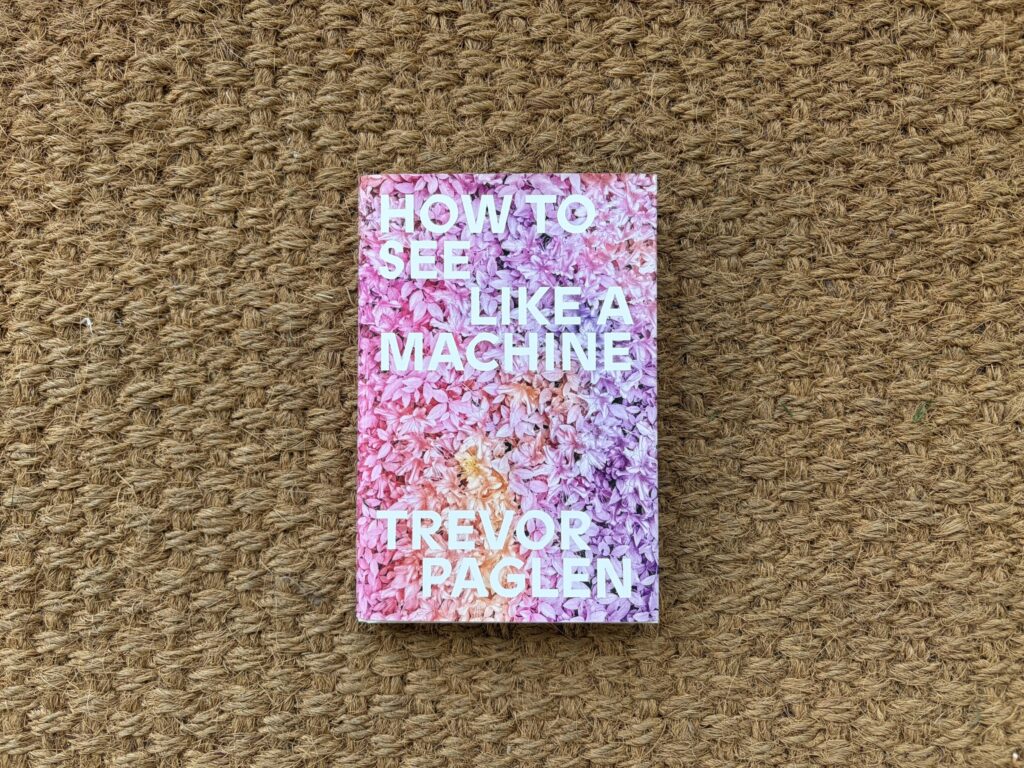
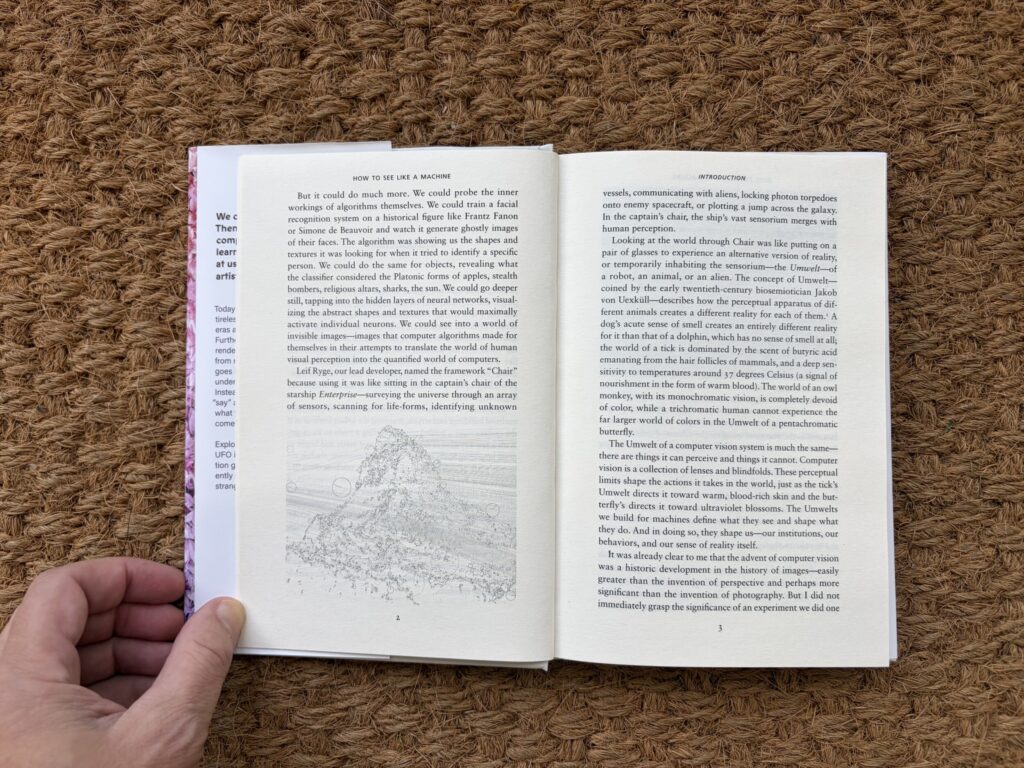
JTF (just the facts): Published in 2026 by Verso Books (here). Hardcover, 192 pages, with 53 illustrations. Includes a total of 6 essays, with an introduction and a conclusion. (Cover and spread shots below.)
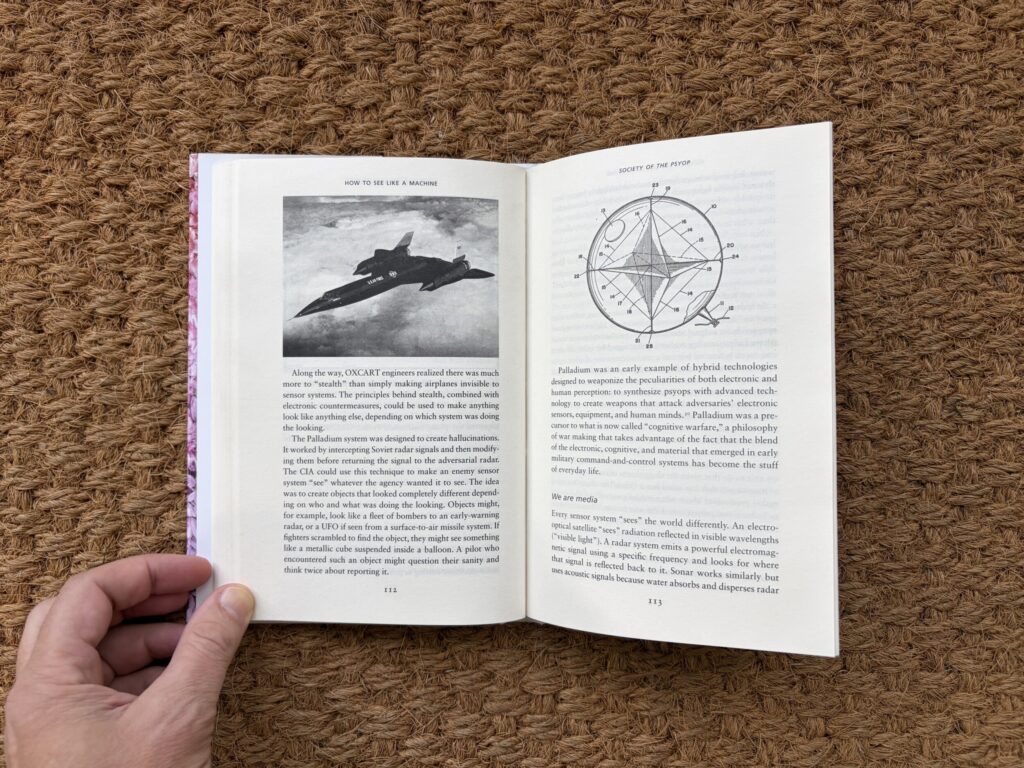
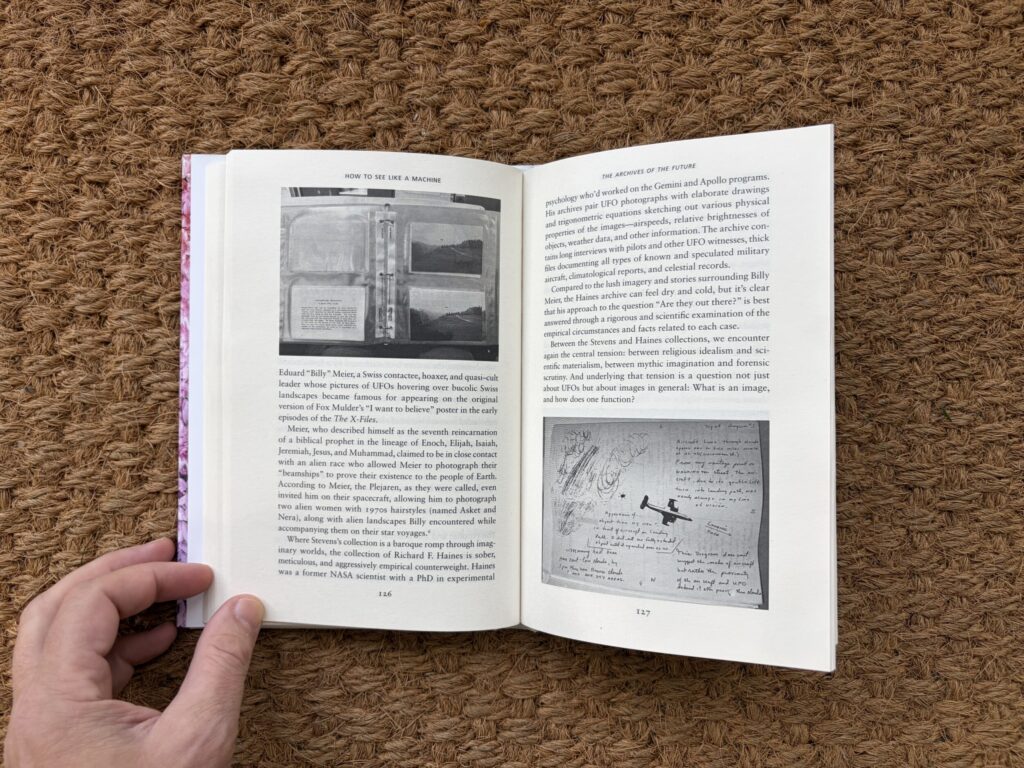
Comments/Context: Given photography’s longstanding connection to the leading edge of available technology, it isn’t altogether surprising that from time to time, we find ourselves metaphorically swinging from the tail of a tiger, not entirely being able to control, or even fully understand, what a new innovation in the medium might lead to or mean. Repeated breakthroughs in optics, chemistry, and mechanics created these kinds of frame-breaking disruptions in photography’s first century, and more recently, the wholesale transformation of photography into a digital (and computerized) medium have kicked off similar shock waves of conceptual and practical rethinking about what photography is and does.
When I first started writing about photography, one of the things I didn’t ever expect to spend much time thinking about was whether an artwork was actually a photograph or not. At that perhaps somewhat naive starting point, the definitional edges of the medium seemed relatively straightforward – being made with a camera felt like a decently obvious boundary line, where light passed through a lens, was captured by a light-sensitive emulsion or film of some sort, which led to a negative to be printed in a darkroom. But of course, there were immediate exceptions to such simplistic rules and frameworks, including Anna Atkins’ camera-less silhouettes made outdoors with just sunlight, and Man Ray’s images made in the darkroom with enlargers but no camera, where in some cases, abstractions of pure light replaced representations of objects found in the visible world. Fine.
But from there, the edges of the term “photography” got increasingly fuzzy and debatable, where reasonable people might (and did) actually disagree, so I had to made some red line decisions. X-rays, infrared film, photomicroscopy, and images made with other scientific vision tools? In. Photocollage, or sculptural works made from or incorporating physical photographic prints? In. Silkscreens, or other painted versions of appropriated photography? Out. Emulsion transfers? Mostly in. Transparencies on lightboxes? Mostly in. Chemical drawings made in the darkroom? In. Slide shows and videos that were sequences of still photographic frames? In. Cinematic videos and films, even if they were relatively stationary? Mostly out. Documentation of performances or projections? Mostly in. Again and again, artists creatively pushed the possibilities and boundaries of the medium, and I had to make nuanced choices about what could or should be plausibly included an ever evolving digital magazine about fine art photography.
The digital revolution in the medium, and the eventual transformation of the photographic workflow to an all digital (or hybrid) reality upended all of these categorizations once again. Now light was being captured in a camera by an image sensor, which converted those signals to computer code and saved them, for later display, printing, or other use. Or analog images were being digitally scanned, also becoming code. At first, our solution to this transformation was to use the output as the signifier – if the artist made a photographic print of the visual input, then it was definitionally a photograph. Cory Arcangel’s one-click Photoshop works quickly turned that cart over – they were output as photographs, but had never been anywhere near a camera and were made in software only. I decided they were in. So were the digital photographs that had been interrupted by digital mark making, filtering, and other software manipulations, as long as they were photographic prints in the end, not digital files or screen-based videos. At about the same time, photographers started to use the new flexibility of digital printing to print their images on all kinds of substrates, including as paint on canvas. Those were in too, but uneasily.
The continuing development of the smartphone camera has pushed these limits even further. Yes, we are in theory still capturing light with a semiconductor sensor with these camera-like devices, but those original light signals are now so pre- and post-processed by sophisticated algorithms to make them look “better”, it’s hard to know how much we can say that any resulting image is an indexical reflection or recording of some external reality. These images are still definitionally photographs it seems, but the empirical connection between photography and visible light is becoming much less literal, in ways that we as everyday users can hardly comprehend.
If all of this feels a little dizzying, you are not alone, which is where Trevor Paglen’s extremely smart and often quietly unsettling book How to See Like a Machine fits into this discussion. In a series of clear and incisive essays written over the past decade or so, often in conjunction with art projects he has been pursuing, Paglen dives head first into the cutting edge technologies that are increasingly dominating image making (photographic and otherwise), unpacking not only their technological structures and underpinnings but the more nuanced implications of their architectures, processes, and eventual uses. His investigations generally start with the who and how of a given innovation, but then quickly move on to the why, the what it means, and the what changes downstream as a result, leading to far reaching musings that extend outward from technical minutiae to broad societal, politcal, and economic reverberations. If we want to understand what a “photograph” is at this present moment in time and what it might become in the near future, this book is an excellent place to get up to speed.
We’ve been actively following Paglen’s career as a thoughtful artistic interpreter of technological innovation for more than a decade now, chasing his photographic works through gallery shows, museum exhibits, and art fairs, and from time to time feeling vaguely out of our depth by his subjects, or at least several steps behind the spearhead of his thinking. While we have intermittently reviewed his gallery shows going back to 2013, there have been a few that we didn’t fully appreciate at the time they were on view (our full coverage of Paglen can be found here), including his last show of UFO photographs, which with the benefit of one of the essays in this book, now feels much more complicated and intriguing than I first understood, which I’ll explain more in a moment.
To categorize or classify Paglen as a photographer feels like a willful misrepresentation of the facts; photography is certainly a key element in his larger artistic practice, but it isn’t the central axis around which everything revolves and it isn’t the only medium he’s interested in using or considering. Instead, his art probes the ways images are made, shared, and circulated in our 21st century age, and how the underlying technological building blocks and frameworks that make those images possible are themselves filled with assumptions, biases, and points of view that aren’t always easily seen, but are perhaps the most intriguing thing going on. In this way, his work is often about the changing nature of photography just as much as it is photography, which of course, creates layers of intellectual and aesthetic friction that generally require patience and care to unravel. The essays in How to See Like a Machine systematically fill in some of this richer backstory, explaining the mystifying technological trends Paglen has been working hard to understand and thereby providing context for the artworks he has made in response to his findings.
The initial essays in How to See Like a Machine step back to the mid-2010s, when the digitization of photography had matured to a point that smartphone cameras were already ubiquitous and social media was overflowing with user-generated imagery. What interested Paglen at that point was not so much this consumer saturation of a new image-making capability, but a subtle technical point about the digitization of imagery that many of us had overlooked. A digitized image was of course still visible by a human (when shown on a display or printed out), but it was now also readable or quantifiable by machines and computers. Paglen started to research what was happening out on the leading edge of machine-to-machine seeing and computer vision technologies, and what he found was becoming extremely powerful, at a faster rate than we might have imagined.
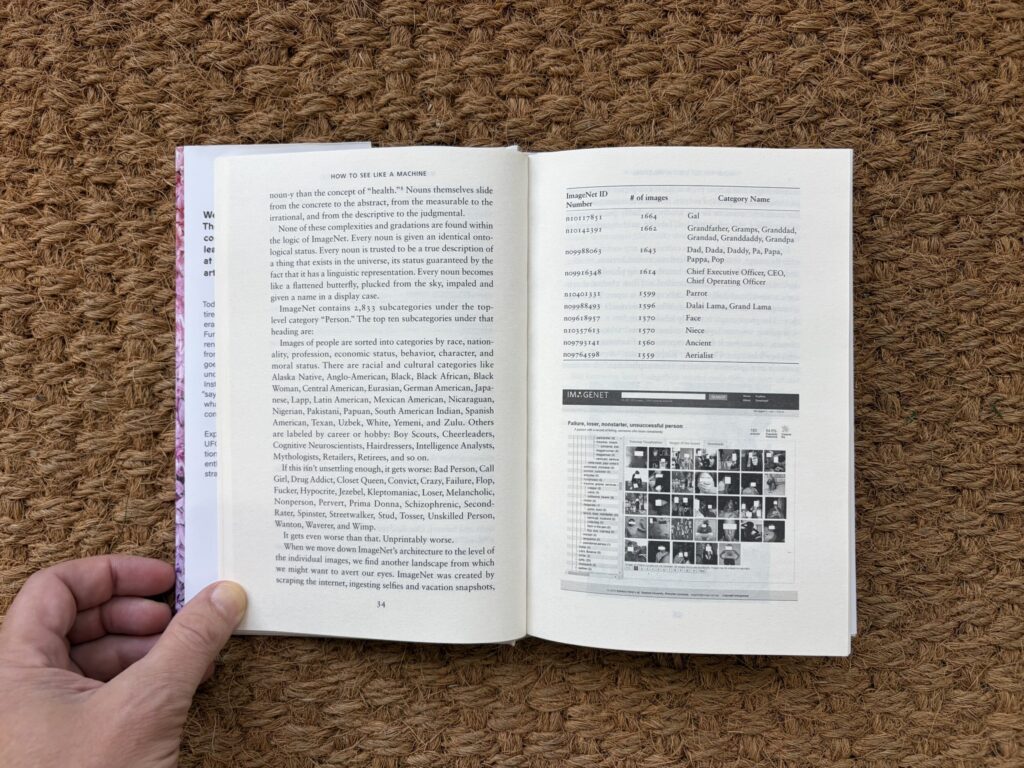
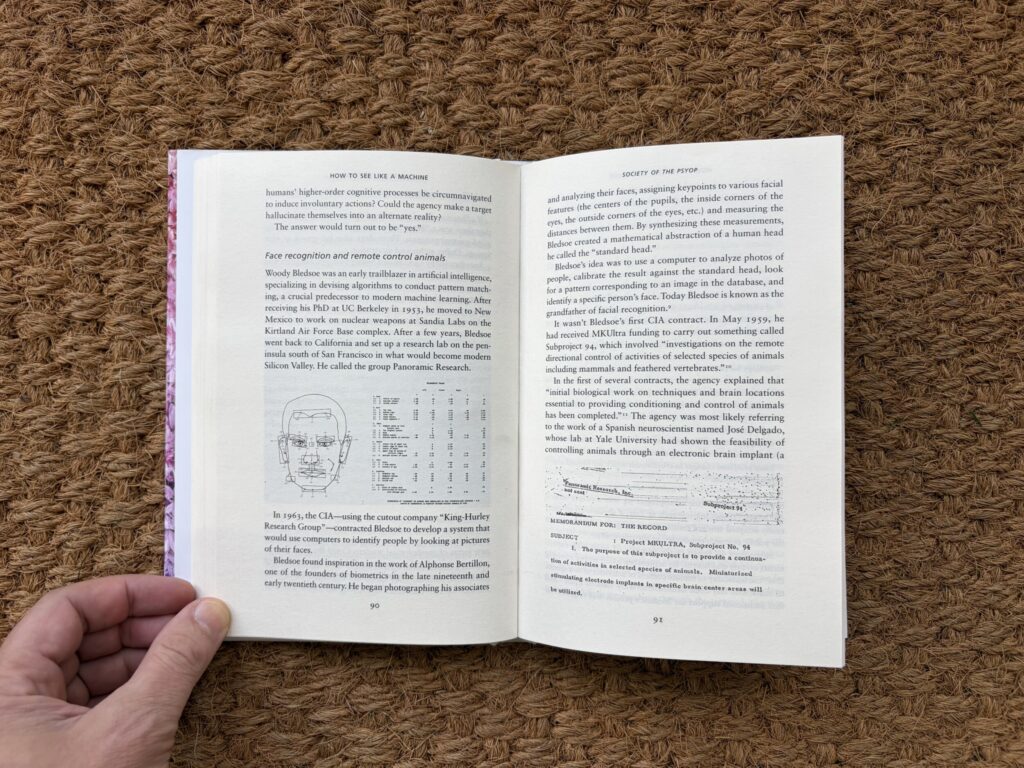
Paglen offers the automated license plate reader that speeds your way through a toll booth as an example of such a system, where cameras are capturing images of your plate and then using sophisticated software algorithms to break those images down into abstractions and classifications, to pattern match them, and to process them, all without any ongoing human intervention. If we then use such information to create vast databases that are then shared with toll collectors, governments, insurance companies, police, and other institutional actors, we’ve got some powerfully time saving and information rich automation at work, and also the beginnings of the Big Brother surveillance state George Orwell warned us about, all courtesy of computer vision advancements. Then multiply this kind of approach out to cameras installed at “smart” industrial and production facilities to oversee everything from defect identification to packing and logistics, or to department stores to track shoppers and speed self checkout, and it becomes clear just how much this kind of machine-to-machine image communication and “sensing” is making possible.
Of course, at some level, we’ve indirectly done this to ourselves, by so willingly uploading millions of images of our lives to social media sites and encouraging (or allowing) surveillance cameras to be placed everywhere. Photographs and videos (ours and those taken of us) have thus become the massive training sets for the many software systems that identify and categorize images, allowing each system to analyze the new images it “sees” in the context of those it has already ingested. Each snapshot is a software teacher, and also a piece of personally linked evidence (where we are, what we are doing, who we are with, etc.), which can be processed and forwarded on to advertisers, insurers, police, and others who want to operationalize (and monetize) how they deal with us as metadata-tracked individuals.
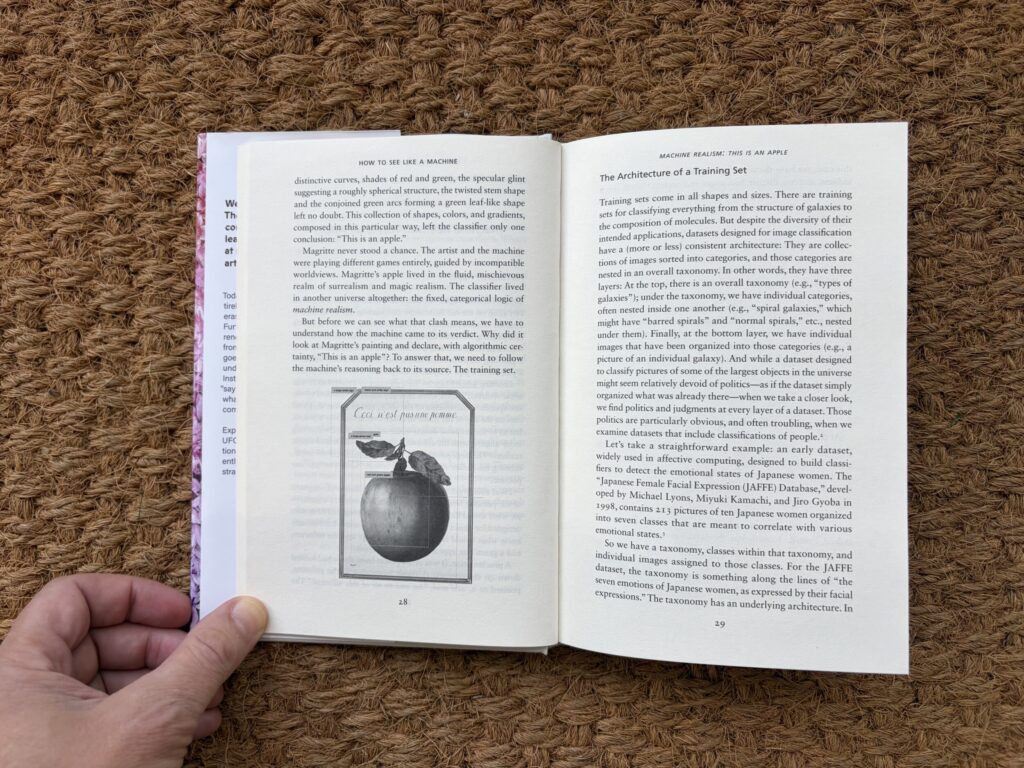
As Paglen puts it “your pictures are looking at you” now, and as he has continued to dig, the sweeping social, politcal, and economic effects of such systems became more obvious, which led him to step back to try to understand the way these systems are built, and how they make decisions. Spending time with facial recognition and “deep learning” researchers and their early systems, Paglen discovered a hidden world of abstractions, classifiers, categorizations, models, and training sets, and a way of seeing that leads to some surprising biases and mistakes. He cleverly uses René Magritte’s painting of an apple with the title phrase “Ceci n’est pas une pomme” (“this is not an apple”) as a resonant example of how these systems aren’t built for flexibility, nuance, or contradiction; software confidently recognizes the curves, colors, and shapes it finds in the image and categorizes them as an apple, but of course the image is also a painting, an illusion, and a surrealist joke, among its shifting meanings. Paglen defines this blinkered approach as “machine realism”, and then turns us back to the architectures, taxonomies, and training sets that lead the software to make the measuring decisions it does. And down the rabbit hole we go further. Paglen finds that underneath the ability to label or categorize a picture lie inherent assumptions about what fits in what pile (or what language/words are used to describe it), even though the world is astonishingly complex, varied, and multi-faceted. Standardization and certainty are the goal here, especially in industrial automation and police surveillance systems, where binary choices (in/out, yes/no, did it/din’t do it) are more valued than ambiguous subtleties and appearances. In making his own art in response to these findings, on the other hand, Paglen has been interested in exploring the edges of these very same ambiguities in definition and meaning, intentionally pushing on what can’t be so easily classified or measured.
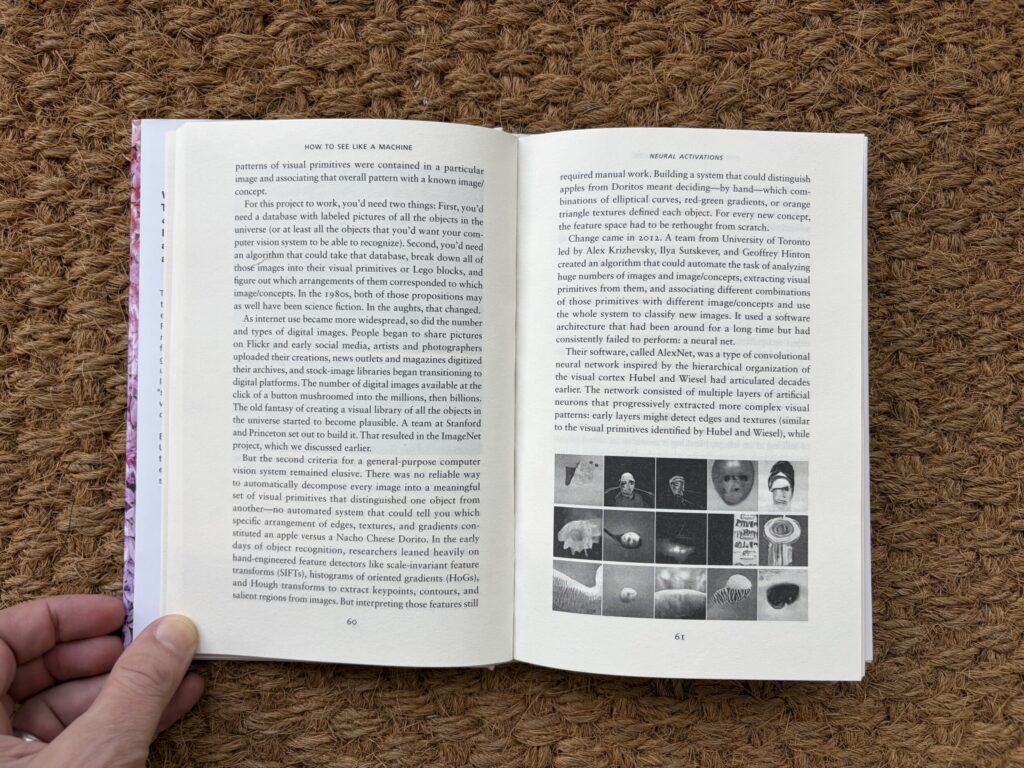
Paglen then switches gears and turns his attention to developments in cognitive neuroscience, particularly in how image primitives are “seen” and decoded by the brain, processed unconsciously, and/or kicked upstream to be consciously attended to and analyzed, all in a split second. What’s important here is the idea of an image becoming or generating a “neural activation” – visual stimuli are pre-consciously synthesized to create our sense of “reality”, and those specific neurological patterns can now be tracked, correlated, and recreated. (For a deeper dive on this science, Stanislas Dehaene’s Consciousness and the Brain: Deciphering How the Brain Codes Our Thoughts is an engrossing read.) This leads Paglen to an ultra-processed Doritos analogy, where the photographic equivalent of a perfectly addictive and delicious junk food could be designed with visual features that would activate certain brain functions or emotional reactions.
While Paglen’s various essays in How to See Like a Machine weren’t conceived or written as a complete or integrated whole, it’s still altogether possible to follow the breadcrumbs of his logic over time, as one investigation leads to another, or one unexpected discovery inevitably leads to further questions. In this way, we can watch as the wheels of his brain turn as he builds the tenuous relationship between machine vision and neural activation. If the machine vision systems can extract abstract data from images and use that information to pattern match, classify, and identify it against a set of known images, could that system be run “in reverse”? Could an image be derived from the qualifiers, instead of the other way around? And what would happen if the knowledge about neural activation could be incorporated into the mix, thereby leading to newly “created” or synthesized images that were optimized to generate certain reactions?
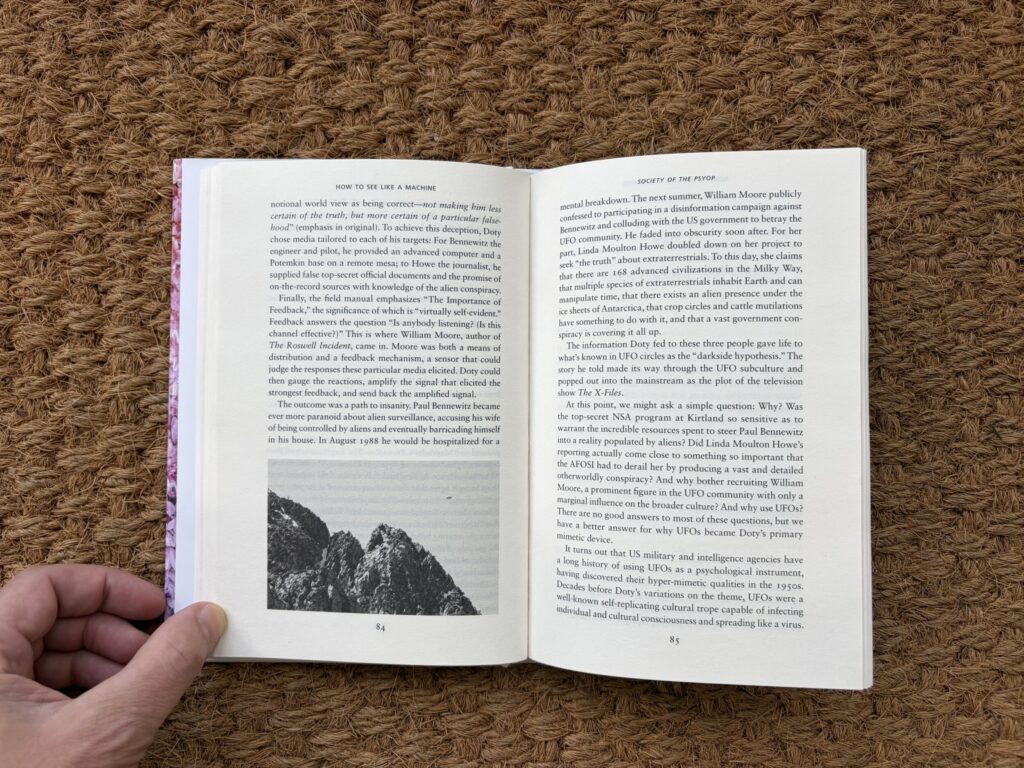
For those of you living under a rock for the past half decade, the future Paglen was starting to hazily see over the horizon was the arrival of generative AI, or “generative media” as applied to image making, as well as the sophisticated optimization algorithms being employed by social media to feed us exactly what triggers amplified neural activation. But before he starts to unpack some of the complexity of what’s happening now (and what it might mean), he takes a slight detour back into history, back to UFO photography and the related psychological operations (or psyops) that intentionally blurred the lines between “real” and “fake”. Part of the argument Paglen makes is that there is a decently long history of media and technology being leveraged to take advantage of the malleability of human perception, and the photographs of UFOs are a compelling example of the spot where hallucination, fabrication, and belief get powerfully intermingled.
The thing to understand about nearly any UFO photograph is that while it makes a strident claim of “truth” or objectivity, it is simultaneously highly ambiguous (or perhaps magical) in terms of the narratives that accompany it. As these dissonant states pile on top of each other, the photograph of a UFO becomes a kind of trigger rather than a document, where we believe what we want to believe almost subconsciously before we actually engage with what the photograph itself might be showing us. Paglen concludes if pysops are increasingly embedded inside photographs, then almost every photograph we are seeing in our contemporary media diet is essentially a “UFO photograph”, designed on neural principles not narrative ones and optimized so that we are encouraged to trust what someone tells us is the “truth” rather than what we see with our own eyes. If we then jump back to Paglen’s gallery show in the summer of 2025, where he showed a series of his own UFO photographs (as seen in our Daybook here), what he was doing with those lovely grandiose landscapes punctuated by the dots of flying saucers becomes more clear. All of the images were carefully crafted to slide into this area of seductive ambiguity (they’re the “best” looking UFO photographs you’ve ever seen), and my own perhaps subconscious skepticism of such photographs led me to immediately discount what he was trying to do, which in retrospect, is exactly the point – I too processed the images almost without thinking about them, my behavior altered by invisible strings the artist was pulling.
The last essay and the conclusion bring us to the relative present, where generative media has started to take hold. By following Paglen’s logic through the earlier essays, we can now see what’s really going on when we conjure synthetic images from prompts, creating images that borrow or appropriate the visual language of photography, but are really designed to be operational not indexical. If we reach back to where we started this discussion, and the shifting definition of what a photograph might be, it seems obvious that a generative AI photograph isn’t really a photograph – it is more akin to a photo-realist painting, where the look and feel of photography has been painstakingly mimicked by an image-making system that has nothing to do with photography; what’s particularly uncanny and weird about this new reality is that actual photographs trained the AI systems to generate images in the style of photographs.
This nested circulation of feedback loops – of looking at pictures that are looking back at us, of building systems that replicate and hijack our own pathways of human perception, and now of generating pictures that are made from other learnings from other pictures – is one of the singular ideas I take away from How to See Like a Machine. While I can’t entirely fathom that we have already entered a “post-AI visual culture”, I do wholeheartedly agree that the authority of photography has been permanently eroded if we cannot reliably distinguish between an AI generated “photograph” (made by a machine) and a real one (made by a human). What’s a bit scarier about what Paglen has laid out is that what we’ve built is a media environment that seems maximized for manipulation and mistrust, producing and delivering visual triggers that reliably make us contented or outraged based on the associated inputs and whoever’s controlling the software. And Paglen rightly points out that if we don’t trust what we see, then we will look elsewhere for confirmation of our perceptions, which opens the door to authoritarian voices that offer certainties over facts – our inner voice wants to believe.
Even if the tether between photography and visible light is now fundamentally broken by generative AI, I still wonder about the glass half full scenarios that might exist for the medium. I think there is still a place for mechanical objectivity in photography, and value to be found in the collectively acknowledged empiricism of recorded media. Of course, photography has always been about choices and selection, about deciding where to put the camera, and about singular seeing within a world of possibilities. Even as the technologies of photography continue to evolve, and the broader visual culture around the medium rides new waves, there are likely photographic boundaries that are still worth defending. In thinking about these ideas, Paglen’s book feels like essential reading. As an insider missive from the technological front lines with an artistic point of view, it cogently explains many of the technical innovations and cultural forces that are coming together to reframe our sense of what contemporary media is and how it actually functions. We can rest assured that artists will always figure out how to use new tools in unexpected ways, and leading edge innovators like Paglen will likely commandeer current generative AI systems for their own artistic ends at some point soon (see the recent photobook by Kenta Cobayashi and Tyrone Williams, reviewed here, as one early example). Until then, we should knowingly guard ourselves against the AI slop and perfectly tuned viral memes, and bet on the fact that photography can and will somehow withstand this feverish onslaught on its inherent credibility.
Collector’s POV: Trevor Paglen is represented by Pace Gallery in New York (here), Jessica Silverman Gallery in San Francisco (here), and Fellowship (here). Paglen’s work has not yet reached the secondary markets with any regularity, so gallery retail likely remains the best option for those collectors interested in following up.