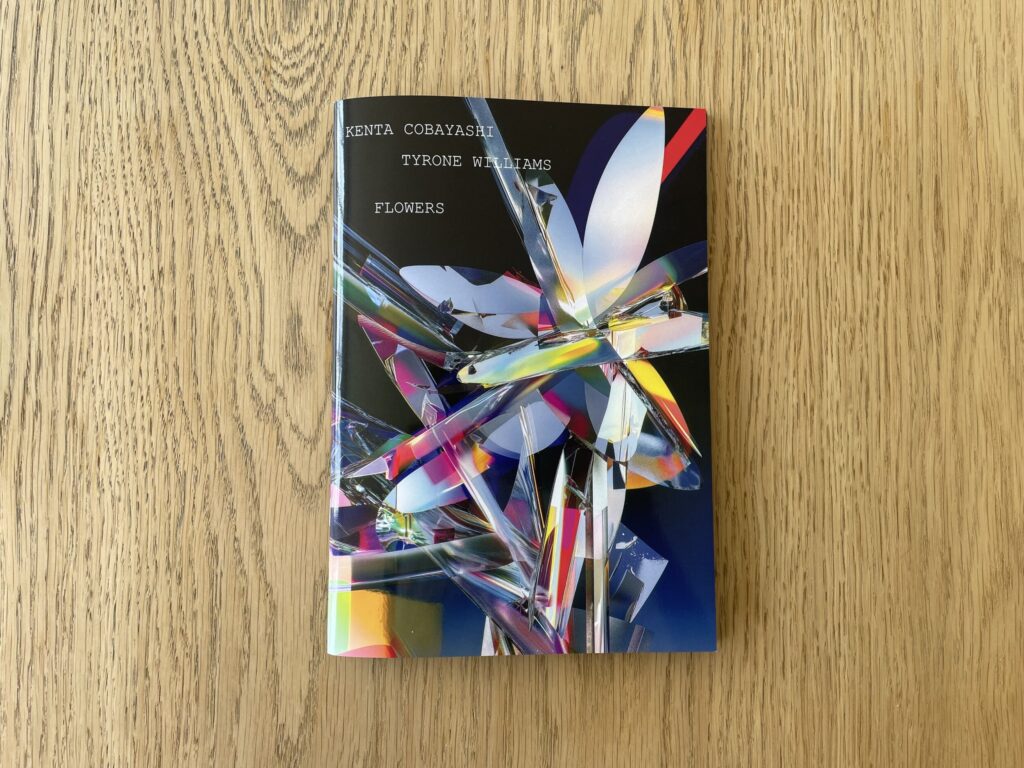
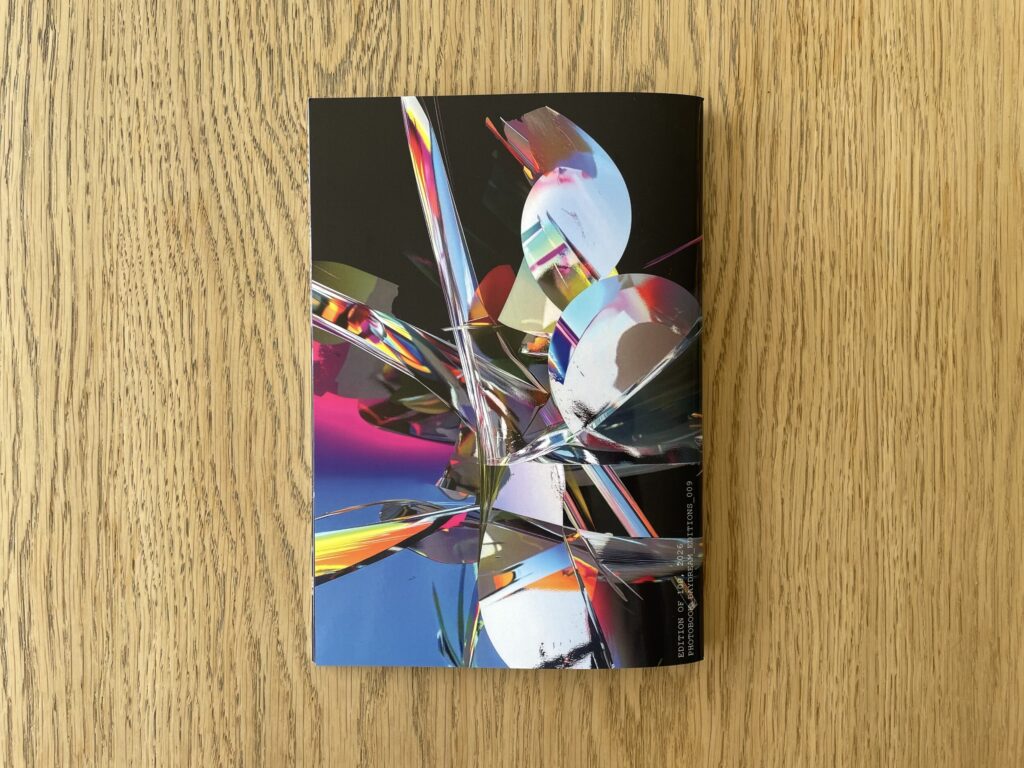
JTF (just the facts): Published in 2026 by Photobook Daydream Editions (here). Softcover (10 x 7 inches), 64 pages, with 58 image reproductions. In an edition of 100 copies. (Cover and spread shots below.)
Comments/Context: Ask any 21st century cultural influencer, and it’s clear we’re firmly in the age of the “collab”. Of course, collaboration between people is a fundamental human impulse, but in our current moment, this collaboration has taken on a more overt and sometimes performative tone, with musicians, fashion designers, and particularly brands coming together to create hybrid offerings that appeal (and are marketed) to the combined audiences of the contributors, thereby expanding reach and energy.
Art world collabs have taken many forms over the years, from artists who decide to consistently work as duos, pairs, groups, or collectives, to curatorial pairings that bring unexpected combinations of artists into dialogue with each other. And back in the early 1980s, Andy Warhol (perhaps the first artist-as-brand exemplar) and Jean-Michel Basquiat famously made a series of paintings together, the momentary merging of their two artistic voices a boldly ahead-of-its-time strategy.
In its pre-digital form, photography didn’t lend itself particularly well to collaboration – there could be shared conceptualization before the shutter was clicked, shared interpretation of the negative in the darkroom, and perhaps even some shared collaging afterward, but almost no broad mixing of styles was really possible. With the shift to more software-driven structures, it has theoretically become easier for two artists to work together on the same image, but real “collab” style blendings have still been few and far between.
Flowers by Kenta Cobayashi and Tyrone Williams is a groundbreaking collaboration in many ways – it’s a modest zine-style publication that is filled with ideas that smartly challenge the boundaries of contemporary photography. In the past decade, Cobayashi (from Japan) and Williams (from the UK) have quietly carved out prominent positions on the cutting edge of the digital medium. Their individual work has brought together various forms of digital manipulation, including layering, distortion, and other processing techniques, leading to images that have extended photography in new directions; Cobayashi has explained his own effort as an “ongoing interest in what happens when you push an effect beyond its functional limit”. Out on this frontier, there has been less gallery and institutional support for their explorations (although this is changing), so photobooks have been an important way to communicate their emerging ideas. We’ve wrestled with Cobayashi’s EVERYTHING_1 from 2016 (reviewed here) and EVERYTHING_2 from 2020 (reviewed here), as well as Williams’s AESTHETIX from 2020 (reviewed here), trying to stay current from afar with their increasingly complex and sophisticated photographic machinations.
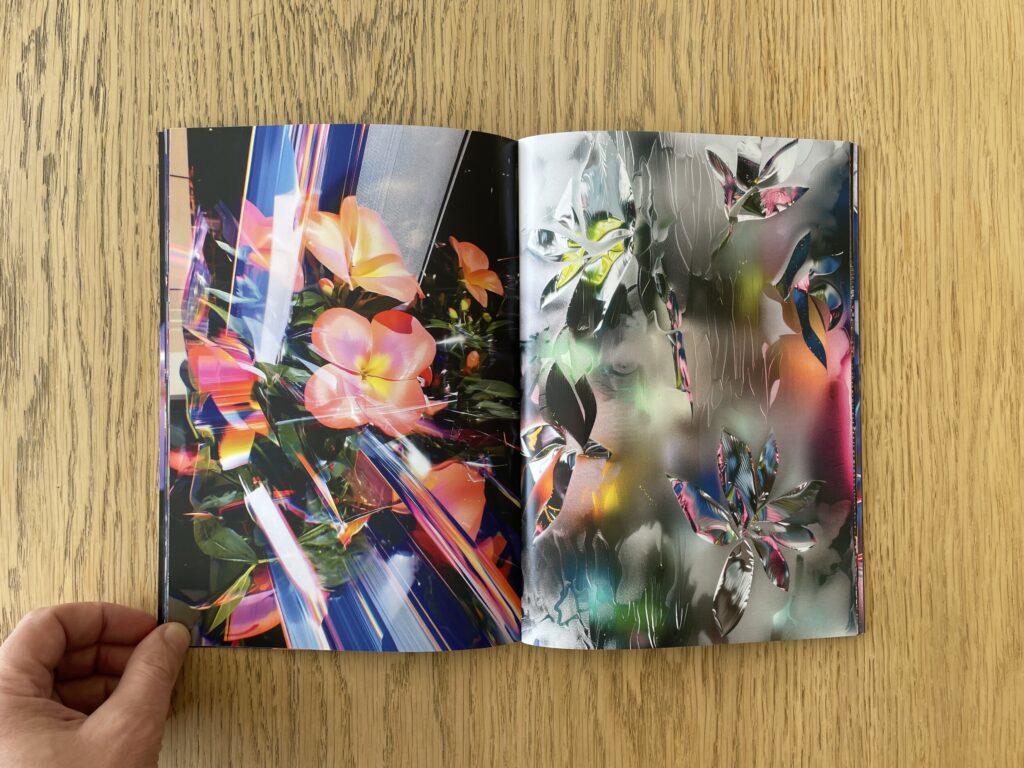
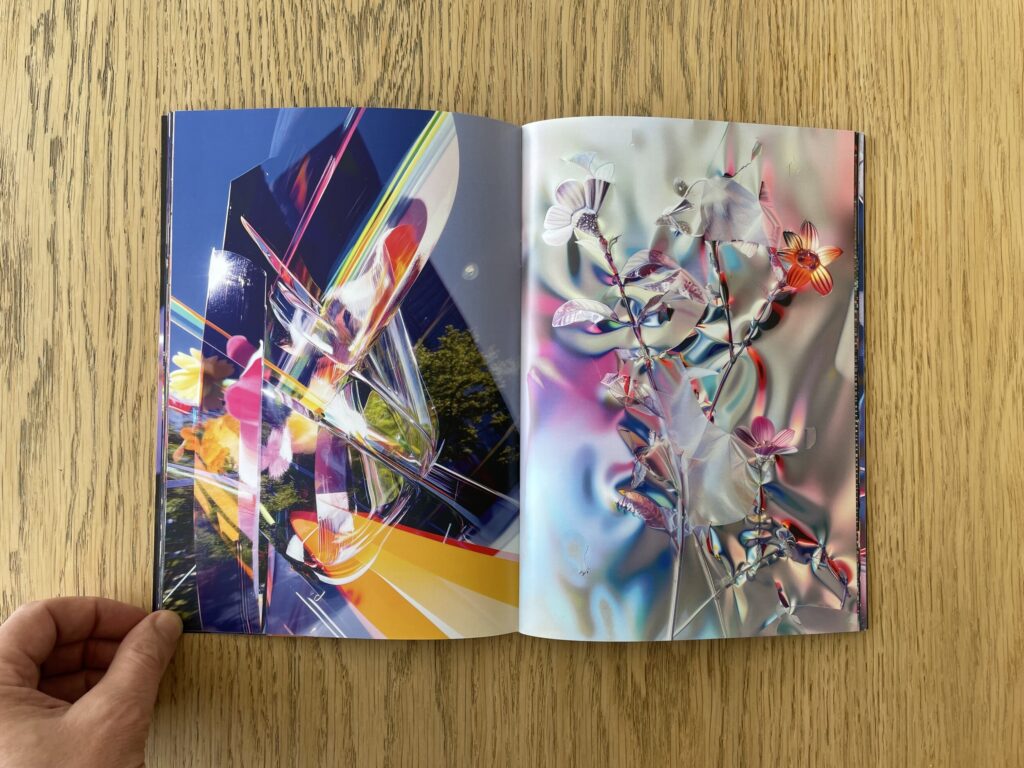
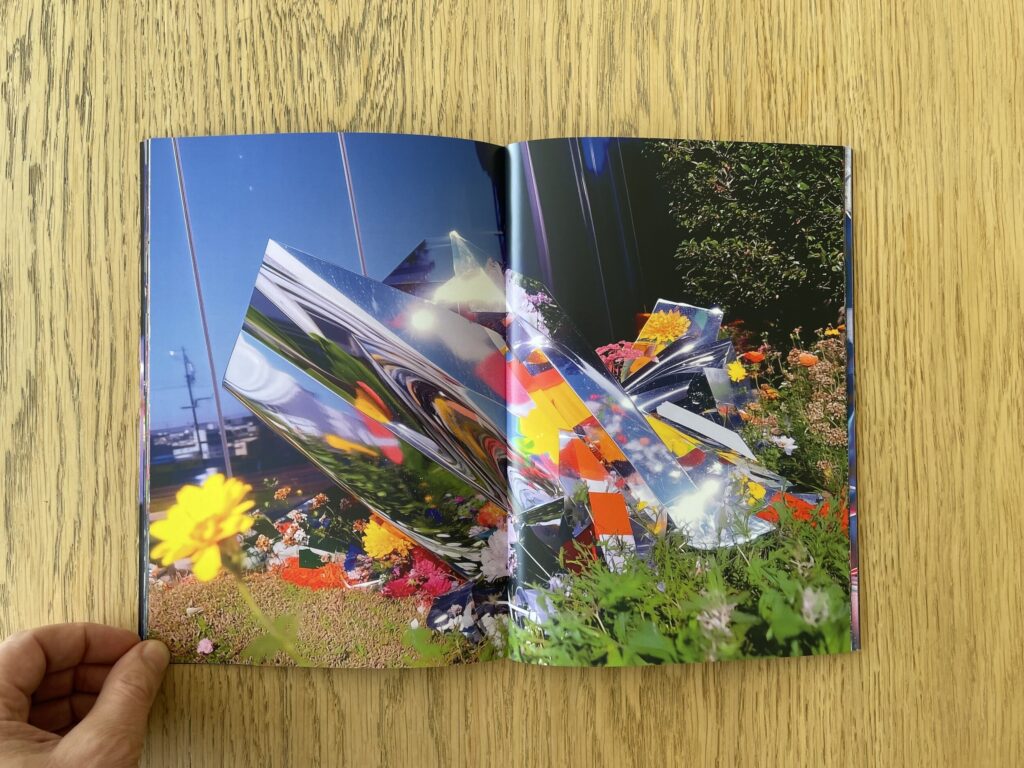
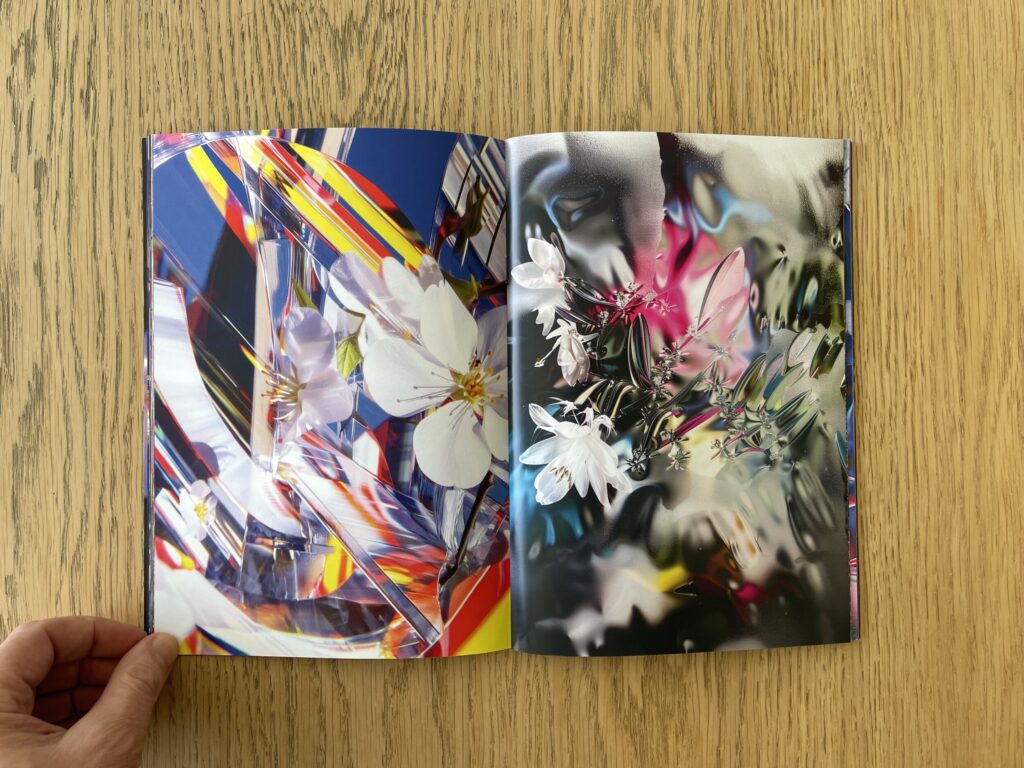
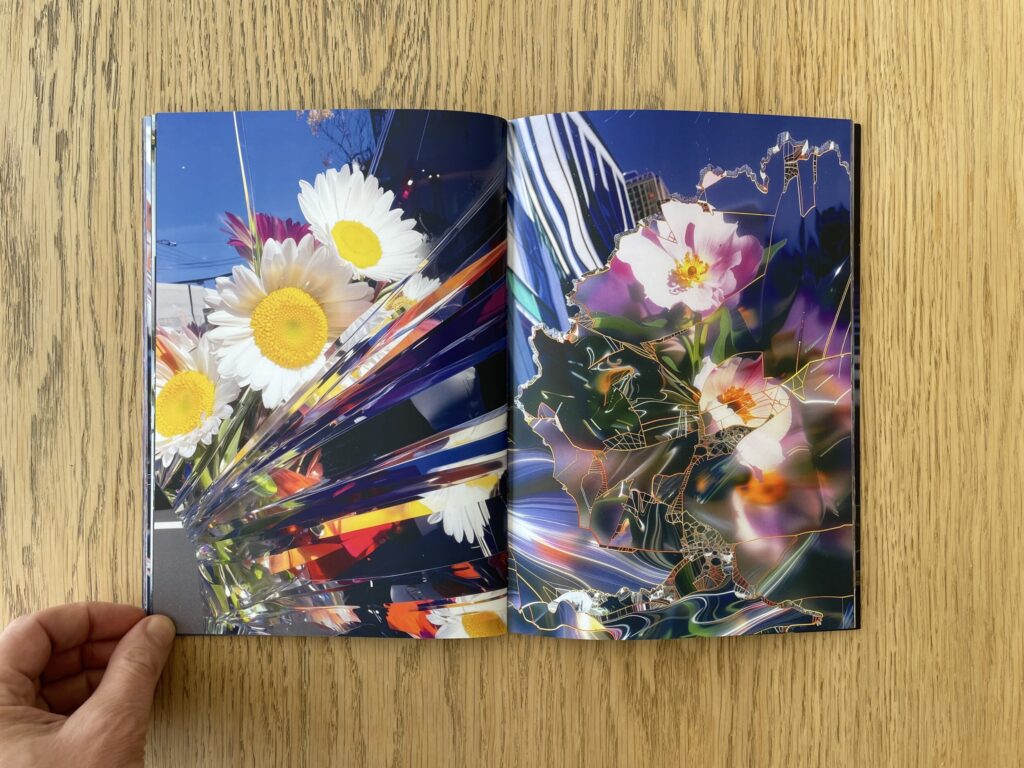
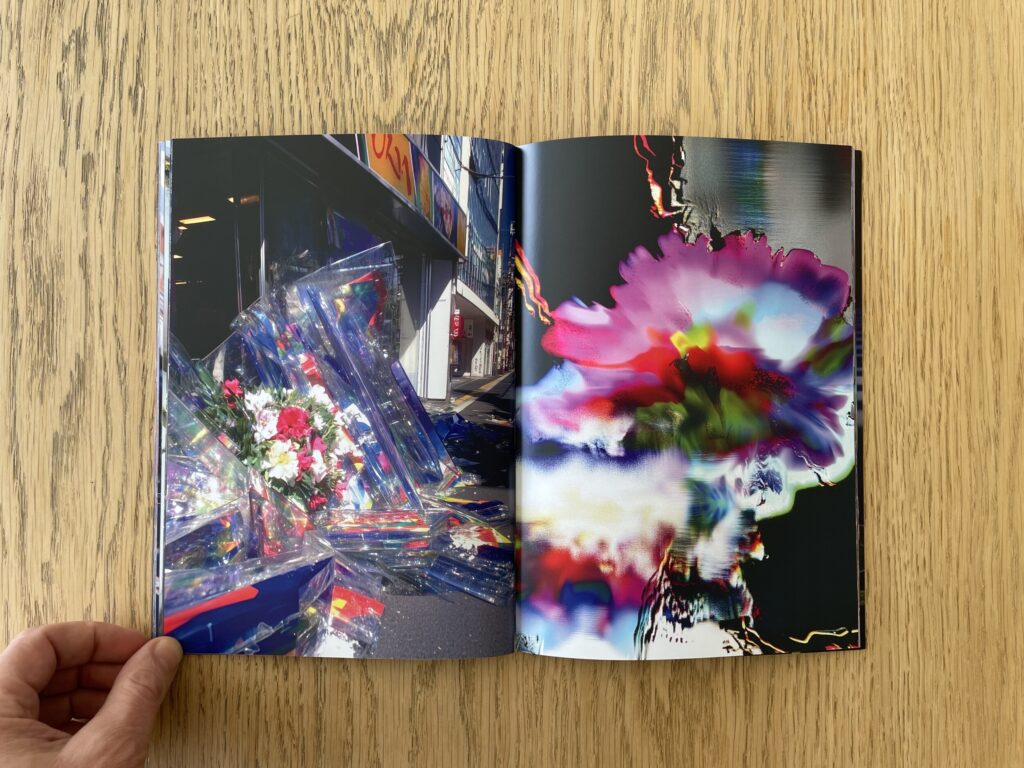
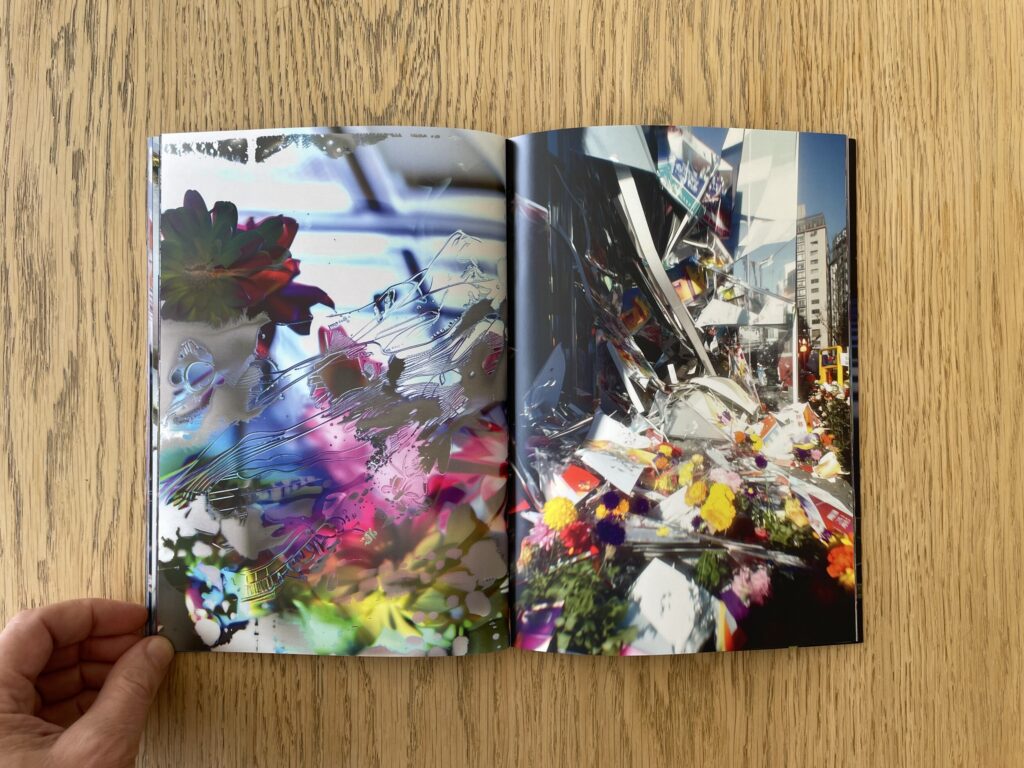
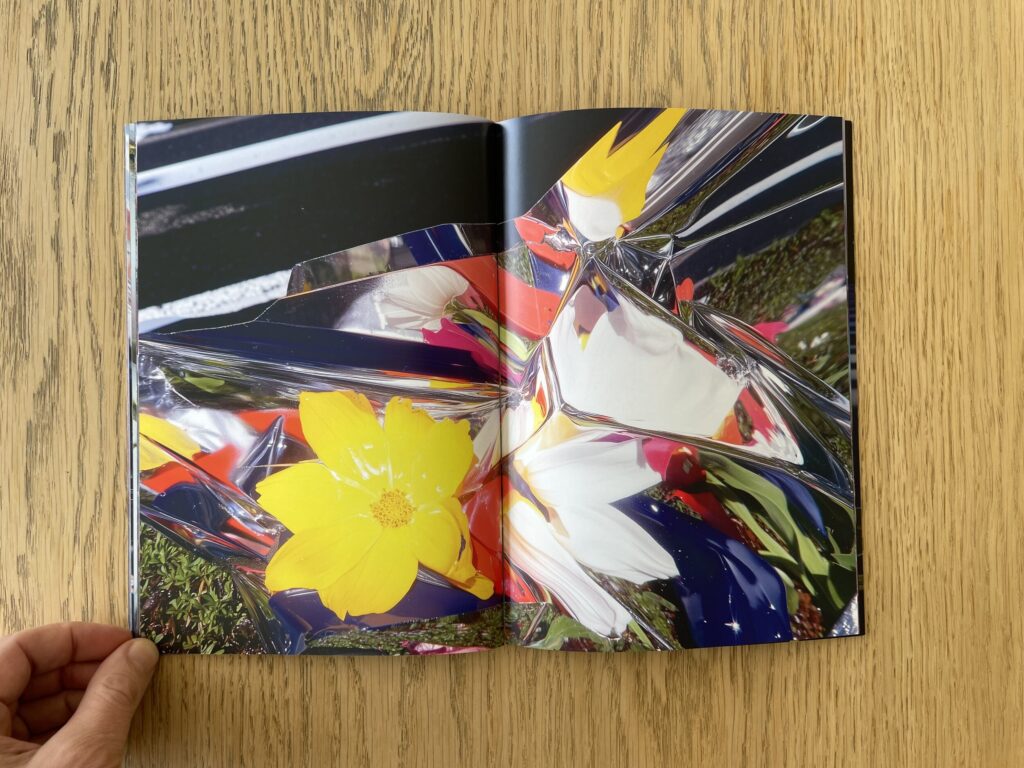
At first glance, Flowers appears to be a straightforward pairing, interleaving new floral images by both artists into an integrated whole, and with no captions, titles, or other identifying texts included, it’s often difficult to identify which works were made by which artist, even though they both have decently distinctive aesthetic styles. As it turns out, there’s quite a bit more going on here than it might appear.
For those readers who have developed an instinctive distrust and skepticism of so-called AI photography, I think Flowers represents one of the most thoughtful uses of AI in contemporary photography that I have so far encountered. What Cobayashi and Williams have done is ingenious, and surprisingly nuanced. To start, each artist has trained an AI system on their own previous work (feeding their own images from various series and projects, as well as other straight photographs, into Midjourney, using its personalization features) and then asked it to output new images based on those inputs. It’s a little like throwing your artistic self into a blender and seeing what pops out – inherently it’s still you, but in a rearranged or extended form, raising some not so obvious questions about the evolving nature of authorship and machine interpretation.
As we have seen with the AI slop that now clogs our social media feeds, what comes out of an AI can be unpredictable and awkward, and so in this case with an AI trained on your own artworks, the edit process of sifting through the outputs and then deciding, as the artist, which of these downstream variants actually still reflects your artistic point of view becomes all the more critical. I’m not sure we’ve actually developed the right vocabulary to explain this selection process – it’s akin to guiding or steering, with the artist imposing his own eye on the spread of outputs offered, in a sense reimposing individual intention on the reverberations of the echo chamber. In any case, both Cobayashi and Williams made their own choices (and rejections), and aside from some color correction (as I understand it), Flowers gathers those works together without additional manipulation.
But wait, it gets better. In the process of collaborating on the book, Cobayashi and Williams also decided to train a third AI model on a combined set of inputs, the shared personalization folder containing selections from both of their work. This dual AI then generated outputs, and a handful of images in Flowers come from this blended approach, at a meeting point of their two artistic styles. Again, Flowers doesn’t offer notation to help explain which images are which, so as the pages turn, to some extent we’re left wondering is this a work by Cobayashi, or Williams, or both, and this ambiguity asks us to reconsider what we think we know about either artist. (As an aside, a blended 3D rendering that flies through the various structures of Flowers for roughly 20 seconds also exists, expanding the flat images into three dimensional structures that can be seen from different angles – this fascinating video can be found on both of the artist’s Instagram pages, linked in the sidebar.)
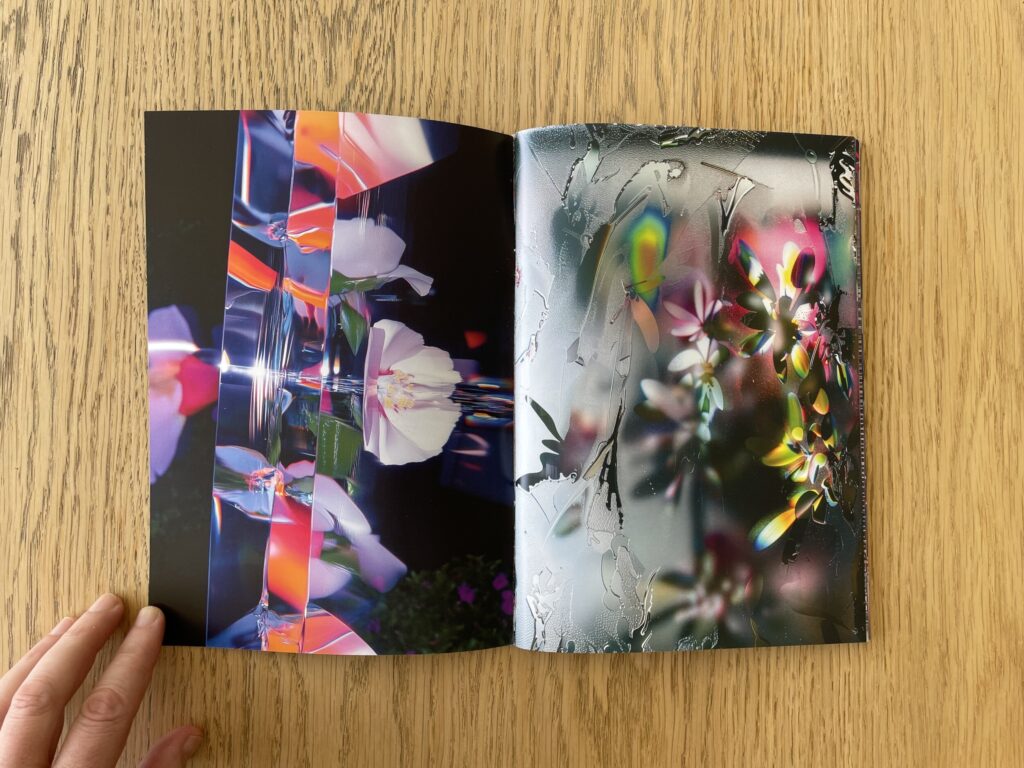
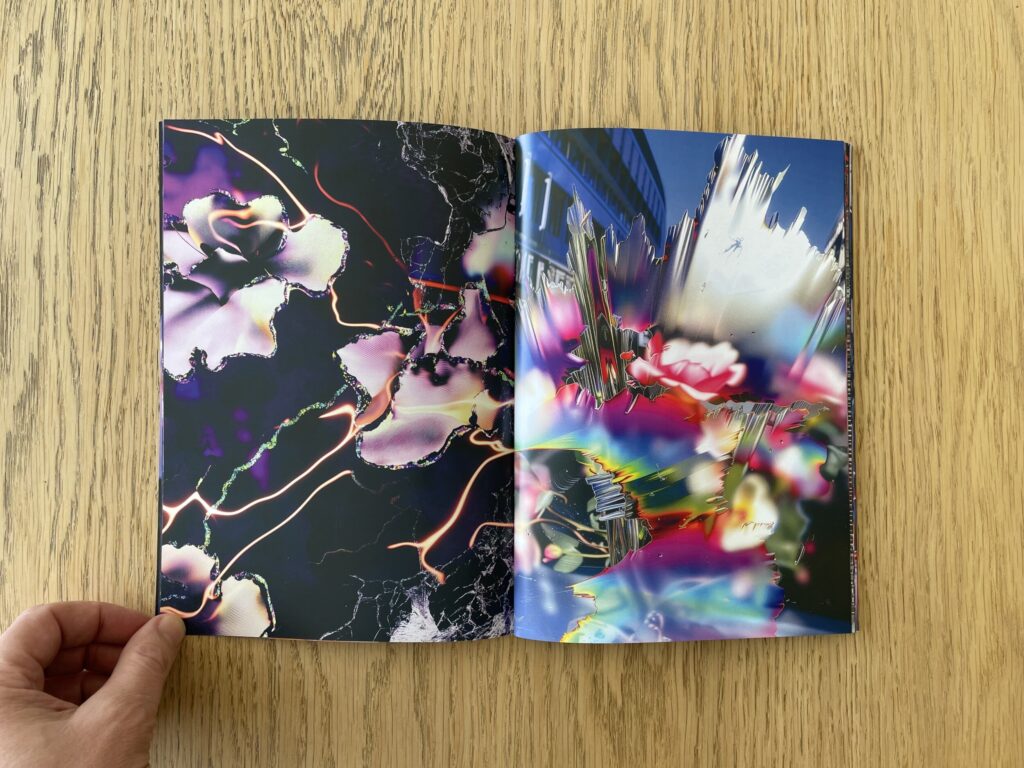
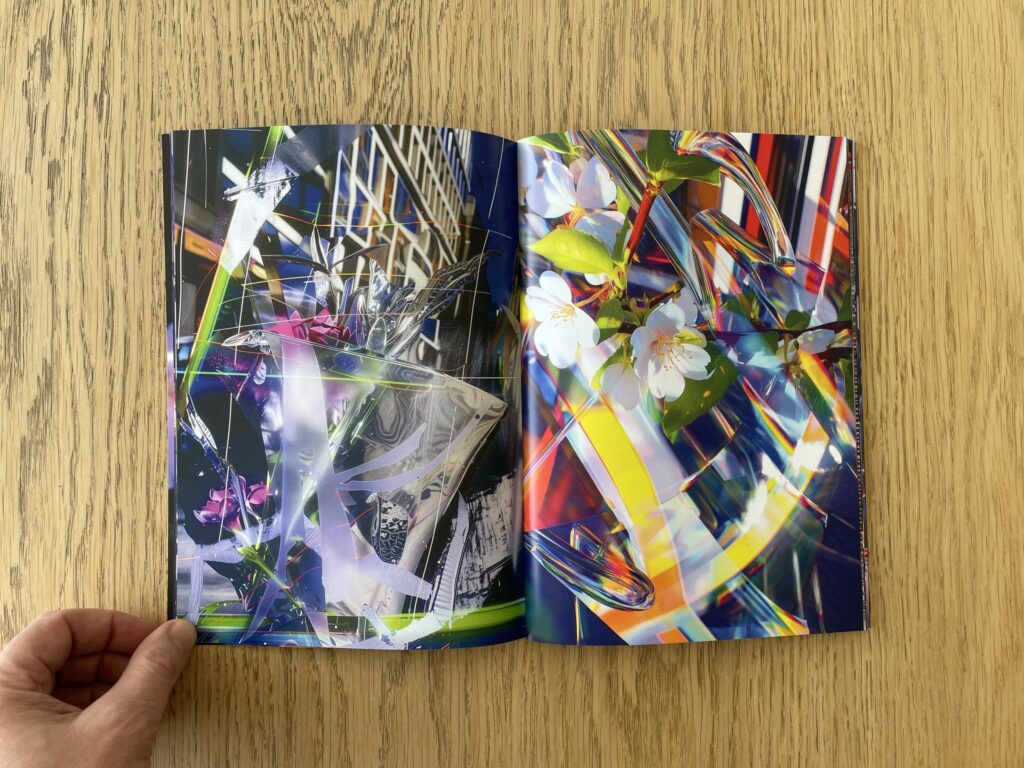
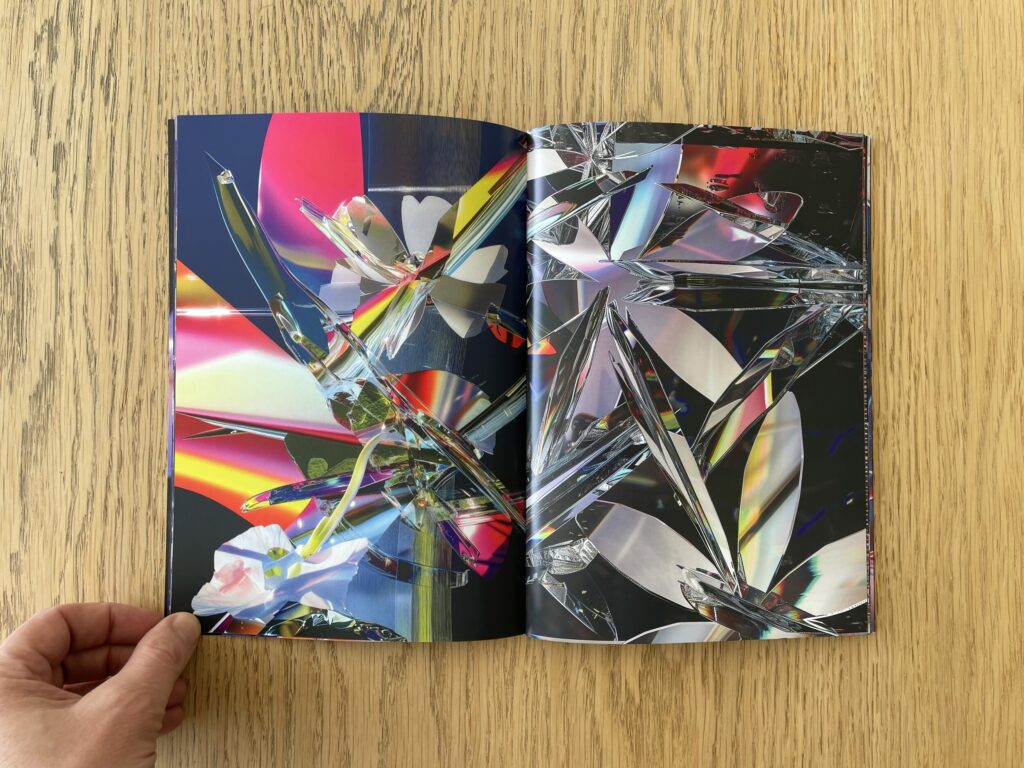
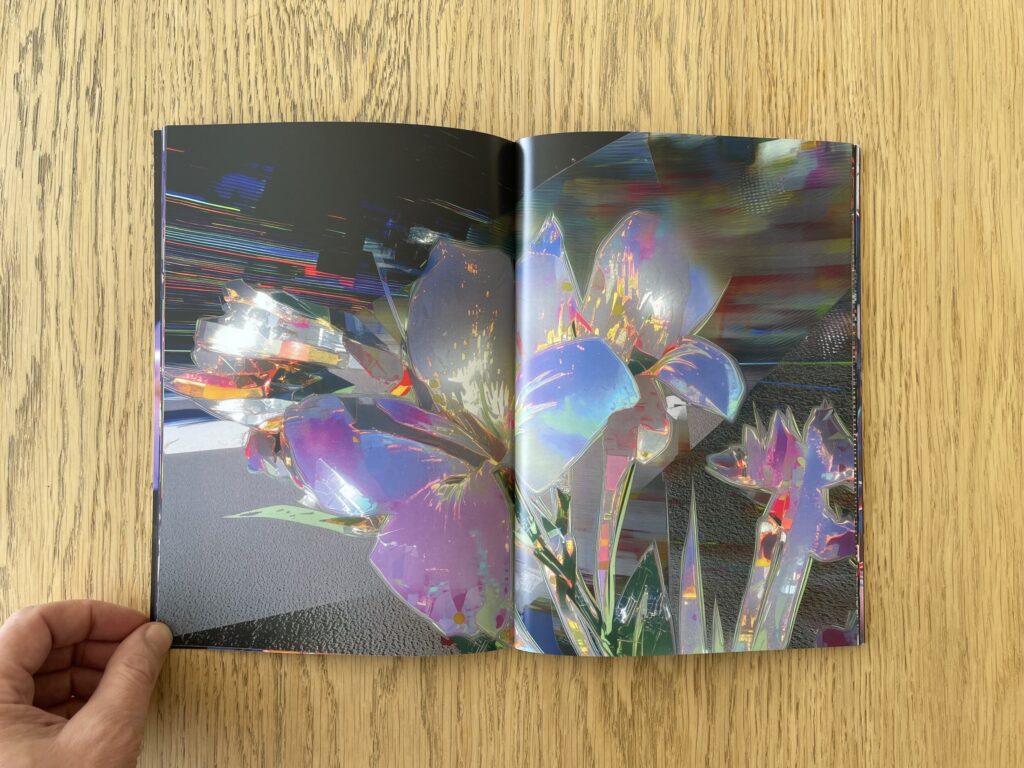
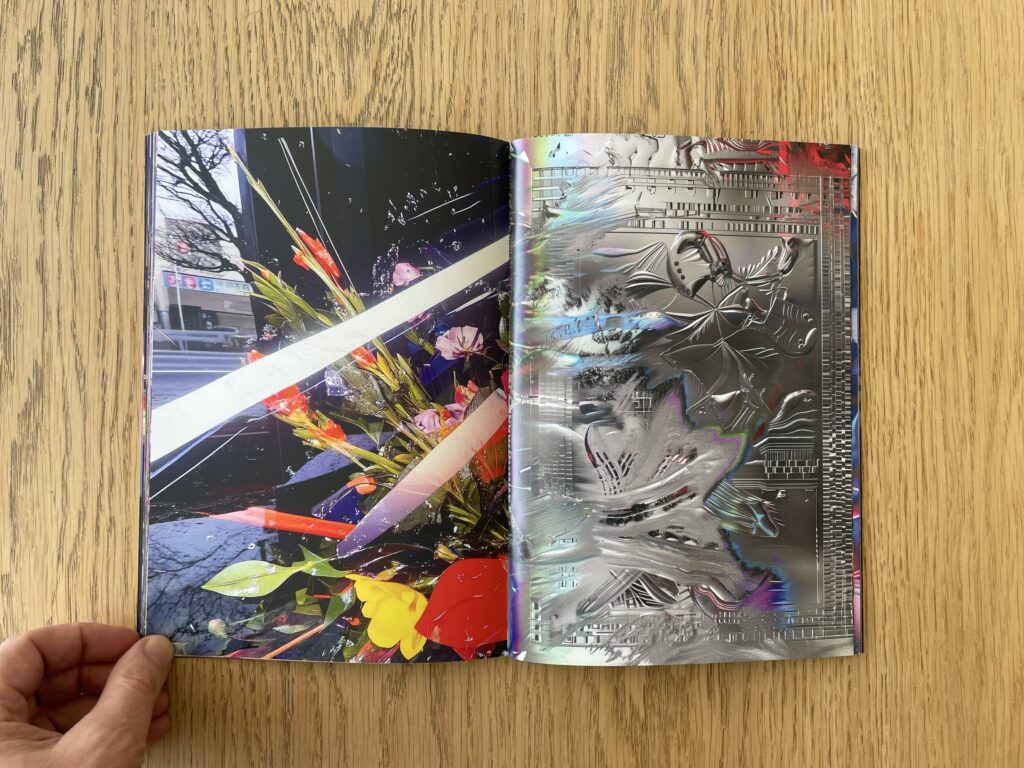
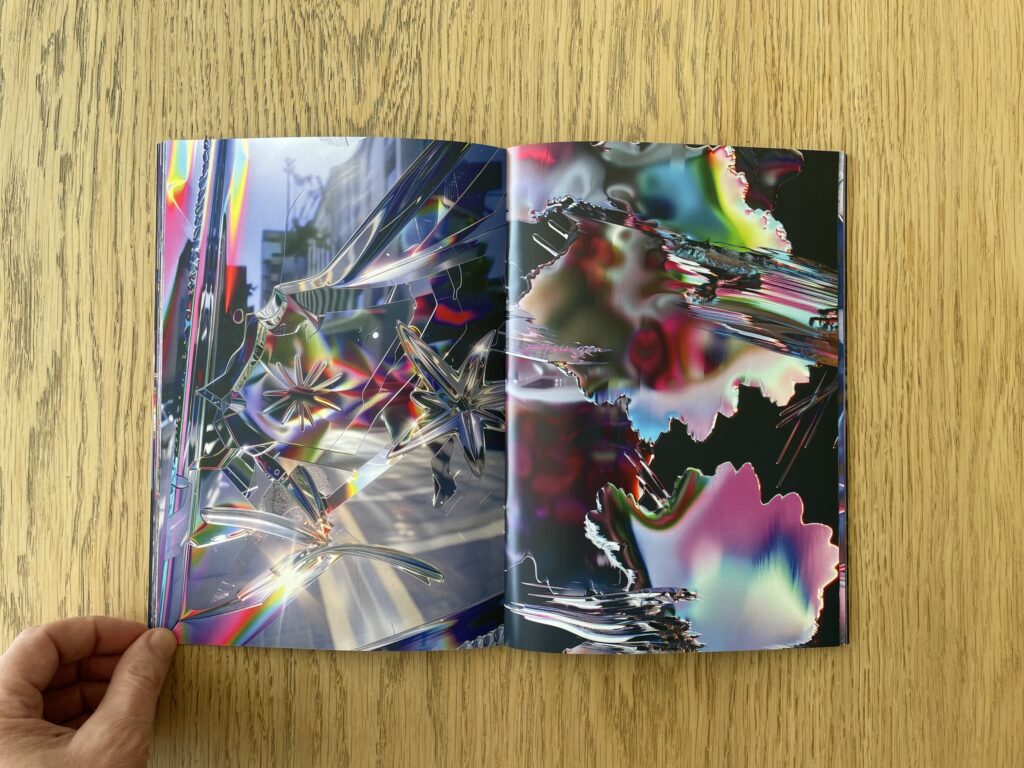
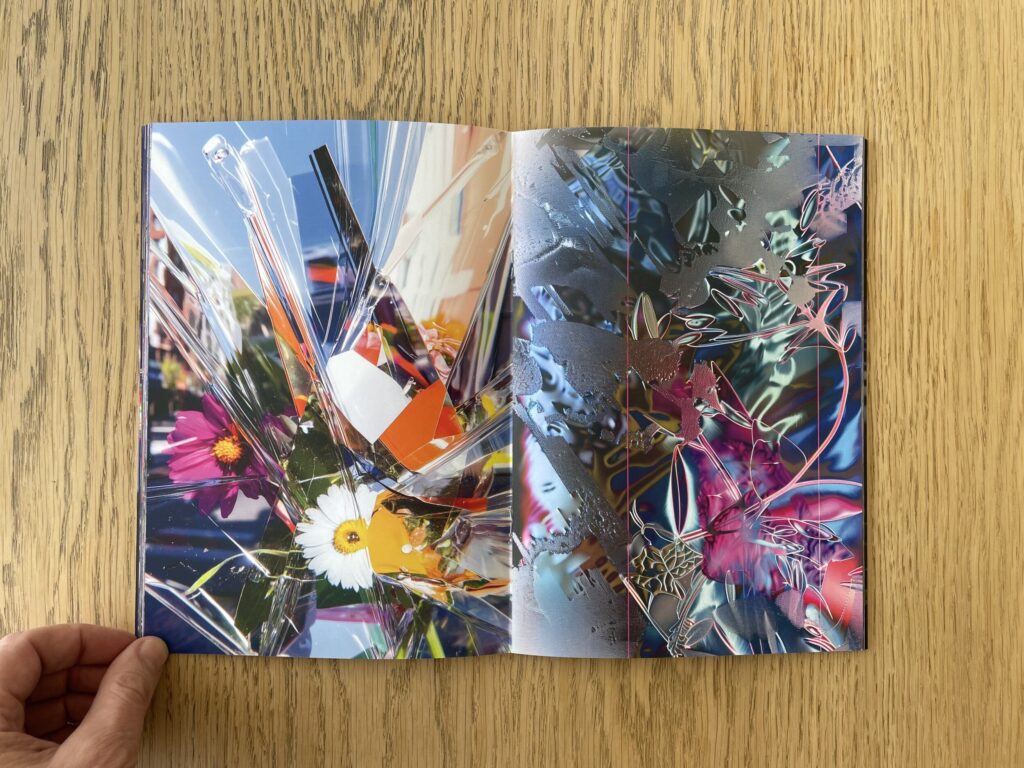
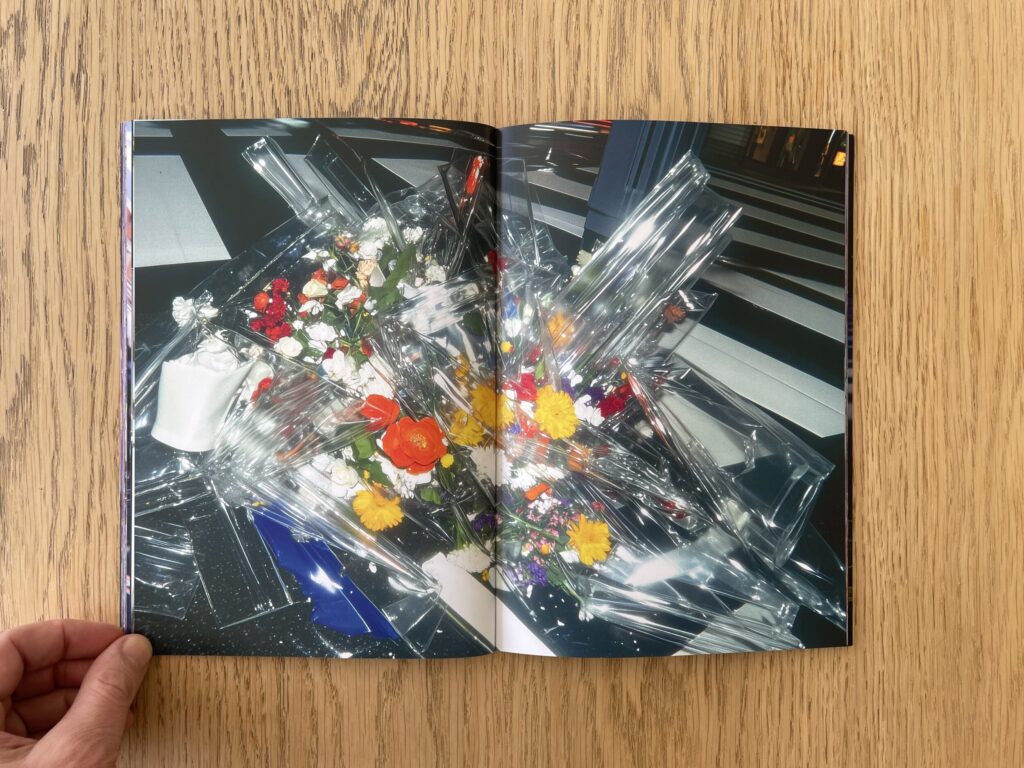
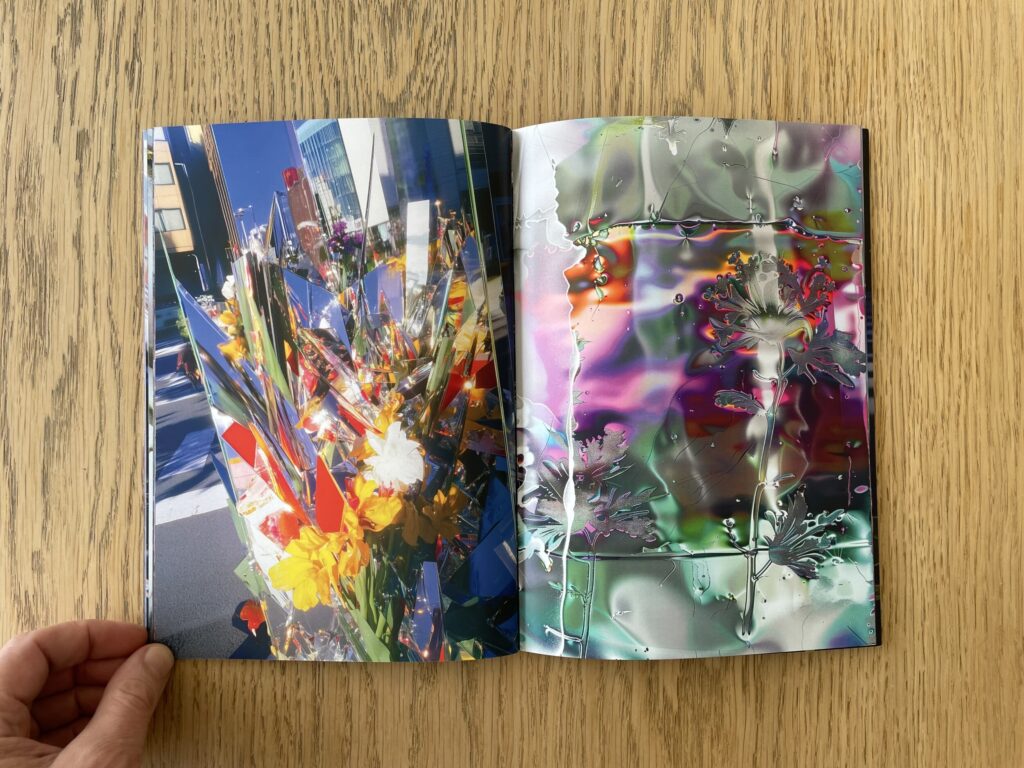
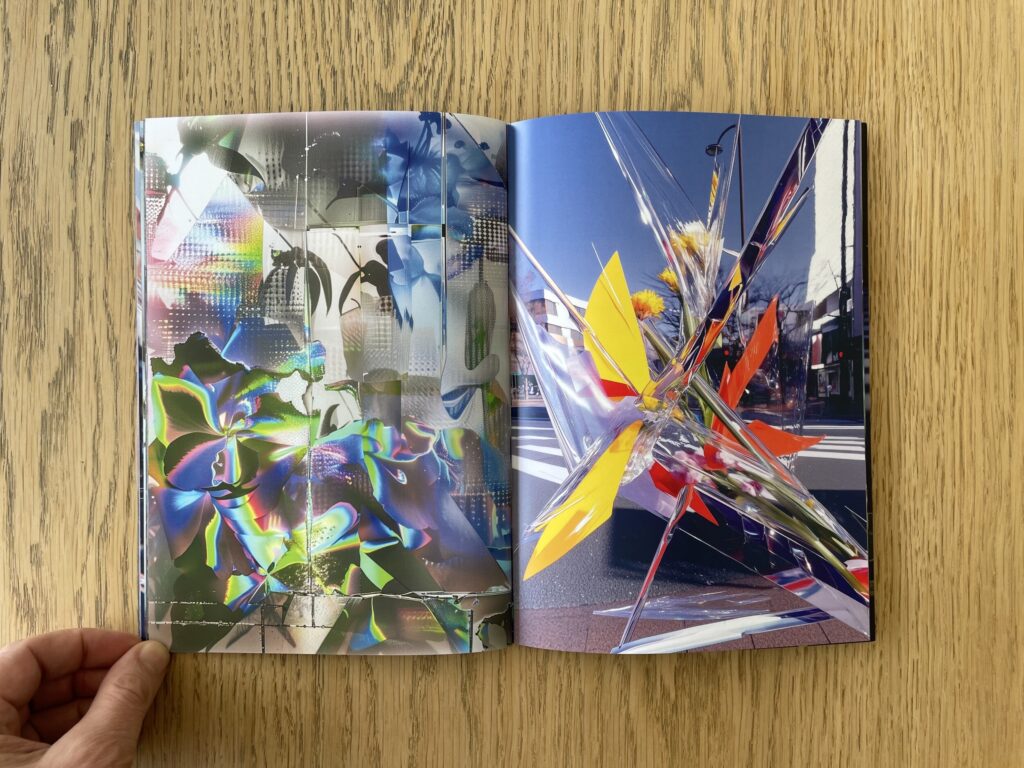
While it is dangerous to draw conclusions about images that have not been overtly attributed, I think it is safe to say that Cobayashi’s works in Flowers have a bit more photographic “reality” in them. It’s possible to identify fragments of Tokyo streets, crosswalks, buildings, pavement, and other urban details, along with brightly colored flowers and bouquets, all swirled together in Cobayashi’s compositions, with textures and motifs of broken glass and mirror shards creating layers of reflections, distortions, and smears of color. In a few images, the glass forms have taken on strangely sculpted shapes, appearing almost like transparent inflatables, which have then been mixed in with the flowers and the street scenes. This gives the works an uneasy tension, the mysteries of photographic reality upended and remixed, offering impossibly chaotic visual setups that have their own surprising beauty.
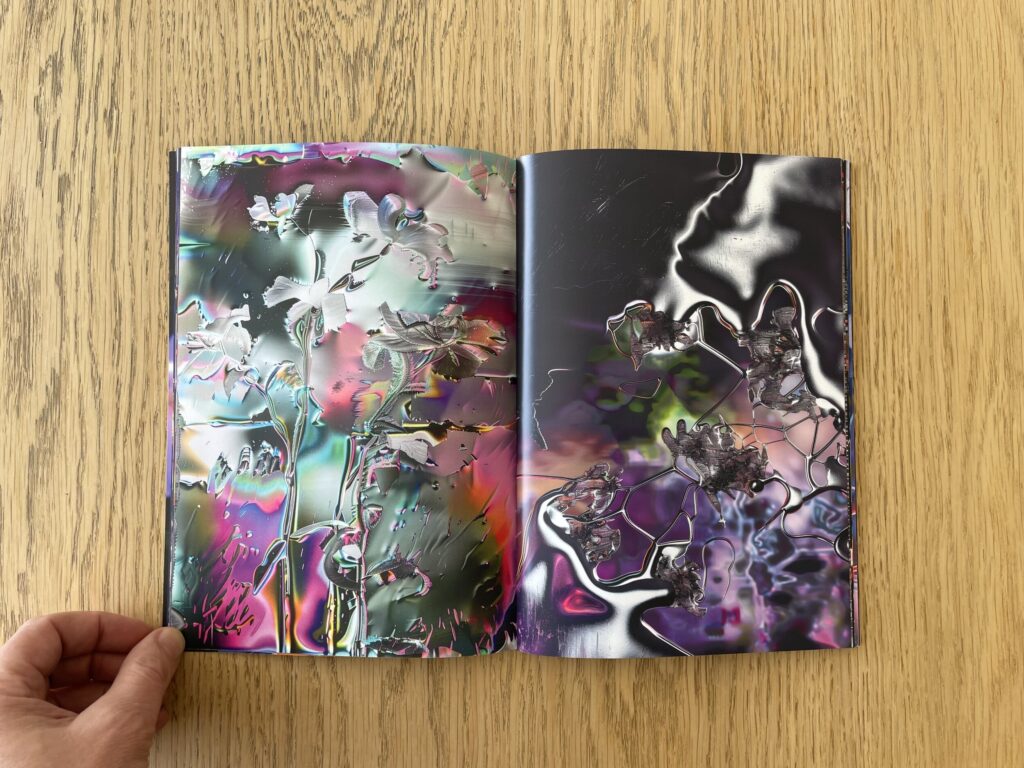
Williams’s images of flowers have a different surface sheen – metallic is one way to articulate it, but its also intimately shimmered (like bulging mylar), pebbled, watery (like fog or ice), imprinted, and more opaque than clear in many cases, with edge lines and something like solarization helping create layers of depth. His color palette is similarly bright, but with more muted glows and fades than Cobayashi’s, and there is often a sense of something lingering behind many of Williams’s compositions, of seeing through one layer of structures to something blurred and indistinct in the background, like looking through a misted or wavy window. In a few cases, Williams has included what looks like scratches, scuff marks, grids, edges, and other flared textures on these surfaces, further playing with our sense of implied perfection.
While the design and sequencing of Flowers doesn’t always put images by Cobayashi and Williams in opposition for comparison on the same spread (there are some single image full spreads, some doublings, some shared images etc.), it does create an intermingled flow that encourages us to see the similarities and differences in their aesthetic styles. The photobook itself is tightly pared down, with a glossy cover and matte pages inside, all staple bound into what is essentially a tidy zine. All of the images are full bleed, so each page turn is an enveloping drop into a new floral world. There’s even no colophon to speak of, just some book details on the back near the spine.
I find myself interested in this photobook in two separate ways. At a high level, the floral images made by Cobayashi and Williams (and their AI systems) are truly unlike anything else in the history of floral photography, and that’s actually quite a feat given the near constant return to flowers as a subject across the entire history of the medium. The strongest of these images have an unexpected beauty, where flowers and petals are twisted, refracted, disassembled, and reimagined in ways that feel altogether fresh and futuristic. And at one layer deeper, I’m conceptually intrigued by the way these two artists have embraced AI without losing track of themselves, essentially transforming the way the tools are being used to further their own aesthetic ideas – their approach is far from generic or junky “prompt photography”, not AI as stand alone artist (“look what the AI did”), but AI as highly controlled and managed partner in innovation. They have found ways to amplify their own personal styles, and to build a shared visual vocabulary between themselves, that they can then deploy in making new collaborative works. The whole thing feels like a wildly successful experiment, the underlying logic of the endeavor forming the foundation of the images we see in the photobook. Their approach opens up acres of new artistic white space to explore with AI augmentation (collaborative or not) while still keeping hold of the critical parts of artistic agency and judgment. For me, Flowers is a puzzling what-is-going-on-here head-scratcher in the best possible way, a photobook that not only offers compelling new imagery but meaty questions about the changing nature of photography that can be gnawed on for years to come.
Collector’s POV: Neither Kenta Cobayashi nor Tyrone Williams appears to have consistent gallery representation at this time. As a result, interested collectors should likely follow up directly with the artists via their websites or Instagram pages (linked in the sidebar.)