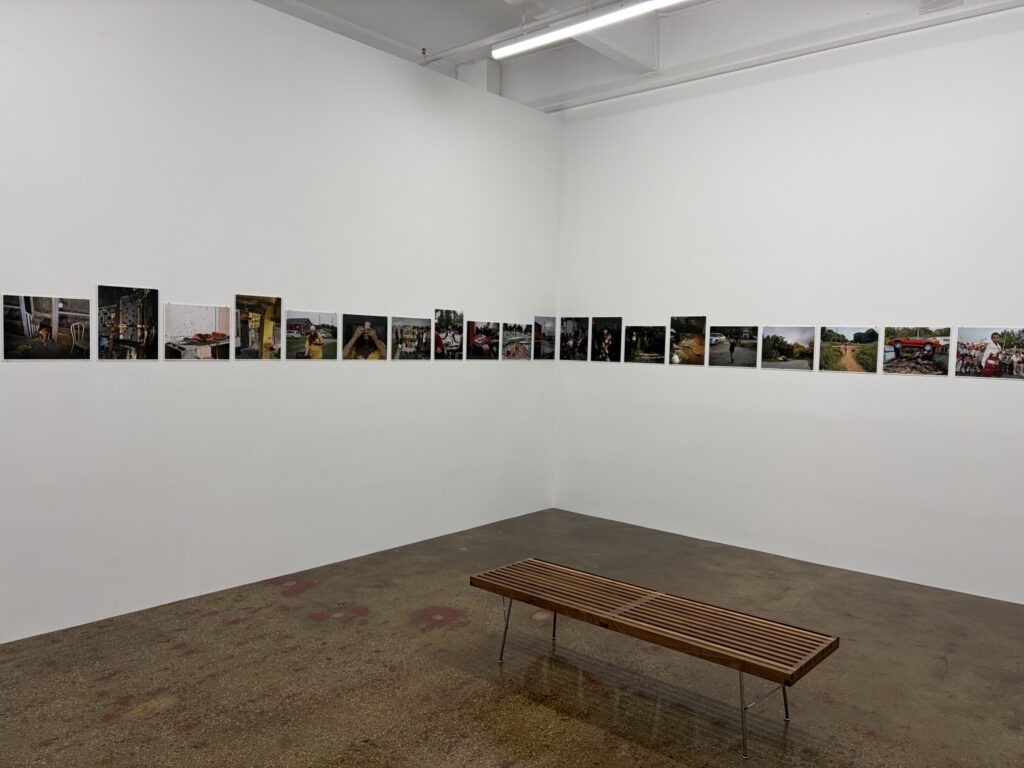
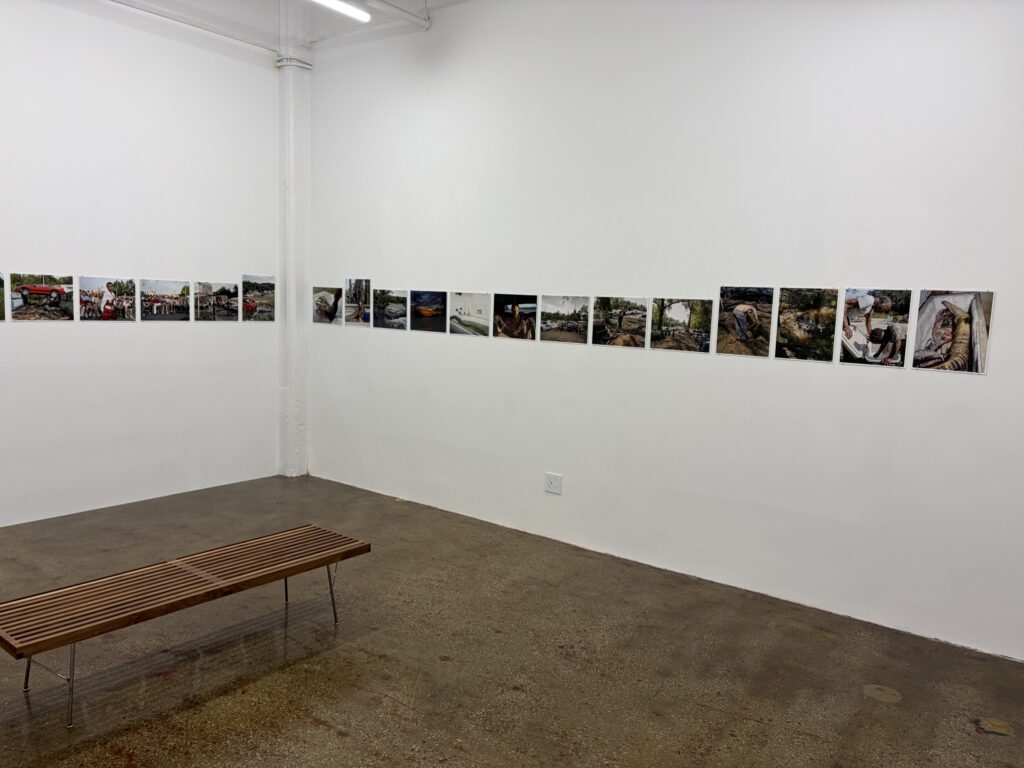
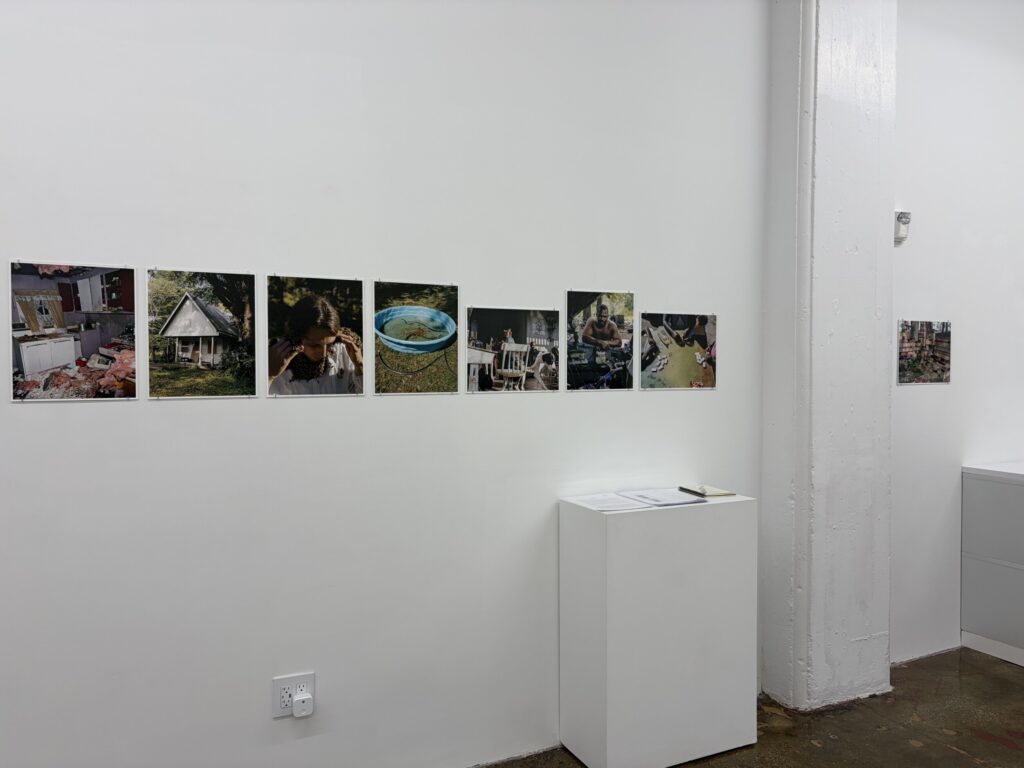
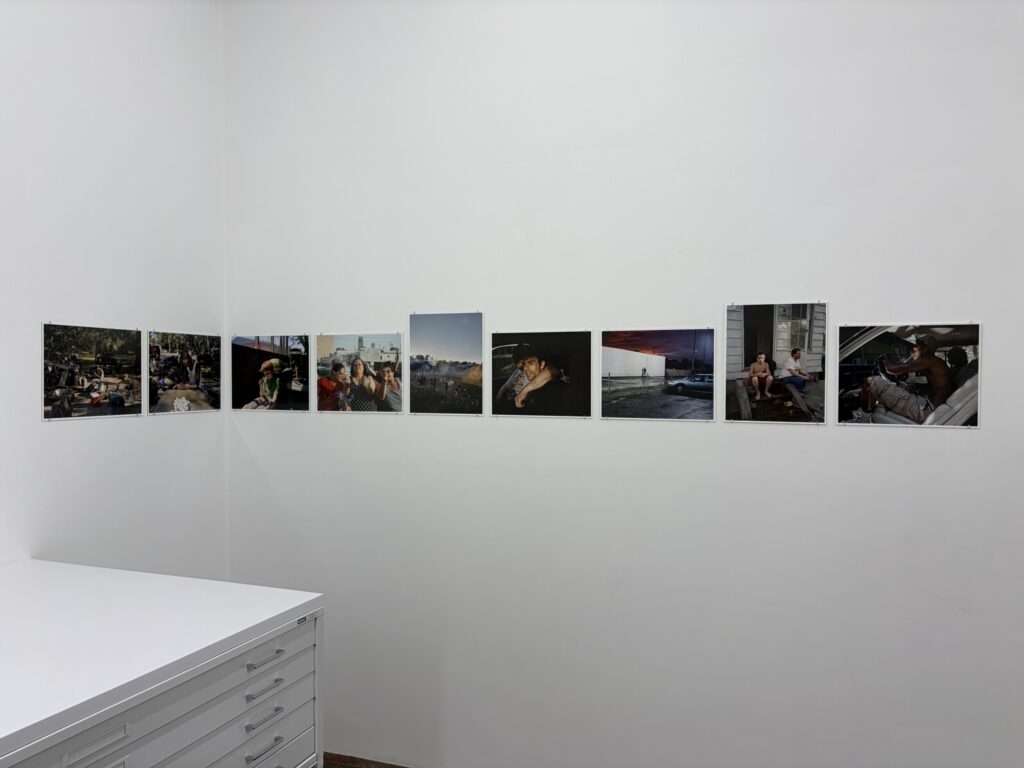
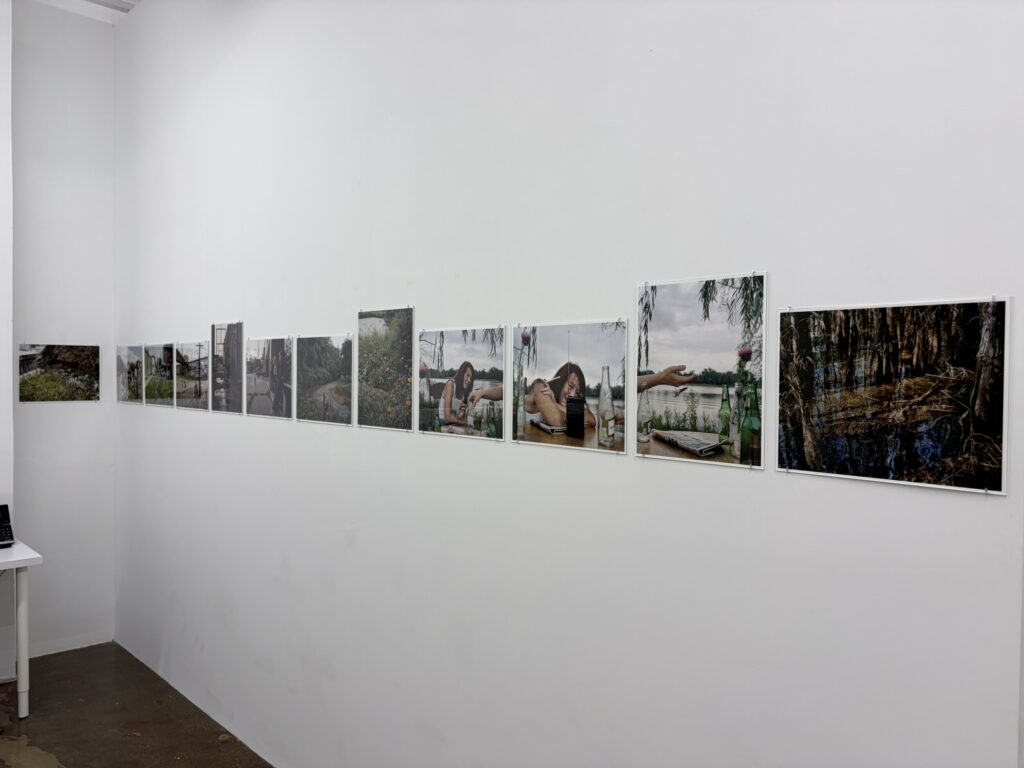
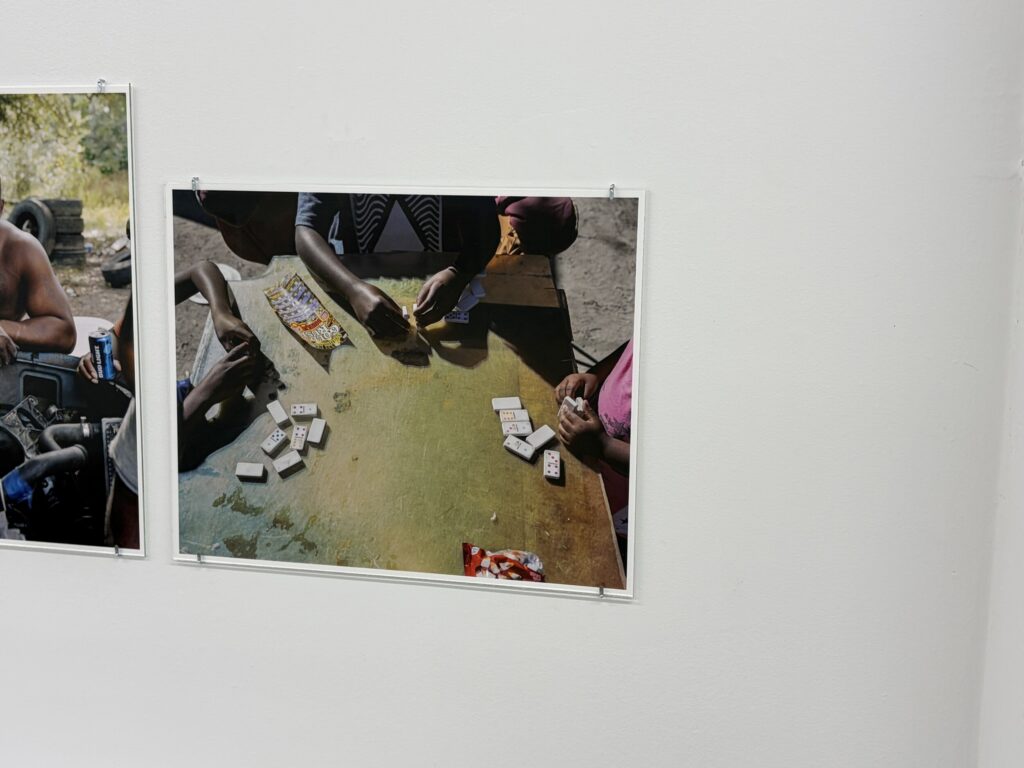
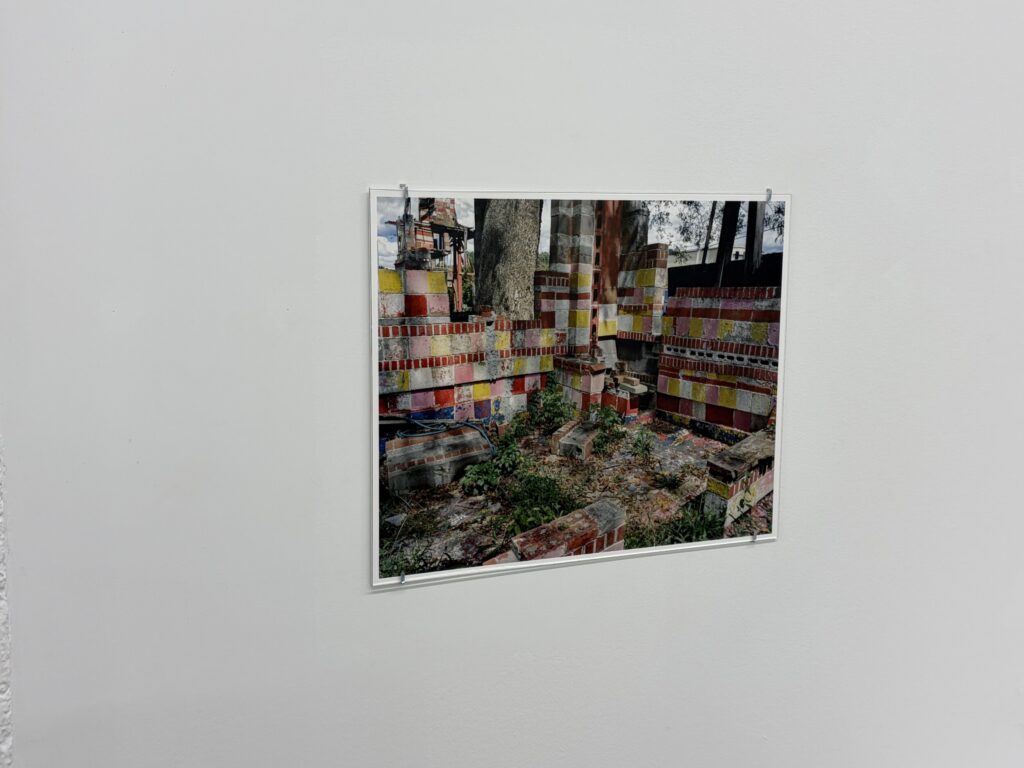
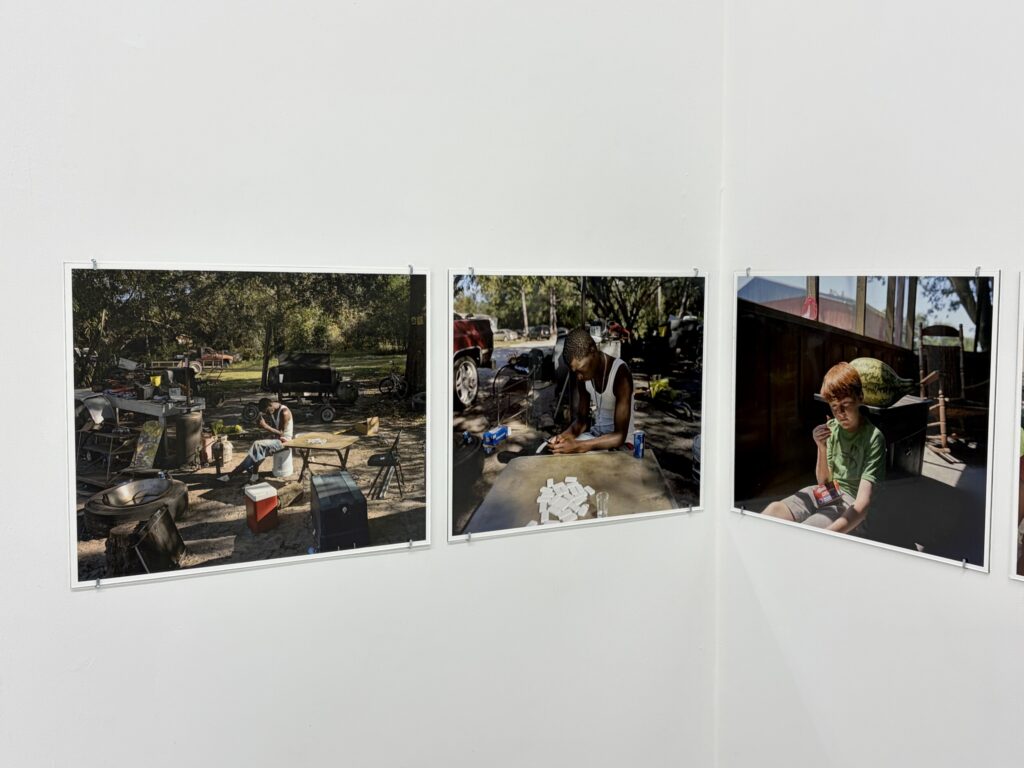
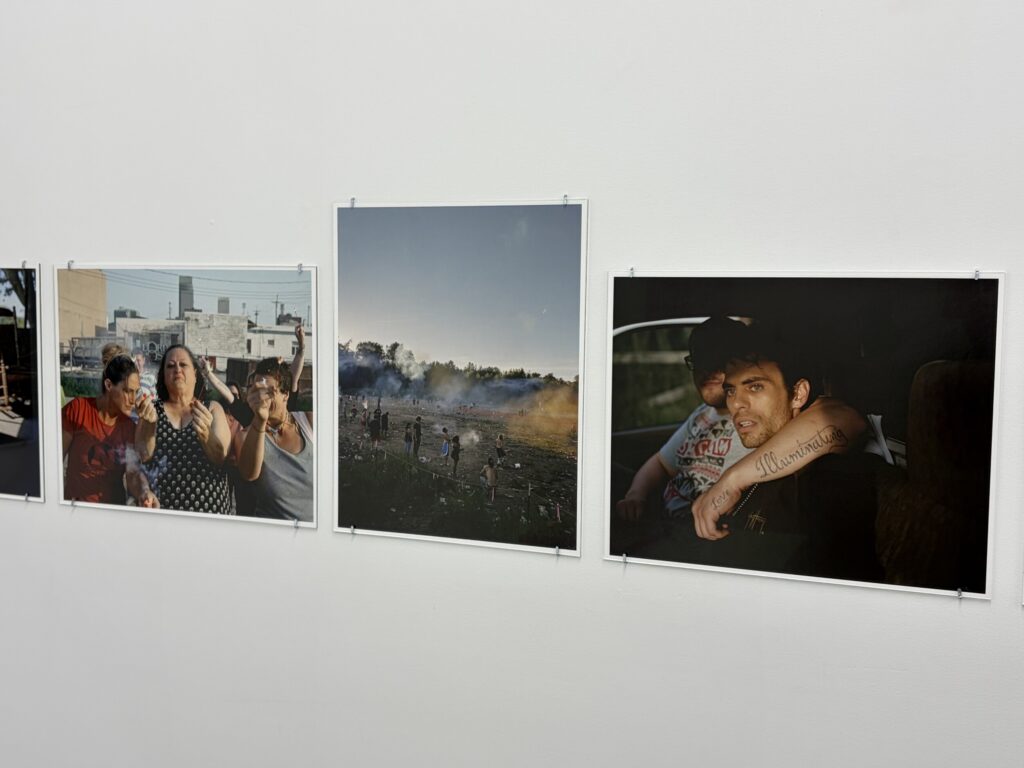
JTF (just the facts): A total of 65 color photographs, unframed and set behind glass with metal brackets, installed in the main gallery space and the office area. All of the works are pigment prints, made between 2010 and 2020. Each print is sized 12×15 or 15×12 inches, and the entire portfolio is available in an edition of 2. (Installation shots below.)
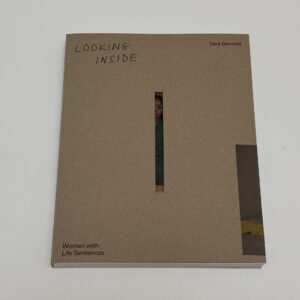
A monograph of this body of work was published by TBW Books in 2022 (here).
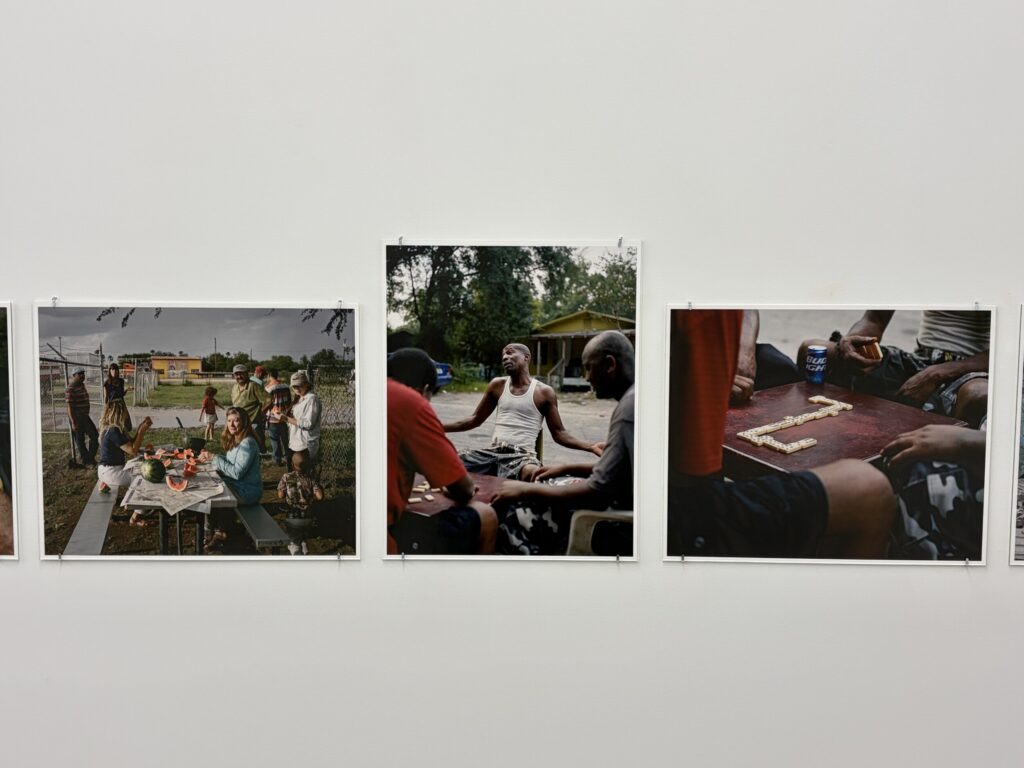
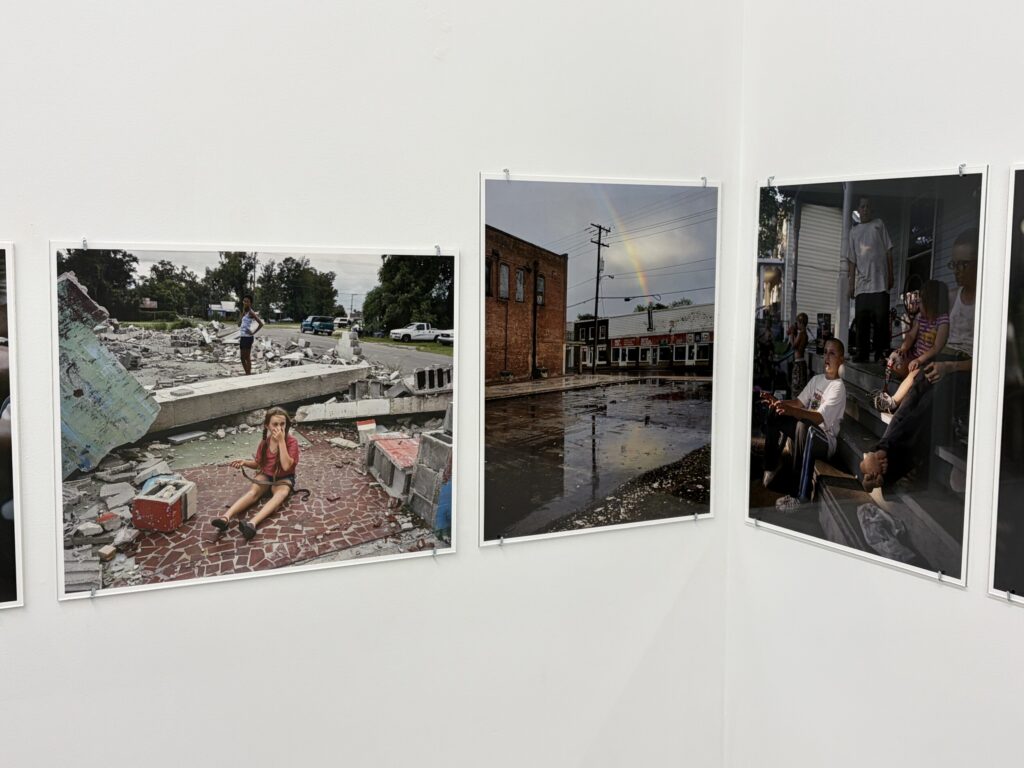
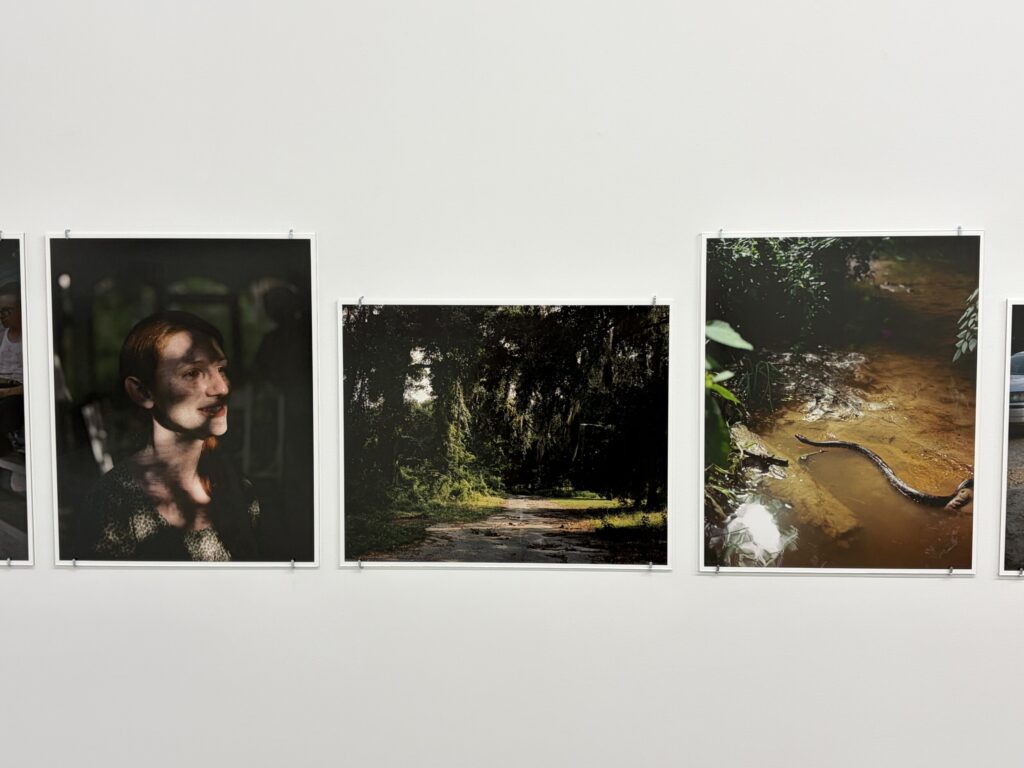
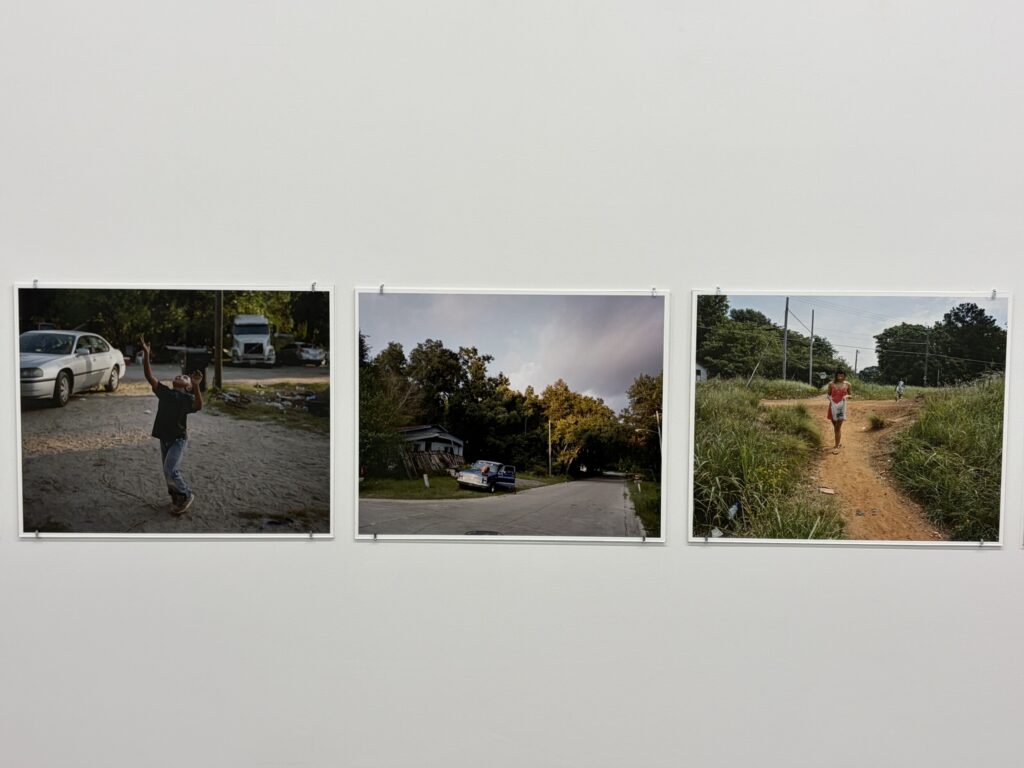
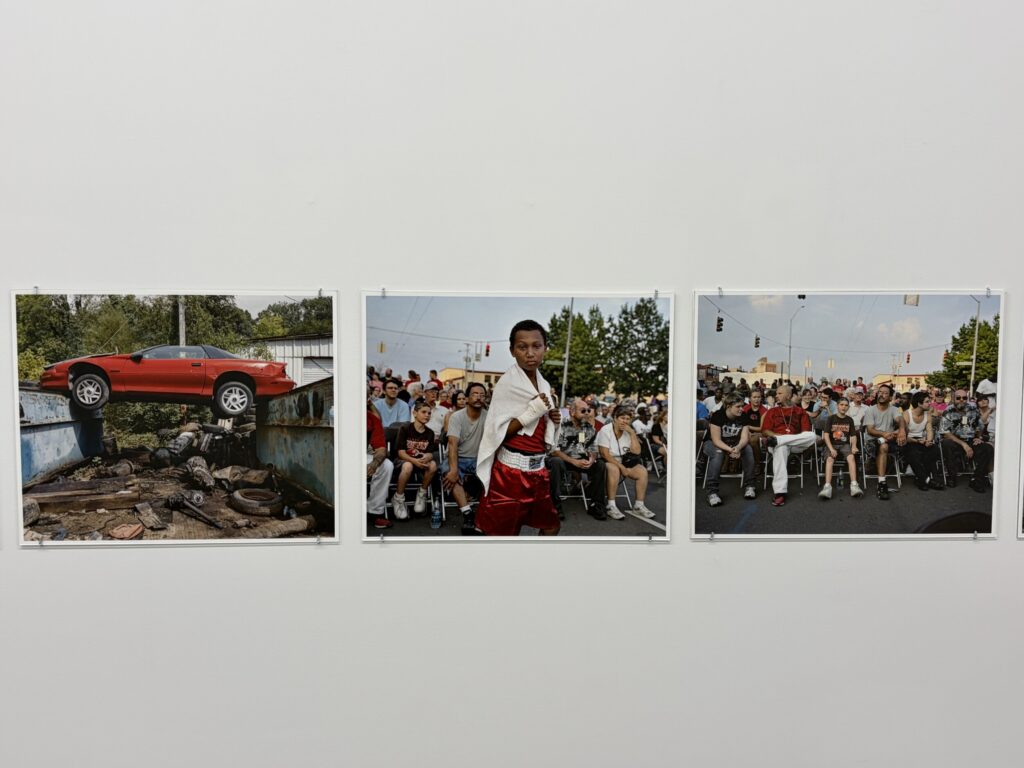
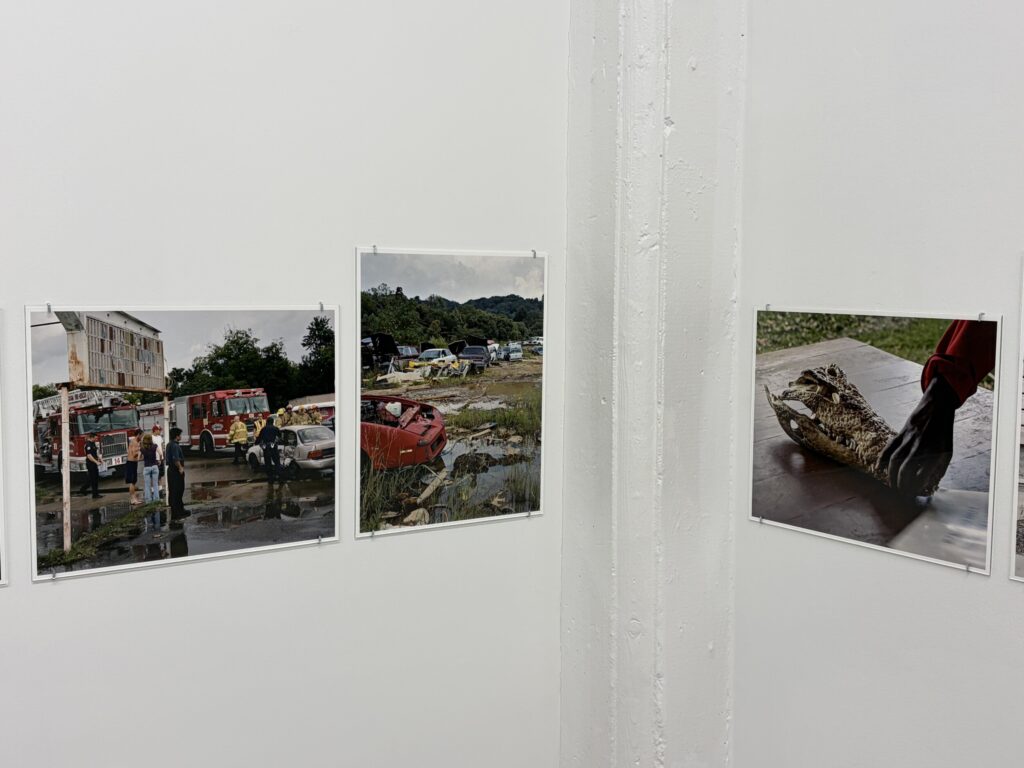
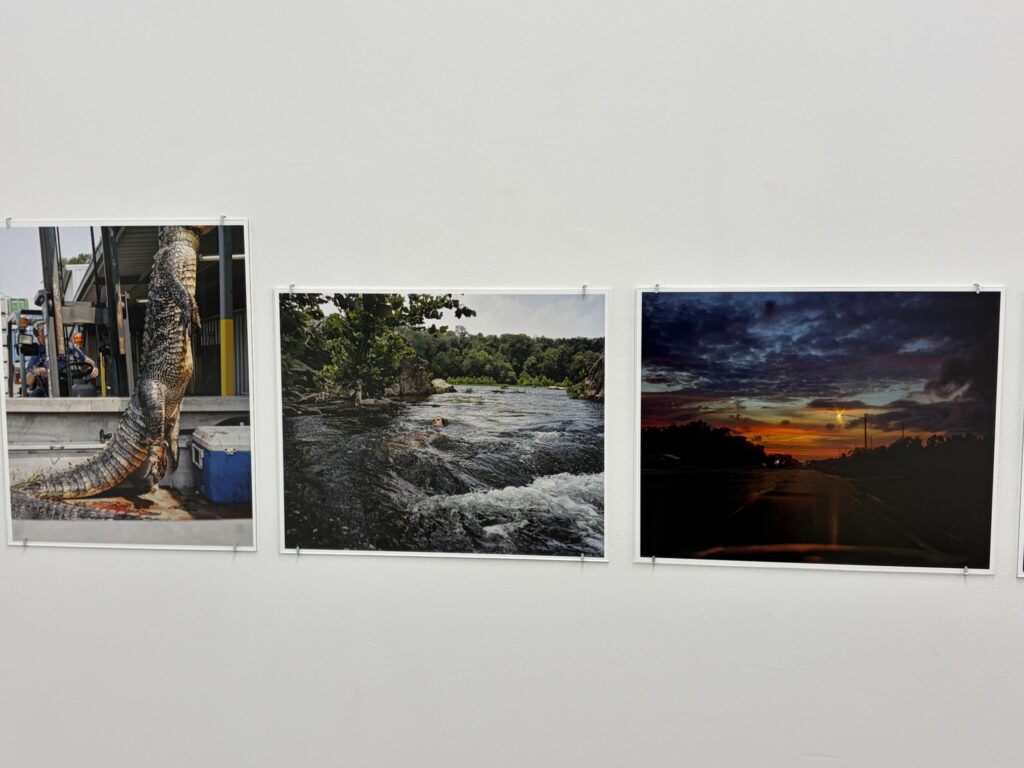
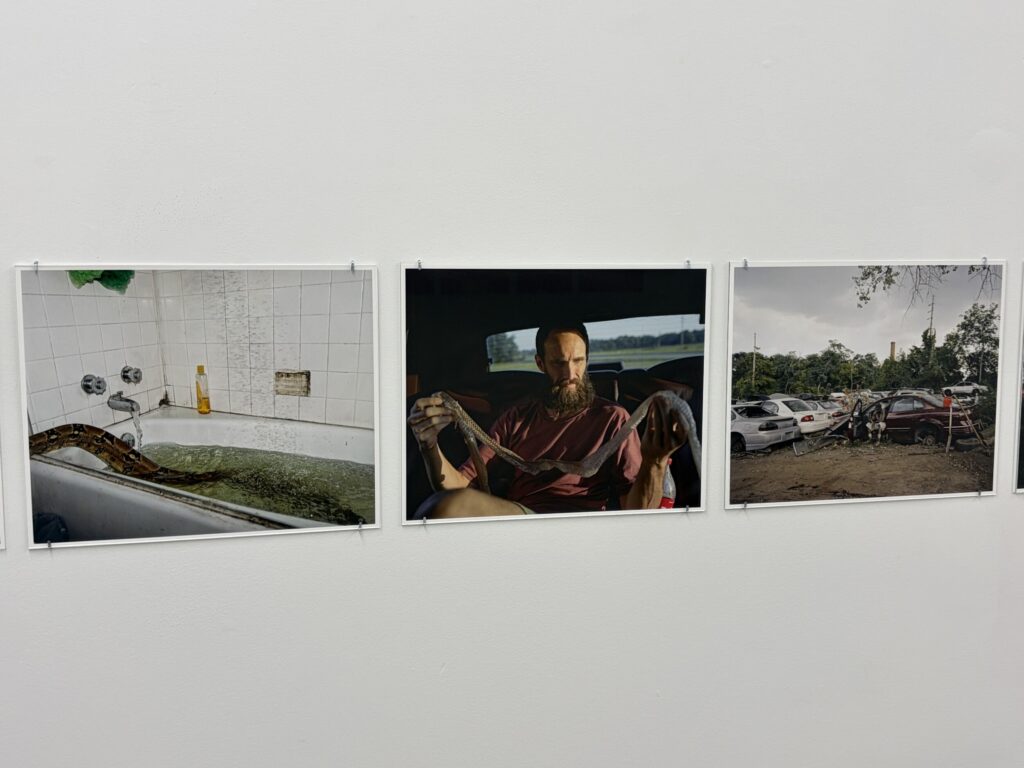
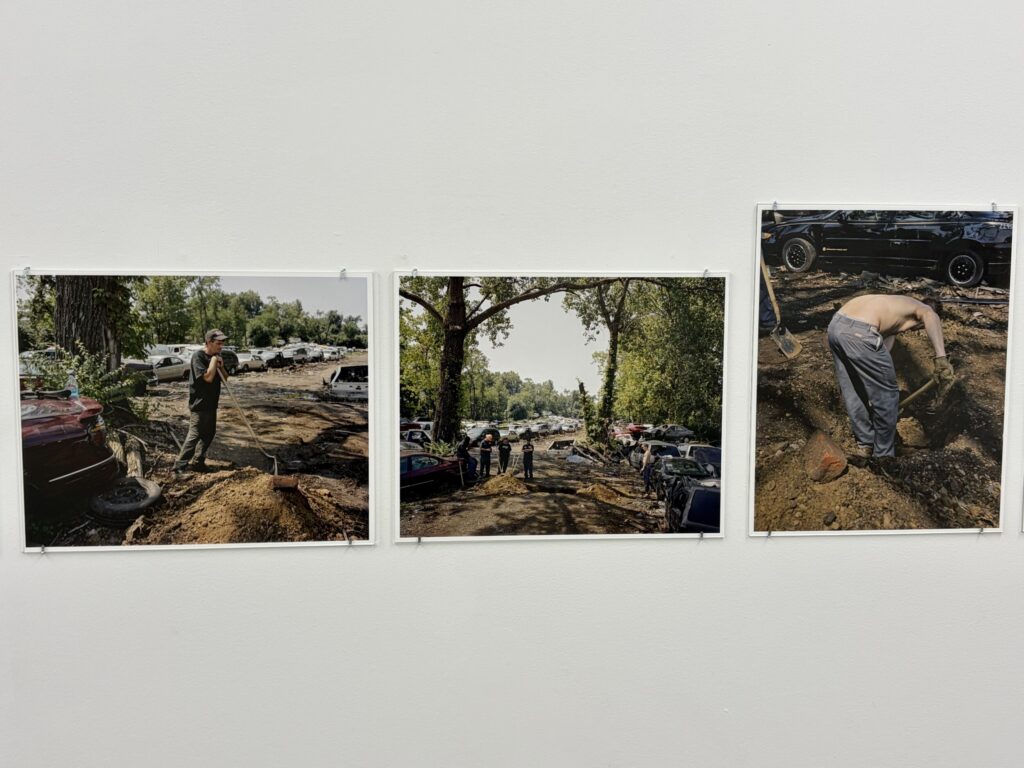
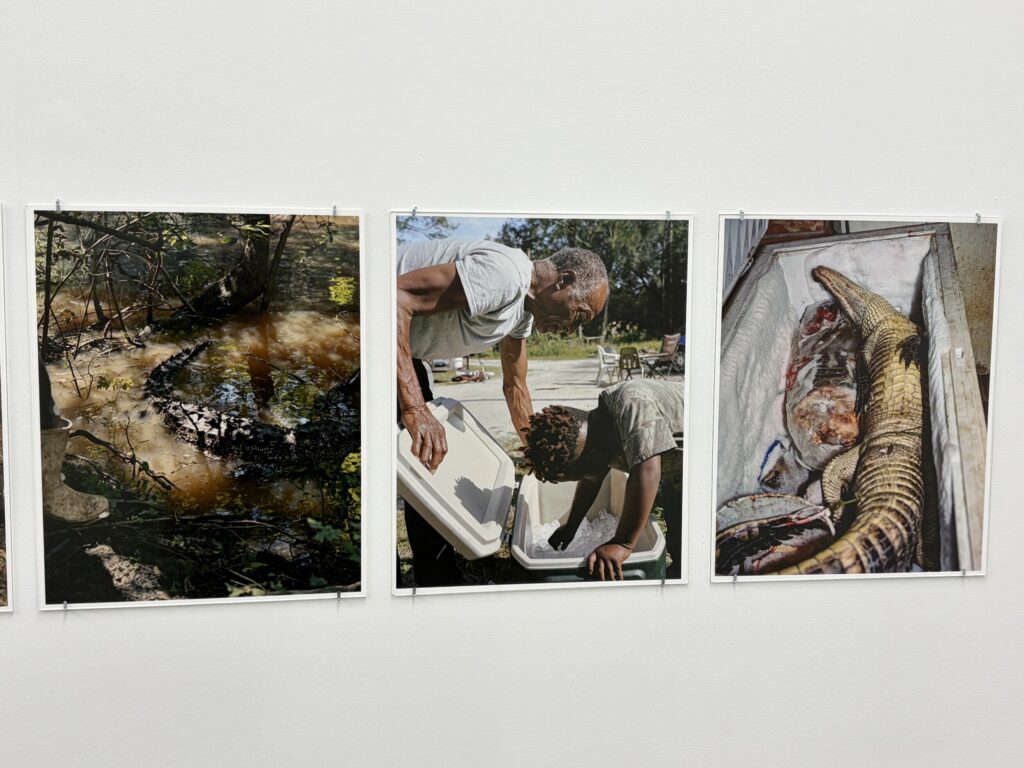
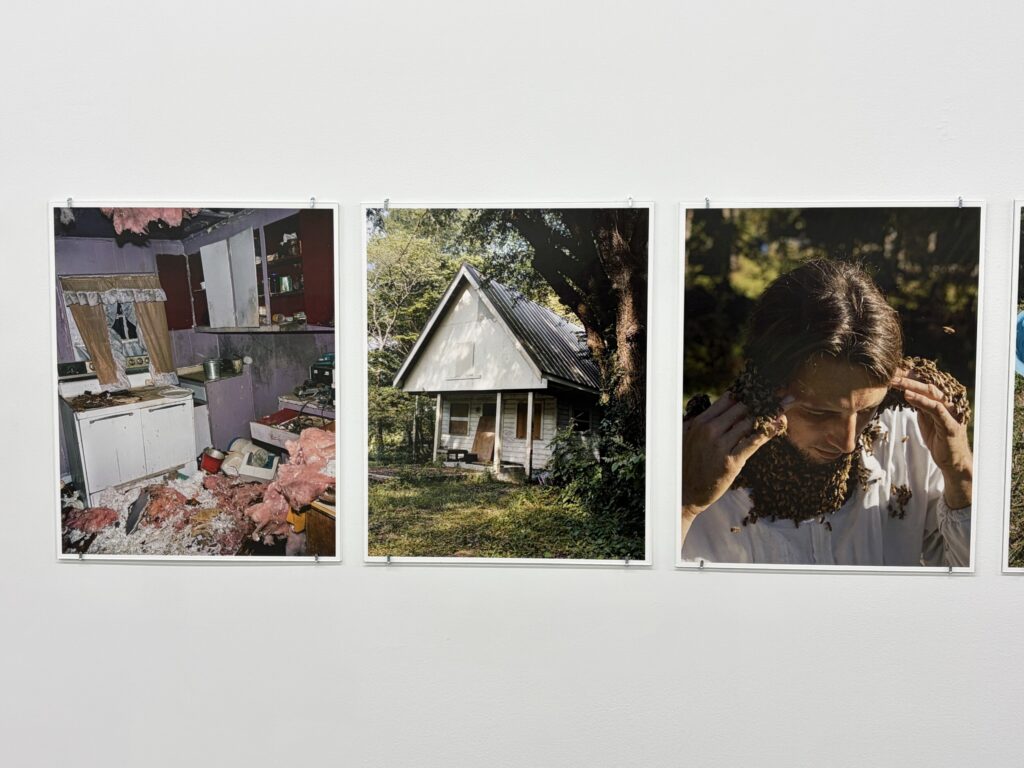
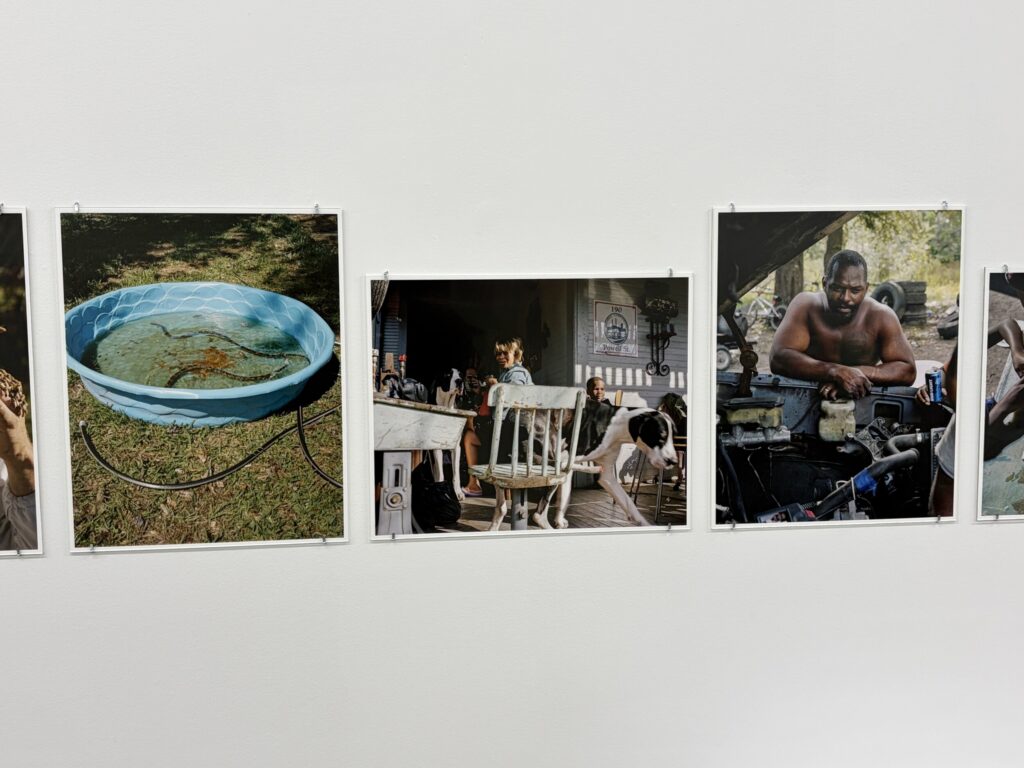
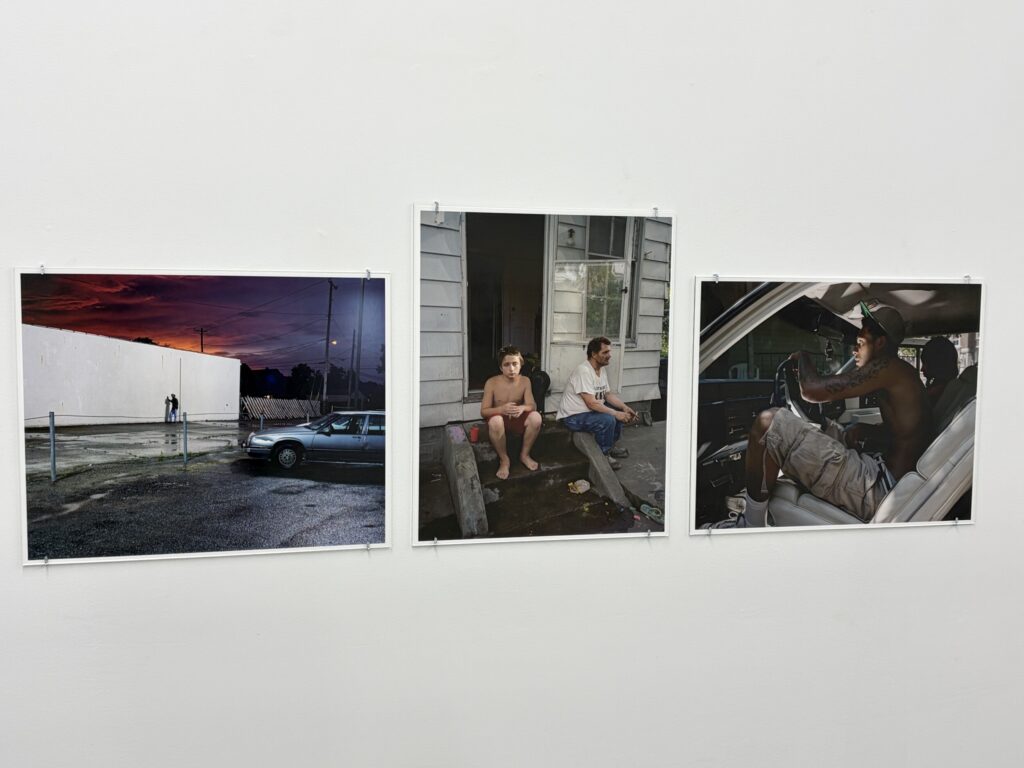
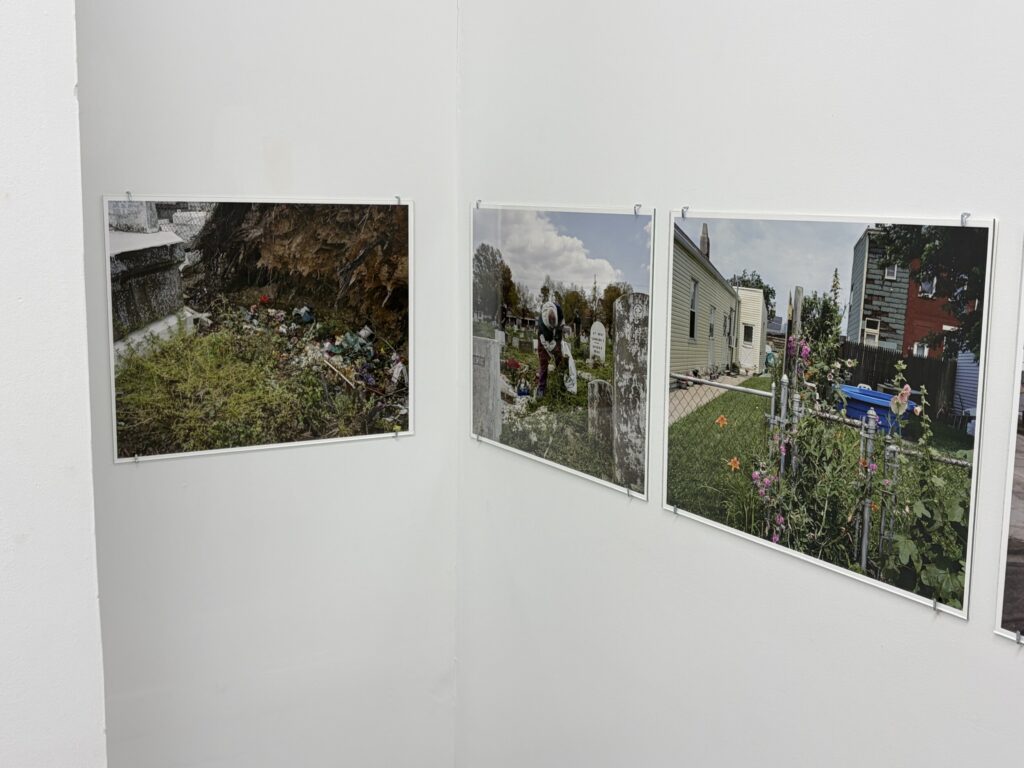
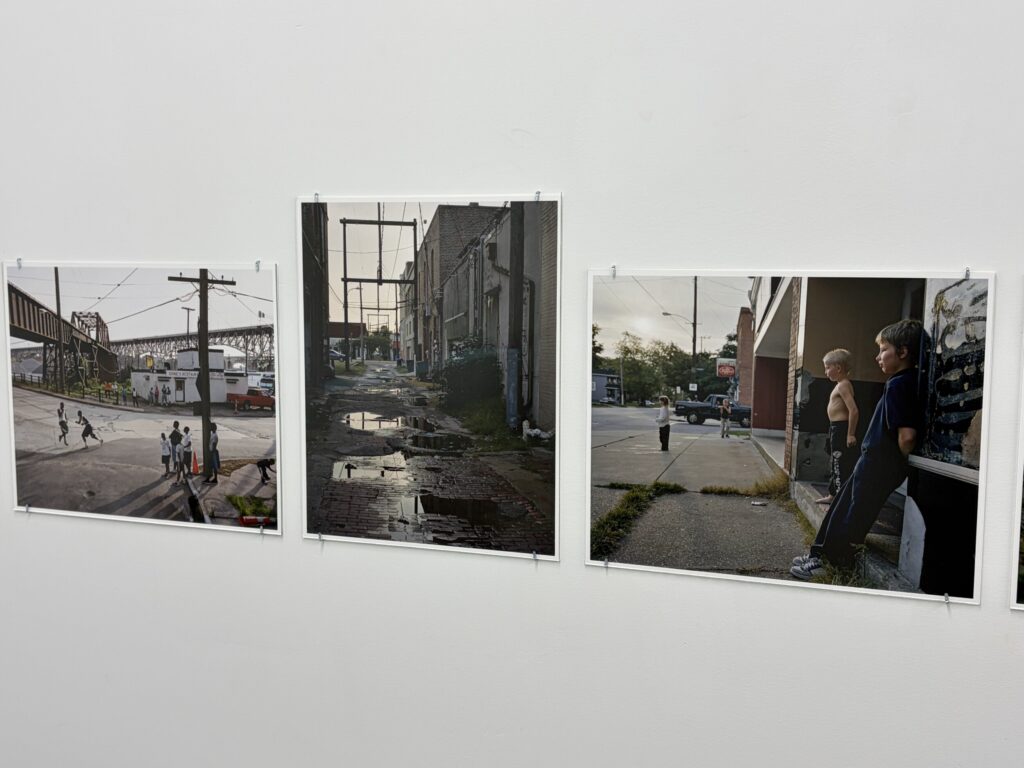
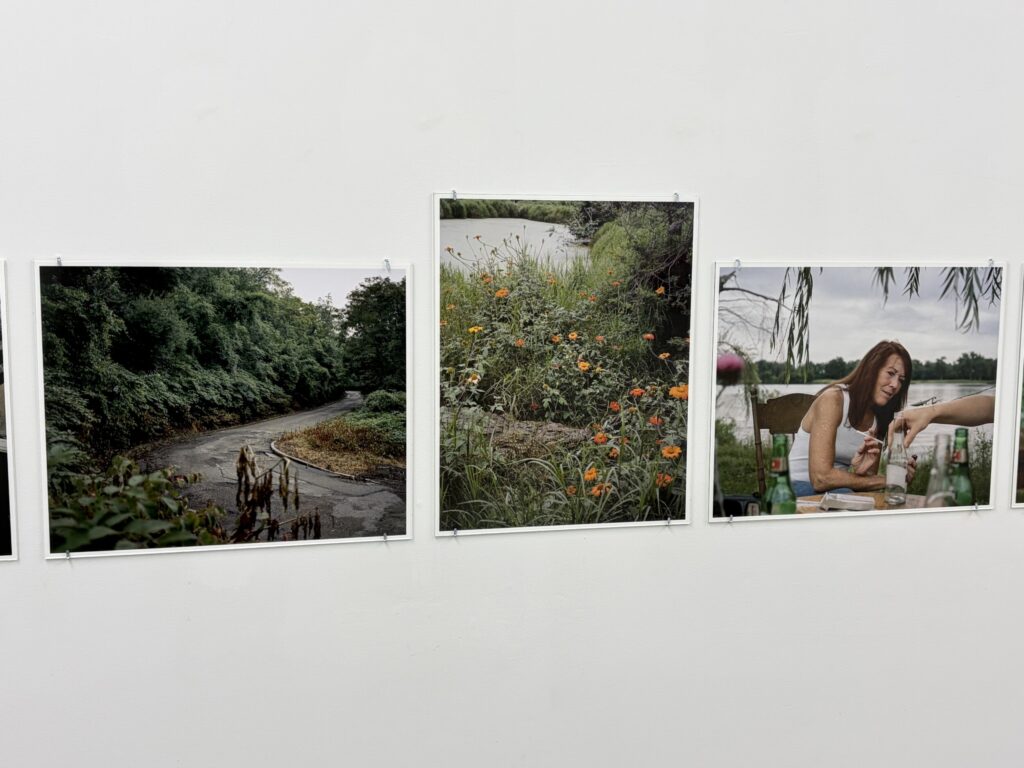
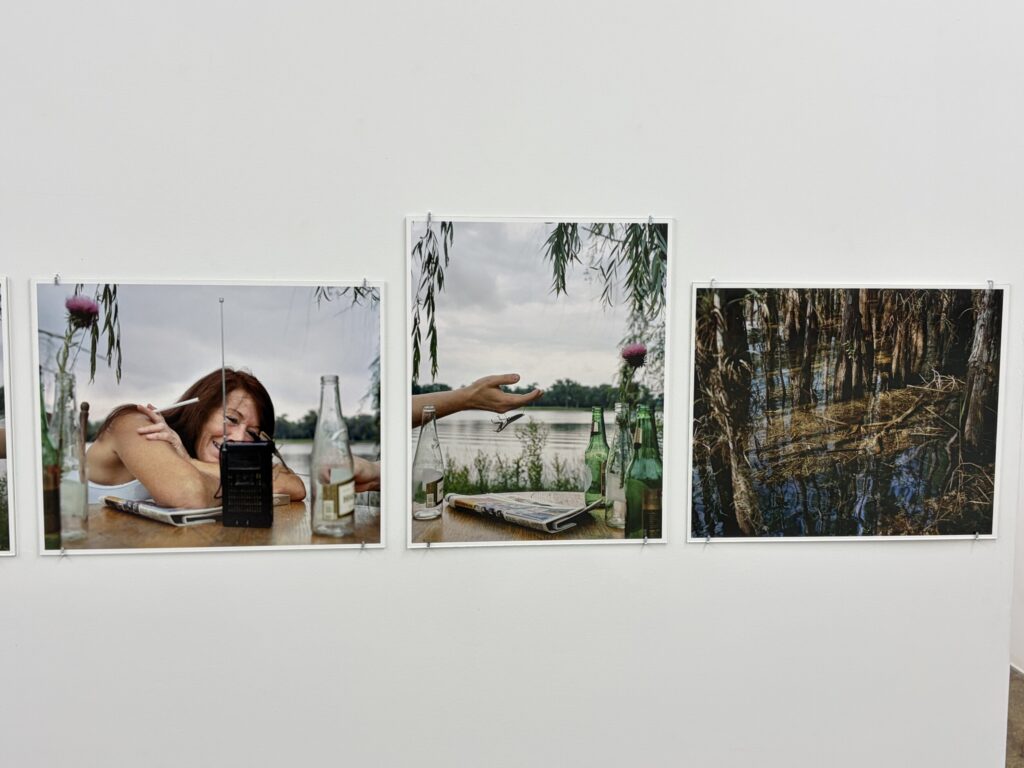
Comments/Context: Time works in puzzlingly strange ways in the art world. At some moments, it moves with a frenzied accelerated pace that feels altogether forced and exhausting, with galleries urging artists to crank out new work every eighteen months to feed the beast of the gallery schedule and the art fair circuit. At others, a new artistic effort can patiently extend out to a decade or more as a project slowly coalesces and the artist, to some extent, searches for and hopefully finds the voice he or she has been looking for. And then institutional support can get drawn out still many years further, with museum exhibition schedules planned and locked in years in advance. The combination of these all of these forces can lead to a jolting, too fast too slow, never quite settled effect, where an artist’s body of work tries its best to find its natural footing out in the world at large.
This lurching in-and-out of artistic time rumbled in my head as I visited Curran Hatleberg’s gallery show of the complete set of prints from his “River’s Dream” project. The images in “River’s Dream” were made between 2010 and 2020, and we got an introductory glimpse of some of the pictures in a small 2021 gallery show (reviewed here). This was soon followed by the full photobook edition of River’s Dream in 2022 (reviewed here), and it was around this time that Hatleberg made the rounds of the photo press, promoting the book and calmly and eloquently explaining the project in more detail. In the years since, his understated momentum has continued, with Hatleberg receiving a 2023 Guggenheim fellowship and releasing his 2025 photobook Blood Green, which included a range of images made during the “River’s Dream” time period, but were left out of the primary edit (including some photographs in black and white.)
So now we find ourselves in 2026, visiting another show of the “River’s Dream” work, which turns out to be its very first full 65 image presentation in print form, taking place several years after the initial flurry of activity around its release. In the interim, times have indeed changed, and in particular the darkly polarized politics and economics that lingered behind the scenes and settings in the photographs have swung back and forth more than once, so we now see “River’s Dream” and its contemporary vision of the American Southeast with slightly different eyes, maybe even with the benefit of the tiniest bit of distance or hindsight.
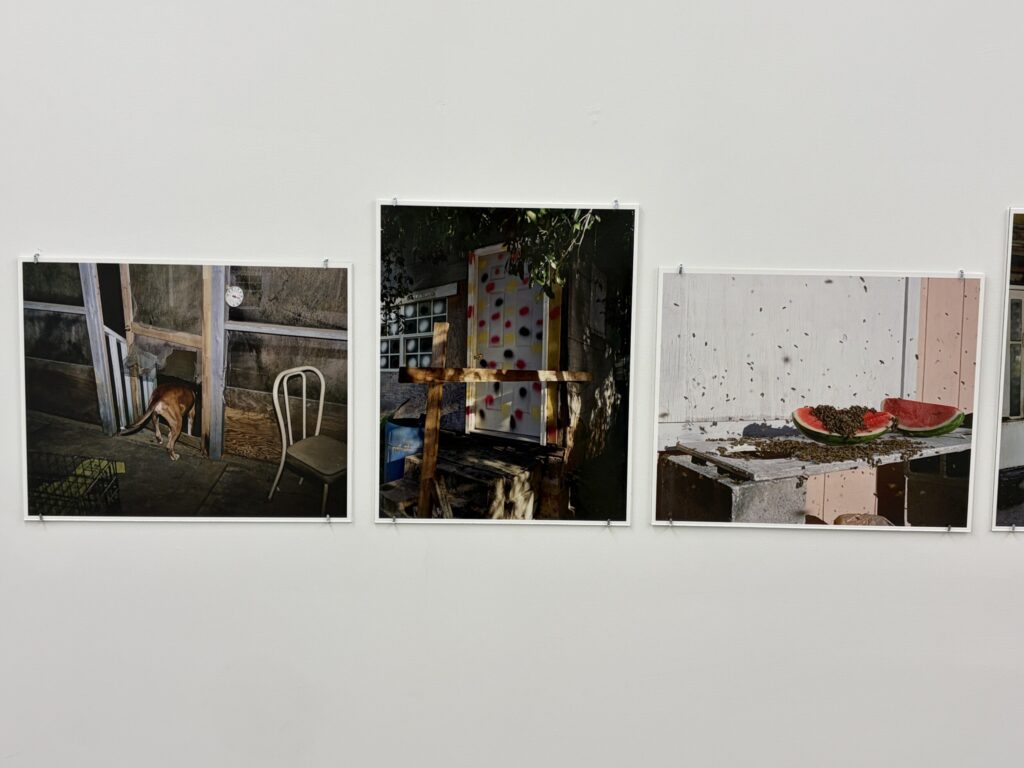
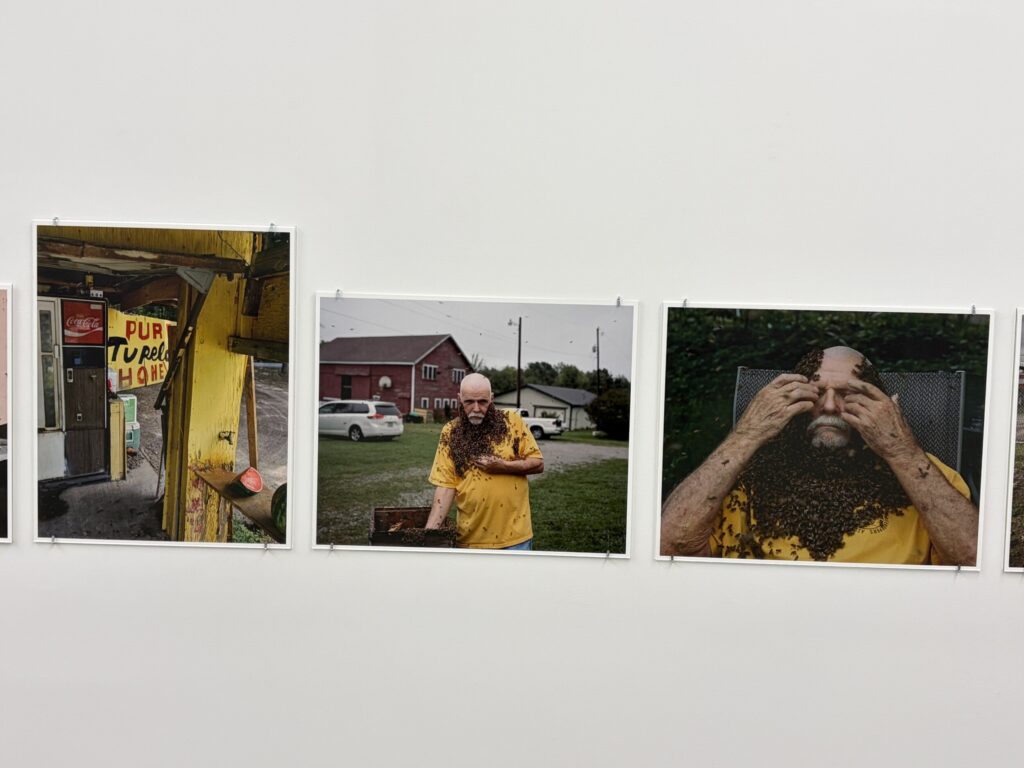
Since we have essentially already analyzed the central themes of this work twice, rather than simply rehashing what has been said already, I have tried to come at this new presentation from a vantage point of “what do I see now”. And what I noticed immediately about seeing the entire project hung as a single installation was how carefully the photographs flow from one to the next. In book form, the sequencing of images is naturally paced by physical page turns, but in a gallery, that rhythm is smoothed out into something much more fluid and organic, where unassuming repetitions of subject matter, color, and composition can create a sense of refrain, cadence, or even echo. I was very much struck by how Hatleberg was pulling me along – from doors (and a dog), to spots, to red and then yellow, to bees, to tables of people, to destruction then relief (in the form of a rainbow), to snakes, to dappled shadows, to watery brown, from looking up to looking down, to red (again), to crowds watching, to crashed cars, to red (again), to crocodiles, to the similar shape of river wash and sunset, to the undulations of snakes (again), to the digging of a hole, to coolers filled with ice (and crocodiles again), to decaying homes, to bees and snakes (again), to people hanging out (again), to dogs (again), to car engines (again), to dominoes (again), to the rectangular forms of bricks (like dominoes), to intently looking down (at phones and lit matches, with an echo of watermelon), to lit fireworks (and residual smoke), to an “illuminating” tattoo and a brightly lit wall, to people relaxing but looking away from the camera, to unlikely flowers (and garbage), to boys punching (and watching), to telephone poles, to a woman relaxing with some beers near the water’s edge, and finally back to the swamp once more. From picture to picture, there is no wandering off; Hatleberg keeps us on the path, linking one visual motif to the next, without a break, which was altogether impressive when I started to pay attention to the meticulousness of that control.
Back in 2021 when I saw the first images from this project, the edit included no images of people, so when I reacquainted myself with “River’s Dream” this time, Hatleberg’s engagements with people really stood out, particularly in his subtle attention to gestures and movement. There is a quiet gentleness and compassion to be found in his patient observations of people, with almost no bold, dramatic, or performative poses or postures found anywhere in the project. Instead, Hatleberg seems drawn to moments more modest and unassuming – the casual communal sharing of a watermelon, the good natured trash talking of the domino table, the hopeful raised arms of a boy who has tossed something into the air (which we can’t see), the curled up seat of a girl on the hood of a truck, the rapt attention of a boy looking at a burning match, the porch steps cosiness of a child with an amputated leg snuggled up to a man (perhaps her father or uncle), and the relaxed reach of a smoking woman toward a flower stuck in a beer bottle vase. Most of these aren’t decisive moments, and are all the more lovely and memorable because of their attentive tenderness to the nuanced ways people touch, wait, and hang out.
Seeing the entirety of “River’s Dream” on just a few close walls also reminded me just how consistently strong the work is across all sixty-plus images – the compositions are rich, varied, human, and precisely controlled. But of course, close proximity in a tight edit also tends to make the standout images really stick out, and “River’s Dream” boasts a handful of knockout pictures that I expect will age well (especially since they’ve already been out in the world for a handful of years.) Hatleberg’s image titles are blandly descriptive, so “Untitled (Billiards)”, “Untitled (Riverfront)”, “Untitled (Girl with Snake)”, and “Untitled (Hole)” might not mean much to anyone as identifiers. But with each of these photographs, there is a mature compositional complexity to the situations that feels almost staged (in a Jeff Wall-like sense) but of course is not. They “work” because each moment has so much going on, but somehow feels pared down and ordered, even painterly in that dramatic precision – they’ve seemingly been honed to tightness, with no tolerance for waste. The car crash/firefighters and police/puddled wet road/random onlookers/janky pool hall sign arrangement is gloriously and intricately layered. The group of guys idling near the dug hole, with the junked cars and lush summer greenery as a framing backdrop, feels like a 19th century landscape with 21st century features (and what are the digging exactly, a grave?) The girl suppressing her giggle while holding a snake, sitting amidst the rubbled destruction of what we assume is her home (perhaps from a storm or tornado) feels almost like an Internet meme, if it wasn’t so tragically violent (and pitched with class/race frictions). And the young black men fighting underneath intersecting trestle bridges outside Ernie’s restaurant with a crowd of onlookers combines four different groups of people and half a dozen geometric line angles and verticals into a composition filled with controlled energy. If these kinds of photographs don’t end up in museum collections, then we’ve simply lost track of what excellence in composition looks like in contemporary photography.
What’s interesting to me about my own analysis of “River’s Dream” in 2026 is that I wasn’t as drawn to the obvious themes of the American South, the sultry wetness and water motifs, the implied danger (and mythology) of the snakes and crocodiles, the challenges of engaging with rural folks unknown to the artist previously, or the dream-like wandering of Hatleberg’s eye – these are things I noticed and considered before, of course, but upon engaging with the work again, those more content-driven ideas fell away a bit, allowing Hatleberg’s craft as a photographer come forth more strongly. This time, I “saw” him making pictures with consistency, persistence, and care, in ways that ought to be celebrated more than perhaps they have been so far in his career. At his best, Hatleberg has modestly hoisted up the mantle of the kind of work we associate with some of the greats of 20th century American photography, and made an impressive effort at matching that excellence in his own way. Don’t let the delayed time-dilation of this show undermine its potential power or influence – go and see “River’s Dream” again, even if you think you’ve seen it before, as the full presentation of the prints in one engrossing flow crystalizes exactly why we ought to pay close attention to Hatleberg, now and going forward.
Collector’s POV: The individual prints in this show are priced at $3500 or $5000 each, based on their place in the edition. Hatleberg’s work has little secondary market history at this point, so gallery retail likely remains the best option for those collectors interested in following up.