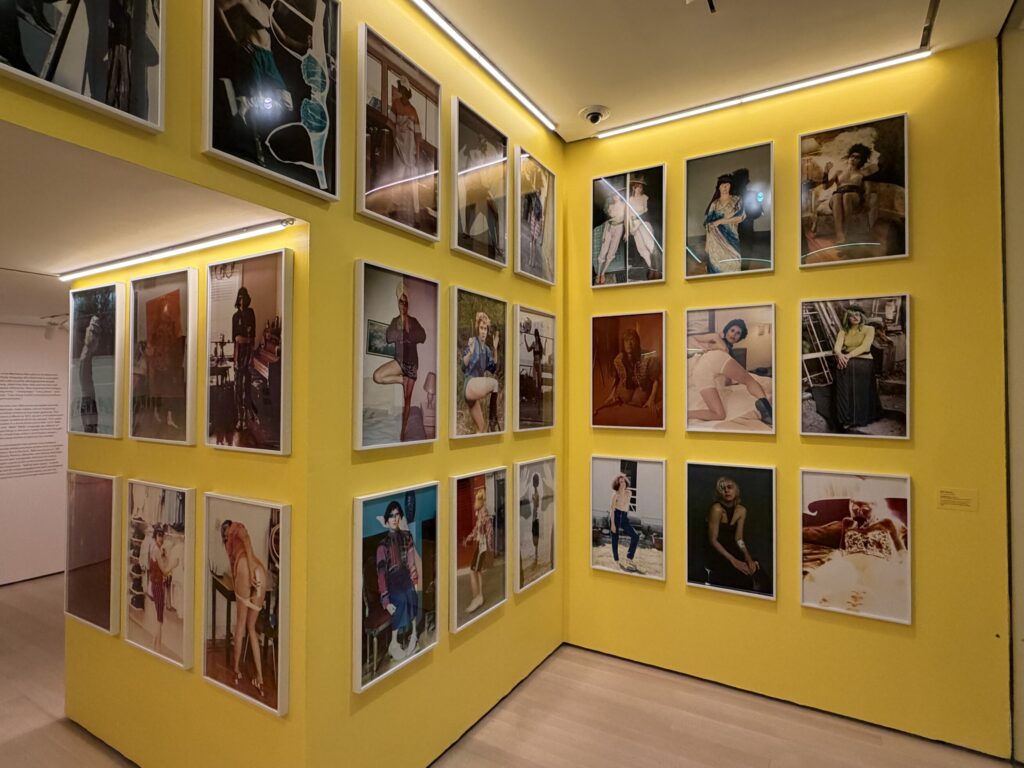
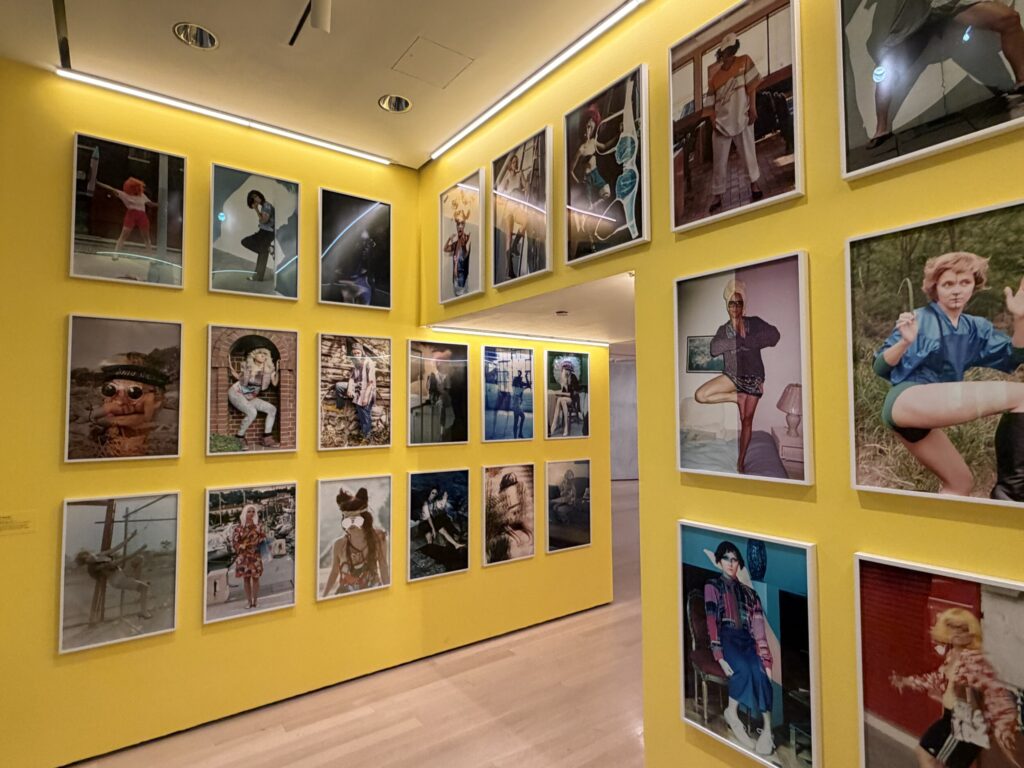
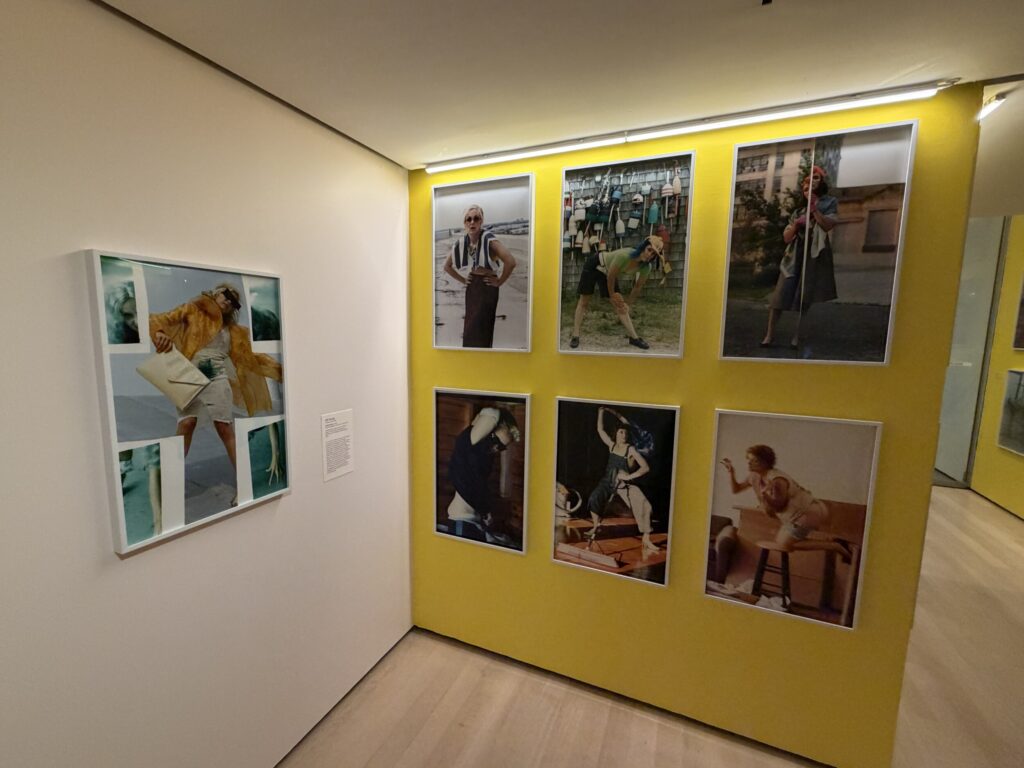
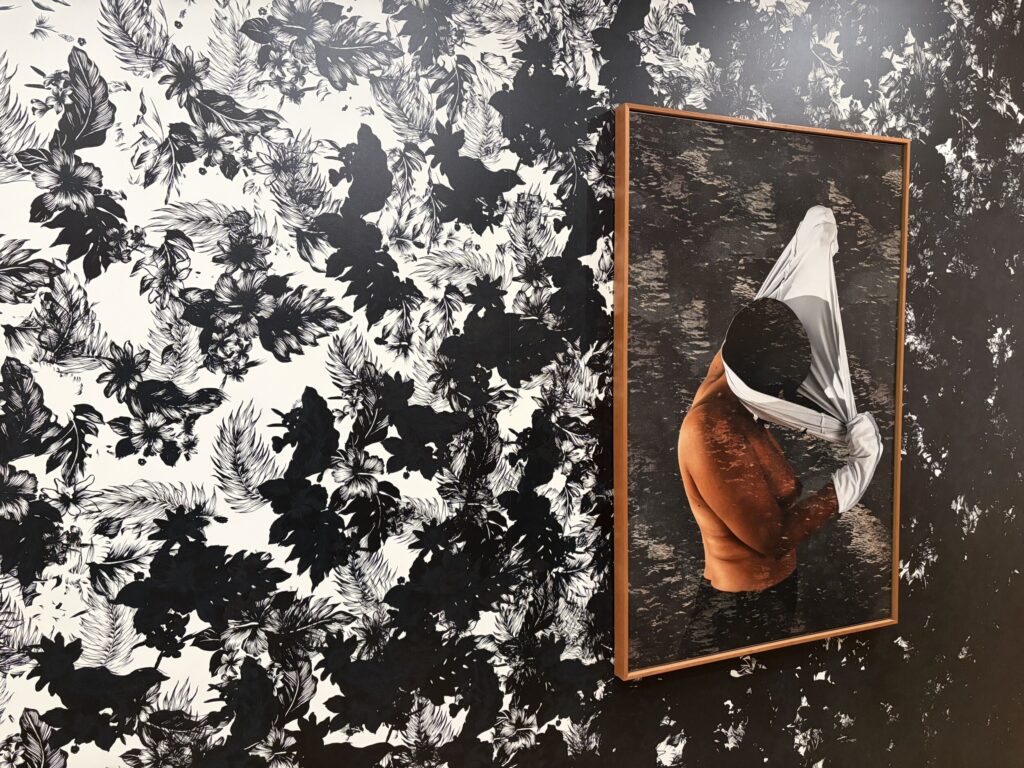
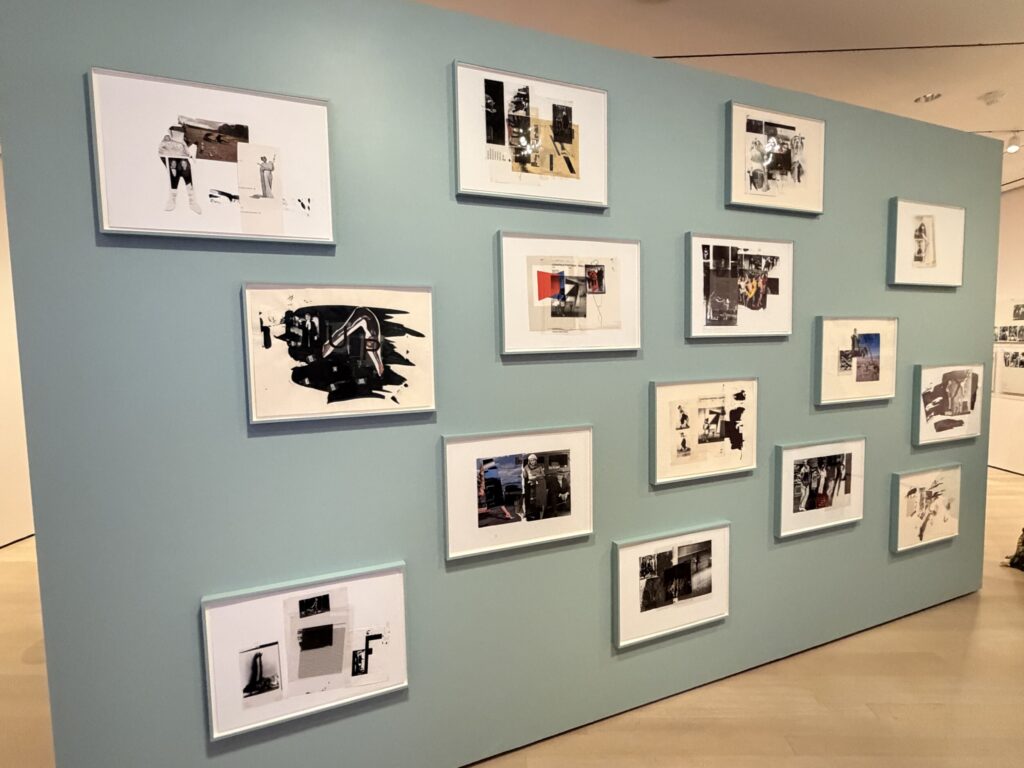
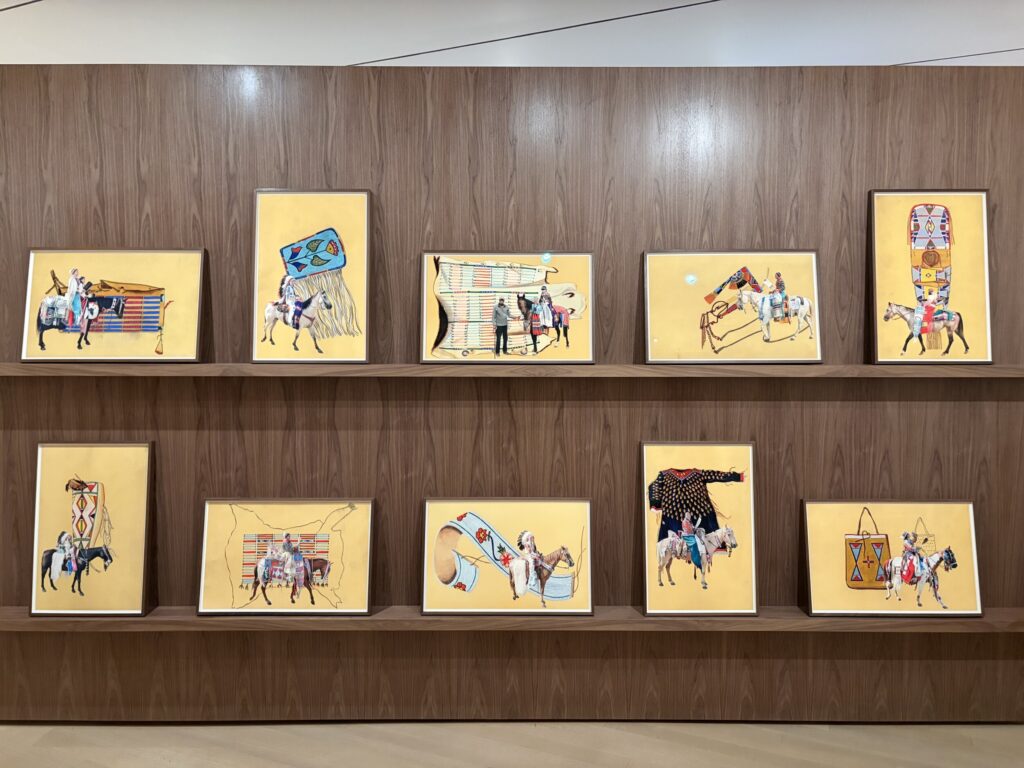
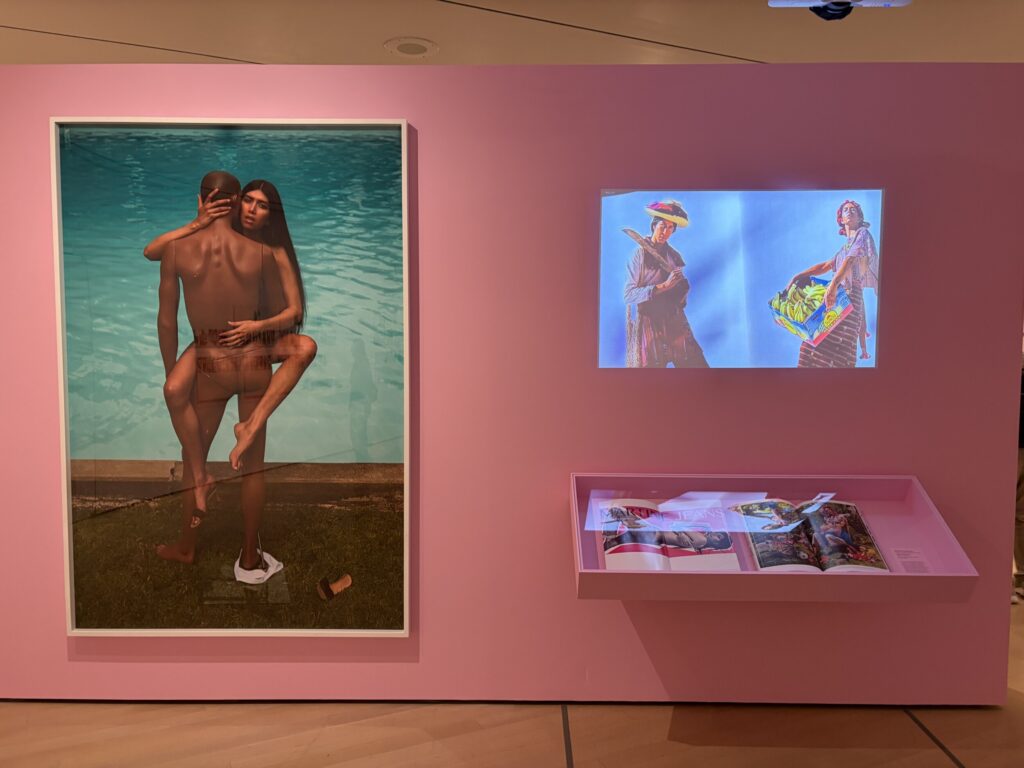
JTF (just the facts): A group show consisting of photographic works made by 8 artists/photographers, variously framed and matted, and displayed against light pink/bright yellow walls and on angled dividing interior segments (painted light grey, pink, or light green, with wooden shelving, or with printed wallpapers) on the museum’s second floor. The exhibit was organized by Roxana Marcoci, with assistance from Caitlin Ryan and Ekalan Hou. (Installation shots below.)
The following works are included in the show:
Marianne Wex
- 65 sets of gelatin silver prints, paper, and ink on museum board, 1977, dimensions variable
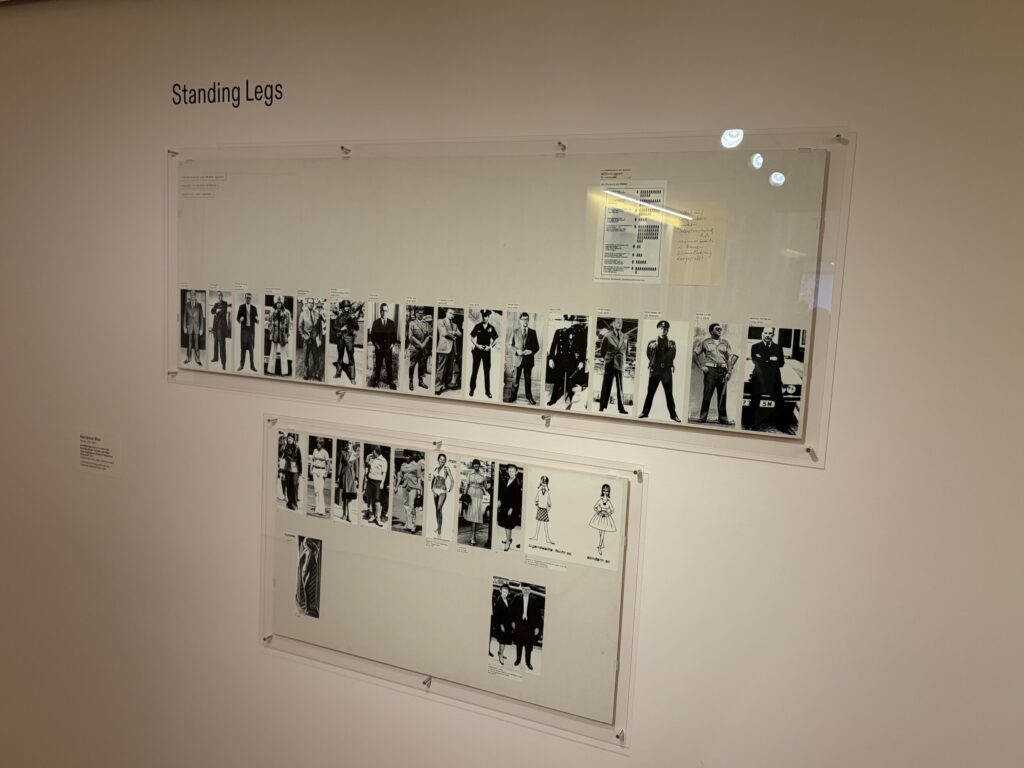
- “Standing Legs” (4 sets of prints)
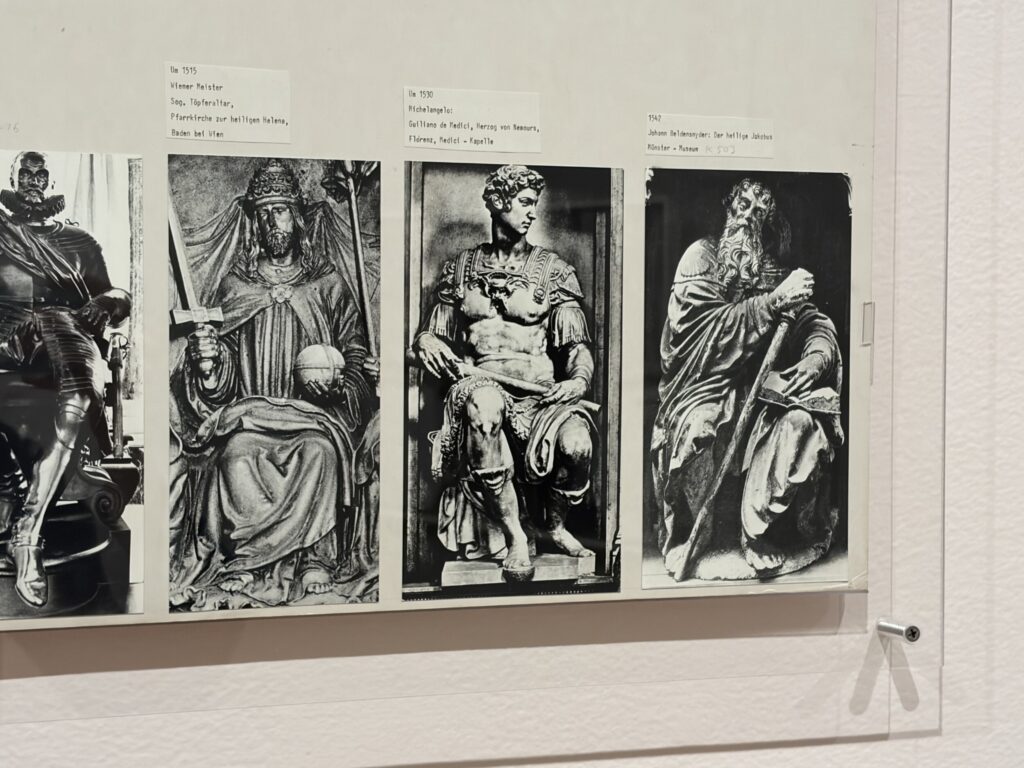
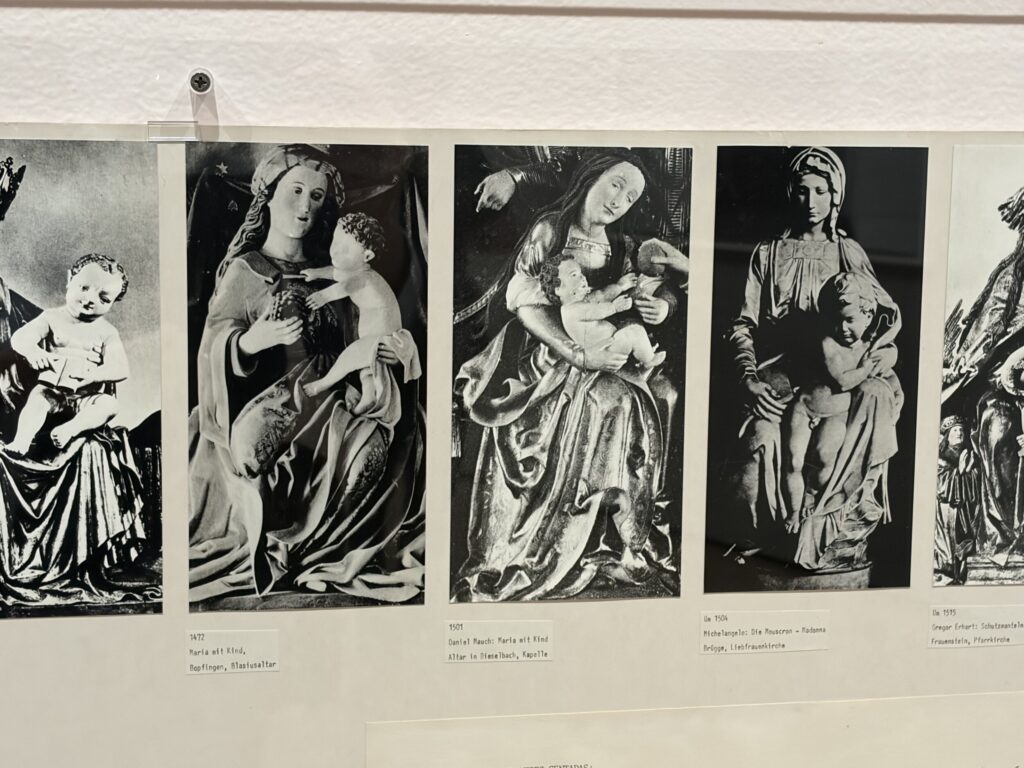
- “Historic Examples ” (2 sets of prints)
- “Sitting Arms” (10 sets of prints)
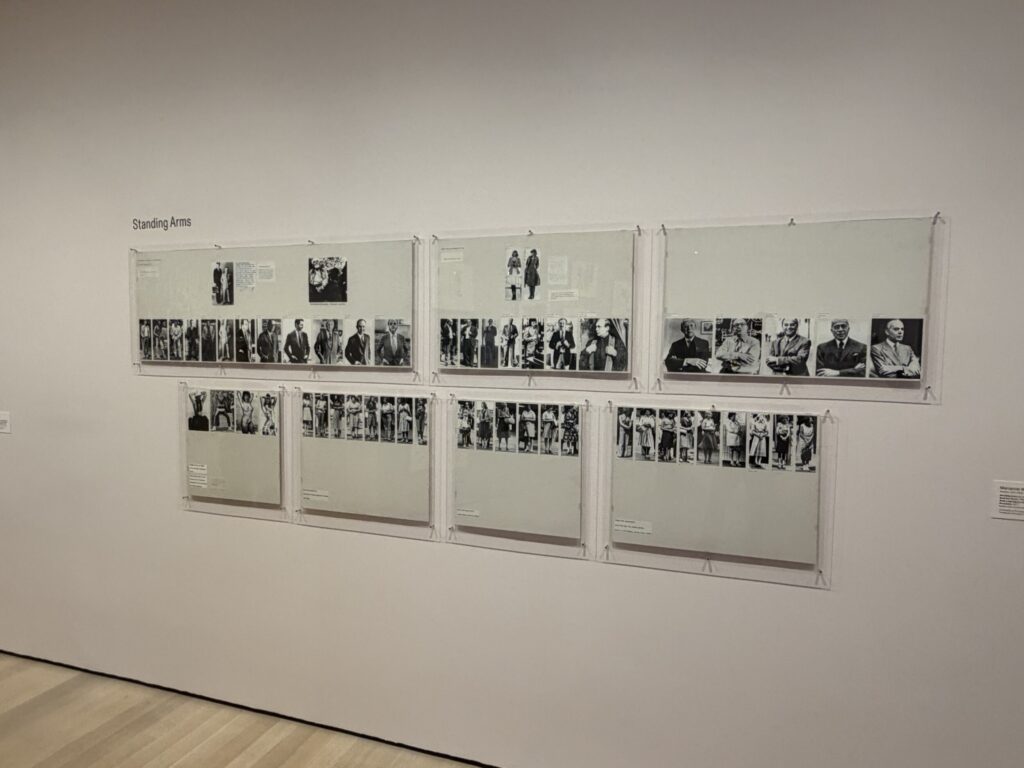
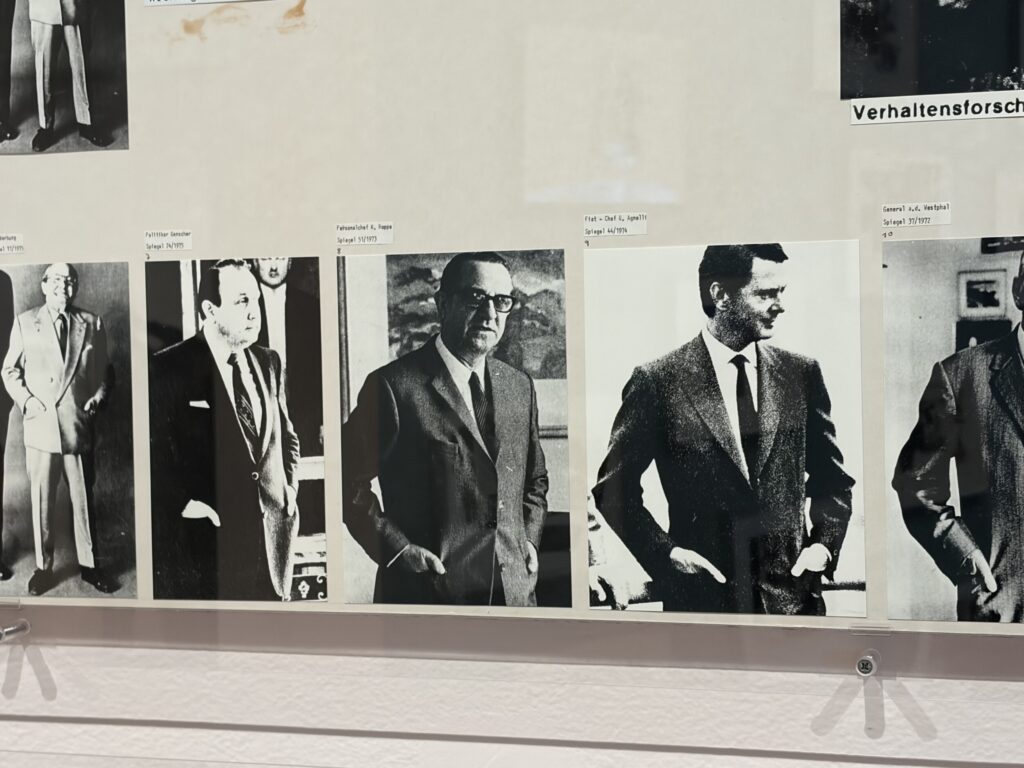
- “Standing Arms” (7 sets of prints)
- “Sitting & Lying Down” (6 sets of prints)
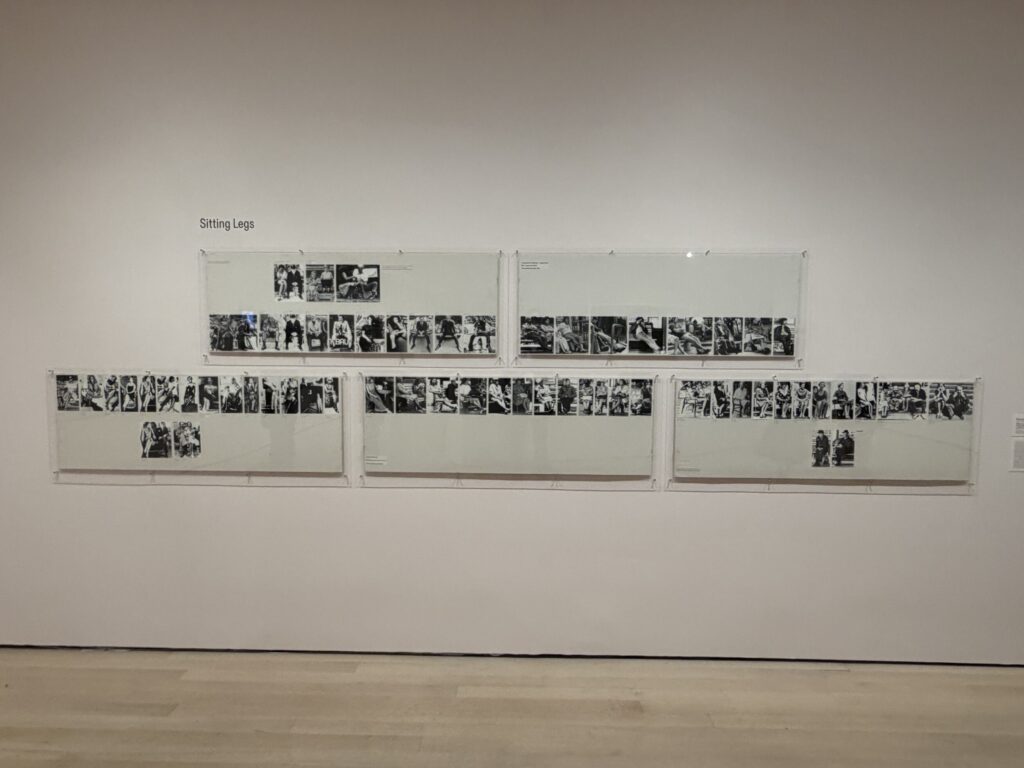
- “Sitting Legs” (5 sets of prints)
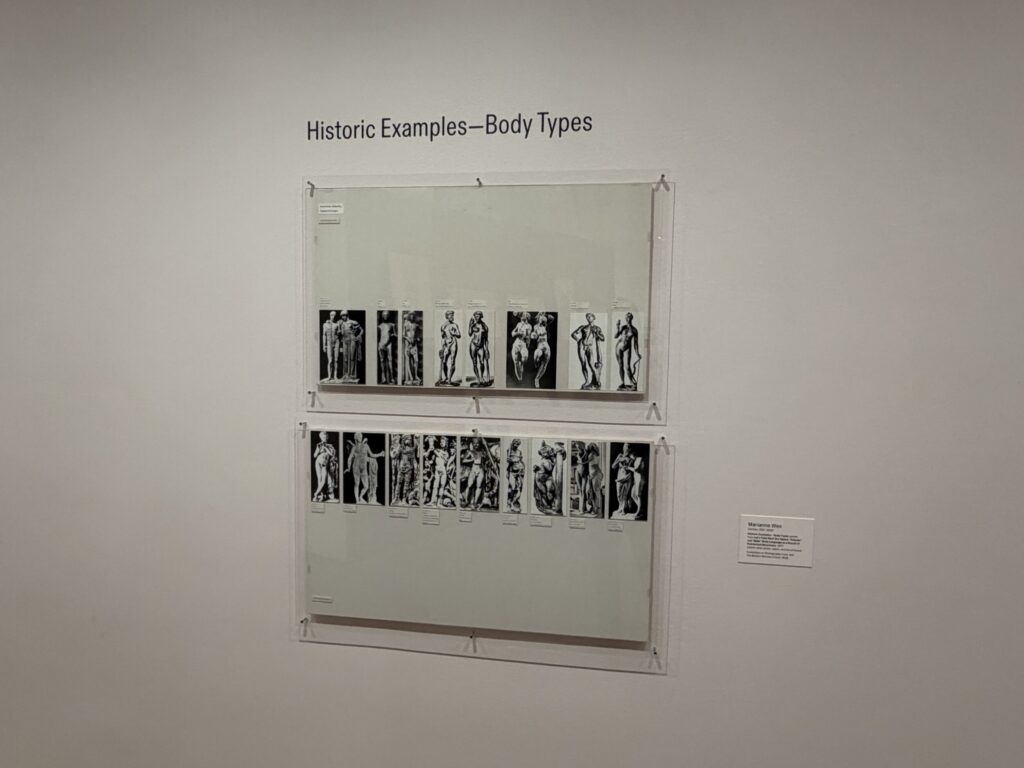
- “Historic Examples – Body Types” (2 sets of prints)
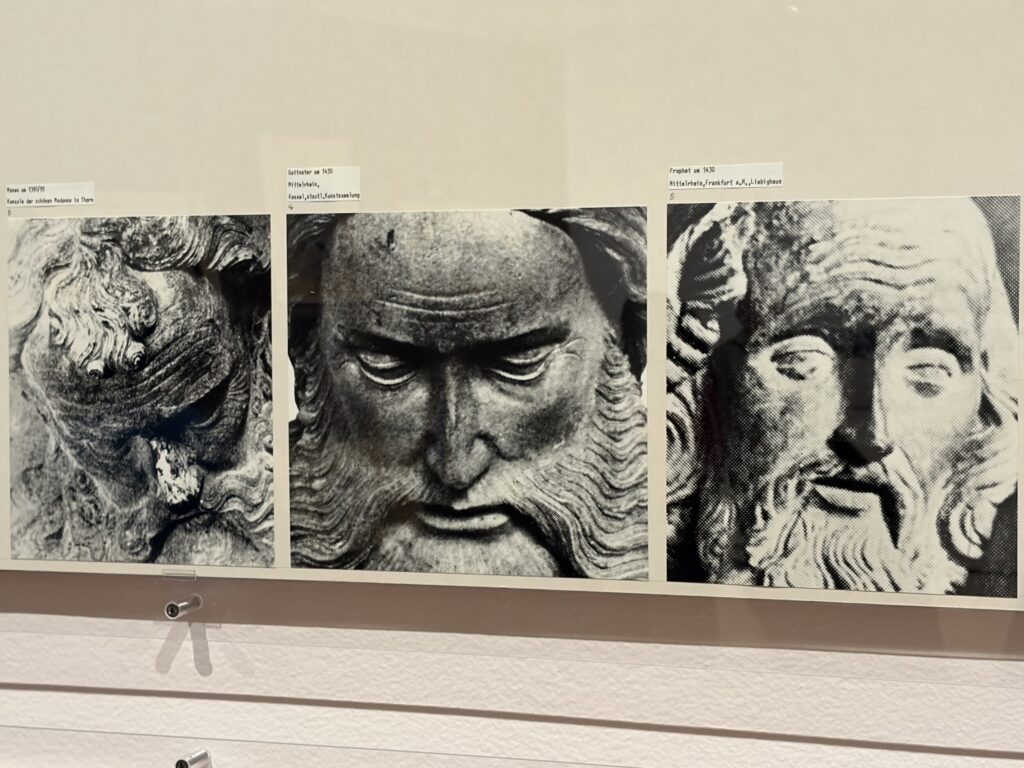
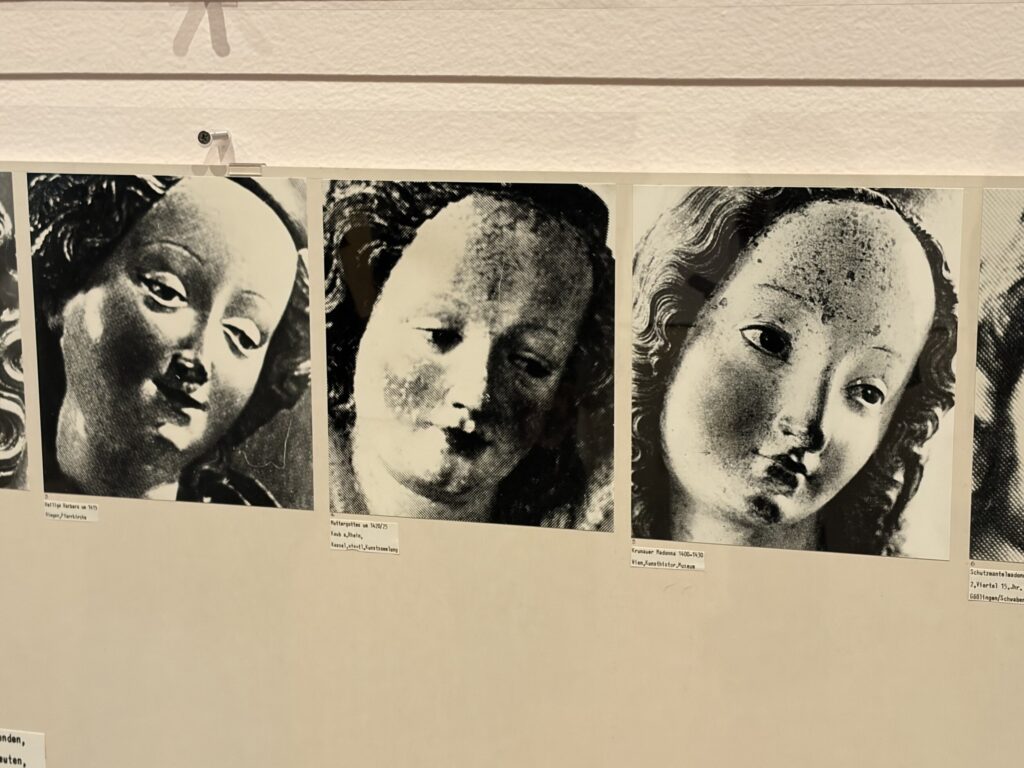
- “Historic Examples – Heads” (4 sets of prints)
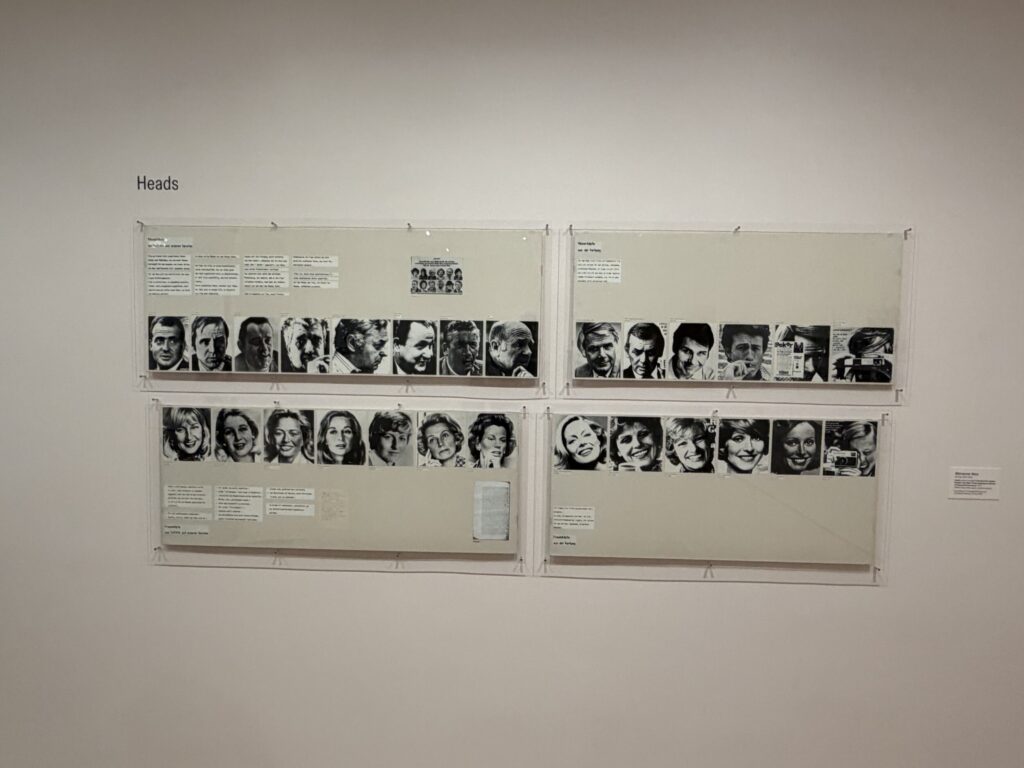
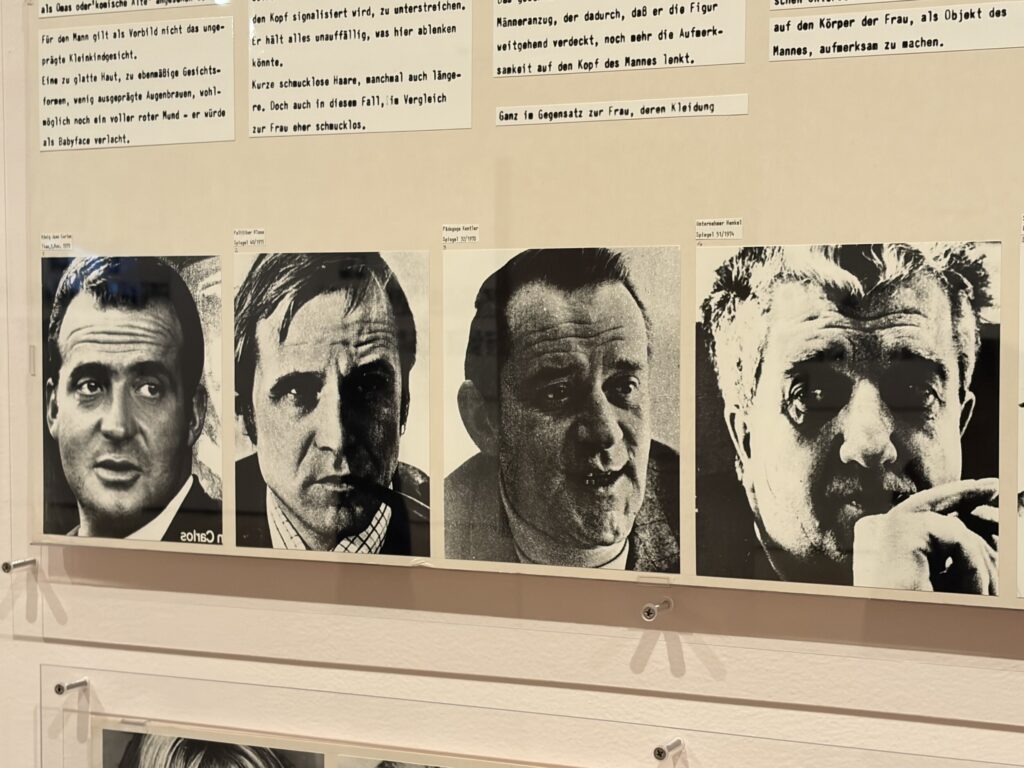
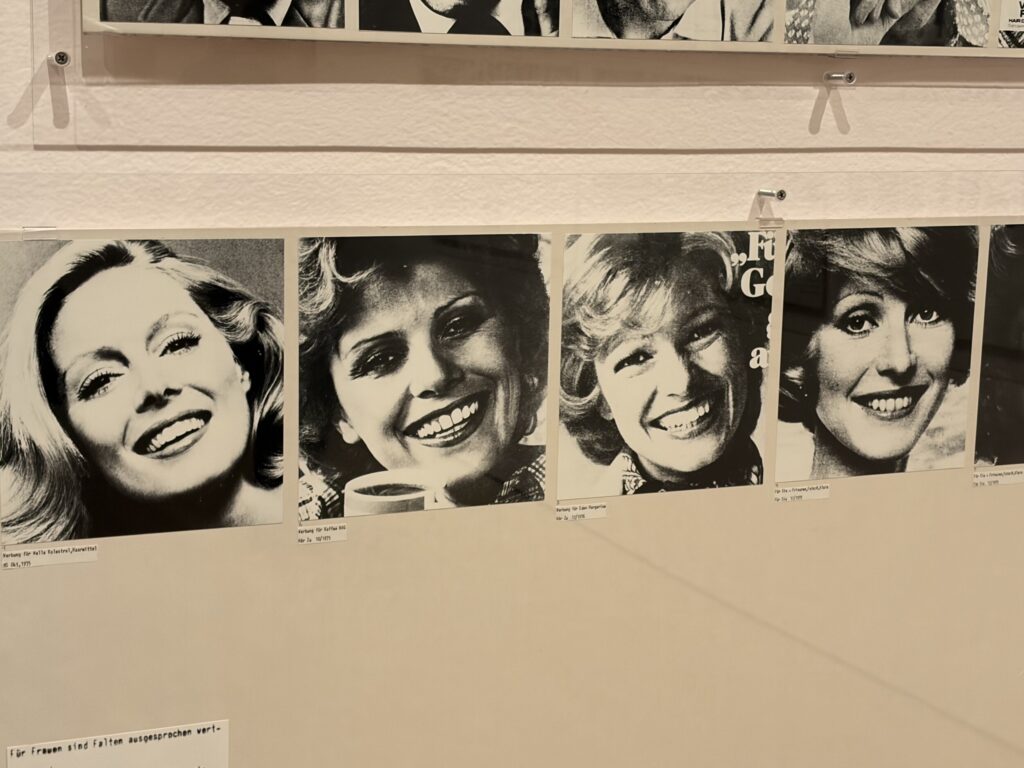
- “Heads” (4 sets of prints)
- “Hands” (2 sets of prints)
- “Standing Legs” (2 sets of prints)
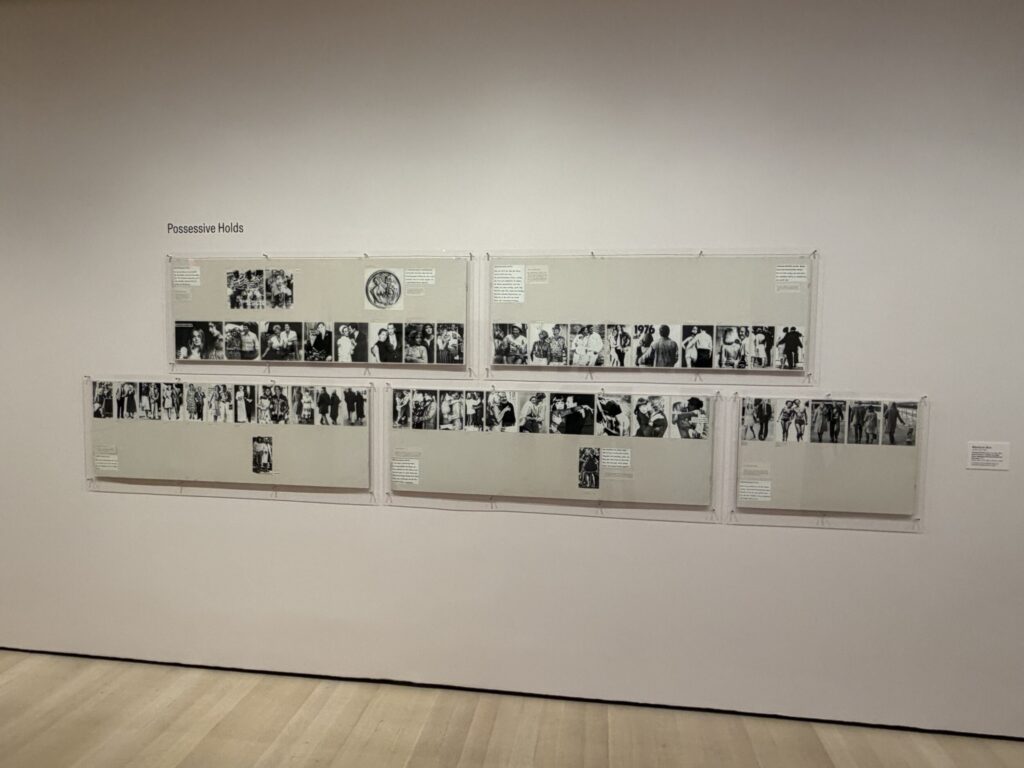
- “Possessive Holds” (5 sets of prints)
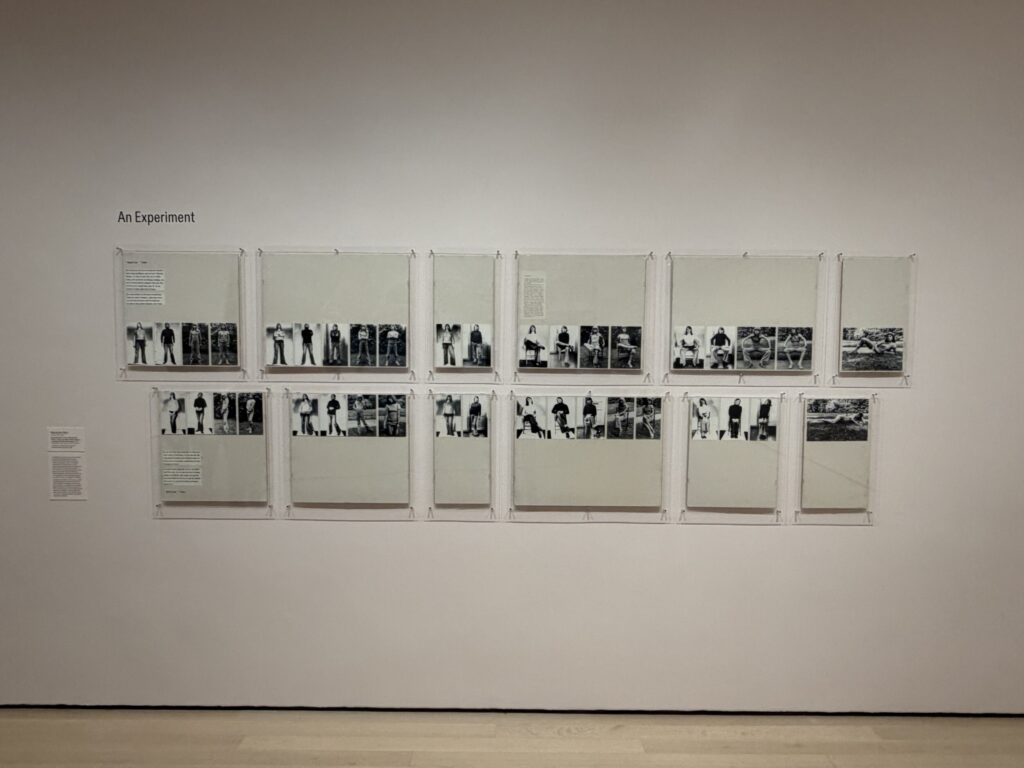
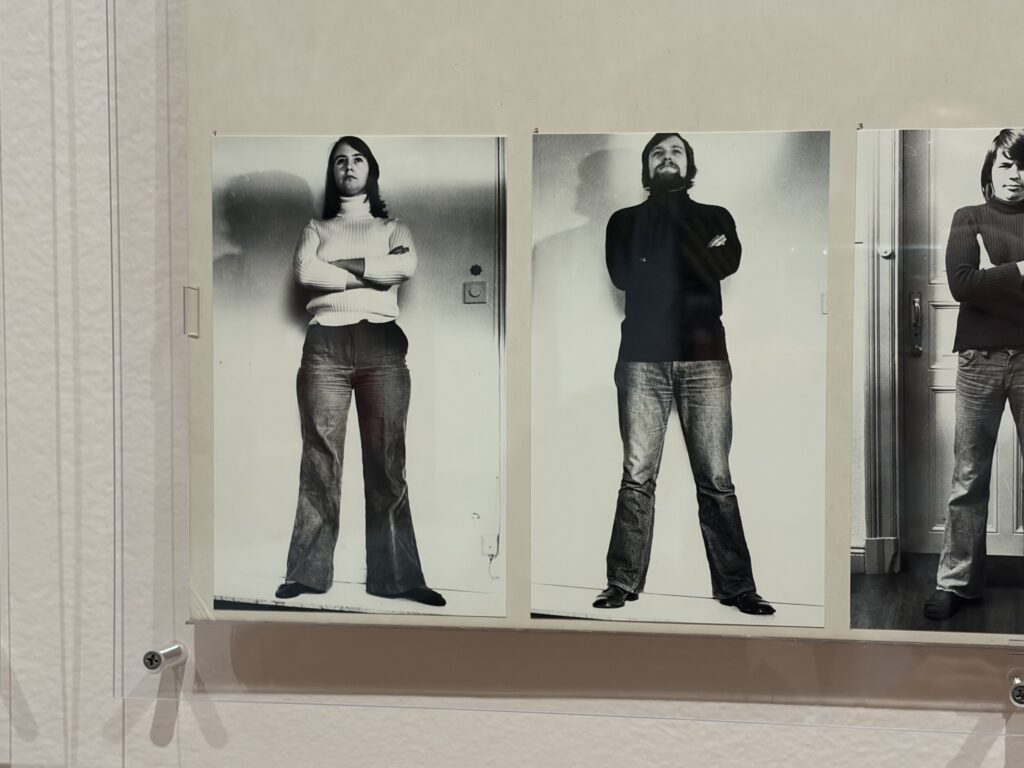
- “An Experiment” (12 sets of prints)
K8 Hardy
- 49 chromogenic prints, 2007-2012, printed 2017, each sized 30×20 inches
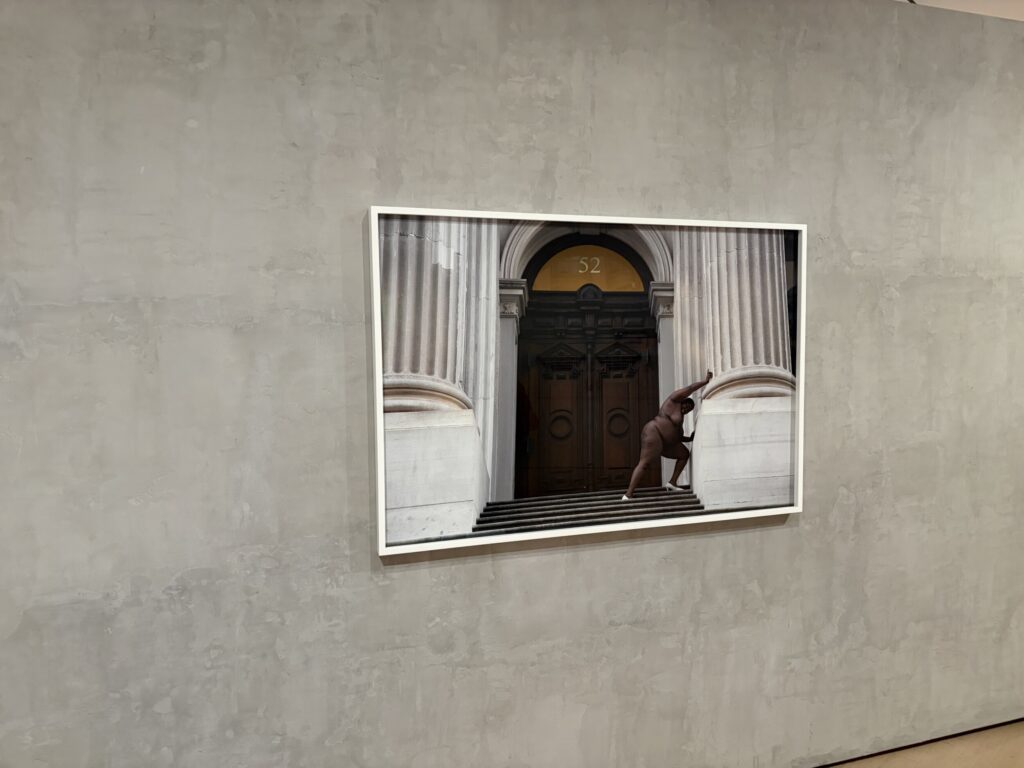
Nona Faustine
- 1 inkjet print, 2013, sized 40×60 inches
Joiri Minaya
- 1 inkjet print, 2022, sized 60×40 inches
- 1 wallpaper, 2022, dimensions variable
Wendy Red Star
- 10 inkjet prints, 2019, sized roughly 17×28, 28×17 inches
Paulina Olowska
- 1 set of 15 collages of cut-and taped printed paper, printed plastic sheets, and paint on paper, 2007, each sized roughly 17×24 inches
Martine Gutierrez
- 1 chromogenic print, 2018, sized 90×60 inches
- (vitrine) 1 offset print magazine (2 copies), 2018, sized roughly 17×11 inches
- 1 single channel video, 2025, 12 minutes 46 seconds
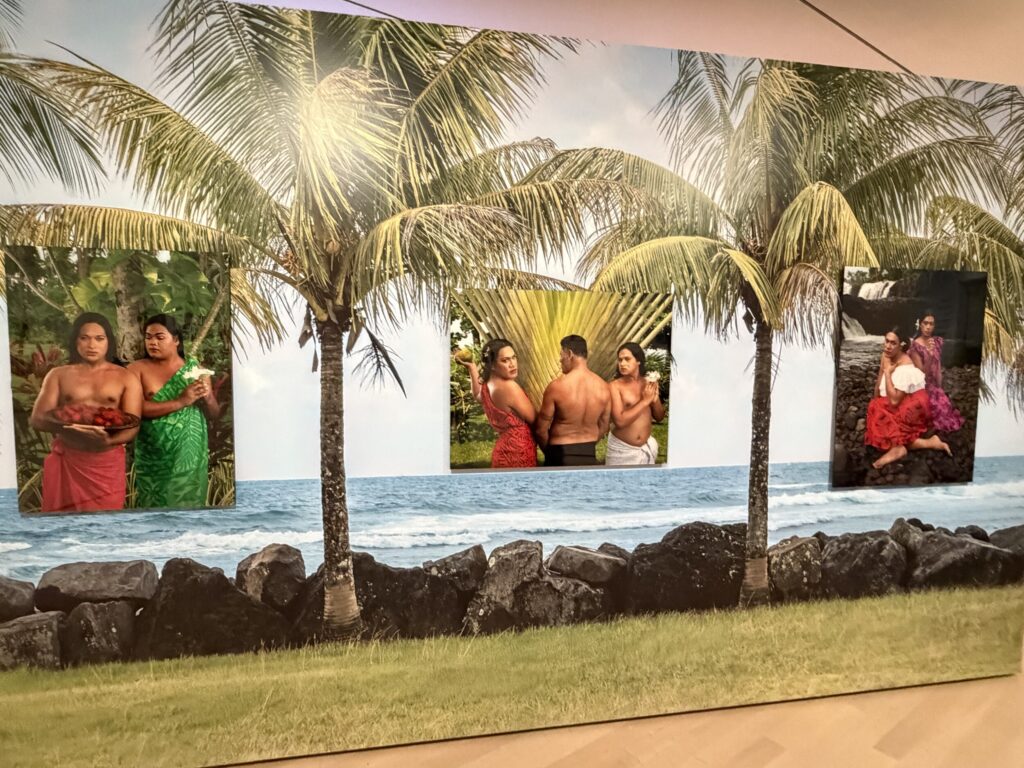
Yuki Kihara
- 3 chromogenic prints, 2020, sized roughly 29×37, 37×28, 39×30 inches
- 1 wallpaper, 2022, sized roughly 132×192 inches
A catalog of the exhibition has been published by the museum (here). Softcover, 12×9.5 inches, 176 pages, includes an essay by Roxana Marcoci and Caitlin Ryan, an interview with Marianne Wex (by Roxana Marcoci and Madeline Weisburg), and conversations between the other included artists and Kaitlin Booher, Sophie Cavoulacos, Stuart Comer, Nisa Mackie, Joseph Pierce, Caitlin Ryan, and Lanka Tattersall.
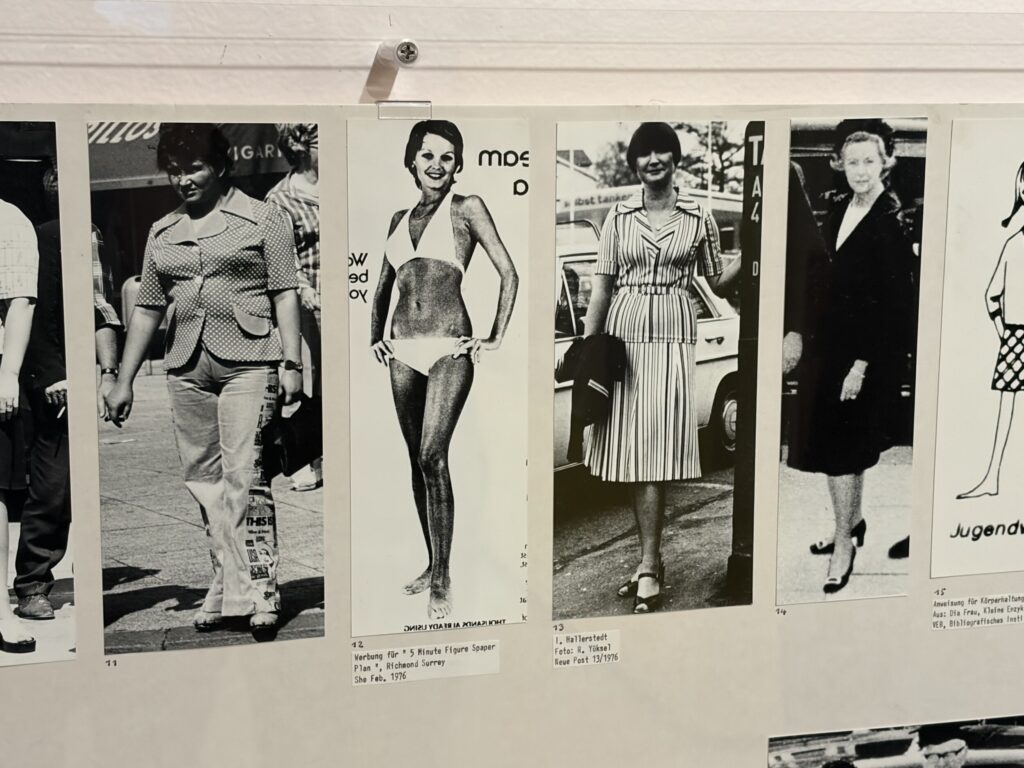
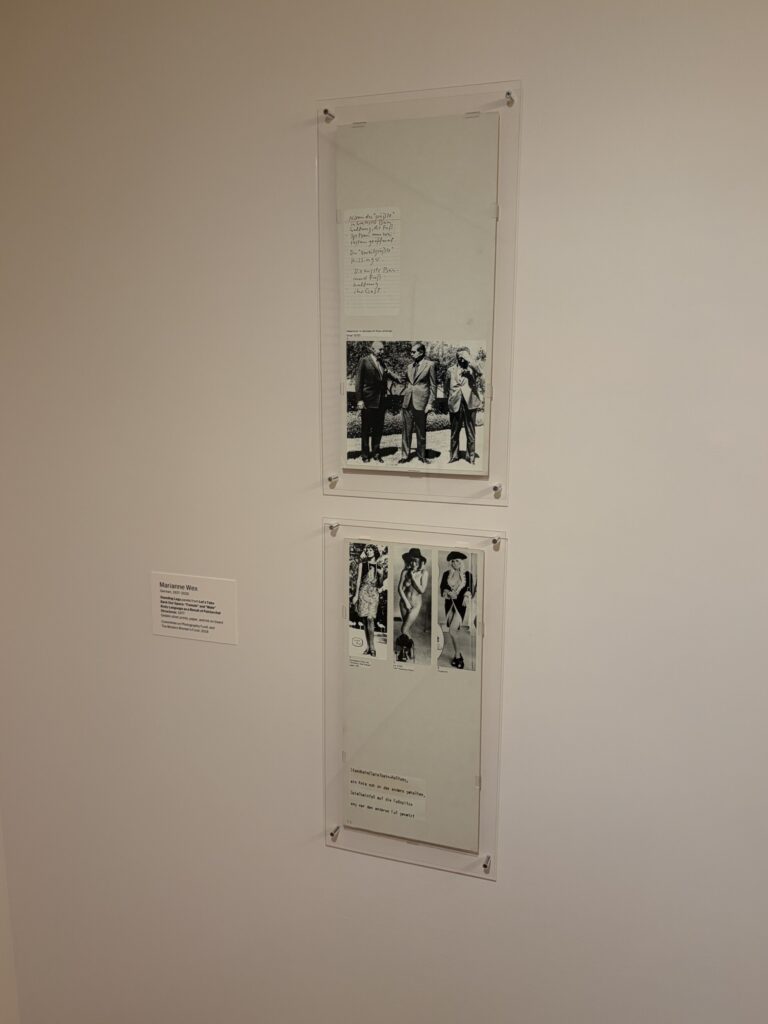
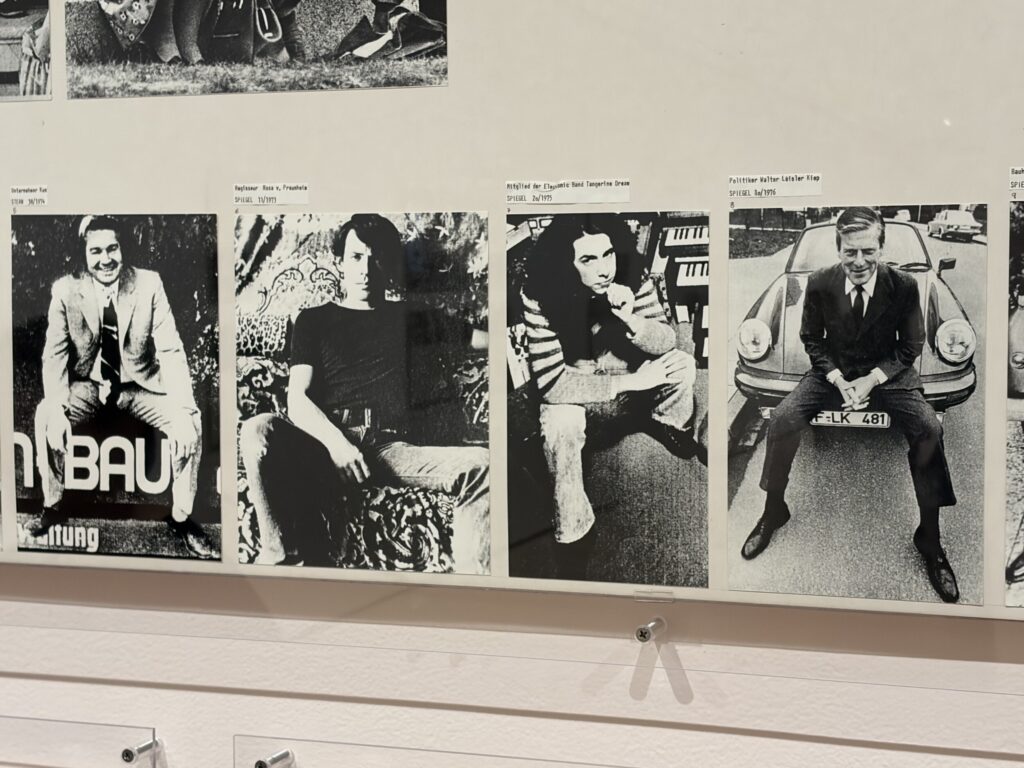
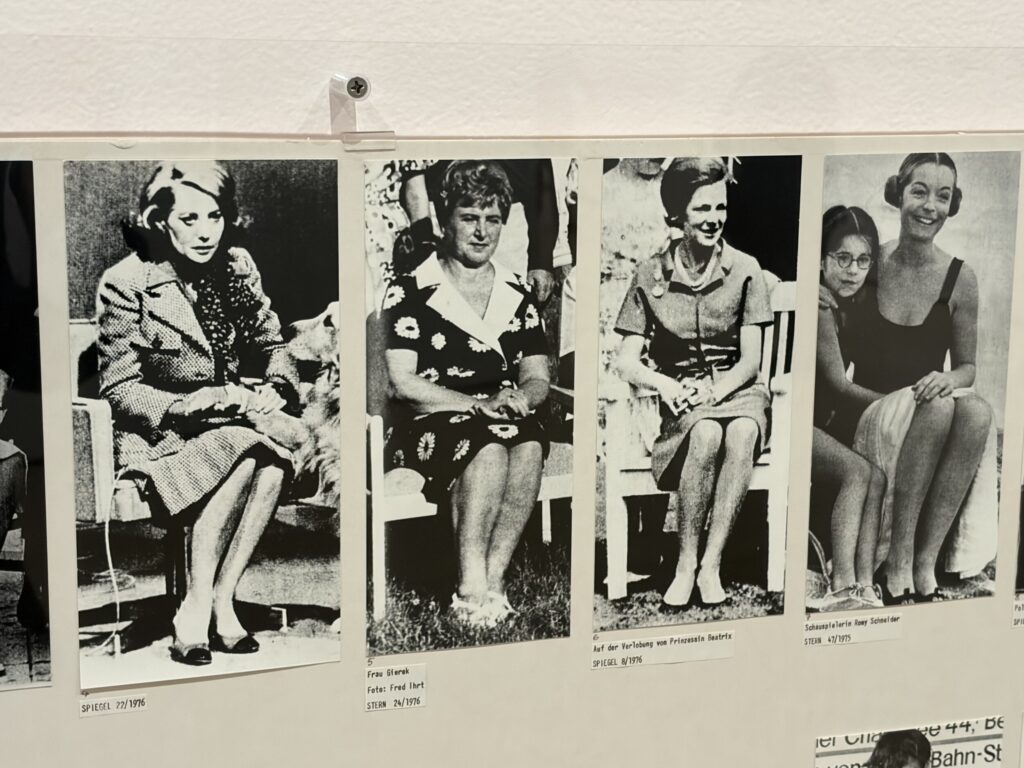
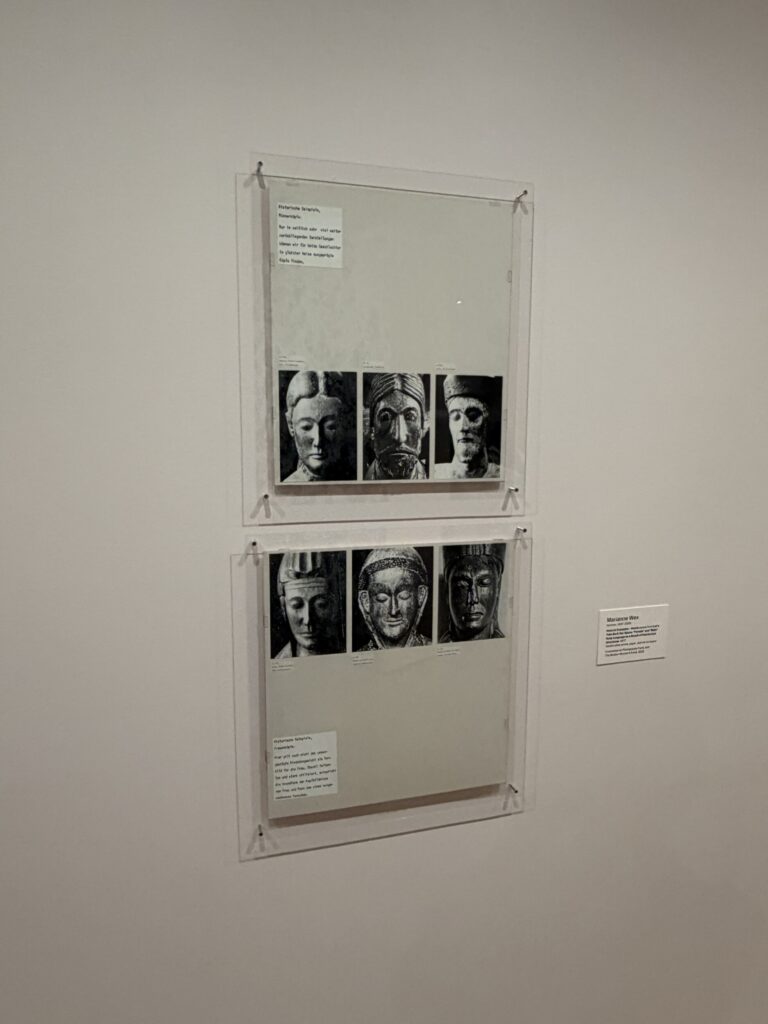
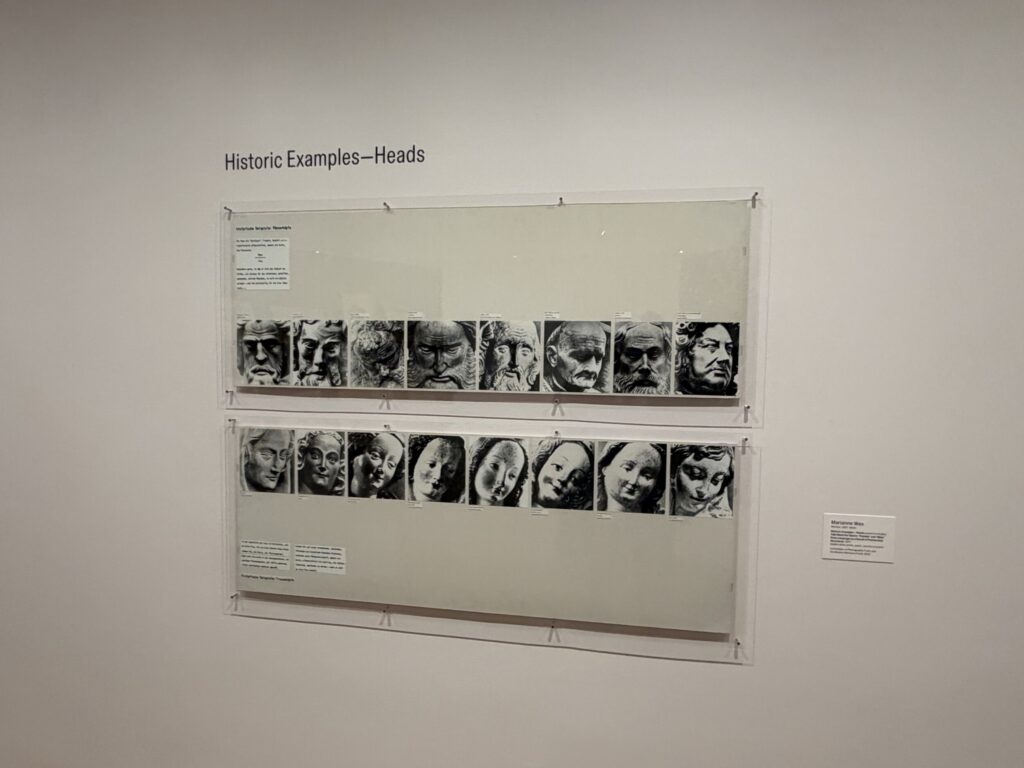
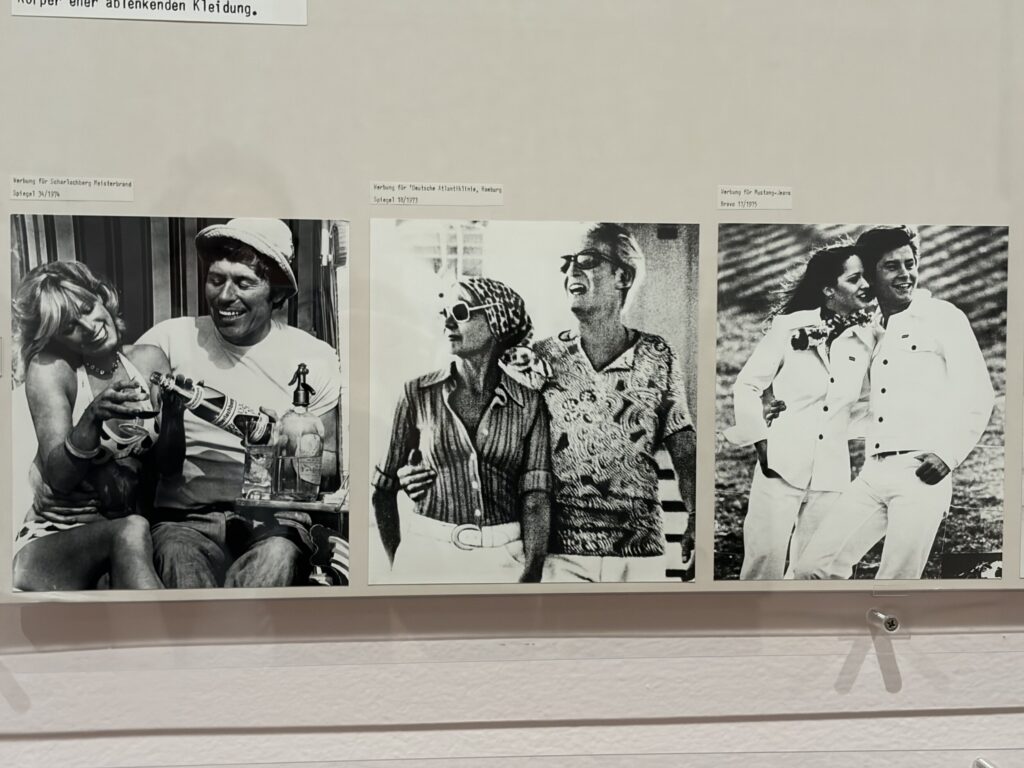
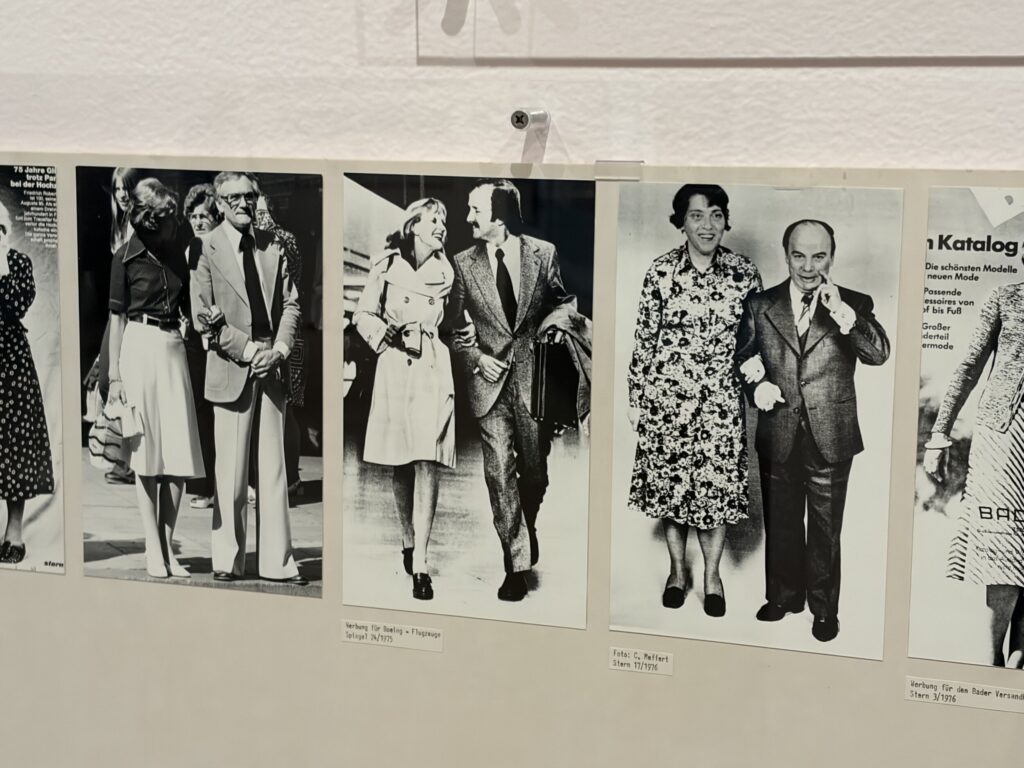
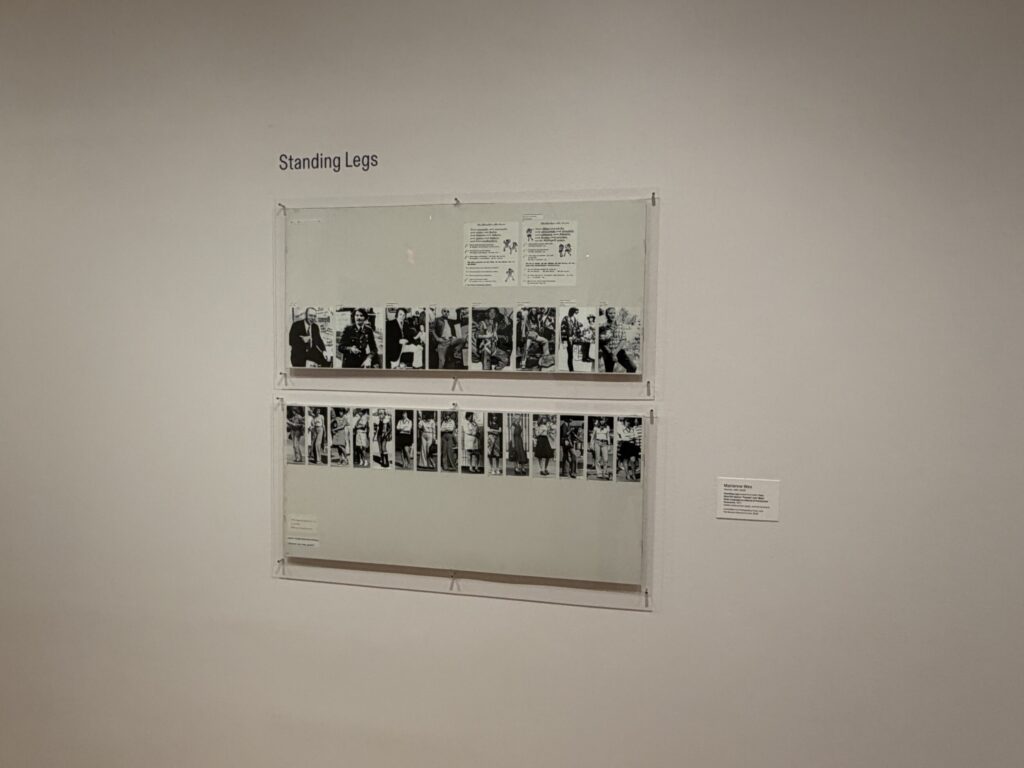
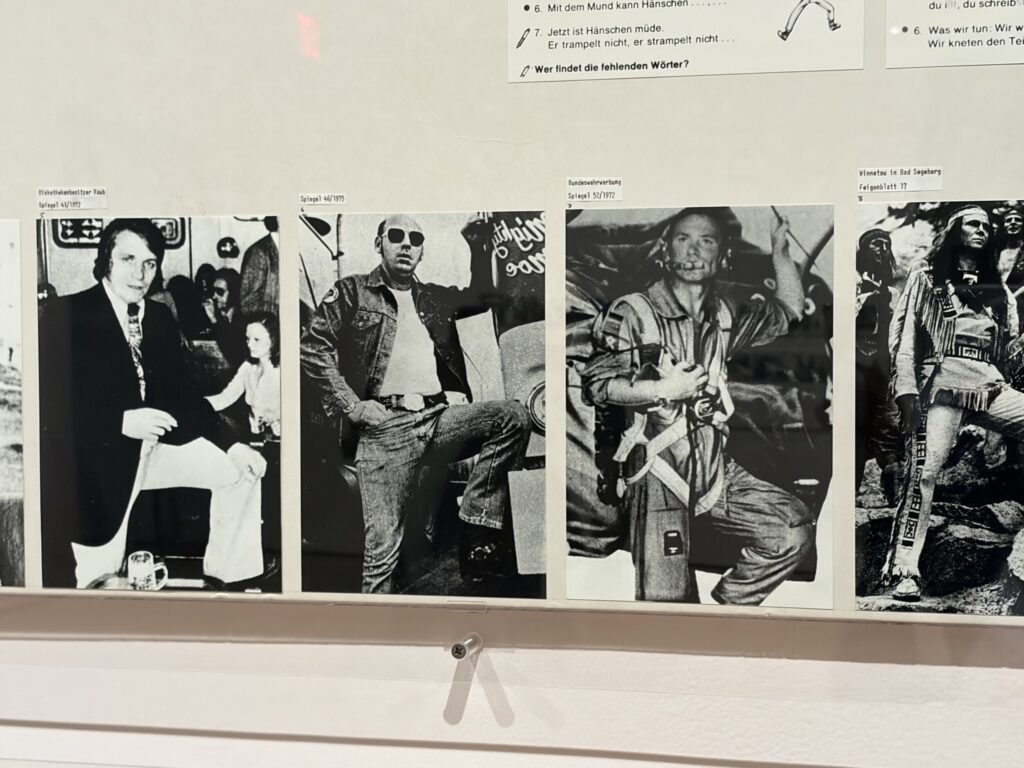
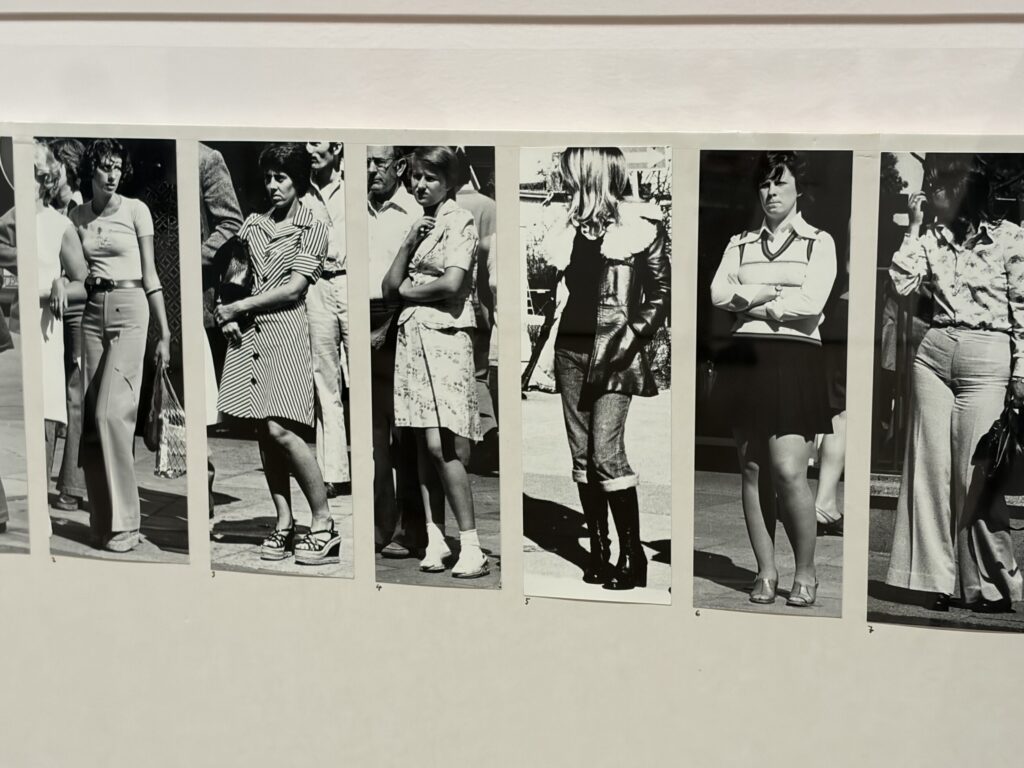
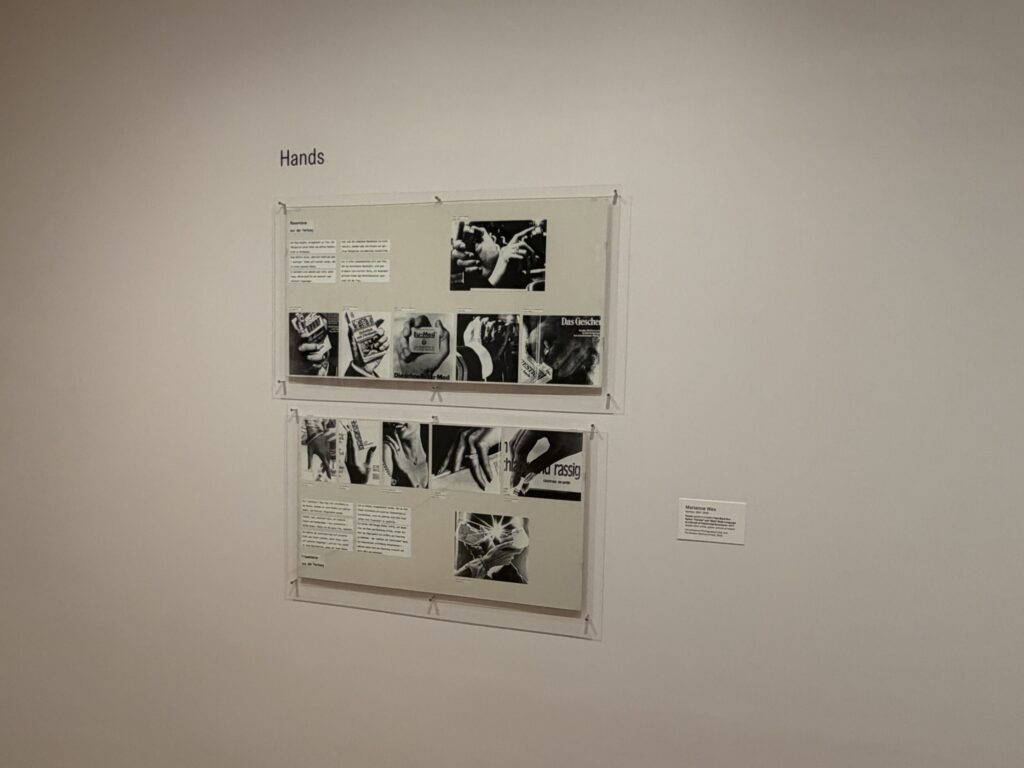
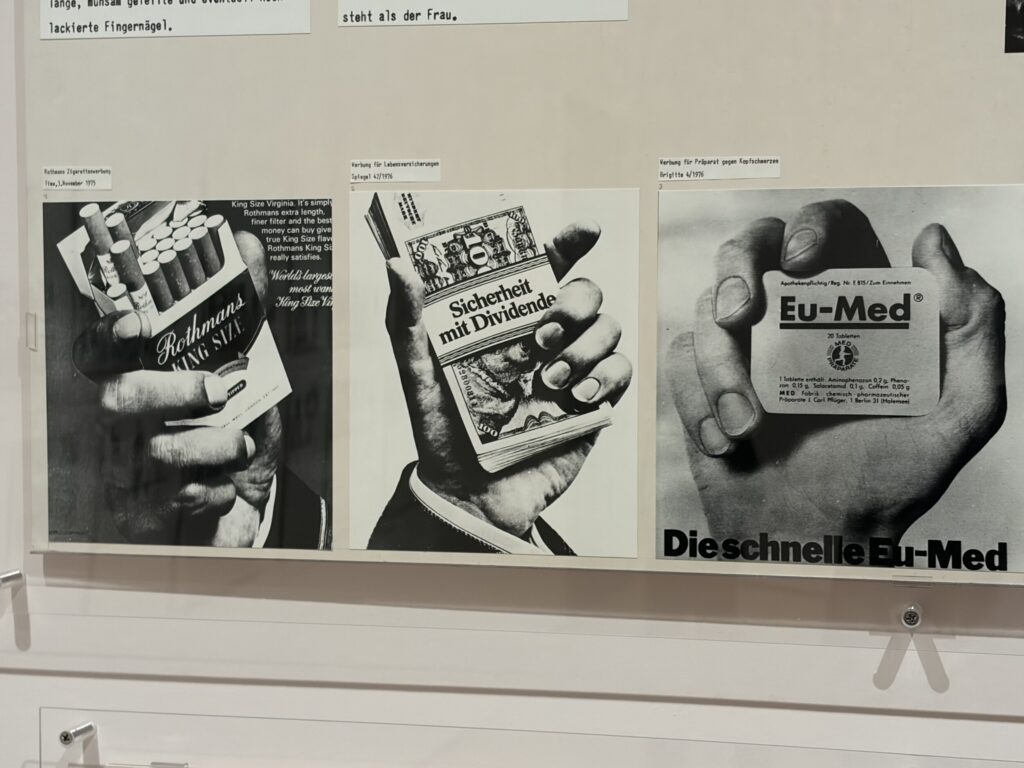
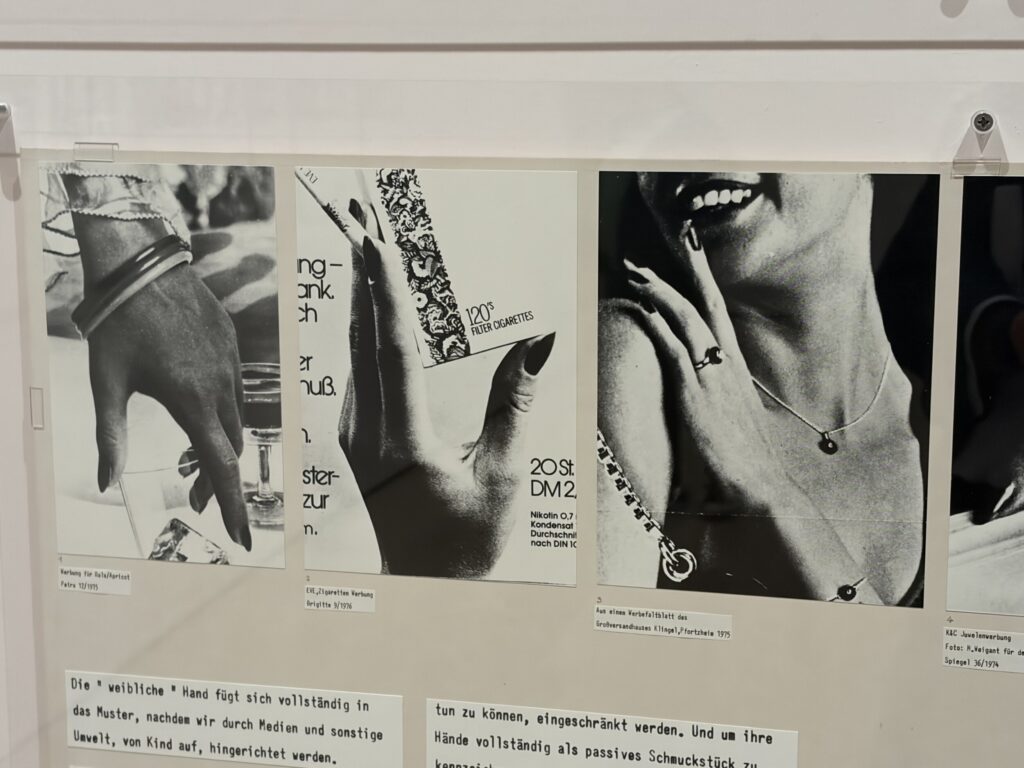
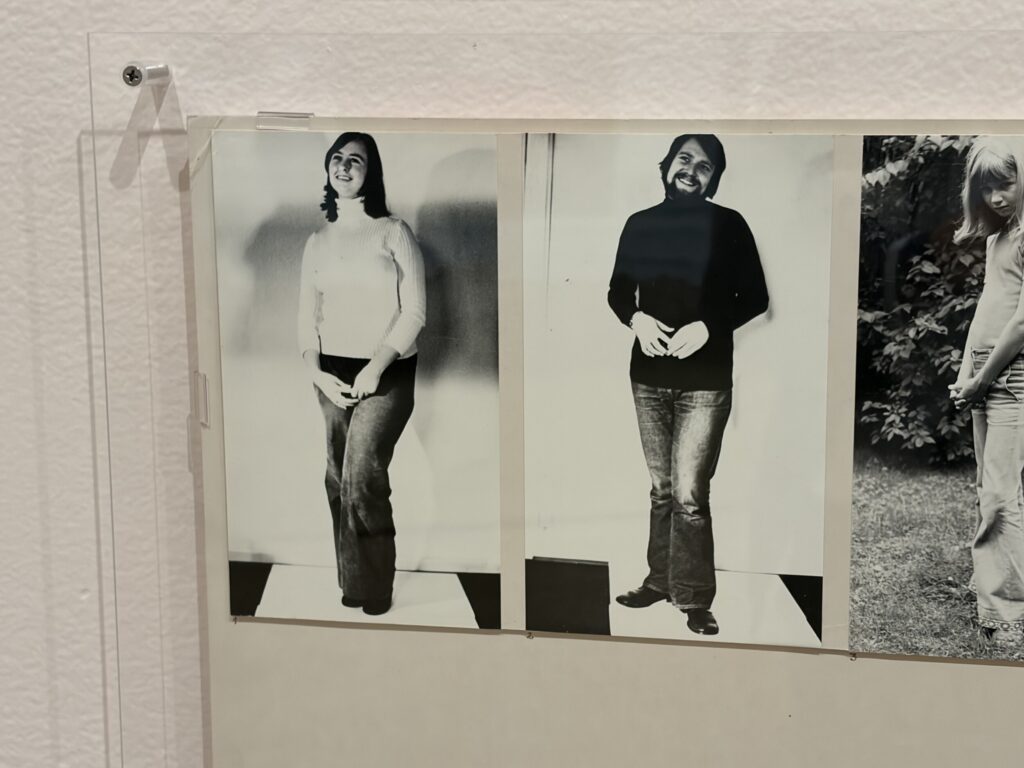
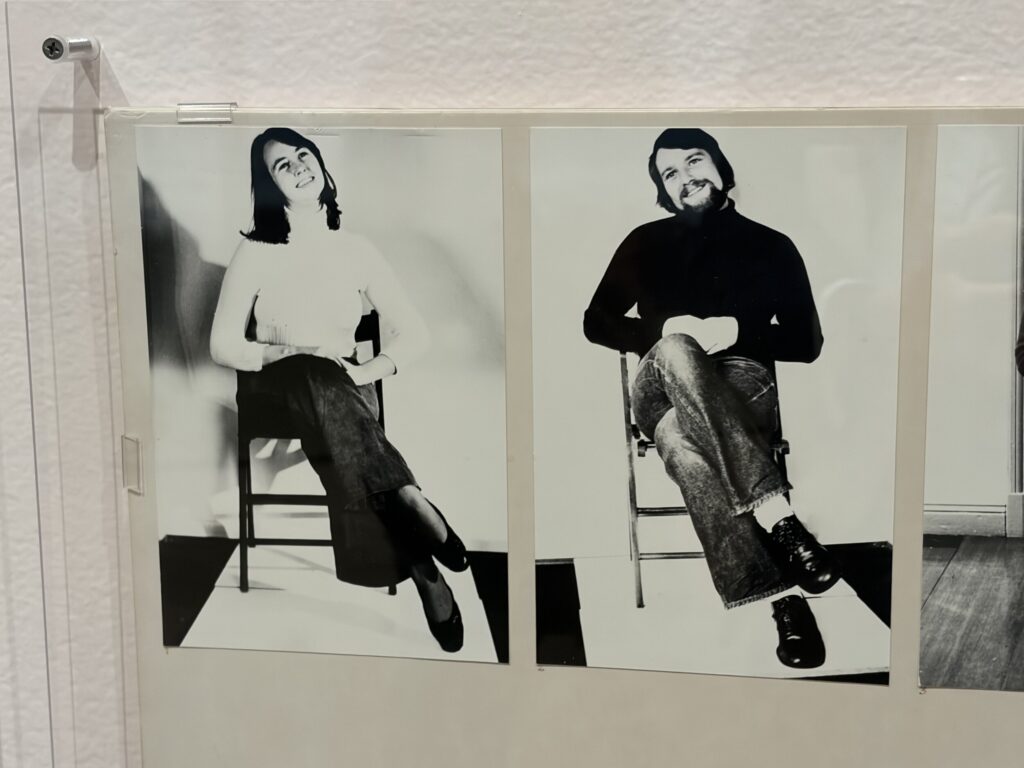
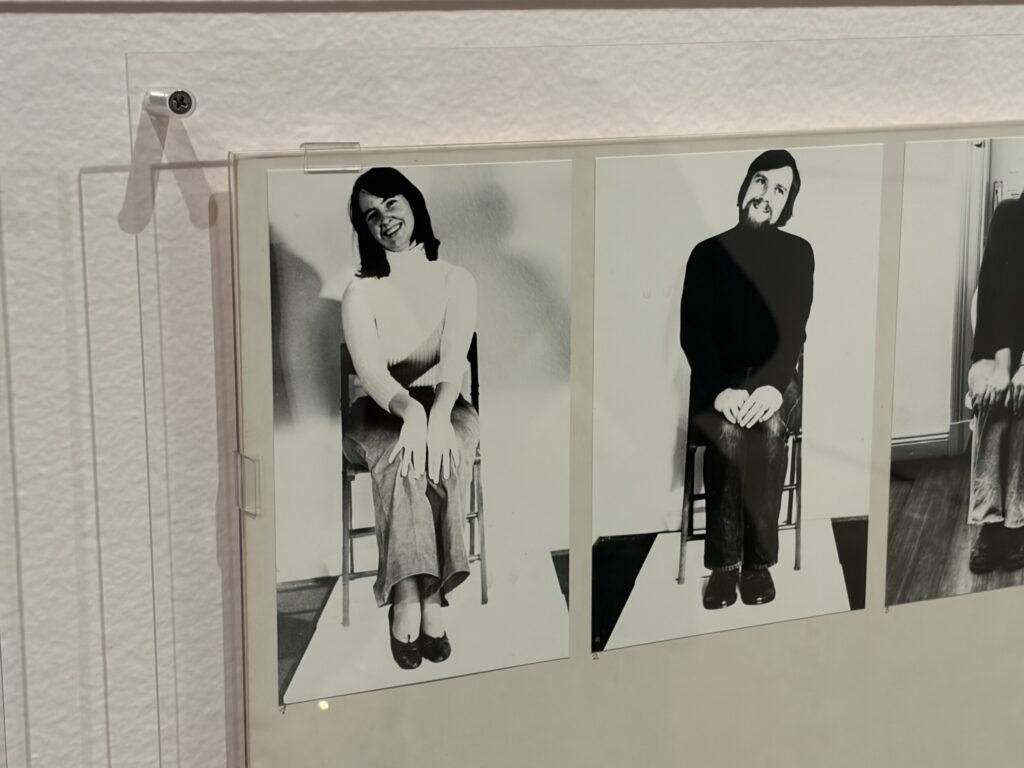
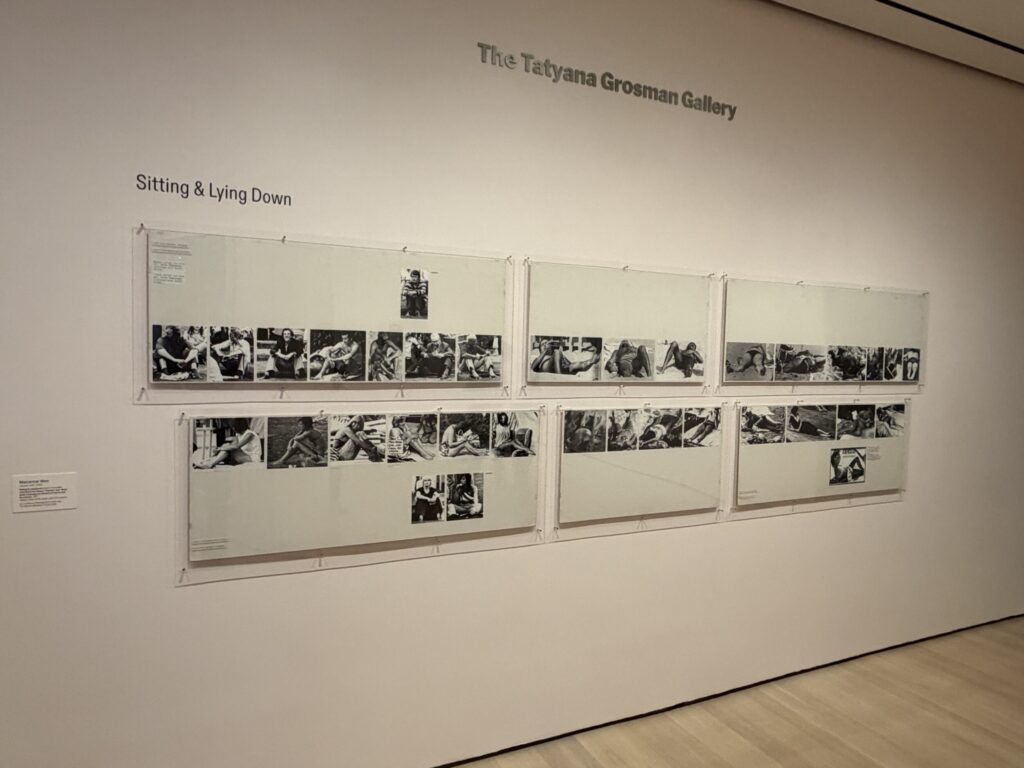
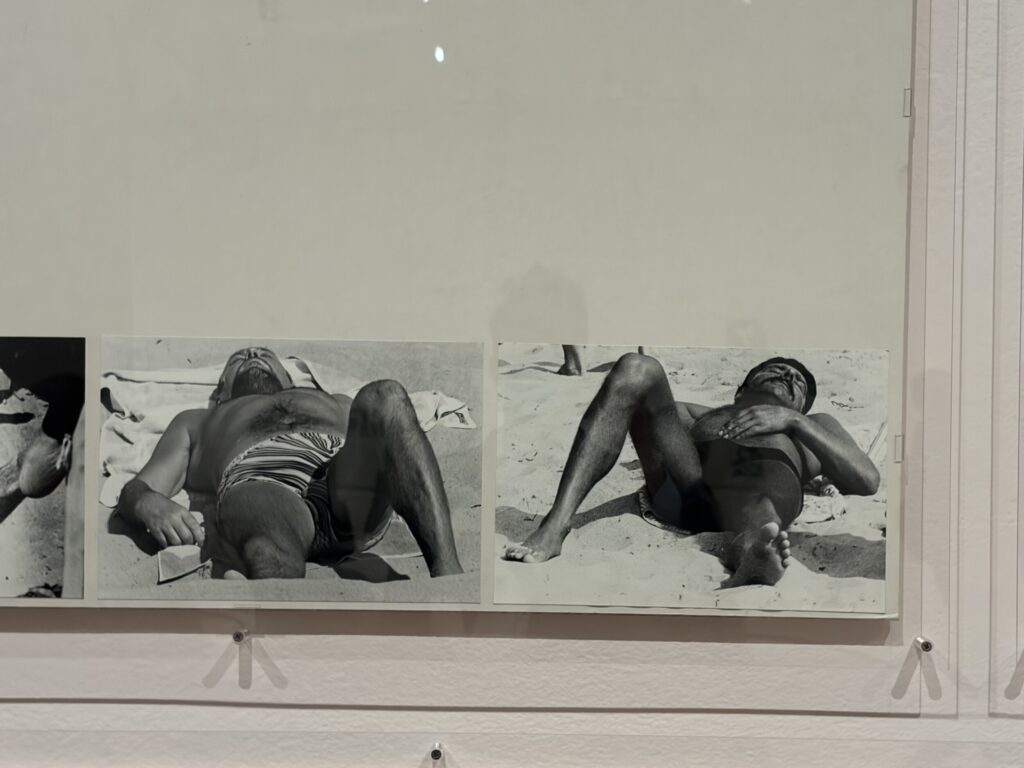
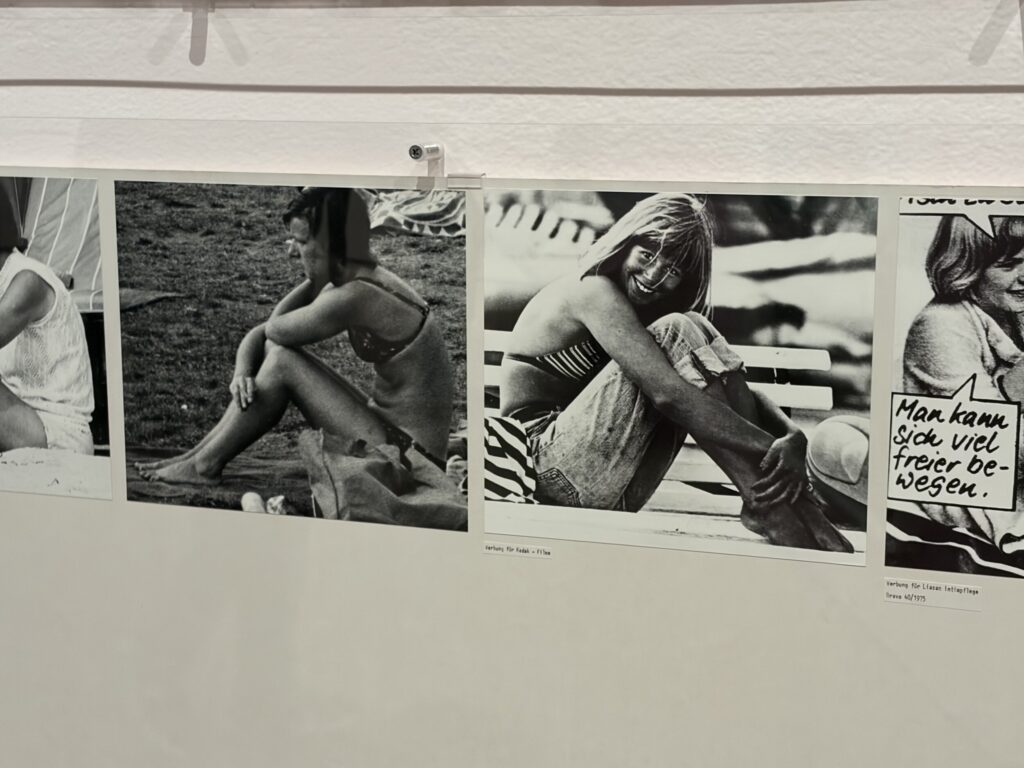
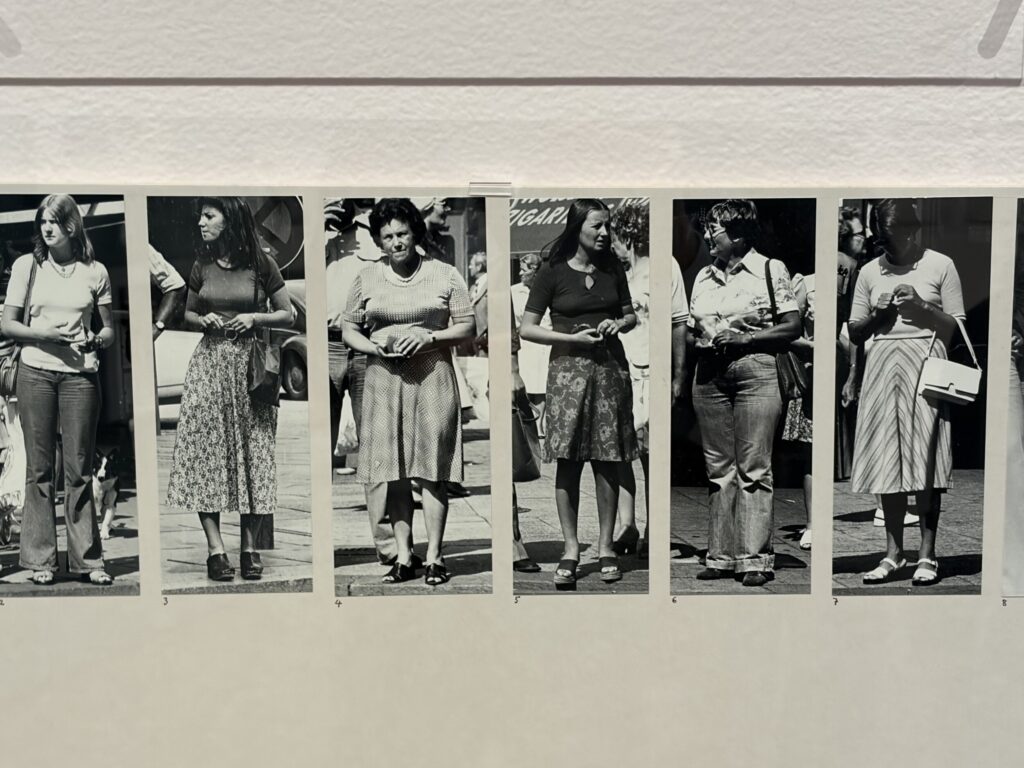
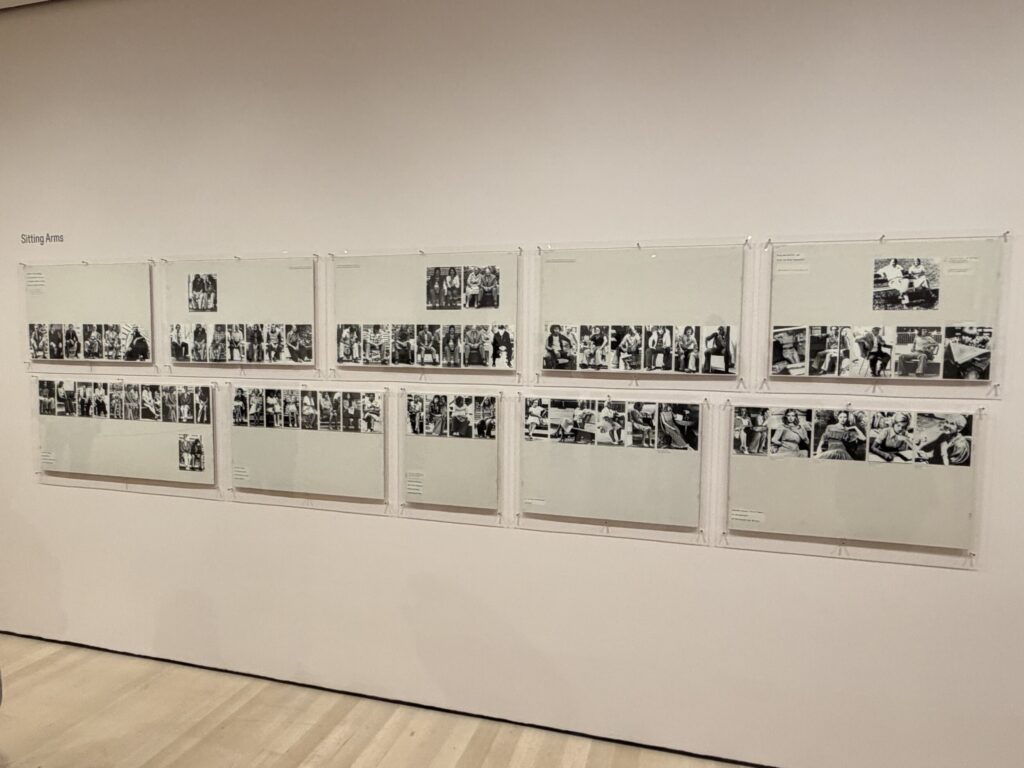
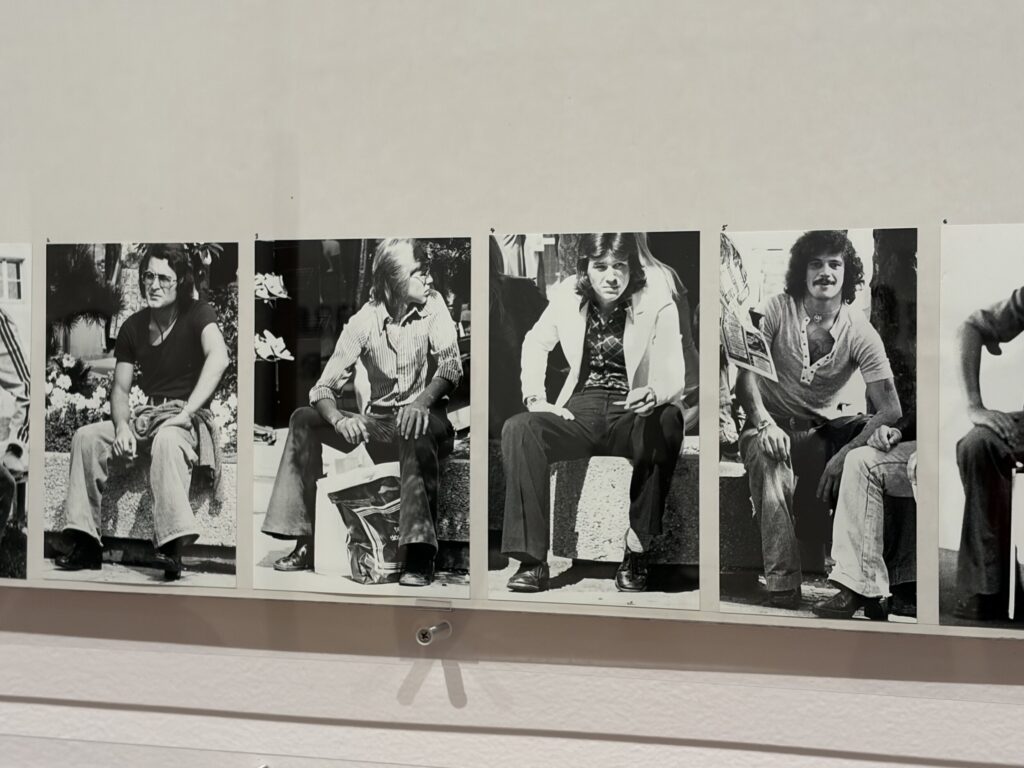
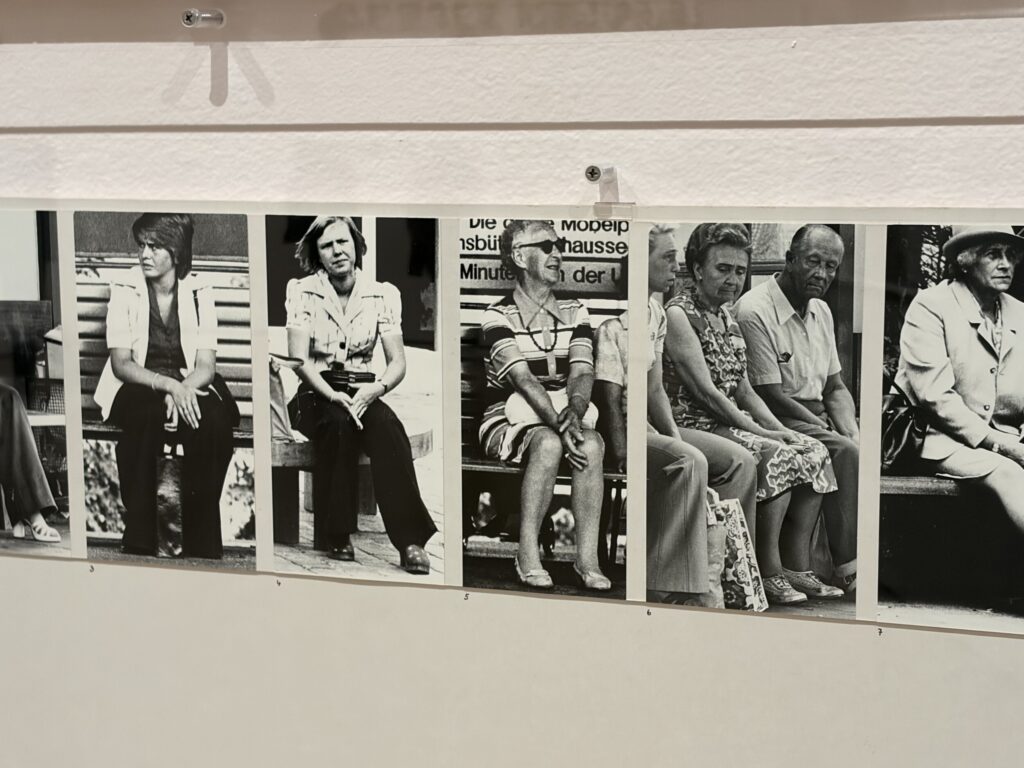
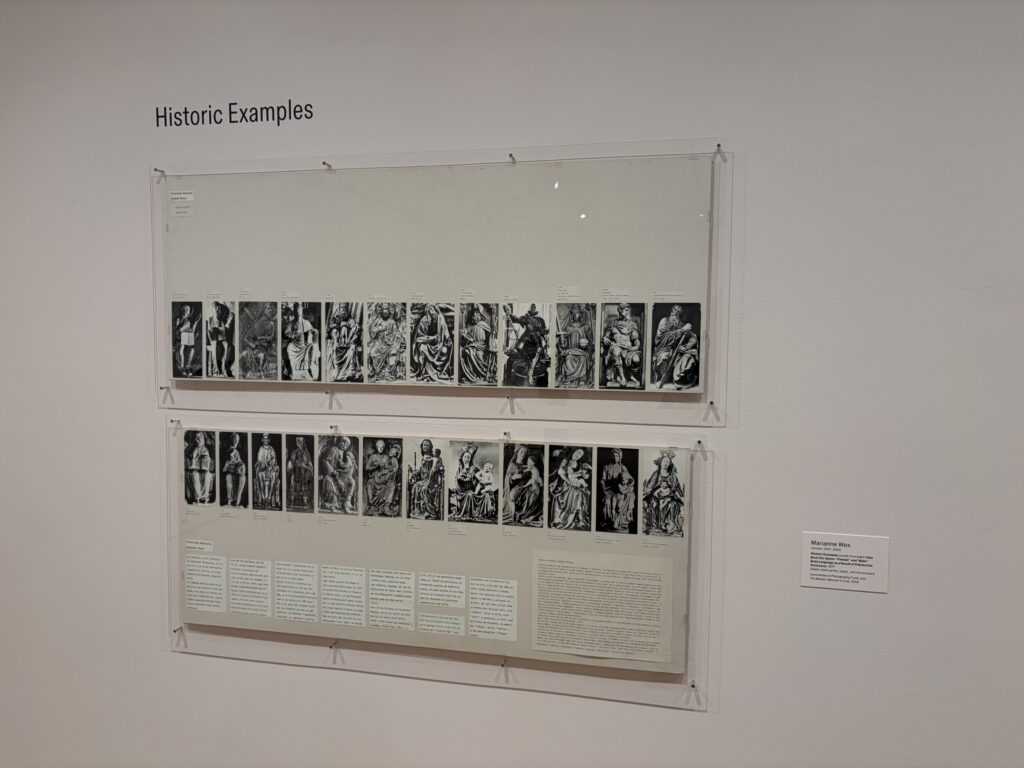
Comments/Context: Even for those deeply educated about 1970s era feminist photography from Eastern Europe, the name Marianne Wex might not ring that many bells. Wex was a Hamburg-based painter and teacher who turned to photography in the early 1970s as her aesthetics drifted toward photorealism and Pop art. Gendered social behavior soon became her central subject, and between 1972 and 1977, she methodically photographed the postures of men and women on the streets of Hamburg, and then mixed those images with rephotographed pictures from fashion magazines, advertising, newspapers, art history catalogs, film and TV stills, and even pornography.
With all of this visual raw material at hand, Wex went on to create systematic groups and categories based on specific poses, postures, and behaviors, from “Standing Legs” and “Sitting Arms” to “Heads”,”Hands”, and “Possessive Holds”. Her resulting work Let’s Take Back Our Space: ‘Female and ‘Male’ Body Language as a Result of Patriarchal Structures ultimately took form as nearly 250 panels of organized imagery and accompanying text, applying the rigorous typological structures of Conceptual Art (as seen in the work of Bernd and Hilla Becher nearby in Düsseldorf) to fragments of street photographs and selections of appropriated and cropped visual media. As groundbreaking as this work was, soon after she completed it (and published it in book form in 1978), illness led Wex to turn her attention away from art, and the panels went into long term storage. The work didn’t resurface again until the late 2000s, leading to renewed gallery interest and support that helped broker MoMA’s acquisition of the entire piece in 2018. MoMA curator Roxana Marcoci has long had an interest in rebalancing the museum’s photography collection with key examples of photo-based work by women, particularly with feminist perspectives and from Eastern Europe, so it’s not entirely surprising that the overlooked Wex story would resonate with her.
The next challenge was of course how to present such a massive project coherently and persuasively to the museum’s audience. “Taking Back Our Space: Photographic Perspectives” thins Wex’s work down to some sixty panels, and then places those panels in conversation with a selection of 21st century works by female artists with related vantage points and subject matter interests. The result is a point/counterpoint type visual argument, where Wex sets up the central framework to be considered, and the other artists then respond to and expand on her ideas in new ways based on their own personal experiences and identities. This approach collapses the multi-decade chronological distance between the artists, making clear just how insightful and relevant Wex’s observations about gendered body language from the 1970s still are today.
While exuberant bright color draws attention to much of the 21st century work on view (as seen in both the photographs themselves and the installation choices of paint and wallpaper behind them), the durable power of this show really resides with Wex’s patiently structured and measured black-and-white analysis – her thinking appropriately dominates the proceedings, with each set of panels circling the gallery space offering compelling visual evidence of overlooked patterns in the ways men and women carry themselves differently in public. As much as we might discount Wex’s approach as cherry picking like examples from a broad sea of behaviors, it’s hard not to be convinced by her conclusions. Men stand dominantly with their legs spread, while women stand more submissively, often turned slightly and with their legs placed tightly together. Sitting postures are similarly opposed, with men spreading their legs confidently (or aggressively) or leaning back with casual legs crossed self-assurance; women sit more demurely, with knees together or ankles crossed.
A turn through the room allows the fullness of Wex’s compare-and-contrast argument to unfold, working through groups of head positions, hand positions, lying down poses, standing variations, and the way arms are held in various sitting and standing setups, adding in historical examples of from sculpture and painting, reminding us that these patterns have been ingrained in our cultural icons for centuries, from armored men holding swords and scepters to Madonna-like women holding babies, and from Adam and Eve to gods and goddesses. Each discrete panel is a thematically-edited presentation, with just enough like examples of any one pose or position to clearly (and emphatically) make Wex’s point. And just as the parade of paired poses starts to become exhaustive, the back wall of the gallery hosts a clever turnabout; titled “An Experiment”, the panels have men pose in female positions and vice versa, creating comedic twists and switches that make explicit just how strangely coded these gendered body language behaviors are.
The most intriguing contemporary analogue to Wex’s work comes in the form of K8 Hardy’s “Position Series” project from 2007-2012, displayed as a brashly provocative eye catcher and starter in the show’s front rooms. In a sense, Hardy has internalized all of the strict lessons found in Wex’s project (particularly the “An Experiment” inversions) and then turned those poses and positions back on themselves in her own series of exuberantly irreverent self-portraits. In Hardy’s setups, gender is altogether fluid, with feminist and queer modes of presentation constantly remixed using inspired variations of costumes, makeup, and settings. Her images are consistently expressive, sometimes playful, mocking, or rude, and often amplified by photographic transformations of light, exposure, tinting, and photogram techniques, making each composition an over-the-top layering of conflicting identity motifs. Nearly every Hardy image on view simmers with uncomfortable friction, our ingrained coded responses unable to process all the signals she’s sending. Hardy’s work is strong enough to have made this a straightforward Wex-Hardy pairing (without the rest of the included photographers), as it would have cemented the point about how strong the rules of body language are, and how they can be incisively hijacked just the same; such an installation would also have made the potential back-and-forth between certain poses and positions much more obvious.
Among the other inclusions, the works by Yuki Kihara, Martine Gutierrez, and Nona Faustine have the most intriguing resonance with Wex’s body language project, although the installations here don’t always make that connection as clear as it might have been. Kihara’s images from her “Paradise Camp” series feature non-binary Samoan models who are male at birth but present themselves as female, seductively staged in the manner of Paul Gauguin’s 19th century paintings of Polynesian women; the identity inversion smartly upends both gender stereotypes and colonialist notions of island paradise. Martine Gutierrez’s work offers related twists of gender and race, as seen in her knockout publication Indigenous Woman (originally reviewed here), where her position as a transwoman and the layers of her Mayan Indian and Latinx heritage are interwoven; sadly, one extra large print and a video flipbook don’t really show off the breadth and complexity of the work, or highlight its relationship to Wex’s findings. The same can be said for the presentation of Nona Faustine’s powerful “White Shoes” project (reviewed here) with just one large print; as charged as Faustine’s nude position pushing on the columns of justice is, a larger selection of works from her project would have made the relationship to Wex’s study richer.
A more historical set of contexts is also certainly possible for Wex’s work. Different conceptual frameworks might have placed Wex’s ideas in dialogue with Richard Prince’s grids of posing models appropriated from ads, Robert Heinecken’s “Lessons in Posing Subjects”, and Hal Fischer’s “Gay Semiotics”, where some of the same media-driven codes and motifs were also being unpacked, or within a more explicit 1970s feminist angle, in conjunction with the work of artists like VALIE EXPORT, Birgit Jürgenssen, Martha Wilson, and early Cindy Sherman (among others). Marcoci’s curatorial approach here sticks with a women-only cast, and intentionally time jumps Wex into a more expansive and inclusive contemporary mindset.
Regardless of the chosen context, Marianne Wex’s gendered body language survey from the 1970s ably introduces itself as an underknown photographic landmark. While its scale makes it difficult to display, the edit here hits the high points in way that successfully communicates both the work’s lasting importance and the rationale for its inclusion in the museum’s permanent collection. It systematically documents how certain male and female poses and postures have been conventionalized (at least in a heterosexual construct), and then lets us draw our own conclusions about how that overlooked framework of power and behavior impacts the daily lives of women in ways that remain all too familiar.
Collector’s POV: Since this is a museum exhibition, there are of course no posted prices, and given the number of artists included in the group show, we will forego our usual discussion of individual gallery representation relationships and secondary market histories.