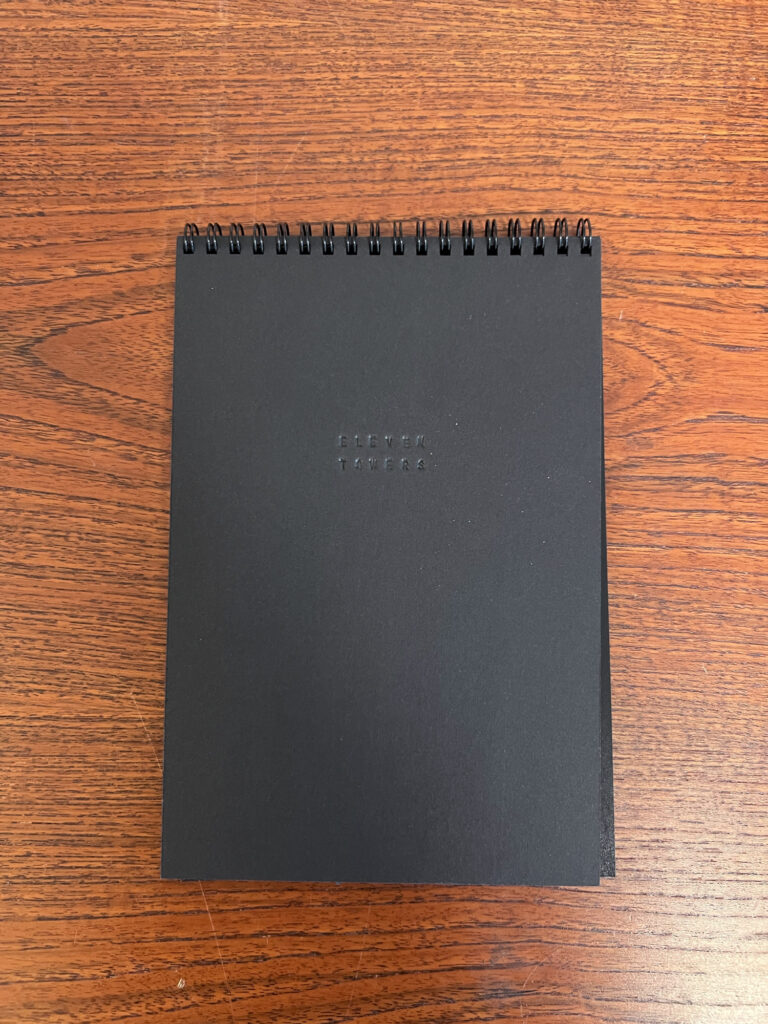
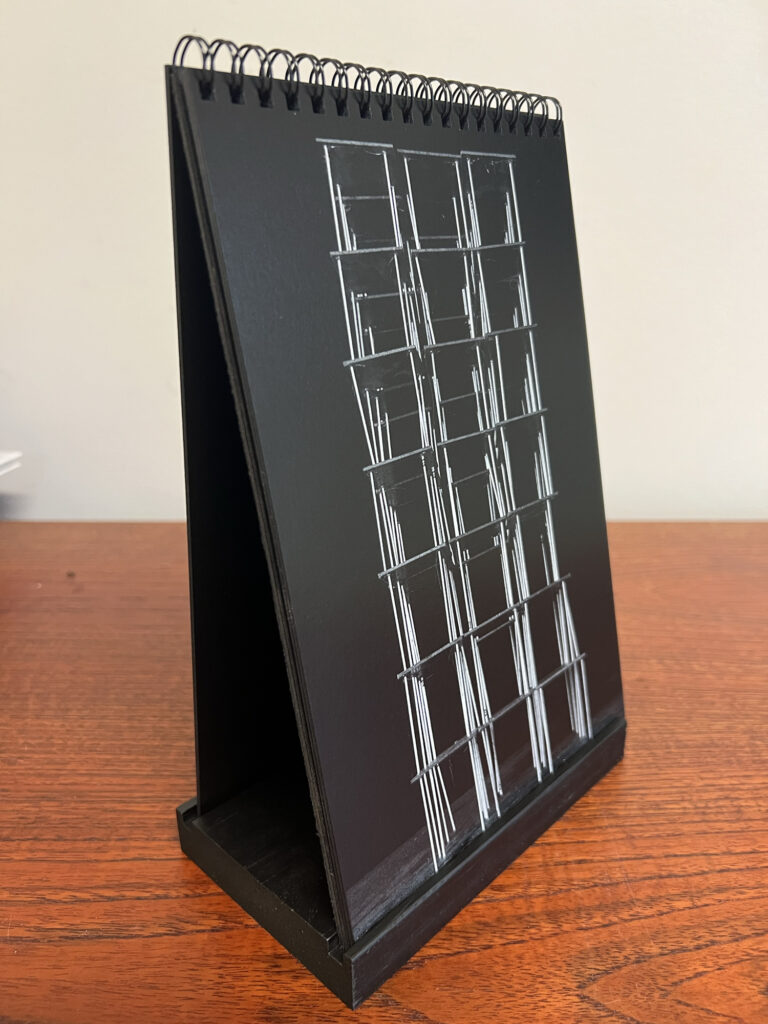
JTF (just the facts): Published in 2026 by Skylark Editions (here). Spiral-bound (9 x 6 inches) 13 pages, 11 image reproductions, with hand stamped cover and custom wood base made by the artist. In an edition of 111 copies. (Cover and spread shots below.)
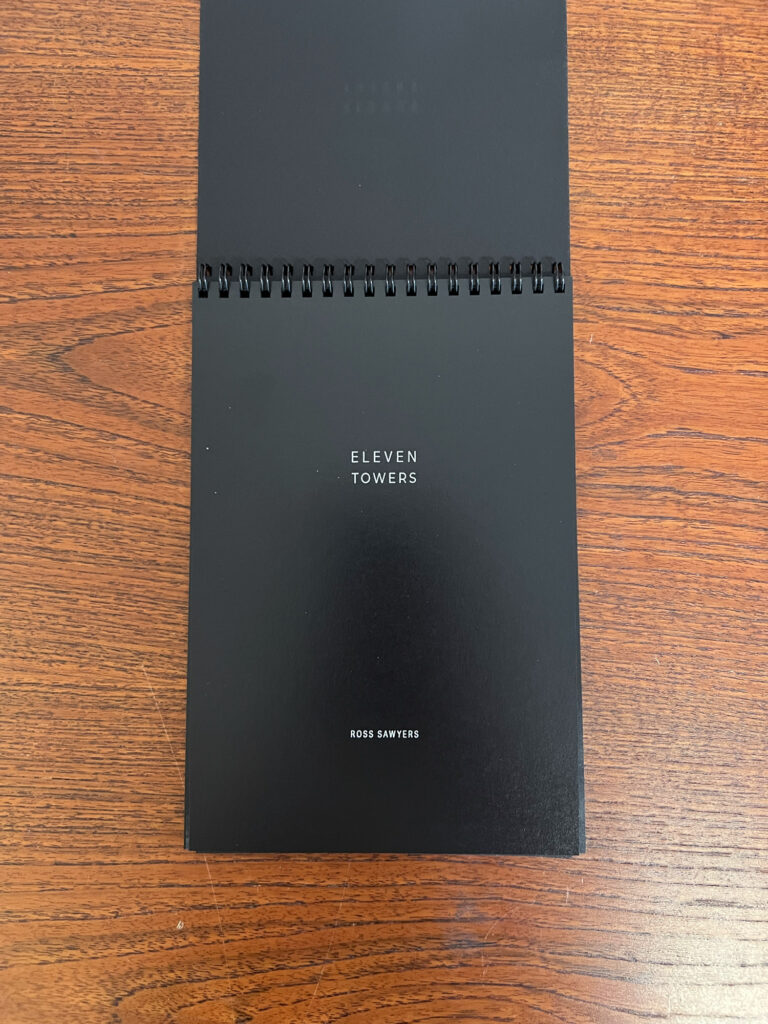
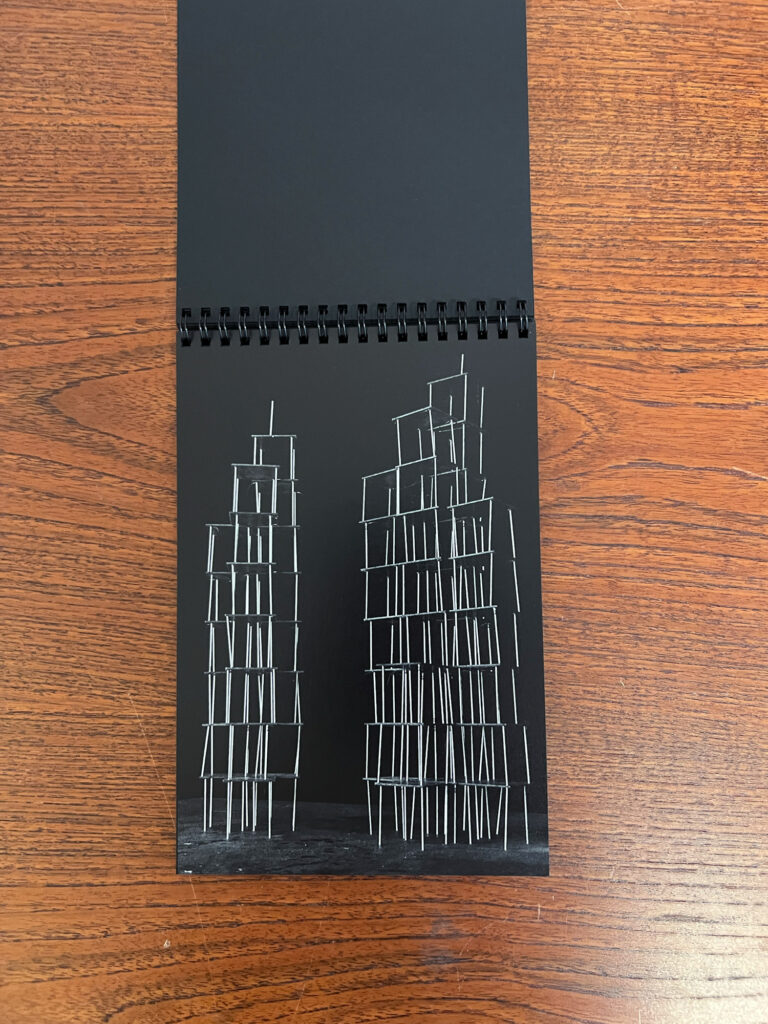
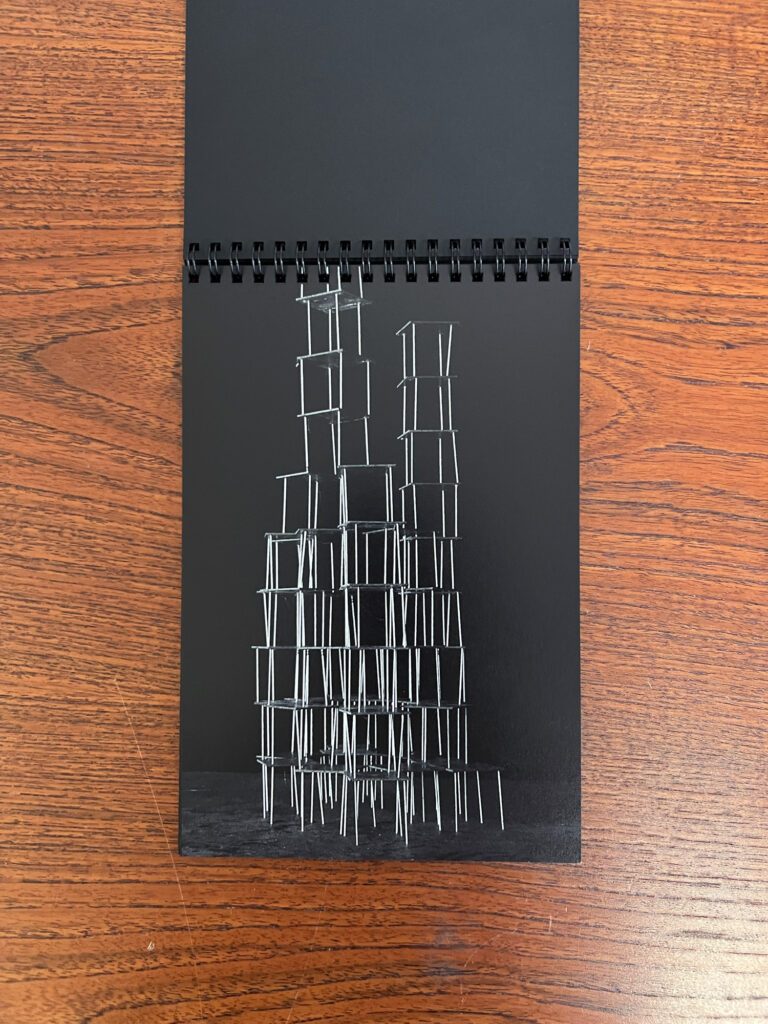
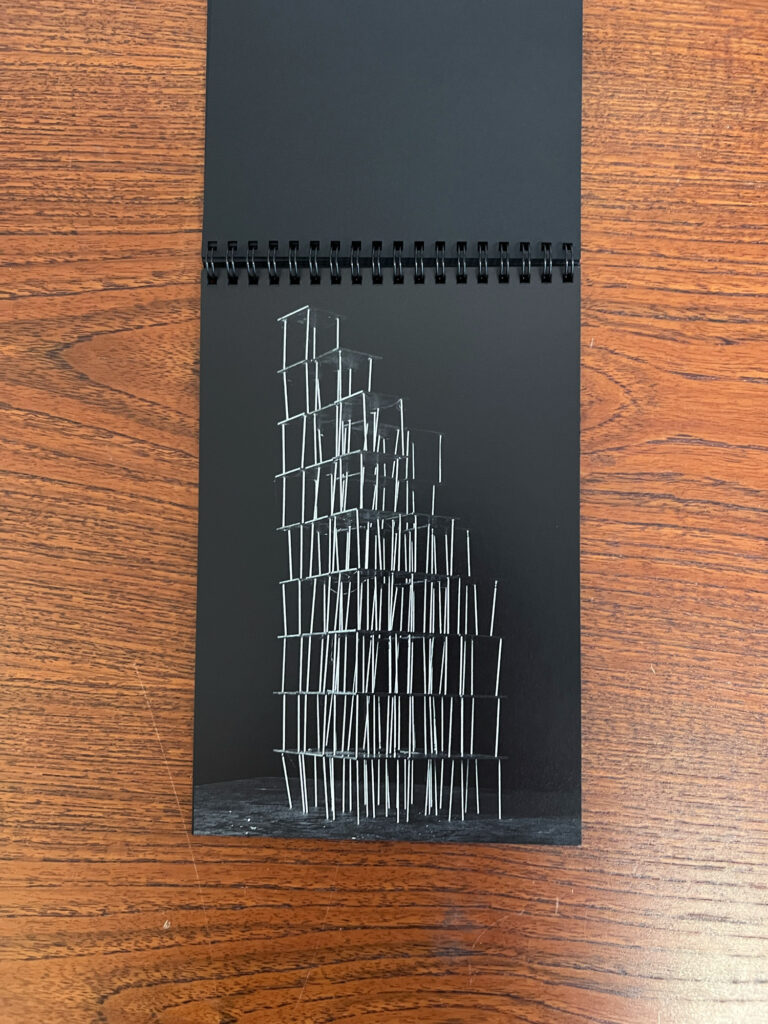
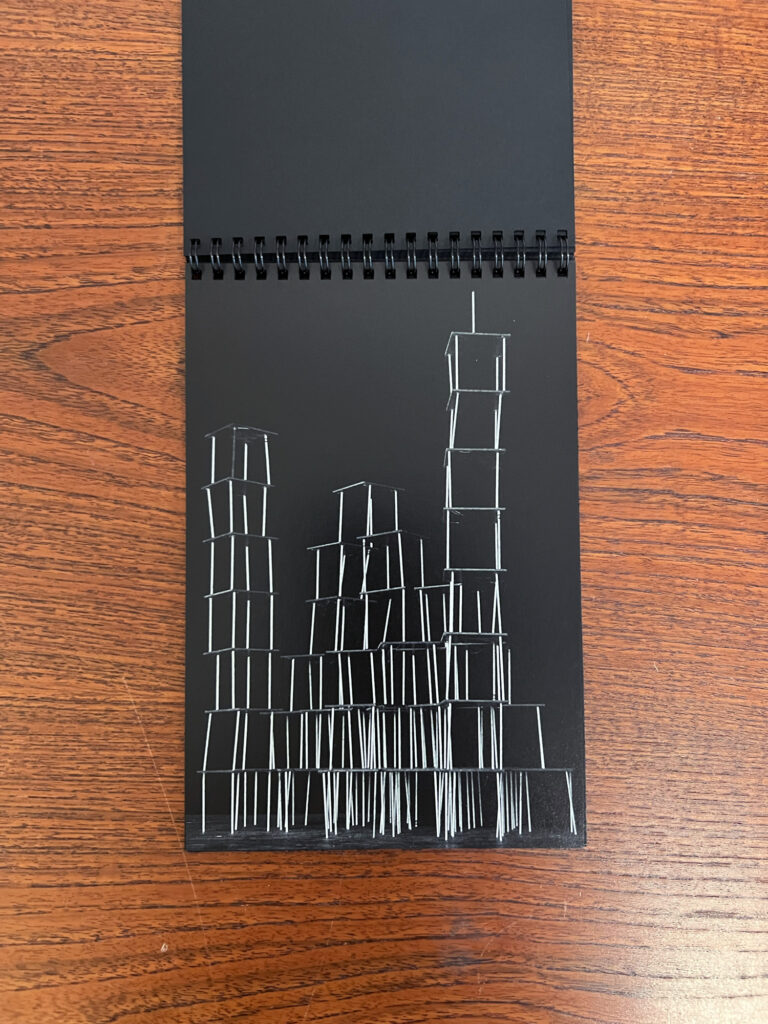
Comments/Context: For more than twenty years, Chicago-based artist Ross Sawyers has sculpted architectural models in his studio that exist only to be photographed. His first photobook, Eleven Towers, published by Skylark Editions, showcases eleven photographic visions of dystopia from his recent series, “The Future Isn’t What It Used to Be”. Unlike artists like William Christenberry or Siah Armajani, Sawyers does not display his models as finished artworks; instead, his practice prioritizes the photograph as the final medium, treating the original sculptures as temporary staging for his lens. This approach is similar to photographs of The Night of the First Sculpture (Folium, 2024) by Alexander Mourant (reviewed here), where conceptually, the camera is a collaborator that documents sculpture and the intention is to see how sculptures look photographed and perform to the camera. This approach introduces conceptual questions at the core of Sawyers’s work, where the resulting images challenge photography as truth and fact versus metaphor and vision.
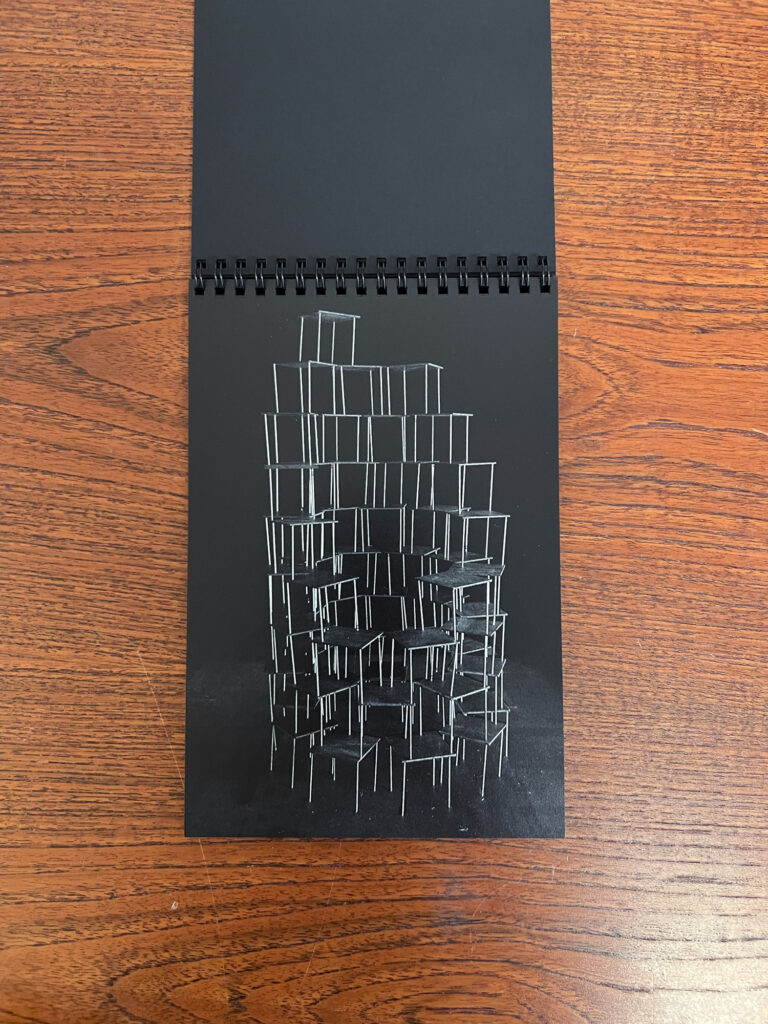
The photographs in Eleven Towers create a clinical aesthetic that heightens the feeling of unease and precarity inherent in these towering architectural visions. The images do not immediately present as constructions. The magic and trickery of the photograph and its ability to change the scale of the objects that it records allows for the clever transformation of a model into what appears to represent an existing, high-rise tower. Yet these Sawyers towers are so tall, and in their stillness and perfect lighting, somehow still appear wobbly and near collapse: a true house of cards. There is no evidence of the place upon which each towers sits. The structures appear, perfectly (studio) spotlit, emerging out of darkness.
This photobook is a thoughtfully designed physical object, characterized by its compact and clinical aesthetic. Its pages are saturated in a deep, void-like blackness on both sides, possessing an industrial slickness that feels almost greasy beneath the fingers. This specific tactile choice heightens the sense of artifice and unease, as the slippery surface of each page mirrors the inherent instability found within Sawyer’s towering architectural visions. The formal appearance of the towers, that look like they might be constructed with I-beams and steel plates, or craft dowels and aluminum squares. The monochromatic nature of the images creates the feel of a silver coat to the paper, similar to the printing aesthetic of Sumer (RVB Books, 2026) by Óscar Monzón and Arthur Larrue (reviewed here).
The dark black coil binding that holds the individual pages together is a formal echo of the lines that make up the architectonic towers. Sawyers utilizes a constrictive, tight crop for each image, positioning the apex of nearly every structure in such a way that the tower either extends beyond the limit of the page and intersects with the wire-binding or almost grazes it. Included with every copy of the book is a bespoke wooden base, finished in matching black, which transforms into an integral component of the book-object and the architectural visions it contains. This stand cradles the book in a vertical orientation, permitting it to stand upright as a monument to each tower; this intentional presentation encourages a quiet reverence and allows for a durational, distant gaze that transcends the typical, intimate lap-level engagement with photobooks.
Ultimately, Eleven Towers reveals very little. The single subject photobook of eleven towers, as the title implies, and with no contextualizing text, the photobook leaves meaning and interpretation to the reader’s imagination. On some pages, the images transport me to 2003 when the single screen movie theater in my small town was destroyed, and in its place sat the I-beam skeleton of the eight screen theater, a supposed upgrade. The skeleton of the forthcoming theater remained throughout my adolescence due to permitting restrictions, funding failures, and god knows what other mishegas. Rather than the new and improved movie theater we were promised, my friends and I climbed, skateboarded, and stargazed from the top tier of the tower in the dark evening hours when authority was sleeping. However, other pages do not bring this carefree nostalgia. In many ways the air is thick with hopelessness, hollowness, as a premonition for the future or a true distillation for the many crises we are living through – housing, climate, geo-politics, etc. As the artist aptly notes in the title of his project, the future isn’t what it used to be.
This short form, concise photobook is both strikingly straightforward and keenly mysterious. It offers a distilled dystopian vision, thoughtfully printed and designed, complete with a sense of artifice and unease, of what could be, or, perhaps, if you’re paying attention, a reflection of the current reality.
Collector’s POV: Ross Sawyers does not appear to have consistent gallery representation at this time. As such, interested collectors should likely follow up directly with the artist via his website (linked in the sidebar).