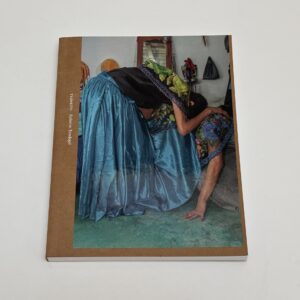
JTF (just the facts): Self-published in 2026 (here). Hardcover, coptic link binding, 9 × 11 inches, 64 pages. Includes 4 color plates (inkjet printed on Niyodo Kozo 25g Natural) and 36 black-and-white reproductions (inkjet printed on IJ Asuka 48g Pure White). Design, printing, engraving, and binding by the artist. In an edition of 15+2AP. (Cover and spread shots below.)

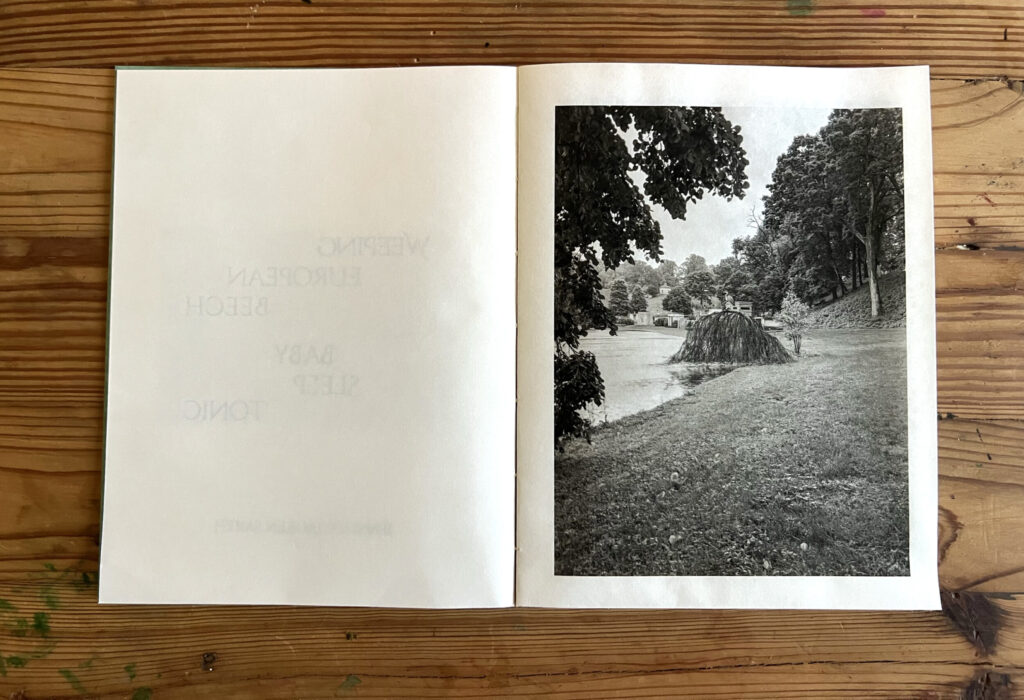
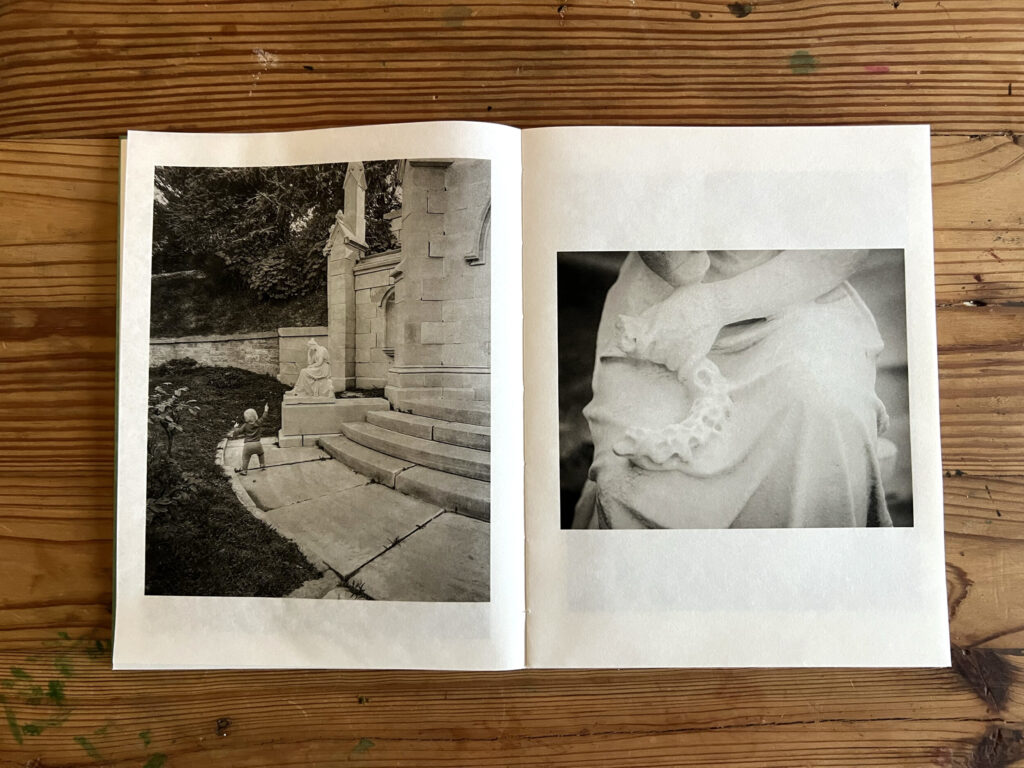
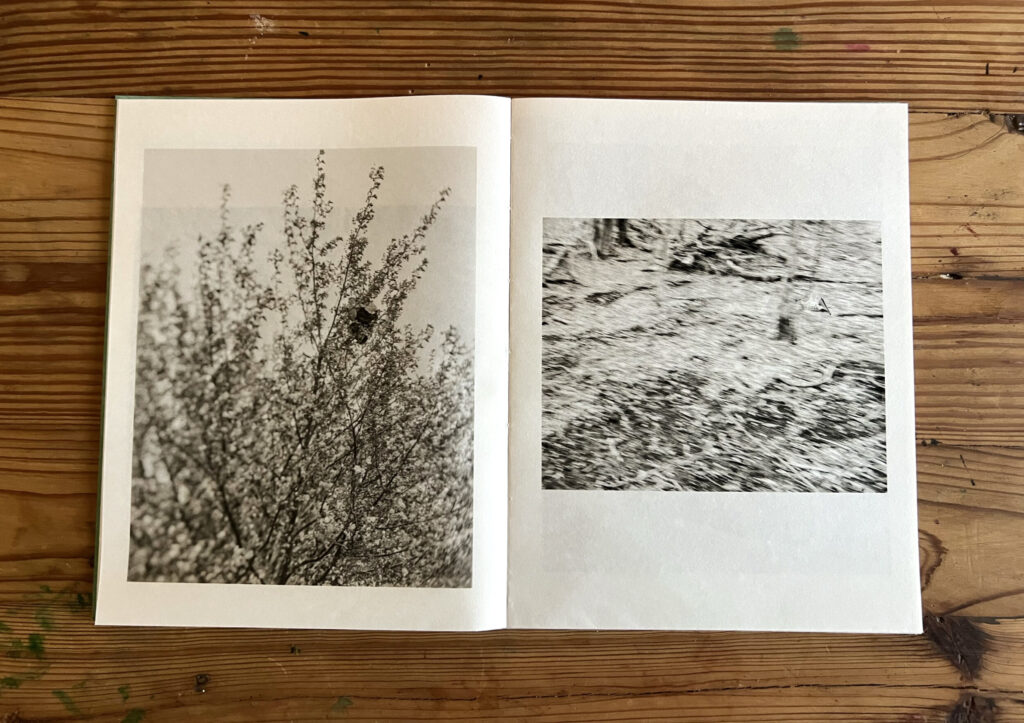

Comments/Context: Visual artist and trained sculptor Jennifer Lauren Smith spent many years, including her early years of parenting, in Brooklyn, NY. Seeking greater access to nature beyond cramped city apartments and urban parkland, she eventually moved upstate with her children and spouse. Before relocating, Green-Wood Cemetery, a 478-acre historic landmark and arboretum in western Brooklyn, served as a sanctuary for her family. What started as desperate outings for fresh air, greenery, and quiet nursing spots became something more. Drawn to her child’s growing appetite for playfulness, Smith began capturing the cemetery’s whimsical stone carvings, weeping evergreens, and wildlife sightings, as well as collecting discarded synthetic flowers weathered by time and lawnmowers. The result: Weeping European Beech Baby Sleep Tonic, a playful and curious juxtaposition of early parenthood against the backdrop of Green-Wood Cemetery.
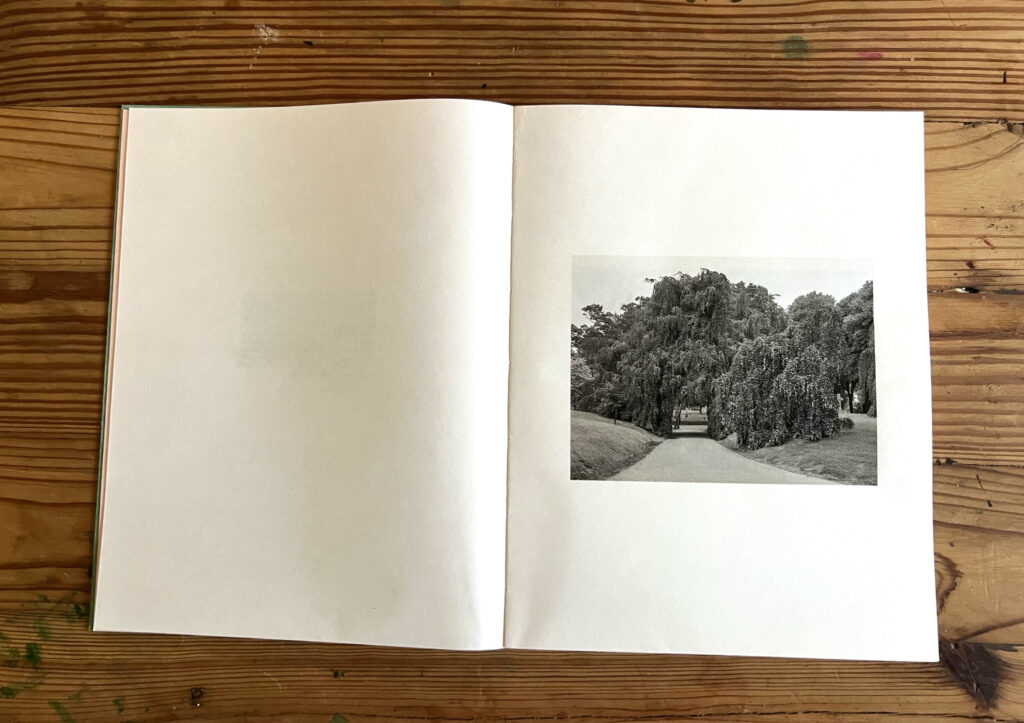
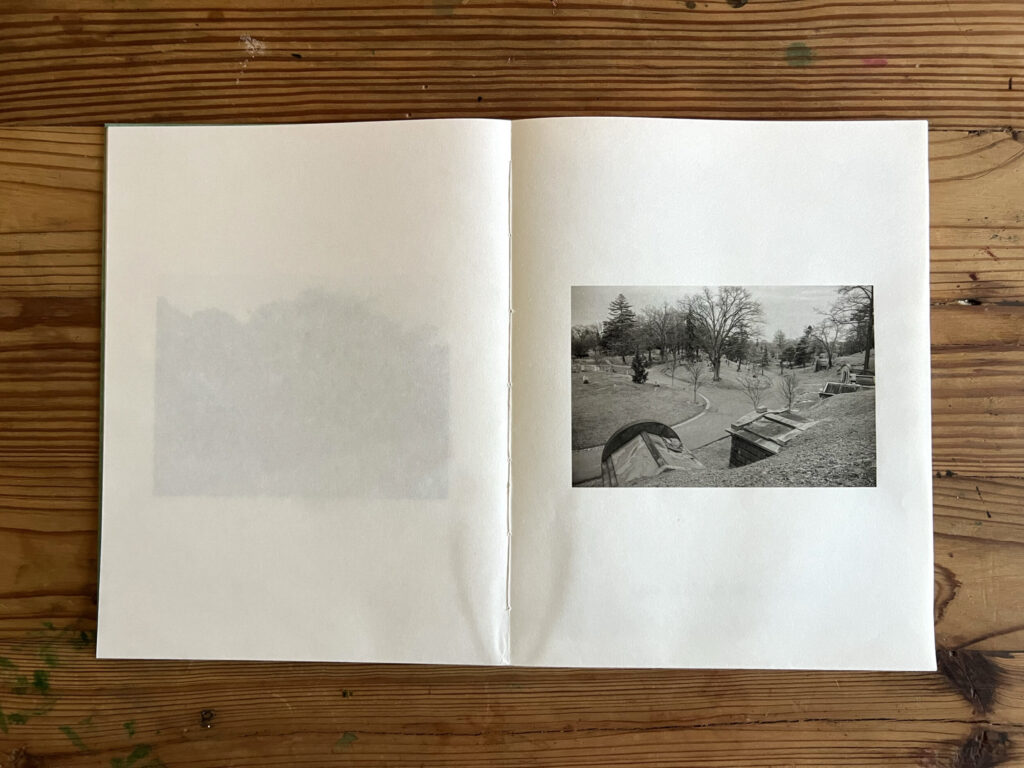
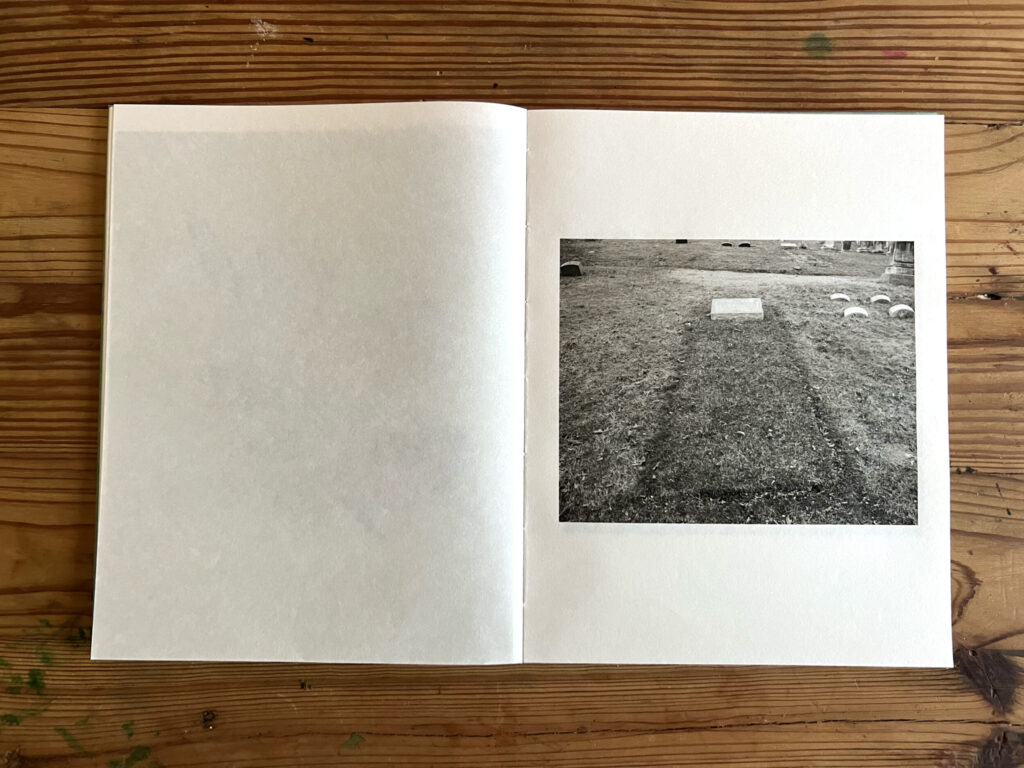
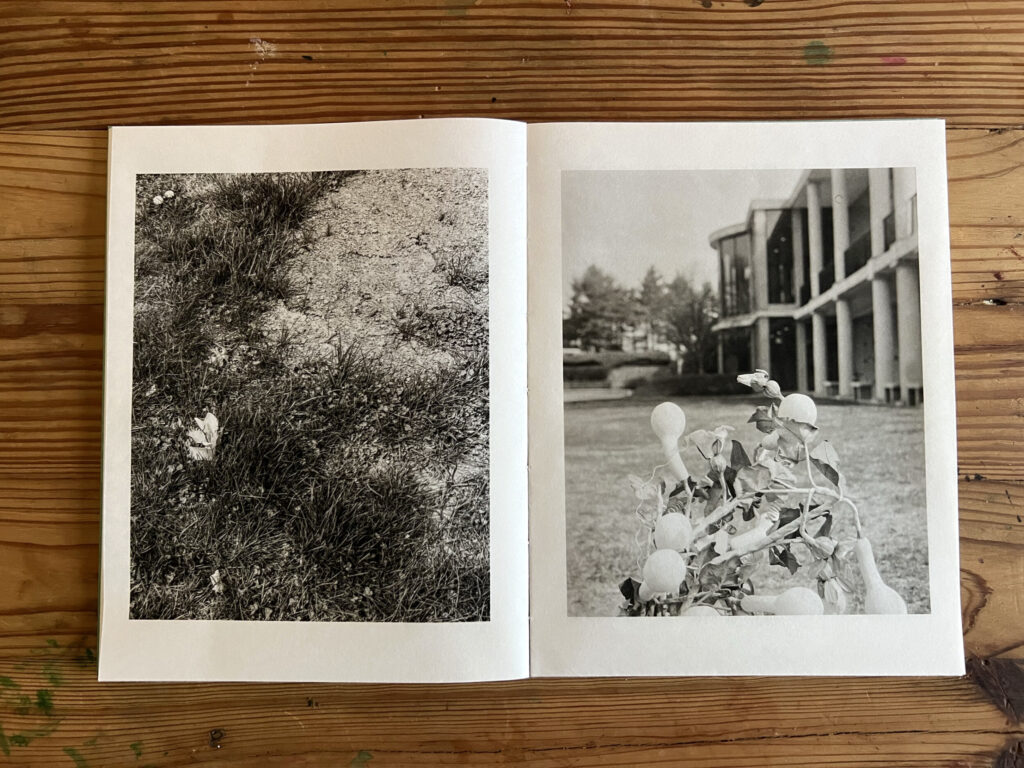
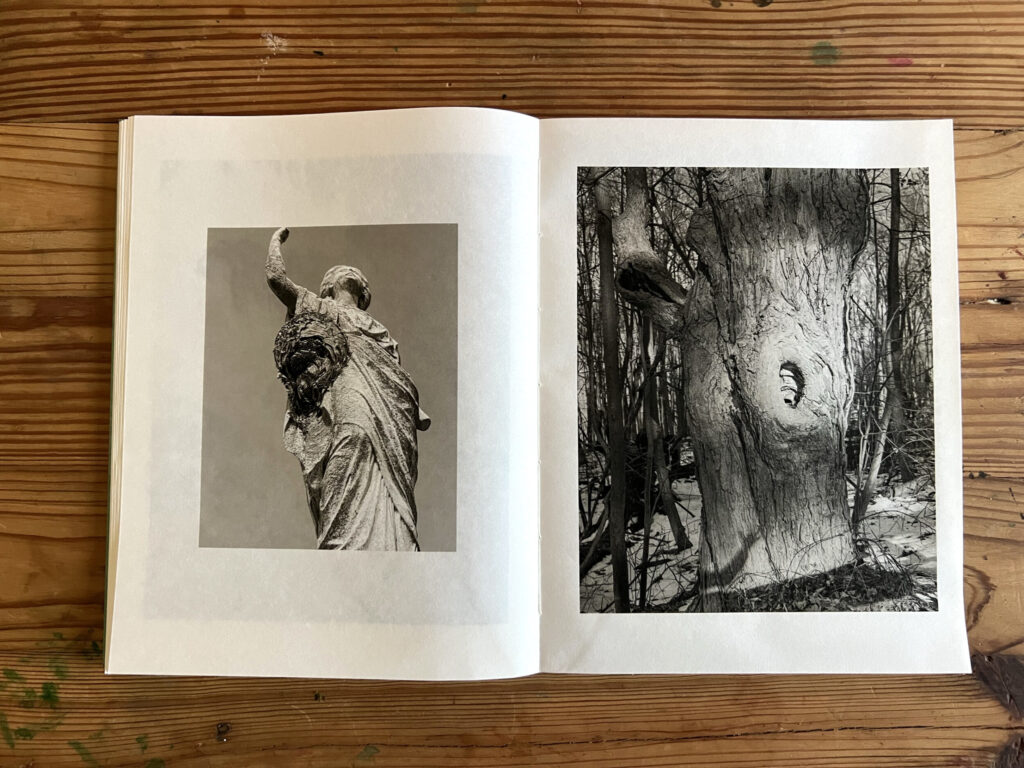
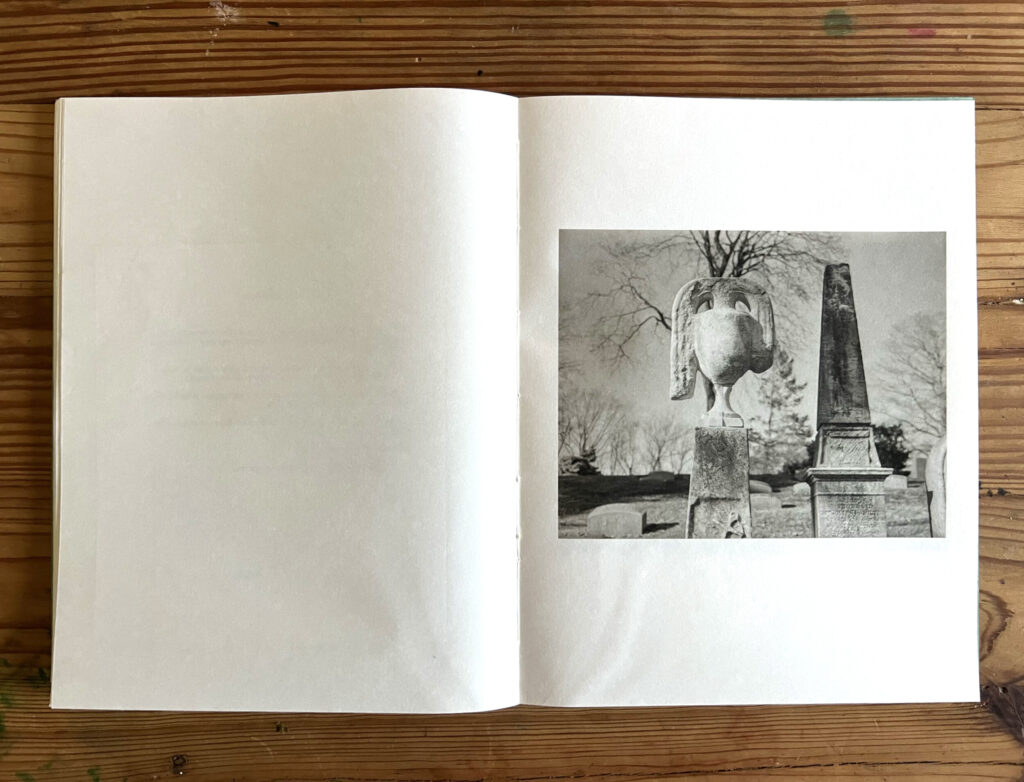
The photographs in the book depict a variety of findings from the fields of the cemetery. Beehives that have taken up residence in the underarm of a large figurative statue. A newly buried or exhumed plot offers a blunt rectangle where grass is working hard to regrow. Longer views of the hillside capture areas where multiple mausoleums are carved into a berm, resonant of the steel plates of Richard Serra’s site specific sculpture Schunemunk Fork (in which four 8 foot tall steel plates sink directly into 10 acres of land on the Storm King Art Center landscape in the Hudson Valley). The weeping European beech trees, with their dramatic, ground-sweeping canopies, serve as a persistent visual anchor as suggested by the volume’s title. These are interspersed with glimpses of a young child, a quiet presence that functions less as a singular subject and more as a repeating formal thread.
The black and white images in Smith’s photobook are made with a variety of cameras: a cellphone, a 35mm film camera, and a 4×5 view camera. By removing the color data from the digital files and printing all three image formats directly onto the delicate Japanese washi paper, the inherent quality differences between the formats are effectively rendered seamless. The paper choice flattens the distinction between high-end view camera precision and casual mobile snapshots, resulting in lush blacks and velvety greys that look beautiful on the fibrous surface of the paper. The resulting visual cohesion emphasizes light, shadow, and texture over technical specs, inviting a more intimate engagement with the fleeting moments captured throughout the cemetery grounds. The cohesion is so tight, and the visualizations so engaging, that the actual ratio differences are in fact difficult to notice unless one is looking carefully.
Though Smith’s initial excursions to Green-Wood Cemetery were born of a basic parental necessity for greenery and respite from city living, the resulting photobook transcends a mere document of child-rearing. What likely originated as desperate, repetitive loops with a stroller, winding through the cemetery’s hushed, somber landscape until the restorative promise of the volume’s title, baby sleep tonic, was finally fulfilled, gradually shifted. As the child grew, these restorative walks evolved into more active explorations, transforming the cemetery into a site of curiosity and discovery. Perhaps Smith too began to look at the site through her child’s eyes, seeing its strangeness and magic anew.
A photograph of a child’s bare back depicts the blemish-free skin of a small being still new to the world. The child’s perfect skin contrasts with the many depictions of marble statues seen around the cemetery, where skin and veils in rough stone have been polished to be as perfect as the as yet unmarred skin between the young child’s shoulder blades. Through this juxtaposition, Smith explores the parallels between the enduring, unblemished surfaces carved in stone and the fragile, fleeting innocence of early life. The soft, living contour of a child’s body set against the cold, immortalized forms of cemetery monuments highlights a poignant dialogue between vitality and mortality, inviting the viewer to contemplate how physical forms retain or lose their perfection over time, whether it be flesh or hard stone that ages.
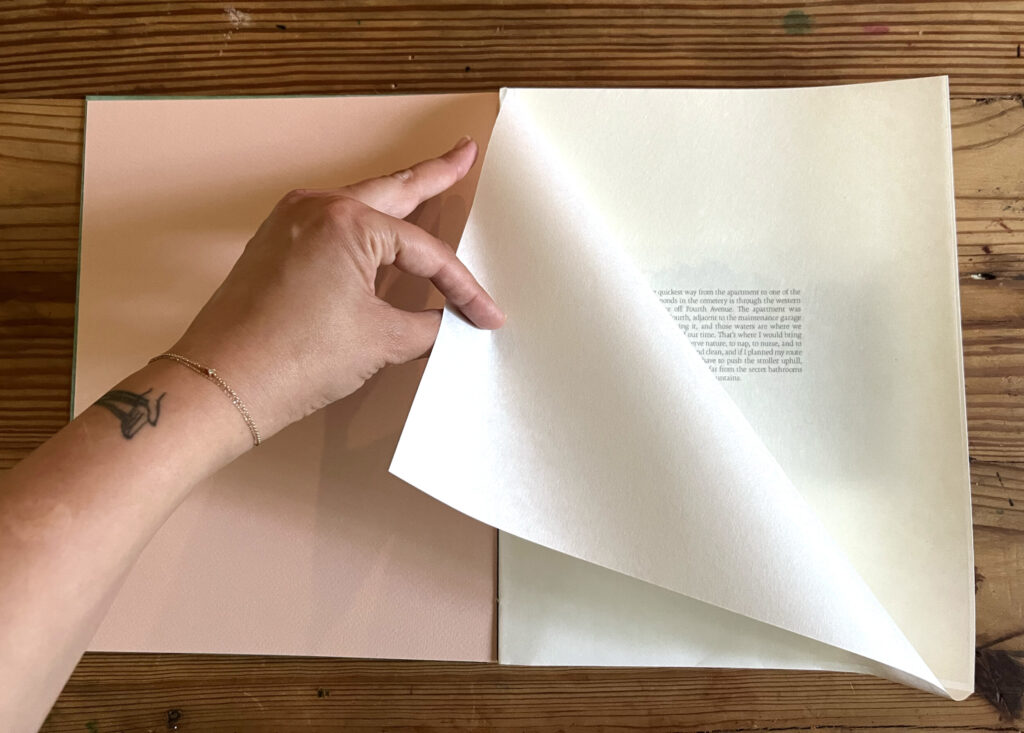
The lightweight, transparent paper stock used in Smith’s book is machine-made Japanese washi paper from Echizen, Japan, composed of a blend of kozo (mulberry) fibers and wood pulp, finished with a special inkjet-compatible coating on both sides. The paper is so thin that each page of the book is folded so that the “ghost” of what appears on the other side is less evident though still present. The use of folded washi paper was also employed in INDEX 2025 by Stanley Wolukau-Wanambwa (reviewed here). The approach allows for the delicate luscious paper to be enjoyed both for its sensuousness to the fingertips and its visual appeal, without compromising too much on what is seen printed on the reverse side of each page. By using this delicate substrate, Smith effectively enhances the tactile and atmospheric resonance of the entire book object, bridging material physical presence and referencing the ethereal qualities of memory and place.
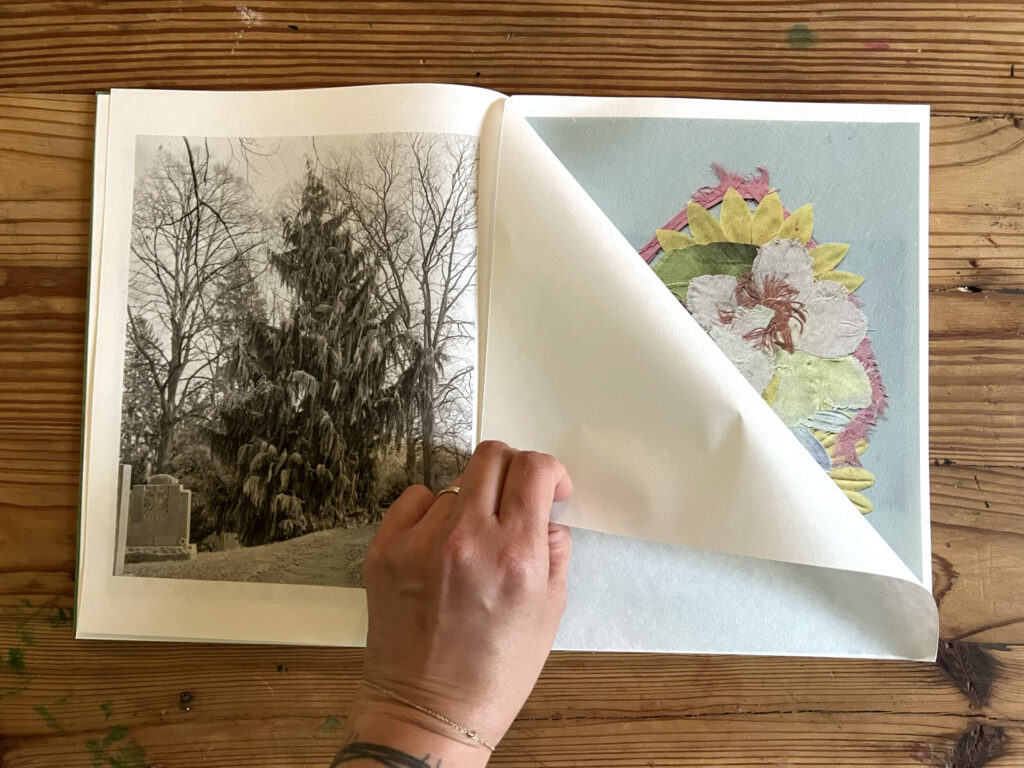
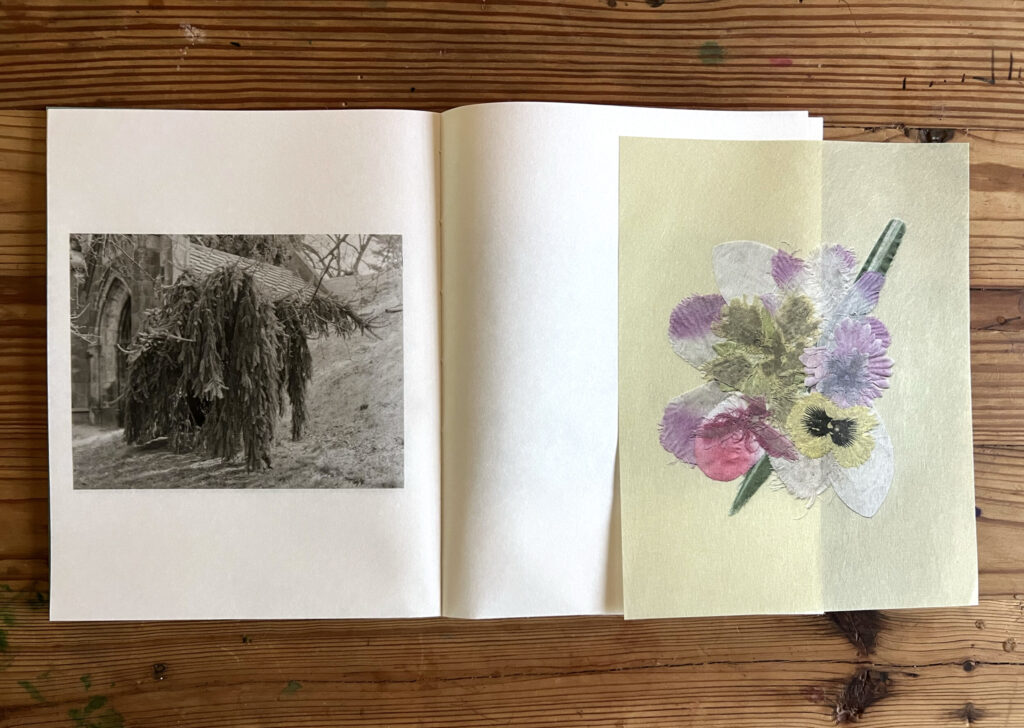
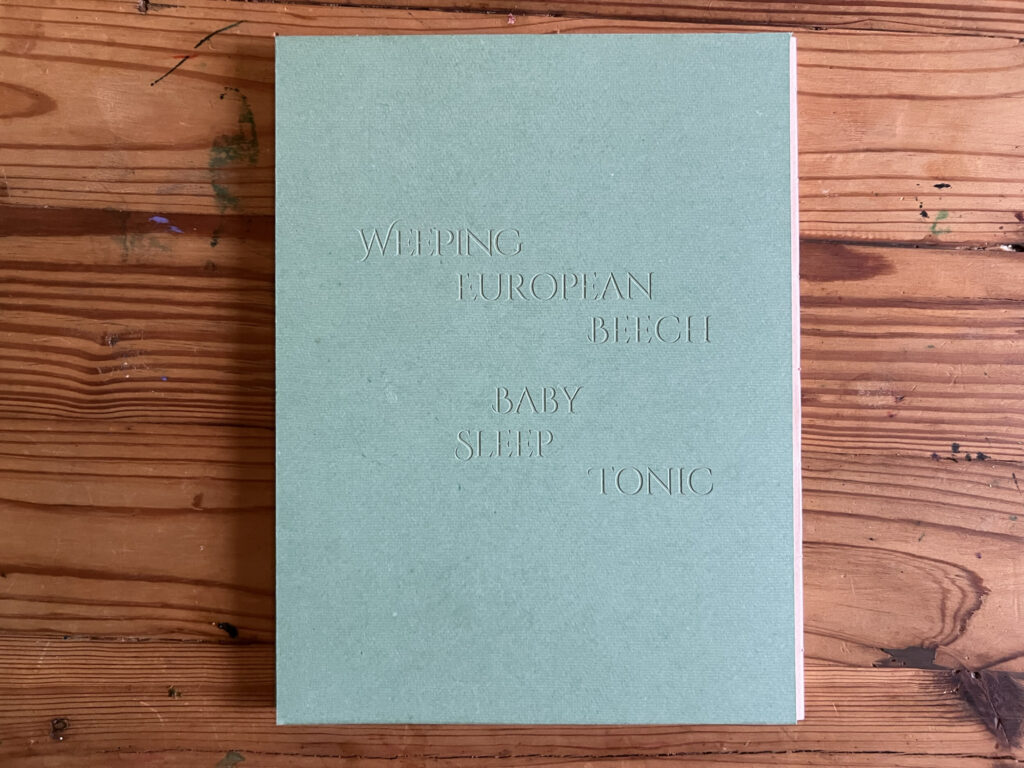
The book is bound in a coptic-link binding style; an elegant and highly skilled binding that features an exposed, decoratively chain-stitched spine and allows for the book to lay completely flat. The paper folds open toward the fore edge of the book, with the outer, unbound front edge of the pages creating both complexity to the turning of pages as well as playful storage pockets. Nested within these pockets are four, nearly hidden, color scanogram collages, composed of the synthetic flower pieces that Smith and her family discovered while in the cemetery. The book covers are a beautiful aqua blue book board with pink endsheets peeking through. The front includes a tipped in image of a synthetic flower assemblage, while the back cover includes the title carved directly into the board.
Many revered modernist photographers were drawn to cemeteries, carefully studying these final resting places within the broader landscape. During the 1930s, Walker Evans framed iconic photographs in Bethlehem, Pennsylvania while working for the Farm Security Administration (FSA). His famous composition, Graveyard, Houses and Steel Mill, Bethlehem, Pennsylvania (also titled A Graveyard and Steel Mill in Bethlehem, Pennsylvania), positioned a graveyard cross in the foreground set against worker housing and the vast industrial smoke stacks of the Bethlehem Steel Corporation. Later, in the 1940s, Paul Strand focused his lens on rural burial sites across New England, capturing how these sacred grounds stood against the backdrop of Vermont’s Green Mountains. Some of Smith’s images of Green-Wood Cemetery in Brooklyn, New York possess a similar timelessness, so carefully framed and composed that they feel as if they could be outtakes from these master photographers.
Serving as a distinct element within the photobook, the synthetic flower assemblages, appear just four times. These detached pages, tucked within the folds and thus reserved only for the observant reader, offer a vibrant departure from the book’s otherwise monochromatic and timeless atmosphere. These sudden bursts of color disrupt the muted cemetery vistas, momentarily pulling the viewer from the rhythmic, meditative cadence of the preceding sequences.One can easily envision Smith and her children foraging through the grassy plots for these artificial fragments, a process that infuses the work with a spirit of collective discovery. The scanograms–created by putting three-dimensional objects onto the glass plate of a flatbed scanner that sharply focuses and creates an image–are documents of these idiosyncratic outings that tell an ancillary story: one that suggests the dimensions of letting your child explore and take risks somewhere joyful and safe wherever it lies, even in death in the case of Green-Wood Cemetery’s acreage.
In Weeping European Beech Baby Sleep Tonic, a dedicated focus on place uncovers the unique character of Green-Wood Cemetery. Smith’s photographs prompt viewers to slow down and engage the drooping, playful contours of flourishing weeping European beech trees that echo the forms of marble cemetery headstones, or the way that statues share formal qualities with a child’s back. The work also imaginatively breathes new life into weathered synthetic flowers; originally crafted for durability, then discarded and mangled, and finally transformed once again into something beautiful. Every element of the book’s physical design is intentional, inviting quiet reflection on how this vessel intertwines themes of parenting, assemblage, and location. Subtle textures, gestures, and encounters found in this photobook point toward the bittersweetness of parenting young children, but ultimately, Smith reveals that this macabre family sanctuary holds far deeper depth and possibility.
Collector’s POV: Jennifer Lauren Smith does not appear to have consistent gallery representation at this time. As a result, interested collectors should likely follow up with the artist directly via her website (linked in the sidebar).