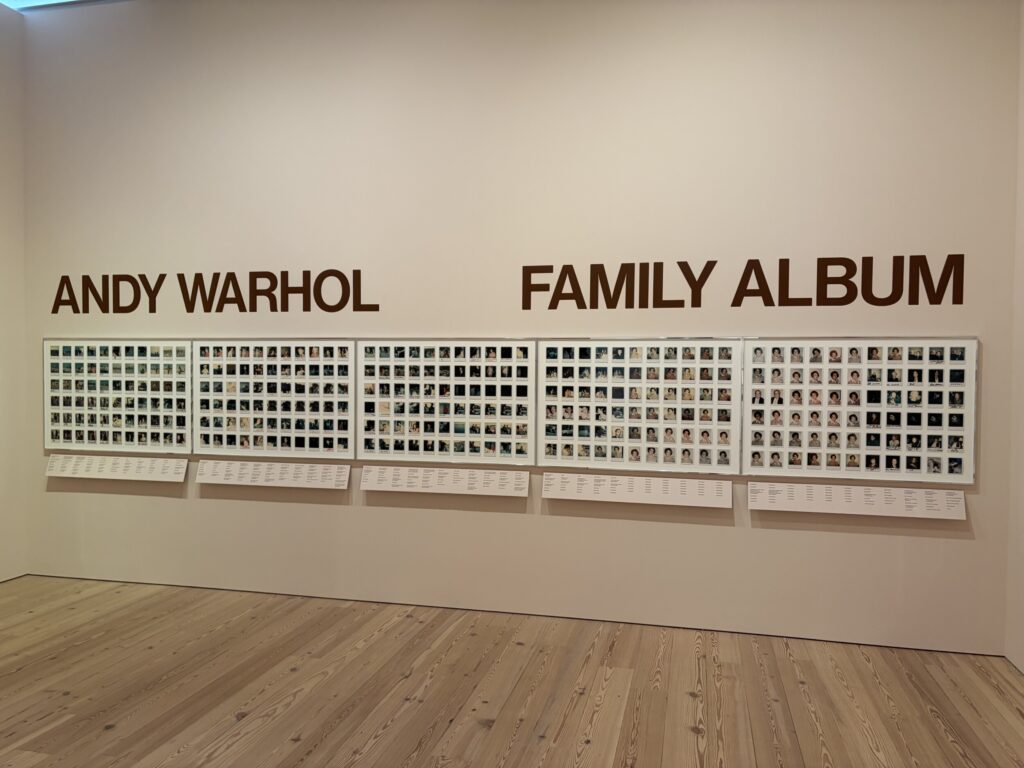
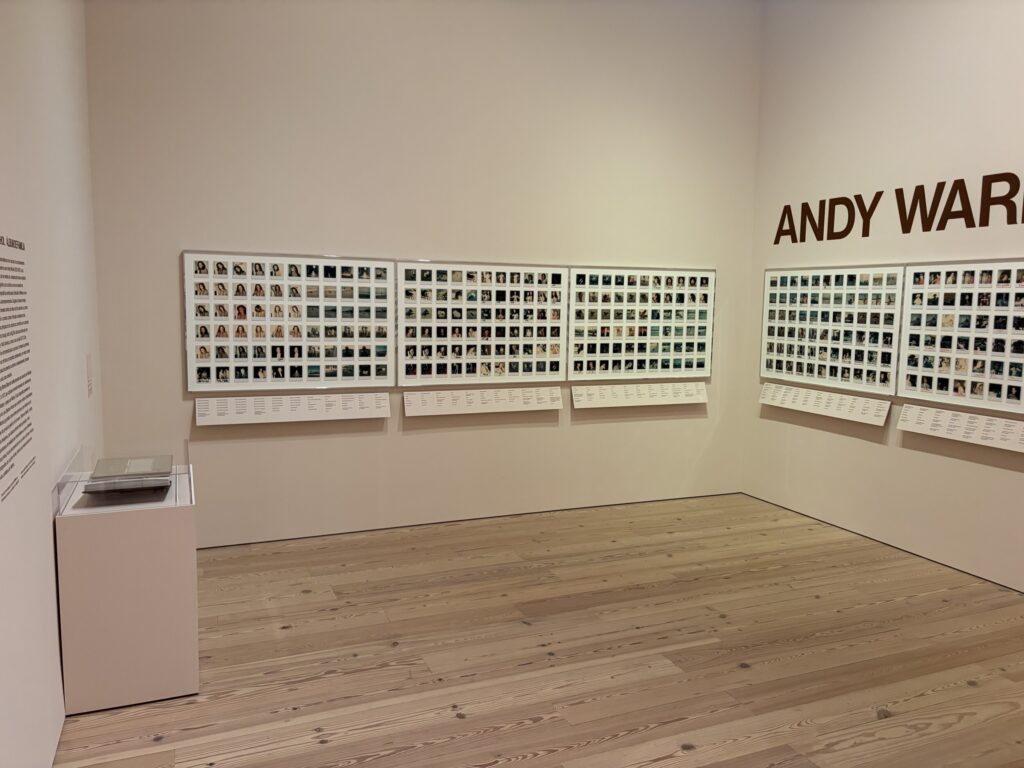
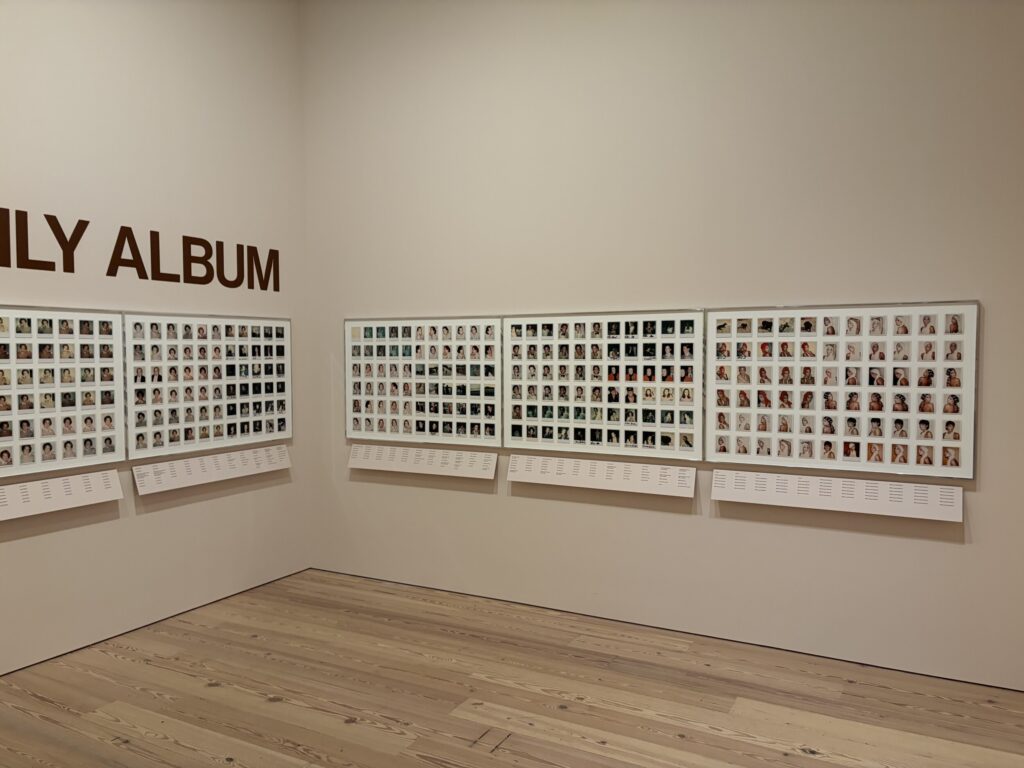
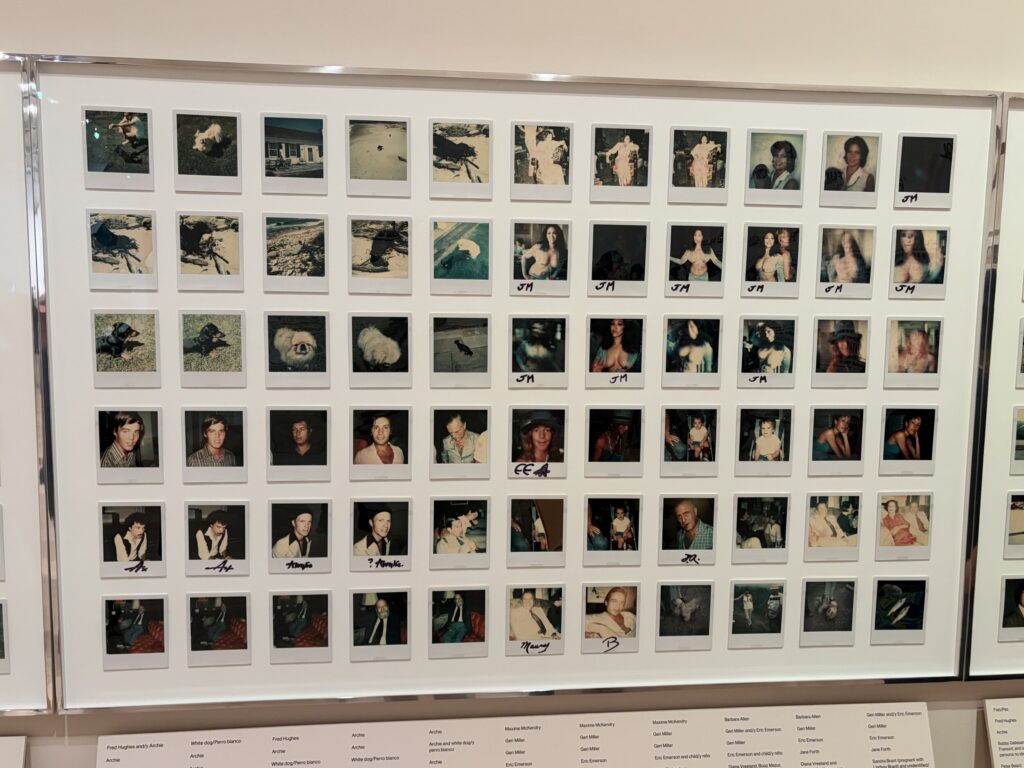
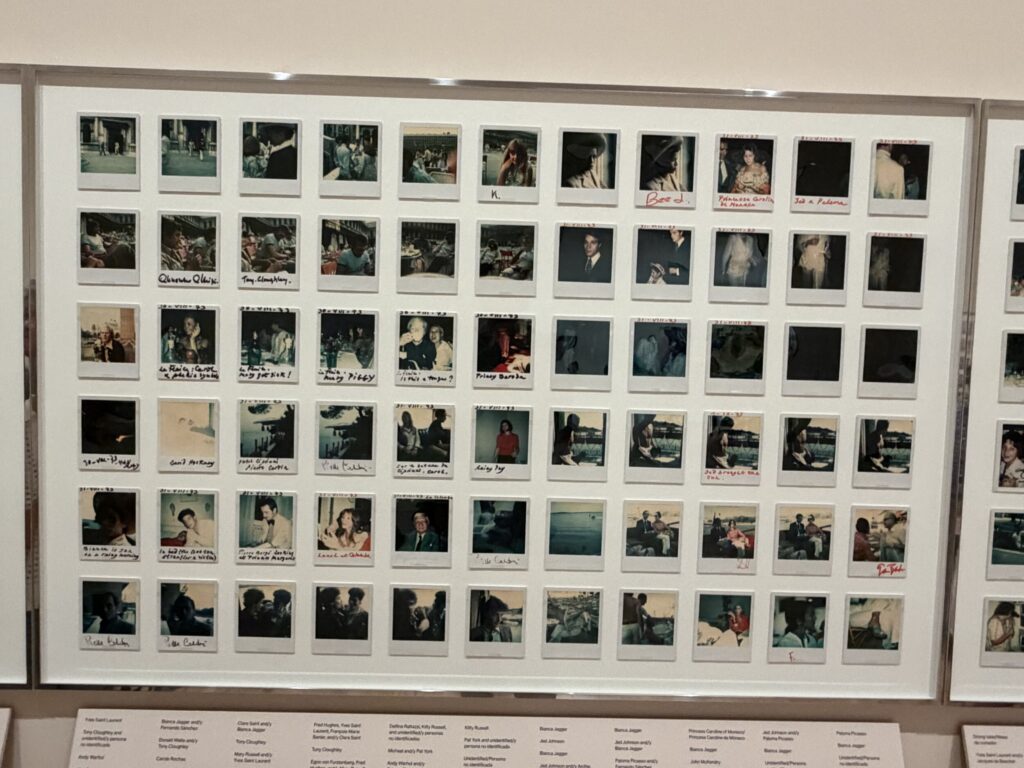
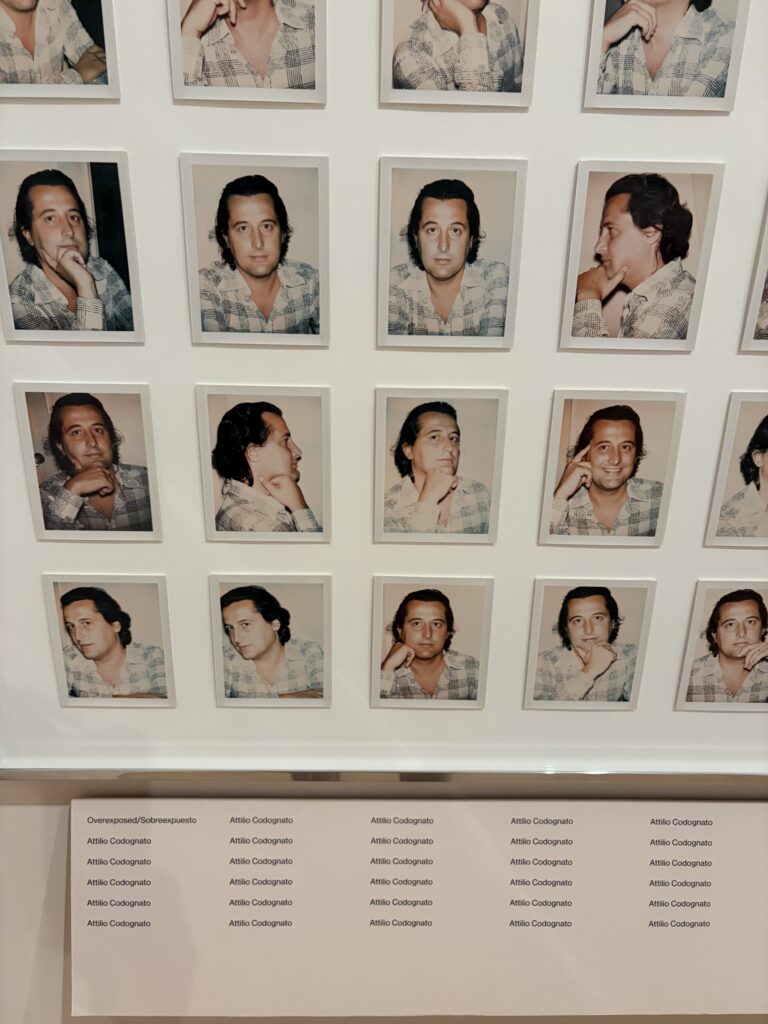
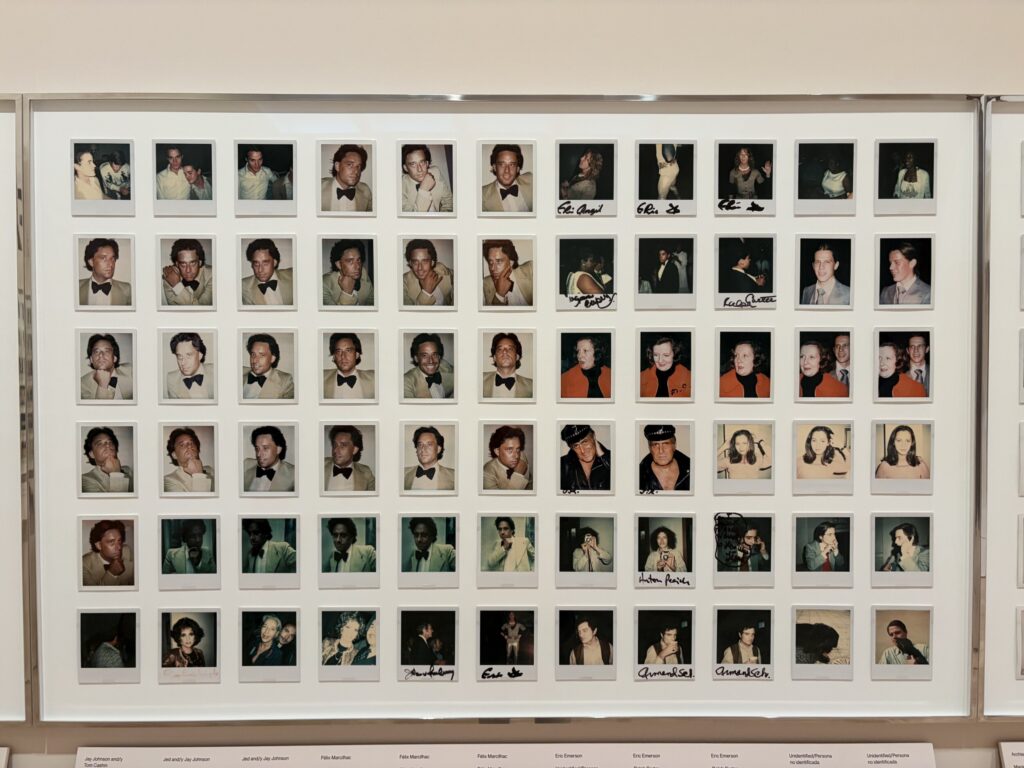
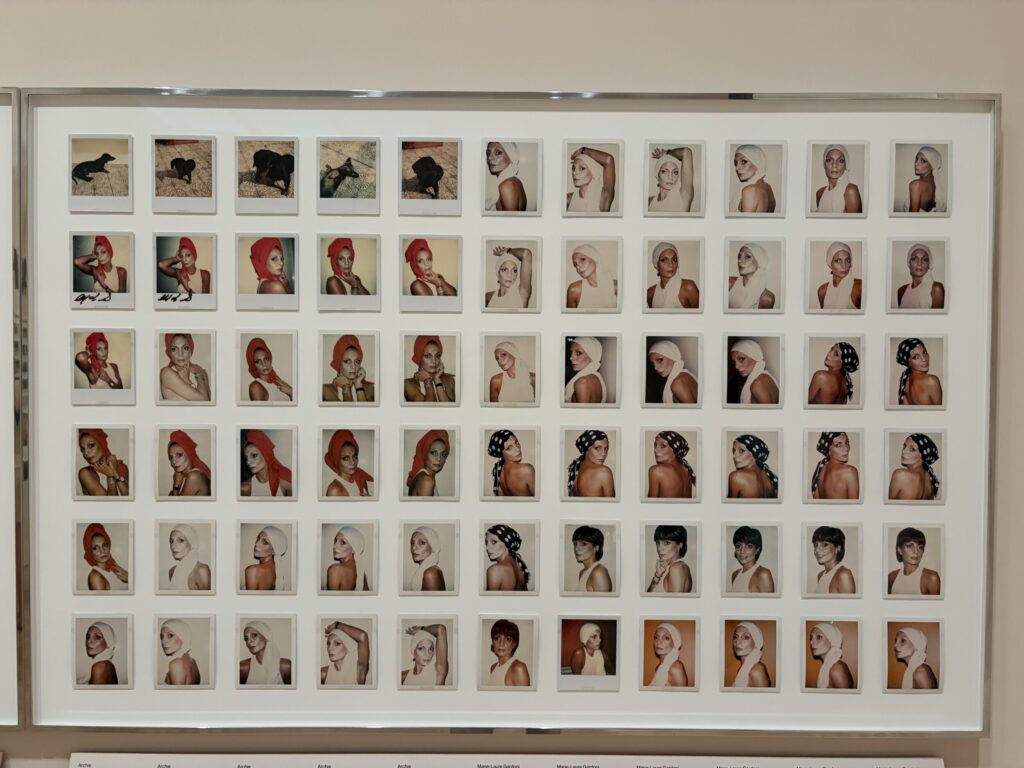
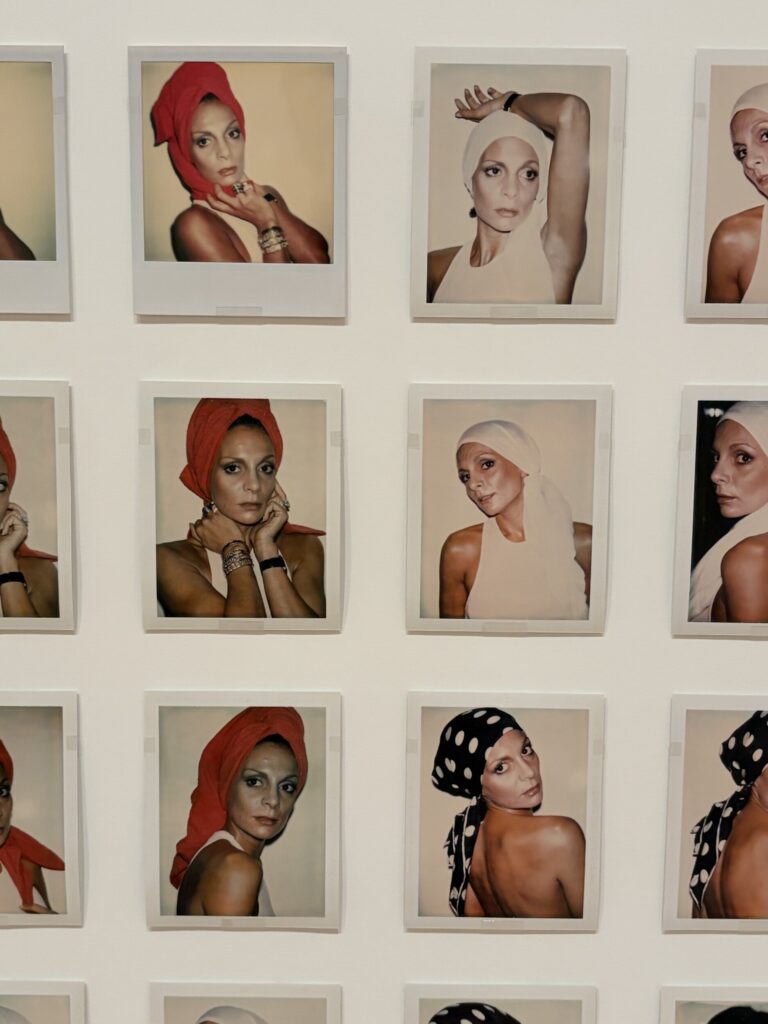
JTF (just the facts): A total of 11 gridded panels of photographs, framed in silver and unmatted, and hung against light peach walls in a single room gallery space amidst the “Untitled”(America) group show on the seventh floor of the museum. (Installation and detail shots below.)
The following works are included in the show:
- (vitrine): example family album
- Panel 1: 1 dye diffusion transfer print (Polaroid); 65 internal dye diffusion transfer prints (Polaroid), 1972-1973
- Panel 2: 66 internal dye diffusion transfer prints (Polaroid), 1972-1973
- Panel 3: 66 internal dye diffusion transfer prints (Polaroid), 1972-1973
- Panel 4: 66 internal dye diffusion transfer prints (Polaroid), 1972-1973
- Panel 5: 66 internal dye diffusion transfer prints (Polaroid), 1972-1973
- Panel 6: 66 internal dye diffusion transfer prints (Polaroid), 1972-1973
- Panel 7: 11 dye diffusion transfer prints (Polaroid); 55 internal dye diffusion transfer prints (Polaroid), 1972-1973
- Panel 8: 32 dye diffusion transfer prints (Polaroid); 34 internal dye diffusion transfer prints (Polaroid), 1972-1973
- Panel 9: 32 dye diffusion transfer prints (Polaroid); 34 internal dye diffusion transfer prints (Polaroid), 1972-1973
- Panel 10: 31 dye diffusion transfer prints (Polaroid); 35 internal dye diffusion transfer prints (Polaroid), 1972-1973
- Panel 11: 54 dye diffusion transfer prints (Polaroid); 12 internal dye diffusion transfer prints (Polaroid), 1972-1973
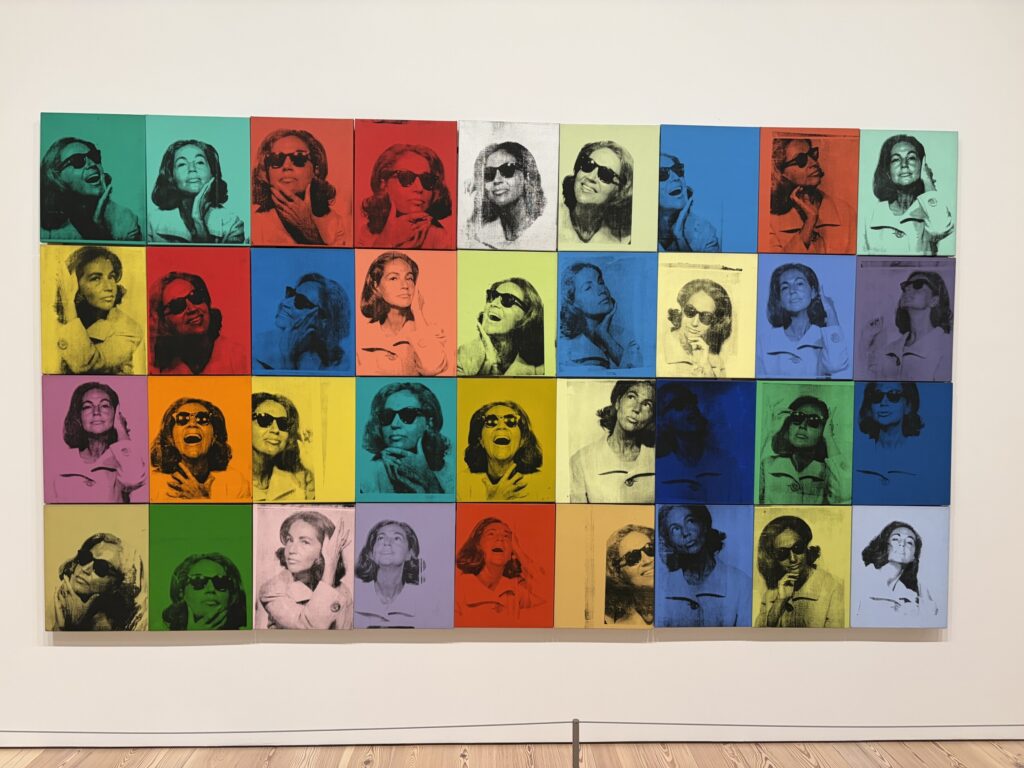
A single Warhol painting in 36 parts (acrylic and silkscreen on linen, 1963) hangs facing the entrance to then photography exhibit.
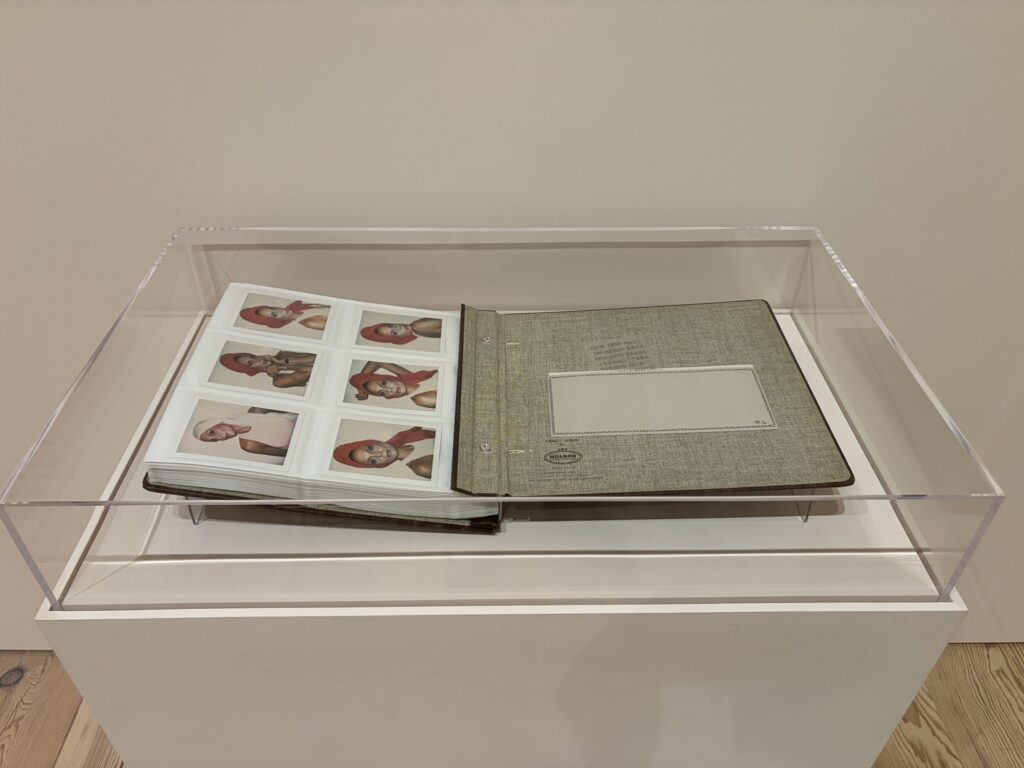
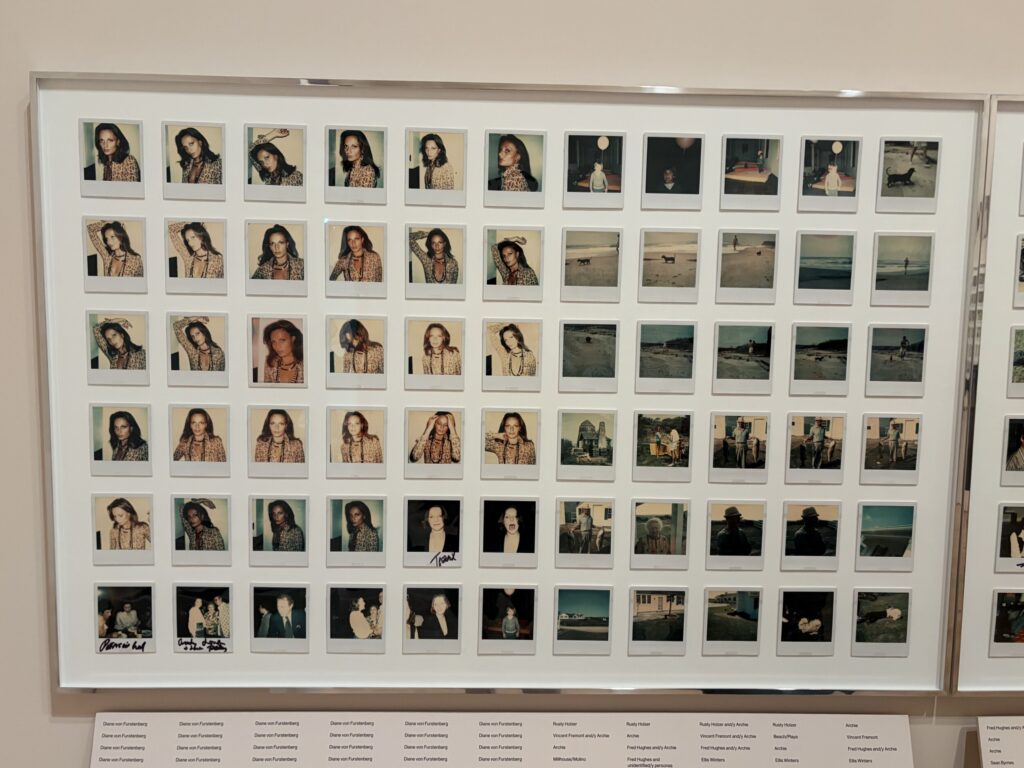
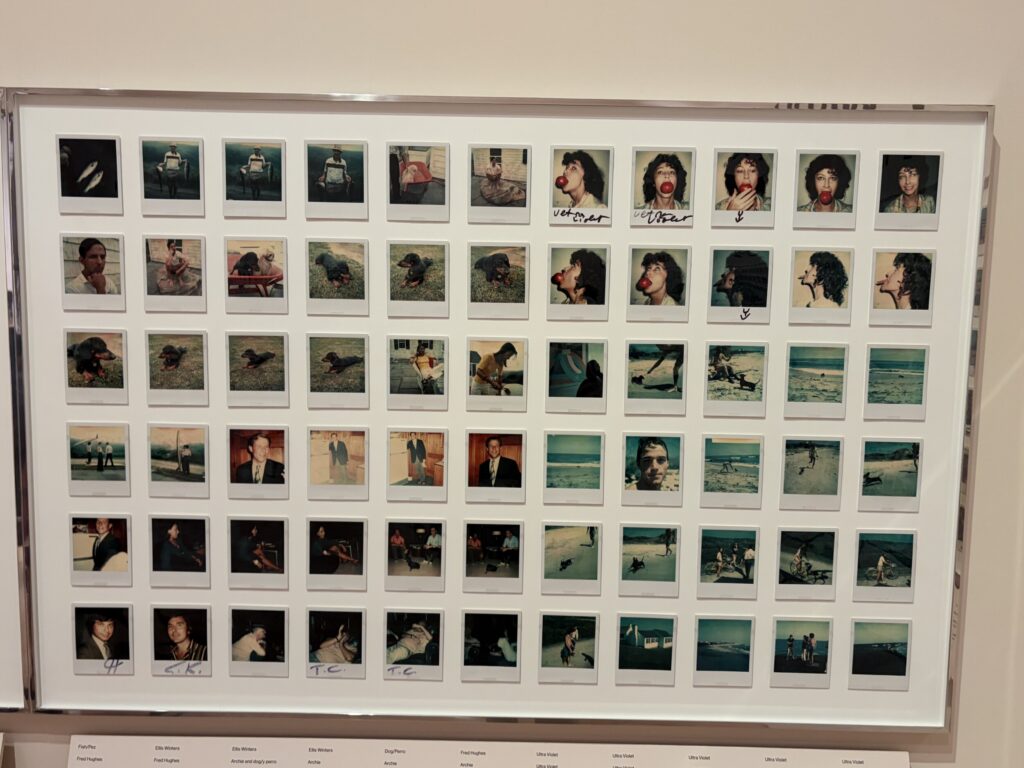
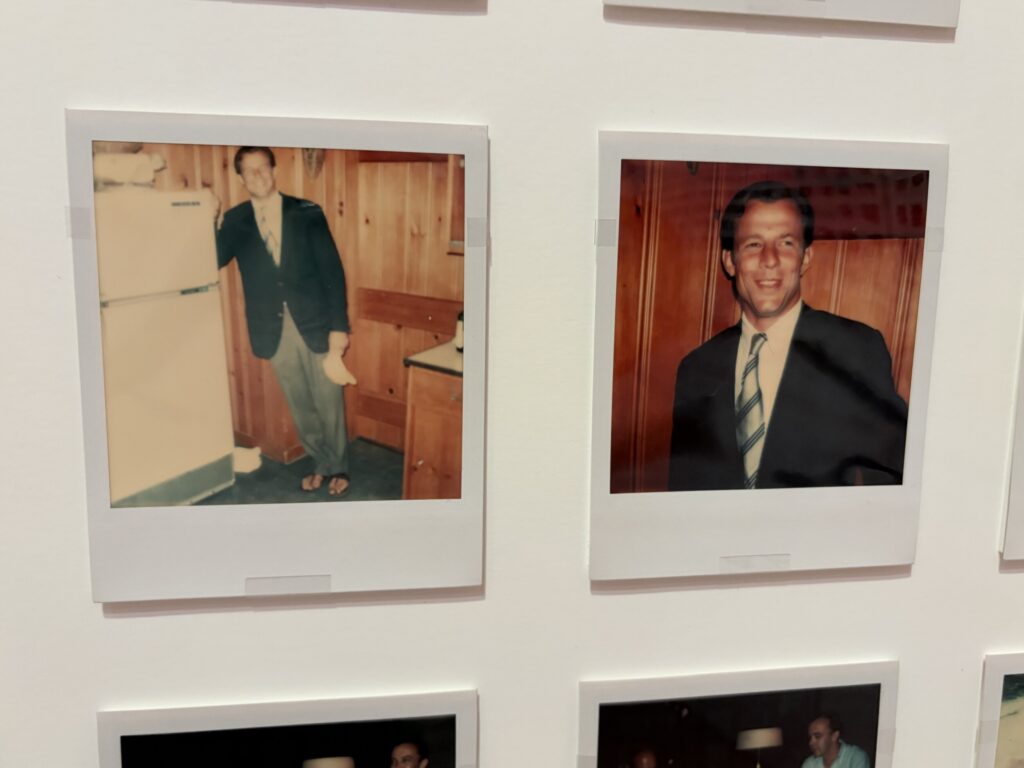
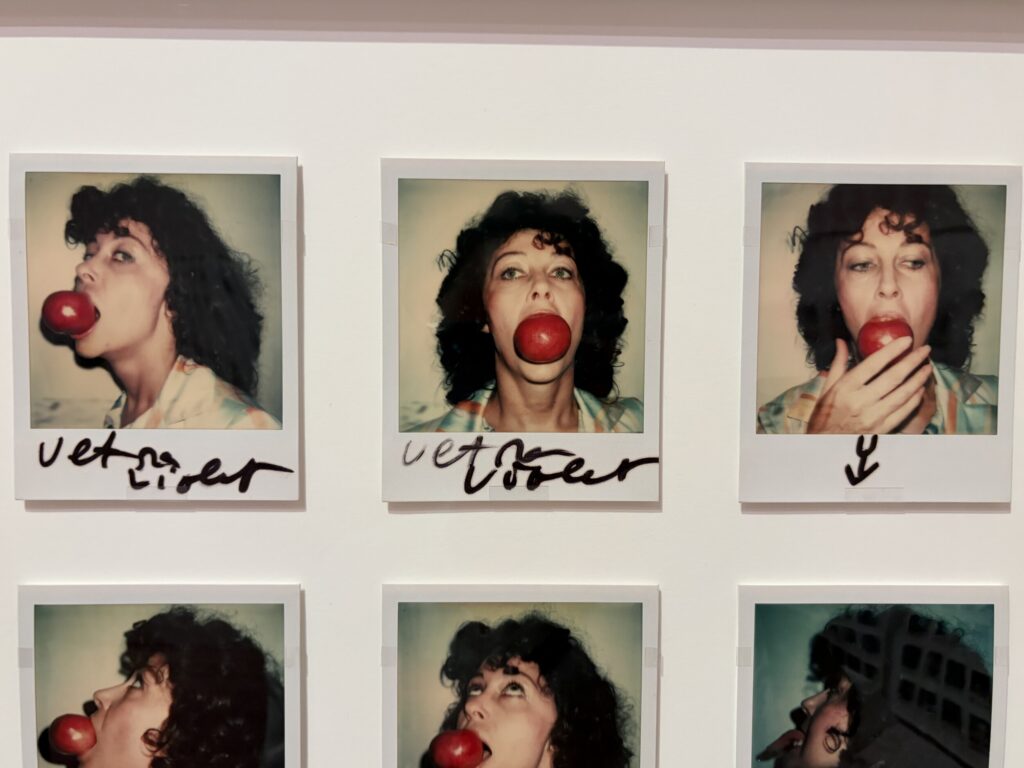
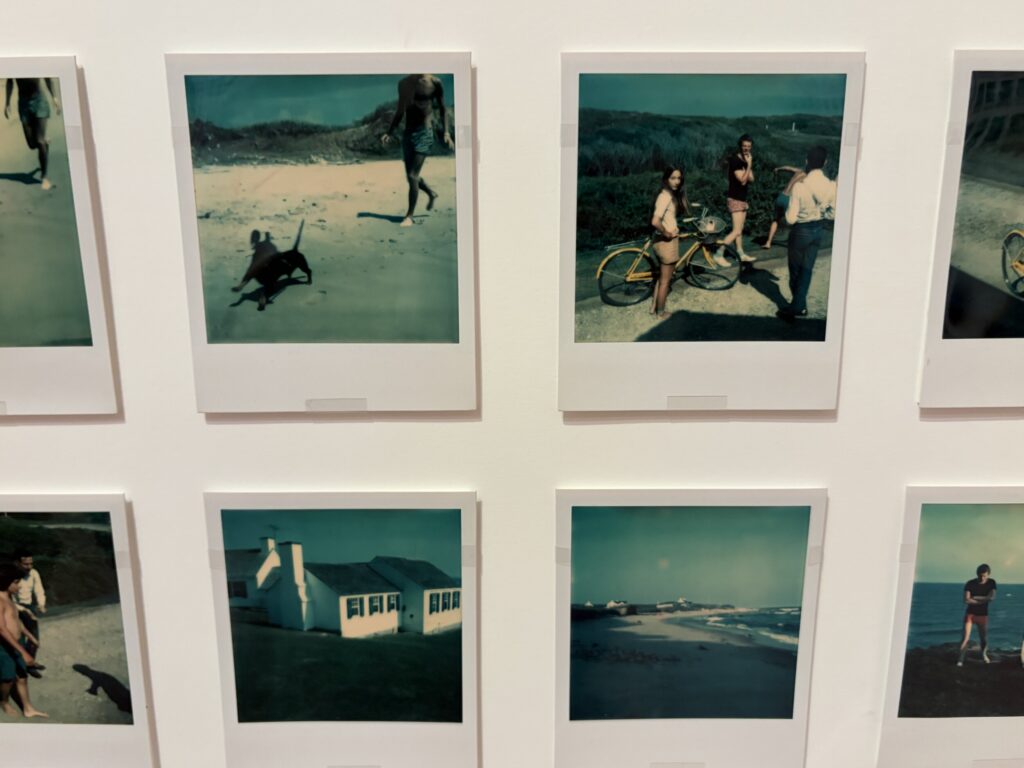
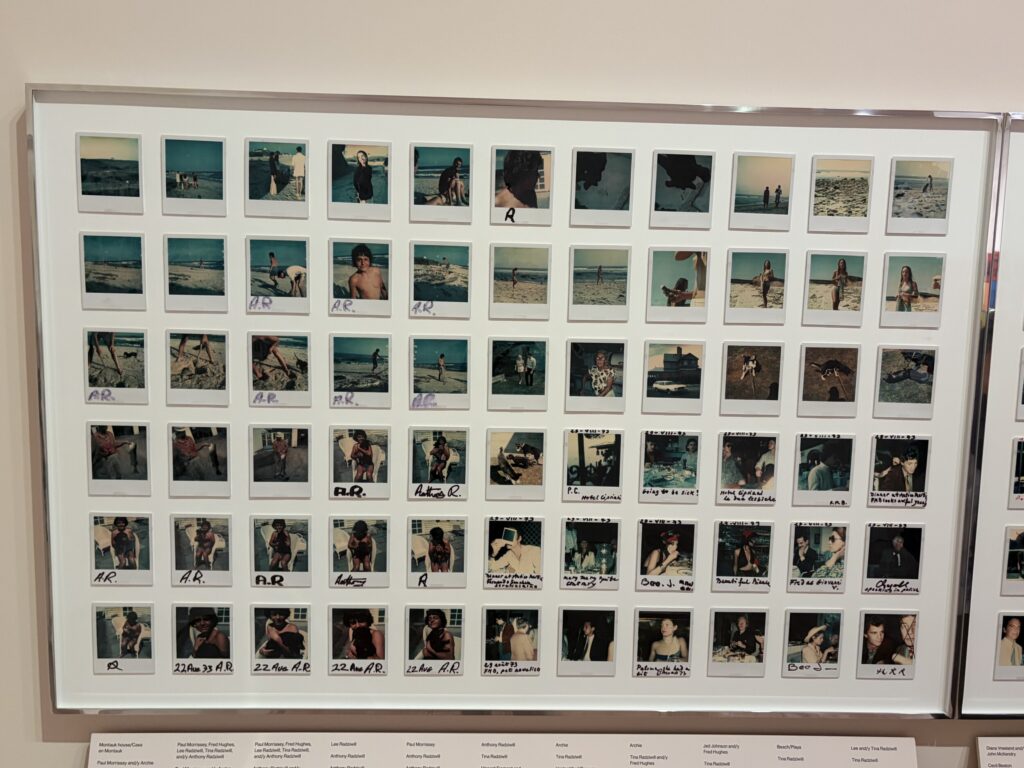
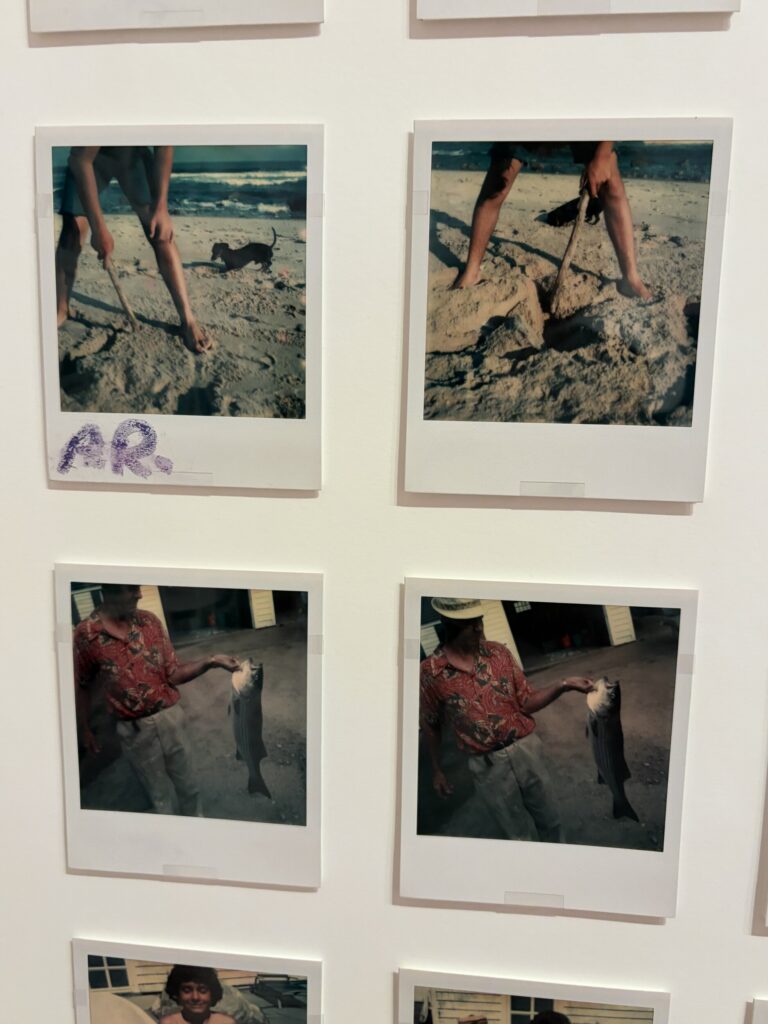
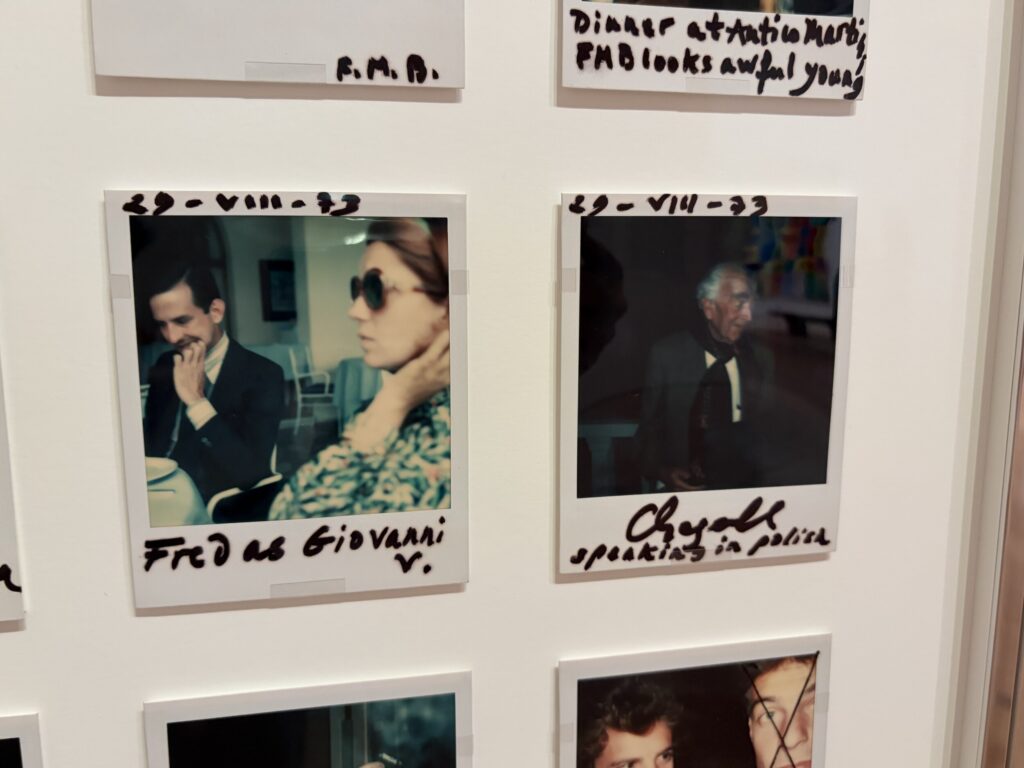
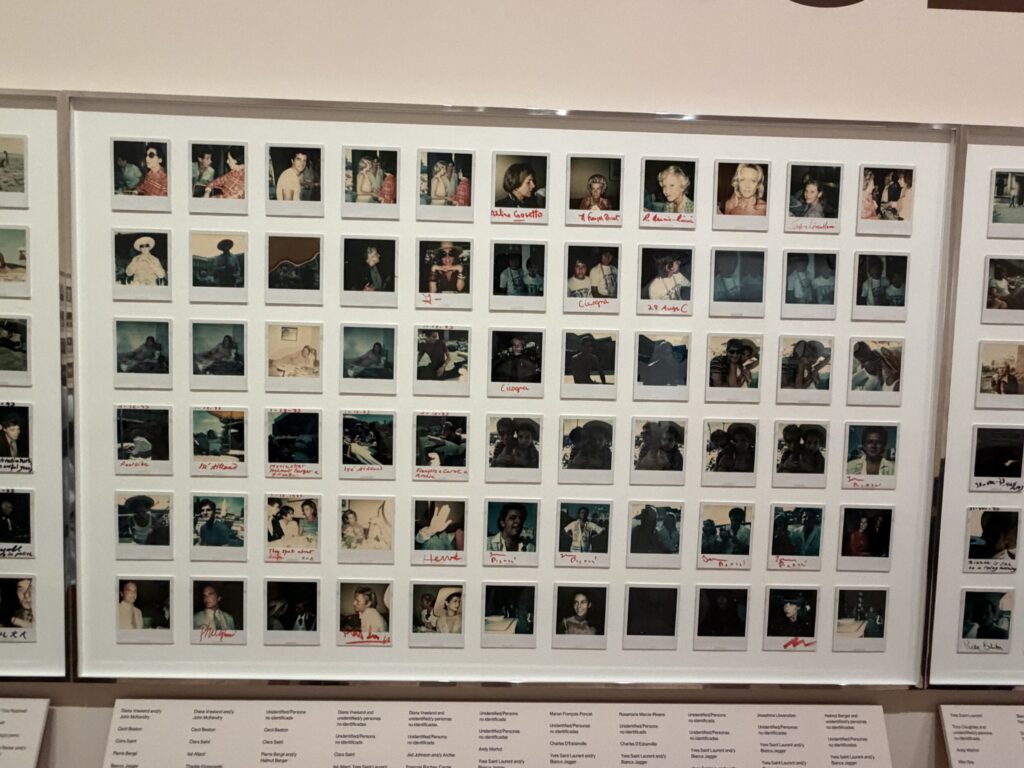
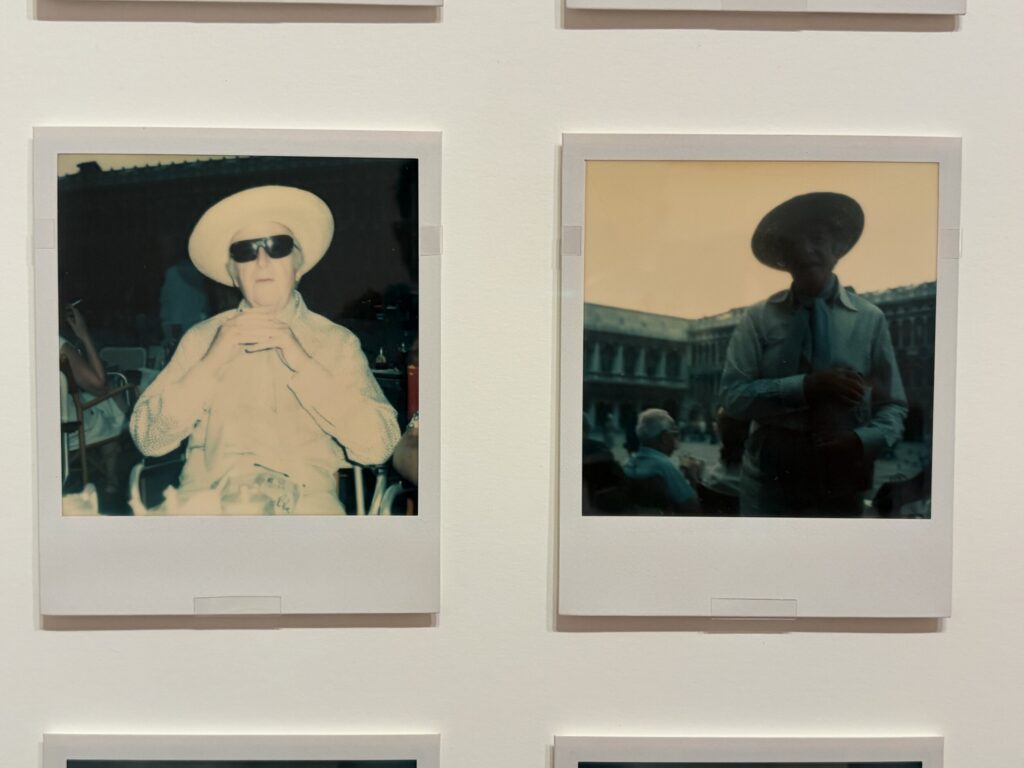
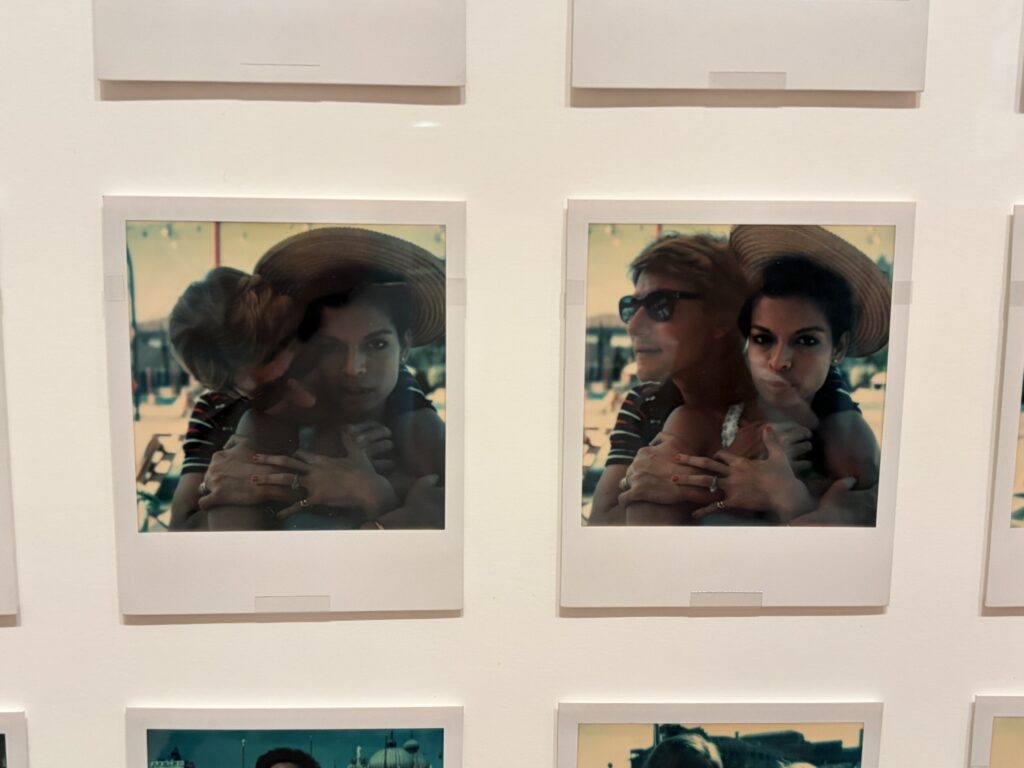
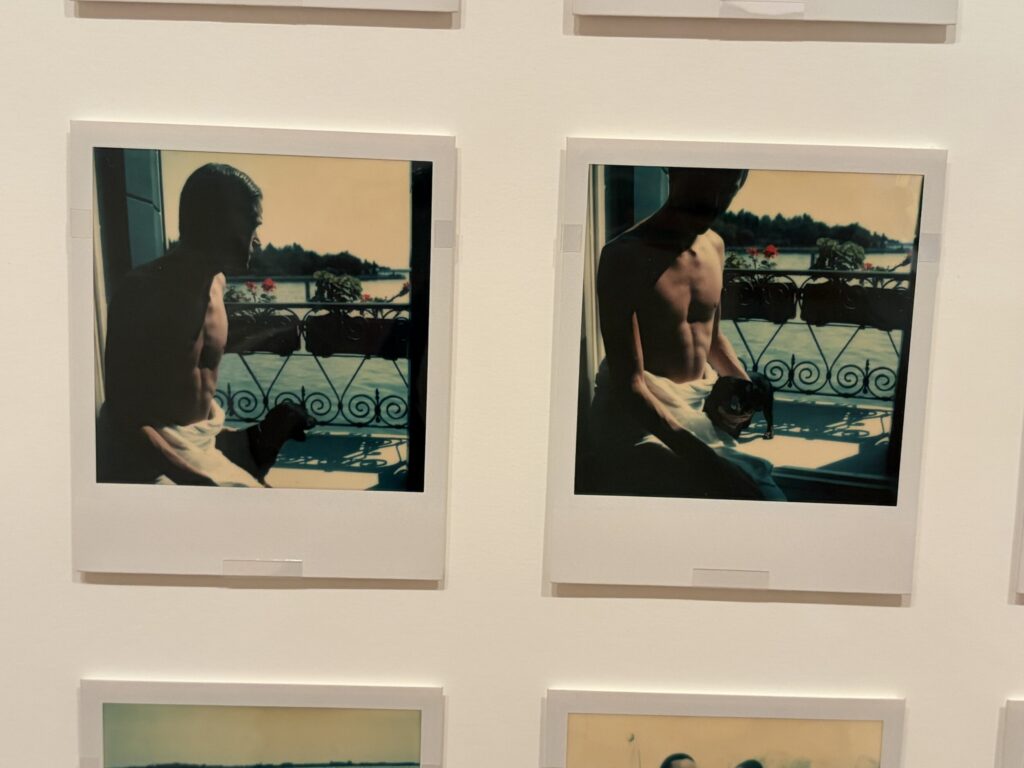
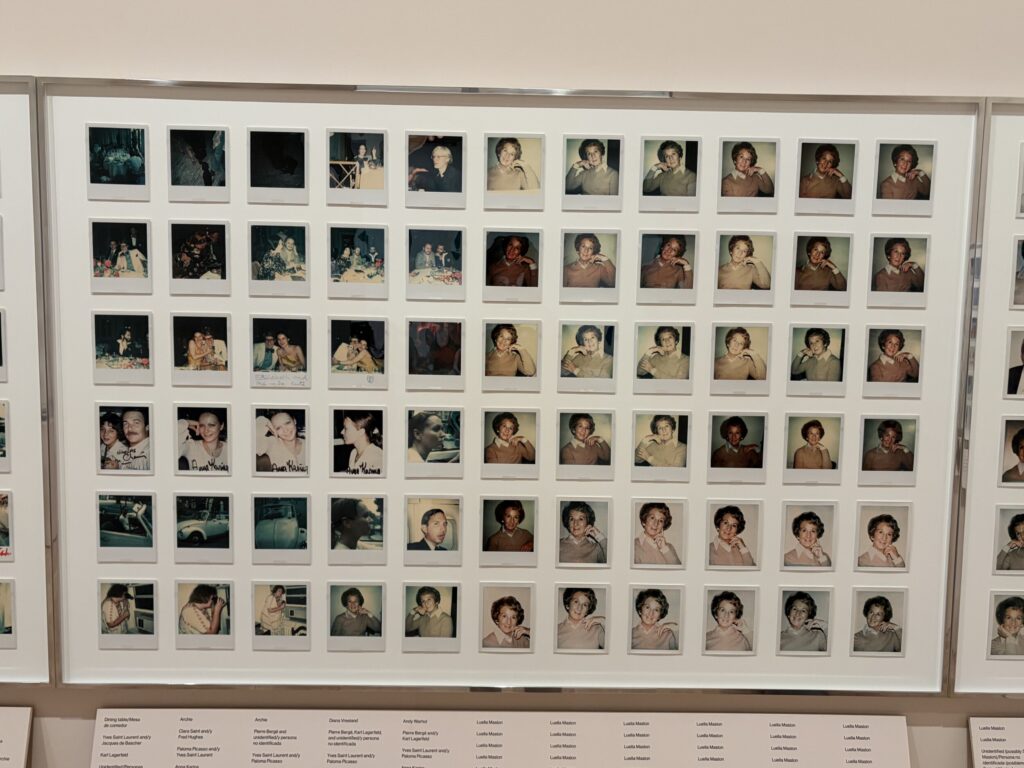
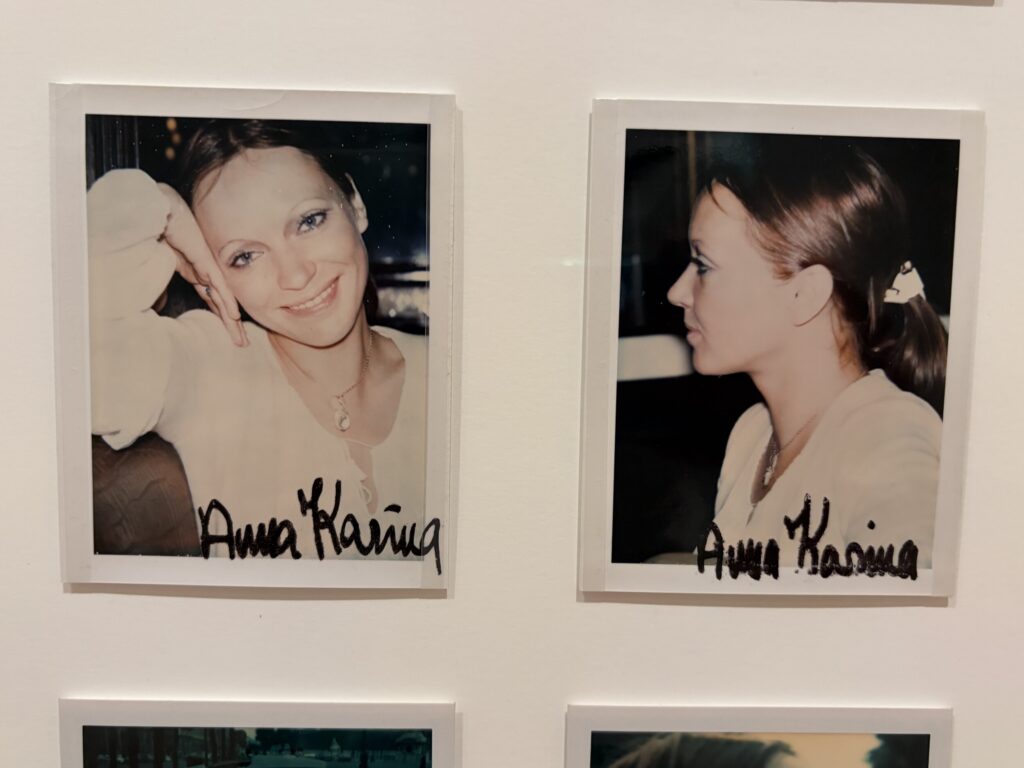
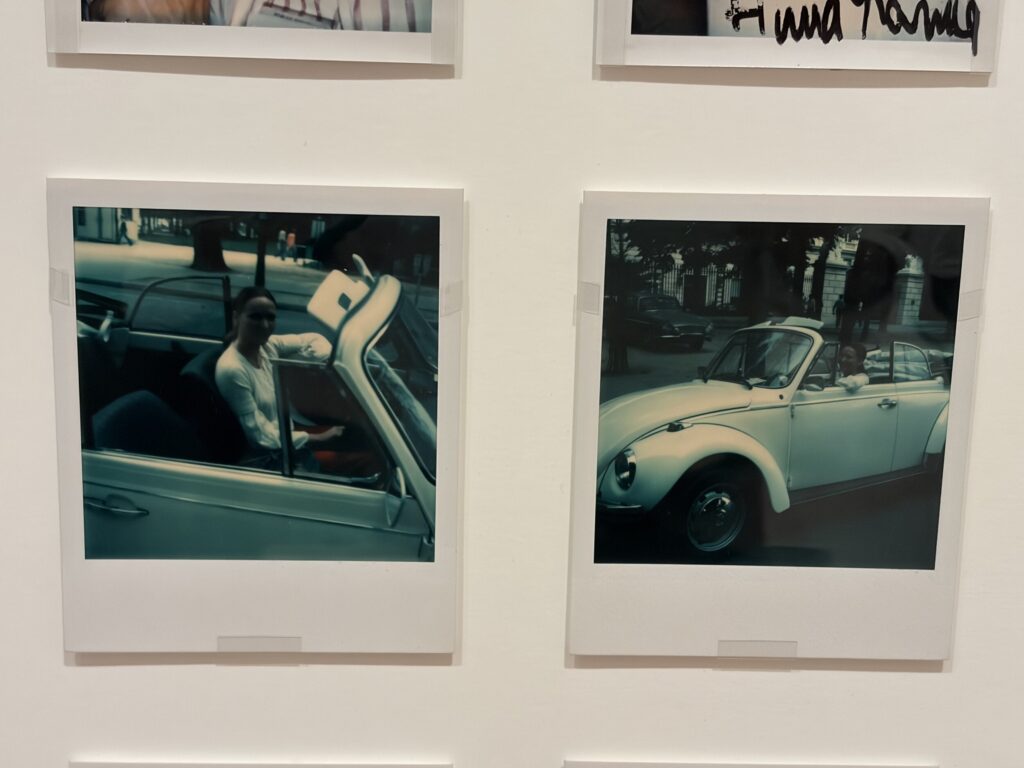
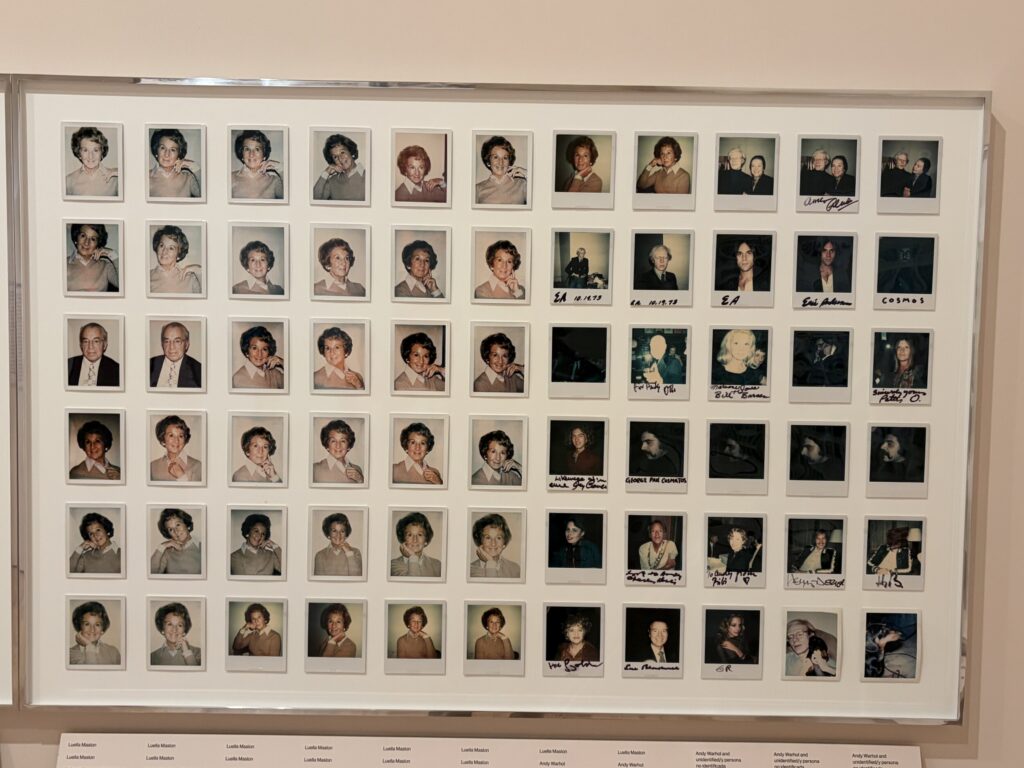
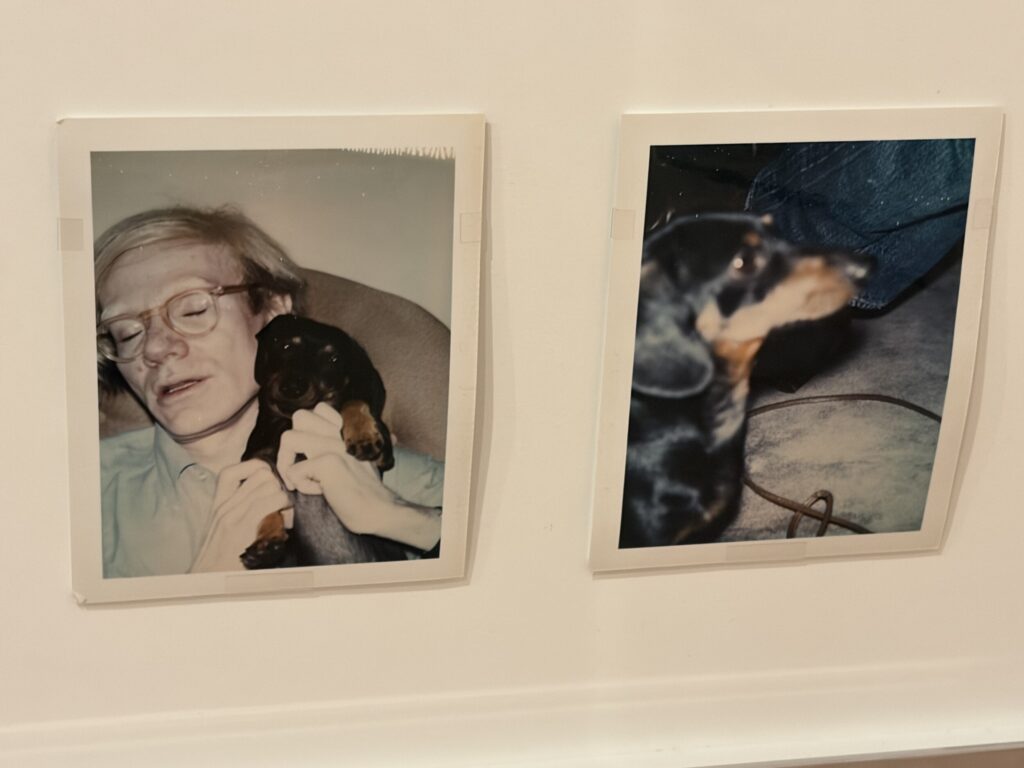
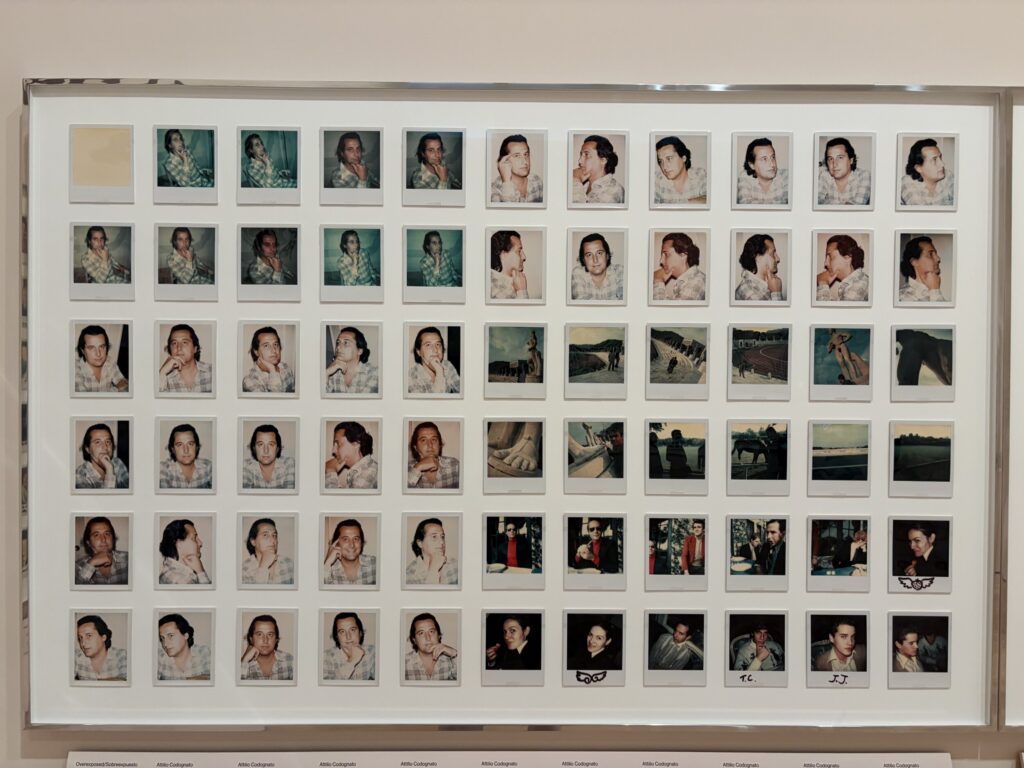
Comments/Context: It’s really too bad that Andy Warhol wasn’t able to time travel to the future to experience our current media environment. Of the artists of his generation, he is routinely recognized as among the most media savvy, understanding intuitively, almost before anyone else, how images could be broadly appropriated and transformed, and how fame and celebrity were powerful subjects that could be artistically hijacked and amplified. He was also a consistently avid, if perhaps manic, maker and consumer of images, toting a camera with him almost wherever he went, snapping party pictures and photographic portraits with restless abandon. Fifty years ago Warhol was already shooting casually, shaping and mediating his life through a camera, and building up a diaristic archive of both the mundane and the glamorous – just imagine what he might have done with a smartphone and some social media accounts.
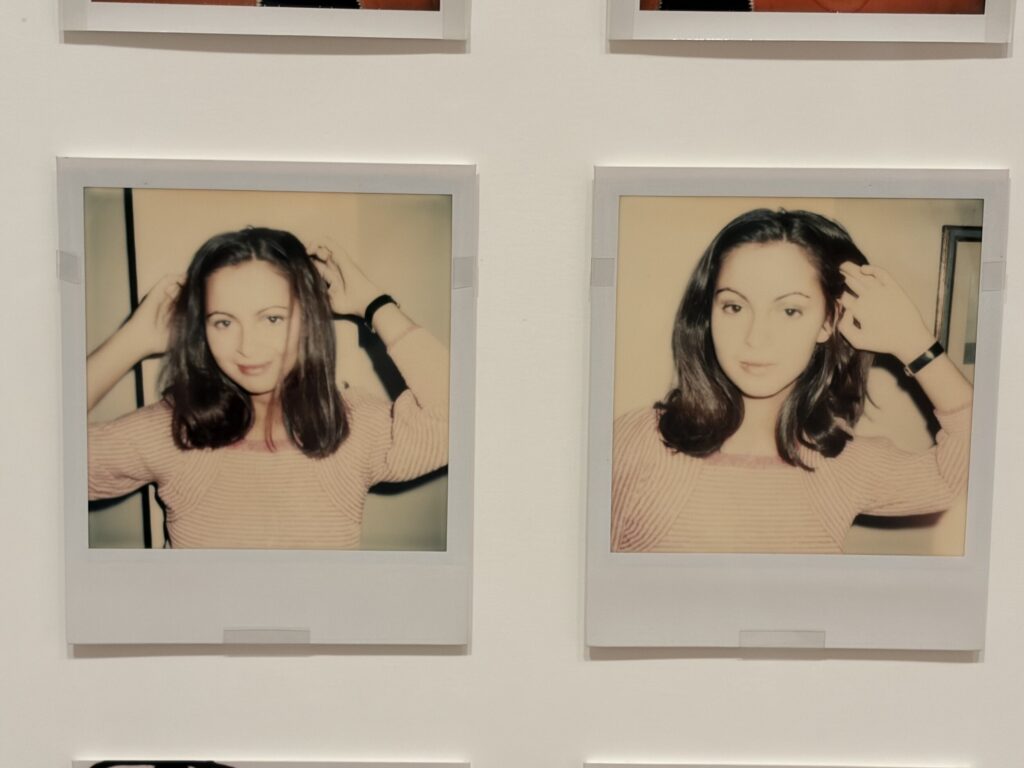
Warhol used Polaroid cameras of different kinds throughout his artistic career, starting to make his own photographs in the late 1950s and continuing all the way to just before his death in 1987. This small show unearths a selection of his self-made photo albums from the narrow time window of 1972 and 1973, made at a moment he was mostly switching between a Polaroid Big Shot camera and a Polaroid SX-70 (which was first introduced in 1972). And while Warhol liked them both and seemed to use them almost interchangeably, the two cameras were actually best suited to different working methods – the Big Shot was bulkier and better for up close portraits and still lifes, while the SX-70 was more portable and easier to use as a playful visual note taking device.
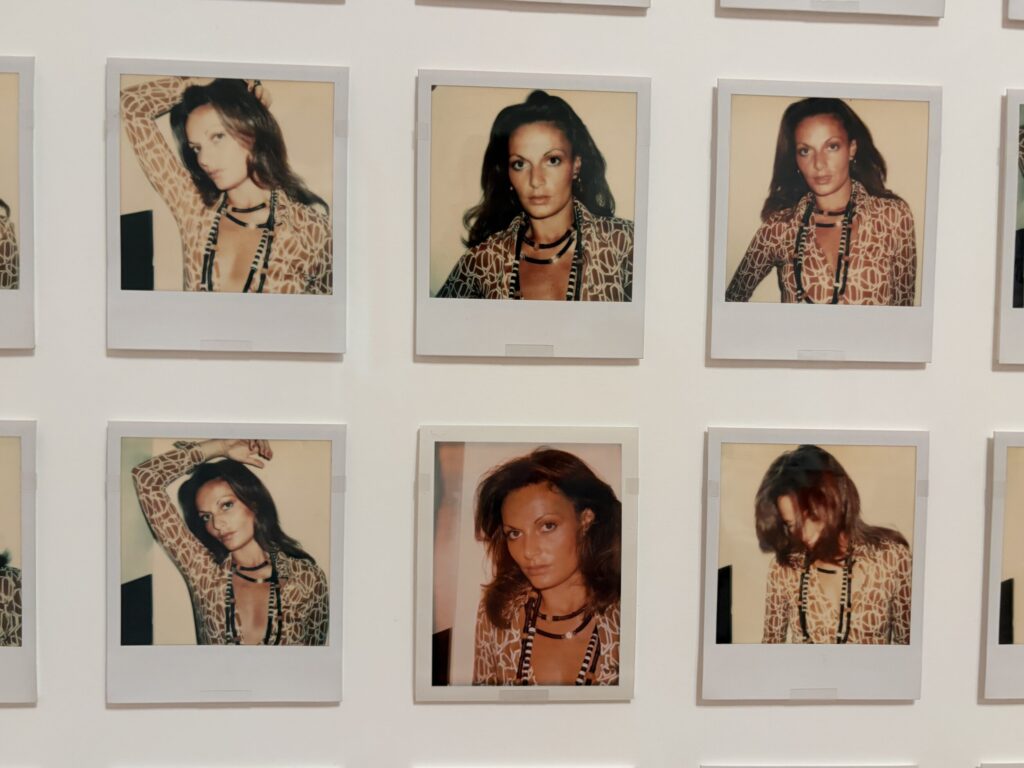
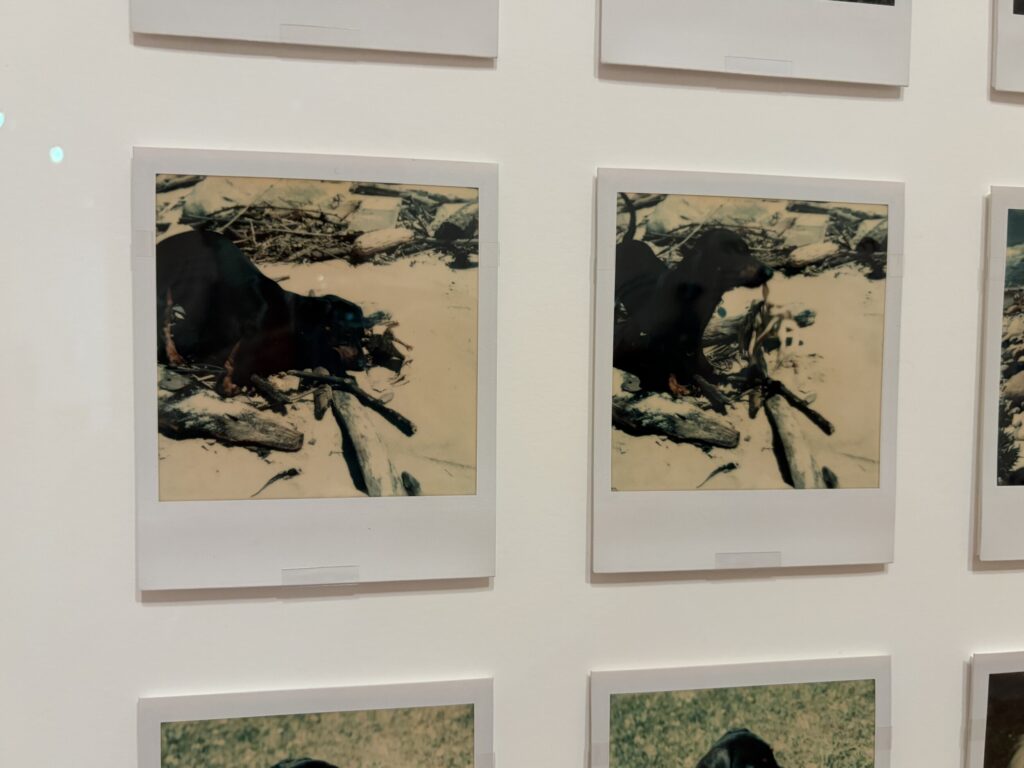
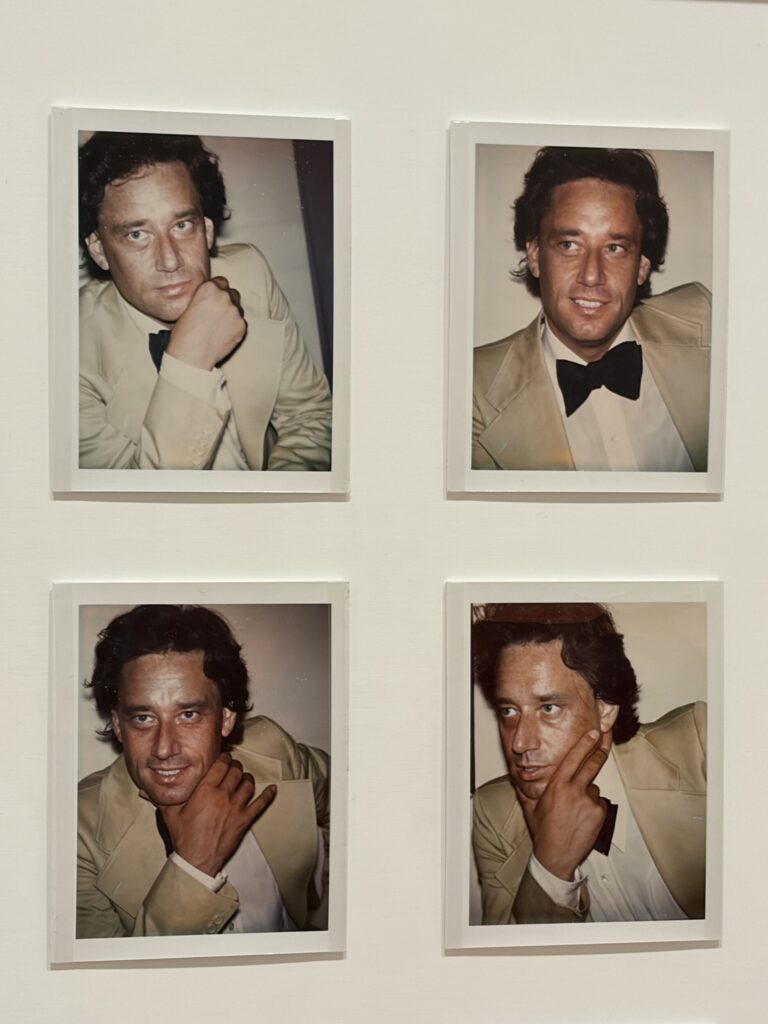
For the purposes of this display, Warhol’s albums have been unbound and arranged into dense grids of prints, seemingly somewhat chronologically, often bringing together as many as several dozen variant images of the same subject, sometimes made with both cameras. The Big Shot had wet pull apart positive/negative prints that had to be extracted from the camera one at a time, while the SX-70 mechanically ejected its newfangled all-in-one prints at a rate of a couple seconds; in either case, when we see Warhol making multiple images of the same sitter or event, again and again and again, it’s worth remembering that there would have been a noticeable time delay between each exposure in either case, not just a barrage of instantaneous frames shot at high speed like today.
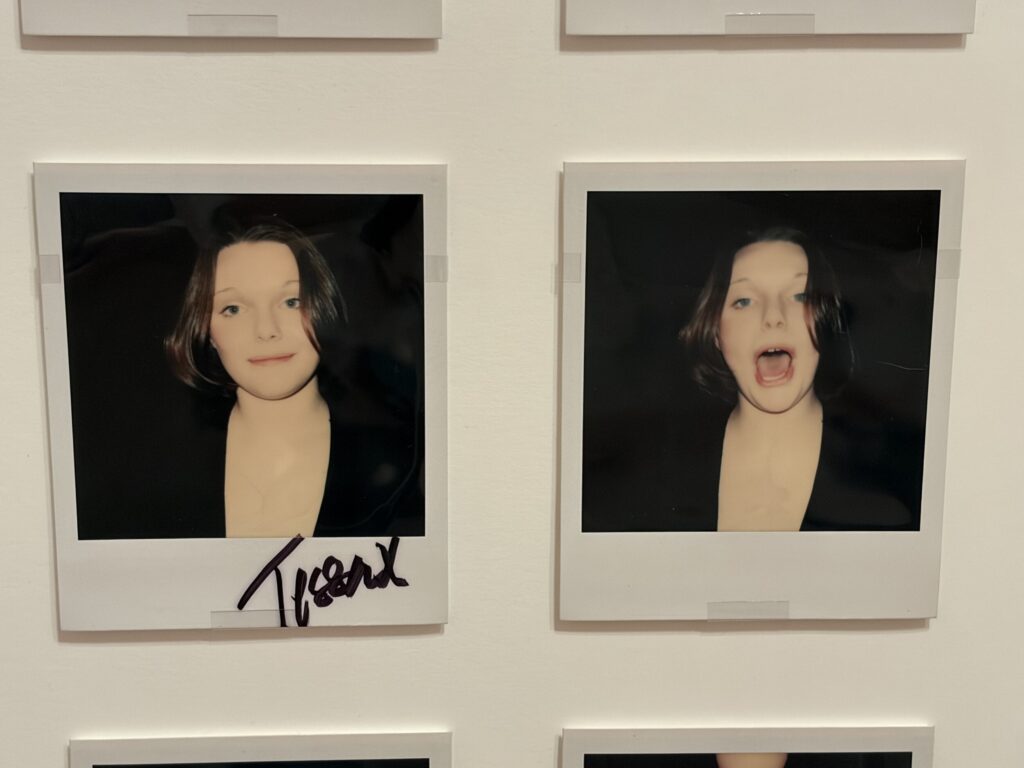
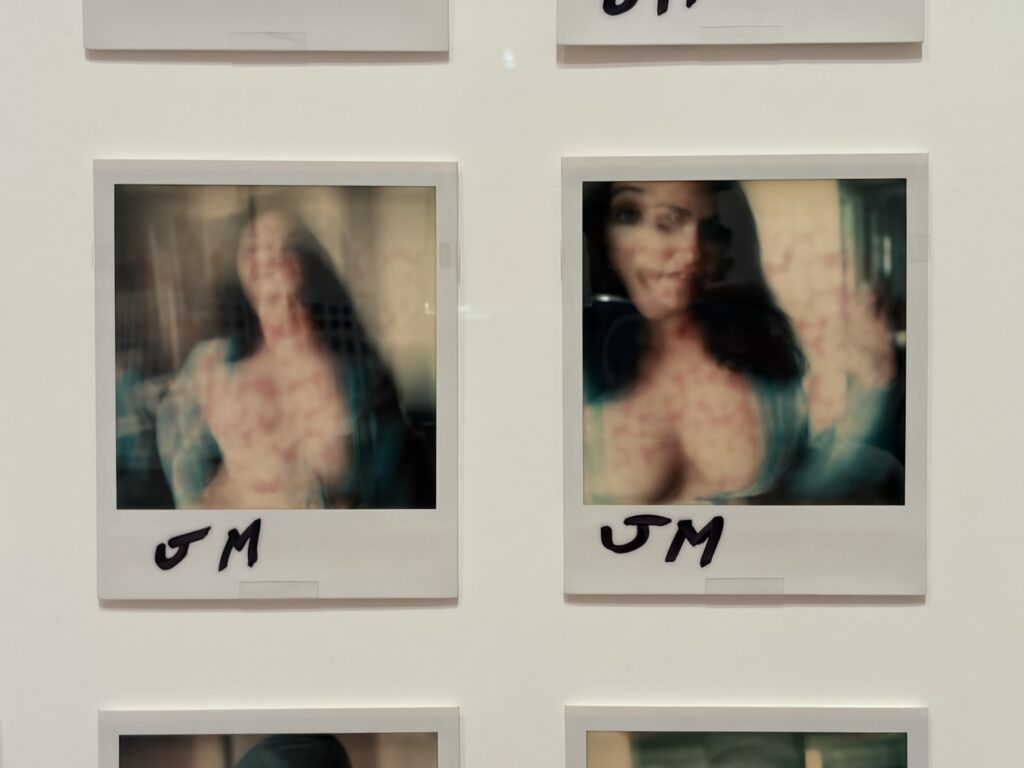
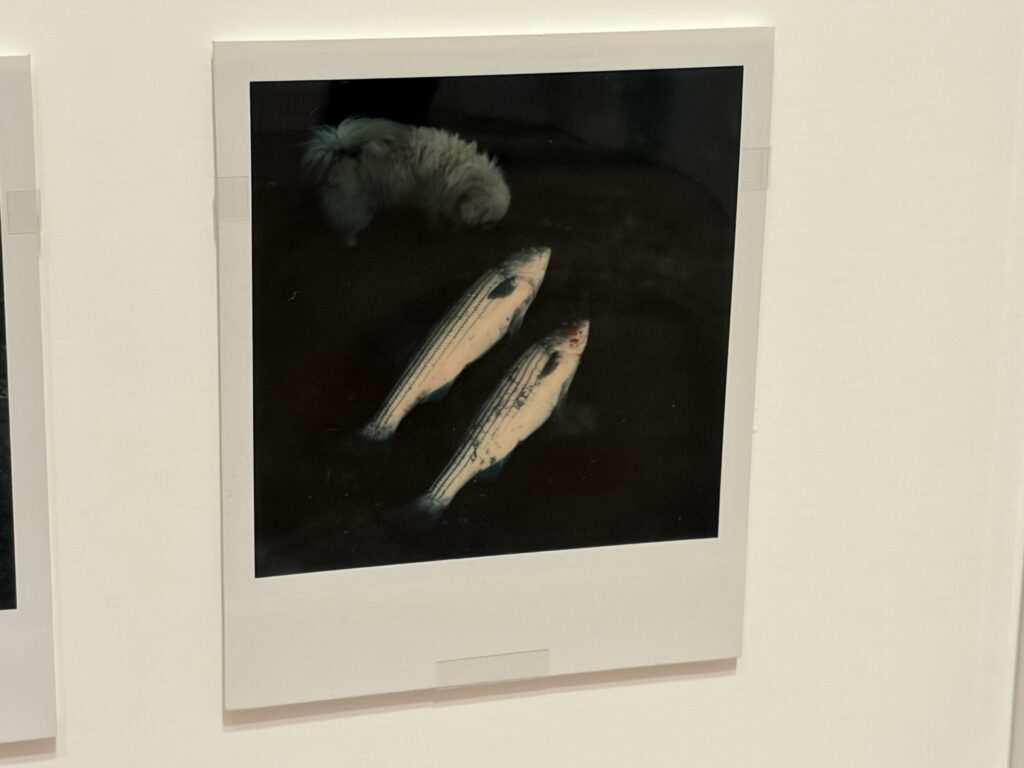
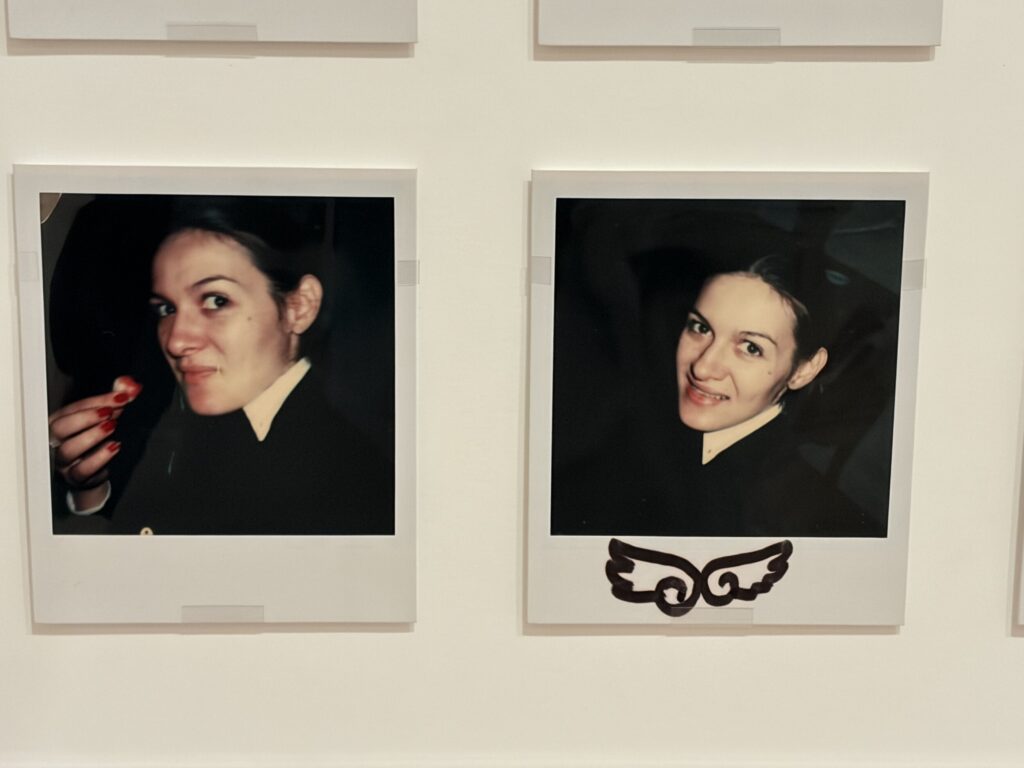
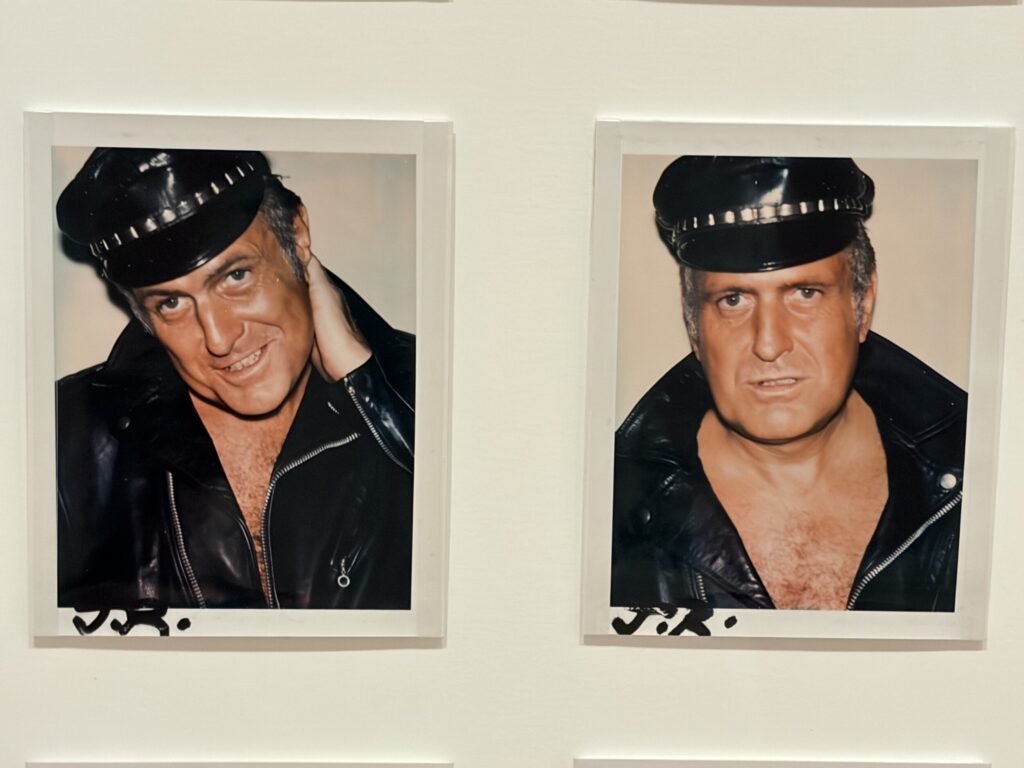
Since these collections of photographs were thought of by Warhol as “family albums” (after the generic name of the Holson albums he used), the imagery tends to be personal rather than professional. There are no images of art openings or similar official gatherings, no pictures of Warhol at work testing ideas or making art, and few if any images of the surroundings of his second Factory near Union Square in New York City (where he would have been working in the early 1970s). These were his off duty photographs, documenting the casual summer life at his beach home in Montauk, the comings and goings of various friends, lovers, celebrities, hangers on, patrons, and socialites, the extended table scenes of easy going lunches and boozy dinners, the antics of his dog Archie, and even a brief trip to Italy. Many of the prints have inscriptions and signatures in gestural ink, in Warhol’s handwriting and in that of others, attesting to the social aspect of his picture making and the immediacy of the sharing and seeing going on.
Snooping in Warhol’s photo albums inevitably leads to a “who’s that” identification of faces, both famous and less so, and the indirect attempt to piece together the layers of Warhol’s wide social circle. His lover at the time, Jed Johnson, makes multiple appearances, but is largely drowned out by never ending stream of famous visitors – countesses, heiresses, celebrities, and other socialites (like Paloma Picasso, Bianca Jagger, Delfina Rattazzi, and Marie-Laure Gardoni), artists and photographers (like Peter Beard, Cecil Beaton, and even Marc Chagall), actors and actresses (like Anna Karina, in a white VW beetle), fashion designers (like Yves Saint Laurent and Diane von Furstenberg), writers (like Truman Capote), art historians (like Félix Marcilhac and John Richardson), and Factory members (like Paul Morrissey, Brigid Berlin, Ultra Violet, and Geri Miller), and these are just the ones I could plausibly place or identify. It’s clear that even at leisure, Warhol was constantly and intensely looking at people, and in these bunches of photographs, it’s easy to watch him get distracted by a face, a pose, or a look that he wants to further dissect and document.
Aside from this relentless, iterative approach to seeing, I’m not sure that there is all that much to learn from these images. But it is definitely worth tracking how Warhol orchestrated these impromptu portrait sessions, how he starts with one pose, pushes on it until it breaks, then keeps trying, always looking for a refinement, an optimization, and a facet that wasn’t seen before. Hanging outside this one room show is a 1963 silkscreened work by Warhol that uses 36 different images of the art collector Ethel Scull as its subject matter. Nearly a decade later, he was a still seeing in essentially this same insistent way, methodically building up a taxonomy of portraiture possibilities that might, in aggregate, start to capture the complexity of the sitter, even when he was just fooling around with his friends. It’s amazing how very few single images there are of anything in these albums – it seems he always needed a second (or third or fourth) chance, to see whatever had caught his eye once again from a slightly different perspective, like he was visually triangulating in based on a composite of readings.
One of my key takeaways from this show is that Warhol was far ahead of his time (and most of his contemporaries) in terms of using photography as an active visual tool. Even in the most tossed off of his personal candids, Warhol was testing his ability to see, to frame, to organize, and to understand visual space, and that persistent intellectual process of breaking the world down into pieces must have had critical influence on how his art evolved. During these years, it seems that almost every day of his life was photographic in some manner, even though we hardly ever think of Warhol as a photographer. For me, the lesson these pictures reveal is to keep shooting, over and over and over again, and to do so with the urgent curiosity, thoughtfulness, and attention necessary to make each repetition or variant something new.
Collector’s POV: Since this is a museum exhibition, there are of course no posted prices. Other exhibitions dedicated to Warhol’s Polaroids have been held at 56 Henry (nudes, reviewed here), Jack Shainman Gallery (survey, reviewed here), Danziger Gallery (celebrities, reviewed here), and Kasmin Gallery (still lifes, reviewed here). Warhol’s photographs can be regularly found in the secondary markets, with prices in recent years ranging between $2000 and $420000, with the price for the Polaroid portraits often influenced by the relative fame of the person pictured (including the artist himself).