JTF (just the facts): Published in 2026 by Loose Joints Publishing (here). Debossed hardcover with dust jacket, 30.5 x 28 cm, 144 pages, with 70 tritone photographs, and a poem by Charlotte Shevchenko Knight. Design by Loose Joints Studio. (Cover and spread shots below.)
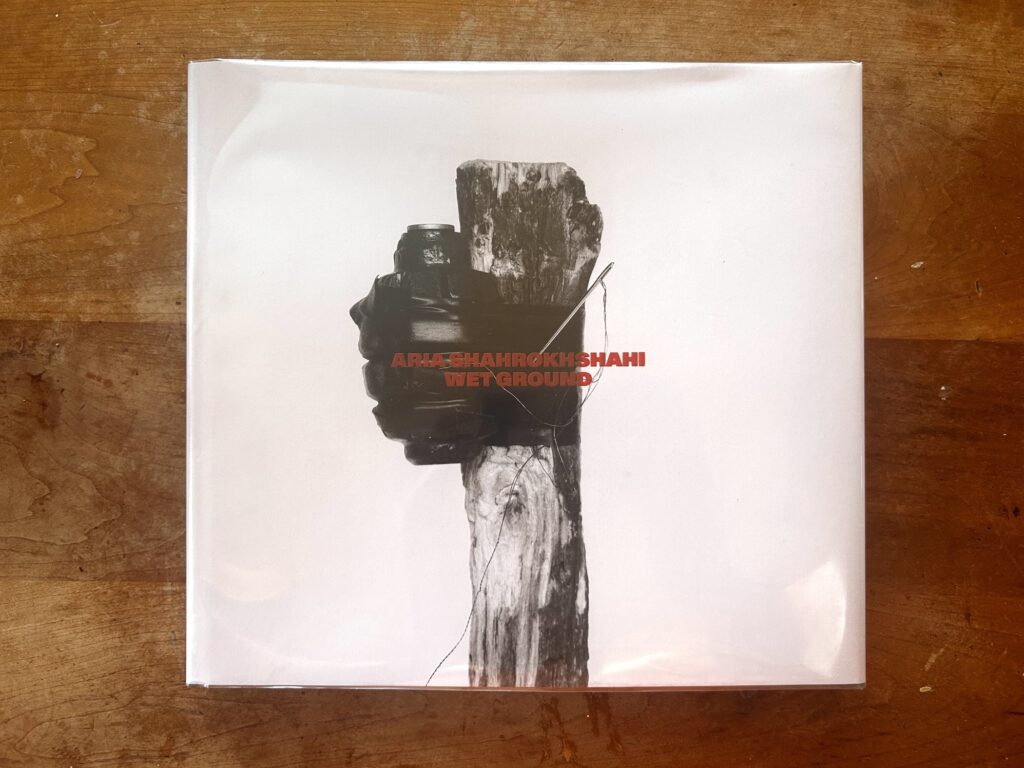
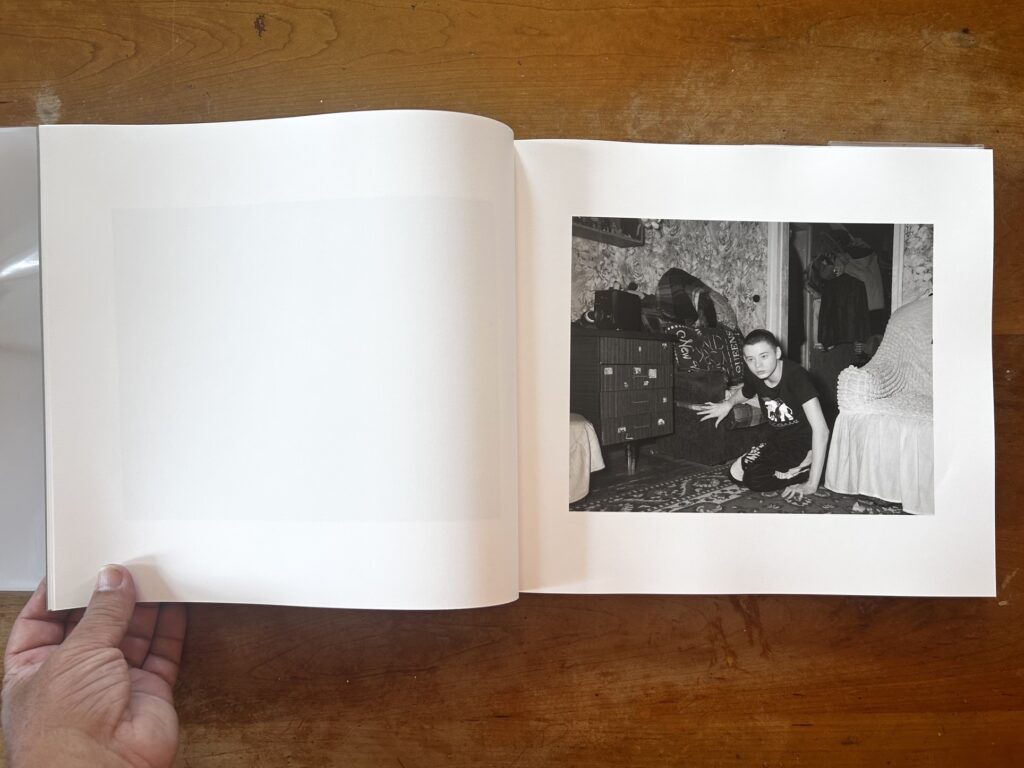
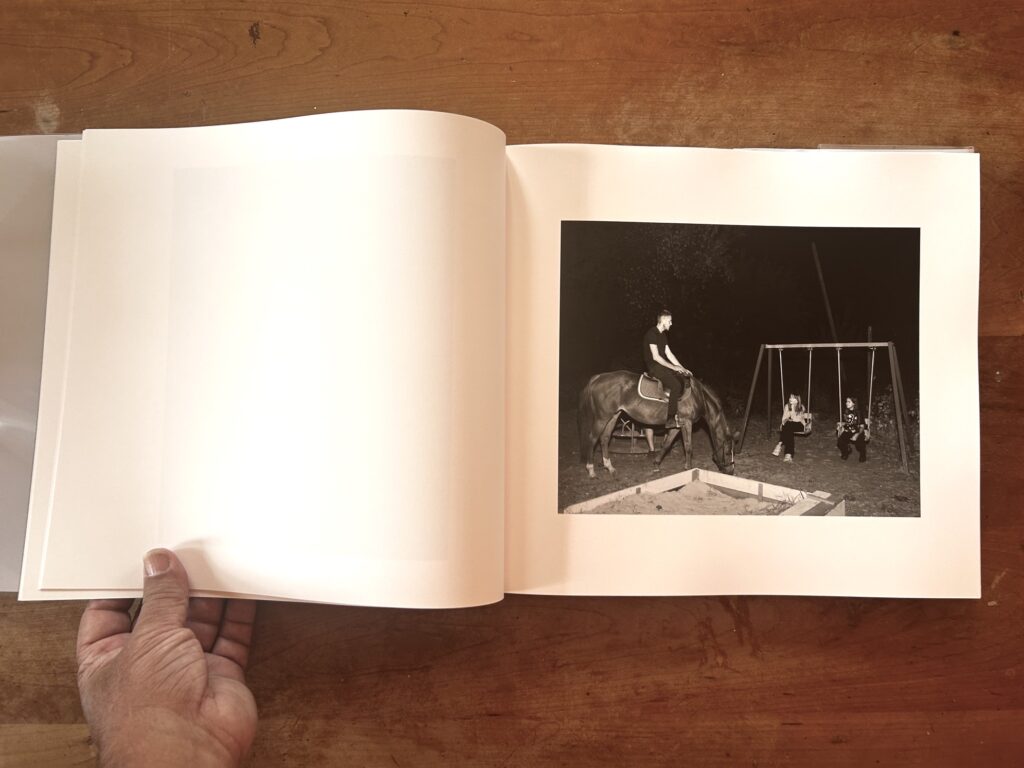
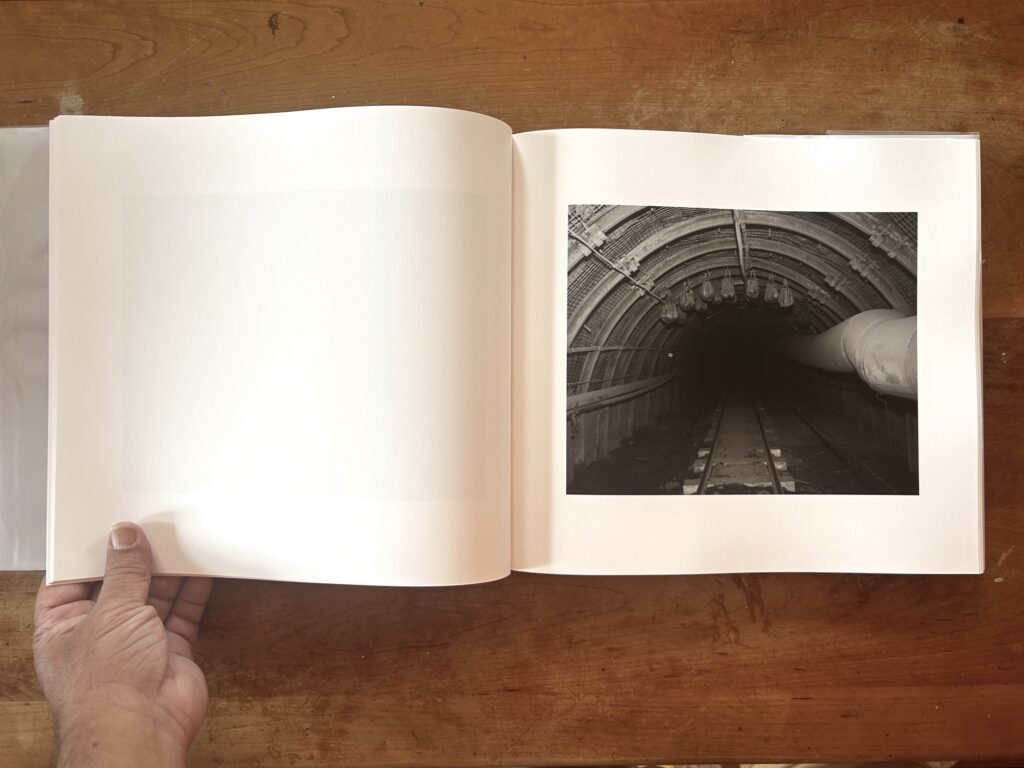
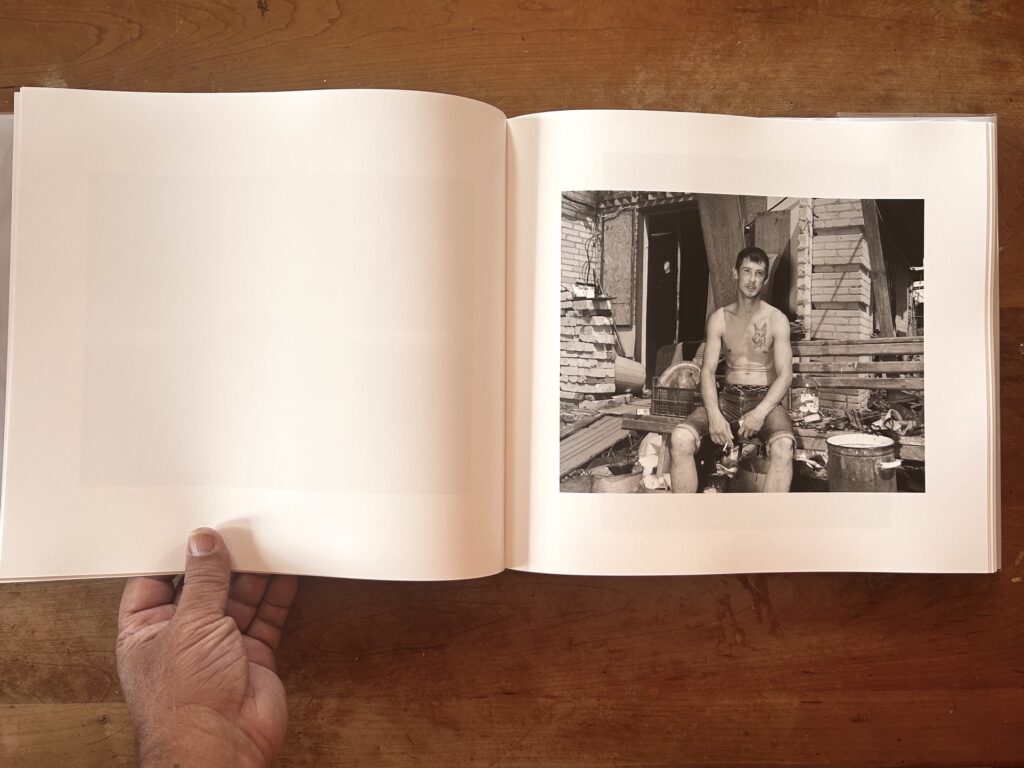
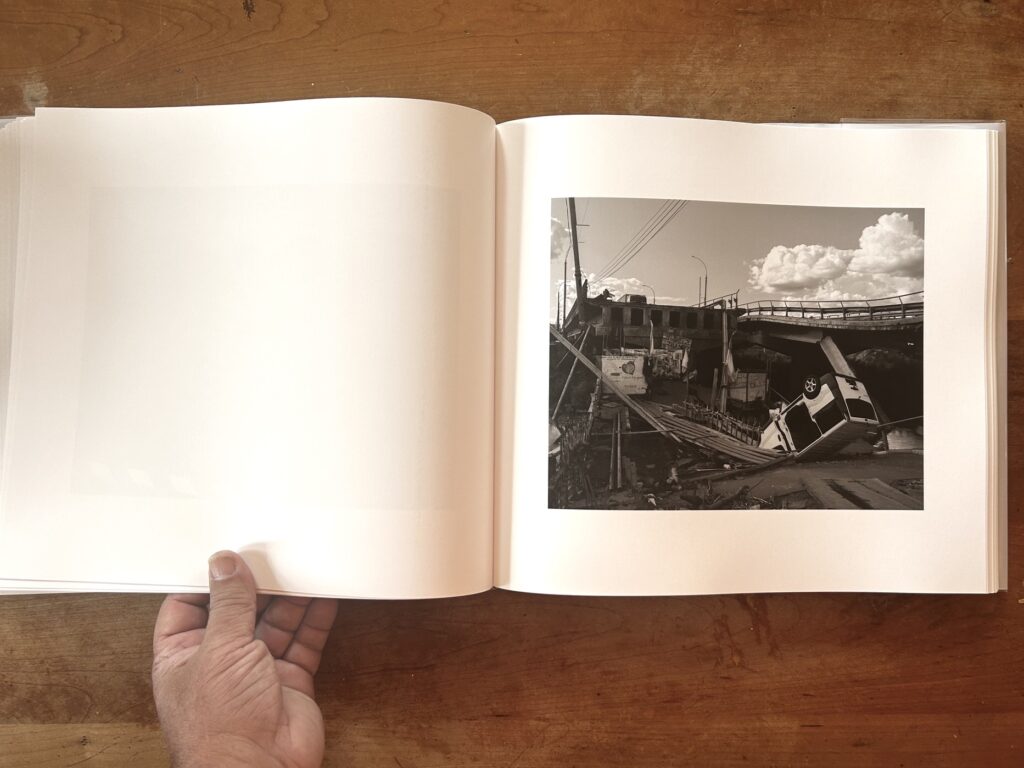
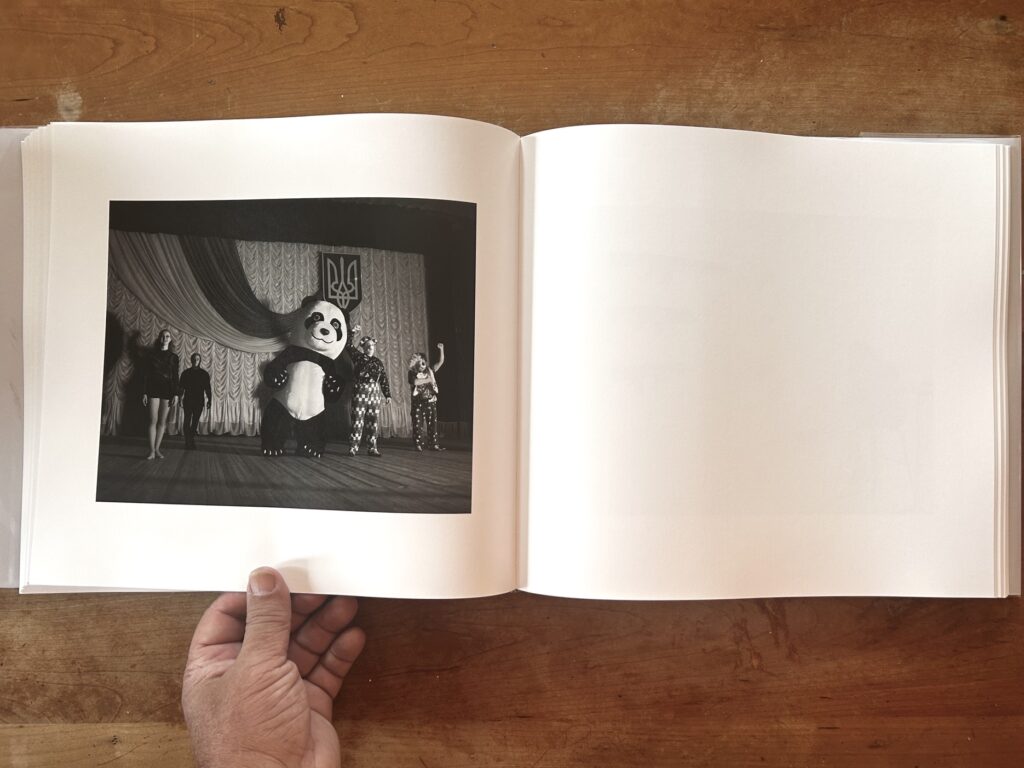
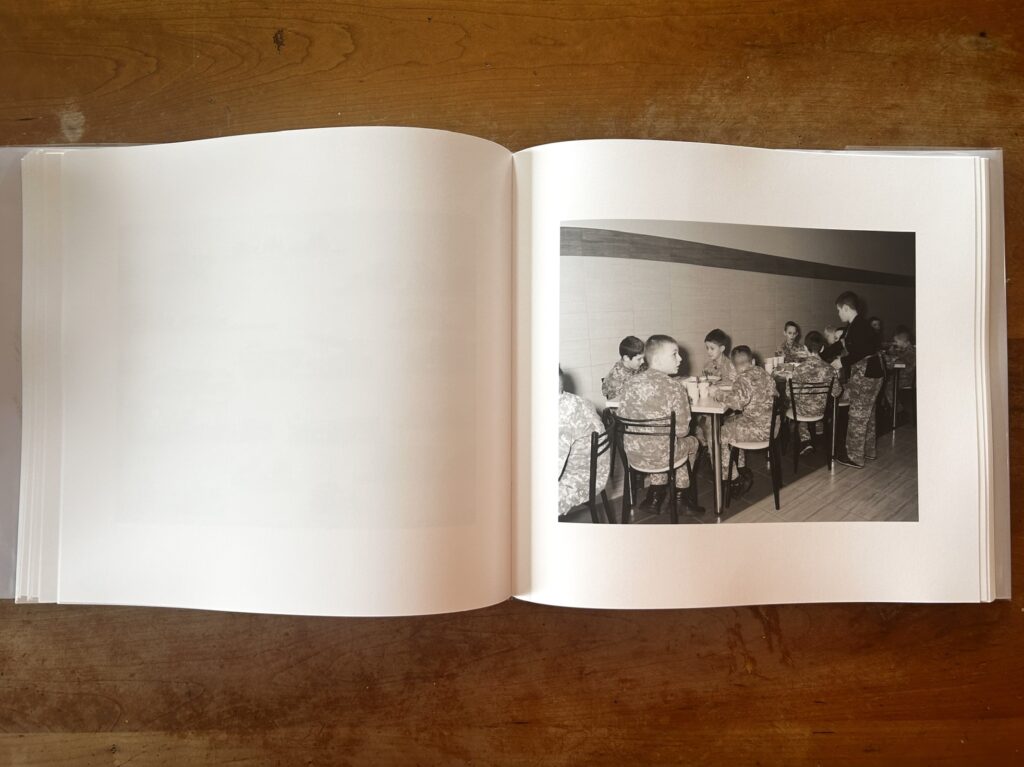
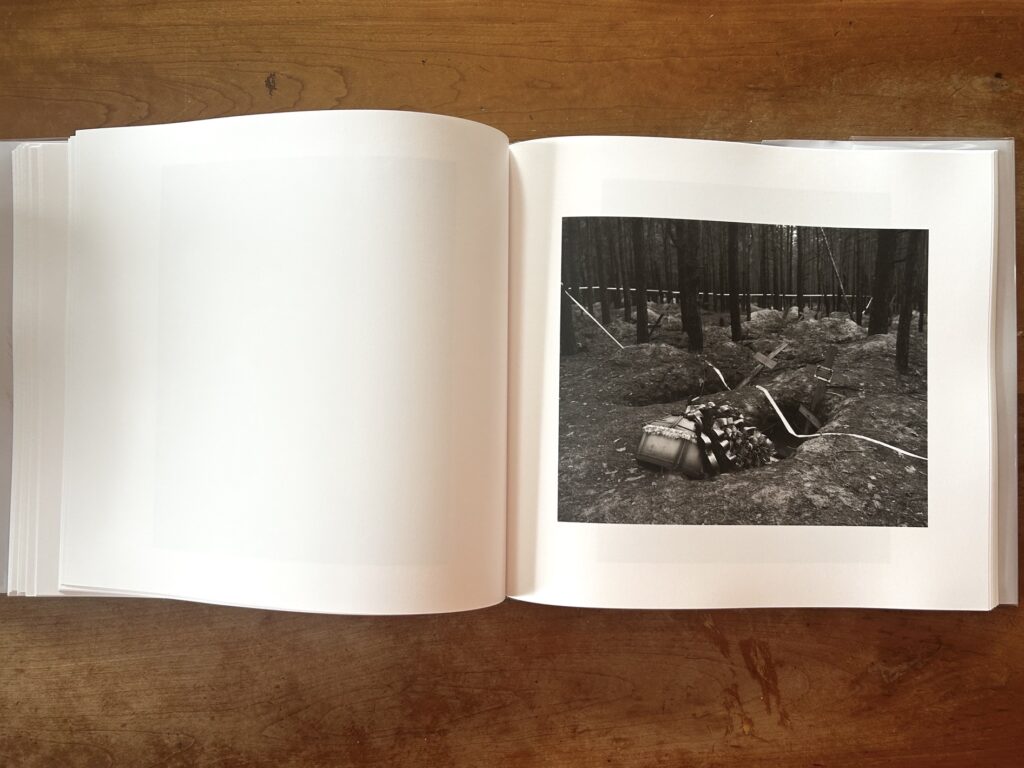
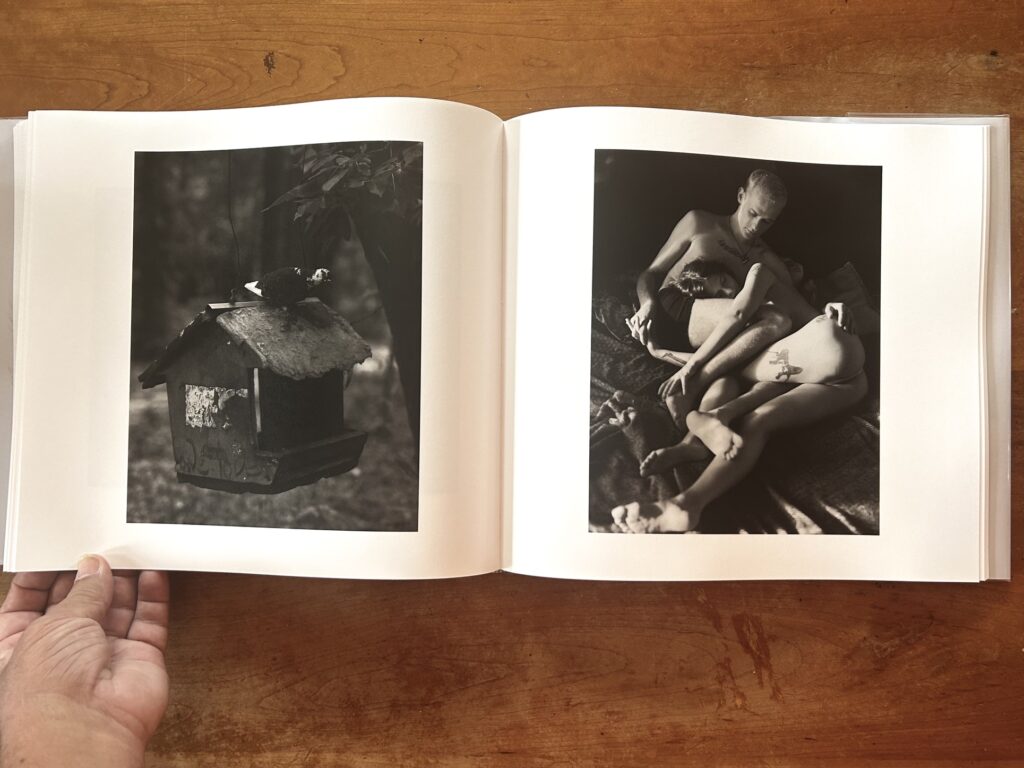
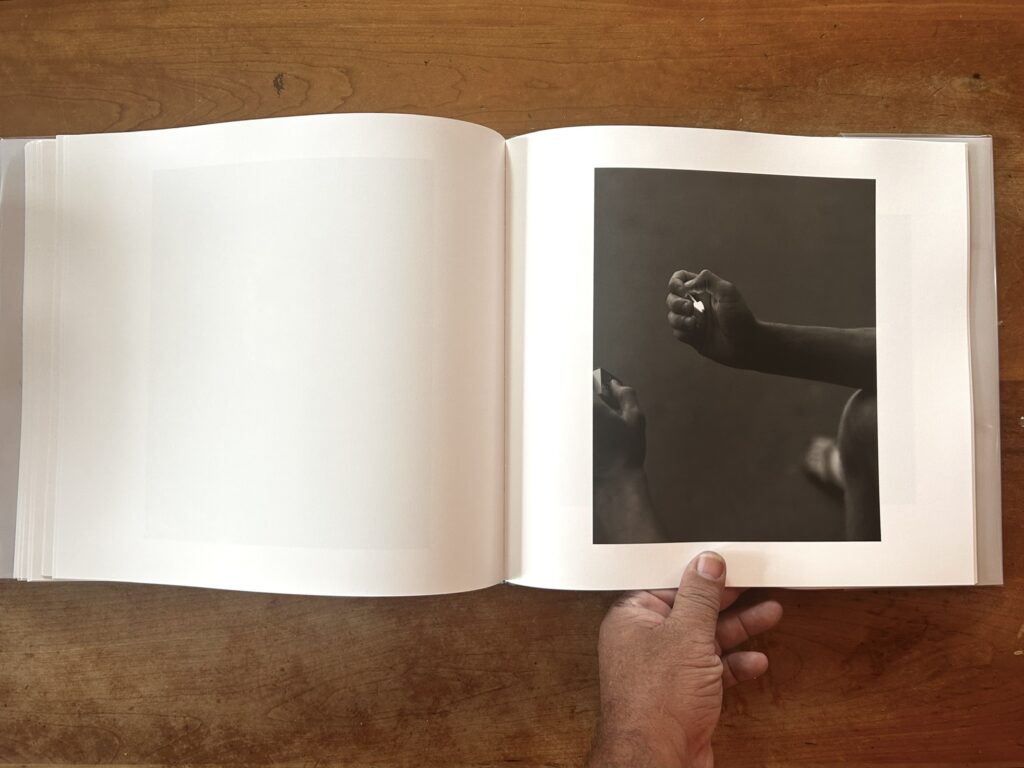
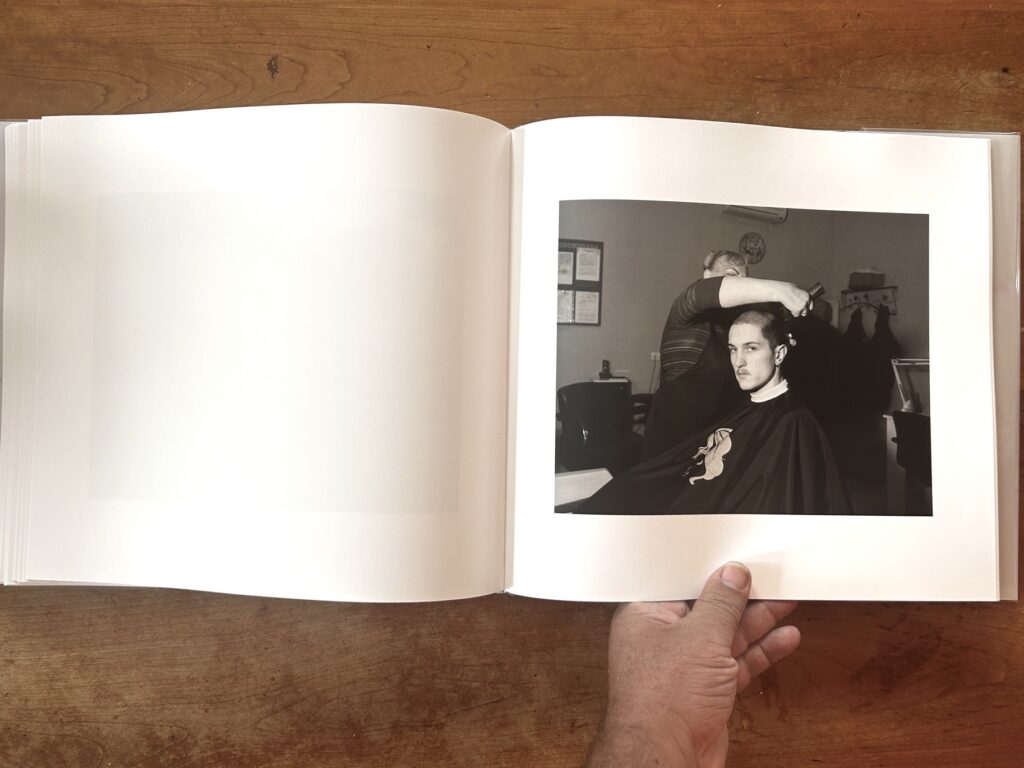
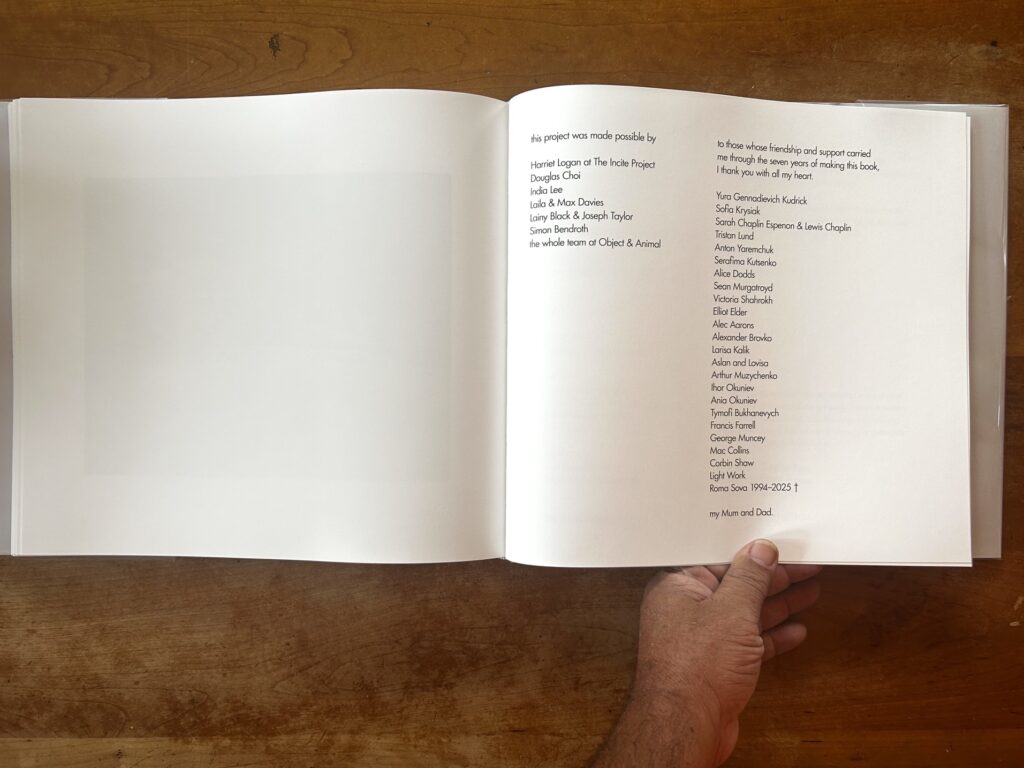
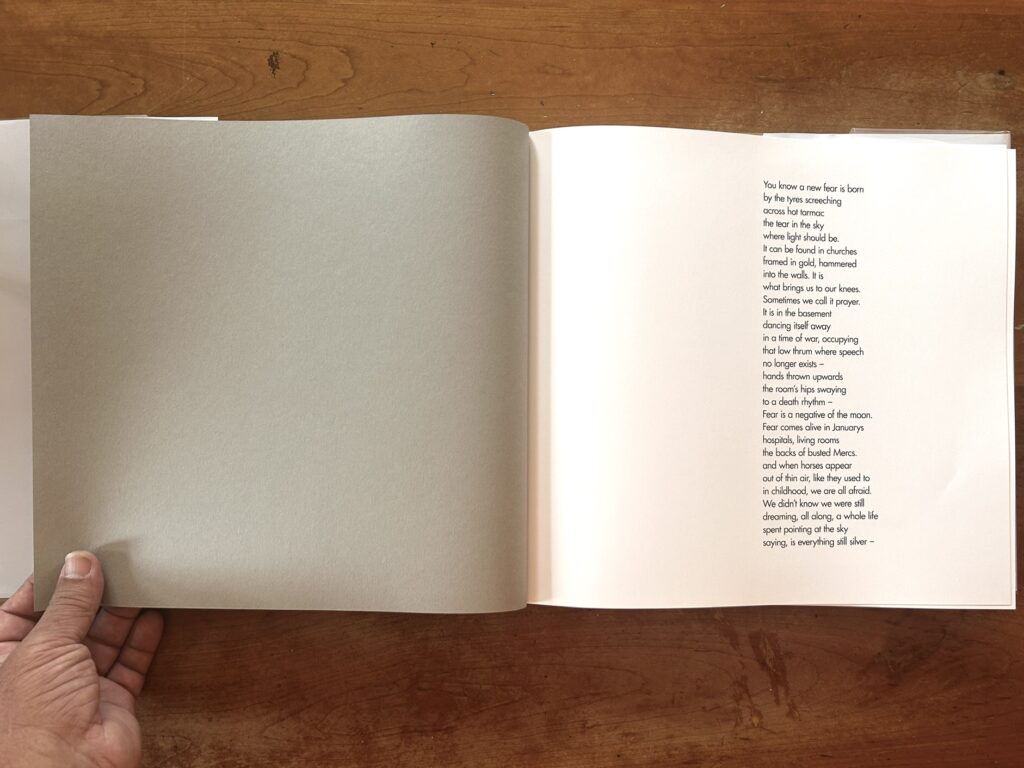
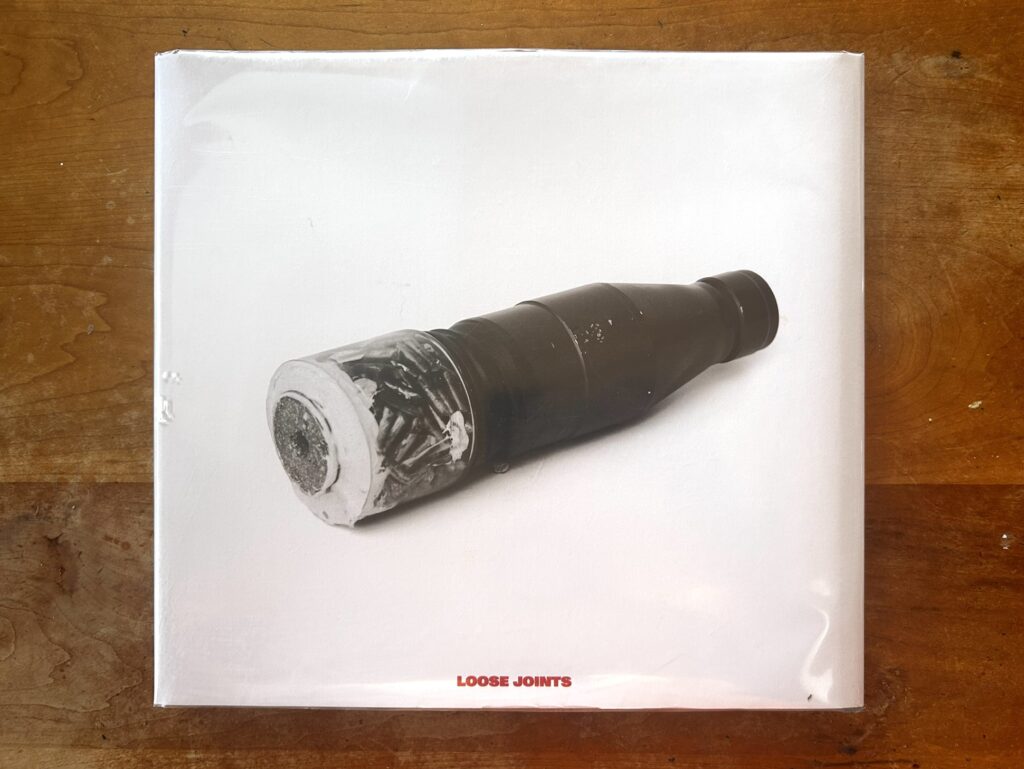
Comments/Context: At first glance, Wet Ground bears the familiar trappings of war photography. Aria Shahrokhshahi has centered his crosshairs squarely on Ukraine, a nation ravaged by conflict for four years and counting. The front cover of his debut monograph depicts an improvised explosive device. On the back cover is a photograph of a munitions shell. Flipping through the interior pages, one can find pictures of guns, soldiers, army materiel, graves, civil destruction, and other combat artifacts. Fans of Don McCullin, Tim Hetherington, or Lynsey Addario might feel at home here.
But if the reader is initially placed on a war footing, it soon proves to be a red herring. More time with the book brings Shahrokhshahi’s deeper interests to the fore. Wet Ground is a broad exploration of Ukrainian society, during war, peace, and everyday events, compiled over several years.
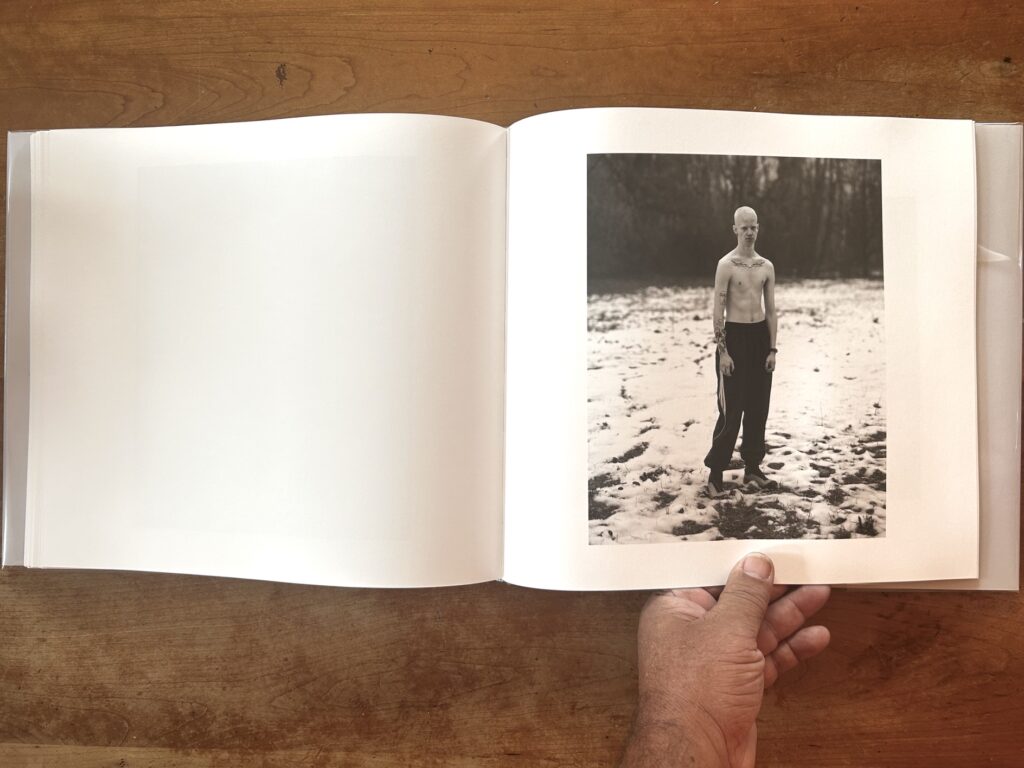
Shahrokhshahi first visited Ukraine in 2019, well before the current hostilities began. The British-Iranian photographer (b. 1996) was a young man seeking adventure. In Kyiv he discovered a blossoming scene of artists, tattoo culture, night clubs, and creativity. Some even called it the new Berlin. Shahrokhshahi stayed on a while, consuming his new terra incognita in great gulps. He used a 4×5 camera and black-and-white film to make photographs of people and places he found interesting. Over the next few years (2019-2021, comprising roughly half the book), he made several return trips, becoming more enamored with each visit. “I was interested in questions of identity, reclamation, shifting culture, masculinity,” he explained in a recent interview, “and what happens when a nation’s sovereignty is under attack.”
Ukraine was indeed under siege during this period, following the Maidan Revolution and subsequent Russian annexation of Crimea. (Perhaps the occupation helped enflame Ukraine’s artistic renaissance? A question for another day.) But everyday life was still somewhat stable. It wasn’t until early 2022 that tensions spilled over into full-scale war, with Russia’s frontal assault. Some parts of Ukraine fared better than others. No place was unaffected.
By this point, Shahrokhshahi had returned to his native UK, but he followed events from afar. When he finally settled full-time in Ukraine in 2023, he worked construction projects for the humanitarian relief agencies Base UA and Livyj Bereh. He resumed his photographic activities as well, but he was determined not to have his pictures pigeonholed. “I’m not a war photographer and I don’t want to be,” he told the BJP. “[Ukraine] was just a place I was photographing, and the people I built a connection with happened to be at war.”
Fair enough. But Ukraine’s fight is existential, and the stench of battle still hangs over everything. The book’s title, for example, refers to a fateful artillery incident. Caught near the front lines in 2024, Shahrokhshahi felt the earth shake as a large Russian shell landed 15 meters away. Had it exploded it would’ve killed him. Instead the ordnance fell innocuously into the wet ground, which had been softened by rain. The particular soil type is special enough to merit its own name. Chernozem is a nutrient rich black earth which anchors the Ukrainian breadbasket (before the war, Ukraine produced around a third of the world’s grain). Douse with rain and mortar shells, and muddy chernozem becomes a metaphor for unstable foundations, shifting expectations, and the dice roll of daily kismet.
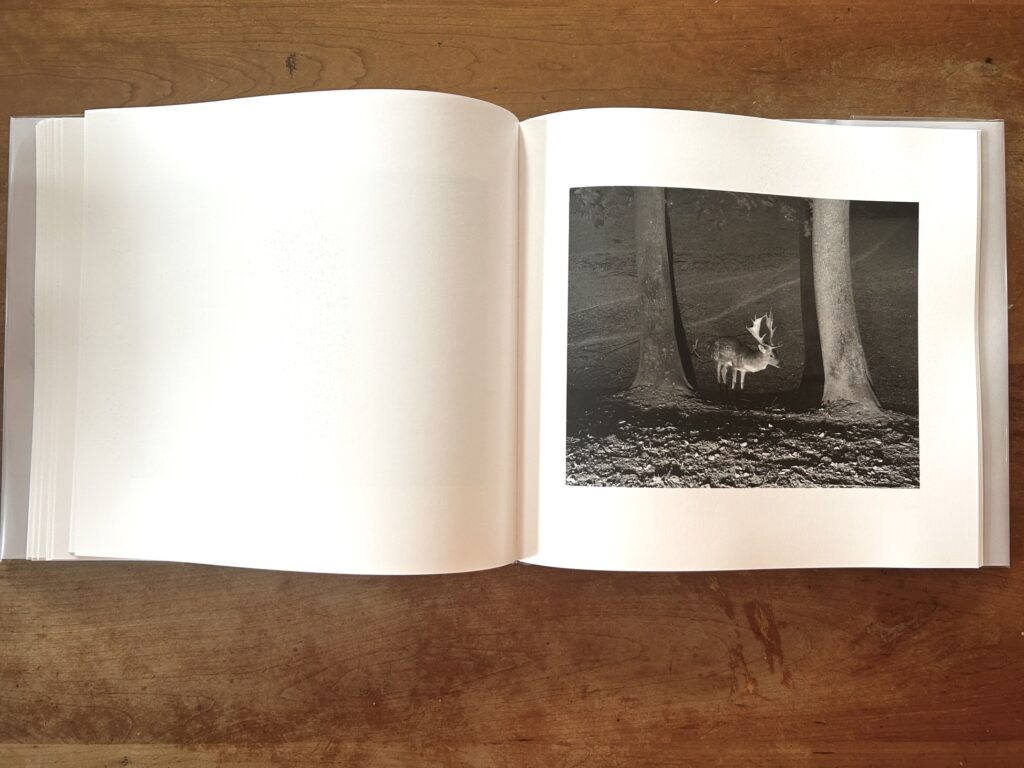
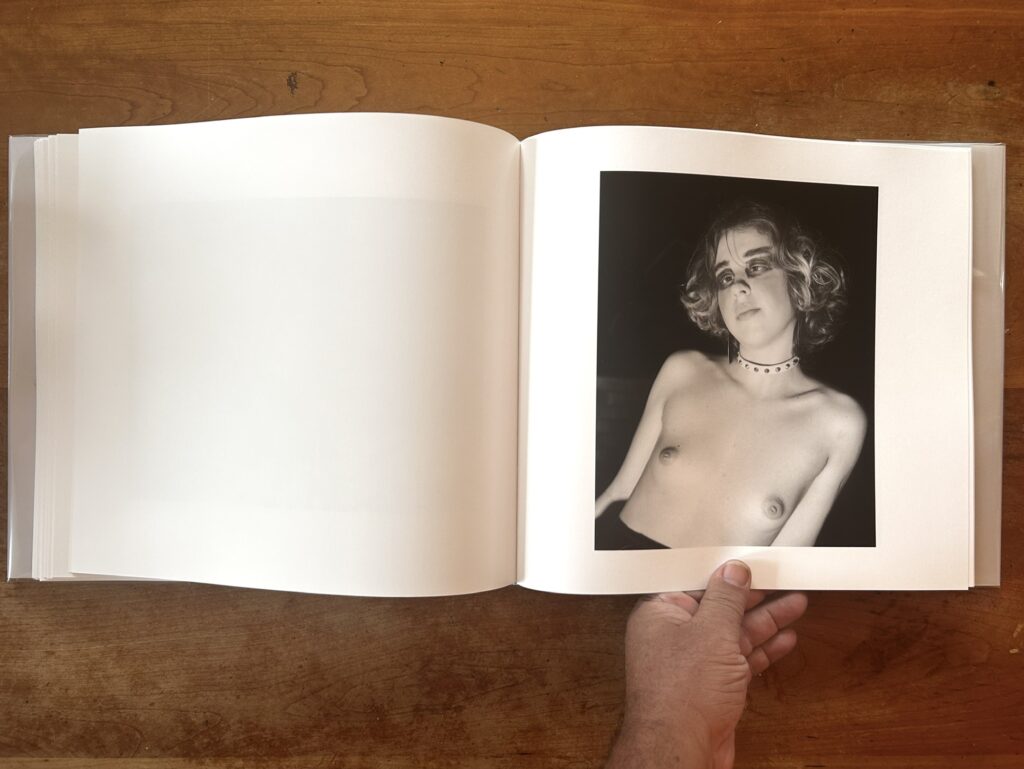
With this in mind, many of the photographs in Wet Ground are energized by a mood of adolescent angst and shaky footings. A portrait of bare chested woman with clownish mascara, for example, feels unmoored and mysterious. In another image, a giant panda stars in an offbeat stage performance. Soldiers train with cardboard cutouts and run-shaped twigs in another scene; whether the photo refers to weapon shortages or the Catch-22 absurdity of war is hard to say. And an image of a deer caught in the headlights between two trees is as inscrutable as the surrounding forest.
One memorable image tackles the book’s title head on. It depicts a woman covered literally in wet ground. Standing above a grimy pit, her startled eyes are the only part of her which remain unblemished. She peers out through the muck, spotlighted by Shahrokhshahi’s flash. If the photo is unsettling, a beguiling shot of night club dancers resists any simple decoding. Three young people share a curtained platform, one with her back turned, another spinning records under a hooded robe, a third with a T-Shirt “Big Dick Is Back In Town”. What’s going on here? I have no idea, but the photograph surely works. No one could dream up such a strange combination.
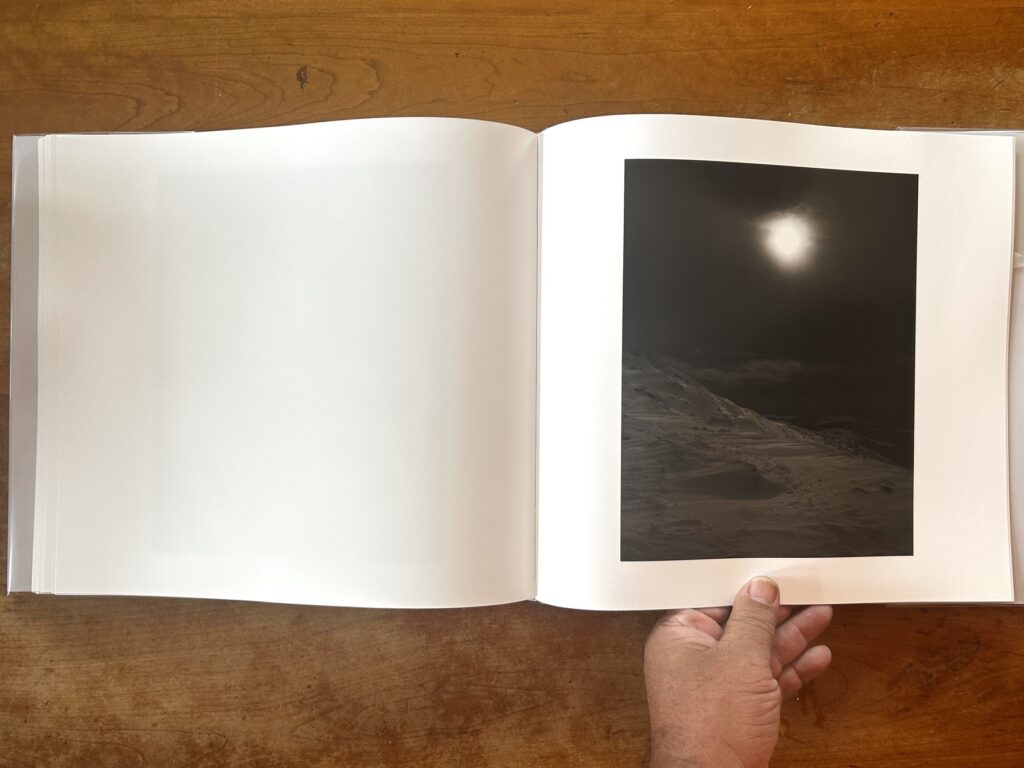
When Shahrokhshahi and Sarah Chaplin Espenon were editing Wet Ground, they loosely categorized such outliers under the label “Ukraine, I guess?” This phrase was a catch-all for visual oddities which hinted at the nation’s character, posing questions through murky narratives. These photographs show “Ukraine, I guess?” But it’s impossible to identify precisely who, where, what, or when. Loose Joints’ decision to excise captions or essays from the book only adds to the enigma (the book’s only text is a poem by Charlotte Shevchenko Knight). Presumably some were shot pre-invasion, and some after. Some pictures reference battle imagery, while most do not. Shahrokhshahi and Espenon have smoothed over the pesky details. Deftly sequenced and stripped of context, the photographs operate independently, without mediation.
This strategy would fall flat if the images did not stand on their own. But Aria Shahrokhshahi is a very strong photographer. He’s embellished his natural talent through a budding commercial career to hone a keen eye for subject matter, composition, and incongruities. His wide social Ukrainian social network and natural curiosity lead him to rich subject matter. When translated into monochrome, his documentary-adjacent style falls somewhere in the ballpark of Alessandra Sanguinetti’s Some Say Ice, Alec Soth’s Songbook (reviewed here), or Eli Durst’s The Community (reviewed here). These predecessors were also built on stellar photography (uncaptioned for ambiguous effect, like Wet Ground), while probing the hidden fissures of society and the human condition. But their subjects were stable and somewhat predictable. Wet Ground attempts a similar approach on cultural roller skates, under fire, in a distant country.
Despite these hurdles, Wet Ground goes a long way to capturing the Ukrainian zeitgeist. As of this writing, the nation’s fate is uncertain and its citizens are in limbo. The war may end soon, or it may last indefinitely. It must be difficult to plan future events, buildings, finances, harvests, or even dentist appointments. Wet ground indeed. This book—shot and published during a period of extreme flux—carries a whiff of fate and an undertone of optimism. Wherever Ukraine is in five or ten years, Wet Ground will surely become an interesting time piece. For the time being, it marks the beginning of a promising photo career.
Collector’s POV: Aria Shahrokhshahi does not appear to have consistent gallery representation at this time, although this body of work was recently shown at the Rectangle Room in New York (here) and he is represented commercially by Object & Animal (here). As a result, interested collectors should likely connect with the artist via his website (linked in the sidebar).




I sometimes wonder if there are any photographers working in places like Donetsk during this proxy war. If there are, would their experience, which may be remarkably similar, ever make it to the West?