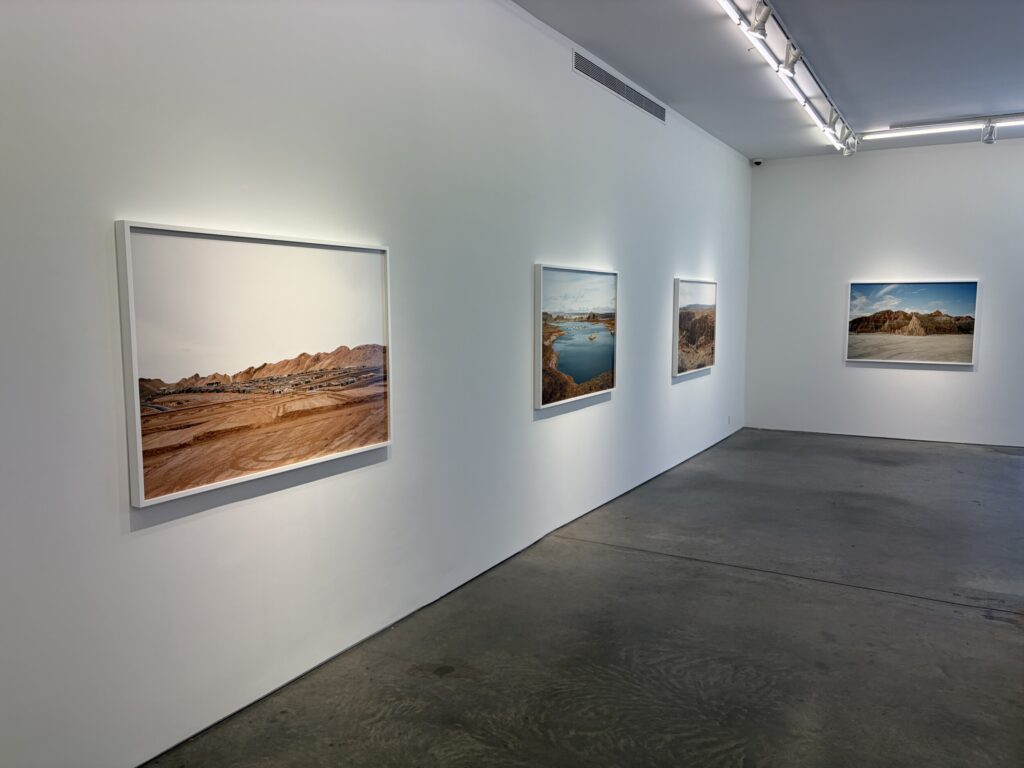
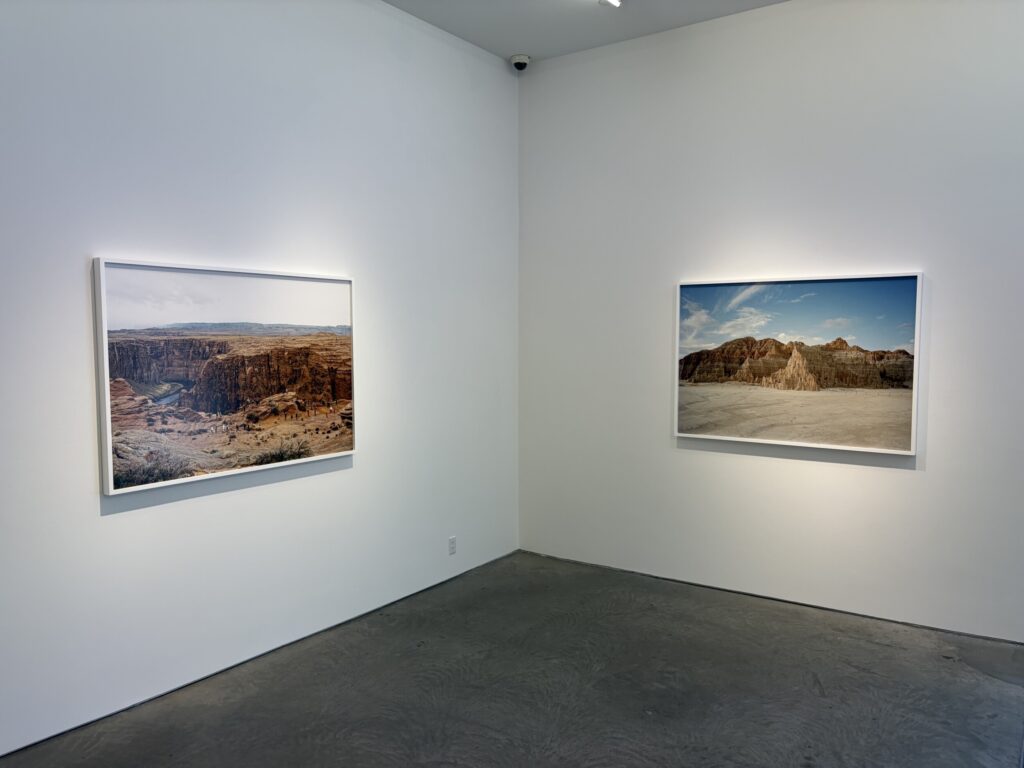
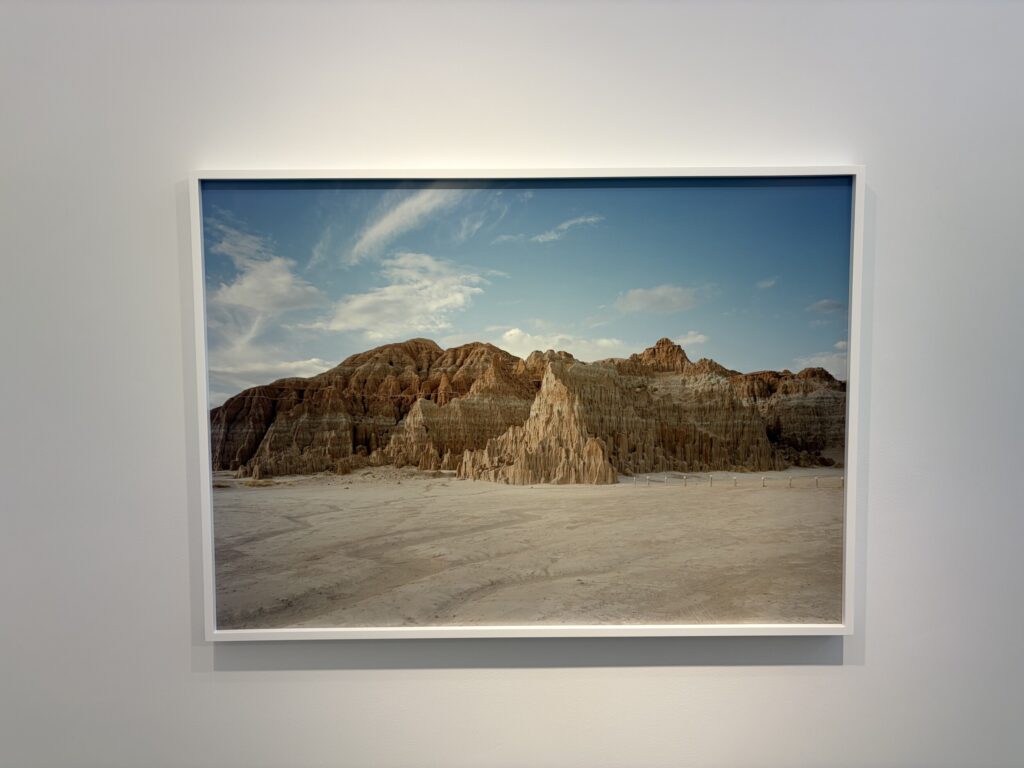
JTF (just the facts): A total of 7 large scale color photographs, framed in white and unmatted, and hung against white walls in the main gallery space. All of the works are archival pigment prints, made in 2023 or 2024. Physical sizes are either roughly 40×56 inches (in editions of 5) or 56×78 inches (in editions of 3). (Installation and detail shots below.)
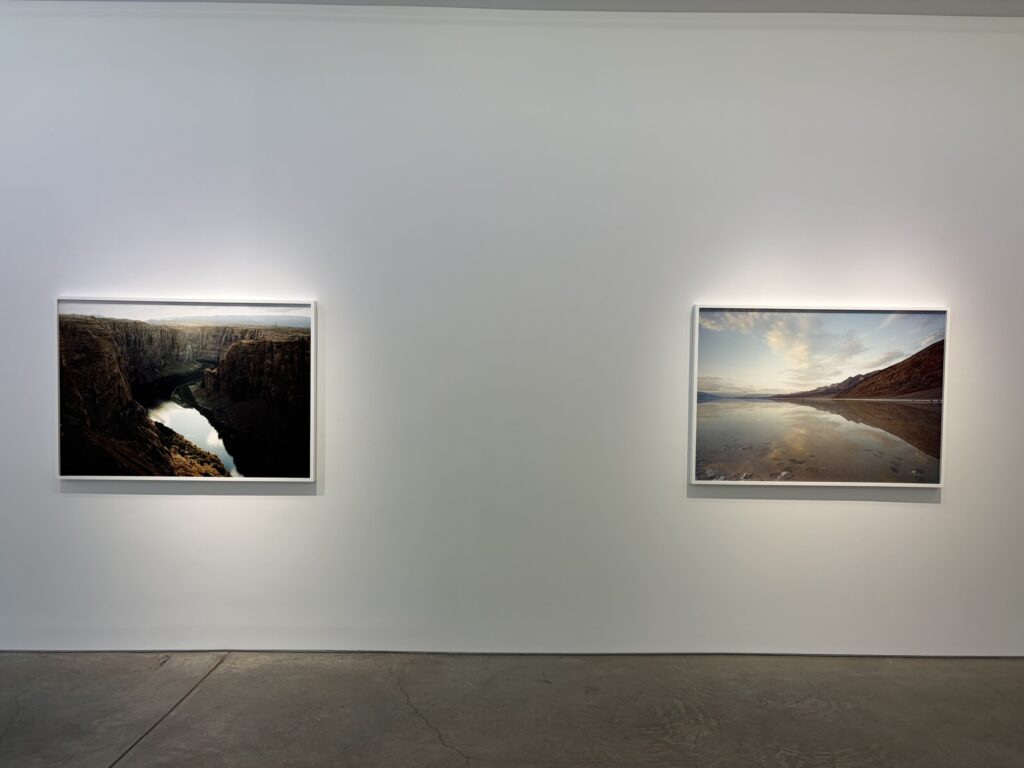
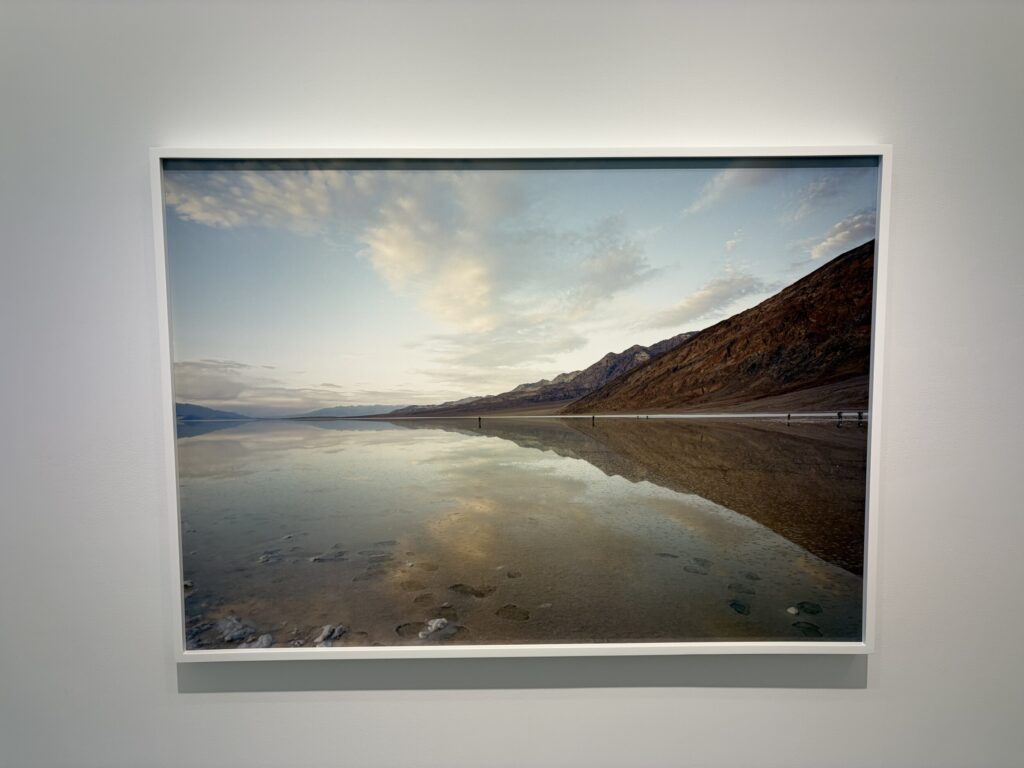
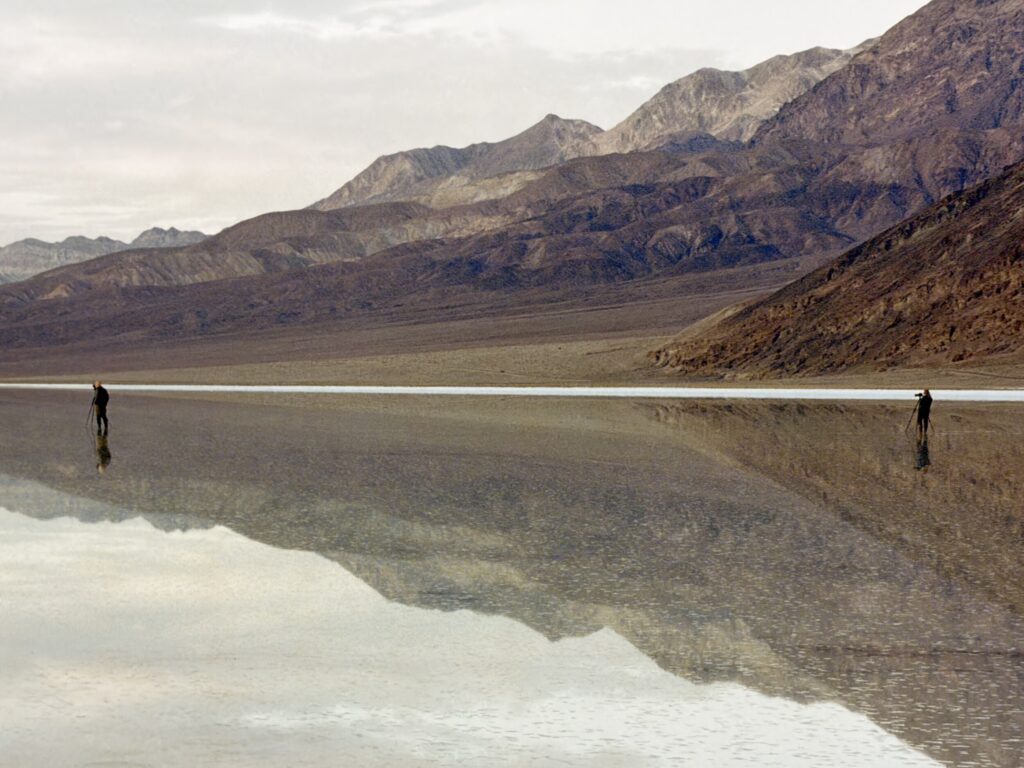
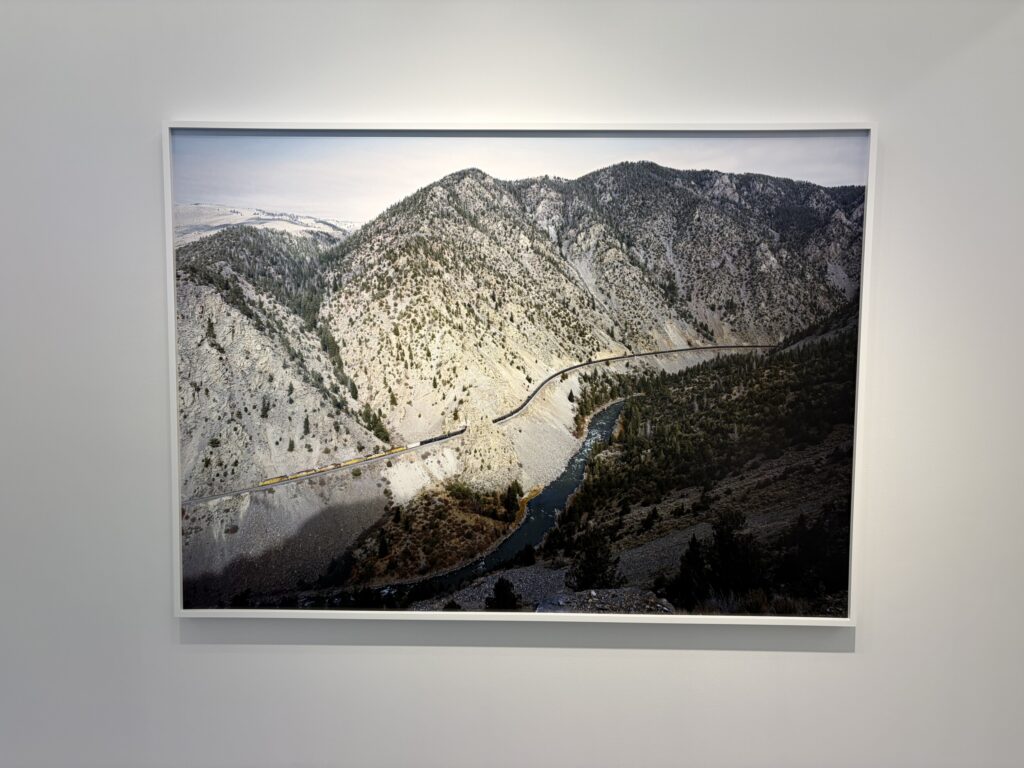
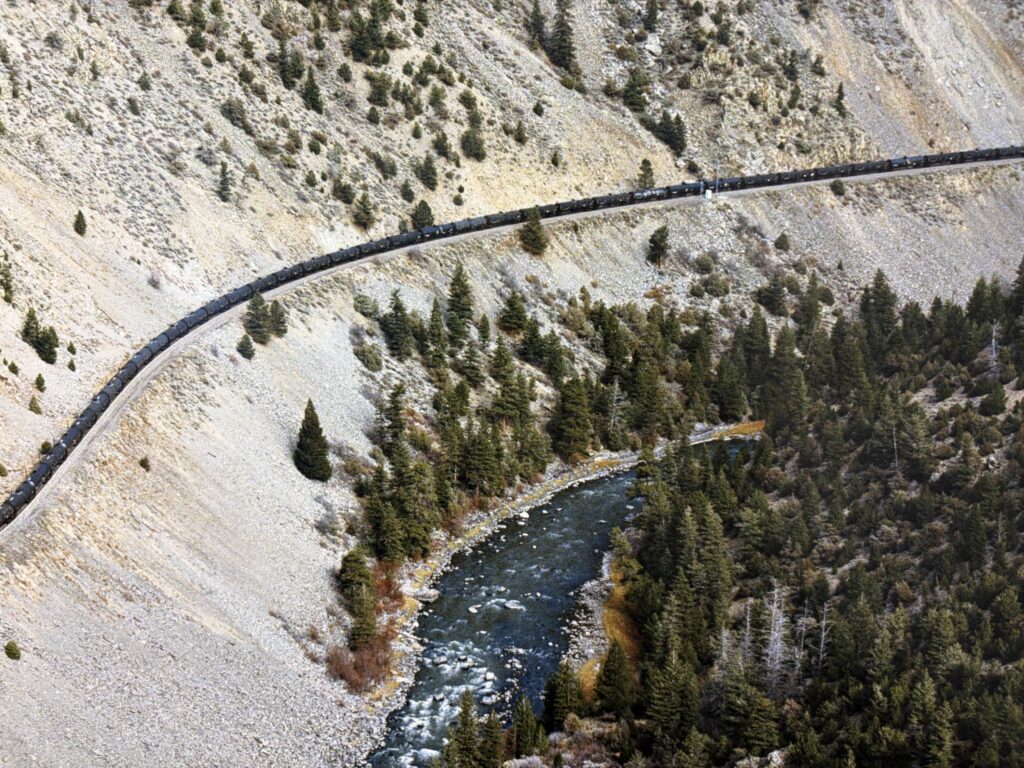
Comments/Context: Lake Manly lies in a place called Badwater Basin, at the lowest point in Death Valley National Park in California. Calling it a lake is perhaps somewhat of a misnomer, as it’s a temporary body of water that forms in the salt flats, one that gathers after heavy rains, only ever reaches a depth of a foot or so (even though it stretches for a length of some six miles), and then generally evaporates soon after it appears. After Hurricane Hilary hit the southwest US with drenching rain in the summer of 2023, the remnants of the storm washed over Death Valley and Lake Manly formed once again, which is when Victoria Sambunaris had a chance to photograph there.
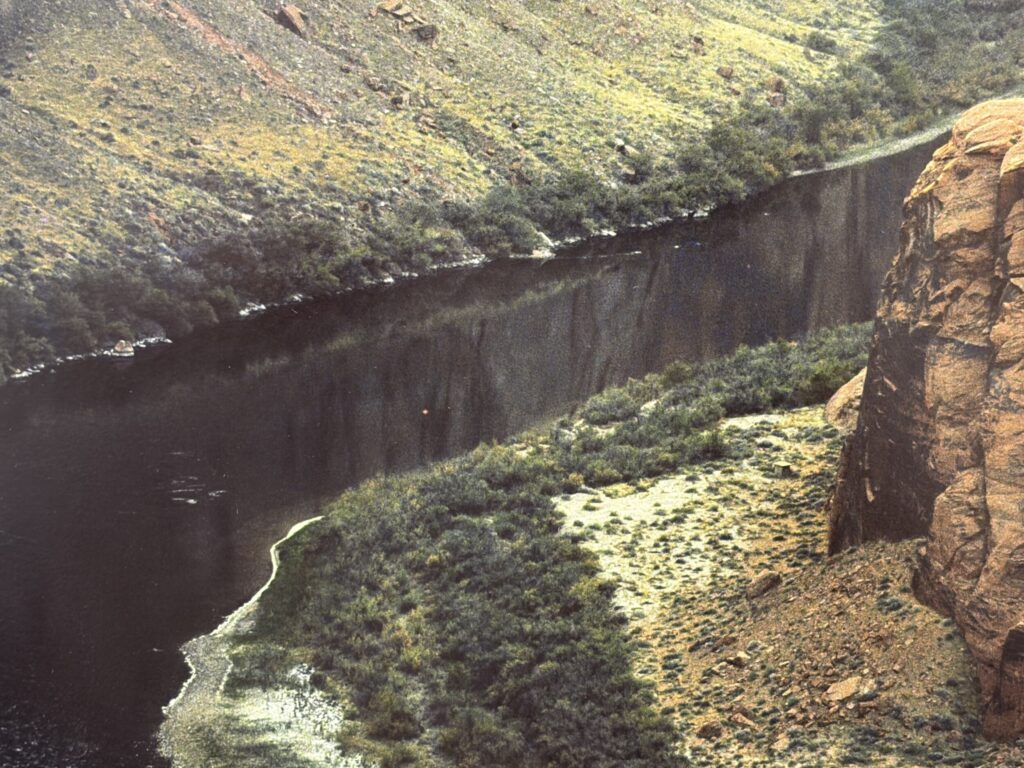
Sambunaris has spent the better part of the past two decades making large format photographs across the American West, with a recent emphasis on the Colorado River system (that touches seven states) and the changes taking place in the landscape as the water becomes increasingly scarce. This show brings together works made during trips to the region in 2023 and 2024, covering northeast Colorado all the way down to the Mexican border in California and Arizona. Her photographs are a study of both the presence and absence of water, often with visible human intervention (from powerlines and railcuts to housing developments and tourist facilities) added to overall compositional mix.
From afar, her Lake Manly picture recalls plenty of lake landscape views, with the water providing a perfect reflection of the nearby hills and the scattering of clouds overhead, the picture neatly bisected into two matched halves. But up close, a few perplexing figures provide a strange interruption – they appear to be standing on the water. As it turns out, since the water is so shallow, they’ve simply walked out into the lake, some bringing their tripods and cameras to make photographs, presumably just like Sambunaris. So not only is Sambunaris’s picture a lyrical study of ephemeral water, it also has an “inside photography” disruption, with humans intruding into the perfection of the natural setup to get their desired vistas.
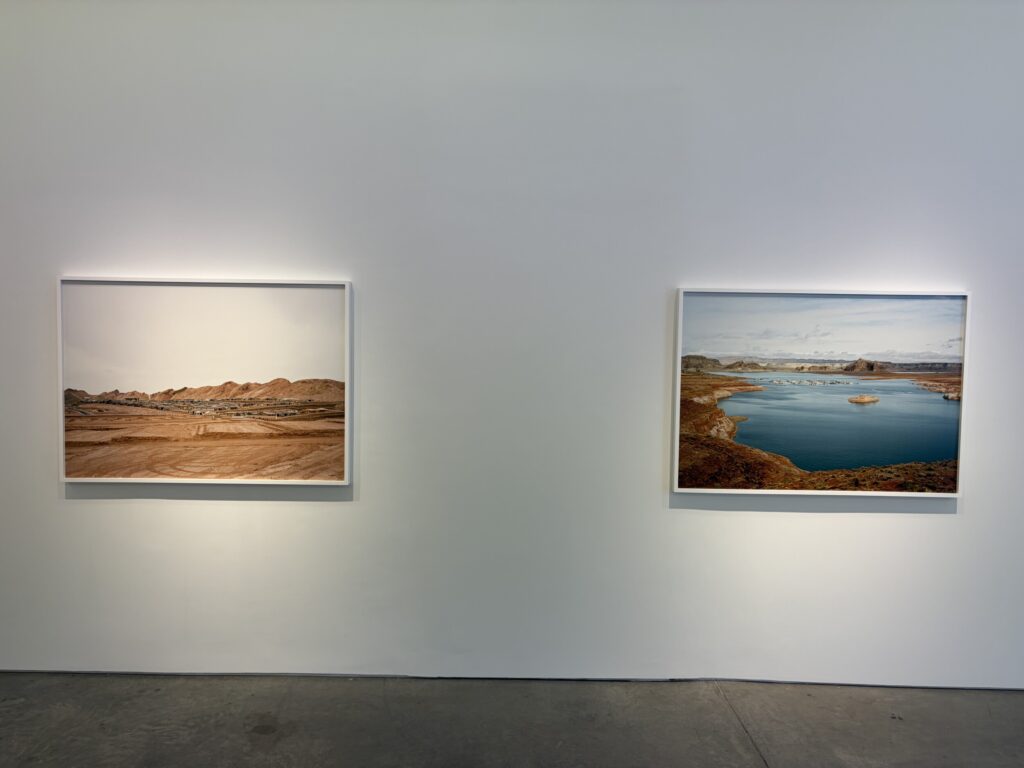
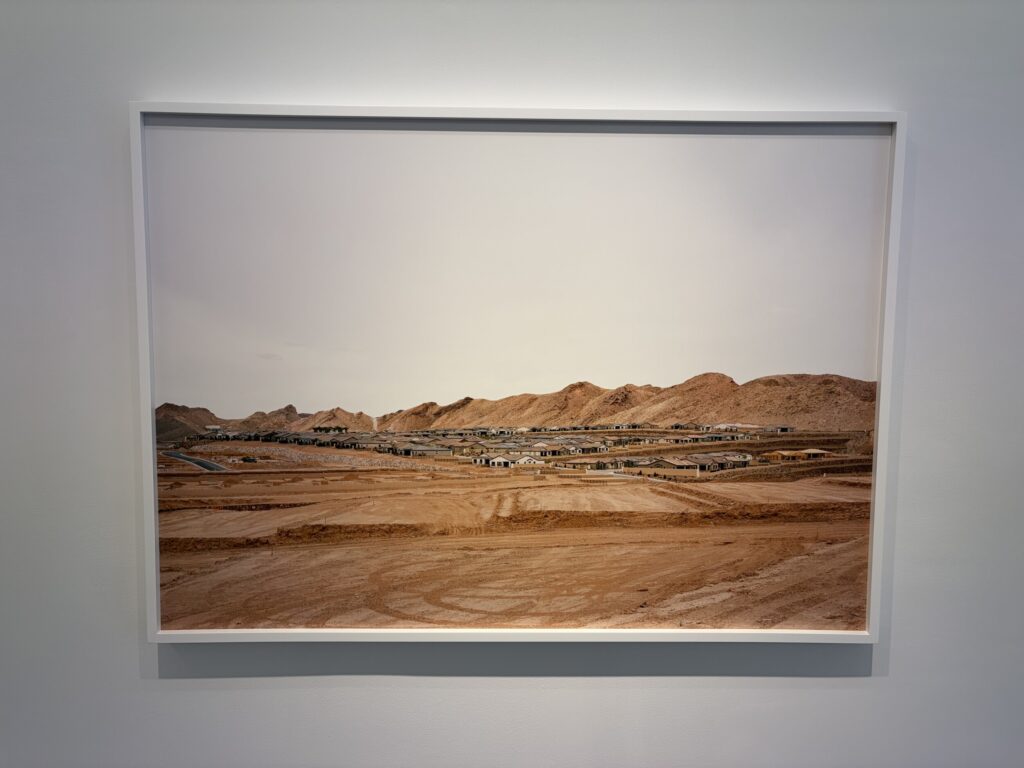
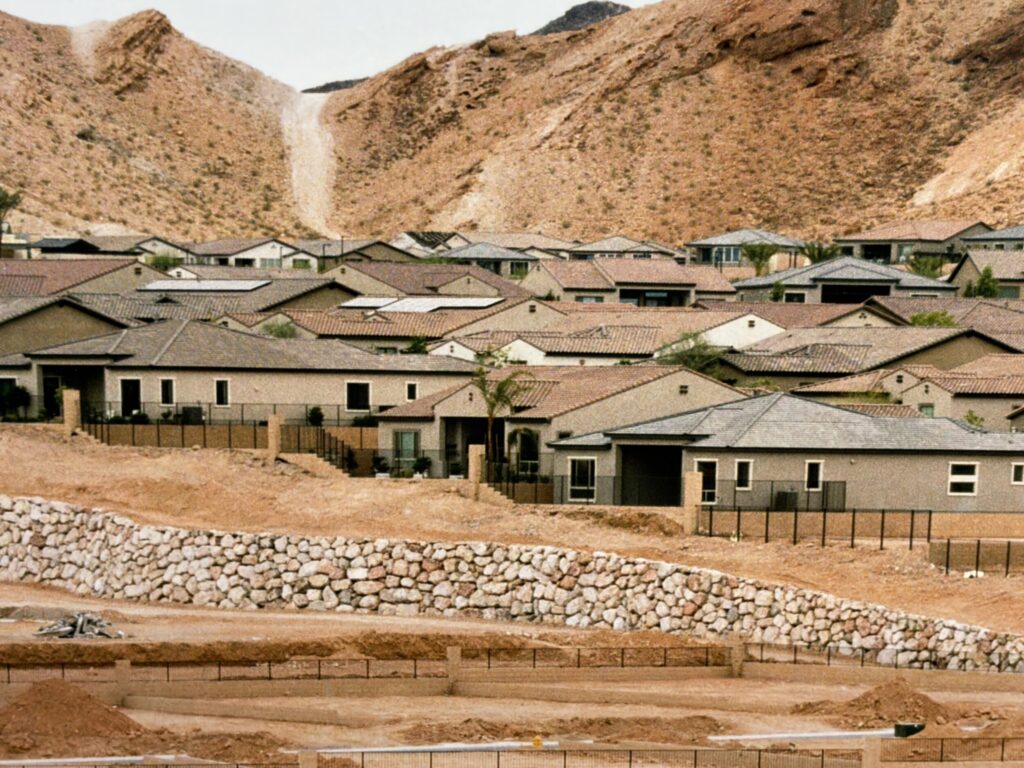
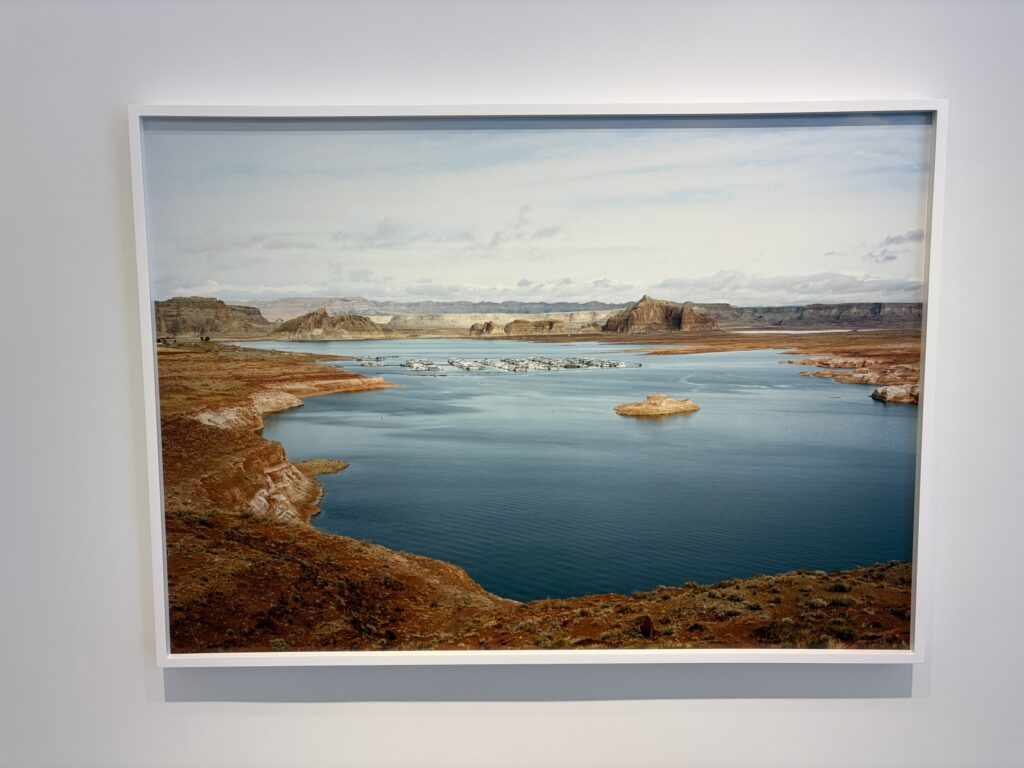
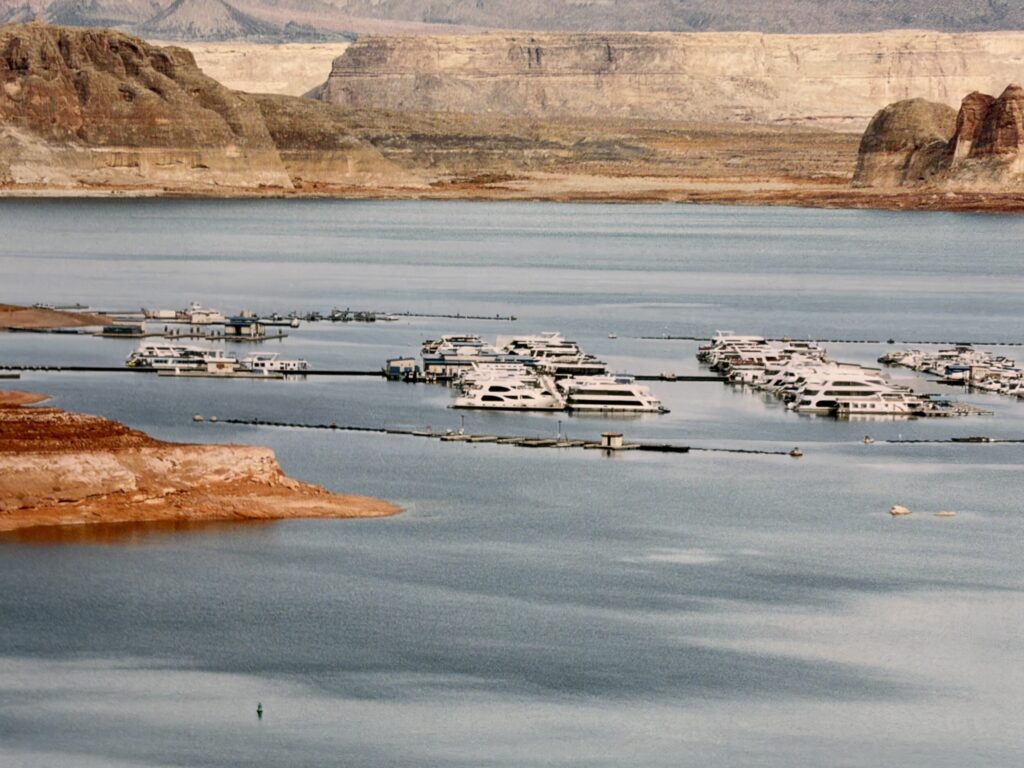
Several other pictures offer expansive desert or drying views similarly interrupted by human settlement. A new housing development in Henderson, Nevada, seems implausibly located in an empty area of dirt, with new rock walls terracing the land for the houses – with no water in sight, one wonders about the sustainability of the whole endeavor. Long term durability is similarly in question in a view of Lake Powell in Arizona, where the water has clearly dropped dozens of feet over recent years, leaving the marina filled with fancy yachts all the more precariously placed.
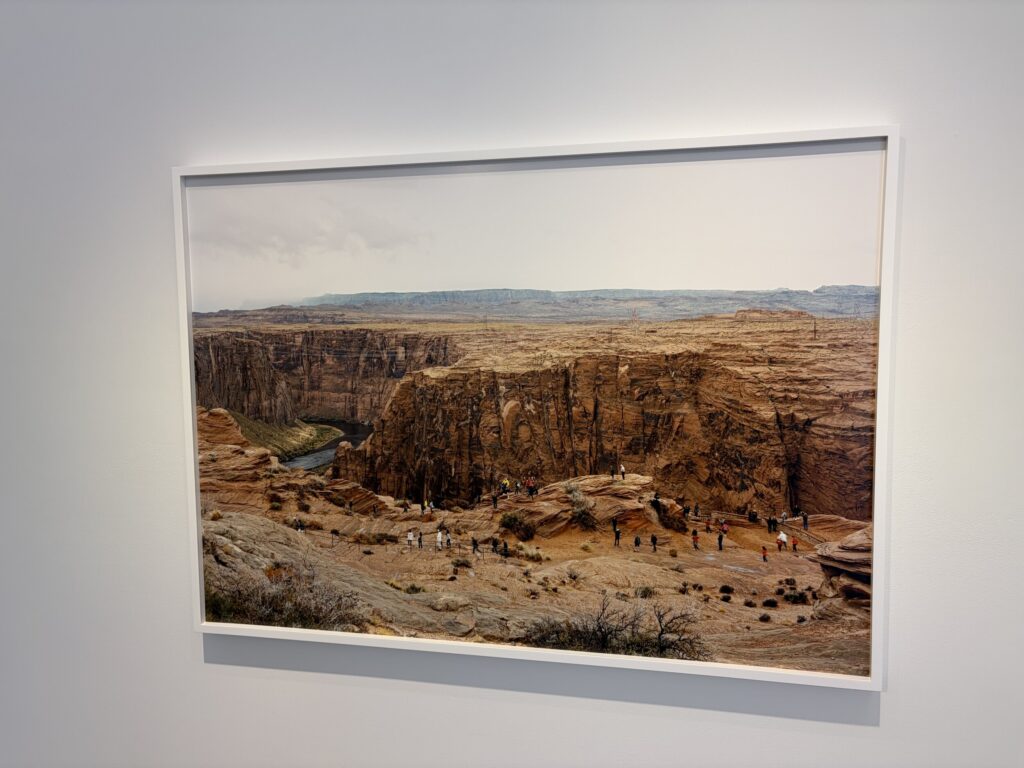
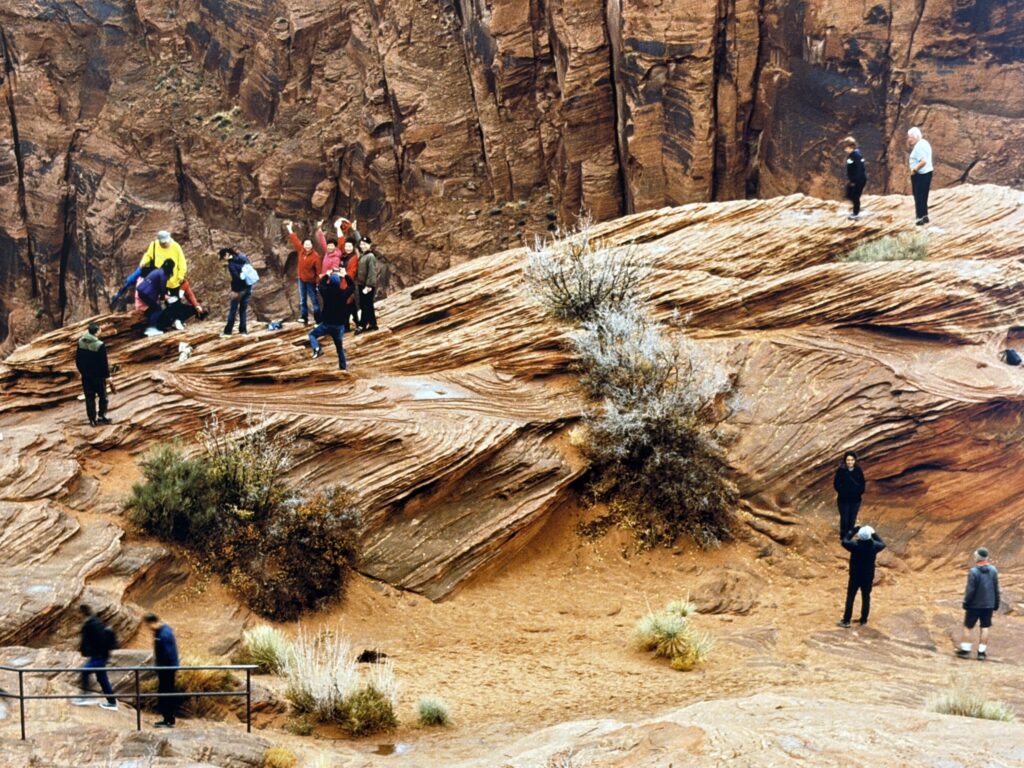
Sambunaris takes a page out of Massimo Vitali’s compositional playbook with an elevated view of Glen Canyon in Arizona. Looking down on the rocky depths of the canyon, her camera captures groups of tourists clumped in groups near a lookout area, posing, making photographs of the themselves, and generally taking in the grandeur of the site. From her elevated position, and given the scale of the surroundings, they look like fragile ants, with several separate human stories, experiences, and Instagram-able moments layered on top of the unforgiving landscape.
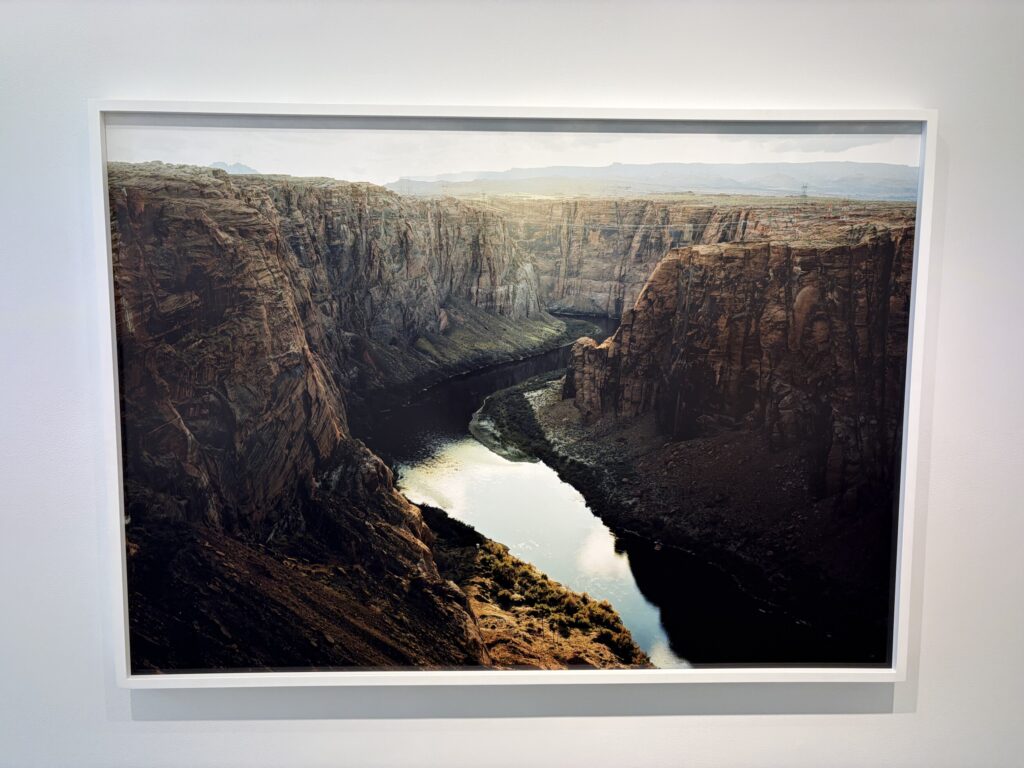
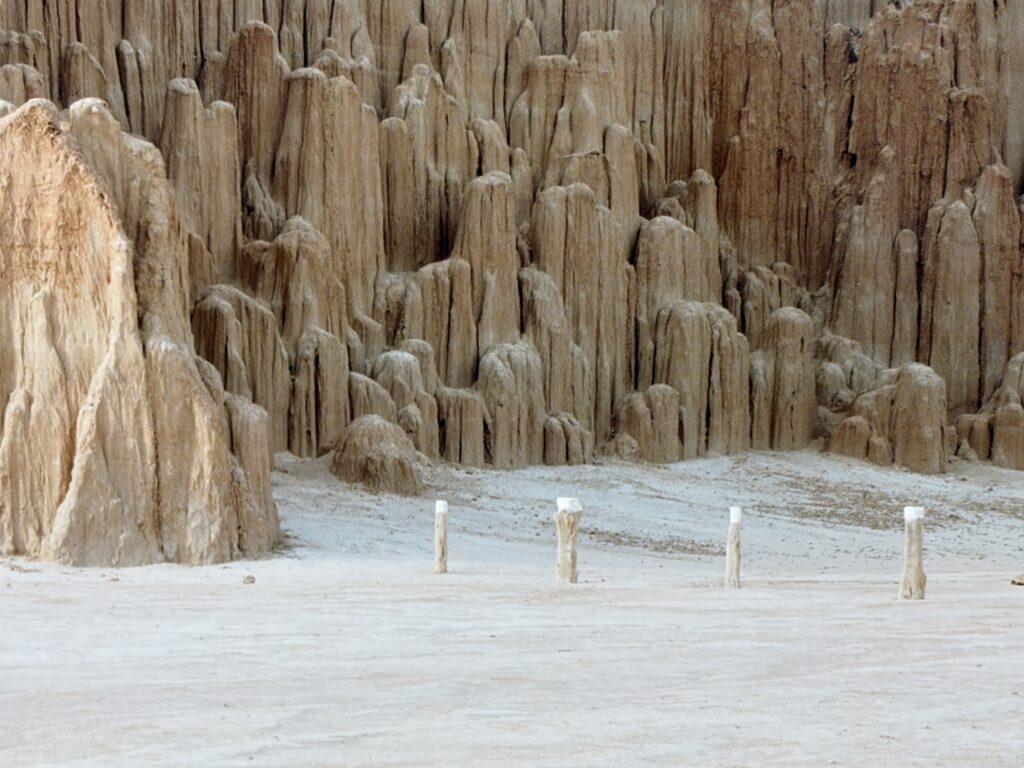
The other images on view in this show are similarly decorated by small human details. A line of a long freight train snakes through Gore Valley in Colorado, the rails perched on a steep rocky hillside seemingly ready to tumble into the river below. A series of white painted posts marks the edge of the bentonite formations at Cathedral Gorge in Nevada, the lack of water all too clear from the surreally eroded spires. And tiny electrical wires reach across another spot at Glen Canyon, hardly seeming strong enough to withstand the forces that carved out the canyon in the first place. Again and again, Sambunaris uses grand scale to put humans in their place, the vastness of the land always far more powerful than any man-made attempts at controlling it.
As climate change makes the drought situation in the American West all the more perilous, Sambunaris’s photographs are taking on more bite. It’s clear that she’s been conceptually (and perhaps literally) following in the footsteps of the 19th century survey photographers, but now as those landscapes are no longer pristine and are under more constant threat, there is more urgency to her efforts. These newest images feel more charged than many of her earlier works, with more at stake in the frictions they document. With the technical nuances of her large format camera long ago mastered, she’s now faced with the mature challenge of figuring out what landscape stories she really wants to tell. The pictures in “Fall Line” signal a more active stance, and the potential for more photographs that bristle and poke just as much as they seduce.
Collector’s POV: The prints in this show are priced at $15000 and $22000 each, based on size. Sambunaris’s work has little secondary market history at this point, so gallery retail likely remains the best option for those collectors interested in following up.