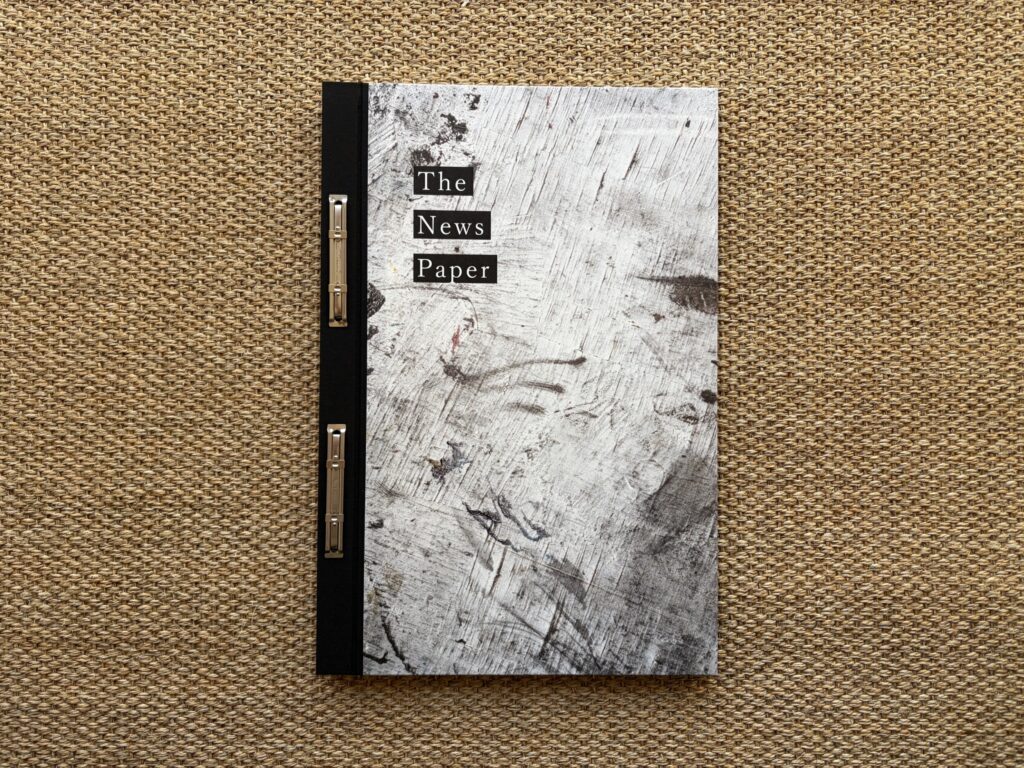
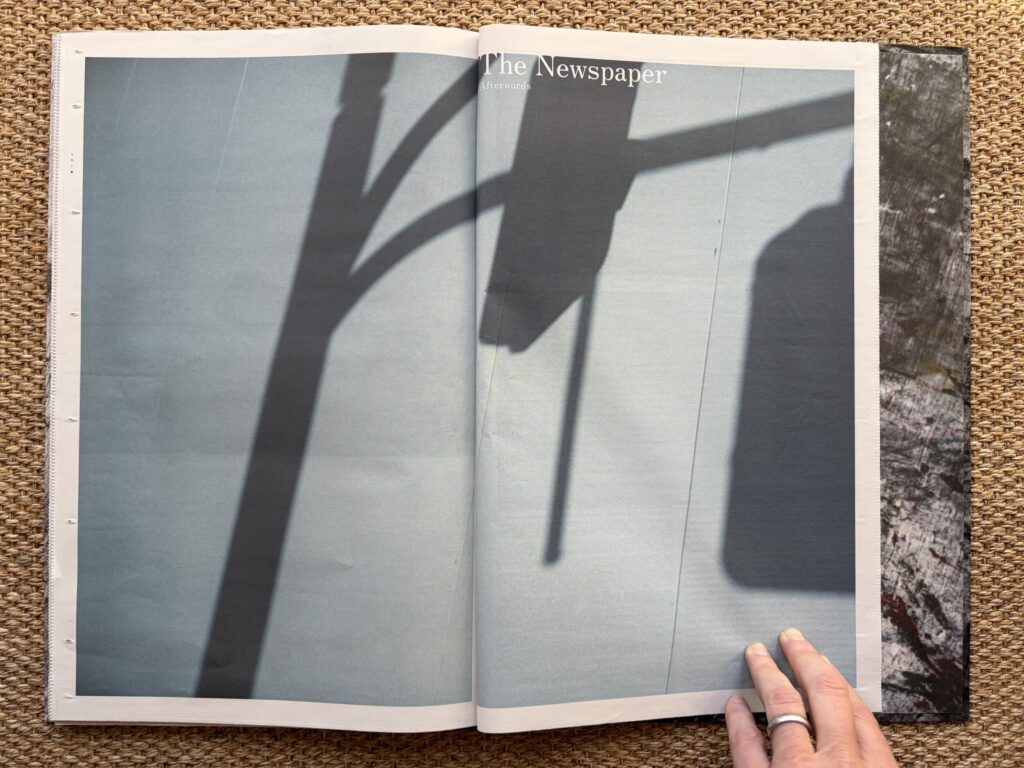
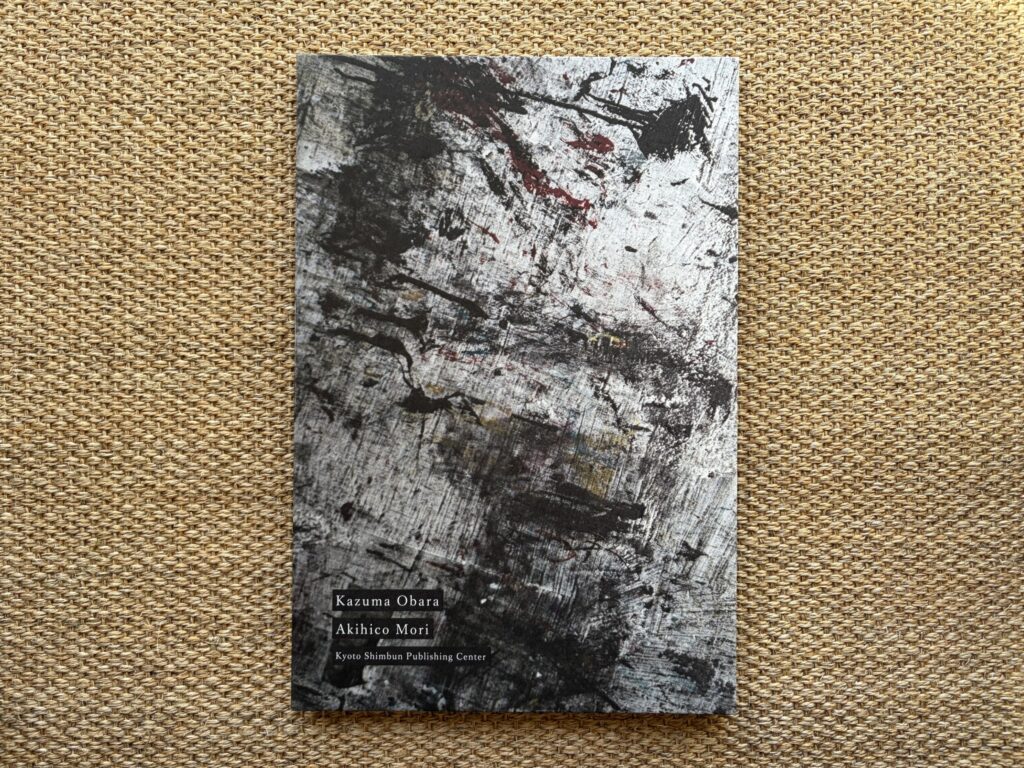
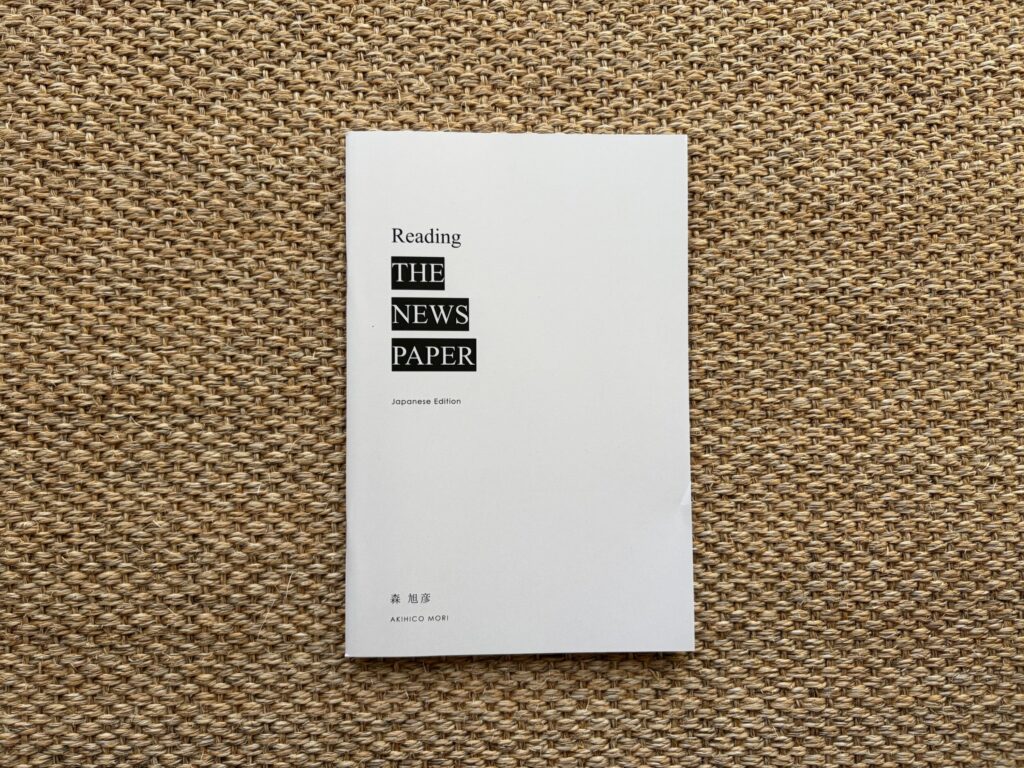
JTF (just the facts): Published in 2026 by Kyoto Shimbun Publishing Center and distributed by Editorial RM (here); also available on a dedicated website for the publication (here). Hardcover with brass fasteners, 412×278 mm, 209 pages separated into 13 booklets printed on newsprint, with 151 image reproductions by Kazuma Obara. Includes various interviews and an essay by Akihico Mori. In English, with Japanese translations provided in a separate booklet. (Cover and spread shots below.)
The photobook is divided into the following sections:
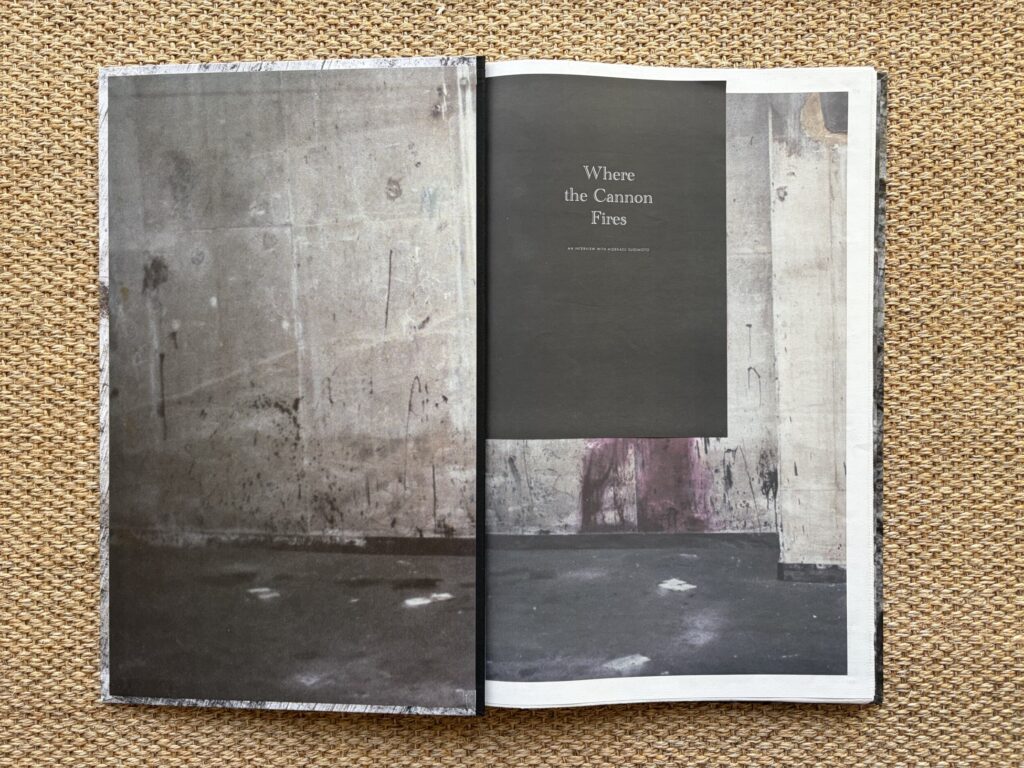
- Where the Cannon Fires (interview with Hidekazu Sugimoto)
- Power and the Press (17 images)
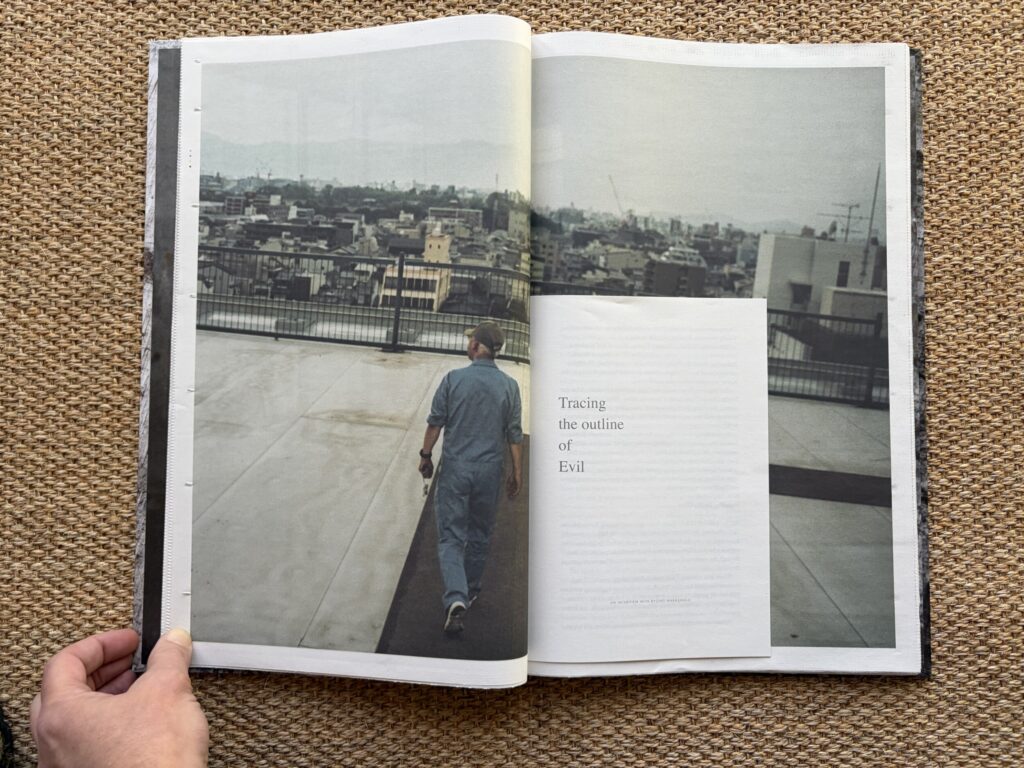
- Tracing the outline of Evil (interview with Ryohei Nakashioji)
- How to Report from Science’s Backyard (interview with Kazutaka Hirose)
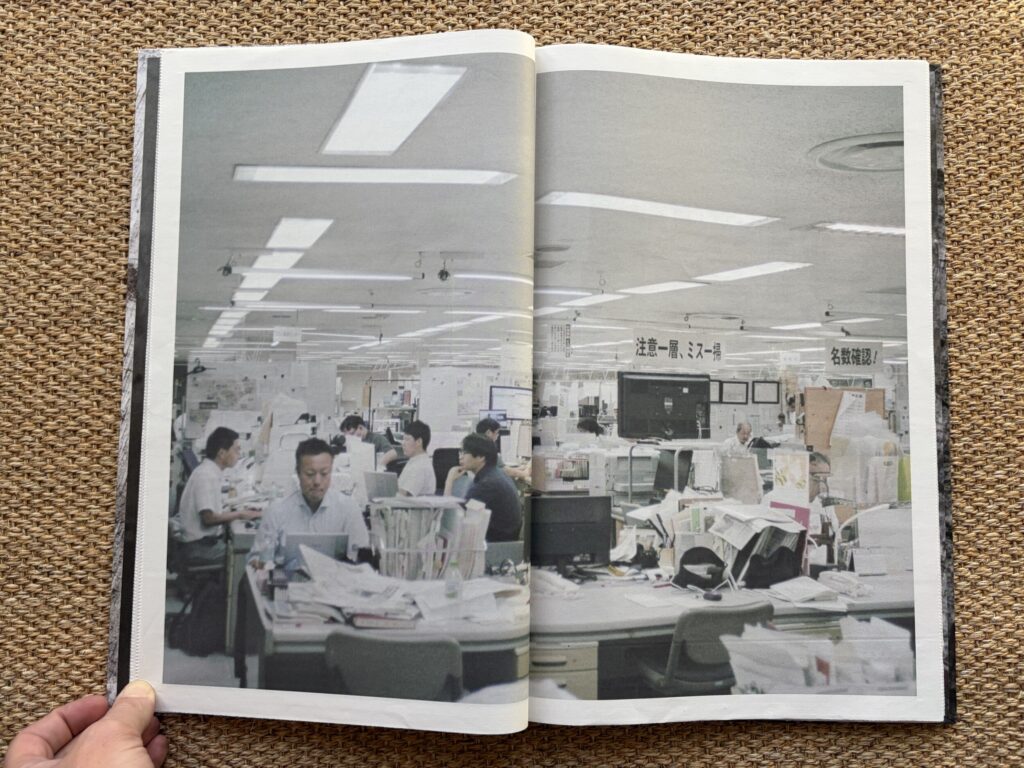
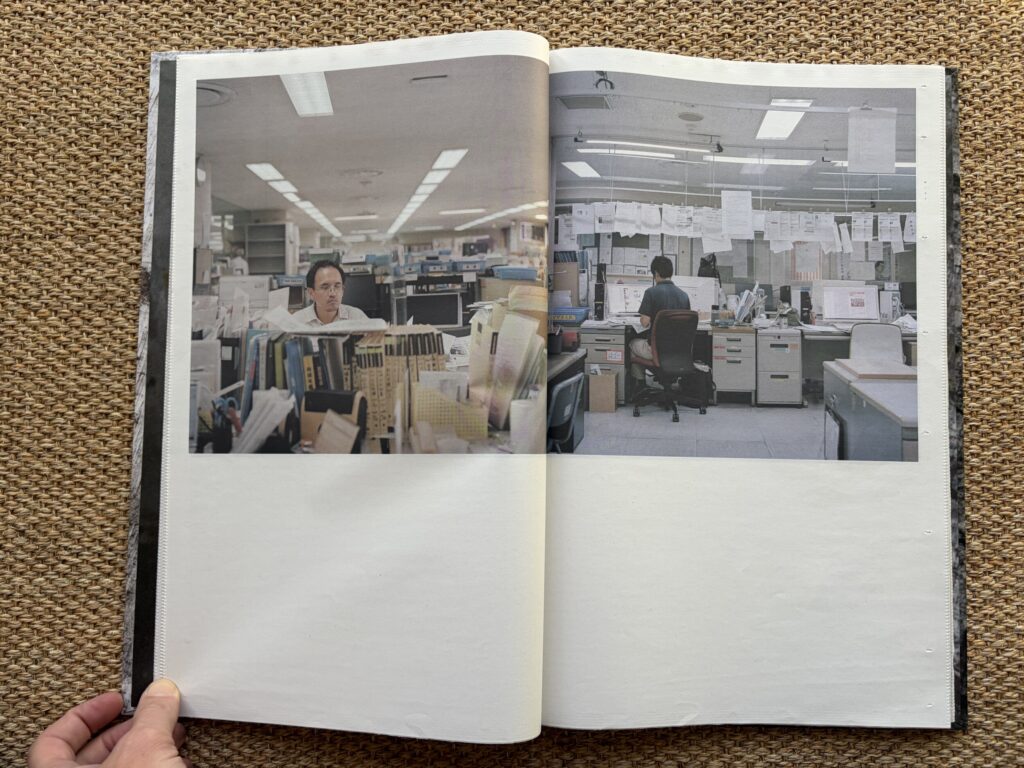
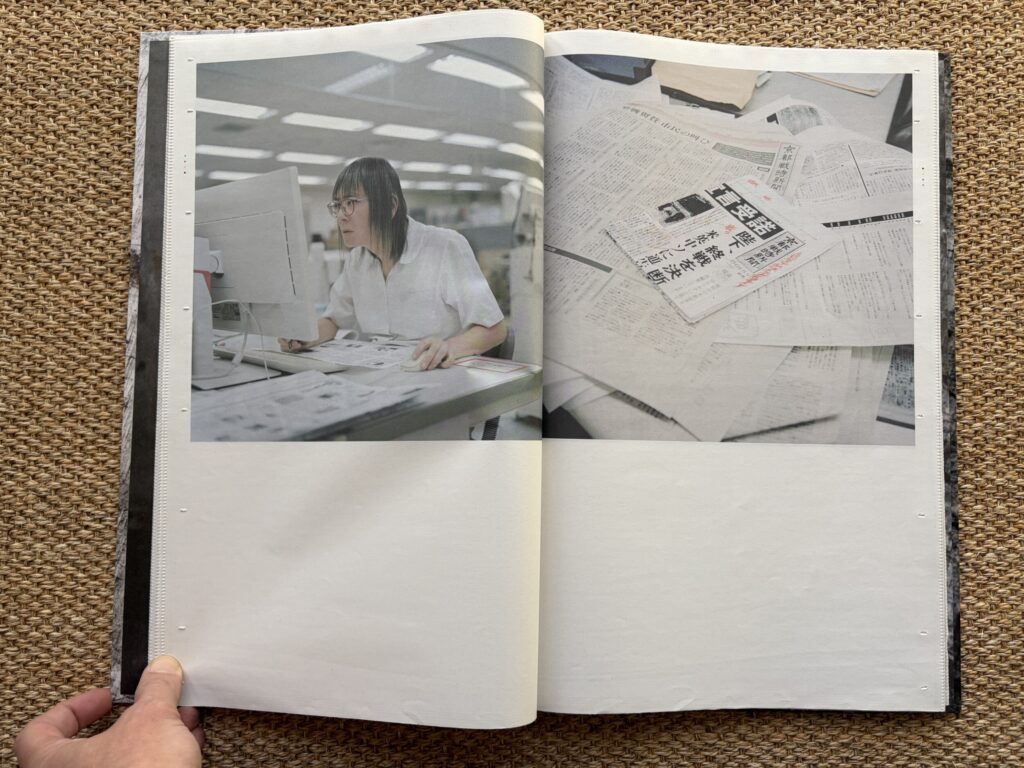
- The Newsroom (33 images)
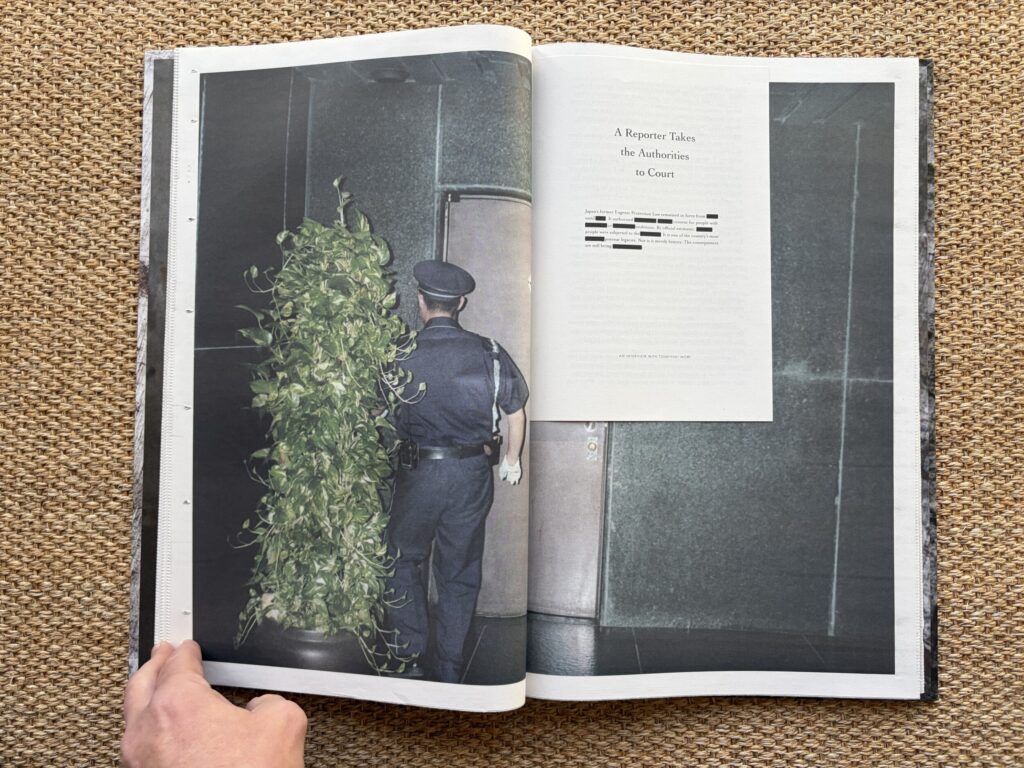
- A Reporter Takes the Authorities to Court (interview with Toshiyuki Mori)
- Infrastructure (23 images)
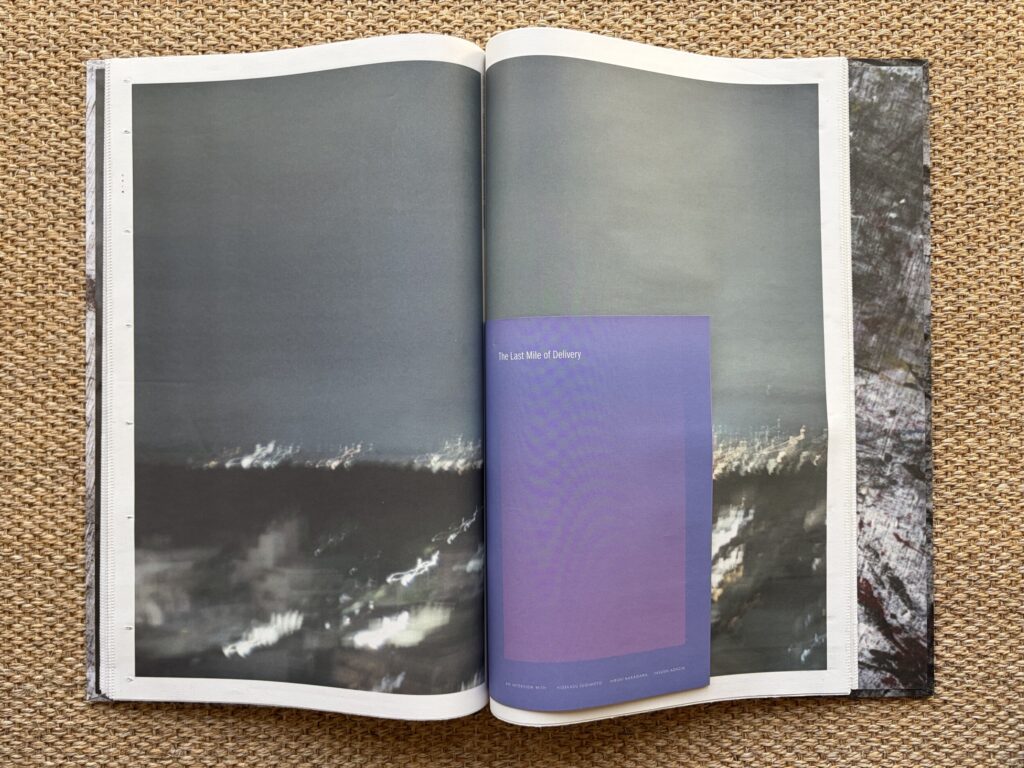
- The Last Mile of Delivery (interview with Hidekazu Sugimoto, Hiroki Nakagawa, Yasushi Adachi)
- A Newspaper Love Story (interview with Yasushi Adachi)
- Delivery (32 images)
- Another Gion Festival (interview with Shigekatsu Minoura)
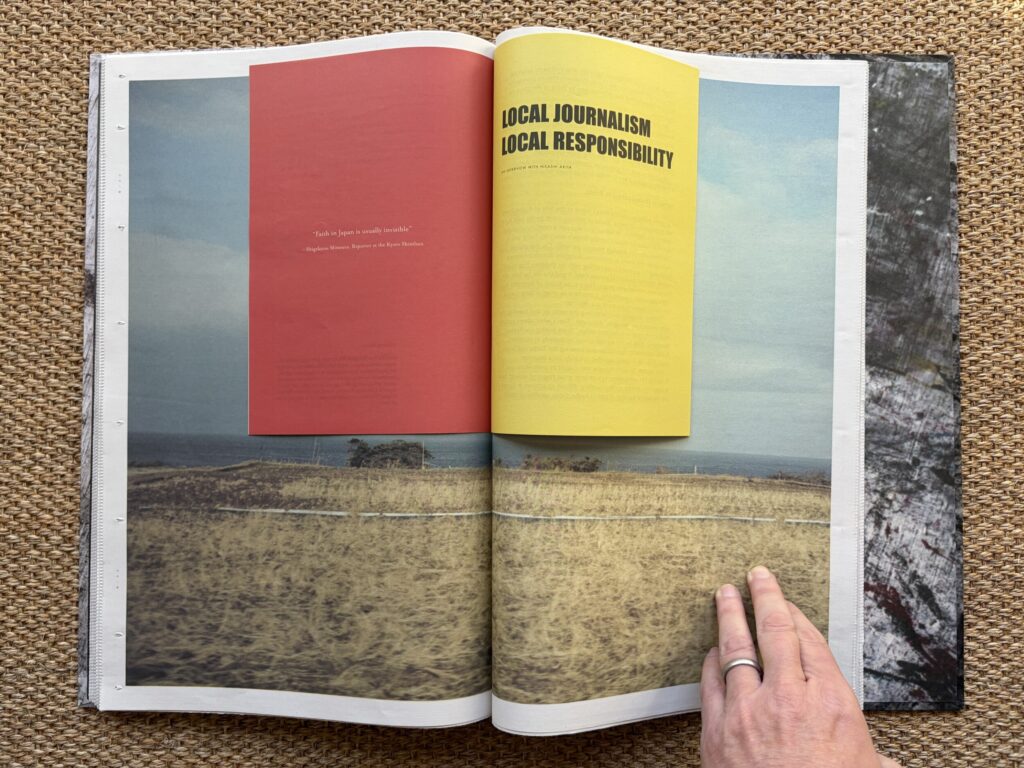
- Local Journalism Local Responsibility (interview with Hisashi Akita)
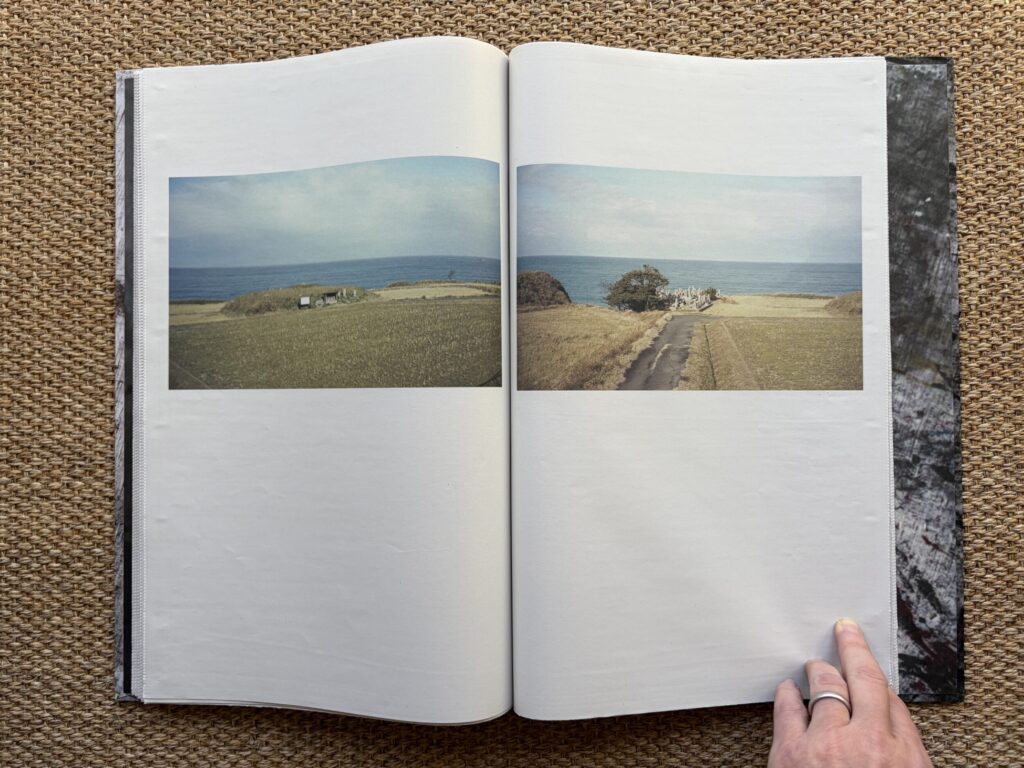
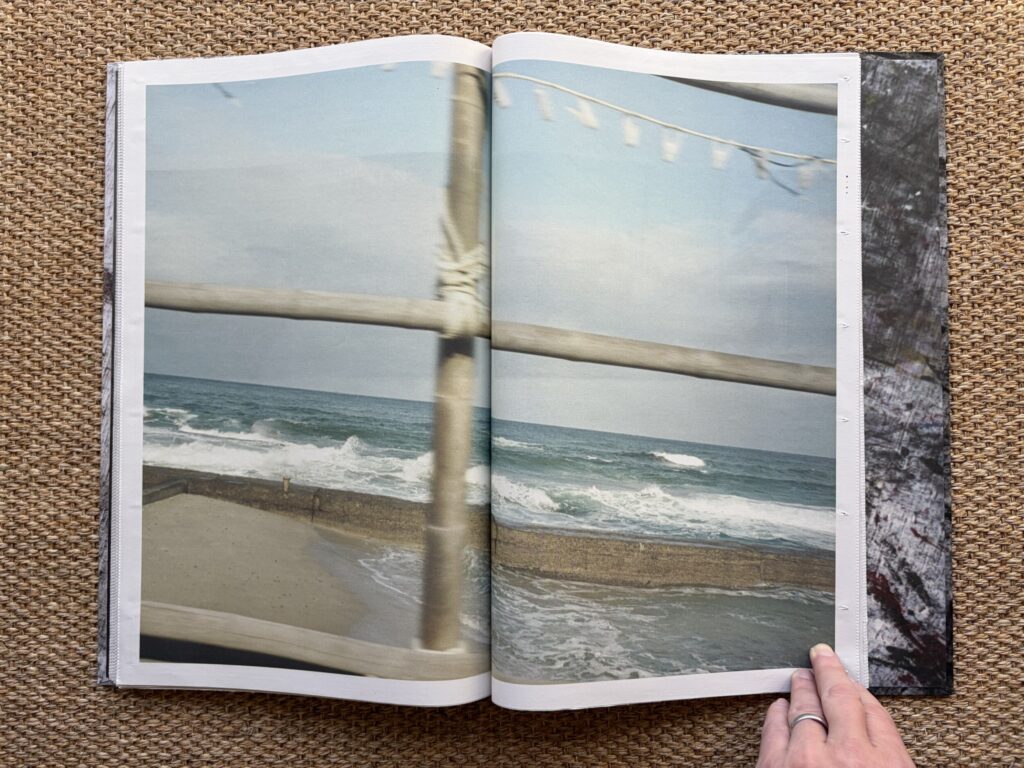
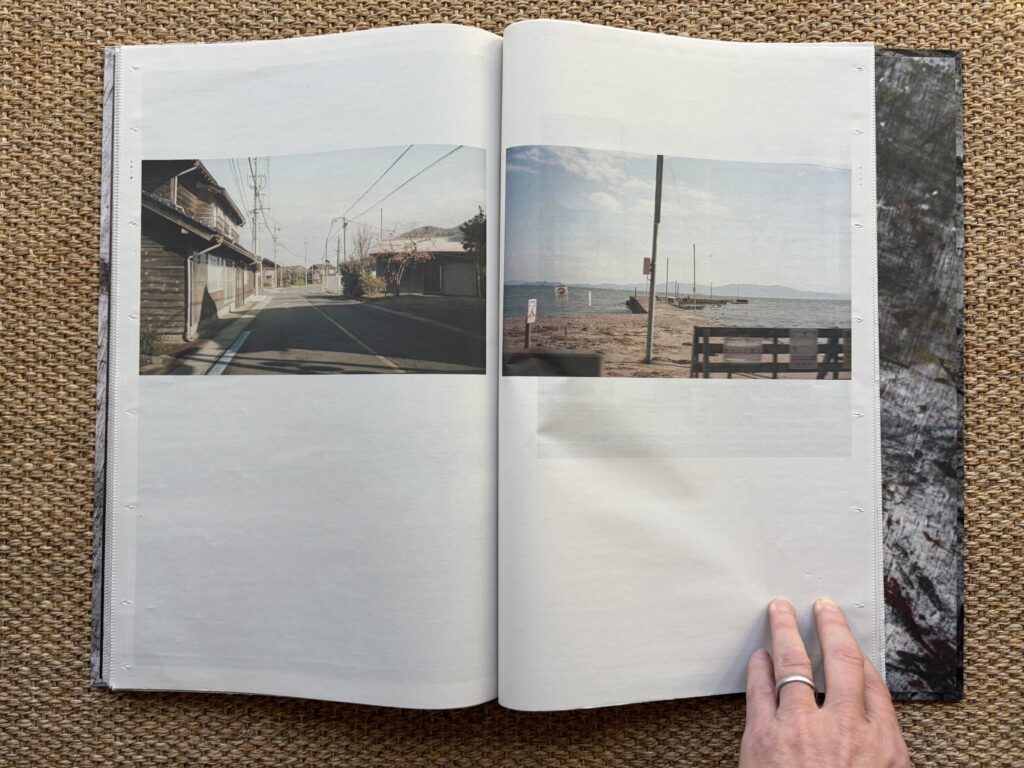
- Landscapes, The Farthest Place the Newspaper Reaches (14 images)
- 1.17 The Newspaper Stood Still (interview with Hidekazu Sugimoto, Satoshi Masuda)
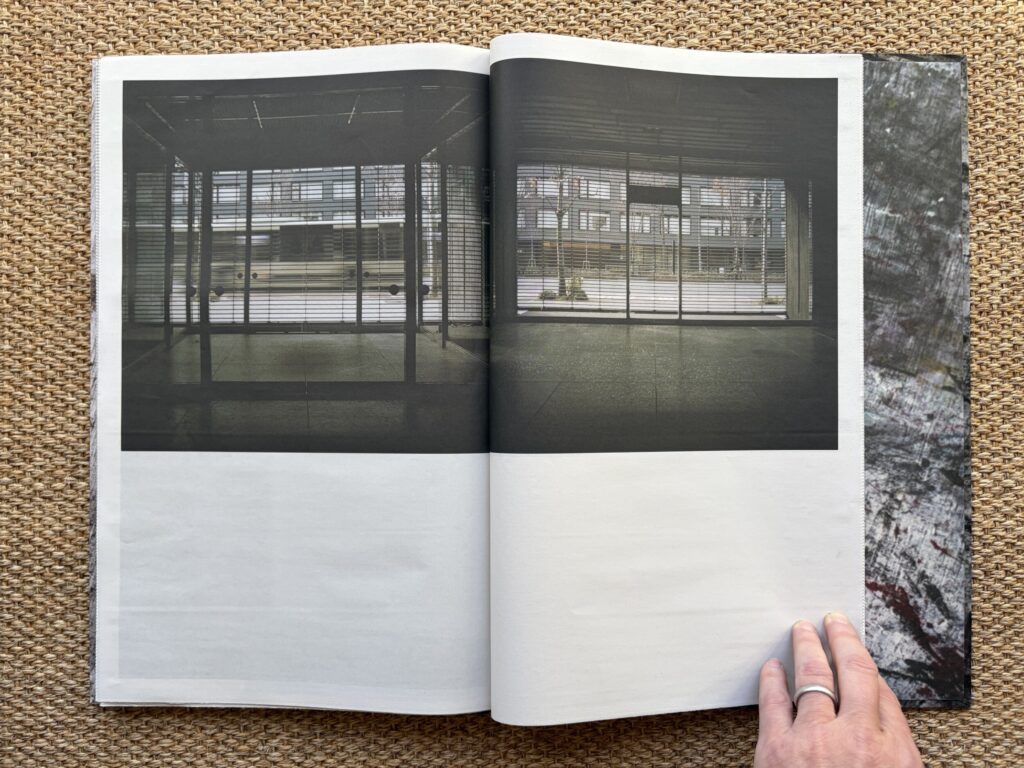
- Relocation (23 images)
- Afterwords (9 images)/Afterword (Akihico Mori)
Comments/Context: It’s no secret that the comprehensive digitization of human culture has been rolling onward for several decades now, leaving in its expanding wake the slow demise of countless printed newspapers, magazines, and other publications. But the seeming inevitability of this relentless changeover doesn’t lessen the impact on specific communities, regions, and subcultures when their devoted publications are no longer delivered in a physical form, or cease to exist altogether. With each and every digital transformation, we lose in-person connections, contexts, and ways of communicating with each other that aren’t quite reproduced online, but the changing economics of advertising just won’t support viable business models for paper-based delivery of information anymore. And so the drumbeat of digitization pounds on.
Local newspapers around the world have been among the hardest hit in this period of transition, with budgets slashed, newsrooms downsized, and printed editions getting smaller and smaller as the maw of the digital beast indiscriminately consumes them. These reductions and deaths have been mourned and memorialized by artists and photographers in different ways, with Will Steacy’s 2015 Deadline (reviewed here) taking the literal form of a full newspaper to investigate, document, and commemorate the closing of the Philadelphia Inquirer. But in some cases, life emerges from death, and for the collaborative team of photographer Kazuma Obara and writer Akihico Mori, the hollowing out of the 140-year old Kyoto Shimbun has been reimagined in the scrappy, guerrilla form of an innovative newspaper zine/photobook. Almost as a counterbalance to the inherent weaknesses and depersonalizations of digital ubiquity, a flourishing zine culture has continued to strengthen in recent years (particularly in Japan), and The Newspaper offers the thoughtful conceptual twist of reimagining the Kyoto Shimbun story as an integrated set of physical newsprint zines actually printed on the newspaper’s printing machines.
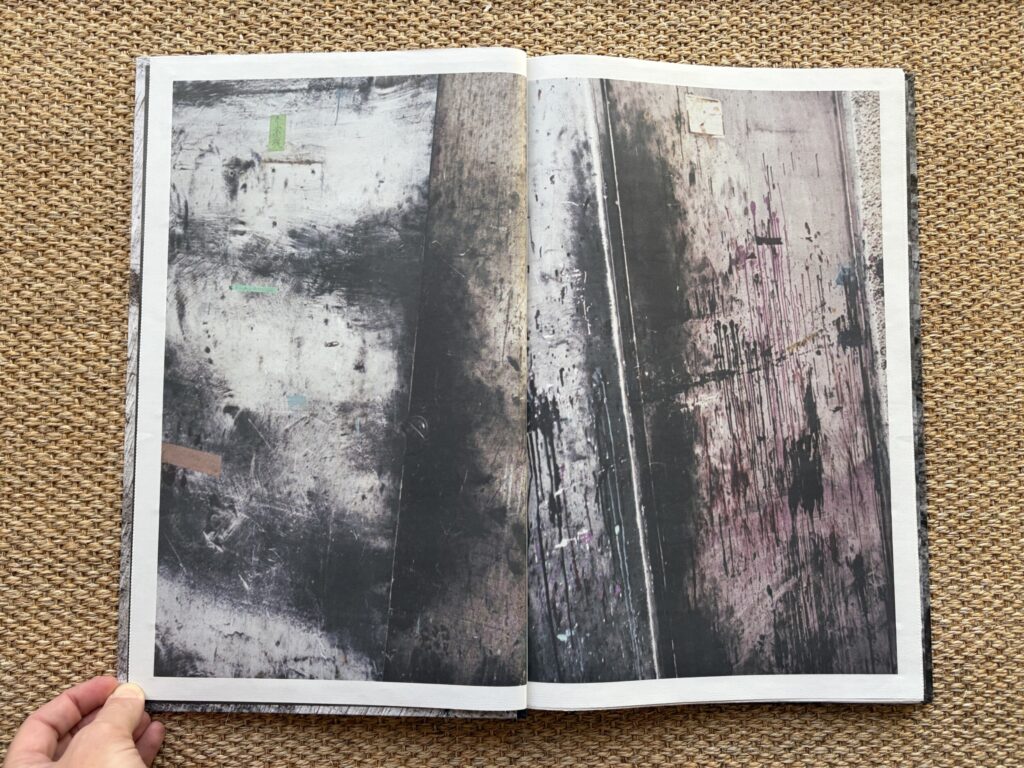
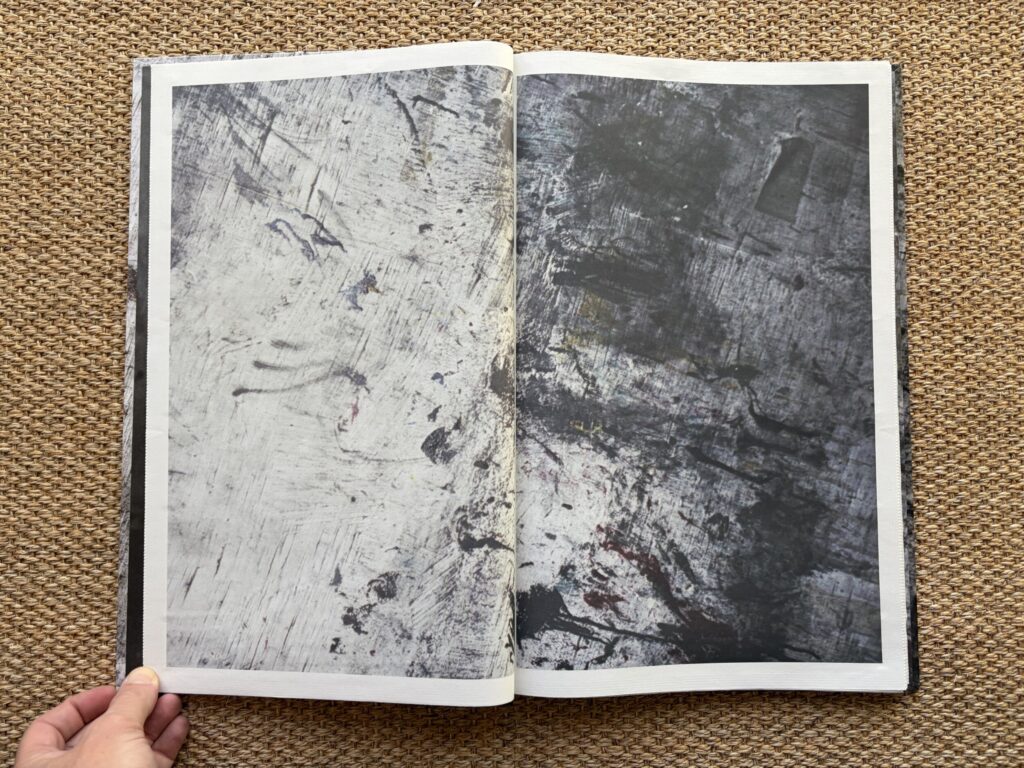
The design of the The Newspaper starts with oversized hard covers (wrapped in imagery) that are held together by metal fasteners; these fasteners allow the book to be easily unbound, encouraging the reader to separate the individual zines out or to reorder them. Inside, the newsprint zines come in two sizes: a full, bordered size that matches the covers (with rough newsprint edges), which is generally used for Obara’s imagery (and for Mori’s afterword), and a smaller text-only size that can be bound into one of the top or bottom brackets on its own. The “book” sequences more than a dozen of these individual self-contained zines together into an integrated whole, creating an obvious progression and a thoughtful interplay between image and text.
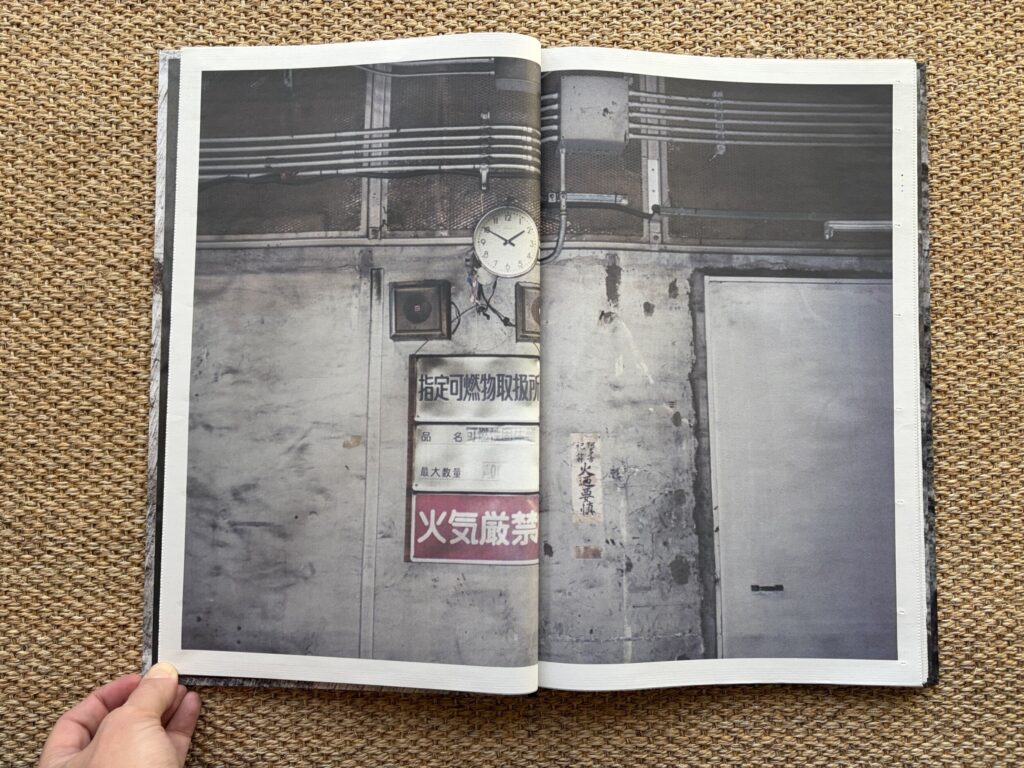
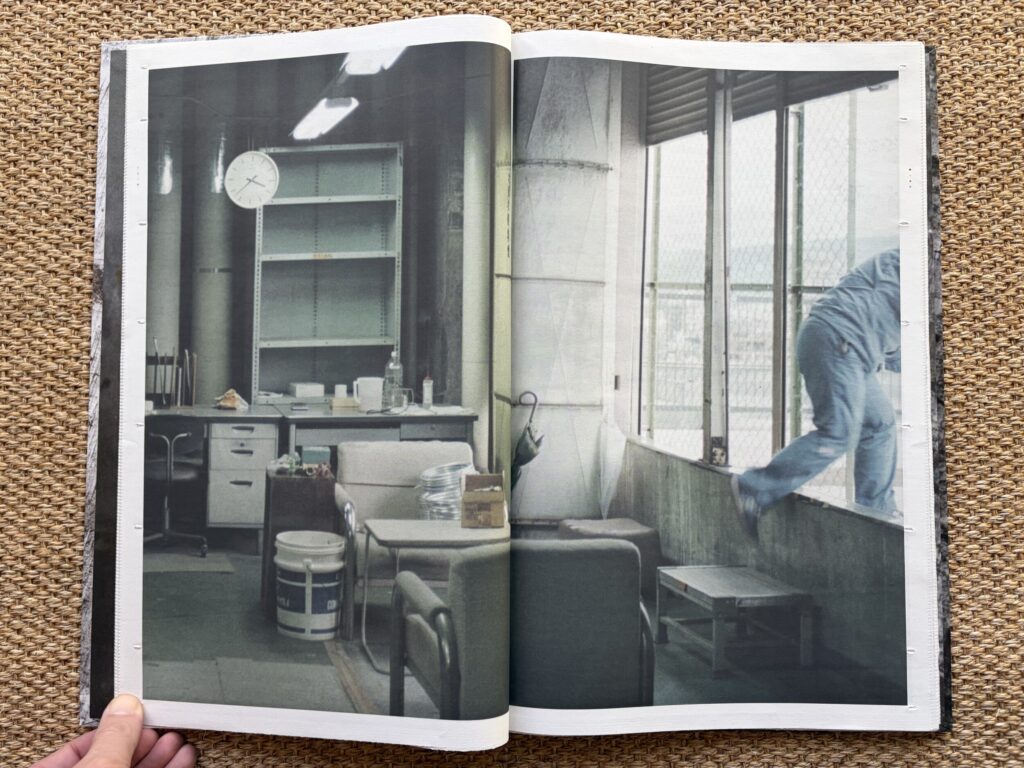
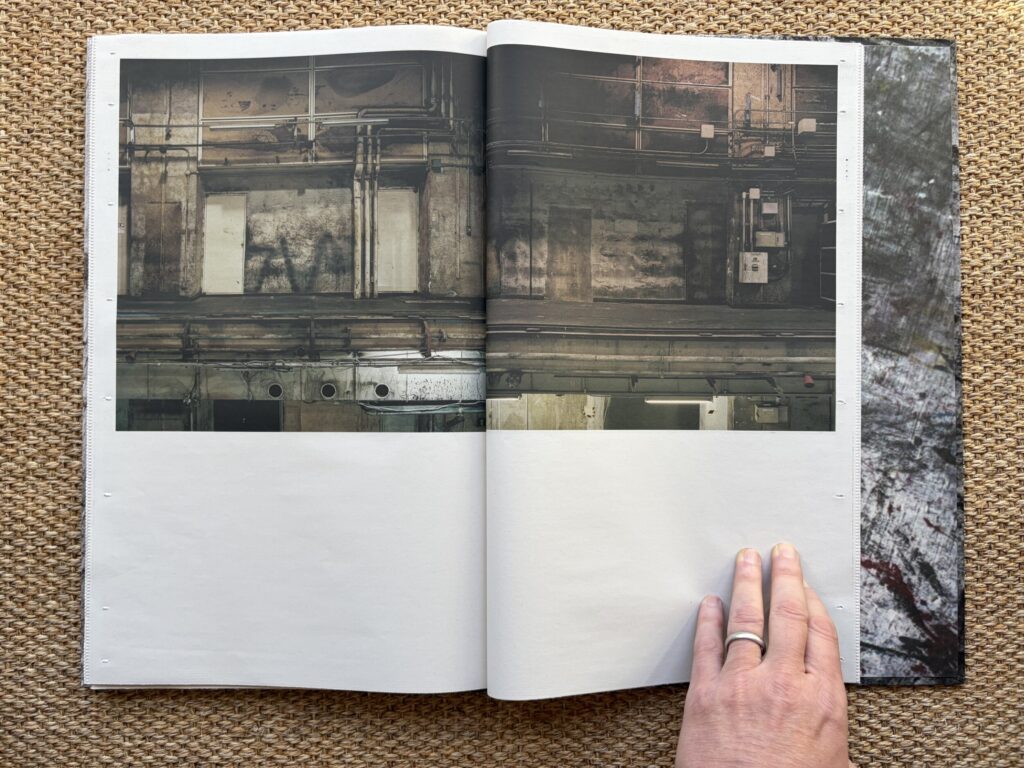
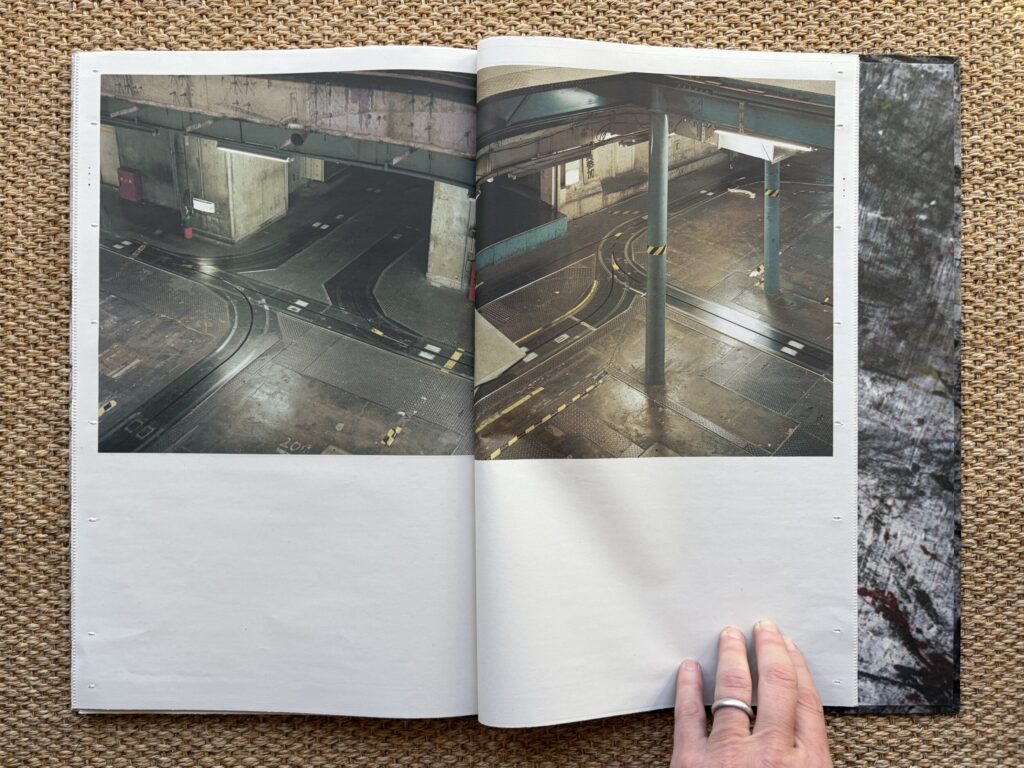
Obara’s photographs are gathered into 6 main zines (and Mori’s afterword), each a thematic visual study of one aspect of how the termination of the printed version of the Kyoto Shimbun will reverberate through the region it serves, both inside the newspaper’s offices and production facilities and outside in the community at large. The first zine “Power and the Press” jumps right into a slaughterhouse mood, with large, textural studies of rough ink splatters (from cleaning rags tossed into bins near walls) and scratched surfaces, intermingled with darkened rooms, battered doorways, printing machinery, and other less identifiable textures, giving us a visceral impression of where the newspaper was printed; the zine’s last image catches a blue uniformed man seemingly jumping out an office window, an ominous symbol of the end of the print run.
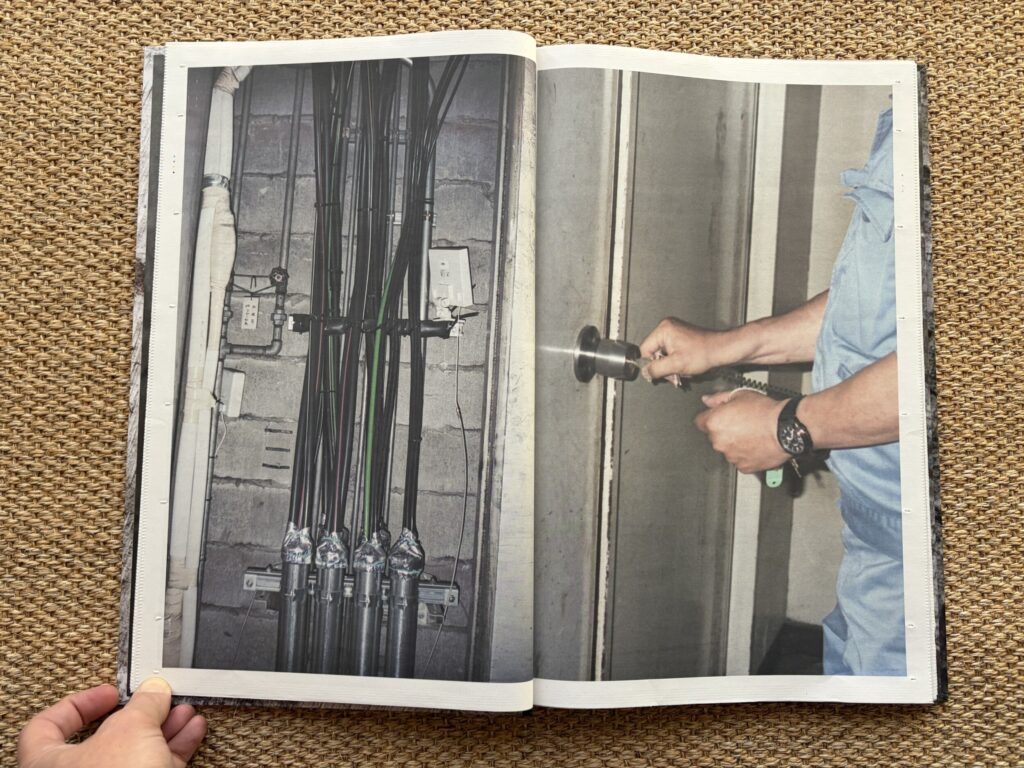
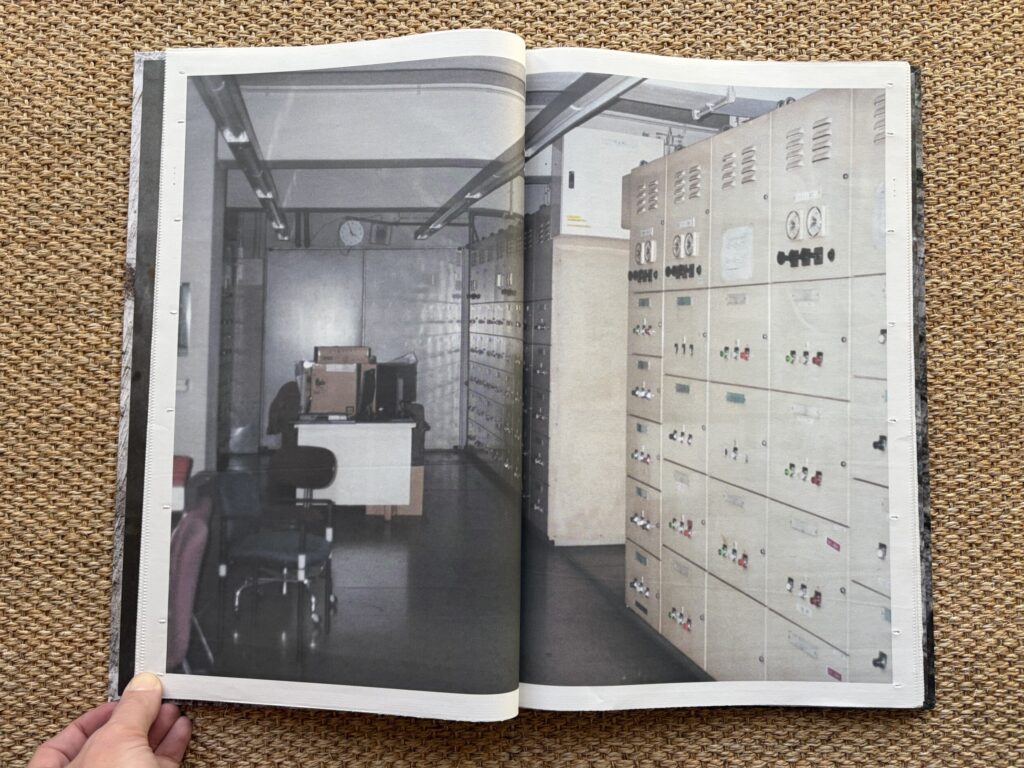
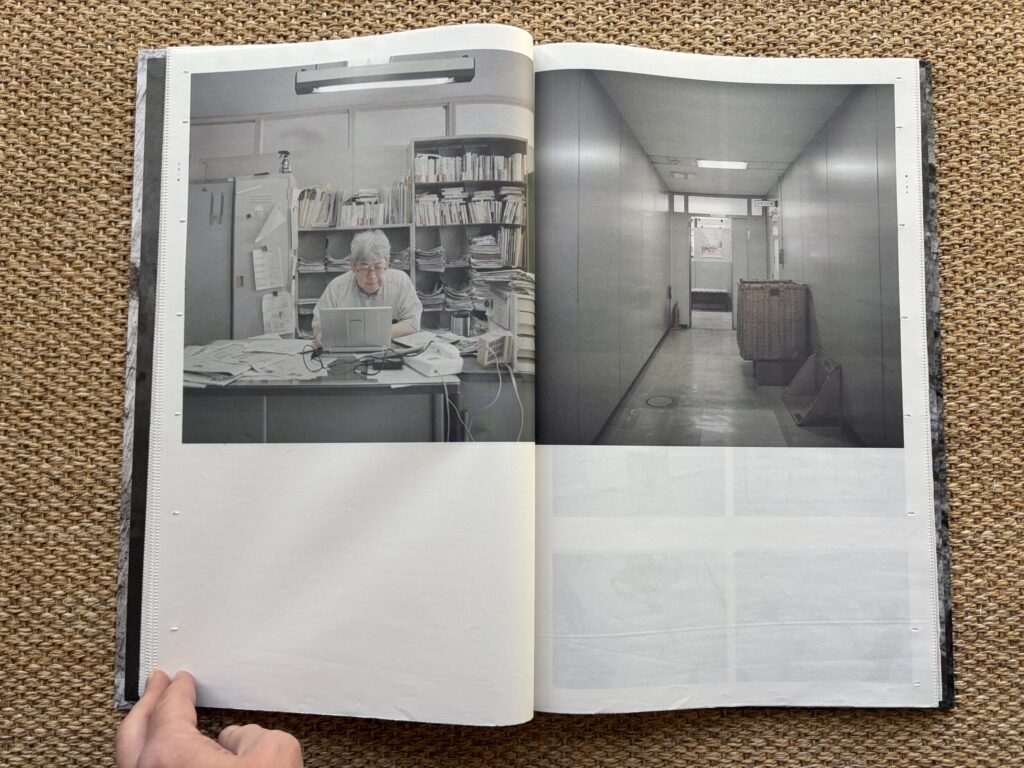
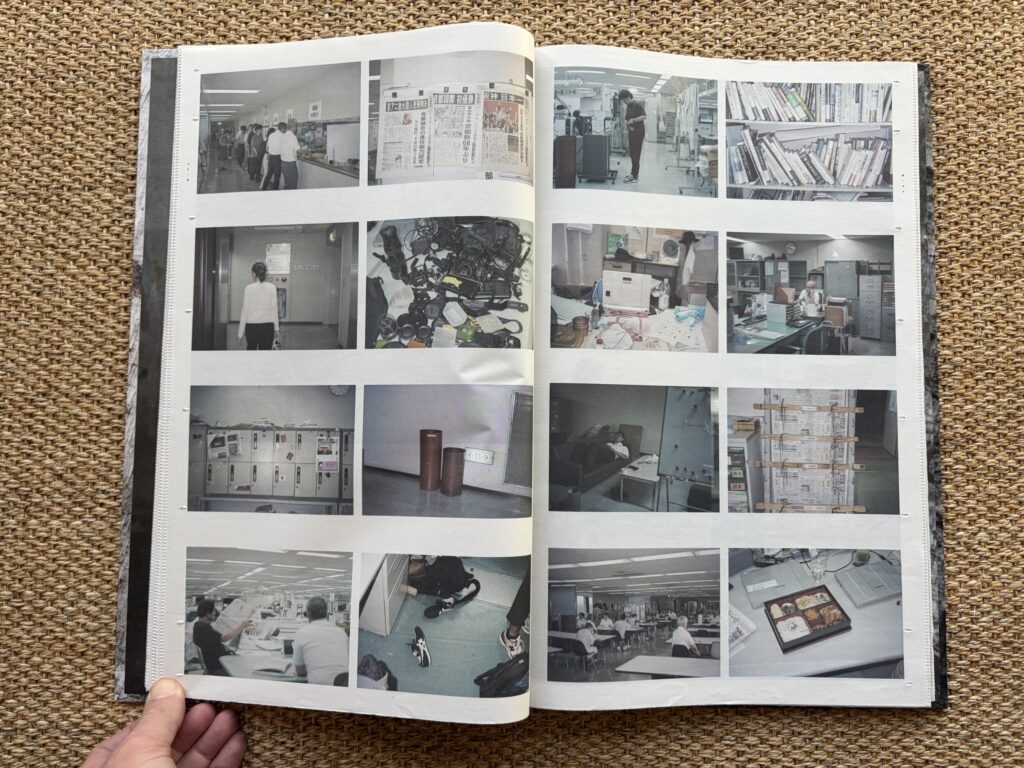
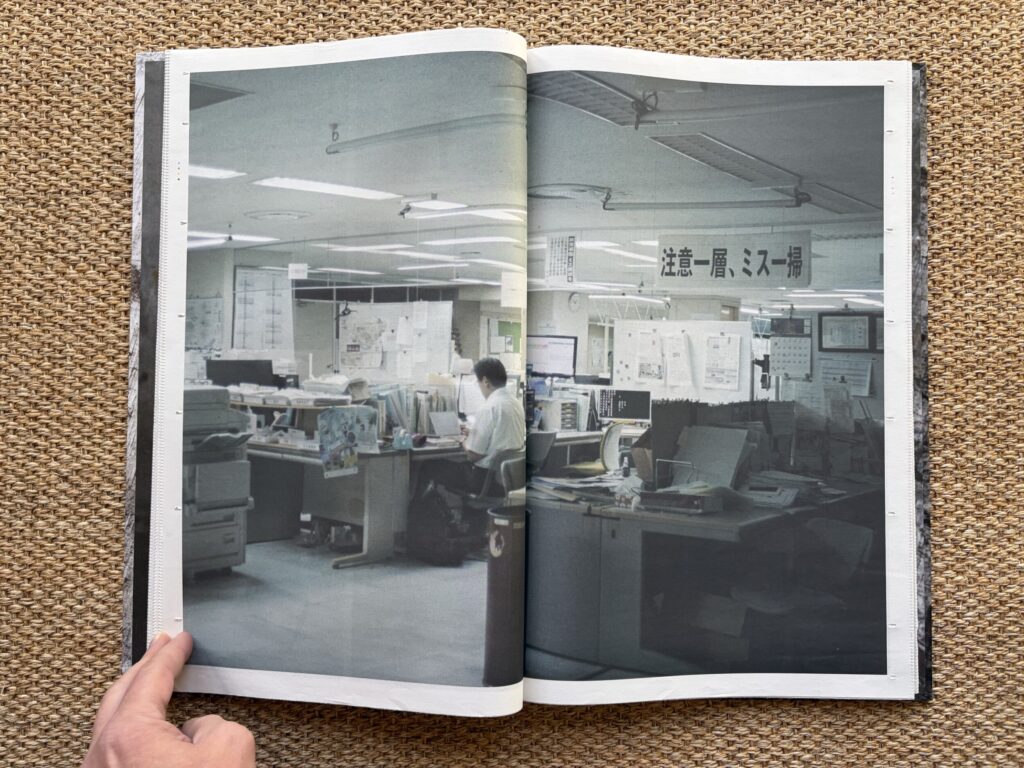
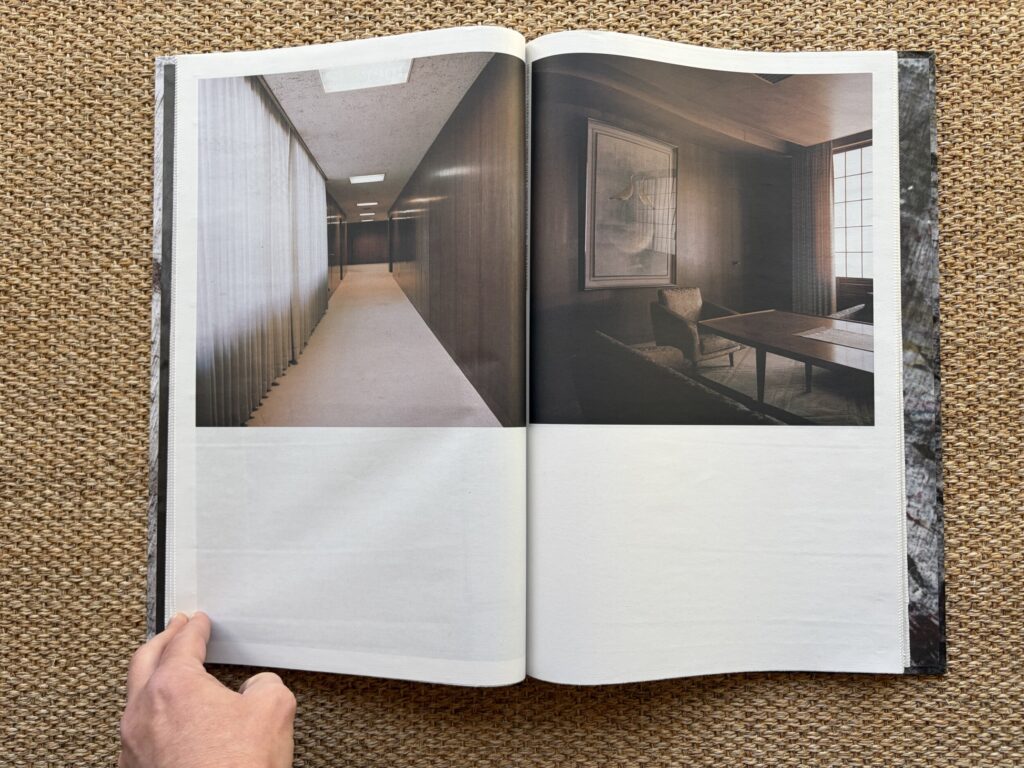
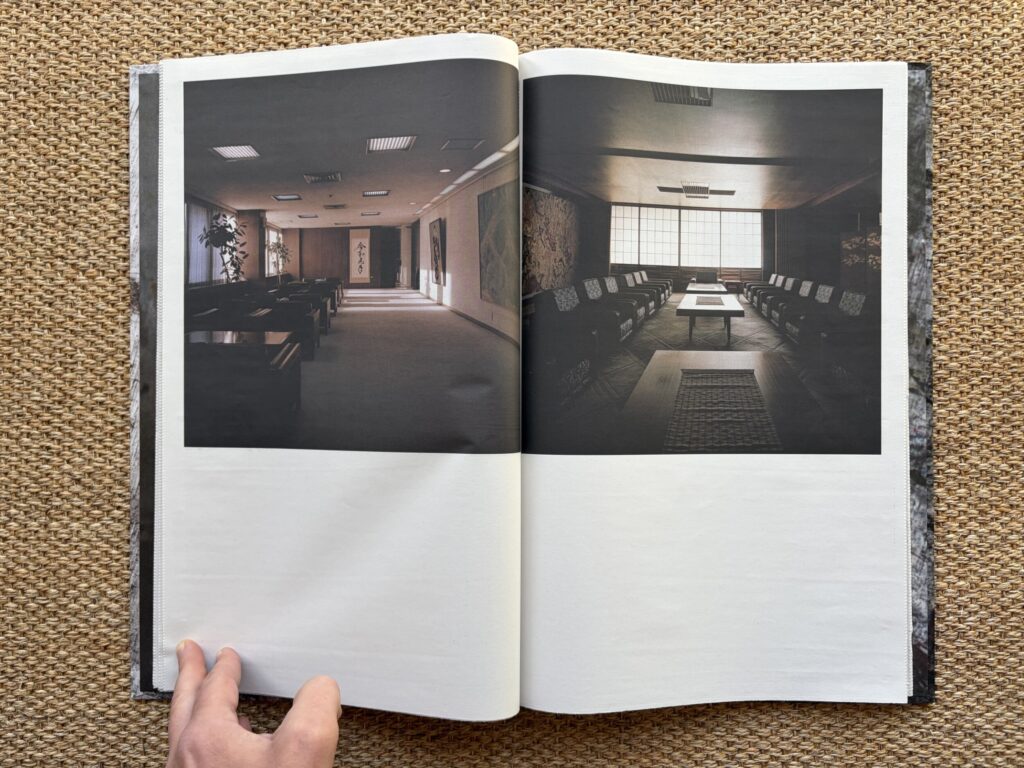
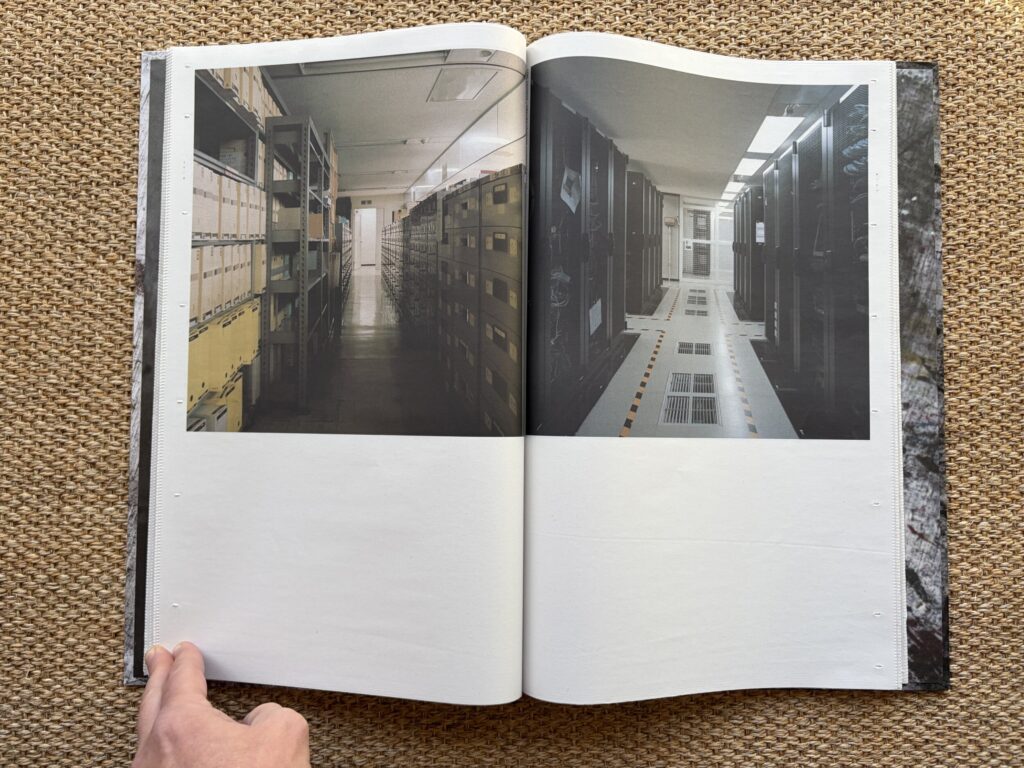
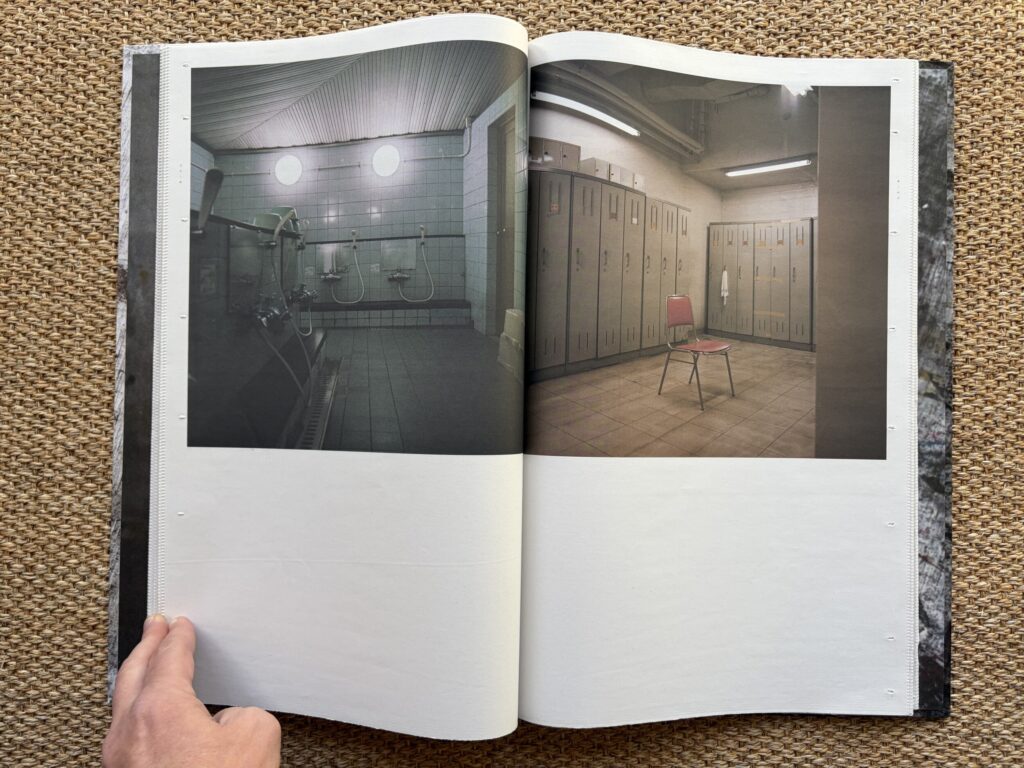
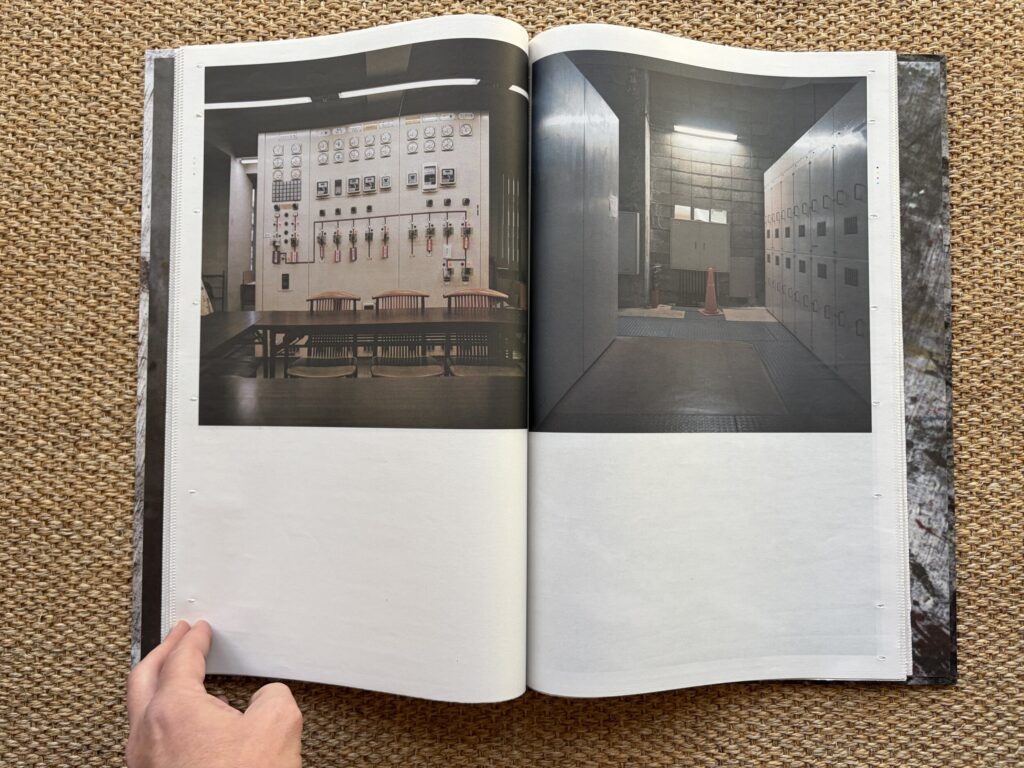
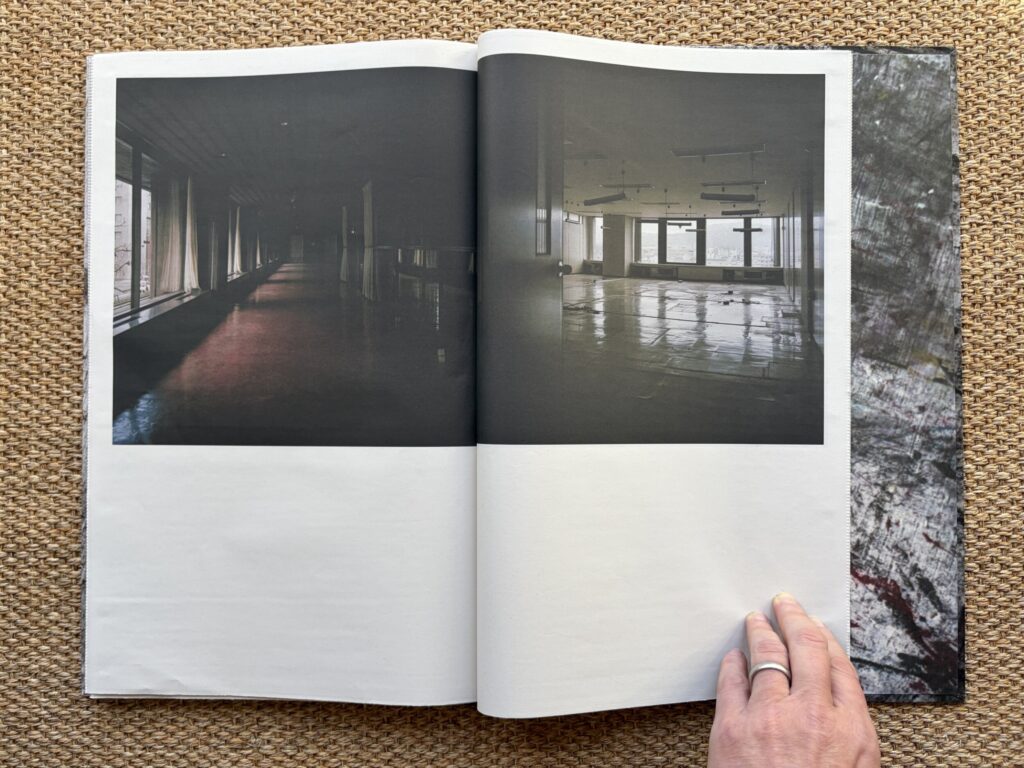
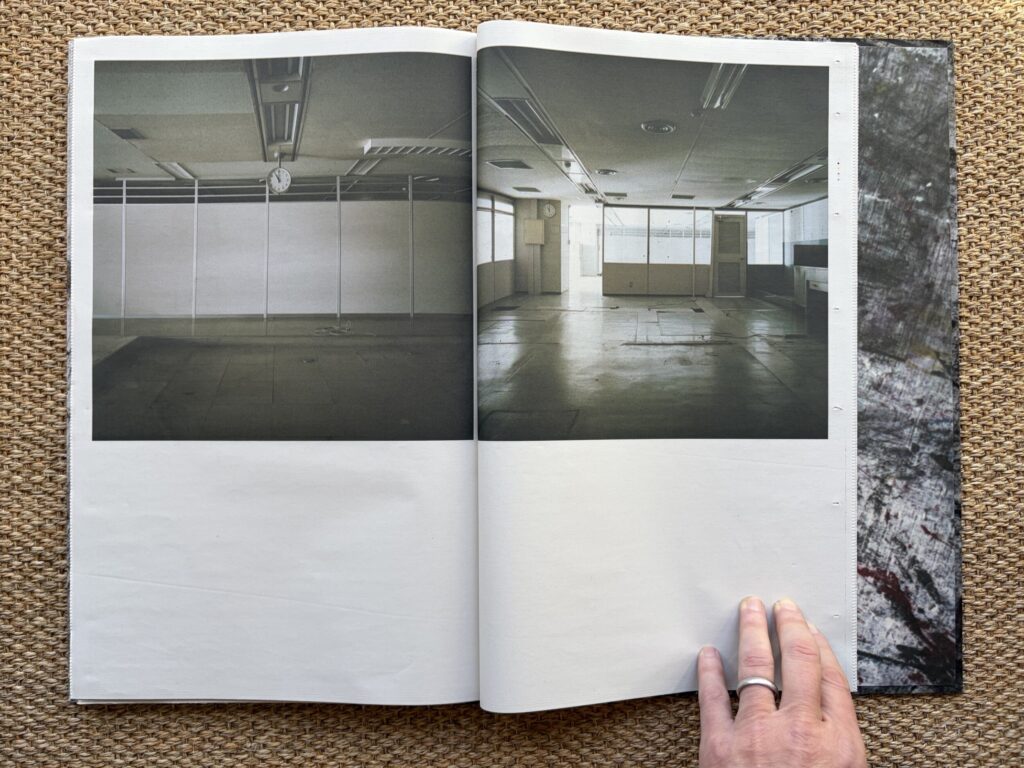
The good news is the man didn’t fall to his death, but appears on the cover of the next zine “The Newsroom”, guiding us along a roof, up some stairs with a security guard, and into the busy newsroom cluttered with bustling workers, desks, and stacks of paper. Here Obara shows us the quiet unassuming dedication of regional journalism, with reporters patiently working stories, talking on phones, and writing up notes, in humbly forgettable office conditions, often late into the night. Then the security guard appears again and leads us into “Infrastructure”, a zine filled with empty echoing hallways and rooms, the result of the Kyoto Shimbun‘s recent relocation and its more virtual organizational structure. Formal conference rooms and meeting areas sit in shadowy silence, until Obara drops us back into less public spaces, where racks of shelving, computer servers, employee lockers, and power plant equipment idle quietly, now unattended.
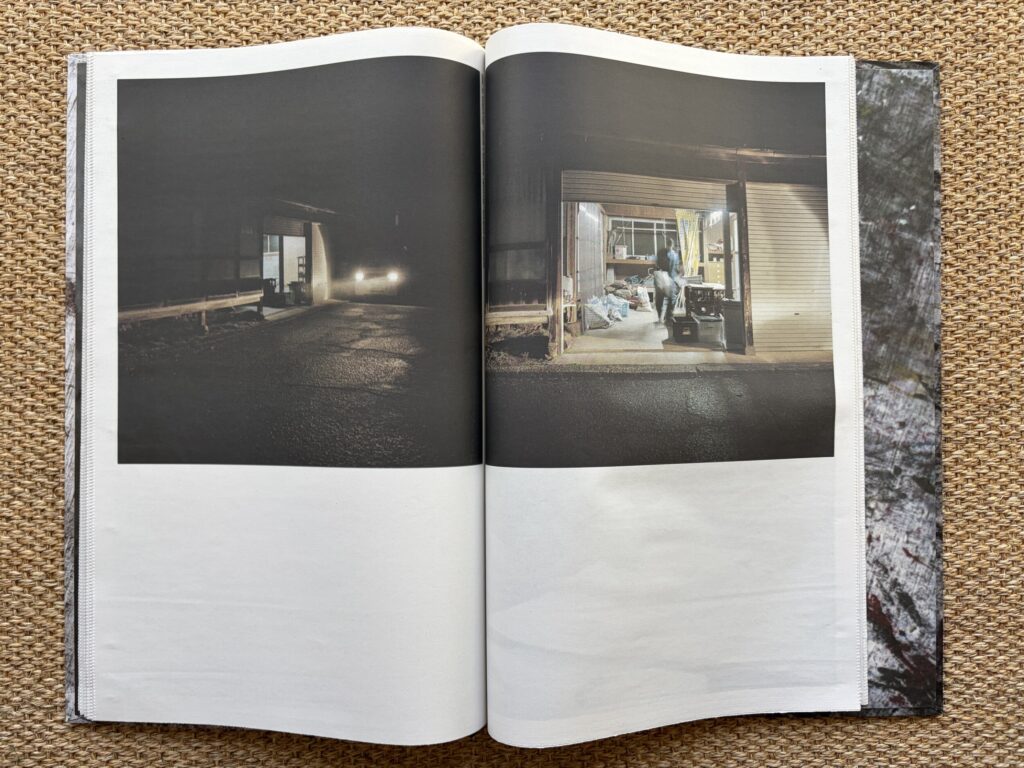
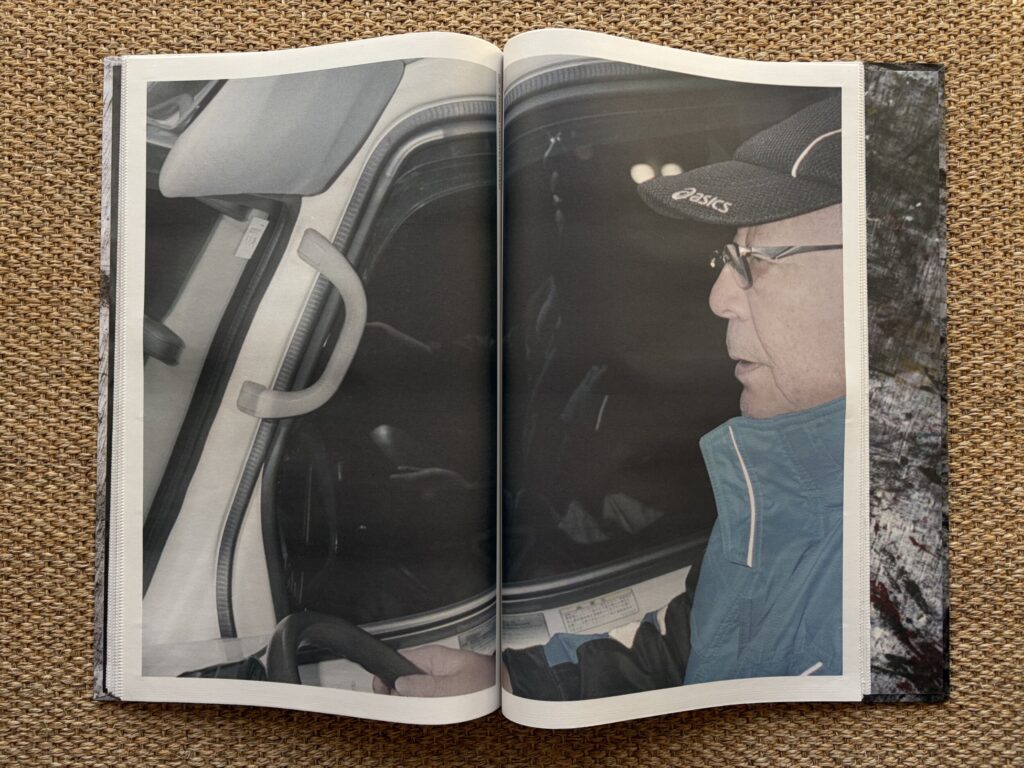
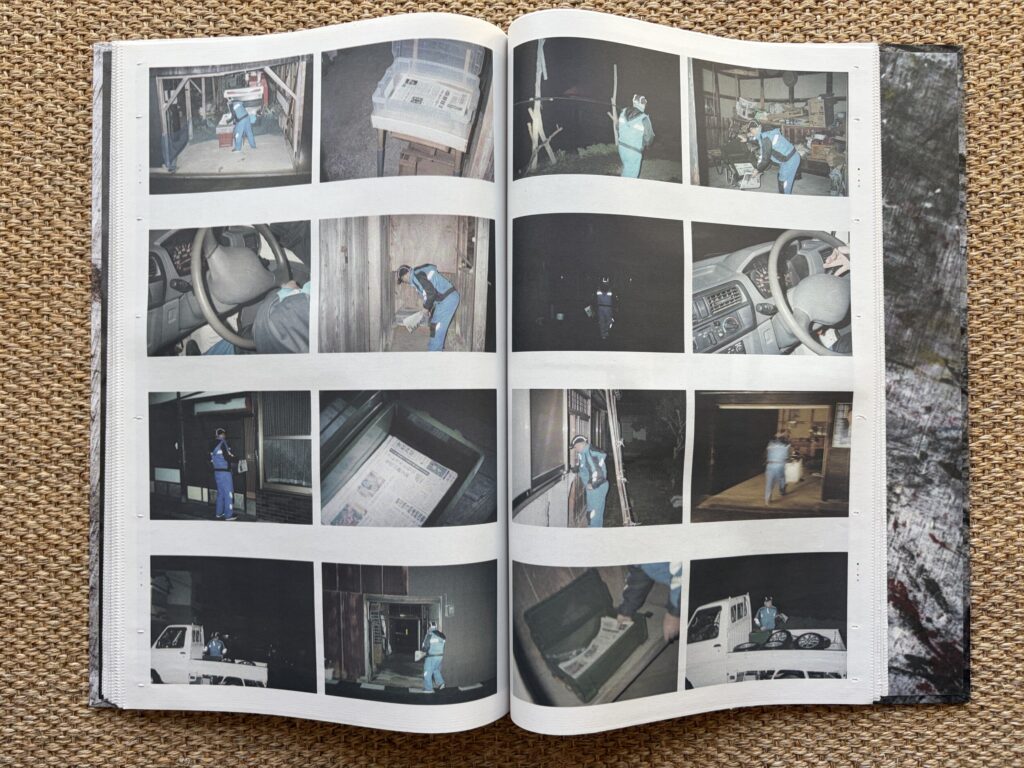
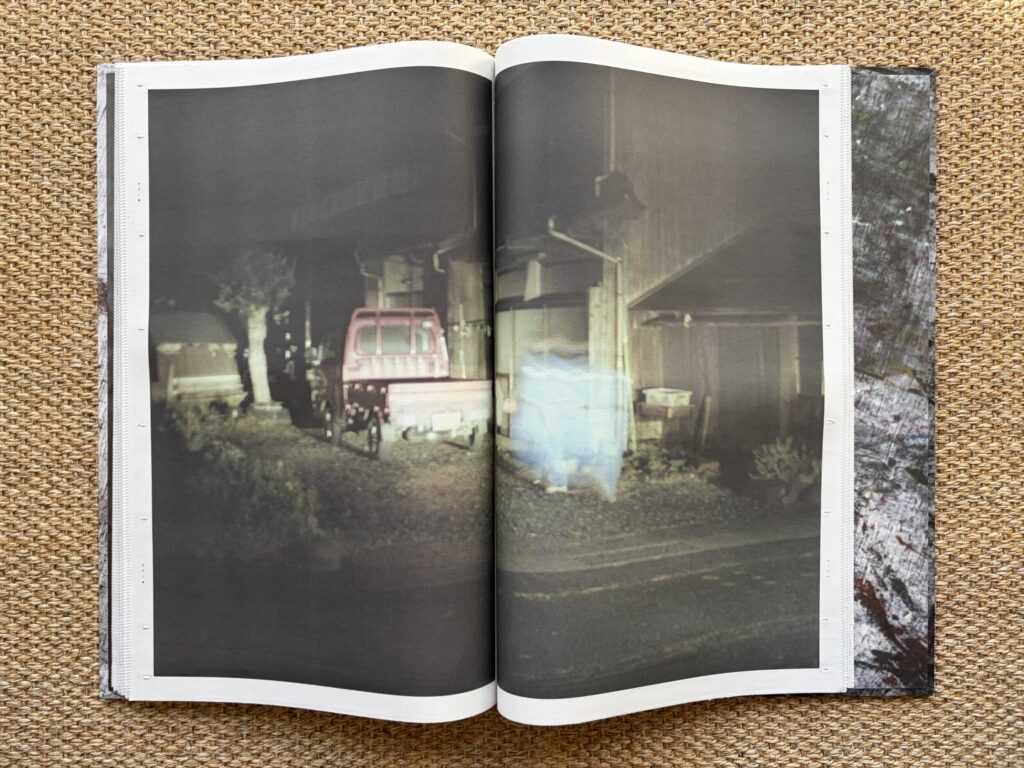
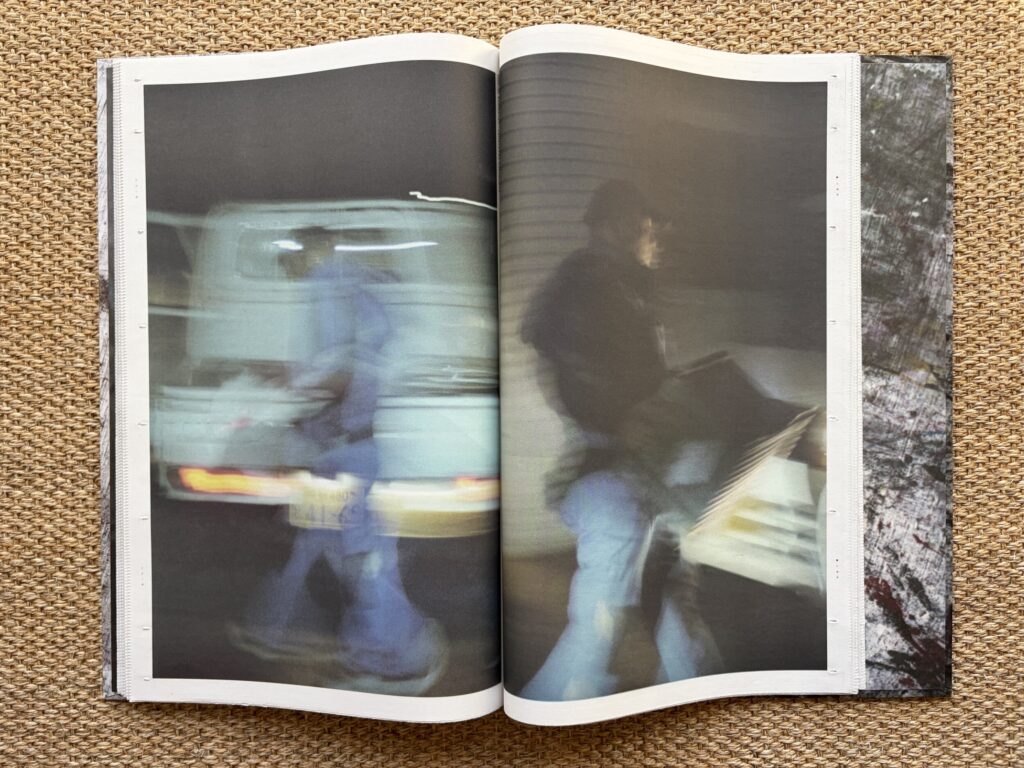
“Delivery” pulls us out of the newspaper’s main building and factory and jumps out to the place where the daily news meets the people, in letterboxes, in plastic bins, and in clear bags delivered to doorsteps. Obara follows a single delivery man, starting in the dark hours of the early morning as he prepares the day’s papers in a storage unit, and onward on his rounds, in and out of his van at each stop, with flared headlights and elongated blurs transforming him into a fleeting ghostly presence, delivering information, connection, and community context every day of the year. A zine of “Landscapes” follows, documenting the farthest palaces along the northern coast of Kyoto that the paper reaches each day. Cityscapes give way to ocean views, lonely coastal roads, a few small graveyards, and scenes in several small coastal villages and towns, making clear just how much reach the paper has and how important it is for keeping distant communities linked together by shared information.
“Relocation” brings us back to the Kyoto Shimbun offices, now with even more empty rooms. Obara squares up his compositions, using doors, windows, and conferences rooms to geometrically order his shadowed frames, each succeeding picture echoing with the deafening silence of abandonment. Light shines in and bounces off floors, but there is little to notice in these pictures, aside from leftover phones, coiled up cables, dusty floors, missing floor tiles, stopped clocks, and stacks of now-unnecessary artworks. A few scraps of torn clippings once pasted to office walls hint at stories that were once important, but are now just whispers.
Mori brings some of those personal stories alive via interviews with current and former employees of the Kyoto Shimbun, including executives, journalists, and delivery drivers, which are found in the smaller single subject text-based zines. These remembrances bring us inside the regional newspaper in ways the photographs can’t, tapping into hopes, memories, moods, and mindsets, and expanding on the reasons that the vantage point of a local newspaper remains relevant. From the former president’s days methodically cleaning the printing presses to the dedicated bee keeper/delivery driver delivering papers to pay for his wedding, Mori’s texts introduce us to the people that turn the gears of the newspaper. He also spends time capturing the nuanced perspectives of local journalists covering mass murders, scientific discoveries, long buried histories, and religious holidays, getting inside the how and why of the rhythms of the stories, with each day spent “tracing fragile possibilities” and working hard to explain the subtleties and meanings of local life to the communities it faces.
The Newspaper ends on an unstable but perhaps still potentially hopeful note. In early 2026, the Kyoto Shimbun moved out of the temporary offices that marked a period of organizational redevelopment and transition, and the paper is now run in a more distributed manner without a single headquarters. And it is still delivering both morning and evening editions in print and digital forms of the paper each day, while the old buildings stand empty.
With the pace of digital news consumption continuing to accelerate (and with the cycle of a story now lasting only a few hours), The Newspaper reminds us that there is still very much a need for local news that strengthens the bonds and shared realities of its community, rather than dismantling them. It powerfully argues that if thoughtful, and in some cases, slower local reporting is allowed to disappear, a resident’s understanding of his or her collective community and his or her sense of belonging in that community will be diluted. So new informational solutions need to be created that continue to provide the connective tissue that holds people together with a shared perspective – and perhaps a regional newspaper like the Kyoto Shimbun, if it reinvents itself from time to time, can stay relevant, even in the digital age.
What I like best about The Newspaper is that Obara and Mori haven’t turned this story into an arid death-of-journalism tombstone. Instead, by embracing the energetic artistic possibilities of the zine format, they have asked us to rethink how such stories can be told and presented, in lower cost, more risk-taking ways. There is of course an elegant conceptual link between a traditional newspaper story and a next-gen newspaper zine, but their cleverly unorthodox narrative approaches could just as easily be applied to other book-length presentations that are being upended by digital realities (and digital economics). The critical takeaway here isn’t just the enduring power of local journalism, but also the way revived forms of DIY publishing like zines might offer a useful escape hatch from the suffocating traps of a digital world.
Collector’s POV: Kazuma Obara does not appear to have consistent gallery representation at this time. As a result, interested collectors should likely follow up with the artist directly via his website (linked in the sidebar). Obara’s collaborator Akihico Mori can be contacted here/here.