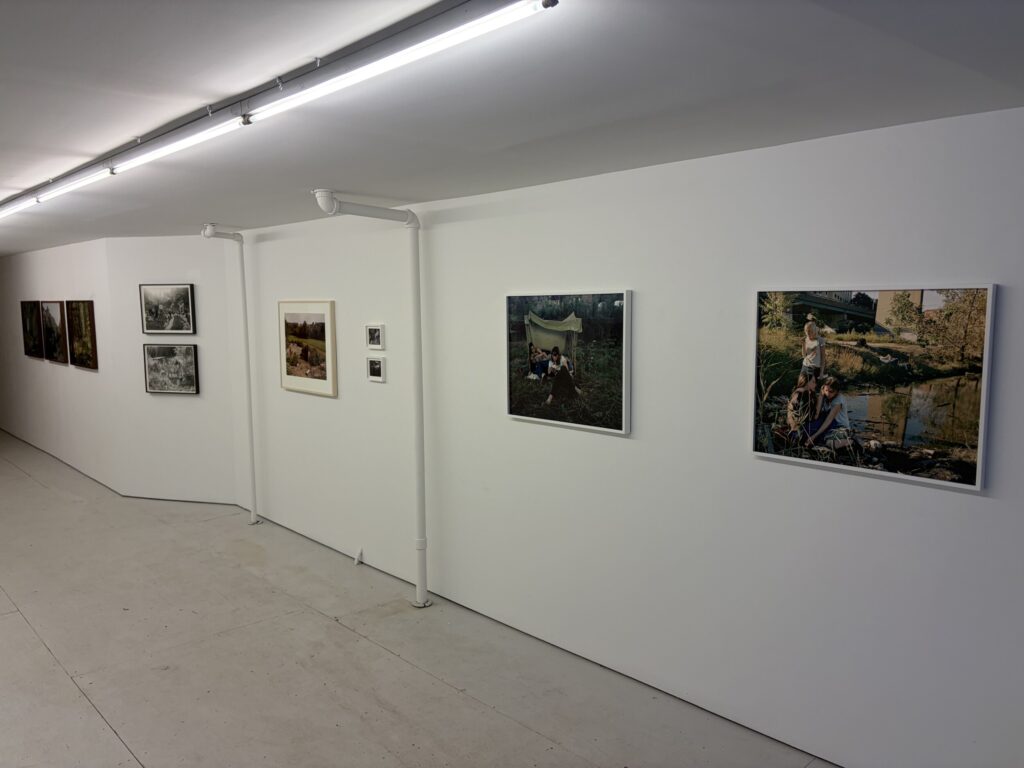
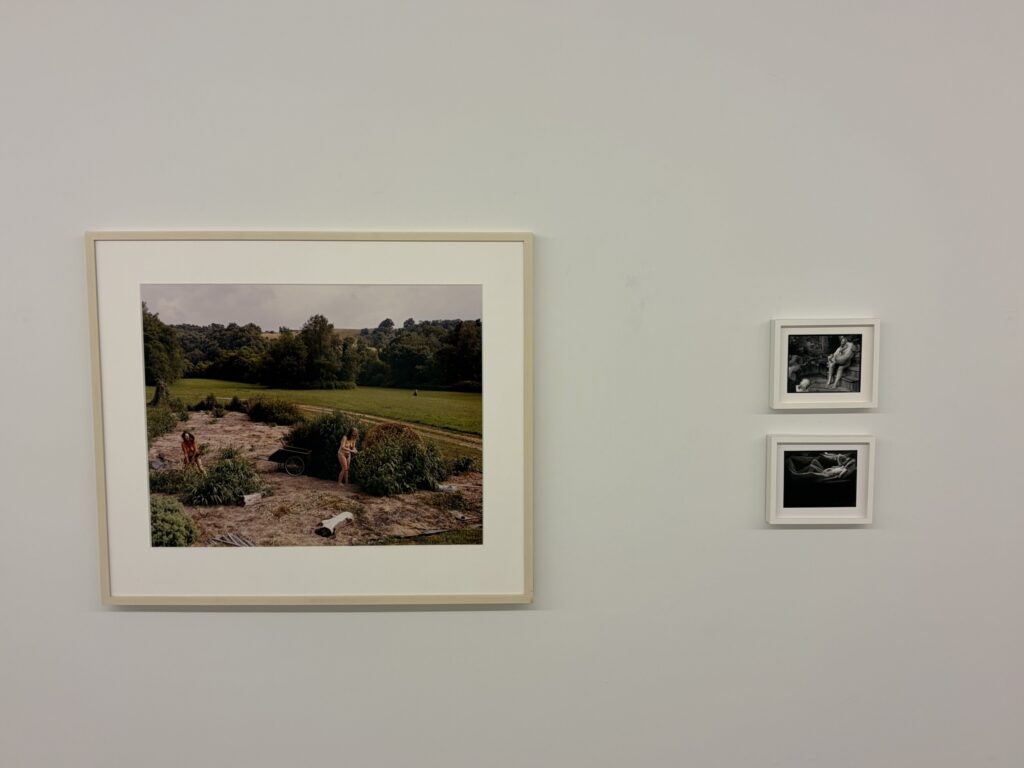
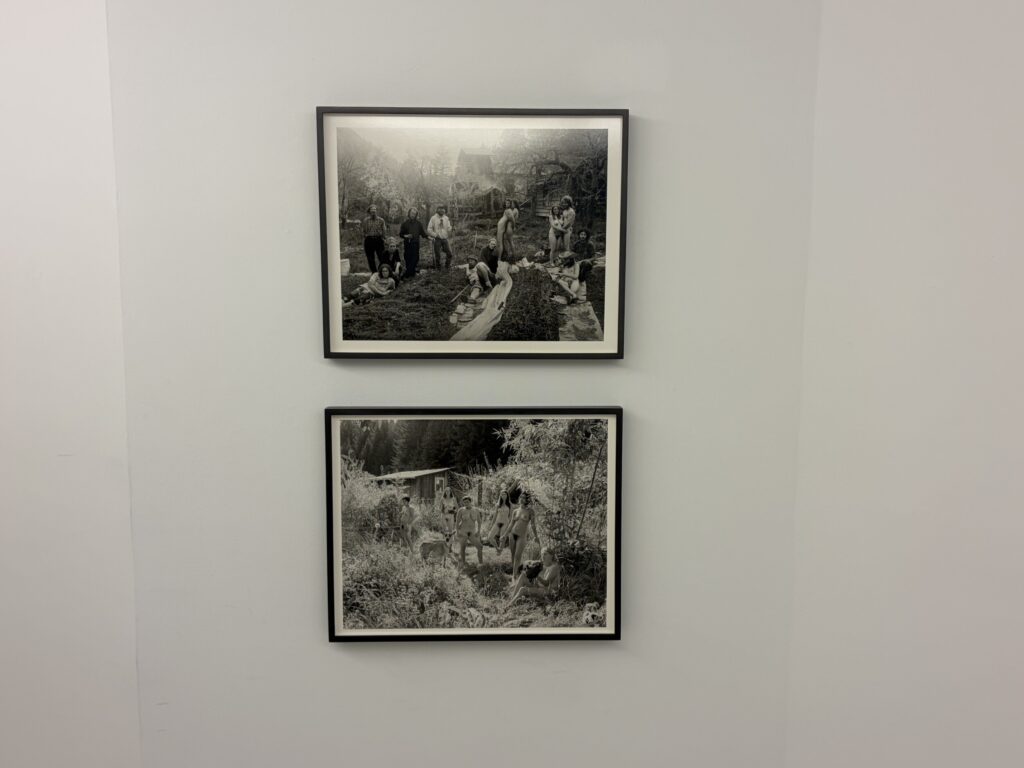
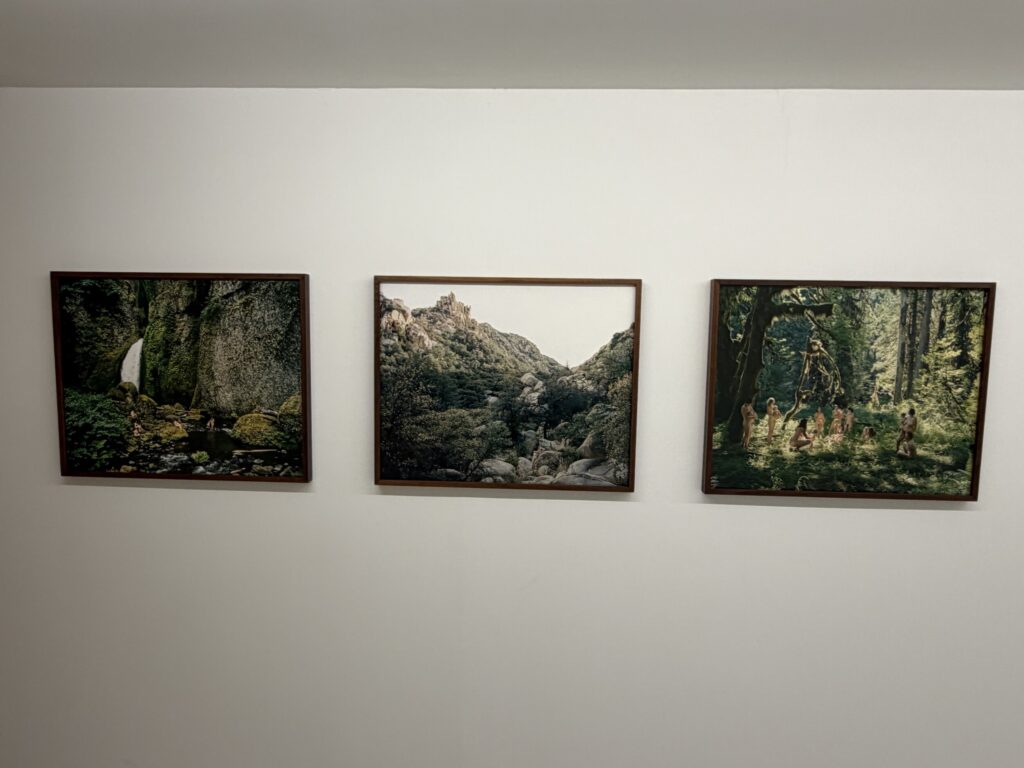
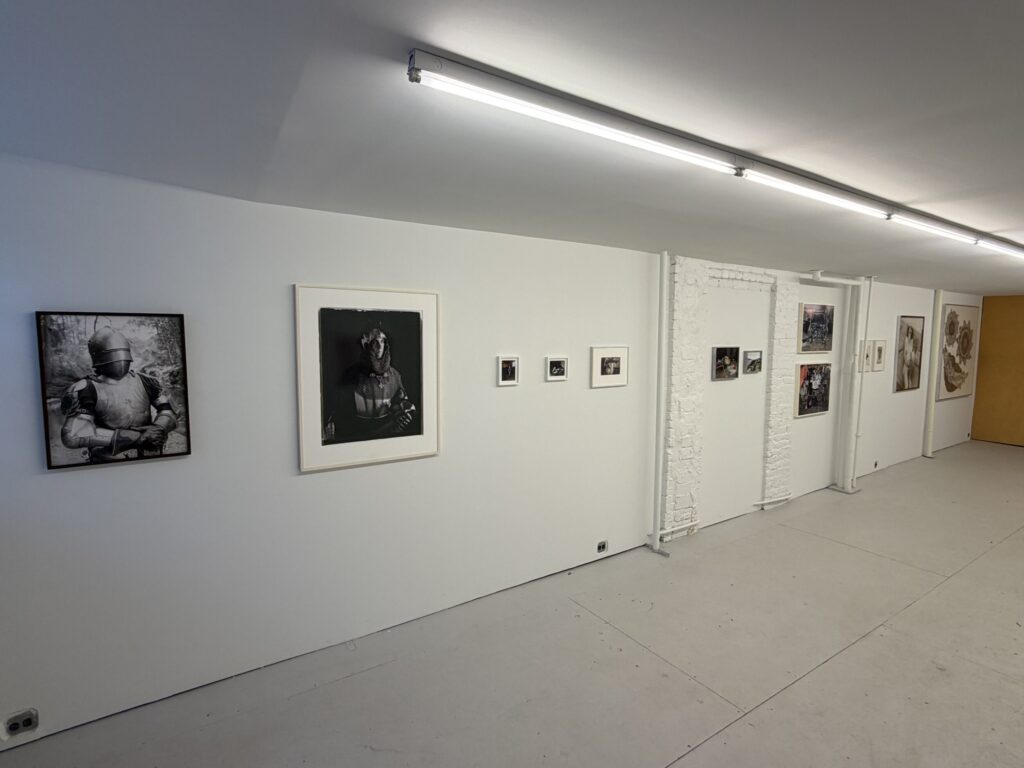
JTF (just the facts): A total of 25 black-and-white and color photographs, variously framed and matted, and hung against white walls in the single room gallery space and the office area. (Installation shots below.)
The following works are included in the show:
- 2 archival pigment prints, 2000, sized 24×30 inches, in editions of 10
- 1 c-print, 2001, sized 17×22 inches, in an edition of 6
- 2 gelatin silver prints, 2003, sized 14×20 inches, in editions of 6
- 1 Polaroid print, 2004, sized 24×20, unique
- 1 toned gelatin silver print, 2004, sized roughly 24×19 inches, in an edition of 8
- 3 archival pigment prints, 2006, sized 24×30 inches, in editions of 4
- 2 sets of 2 archival pigment prints mounted to aluminum, 2008/2005, 2010/2008, sized roughly 7×9, 11×13 inches, in editions of 6
- 1 archival pigment print, 2009, sized 40×50 inches, in an edition of 6
- 2 archival pigment prints, 2013, sized roughly 19×24, 20×25 inches, in editions of 6
- 1 gelatin silver print, 2015, sized 40×30 inches, in an edition of 6
- 2 gelatin silver prints, 2016, sized 4×5, 10×8 inches, in editions of 6
- 1 palladium print, 2016, sized roughly 5×8 inches, in an edition of 6
- 2 gelatin silver prints, 2023, sized 4×5 inches, in editions of 6
- 1 c-print, 2023, sized 5×4 inches, in an edition of 6
- 2 collages on paper, 2023, 2024, sized 52×52 inches, n.d., unique
- 1 palladium print, 2026, sized 7×5 inches, in an edition of 6
Comments/Context: Three decades into her art making career, Justine Kurland has now reached that point where a mid-career retrospective starts to become necessary. In her case, it’s needed mostly because the narrative of her artistic evolution would benefit from some chronological clarification, as many of her best known older works are being rediscovered at the same time as her newer projects are taking shape. So a careful ordering of her progression, project by project, would help untangle some of the conceptual threads and connective links that she has built up over time, allowing us to understand better how she has artistically traveled from point A to point B and onward.
While we wait for the rich institutional retrospective that Kurland’s work deserves, this appetizer-sized survey starts to lay out a useful functional framework for thinking about her career. In the space of a single intimate gallery space, the show bounces from project to project with swiftness and agility, offering a picture or two from most of her projects, and while not strictly ordered chronologically on the walls, it is still possible to extract a distinct arc from what’s been chosen.
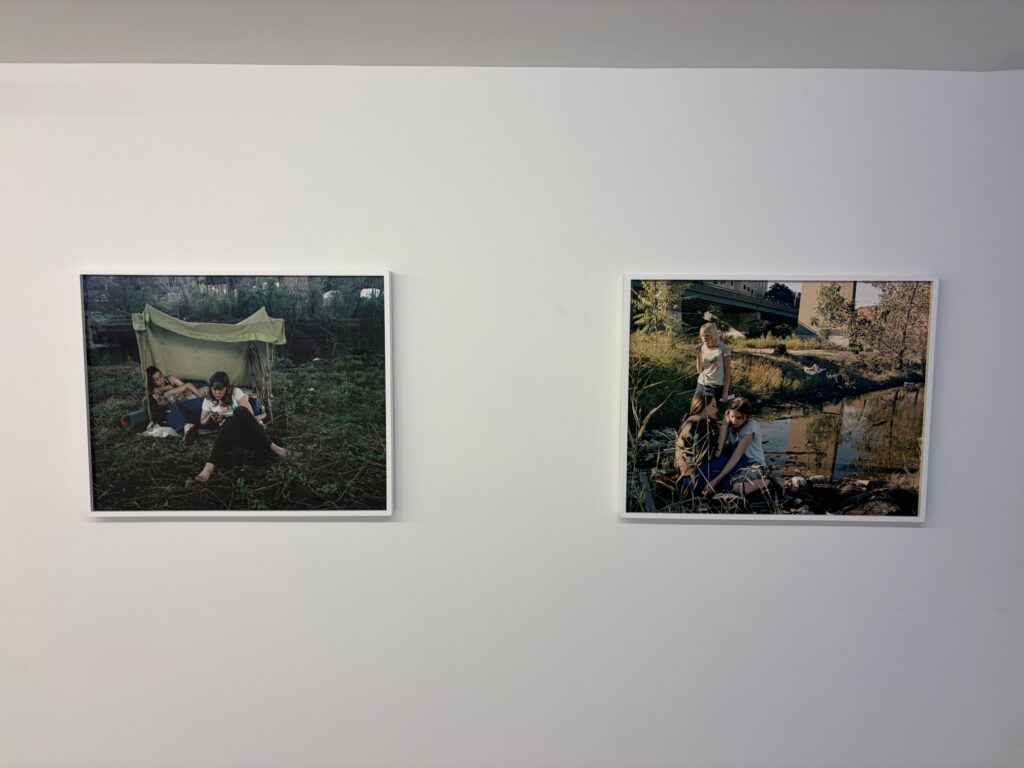
Roughly the first decade of Kurland’s career, as seen in the three projects made prior to her becoming a mother and heading out on the road with her son, can be loosely grouped together as an interrelated series of explorations. The show begins with a pair of works from Kurland’s acclaimed project “Girl Pictures” (previously reviewed here, with additional examples here and here) where groups of teenage girls are naturalistically staged in landscapes in ways that celebrate their independence, self-reliance, and communal relations. These early images have continued to grow in resonance and power over time, and for many, they are Kurland’s best known works. Here the girls camp out in grassy meadows, near creeks, and under overpasses, ably fending for themselves, the everyday rhythms of runaway life creating deep bonds of friendship and solidarity.
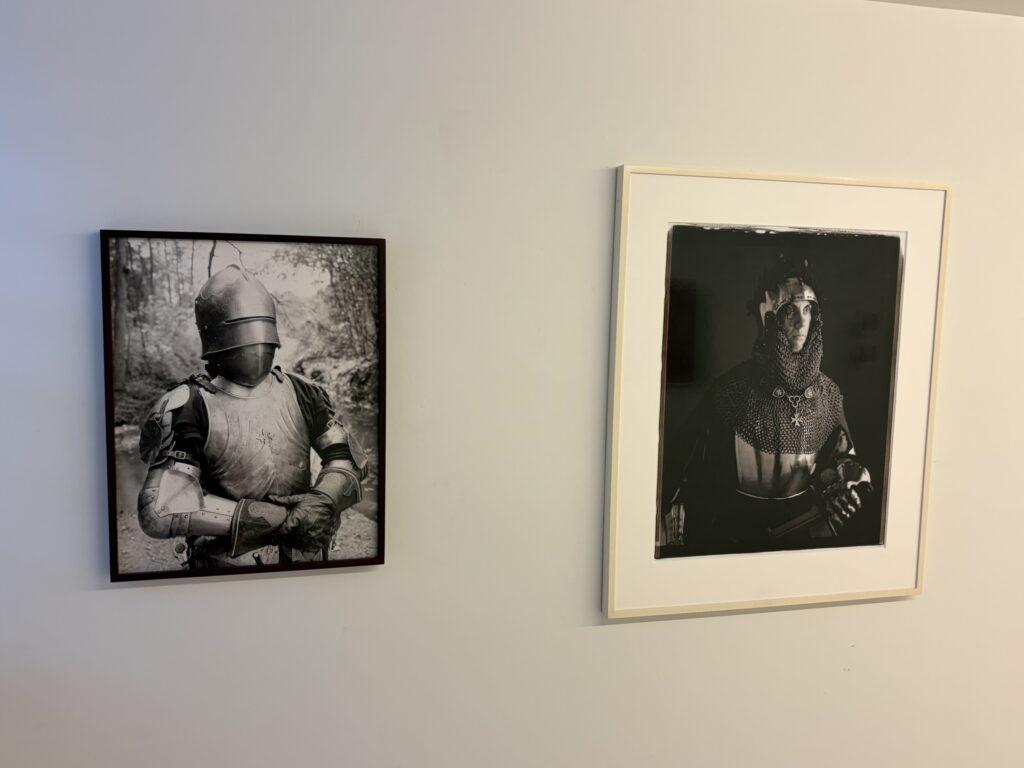
In the early 2000s, Kurland then followed many of those same themes to various utopian communes and alternative lifestyle communities, making group portraits that capture their scruffy independent spirit; some of these setups were made with sitters partially or fully nude, creating a fuller sense of the freedoms and bold visibility of back-to-the-land sometimes-Edenic life. Kurland’s staged portraits of Renaissance fair participants (made a year or two later) similarly play with the nuances and possibilities of performative roles and nomadic on-the-road lives, particularly in terms of gender and sexuality, here seen in obscuring suits of armor, sometimes worn by powerful women.
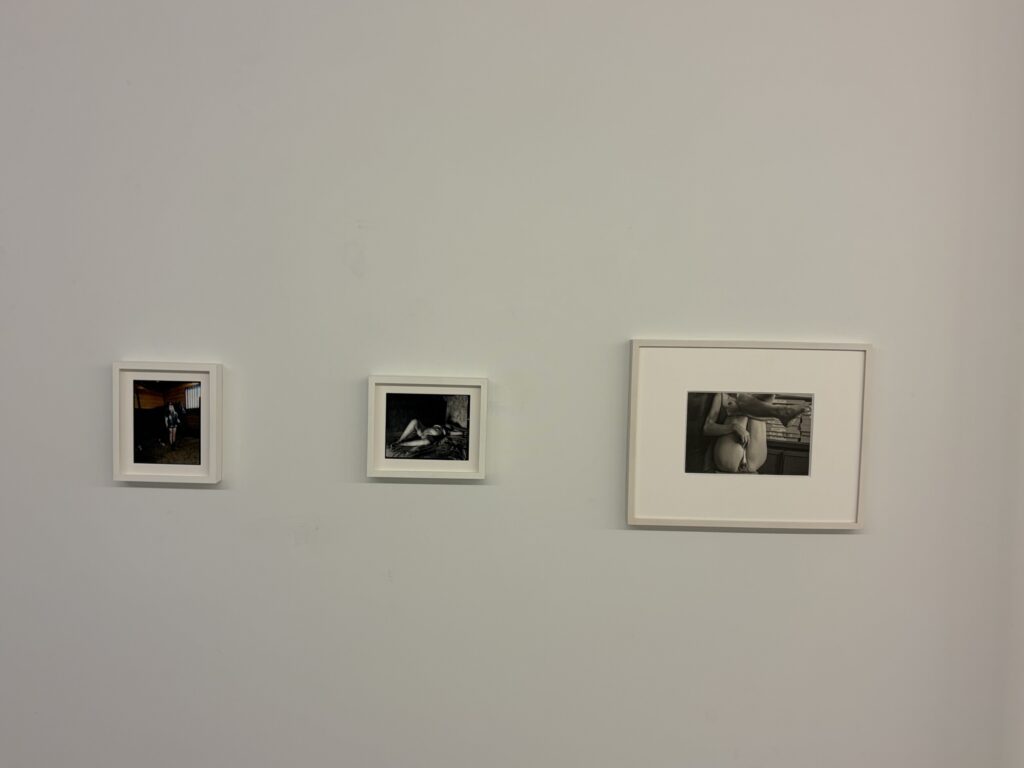
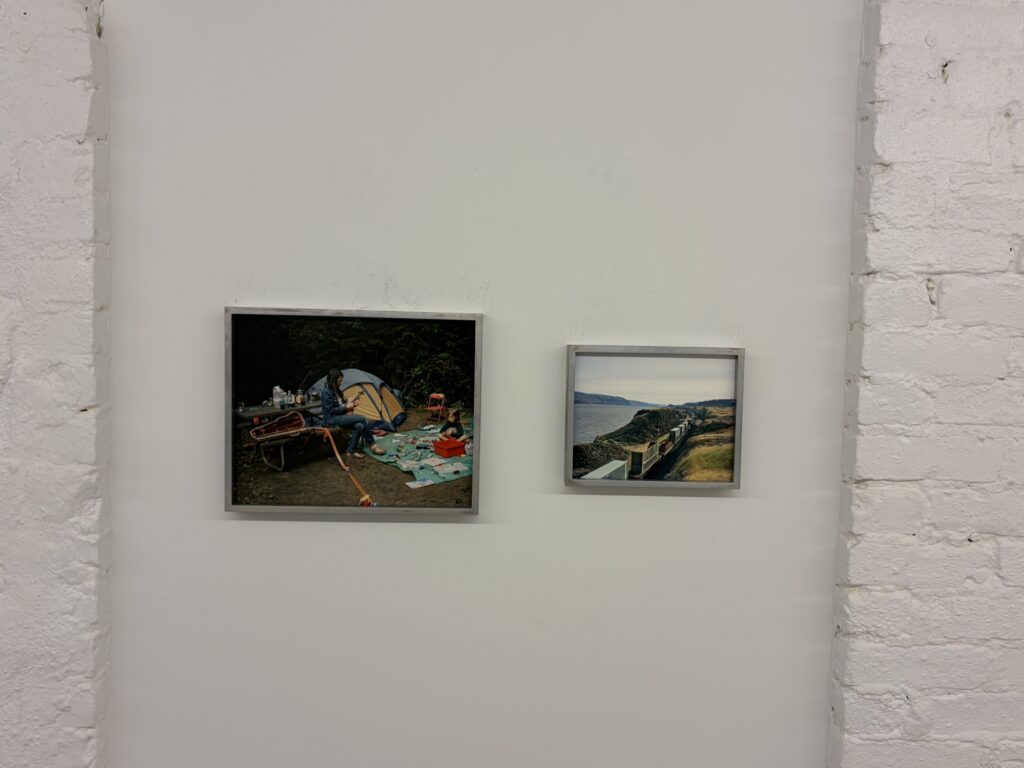
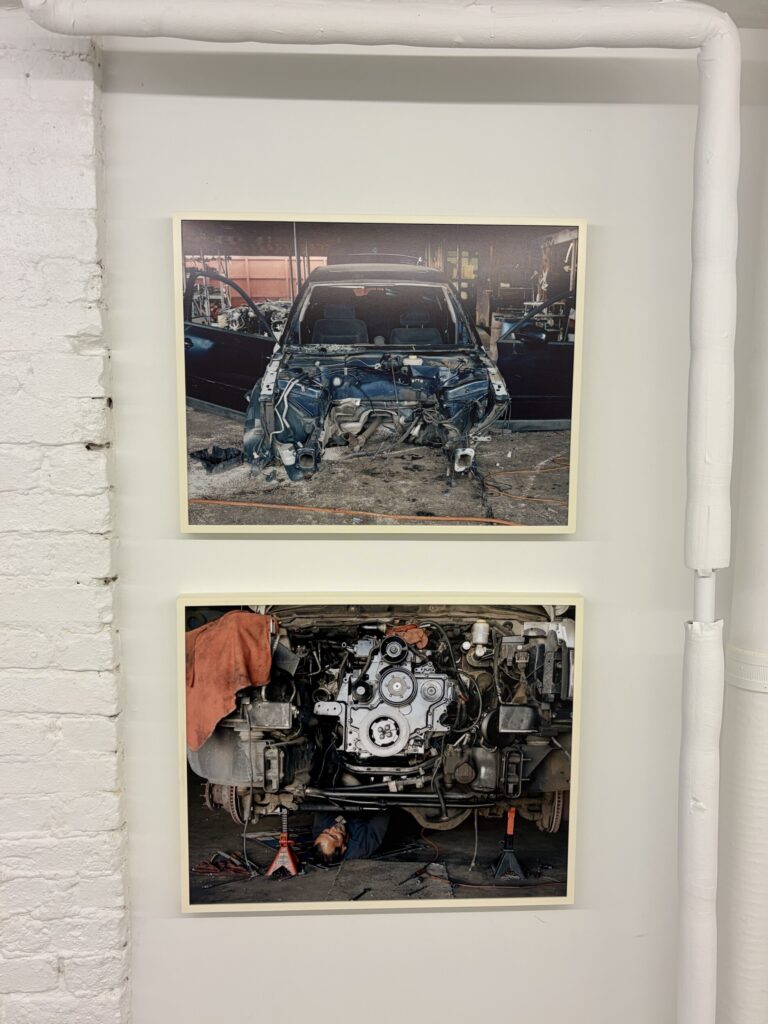
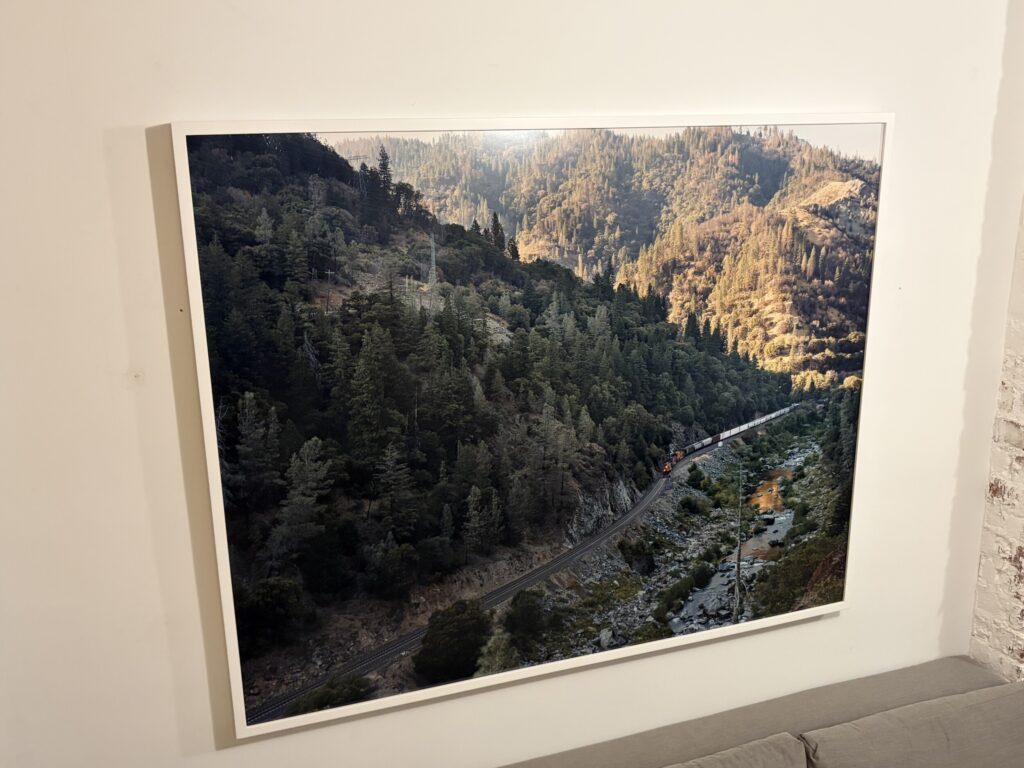
With the birth of her son Casper in 2004, Kurland’s vantage point shifted a bit. She first turned her attention to mothers and their babies, staging them naked in natural settings, extending the protective “Mother Earth” symbolism to nude groups placed near waterfalls, on rocky hillsides, and in verdantly green forests, seemingly creating a new kind of matriarchal safe space. She then set out on the road with her son, living out of a van for six months at a time and following his interest in trains across the vastness of the American West. Her photographs from this period document both the trains themselves (often cutting through the majestic landscape with unsettlingly machined precision), but also the shared mother-son familial relationship that was finding its footing (as seen in a gallery show here and reprised here). As Casper grew, the tropes of masculinity invaded Kurland’s artistic life more often, as evidenced by her project on men, cars, and the mechanics who kept her van running (reviewed here). Two open-hood views are included in this show, one with a man methodically at work underneath the intricately rugged mechanical engine.
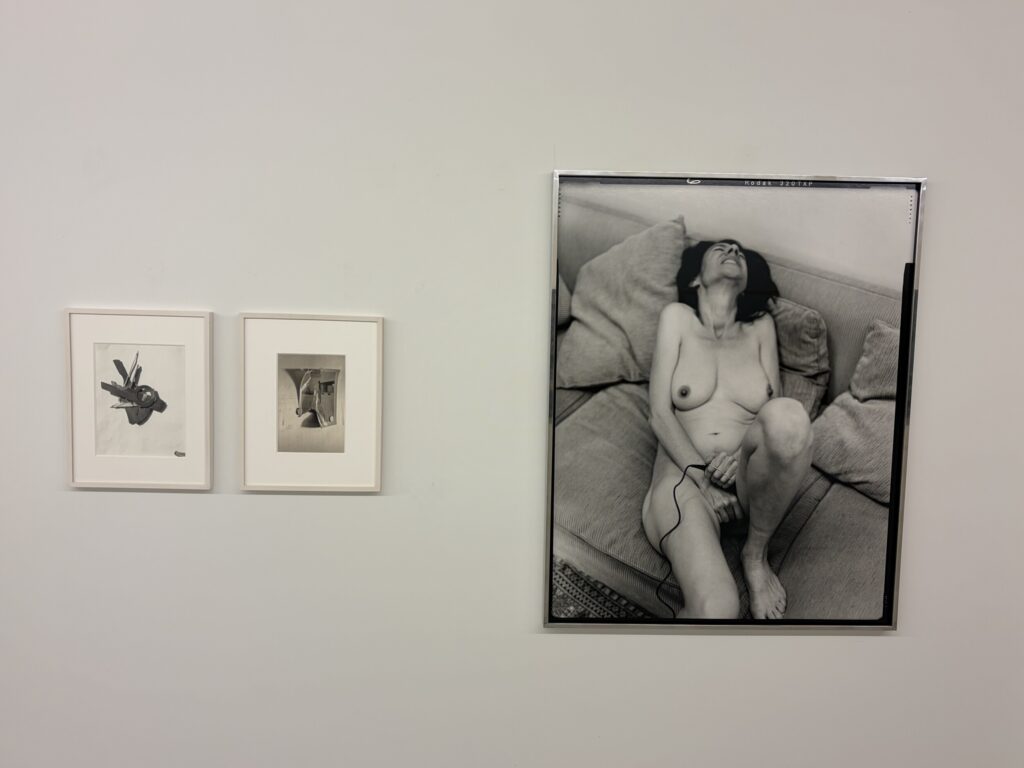
Another fork in Kurland’s artistic road appears a little more than a decade ago. Perhaps it came as part of absorbing her father’s death (in 2013), the return to a more fixed life in New York after coming off the road, and the growing up of her son, but whatever the combination of catalysts, Kurland’s eye turned inward. Her initial pictures during this period wrestled with her father’s legacy, as well as with her queer identity and her relationship with her mother, all of it taking place in the beginning stages of throwing off old influences and constraints and reimagining herself. The intimately diaristic black-and-white pictures from “The Stick” are raw, vulnerable, and open, exploring her own body and recentering herself on her own primal femininity (originally reviewed here).
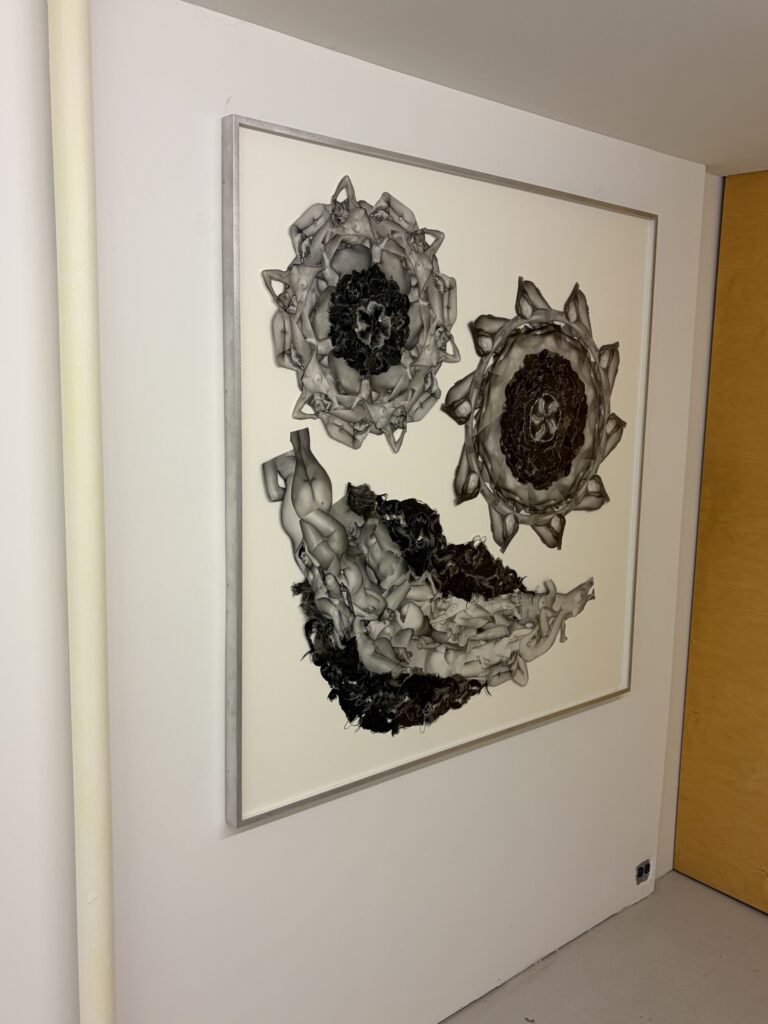
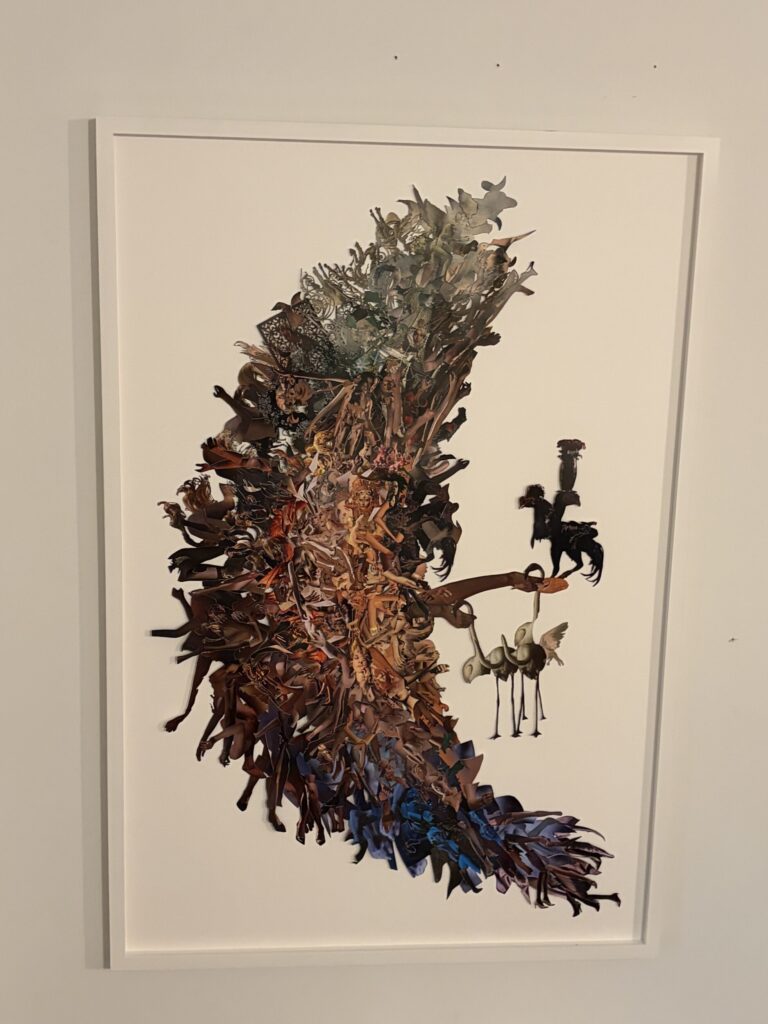
This process of getting back to personal essentials, and brashly stripping away influences, ghosts, inheritances, and other received opinions about both art and herself logically sets up Kurland’s recent embrace of collage, as seen here in two large scale works. In her “SCUMB Manifesto” and follow on projects (reviewed here, here, and here), she has brashly exorcised, and literally cut up, the influence of male photographic history, as embodied in photobooks from across the history of the medium, particularly from those photographers who were formative figures as she was developing her own photographic voice. As her collage work has evolved, she has taken specific issue with Lee Friedlander’s nudes, collaging them again and again into different arrangements that attempt to reclaim the agency of the women who were photographed or to highlight the objectification of those bodies. One of the works on view here (from 2023) transforms fragmented Friedlander nudes into a leering smiley face made from stacked bodies and hair, the circular repetitions making the bodies all the more abstracted.
While the seeds of a queer feminist angle have been part of Kurland’s approach since the very beginning, her vision has become increasingly confident and full-throated in recent years. As she has felt more comfortable in her own skin, both as a mother and as a mature artist, her willingness to shake the foundations of the male-dominated patriarchal systems that have surrounded and controlled her seems emboldened – her simmering fury is openly fueling photographic work that is more and more willing to take risks, pick fights, shrug off criticism, and upset orthodoxies. For the most part, that unflinching freedom is provocative and energizing, which is exactly why this mini-retrospective feels so timely; as Kurland picks up the pace of her punching, it’s increasingly worth tracing how her fighting spirit has been honed over time.
Collector’s POV: The works in this show range in price from $2400 to $14000, based on size. Kurland’s work has slowly begun to enter the secondary markets in the past few years, with prices ranging from roughly $2000 to $6000.