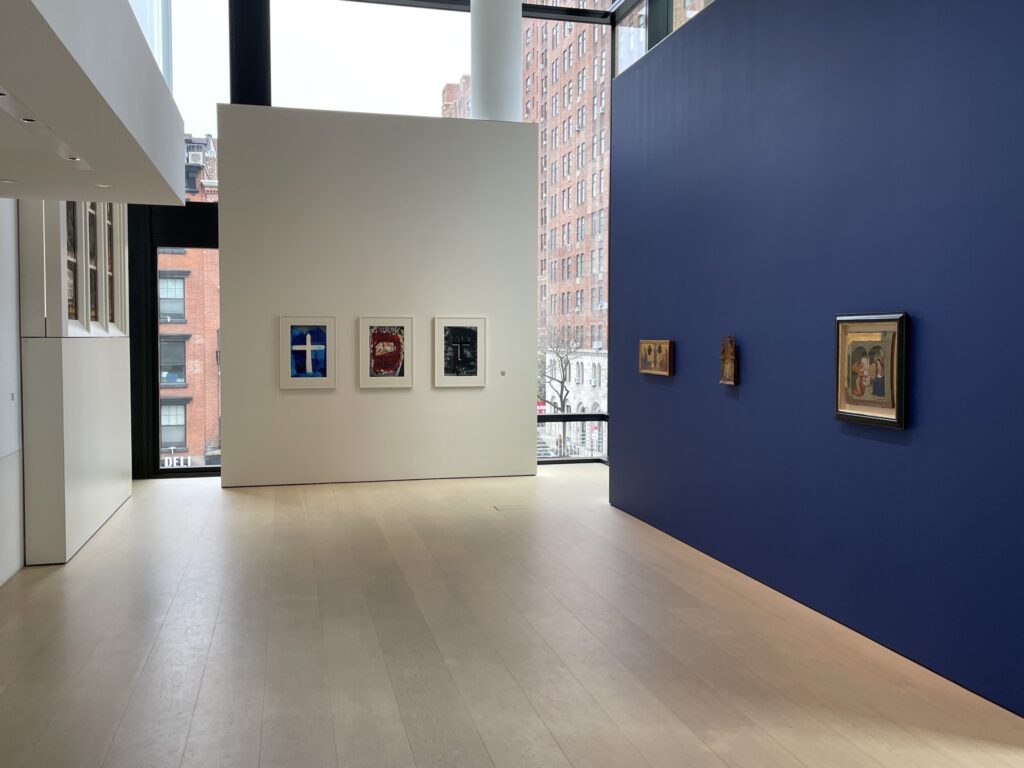
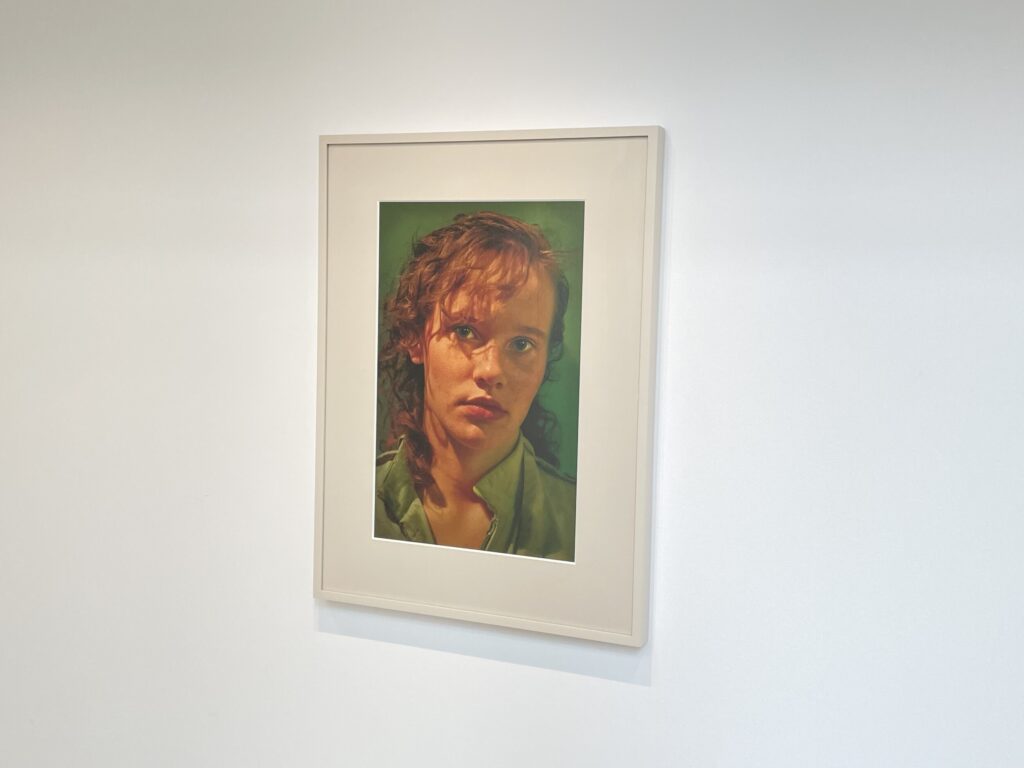
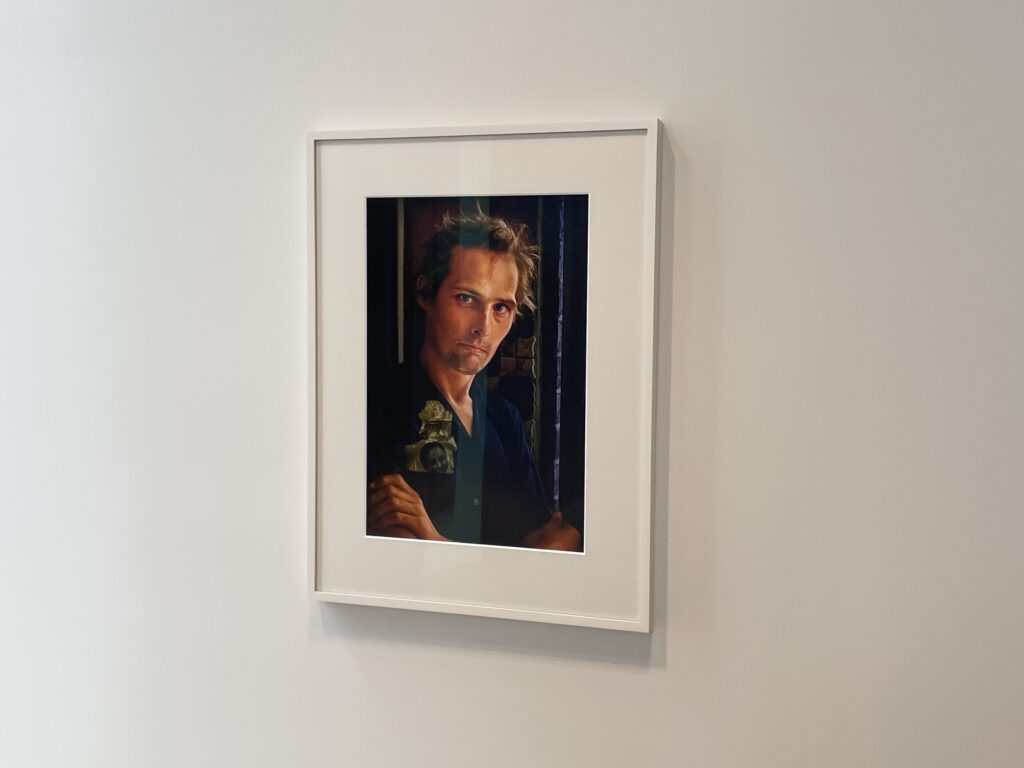
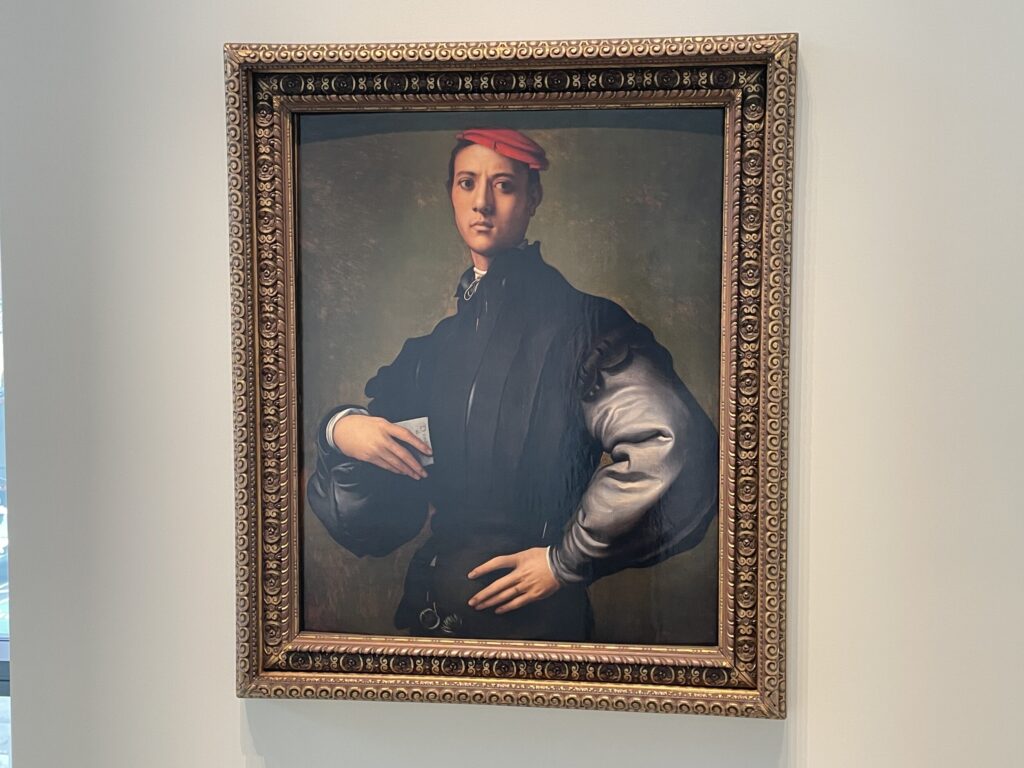
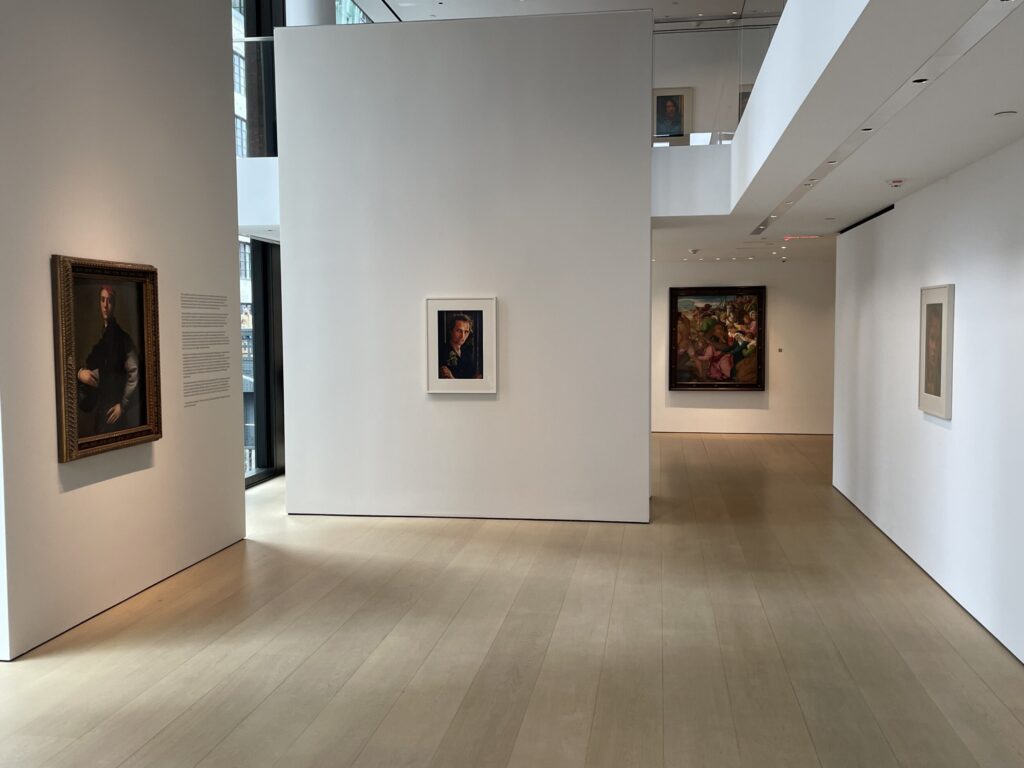
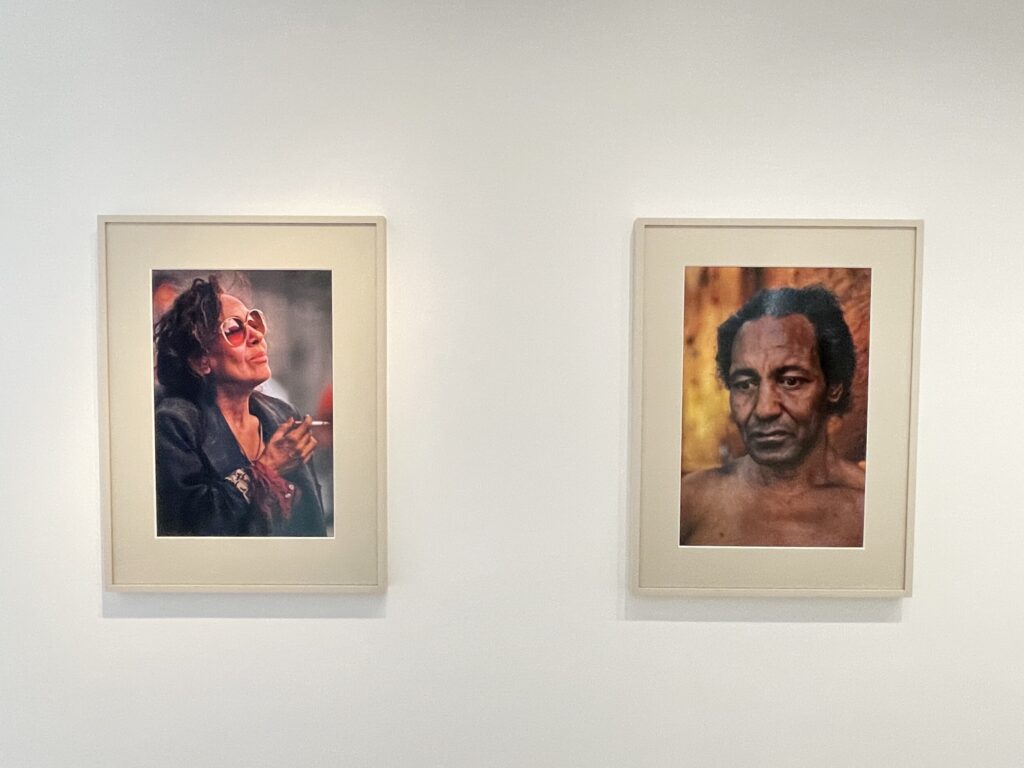
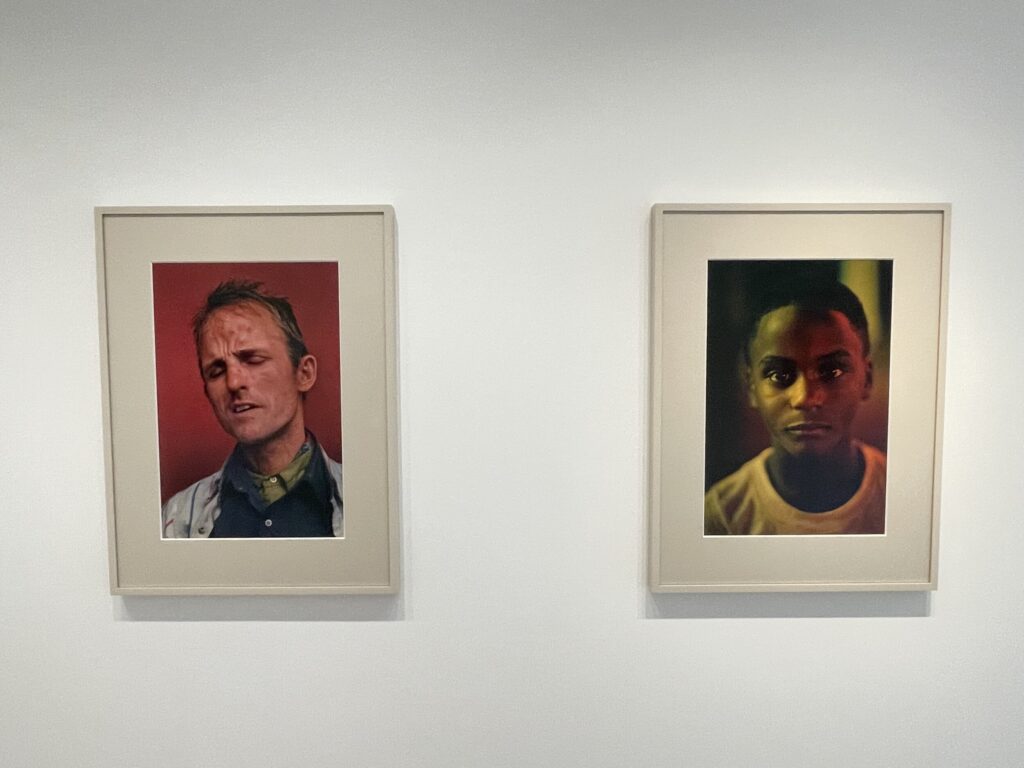
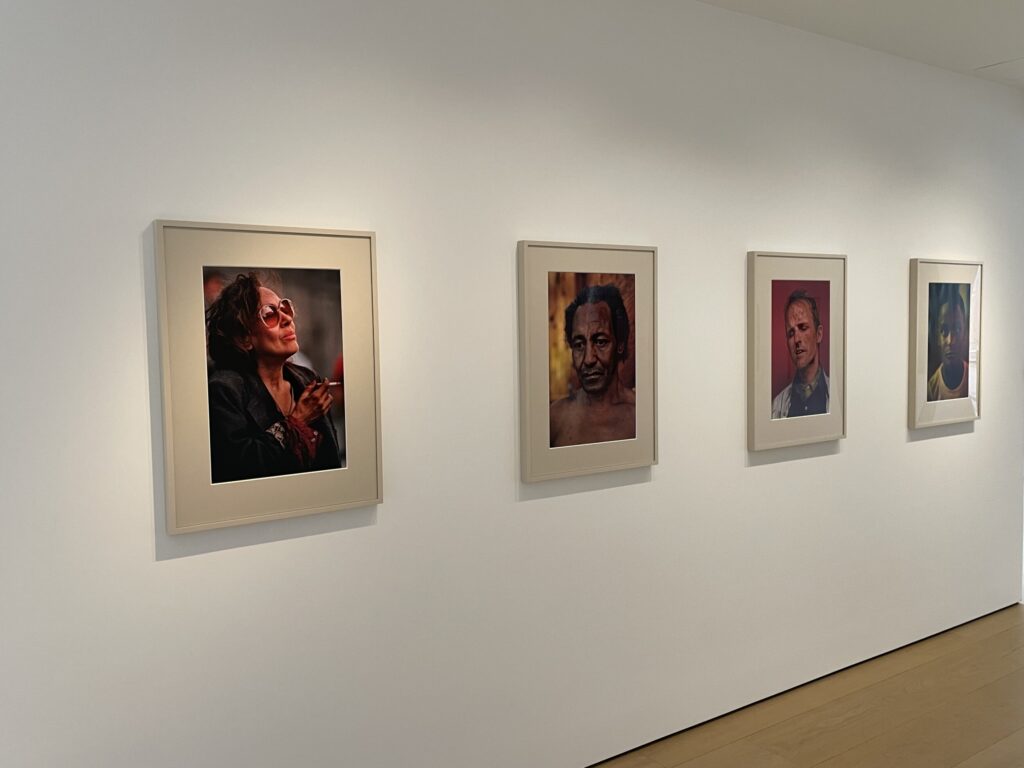
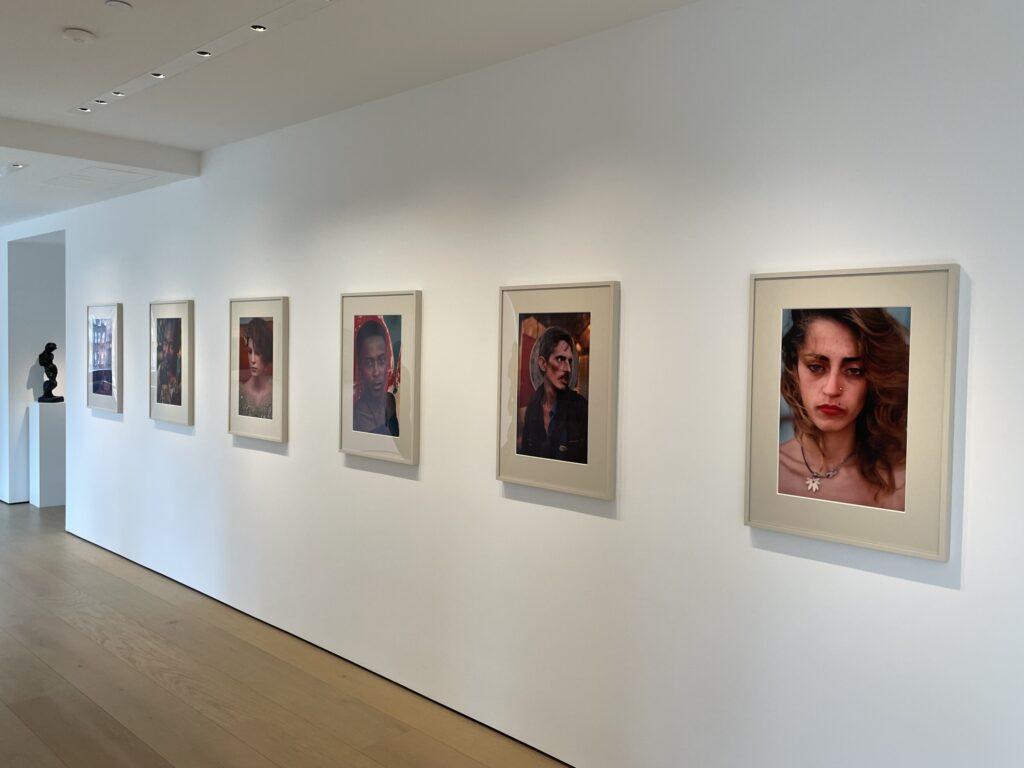
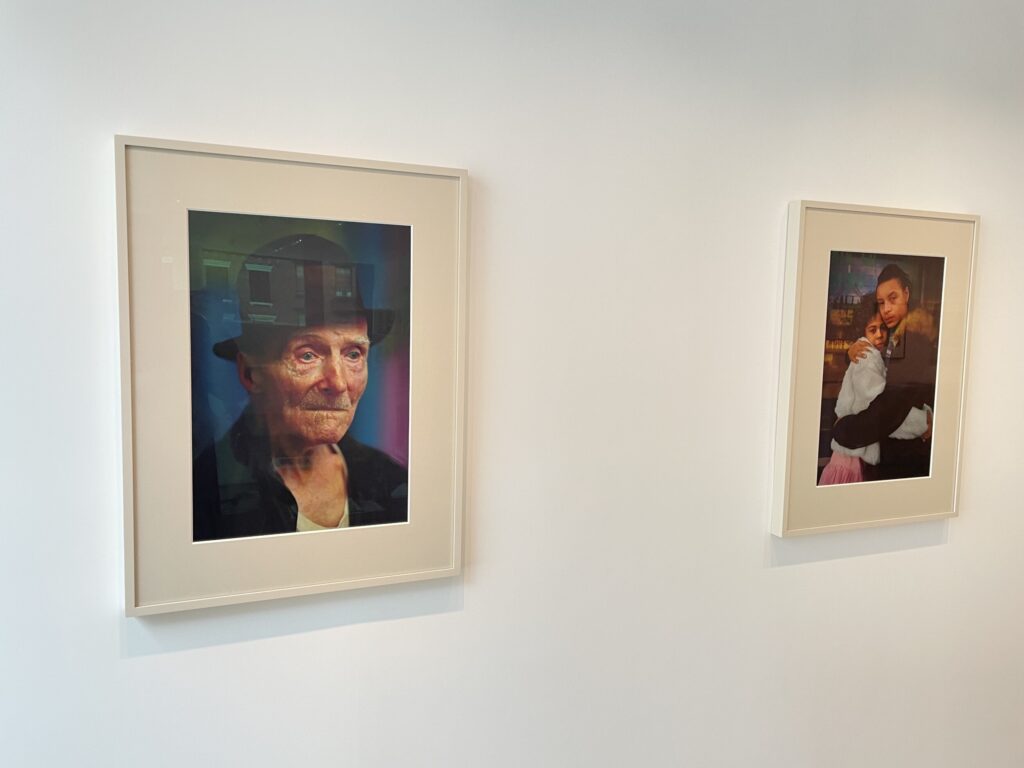
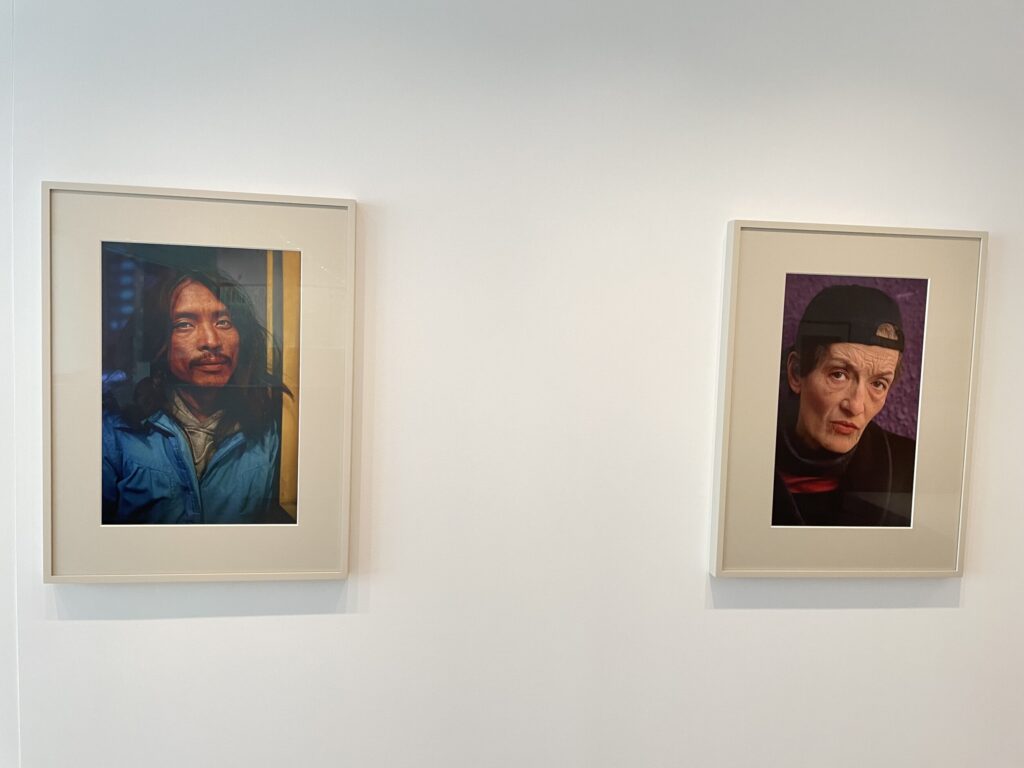
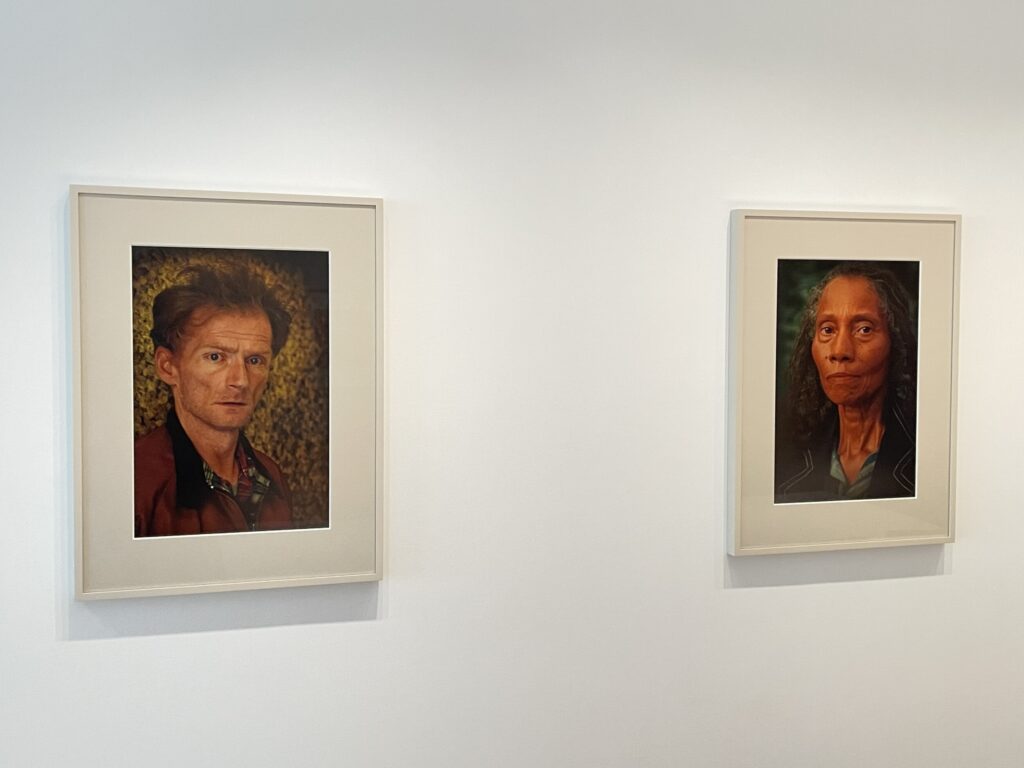
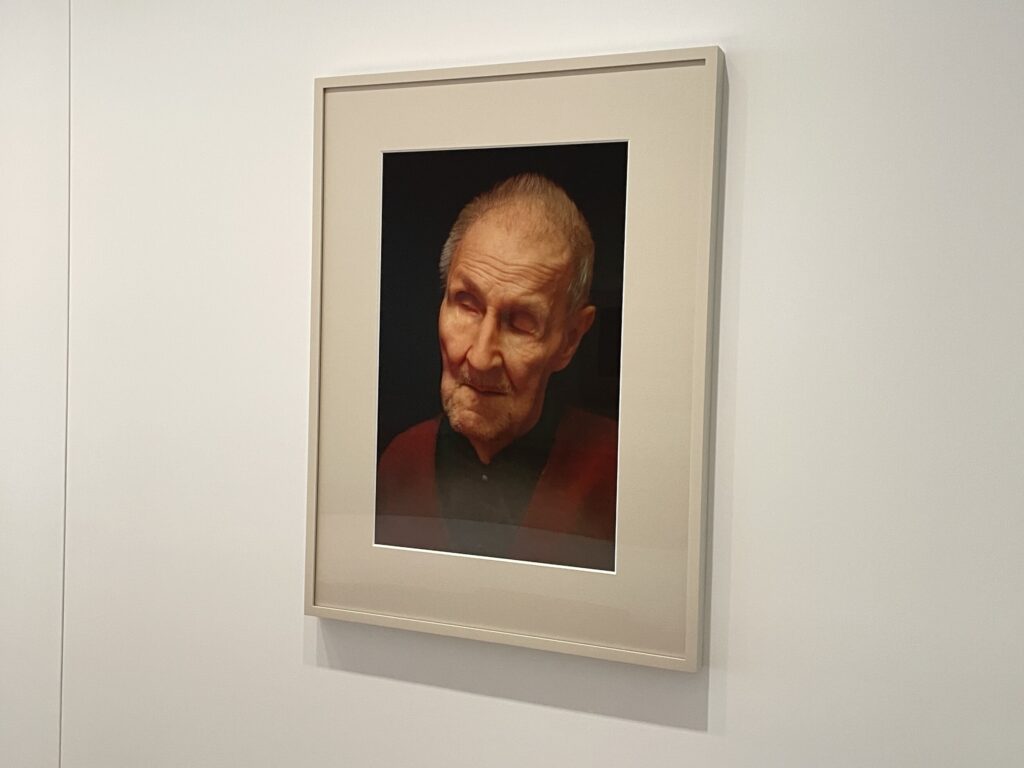
JTF (just the facts): A total of 42 color photographs, framed in cream and matted, and hung against white and blue walls in a series of rooms on the third and fourth floors of the foundation. The show was curated by David Levi Strauss. (Installation shots below.)
Robert Bergman
- 18 inkjet prints with isolation coat of BA/MMA copolymer, 1986, 1987, 1989, 1990, 1991, 1994, 1995, sized roughly 31×22 inches
- 24 archival pigment prints, 1986, 1987, 1988, 1989, 1990, 1991, 1993, 1994, 1995, sized roughly 31×22 inches (or the reverse)
Other Artists
- Peter Paul Rubens: 1 oil on canvas, 1628-1629, sized roughly 22×17 inches
- Joos van Cleve: 1 oil on oak panel, 1525-1530, sized roughly 33×26 inches
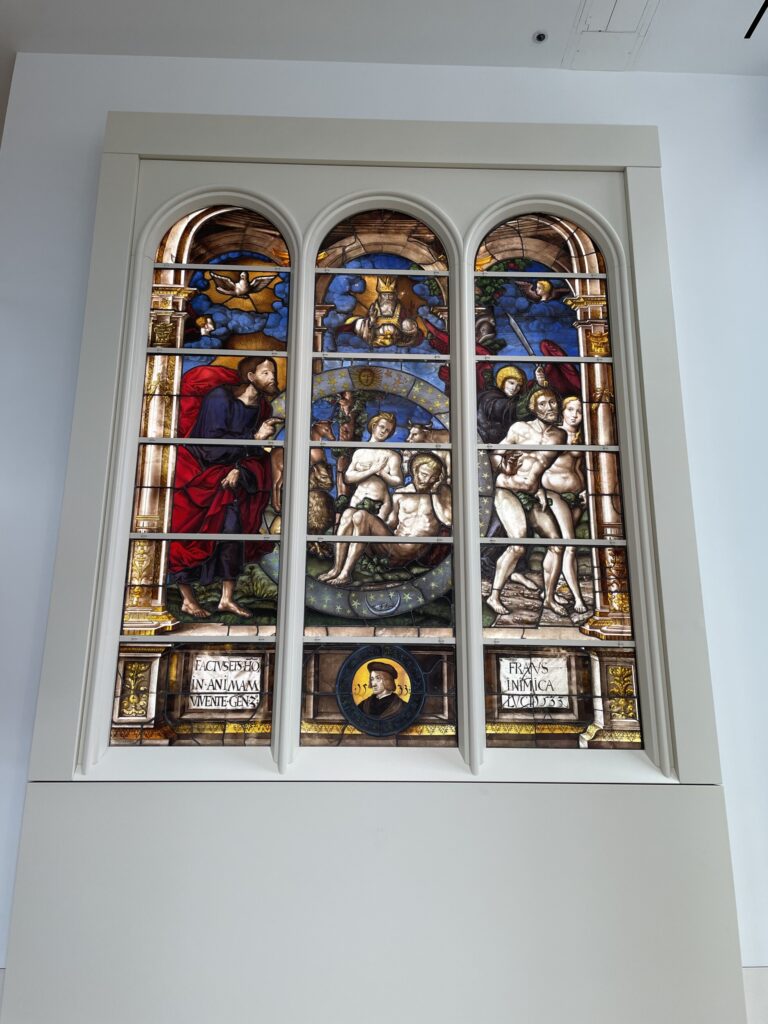
- Valentin Bousch: 1 colored and colorless glass with silver stain, and vitreous enamel, 1533, sized 144×90 inches
- Giovanni da Milano: 1 tempera on gold ground panel, 1346-1369, sized roughly 10×25 inches
- Giovanni di Paolo: 1 tempera on gold ground panel, 1399-1482, sized roughly 15×9
- Luca di Tommè: 1 tempera on gold ground panel, 1360s, sized roughly 16×16 inches
- Jacopo Pontorno: 1 acrylic gesso, fiberglass, and traditional gesso, color transferred thought an inkjet pigment print and sealed with varnish, mounted on polyurethane board, 1530/2018 (replica), sized roughly 36×29 inches
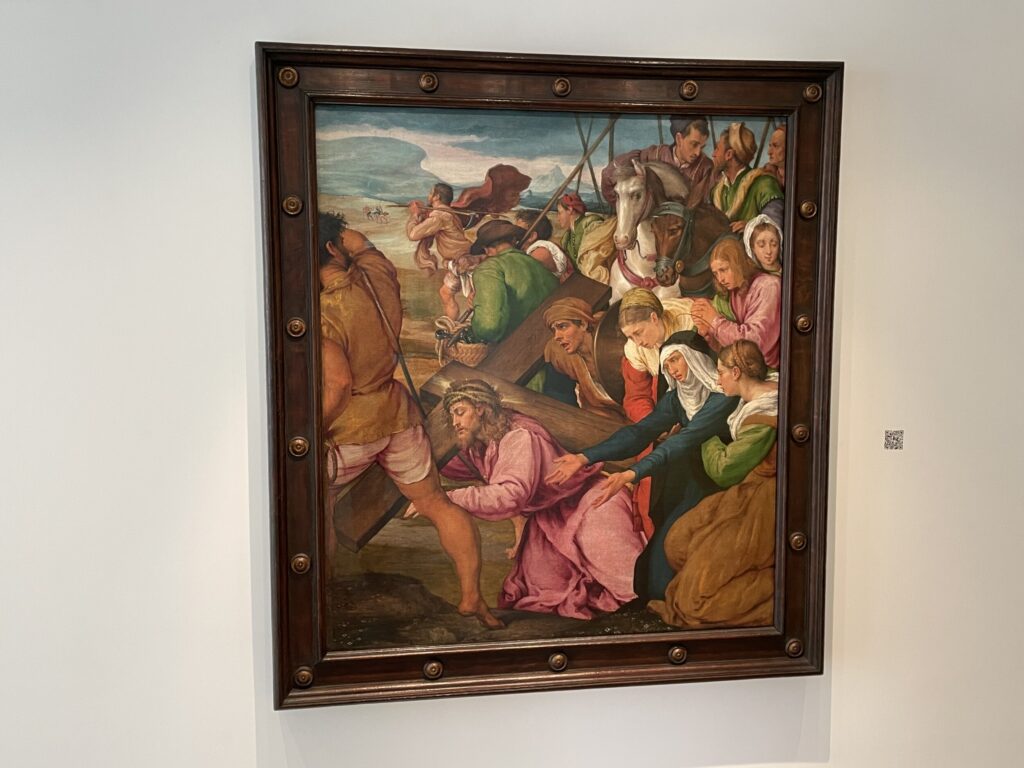
- Jacopo Bassano: 1 oil on canvas, 1542-1545, sized roughly 54×46 inches
- Paolo Ucello: 1 tempera on gold ground panel, c1423, sized roughly 24×13 inches
- Antonio Susini: 1 gilt bronze, c1590-1615, sized roughly 12×10 inches
- Anthony van Dyck: 1 oil on panel, 1618, sized roughly 12×9 inches
- Willem de Kooning: 1 bronze, 1972, sized roughly 60x29x24 inches
- Frank Auerbach: 1 oil on canvas, 1985, sized roughly 26×26 inches
- Henri Matisse: 1 bronze and brown patina, 1903/1930-1951, sized roughly 24x7x7 inches
- Duccio: 1 tempera on gold ground panel, c1280, sized roughly 8×8 inches
- Andy Warhol: 1 spray enamel and silkscreen on linen, 1964, sized roughly 20×16 inches
- Peter Hujar: 1 gelatin silver print, 1975, sized roughly 15×15 inches
A catalog of the exhibition is available from the foundation. (Cover shot below.)
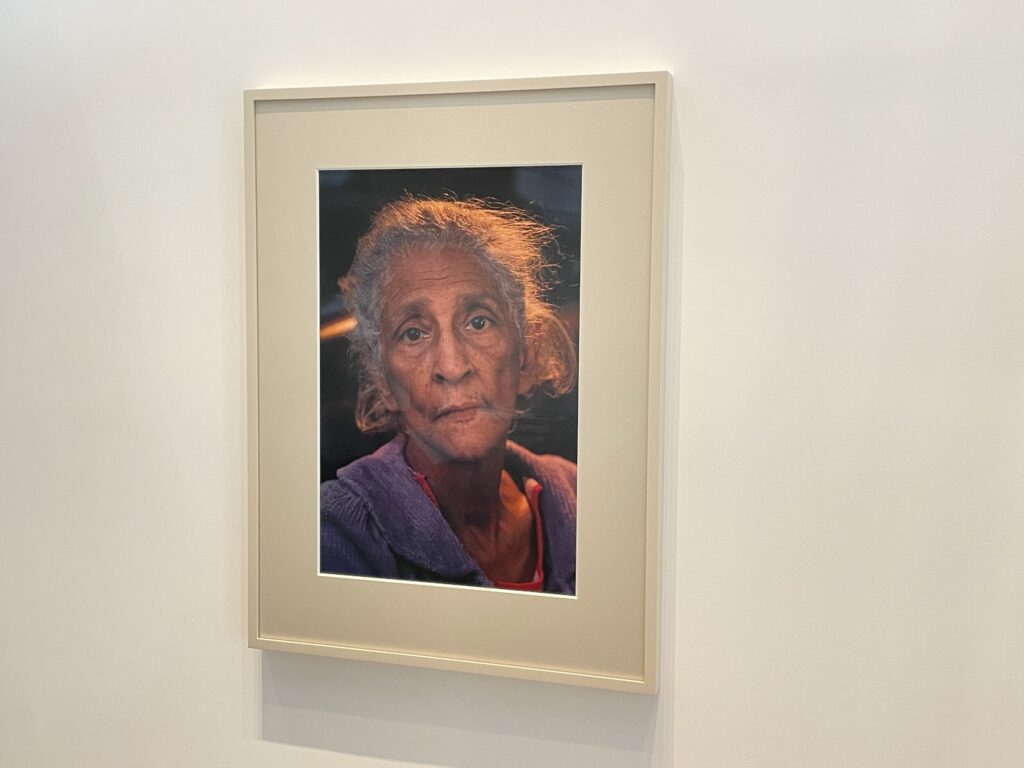
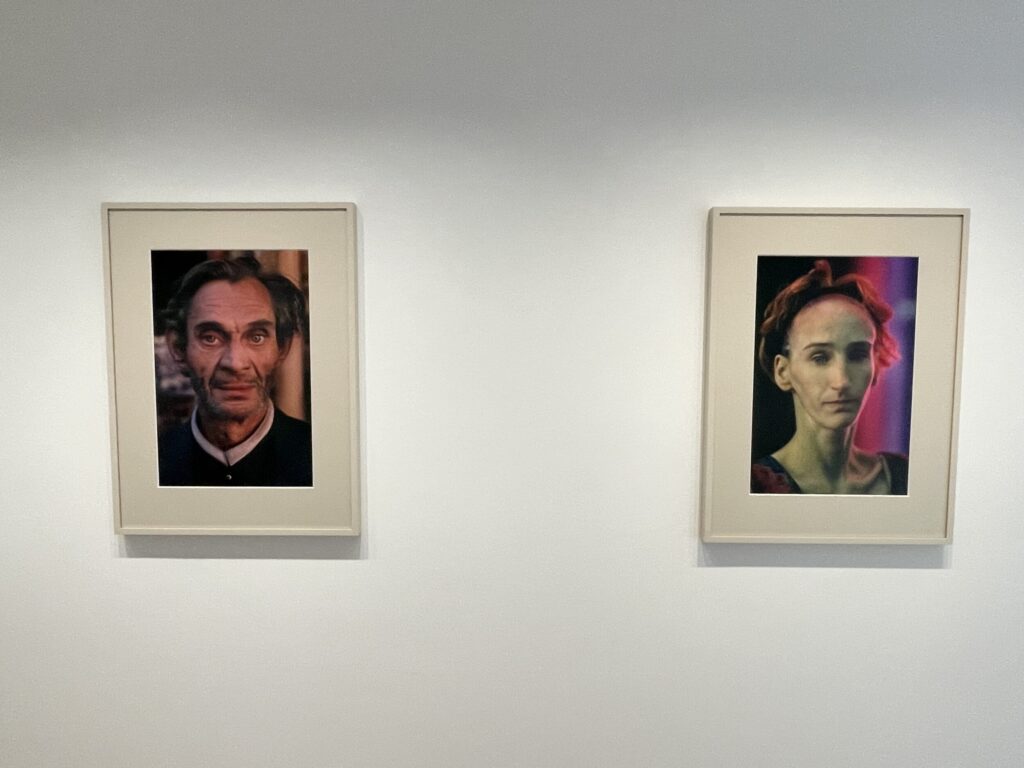
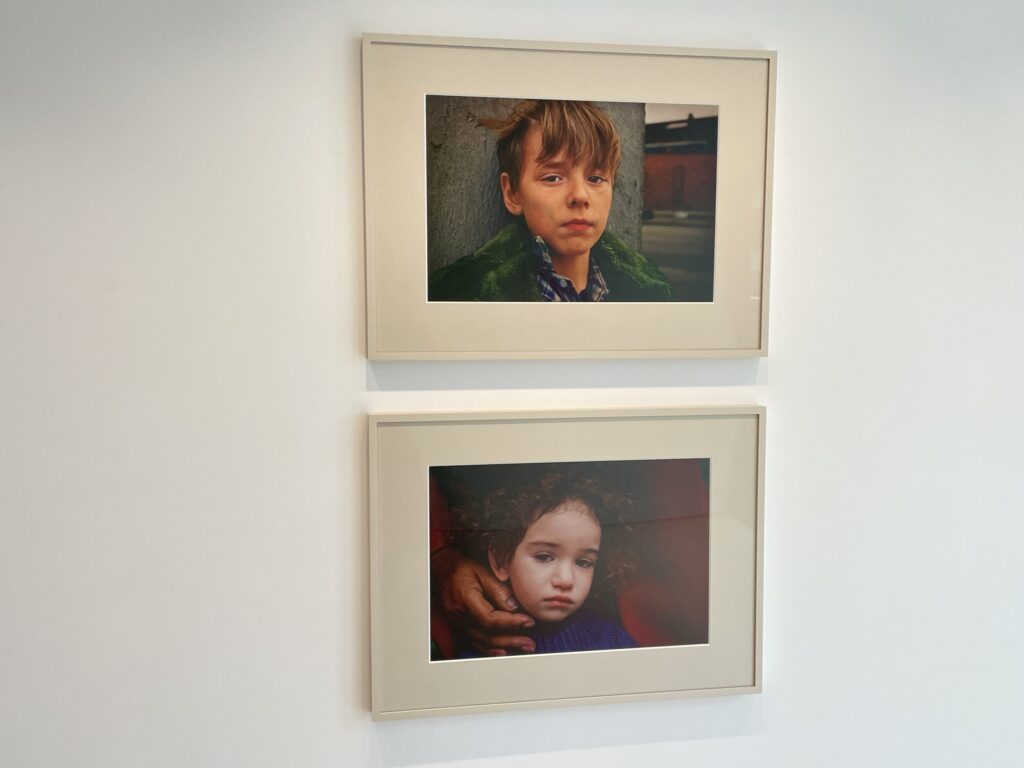
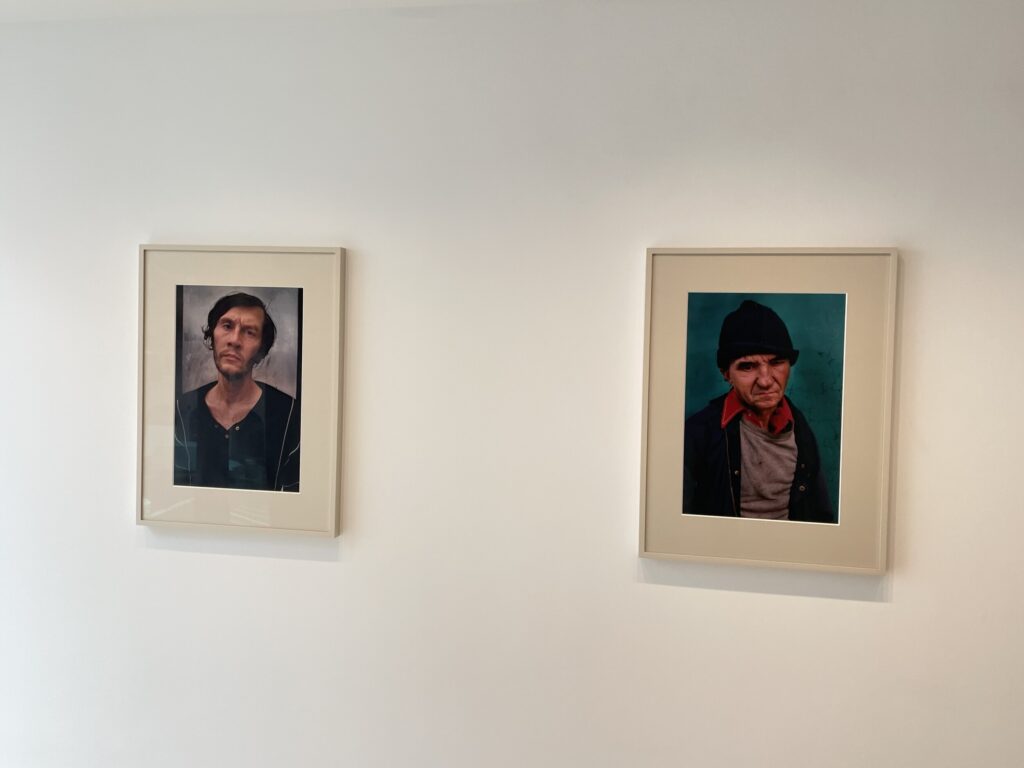
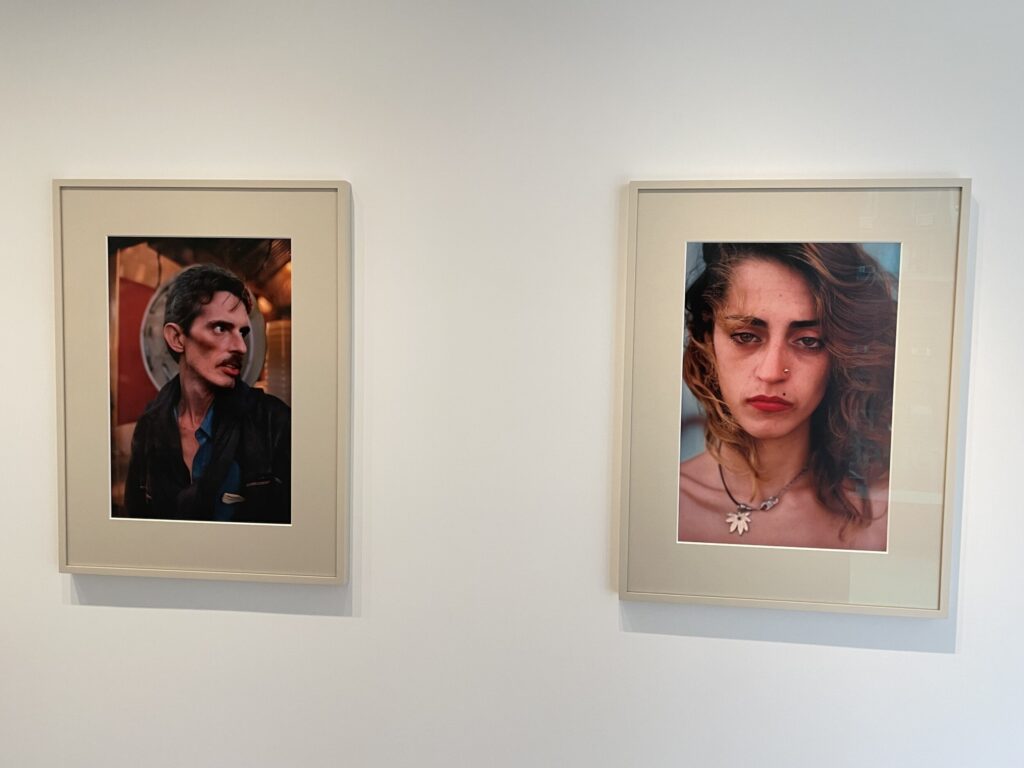
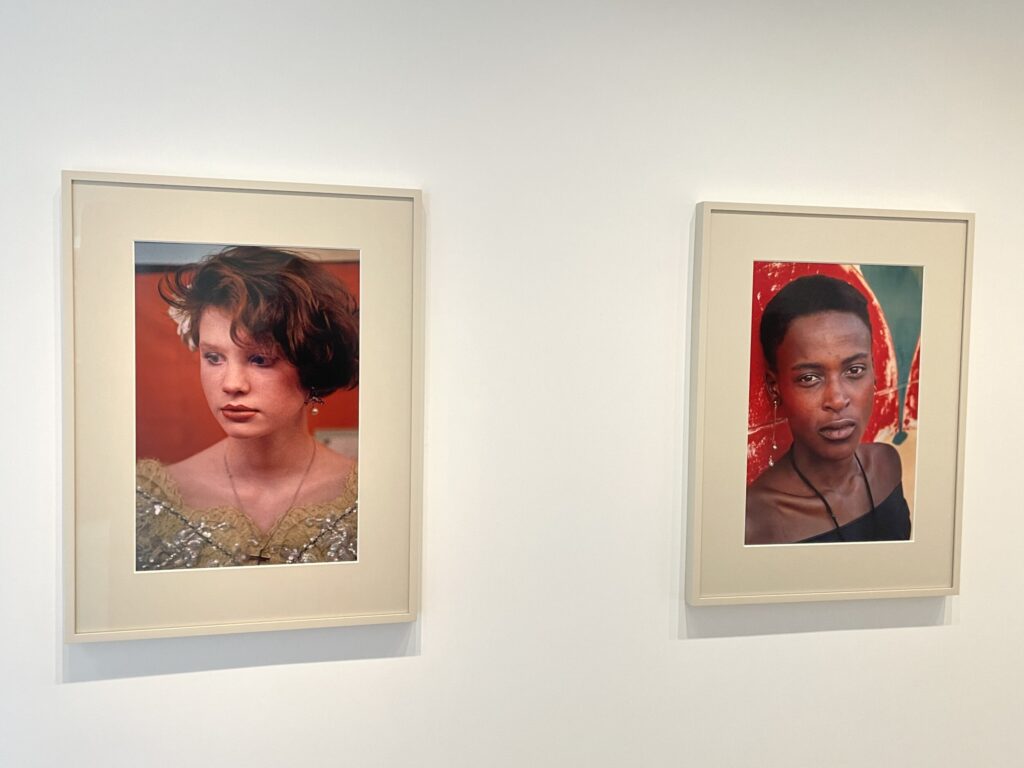
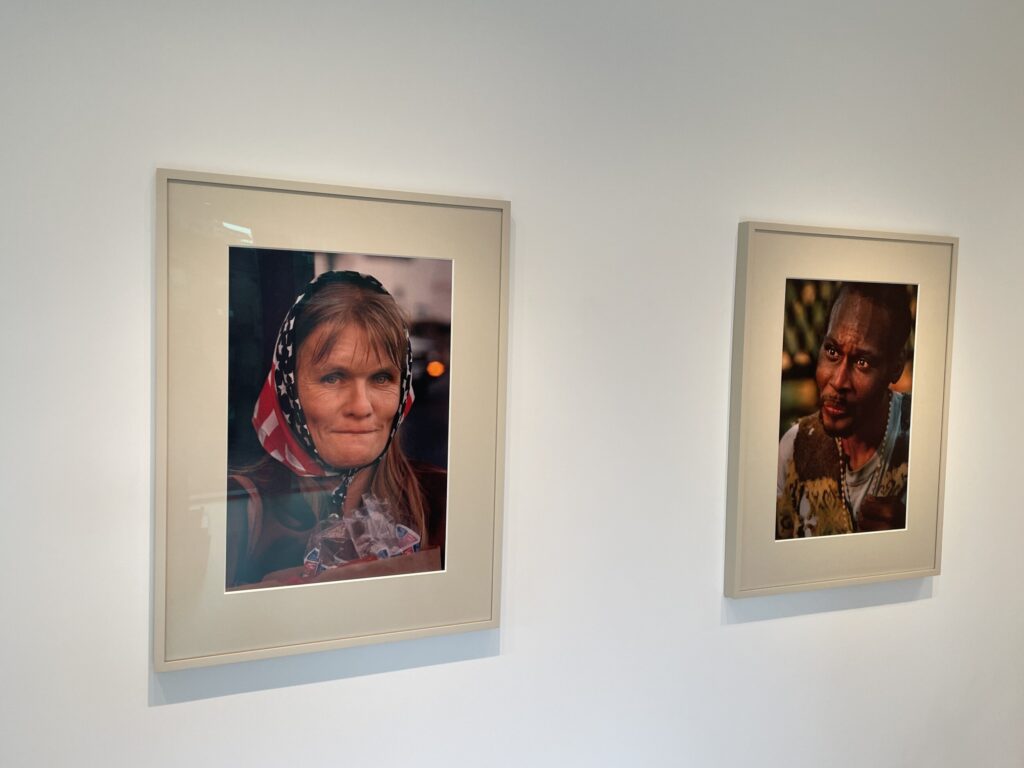
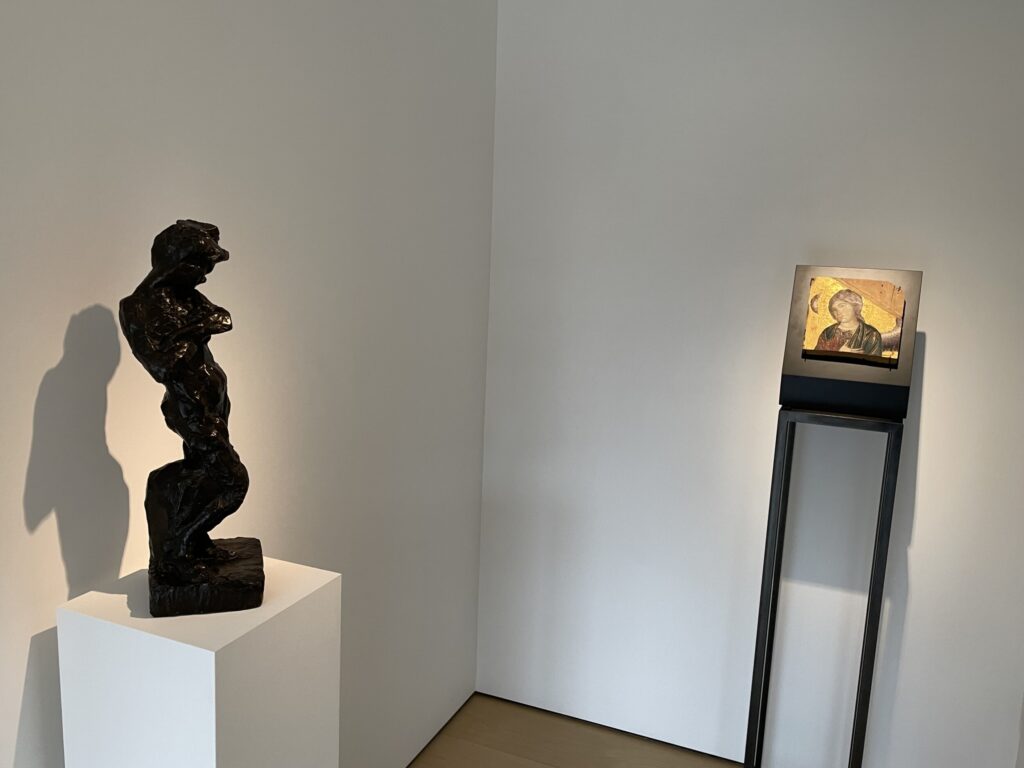
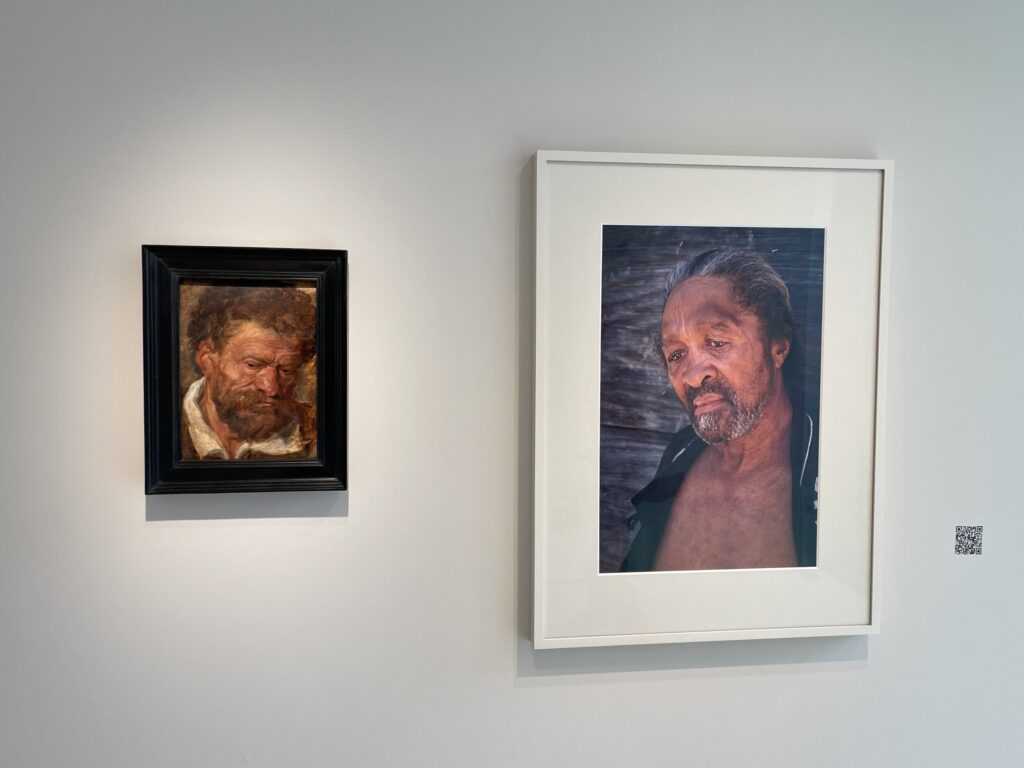
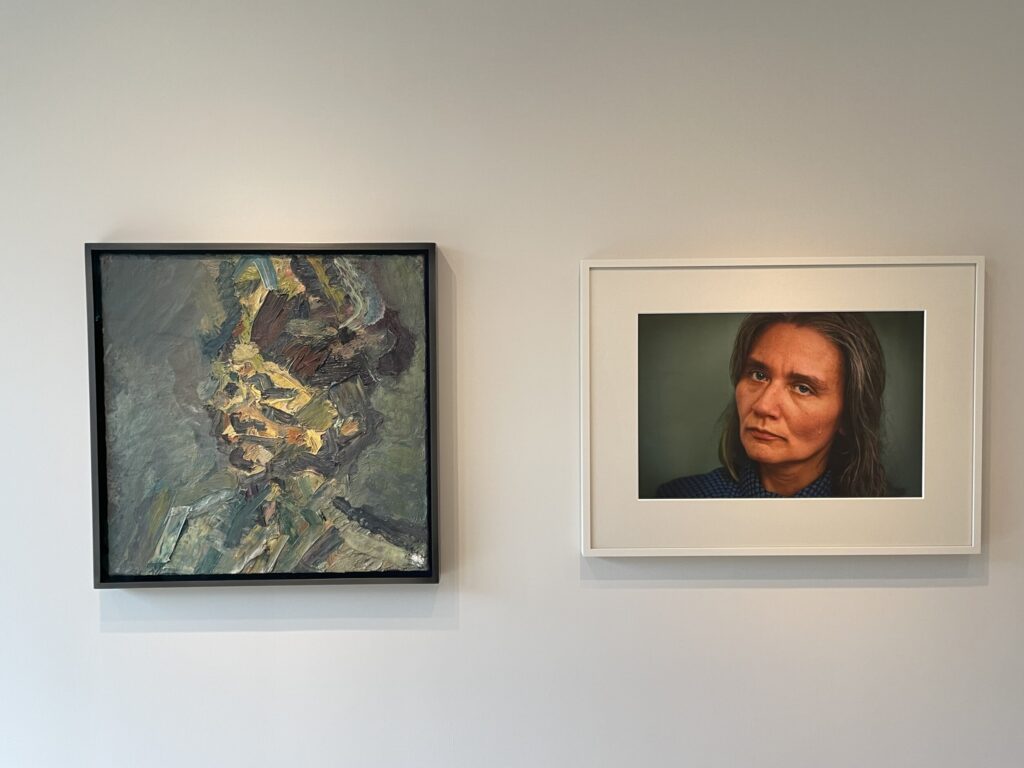
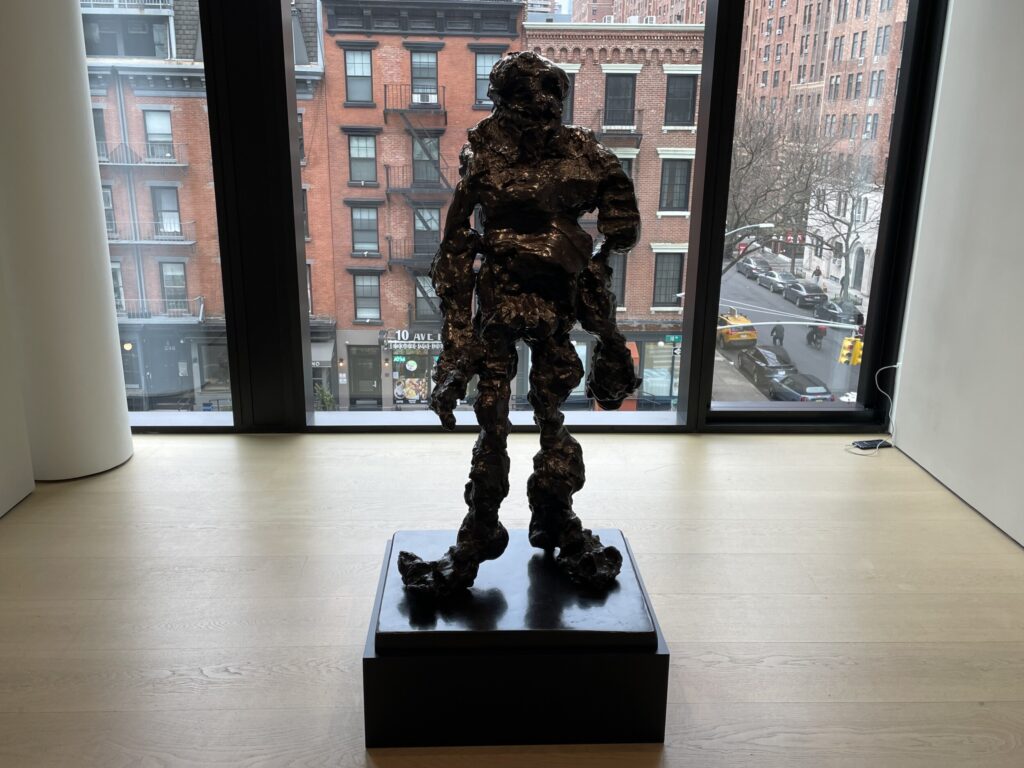
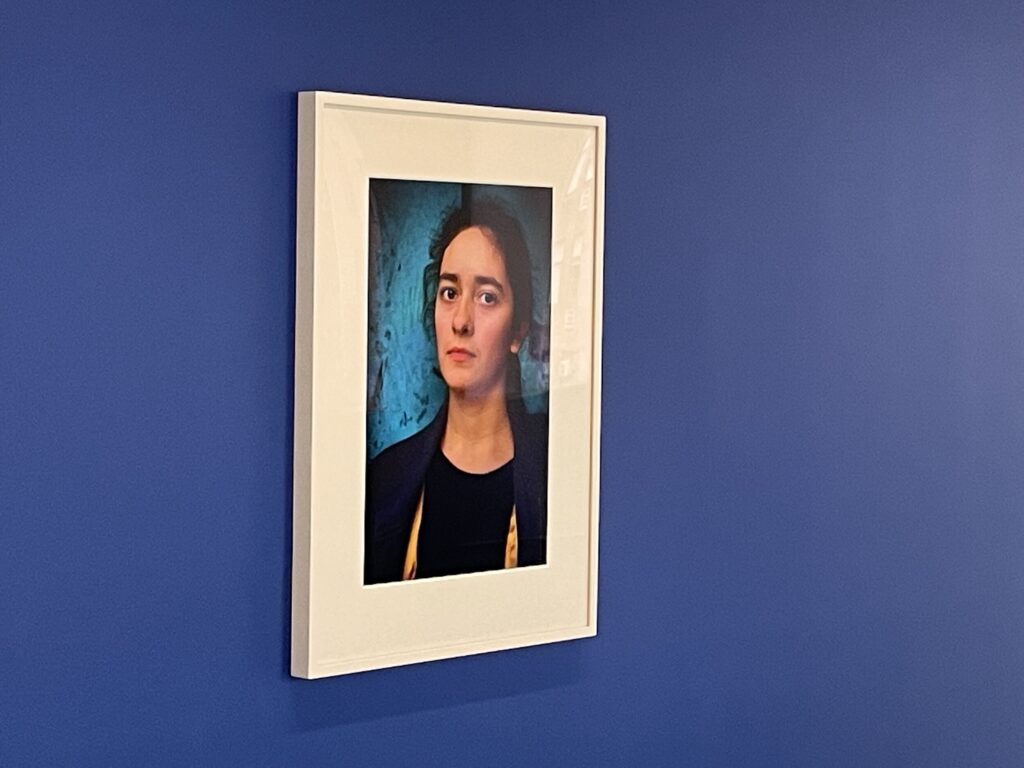
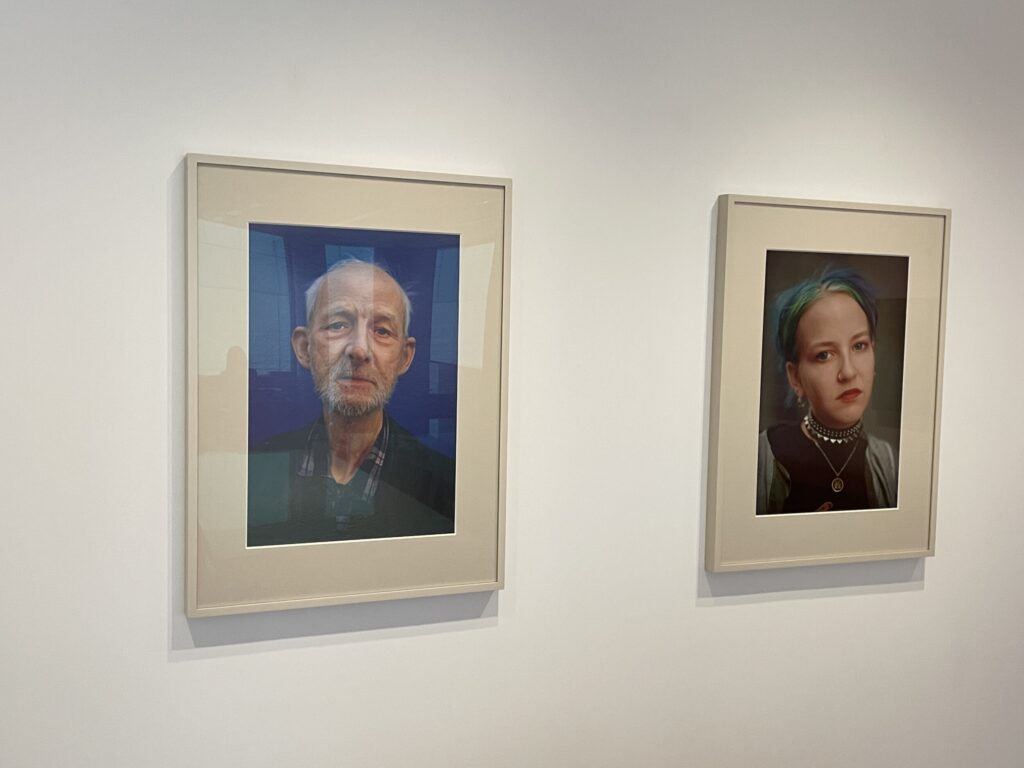
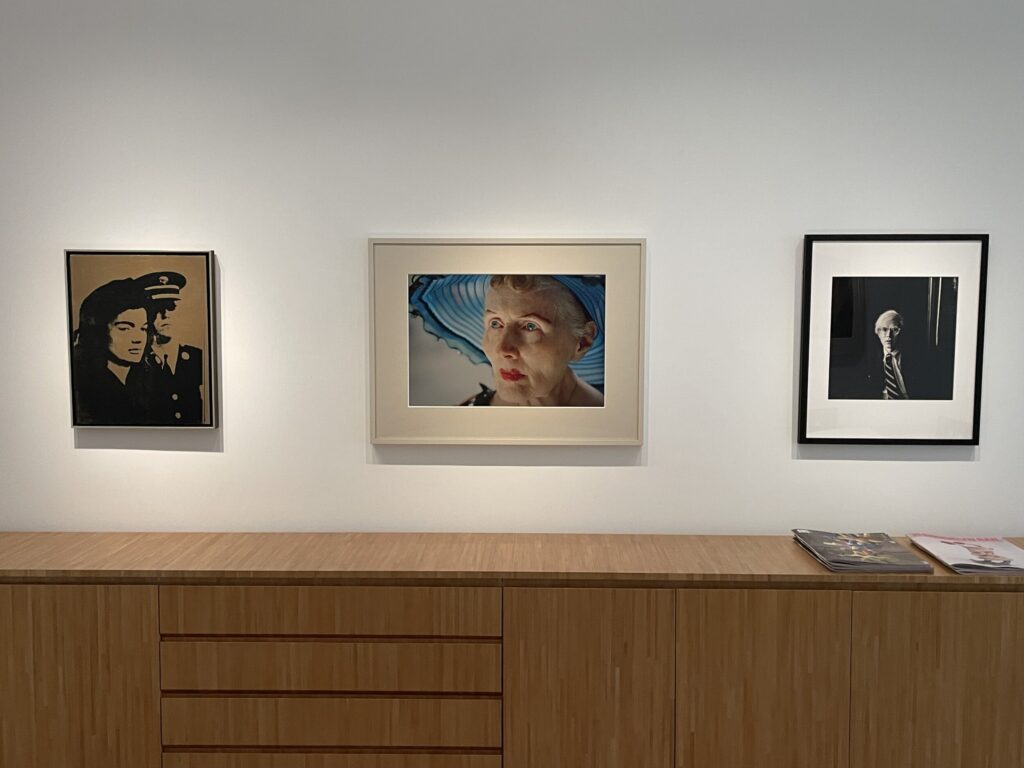
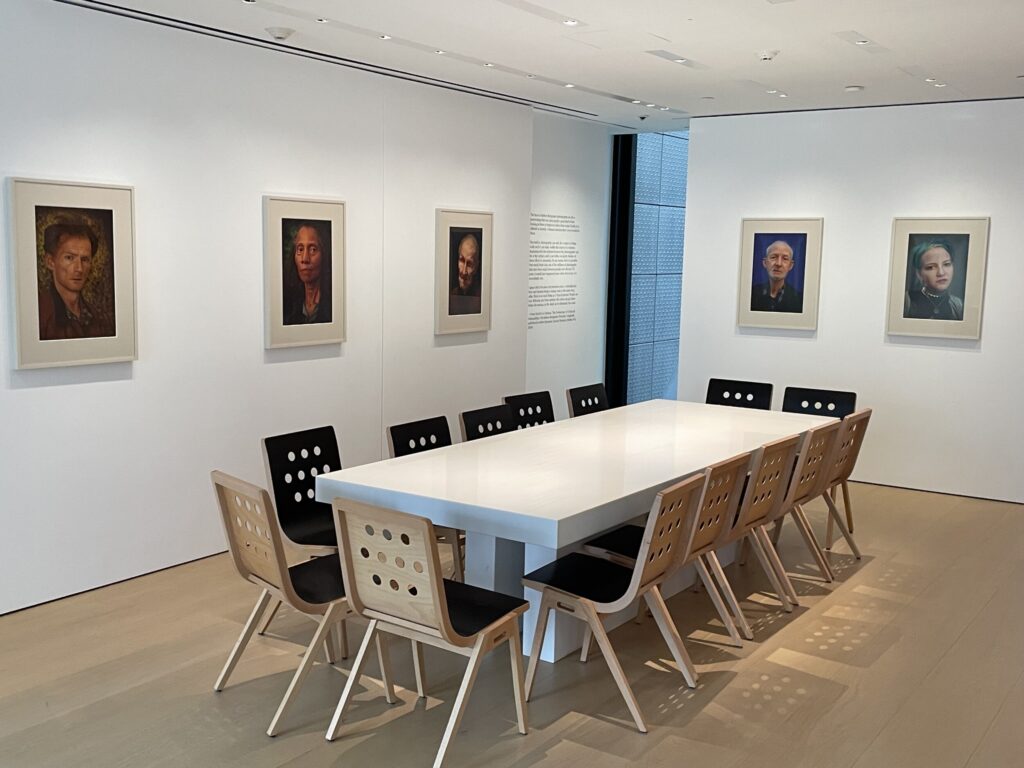
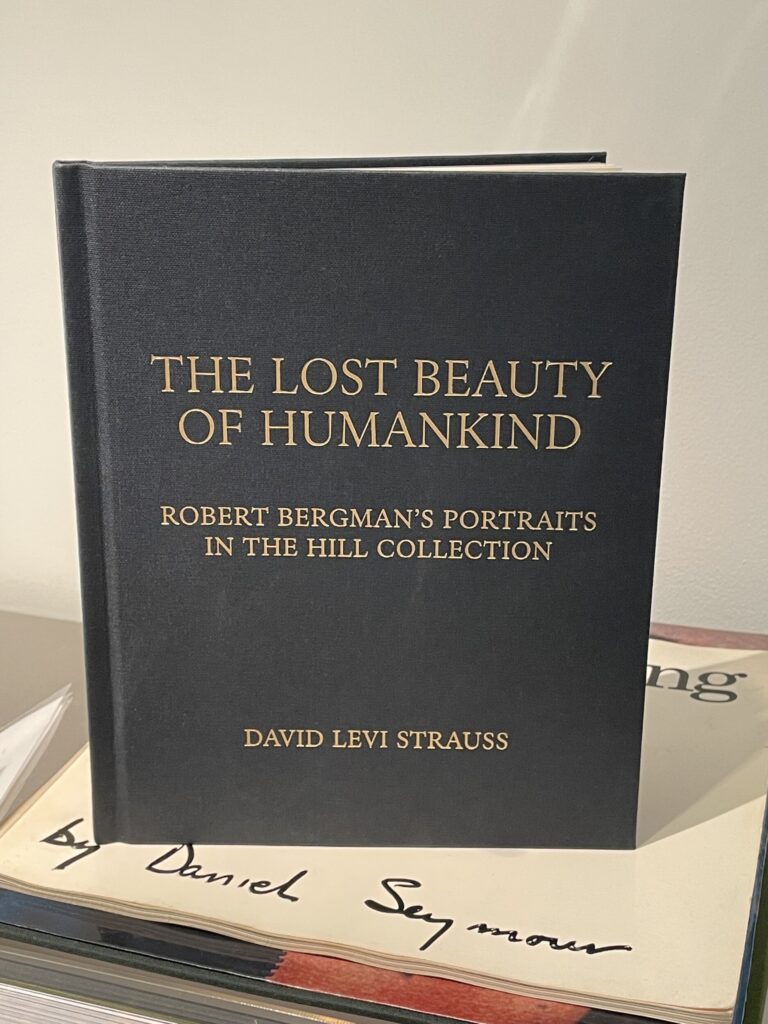
Comments/Context: In thinking about any particular photographic project, it’s often the case that a writer or critic (myself included) will make an allusion to artworks made in another medium, to draw parallels of aesthetics, subject matter, or mood or to set some art historical context. And it’s decently easy to trot out these kinds of “looks like” connections to different eras of painting – the given photographs might resemble the setups of 18th century Dutch still lifes or the delicate light in Johannes Vermeer’s portraits, the isolated man in nature of 19th century German Romanticism, the sweeping human drama of 19th century French history paintings, or even the seething horrors of 20th century German Expressionism. But even though these comparisons across time can potentially be instructive and illuminating, we rarely see such side-by-side pairings in a gallery or museum setting, so when such a show is staged, it’s worth a detour to really observe just how applicable the references actually are.
When the photographic portraits of Robert Bergman from the late 1980s and early 1990s are discussed and analyzed in print, it’s hard not to find an overly handy connection to the structure and atmosphere of Old Master paintings – and I should know, as I made such a reference when writing about his gallery show at Yossi Milo back in 2009 (reviewed here), at a moment when Bergman’s often overlooked and under appreciated work was having a confluence of institutional attention (in the form of museum exhibitions at MoMA PS1 and the National Gallery of Art.) In that review, I explicitly mentioned that one notable Bergman photograph “could easily hold the wall with an Old Master portrait of a priest or nobleman”, but of course, no such pairing was readily available, so my association was more plausibly imaginary than physically real.
With the help of curator and critic David Levi Strauss, the Hill Art Foundation has stepped up to deliver an effective Robert Bergman and Old Masters showdown, with some forty photographic portraits by Bergman (all in color) hung together with artworks (paintings, sculpture, and even stained glass) drawn from the Hill Collection reaching back to the early Renaissance. In particular, the show includes more than half a dozen well-chosen pairings of photographs and paintings that clearly enable close side-by-side comparison, encouraging us to look back-and-forth across time and geography to see where the subtle intimacies of humanity might lie. The short synopsis is that Bergman’s pictures hold up well against this murder’s row of Old Masters rarities, creating thoughtful dialogues and visual echoes again and again.
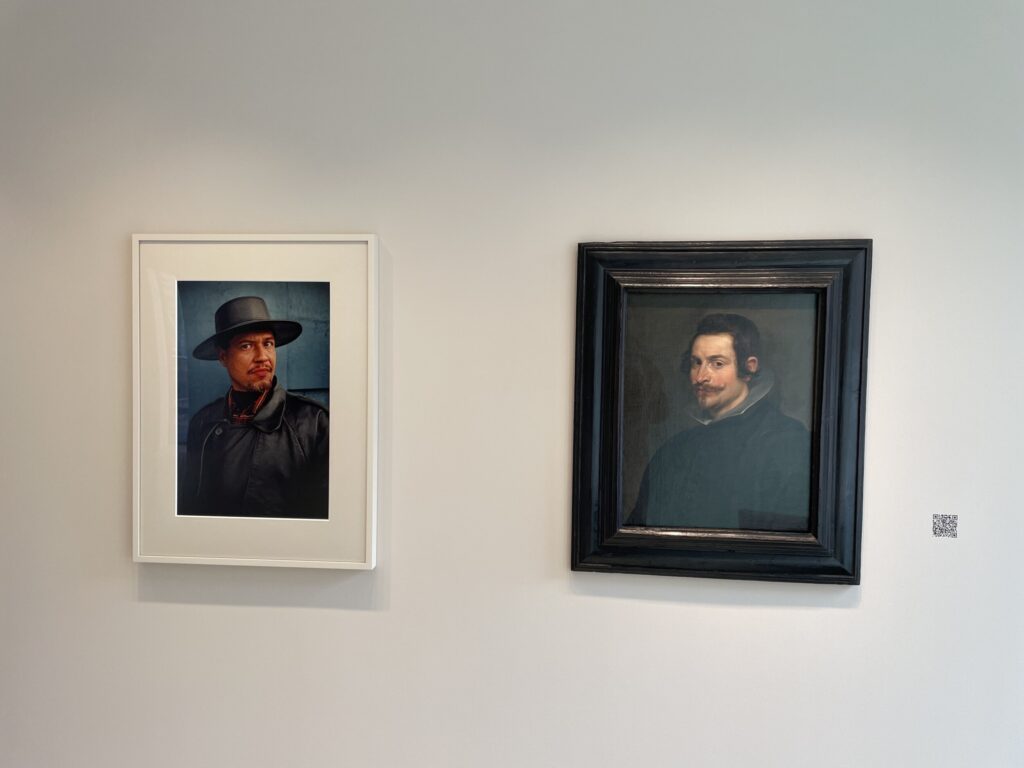
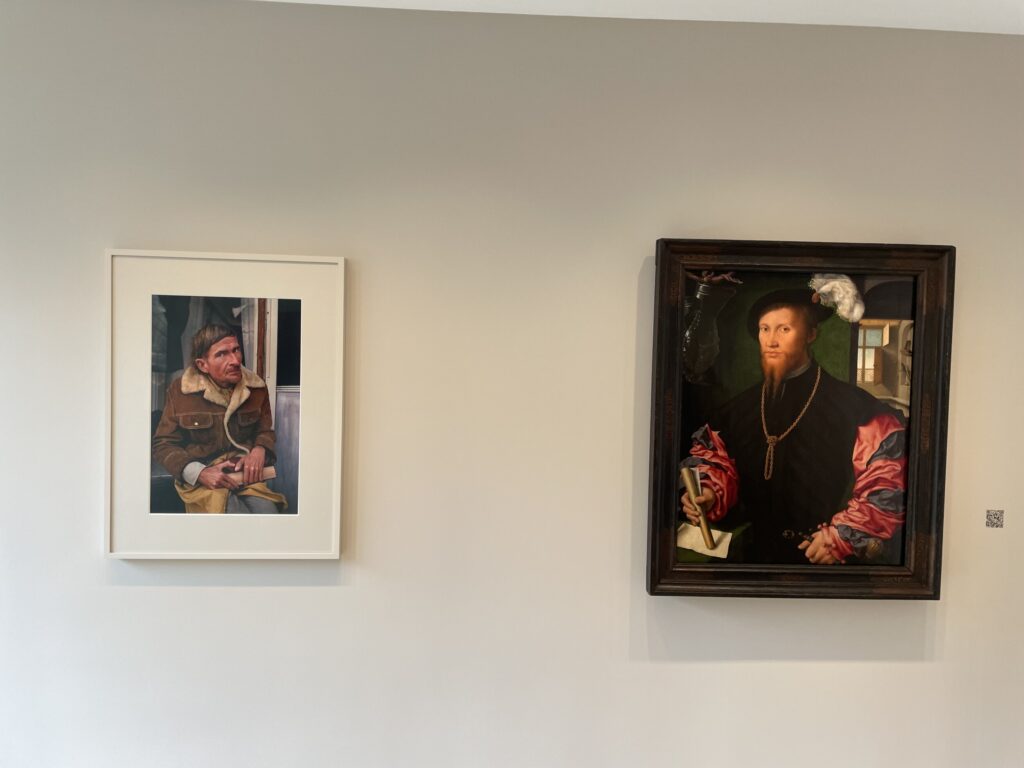
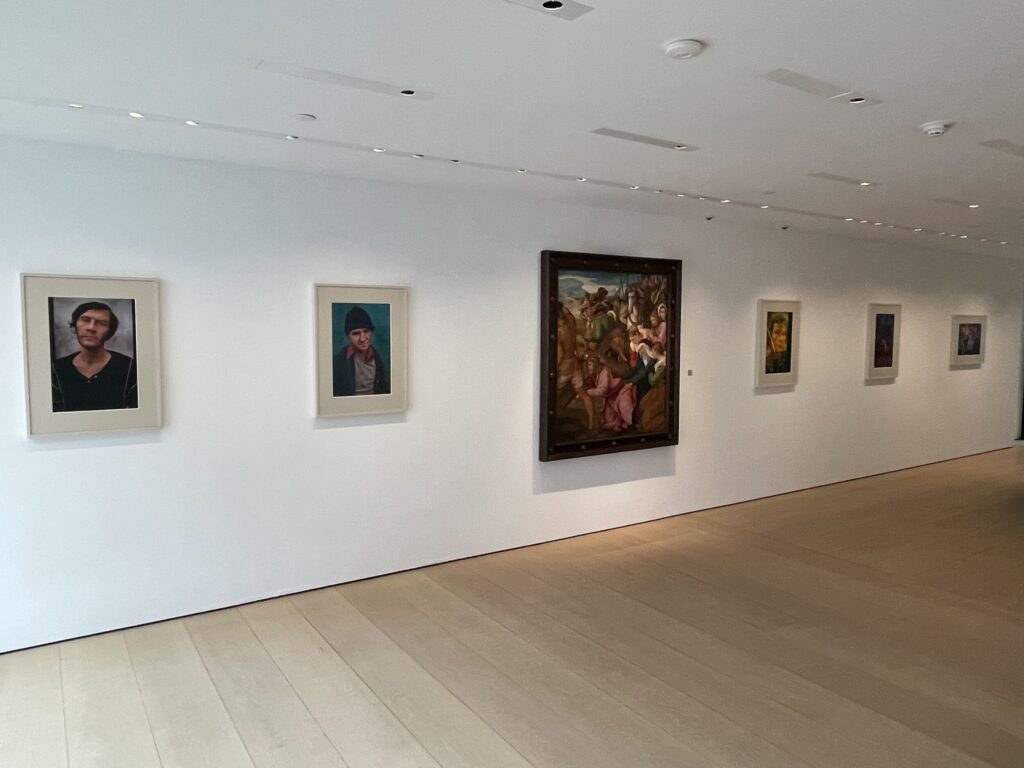
And on one of the first walls of the show, the exact pairing I had envisioned many years ago appears – Bergman’s wary looking man with a scraggly beard in a sheepskin coat holding a book (one of his best known images, from 1989) hung right next to Joos van Cleve’s “Portrait of a Nobleman with a Beard” from the early 1500s, also sporting a wispy beard and holding a rolled up paper. Both sitters engage us with direct expressions, their eyes locking us into silent conversations, offering us hints of their life stories in everything from their clothes to their body language. Though more than 450 years apart, the two portraits share a kinship of demeanor, each man seen with the kind of honest intensity and clarity that strips away the differences of time. Nearby, another nearly perfect pairing matches Bergman’s portrait of a man in a black hat and coat (from 1993) with Peter Paul Rubens’s “Portrait of a Gentleman, Half-length, Wearing Black” from the late 1620s, the repetition of clothing, mustaches, and goatees made even stronger by the slightly turned, perhaps knowing, glances they each offer the viewer.
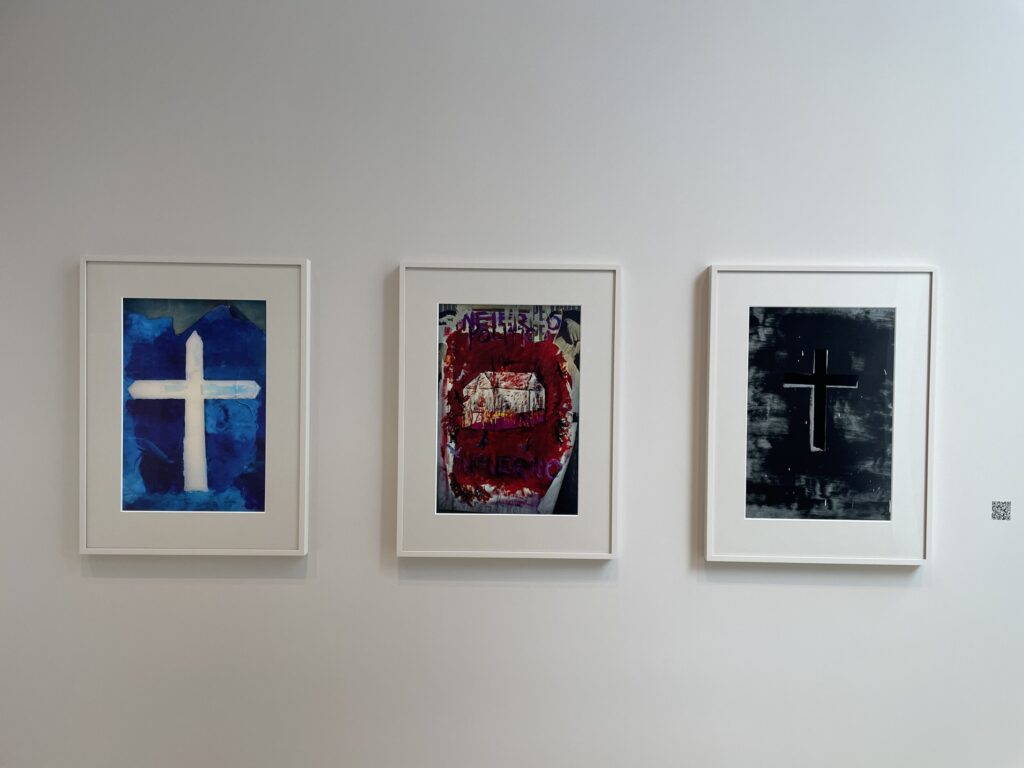
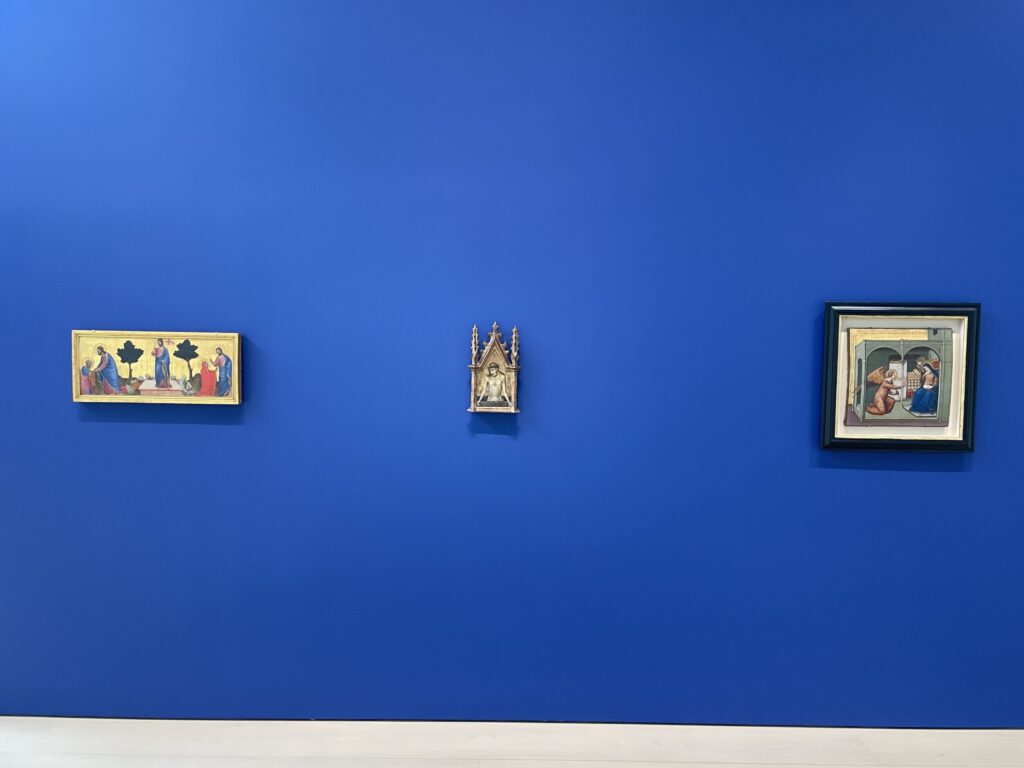
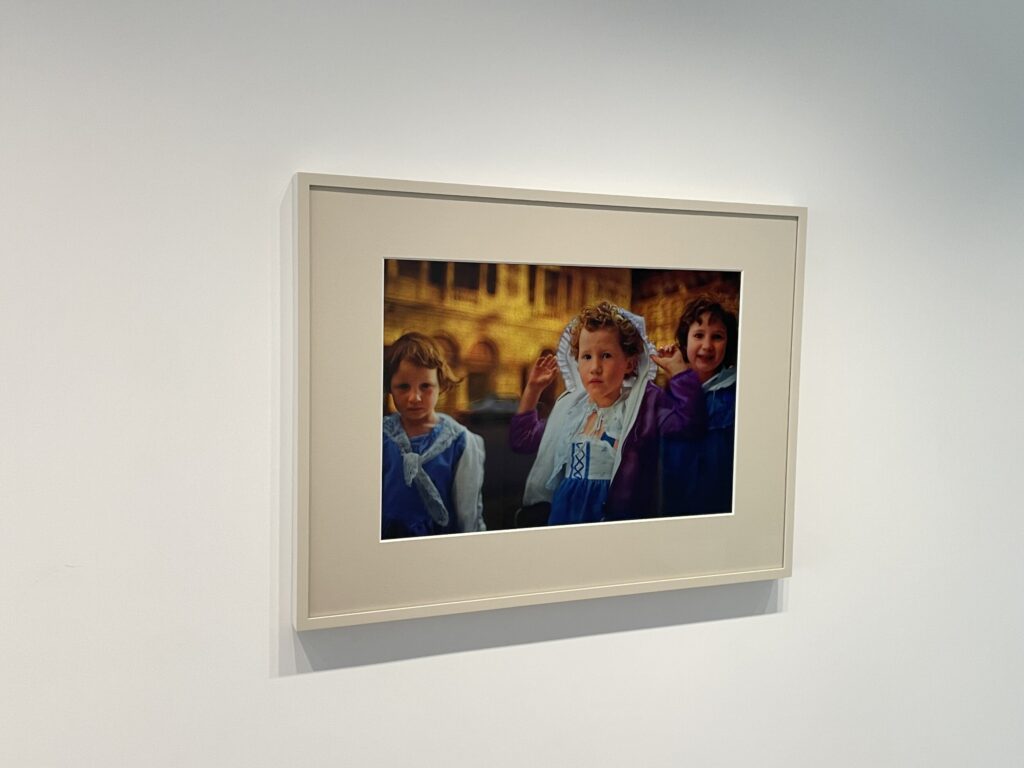
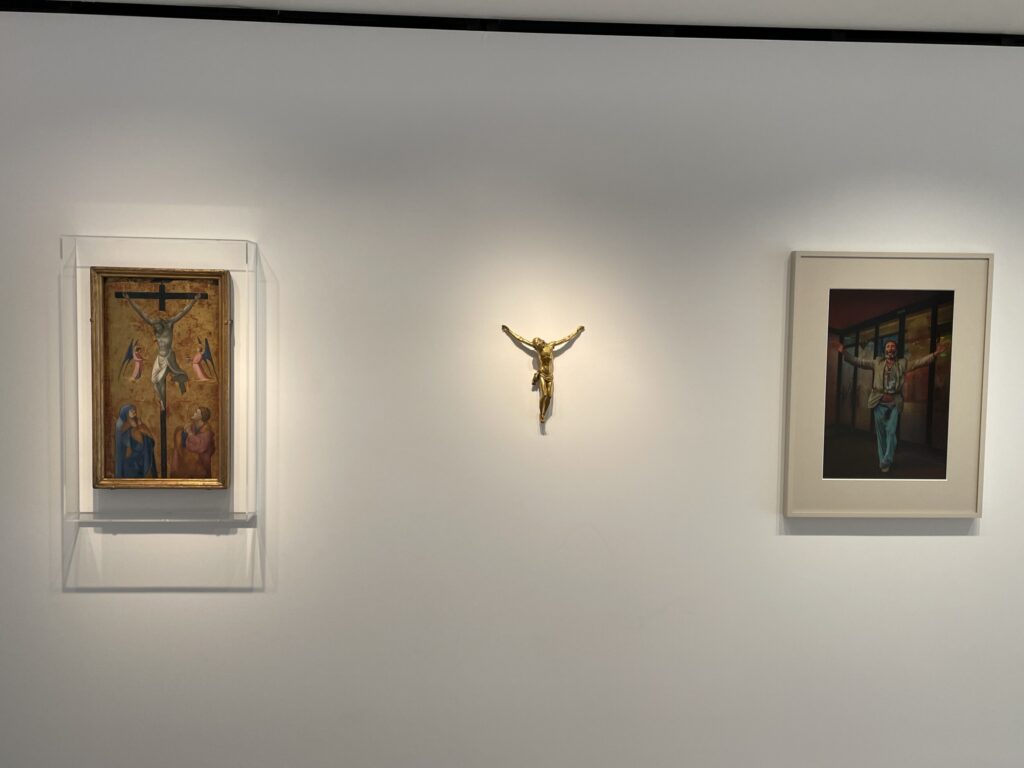
Not surprisingly, given the religious subject matter of many of the Hill Collection works from the Renaissance, religious parallels can be found in several pairings and sequences. One group considers the arms extended pose of the crucifixion, in a painting by Paolo Ucello (from the early 1400s), a golden bronze by Antonio Susini (from the late 1500s), and a photograph by Bergman (from 1990) of a man in a similar stance. Gracefully angelic faces make appearances in “Head of an Angel” by Duccio (from c1280) and a horizontal Bergman portrait of three girls in traditional dresses (from 1988). And the iconography of the cross can be found in a set of three images by Bergman, which is then matched by a series of altarpieces and painted gold ground Christian allegories from the 1300s. In all of these works, there is a tension between the human and the transcendent, where gestures, expressions, and symbols work together to communicate personal stories.
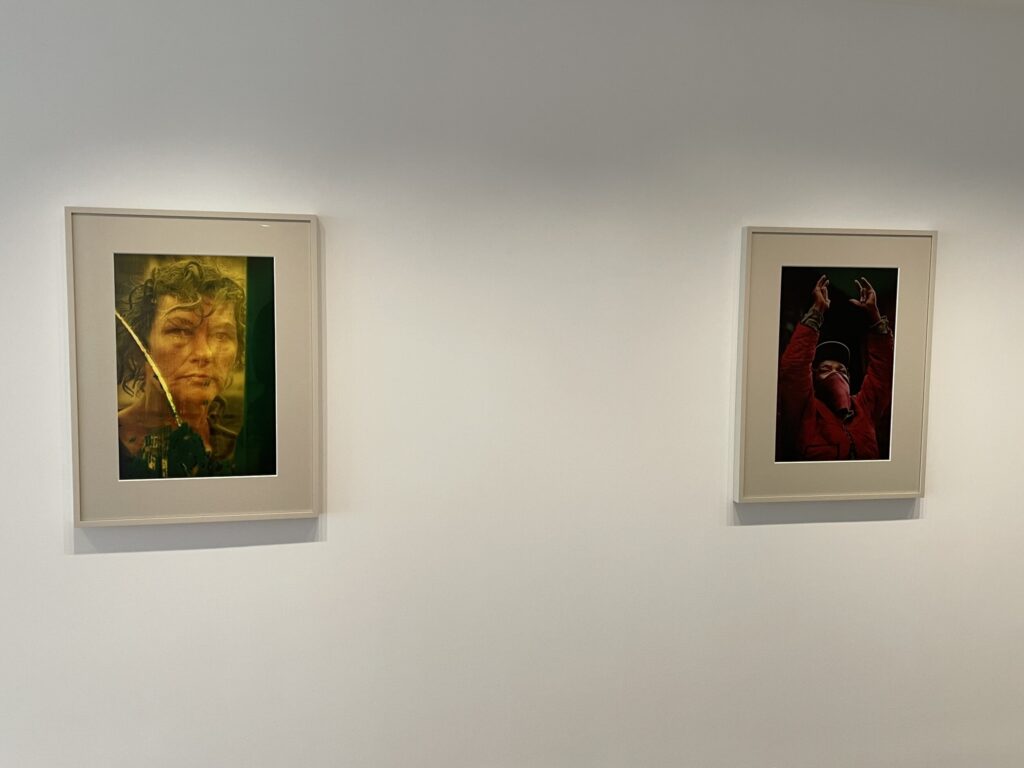
Another handsome arrangement places Jacopo Bassano’s “The Way to Cavalry” from the mid 1500s in dialogue with two pairs of Bergman portraits to either side. In the painting, nearly a dozen individual faces surround Christ carrying the cross, the trauma and anguish of the moment etched on each face in different ways. The nearby Bergman images offer similarly broken and searching personas, the tilt of a head, the downward angle of the eyes, a mottled reflection, and even an upraised pair of arms all offering the kind of stylized drama that would have fit well in Bassano’s scene.
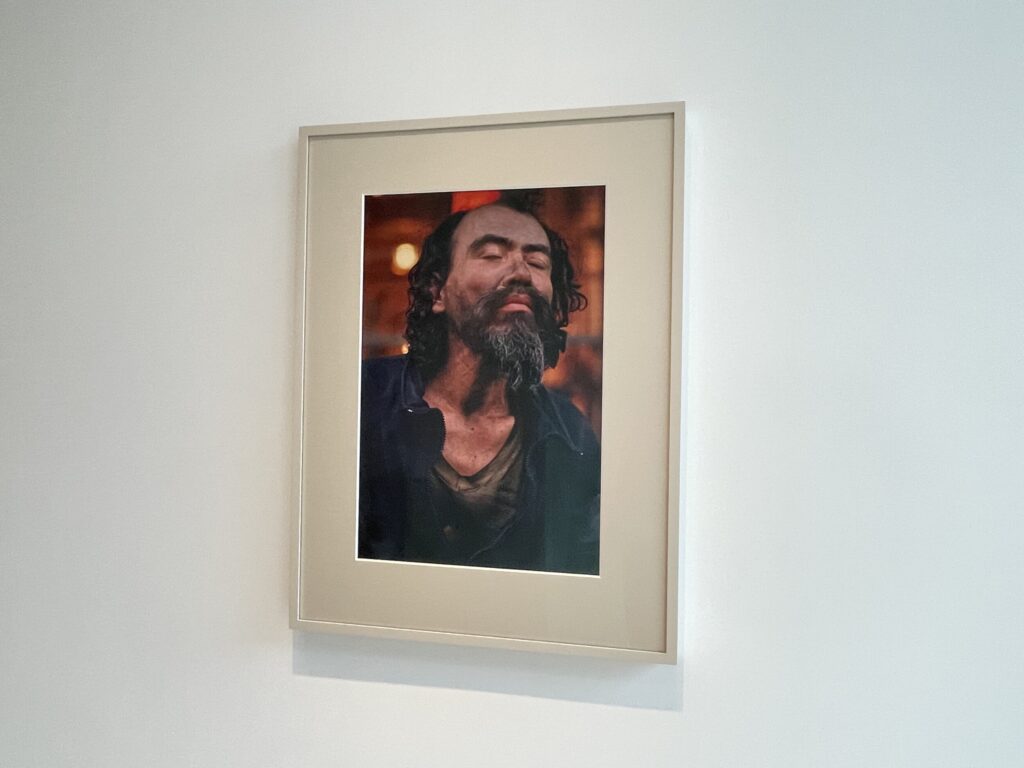
Still other pairings and groupings center on the ruggedness and malleability of flesh, in faces that dissolve into folds and brushstrokes and sculptural bodies that have been roughly shaped like clay. Here, the connections jump through time toward the present, with an early 1600s “Study of a Bearded Man” by Anthony van Dyck matched by a similarly downtrodden man seen by Bergman (from 1990), and an expressively approximate “Head of Julia” by Frank Auerbach (from 1985) hung with a stern portrait of a woman by Bergman (from 1990), the two women’s faces oriented in the same direction and angle. Nearby, bronzes by Henri Matisse and Willem de Kooning disassemble figures and bodies into tactile grasps and clutches, the touch of the artist’s hands made equivalent to Bergman’s intense observation of faces.
Sprinkled throughout the rest of the show are portraits from Bergman that capture “the lost beauty of humankind”, as the show’s title suggests. These are faces that address us with trust and vulnerability, offering up visual evidence of times passed, hardships endured, lessons learned, and dreams tempered. But even in the most seemingly downtrodden of Bergman’s portraits, there is a sense of human dignity and compassion to be found, his attentiveness delivered without judgement or critique. His pictures leave us with a consistent sense of intimate engagement, of lives actually seen instead of fleeting photographs “taken”. As seen in this larger sample of his work, Bergman is also a quietly talented colorist, often maximizing the way a colored light, a piece of clothing, a skin tone, or a blurred backdrop adds subtlety to the context or mood of a portrait.
There is something altogether astonishing about the resonances across centuries to be found in this show – so much about our world has been transformed in that time, and yet, these artworks remind us that we humans haven’t changed as much as we might have thought. Artists across the ages have attentively captured our trials and tribulations, the most talented of those artists finding something universal in the way everyday faces tell us about themselves. Bergman’s photographs do indeed map the emotional landscape of faces in a way that recalls the Old Masters, and that tentative aesthetic bridge turns out to be surprisingly robust and durable. Risk-taking, unorthodox pairings across mediums and time period like these are to be applauded, as they remind us just how much the old can inform the new.
Collector’s POV: Since this effectively a museum exhibition, there are of course no posted prices, and Robert Bergman does not appear to have consistent gallery representation at this time.




Wow. So aptly and concisely appreciated! I’ll be there this afternoon!