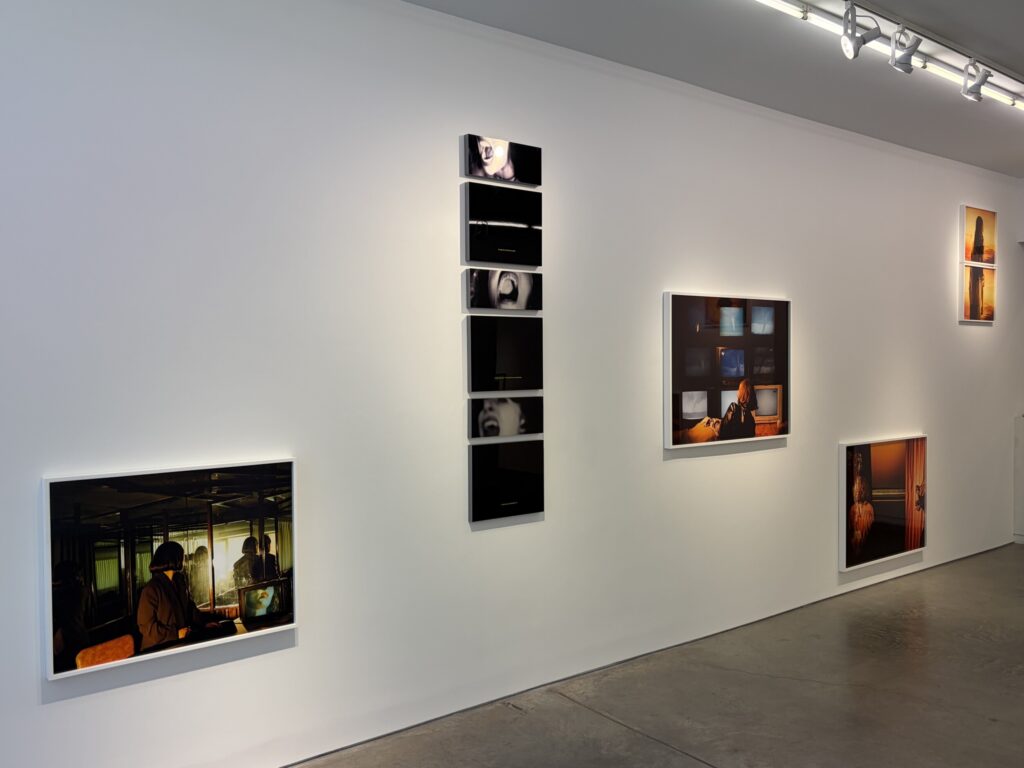
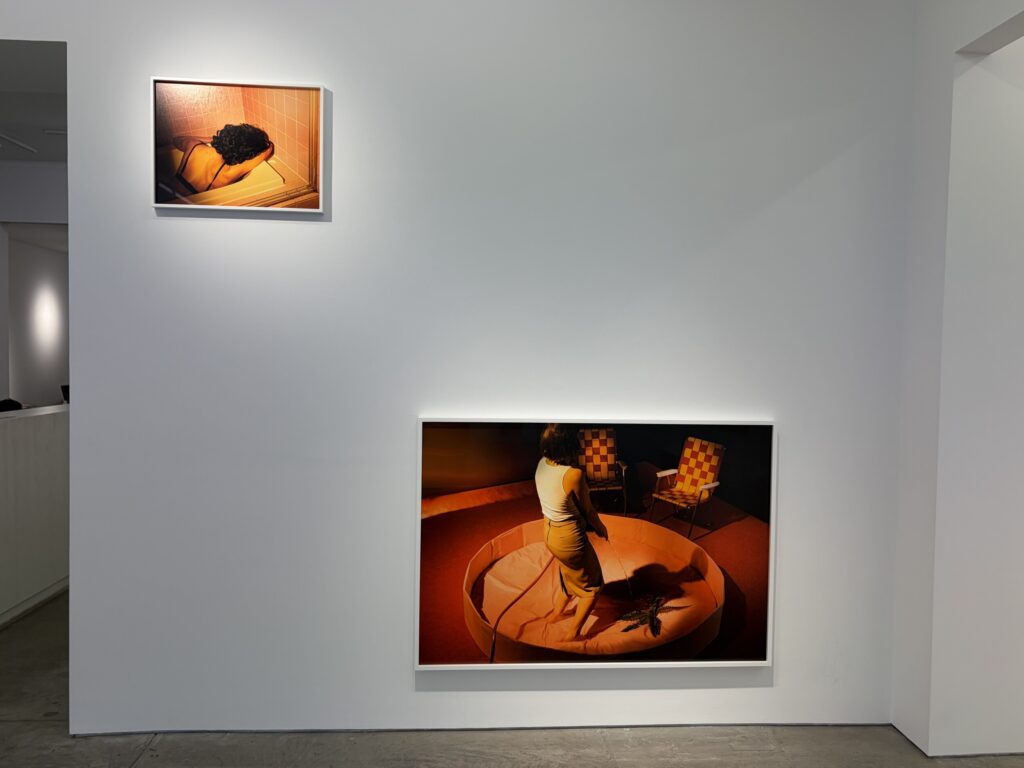
JTF (just the facts): A total of 17 photographic, text, and video works (the photographs generally framed in white and unmatted), installed against white walls in the main gallery space. (Installation and detail shots below.)
The following works are included in the show:
- 7 archival pigment prints, 2025, 2026, sized roughly 22×29, 27×33, 31×41, 33×41, 35×27 inches, in editions of 7
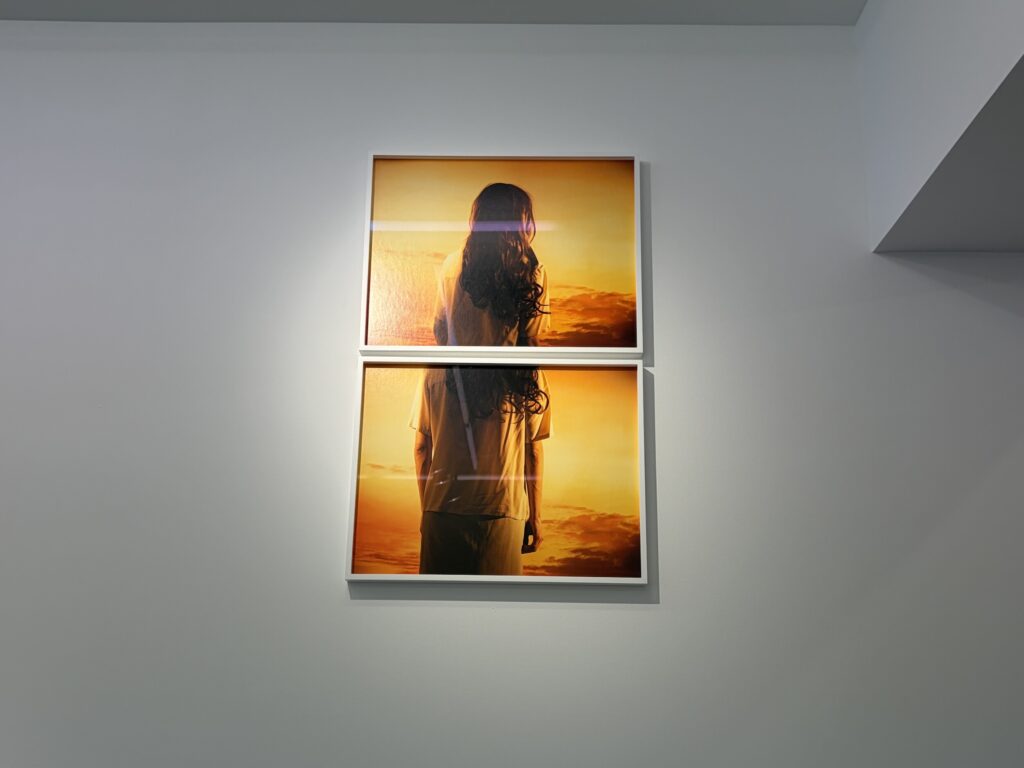
- 1 archival pigment print diptych, 2026, each panel sized roughly 21×27 inches, in an edition of 7
- 5 archival pigment prints, 2025, 2026, sized roughly 33×41, 40×52, 45×64 inches, in editions of 5
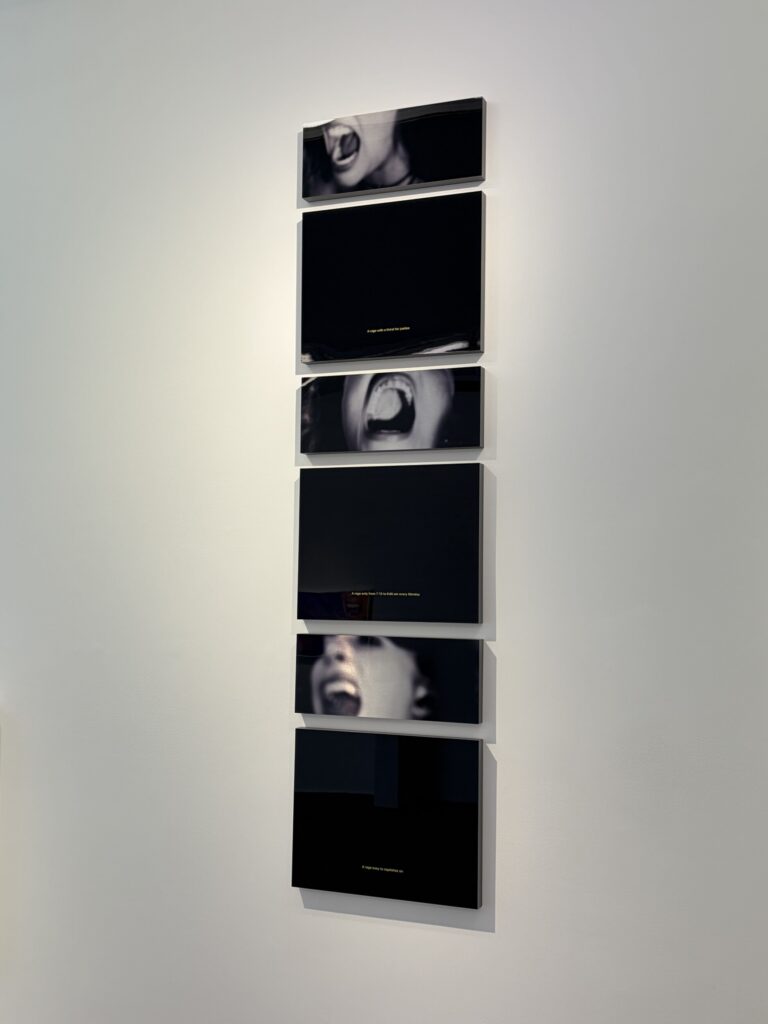
- 1 set of 6 dye sublimation prints on aluminum box mounts, 2026, sized overall roughly 95×20 inches, in an edition of 3 (also available as 3 diptychs)
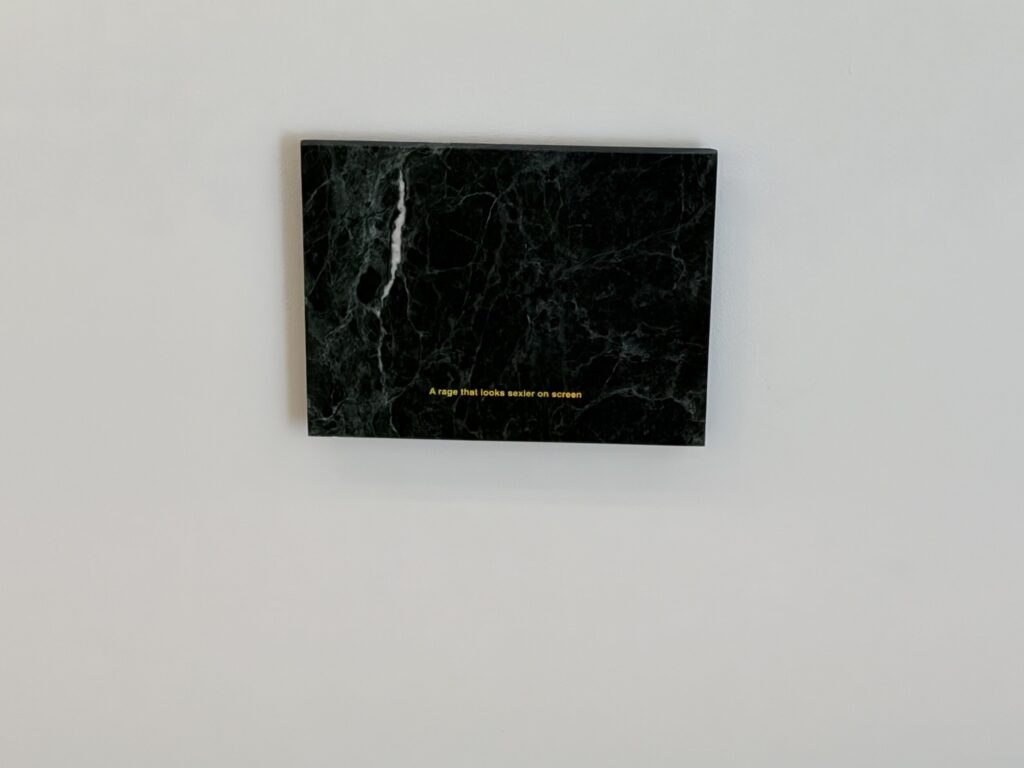
- 1 marble with engraved text, 2026, sized roughly 10×12 inches, in an edition of 3
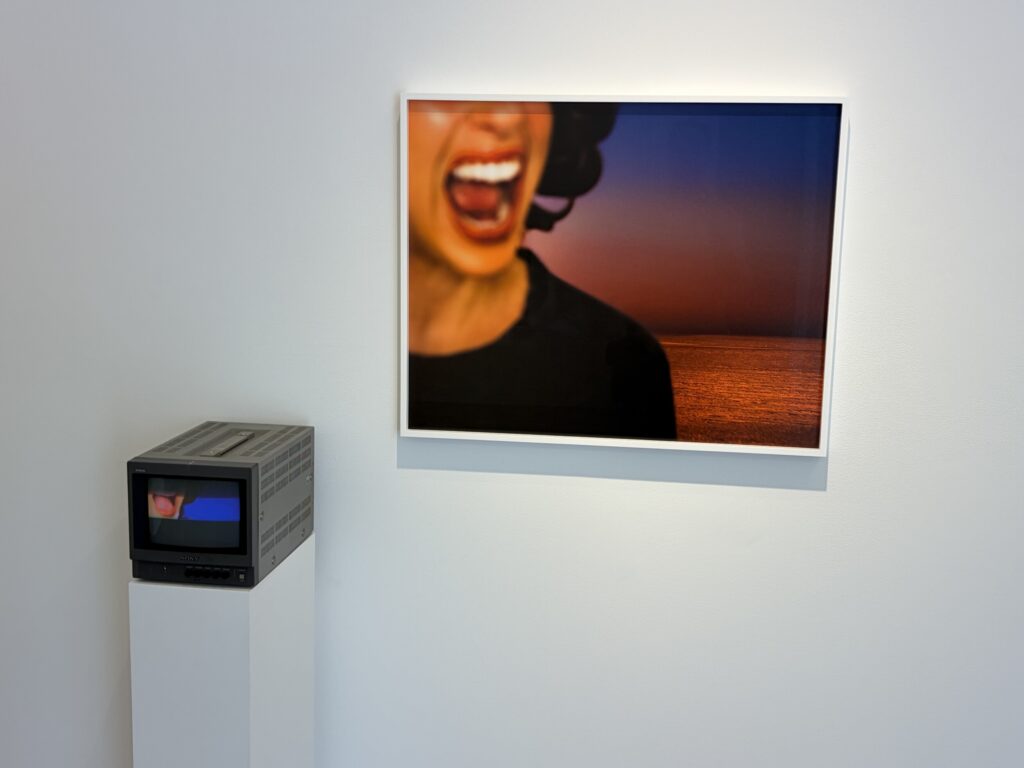
- 1 animated GIF video with TV and pedestal, 2025, sized roughly 48x9x14 inches, in an edition of 5
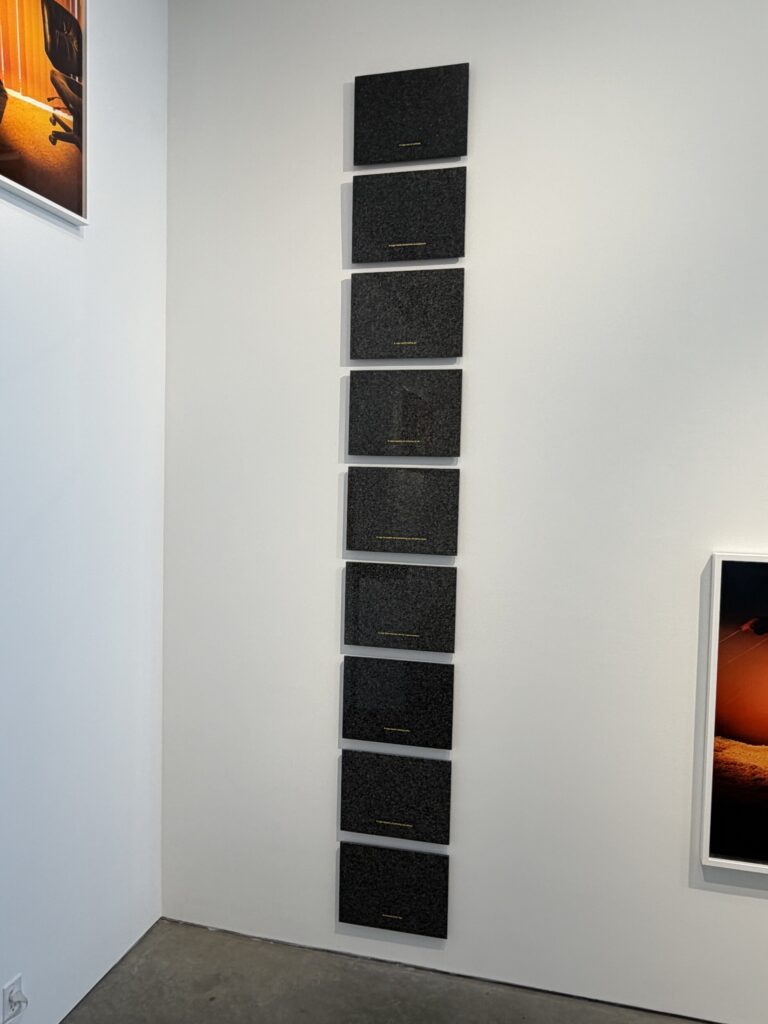
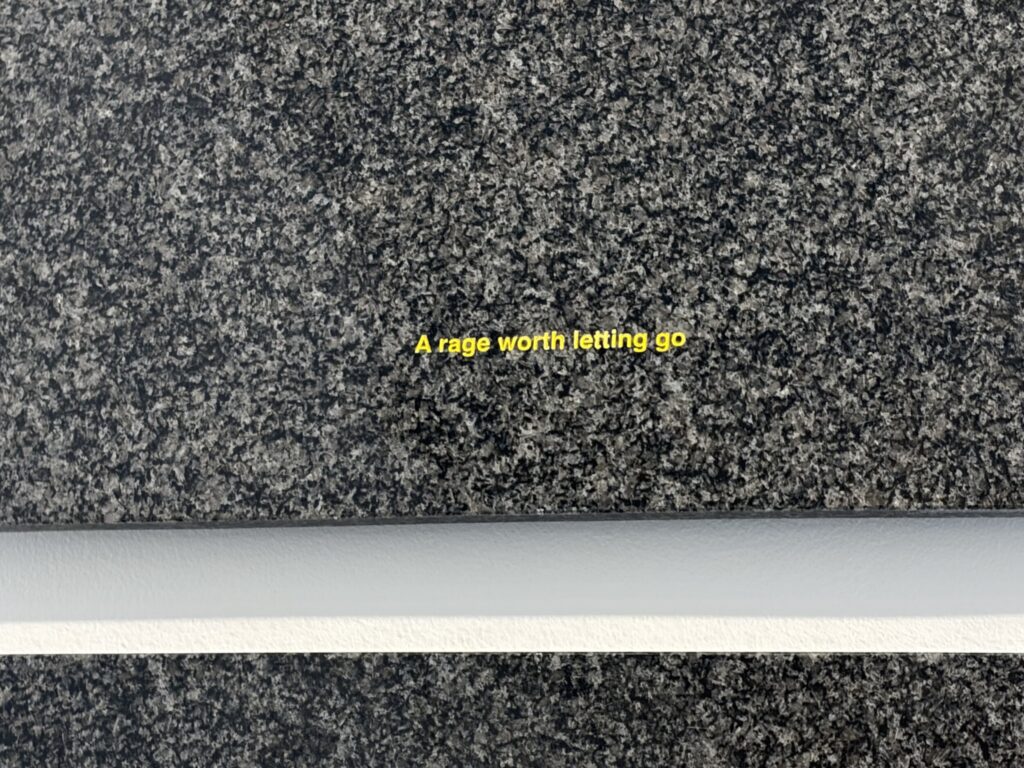
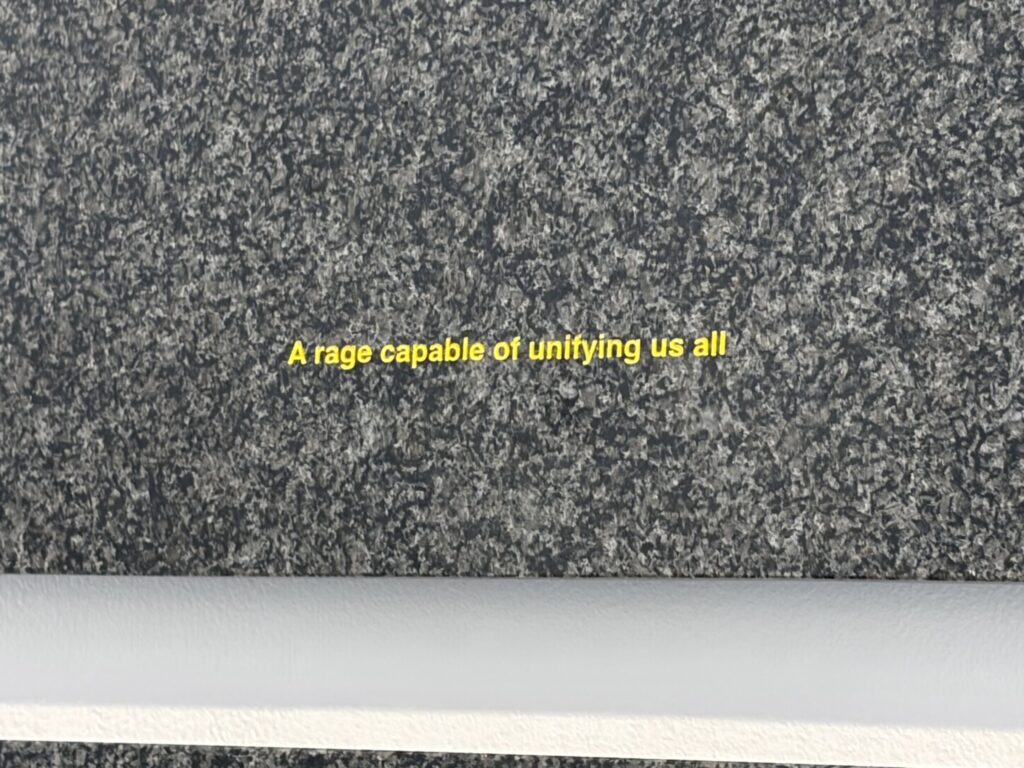
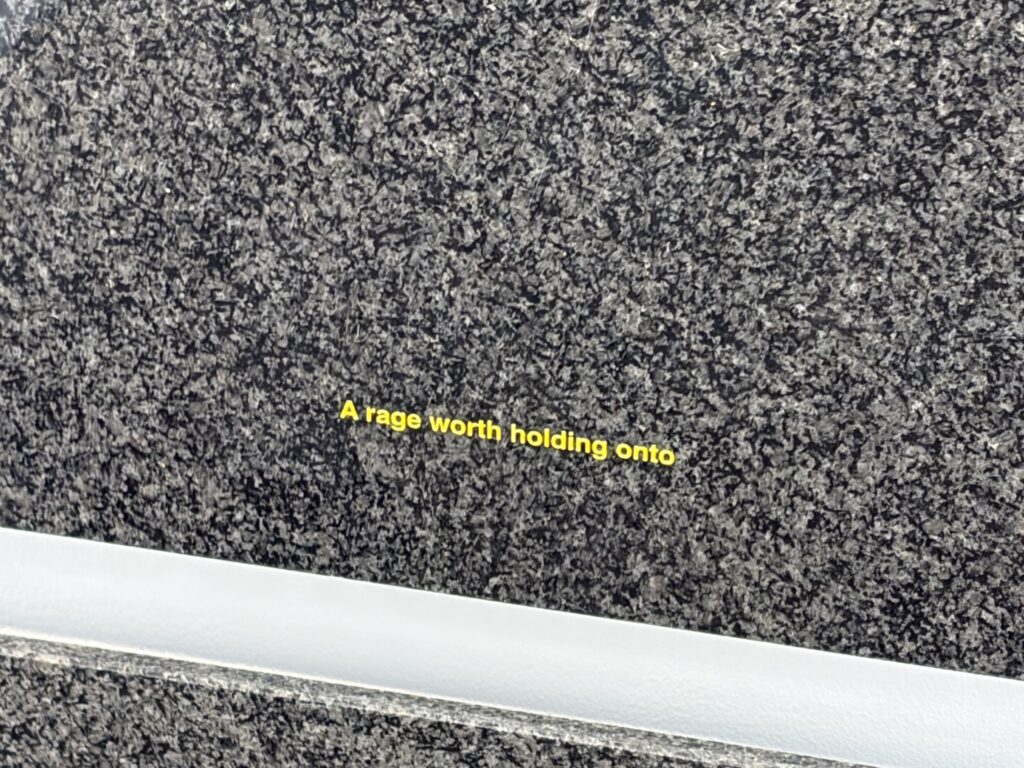
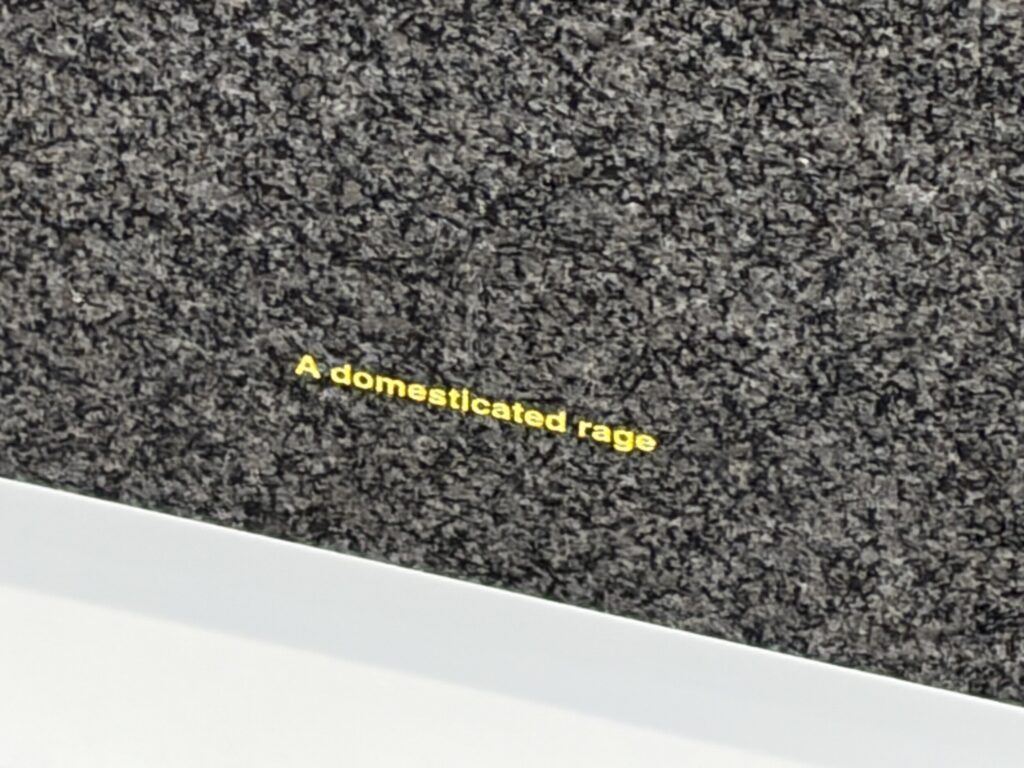
- 9 granite with engraved text (hung as one set), 2026, sized roughly 12×16 inches, in editions of 3
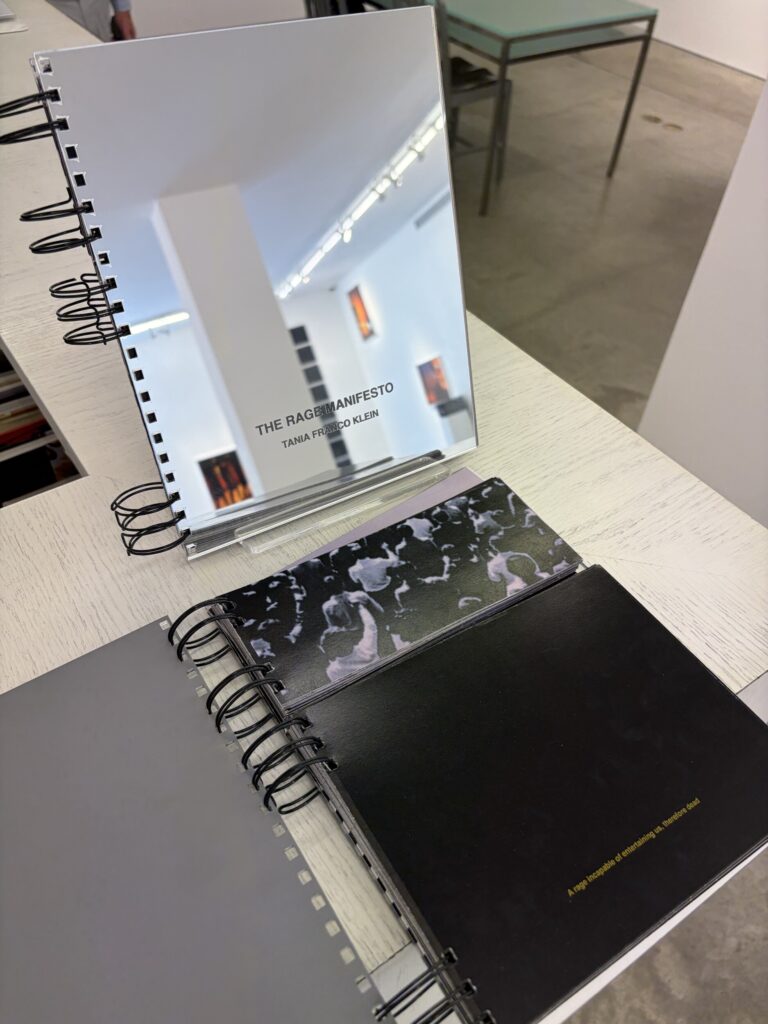
An accompanying artist’s photobook titled The Rage Manifesto is on view at the gallery desk. (Cover shot below.)
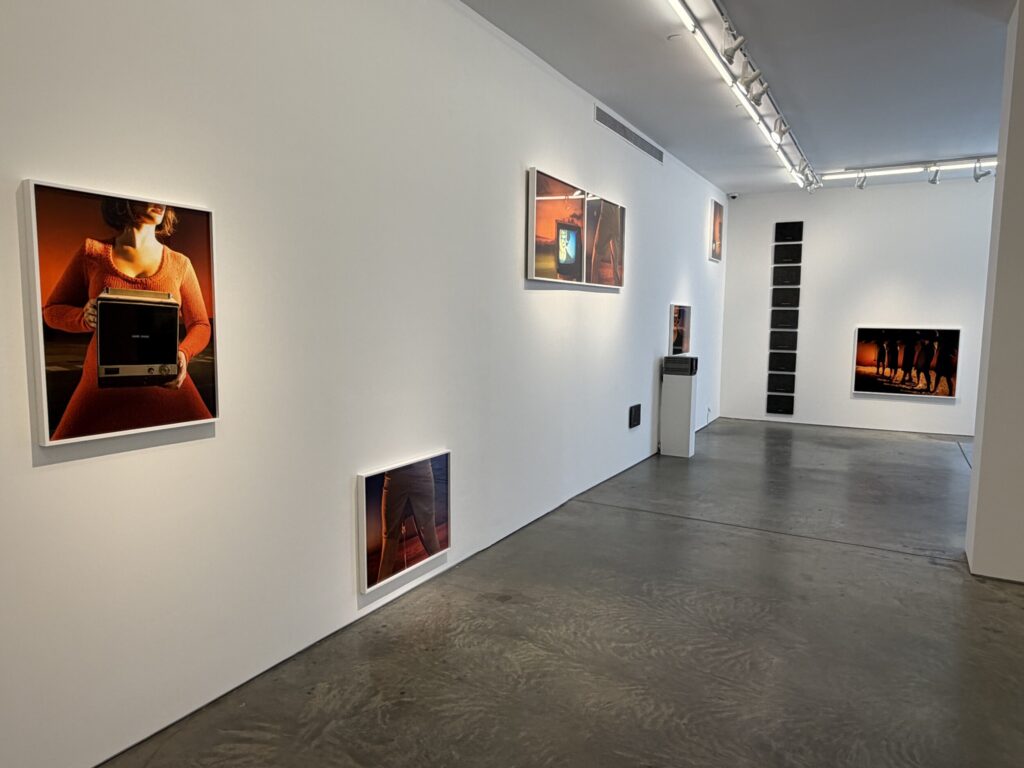
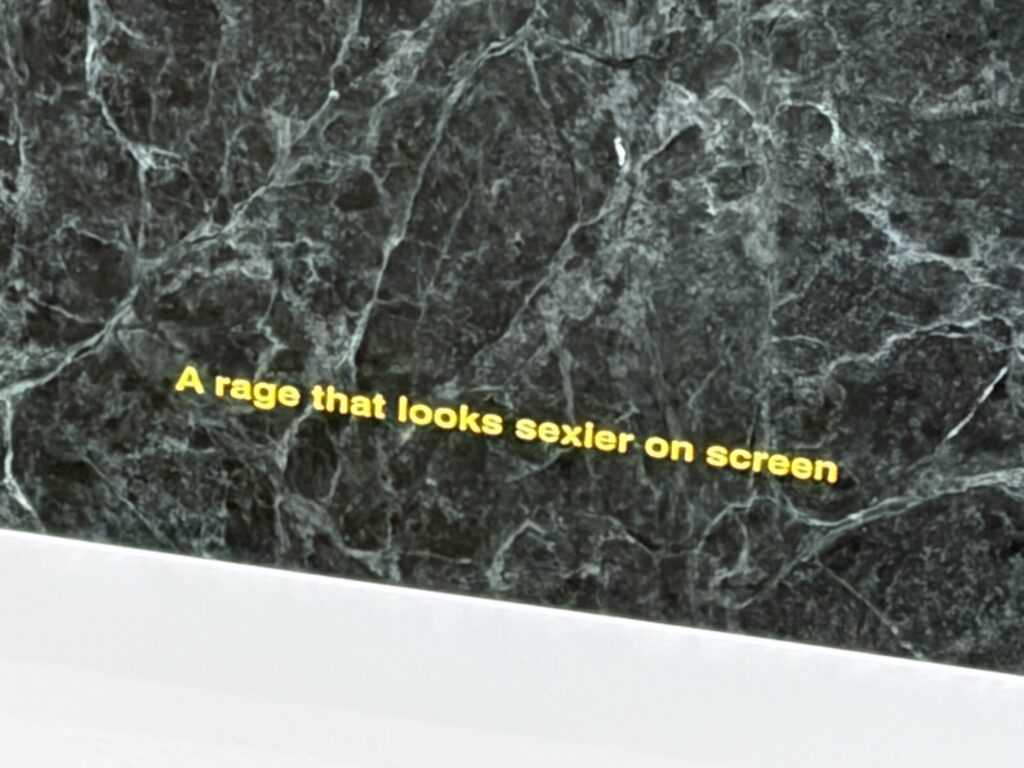
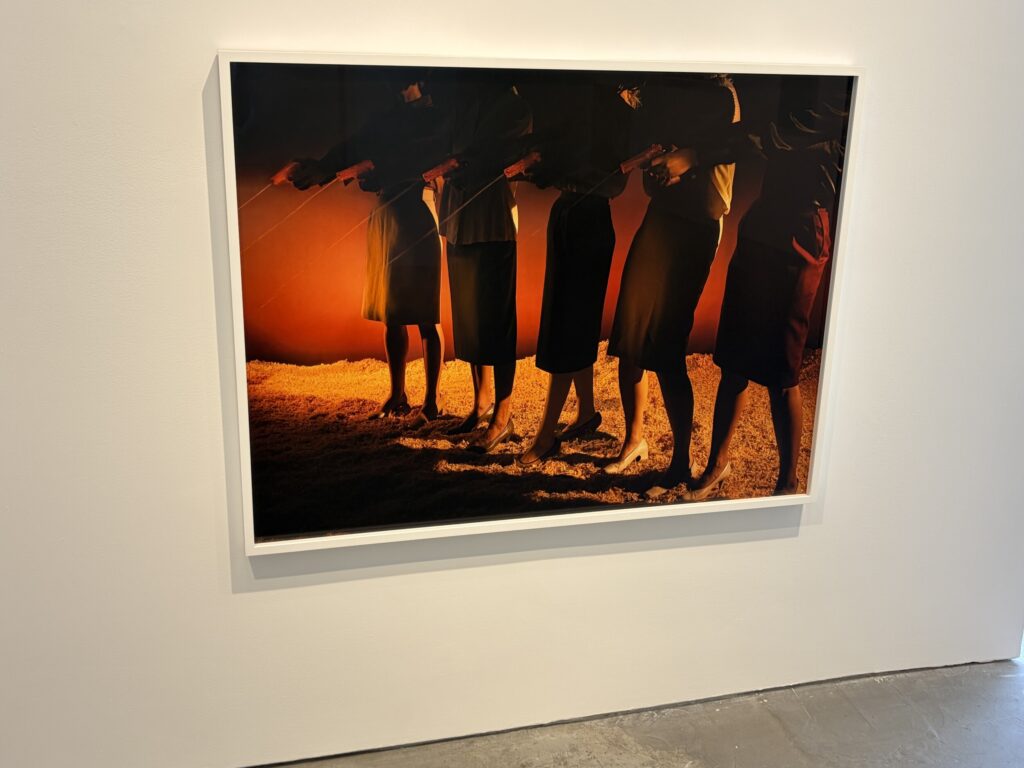
Comments/Context: As a conceptual framework for a multi-layered 21st century art project, rage feels like a richly brash and evocative subject. In our current contemporary moment, rage as a psychological or emotional state can be altogether real or entirely fabricated; intensely internal and personal or overtly performative and playacted for others; welling up from deep inside or manufactured by external forces, situations, and inputs; intentionally amplified, manipulated, or produced, by everything from news and political speech to advertising and social media; and white hot or ice cold. In short, it’s the all-too-common expression of all the stresses anxieties, frustrations, and feelings of despair and powerlessness that surround us now, turned outward as anger and outrage, aimed at everything and nothing at all.
The many versions and complexities of rage also fit the kind of charged emotional terrain that the Mexican photographer Tania Franco Klein has made her artistic domain. Reaching back to her 2019 photobook Positive Disintegration (reviewed here) and through to a 2024 gallery show (reviewed here) and her inclusion in MoMA’s “New Photography” series in 2025 (reviewed here), her works have consistently probed female stories and melodramas, in some cases using herself as the model/subject. Often seen in shadow or bathed in seething orange light, her characters have populated lonely hotels, empty rooms, and desolate locations, seemingly always struggling to assert their confident individuality in settings that feel quietly threatening, alienating, indifferent, or hostile.
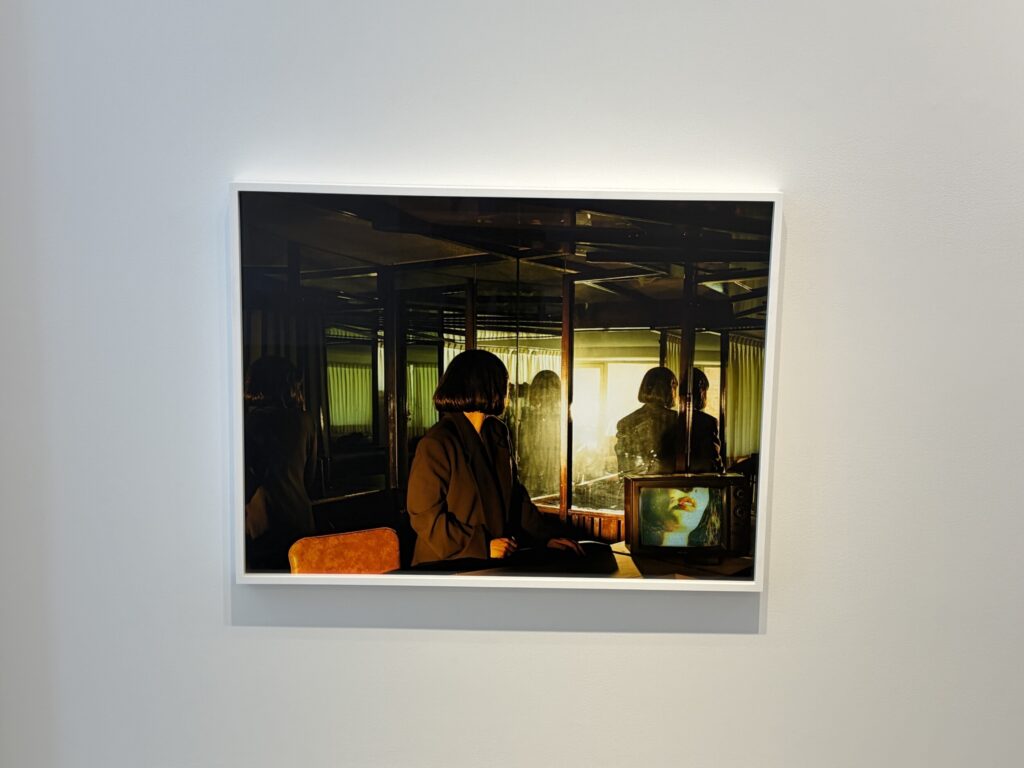
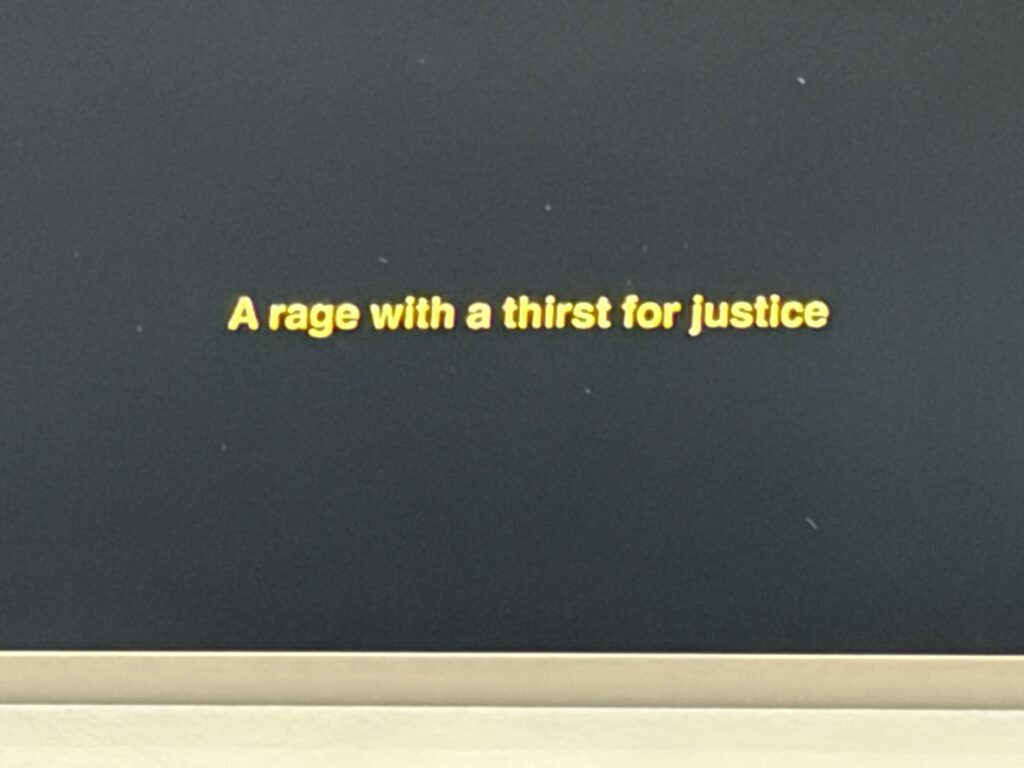
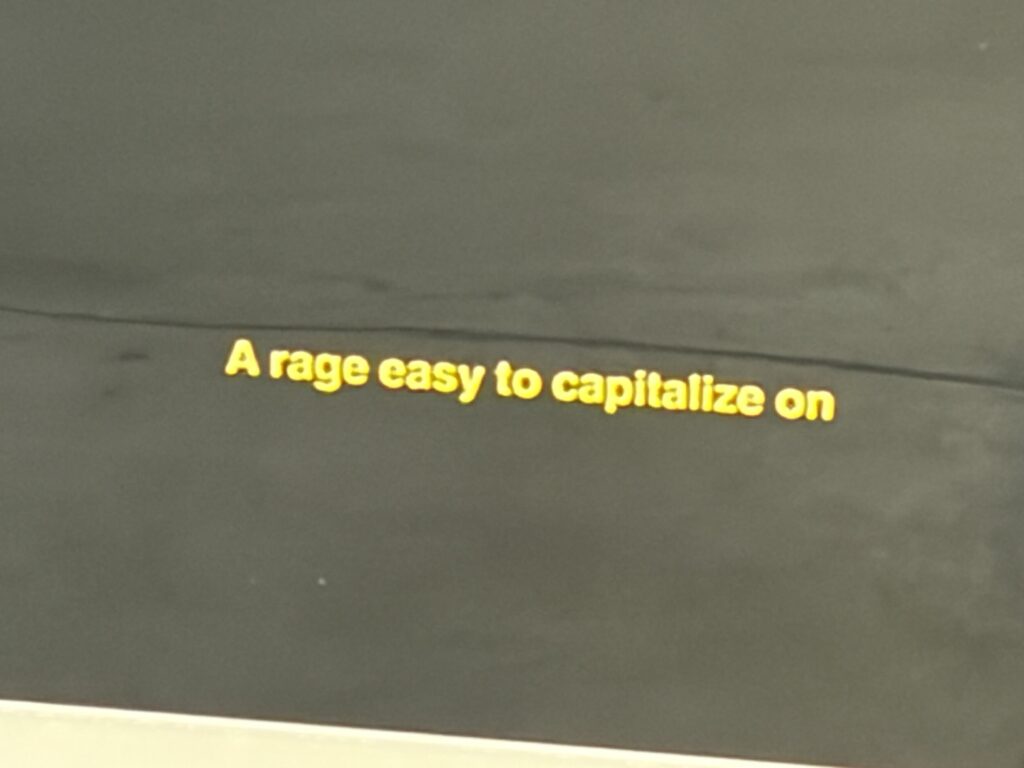
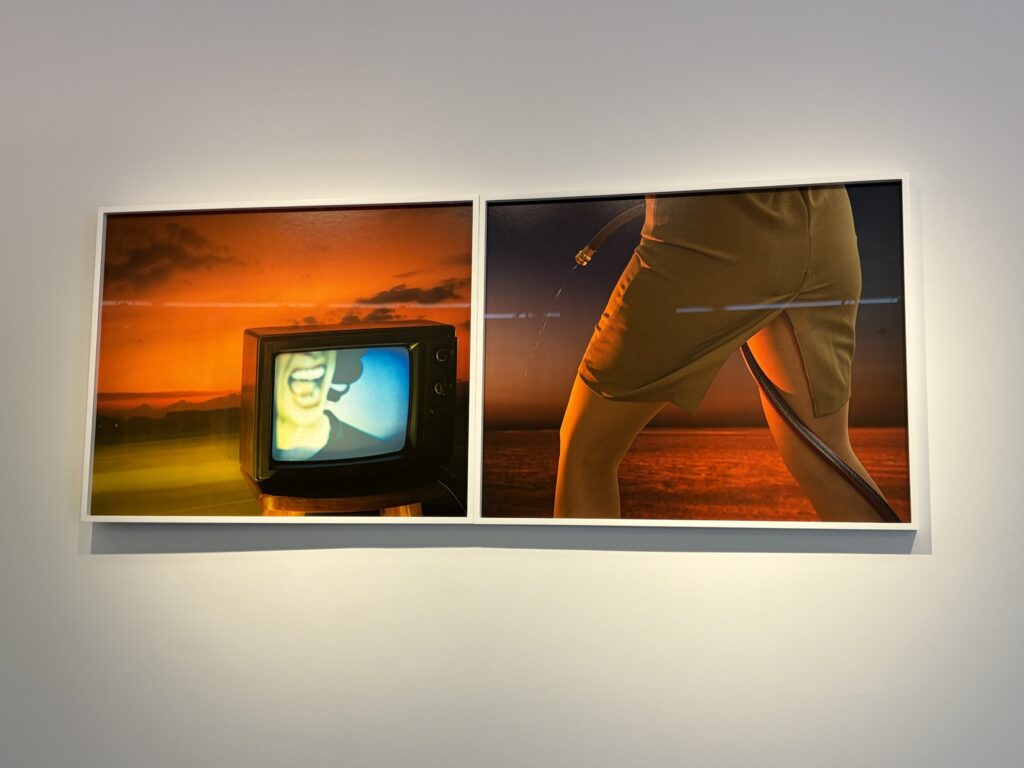
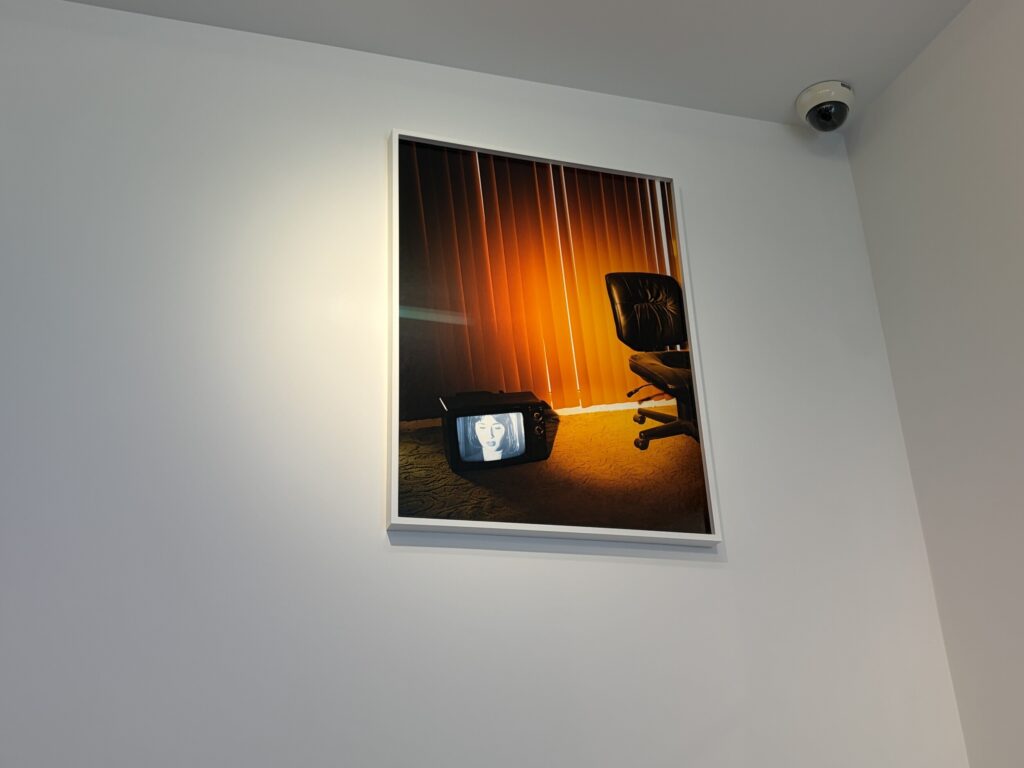
Franco Klein’s project “RAGE™”, with a cheekily clever trademark symbol added to the title to indicate its packaged product status, feels like a direct extension of her earlier interests and aesthetics. Part of the nuance in this project comes from the idea that any given image of “rage” she crafts can be interpreted in different ways, depending on when and how we see it, what we connect it to, what buttons it is designed to push, and what context is offered around it. Several works feature an open mouthed scream, as partially seen on a woman’s face in front of a seaside sunset (or a fiery apocalyptic waterscape, depending on your interpretation of the vista in the background). This motif echoes through layers of nested works: an initial frontally blurred photograph, a repeating GIF of the same moment displayed on a television screen, a photograph of the scream on a television screen placed in front of yet another sunset, and then in alternate variations in black and white matched with captions that define the different rages being depicted: “a rage with a thirst for justice” or “a rage easy to capitalize on”. In this way, Franco Klein introduces us to a taxonomy of rages we see, rages we participate in, rages we watch from afar or experience through the mediation of a screen (or two), and rages we can identify or that are categorized for us by nearby texts, leading us to specific conclusions or responses.
Franco Klein’s incisive use of text in these works feels rooted in the biting wordplay of artists like Barbara Kruger and Jenny Holzer. Here, Franco Klein has engraved her rage phrases in rock and mounted them to the wall like tombstones, and printed them in an artist’s book with a smart flip book design, which allows the various rage definitions to be interactively matched with a range of rage-induced images, including screaming faces, bared teeth, tornadoes, and the raised fists of protest. Her point seems clear – that an image of rage could have many implied meanings or explanations, depending on a rotating cast of provided contexts.
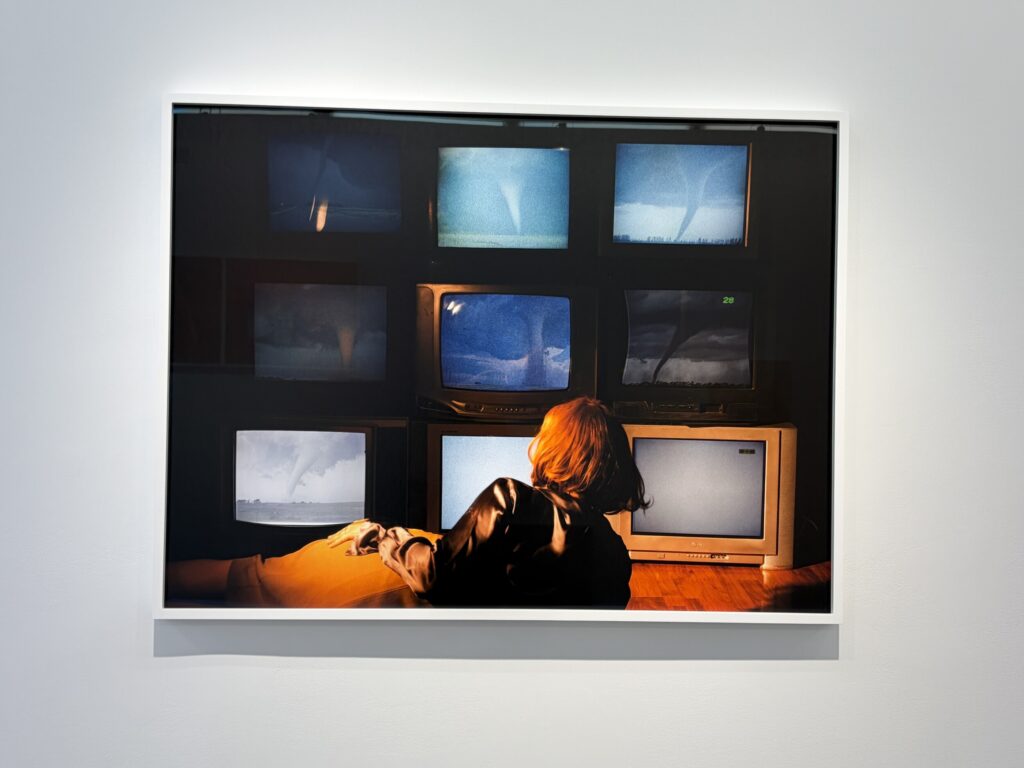
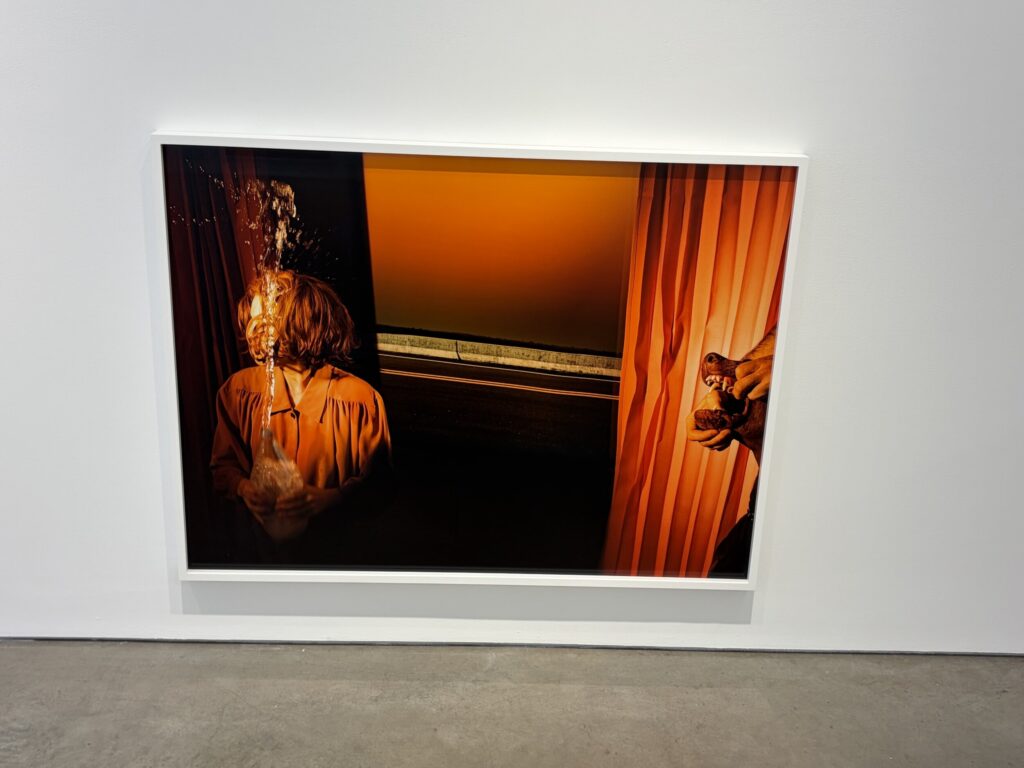
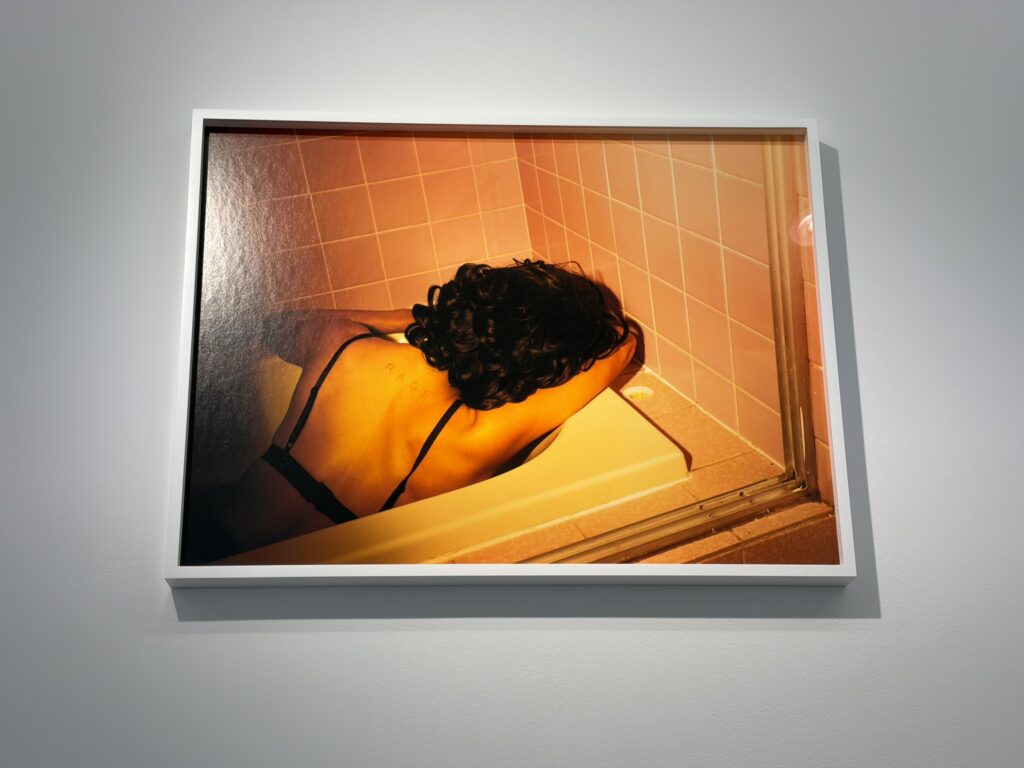
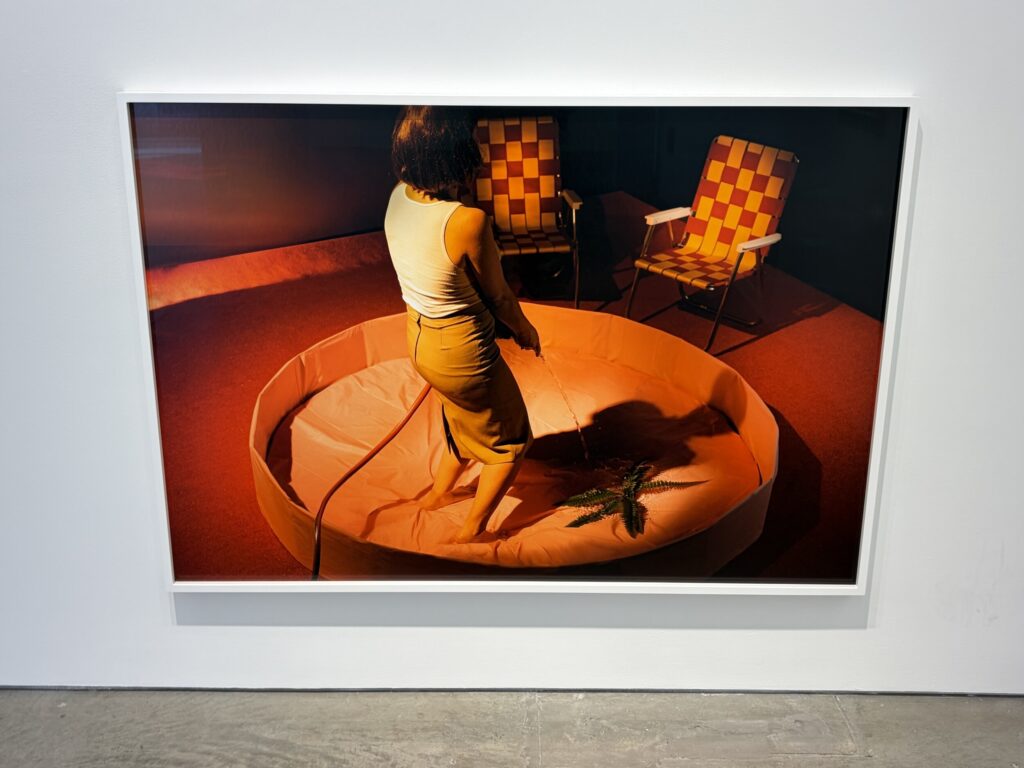
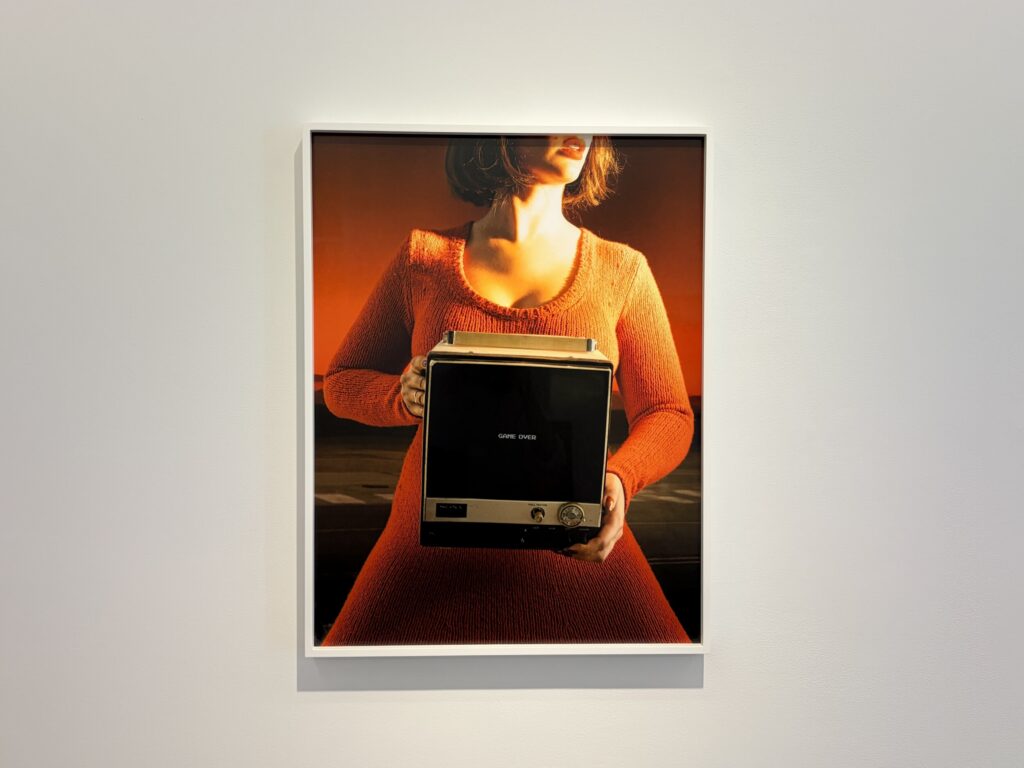
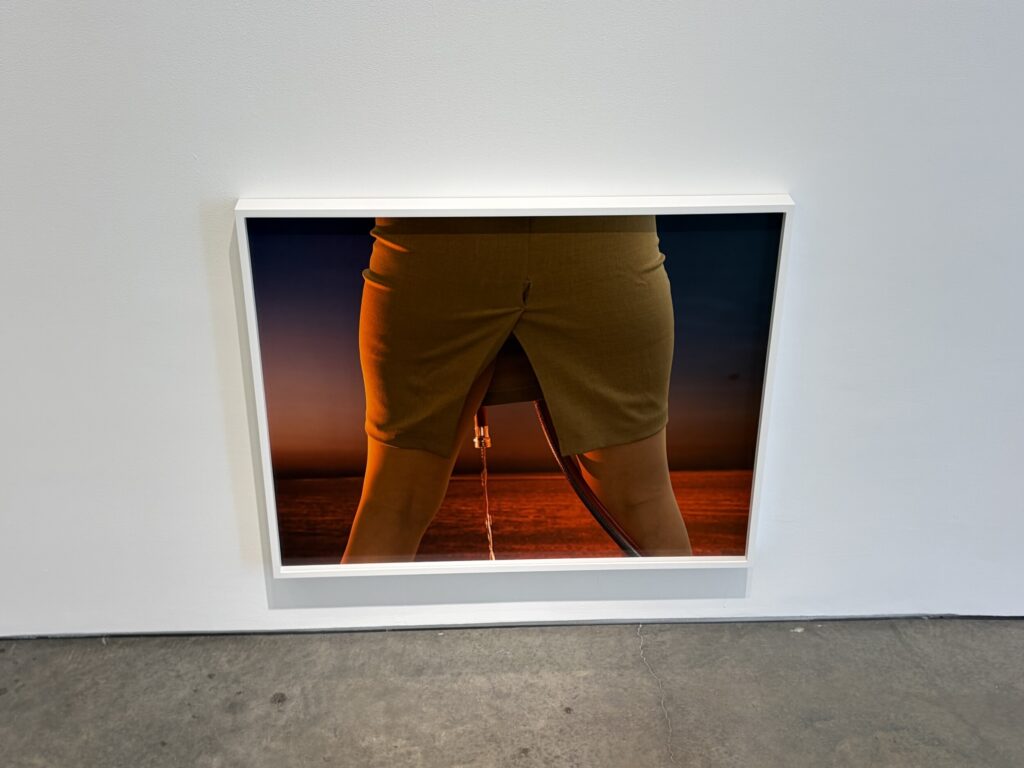
When we turn back to Franco Klein’s photographs, the circle of rage continues. Rage as an ominous orange sky, rage as a look in the mirror (or mirrors), rage on television (or televisions), rage as scar tissue etched on a woman’s back, rage as the visual echo of an advertising campaign or a famous painting – the rage in her images cycles fore and back continuously, reforming and metastasizing. Eric Fischl’s “Sleepwalker” gets a gender flip with the help of a garden hose, that phallic dribbling length of hose (and its exploding soda and squirt gun relatives) then reworked in various poses and vantage points, bringing satirical gender-based rage into the heady mix we’ve already seen. Across the gallery, Franco Klein’s rage is a shape shifter – at one moment, it’s the snarl of a mad dog being held back from biting; at the next, it’s the resigned dejection of a GAME OVER message (which we can of course interpret in both a video game and an overall life on Earth sense).
“RAGE™” is a body of work that seems to function best as a whole. There are of course standout single images on view in this show, but it is the entirety of the project that lands Franco Klein’s larger message about the complexity of our current moment of rage, mostly because the visual and textual interconnections, repetitions, and nested layers knit together her ideas (and constantly remix them) with richness and sophistication. While Franco Klein’s earlier projects have felt at times more distant and oblique, “RAGE™” turns up the volume. The colors boil harder, the visuals are more provocative and confrontational, and the texts are more intellectually direct, culminating in an ever repeating scream motif that expresses the endless wrenching variations of the titular emotion.
Collector’s POV: The single photographs in this show are priced between $8500 and $15500, based on size and place in the edition; the set of six prints is priced at $15000 (or $6000 for each diptych). The engraved works are priced at either $3000 or $4000 each, depending on the material, while the video work is priced at $7500. Franco Klein’s work has little secondary market history at this point, so gallery retail likely remains the best option for those collectors interested in following up.