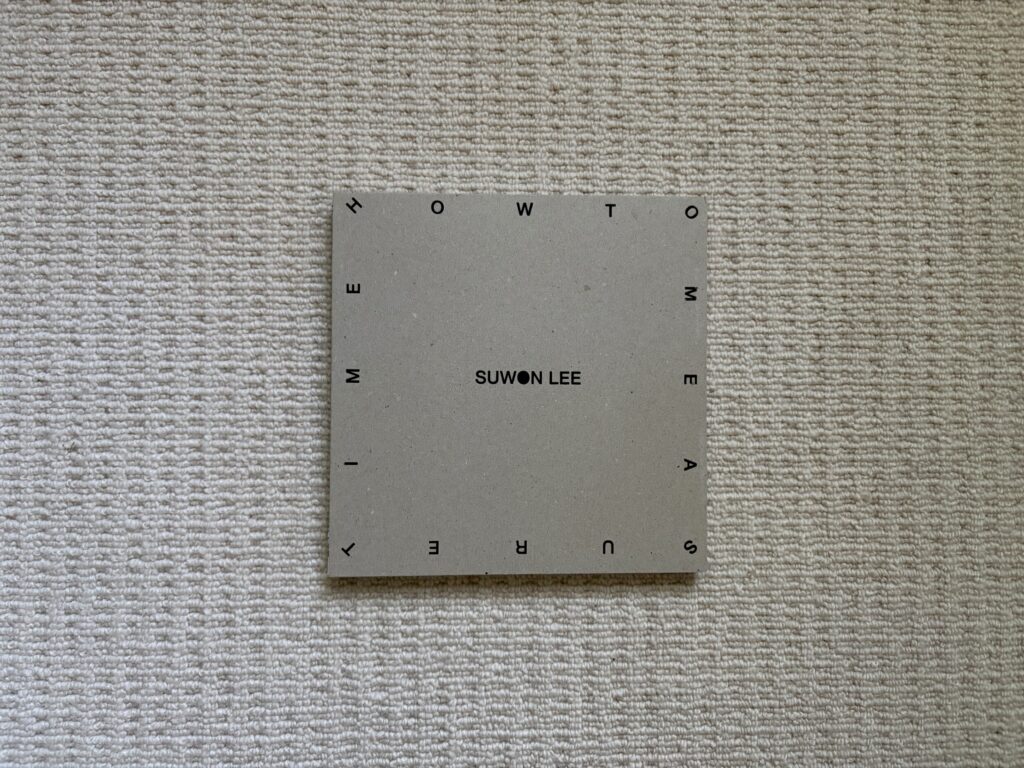
JTF (just the facts): Co-published in 2026 by Calipso Press (here) and Goma Editora (here). Cotton binding with cardboard covers, 18 x 18 cm, 68 pages, with 31 black-and-white reproductions. There are no texts or essays included. Cover design by Iván Martínez. In an edition of 300 copies. (Cover and spread shots below.)
Comments/Context: Suwon Lee was born in Caracas, Venezuela, in 1977, to parents who had recently emigrated from Korea. She did her initial photography studies in Paris in the early 2000s, continued her training with the German photographer Axel Hütte in Spain, and now lives and works in Madrid. And so like so many 21st century artists, she has been forced to come to terms with the complexities of a multi-layered diasporic identity, where she is to some degree a foreigner wherever she goes.
Part of what can often get dislocated in such a life is a concrete sense of durable time, from the simplest forms of short term jet lag and time differences between distant locations to more subtle variations of transitions, connections, roots, and memories. Representing these emotions and psychological states photographically as part of an artistic practice is neither easy nor straightforward, particularly since photography as a medium has its own inherent difficulties with documenting durational time. Any one “decisive moment” likely fails to capture the richness of a life always lived in-between.
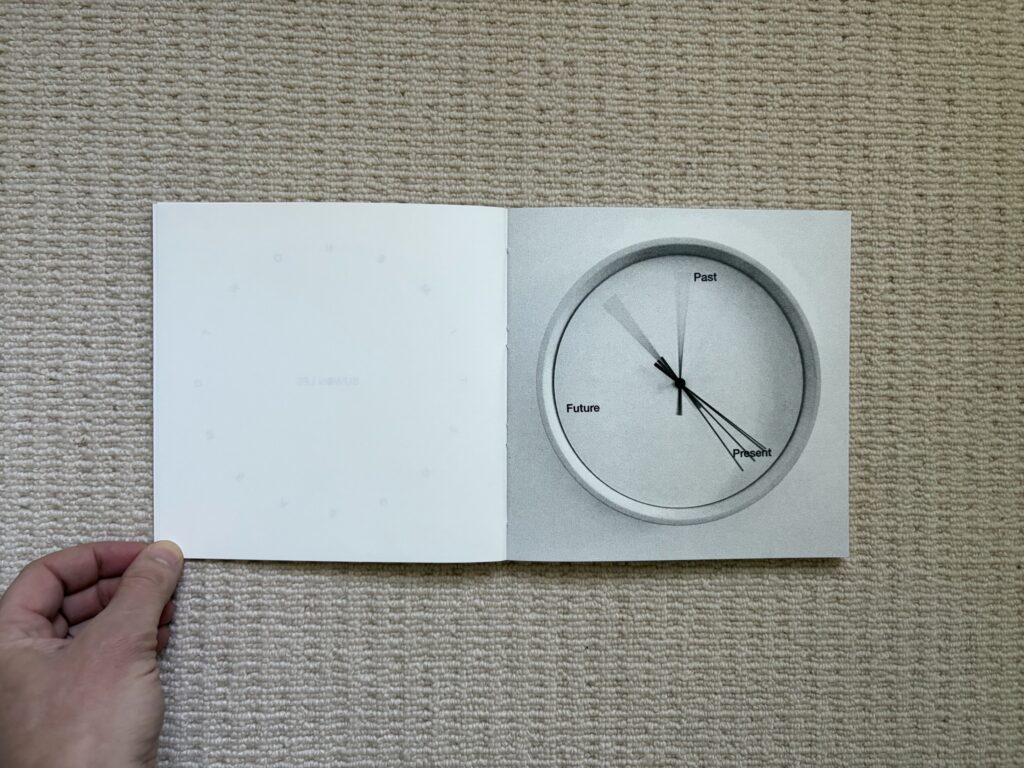
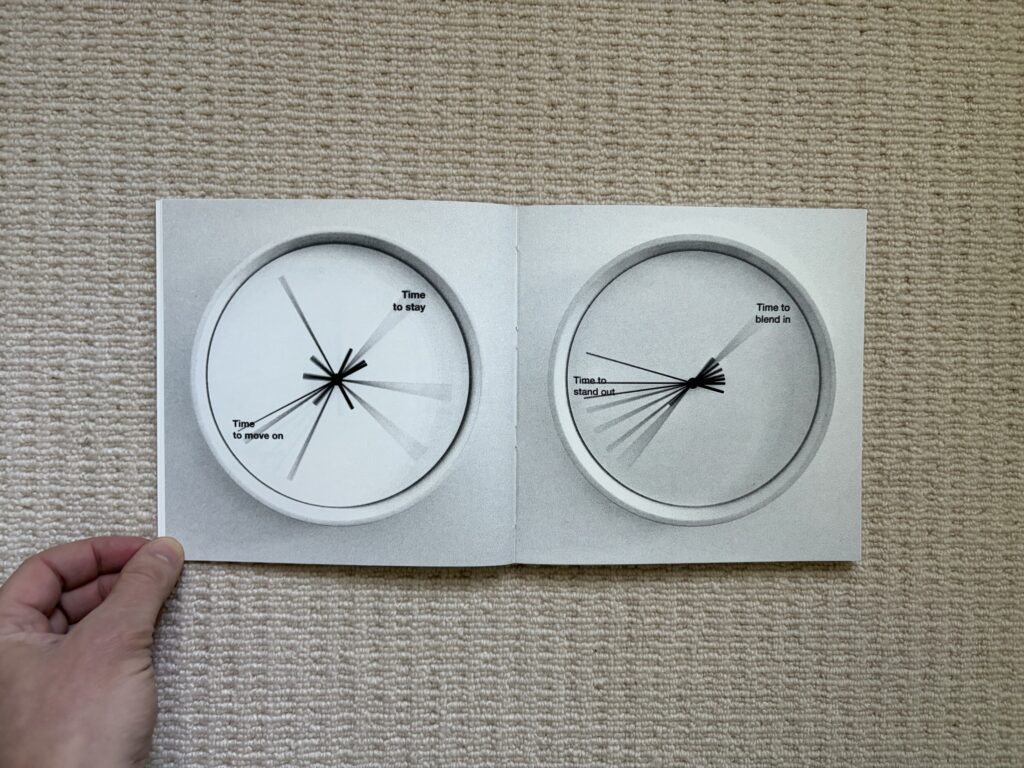
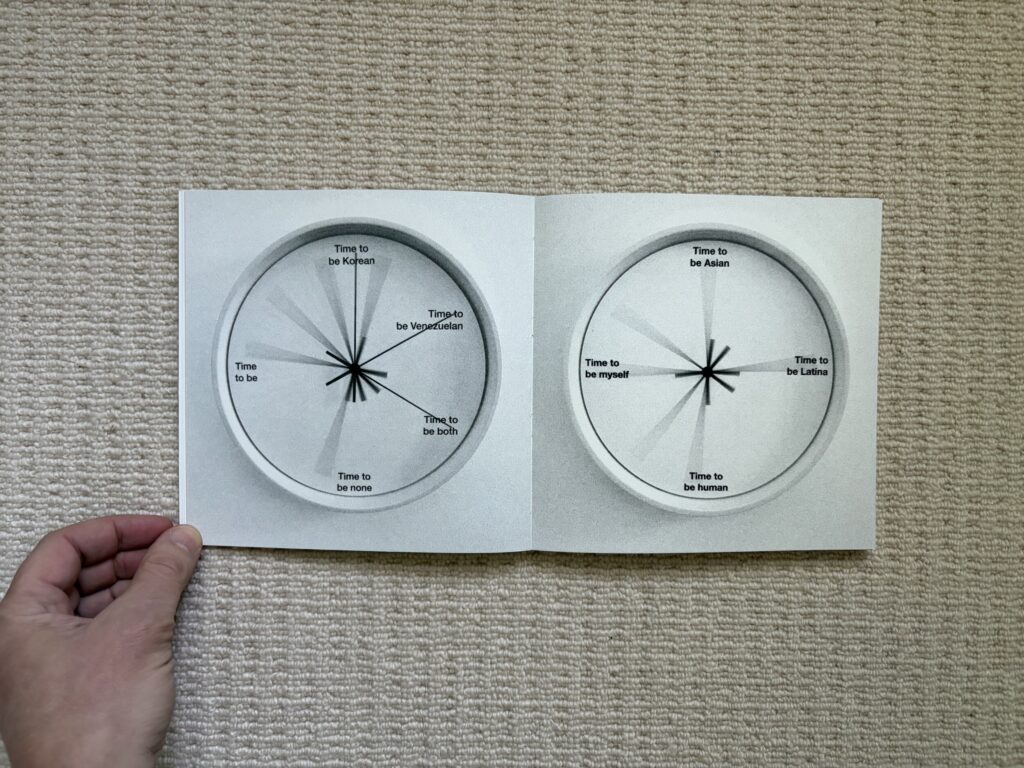
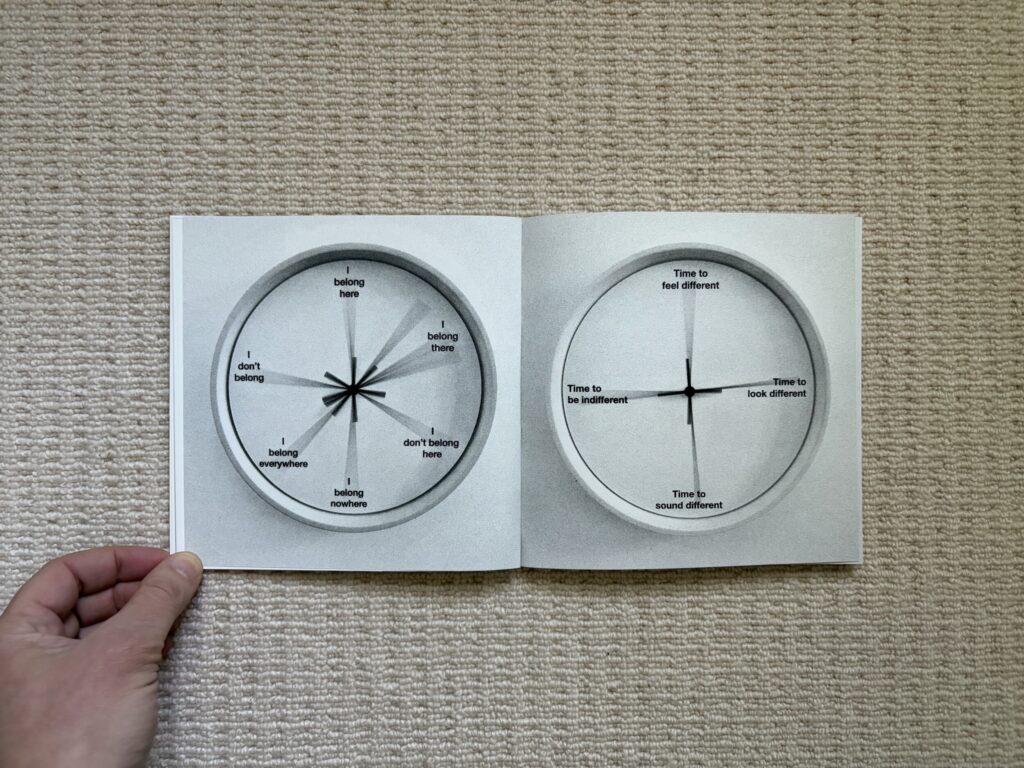
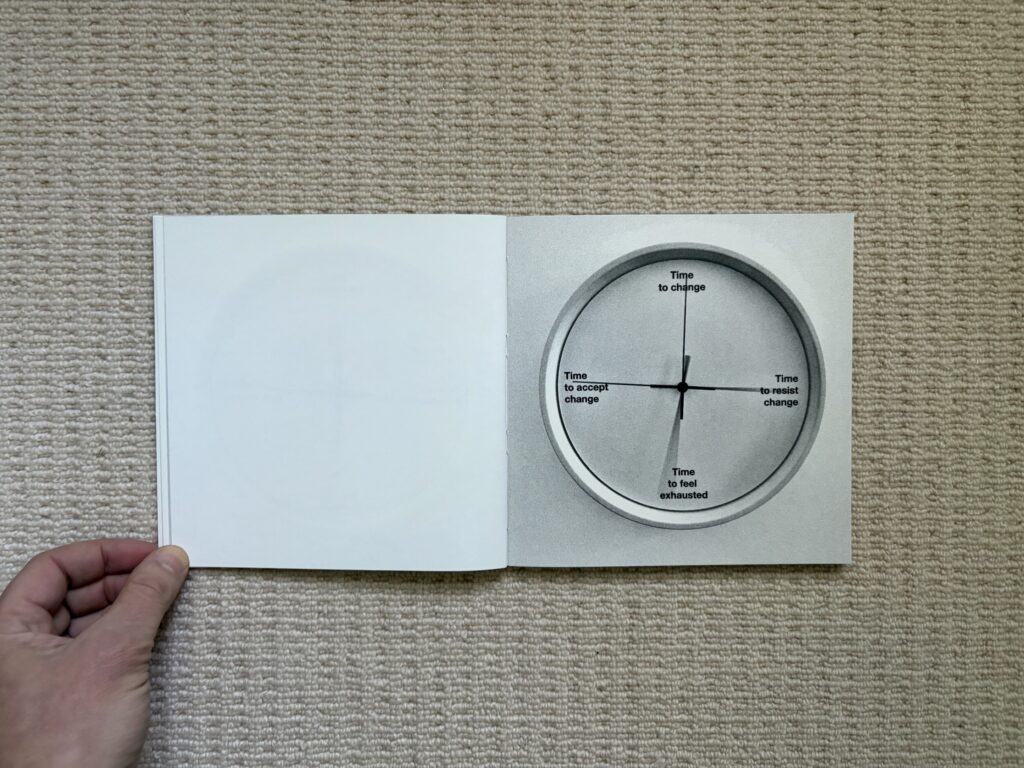
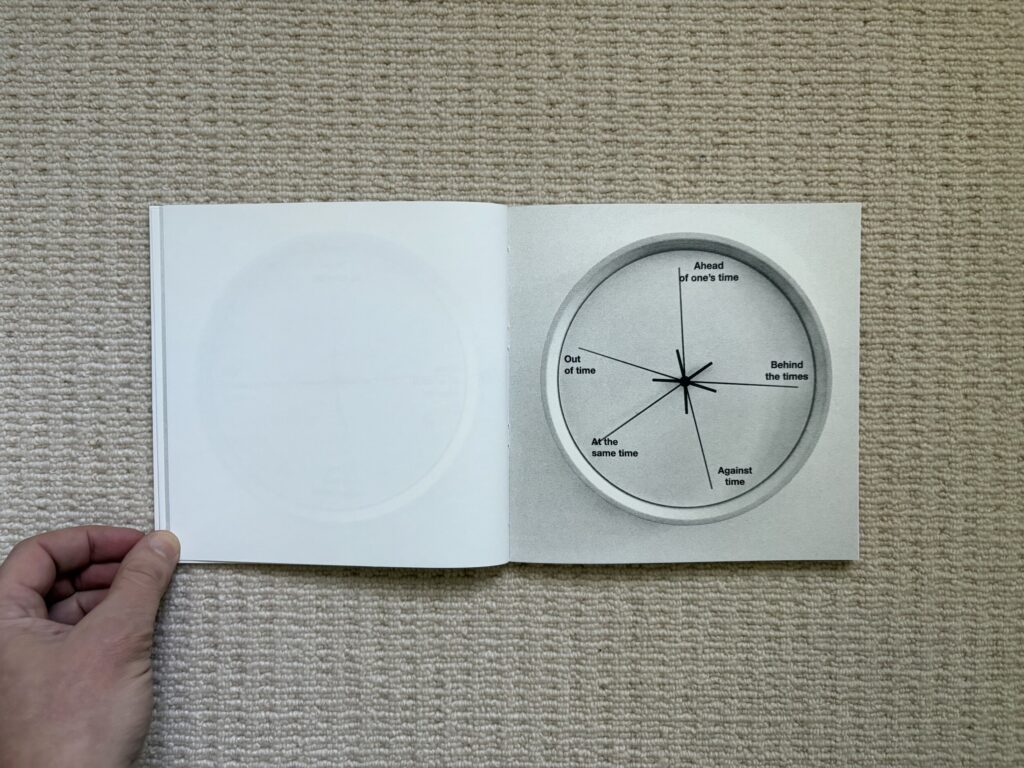
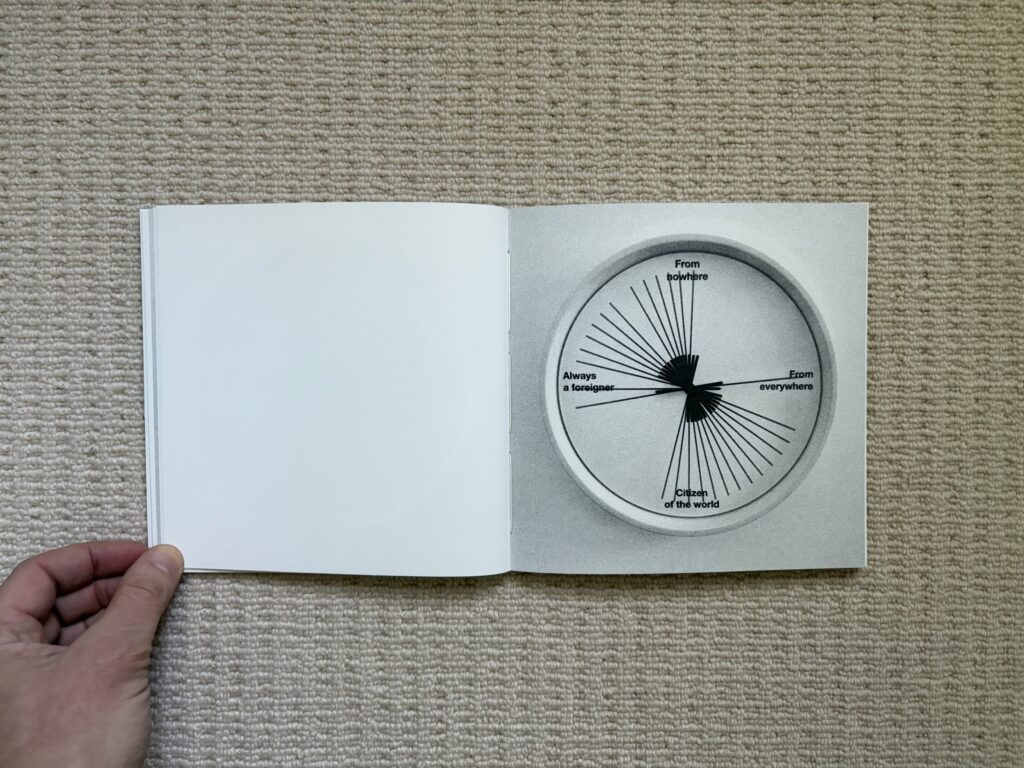
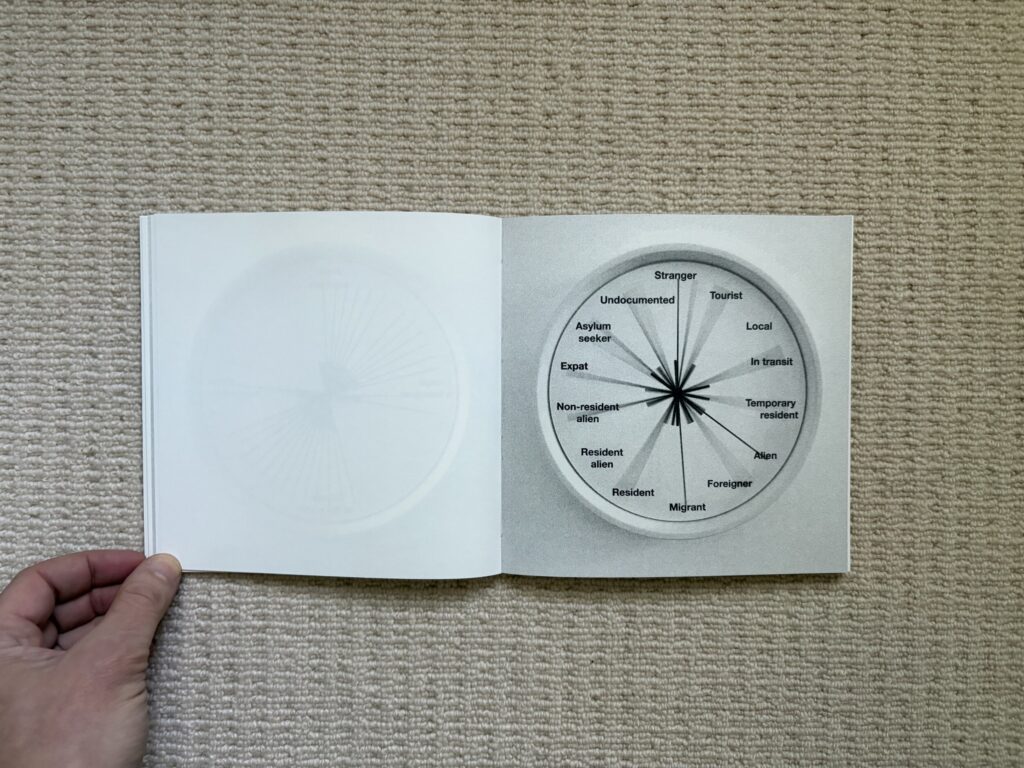
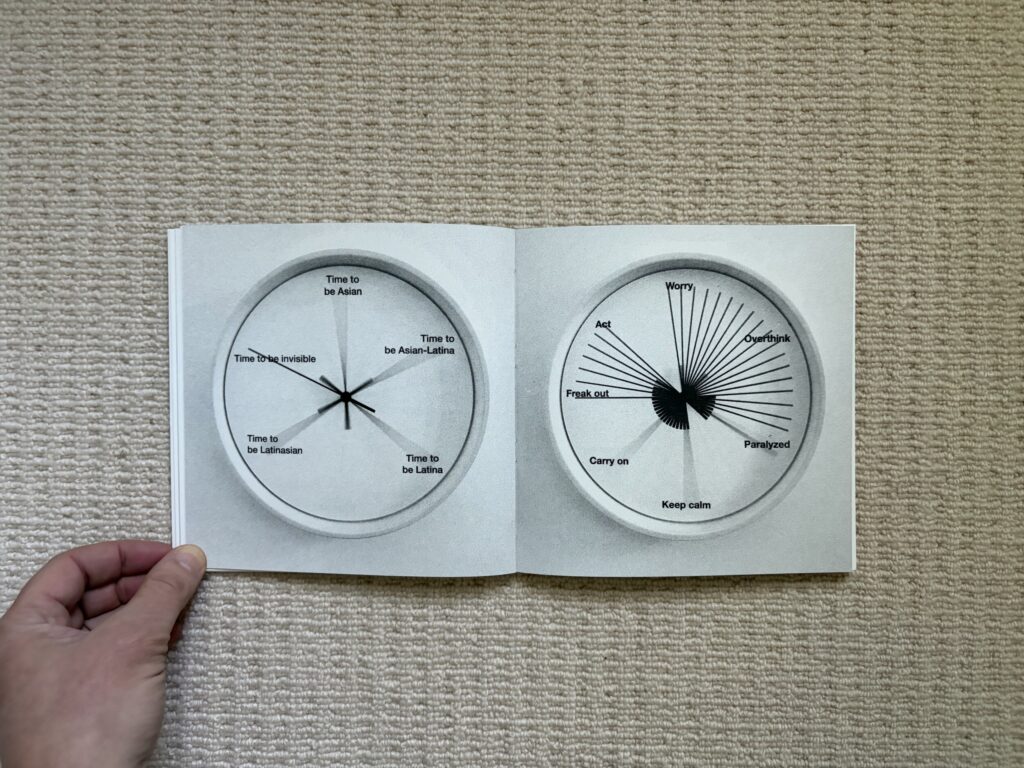
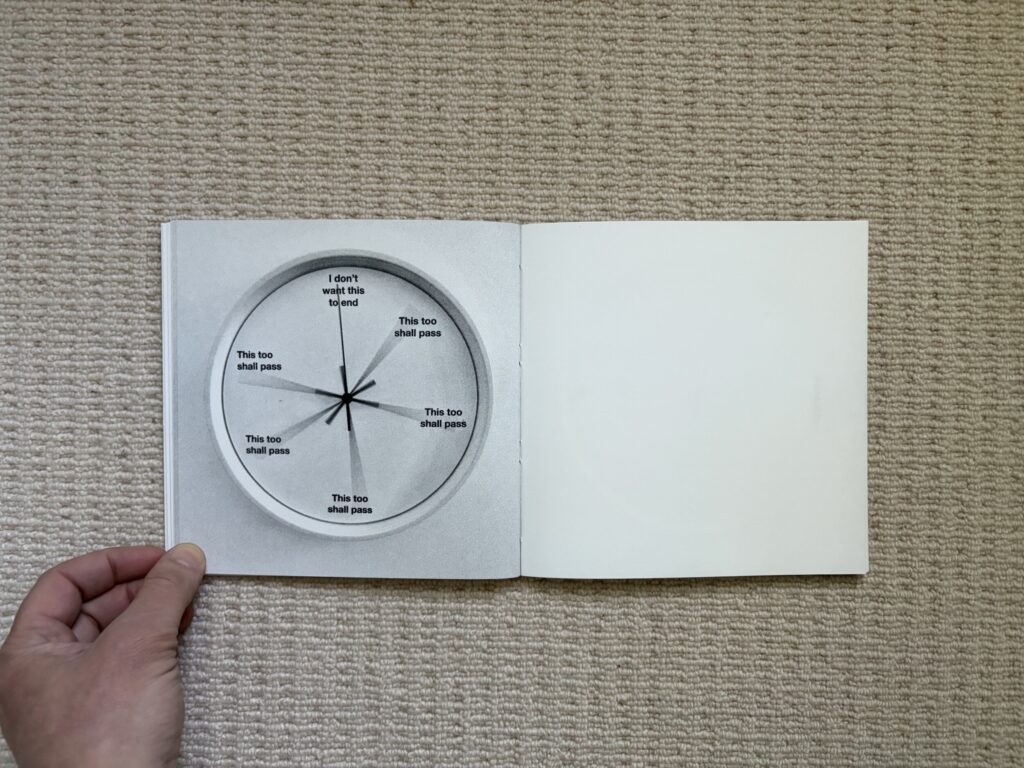
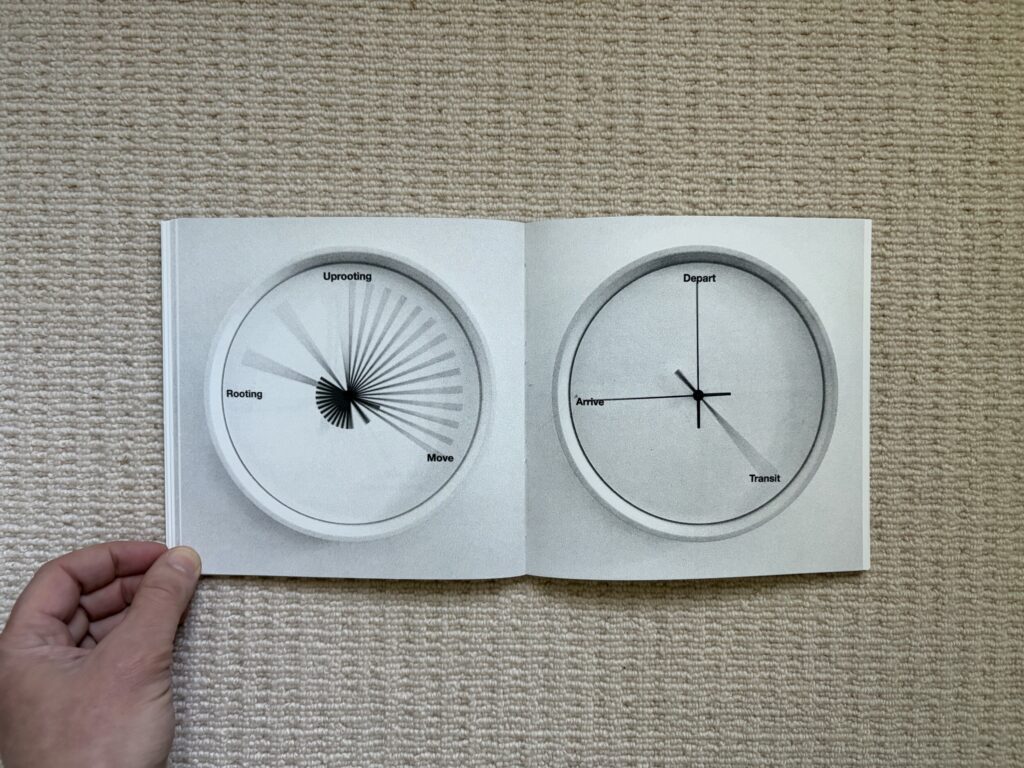
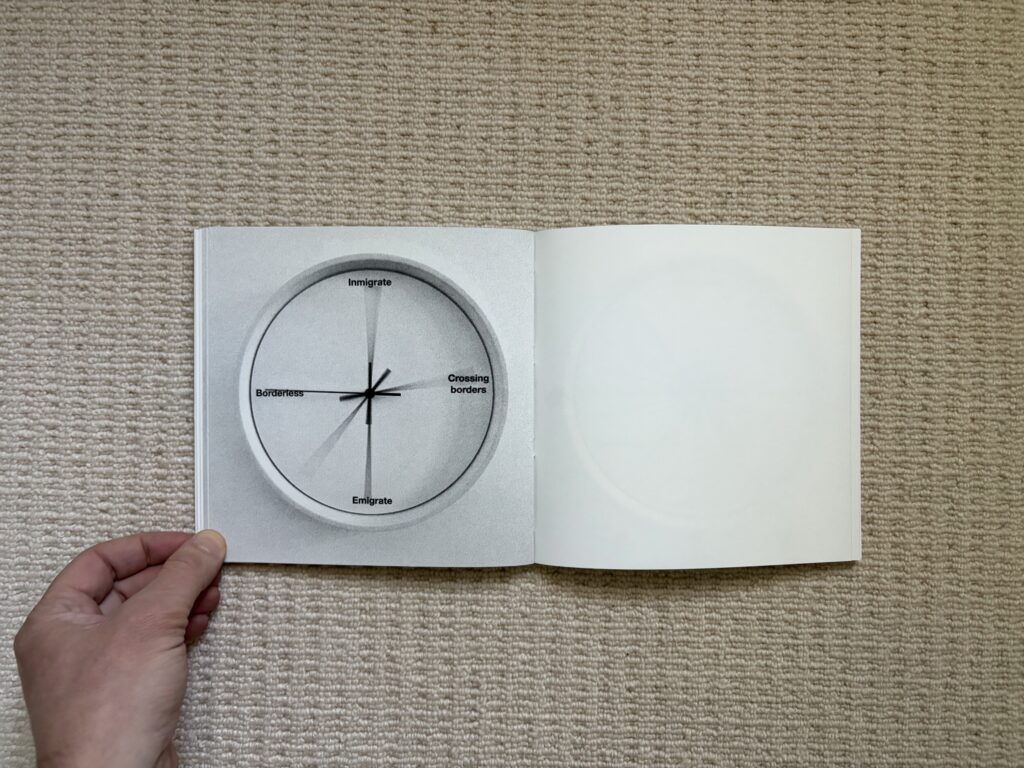
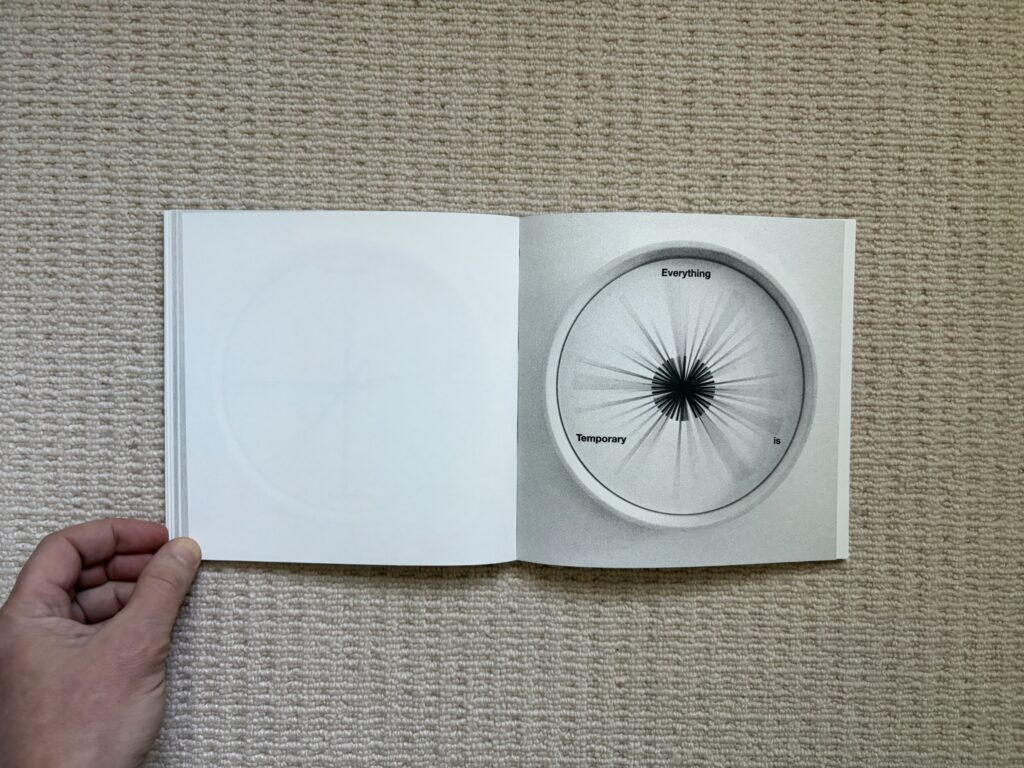
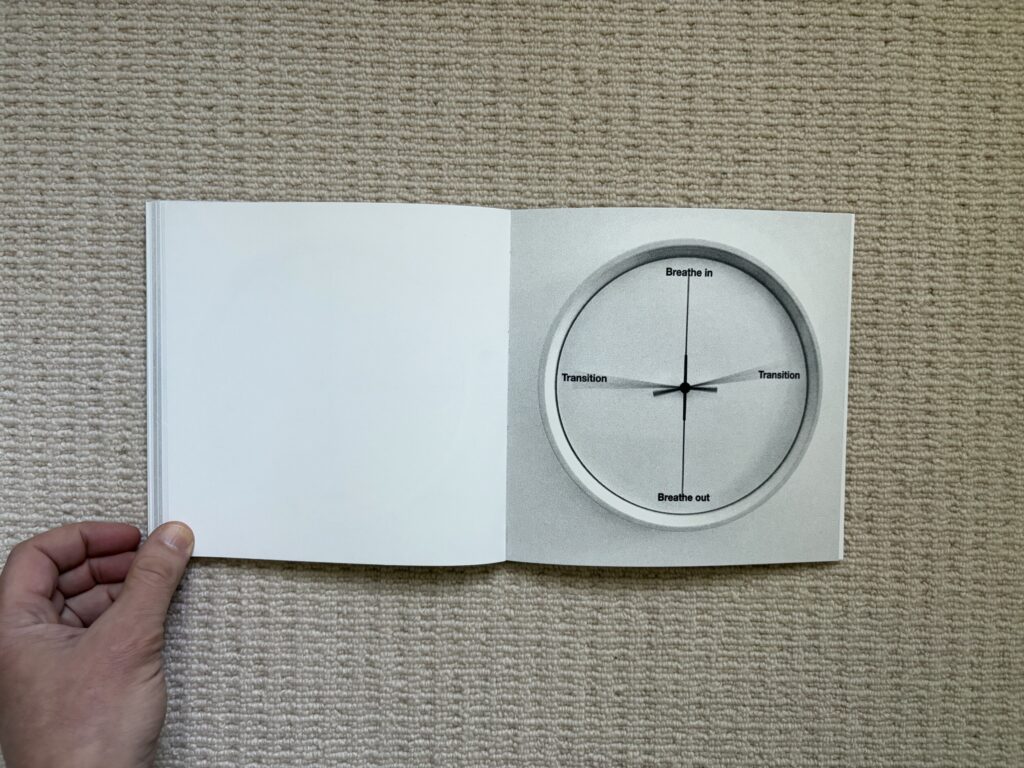
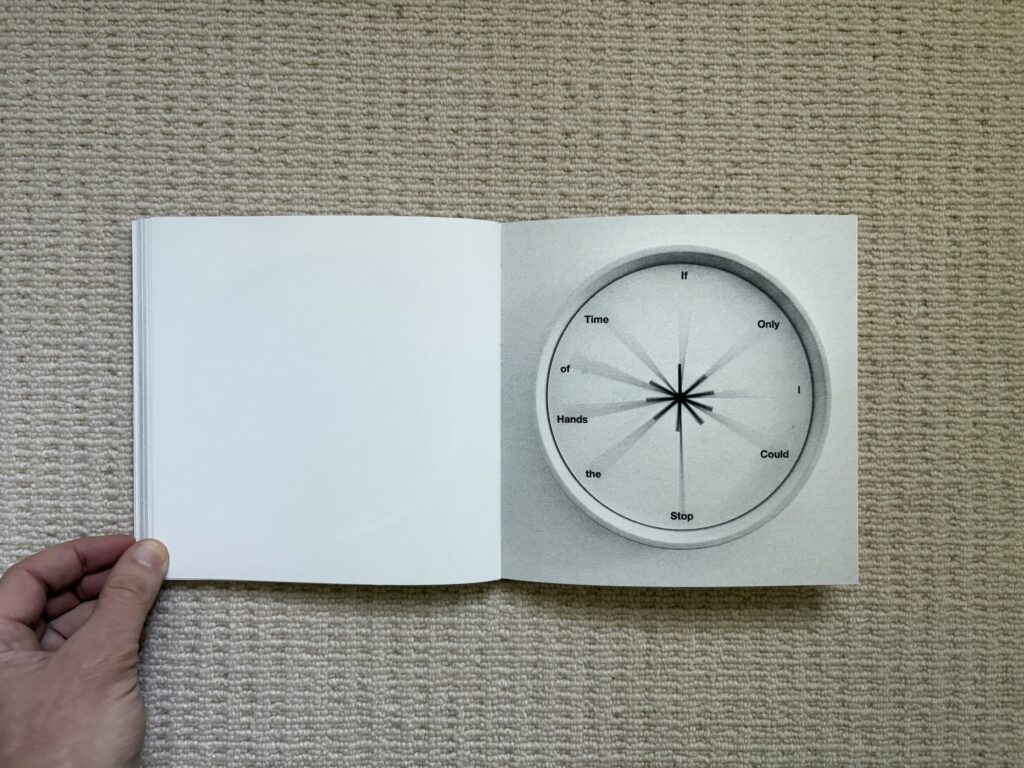
Lee’s photobook How to Measure Time offers an elegant conceptual solution to this problem, in the form of extended exposures of a clock face with the numbers removed. Each image captures a single clock hanging against a blank white wall, the straight hour and minute hands revolving around the center point of the circle. Lee’s long duration and often multiple exposure images of the clock lead to puzzling arrangements and repetitions of the clock hands, from blurred sweeps to repeated distinct lines that defy a single reading of time. Perfect bisections and divisions are liberally mixed with more approximate geometries, in a few cases leading to densely layered patterns like starbursts.
With the numbers removed from the clock face, the empty whitespace offered Lee an opportunity to insert her own units of measure, and via digital montage, she has added words, labels, and captions to some of the available clock face locations. Her results transform the clocks into a range of alternate gauges and indicators, opening up plenty of conceptual possibilities for examining the relationships between time and identity.
The first few images in the photobook introduce us to the concept of clocks that don’t tell numerical time in the usual ways we expect. The first image is marked by three clock-hand locations – Past, Present, and Future – with hands pointing in several directions, seemingly all at once, while the next few pictures create opposing points on the circular dial – Time to stay/Time to move on, Time to blend in/Time to stand out, Time is on my side/Time is against me – that once again are measured by multiple sets of hands. Looking at these clocks, we also start to wonder about the intervals the hands might measure, and how intermediate points between two ideas or emotions might be carved out.
Lee’s hybrid Korean-Venezuelan heritage comes through in several other works. Clock face locations set up an ever changing rotation between Korean and Venezuelan, Asian and Latina, belonging and not belonging, being from nowhere and everywhere, and a dizzying array of possible statuses (including tourist, local, alien, migrant, foreigner, resident, expat, undocumented, asylum seeker, and stranger, among others). Two other clocks provide three balanced phases: Depart/Transit/Arrive and Uprooting/Move/Rooting, each a study in time-based step-by-step transitions that repeat again and again as the hands spin.
Lee then moves on to more abstract definitions of relative time, her clocks measuring degrees of change, the feeling of being ahead, behind, or out of time, not enough or plenty of time, and the worry of time passing. Underneath these measurements lie further layers of emotion – acceptance, resistance, exhaustion, paralysis, calm, and even endurance. With the clock always ticking, beginnings and endings are always in play, with “this too shall pass” measured against “I don’t want this to end”.
The last few images in How to Measure Time take a more inward trajectory, where metaphysical states, life cycles, and interior emotions are given structure by the clocks. Time to live, Time to die, and Time to be reborn are set up in a never ending circle, while other clocks mark periods of meditation, anxiety, self-awareness, luminosity, and growth. One densely populated clock, filled with blurred hands at almost every time location, reminds us that Everything is Temporary, while the last image in the book fitting wishes If Only I Could Stop the Hands of Time.
While the conceptual framework of Lee’s photobook is relatively straightforward, I found its payoffs to be flexible and resonant. Like Felix Gonzalez-Torres’s clocks for paired lovers (which will ultimately fall out of synch) or Christian Marclay’s time-ordered movie moments, Lee’s clocks make measured time more malleable, in many cases, pushing far beyond the strictly chronological into a non-linear mode of thinking or perception. Lee has a clear talent for easy going humor and word play, with honest introspection and poignance never far from the surface. As many notions of time fluctuate through her clocks, she finds ways to come to terms with her own fragmented identity, her natural estrangements seemingly leading to a kind of mature coexistence. In this way, How to Measure Time is deceptively clever, turning a narrowly pared down visual structure into a sophisticated framework, examining personal nuances far beyond the passing of hours and minutes.