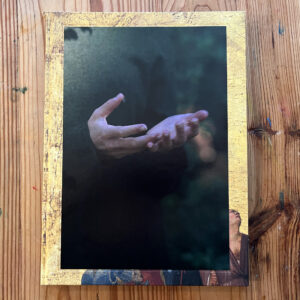
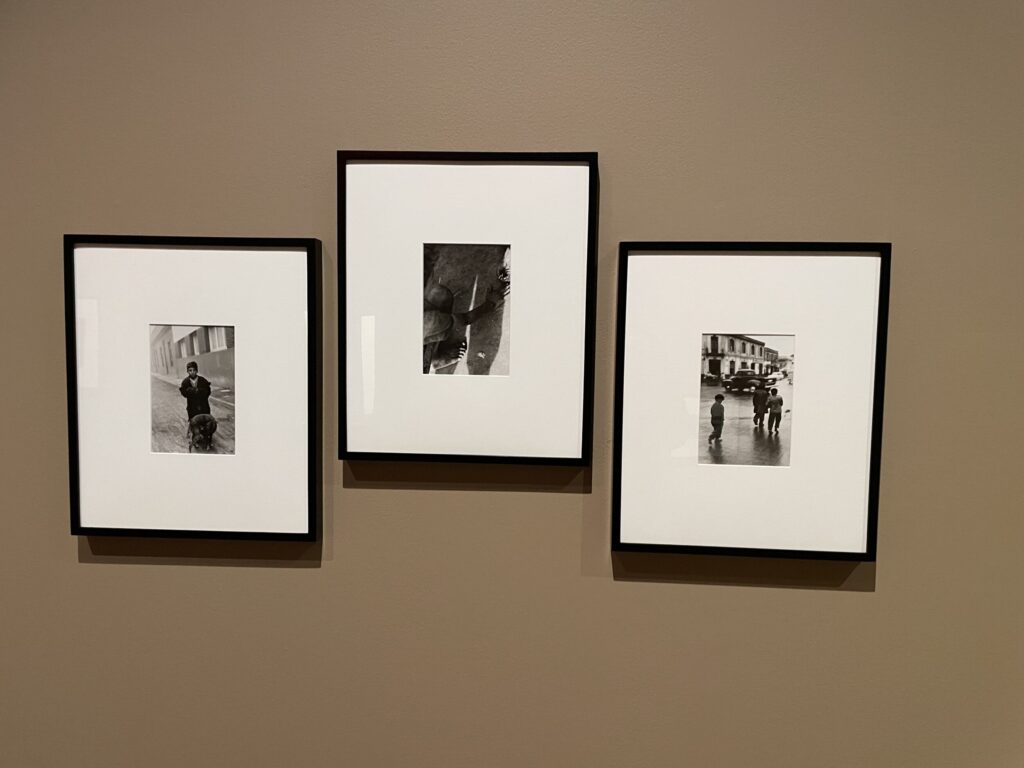
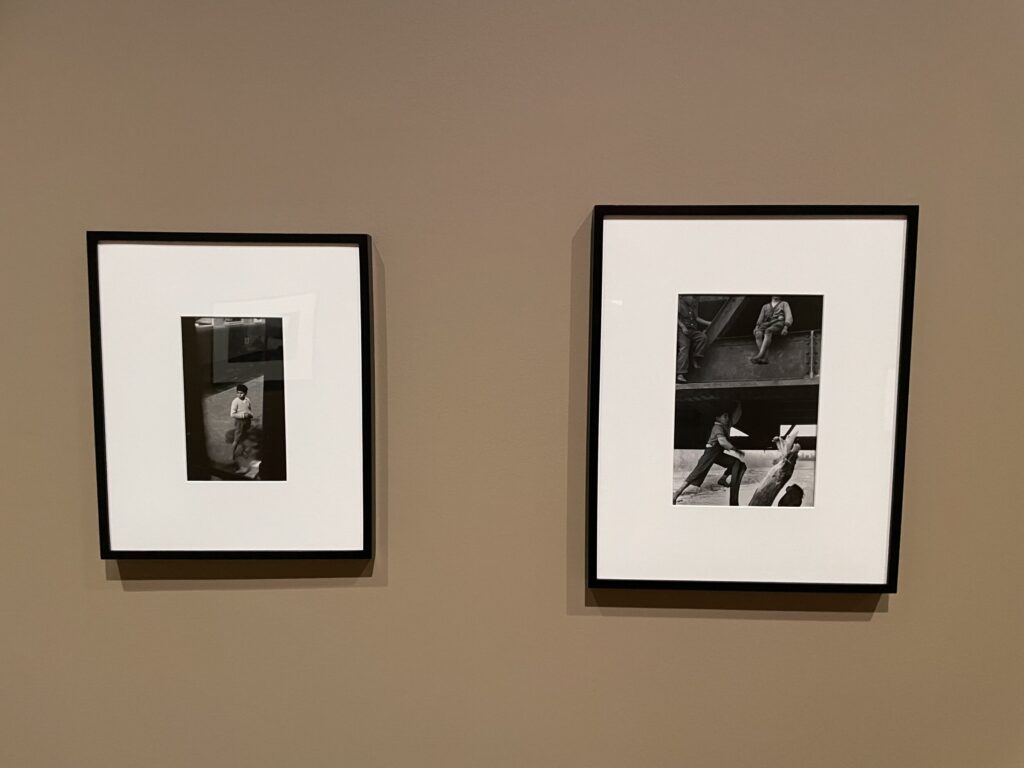
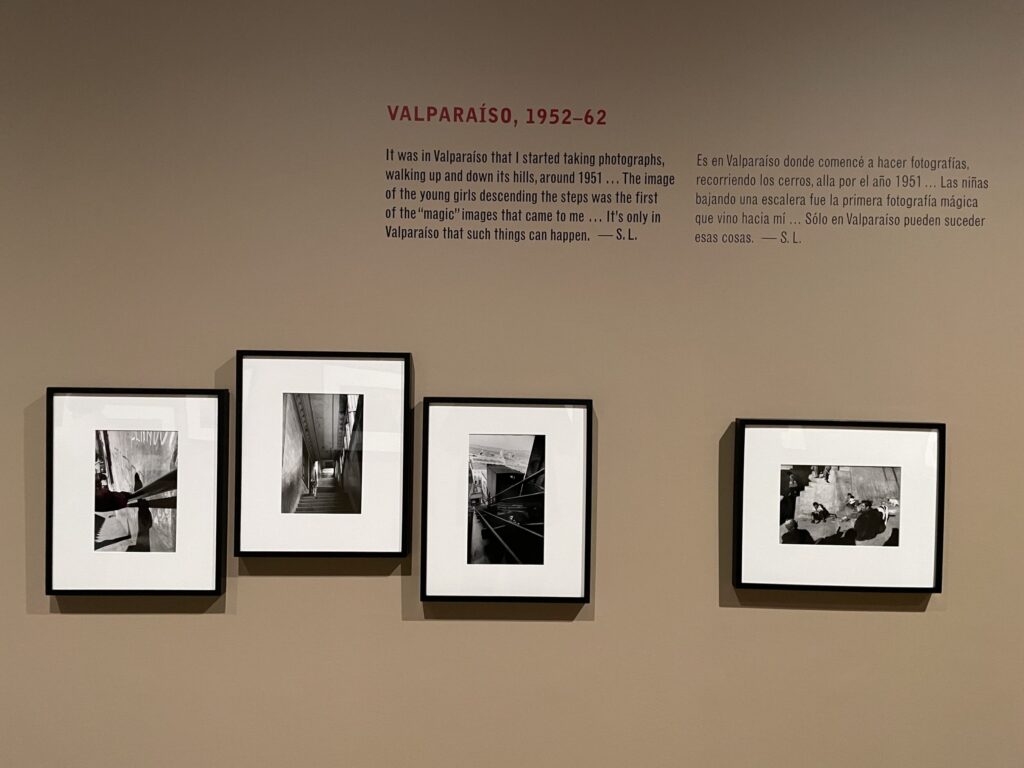
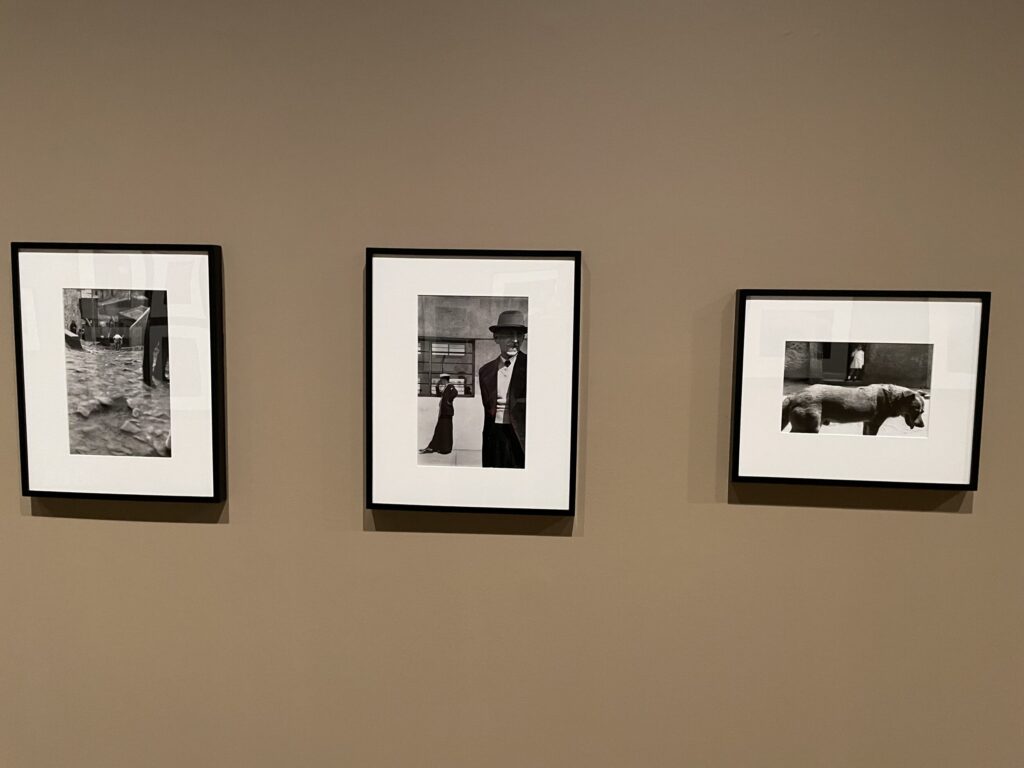
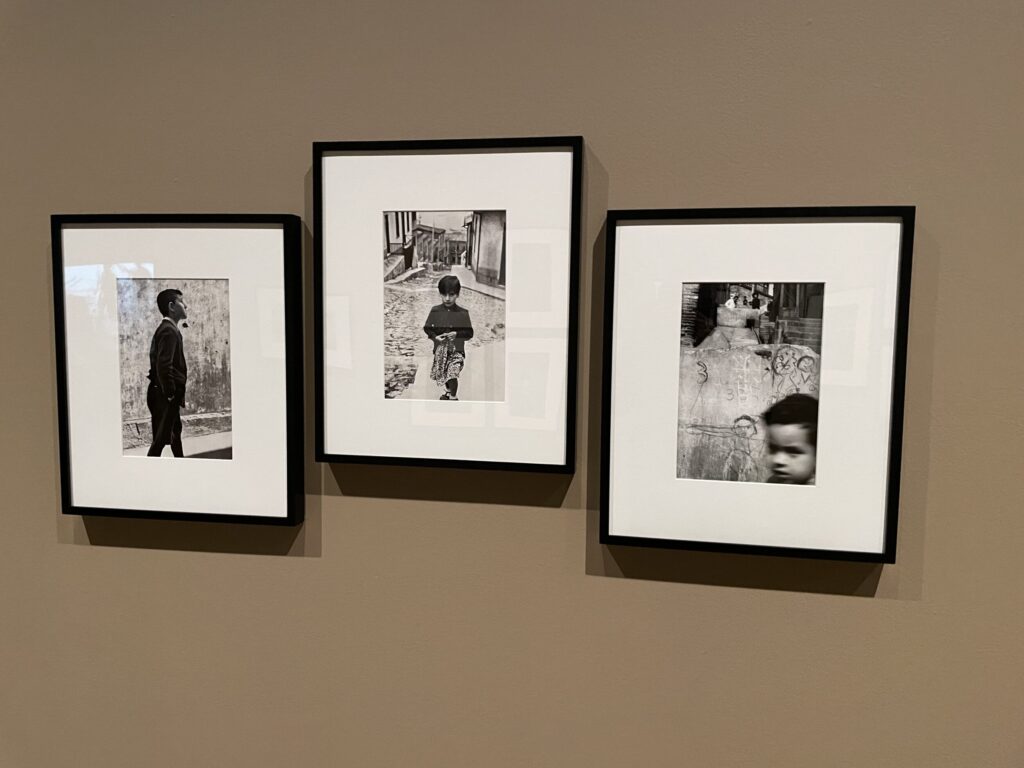
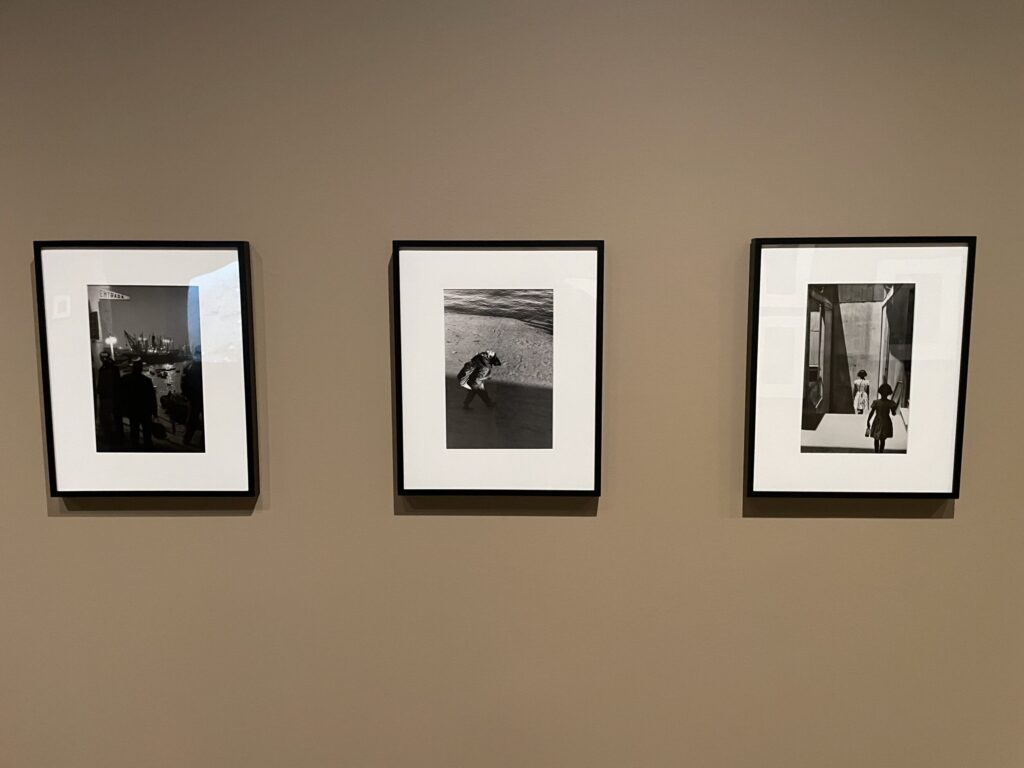
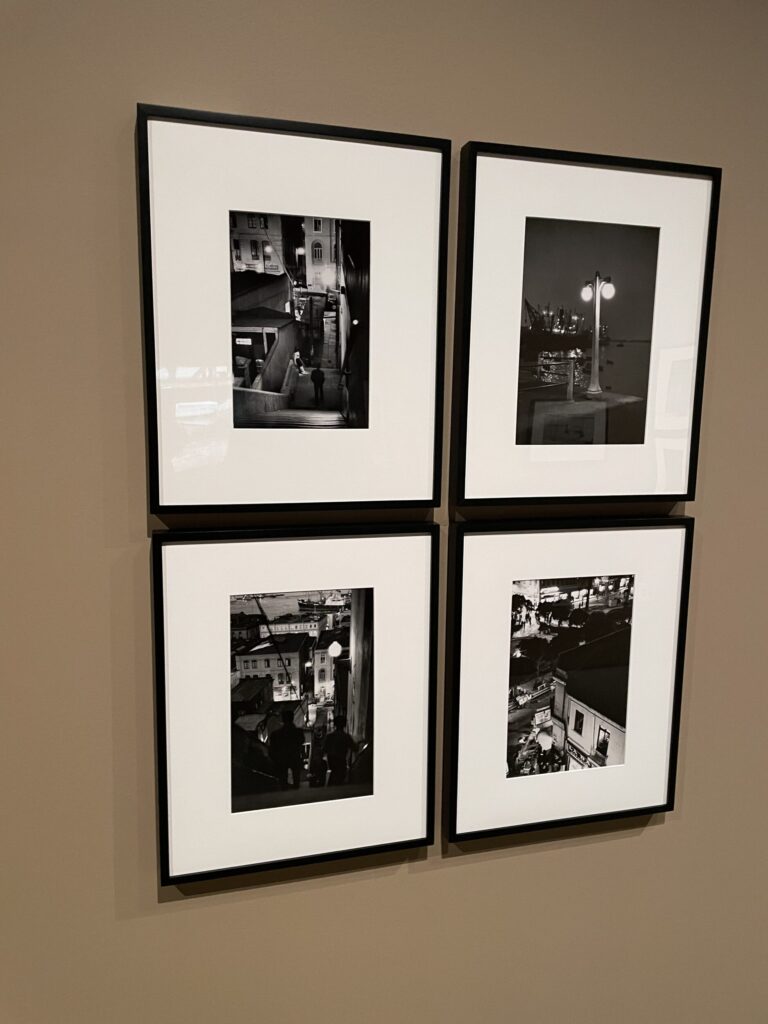
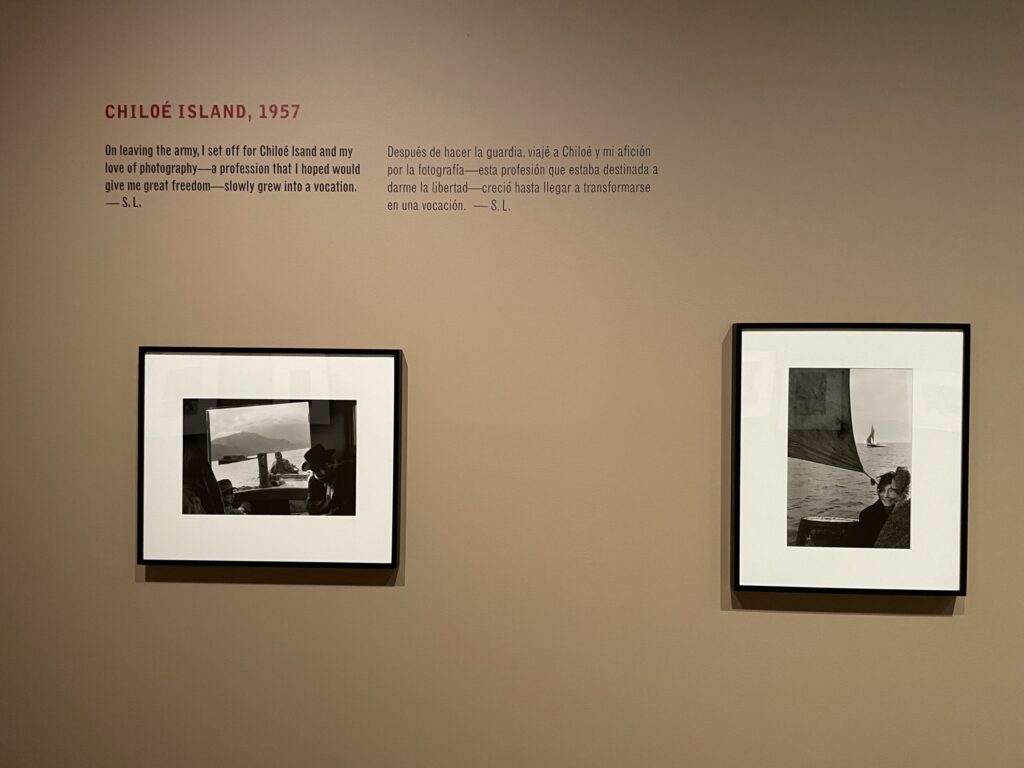
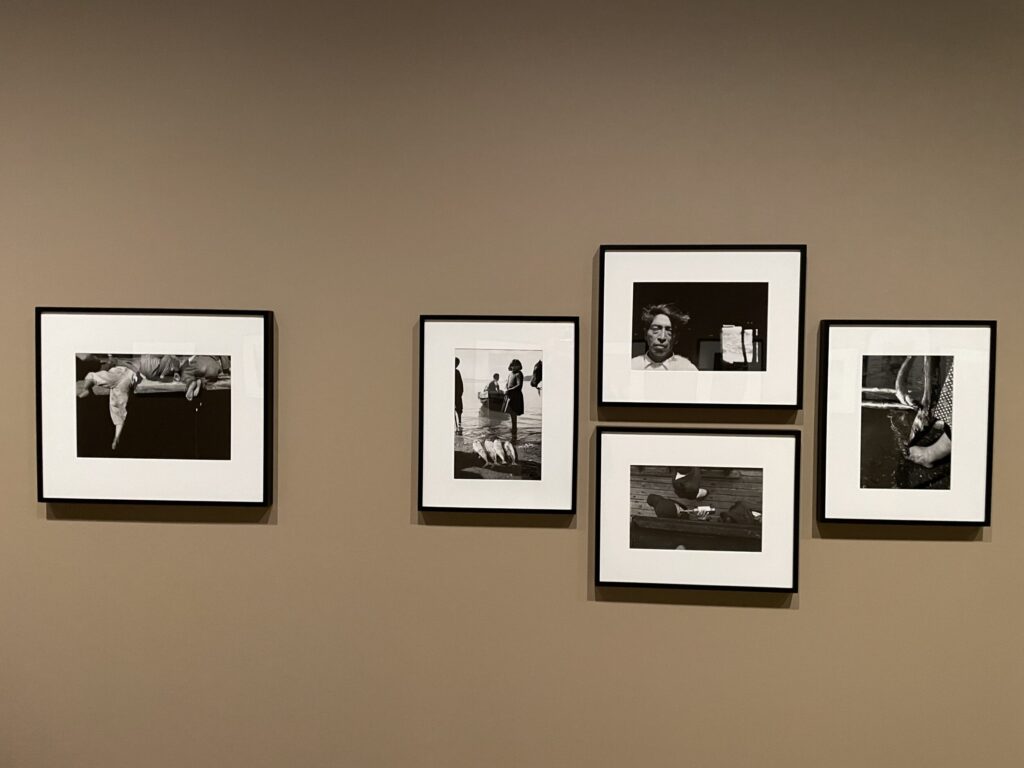
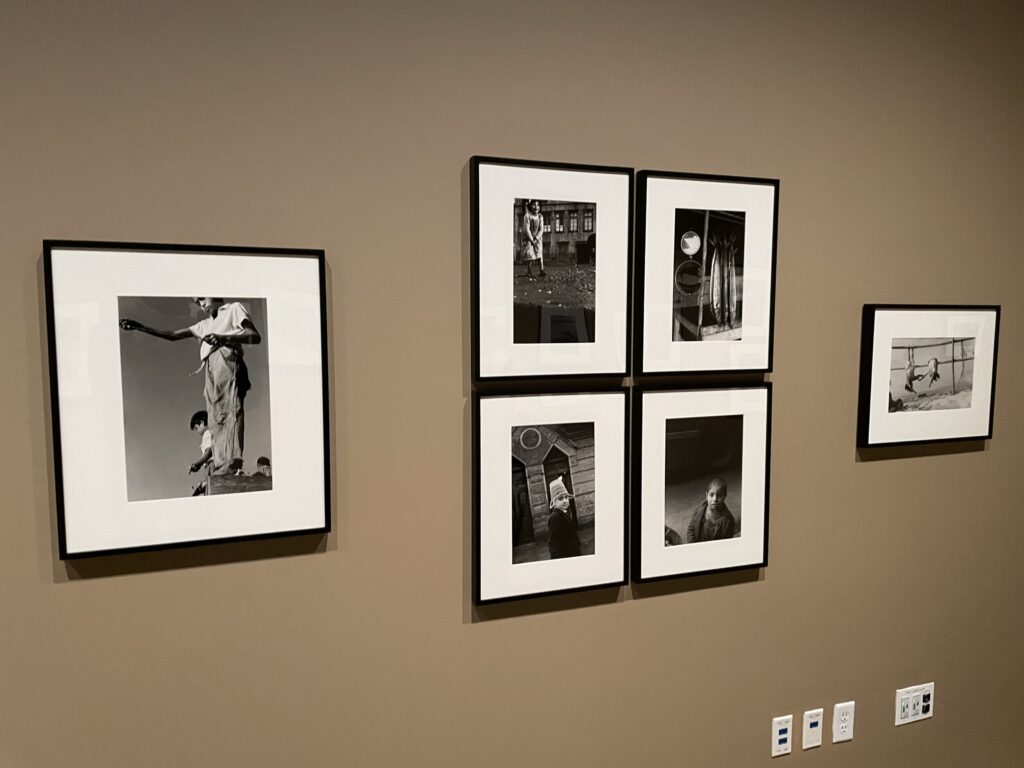
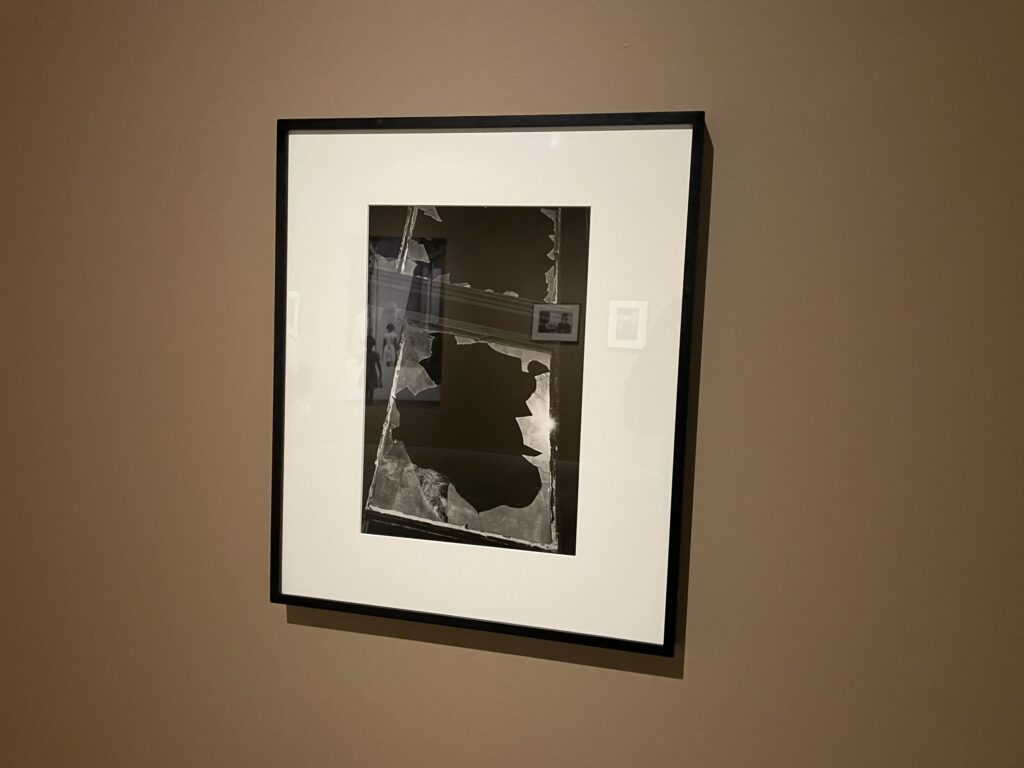
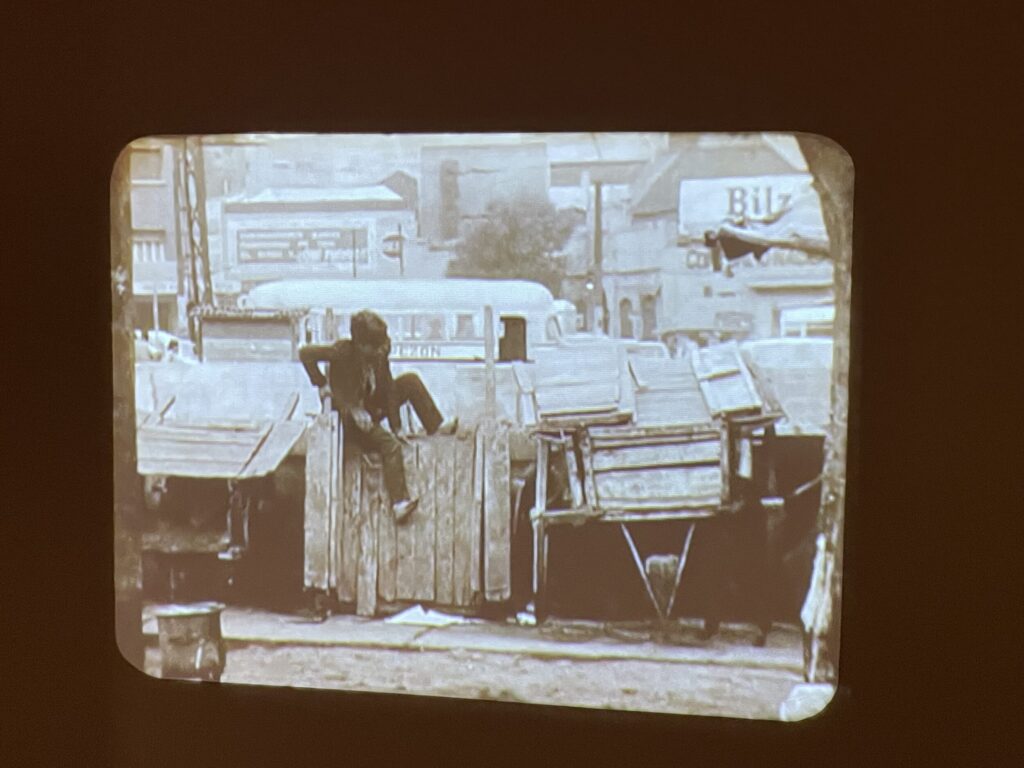
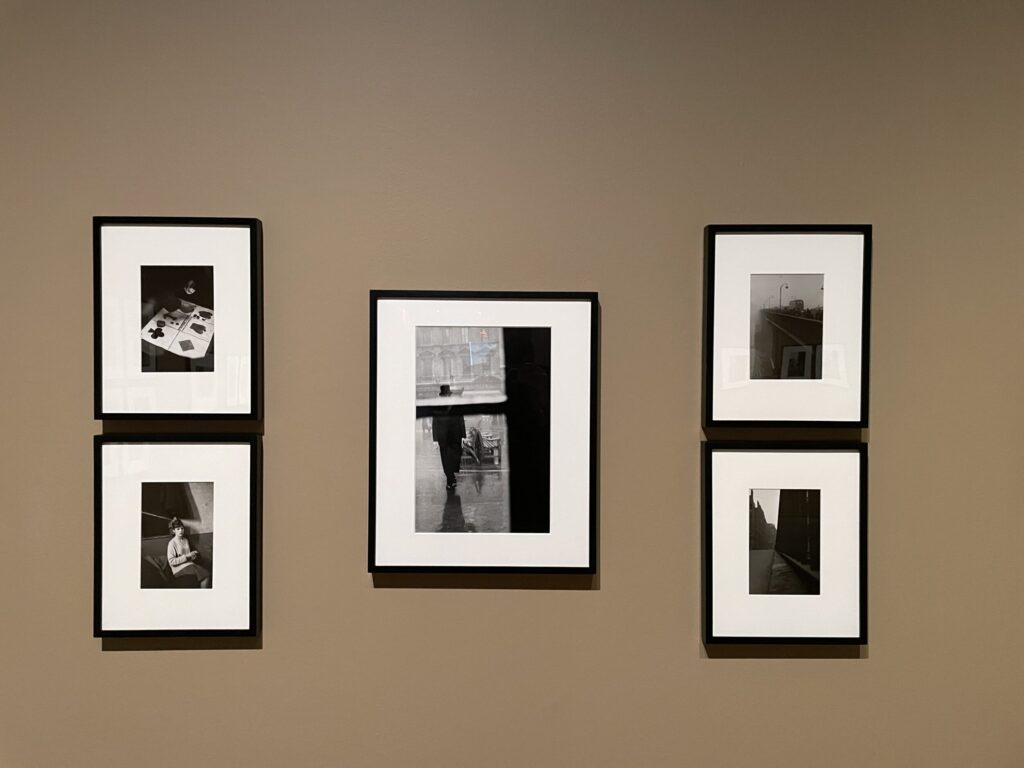
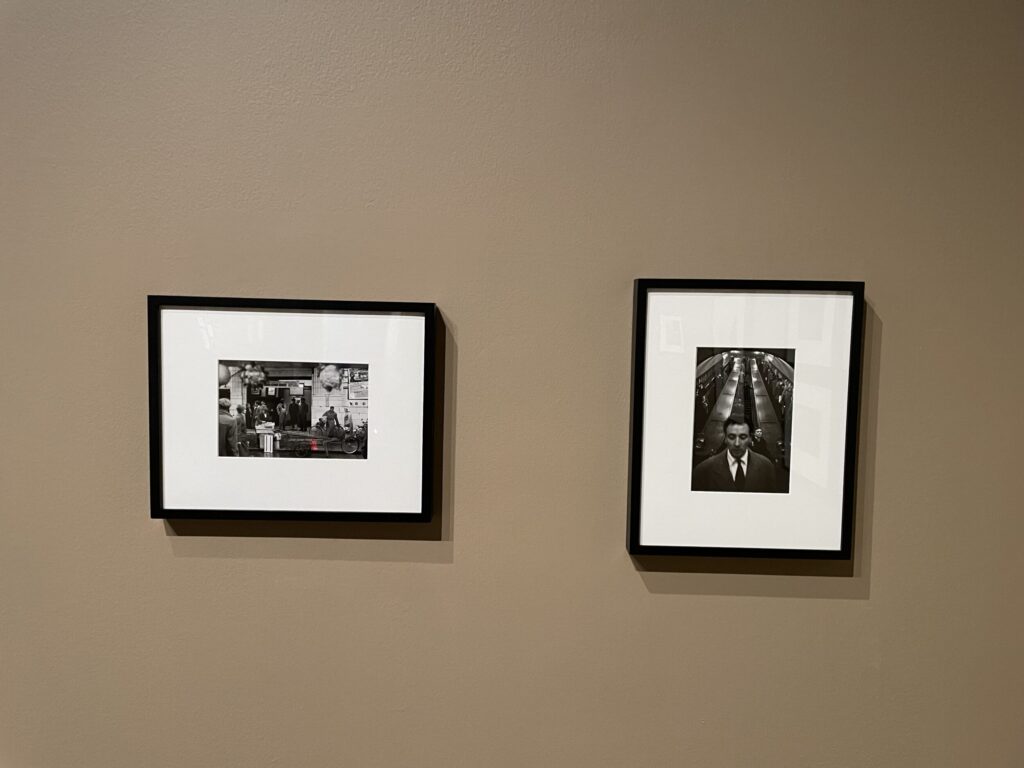
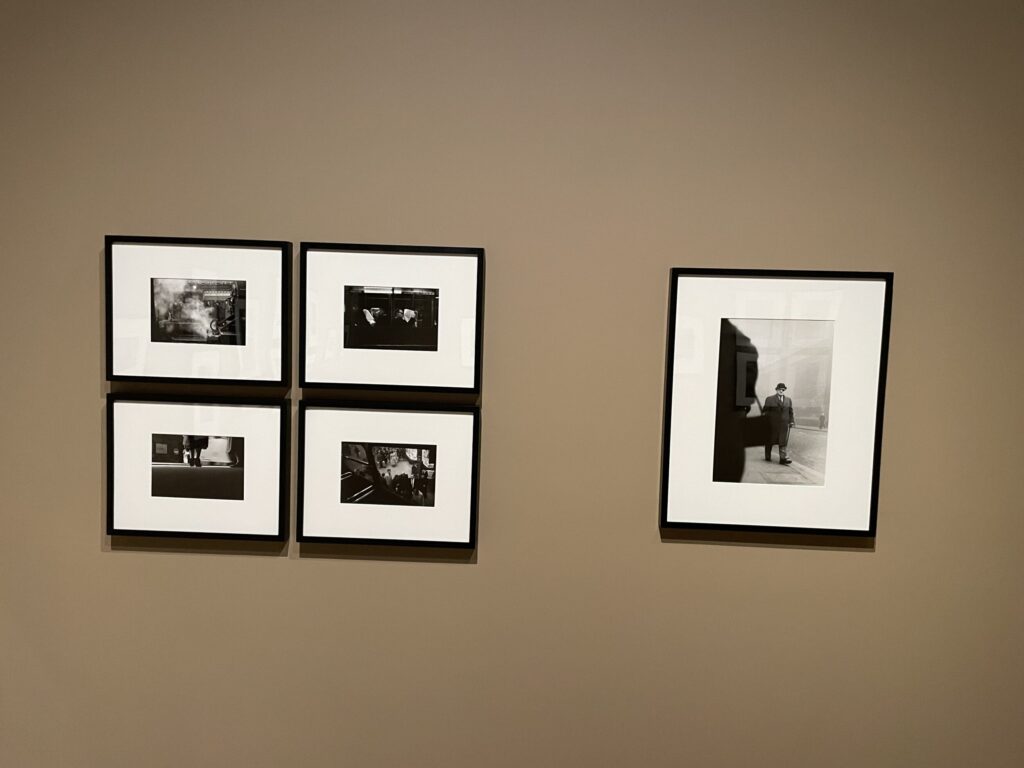
JTF (just the facts): A retrospective exhibition consisting of over 100 black-and-white photographs, generally framed in black and matted, and hung against light brown walls in a series of rooms on the second floor of the museum. All of the works were drawn from the Magnum Photos archive. The show was curated by Agnès Sire. (Installation shots and video stills below.)
The following works are included in the exhibition, as divided into sections:
(Introduction)
- 1 gelatin silver print, undated
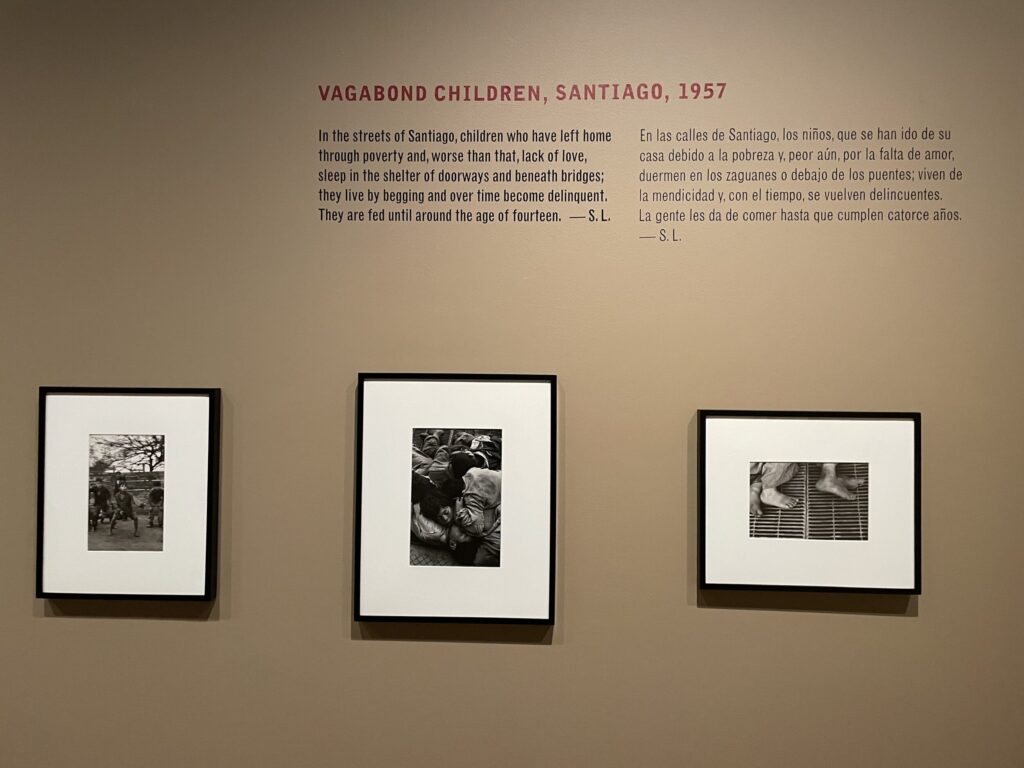
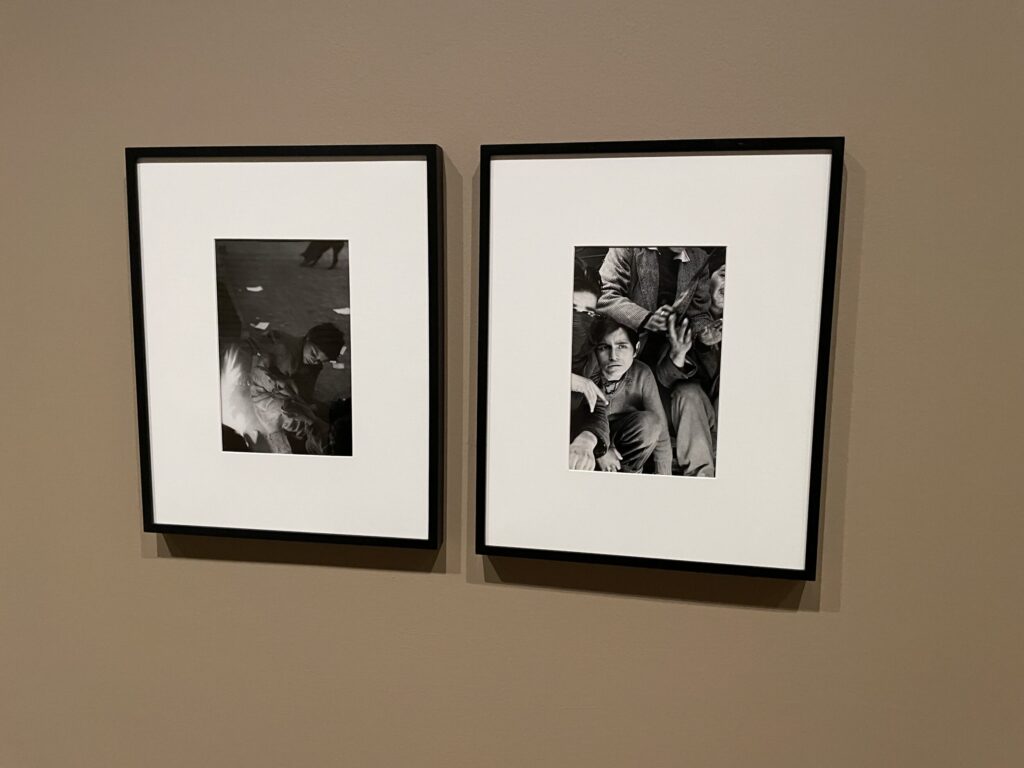
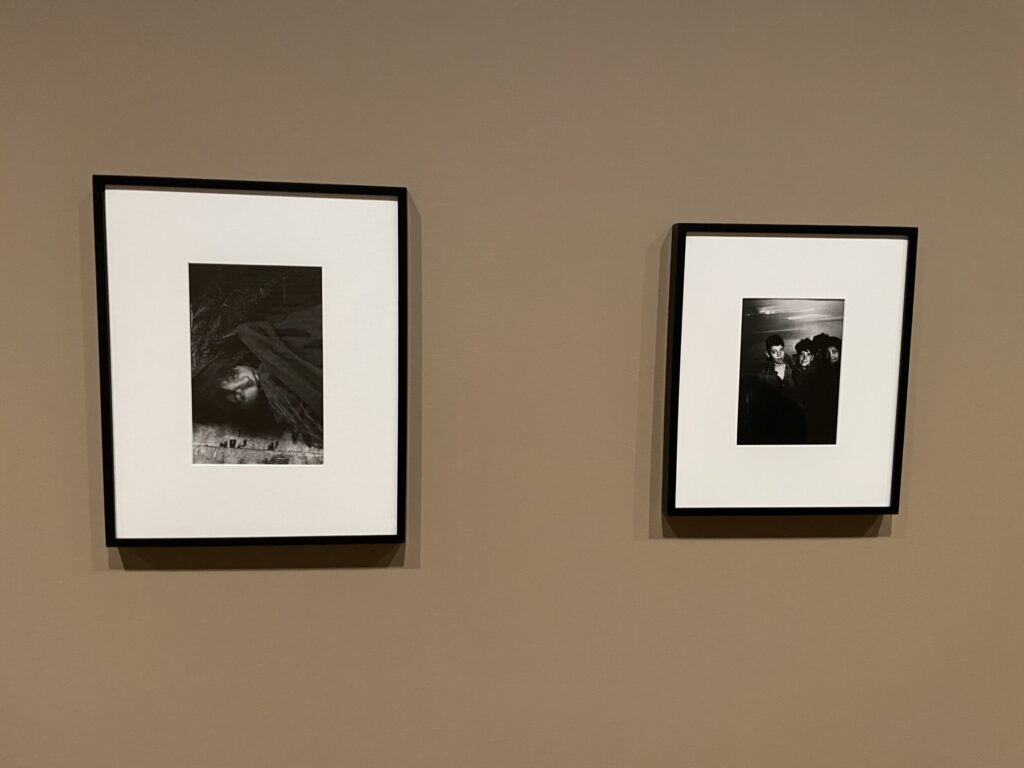
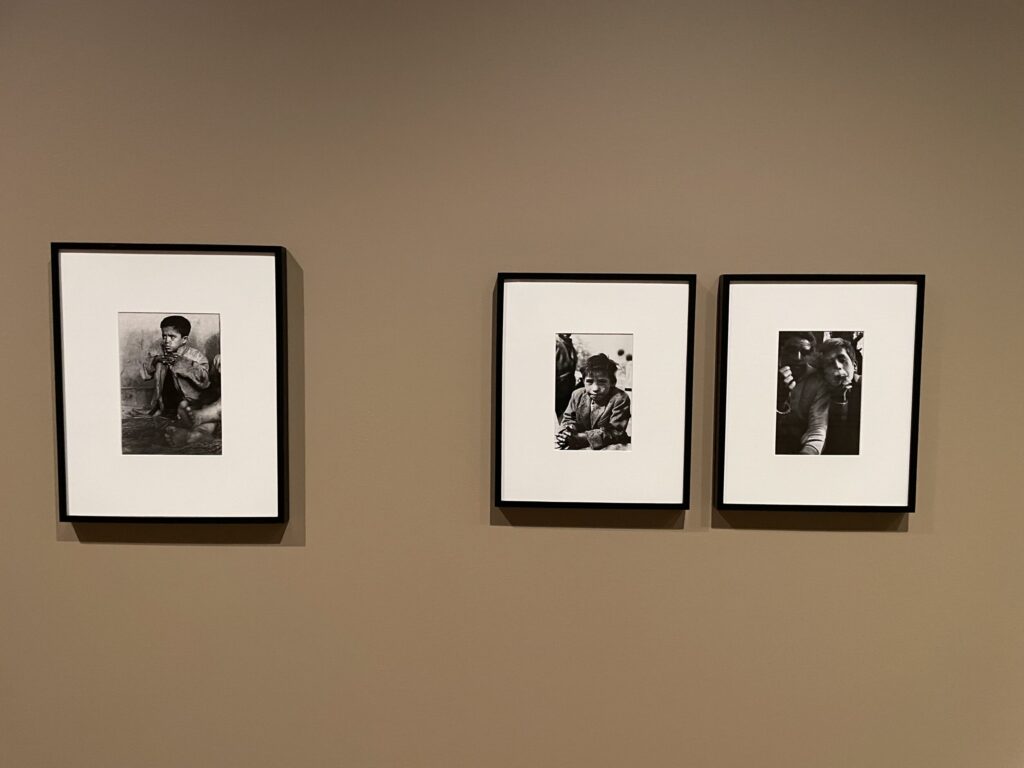
Vagabond Children
- 15 gelatin silver prints, 1957
Valparaíso
- 17 gelatin silver prints, 1952-1962
Chiloé Island
- 13 gelatin silver prints, 1957
(Los Abandonados)
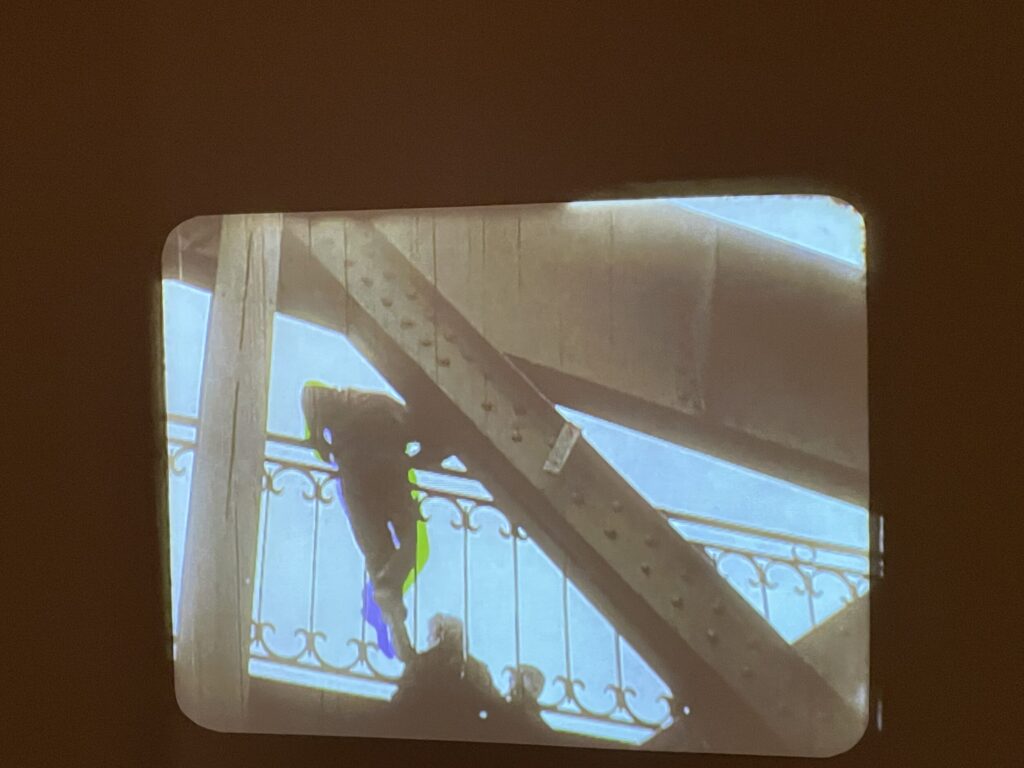
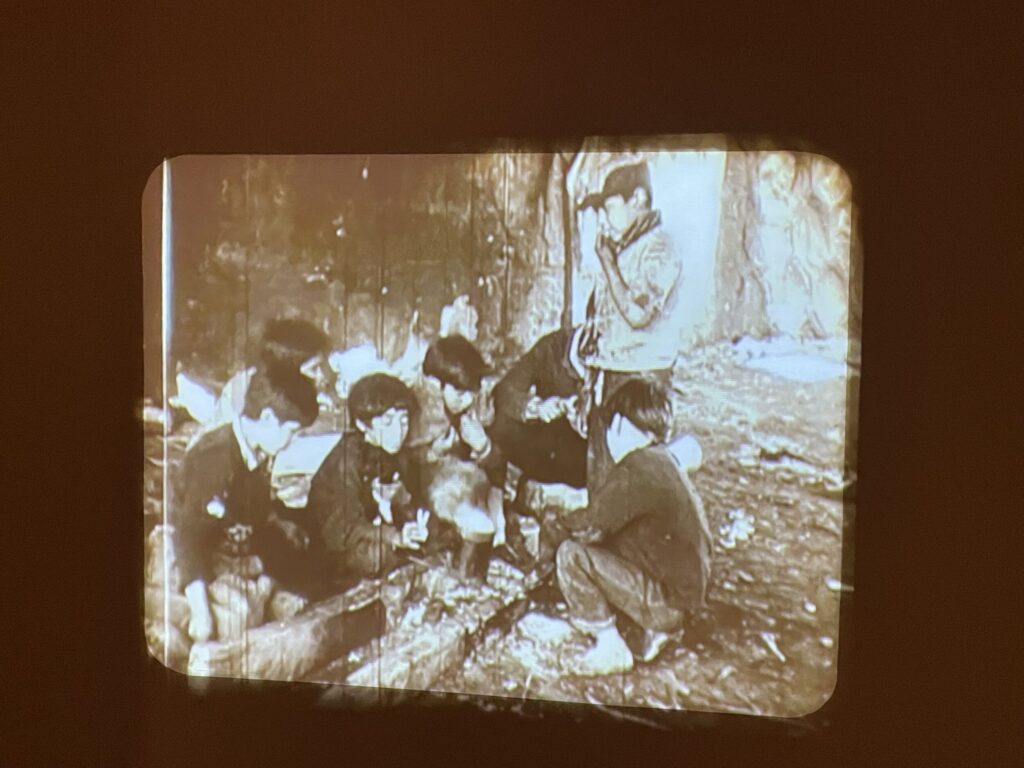
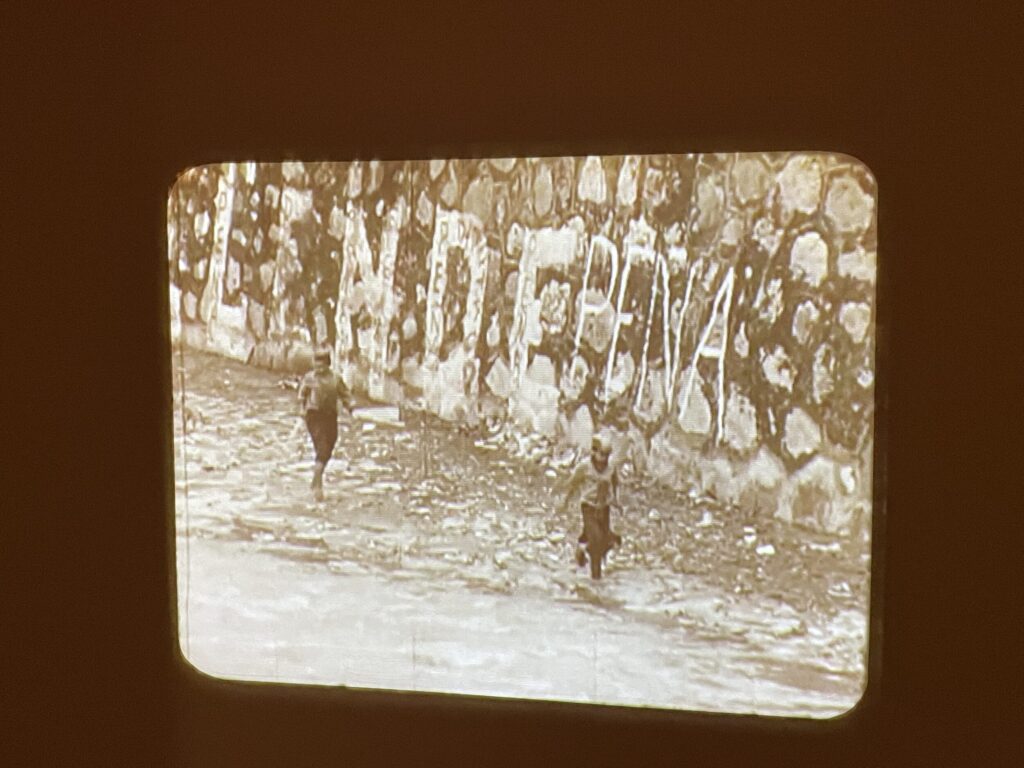
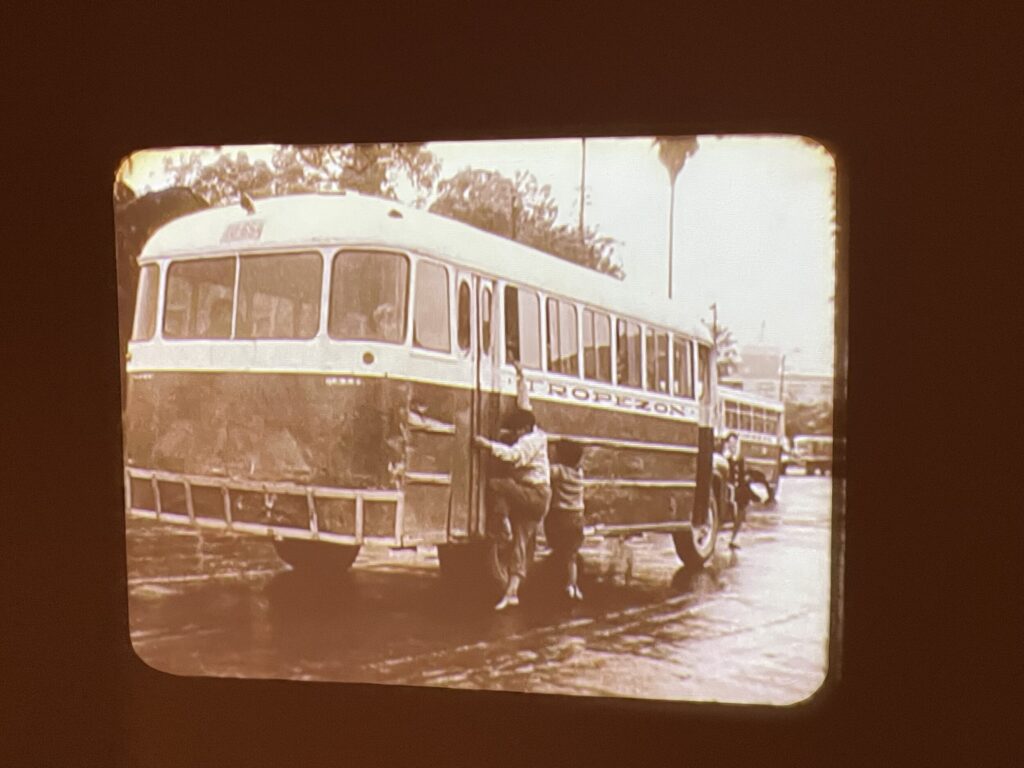
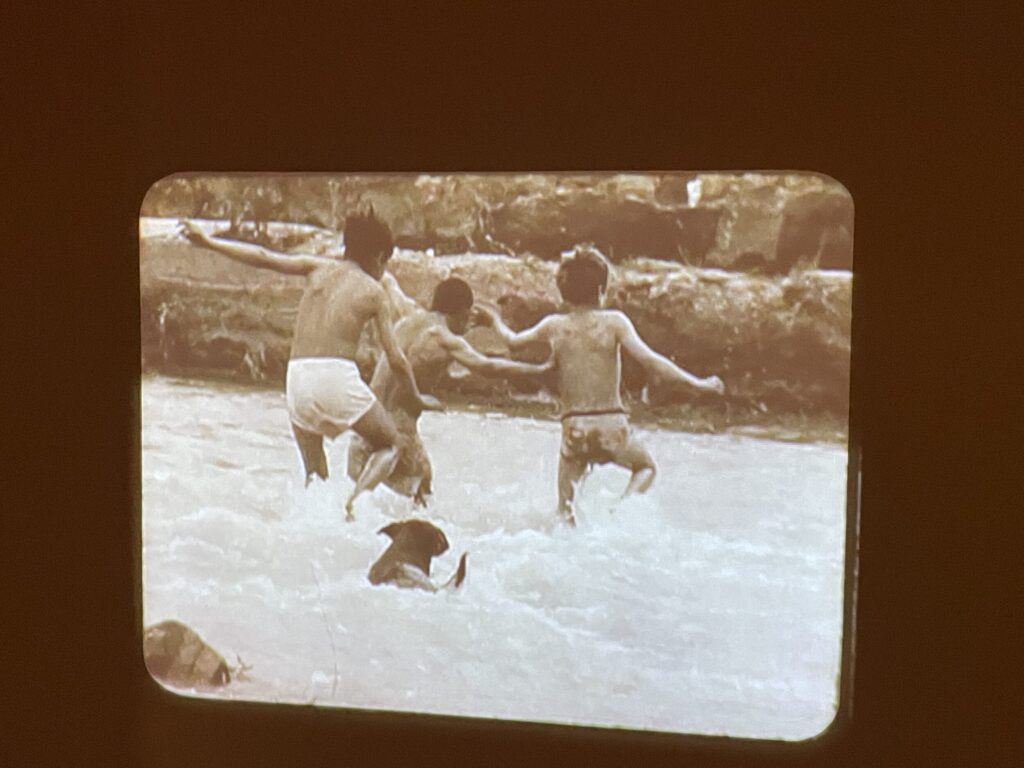
- 1 single channel video, 1965, 5 minutes 17 seconds
- 1 gelatin silver print, undated
Valparaíso
- 6 gelatin silver prints, 1952-1962
Valparaíso
- 6 gelatin silver prints, 1952-1962
London
- 5 gelatin silver prints, 1958-1959
- 14 gelatin silver prints, 1958-1959
Italy
- 4 gelatin silver prints, 1959
Paris
- 6 gelatin silver prints, 1959
Santiago
- 5 gelatin silver prints, 1963-1977
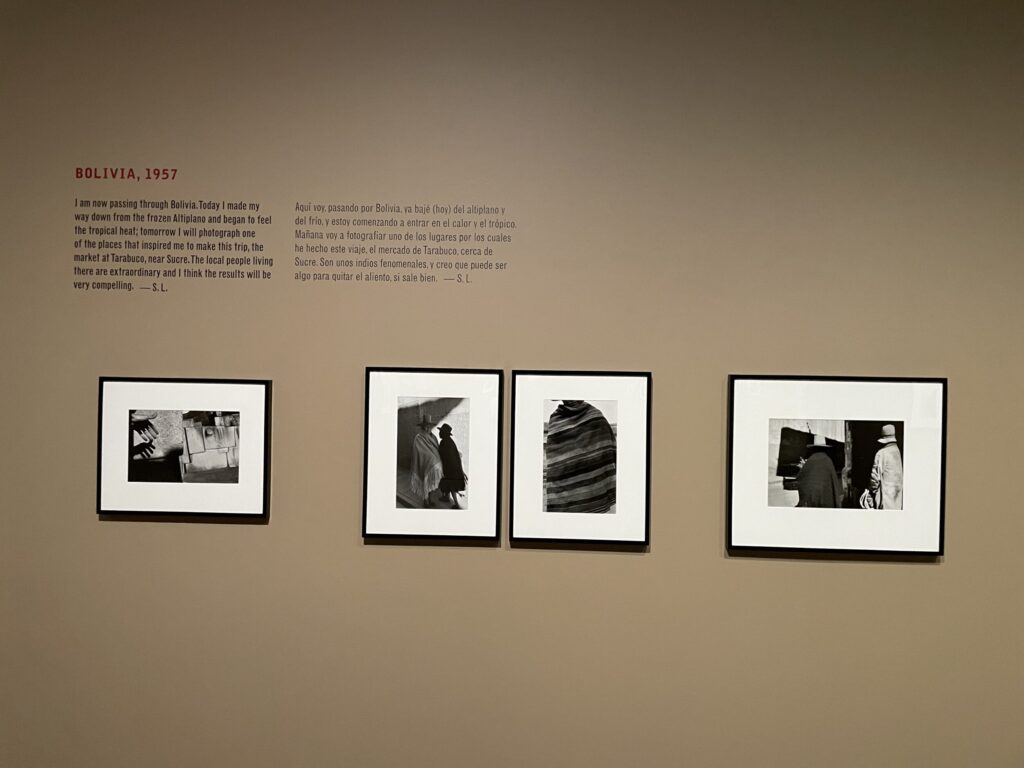
Bolivia
- 4 gelatin silver prints, 1957
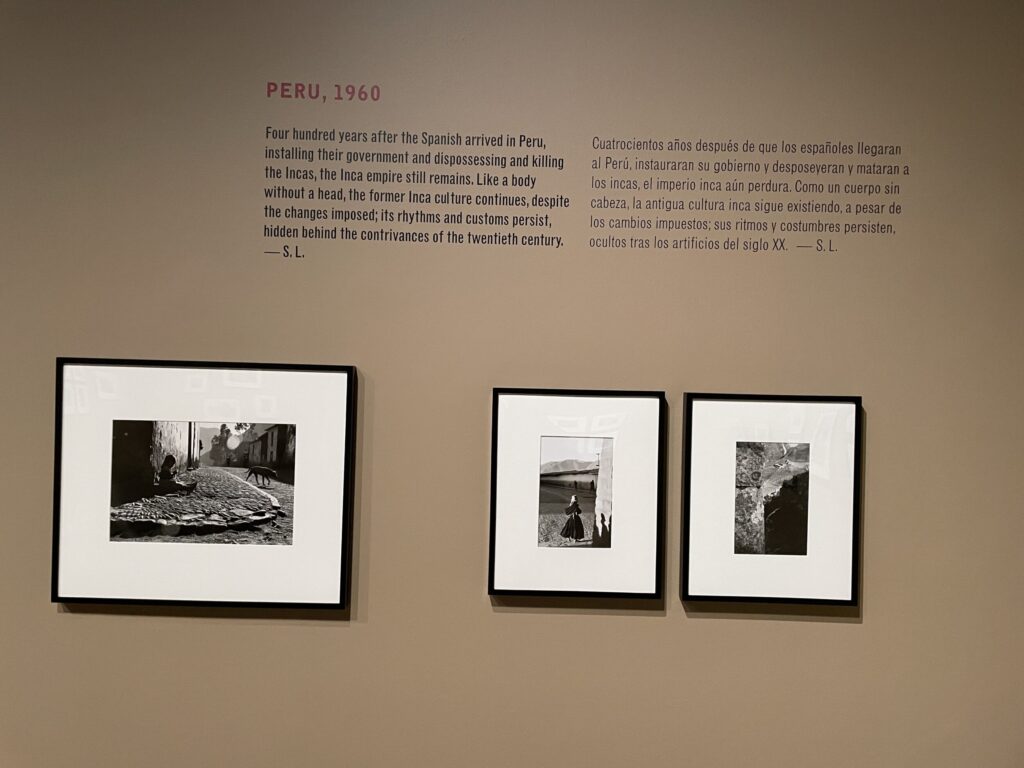
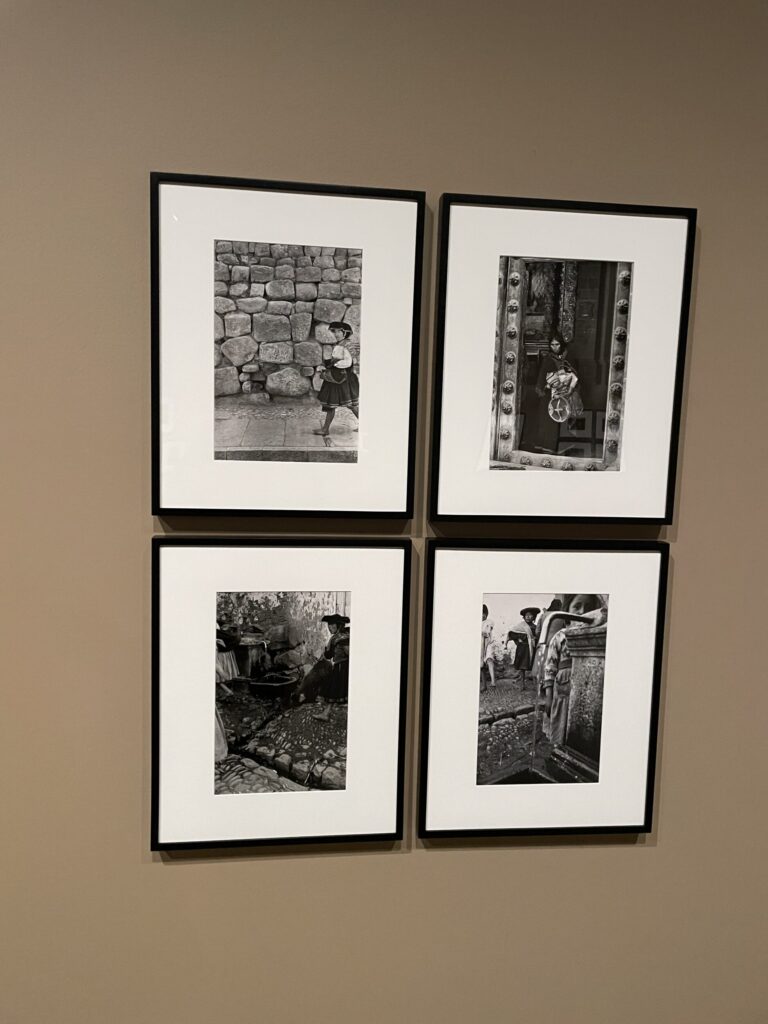
Peru
- 7 gelatin silver prints, 1960
(Vitrine)
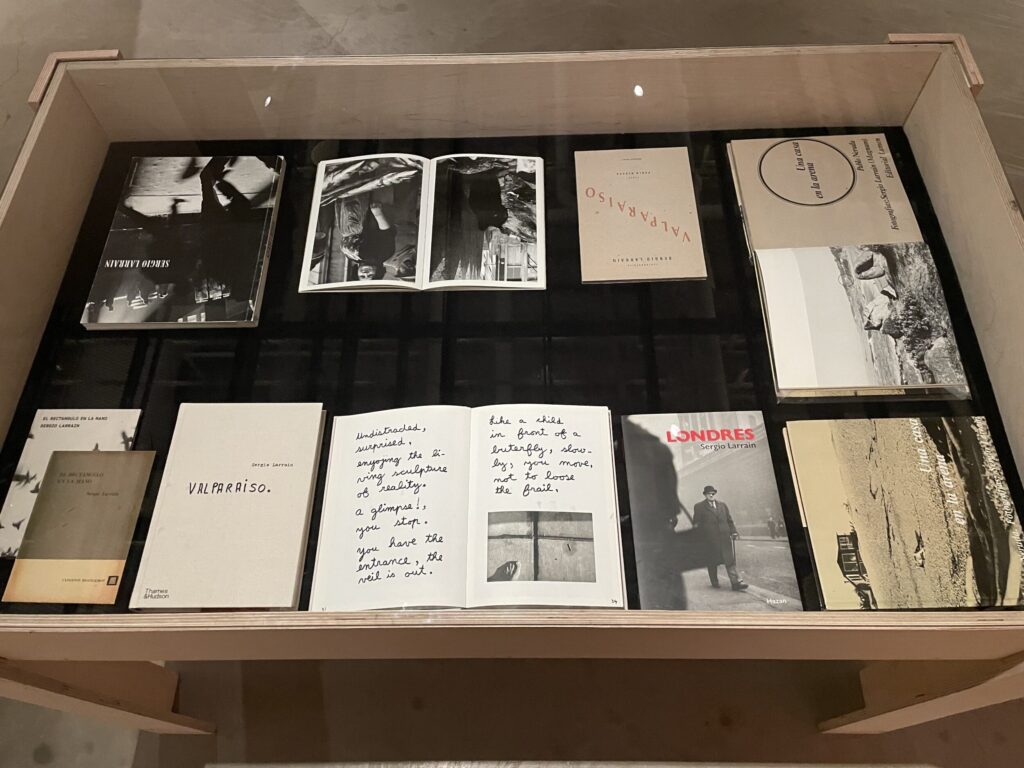
- 10 photobooks, various dates
Satori
- 4 gelatin silver prints, 1975-2011
- 4 colored pencil on paper
- 1 collage with gelatin silver print
- 1 ink on paper
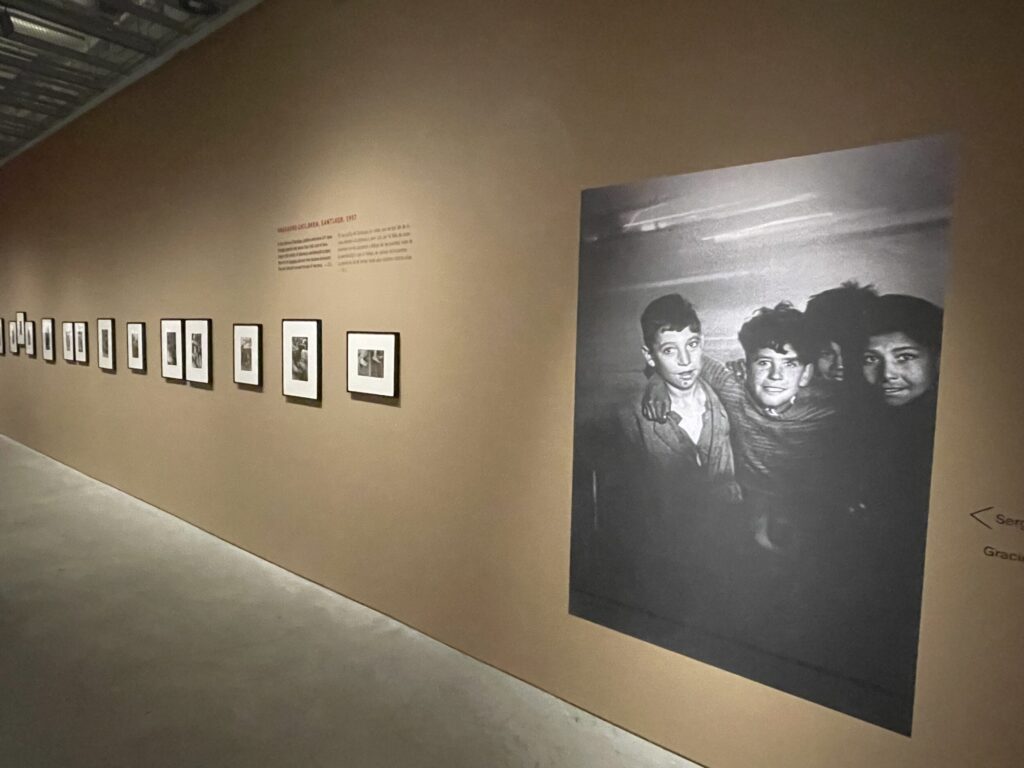
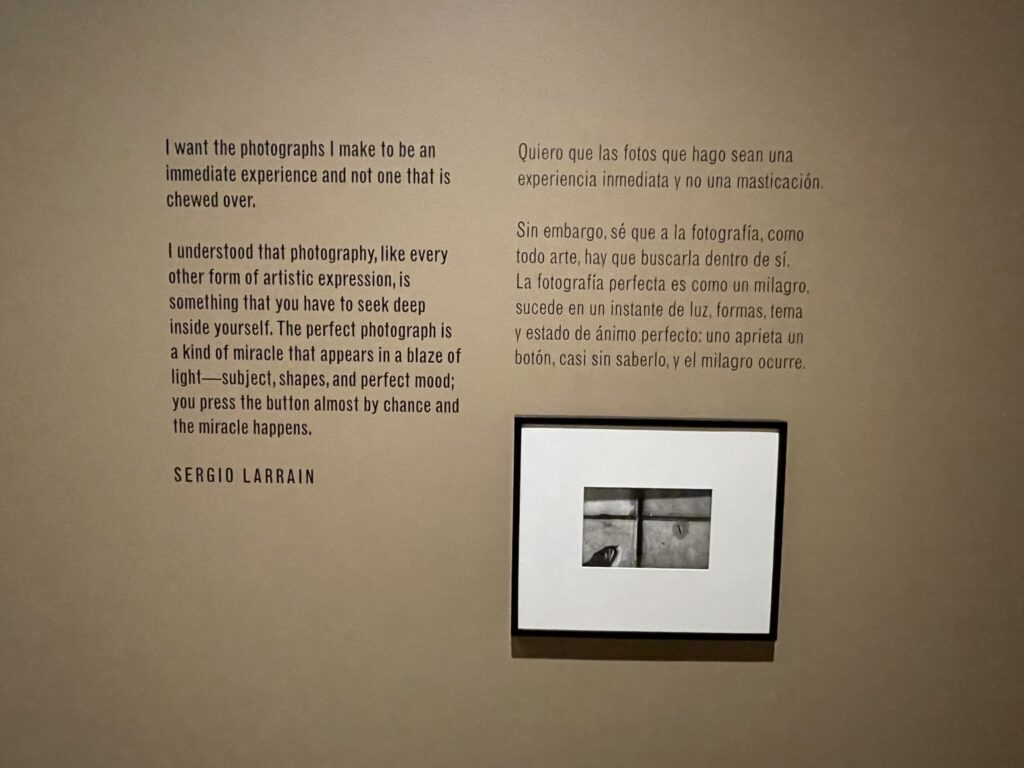
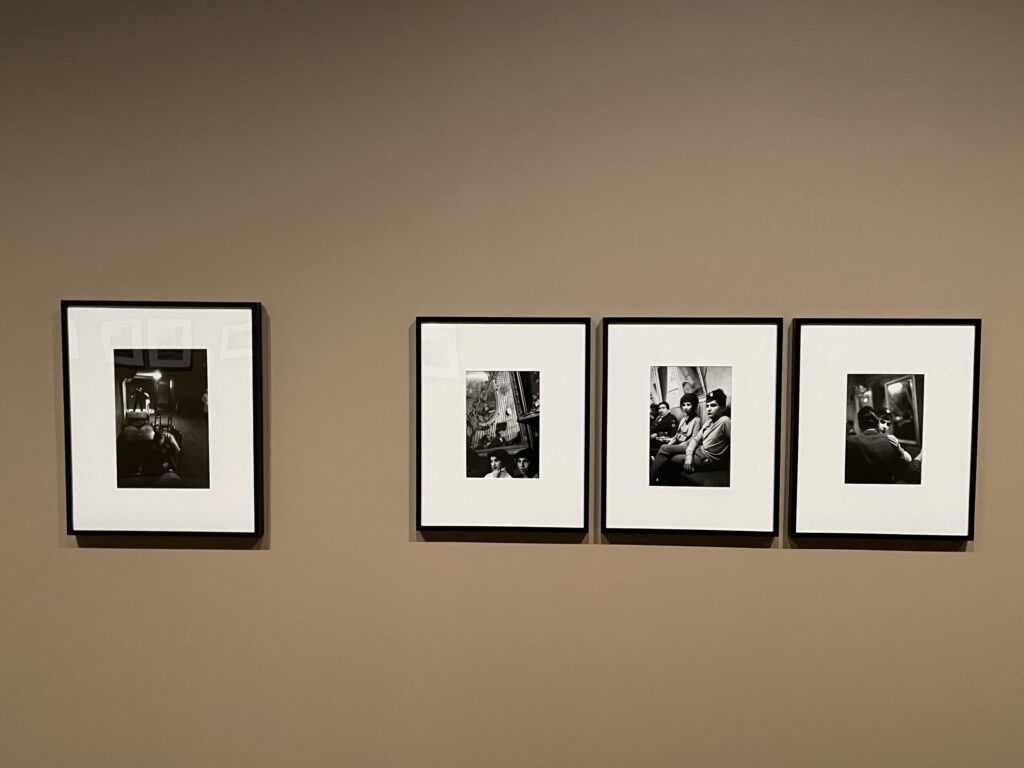
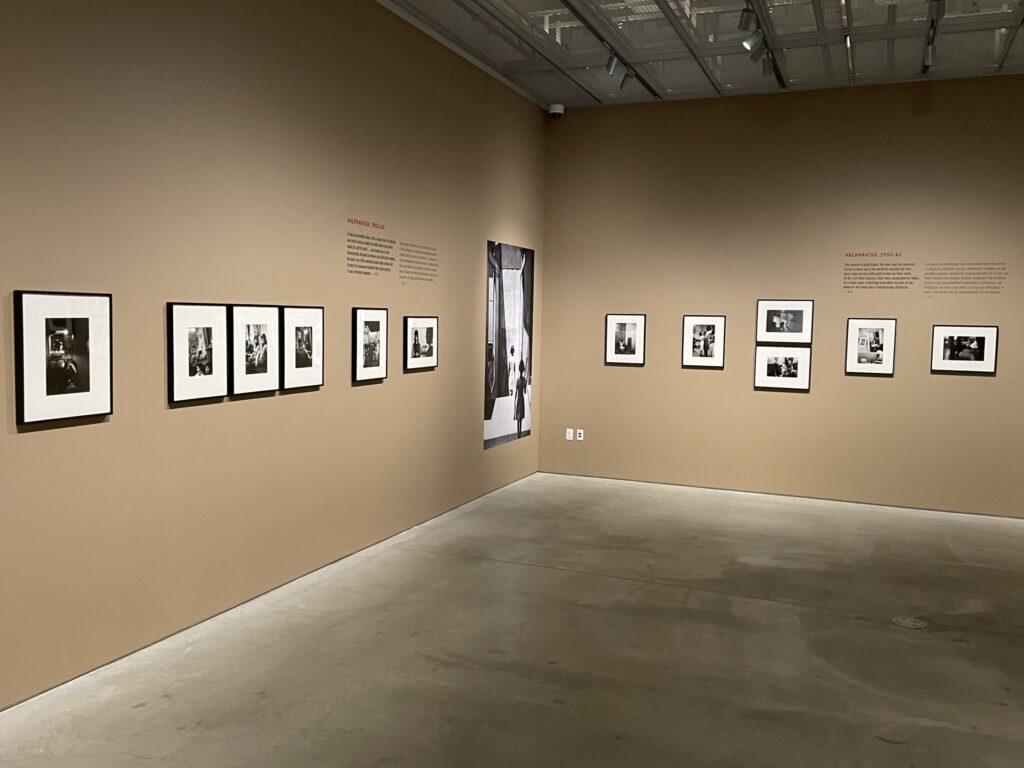
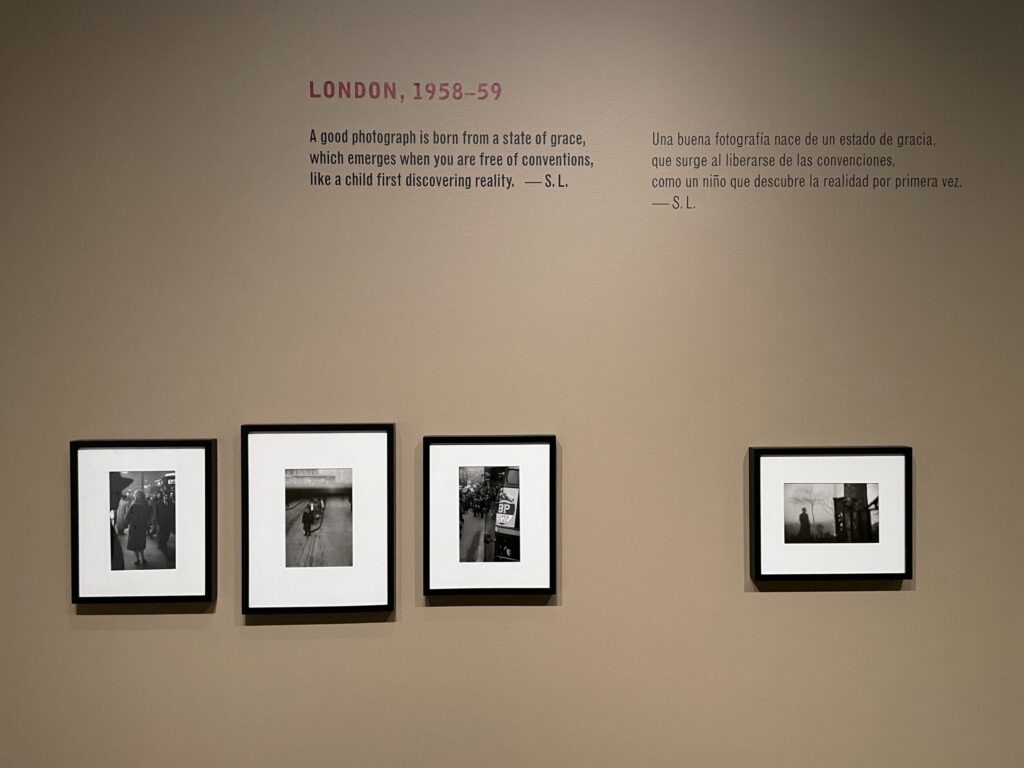
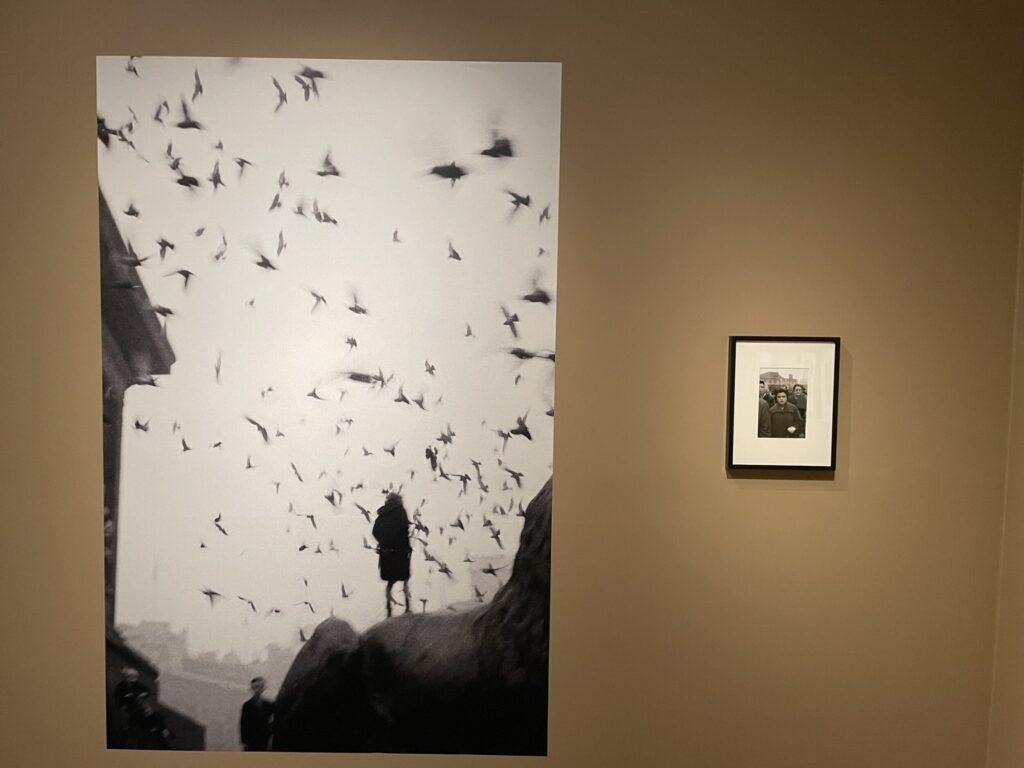
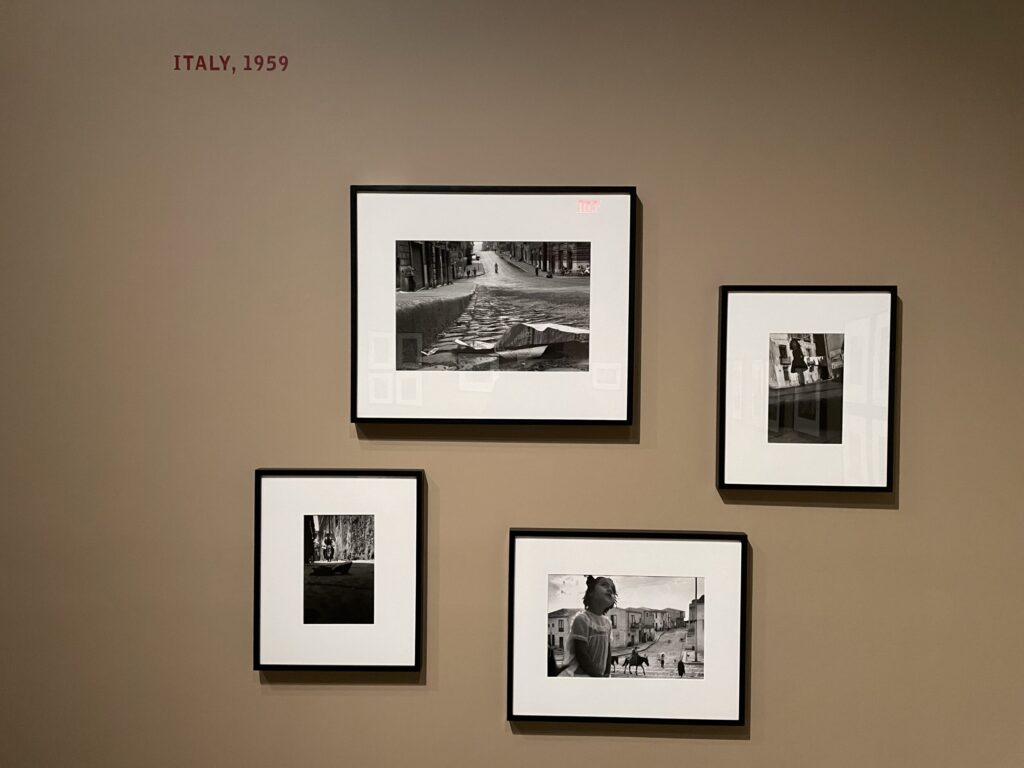
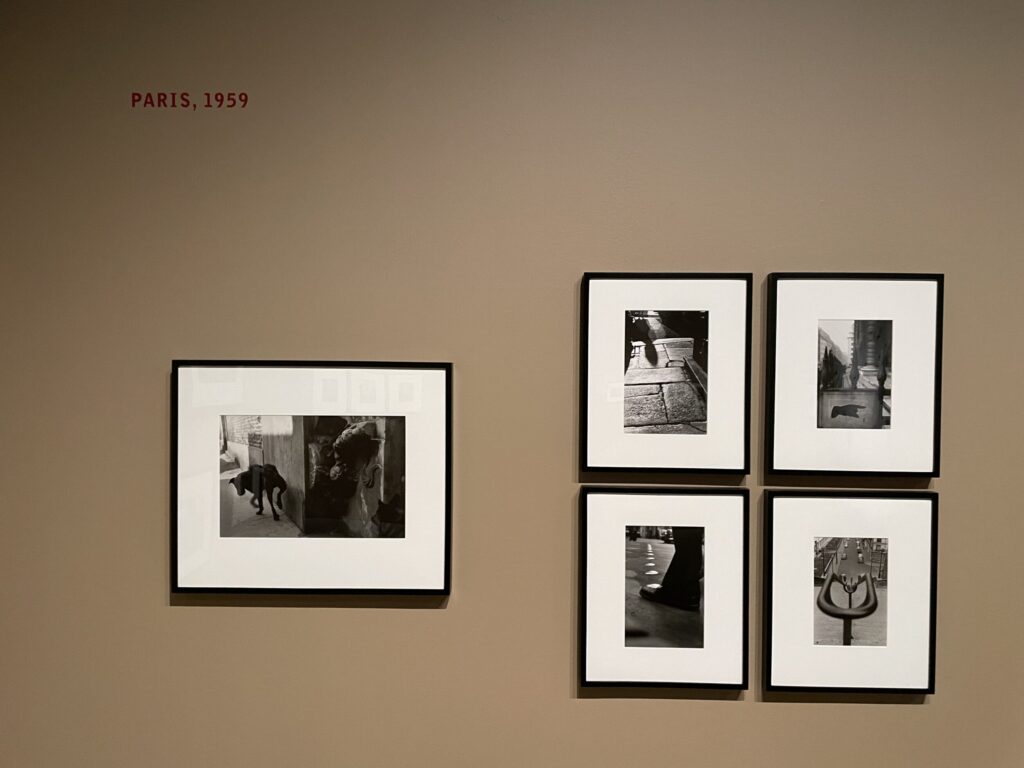
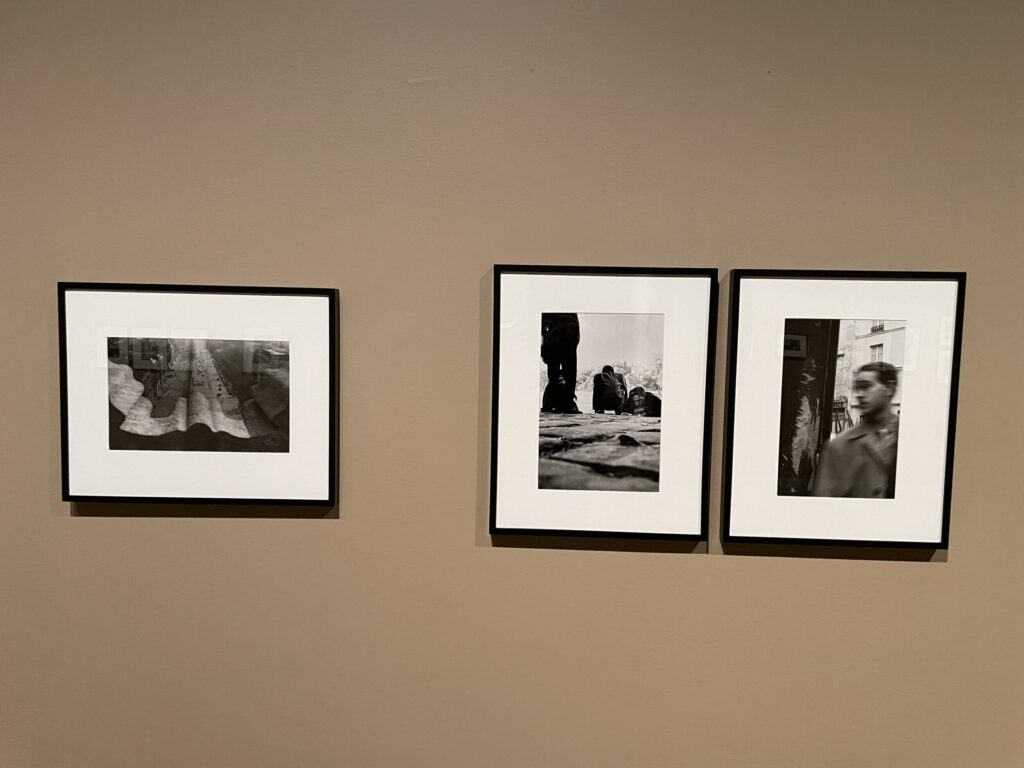
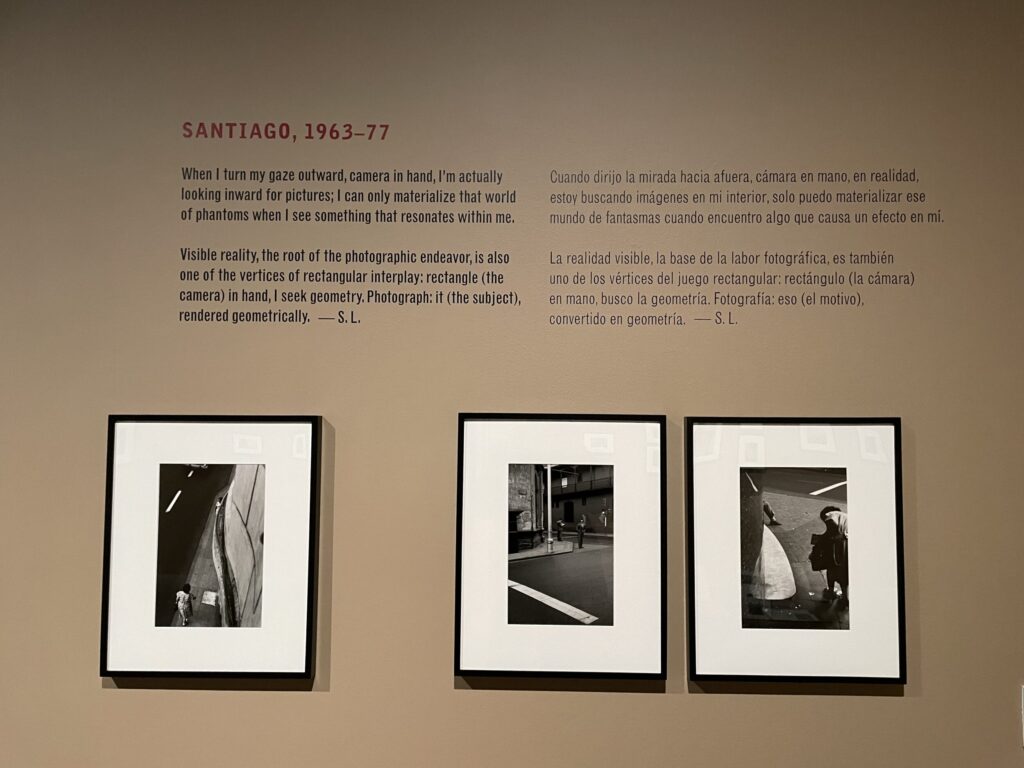
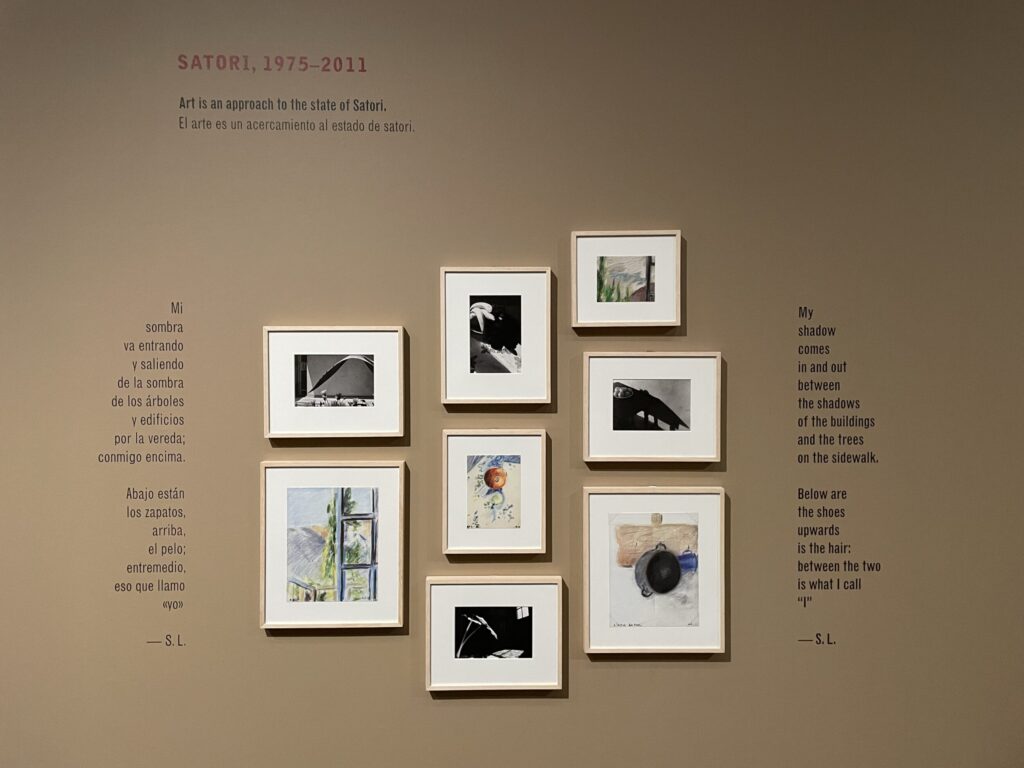
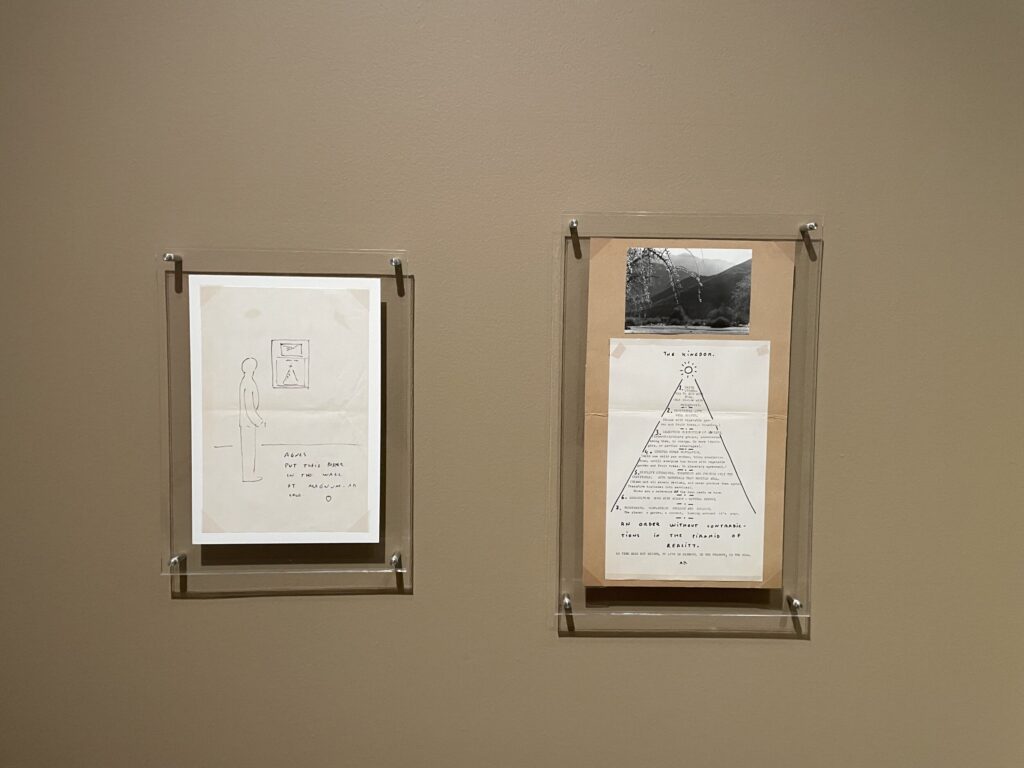
Comments/Context: One of the joys of a well crafted artistic retrospective is the feeling of being able to see the entire sweep of an artist’s career in essentially one moment. Single great pictures or memorable projects are systematically surrounded by other lesser known works and placed in a larger structural or chronological context, allowing us to see how it all fits together, and to better assess where the waves of innovation and inspiration reached their high (and low) points.
This succinct survey of Sergio Larrian’s work delivers just such an experience. Edited down to just over a hundred photographs made across several decades, it crisply lays out his artistic journey, gathering handfuls of images made in various places into a kind of geographic sampler, where the Chilean photographer begins in the familiar surroundings of his hometown of Santiago and works his way to Europe and through South America in subsequent years.
Born in 1931, Larrain studied in the United States before taking a job as a staff photographer for the Brazilian magazine O Cruzeiro, and in 1956, MoMA bought two of his pictures. 1958 turned out to be a pivotal year for Larrain – he received a grant from the British Council that brought him to London, and he met Henri Cartier-Bresson in Paris, who after seeing his photographs of street children in Santiago, suggested that he work for Magnum. The next couple of years were a photographic whirlwind – most of his time was spent working on assignment for various international magazines and newspapers, and along the way, he became a Magnum associate in 1959 and a full member in 1961. That same year (1961), the poet Pablo Neruda invited Larrain to photograph his house, and so he took the commission and returned to Chile; as it turned out, he soon soured on the pace of photojournalism (and what it did to his creative process) and ultimately gave up photography as a profession in the 1970s, turning his attention inward to more spiritual matters that would occupy him until his death in 2012.
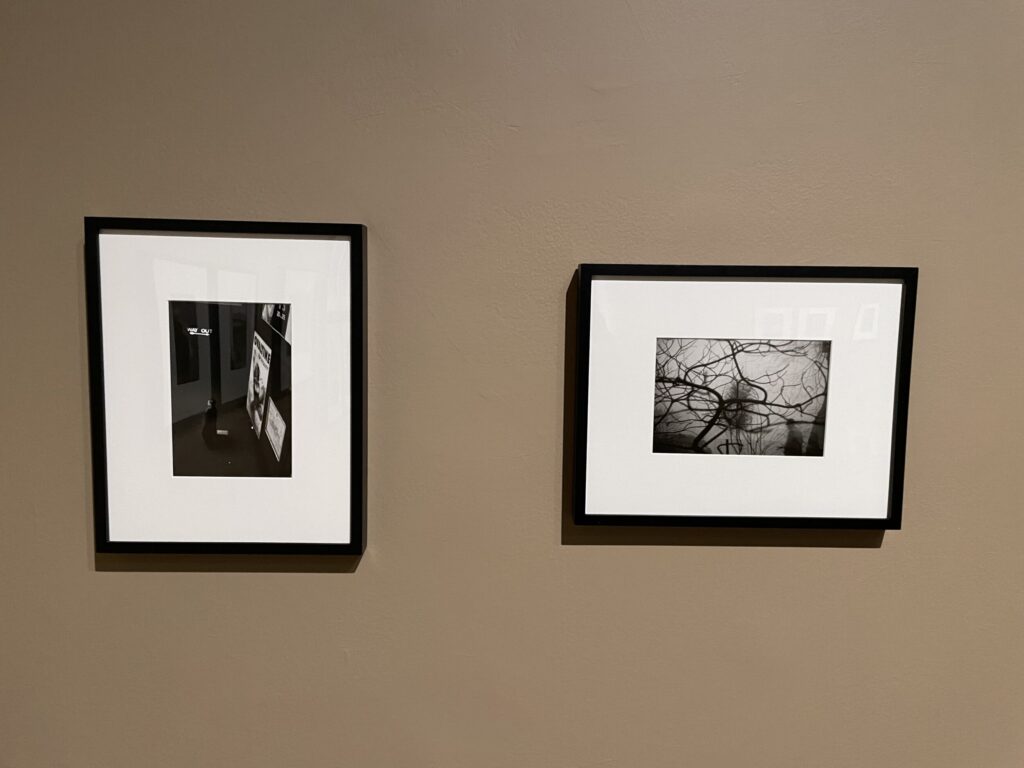
While perhaps not entirely intentionally, this retrospective sets up a tantalizing (and likely controversial) possibility – that there was an important fork in Larrain’s life road when he met Cartier-Bresson, and he may have actually taken the wrong path (for him) when he joined Magnum in Europe, as his work was never again as intimate and compassionate as it was earlier in his home country. It’s not that Larrain’s images from London, Paris, Italy, and other later locales aren’t well made or even successful in some manner; it’s just that they are more distant and less personal than his earlier work in Chile, like the visual impressions of an outsider burdened by knowing he doesn’t quite understand the rhythms of this new place. His views ably document sidewalks, street corners, passing pedestrians, and misty urban shadows, often using visual interruptions and low angles to bring us down to ground level, but few of these images seem to shout that they were uniquely seen by Larrain instead of by some other midcentury European photographer. Even at their most dark and moody (like the man at the bottom of the escalator, or any number of shots of cobblestones, stairs, and other gutter level views), they still feel aloof and almost alienated, like Larrain couldn’t quite find his groove.
This aesthetic split feels altogether obvious when we jump back to Larrain’s 1950s work in Chile – even when he points his camera at the most downtrodden and powerless of his fellow citizens, his frames are filled with closeness, humanity, and empathy. It’s no wonder that Cartier-Bresson saw promise in Larrain’s photographs of the homeless “vagabond” children of Santiago from 1957; it’s a knockout project filled with tenderly attentive and often heartbreaking images. Larrain isolates small vulnerable feet against a metal grate, gets in close to dirty haunted faces, notices piles of boys sleeping like a supportive pack, and captures the movement of improvised games, fence jumps, fireside gestures, and mischievous sidewalk sprints. And for every glimpse of swagger, camaraderie, or even fraternal love that he finds, there is a counterweight of fear, anxiety, or loneliness that hangs over his pictures, amplified by the sodden mood of dark shadows, long nights, and rainy days. Larrain captures many of these same themes in footage that became his 1965 short film “Los Abandonados”, which poignantly chronicles the boys as they make barefoot walks through the city, jump over railings, hang off buses, huddle around a campfire underneath an overpass, and even go for a perilous swim with a beloved stray dog. As a combined document of the overlooked and unwanted, the photographs and film are rich with respect, sympathy, and care.
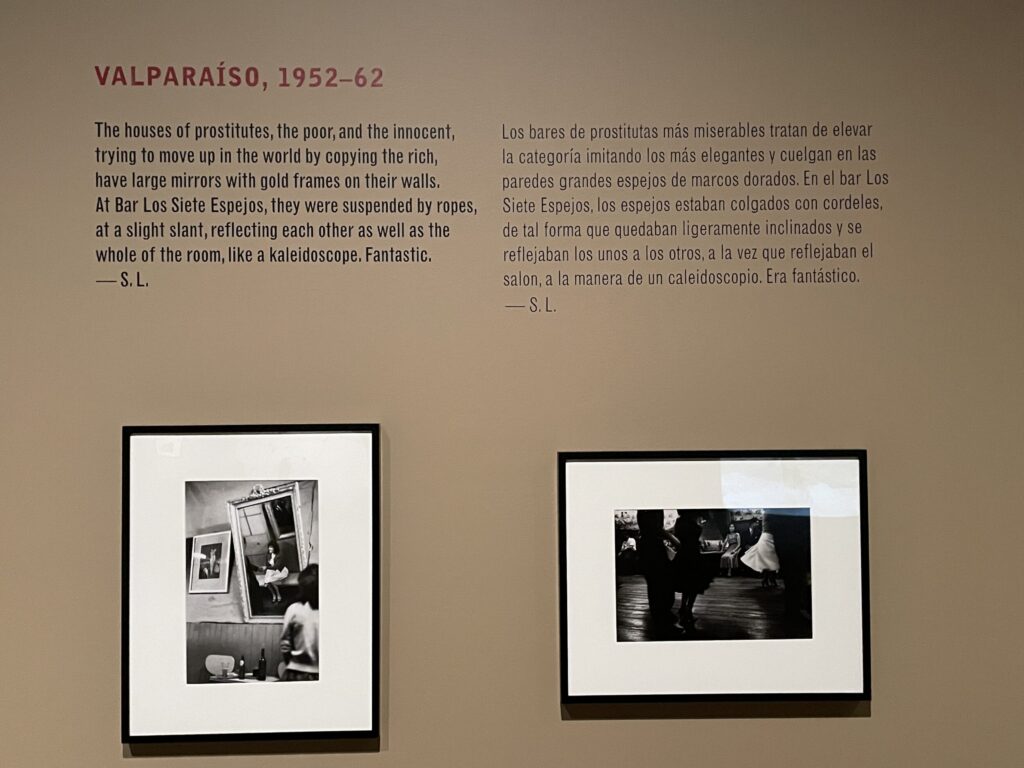
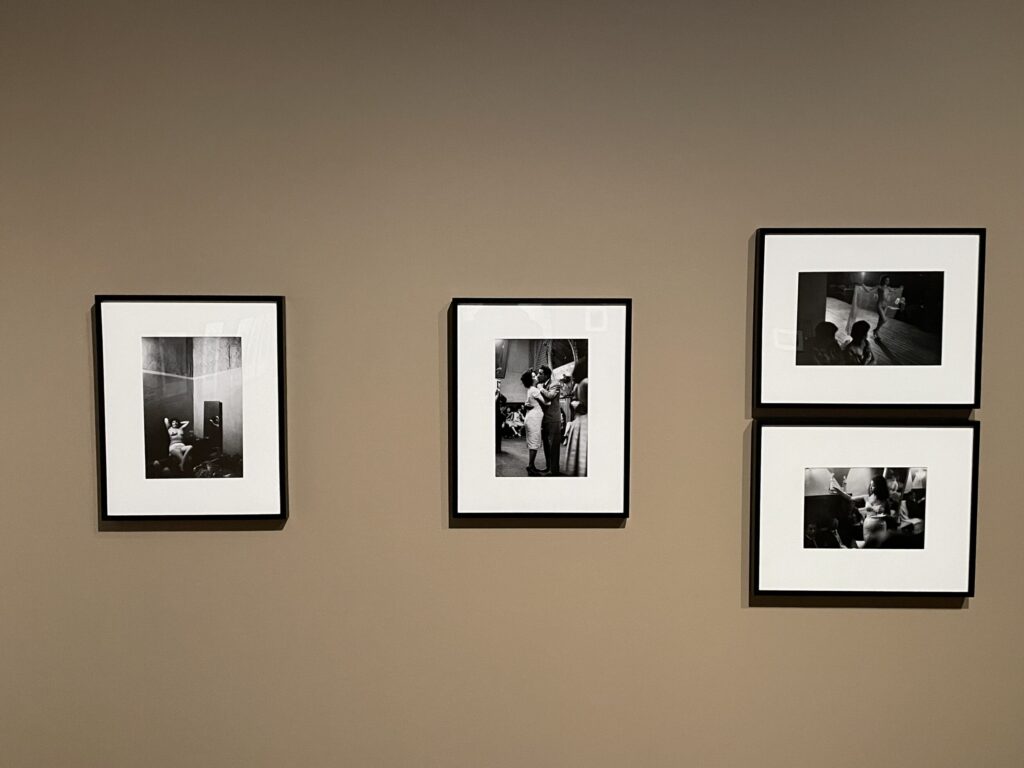
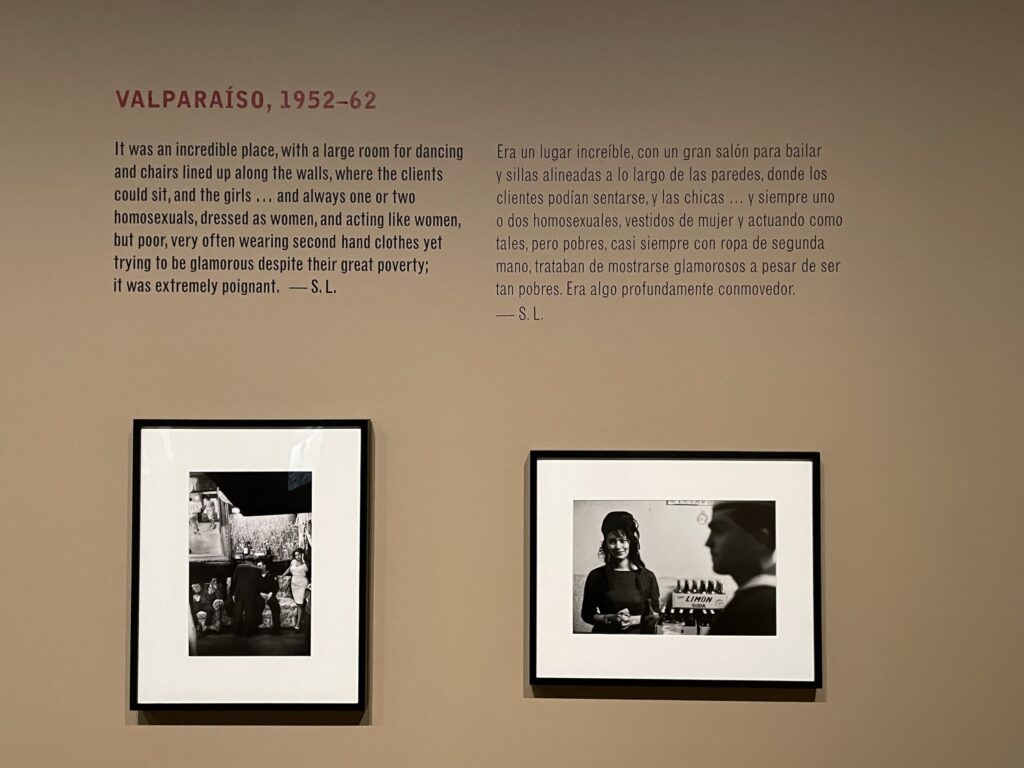
Larrain’s decade long photographic study of the city of Valparaíso is similarly steeped in a much more intimate sense of presence. As he wandered from the hillside historic districts to the areas down by the port, he transformed the architecture of his surroundings into angled studies filled with compositional vitality. Stairs, railings, funicular train cables, and other zones of movement slash through his frames, playing with stark contrasts of light and dark during the midday hours and settling into moodier romances when night fell and the streetlights came on. In other views, he looks down on the town from above, fitting the geometric planes of buildings and rooftops together like pieces of a puzzle. Along the way, he encounters an everyday range of pedestrians, sailors, workers, dogs, and of course children, which he arranges with visual sophistication into layered pairings, silhouettes, and momentary juxtapositions. At night, Larrain drifts inside, through bars, dance halls, and other nocturnal venues with the familiar confidence of a welcomed local, noticing the mixed community of couples dancing, prostitutes looking for companionship, and homosexual crossdressers out for the night, alternately using the mirrors, shadows, and open dance floors as compositional elements to be arranged and rearranged. Larrain’s Valparaíso has its own subtleties and energies, but it can certainly stand together with any number of strongly seen city portraits, like Brassaï’s Paris or Bill Brandt’s London.
I came away from this retrospective fascinated by the what if question of what Larrain’s photographic career might have looked like had he never gone to Europe. The momentum he built at home in Chile during the 1950s wasn’t amplified by the excitements and challenges of his new experiences as it is for some photographers; instead it was actually diluted, the spontaneous photographic magic he was routinely finding on the streets of Santiago and Valparaíso proving to be much more elusive in London and Paris. What if those artistically productive years had been spent on more personal projects in Chile, rather than being worn down by the grinds of photojournalism here and there around Europe? Would he have stayed with photography longer? There is of course no answer to such questions, but in my mind Larrain’s story emerges from this show as a bit of a cautionary tale. Part of me very much wants to see what pictures might have emerged on that other imaginary path, the one where he stayed close to what he knew and followed his own truth wherever it might have led.
Collector’s POV: Since this is a museum exhibition, there are of course no posted prices. Sergio Larrain is represented by Magnum Photos (here). His work has only been intermittently available in the secondary markets in the past decade, with prices ranging between roughly $1000 and $6000.