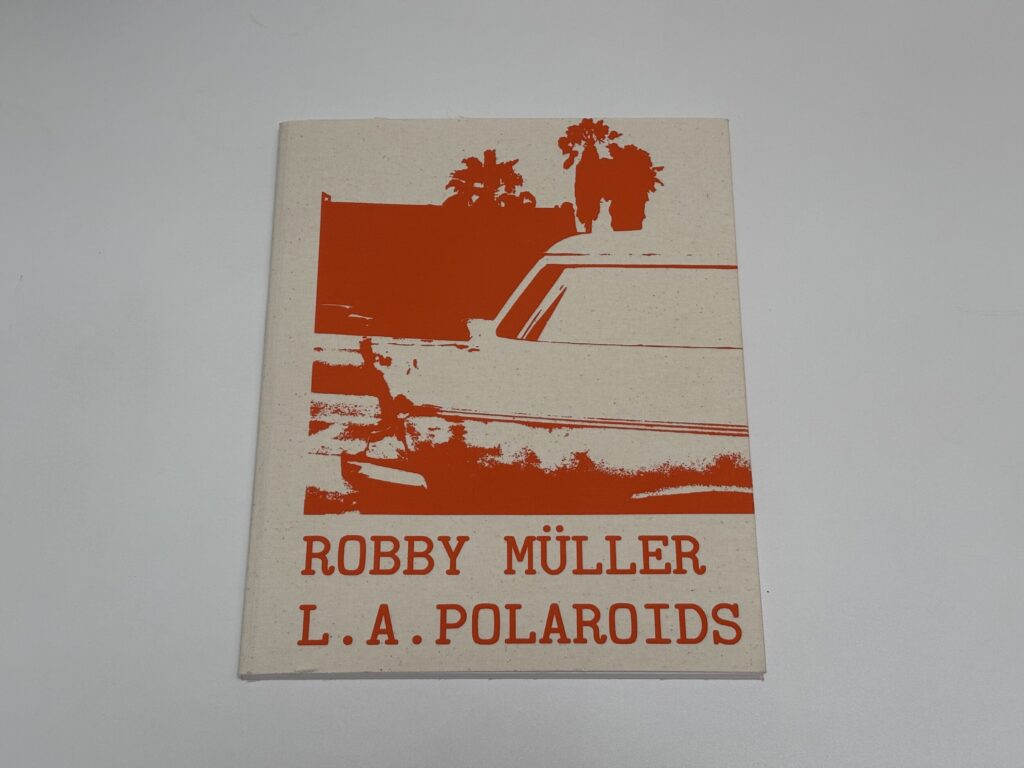
JTF (just the facts): Published in 2025 by Stanley/Barker (here). Softcover (30 x 24 cm), 96 pages, with 75 tritone illustrations. Includes texts by Alex Cox, Willem Dafoe, Barbara Scharres, Andrea Müller-Schirmer, and Wim Wenders. Design by Linda van Deursen. (Cover and spread shots below.)
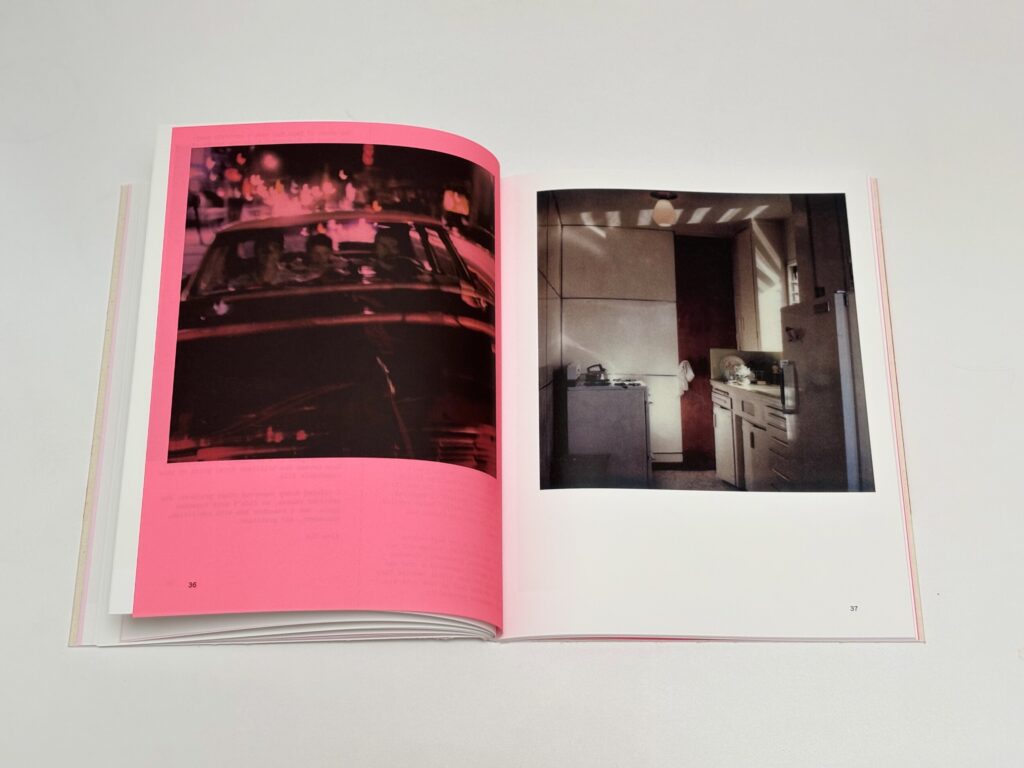
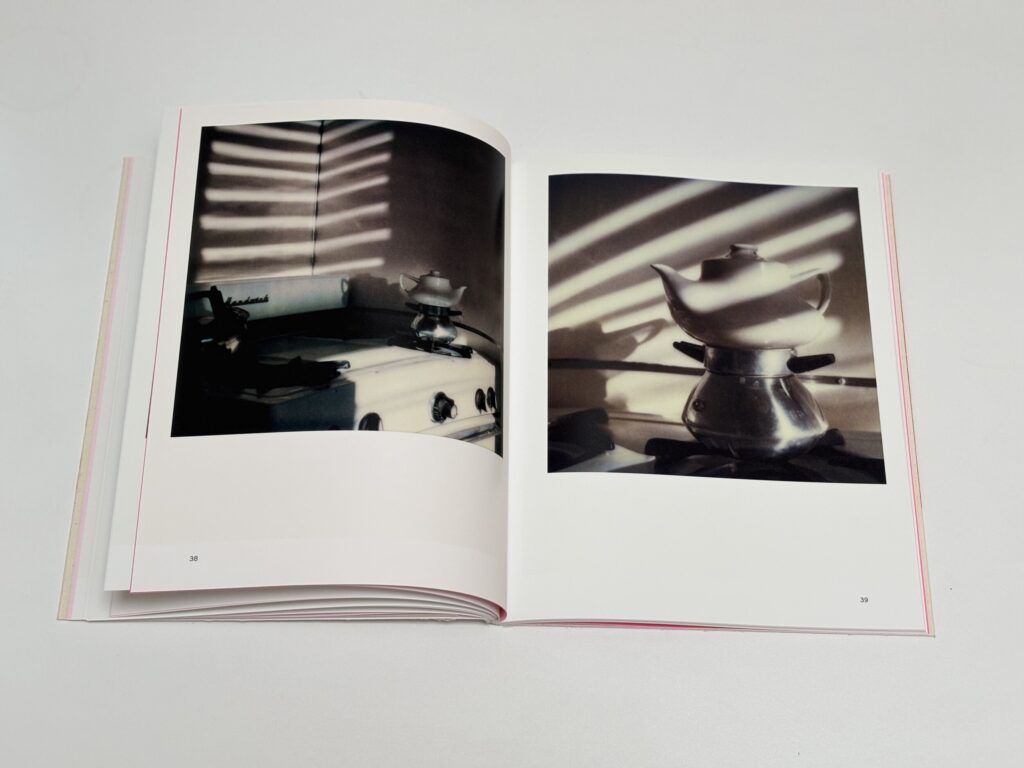
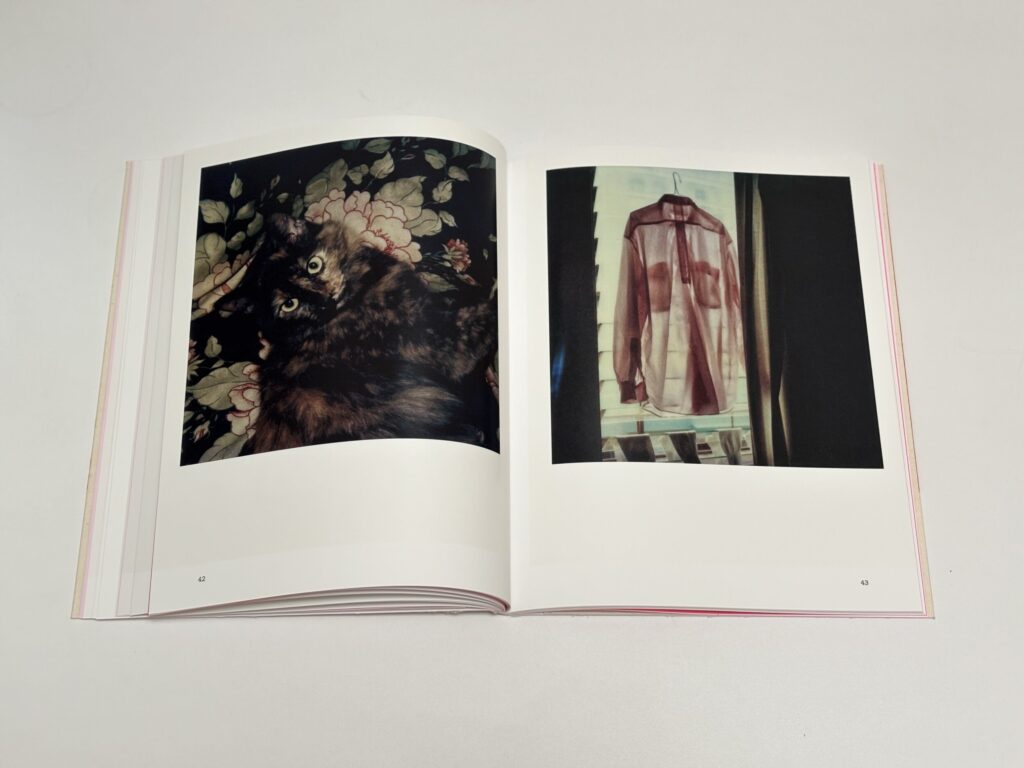
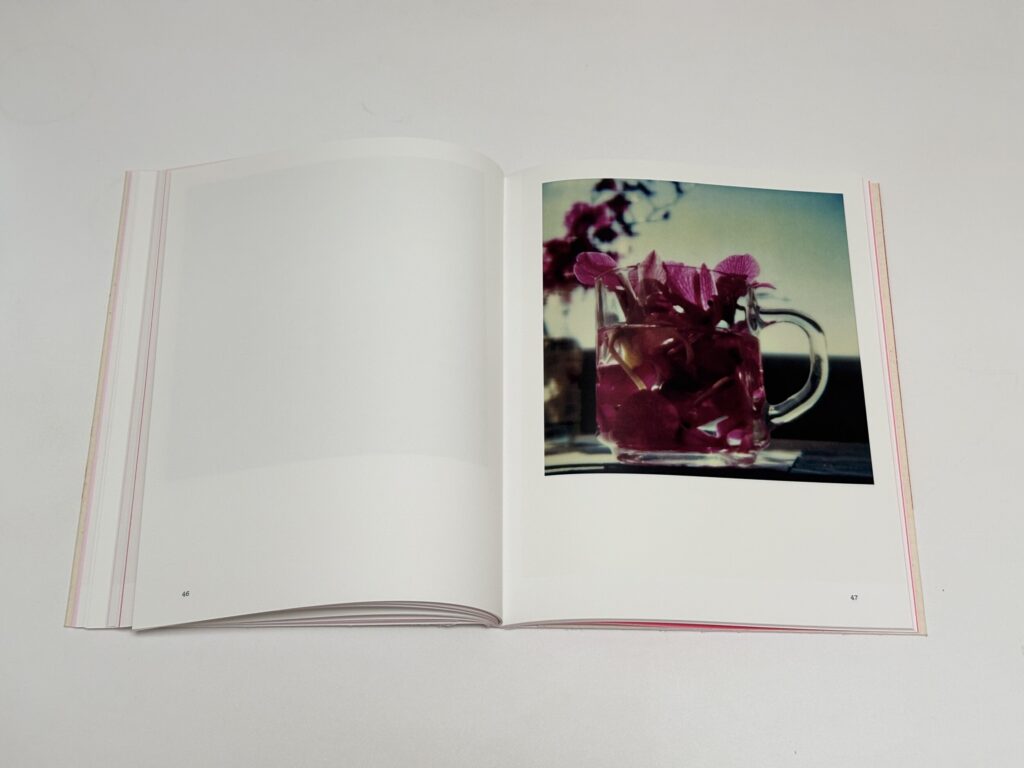
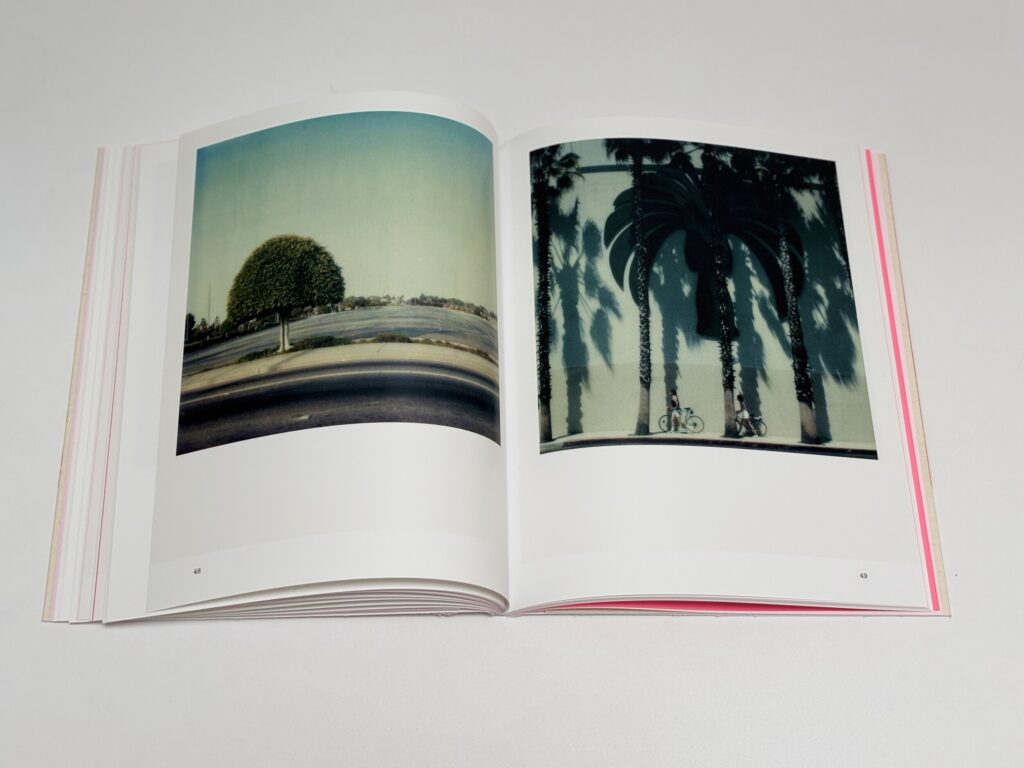
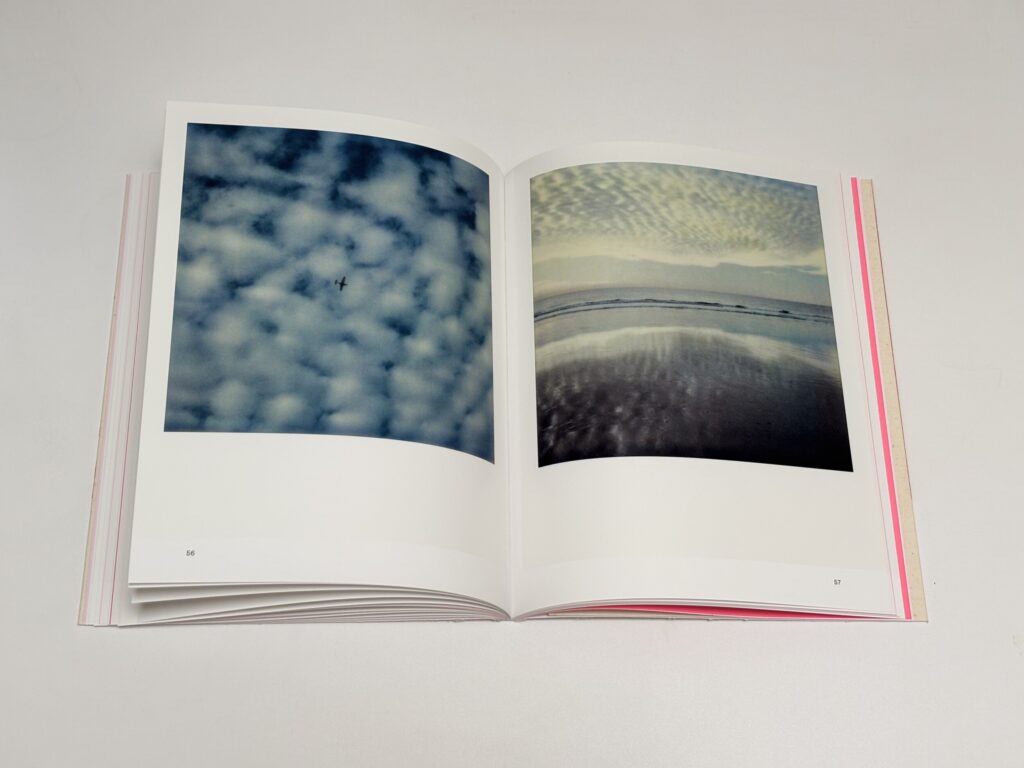

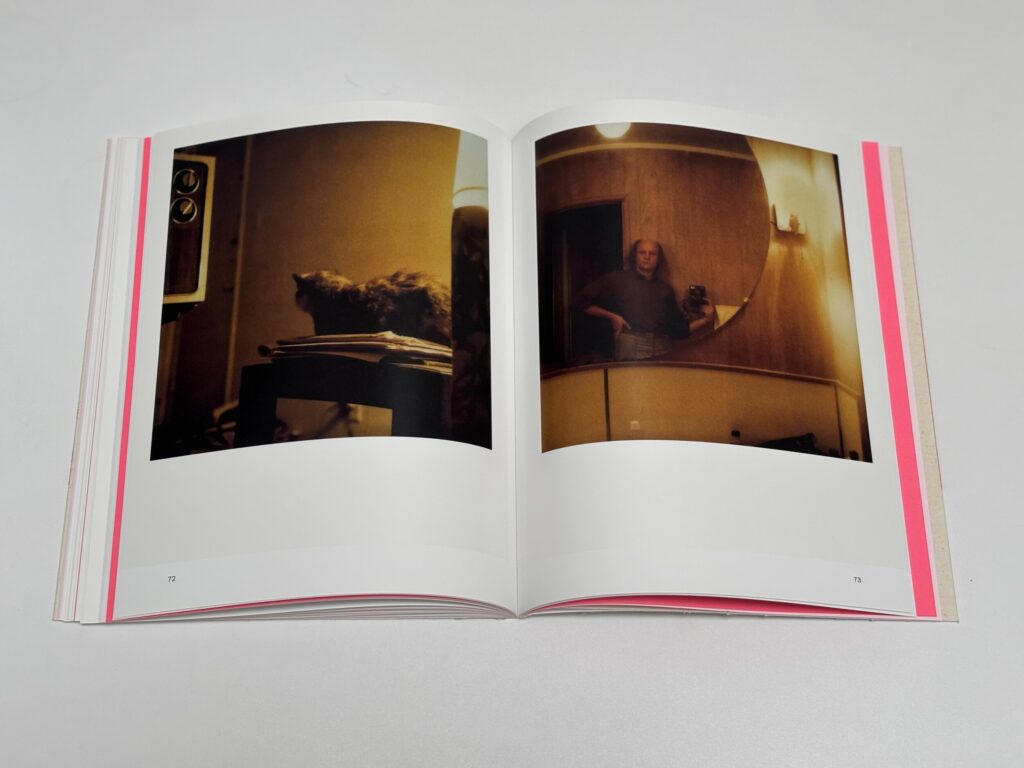
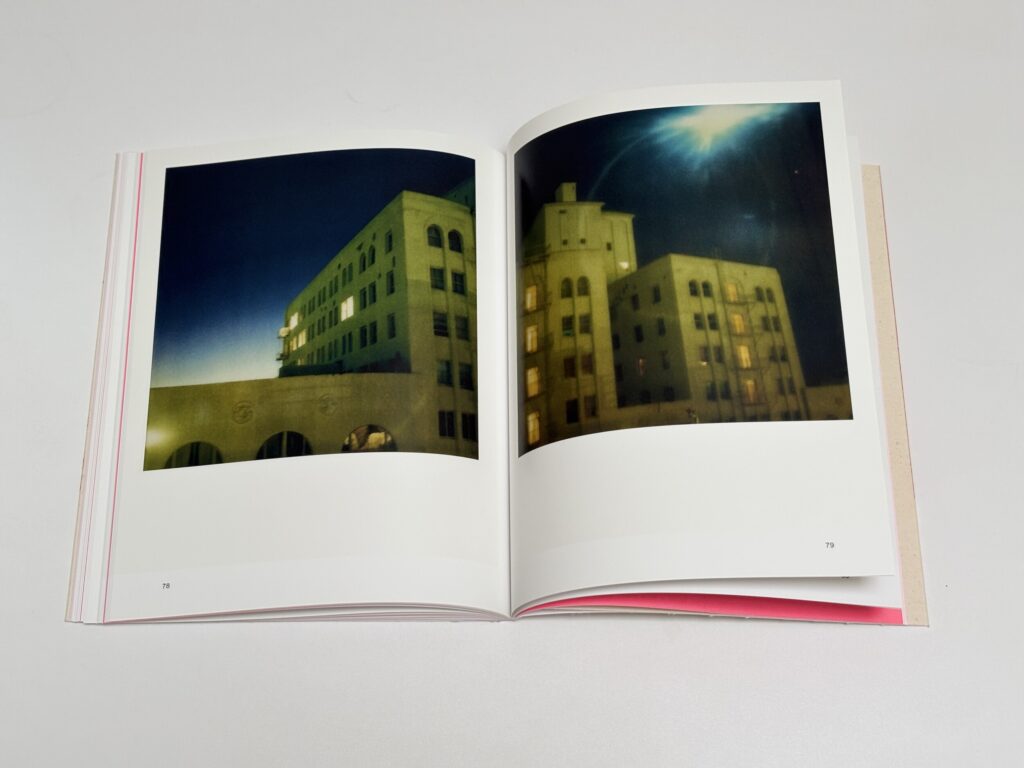
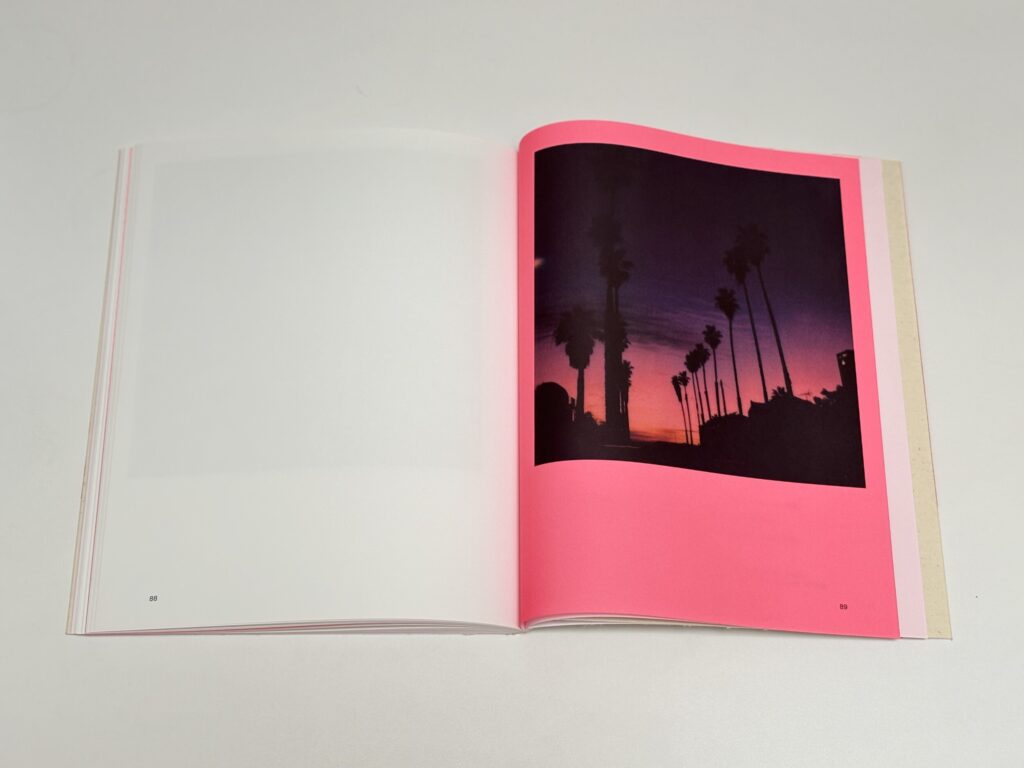
Comments/Context: Robby Müller is widely regarded as one of the greatest cinematographers in film history, celebrated for his collaborations with Wim Wenders, Jim Jarmusch, Lars von Trier, and many others. Known for defining the visual identity of masterpieces like Paris, Texas, Repo Man, and To Live and Die in L.A., he helped shape the visual language of modern cinema. Müller spent vast stretches of the 1980s navigating the sprawling, sun-bleached topography of Southern California. While his daytime hours were spent commanding massive movie sets and composing epic cinematic landscapes, his private moments were recorded on a humble SX-70 Polaroid camera.
L.A. Polaroids arrives as part of a broader effort to establish Müller not only as a legendary cinematographer but also as a significant photographer in his own right. Earlier publications, most notably Polaroid and the expanded two-volume Polaroid: Exterior / Interior, drew extensively from the visual diaries he maintained throughout his travels and film productions. Collecting the instant photographs he made between the 1970s and 1990s, these books revealed the same sensitivity to light, color, and atmosphere that shaped his film work. These books emerged from renewed interest in Müller’s photographic archive following exhibitions of his Polaroids and helped demonstrate that his still images were far more than production mementos; they constituted a coherent body of work with its own aesthetic integrity. Against this backdrop, L.A. Polaroids feels both familiar and fresh, narrowing its attention to a particular place and period in his life while deepening our understanding of Müller’s remarkable ability to transform everyday encounters into luminous acts of seeing.
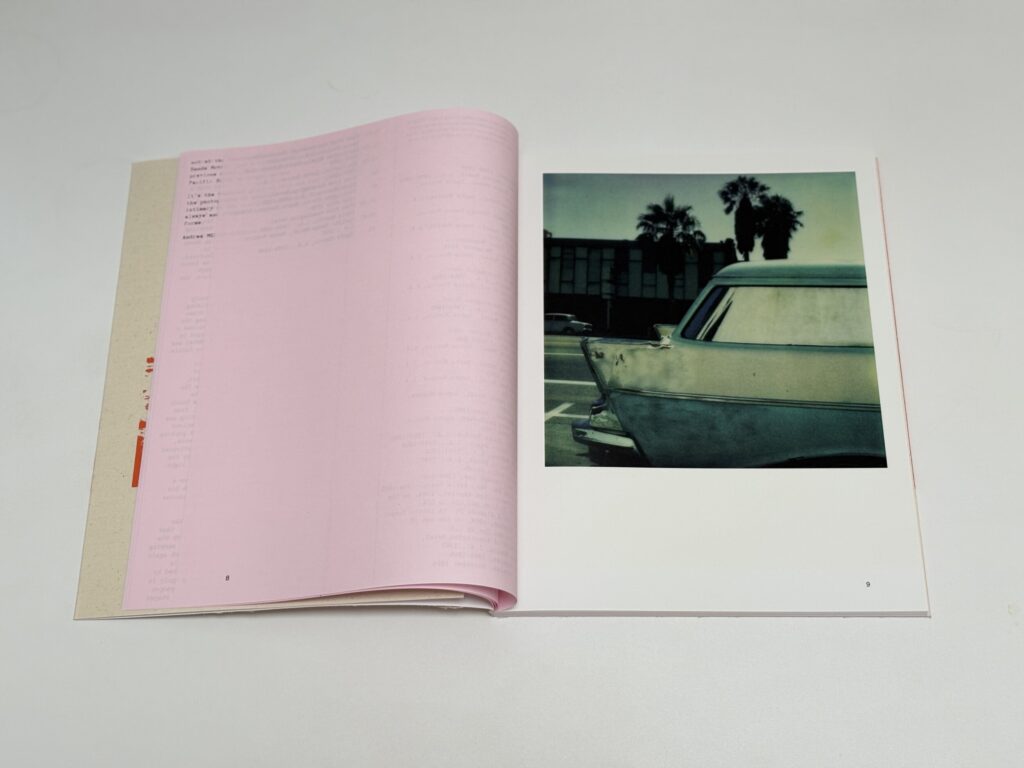
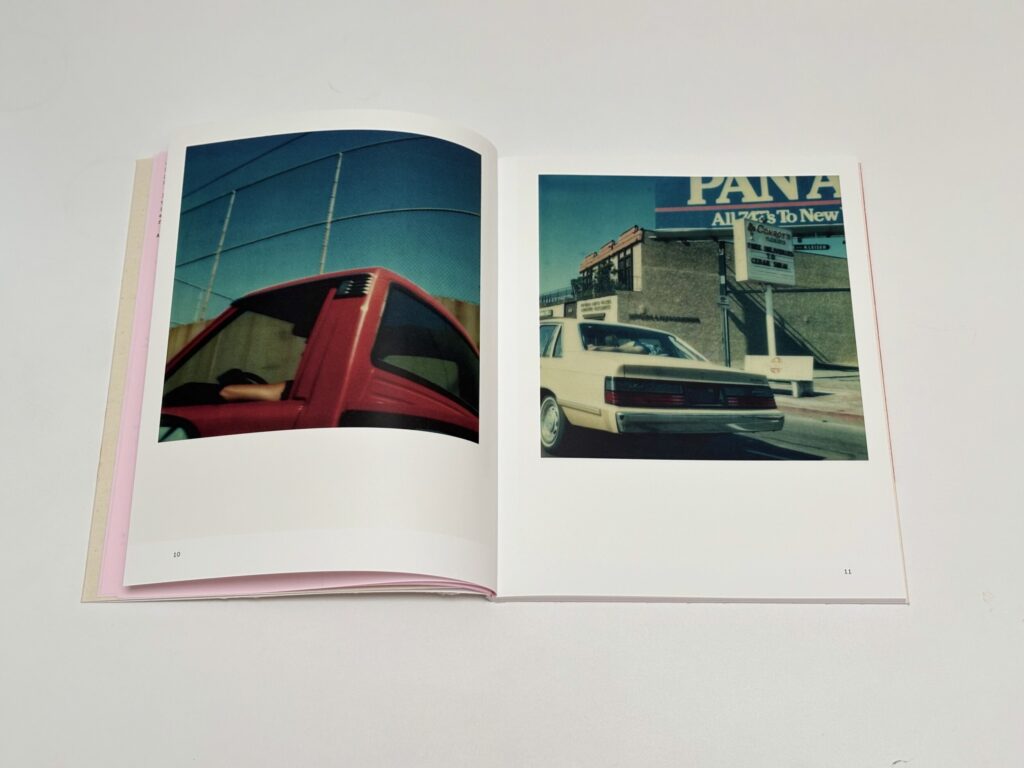
The book itself is beautifully produced. Bound in a soft chopped–linen cover and silk-screened in a vibrant orange, it features one of the artist’s Polaroids alongside his name and the title. The volume opens with an essay by Andrea Müller-Schirmer, printed on delicate sugar-pink paper. The photographs are reproduced at a uniform size, with one image per page, creating a steady and cohesive visual rhythm that is occasionally interrupted by short text. The result is the book that feels elegant, inviting, and thoughtfully designed. It opens effortlessly and lies flat, making the experience especially pleasurable. Contributions from collaborators including Wim Wenders, Alex Cox, and Willem Dafoe further enrich the project; their reflections reinforce the image of Müller as someone profoundly attentive to the visual world around him.
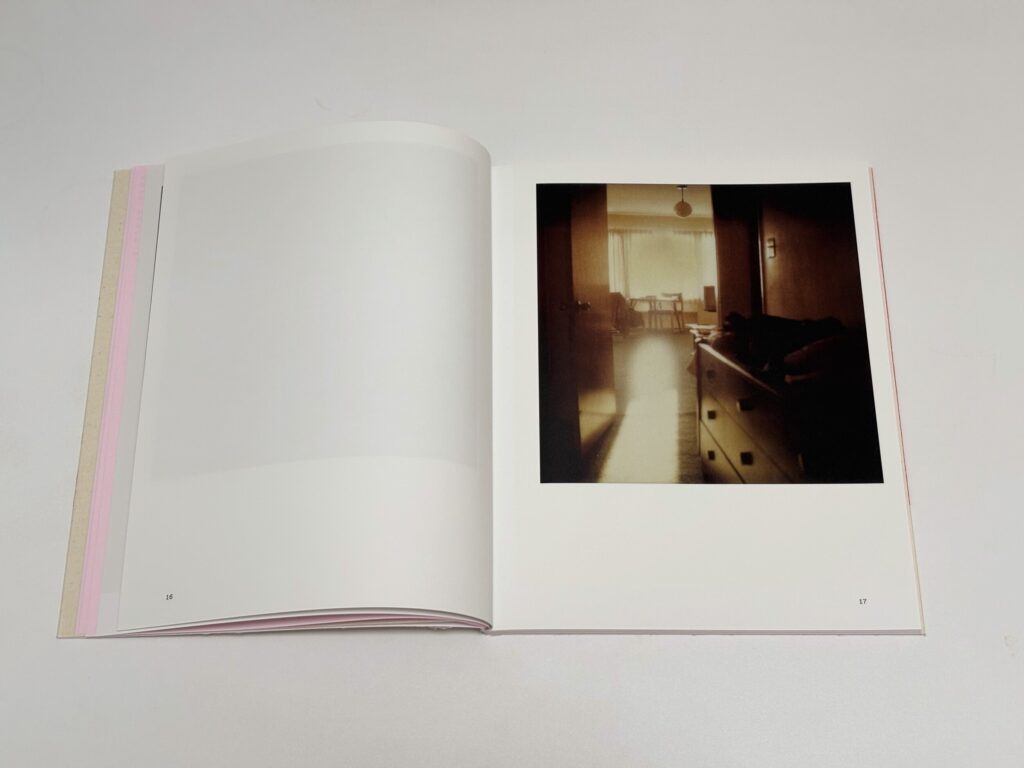
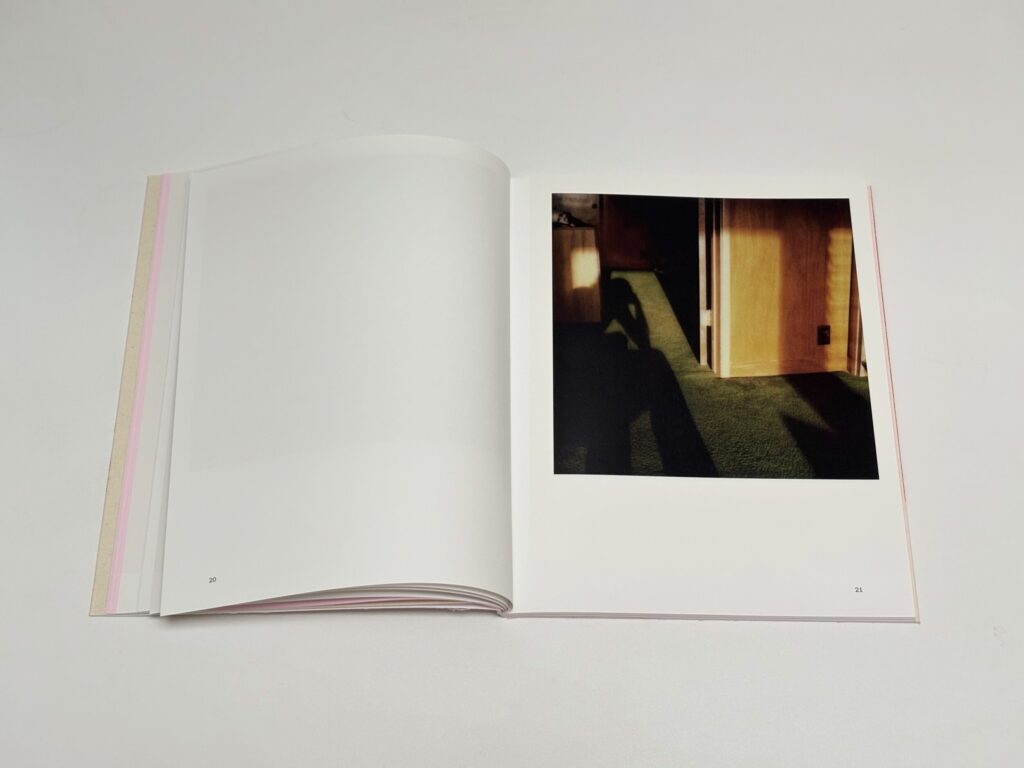
In her essay, Müller-Schirmer gently situates the photographs within the context of Müller’s life and travels, emphasizing the importance of observation, routine, and the everyday experiences that shape the book. Many of its most memorable images are deceptively simple. Müller repeatedly turns his attention to motel rooms, domestic interiors, sidewalks, parked cars, stretches of beach, and fragments of architecture. One image lingers on the quiet familiarity of his accommodation in Santa Monica, while others isolate details that might easily go unnoticed: the way afternoon light falls across a wall, the geometry of a street corner, or the muted colors of a coastal landscape.
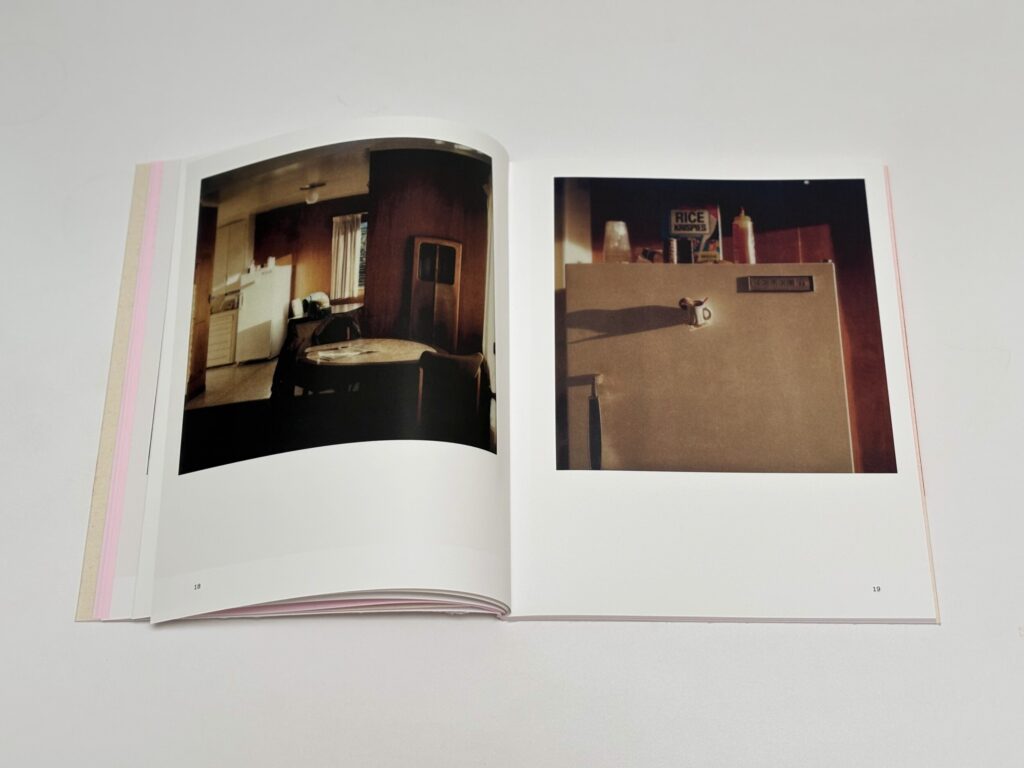
Among the most striking images is a photograph of a modest dining area and kitchenette, rendered in warm brown and amber tones. A refrigerator catches a patch of sunlight, while chairs, a table, and a partially visible jacket suggest a temporary domestic life assembled between film productions. Very little actually happens within the frame, Müller relies entirely on light, color, and spatial arrangement to generate atmosphere. Throughout the book, the photographs find their subject not in action or event but in attention itself. Taken together, they construct a portrait of Los Angeles that is intimate rather than monumental, shaped by the rhythms of everyday life rather than the city’s more familiar myths and landmarks.
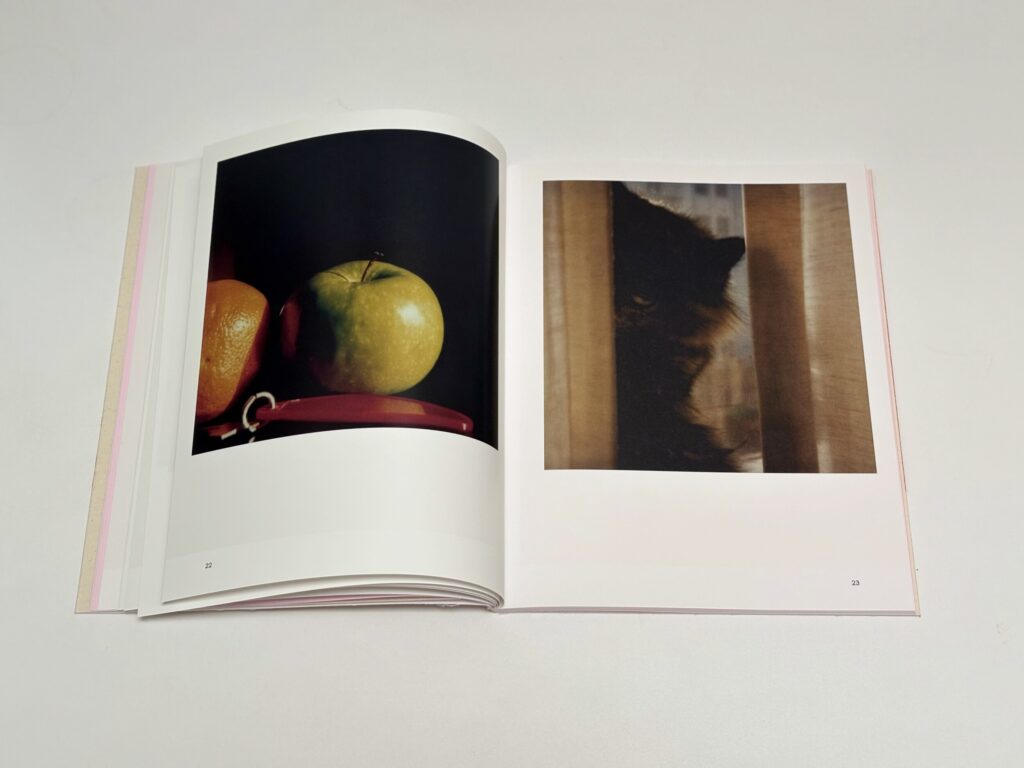
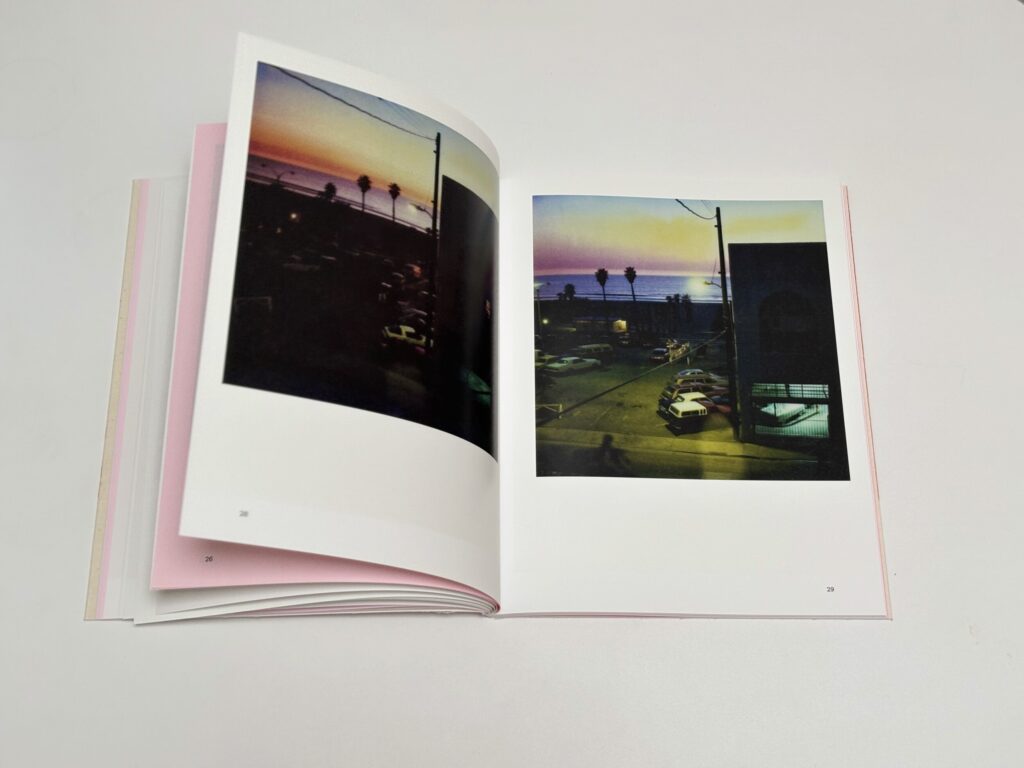
What emerges most clearly from these photographs is Müller’s fascination with transitional states. Motel interiors hover between occupation and vacancy. A shirt hanging by a window becomes a study in transparency and shadow. Flowers floating in a glass mug appear suspended between still life and abstraction. Even a rare view of the Pacific coastline at dusk is less a cityscape than an observation of changing light. Across the book, objects and locations matter less than the atmospheric conditions that surround them. Müller photographs not things themselves but the way they appear when transformed by sunlight, twilight, reflection and memory. The result is a body of work that feels entirely consistent with the sensibility that defined his film career.
While L.A. Polaroids captures a specific decade and geography, its deeper subject is a way of seeing. The Los Angeles Müller photographs may no longer exist in quite the same form, yet the book’s central theme, finding beauty in overlooked moments, remains timeless. Quiet, elegant, and emotionally resonant, this collection shows why Müller was such an extraordinary image-maker. More than a companion to his celebrated film work, it stands as a compelling achievement in its own right, reminding us how a truly great eye can discover beauty, stillness, and a sense of home almost anywhere.
Collector’s POV: Robby Müller is represented by Annet Gelink Gallery in Amsterdam (here), and Marian Goodman Gallery hosted a show of his Polaroids in Paris in 2024 (here). Müller’s work has not yet reached the secondary markets with any consistency, so gallery retail remains the best option for those collectors interested in following up.




As usual , a great review by Olga. I have this book and love it. I was a bit disappointed that the Polaroids were not true to size in the book. However the more time I spent with the book this became less of an issue and the larger images really seemed to work in this setting. If you are a Polaroid lover you need to get this book and yes, so well printed!!!