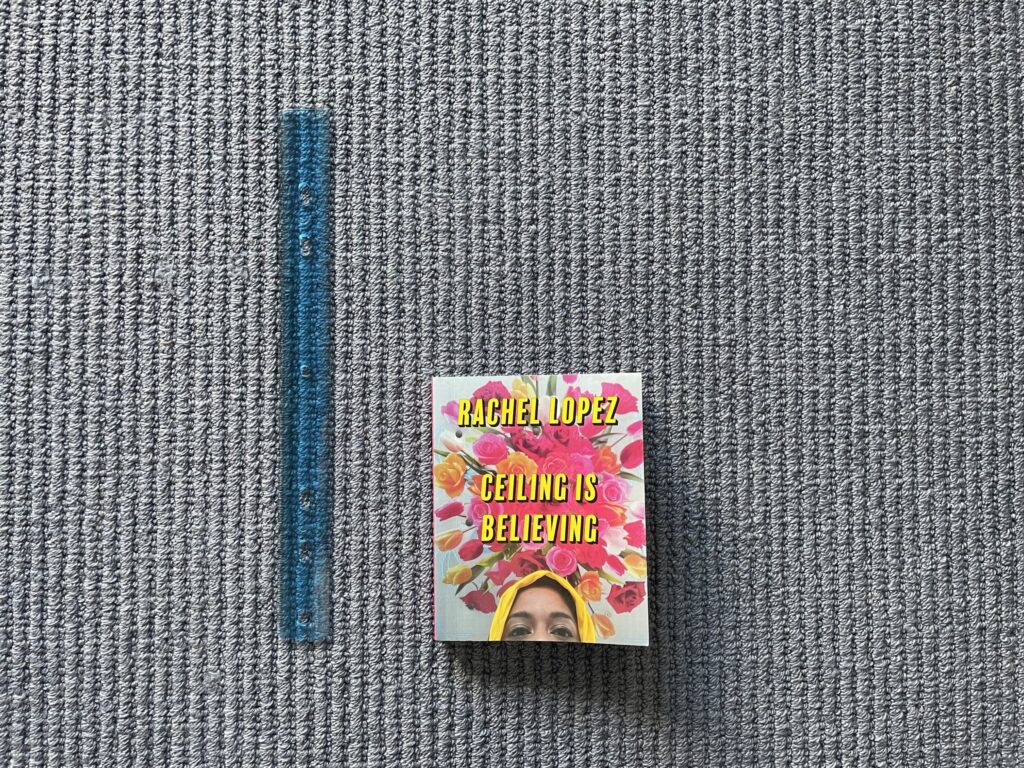
JTF (just the facts): Published in 2025 by b.frank books (here). Softcover, 150 x 120 mm, 304 pages, with 300 color reproductions. In an edition of 500 copies. Design by Roger Eberhard. (Cover and spread shots below.)
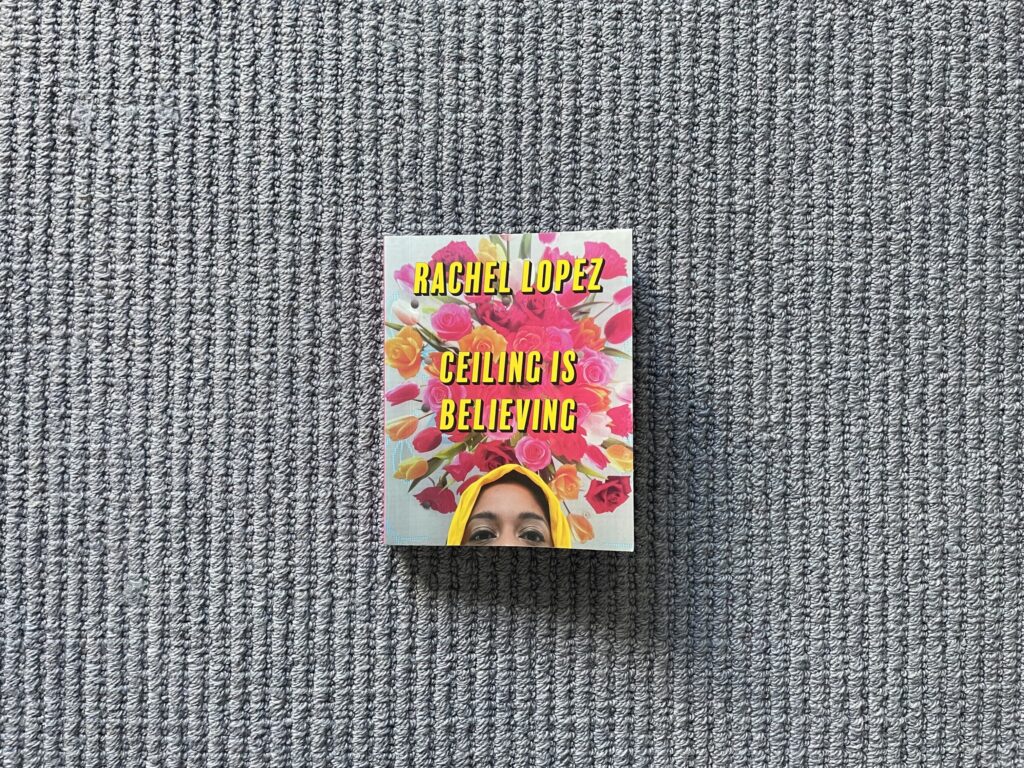
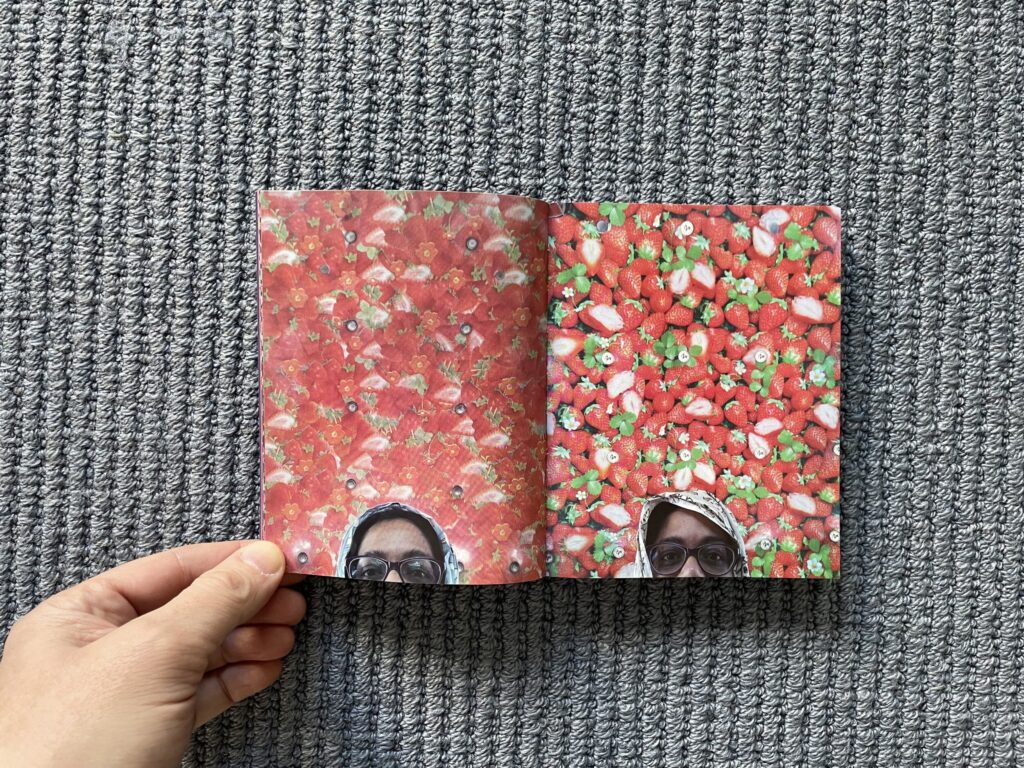
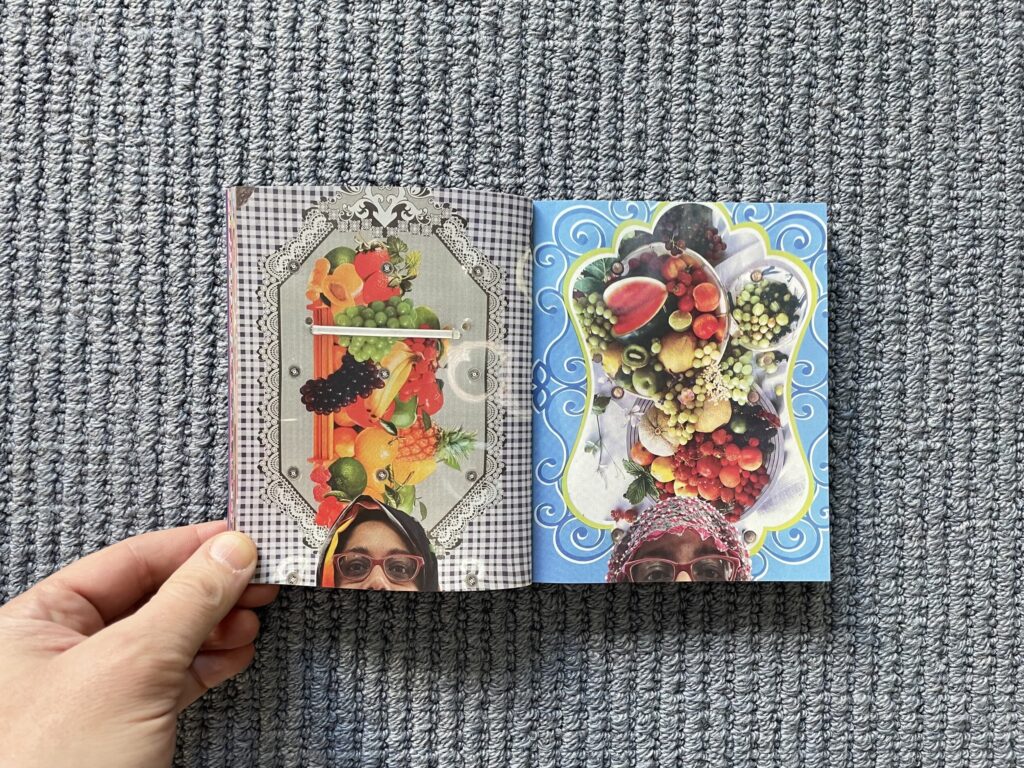
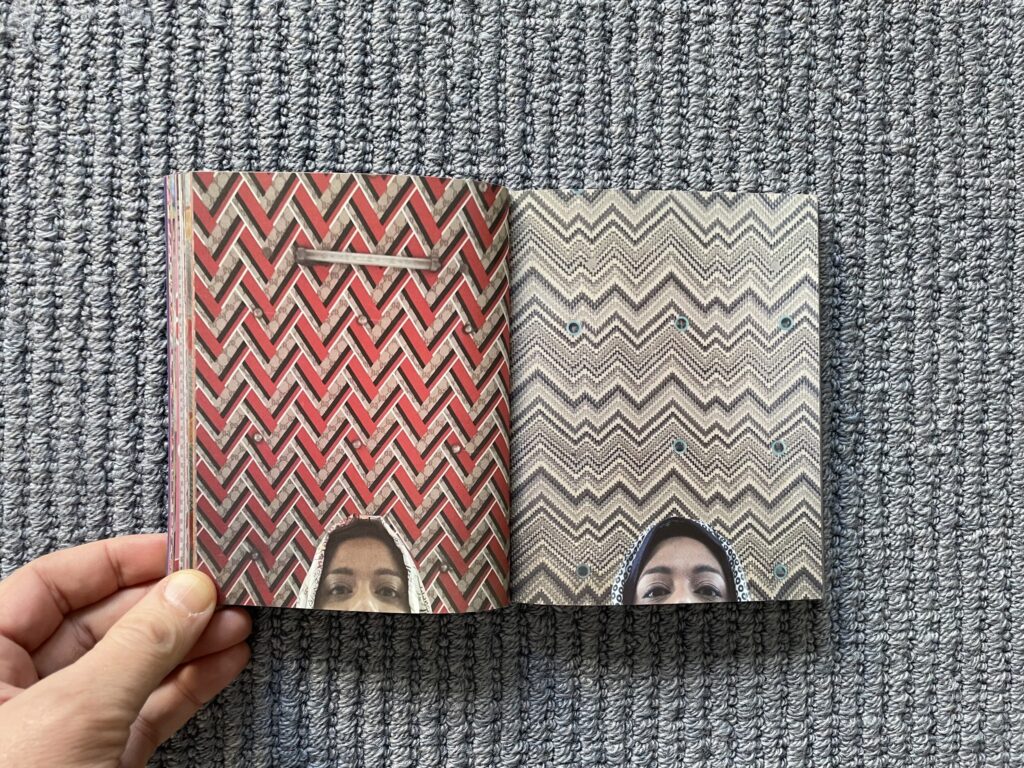
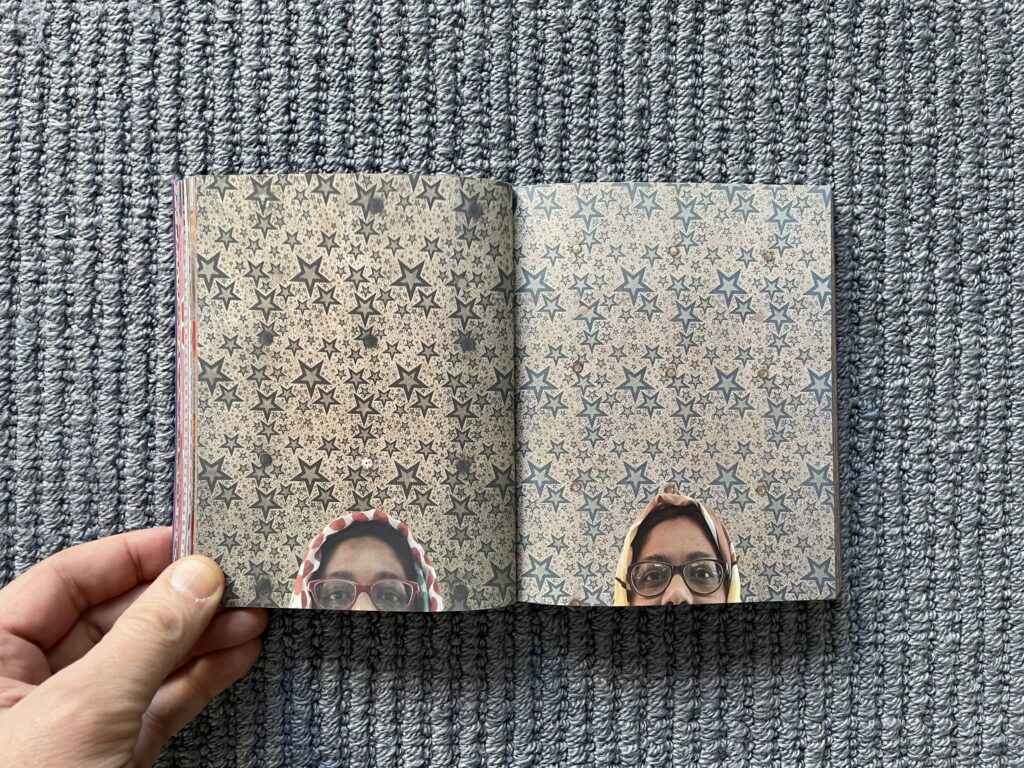
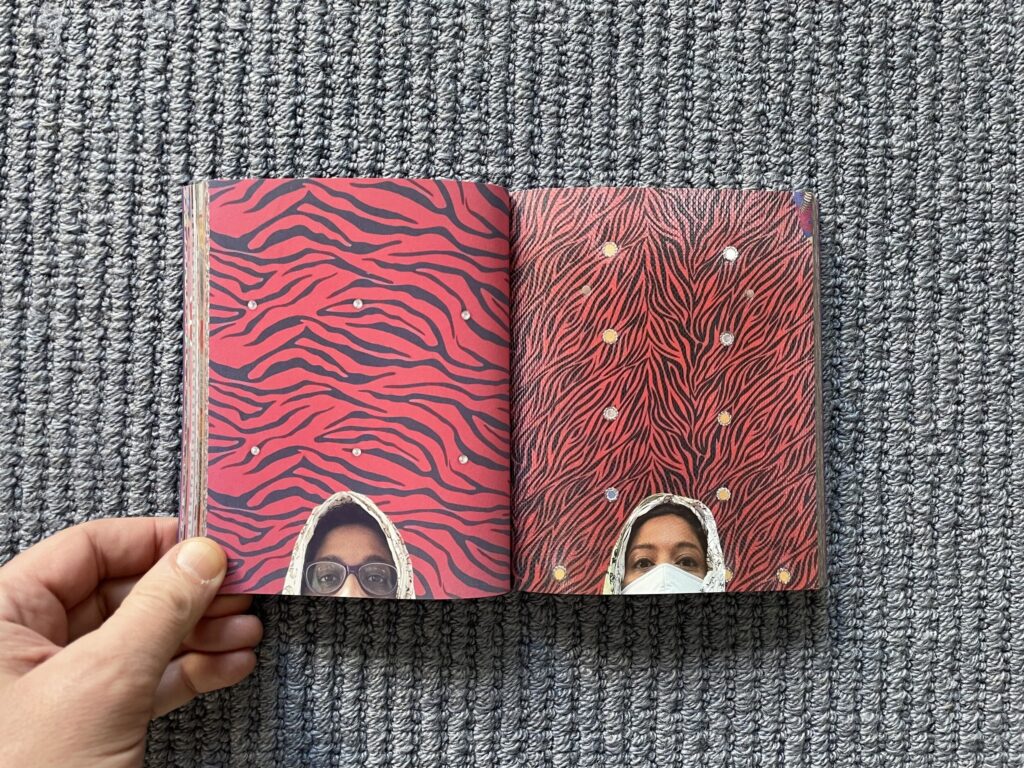
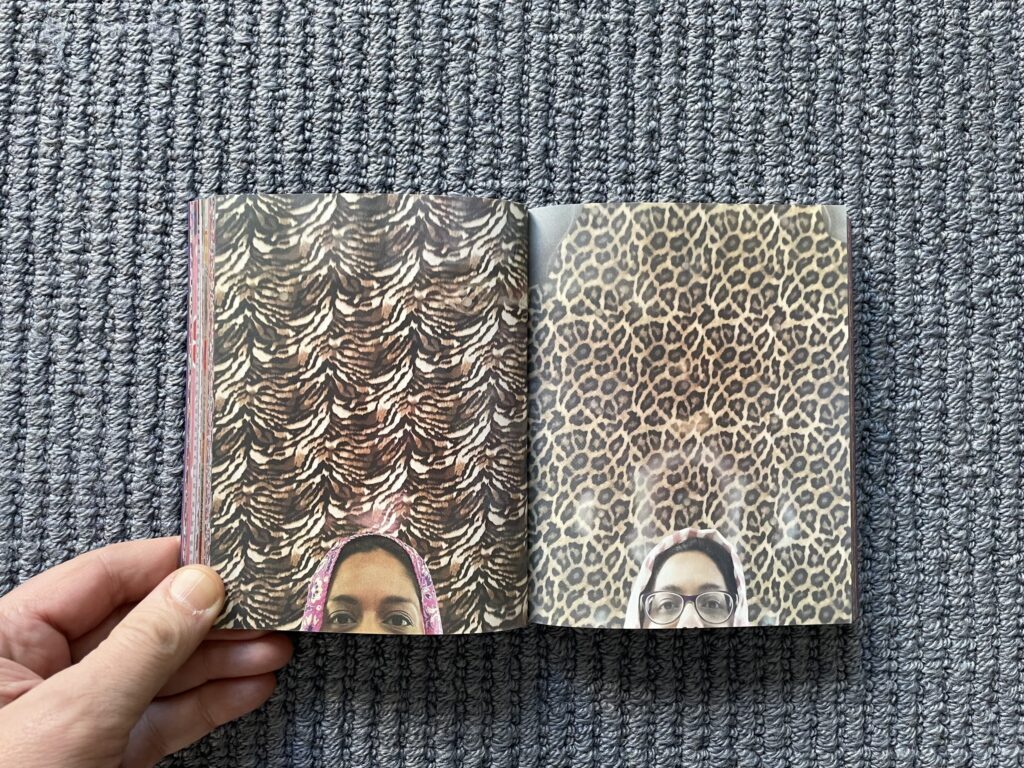
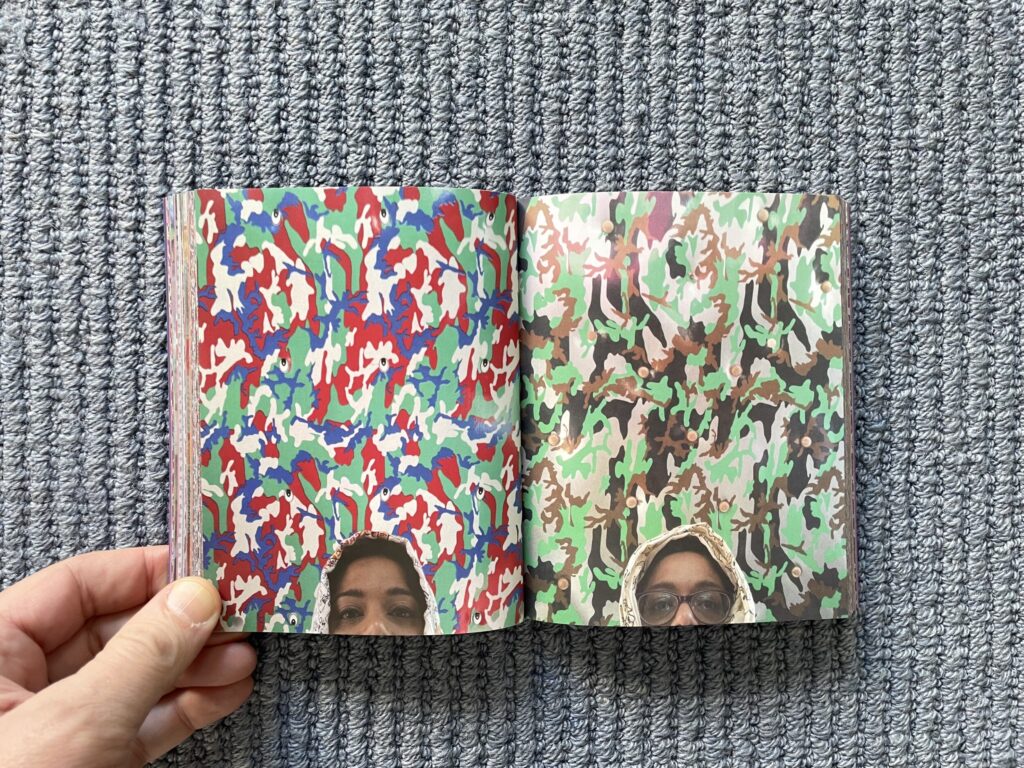
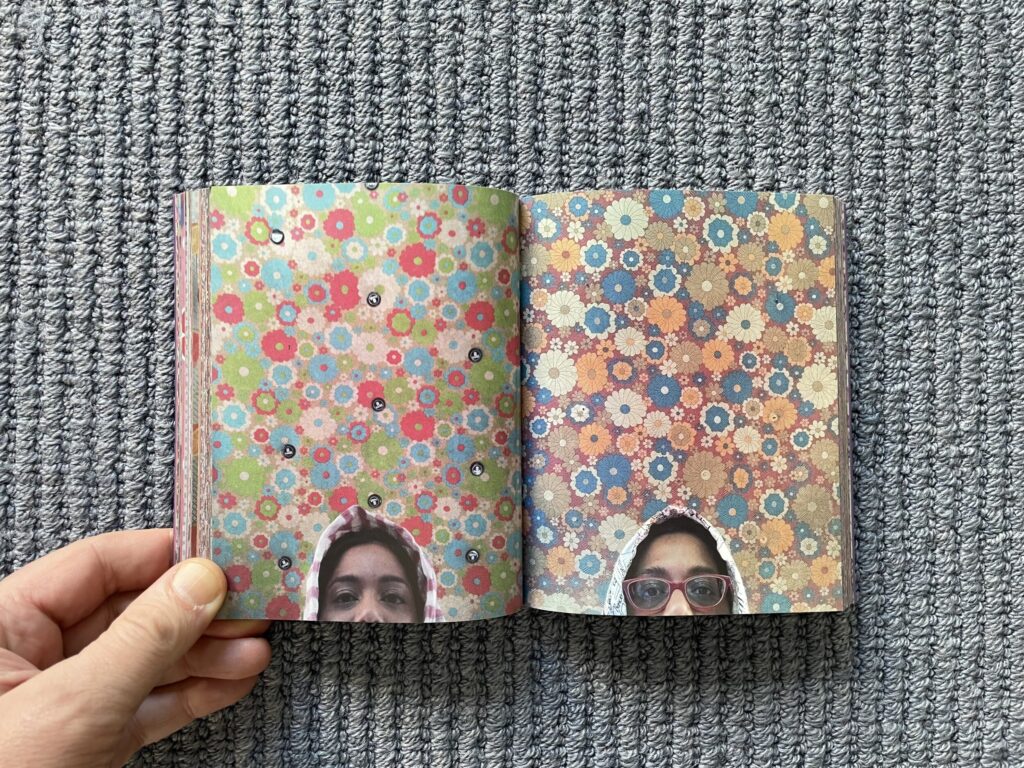
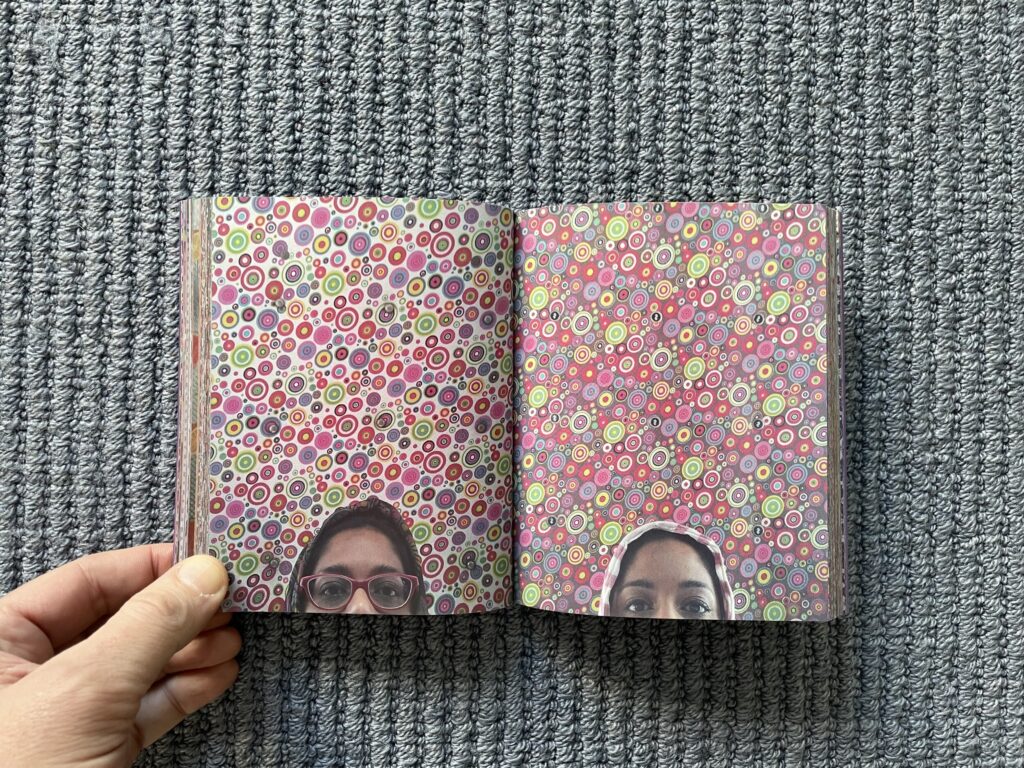
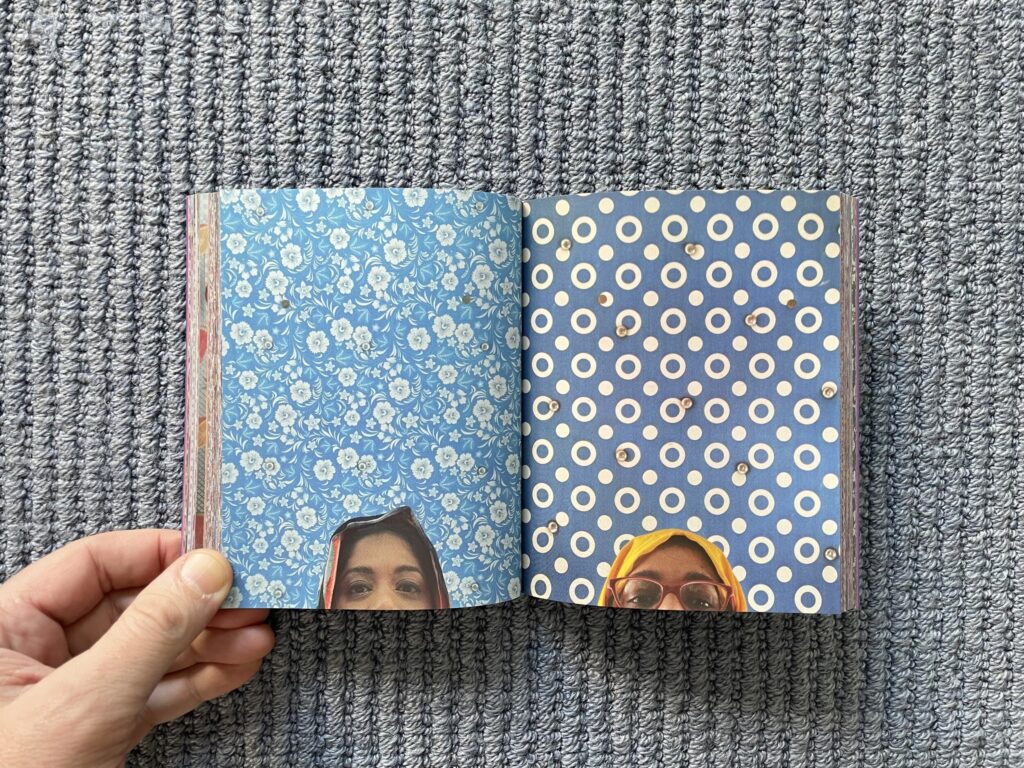
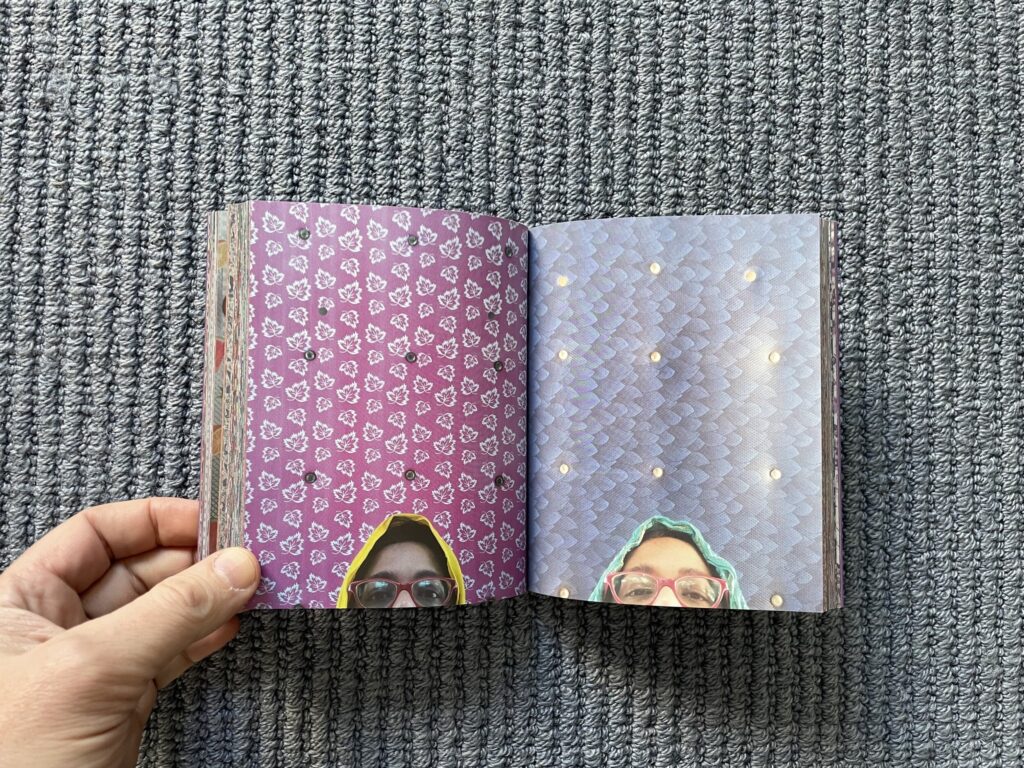
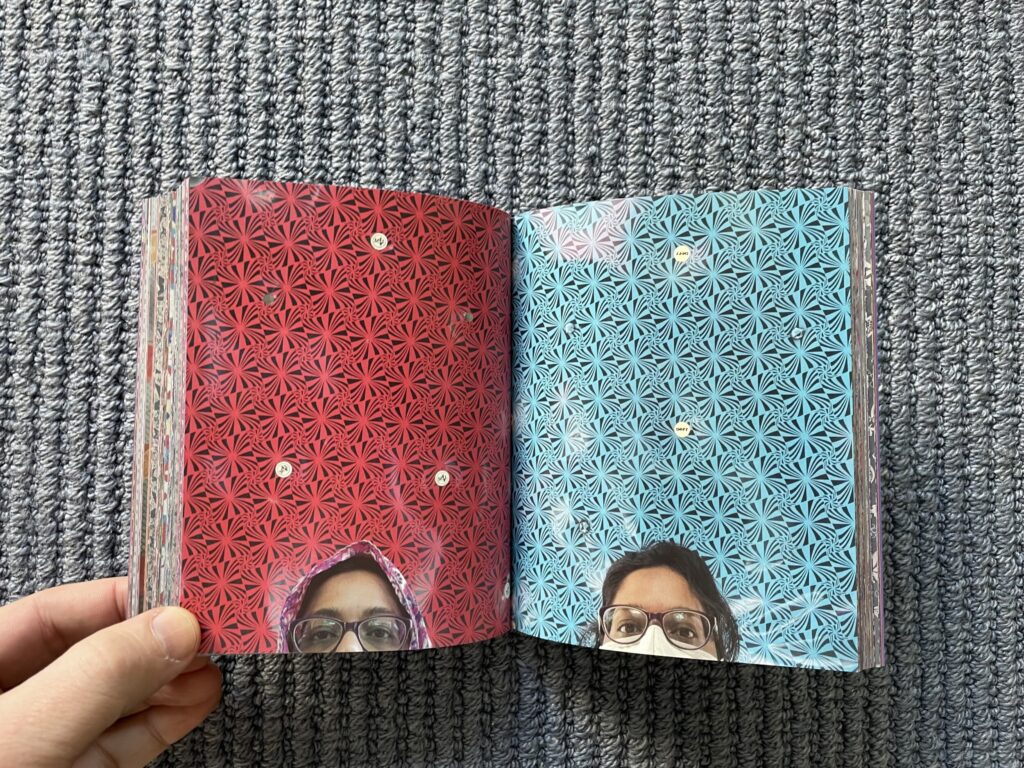
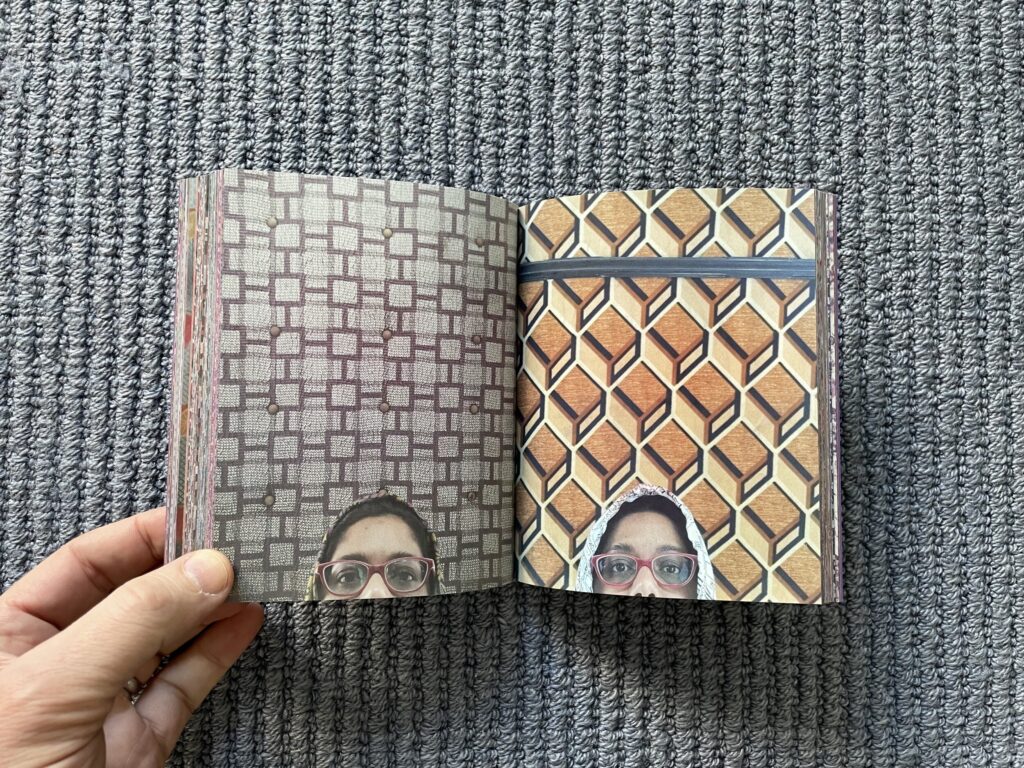
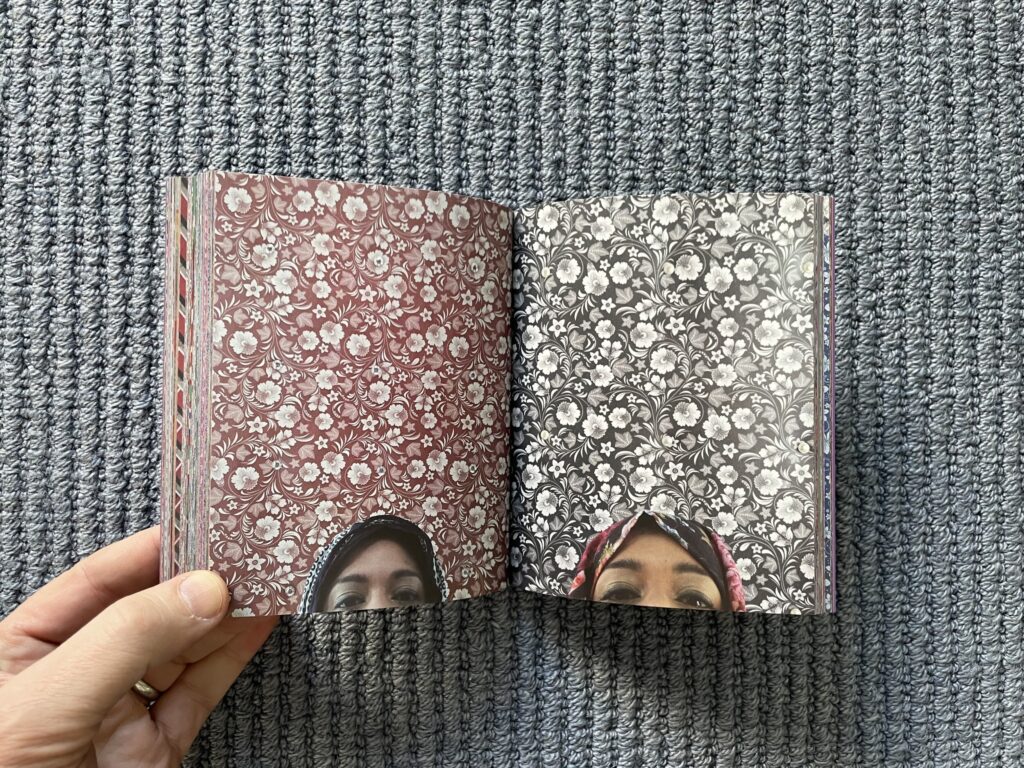
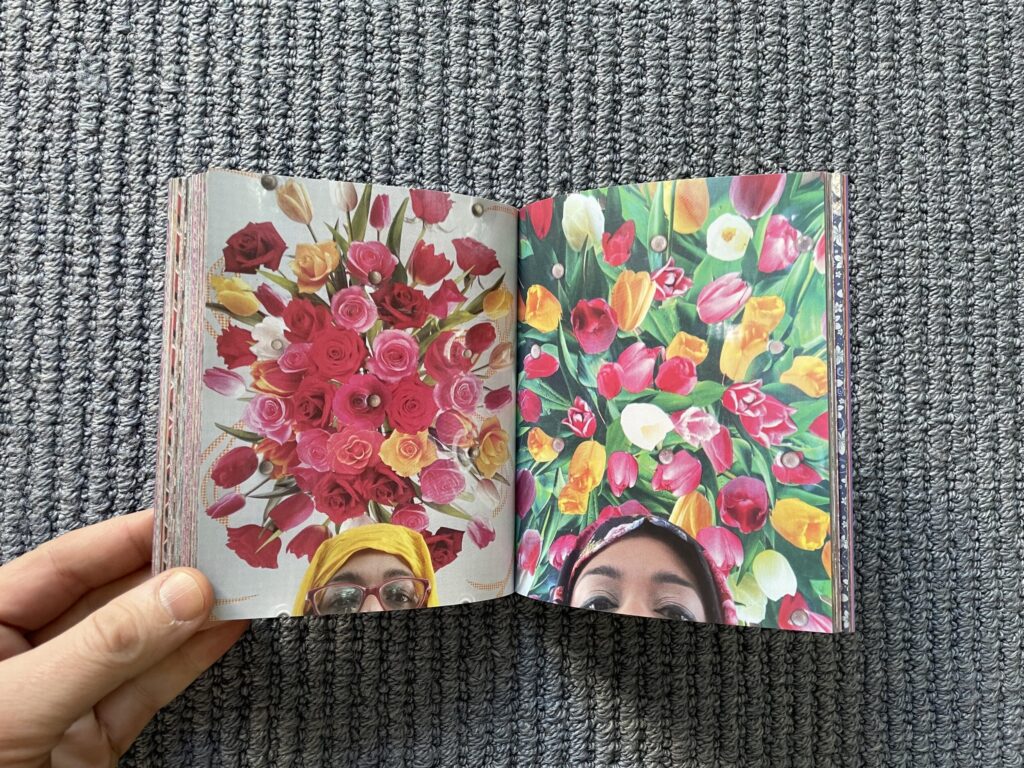
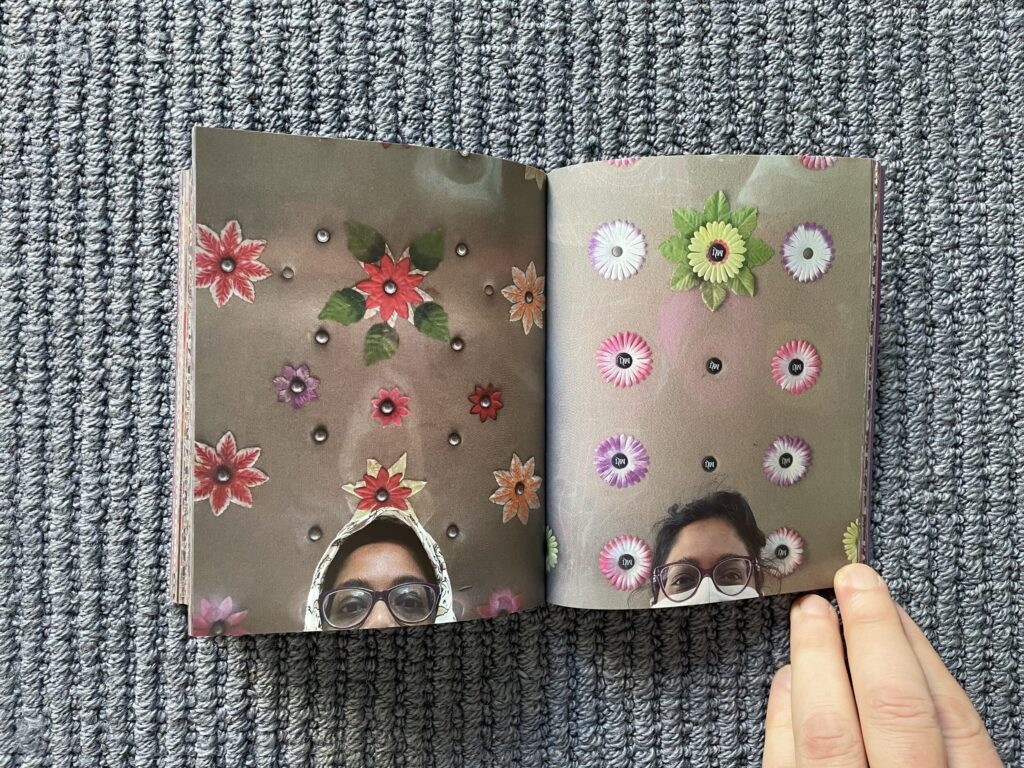
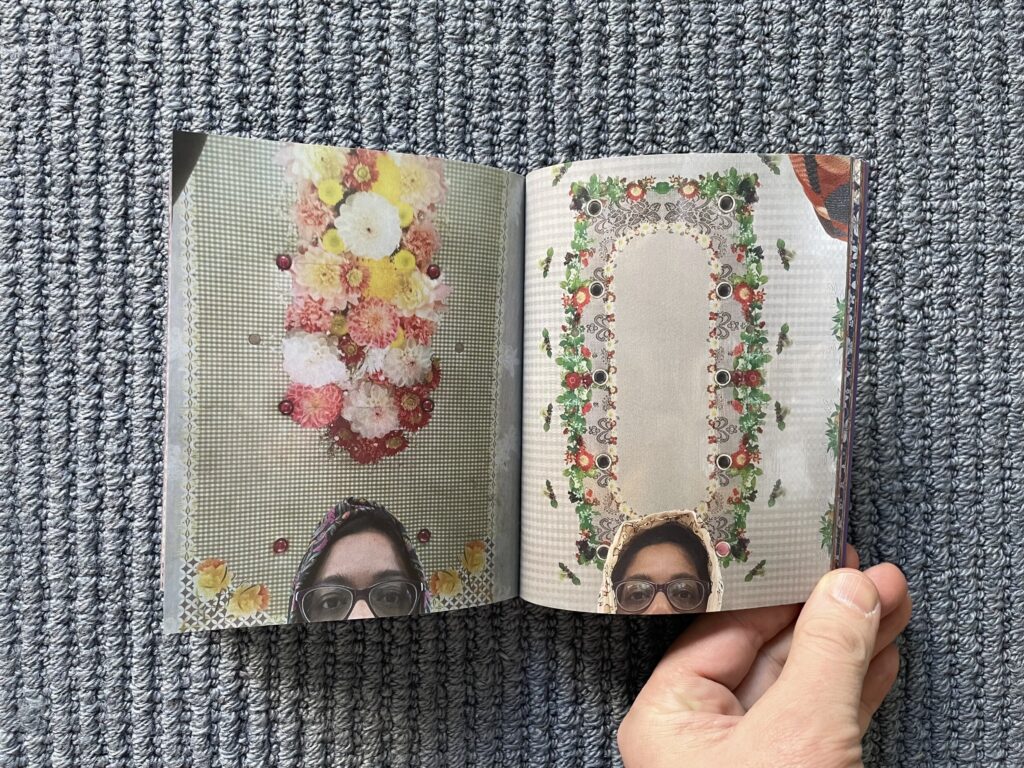
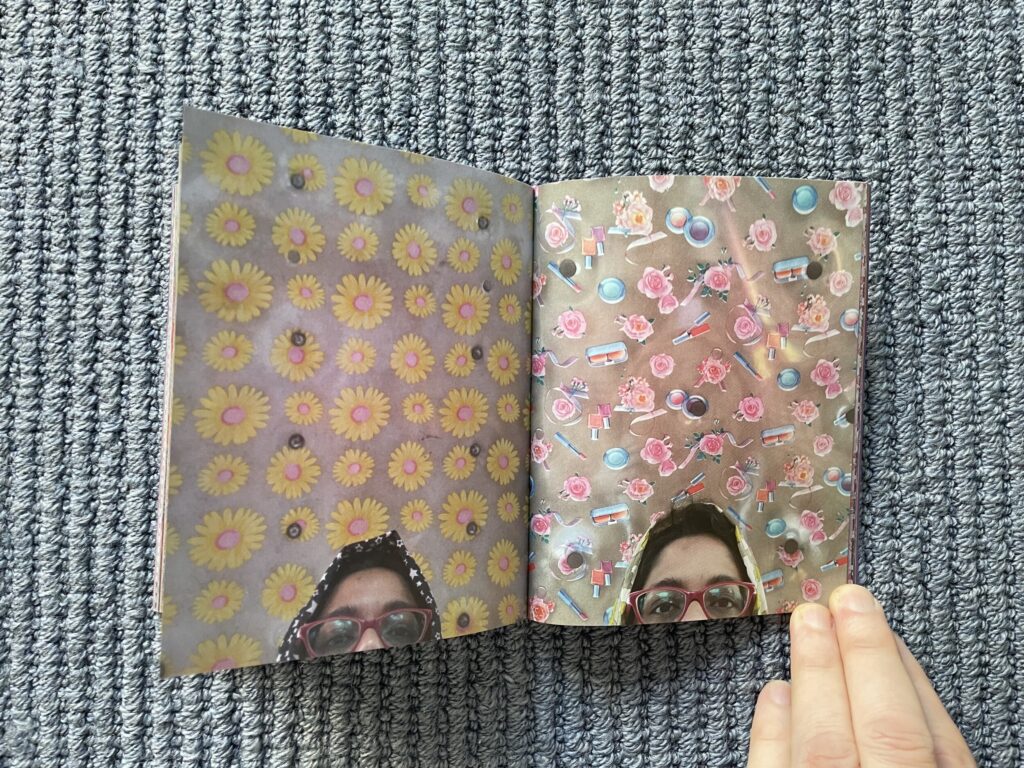
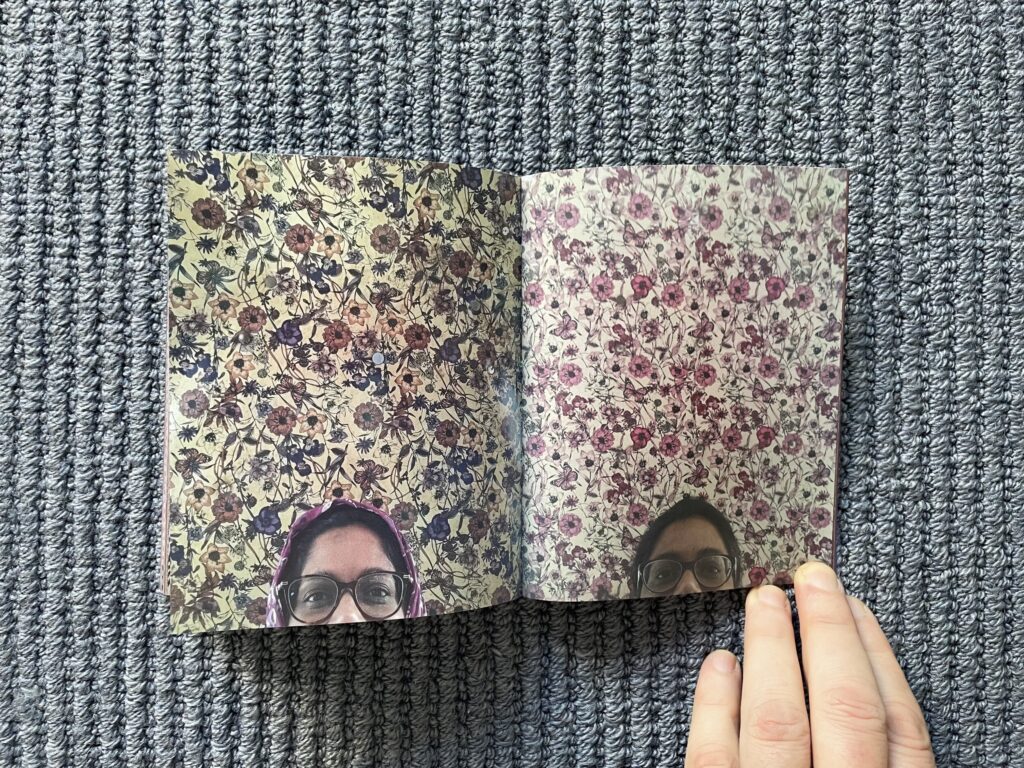
Comments/Context: While we like to think that there is a very systematic and intentional methodology at work in searching for and selecting the photobooks we write about at Collector Daily, the truth is that serendipity and chance encounters still play a surprisingly important role in our overall discovery process. The best bookstores around the world thoroughly understand this customer reality, and many carefully curate easy to browse tables of new books, in effect encouraging the possibility of catch-my-eye matches. And as I wandered the aisles of one of New York City’s landmark bookstores recently, looking for something unexpected, I came upon Ceiling is Believing by Rachel Lopez and was immediately charmed.
Ceiling is Believing is one of those rare photobooks that can operate on two distinct levels. At first glance, it is an undeniable crowd pleaser, an easy-to-like single subject book of photographs that can be flipped and understood in just a few seconds, its ideas communicated clearly and succinctly in a way that will make most readers nod their heads and smile at its playful cleverness. But below that amiable surface, there is actually some conceptual heft hiding in plain sight, with more complex ideas about long term self portraiture and indexical taxonomy building worth considering further. And as I sit in my office now, I wish I had bought all of the copies of Ceiling is Believing that were on that bookstore table, as I now see that it’s the kind of book I can readily imagine giving to various people, almost as a fun gateway example of what is to be found in the world of contemporary photobooks.
It’s worth understanding a bit of the backstory to Ceiling is Believing. Rachel Lopez lives in Mumbai, India, and is a culture reporter for the Hindustan Times. And as part of her busy job as a journalist, she bounces around the city, often using taxis to get where she’s going. One day back in 2017, she looked up at the ceiling of the cab she was in and noticed a wildly decorative pattern of multicolored strawberries floating against a chocolate brown background. So she snapped a selfie with this oddball ceiling, with the camera turned around to look up at herself.
What at first seemed like a ridiculous one-off turned out to be a consistent pattern – in most of Mumbai’s fifty thousand taxis, a ceiling cover has been put in place to protect the cab from the accumulation of dust and dirt. And what Lopez started to realize was that these unassuming and generally overlooked ceiling covers were decorated with a staggering range of outlandish designs. So she continued her selfie taking process, ultimately posting some of her pictures on Instagram (linked in the sidebar). She’s now taken more than 600 of these taxi-cab ceiling selfies, roughly half of which have found their way into Ceiling is Believing.
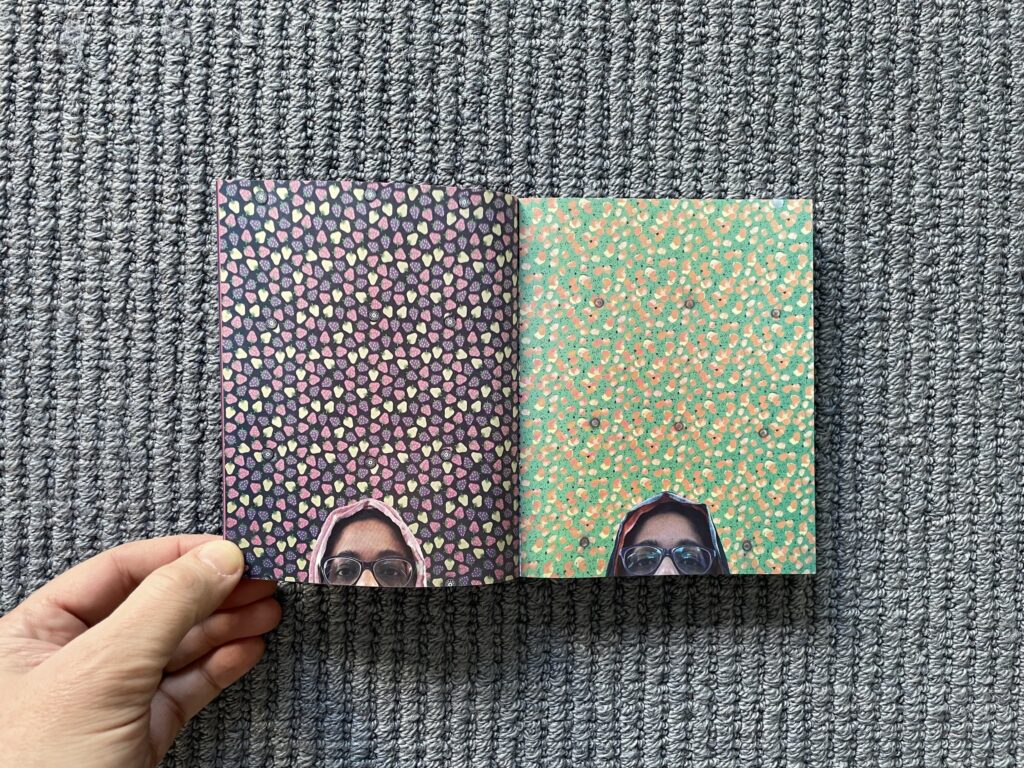
The structure of every image in this project is exactly the same. Lopez is looking down at her phone, with the expanse of the cab ceiling above her. She’s placed herself at the bottom of the vertically-oriented frame, cut off at roughly her nose, with only the top of her head and her eyes visible. The rest of the composition documents the taxi ceiling design (surprisingly without much distortion), which hovers behind her. The whole series has a classic theme and variation framework, with one consistent structure applied to countless examples in precisely the same way, thereby allowing for easy comparison.
As the taxi trips piled up, Lopez inevitably started to get a feeling for the visual vocabulary of the roof designs, her random rides eventually reordered and grouped into a more rigorous survey of the kinds of roof patterns she had seen. Even with all its playfulness, Ceiling is Believing is actually decently strictly organized, with groups of similar roofs gathered into subgroups and then sequenced into one continuous flow. Floating strawberries kick off the action, followed by other fruits and vegetables, many arranged like centerpieces at long dinner tables. From there, the patterns wander in countless directions – grasses, vines, zig zags, waves, stars, animal prints, snake skins, and camouflage, just to name the first few. As the pages flip, the exuberant visual parade continues, through dots, checkerboards, stripes, honeycombs, hearts, geometric cubes, many more floral patterns, over-the-top floral bouquets, floral centerpieces, and yet again more floral designs, both old style and new. Seen as a thick collection, the designs are mystifyingly diverse, especially given that they decorate a part of the car very few riders will ever actively notice.
If we take Ceiling is Believing more seriously as an artistic statement, rather than as simply contagious visual fun, two lines of thinking emerge. One locates Lopez in the context of other daily self portraiture projects, like those of Melissa Shook in the 1970s or Laurel Nakadate more recently, or even On Kawara’s date paintings and daily postcards, each of which was a daily validation of presence. In Lopez’s case, her partial face as a commuter is different every time we see her – different saree fabrics covering her head, different glasses frames, no glasses, and even a few medical masks, her identity in a constant state of flux, captured for an instant every time she hops in a taxi. And while the pictures are ostensibly about the ceilings, they also document her changing persona, each page flip finding her peeking at us from the bottom of the page.
Another conceptual angle on this project places it with other taxonomies and typologies, linking Lopez’s rigorously-seen ceilings to August Sander’s portraits and Bernd & Hilla Becher’s water towers. A grid of her taxi interiors (in 4, 8, or even 16 prints) might just as well hang alongside grids of Ed Ruscha’s gas stations, palm trees, and swimming pools, offering a cultural compare-and-contrast with an international resonance. She’s methodically indexing just like all the rest of those better-known artists, she’s just doing it with a more casual style.
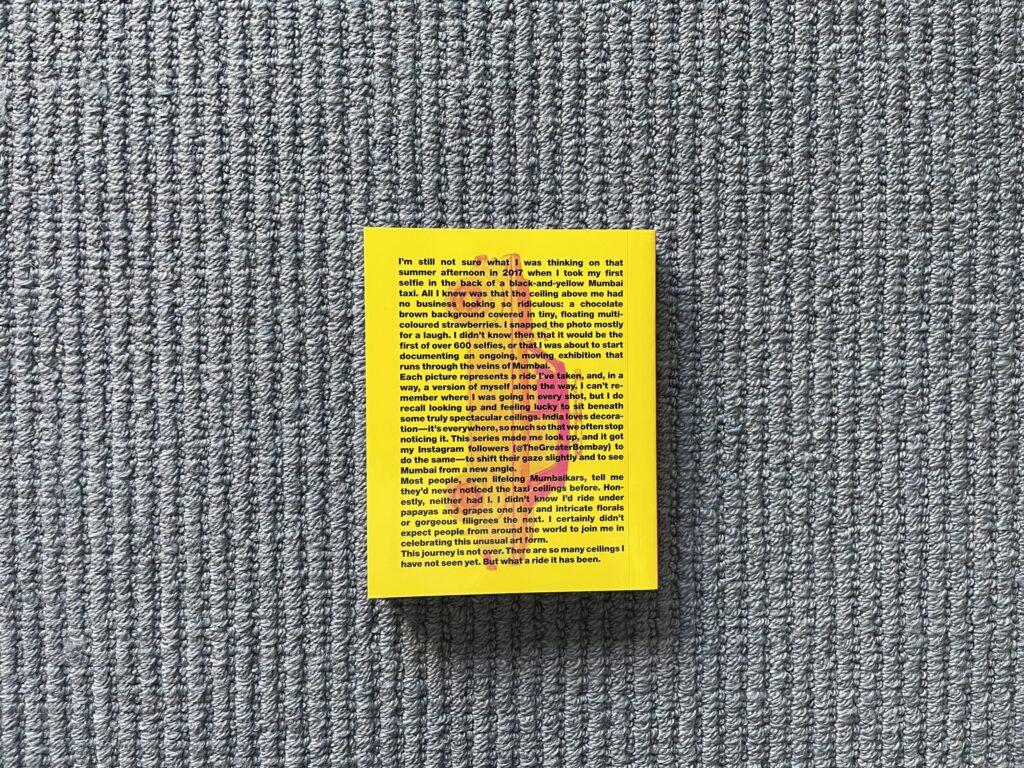
As a photobook object, Ceiling is Believing is smartly designed and constructed. It’s deliberately small, not much bigger than the reader’s hands, with a glossy cardstock cover that uses the back as the location for the introductory text. Inside, it’s all full bleed images, one on each side the spreads, creating a rigorously consistent structure that when flipped quickly reveals just how precisely aligned it is. Most of the spreads are matched pairs of similar kinds of ceilings, further centering us on the process of careful observation and comparison. All in, the book feels effortlessly simple and fun, which is of course no accident.
The subtle smartness of Lopez’s Ceiling is Believing lies in its easy going universality, and the “why didn’t I think of that” reaction that many viewers might have to its unexpectedly lively discoveries. That it can successfully deliver a dose of conceptual rigor masked as approachable cultural kitsch is indeed a very clever inversion, and I can entirely imagine this project taking shape as a massive grid of 64 (or even 128) prints or a huge adhesive vinyl install covering a transitional museum wall. Ceiling is Believing is the photobook equivalent of a catchy pop song, whose simple bubbly refrain you can’t quite shake. I’m a fan.
Collector’s POV: Rachel Lopez does not appear to have consistent gallery representation at this time. As a result, interested collectors should likely follow up with the artist via her Instagram page (linked in the sidebar.)