JTF (just the facts): A total of 4 large scale color photographs, framed in white and unmatted, and hung against white walls in the downstairs gallery space. All of the works are archival pigment prints, made in 2026. Physical sizes are roughly 42×94, 60×71, 60×72, and 60×89 inches, and all of the images are available in editions of 6. (Installation shots below.)
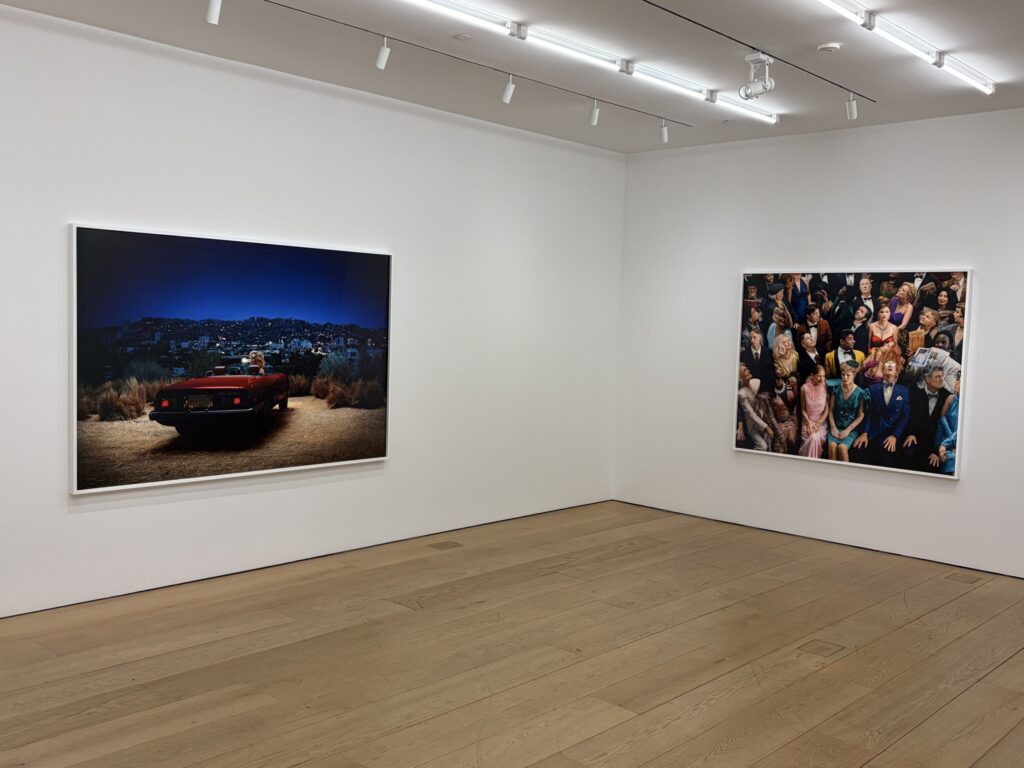
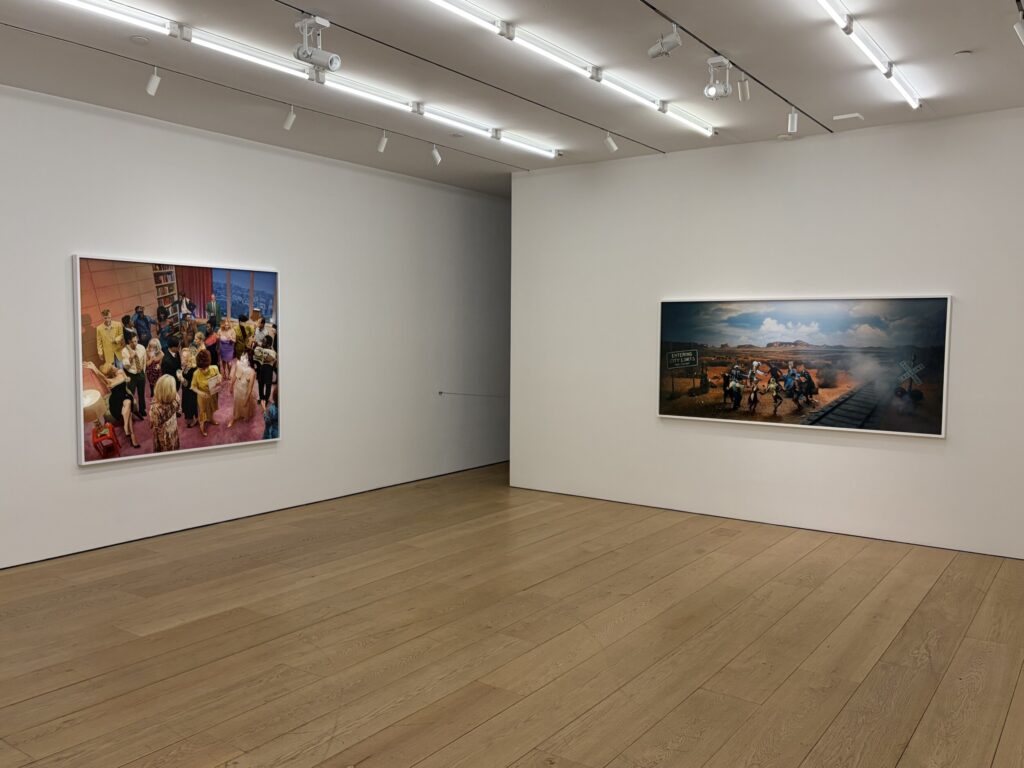
Comments/Context: Tucked in a single room basement gallery space, with only four photographs on view, Alex Prager’s new show feels like an intermediate update or an adjunct, rather than a fully realized stand alone project. Prager released her first feature film “DreamQuil” at SXSW earlier in 2026, so while most of her recent shows have paired short films with related photographic setups and stills (as seen in 2023, reviewed here, 2019, reviewed here, and 2014, reviewed here), likely the idea of screening a 90-minute film in the gallery didn’t quite work with the larger distribution strategy for the movie, and so this small series of recent photographs was installed on its own.
Los Angeles (where Prager lives and works) provides the connective tissue for these four works, with each individual scene offering the artist the opportunity to show off her meticulous skills in casting, makeup, costuming, staging, and arrangement. Very little is left to chance in a Prager picture, with every stylistic detail and compositional element painstakingly controlled to generate an overall atmosphere or mood.
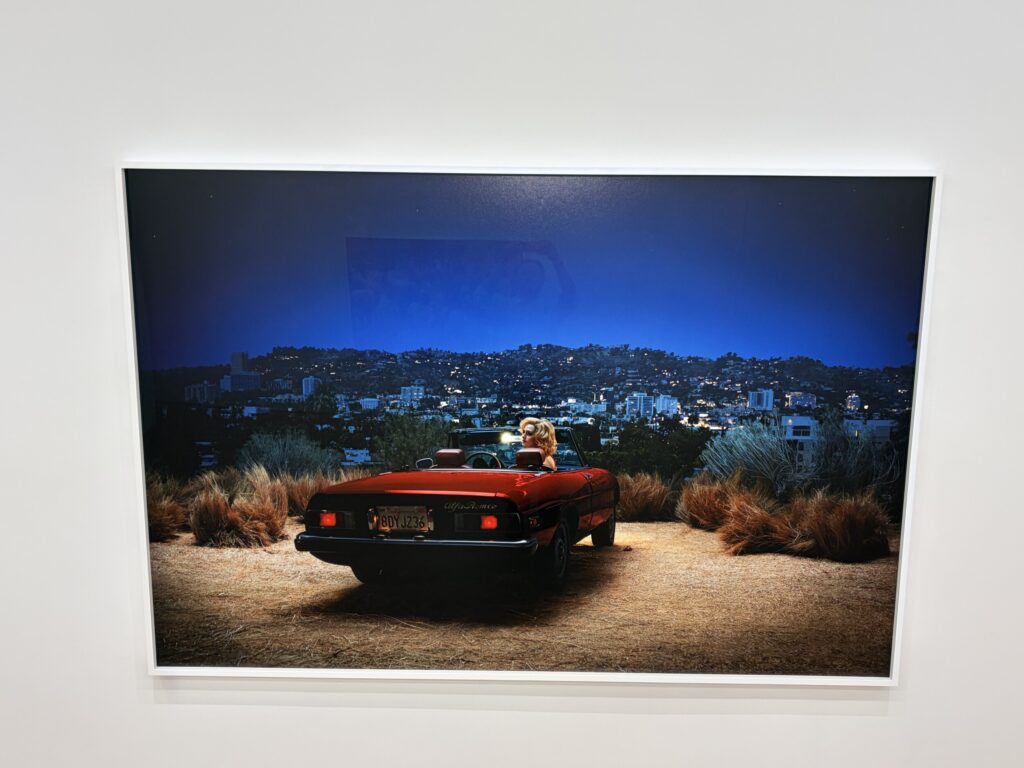
“Bonnie Hill (Overlook)” is the most overtly cinematic of Prager’s new images. The night scene features a blonde woman sitting alone in a red Alpha Romeo convertible, parked looking out over the hills of Los Angeles twinkling in the distance. The turn of her head and the missing driver offer just enough narrative ambiguity to give the image some uncertainty, with the lighting of the scene creating a spotlight of attention on the car and its glamorous passenger. Like many Prager setups, the moment feels vaguely familiar, perhaps alluding to a specific film, but more likely just a cinematic LA trope given pared down clarity and vulnerable woman punch by Prager.
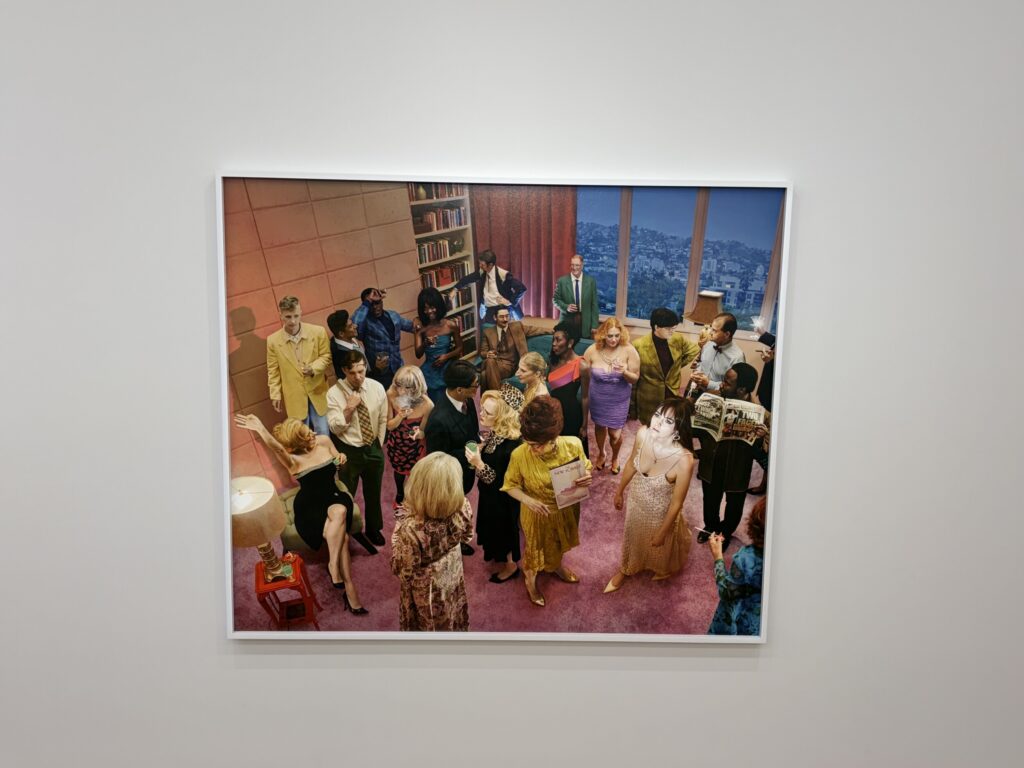
Over the years, Prager has made many memorable group shots and crowd scenes, with every single included model styled with exaggerated individuality. A cocktail party provides the narrative impetus for “Hidden Hills (Invitation)”, an elevated view looking down on the clustered groups of people. One woman is singled out with light on her face, but any number of smaller details might otherwise draw our attention away, from bold fashions and held magazines to turned gestures and prosthetic noses, the whole composition a swirl of bodies frozen for an instant, with a Robert Altman-like overlap of conversation snippets seemingly floating in the air.
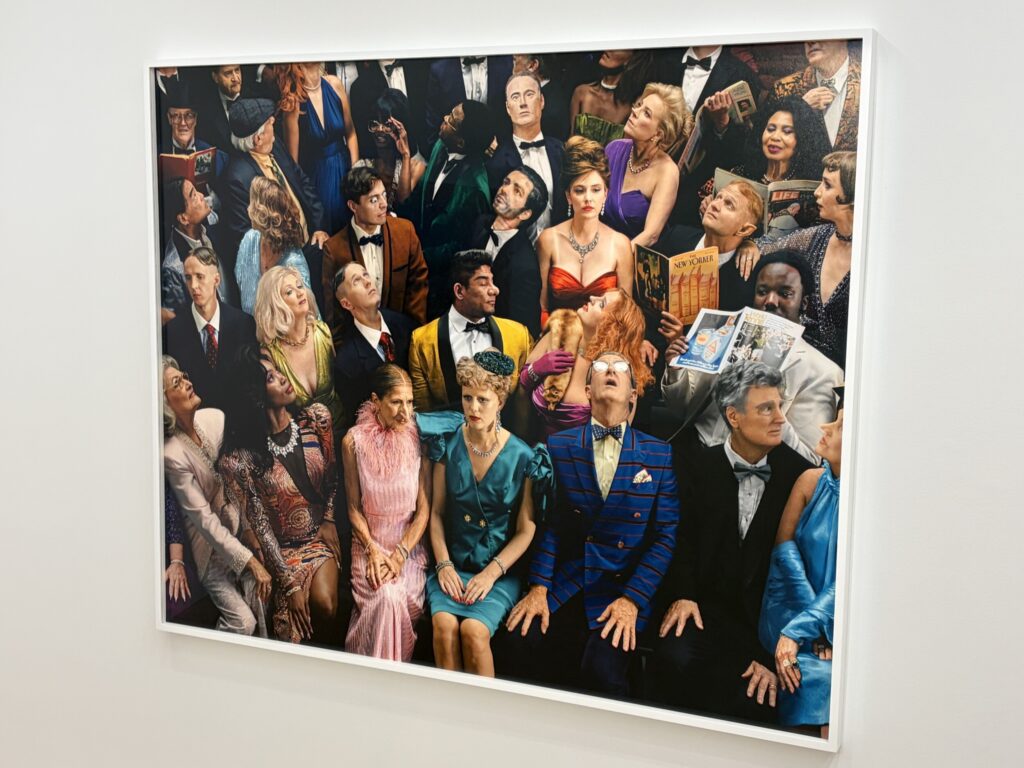
A seated crowd scene employs similar strategies and effects, with a calm woman in red catching our eye first, only to be distracted by nearby people turned in various directions looking up and back to see something out of the frame, the story never revealed. Again fashions and prosthetics exaggerate the individual styles, with two actual mannequins and a man with fake eyeballs intermingled in among the seated attendees. The resulting composition has a restless all-over effect, each person offering a different component story, like a visual puzzle to be deciphered.
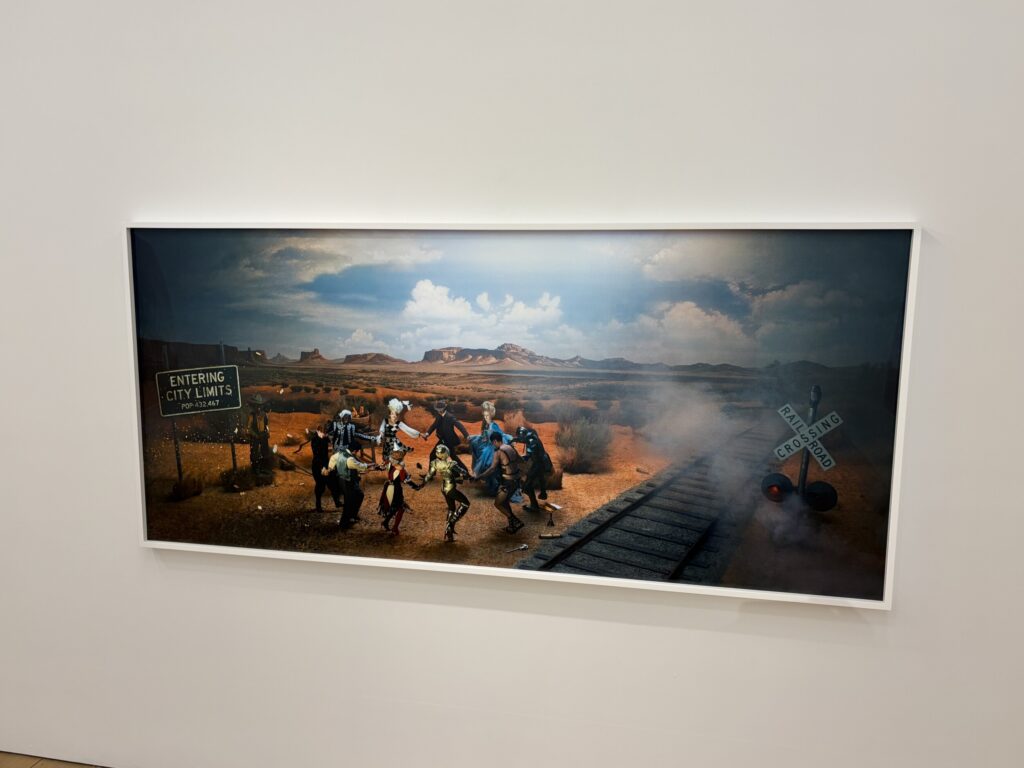
While all of Prager’s works have some degree of an intentionally mannered feel, “American West (Rehearsal)” pushes the staging further toward the surreal. A dry desert landscape with rocky mesas on the horizon (like those found in Technicolor Westerns from the 1950s) provides the big sky backdrop to a ritualistic dance, with various figures in costumes swirling in an exuberant Matisse-like circle. Cowboys and harlequins mingle with knights and gladiators like a jumbled mix of Hollywood backlot extras, flanked by smoky train tracks and a city limits sign, placing us in a kind of charged netherworld. It’s a surprisingly uneasy fantasy melange of cinematic references, the kind that might only come together on a Los Angeles studio sound stage.
With her continued drift toward movie making, Prager has certainly reached a mature artistic aesthetic at this point, and these new photographs reinforce themes and approaches she has been mining (and refining) for years. Her surface vibes remain singularly seductive, but I’m ready for a deeper dive into photographic, cinematic, and psychological narratives that have more richness and three-dimensionality. Of course, in a place like Los Angeles, the empty performance of surface level attention may exactly be the point. She’s transformed contemporary life into a stylized doll house exercise, each character playing their role with a glassy eyed stare.
Collector’s POV: The photographs on view in this show are priced at $60000 or $65000 each, based on size. Prager’s work has become consistently available in the secondary markets, with recent prices ranging from roughly $5000 to $75000.