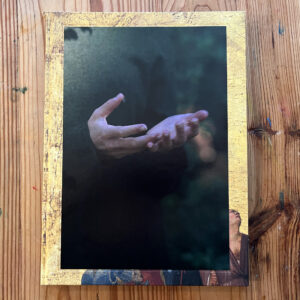
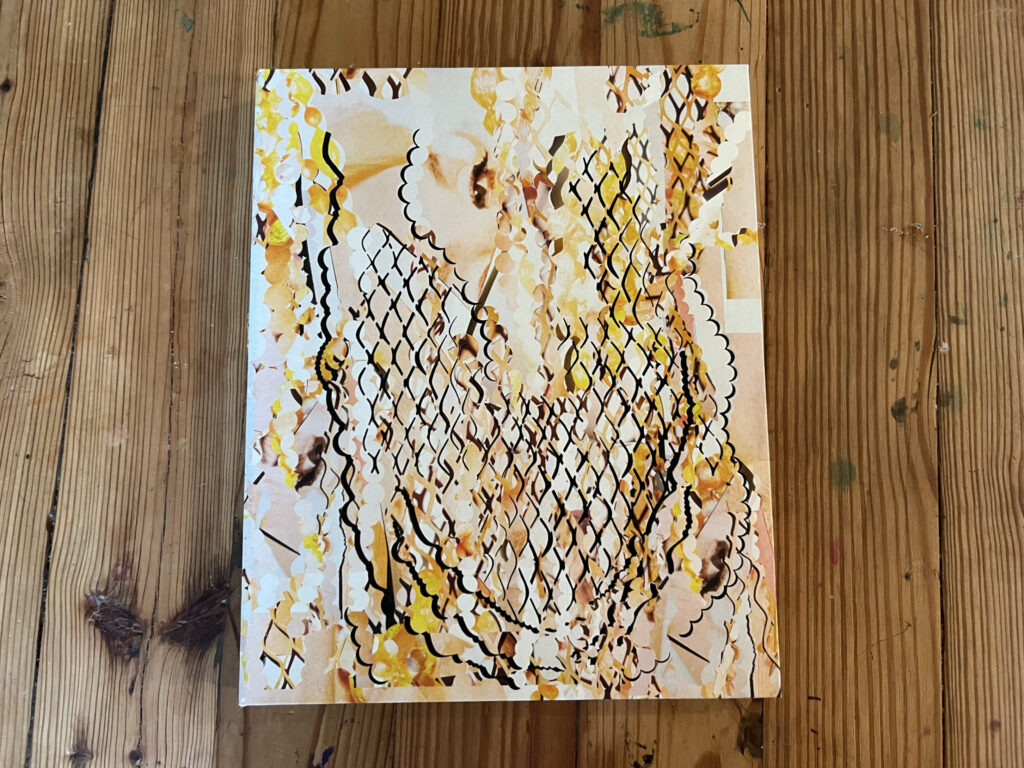
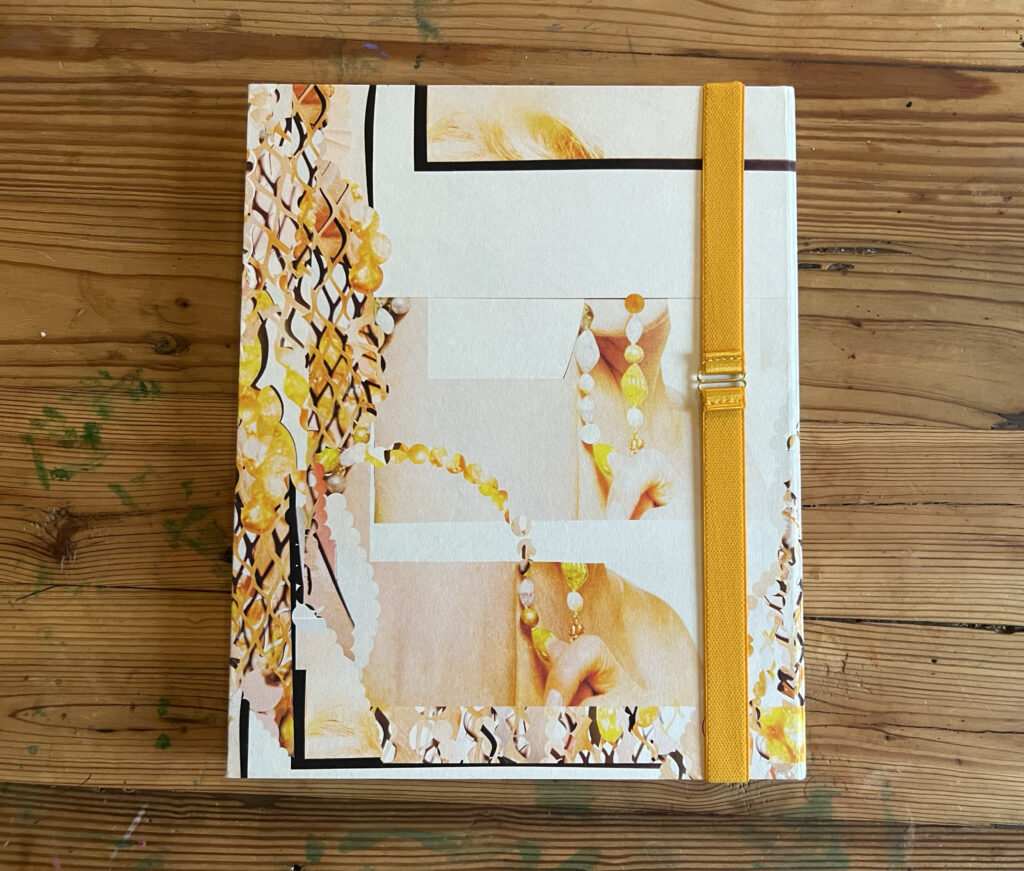
JTF (just the facts): Self-published in 2026 (here). Unbound saddle folded hardcover, 10 x 12.5 inches, 82 pages, with 14 hand-cut pages, in a foil stamped case. Design by the artist, printing by Composit Press of Oregon, cover produced by For The Birds Trapped in Airports of California. In an edition of 50 copies. (Cover and spread shots below.)
A special edition includes a hand collaged custom box and a collage made from pages from Bert Stern’s original photobook The Last Sitting. Collages and boxes are unique and will vary. In an edition of 5 copies.
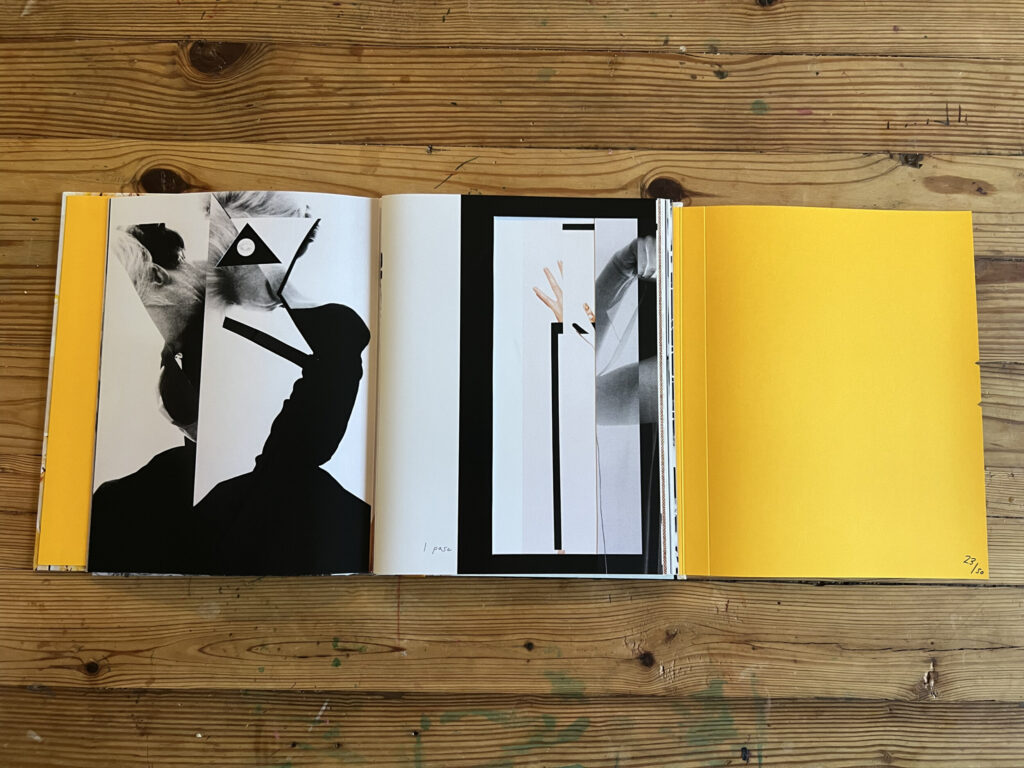
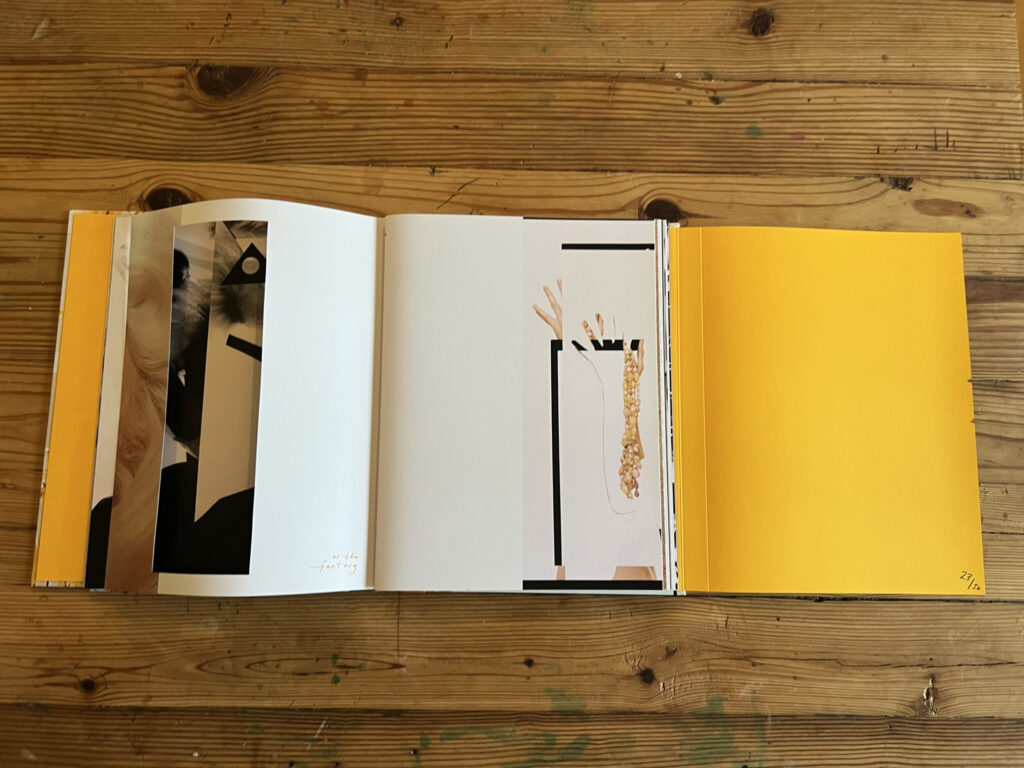
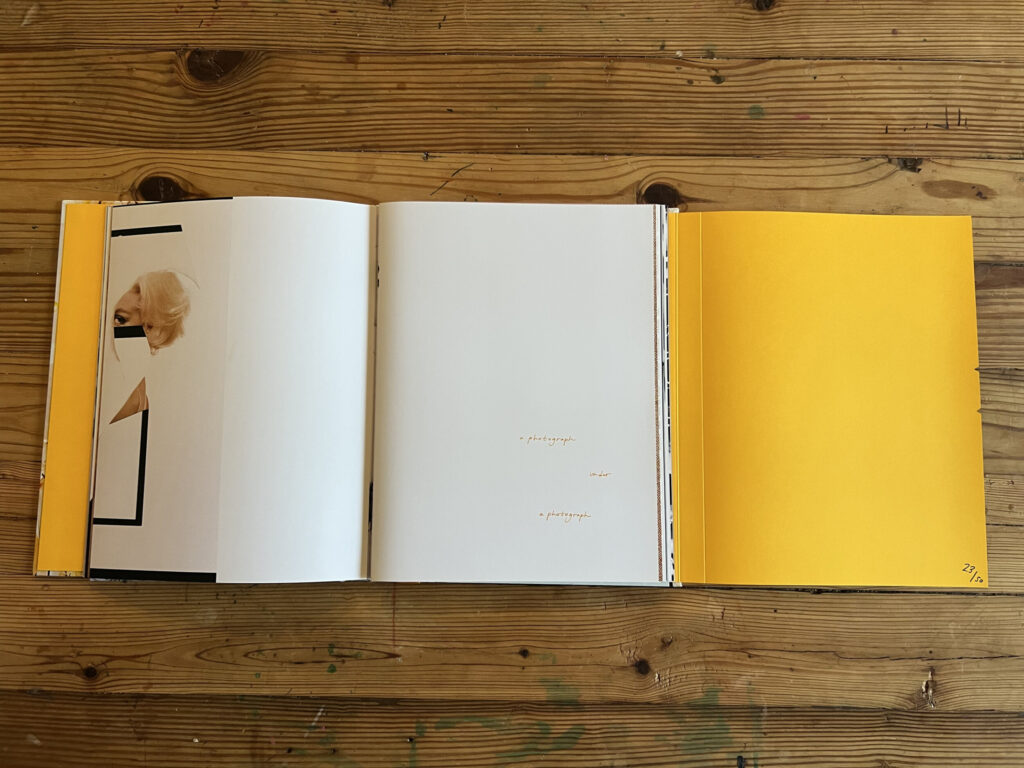
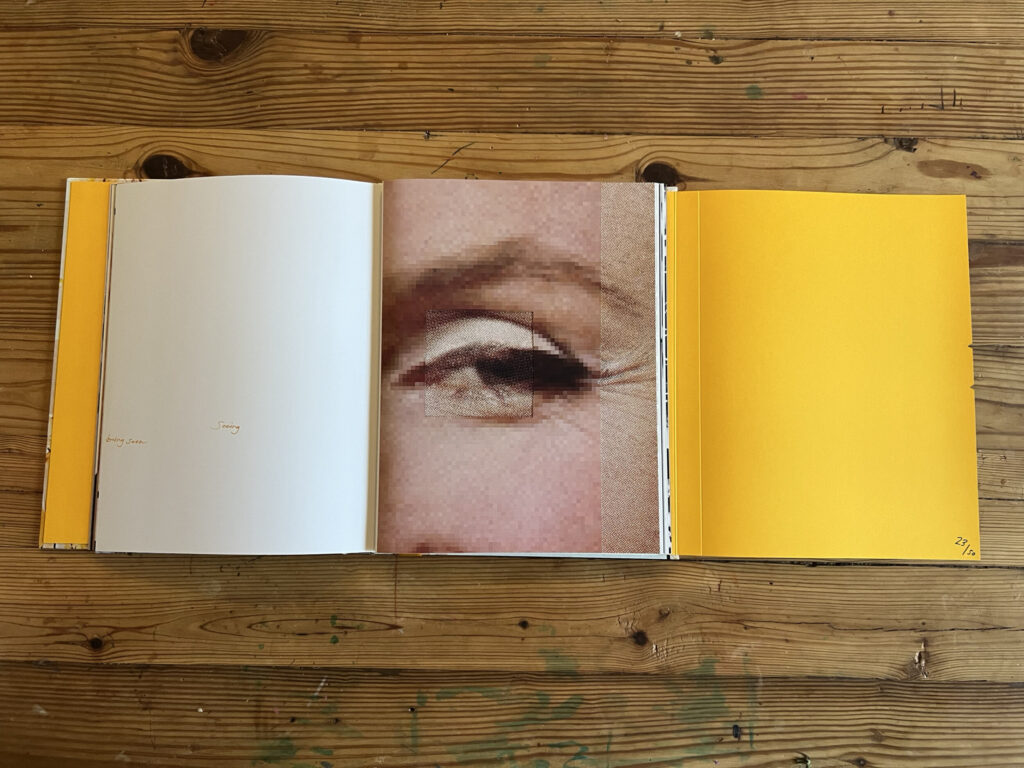
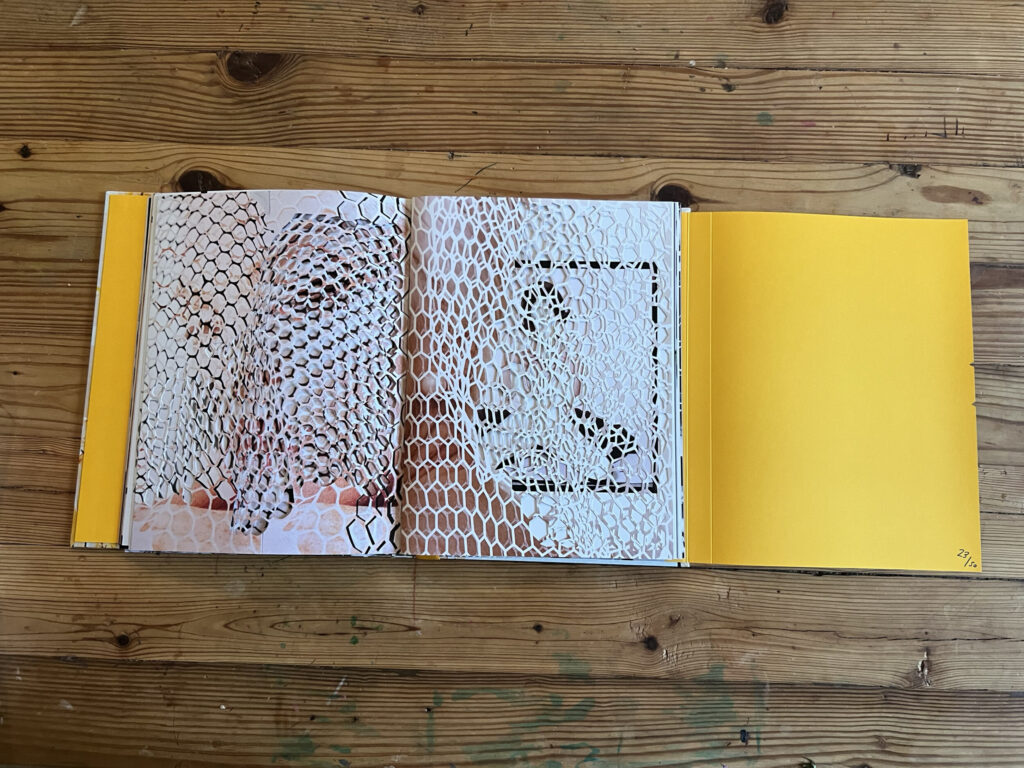
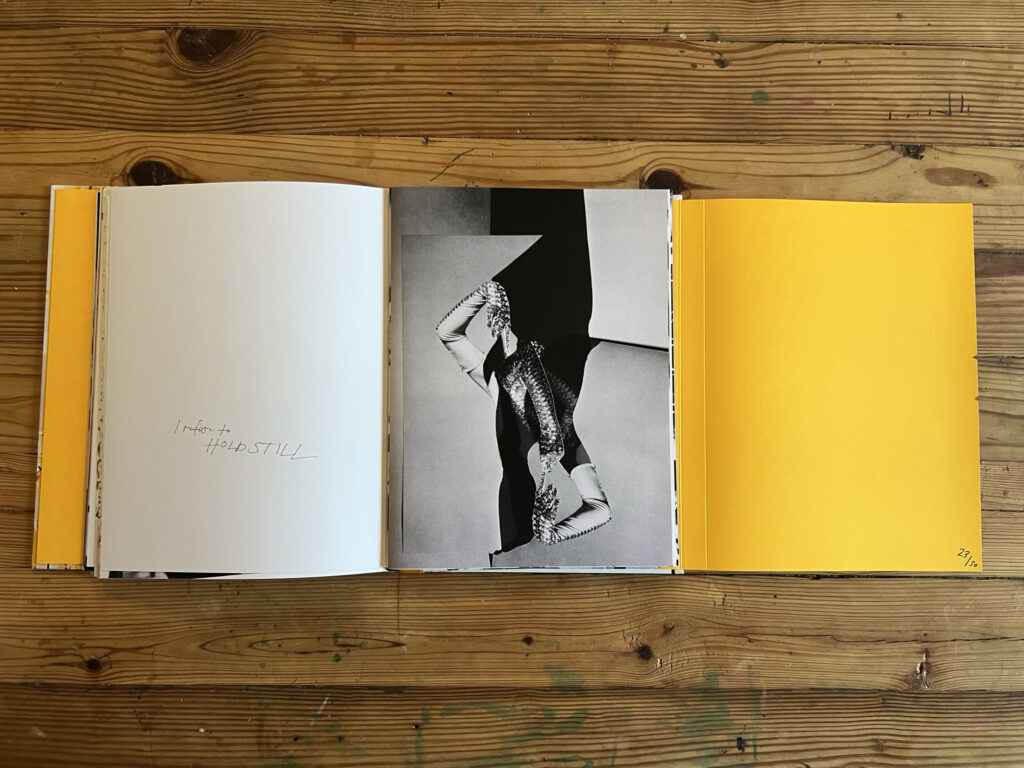
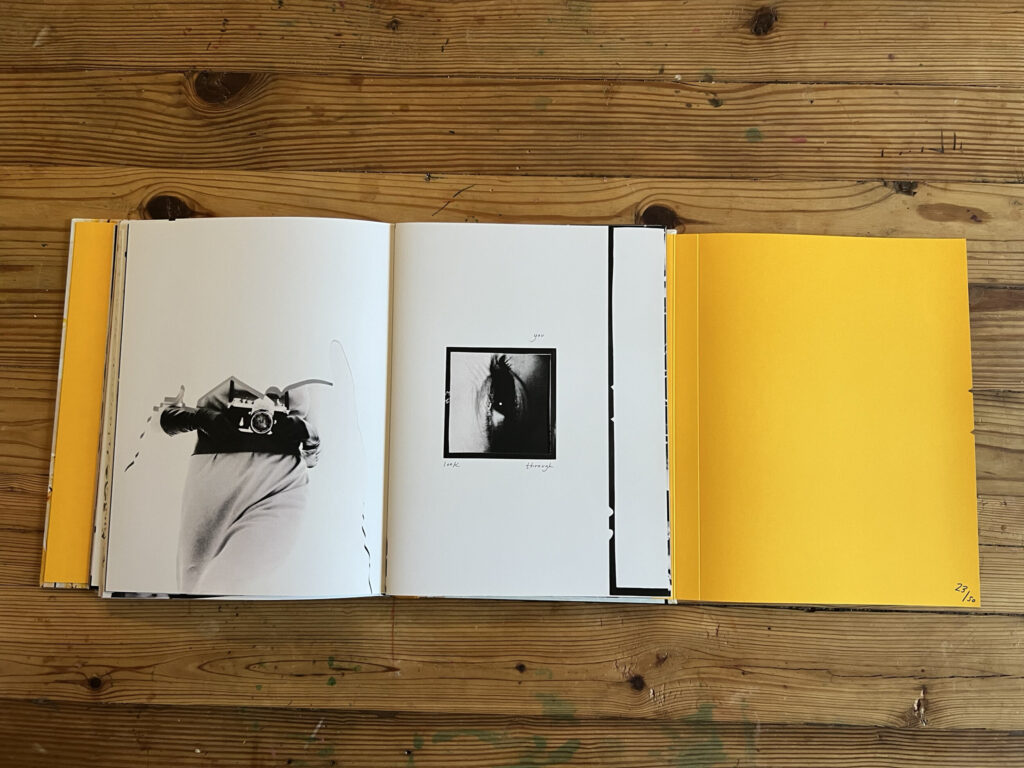
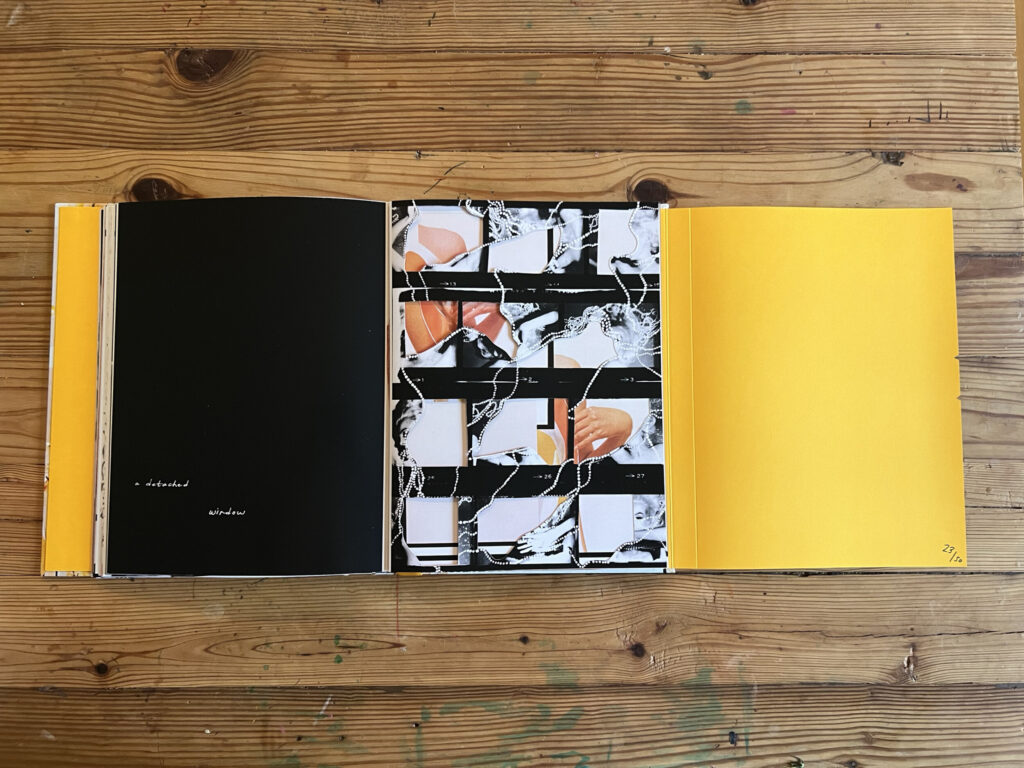
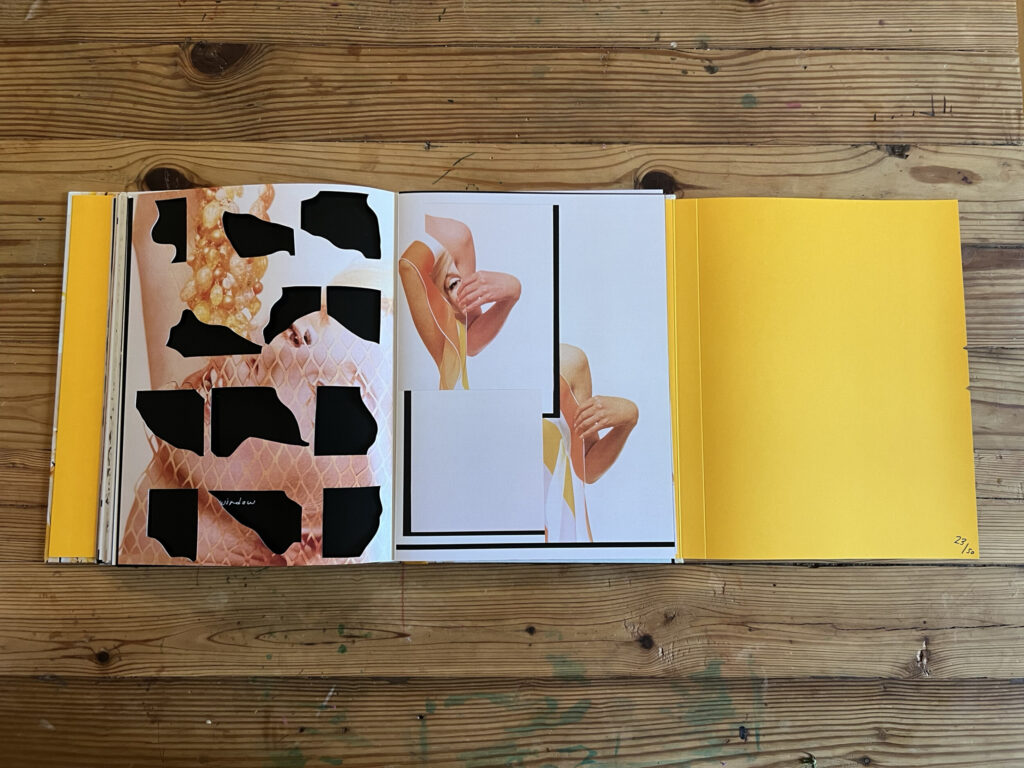
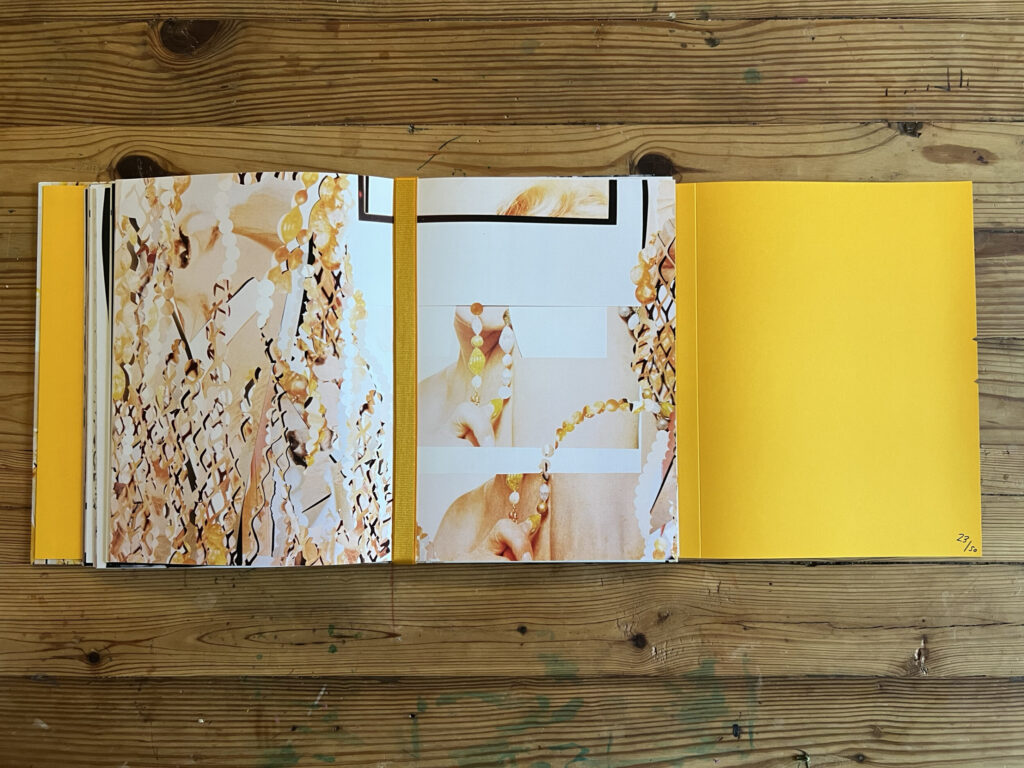
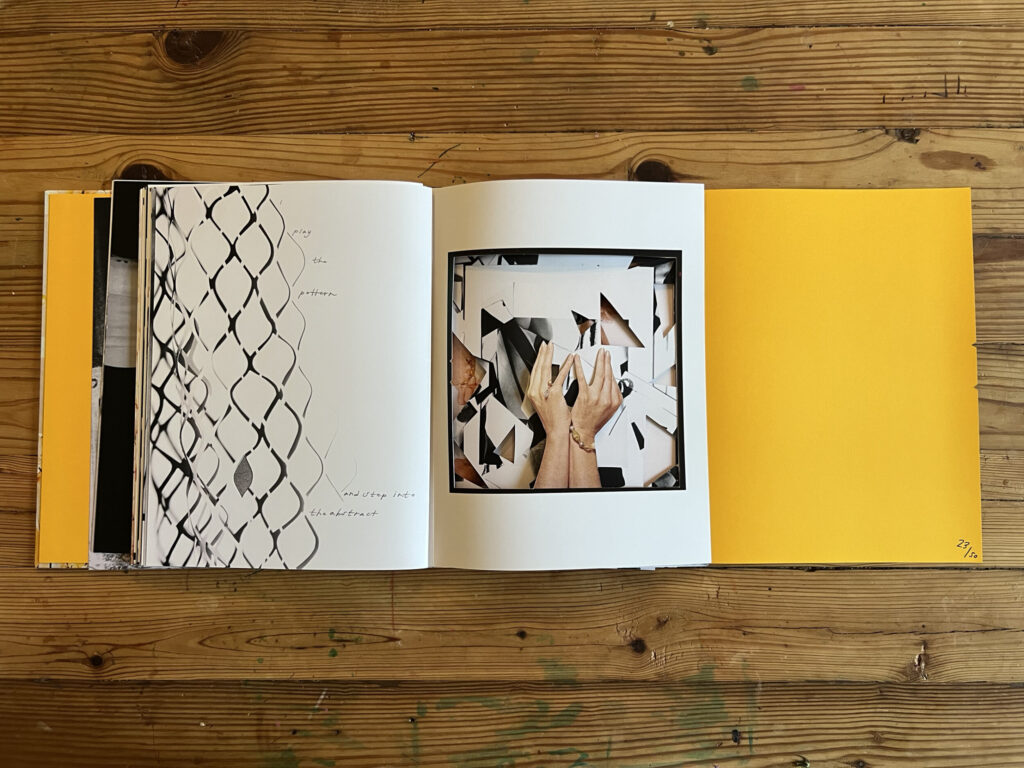
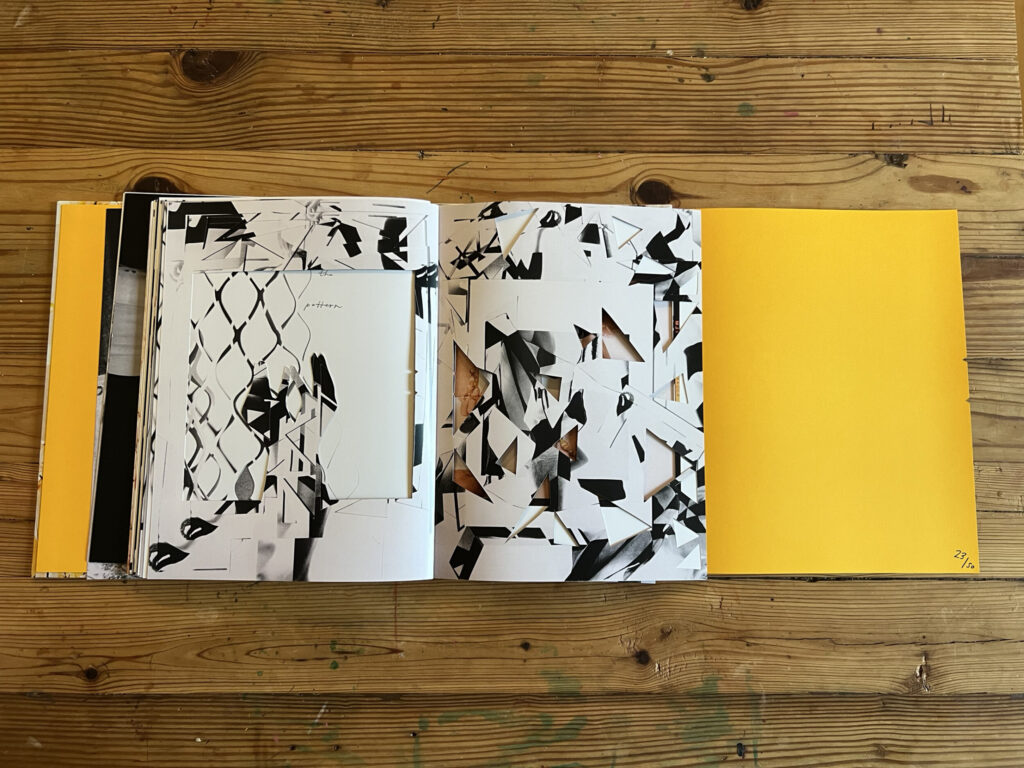
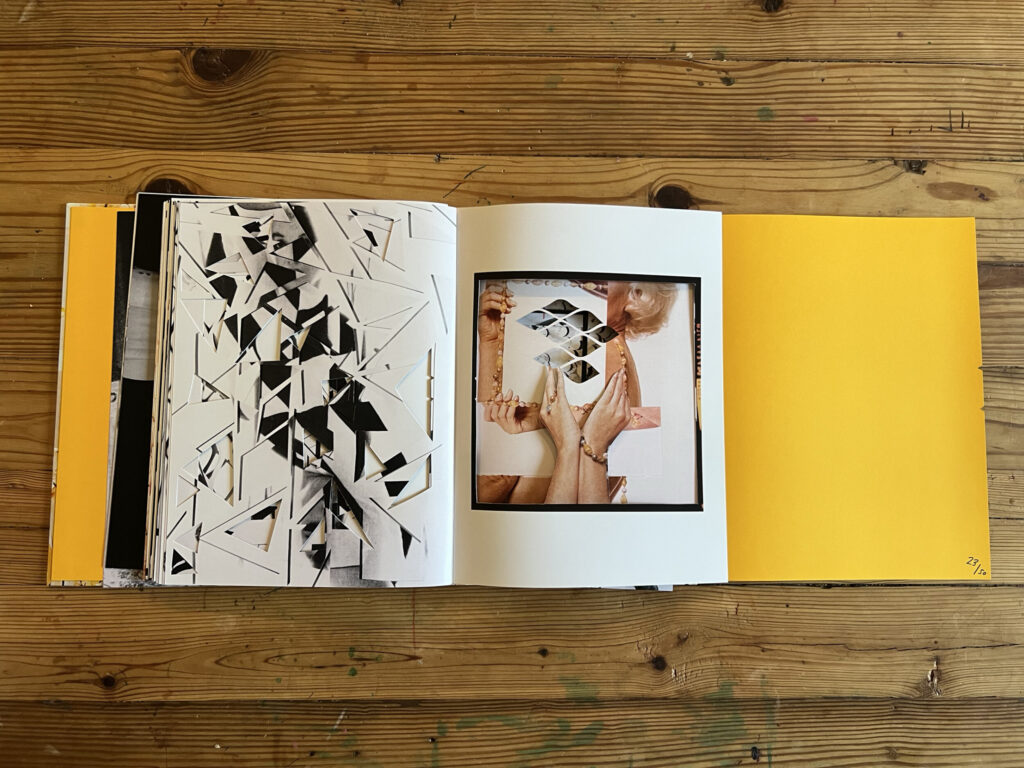
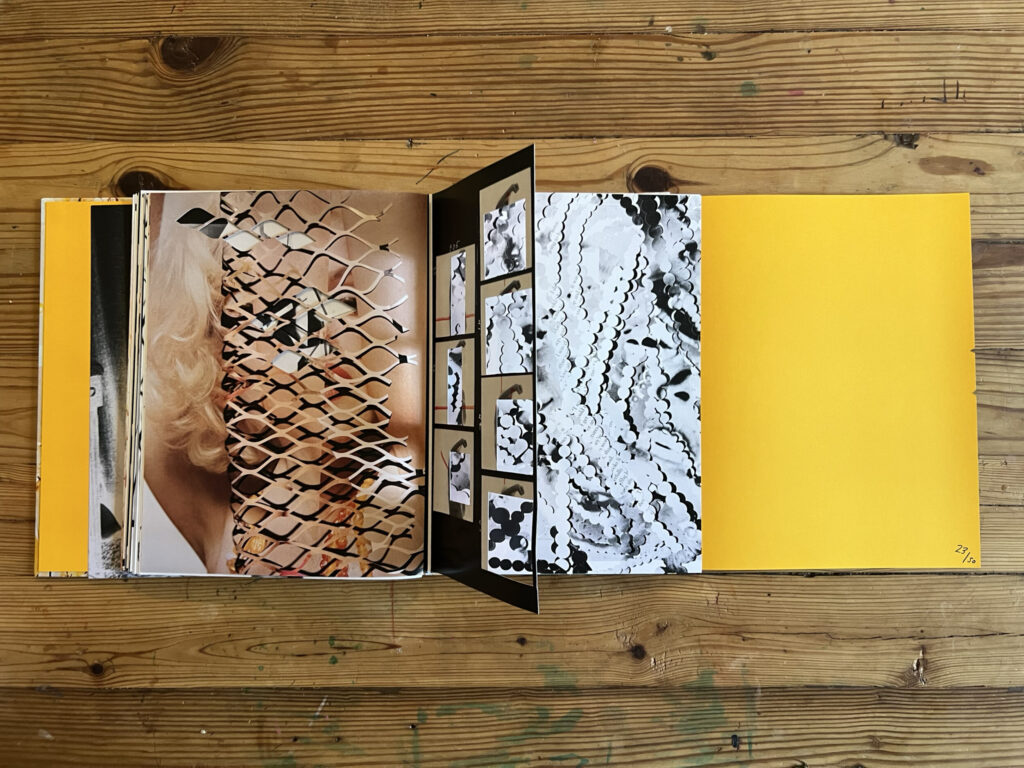
Comments/Context: In her photobook like a vampire with a rose in my teeth, Seattle-based artist Natalie Krick exposes the stark power imbalances inherent in Bert Stern’s iconic photographs of Marilyn Monroe, casting light on the unequal and often aggressive dynamics between the male photographer and his female subject. Krick’s photobook reorganizes and reproduces pages from Stern’s The Complete Last Sitting—a commercial series photographed just six weeks before Monroe’s death in 1962—focusing heavily on frames that Monroe herself explicitly crossed out with a large X on the contact sheets. While Stern’s original book publication framed these famous nudes and portraits alongside highly eroticized commentary to craft a lasting narrative of the actress, with comments like: “You want to make love to Marilyn Monroe. You would if you could. You will if you can. I saw what I wanted, I pressed the button, and she was mine.”, Krick’s work actively disrupts this legacy. Through physical manipulation, rephotographing, collage, and the complete removal of Stern’s original texts, Krick crafts a radical feminist retelling that strips away the sexualization and objectification Stern imposed on Monroe.
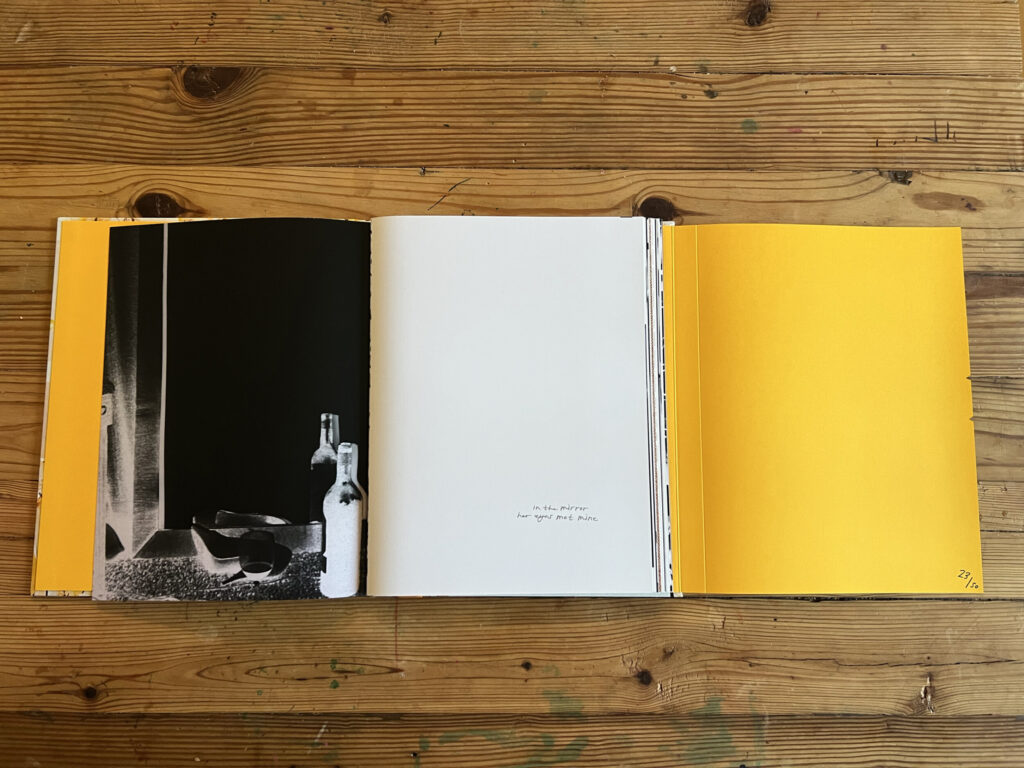
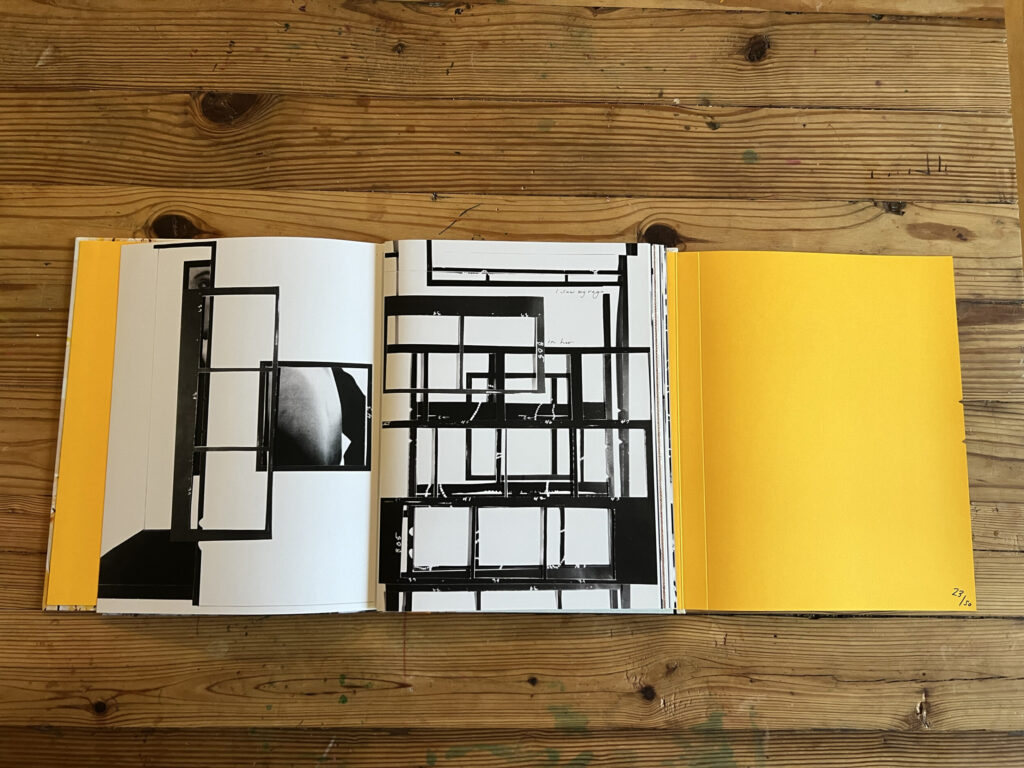
The photobook’s design and construction is the most innovative of the books I have seen so far this year. The fourteen hand-cut pages are difficult to decipher as window cut outs when seen on a screen, and occasionally the cuts are subtle even when handling the book itself. Yet these cut outs, requiring hundreds of hours of work, were carefully planned and exactingly executed. On some pages, the pattern of the artist’s cut outs appears like snakeskin, while on others, the cuts mimic a fishnet design. When these sophisticated sculptural pages are layered directly over portraits of Monroe, the cut pages transform into both a protective veil and an admonition. This intricate physical manipulation strips away the original eroticized commentary and commercial objectification, demanding that the viewer look beyond the surface of classic magazine spreads and confront the power imbalances inherent in the images as the veiling page is turned and we look directly at Monroe. The physical scale of the photobook is also noteworthy, being slightly larger than a human head. As a result, when Marilyn’s eye is presented as a full-bleed image across the right-facing page, it establishes a powerful, confrontational eye-to-eye encounter that forces the viewer to interrogate their own position and perspective. This direct and lucid interaction provides an unexpected disruption. One of my favorite elements of the photobook design is its marigold orange strap, akin to a panty hose garter strap. The garter runs parallel to the book’s spine and holds all of the unbound pages together, all the while adding a beautiful contrasting physical element to the photobook’s image-wrapped casing.
For those unfamiliar with Stern’s images of Monroe from The Last Sitting, the photographs were made by Stern as part of an independent assignment for Vogue magazine. The work has been celebrated as the definitive, major, and final portrait session of the icon’s life. Over three days, Stern made approximately 2,700 photographs of Monroe, outside of a traditional studio and instead at a private suite at the Hotel Bel-Air. In the photographs, Monroe is depicted as draped in an incredible black velvet dress, sheer scarves, and heavy jewelry, as well as in nude poses. The contact sheets from the three-day shoot were marked up by Monroe, with scratched out squares, faces, or marked Xs in the frame to indicate that she did not wish them to be published. In Stern’s book, published after Monroe’s death, these gestural marks that were made to the contact sheets were included as part of the final compositions. Of the original 2,700 pictures, Vogue ultimately chose only 10 for publication.
In like a vampire with a rose in my teeth, Krick radically removes large areas of content from some of the most iconic images, leaving behind only an abstraction of the originals, but with enough echoes of the famous photographs to recognize the originals in the mind’s eye. This makes Krick’s precise craftsmanship in redaction and cutting even more visible. Rather than acting as a mere negation or cancellation of Stern, this approach serves as an entirely innovative reimagining of Monroe and her aura, centering Krick’s precise sculptural control.
The color motifs of the photobook are black, white, and marigold. On the cover of the book and on several of the interior pages, the marigold skews to peach, illuminating Monroe’s fleshy golden complexion. This feeling of a tri-chromatic palette emphasizes the white areas of images in the book where content has been deliberately removed and a blank white space remains. Rather than the white space offering intermission, it piques the notion of intentional absence and removal, indicating consideration and care rather than violence. Through this calculated chromatic selection, the white spaces function not as empty voids or passive intervals, but as dynamic zones of erasure that continuously prompt the viewer to consider what has been extracted from the original frames. By replacing Stern’s commercialized, highly sexualized imagery with these silent, stark fields of white, Krick creates a deliberate visual pause that honors Monroe’s autonomy. This visual editing transforms the act of removal into an assertion of protection, reframing the narrative around the subject with profound care and critical intent.
A powerful revival of the rebellious feminist tradition in photocollage has emerged over the last decade. A key illustration of this resurgence is the recent work of Justine Kurland, whose artistic fury reframes Lee Friedlander’s female nudes in the exhibition and book 99 Nude Collages on a Wall (reviewed here) and the work of male photographers more broadly in the earlier exhibition and book SCUMB Manifesto (reviewed here). While it is impossible for either Kurland or Krick to entirely detach the original source photographs from their historical roots, their efforts to subvert how we perceive the objectification of the female body remain unyielding. By recontextualizing these images and embedding new text—whether through Krick’s handwritten script or printed words, either in ink or pencil, or Kurland’s stark, bold black text lettering—they aggressively challenge conventional frameworks of viewing.
Ultimately, Natalie Krick is implicating not just Bert Stern but all image consumers who participate in the consumption of such photography. Through the language of collage and physical manipulation, Krick examines the audience’s complicity in the historic objectification of women. like a vampire with a rose in my teeth is a smartly designed and elegantly executed photobook that is much more than a collection of collaged and cut up photographs of an iconic woman: it is an exactingly constructed examination by an artist who asks, if not outright demands, that we stop considering Monroe in the same old superficial way.
Collector’s POV: Natalie Krick does not appear to have consistent gallery representation at this time. As a result, interested collectors should likely follow up with the artist directly via her website (linked in the sidebar).