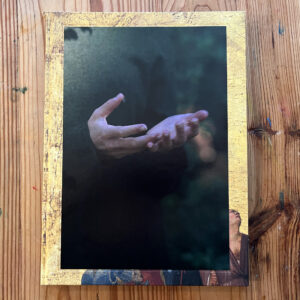
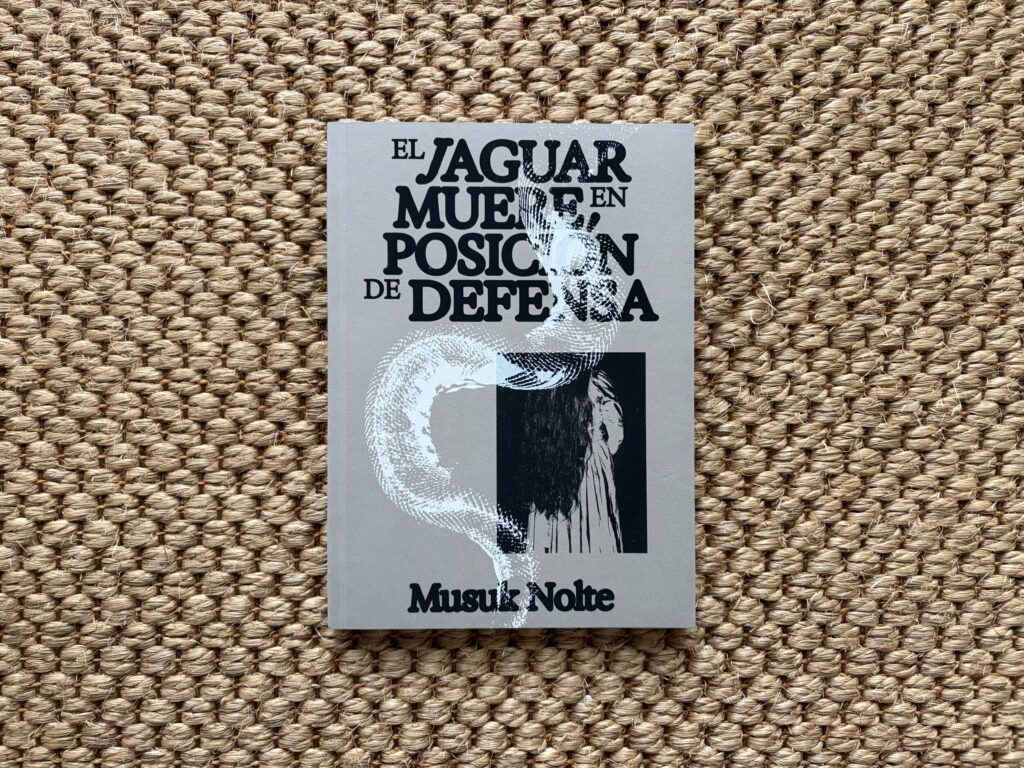
JTF (just the facts): Published in 2026 by Selo Turvo (here). Softcover, 18 x 25 cm, 80 pages, with 66 black-and-white image reproductions. Includes texts in Spanish/Portuguese/English by P. Silvino Traceño, Paco Bardales, and the artist, and a sticker. Design by João Pedro Lima. In an edition of 300 copies. (Cover and spread shots below.)
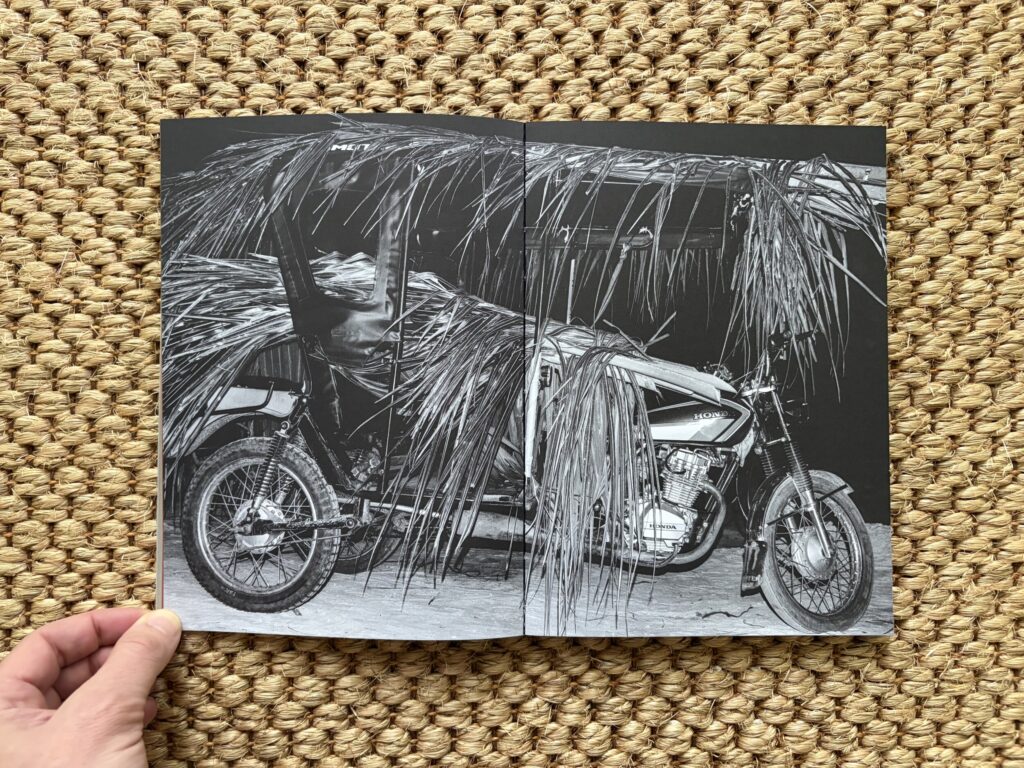
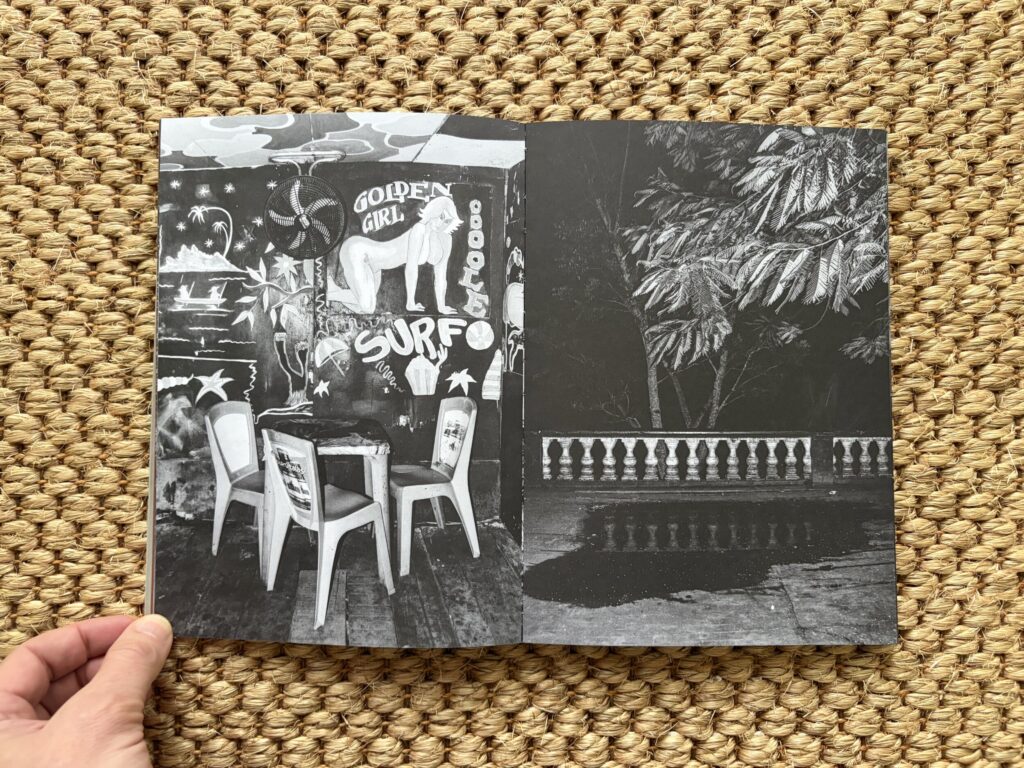
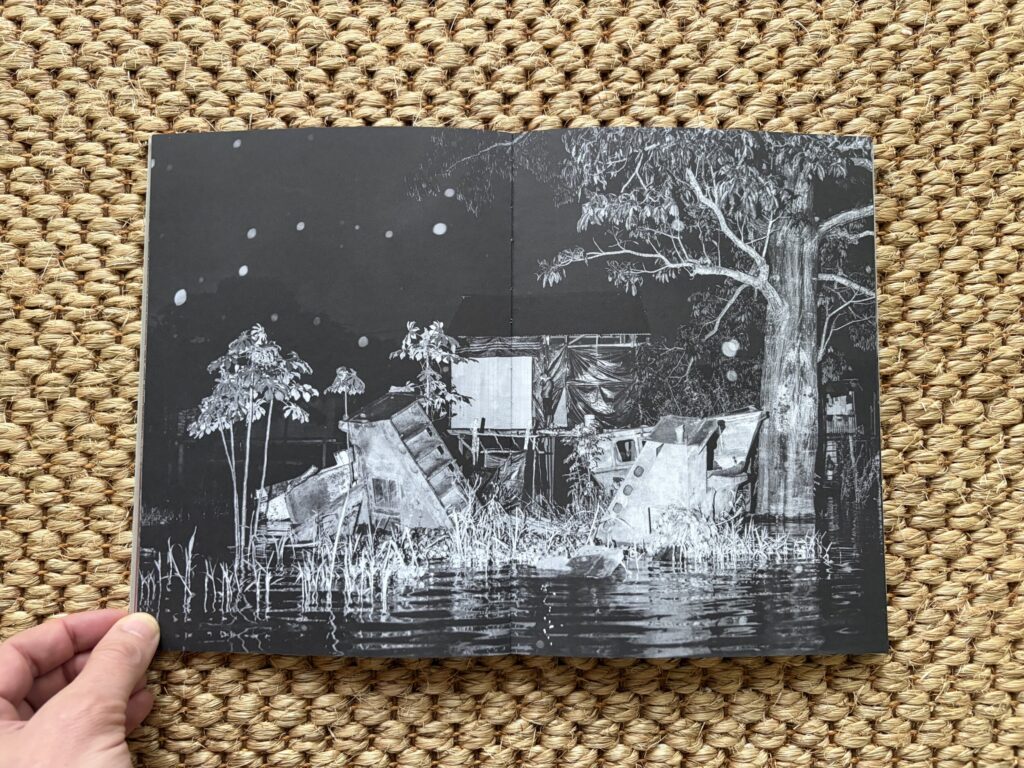
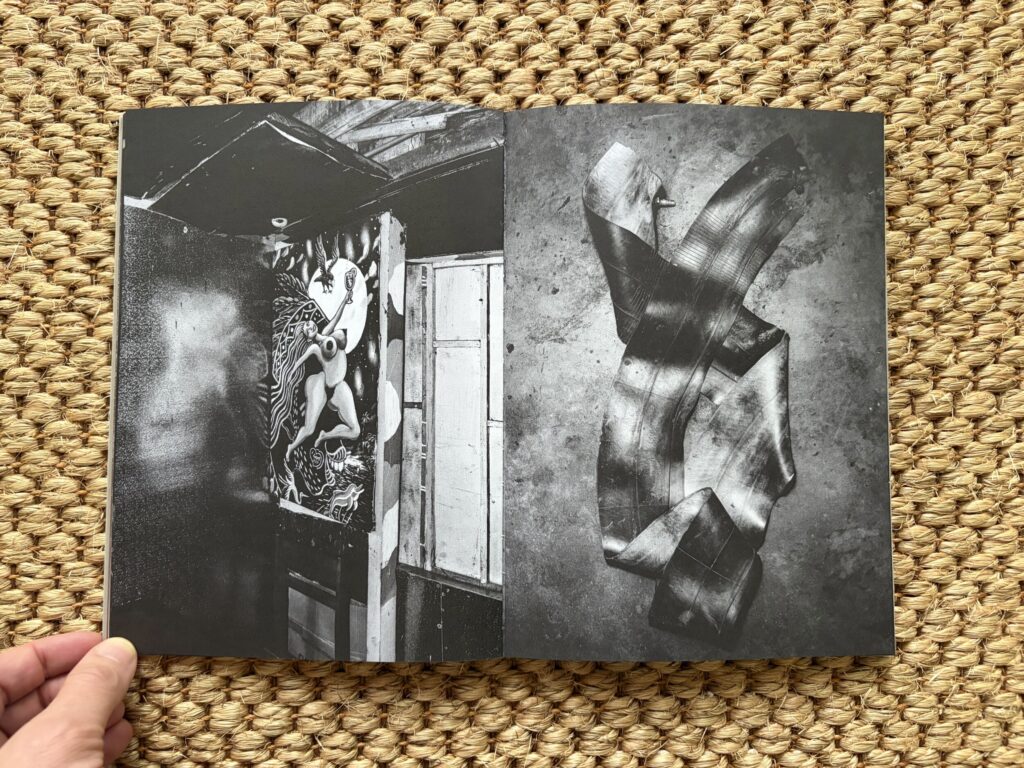
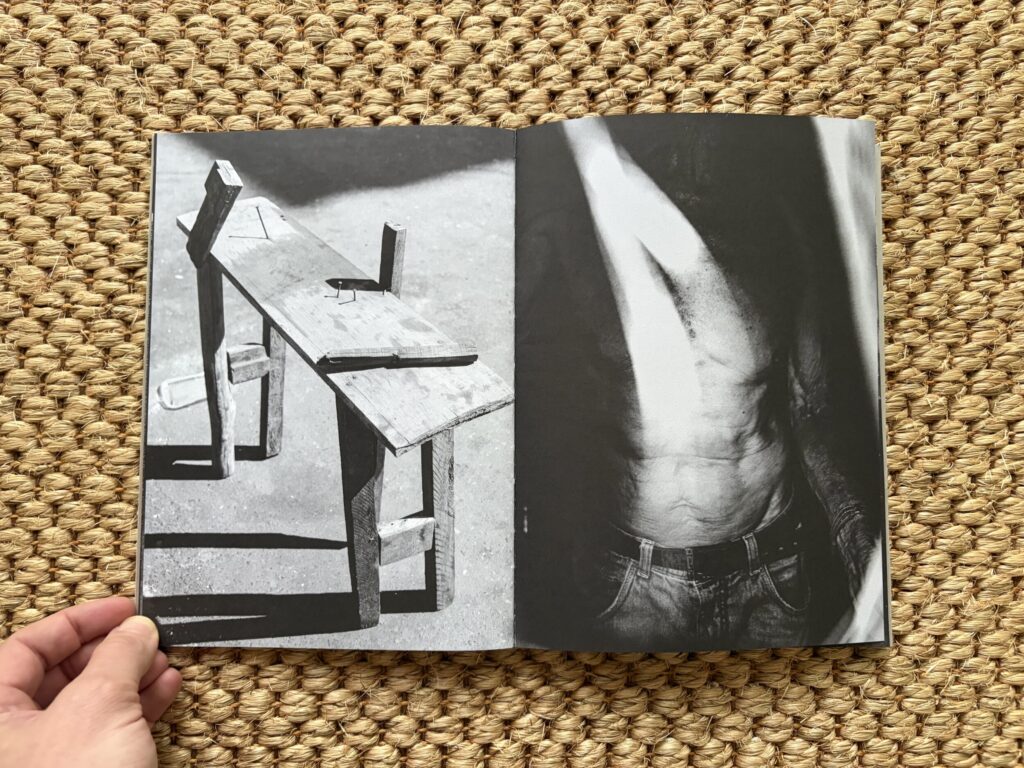
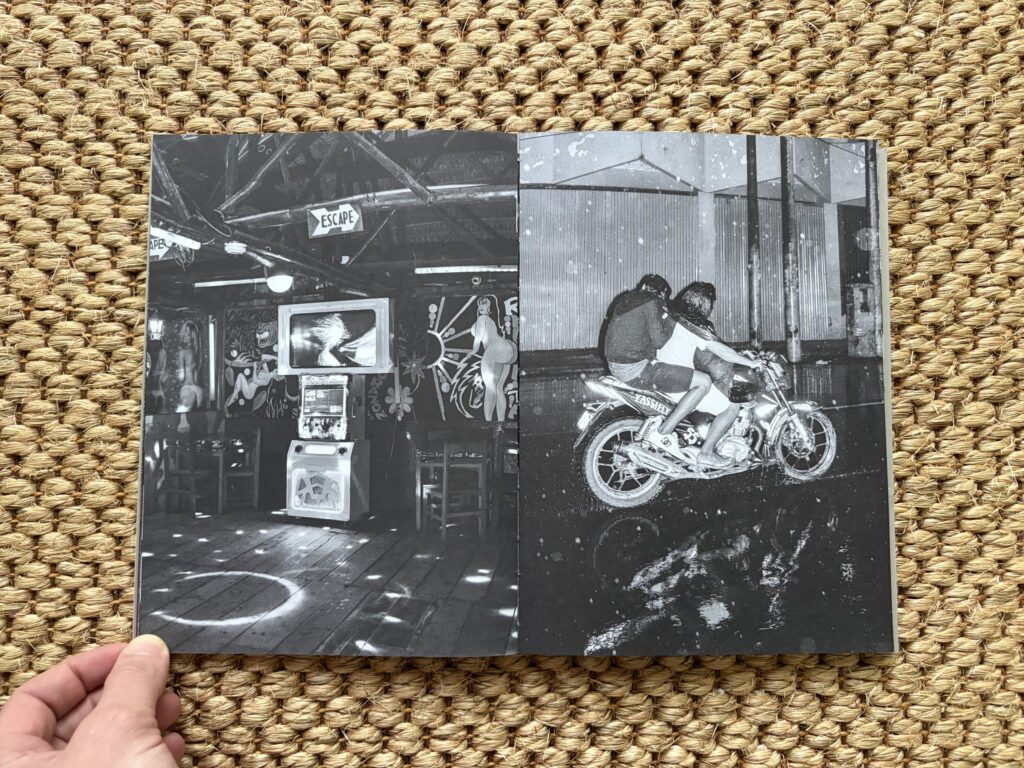
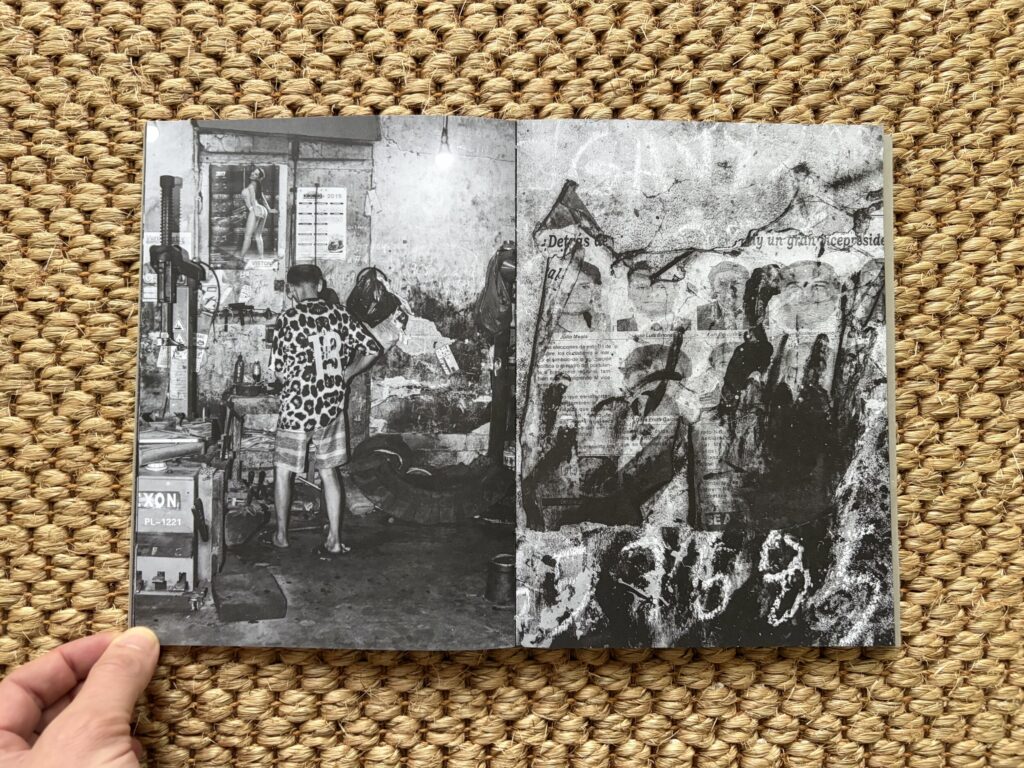
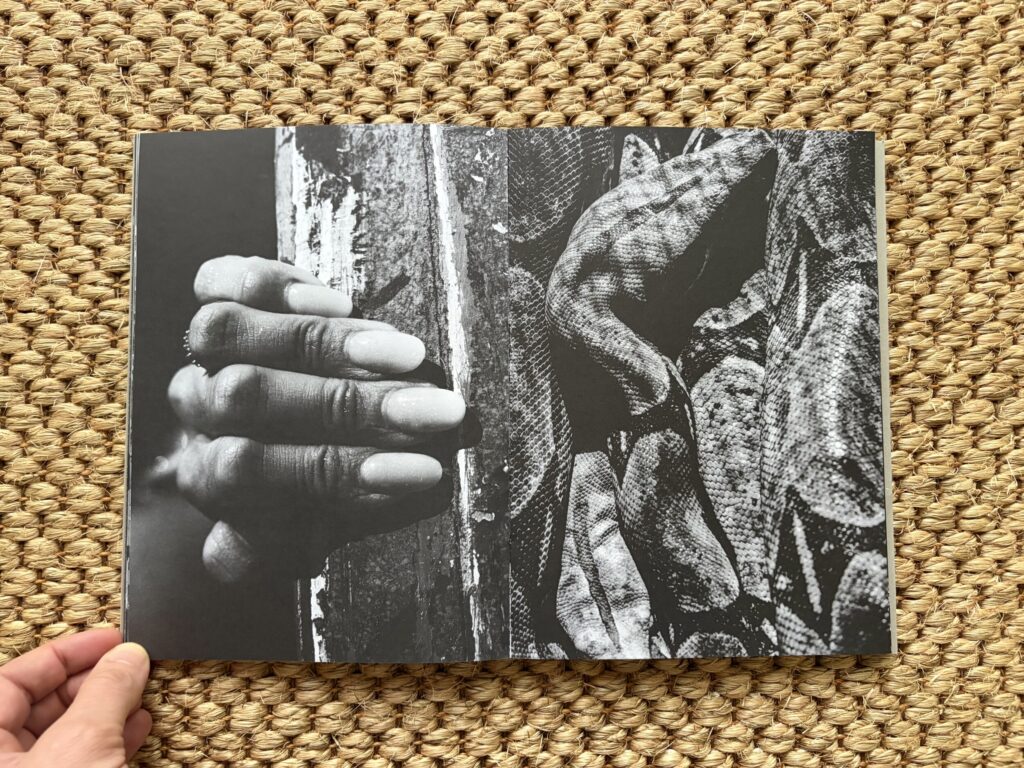
Comments/Context: Iquitos is an Amazon port city in the northernmost part of Peru, set on the river itself, deep in the rainforest. Long inhabited by Indigenous peoples, its gateway location was transformed into a thriving boom town in the late 19th century when rubber became a prominent cash crop. More than a century later, the ghosts of that history of economic exploitation remain, having now given way to a seething regional city still only reachable by water or air, filled with motorbikes, bars, and a near constant influx of tourists headed for jungle lodges and ecological trips further upriver.
Musuk Nolte’s photobook El Jaguar Muere en Posición de Defensa takes contemporary life in Iquitos as its subject, mostly following its dark and seedy nocturnal pathways. Nolte is a Peruvian-Mexican photographer, who is also the founder and editor of KWY Ediciones, the Peruvian photobook publisher (here). As the title of the photobook implies (“the jaguar dies in a defensive position”), Nolte’s approach to Iquitos is loosely spiritual and warily wounded, reaching aesthetically back to the primal animal nature of the rainforest and its inhabitants and drawing a sharp contrast with the tawdry realities found there now.
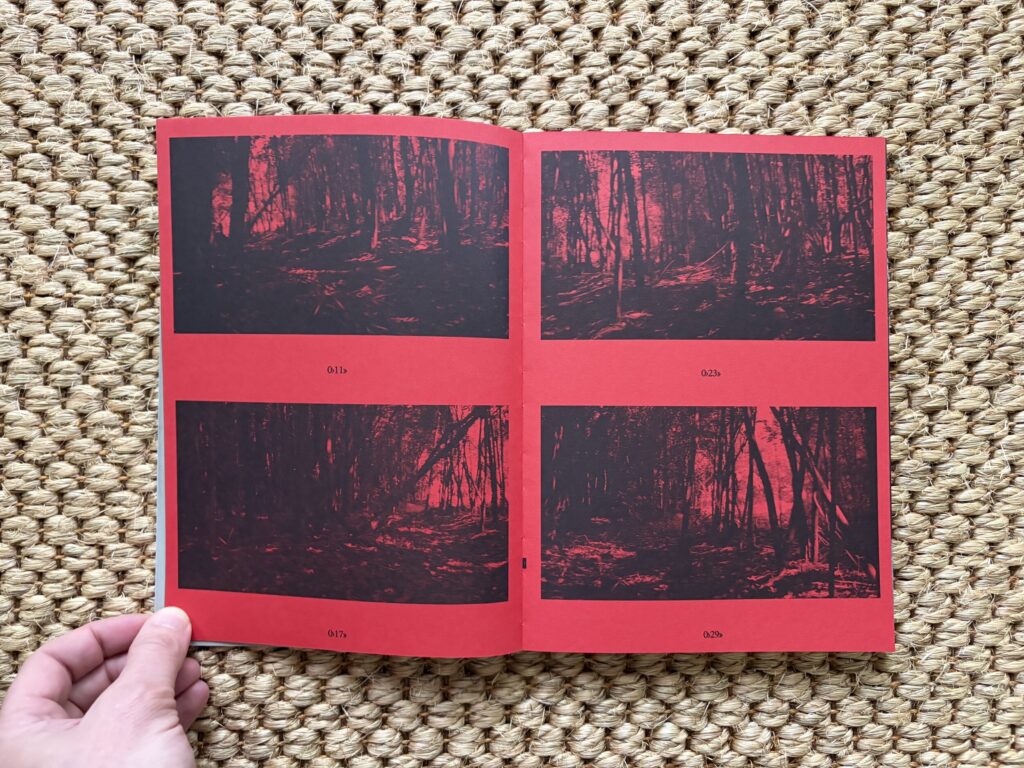
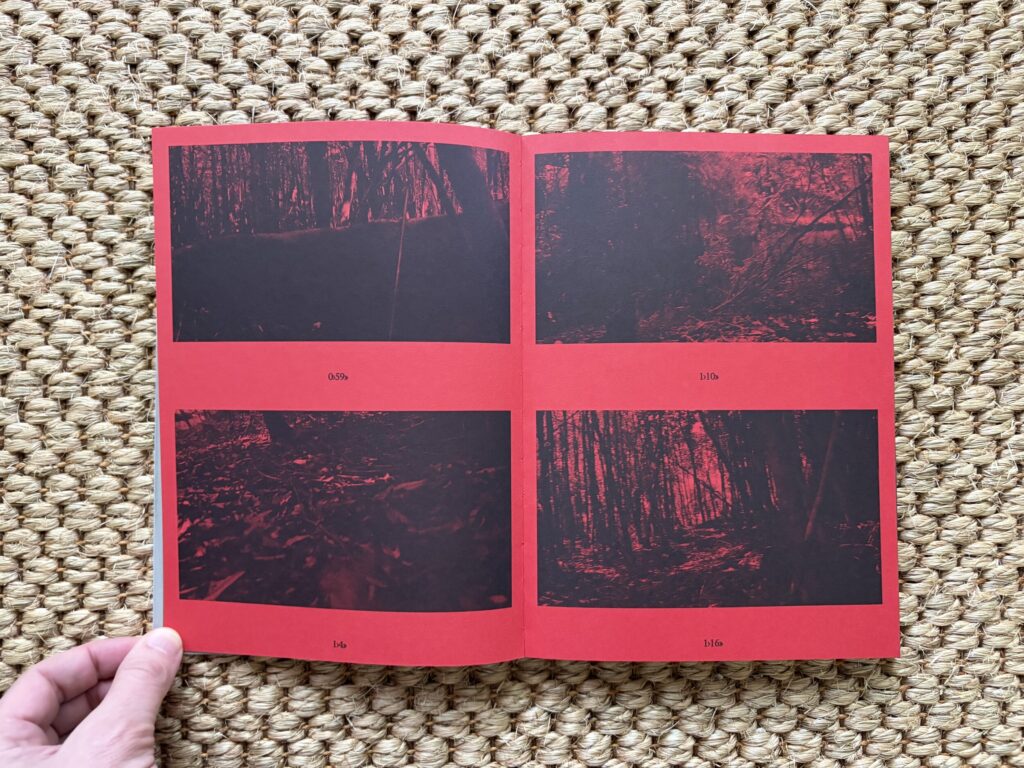
The first image section of El Jaguar and the last text inclusion imagine a majestically powerful jaguar (or perhaps a half human/half feline spirit) wandering in from the jungle and finding itself faced with the city. On red pages, Nolte has included a series of screenshots or film stills, as though taken through the eyes of the animal at ground level or by motion-sensing cameras in the forest. Against the red backdrop, we watch the slow observation of the subtleties of the forest, with moments of blurred movement as the cat moves quickly along pathways or over fallen trees. The text imagines the jaguar arriving in the city and stalking it in the same way, almost like a tourist, moving with no sound, quietly smelling its odors, and observing its chaos. It sees the viewpoint of the jaguar as blithely uncomprehending or indifferent, moving without stopping, with its savage spirit permeating the city.
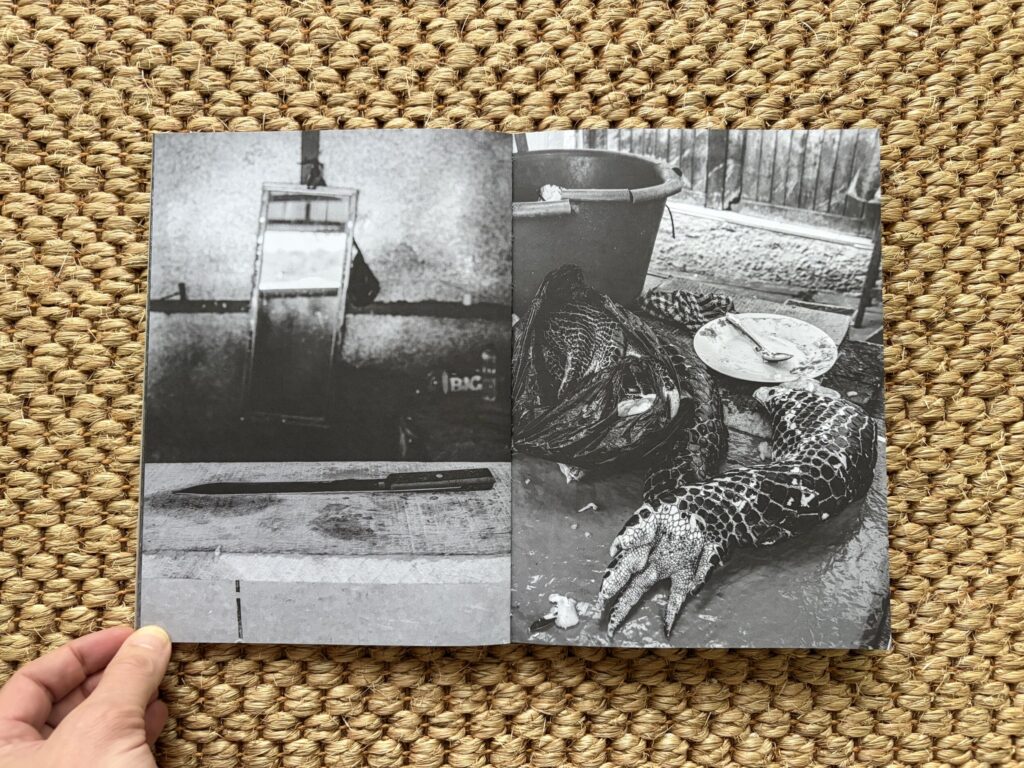
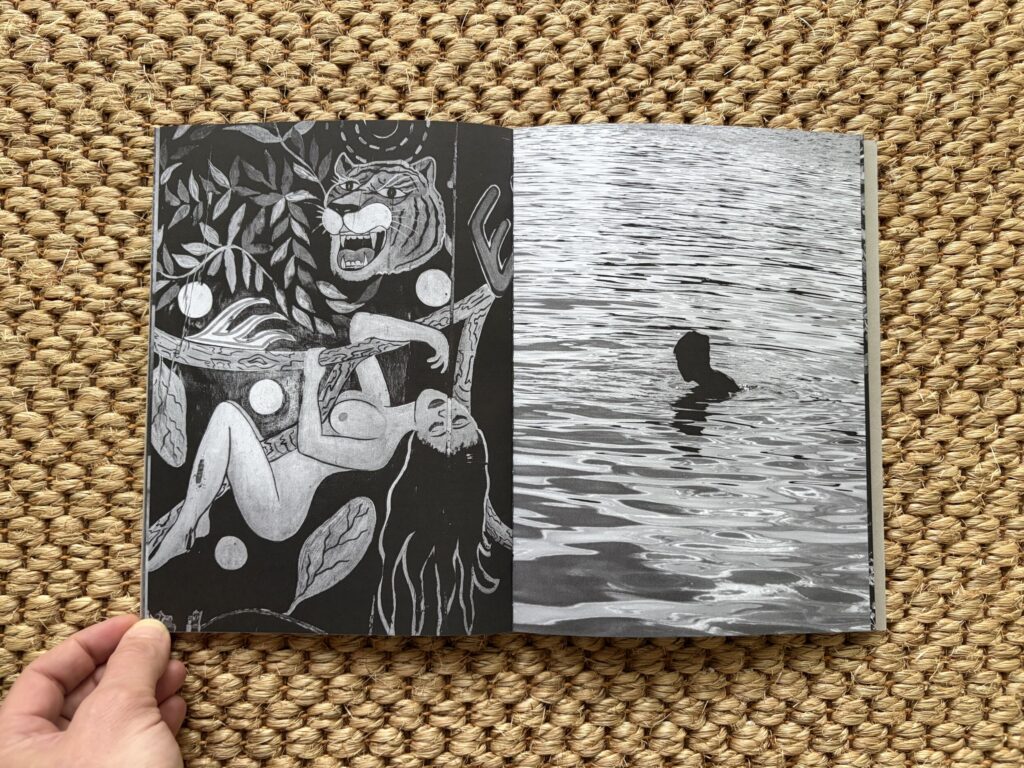
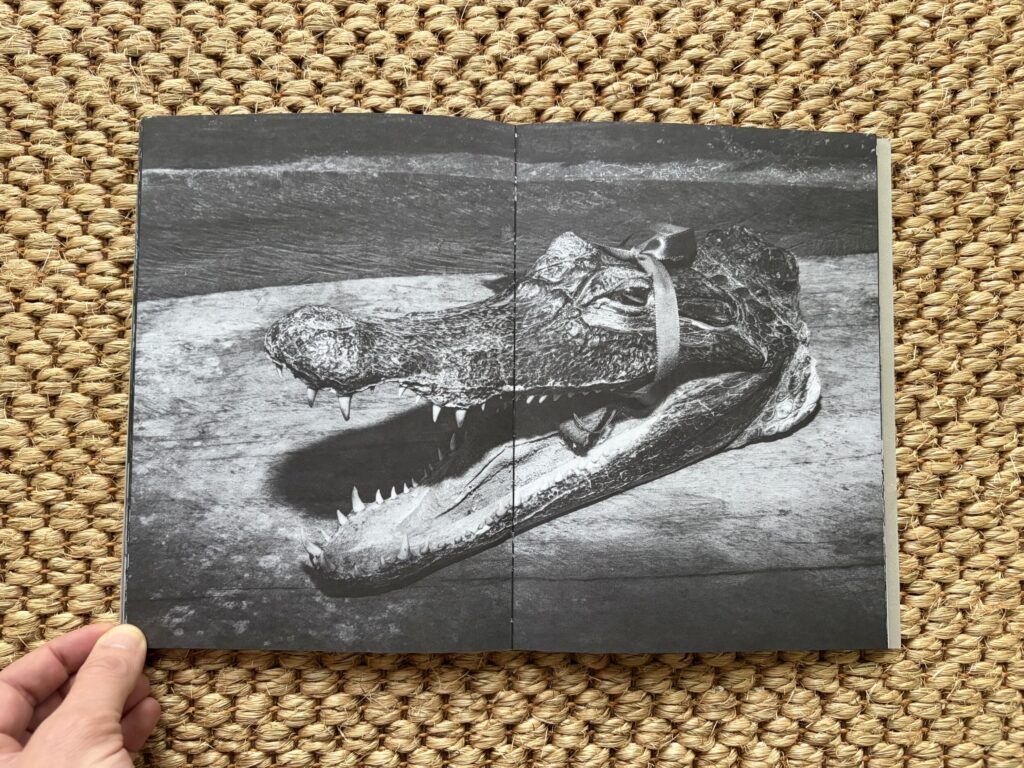
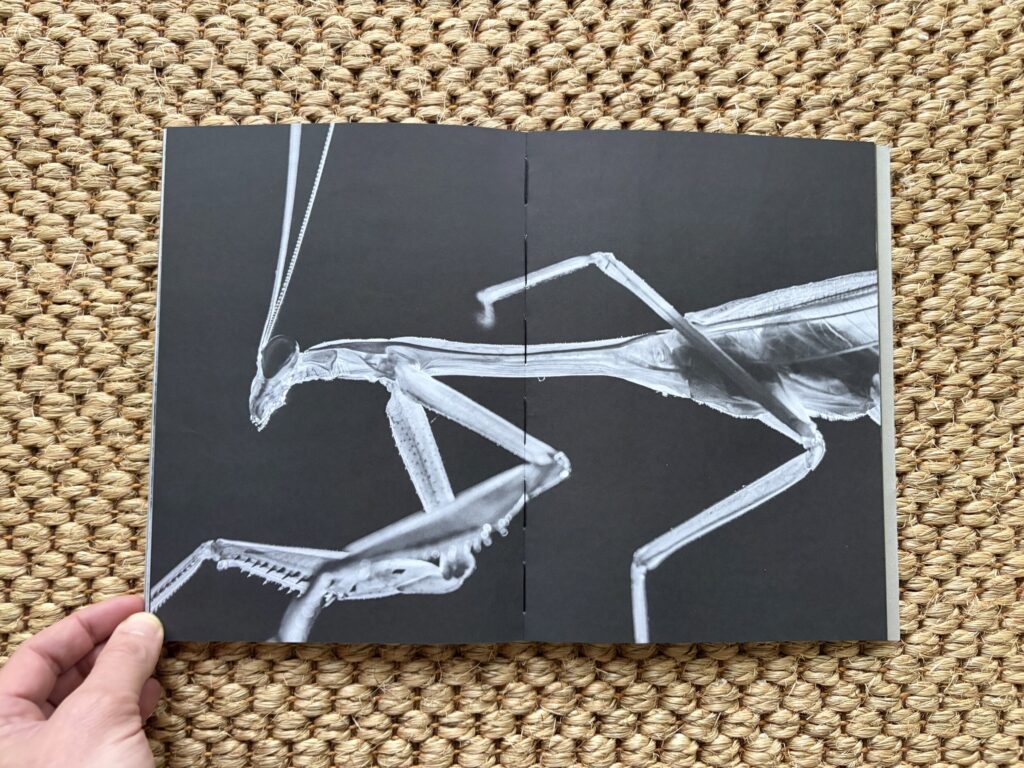
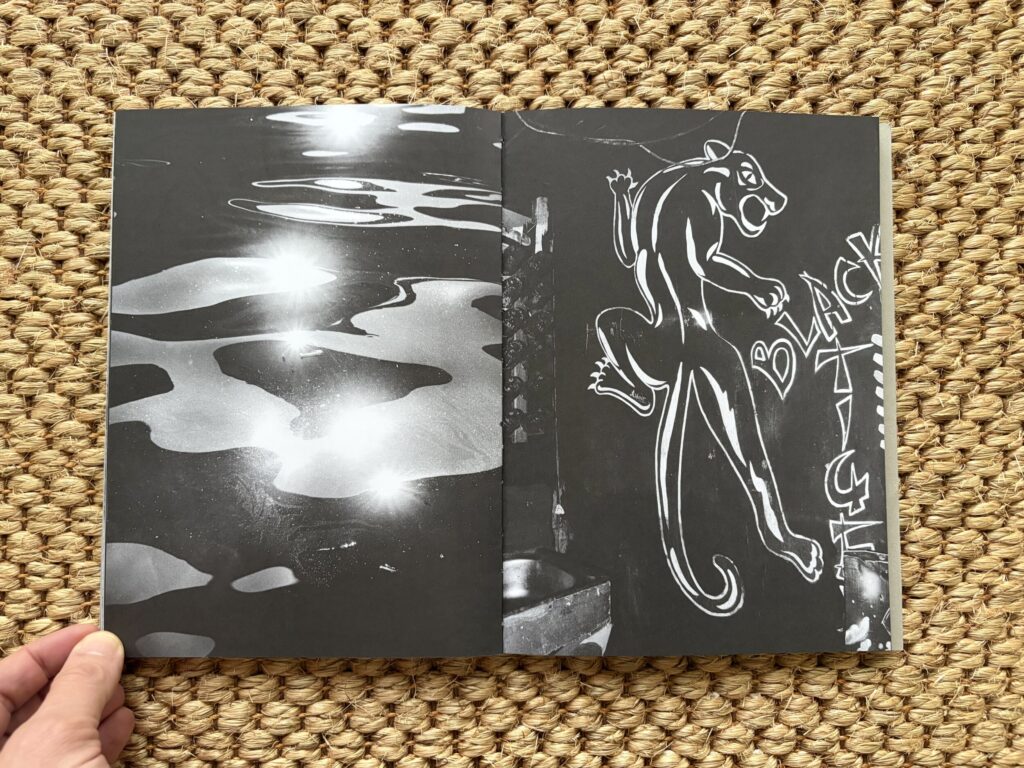
Back in human form (in the second section of images), Nolte watches the grimy underbelly of Iquitos with the same kind of rough flash-lit intensity that is found in the work of Anders Petersen and Jacob Aue Sobol. He doesn’t flinch from the everyday natural violence of severed crocodile heads and limbs, twisting snakes, unforgiving jungle, and scarred bodies, with oddities like a praying mantis or a jar of pickled who-knows-what adding to the hauntingly surreal atmospherics. Human skin, animal pelts, and reptilian scales seem strangely interchangeable in these pictures, the immersive ripples of the river and the grasping arms of the jungle always ready to reclaim whatever it can, including the rotted remnants of houses, stucco walls, and boat docks.
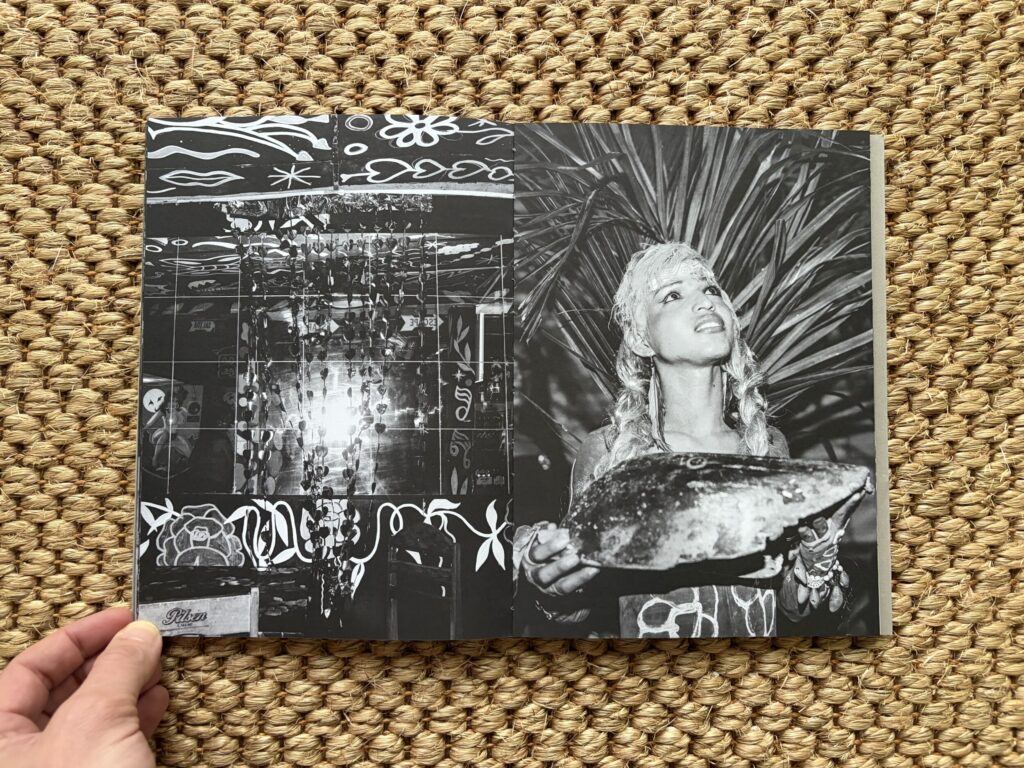
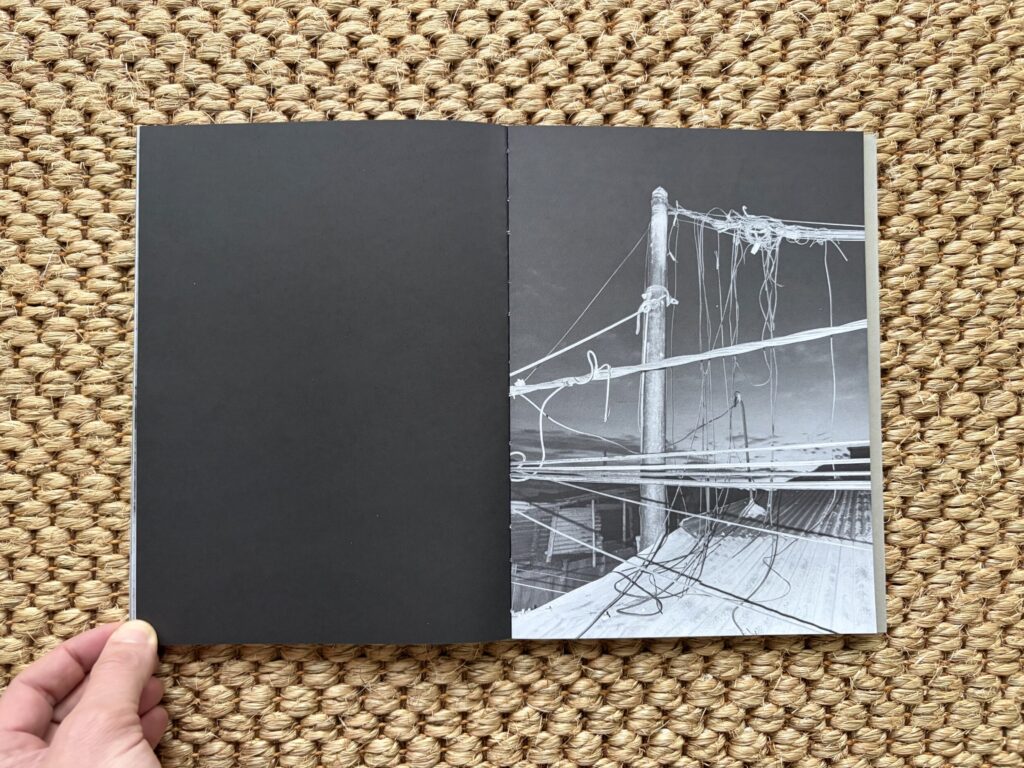
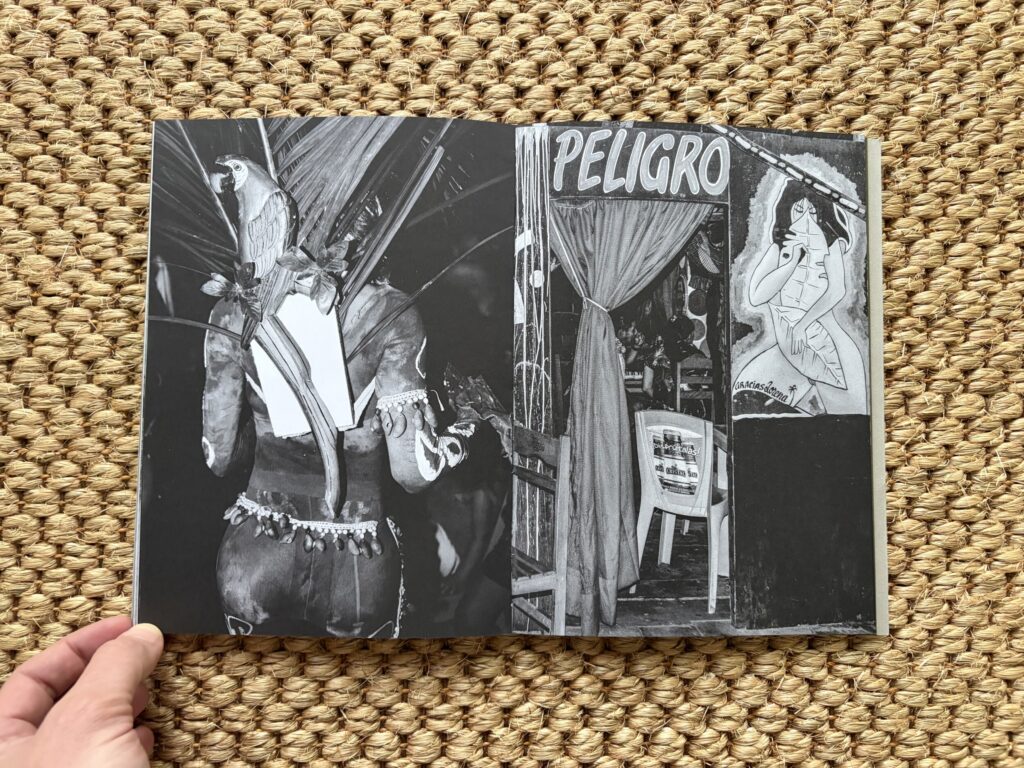
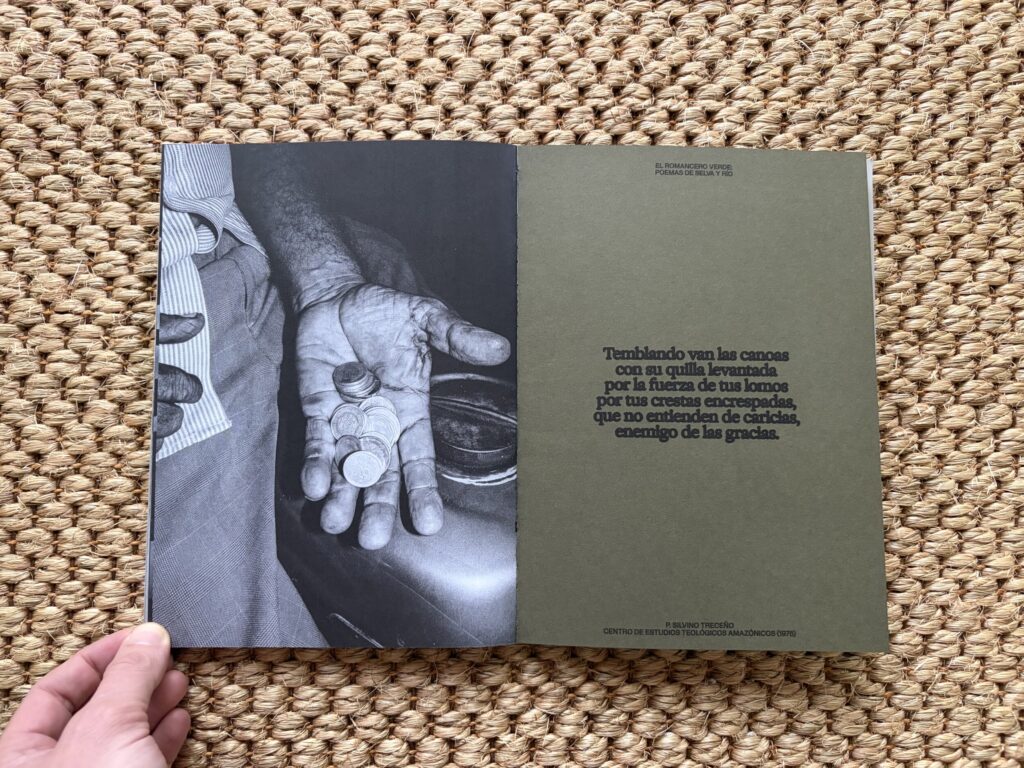
Nolte then contrasts these natural forces with gritty urban details, like the ever present roar of the motorcycles and the bar murals filled with suggestive painted cartoons and big breasted bodies. The walls rot, the rooms sweat, the mirrors sparkle, and the drinks flow, culminating in the last image in the book, a handful of coins, all of it taking place behind a curtain which has been swept back to allow us a peek inside. These are places that are better off dark, allowing the rough wear, the dirt, the stains, the graffiti, and the dejection to be obscured. The short essay by P. Silvino Traceño captures the mood of these bars with lyrical brutality, variously describing them as “the mother of all skin invasions” and “a solo of relentless sighs and suffocation”.
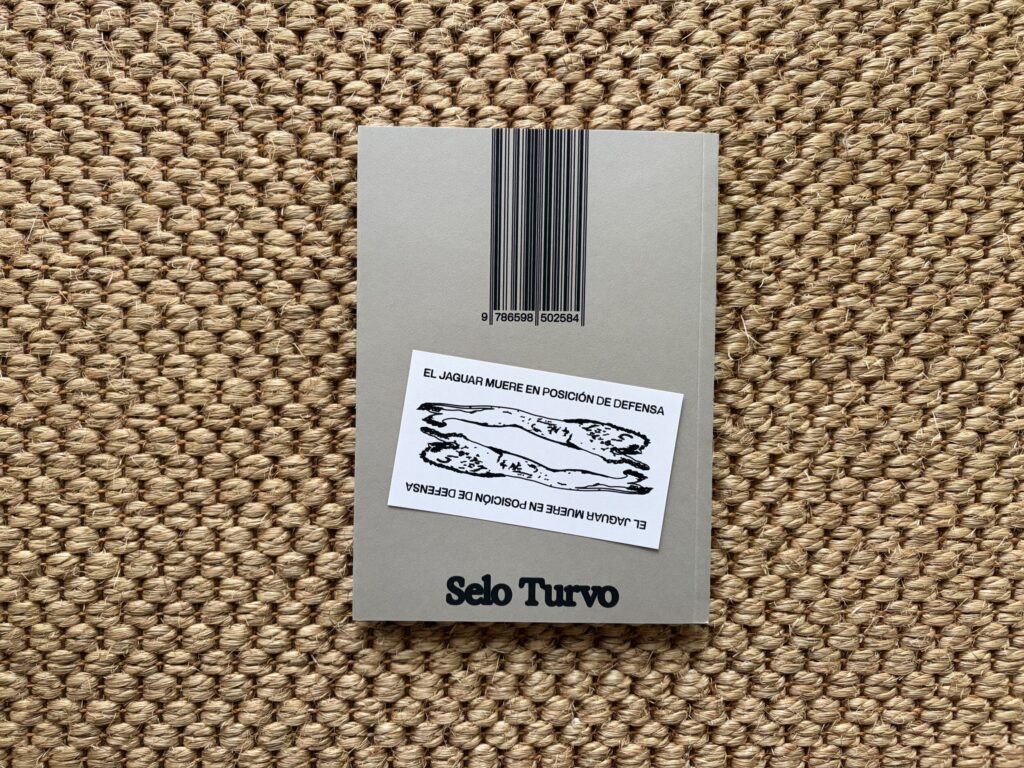
While El Jaguar Muere en Posición de Defensa is a generally modest publication, it is filled with small attentive design decisions, including a silk-screened white snake twisting across the cover and a range of paper stocks and colors used to divide the images and text into smaller bites. In the center section, all of the images are printed full bleed, pulling us down into an immersive flow, before releasing us back to green endpapers that mimic the edge of the rainforest. Somehow the photobook is both understated and vibrant, its smoldering energy bursting forth from within humble grey cardstock covers. And the included sticker with the jawbone motif quietly amplifies this feeling of death in the balance.
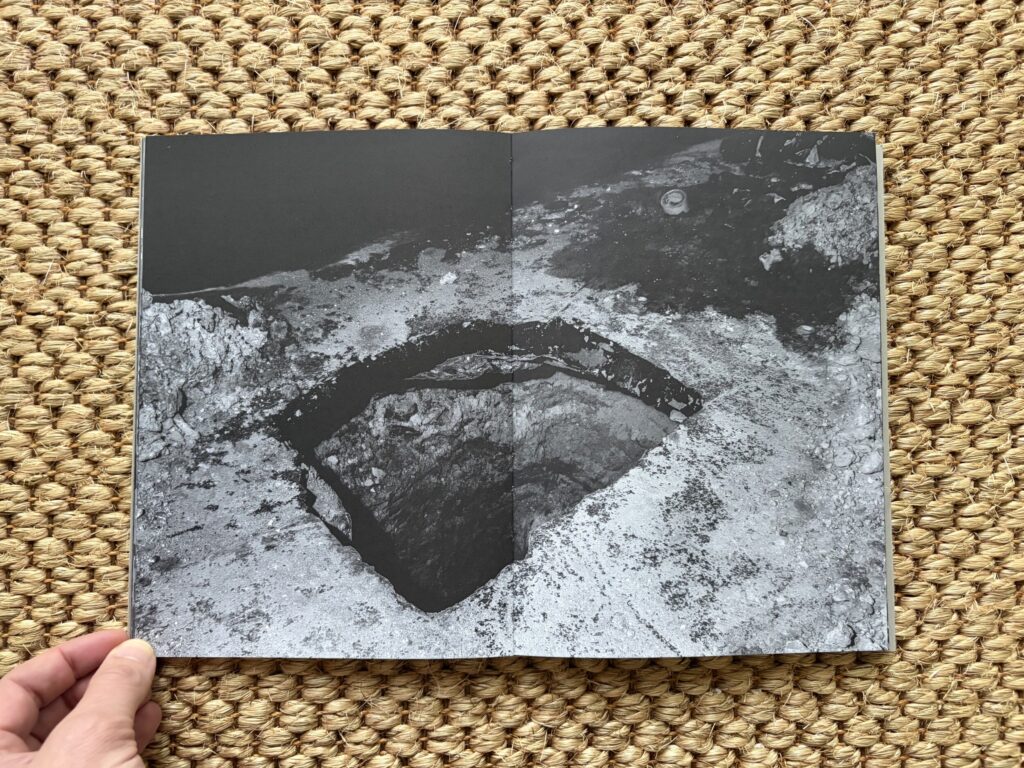
Nolte’s biting photobook takes a different approach to the larger story of the Amazon in decline. It shows us no toxic environmental exploitation, no burned forests, no Indigenous peoples evicted or excluded, no balance sheets or income statements of mines or timber projects measuring the value of the natural world. Instead, it simply asks us to observe the encroachment of dumbed down city nightlife and sketchy motorbike transport through the eyes of a confidently powerful but ultimately perplexed jaguar. The haphazard hybridization of the man-made and the tropical doesn’t fare too well from that vantage point, leaving us pondering the symbolic emptiness of a deep open hole. There’s an untamed and feral quality to Nolte’s Iquitos, just one small step up from desire and cruelty.
Collector’s POV: Musuk Nolte does not appear to have consistent gallery representation at this time. As a result, interested collectors should likely follow up directly with the artist via his website (linked in the sidebar).