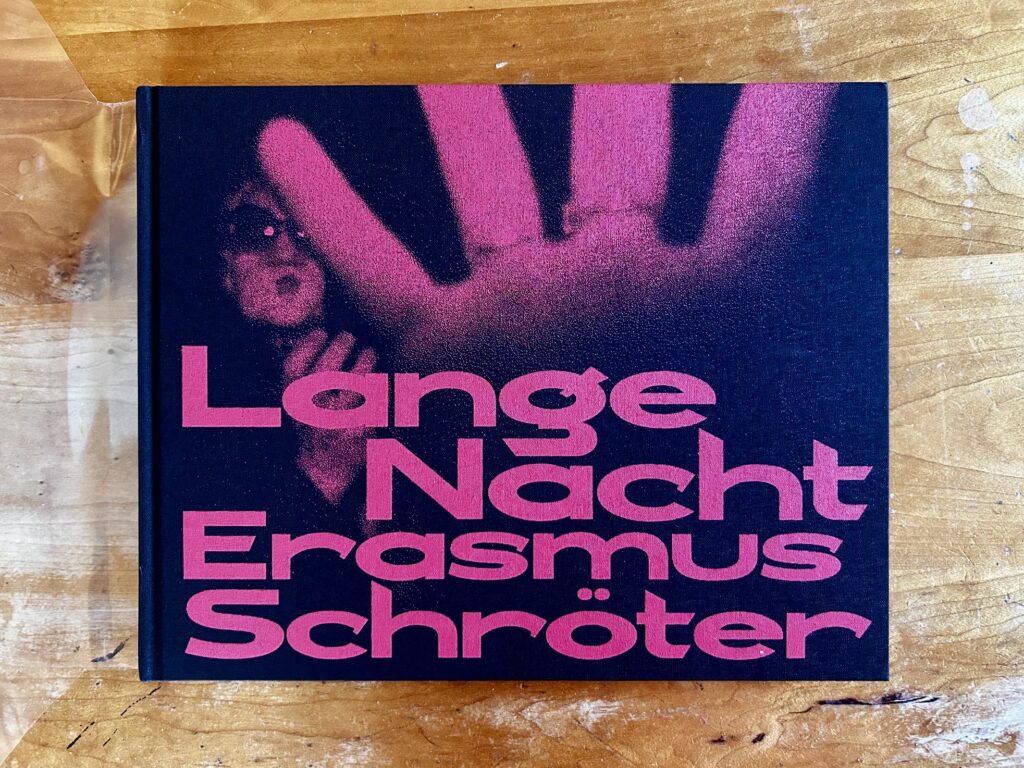
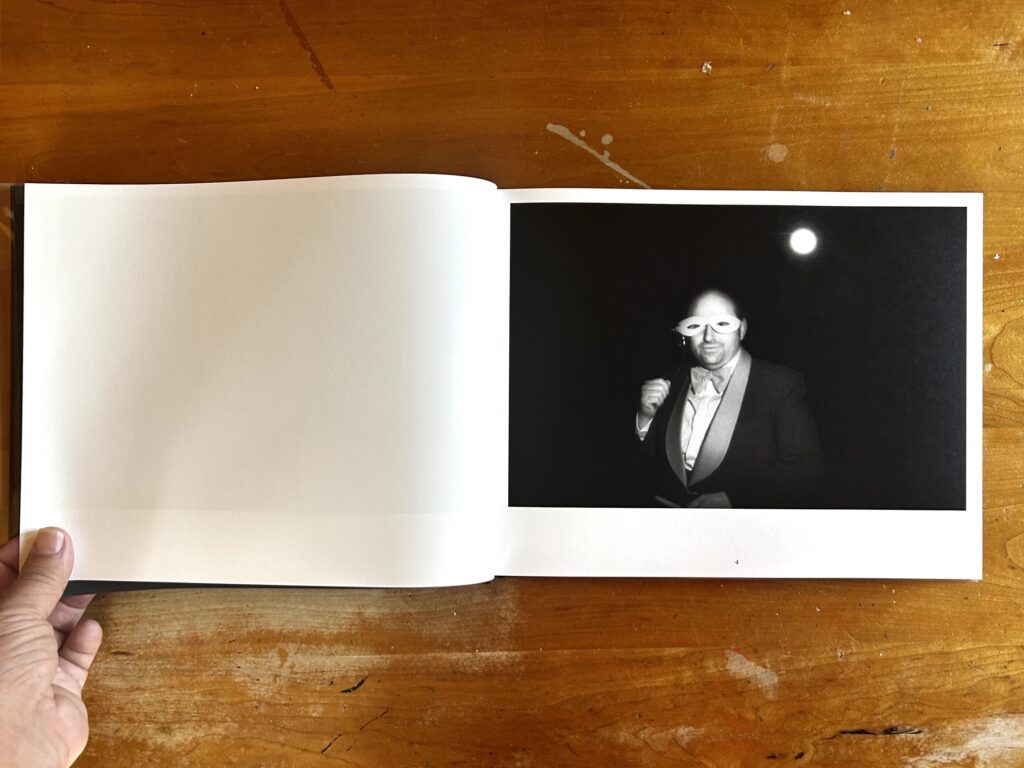
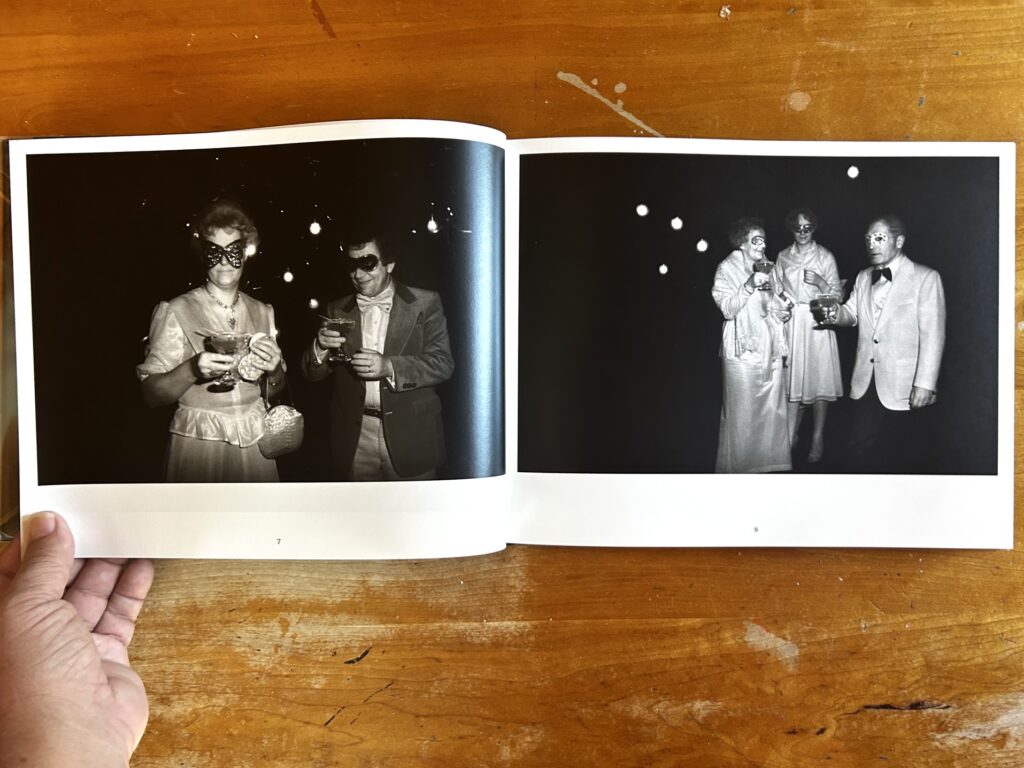
JTF (just the facts): Published in 2026 by Hartmann Books (here). Hardcover, 30 x 24 cm, with silkscreened cover, 140 pages, with 73 black-and-white photographs. Includes texts by Uwe Kolbe, Annette Schröter, and the artist, in German and English. Design by Jakob Kirch. (Cover and spread shots below.)
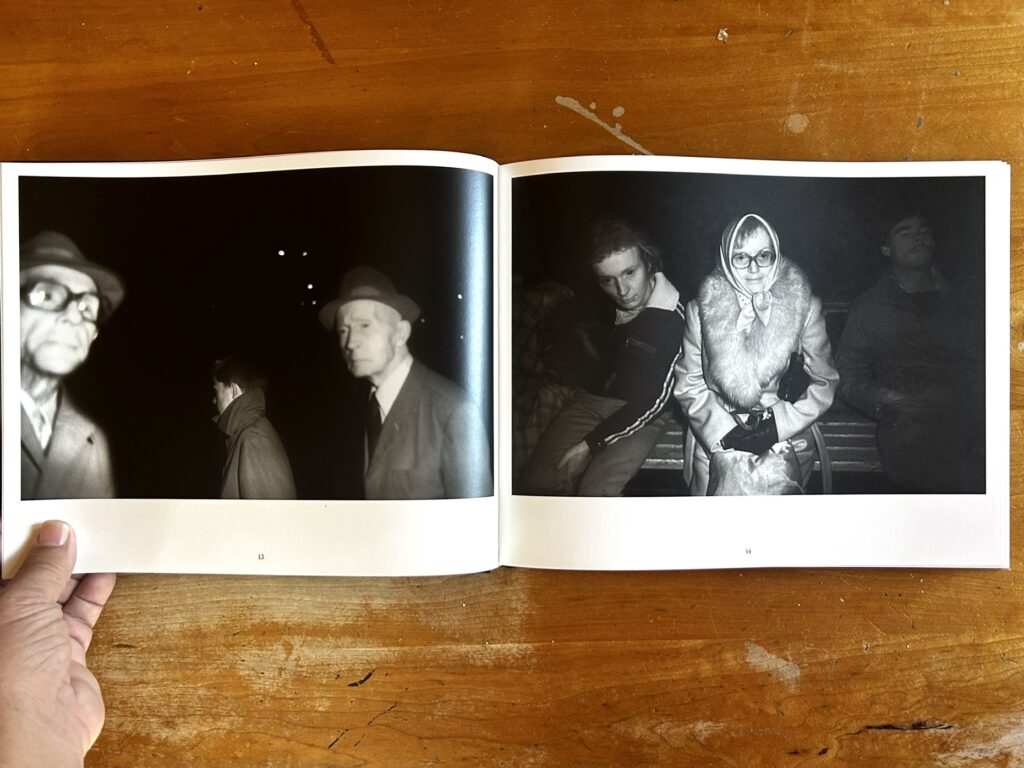
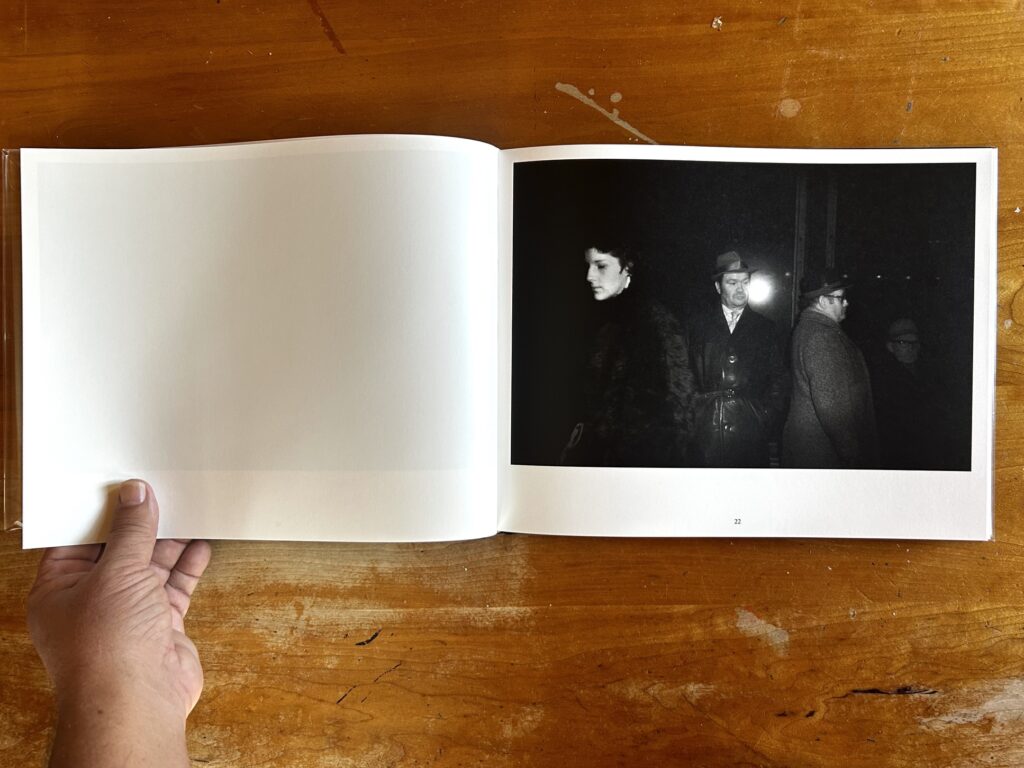
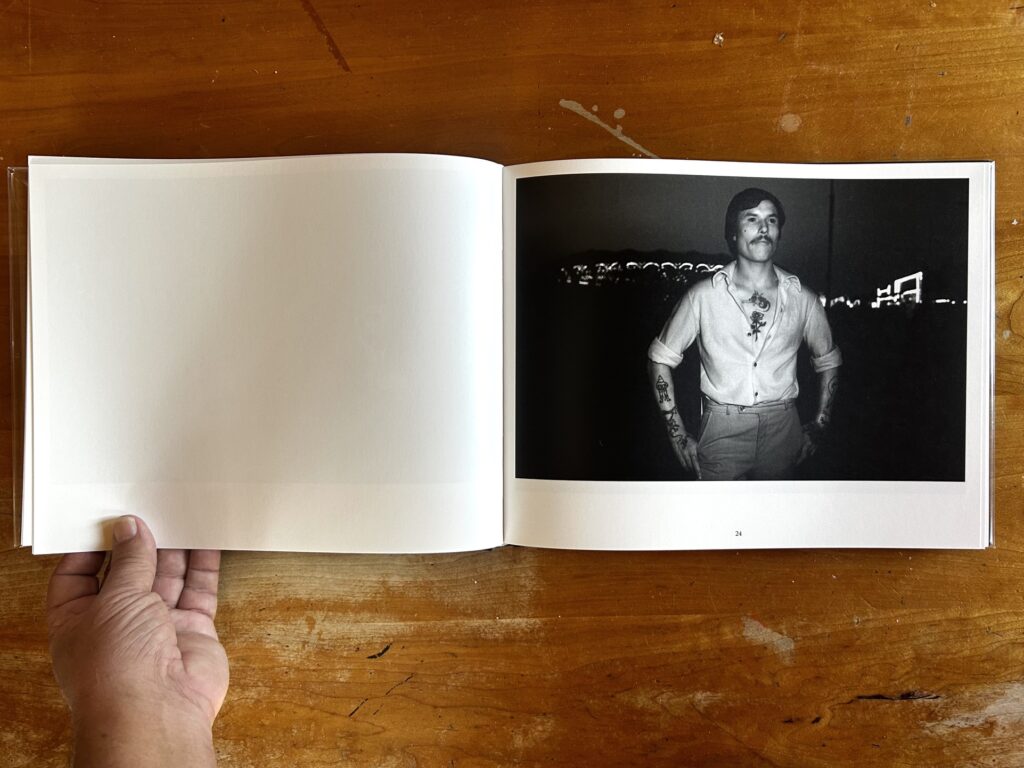
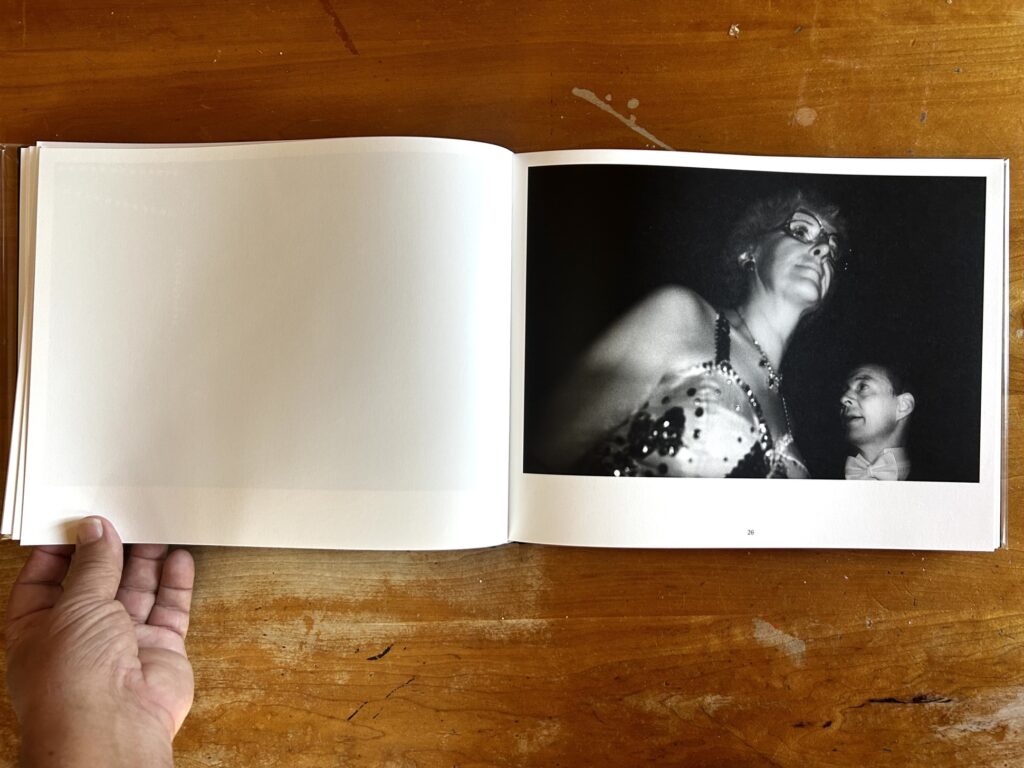
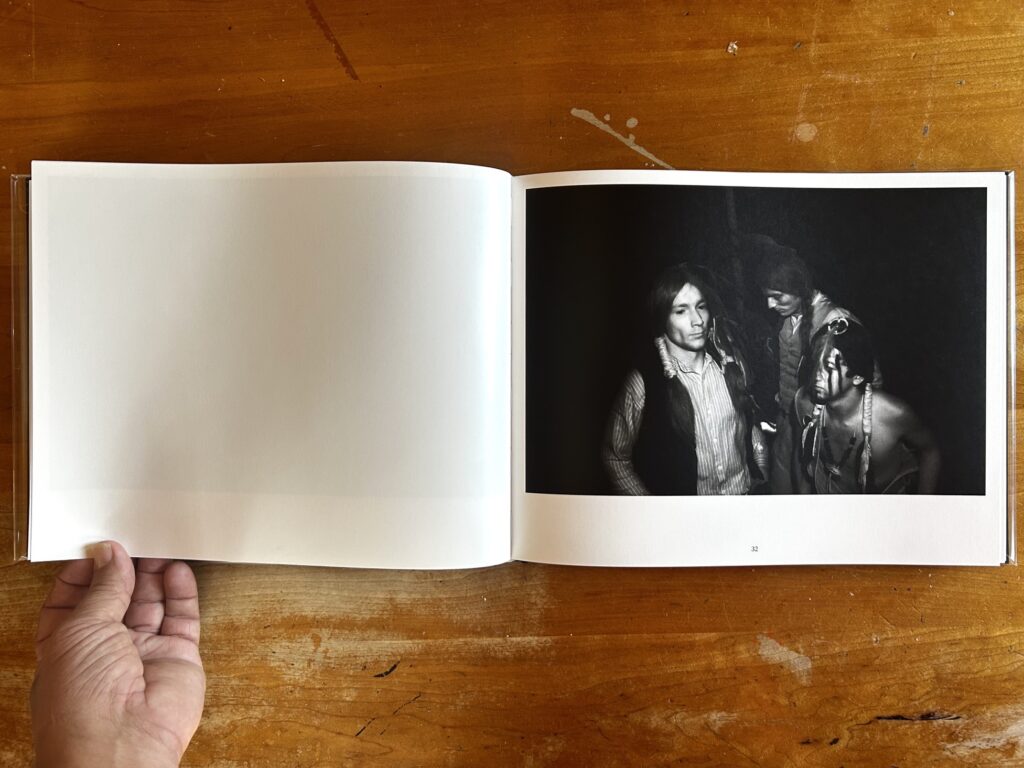
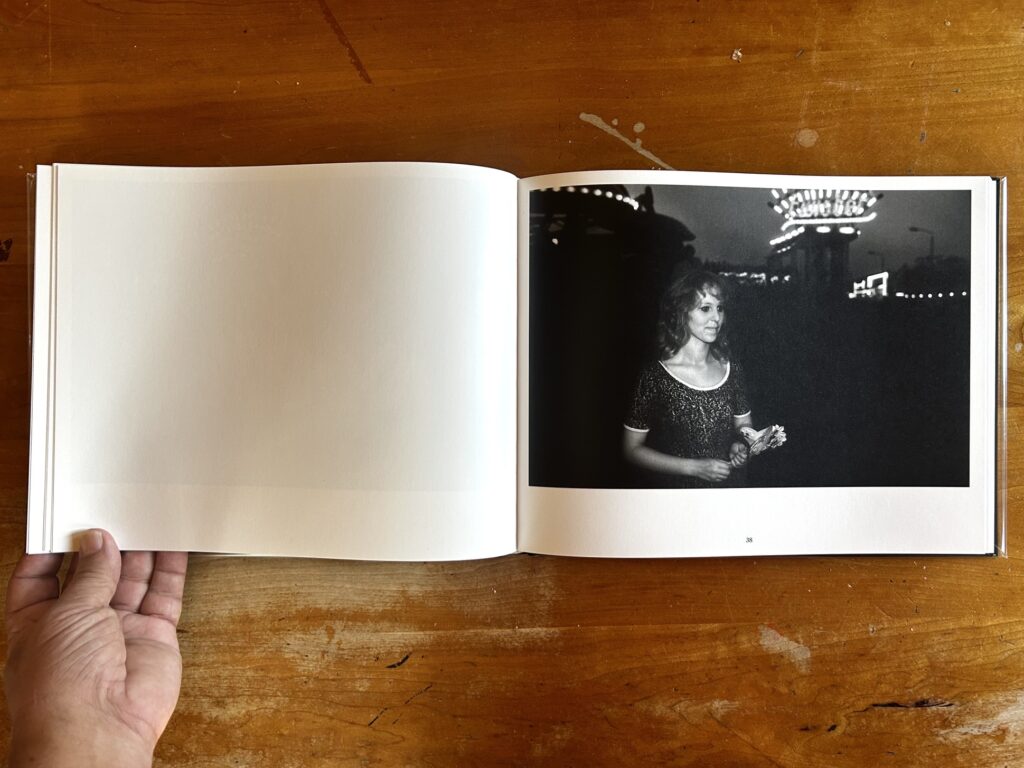
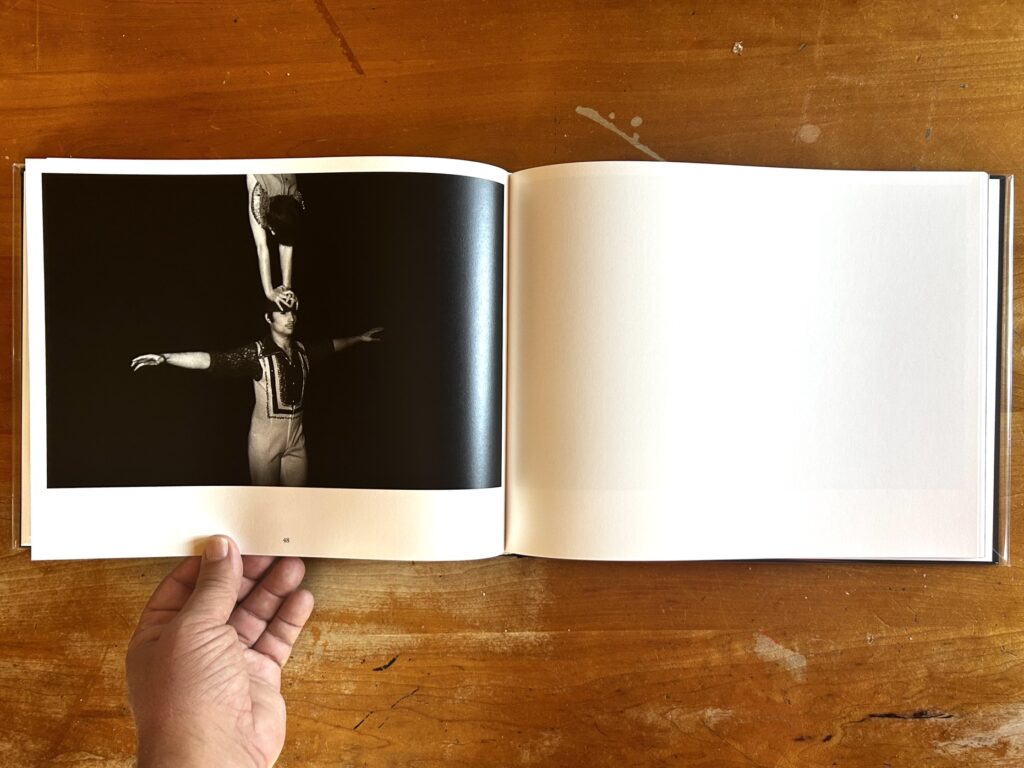
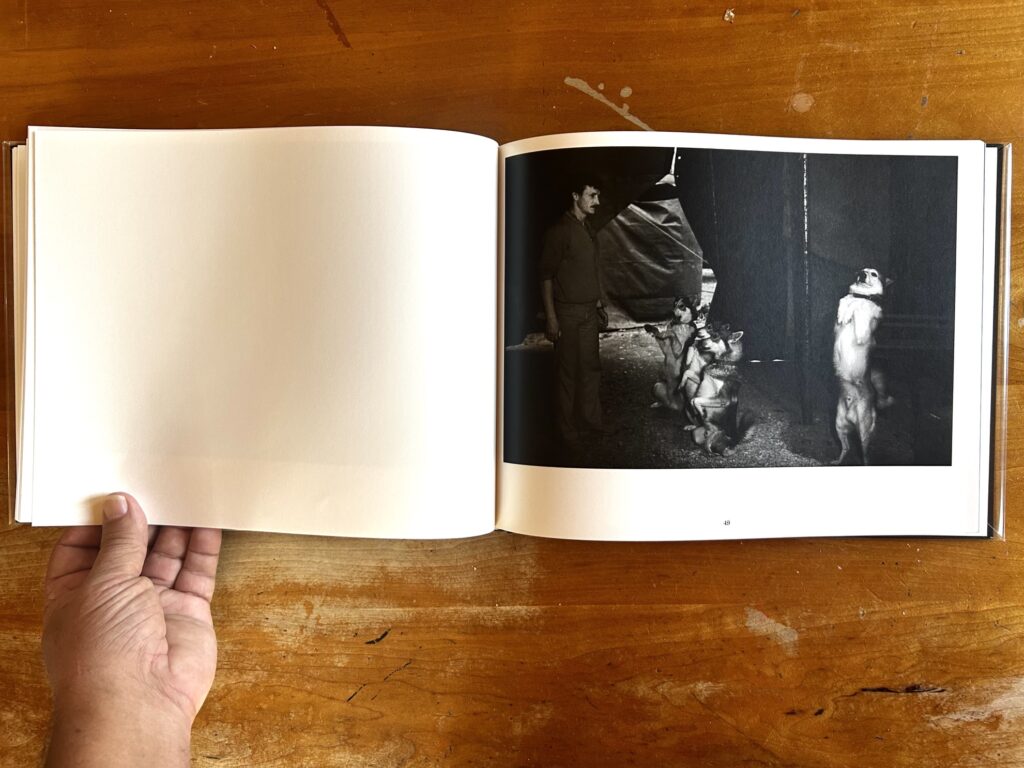
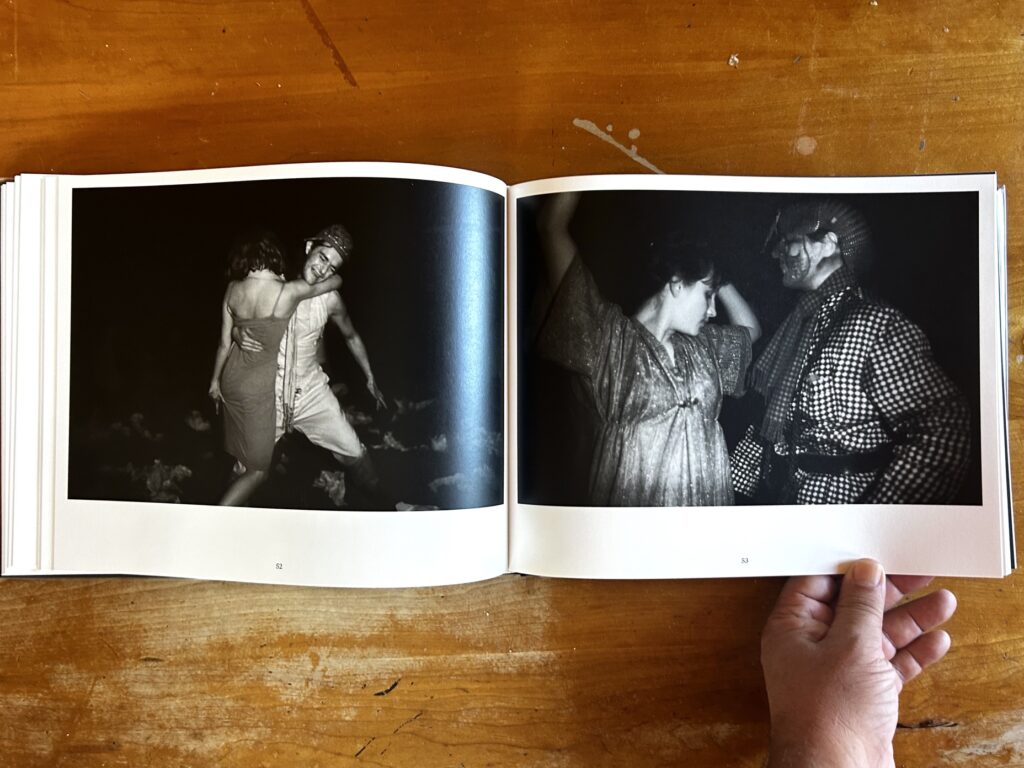
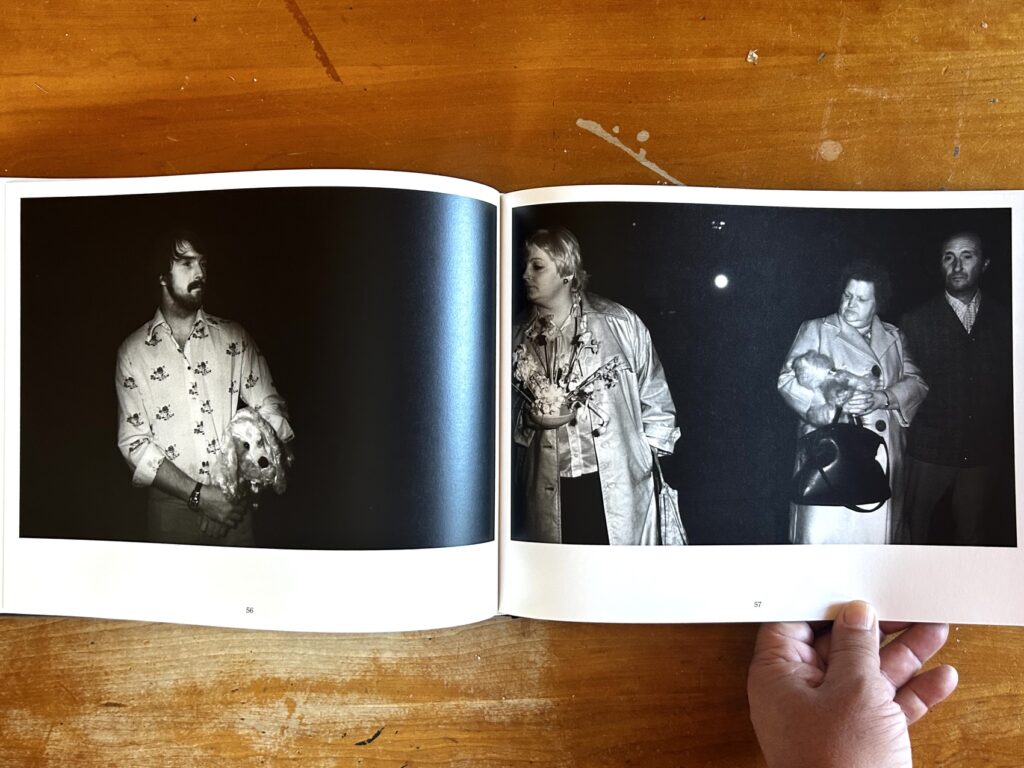
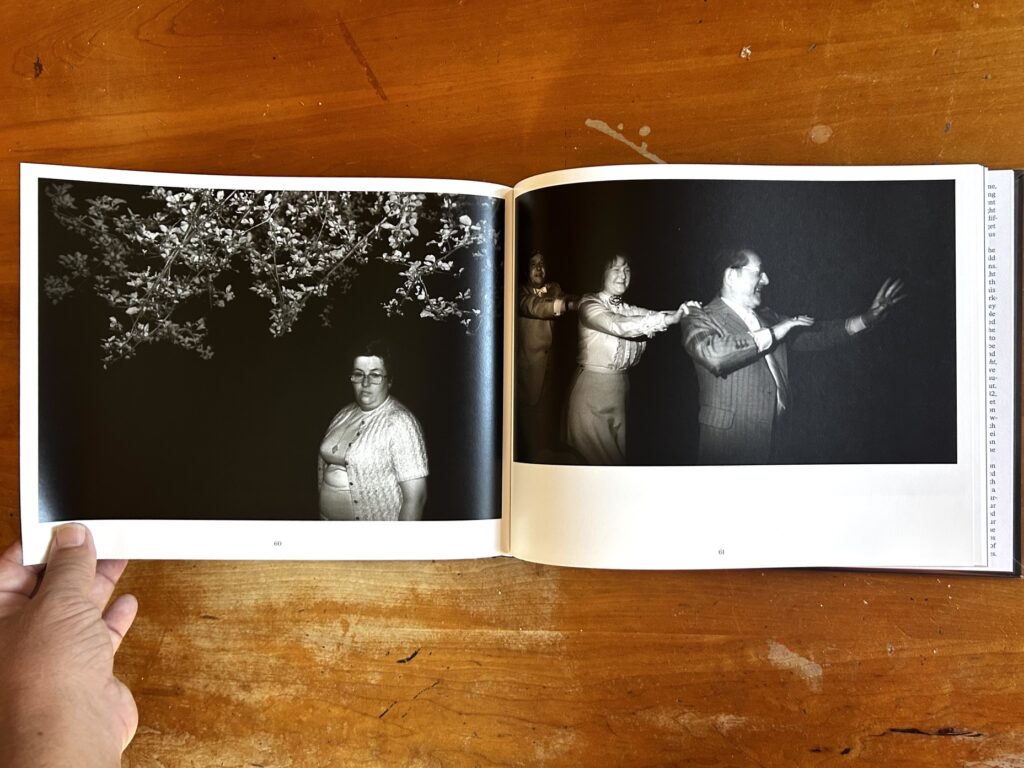
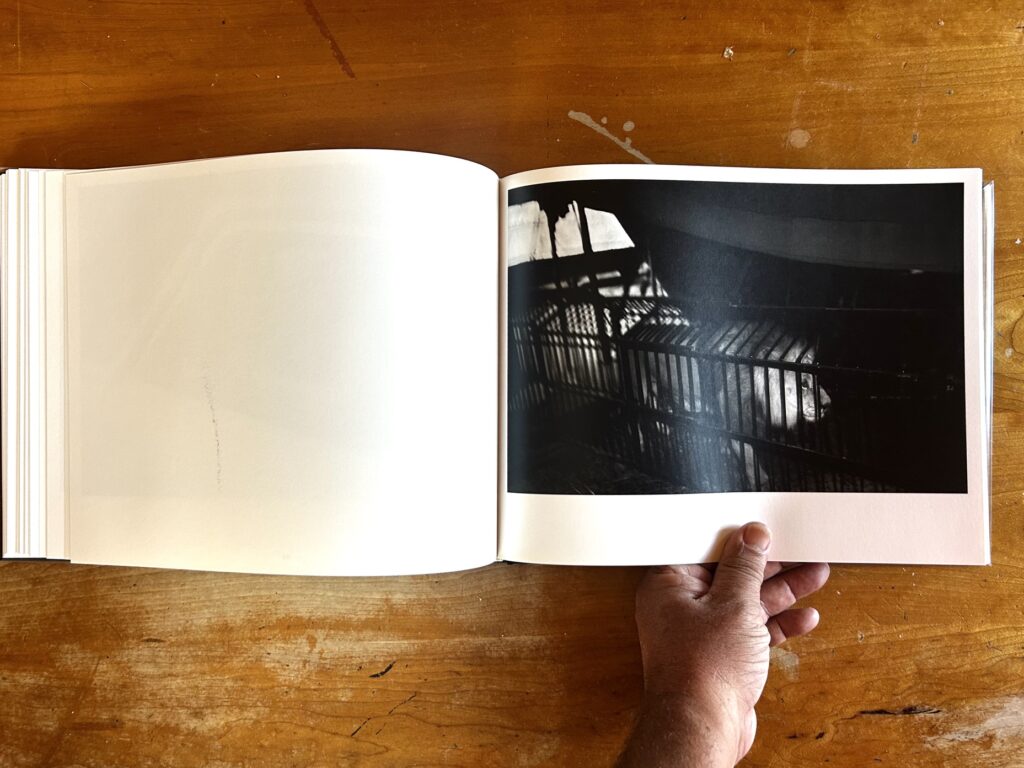
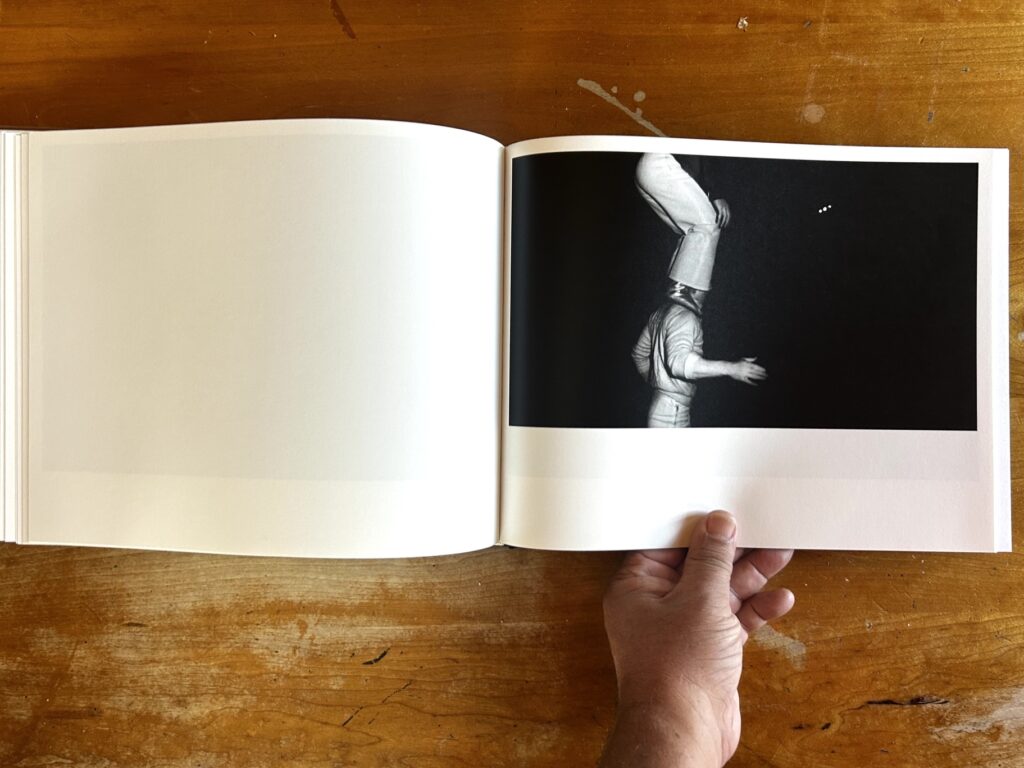
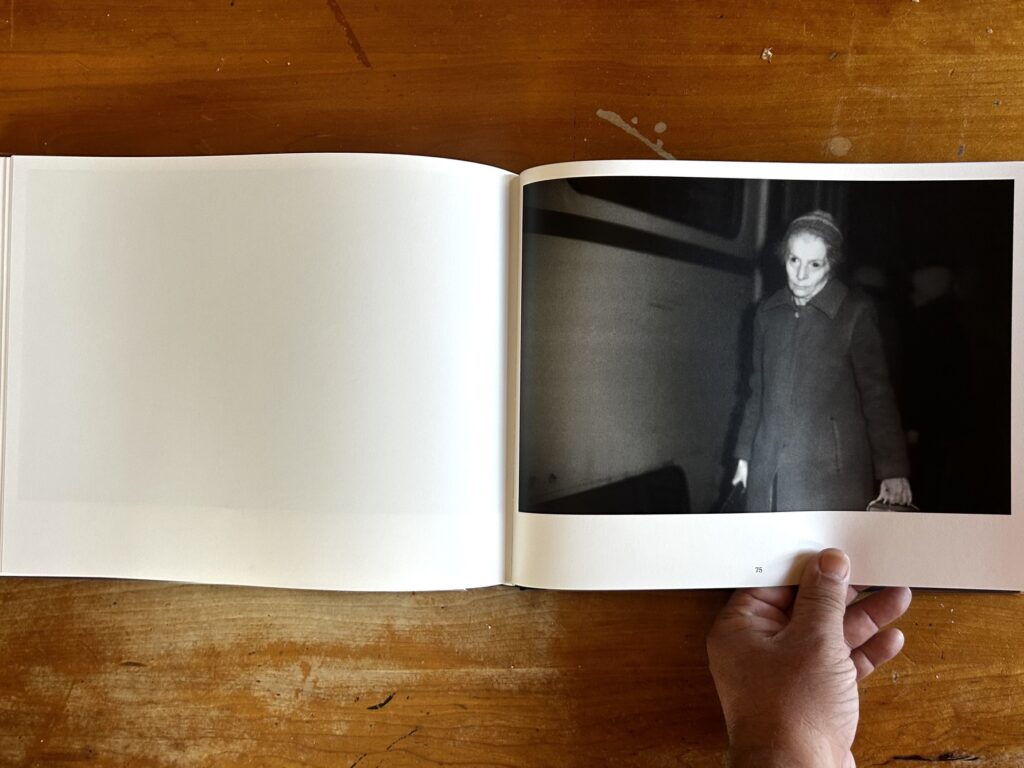
Comments/Context: In the family tree of photo history, the nocturnal infrared flash limb is rather stunted. Over more than nine decades of existence, the discipline has attracted few devotees, scant exhibitions or books, and almost no academic scholarship.
Ask a casual photo buff about infrared flash and the first name to pop up will likely be Weegee. The cigar-chomping seer began using black-and-white infrared film soon after it became commercially available in the late 1930s. Exposing scenes with a filtered flashbulb in the 1940s, he captured unsuspecting crowds in darkened NYC theaters. Not only was Weegee invisible to his subjects, he could barely see what was in front of his lens. Some negatives turned up banal, others in flagrante. Either way, they pioneered new territory. Weegee’s double-blind experiments slotted naturally into his wider oeuvre, exploring issues of community, spectacle, and consumer culture. But, Weegee being Weegee, he was soon caught up in other distractions, and his infrared fling was relatively short-lived.
In the early 1970s, Kohei Yoshiuki picked up the infrared mantle, using filtered flash to capture illicit trysts in three Tokyo parks. His nocturnal photographs captured not only sexual encounters, but the voyeuristic sideshow of creepy spectators surrounding them. As with Weegee, infrared proved a perfect tool for discrete exposures. Film and flash operated in a spectrum beyond visible light, conferring Yoshiyuki a cloak of secrecy. Entitled “Kōen” (公園, Park), his work was exhibited in 1979, published in 1980, and earned widespread acclaim. (Briefly noted in our Daybook here.)
After Weegee and Yoshiyuki laid the foundation, infrared flash photography felt ready for wider take off. But for whatever reason, it never caught on in the broader photo community. There was a small flurry of activity in the late 1970s—probably inspired by Yoshiyuki—centered in the Pacific Northwest around photographers like Terry Toedtemeier, Ford Gilbreath, and Bob Iyall. After Kodak HIE film was discontinued in 2007, photographers like Daniel D. Teoli Jr. and Kip Praslowicz carried infrared flash into the digital era, exposing pictures with modified sensors and filtered bulbs. All of these photographers are worth a look. But in the grand scheme they are scattered mavericks operating well outside the fine art photography canon.
Which brings me to Erasmus Schröter, an East German photographer born in 1956 and based primarily in Leipzig. As a young photo student at the Hochschule für Grafik und Buchkunst Academy of Fine Arts Leipzig (HGB), Schröter fell deep down the infrared rabbit hole. He was fascinated by the medium’s possibilities to the point of obsession, and his nocturnal forays eventually formed the basis for his college dissertation. He made thousands of photographs between 1980 and 1982 using what he called “black flash method”. Upon graduation in 1982, he collected them into book form, which he self-published in a small run of 100 copies, under the title Nachts.
Alas, the book did not make much of a splash. Like most student projects—and not unlike its fleeting exposures—it was soon filed away and forgotten. Schröter emigrated to Hamburg in 1985, followed by the GDR’s collapse in 1990. He pursued a successful photo career as a commercial shooter, teacher, and collector. After he returned to Leipzig in 1997, Nachts’ original materials were housed in a wooden crate and put in storage.
Following Schröter’s death in 2021, it was up to his wife Annette Schröter to sort through his papers and photos (yet another pandemic-fostered archive plunge). She felt that Nachts was “among the strongest and best that Erasmus—then still a very young man—ever made,” and kick-started the process toward an updated edition. Retrieving the materials from storage, she found some in usable condition. Others were lost or damaged.
After four years of meticulous research and recovery, the revised Nachts has arrived. It hits the contemporary market with a slightly altered title—Lange Nacht (“Long Night”)—and dozens of new photographs. A rear index labels most images by date and location—keeping the same sequence as the 1982 book—while noting which are from the original (roughly two thirds of the images by my count) and which are freshly added. The index is complemented with two informative essays, a career timeline, and research notes. Packaged together in a handsome hardback, Lange Nacht offers a sweeping overview of Schröter’s student work, published in a larger print run this time, and with global distribution.
Will these improvements be enough to gain mainstream attention for Lange Nacht, or for nocturnal infrared generally? That remains to be seen. But regardless of the book’s impact, the photos are certainly entertaining, both as a photo history time capsule and on their own as intriguing provocations.
The book traces Schröter’s adventures through a series of nightscapes, mostly in the vicinity of Leipzig. He peeks in on revelers at a masquerade ball, commuters waiting at bus stops, circus performers, animals, fair patrons, and well-dressed pedestrians. A sequence of artists partying in the woods feels like an homage to Yoshiyuki. If so intended, it doesn’t last very long, nor does any other passage. The book spends just a few pages in each location before moving to the next. One is left with the overall impression of a young photographer on the night prowl, camera in hand, hungry and prolific.
The scenes and years are diverse, bouncing from 1980 to 1983. They cohere through the distinctive traits of infrared flash: hollowed eyes, pale faces, and inky recesses swallowing up every unclaimed space. Whether the dark voids are caused by filtering effects or nightfall is hard to tell. In any case they streamline the sequence, forming blank backdrops for Schröter’s cut-out figures.
All of these nocturnal infrared quirks are enjoyable, but they operate at surface level. Look beyond the technical details and Lange Nacht poses deeper questions about voyeurism, privacy, and street ethics. A few of Schröter’s subjects seem vaguely aware of his presence. But the vast majority are guerrilla-style candids, ambushing unwitting bystanders in public situations.
Is photographing a person without permission a violation of privacy? Not according to Yoshiyuki. “As long as you don’t say anything, if you keep quiet, take your photos and run, it’s ok,” he once said. Others might disagree, starting with the woman on Lange Nacht’s cover. She spreads her fingers into Schröter’s lens in a failed attempt to block his shot. This hand of resistance might exemplify the current cultural consensus which becomes more protective with each passing year. Public photography restrictions in Europe seem to portend a global trend. GDPR laws shield personal privacy, while countries like Germany prohibit the dissemination of identifiable photos without permission.
Candid street photography certainly faces headwinds now. But the situation was fuzzier in the early eighties. Public and private boundaries were still being felt out in a photographic sphere with fewer cameras and ritualized gentility. So if Schröter’s objectifications seem aggressive, we can cut him some slack on that front.
That said, Schröter’s invisibility adds a fraught dimension. In a sense he was hiding in plain sight, surveilling targets with impunity, and barely interacting. If Winogrand did roughly the same thing, at least he made himself physically available. I am not one to cast judgement. But let’s just say that nocturnal infrared flash presents an ethical minefield. Surely Schröter must have considered these issues, and the new book would’ve been a good chance to explore his thoughts. But it offers no commentary from Schröter beyond technical notes, and of course his photos. They offer plenty to chew on, but Schröter’s personal anecdotes might have spiced up the dish.
Schröter’s exploits become even more interesting when contextualized behind the Iron Curtain. He photographed inside the German Democratic Republic at the height of the Cold War. The East German state was notorious for its opaque government, which spied on its citizens (presumably including Schröter) through both Stasi police and unofficial informants. Indeed, Schröter was merely one of many talented photographers working in the former GDR. The trying conditions were ripe with possibility, and they’ve begun to generate some interesting exhibitions and books about 1980s East Germany.
But that’s another story. Let’s keep the focus on Schröter. Was his invisible methodology a rebuke to his government? Perhaps his subjects were so used to being covertly observed that they barely noticed Schröter’s efforts? Were his pictures intended to comment on or subvert the surveillance state? Did the Stasi monitor his photo outings, or care about them? Do two secret wrongs somehow make a public right?
Schröter’s political feelings were well known. After all, he left the GDR as an act of resistance. But it’s an open question how or if his politics influenced Lange Nacht. Uwe Kolb’s introductory essay “At Night” dances around these issues, but in the end it leaves the matter unsettled. As with the ethical issues, Schröter’s photos must carry the weight on their own. Luckily they’re up to the task.
After browsing Lange Nacht, the historic dearth of nocturnal infrared flash becomes less mysterious. Such pictures would be very difficult to make now, and would be even harder to garner them attention. Basic street photography is generally considered passé by the current photo establishment. Schröter’s version feels like the genre on steroids. It’s more creepy, invasive, voyeuristic, and problematic. It cuts against contemporary social norms and privacy concerns, not to mention the technical challenges.
All of these aspects make the practice daunting. But there may yet be hope for nocturnal infrared flash. Photographers are a stubborn bunch, and sometimes proscriptions provide motivation. A glance in the rearview might show the way forward. In the face of dark prospects, Lange Nacht might provide a beacon for the future.
Collector’s POV: Erasmus Schröter is represented by Galerie Kleindienst in Leipzig (here). His work has little secondary market history at this point, so gallery retail likely remains the best option for those collectors interested in following up.