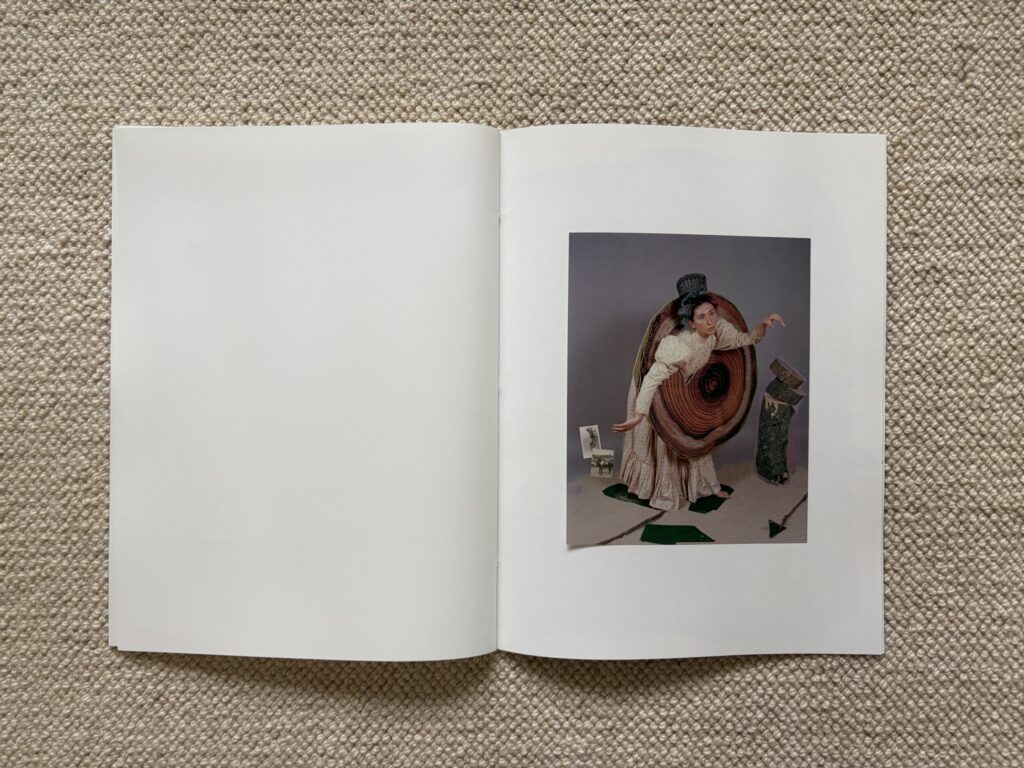
JTF (just the facts): Published by KGP Monolith in 2026 (here), numbered ME013. Softcover with sewn binding, 9×12 inches, 32 pages, with 16 color and black-and-white reproductions. Includes text captions (found underneath hinged image pages), a short text in English with pencil annotations (with a Spanish translation), and a loose sheet reading list. Design by Ben Salesse. In an edition of 100 copies. (Cover and spread shots below.)
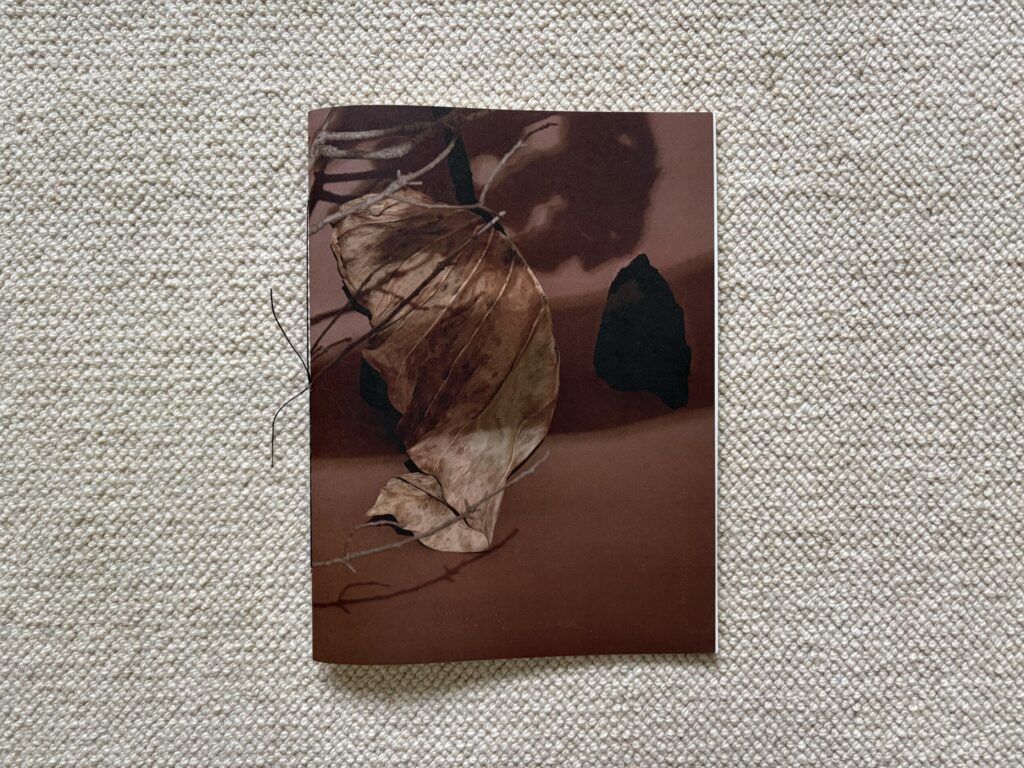
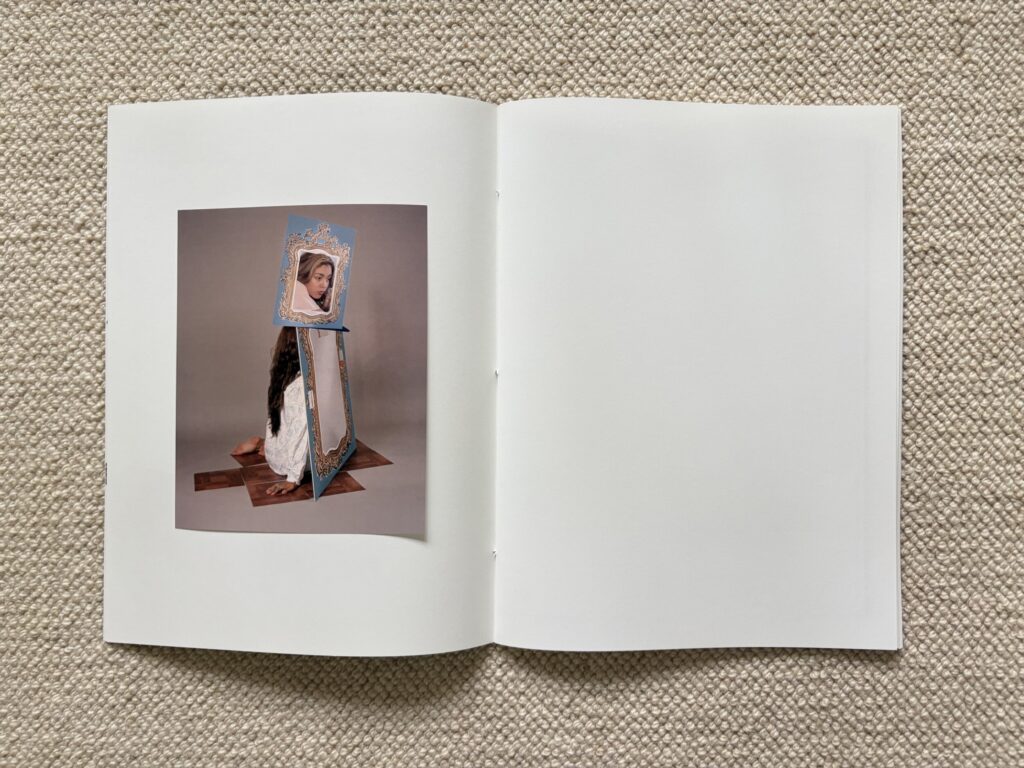
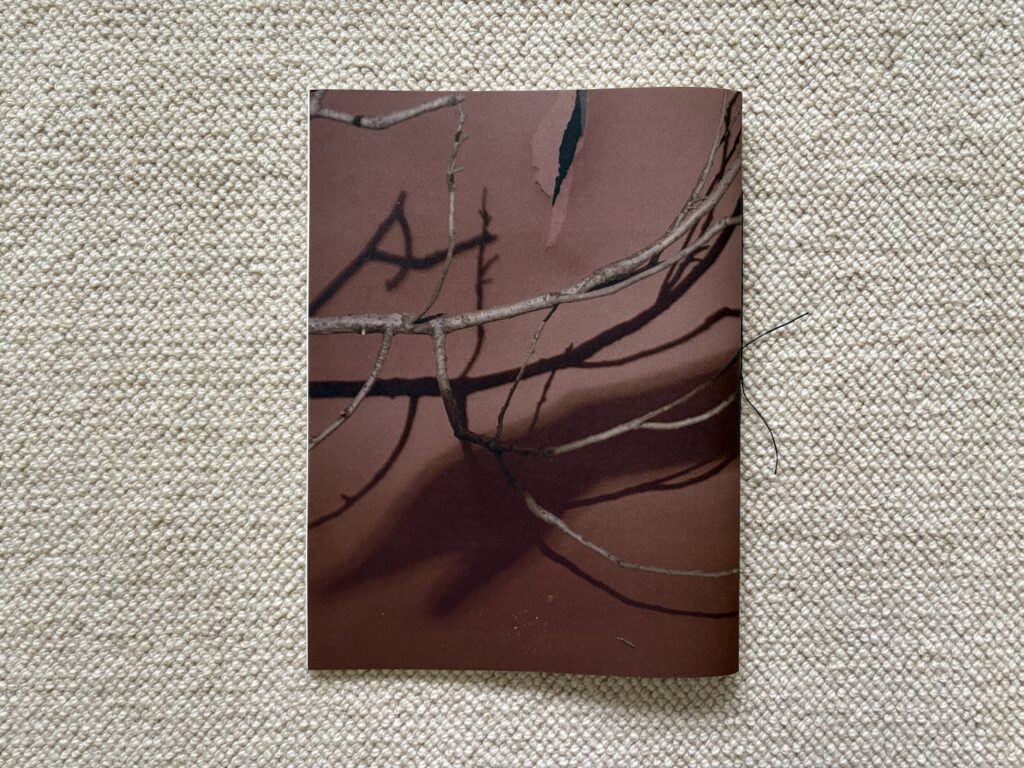
Comments/Context: The way a photobook introduces itself is never an accident, especially if the photographer and publisher intentionally diverge from the typical convention of placing a straightforward artist’s name and book title on the cover, perhaps with the further decoration of a representative image. So in the case of Rachelle Anayansi Mozman Solano’s photobook Venas Abiertas, which offers neither name nor title anywhere on the front, the back, or the spine, we are asked to start by looking away from those usual identifiers, at a staged still life arrangement consisting of a large dry jungle frond and a spindly leafless branch, set against a brown paper backdrop scarred by several tears and holes, with layers of dark cast shadows animating and doubling the setup.
At first glance, it’s decently difficult to figure out what this image might represent, or what the symbolism in the pared down composition could potentially allude to. A page turn inside offers an understated title card in a very small font that Spanish speakers will understand, and perhaps even connect to a 1970s era book published by Eduardo Galeano; those without those language skills and historical clues might wonder about what “Open Veins” (in English) might refer to exactly, beyond its obvious anatomical meaning. It turns out Galeano’s book Las venas abiertas de América Latina took a hard look at the European colonization of Latin America, and the history of economic and political control over the region by outside forces, including the United States.
So with the backstory of Mozman Solano’s own familial history as an American born to a Panamanian mother (as part of the larger Latin American diaspora) in the back of our minds and the echo of Galeano’s influential work as a potential signpost, perhaps the cover image starts to make some more sense: a tropical rainforest leaf now withered, a bare tree branch likely from New England, with the cuts and holes of unseen trauma literally lingering the background behind the uneasy combination. Even without explicitly telling us anything, Mozman Solano has quietly provided a resonant diasporic framework for the work that follows.
Mozman Solano has been building up some notable artistic momentum in the past few years. Her early work as a clinical psychologist has informed her artistic approach, and her current range of staged photographs, collages, and short films have increasingly enhanced and amplified each other in terms of both shared aesthetics and interlocked conceptual underpinnings. Other recent career checkmarks include an associate professor position at the School of the Museum of Fine Arts at Tufts since 2018, a 2019 solo show at Smack Mellon (where we first came across her work, here), a 2020 photobook (titled Colonial Echo), a 2024 Guggenheim fellowship, and participation in a growing number of group shows, so the publication of Venas Abiertas represents yet another point of development and achievement in an artistic career that is picking up steam.
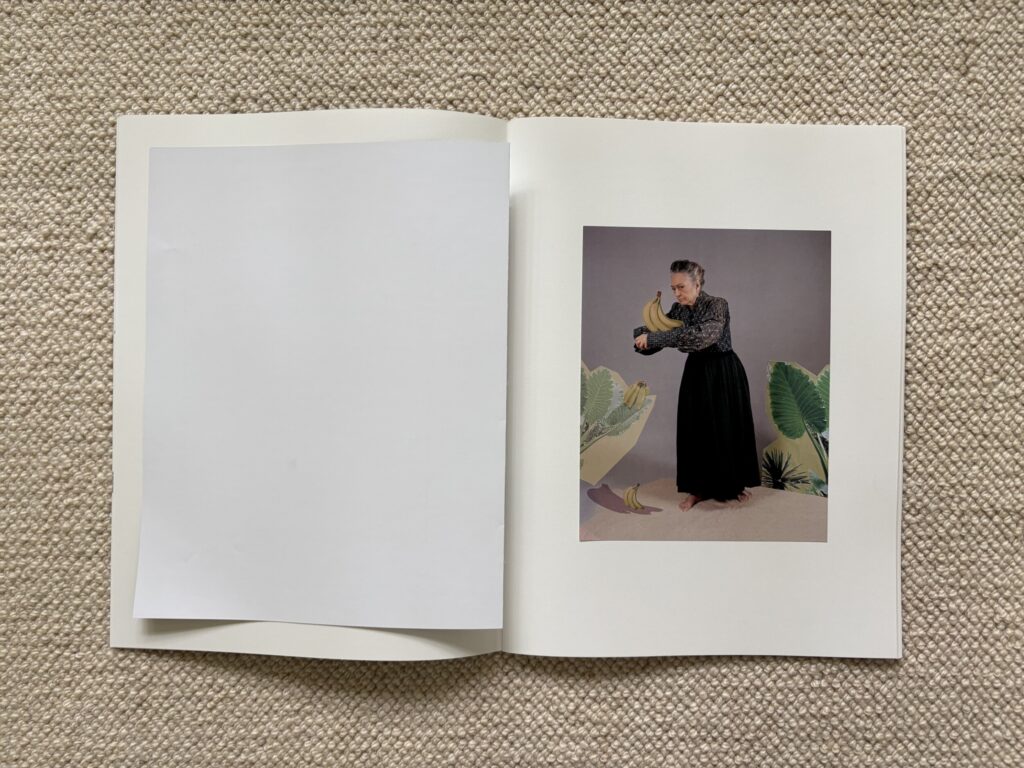
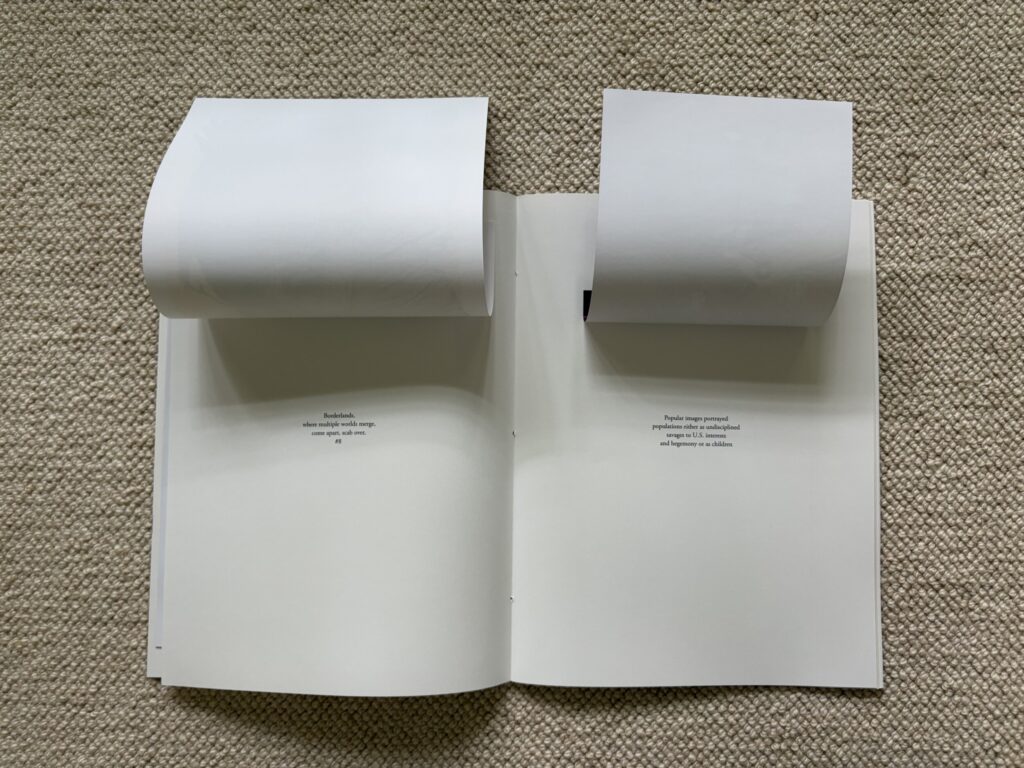
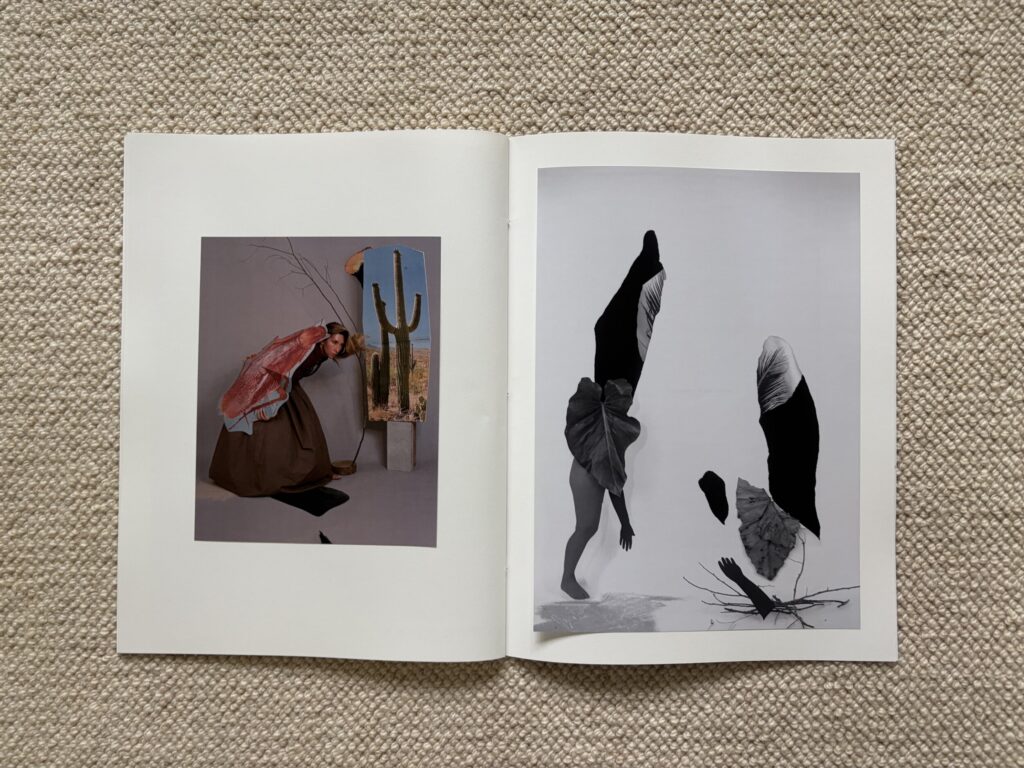
In terms of photographic content, Venas Abiertas intermingles selected works from two separate series – staged studio photographs from the titular “Venas Abiertas” project and painted photocollages from the “Borderlands” project. On the surface, the “Venas Abiertas” images have a mood of deadpan absurdity, with starkly improvised setups including an older woman lovingly cradling a bunch of bananas (a fruit with a contentious history in Latin America) and a different woman hunched over and wearing a large paper cockroach on her back, as though running through the desert (implied by a nearby image of a cactus). But the visual comedy or irony of these and other arrangements and reenactments featuring the artist’s family and friends quickly turns to incisive sarcastic bite as the historical contexts of US foreign policy in Central America and the realities of Latinx immigrant lives in the United States lace the images with potent symbolism. A tightly edited reading list at the end of the photobook provides the intellectual source material for many of the ideas and histories Mozman Solano is wrestling with in these pictures, with short caption-like quotes pulled from some of those sources hidden underneath the images, which are elegantly hinged to the pages and left to flutter loosely.
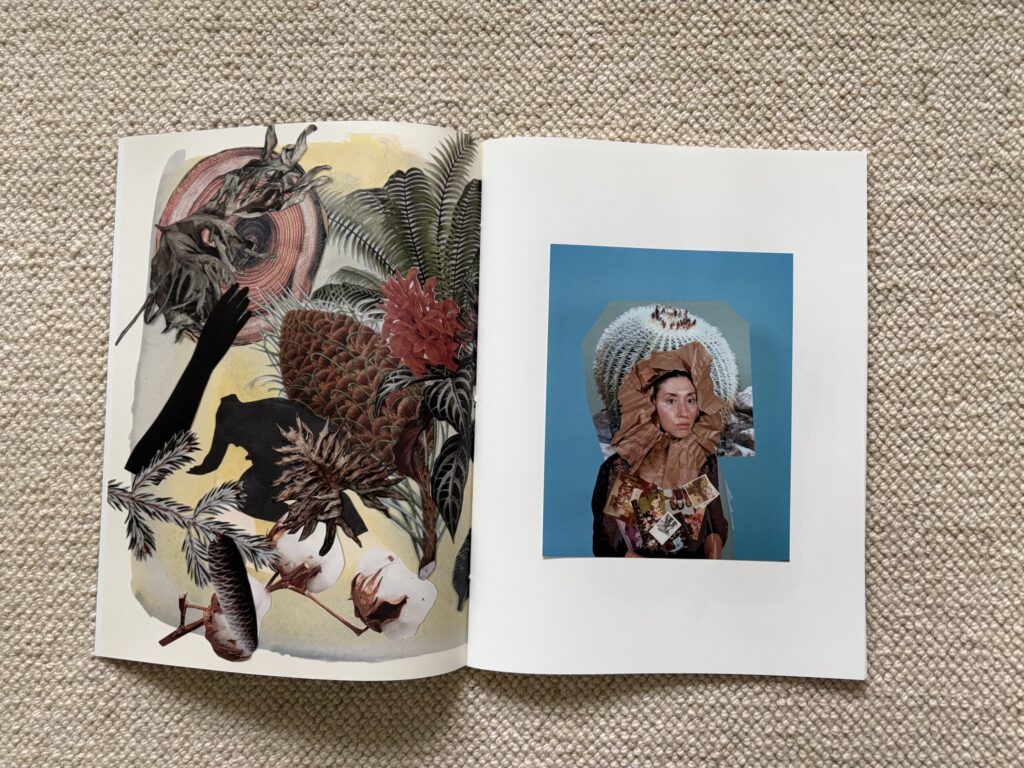
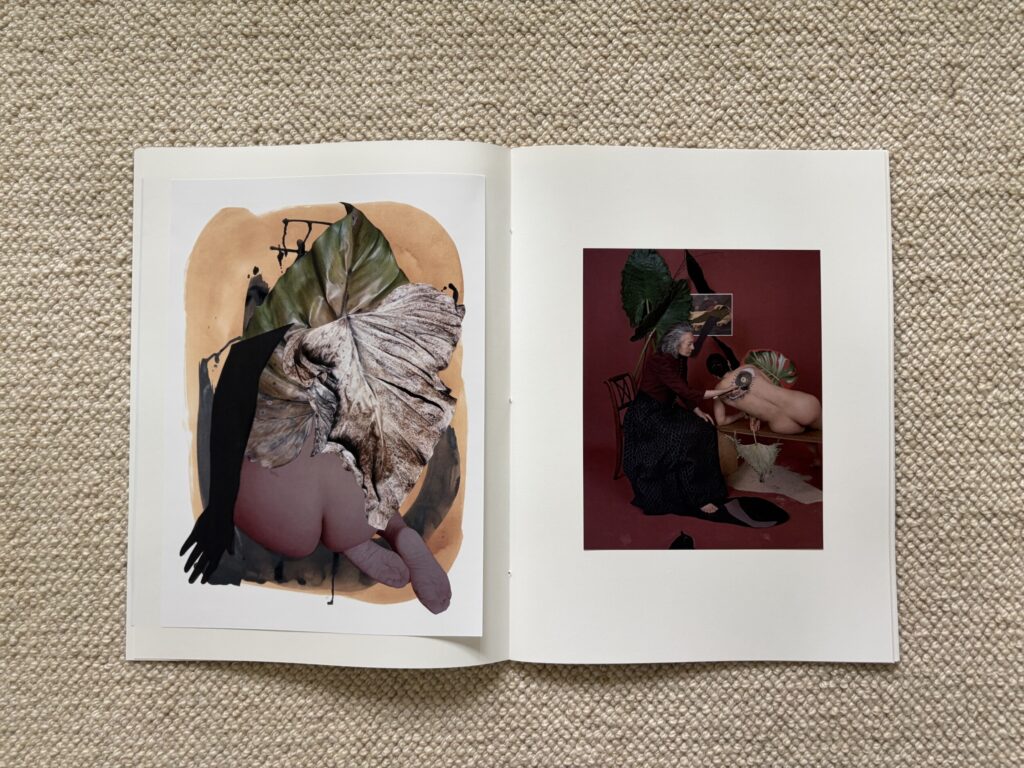
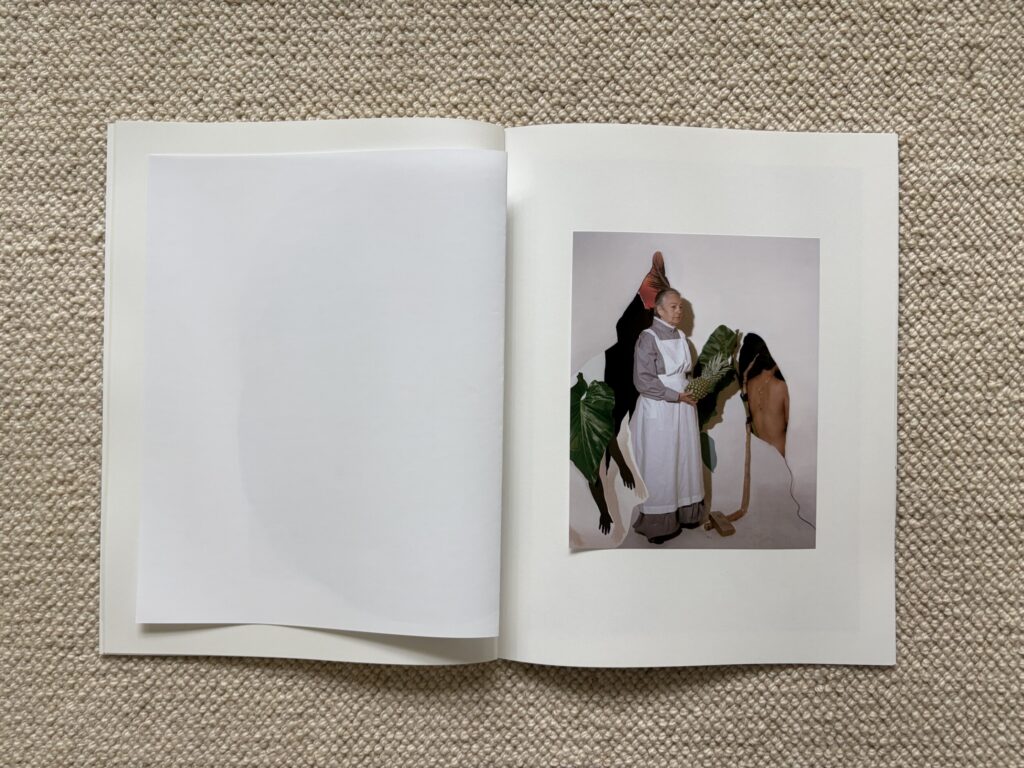
Mozman Solano’s visual interpretations of these densely complex and often wounded histories takes simple gestural play acting to a different level of personal engagement. She explores the layered physical and emotional scars of the Culebra cut of the Panama Canal in the form of an older woman dressed in servant’s clothes holding a pineapple, with fragments of reaching arms and nude bodies nearby. To consider the history of Latinx immigrants in California and in the larger expansion West in America, she impales a woman in a prairie dress on the clearcut surface of a Redwood tree, with sand, sticks, and aging snapshots scattered at her feet. And still other setups play with layers of mirrors and reflected identities, a mother painting a protective mal de ojo (evil eye) on her daughter’s naked back underneath Paul Gauguin’s The Spirit of the Dead Watching, and a woman wearing a crown of cacti and crumpled packing paper with a cascade of family photos falling away from her insistent blank stare. In each performative arrangement, Mozman Solano is actively testing roles, stereotypes, identities, and forgotten (or erased) histories, pushing literary explication and analysis into the realm of ritualized exploration and healing.
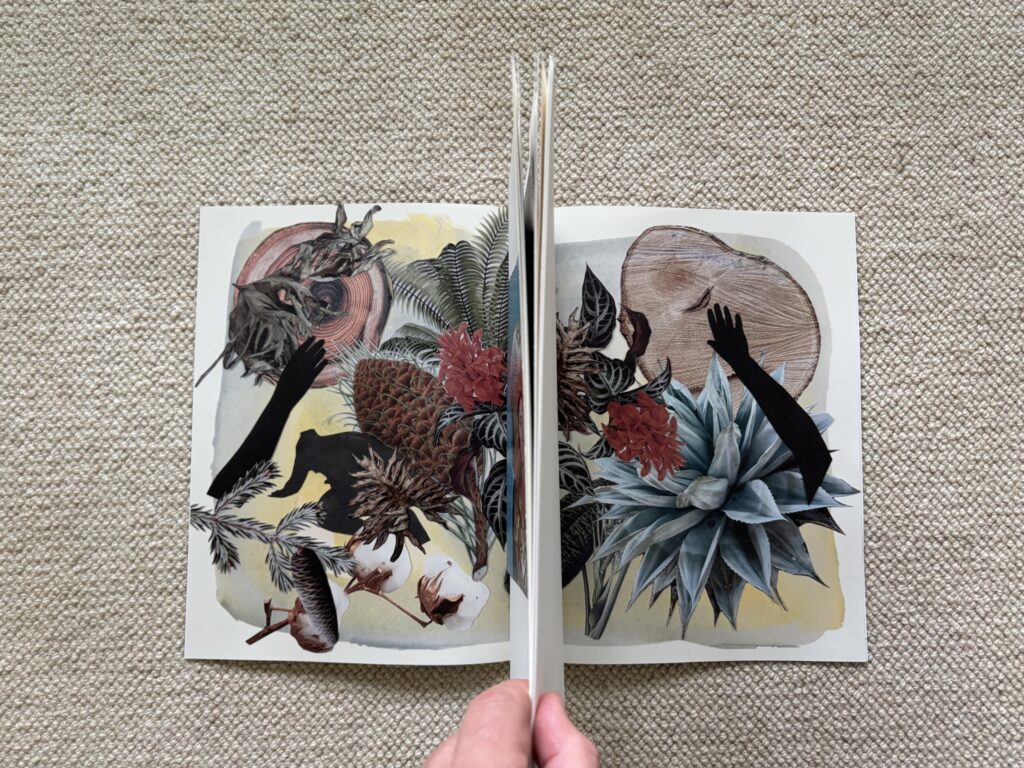
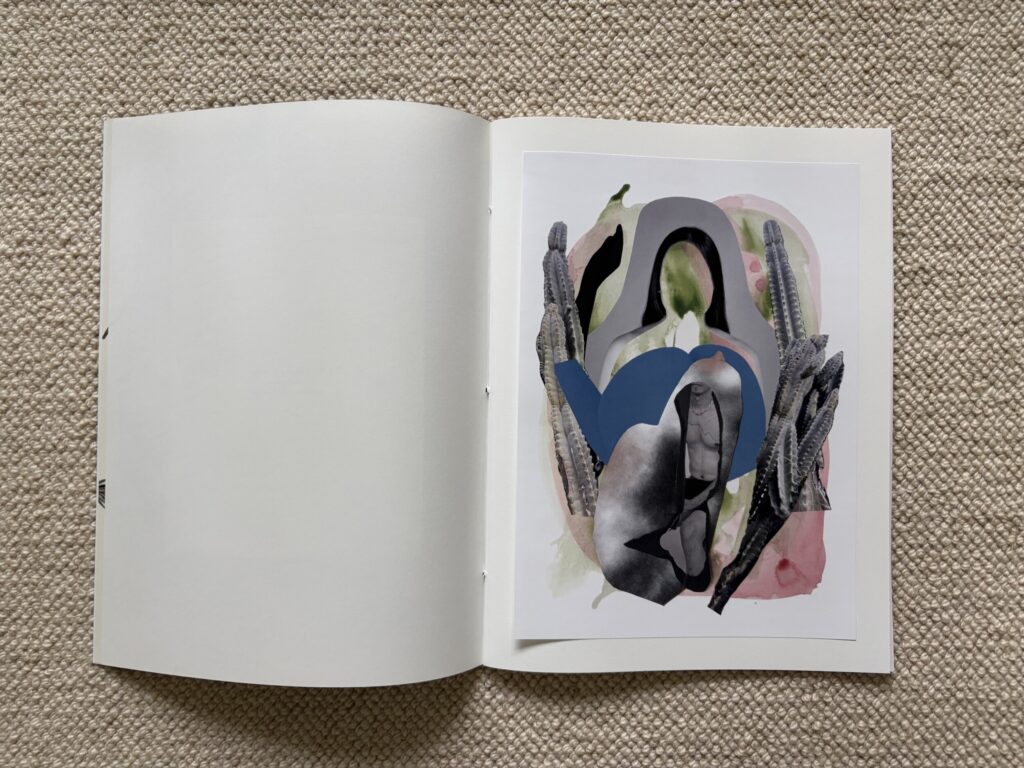
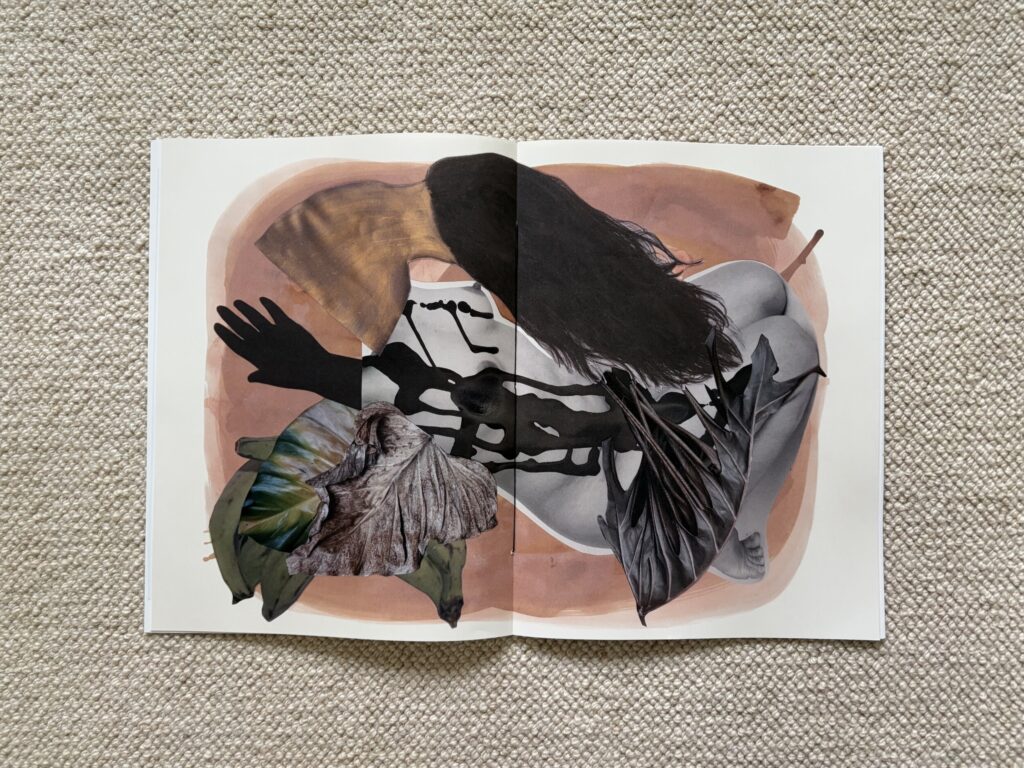
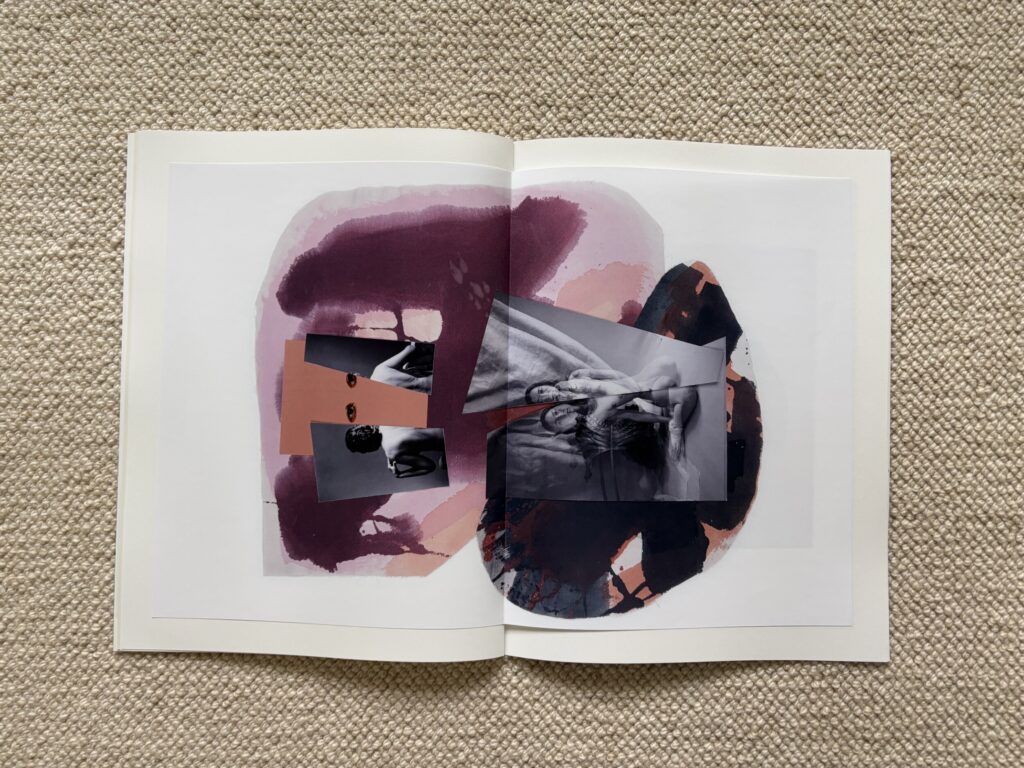
The photocollages from the “Borderlands” series are less narratively direct and more layered. The large compositions mix cutouts of tropical plants, fruits, and flowers with related pictures of American species (including cactus, agave, cotton, and an evergreen with pinecones), this contrasting combination of nature then further embellished by cutouts/silhouettes of nude bodies and gestural washes of watery paint. The collages swirl these elements together into a satisfyingly complex and gracefully conflicted visual melange, where potential identities seem to shift and dissolve in the confusion. Mostly, these collages allude to sense of psychological fragmentation, where Latinx immigrants inhabit physical and spiritual borderlands that combine histories, experiences, and tactile presences within a wash of uneasy, unresolved friction, “where worlds come merge, come apart, scab over”.
As a photobook object, Venas Abiertas is remarkably intimate, patient, and touch-centric, one of the loveliest (and most unconventional) book designs of the year. It’s a photobook that cannot be quickly flipped and seems intentionally constructed to slow down the reading process, as each page turn requires a careful unfolding, a lifting, or a pause to read discovered texts. The design also deliberately creates crossovers and overlaps, with two large collages stretching across an entire spread (one divided by the binding), and two others placed on foldouts that extend horizontally from side hinges; these are then balanced by vertical flips (from top hinges) required to get underneath other images. The longest of the texts is interrupted by hand annotations in pencil, with the artist editing, amplifying, and reconsidering the paragraphs like a voiceover, allowing us to get inside her head as she reinterprets what she’s reading. For those that notice paper, this book also creates back and forth movement between paper stocks – thick and thin, coated and uncoated, large and small sizes, making each successive touch something new. Experienced together, all of these decisions lead to a photobook that first requires our presence and attention, and then amply rewards it with unsettled complexity in both images and ideas.
While Mozman Solano’s artmaking is unique to her own lived experience, it is still possible to step back and do some pattern matching with other contemporary photographers using similar approaches to consider similar situations, even if they come from wildly different geographic and cultural contexts. Sheida Soleimani, Wawi Navvaroza, Cheryl Mukherji, and Wendy Red Star (among others) are all female artists using performative staging with symbolic objects to unpack the particular realities and histories of their lives, while Frida Orupabo, Justine Kurland, Qiana Mestrich, and Helen Metaferia are just a few of the women who have embraced photocollage as a way to reinterpret historical events, identities, and bodies. So Mozman Solano’s photographic practice readily slots into this larger framework, even as she targets these visualization strategies at very specific personal questions and truths.
The strongest of the works in Venas Abiertas find a note of uneasy dissonance that is hard to ignore. Whether in the form of surreal staged scenes or unsettled layers of collage, Mozman Solano is applying a systematic and intellectual approach to picturing the ongoing traumas of the Latinx experience, actively digging into histories and identities (including her own) that are still unresolved. It is this position of engaged interrogation that feels most distinctive. She’s reading, and analyzing, and pushing, and reimagining, all in an effort to unravel knots that have been tied for generations. In a sense, there are no answers to many of her questions, only the comfort of brushing away distractions and untruths to really get at what lies underneath and what it means to inhabit her own body.
Collector’s POV: Rachelle Anayansi Mozman Solano does not appear to have consistent gallery representation at this time. As a result, interested collectors should likely follow up directly with the artist via her website (linked in the sidebar).