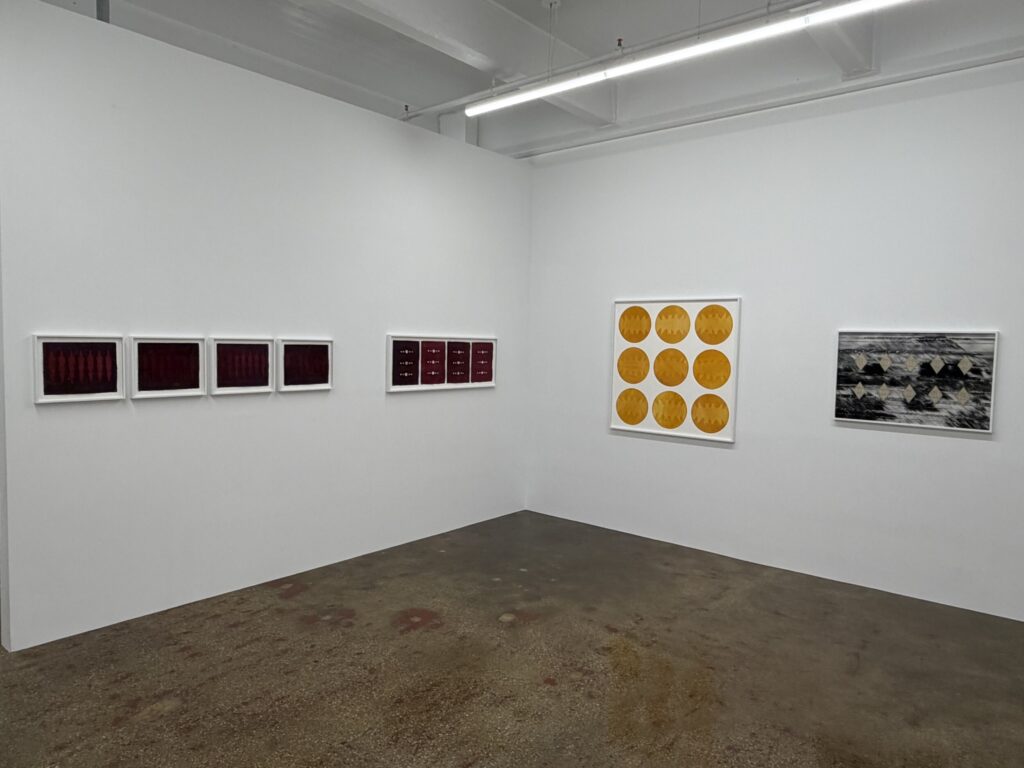
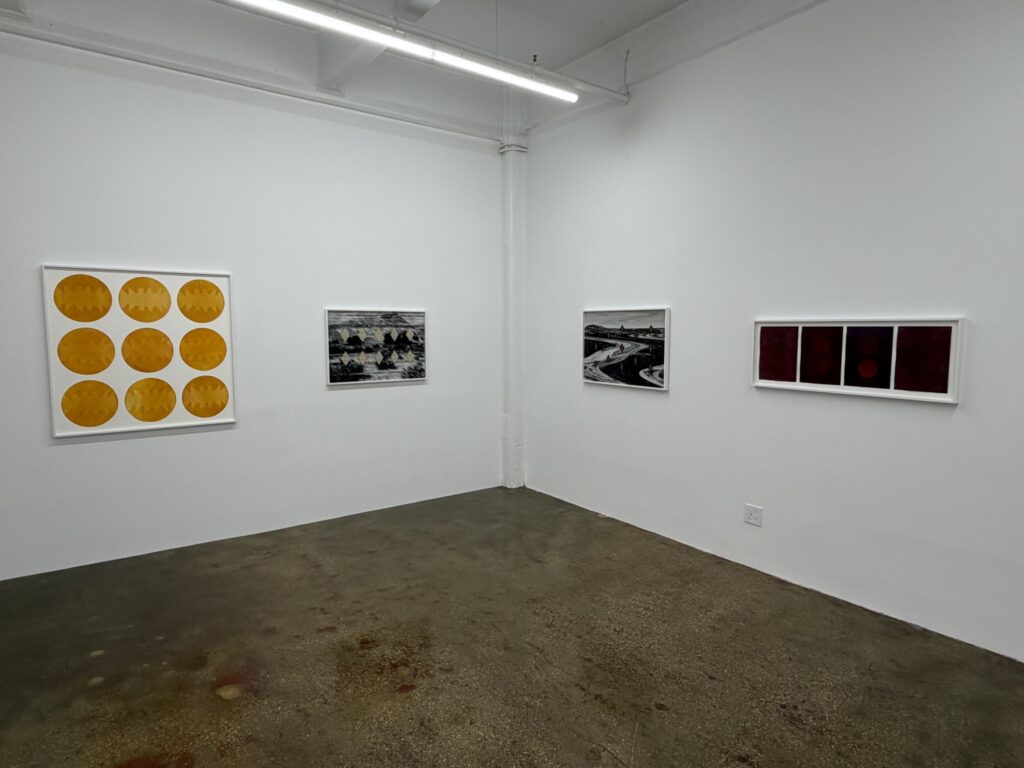
JTF (just the facts): A total of 9 photographic works, framed in white and unmatted, and hung against white walls in the single room gallery space. (Installation shots below.)
The following works are included in the show:
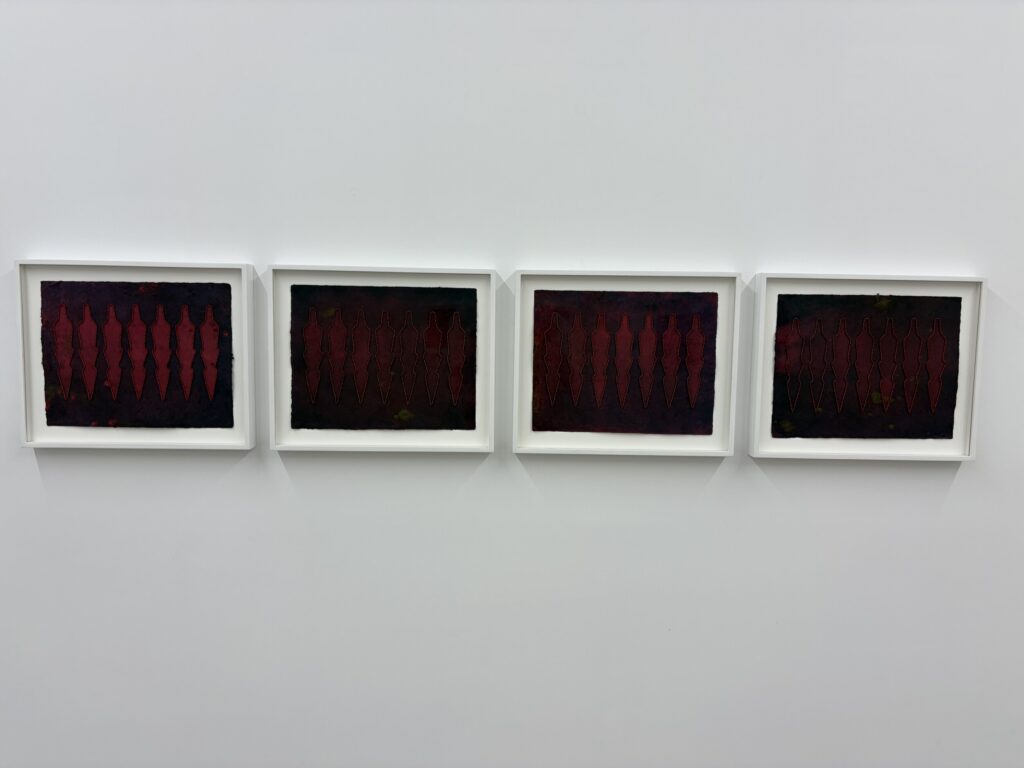
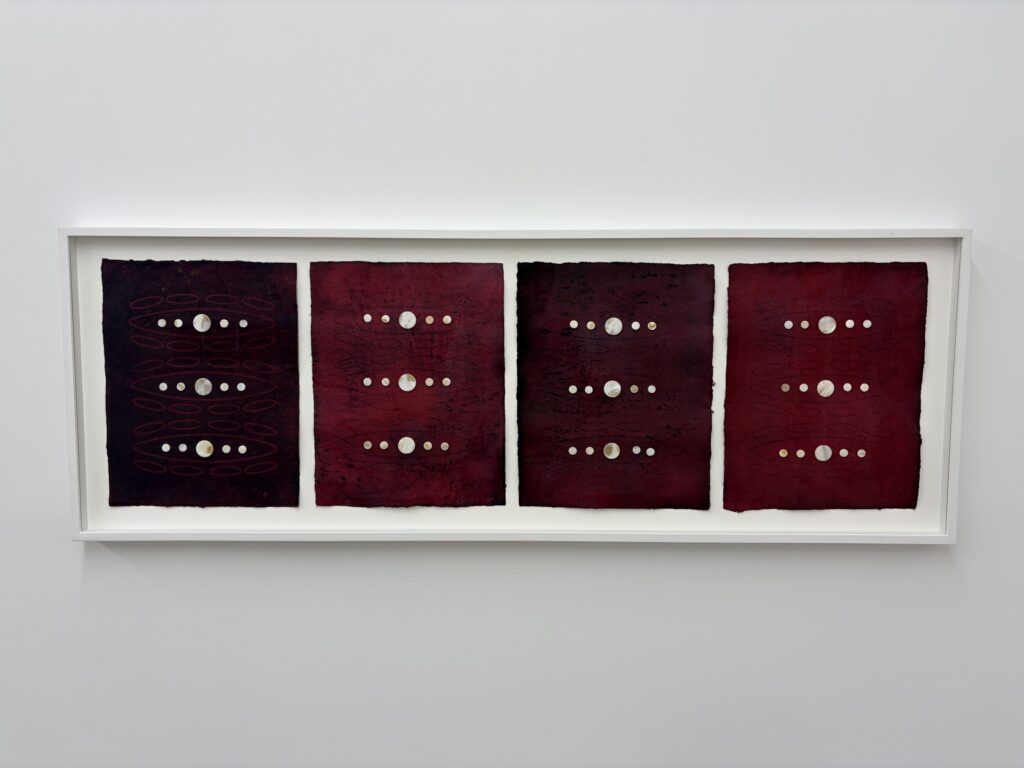
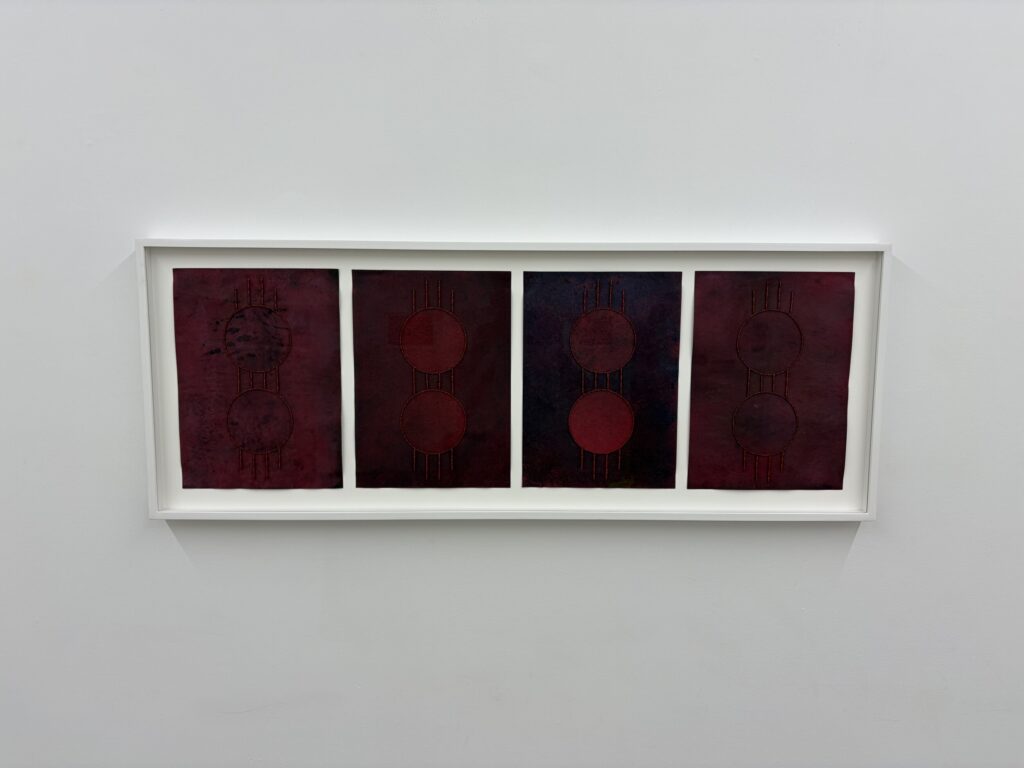
- 1 set of 4 cyanotypes dyed with cochineal, abaca paper, abalone shell, 2024, sized roughly 17×50 inches overall, unique
- 1 set of 4 cyanotypes with cochineal, abaca paper, glass beadwork, 2024, sized roughly 17×45 inches overall, unique
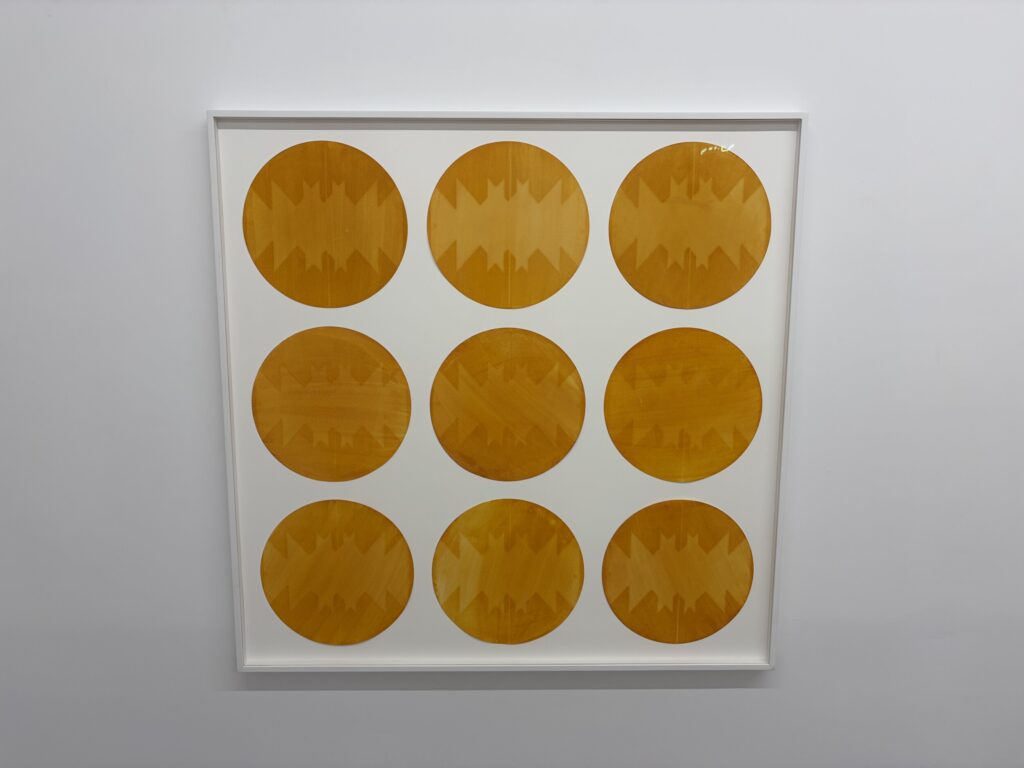
- 1 set of 9 anthotypes dyed with Osage orange, 2024, sized roughly 44×44 inches overall, unique
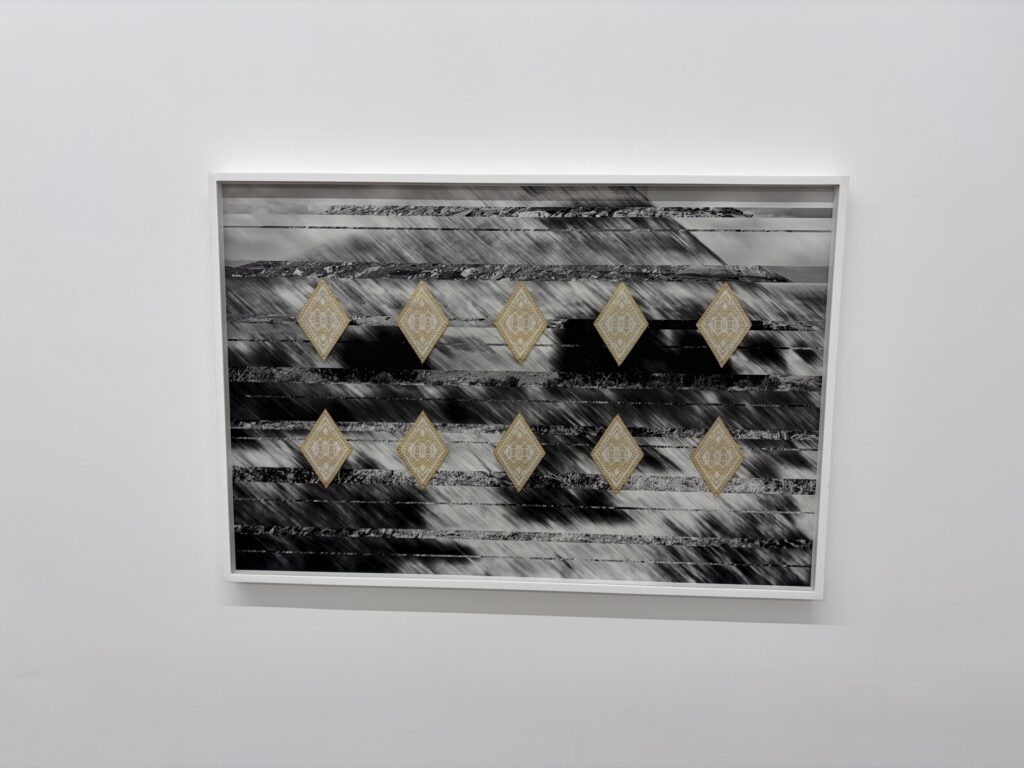
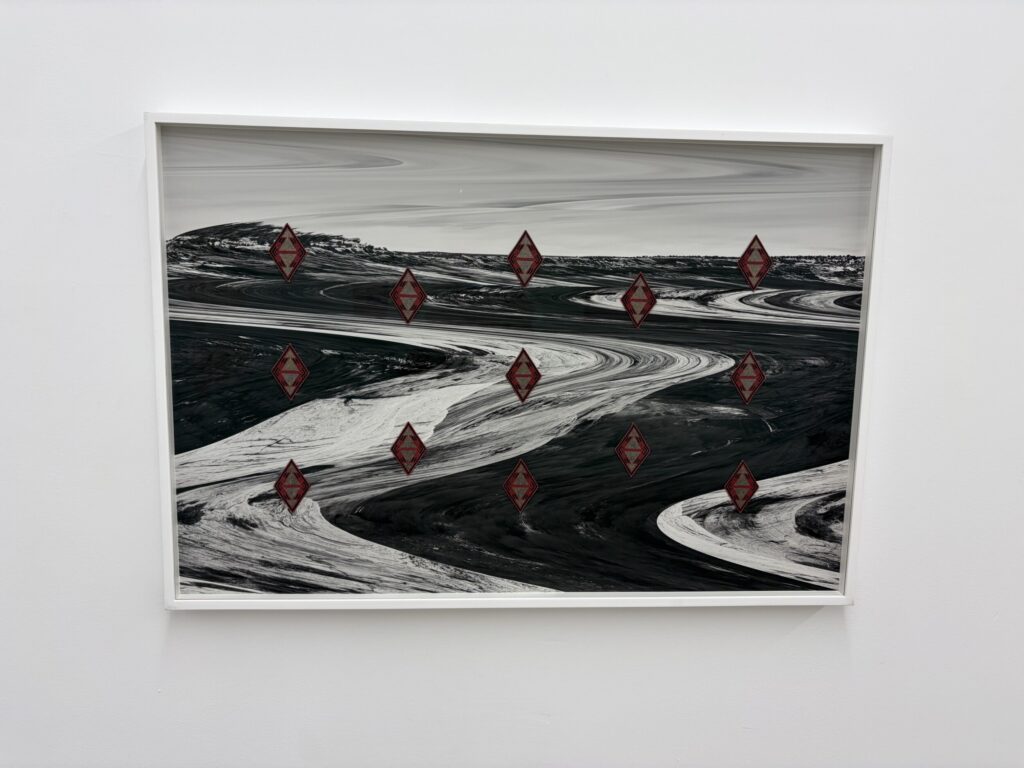
- 2 pigment prints with glass beadwork, 2023, sized roughly 24×36 inches, in editions of 4
- 4 cyanotypes with cochineal, abaca paper, glass beadwork, 2024, sized 11×14 inches, unique
Comments/Context: A change in gallery representation is always a chance for a refreshing reset and re-introduction, and this small show of works by Dakota Mace, now represented by Higher Pictures, bridges between her last gallery show in New York (in 2022, reviewed here) and her current work, filling in the gap of the past few years and setting the stage for a forward looking focus on the future.
As the interest in the work of contemporary Indigenous photographers has broadened in the past decade or so, Mace has quietly established herself by developing a thoughtful blend of sophisticated photographic approaches and traditional craft techniques. Many Indigenous artists have been grasping for ways to merge aesthetic frameworks in this manner, trying to honor the rites, rhythms, and histories of a particular tribe, its ancestors, and its ties to nature and the land while using contemporary artistic methods and conceptual structures to do so, but this integration into a compelling hybrid visual language isn’t always easy or straightforward. Mace stands out from the growing crowd by embracing the richness and complexity of different photographic processes and materials, and then encouraging those image-making strategies to be amplified and deepened by traditional native knowledge, memory, and symbolism.
Two of the works on view come from Mace’s 2023 series “Distorted Landscapes” and use manipulated black-and-white vistas of the southwestern United States as a visual foundation for surface interventions with geometric glass beadwork. Mace is a member of the Diné tribe, who primarily live in what is now Arizona and New Mexico (outsiders use the name Navajo for these people), and these works reconsider places significant or sacred to the Diné, and question the national narratives and histories of the United States that fail to accurately consider the taking of the land from Indigenous inhabitants. “Tséyi (Among the Canyons)” rhythmically swirls a view of Canyon de Chelly, an iconic Diné homeland and the starting point for the 1864 Long Walk of forced displacement, and adds an array of thirteen beaded diamonds, representing the symbolic number of stripes on the American flag. “Na’neel’Zhiin (Dark-Colored Barrier)” divides a famous mesa and cliff formation into blurred strips, with more beaded diamonds sewn into the surface, now representing members of Mace’s extended family, including grandparents and their children, and providing signposts to continue to connect the people to the land, even as it becomes distorted beyond easy recognition.
The other works on view in the show find Mace exploring thoughtful ways to incorporate resonant materials and traditional techniques into her photographic process, re-imagining classic image-making approaches to accommodate her personal narratives. Three sets of dyed cyanotypes from the series “Sǫʼ Baa Hane’” (or “Story of the Stars”) start with repeated graphic elements – jagged shapes that might be spearpoints or ghostly figures, arrangements of ovals and discs that might be celestial star maps, and circles connected by lines that might represent the balance of the sun and moon. These cyanotypes aren’t traditional Anna Atkins blue in color, but a deep smoky and mottled red, made by adding carmine dye from cochineal insects, intimately connecting natural cycles to these mystical symbols. Mace then goes further to add glass beading (as edging for the shapes) and rounded abalone shell decorations, further transforming the photographic prints into hand-crafted objects and giving oral storytelling traditions a tactile physical presence.
The most eye catching work in the show is a large array of sunny yellow anthotypes, each circular print made from the pigment of the Osage orange. Mace’s graphic element this time is an angled zig zag mirrored up and down, which might be anything from mountain ranges or clustered villages to waving fields of grass or weaving patterns. The repeated circles seem to track the passing of days, each circle its own variant of the sparkling sun, with Mace again smartly incorporating the local plants into her composition, literally rooting it in the land.
As Mace’s photographic practice continues to evolve, I see the logic of her move to Higher Pictures, where a number of the gallery artists are experimenting with photographic process and extending it in unexpected directions for various conceptual reasons. To my eye, this move changes the balance of how Mace might be positioning herself and her art, or perhaps just signals her finding a home that fits her practice more naturally. While her Diné identity will always be an integral part of the artistic stories she chooses to tell, these recent bodies of work signal a deeper engagement with the experimental traditions of photography and a willingness to test the boundaries of those processes to handle her own particular image-making ideas. The resulting recent works feel more tightly conceived and executed, the how of the process intimately tied to the why of the thinking.
Collector’s POV: The works in this show range in price from $4000 to $15000, based on size. Mace’s work has little secondary market history at this point, so gallery retail likely remains the best option for those collectors interested in following up.