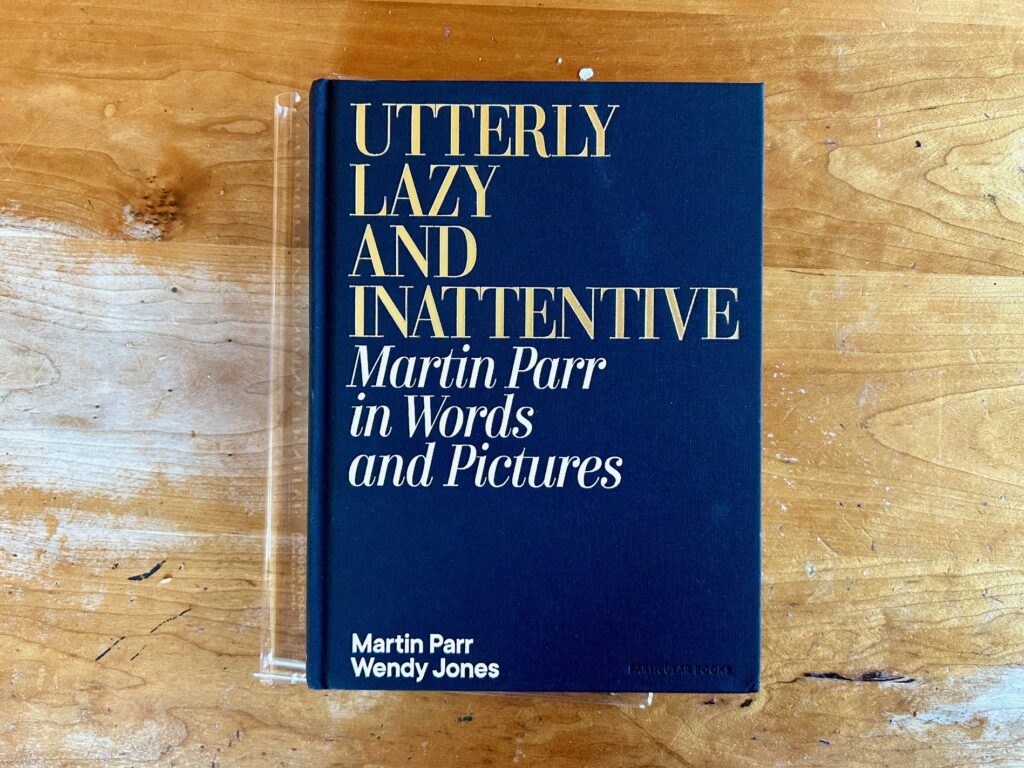
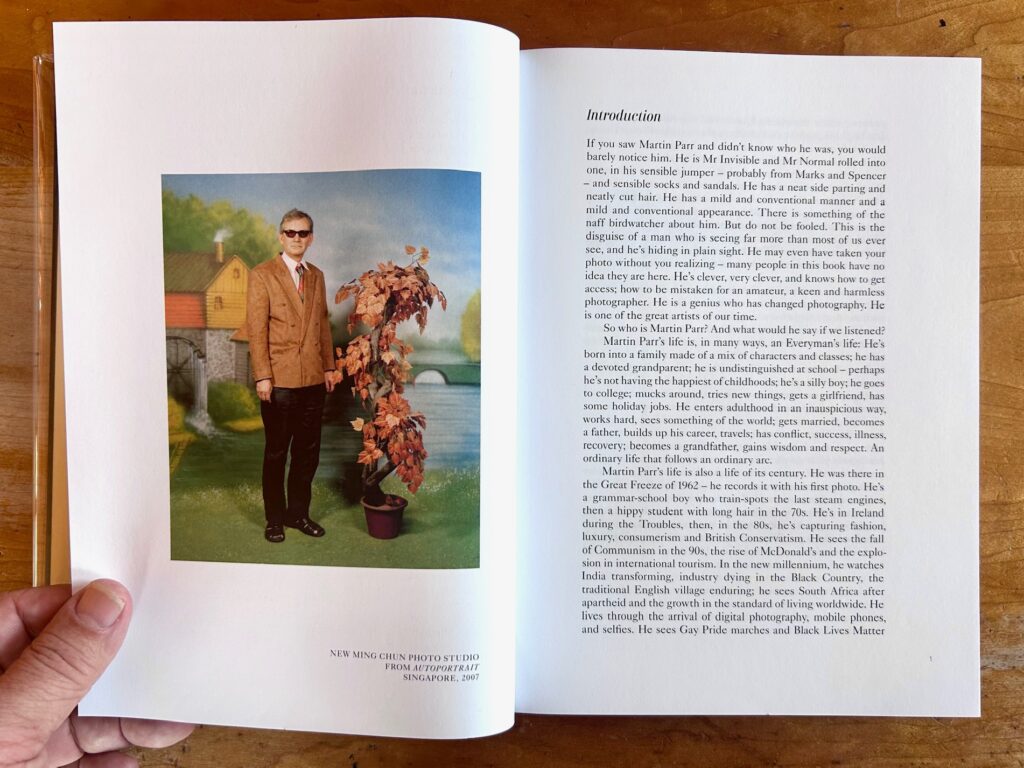
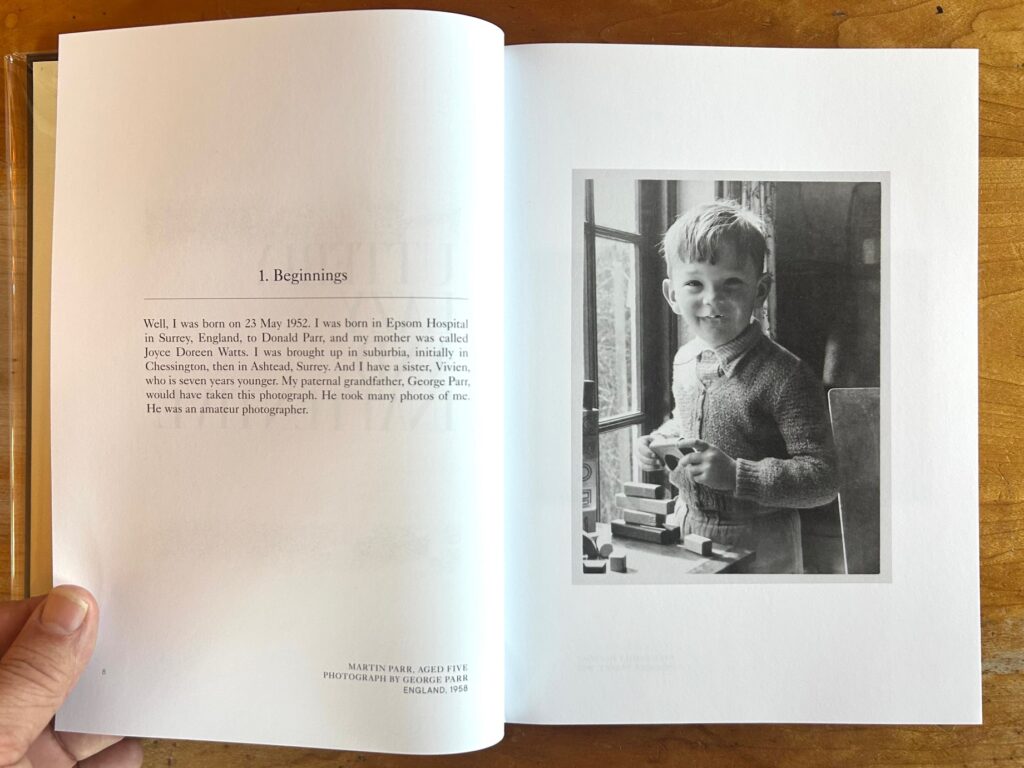
JTF (just the facts): Published in 2025 by Particular Books, an imprint of Penguin (here). Hardback with cloth cover and gold foil debossed title, 256 x 192 mm, 306 pages, with 151 photographs in black-and-white and color. Includes an introduction by Wendy Jones, and numerous texts by the artist, co-written/edited by Jones. Design by Jim Stoddart. An American version will be published by Rizzoli in March 2026 (here). (Cover and spread shots below.)
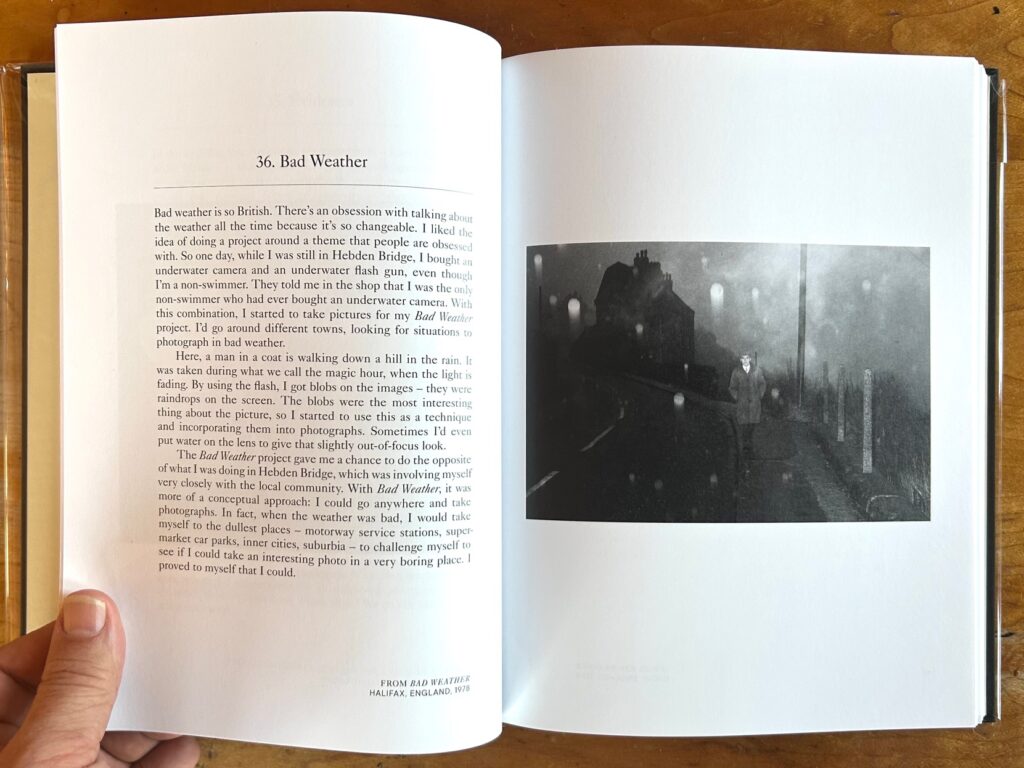
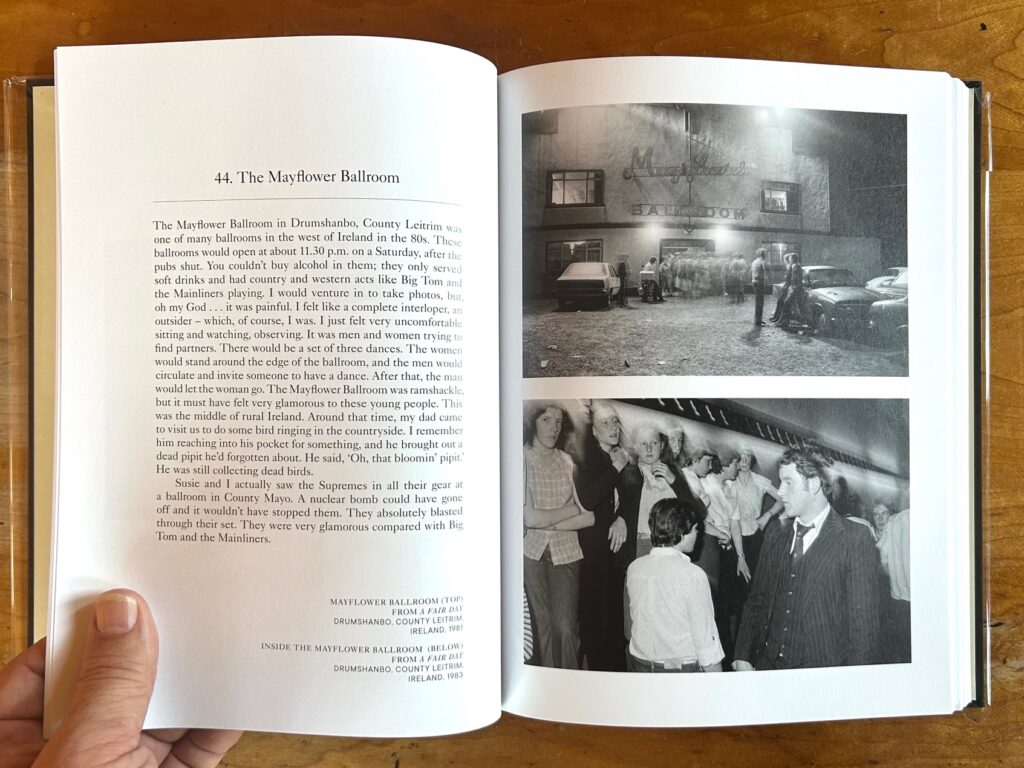
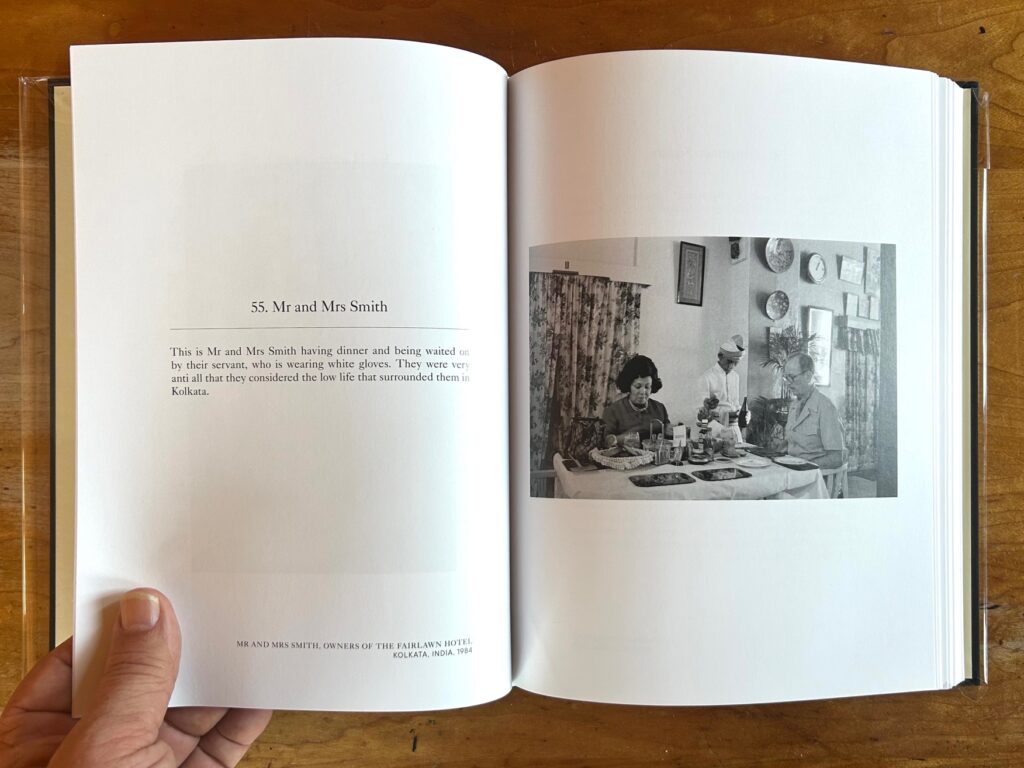
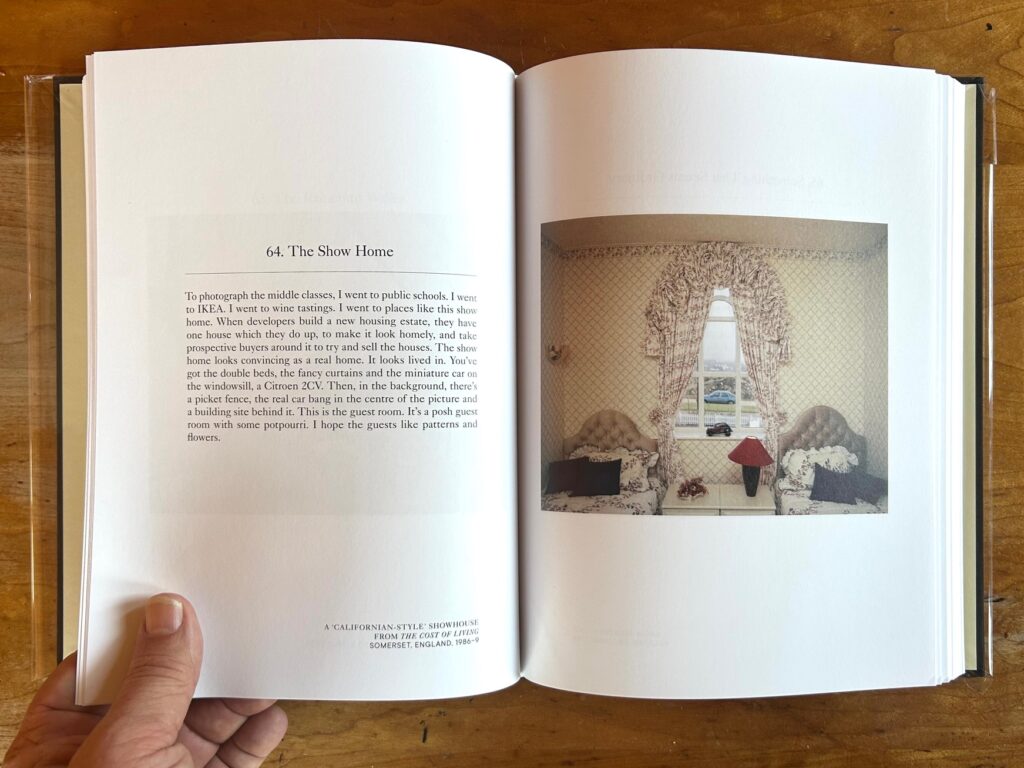
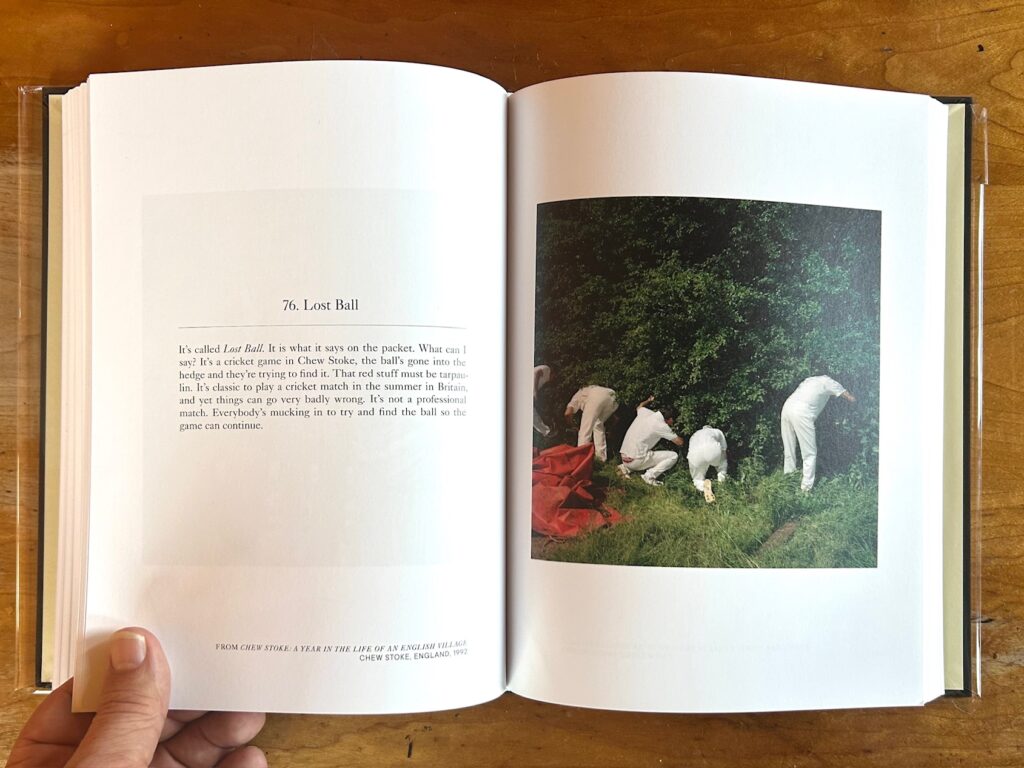
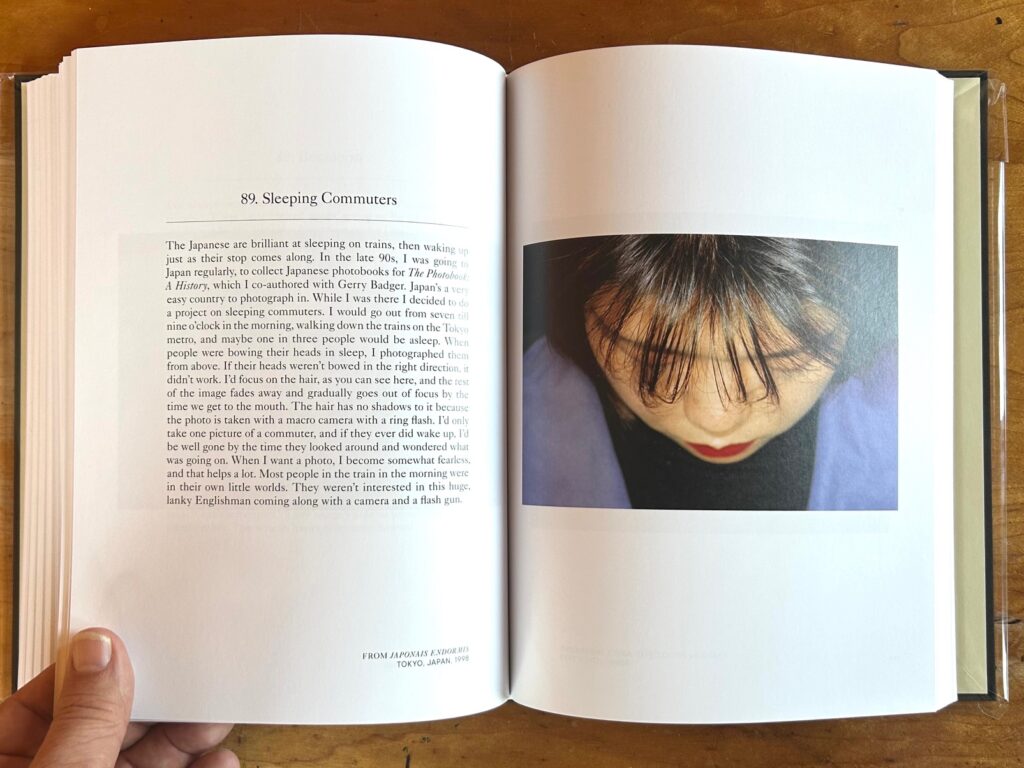
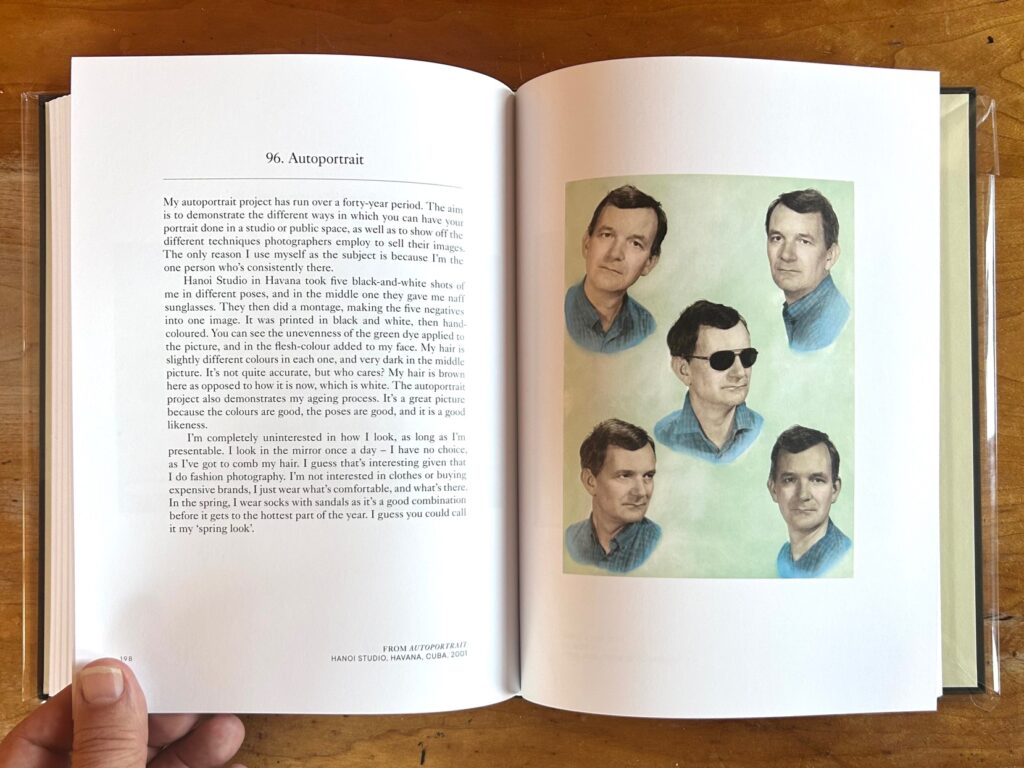
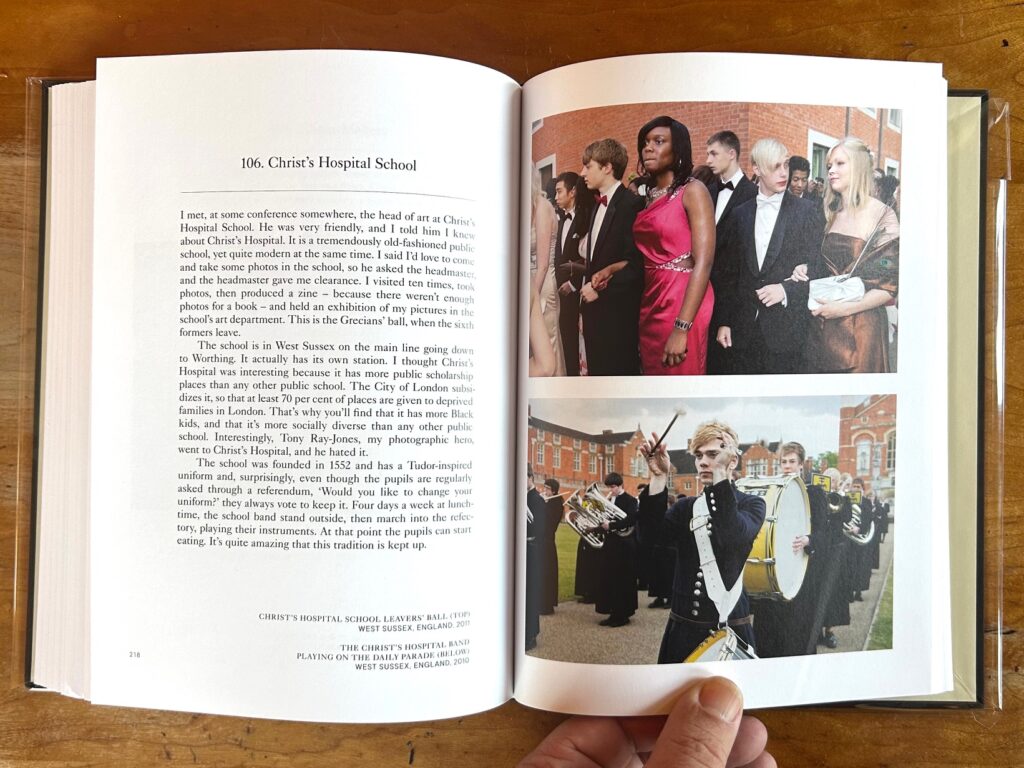
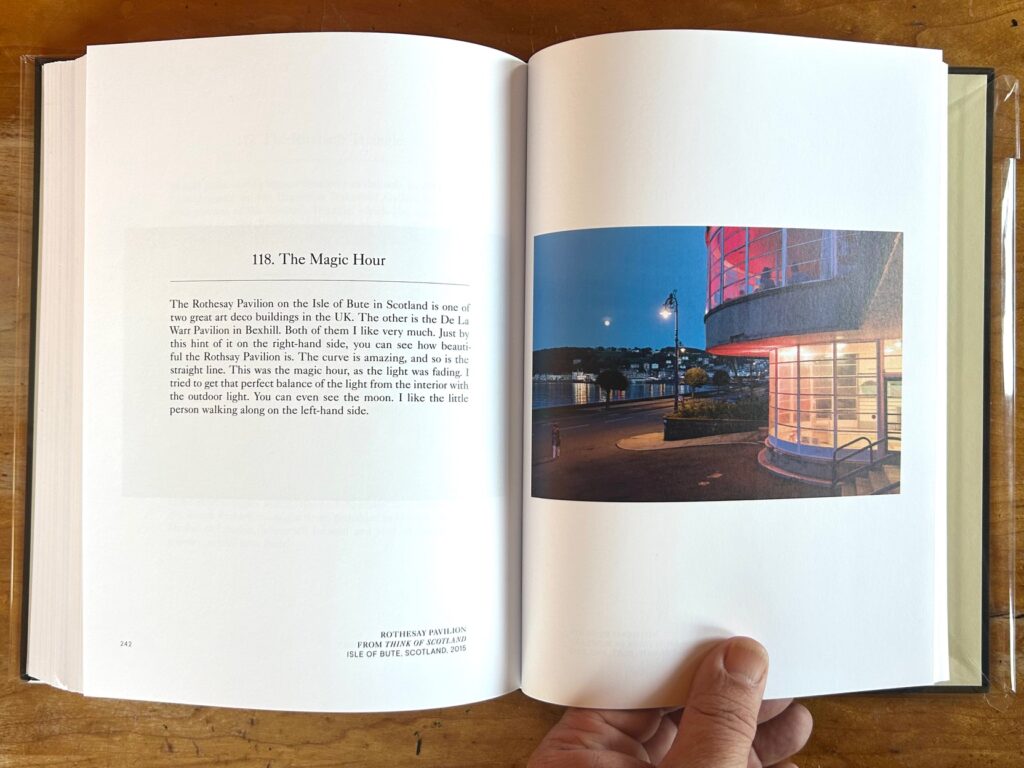
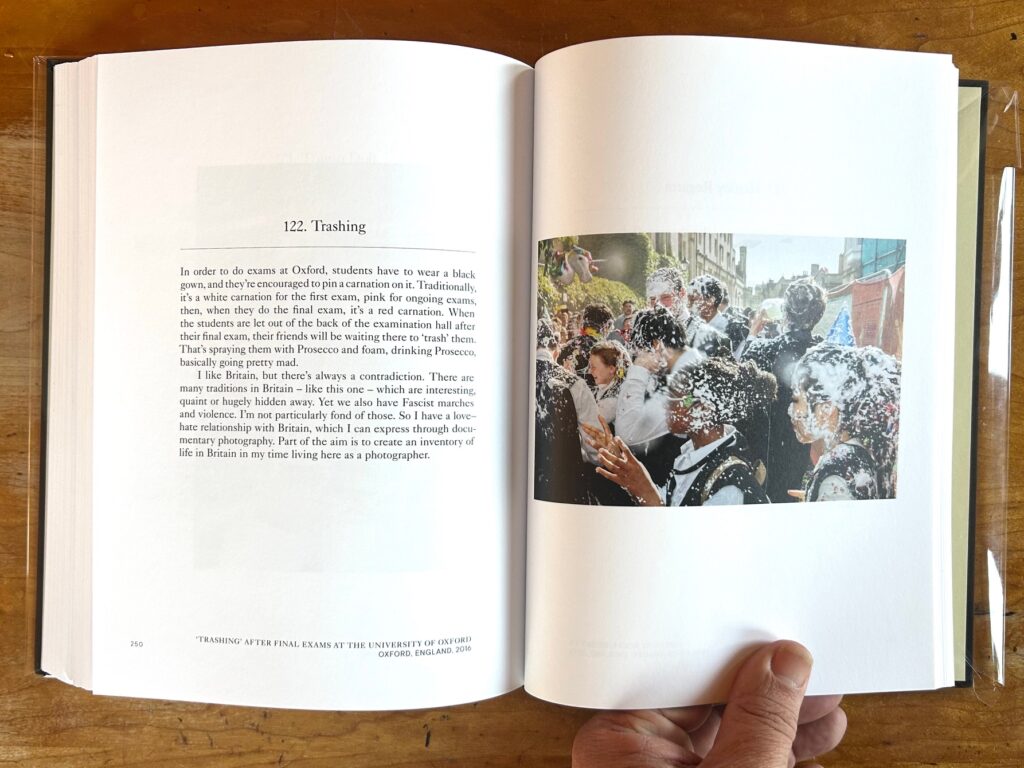
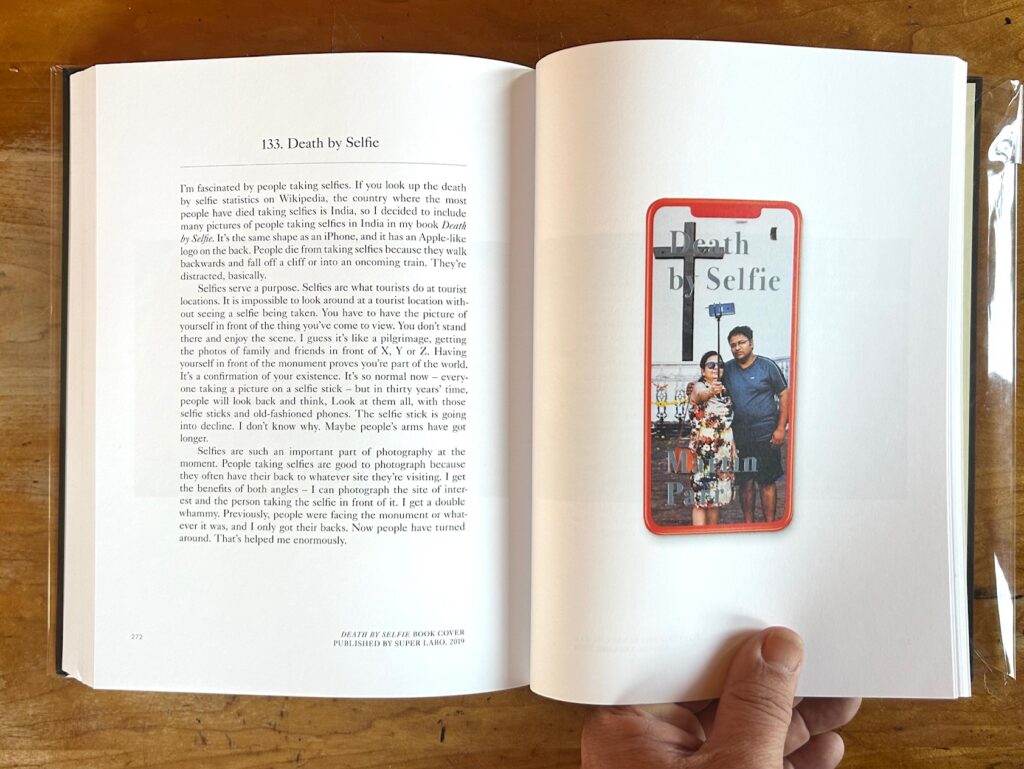
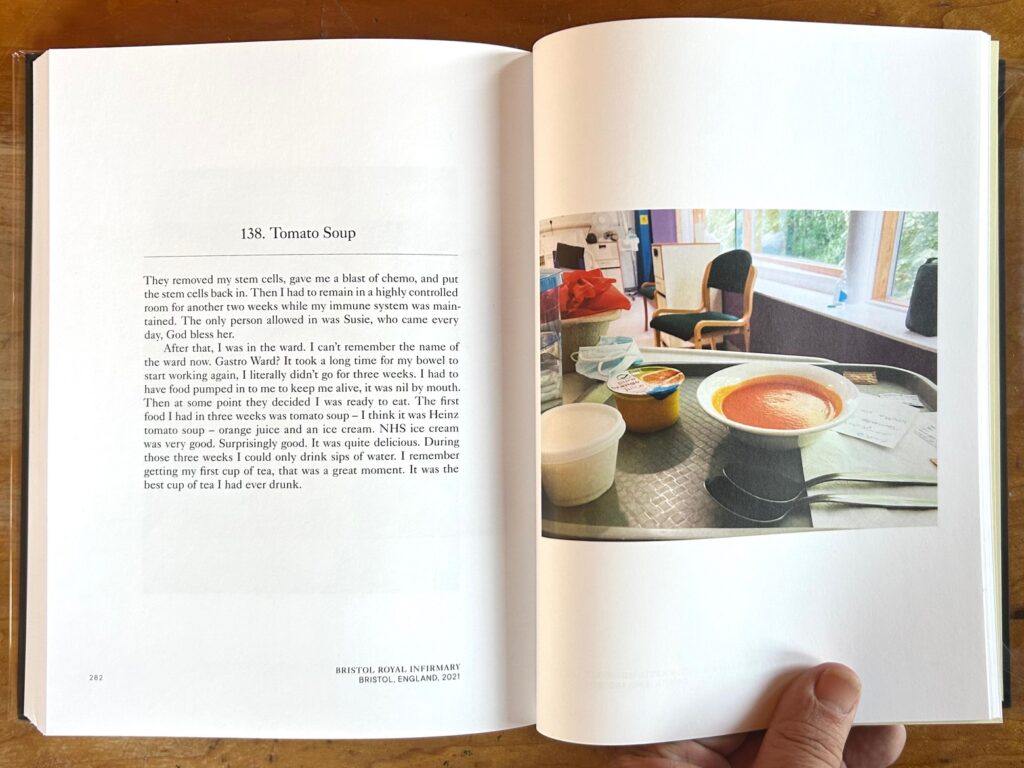
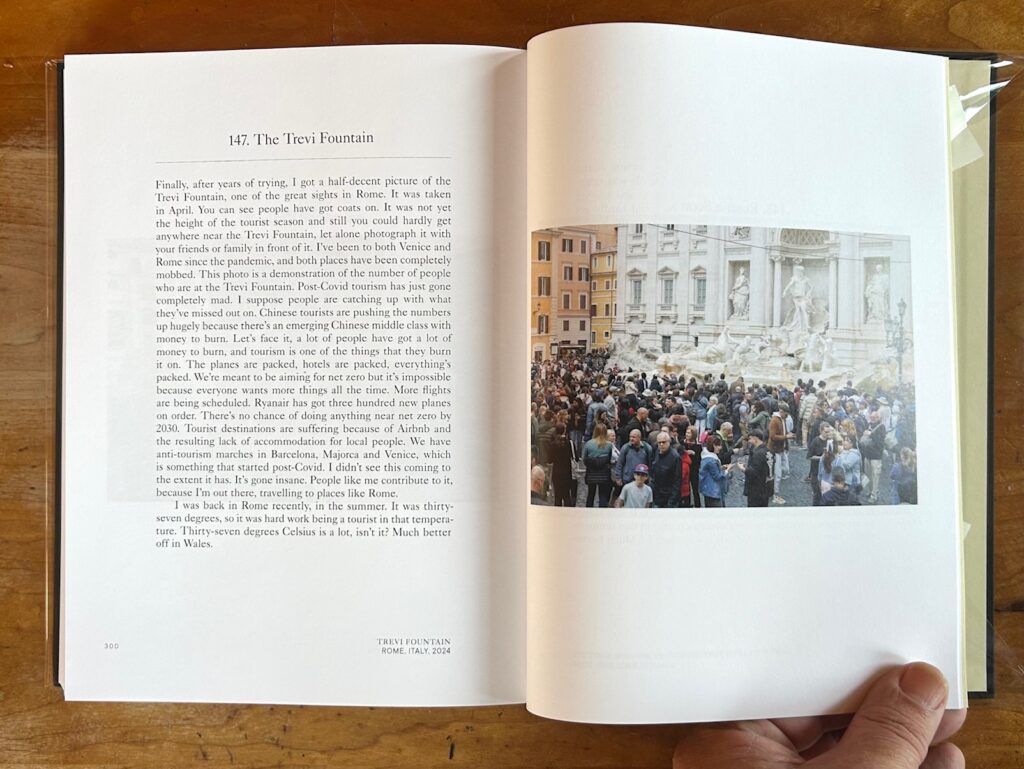
Comments/Context: Martin Parr had his finger in so many photo pies that it was hard to track them all. From puberty on, the British photographer was a tour de force, shooting, collecting, curating, exploring, writing, and managing projects non-stop. He became a Zelig-figure in photoland, popping up routinely in this or that exotic locale. Parr created millions of pictures, hundreds of books and exhibitions, and kick started color photography’s acceptance in the UK. He presided over Magnum, co-authored the definitive trilogy on photobooks, traveled to hundreds of countries, inspired a full-length documentary, mentored countless students and colleagues, and created an eponymous foundation to manage it all. Whew! That’s a lot of pies.
Parr’s manic activity level continued through his final days when he was sick with blood cancer, still hobbling to every photo event he could manage. Mobility scooter be damned, his reach was vast. When he died in December at the age of 73, tributes and remembrances poured in from around the world. It was a dark day for the photo community. But for historians there was a silver lining. Parr’s foot was finally off the gas. There might now be an opportunity for a general accounting and assessment. Critics could take a breath, then slot his career into historical context.
It should come as no surprise that Parr was a step ahead of the historians. Soon after his cancer diagnosis in 2021, he began planning his memoir. He commissioned Wendy Jones as his editor and ghostwriter. They collaborated for four years, and the result was published in September 2025, just a few months before Parr’s passing. Blending images, notes, and memories, Utterly Lazy and Inattentive is informative and compulsively readable. For an artist who was famously skeptical of high-brow mannerisms, the breezy tone is fitting. I devoured the whole thing in one evening. But I’m admittedly a Parr buff. Mileage for non-fans may vary.
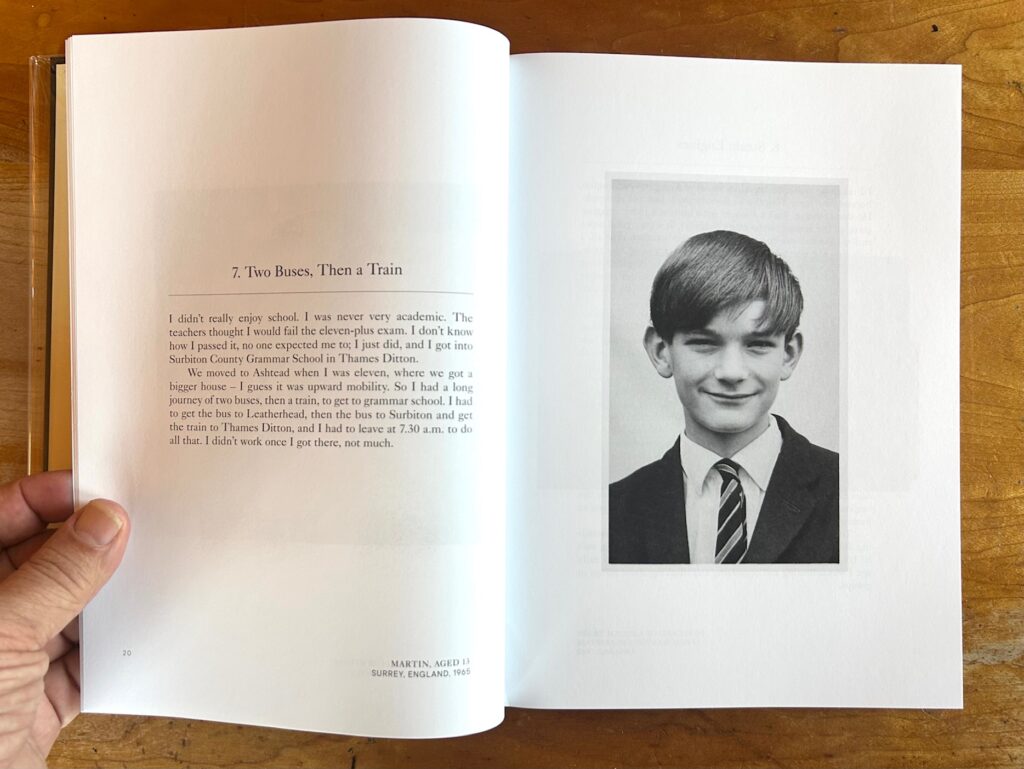
Casual browsers might wonder about the title. It’s excerpted verbatim from a 1966 grammar school report card. Apparently a French teacher took a dim view of young master Parr’s prospects. In typical fashion, he adopted this early misjudgment as a badge of honor. Within just a few busy chapters—facsimile report card proudly trumpeted—the irony becomes apparent. Parr’s professional life was a whirlwind. The adjectives “lazy” and “inattentive” are spectacularly off base. In fact one could hardly imagine a worse description for the utterly industrious and observant Parr.
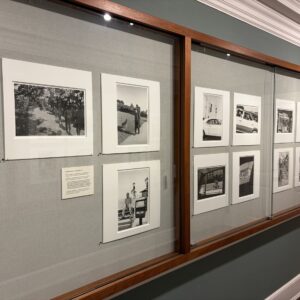
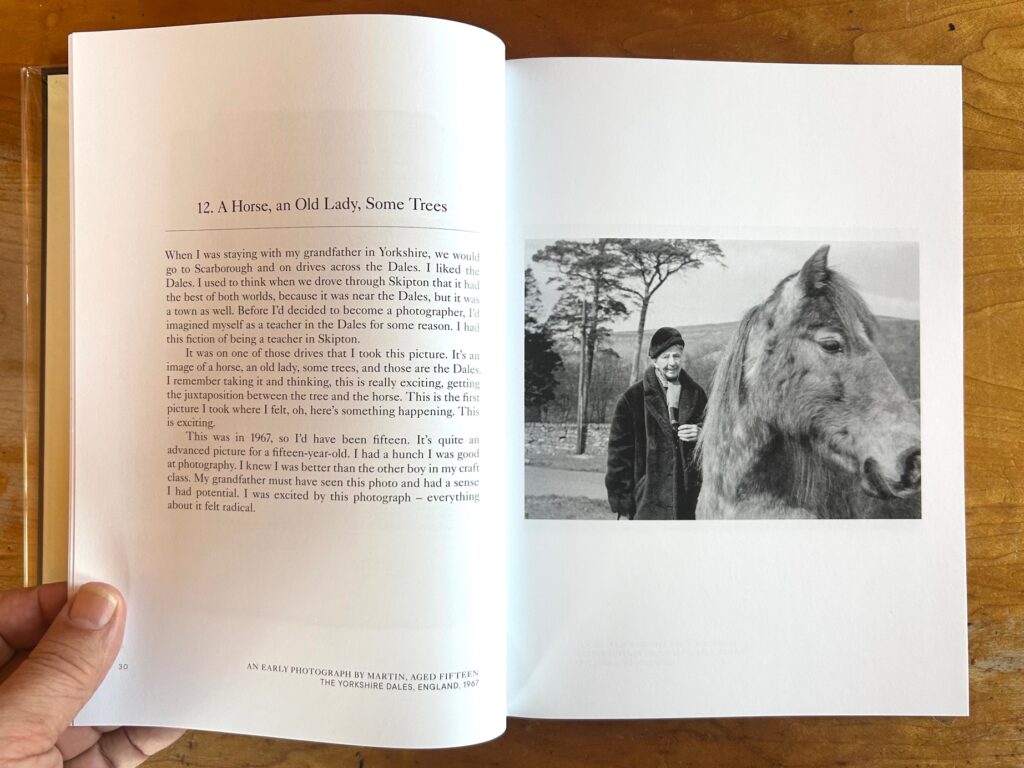
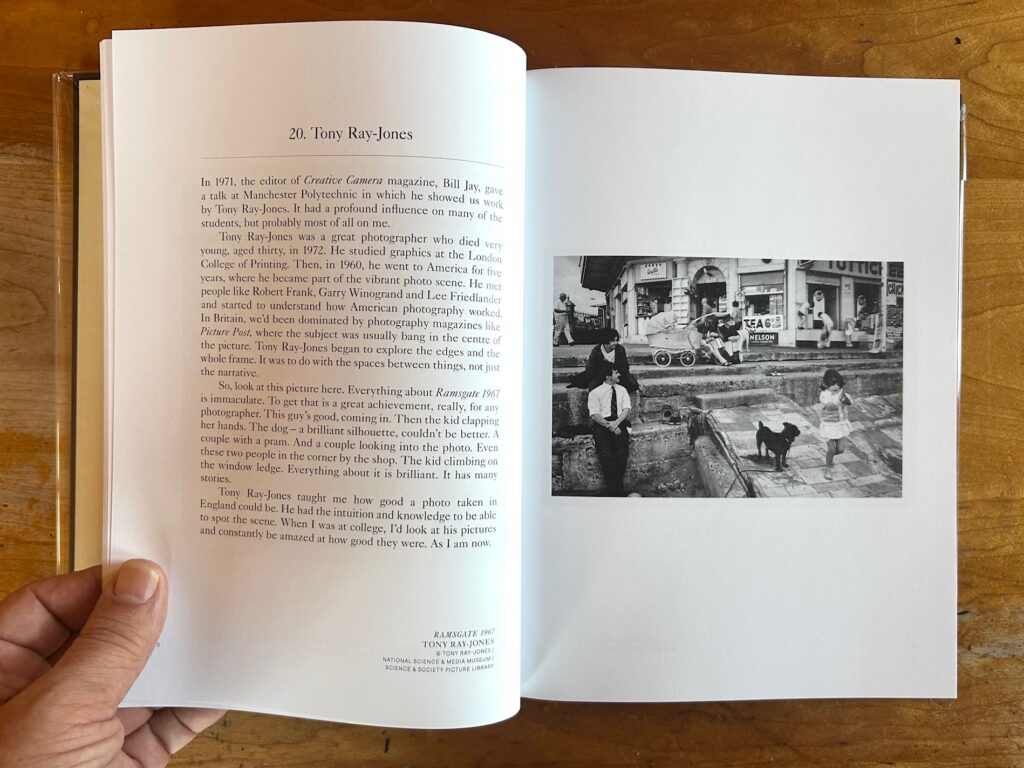
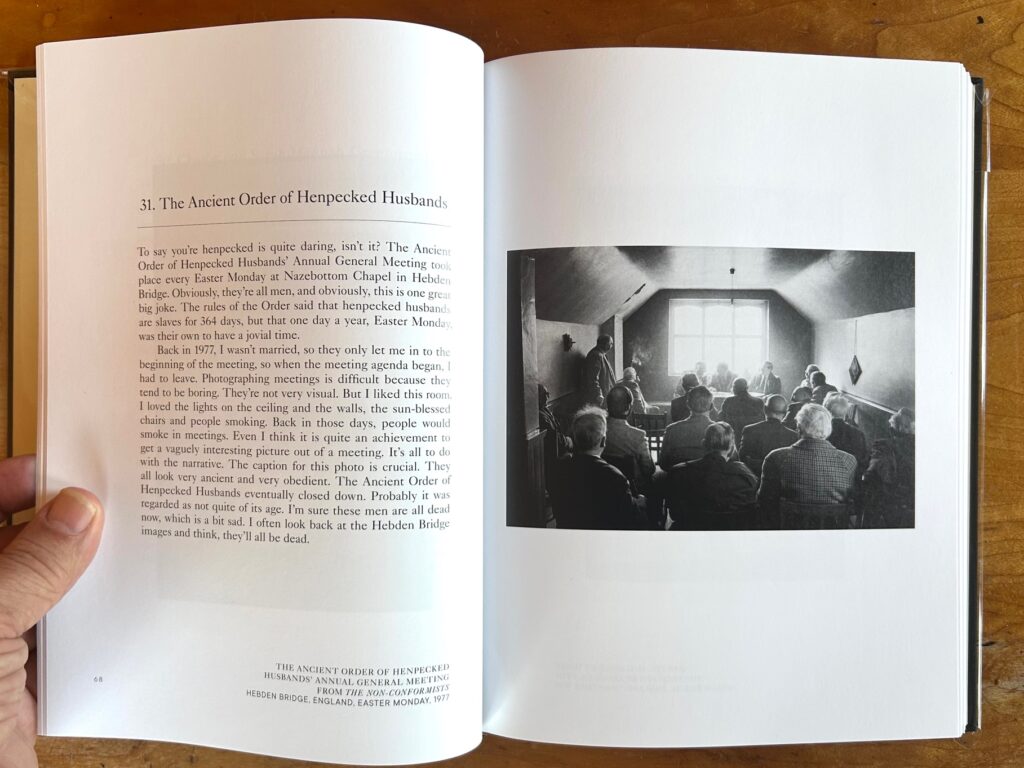
Design-wise the book is simple. There are 150 spreads in roughly chronological order, on matte paper stock. Each one pairs a modest-sized Parr photo (plus a few from his heroes) with a short essay. The basic structure is similar to Dona Ann McAdams’ memoir Black Box (reviewed here), but in color and without the goat farm. Parr covers a wide variety of experiences, projects, and locations. Some recount well known parts of his legacy, but there plenty of private revelations in the mix. Whatever the topic, Parr’s writing style is loose and extemporaneous. It seems likely the essays were transcribed from oral interviews, and then edited into short passages by Jones. But the methodology isn’t spelled out. In any case, Parr’s keen wit and wisdom come through loud and clear.
Images and anecdotes span Parr’s entire life, from his birth (May 23rd, 1952 at Epsom Hospital in Surrey) to very near the end (December 6, 2025, at his home in Bristol—British to the last drop of tea) “I’m not going to retire from taking photographs,” he proclaims boldly alongside a photo from 2024. “I’ll just drop dead first.” If that was the cost of living, he surely got his money’s worth.
Career accomplishments are duly noted, of which there were many. But most readers will know these already. In trying to decode Parr, the formative years are more revealing. The book leaves a trail of tantalizing clues, with memories of his parents—“they were very different people”—relatives, hometowns, and childhood experiences. Even though he was a poor student, he showed early traces of a willful and curious soul. By the age of fourteen, inspired by the Winogrand photo of driveway kid and trike in New Mexico, Parr had decided he would be a photographer. His parents were skeptical at first, but they knew better than to stand in his way.
An early interest in trainspotting presaged Parr’s lifelong habit of collecting things. As a boy he would observe trains and record them in a notebook. “From an early age,” he writes. “I was collecting and organizing and thinking about things in groups.” As if to prove the point, this bit of self reflection is paired with an image from a 1965 scrapbook, showing a steam train in silhouette.
The impulse to accumulate would eventually dovetail with photography as well as other interests. After all, “taking” pictures is an act of collecting. As an adult, Parr collected everything from dolls to Saddam Hussein watches to Soviet space dogs to Communist crockery. He also built the world’s foremost private photobook collection, a library of some 12,000 titles which he sold to the Tate. The book references many of these collections with pictures and anecdotes. “I can’t explain it,” he writes. “I think it’s a desire to bring things together. I would drown in objects if I didn’t have the ability to photograph them.” These words are paired with a 2020 photo of two dolls, which his wife Susie forced into stubborn deaccession.
Parr’s photos are renowned for their humorous tone, and the book traces that lineage too. He viewed the world with a wink and a nudge, his impish spirit expertly wrested by Jones. An early clue comes around age 14 with a picture of The Tom Lehrer Song Book. Lehrer became an early satirical influence. Pass also enjoyed watching the British humorists David Frost and Tony Hancock, who was “good at pricking the pomposity of the English.”
The balloon pricking impulse would manifest again and again throughout Parr’s career. He loved to take the snobbish class down a peg, and he found plenty of targets in his home country, as shown in books like Think of England and Only Human. He felt the tug of absurdity over haughtiness, stretching back to childhood. “I’ve always been very keen on satire and humor,” Parr writes. “I take it very seriously.” Deadpan serious photos of oddities back him up, for example, a jar of home made lemon curd or gold leaf curtains.
Parr’s devilish wit occasionally landed him in hot water. For some viewers, his wry humor came across as snarky condescension. In 1986 his first color photobook The Last Resort helped establish his international reputation, but it ruffled feathers in some corners of photoland. Parr would be the first to admit that his Brighton Beach photos pulled no punches. He shot trash, crowds, fast food, gulls, and wailing tots. He exoticized working class beachcombers as sunburned circus acts. Humorous? Yes. Cruel? Perhaps. Nevertheless, several photos from that project have stood the test of time. A small handful appear in the book, accompanied by interesting anecdotes.
The Last Resort was a breakout hit, and drew a line in the sand. Parr was built differently from the old guard. Henri Cartier-Bresson famously called him “an alien from another solar system.” (Parr: “I know what you mean, but why shoot the messenger?”) For a while, the old grey establishment didn’t know quite what to do with this young color-shooting upstart. Antagonisms famously came to a head when he applied to Magnum in 1988. Parr was finally admitted in 1994, by the skin of his teeth and only after years of wrangling.
If he had any hurt feelings, he brushes them aside in the book. He glosses happily over his Magnum relationships as well as The Last Resort, each seemingly major hurdle dispatched in a few paragraphs. For the perpetually upbeat Parr, they were water under the bridge. There was always another distant city or photo op beckoning. “By traveling so much I accumulate images,” he writes, “and I accumulate a view of the world. Don’t ask me what that view is. I can’t tell you what that is in words, because I express it through photography.”
Even as he made his way from one project to another, Parr didn’t lose sight of himself. He was well aware of his reputation and his appearance, and he enjoyed testing himself against the world, provoking reactions, and teasing out his own sense of identity. His published memoir is merely the final tangible proof, but there are numerous signs along the way. The book highlights Parr’s long-running “Autoportrait” series, in which he commissioned local photographers—and sometimes unmanned photobooths—to capture him wherever he traveled. The results are both mundane and glamorous. They slot easily into the book alongside his “Boring” photographs of the titular town in Oregon, Spam cans, street sellers, McDonald’s dinners, and a steaming mug of tea. In Parr’s photos, the banal and spectacular blended as easily as inner and outer worlds.
Much of the book is spent on photography, with only fleeting references to Parr’s wife and family. If Susie and Ellen get short shrift, there’s no harm done. This isn’t intended as a tell-all. Instead it’s a surface level survey from an artist at the top of his craft. But still, it’s always fun to dig deeper. What drove Parr? What made him tick? What made him so peripatetic, restless, and eager?
If the book doesn’t delve into psychoanalysis, it takes an honest stab at understanding Parr’s visual style. At one point he attempts to put his words into words. “What does Parr-esque mean?” he asks. “Colorful, Funny, I suppose. Small. Small scale. It’s not the big event. It’s not the Queen being crowned, it’s the people in the crowd watching the Queen being crowned…Sometimes people say I sneer in my photographs. I don’t think I do, but people are entitled to say that if they want, of course. I like people, basically.”
That last sentence probably summarizes Utterly Lazy and Inattentive as well as any. Parr was a people person at heart. Most of his photographs show fellow humans, and most of his anecdotes relate interpersonal situations, events, and impressions. His own visage appears in numerous pictures. He is usually smiling and never sad. Of course we are not shown the reject photos. But the message is clear. Carry on. Stiff upper lip. Something better is around the next corner. Of course it’s impossible to know what he’s really thinking in these cagey self-portraits. But there’s a good chance it’s the next photo project.
Collector’s POV: Martin Parr is represented by a number of galleries around the world, including Janet Borden in New York (here), Stephen Daiter Gallery in Chicago (here), Rose Gallery in Santa Monica (here) in the United States. In recent years, Parr’s prints have become more consistently available in the secondary markets, with prices ranging between roughly $1000 and $27000.