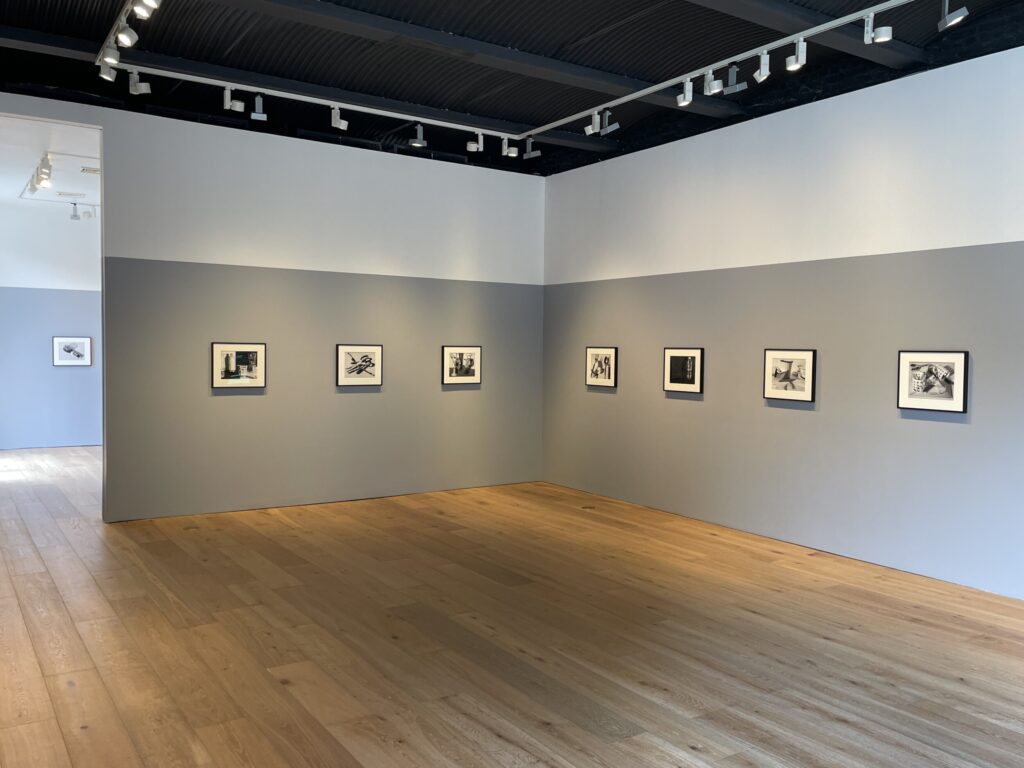
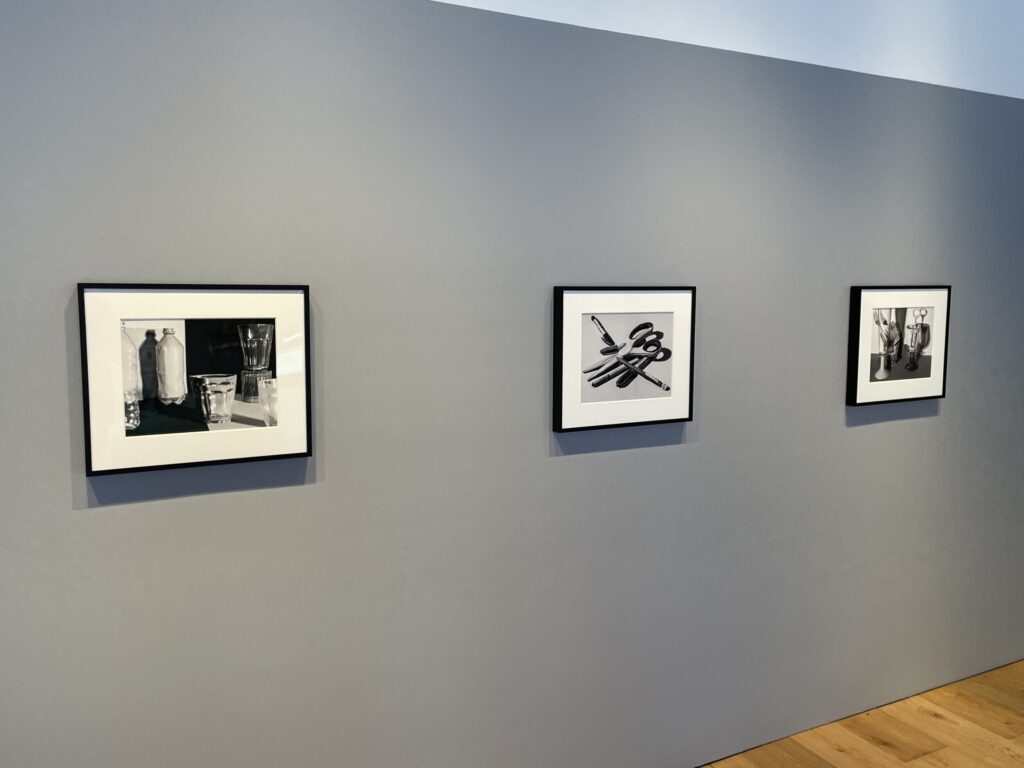
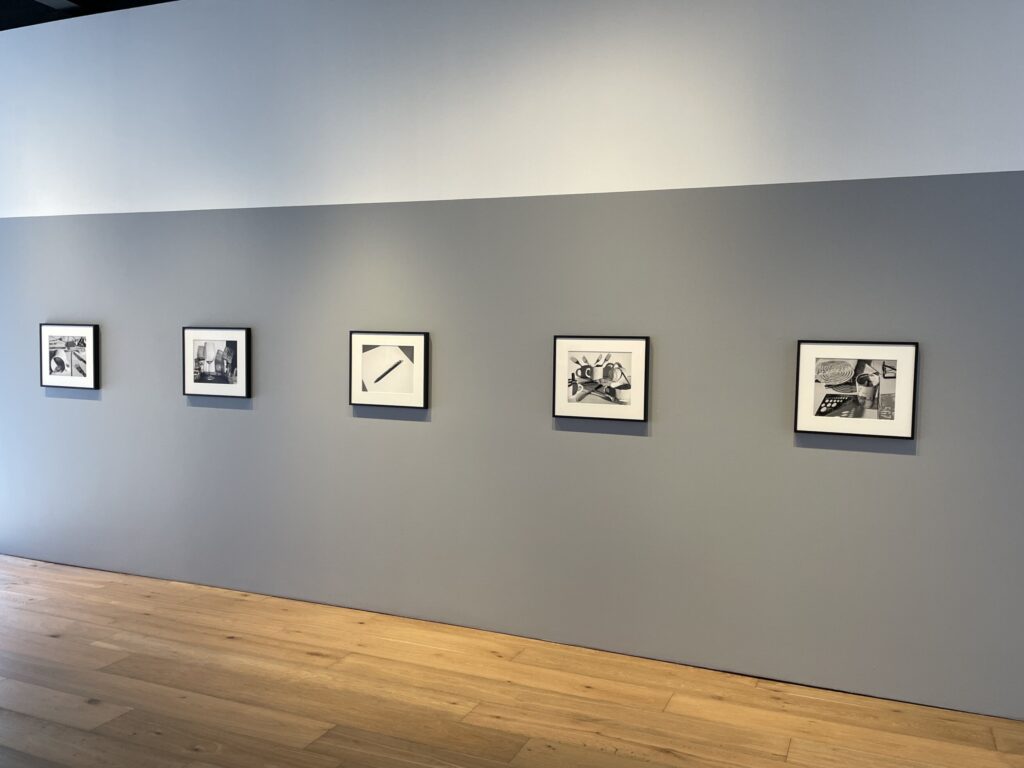
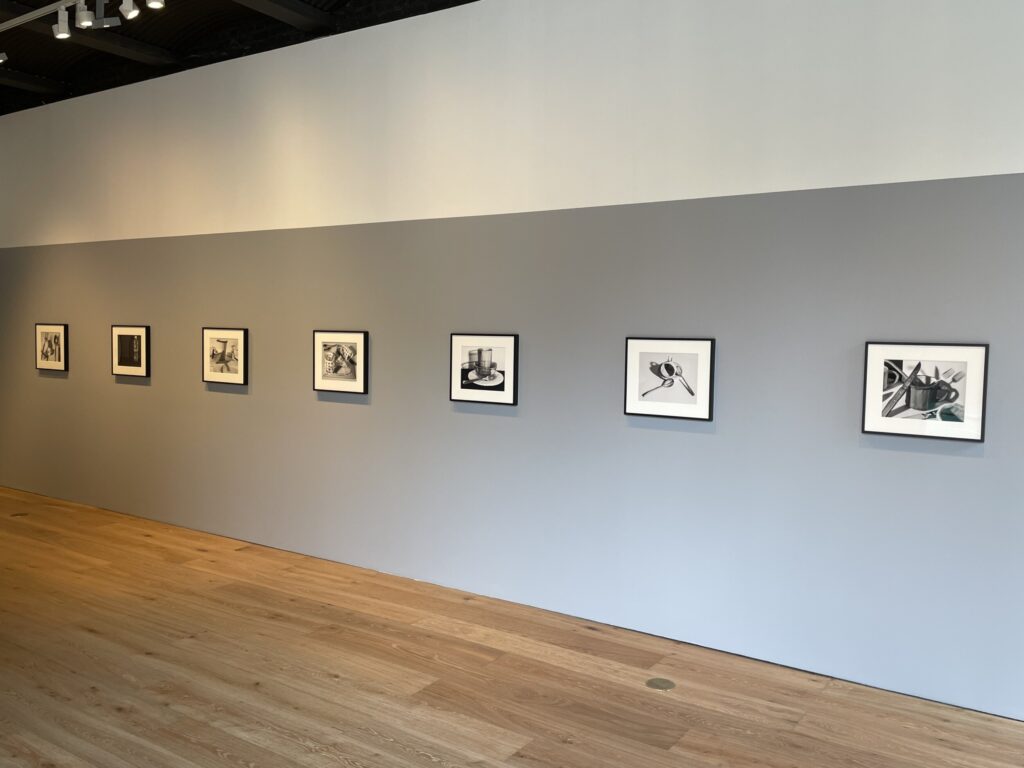
JTF (just the facts): A total of 25 black-and-white photographs, framed in black and matted, and hung against grey striped walls in the two room gallery space. All of the works are pigment prints, made in 2024 or 2025. Each image is sized 11×14 inches, and is available in an edition of 2+1AP. (Installation shot below.)
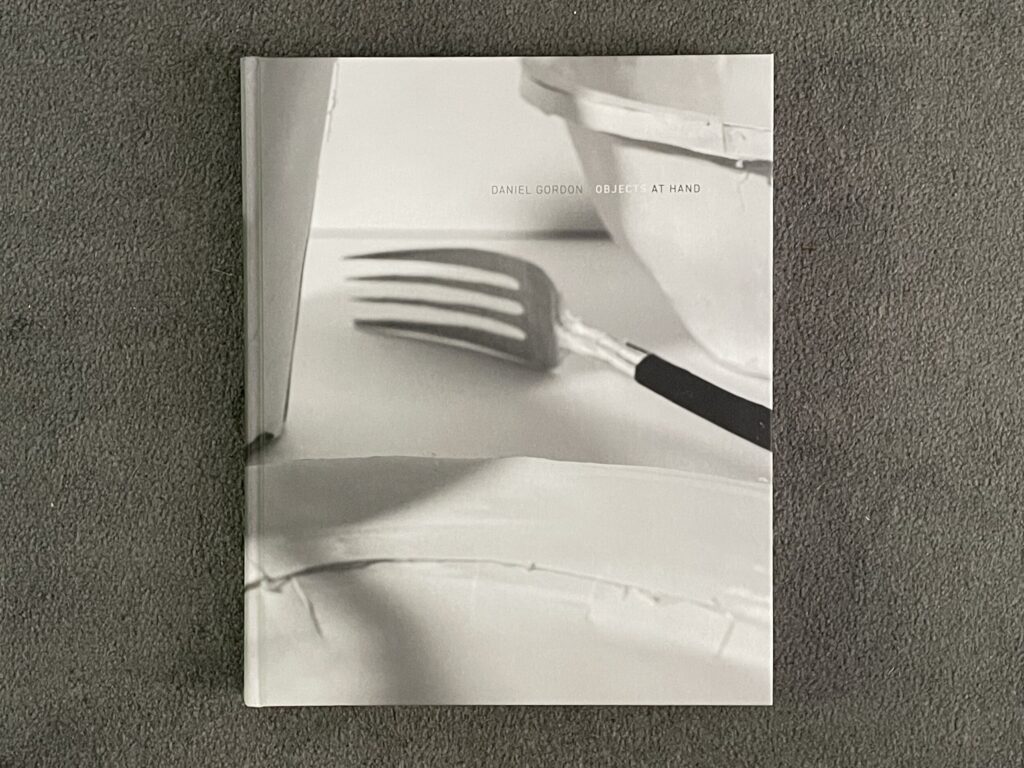
A monograph of this body of work was recently published by Radius Books (here). Hardcover (10.5 × 13 inches), 164 pages, with 72 black-and-white image reproductions. Includes an essay by Kevin Moore and a conversation between the artist and Lucas Blalock. (Cover shot below.)
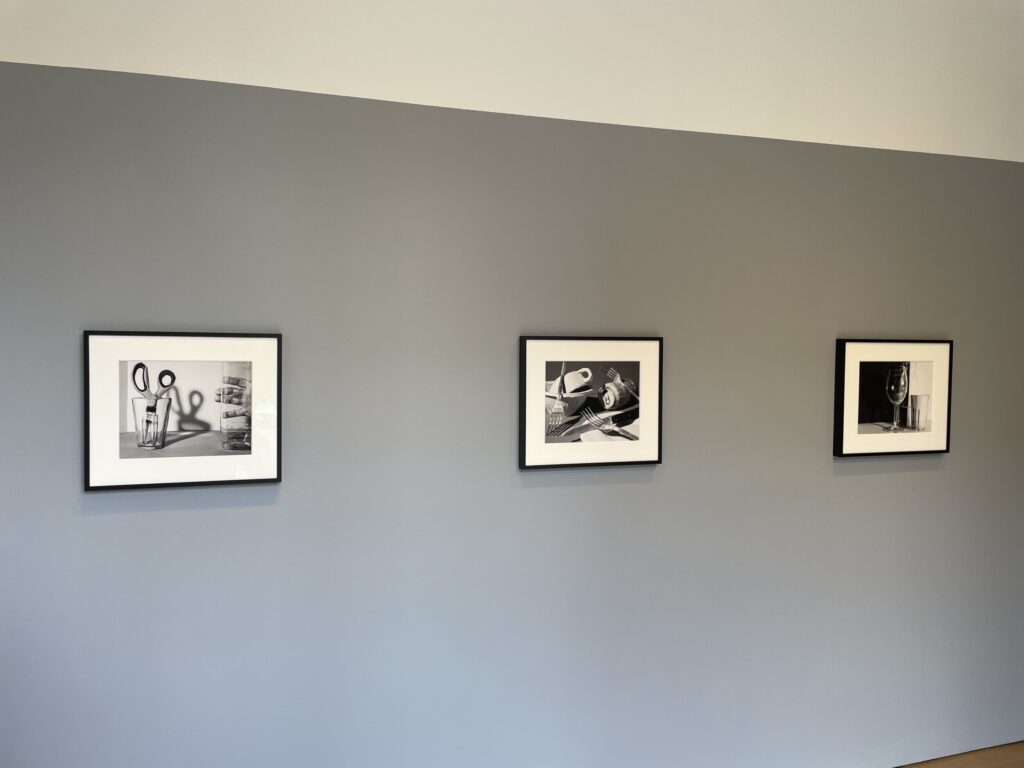
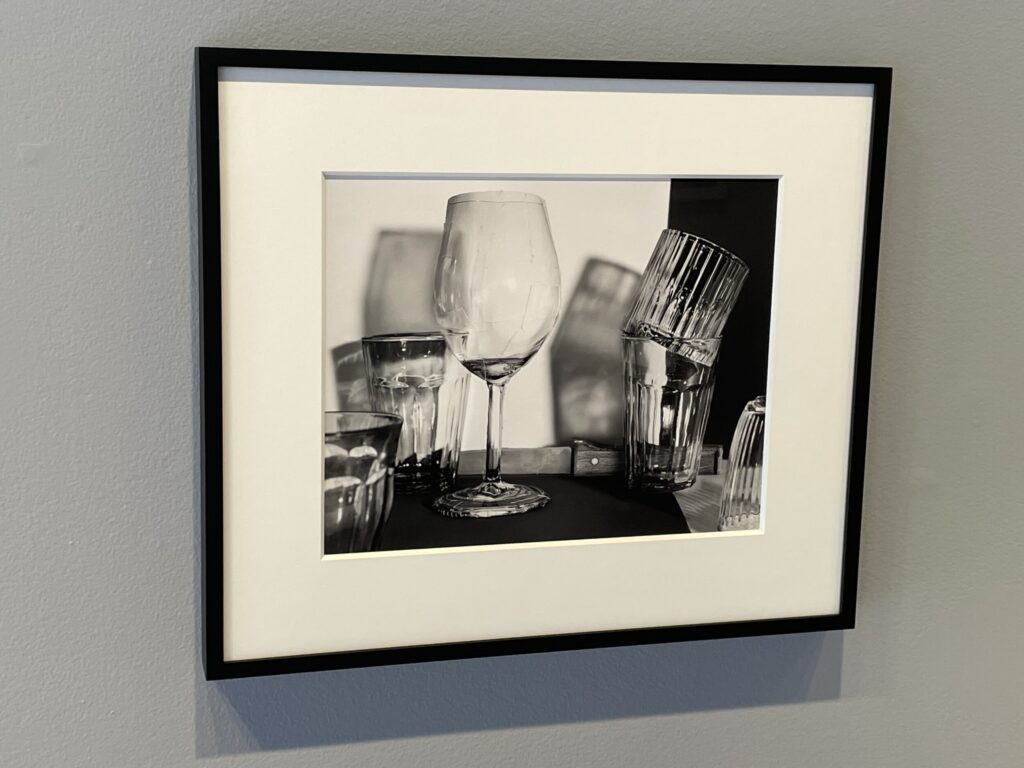
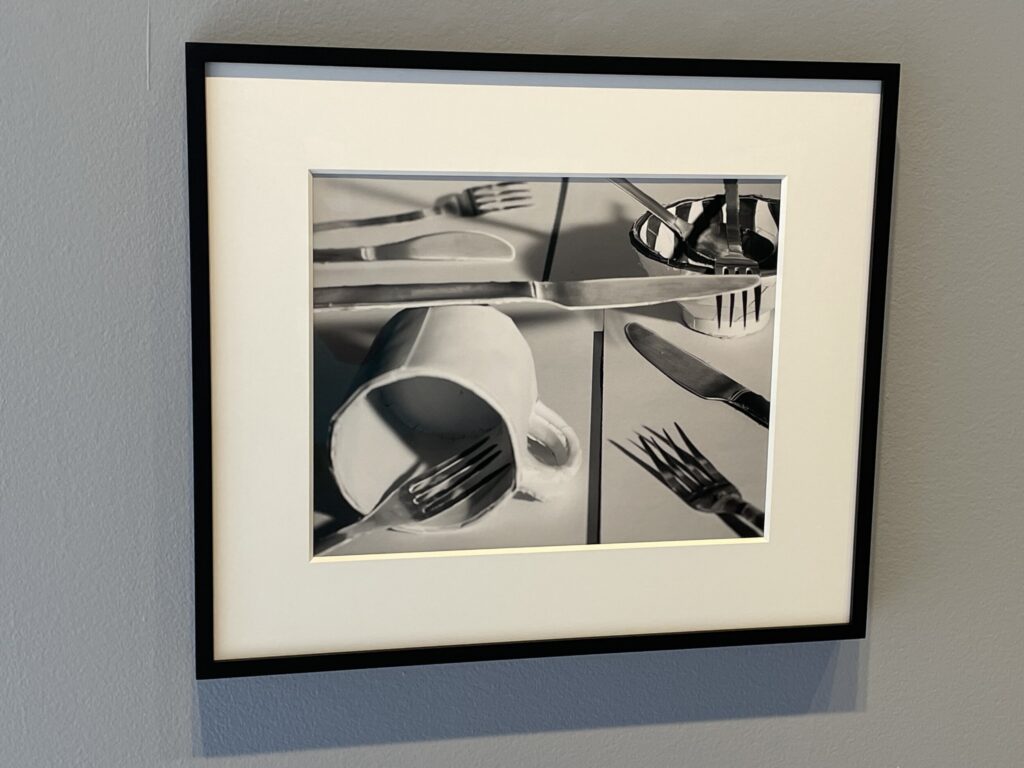
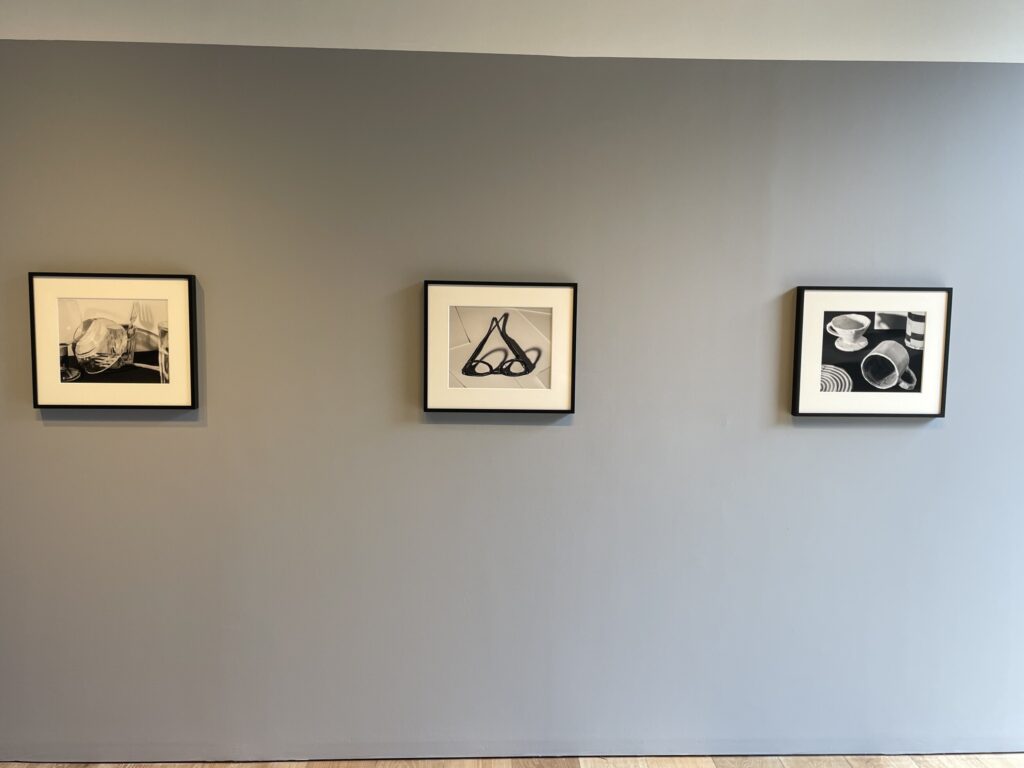
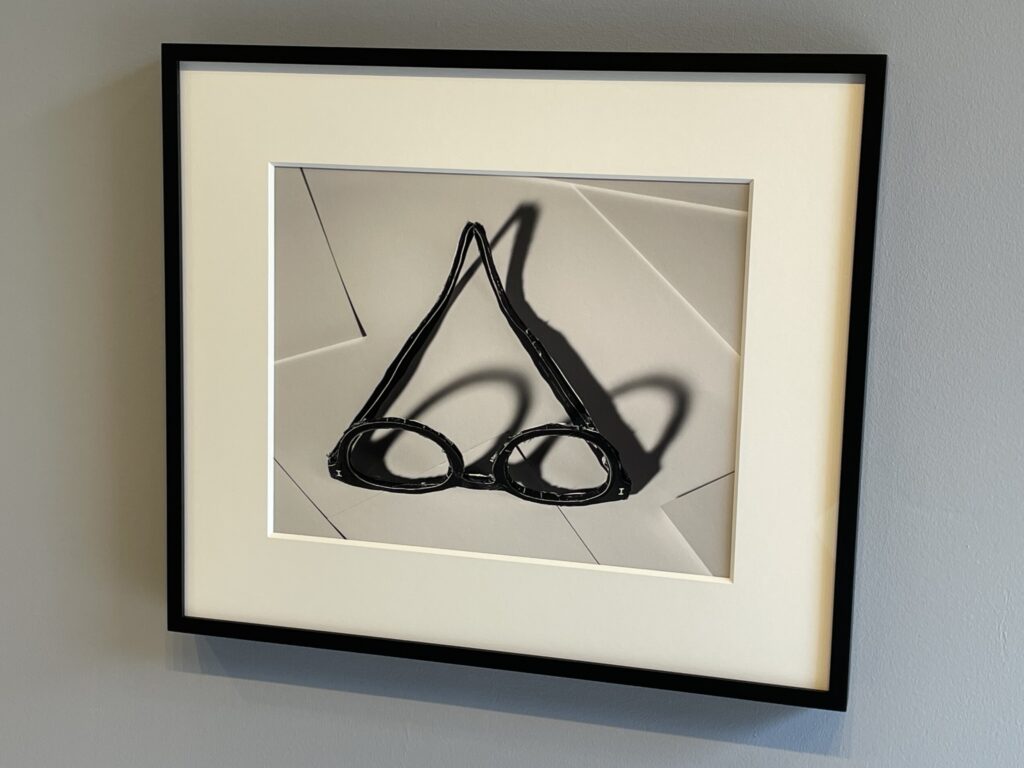
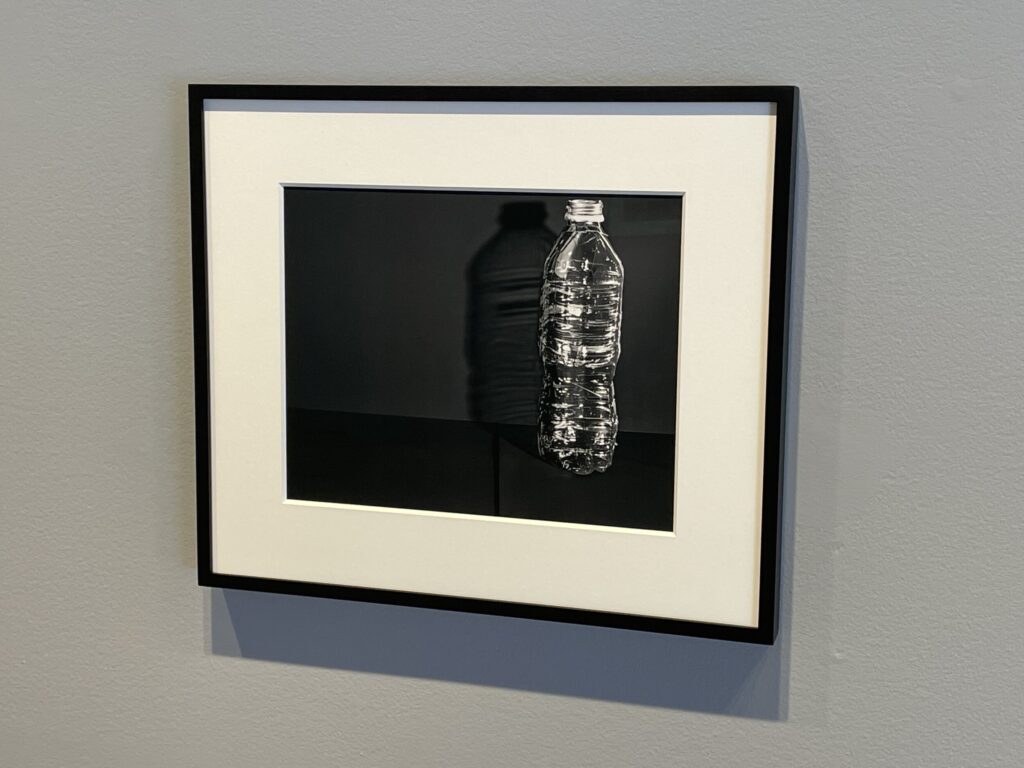
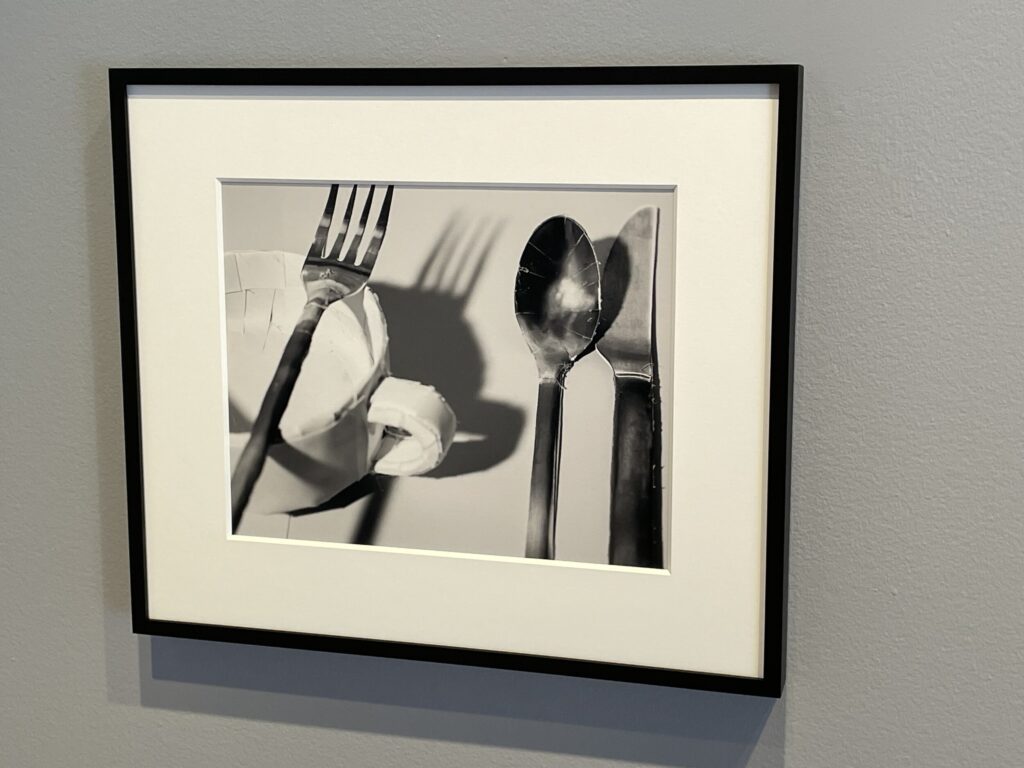
Comments/Context: Back in the late 1970s, Jan Groover made a series of photographic still lifes of everyday objects found in her kitchen. And while the subject matter was humble, the resulting color images were visually sophisticated, some might say even radical. Forks, knives, plates, bowls, and spatulas were intricately layered together with vegetables and plant leaves, creating up-close intersections, reflections, and angles that Groover photographed with formalist precision. The pictures remain a wonder of intense compositional complexity, supremely elegant but also very smartly constructed. (Our review of a 2019 gallery show of some of these still lifes can be found here.)
Of course, Groover wasn’t the first photographer to grab whatever was at hand to make a resonant still life. The Surrealists like Man Ray transformed found objects into unexpected formal studies (particularly in his rayographs), while the Modernists were seemingly always tinkering with simple forms, from Edward Weston’s vegetables and shells to the fork and eyeglasses of André Kertész. And images of glassware reach all the way back to the earliest beginnings of the medium, with William Henry Fox Talbot’s arrangements of decanters and crystal from the early 1840s.
So when Daniel Gordon decided to take on this same kind of subject matter in a new project “Light Study” in 2024 (which eventually became this gallery show and a photobook monograph titled Objects at Hand), he did so with full knowledge of and appreciation for this artistic history – his plan was to actively engage with this visual legacy rather than to try to pretend it didn’t exist. So when we look at the black-and-white compositions in “Light Study” (25 images here, and 65 in the photobook), we can see Gordon intentionally playing with references to photographic history, with plenty of identifiable echoes to pictures and motifs from the past. As such, he’s working from a position inside the medium, expecting us to catch his allusions and understand how he’s reimagined what came before.
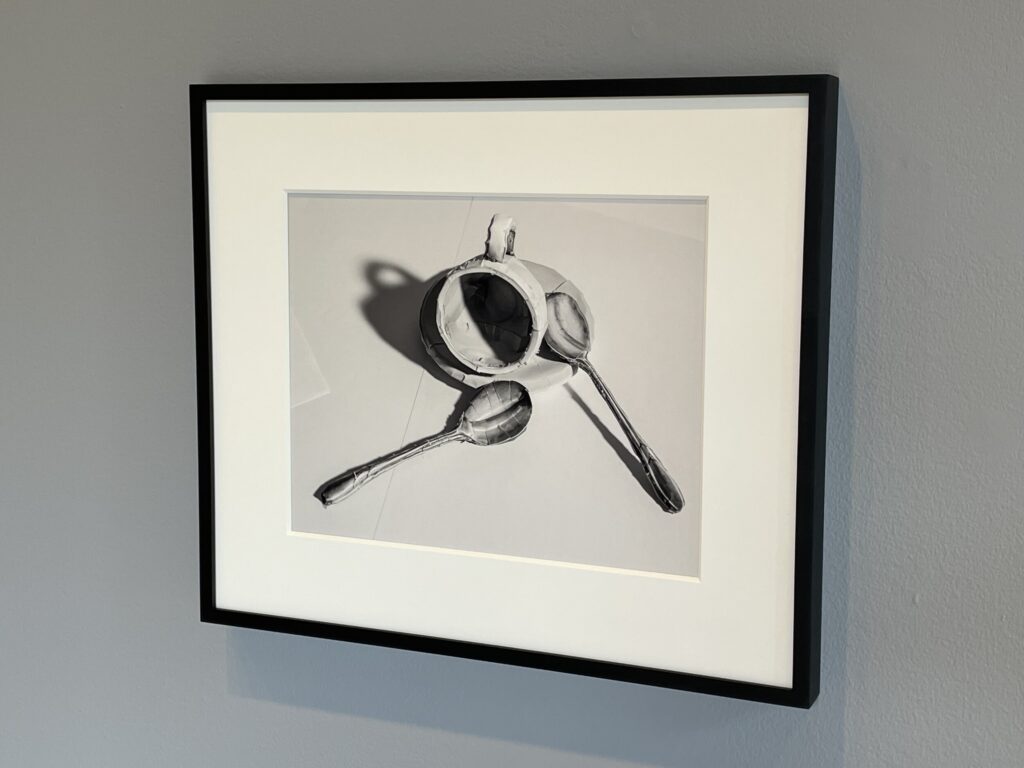
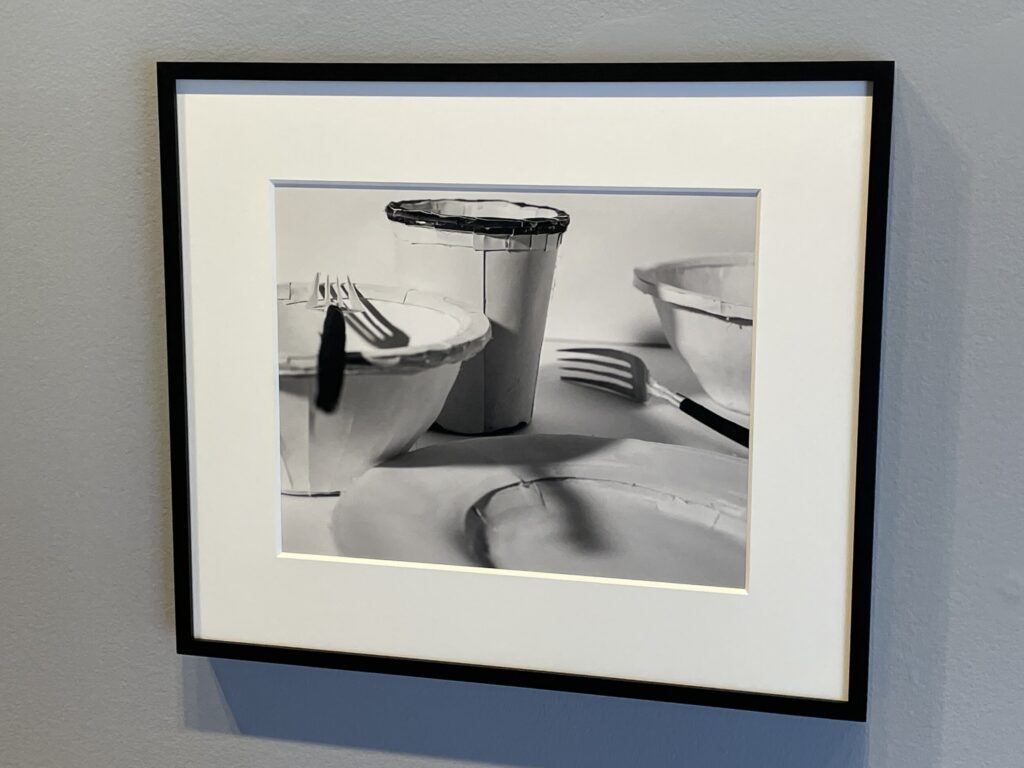
This is not to say that Gordon’s approach isn’t unique. For the better part of the past two decades, he’s been constructing tabletop still lifes out of printed paper, foam core, and hot glue, transforming real objects sculptural photographic facsimiles, that he has then arranged on the physical space of a table and rephotographed as still lifes. Over the years, he has experimented with a wide range of subject matter (including vases and jugs, flowers and plants, fruits and vegetables, and even a few lobsters), and built up a deep tool box of techniques and approaches, exploring the possibilities of supersaturated bright colors, misaligned shadows and outlines, and digital manipulations and blurs of backdrops and textures, among other less obvious tweaks and visual twists. Conceptually, these works are ingeniously layered, with the blunt residuals of his fabrication process nearly always visible, making his methods of “depicting a depiction” all the more overtly illusionistic.
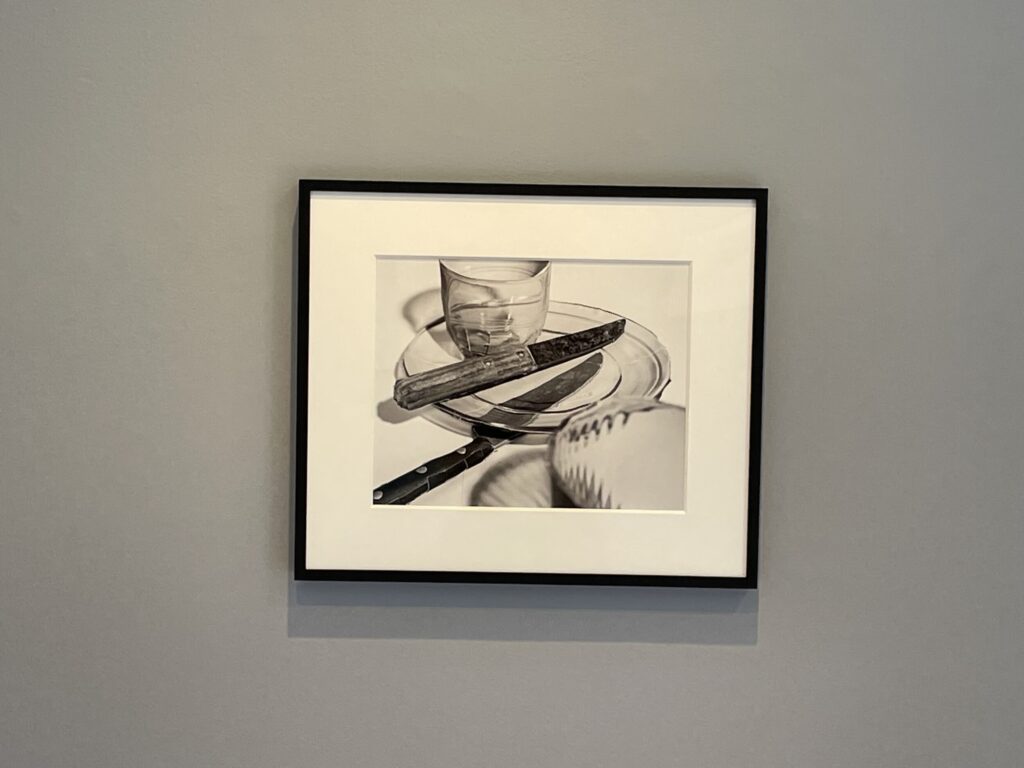
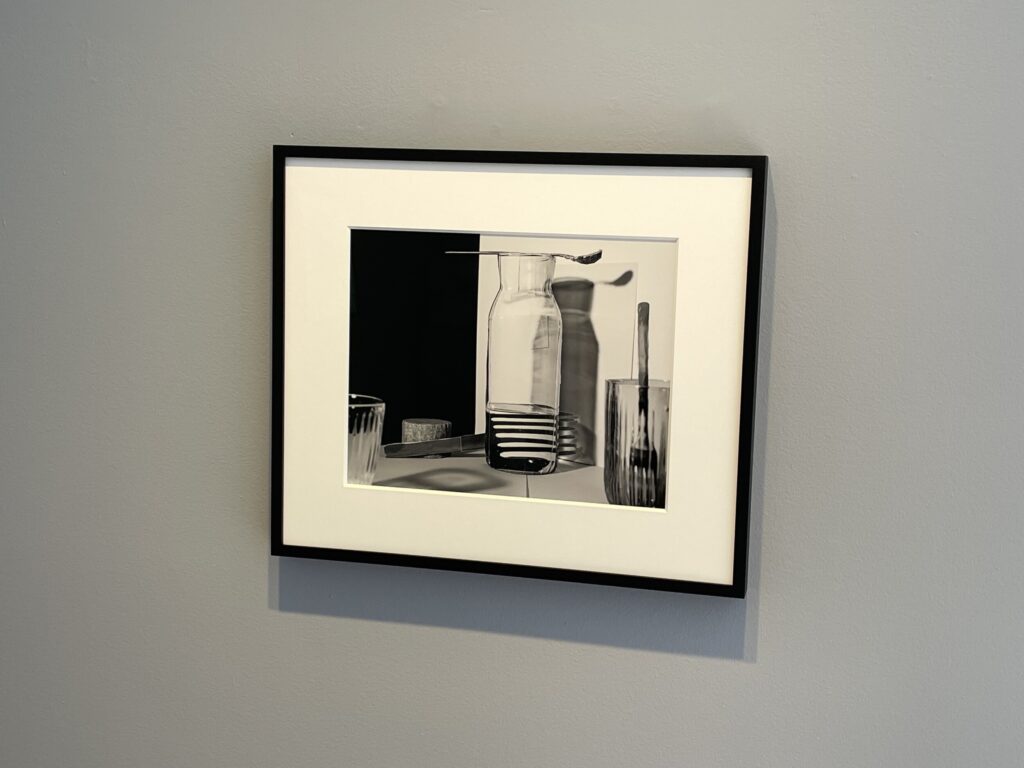
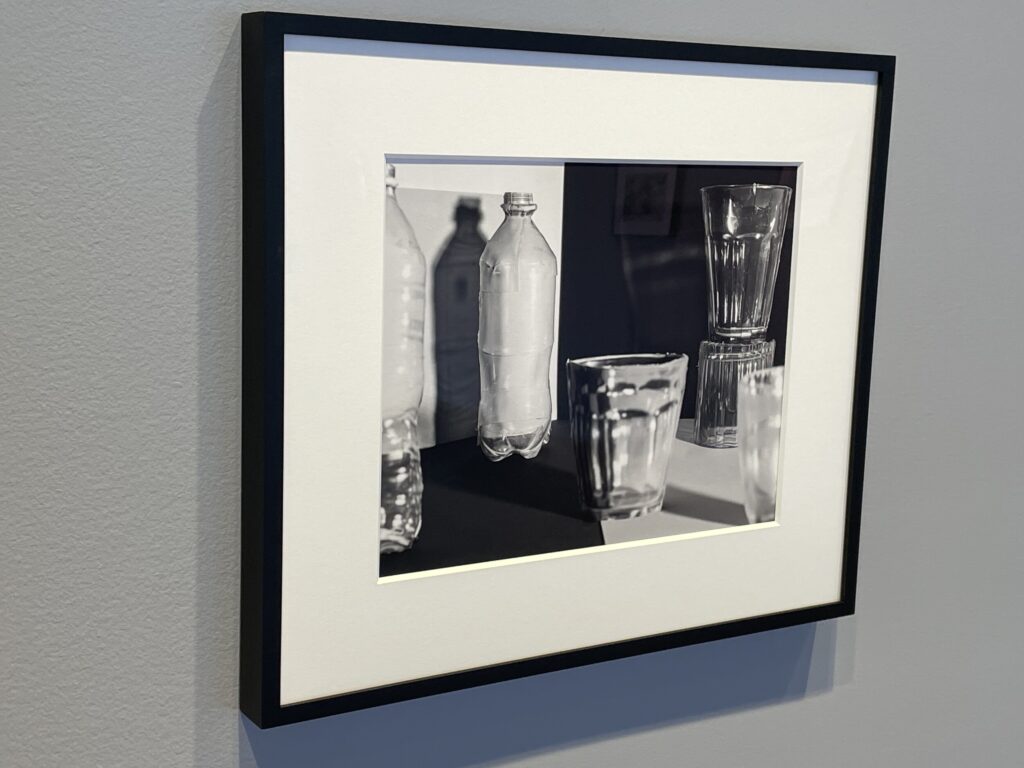
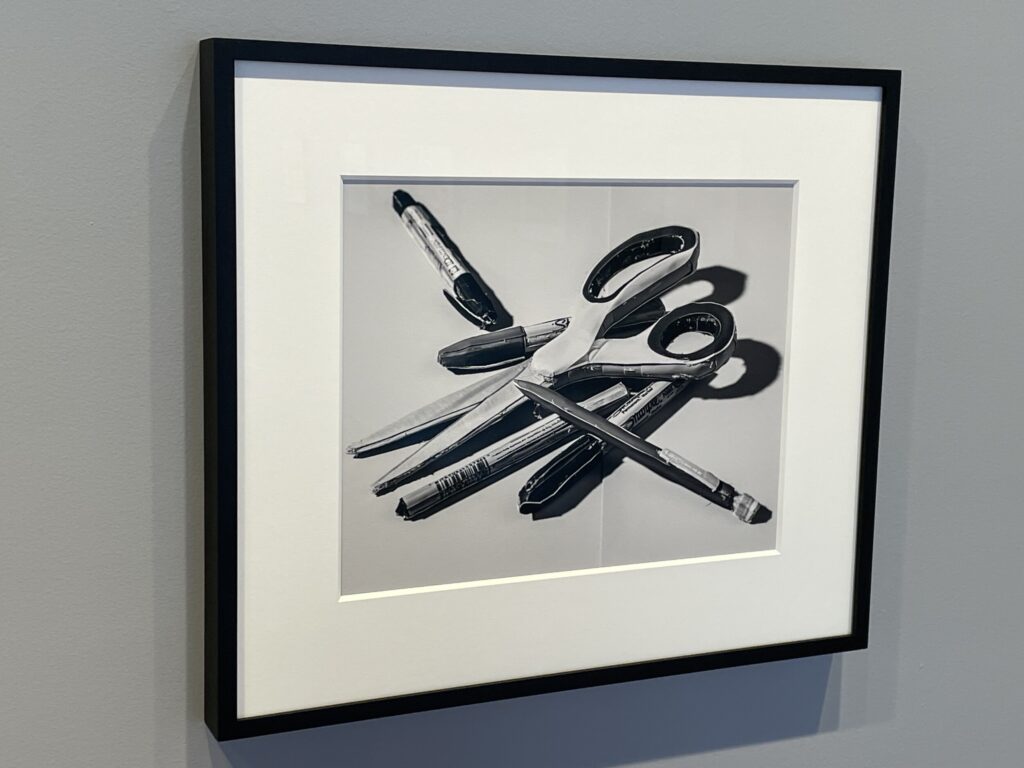
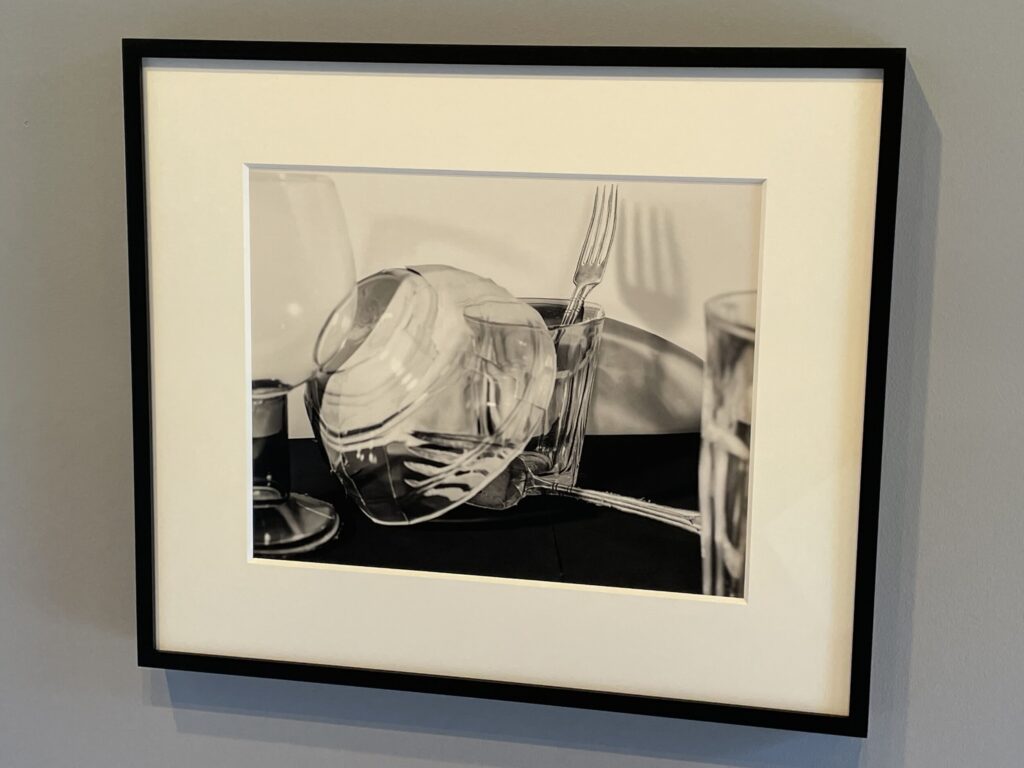
The images from “Light Study” differ from his previous work in several ways, and not just in his use of household objects like cutlery, glass bowls, and plastic bottles, and various desktop tools like scissors, pens, and measurement tools, which are essentially all new to his practice. First, he’s reduced his palette to monochrome black-and-white, which given his previous use of vibrant painterly color, feels like a real tightening down to essentials. Without the pops of color to create compositional energy or to create reversals of expectations (where a typically orange peach is now blue), our attention is now much more focused on the interactions of light and shadow, and the way the transparency of glass usually (but not always in Gordon’s images) creates predictable warps and distortions. And second, Gordon has loosened up his vantage point. His previous works were nearly always stepped back, precisely frontal, and squared off, while these new images allow the camera to wander much more, creating skewed viewing angles and tightly cropped close ups that pull us into the intimate details of the compositions.
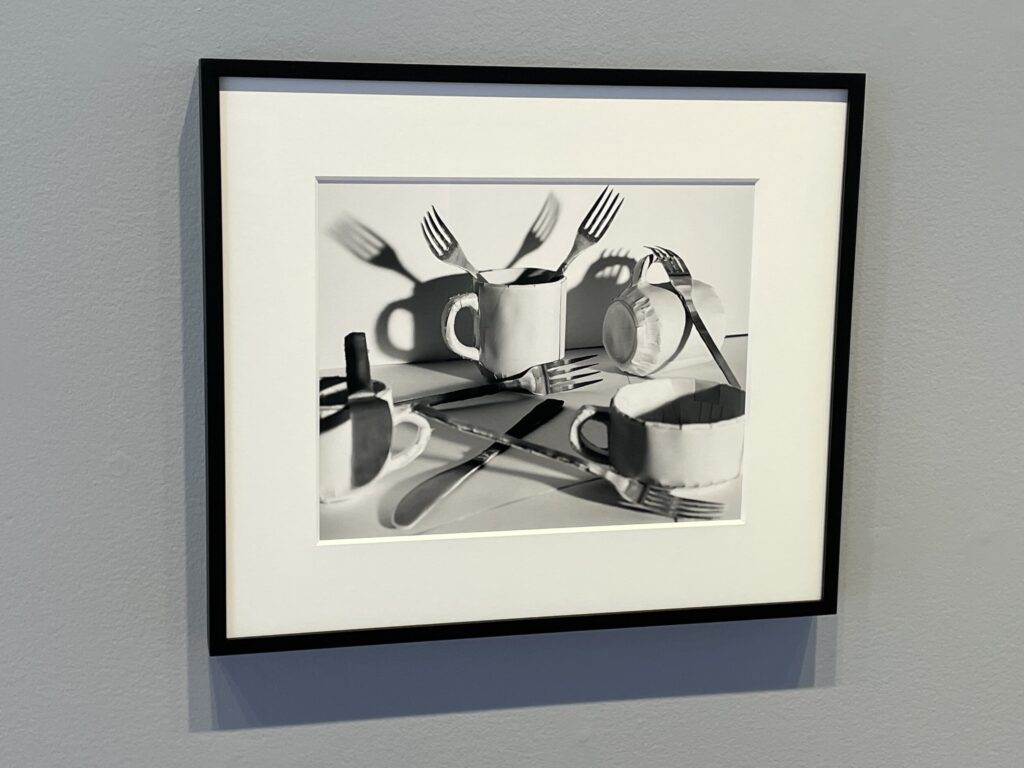
Light has always been an activating force in Gordon’s work, but the images in “Light Study” lean into this set of visual issues, repeatedly playing with highlights, shadows, and transparency and our expectations for how these effects typically behave in photography, almost like meticulously working through a set of academic exercises. When looking at his results, we have to continually question what we see, knowing that every single object is actually an opaque paper construction, not metal, not ceramic, and not glass. So when we see the shine on a metal knife, or the distortion of something inside or partially seen behind a glass, we have to remember that we’re in the presence of intentional confusion; this gets even more complicated when Gordon lights these setups, the paper objects creating actual shadows that compete with reproduction paper shadows that Gordon may or may not have included additionally on backdrops or surfaces (the alignment of sparkles and highlights is similarly unstable). Each and every composition forces us to wrestle with these complexities and contradictions, where reality can’t quite get reconciled with appearance or expectation.
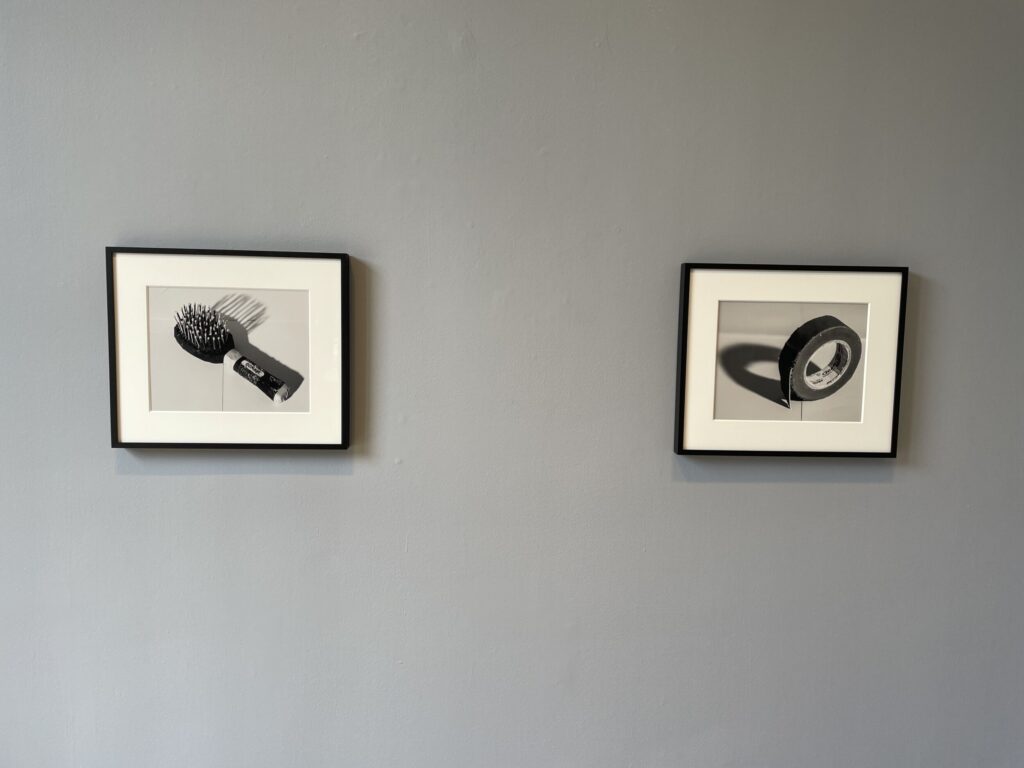
Gordon has tested himself in these new images, paring down to the simplest isolations of a would-be hairbrush, roll of tape, or set of eyeglasses, and then extending into dense clusters of mugs and stacked glassware, each item filled with cutlery sticking out and casting shadows in varying directions. From there, he interrogates the plausibilities of glass distortions and surface conditions, nests and doubles shadows, plays with improbable acts of balancing, and comes up from a worm’s eye view or looks down from a hovering point above. Many setups recall past arrangements of similar items by other photographers, only to then disassemble and reassemble those same elements into something new but altogether familiar, the process always reminding us if the inherent qualities of instability and unreliability at the heart of Gordon’s aesthetics.
As many artists have learned, “going back to basics” and trying to keep things simple is often much harder than it looks, but Gordon has consistently succeeded here, particularly in opening up witty visual dialogues with the past and unraveling that history with contemporary incisiveness. There is something altogether satisfying about a glass that isn’t a glass, a knife that isn’t a knife, and a Sharpie that isn’t a Sharpie, where photography mechanically (or computationally) documents truths that are deliberately untrue or even impossible. These new pictures have honed that uncertainty to a fine point, stripping away unnecessary embellishments and decorations to aim us at the fundamental conceptual friction in his approach. They’ve walked back from the garish too muchness of color and doubled down on the old school power of unadorned black-and-white. To my eye, not only are the strongest of these photographs easy to like, they have enough tension to force some durable engagement, their mysteries requiring viewers to slow down and look again and again before ultimately realizing that there is actually no stable conclusion to be found.
Collector’s POV: The prints in this show are priced at $8500 each. Gordon’s work has little consistent secondary market history at this point, so gallery retail likely remains the best option for those collectors interested in following up.