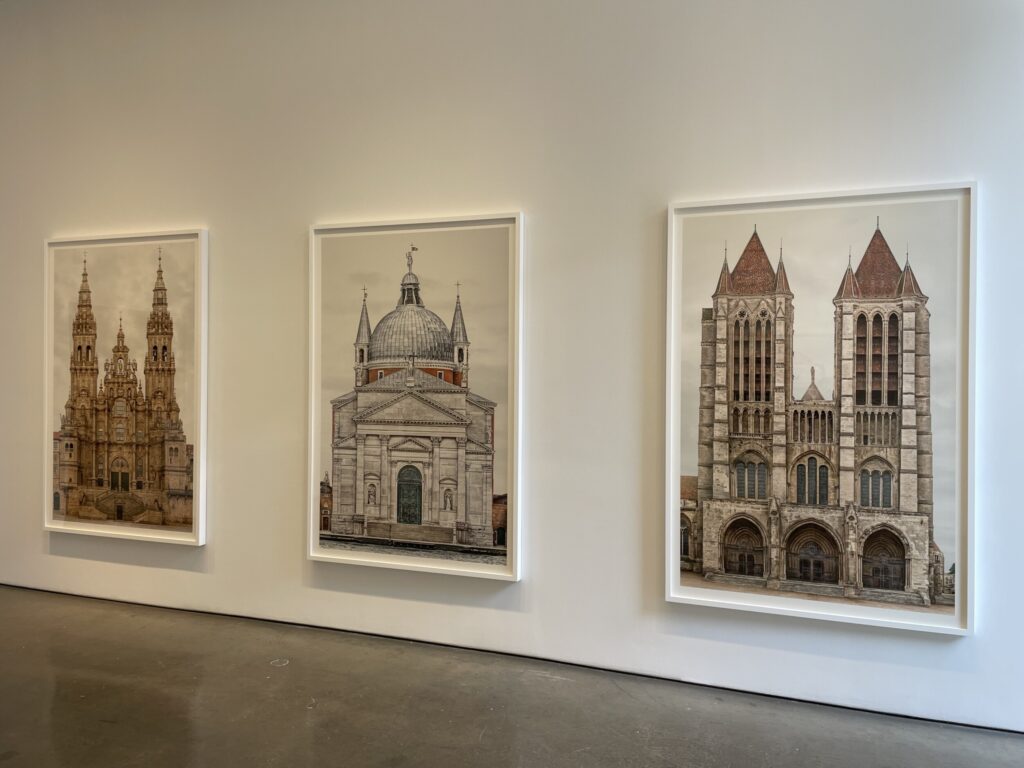
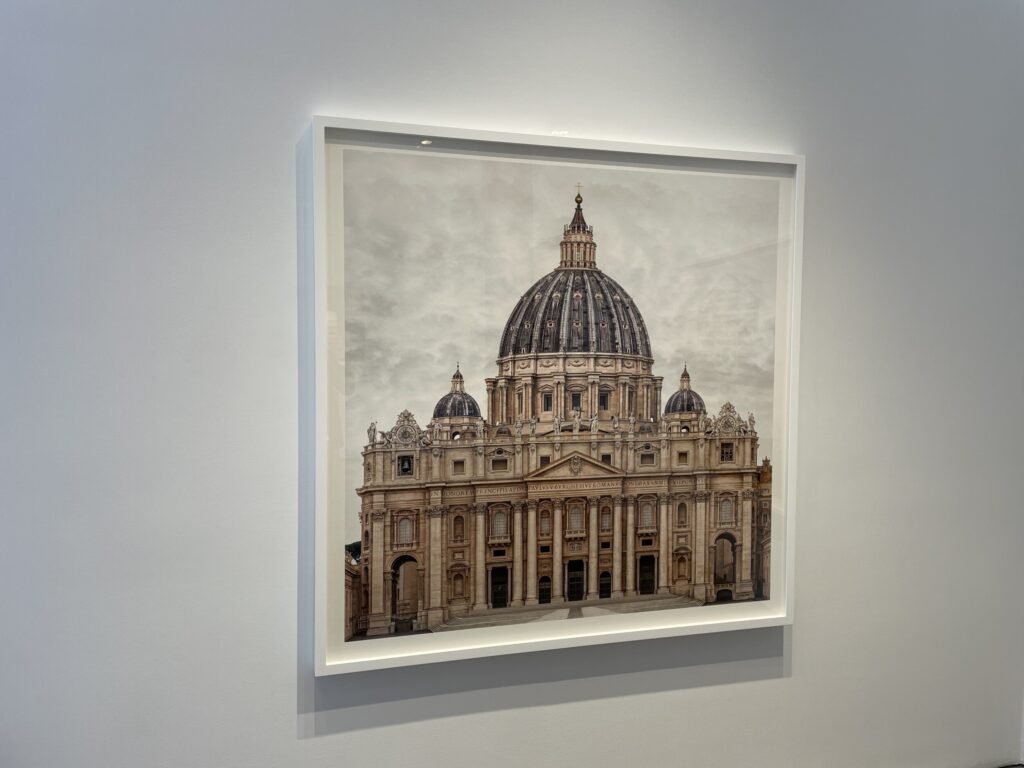
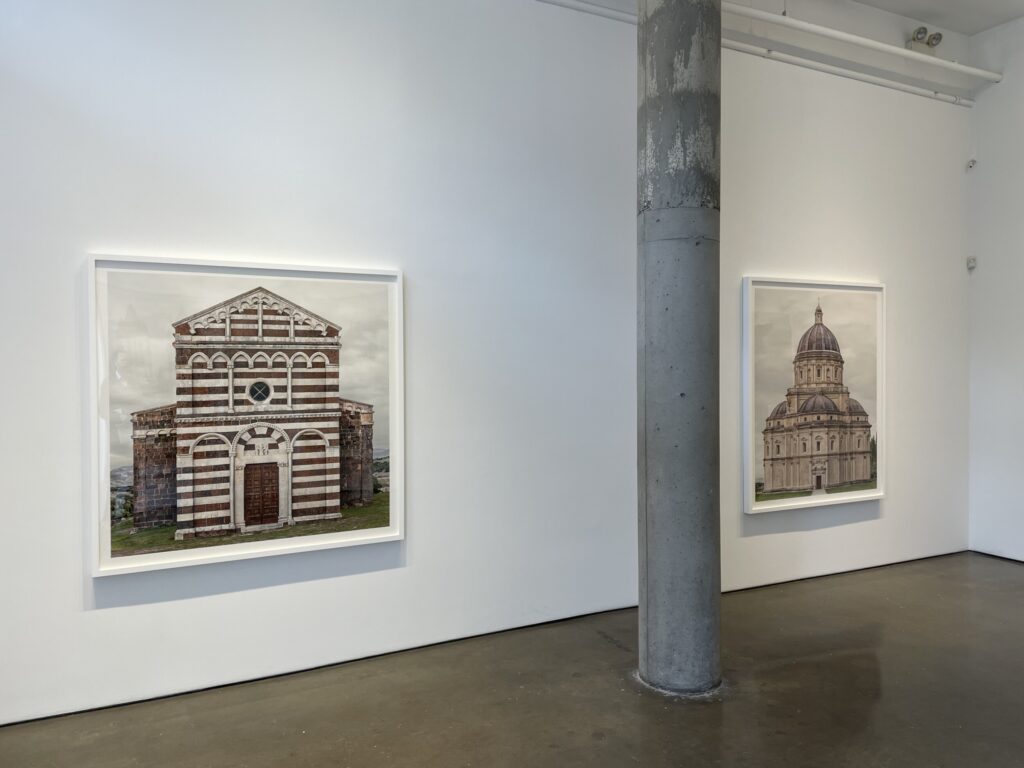
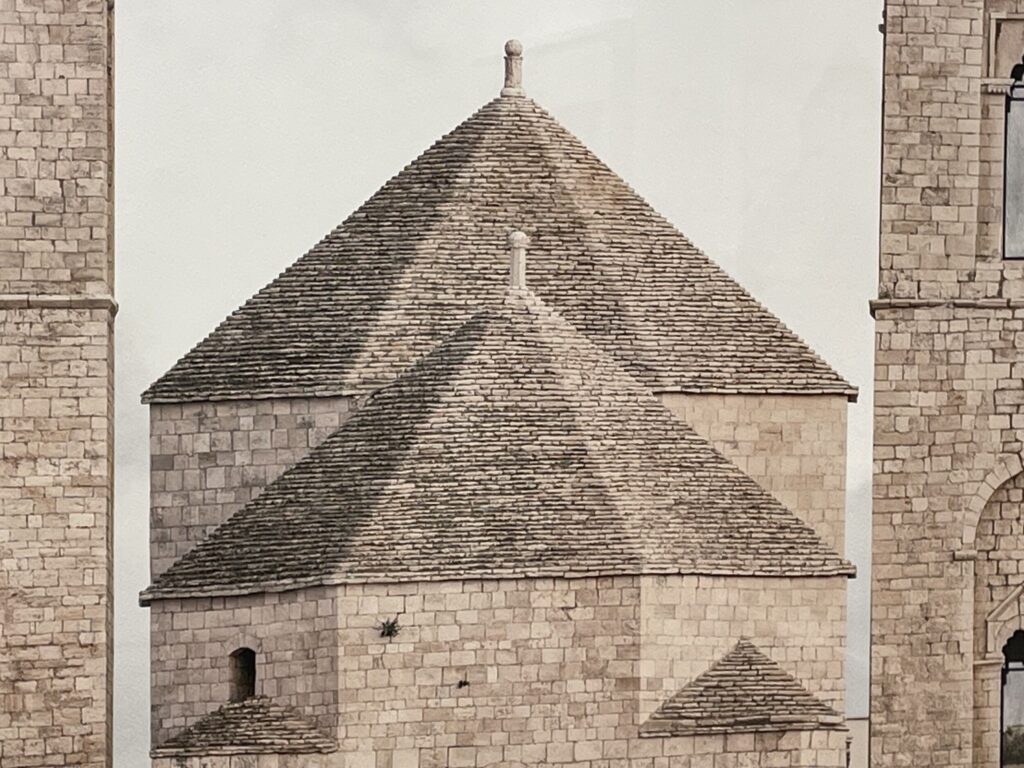
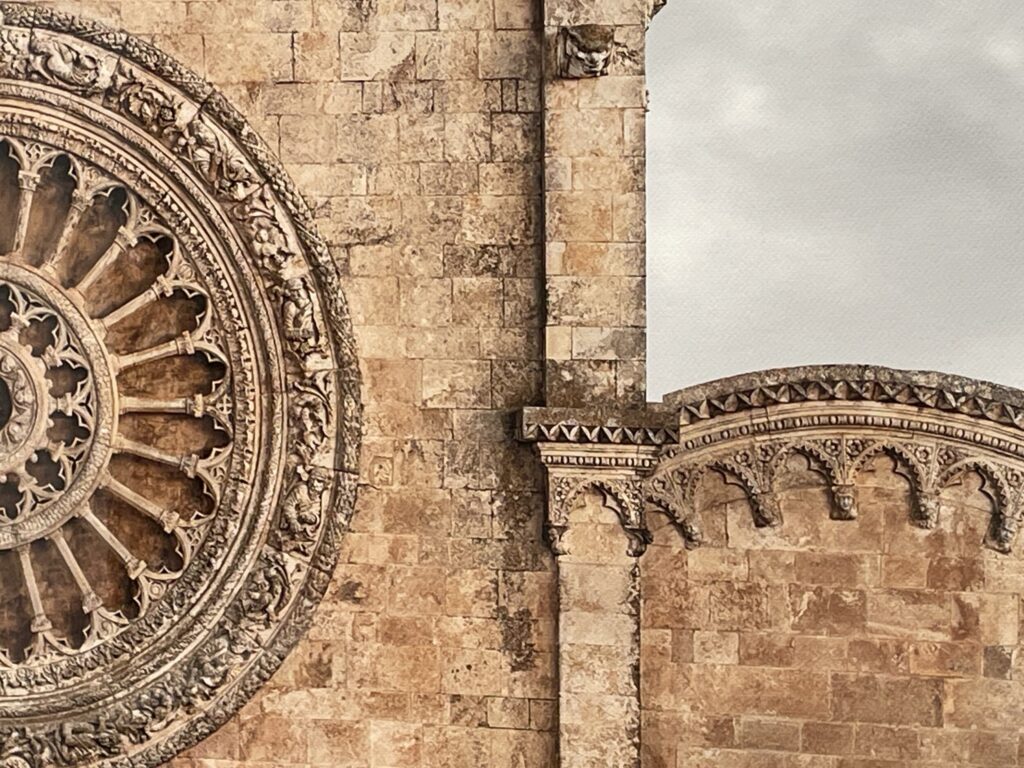
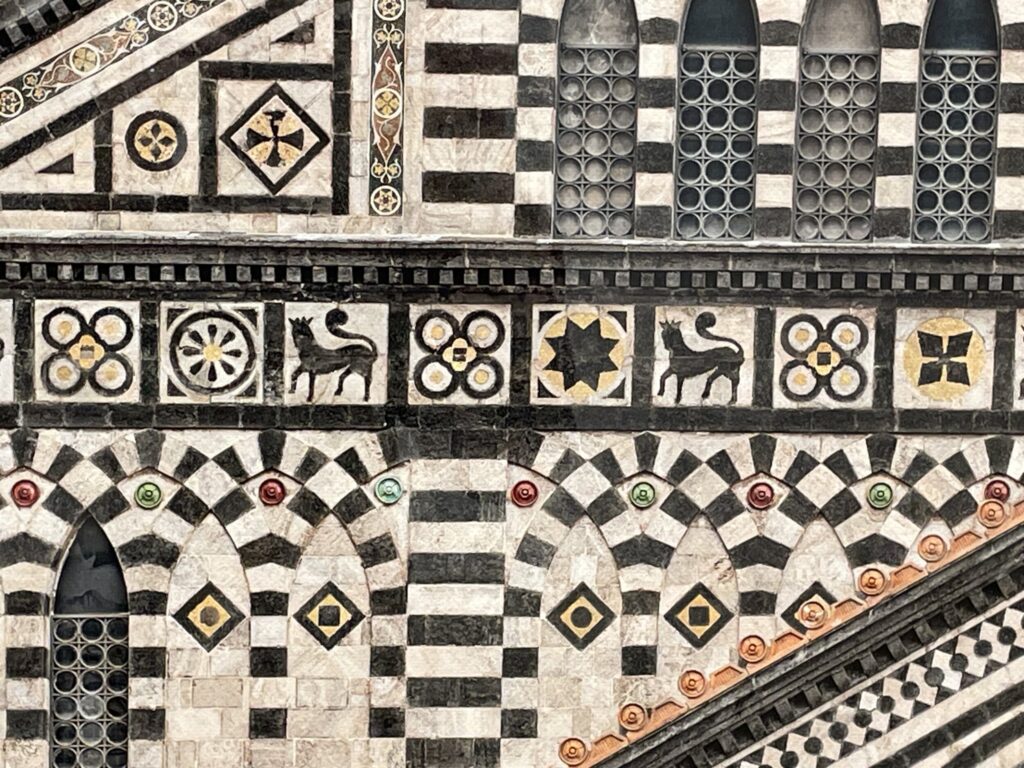
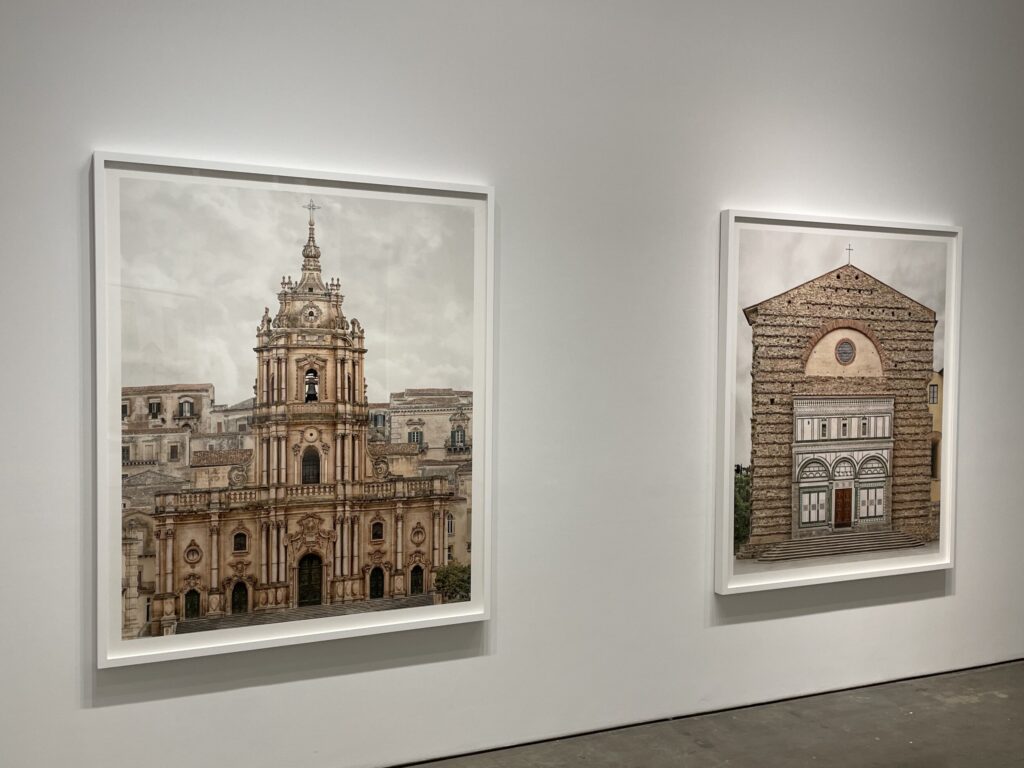
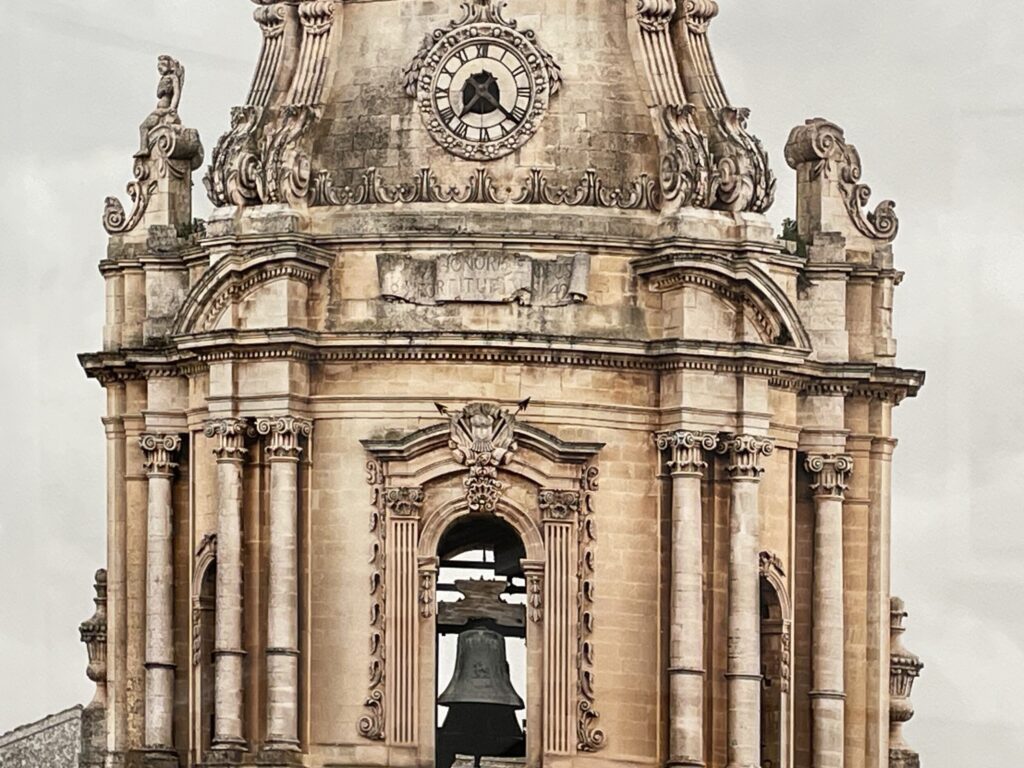
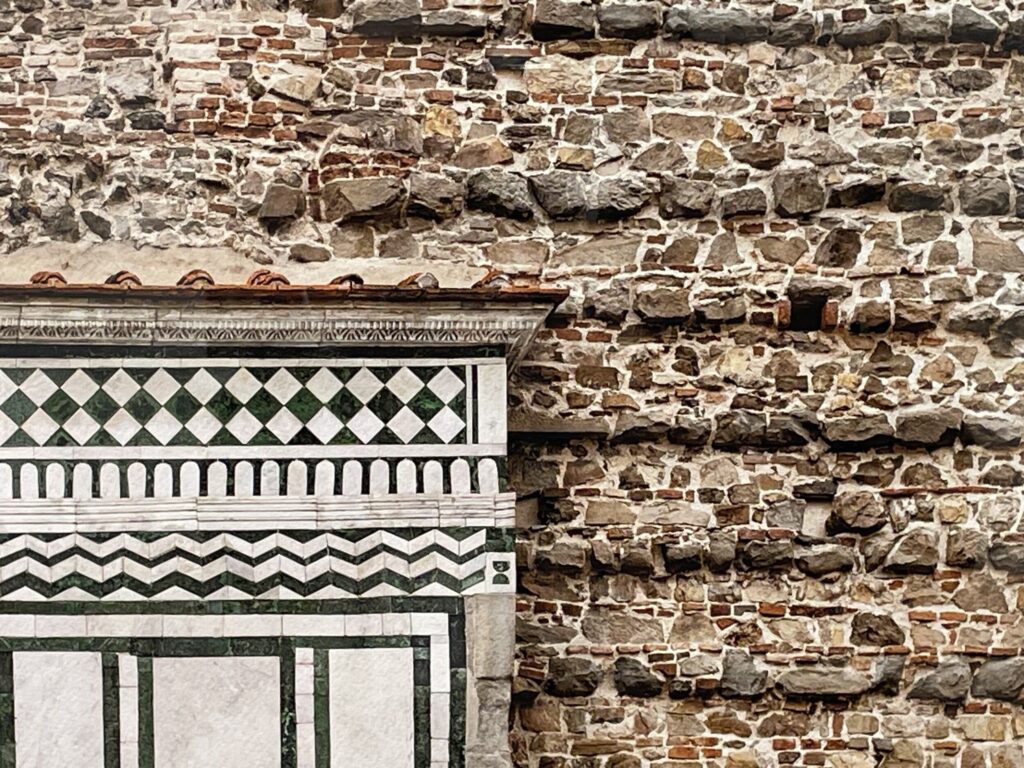
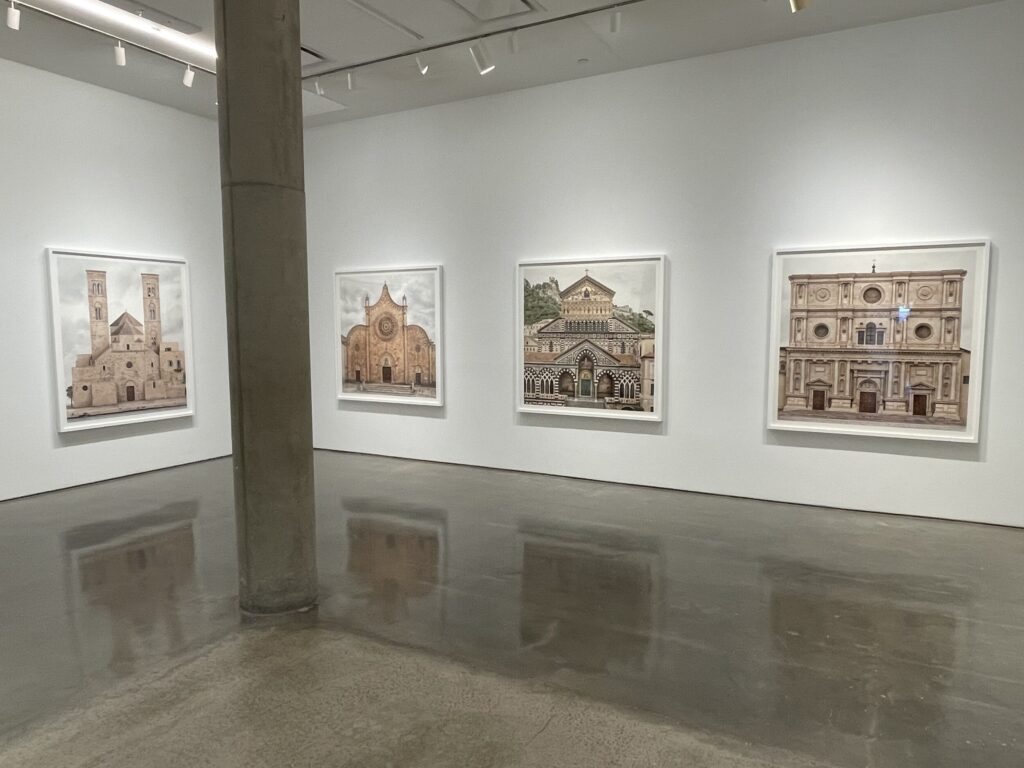
JTF (just the facts): A total of 15 large scale color photographs, framed in white and unmatted, and hung against white walls in the East and West gallery spaces and the smaller viewing room. All of the works are archival pigment prints, dated 2007-2026, 2009-2024, 2009-2026, 2010-2026, 2011-2026, 2012-2023, 2014-2023, 2014-2026, 2018-2019, 2018-2026, 2022-2025, 2022-2026, and 2025-2026. The prints are shown in their larger size, at roughly 89×59, 71×59, or 63×63 inches, and are available in editions of 9+3AP in those sizes. Somewhat smaller prints are also available (but not on view), in editions of 12+3AP. (Installation and detail shots below.)
A limited edition two-volume catalog raisonné (FACADES I + II) has recently been published by the artist, showing all 132 buildings (cathedrals, churches, monasteries, and synagogues) the artist has documented to date. In an edition of 99 copies.
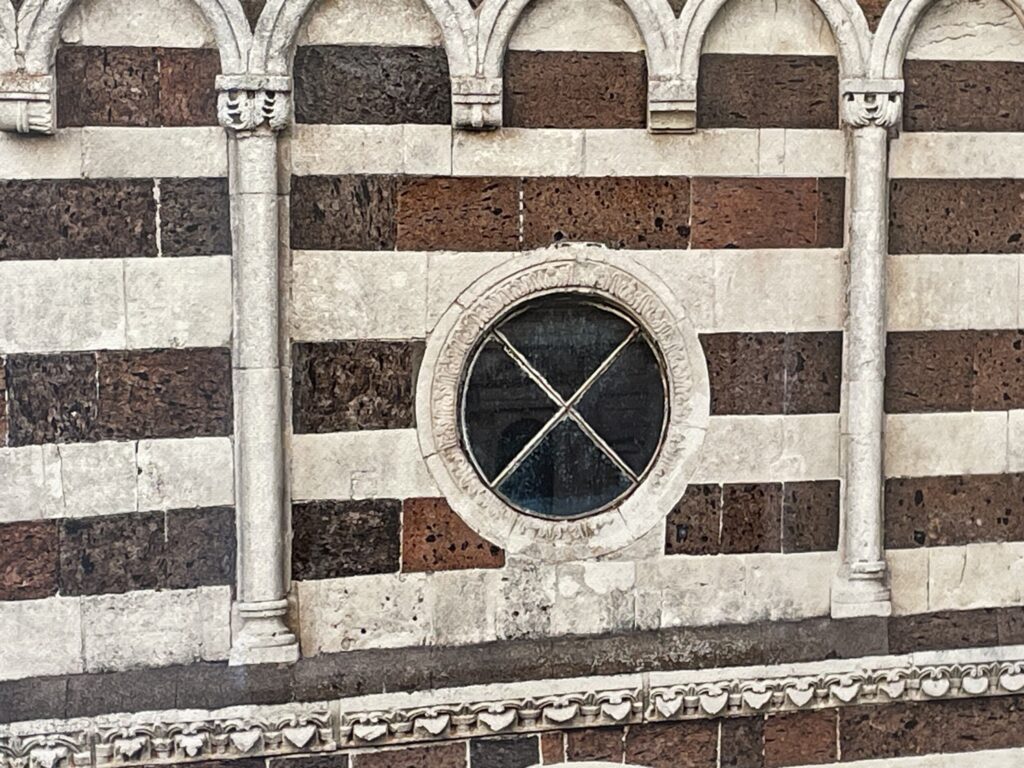
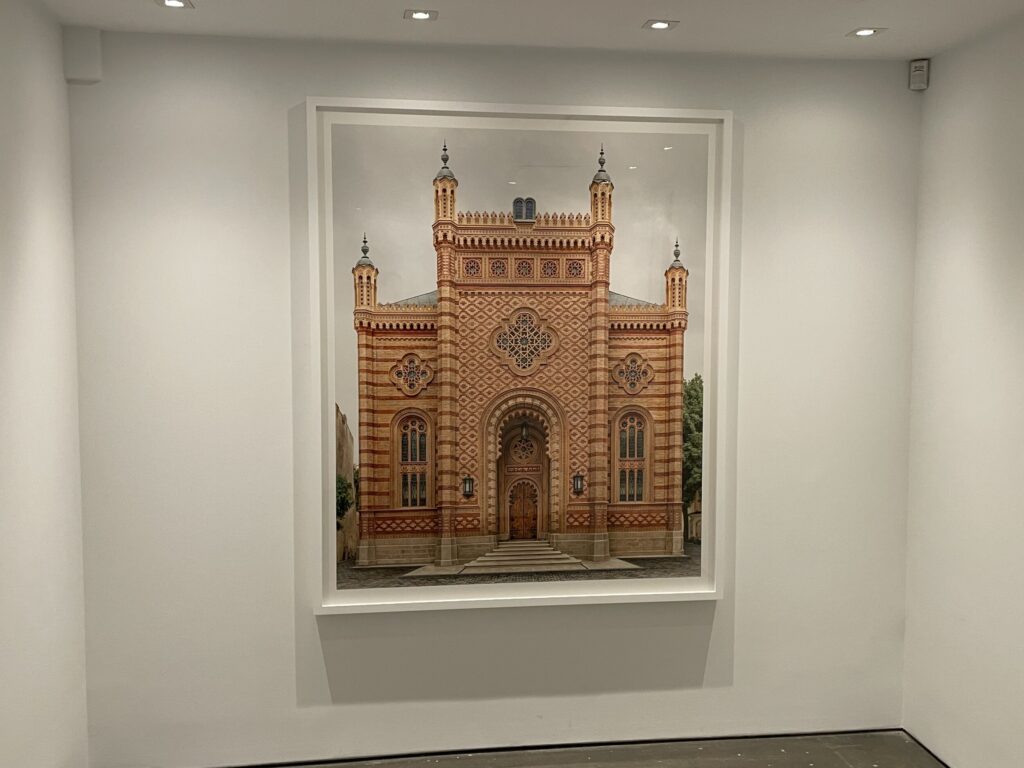
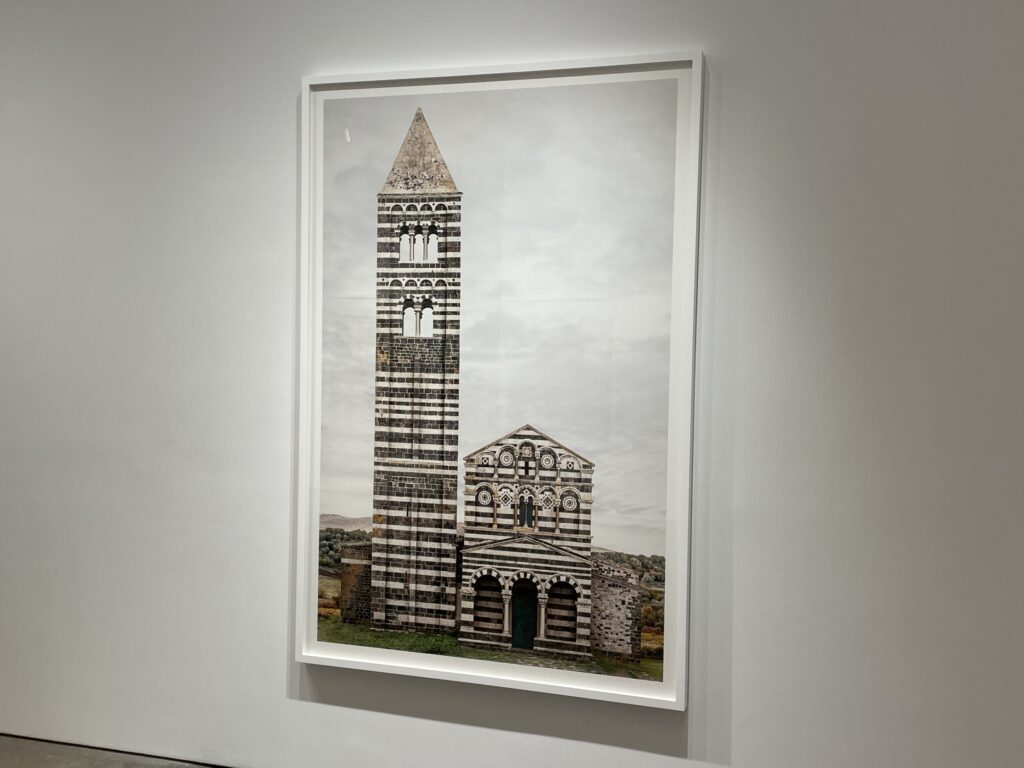
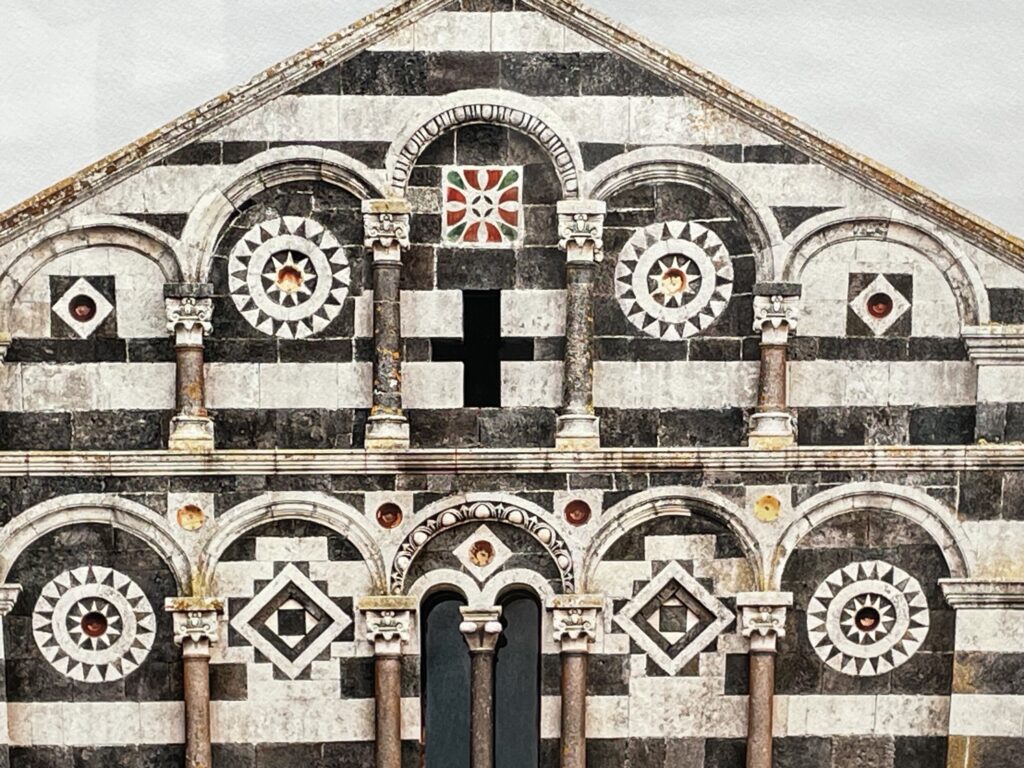
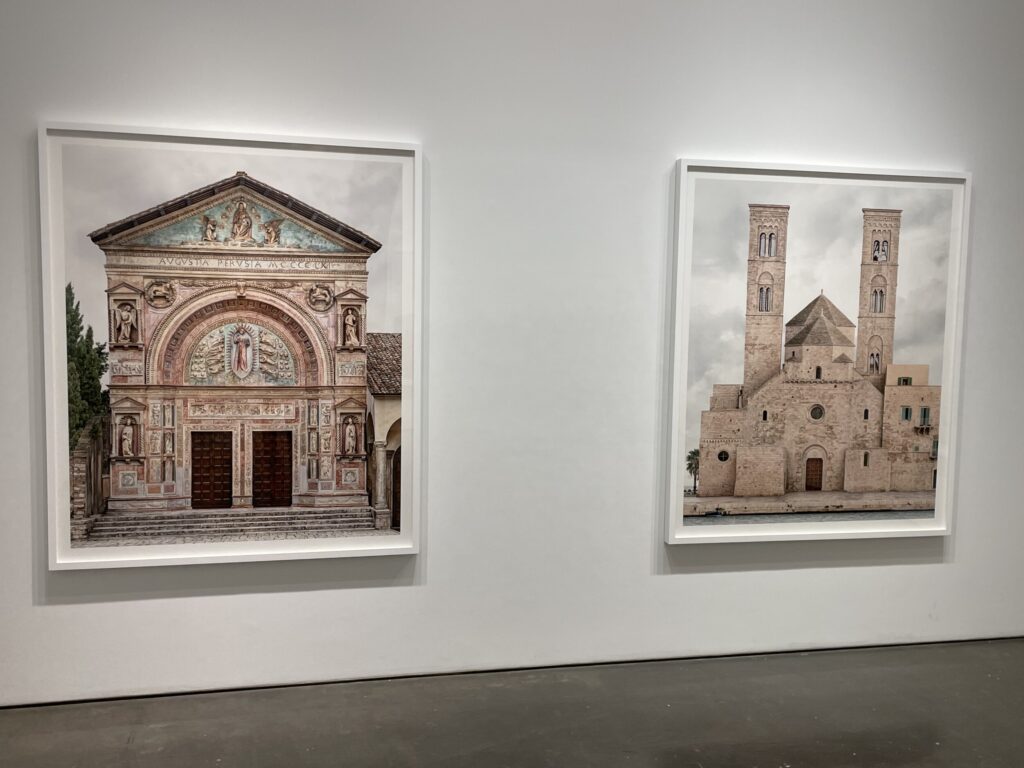
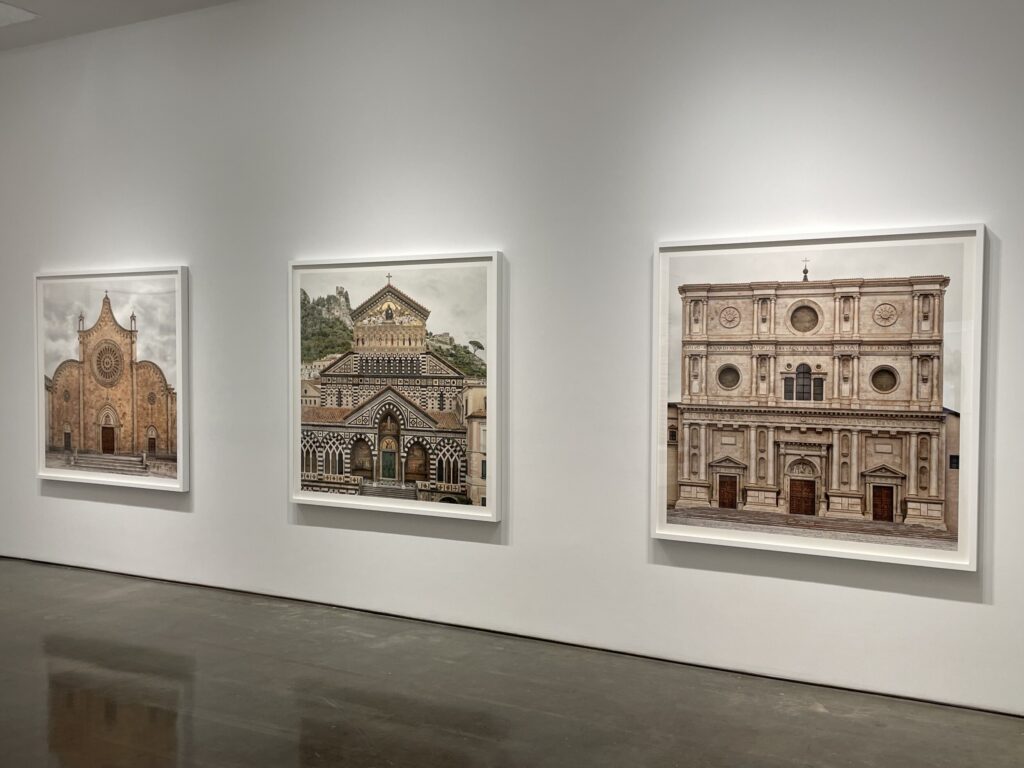
Comments/Context: It probably wasn’t immediately obvious to the German photographer Markus Brunetti that his innovative solution to a seemingly straightforward architectural photography problem would end up filling his artistic life for decades.
The challenge was of course seemingly simple. Most of us have visited a famous cathedral or church somewhere in Europe, stood outside its main entrance, and marveled at its wonders. And in doing so, many of us have gamely pulled out a camera and tried to make a decent image of the building, perhaps with a friend or family member posing in front to mark a moment of “I’m here” presence, or maybe with more methodical resolve, trying to isolate the building and capture its architectural details as cleanly as possible. But of course, our pictures never do the building justice – the weather or light isn’t perfect that day, the roof is under construction, there’s no easy place to stand, or most likely, there are just too many people hanging around to get a clear shot.
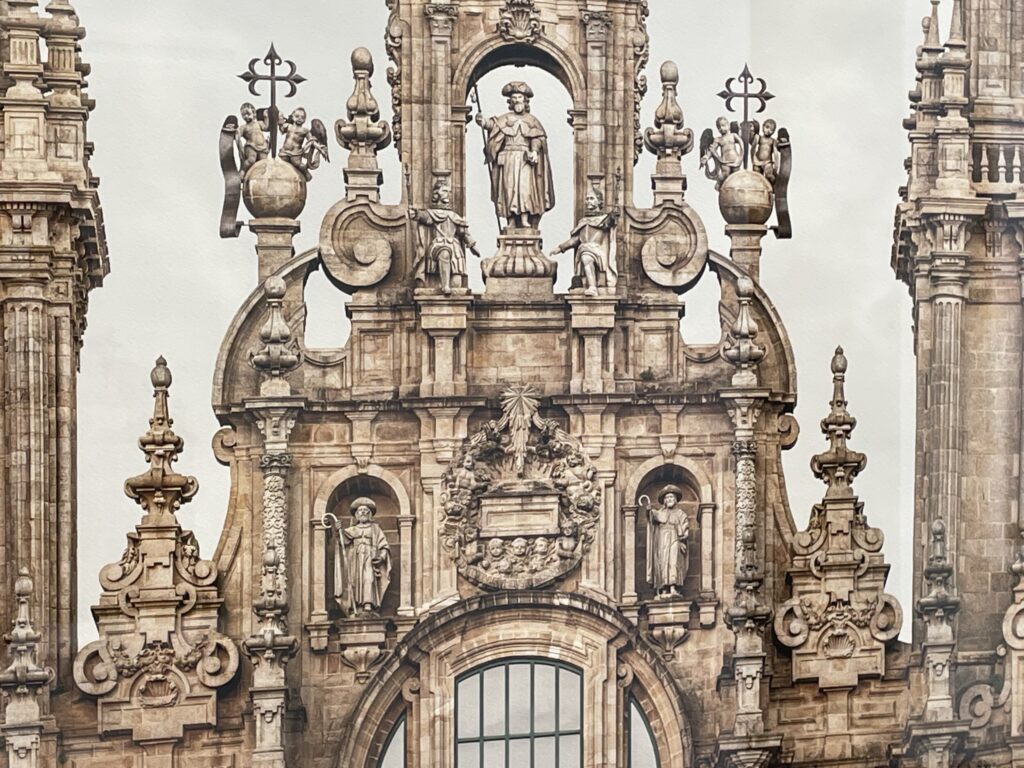
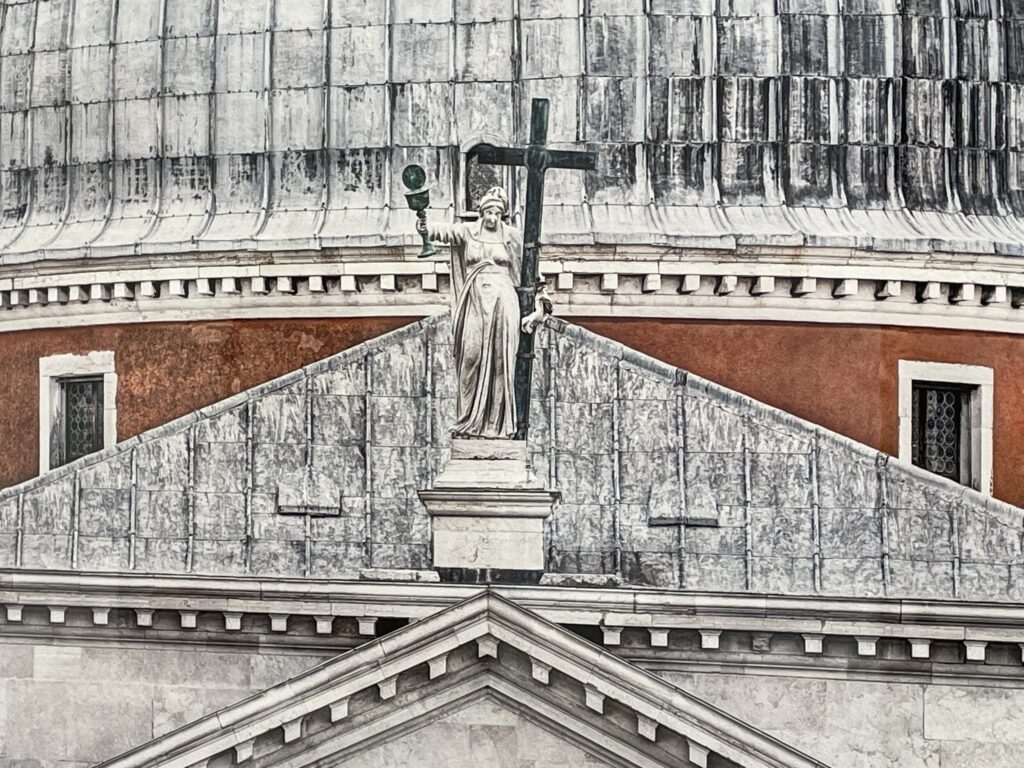
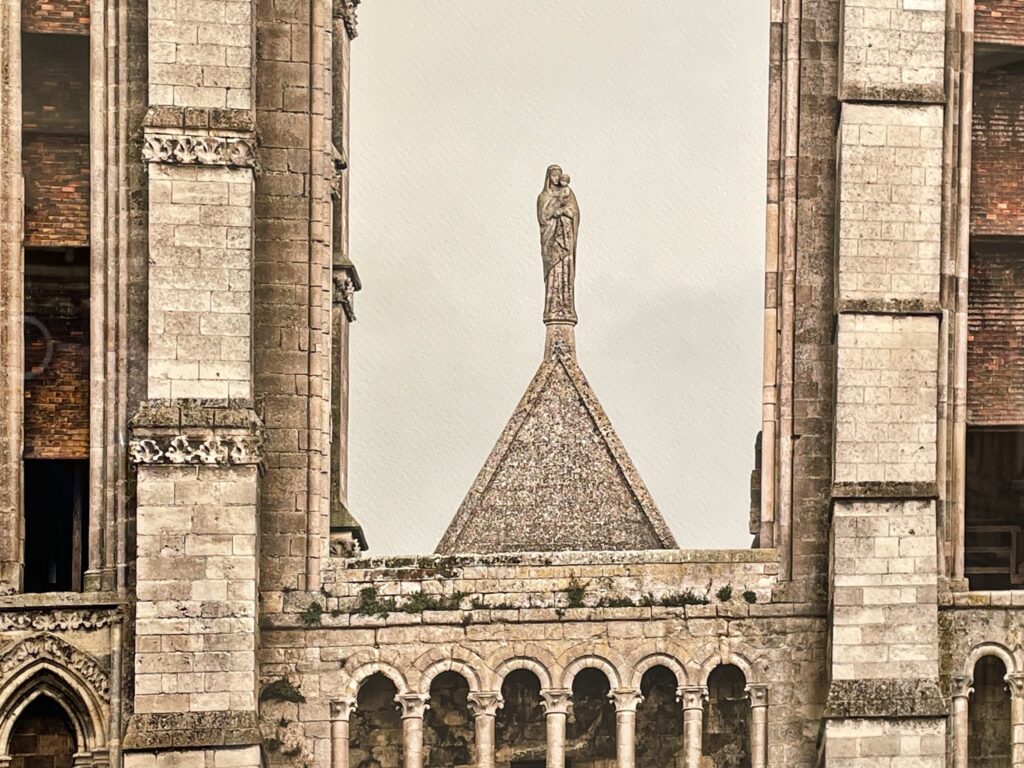
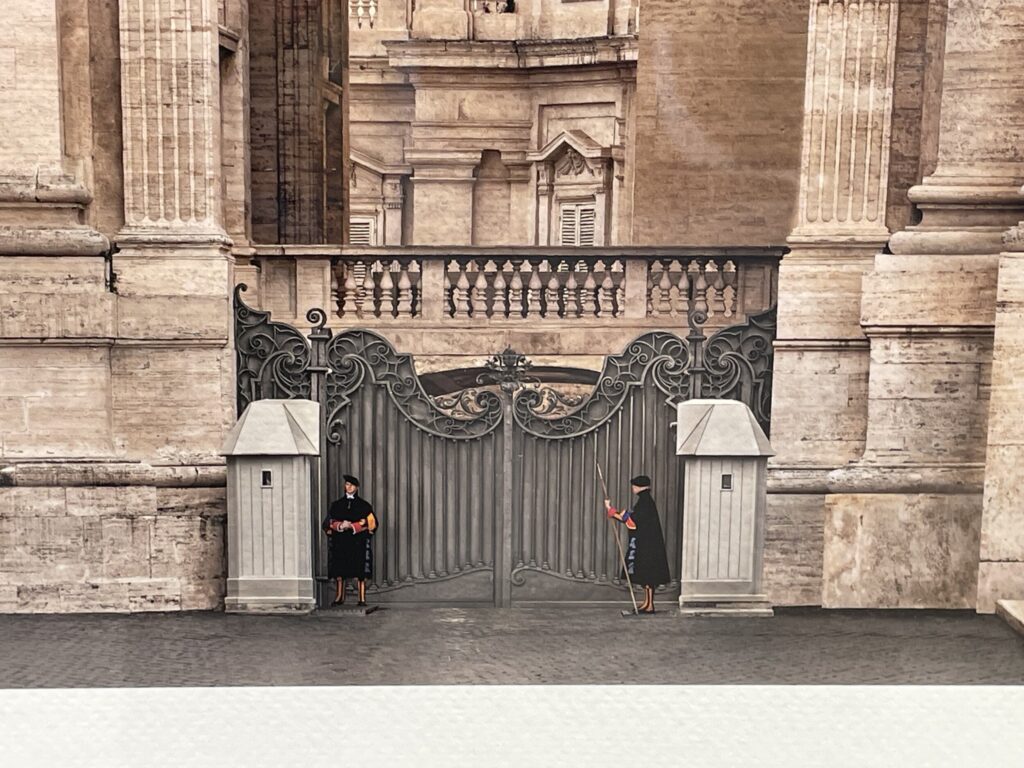
Brunetti’s creative solution overcomes these typical problems by replacing a single photographic instant with hundreds of smaller visual fragments collaged into a complete digital composite. Brunetti and his partner Betty Schöner have traveled to each location multiple times over a period of many years, making meticulously systematic images of the front façade, always from the same precisely squared off vantage point. This rigorous consistency has allowed Brunetti to then merge images from different visits into one perfected view that captures the building at its best. For example, to make his photograph of St. Peter’s Basilica in Rome (on view for the first time in this show), he returned seven times over a period of nineteen years, thereby giving the resulting final image a date of 2007-2026. If we then multiply this kind of patient and methodical image-making across a total of 132 cathedrals and churches scattered all across Europe (which represents the full scope of Brunetti’s FACADES project to date), it becomes entirely obvious why it has taken him more than two decades to complete all the images.
This is Brunetti’s fourth gallery show of this project, with previous iterations in 2015 (Daybook here), 2018 (reviewed here), and 2023 (Daybook here). Each earlier show brought together the images that he had completed most recently, and this one is no different, some finishing up in just a year or two, with others extending back over nearly two decades. And conceptually, essentially nothing has changed over these intervening years – he’s still visiting European cathedrals and churches, gathering the visual raw material necessary to later build his astonishingly exacting composites, and eventually reaching a point with each location that no further visits or digital tweaking are necessary. Brunetti’s vision across this long term documentary project has been impressively consistent, with the same careful photographic process applied to a range of different subjects across the continent, his unrelenting analytical rigor making his final images altogether engrossing.
While there is a clear conceptual connection to the work of fellow German photographers Bernd and Hilla Becher, particularly in their systematic visual preservation of vanishing forms of architecture, Brunetti hasn’t really ever delivered his works as grids or typologies. Each of his works is a unique portrait, rather than a group of like examples arranged for easy comparison; similarly, their massive single image scale (in color) functions quite a bit differently on a wall that a grid of a dozen prints (in black-and-white). In this way, perhaps Brunetti’s approach draws more from August Sander than the Bechers, following Sander’s imperative to patiently document various kinds of people from across 20th century Germany. We might even stretch to call Brunetti’s technique painterly, albeit in a contemporary software-driven way, his images built from assemblages of fragments ordered in the painstaking detail of a draftsman.
If we conclude that Brunetti is thus a master architectural portrait maker, who always makes his subjects look their best, each individual image of a cathedral or church becomes an exercise in seeing the complete and perfect vision of the original architect (or architects over time). Standing in front of a Brunetti building portrait actively encourages being drawn into its particular “personality” or details – rough stone or polished marble, simple lines or ornate layers, towers or domes, white or color (or stripes), circles or squares (or triangles), one door or two (or three), stone statuary or golden crosses, and on and on and on. Each photographic portrait examines the unique sum of these many parts and choices, and celebrates the eccentric individuality of a place of worship replicated nowhere else. Unlike the Bechers, Brunetti is highlighting uniqueness and incomparability, each building reusing familiar forms but assembling them into seductively original structures, from sober and refined to exuberant and ostentatious.
While in the context of Brunetti’s gallery shows over the years, it has been possible to stand in one place and take in the eclectic differences between multiple churches with one sweep of the eyes, this experience is actually more the exception than the rule – this parade formation likely only happens in the gallery (or in a museum survey), with the feel of a single isolated hyper-real architectural specimen much more likely when a Brunetti work is later hung on its own. So while this gallery show offers choices, selections, and variety, ultimately, the collector or institution is urged back to the one church that feels representative of Brunetti’s art but also resonates with their own tastes and interests. Some will be drawn to the rough simplicity of the stripes of San Pietro delle Immagini in Bulzi (in Sardinia) or the rough hewn rock of Badia Fiesolana (near Florence), while others may find the single tall tower of Santissima Trinita di Saccargia in Loguduro (also in Sardinia) or the paired verticals of Cathedral Notre-Dame in Noyon or the Duomo die San Corado in Molfetta more to their liking. And still others will push all the way to the most extreme in terms of decoration and embellishment, as seen in the sculptural curves of the Catedral in Santiago de Compostella or the high contrast patterns of the Duomo di Sant’Andrea Apostolo in Amalfi. In comparing apples and oranges, there is really no better, just preference, as all of Brunetti’s portraits are executed with the same level of perfected precision.
The long term durability of this project comes from a combination of factors. First, Brunetti has devised a creative high technology solution to an age old photographic problem, thereby making a new step forward in architectural photography. And second, the likelihood of someone else following along in his footsteps is essentially nil – Brunetti has delivered his images with the relentless obsessiveness of an archivist or a visual historian whose fear of the loss of our collective cultural history has driven him to extremes. For the buildings depicted, the Brunetti photographs are essentially as good as its ever going to get in terms of the faithful documentation of another artist’s work. When we get past the gee whiz factor of Brunetti’s unconventional approach, he always leaves us with a deep sense of respect, for the architects, builders, and artisans who made these buildings a reality, and with a reverent appreciation for human ingenuity more broadly. In this way, any Brunetti church welcomes us in, making us feel a part of time that stretches across centuries.
Collector’s POV: The large prints on view in this show are priced at $26000, $28000, or $34000 each unframed, based on size and place in the edition. (The smaller prints are available at $12000, $14000, or $18000 each unframed.) Brunetti’s work has little secondary market history at this point, so gallery retail likely remains the best option for those collectors interested in following up.