JTF (just the facts): An exhibit featuring roughly 60 rayographs and 100 paintings, objects, prints, drawings, films, and photographs, organized in ten sections, and hung against white and black walls in a series of divided rooms on the first floor of the museum. The exhibition was curated by Stephanie D’Alessandro and Stephen C. Pinson. (Installation shots below.)
The following works are included in the show, all by Man Ray (unless otherwise noted):
Champs Délicieux
- (vitrine): cover, open spread of portfolio, 1922
- 1 set of 12 gelatin silver prints (portfolio), 1922
A New Art
- 1 oil on sketchblock, 1914
- 1 oil on canvas, 1915
- 1 oil on canvas, 1916
- 1 oil on paperboard, 1916
- 1 oil on canvas, 1916
- 1 lithograph pamphlet, 1916
- 1 collage, and pen and ink on paper mounted on board, 1916-1917
- 1 set of 10 pochoirs (portfolio), 1926 (also shown on revolving turnstile)
Objects at Hand
- 1 oil on board, 1915
- 1 gelatin silver print, 1916
- 1 oil on board, 1917
- 1 gouache, pencil, India ink, white ink, and varnish on paperboard, 1917
- 1 glass plate negative (cliché verre), c1917
- 2 gelatin silver prints (cliché verre), 1917
- 1 wood and clamp, 1917
- 1 airbrush painting on glass in wood frame, 1917-1920
- 1 ink, tempera, and pencil on paper, 1918
- 1 wood, iron, and cork, 1918
- 1 wood, 1918
- 1 graphite and ink on paper, 1918-1919
- 3 gelatin silver prints, 1918-1920, 1918-1920/1935 or later
- 1 gouache on paperboard, 1919
- 1 ink and pencil on paper, 1919
- 1 gouache, colored ink, and pencil on paperboard, 1919
- 1 gouache, ink and colored pencil on paper, 1919
- 2 gelatin silver prints, 1920
- 1 glass, steel, cork, and linen tape, 1920 (1973 edition)
- 1 gelatin silver print, 1922
- 1 gelatin silver print (cliché verre), 1923
Flou
- 1 airbrush and brush and gouache on tan wood-pulp laminate board, 1919
- 1 gelatin silver print, 1920
- 1 oil on paperboard, 1920
- 1 wood and metal, 1920 (1961 edition)
- 2 stereoscopic gelatin silver print, 1920, c1920
- 1 oil on composite board, 1921
- 1 gelatin silver print, 1921
- 1 painted tin, metal, and wood 1921
- 1 gelatin silver print filmstrip, 1921
- 1 gelatin silver print, 1921
- 1 flat iron with tacks, 1921 (1963)
- 7 gelatin silver prints, 1920, 1922, 1925-1928, 1926, 1928
The Rayograph
- 42 gelatin silver prints, 1922, 1923, 1924, 1925, 1926, 1926-1928, 1927
- 1 collection of objects from Man Ray’s studio
- 4 facsimile segments from “Le Retour à la raison” (on lightbox), 1923
- 1 digital video transferred from 35mm film, black-and-white, silent, 2 minutes 26 seconds
Dangerous Games
- 1 oil, wood handles, and yarn on wood, 1917
- 1 wood (chess set), 1920
- 1 gelatin silver print, ink, and paper on board, 1921
- 1 cork, gouache, graphite, and silver paint on brown paper, 1922
- 1 oil on board, 1923
- 1 gelatin silver print, 1923
- 1 feather, string, paper, cardboard, and corrugated cardboard with artist’s frame, 1923
- 1 digital video transferred from 35mm film, black-and-white, silent, 19 minutes 43 seconds, 1926
Chemical Paintings
- 1 oil on panel, 1923
- 1 oil on sandpaper, 1923
- 1 oil on panel in artist’s frame, 1923
- 1 oil on panel, 1923
- 1 oil on board, 1923
- 1 oil on copper, 1923
- 7 gelatin silver prints, 1922, 1923, 1924, 1925
- 1 oil on canvas, 1926
Objects and Bodies
- 1 glass, metal felt, washboard, tube, wire, wood, steel wool, gouache on paper and paper stamp, 1920
- 11 gelatin silver prints, 1920, 1922, c1922, 1924, c1925, 1926, c1930-1033/1935 or later, c1935
- 1 metronome and gelatin silver print, 1923 (1969)
- 1 set of 4 gelatin silver prints, 1924
Dreams
- 1 wood, iron, wool, and rope, 1920 (1971 edition)
- 8 gelatin silver prints, 1922, 1923, 1924, 1925, c1925
- 1 wood and horsehair on wood base, 1926 (remade 1970)
- 1 painted clay and glass, 1927 (1972 edition)
- 1 digital video transferred from 35mm film, black-and-white, silent, 14 minutes 46 seconds, 1928
- 1 paint, plaster, costume jewelry ring, and tobacco tin, mid 1940s (conceived c1921)
Revisiting Champs Délicieux
- 1 set of 12 gelatin silver prints, 1922/post edition
- 1 oil on canvas, 1929
- 1 oil on canvas, 1929
- 1 oil and gouache on gold foil paper on canvas, 1929
- 7 gelatin silver prints, 1929, 1930, 1930-1933, 1931
- 1 set of 10 photogravures (portfolio), 1931
- (vitrine): 1 gelatin silver print, 1930; 1 gelatin silver print, pencil, and tissue paper, 1931; 1 artist’s proof (portfolio), 1931
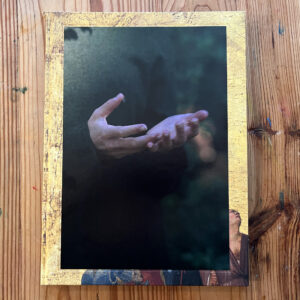
A catalog of the exhibition has been published by the museum (here). Hardcover, 9×10 inches, 338 pages, with 361 image reproductions. Includes essays by Stephanie D’Alessandro and Stephen C. Pinson, a chronology, an exhibition list, notes, and a selected bibliography. (Cover shot below.)


Comments/Context: One of the overused old saws of arts writing is that an artist’s work is experimental. The handy thing about the experimental label is that it can be applied to almost any body of work, assuming that the artist is doing something different than he or she has done before, particularly in terms of subject matter, approach, or technique. We can then declare that these artists are taking risks, trying something new, and extending themselves in bold and perhaps even innovative ways, and congratulate ourselves for identifying this experimental activity.
But the Man Ray show now on view at the Met is so overflowing with astonishing artistic ideas and experiments that it hardly compares to this overly easy experimental description we typically trot out. It is easily the most idea rich show of photography to be found anywhere in New York this year, and one that will leave you tingling with admiration for the near constant artistic testing, exploring, and restless trial and error that fills the works on view. Patient time spent with this show leads to a sophisticated picture of a gloriously scavenging artistic mind, where each and every artwork included pushes on limits, continually asking us to rethink what we think we know about how artistic ideas evolve.
What’s fascinating is that it’s not like Man Ray’s career hasn’t been thoroughly studied already – there have been retrospectives, exhibits, monographs, catalogs, and gallery shows of all kinds over the years, many focusing on his output in one medium or another. This show thoughtfully takes a different path. It starts with the idea that Man Ray’s rayographs deserve an in-depth study of their own, and then brackets a deep selection of these images with works made chronologically before and after his main rayograph period (roughly the decade between late 1921 and 1931), encouraging us to think about what Man Ray was thinking (and working on) before he “discovered” the rayograph, and later how his time in the darkroom influenced his eventual artistic return to painting, film making, photography, and sculpture. In this way, the show centers on the innovation of the rayograph, uses it as a pivot point, and then smartly surrounds it with rich artistic context, and yes, experimentation.
The entry gallery starts with a framework-establishing get-started introduction, in the form of Man Ray’s Champs délicieux portfolio of twelve rayographs from 1922. This thin album was Man Ray’s first public announcement of his new technique, and the entry area holds both an original portfolio in a vitrine and a complete grid of the prints on a dark wall. Of course, Man Ray didn’t invent the photogram (a camera-less image made in the darkroom by placing objects on or near light sensitive paper, exposing the arrangement to light, and then developing the resulting paper) – examples of the technique go all the way back to William Henry Fox Talbot, Anna Atkins, and other early pioneers of the medium. But those first examples were largely precise silhouettes of single isolated objects or botanical specimens, designed to take advantage of the reproductive precision of the process. But one look at Man Ray’s rayographs makes it obvious that something else is artistically going on – not only is there more than one object in every composition, it seems like he’s been rummaging through the junk drawer of his studio to find his subjects, which include what looks like a pipe, a hotel room key, a cheese grater, some drafting tools, a toy gun, a gyroscope, some paintbrushes, a comb, and plenty of other less identifiable things. What’s more, the objects aren’t always laid flat to make them clear or legible; many are turned on their sides, stacked together, lifted up, set on edge, or generally manipulated to create different shapes and shadows. Unlike most earlier photograms, Man Ray’s rayographs are weirdly mysterious and improvisational, actively exploring different flattening effects, with the “how” and “why” of any one image decidedly unclear.
After offering us this visual appetizer, the show jumps back roughly a decade (to 1914), digging into the varied artworks Man Ray was making before the rayographs first appeared. It was a heady period of creativity for Man Ray, as he seems to have been chasing half a dozen artistic ideas, in different mediums, all at the same time, trying to figure out solutions to a series of artistic problems. One intellectual idea he was struggling with was how to actively flatten painting even further – the overlapped planes of Cubism weren’t enough, and he seems to have been searching for how to collapse positive and negative space even more. He tried this in vaguely figurative geometric and abstract paintings (on various substrates), in cut/collaged/stenciled works that feel even more graphic, in scratched cliché verre line drawings, and even in eccentric airbrushed works, where the vaporized pigment seems to dissolve. Seeing all of these works hung together, there is a clear feeling of frustrated artistic trial and error, of pushing, and pushing, and pushing, and not quite finding what he’s looking for.
At this same time, Man Ray was also swept up into the post-World War I Dada movement, where everyday found objects were being transformed into playful (and conceptually challenging) artworks. Marcel Duchamp’s urinal “ready-made” came along in 1917, and Man Ray was trying out similar ideas in wooden sculptures made from scavenged materials in 1918, and a few years later in a lampshade made from a twist of painted tin, an intentionally dysfunctional iron with tacks on the bottom, and a scattering of wooden hangers transformed into a wondrously complex hanging assemblage. These efforts make it clear that Man Ray’s mind was incrementally being reoriented toward the potential power of humble objects, and the larger idea that art could be made using whatever might be at hand.
The last piece of the pre-rayograph puzzle comes with Man Ray’s embrace of photography. After initial forays into simple documentation of his studio and artworks, he quickly turned to Dada-infused images of objects arranged to be photographed. In 1916, he made a self portrait from two doorbells and a handprint, and a few years later, he transformed an eggbeater into a man and a pair of bowls and some clothespins into a woman, deliberately using the cast shadows as part of the compositional process. He went on to make a confusing image of dust on the floor, another of the movement of laundry in the wind, and then explored blur more actively, in various distorted portraits and even a picture of the Eiffel tower. In these works, we can watch him familiarizing himself with the way a camera sees, and with the way that vision can be intentionally reconfigured by movement, light, and perspective to make something obvious and recognizable altogether strange.
All three of these artistic rivers converge in the rayograph, and Man Ray seems to have been entirely devoted to exploring its possibilities throughout 1922, making more than 100 works; he would continue to make rayographs busily through 1923, and onward through the end of the decade. In essence, the rayograph was a performative assemblage of found objects, which when put together in the darkroom and manipulated with light, created a highly flattened visual image that compressed three-dimensional space into a mysterious plane of formal echoes. This show offers dozens of superlative examples, set in envelopingly darkened aisles against black dividers, each work an opportunity to fall into its own uncertain void.
It’s nearly impossible to encounter a rayograph and not start by trying to identify its component parts. And while it is initially satisfying to make some identifications – some gears, a banjo, a feather, a face, some fingers, an egg, a paper doily, some nails, a pile of glass prisms, a twist of wire, a few tacks – what a rayograph is really all about is Man Ray’s sophisticated control of spatial dynamics. A patient look at a rayograph almost always reveals complexities of space that are confusing and disorienting – light and shadow twist and turn; there are reversals, gradations, and overlaps that are hard to unpack; some items are translucent or reflective, bending the refracted light in unexpected ways; and surfaces are washed out, becoming flat ambiguities. What becomes apparent is that Man Ray was working in several directions – sometimes horizontally, sometimes vertically, sometimes stacking objects in space, sometimes suspending or hanging them from above (or from a distance), sometimes using multiple exposures or angled lighting, the resulting visuals capturing a stylized version of a particular structured reality. The best rayographs are elegantly confounding, transforming everyday objects into uncertain quantum-like possibilities, the images not a record of fact exactly but a ghostly dream of sorts. The gathered rayographs on view are nothing short of amazing, with lively formal surprises to be discovered in each and every composition.
The last third of the show considers the artistic aftermath of the rayograph, and how Man Ray’s work in a variety of mediums was informed by his darkroom learnings. The problems of painting returned to Man Ray’s attention in 1923, and a small gallery hosts an insightful set of pairings, where paintings and rayographs are hung together, with the visual echoes obvious, but in the opposite direction than before, now with the painting coming after the rayograph and leveraging some of its compositional ideas and visual motifs. These pairings aren’t entirely matchy-matchy, but a few clearly imply a causal relationship, with a Y-shape, the dotted form of a grater, some white parallelograms, and in particular, a matchbook like array drifting from the rayograph to the painting with uncanny fidelity.
When Surrealism starts to coalesce as an artistic and intellectual movement in the mid 1920s, Man Ray is remarkably well positioned to lean into its unconscious, dream-like symbolism, particularly with his recently honed technical skills from his rayograph efforts. Just a small selection of photographs from this period drops one powerhouse Surreal image after another, starting with “Le Violon d’Ingres” (and its photogram f-holes on Kiki de Montparnasse’s back), quickly followed by “Noire et Blanche” and a bit later by “Glass Tears”. These are matched by a selection of somewhat later rayographs (from 1925) that mimic dream-like landscapes with triangular evergreens and floating moons. And his 1928 film “L’Étoile de mer” brings back an aesthetic of deliberate wavy blur (as through shot through textured glass), as well as the mysterious starfish in a jar found in the title.
The last section of the show first pushes on to 1929, when Lee Miller arrived in Paris and took up a position as Man Ray’s apprentice. Together, they perfected the solarization process, as seen in a handful of photographic nudes, bodies, and portraits (including one of Miller herself). The visual haloing of solarization was a good match for the magical distortions of Surrealism, creating a darkened edge that separated objects from their surroundings. And then by the early 1930s, we reach a kind of natural end point to this vibrant run of experimentation, with Man Ray returning to the rayograph one last time, making a portfolio of electricity-themed images, featuring light bulbs, an iron, a fan, and plenty of wavy lines like static flowing through the air.
Rarely have I come away from a photography show so impressed by the sheer volume of artistic ideas on offer as I was leaving this show – the rayographs in particular have a surface simplicity that initially conceals a much deeper richness and subtlety that later appears when the works are examined with more care. This exhibit makes a compelling case that the period between 1914 and 1929 was a formative one for Man Ray, and one where his inventiveness was more consistently cross-disciplinary and more boundary-breaking than we might have imagined. Happily, this show has not been dumbed down, and instead revels in messy creative complexity, where hard artistic problems don’t have immediate solutions and options must be tried and tested over and over again. In the end, there is something altogether refreshing and even aspirational about Man Ray’s unrelenting experimentation during this period – he keeps thinking, never quite settling for whatever success was at hand.
Collector’s POV: Man Ray’s prints are consistently available at auction, at nearly all price points, from a few thousand dollars for lesser know images and prints from larger editions to his 2022 record price of roughly $12.4M (for a 1924 print of “Le Violin d’Ingres”).