JTF (just the facts): Published in 2026 by MACK Books (here). Embossed flexibound hardback, 17 x 23 cm, 320 pages, with numerous notes, letters, book spreads, and photographs. Includes an essay by Liv Constable-Maxwell and the estate of the artist, with excerpted writings and lectures by the artist. Design by Morgan Crowcroft-Brown. (Cover and spread shots below.)
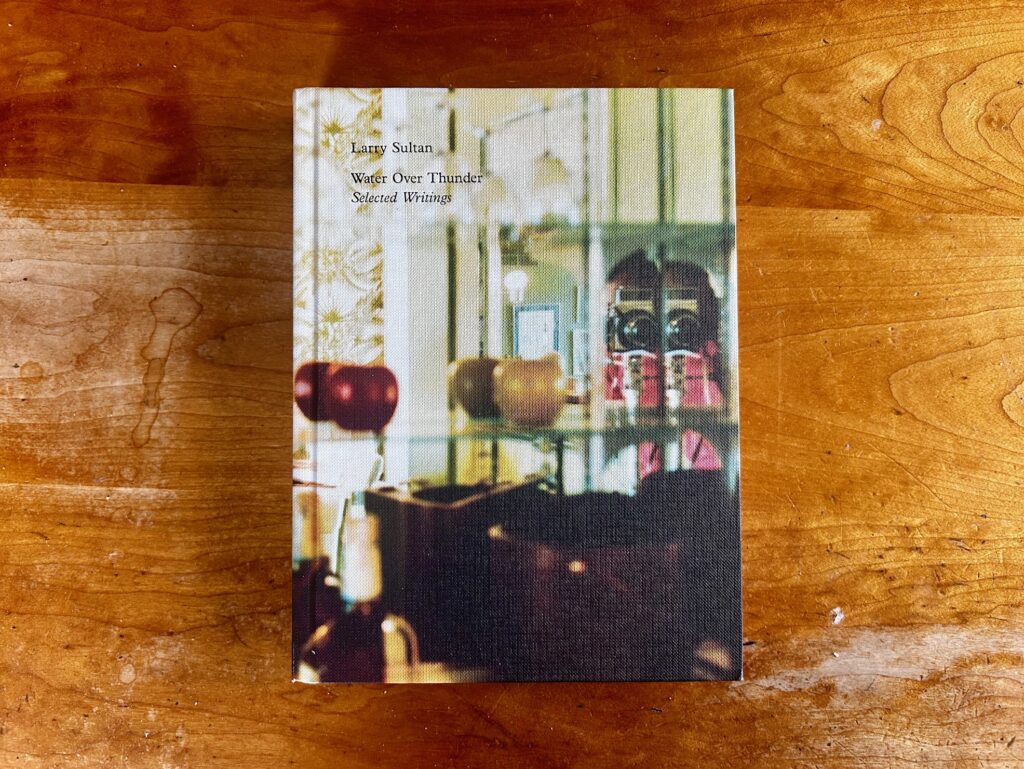
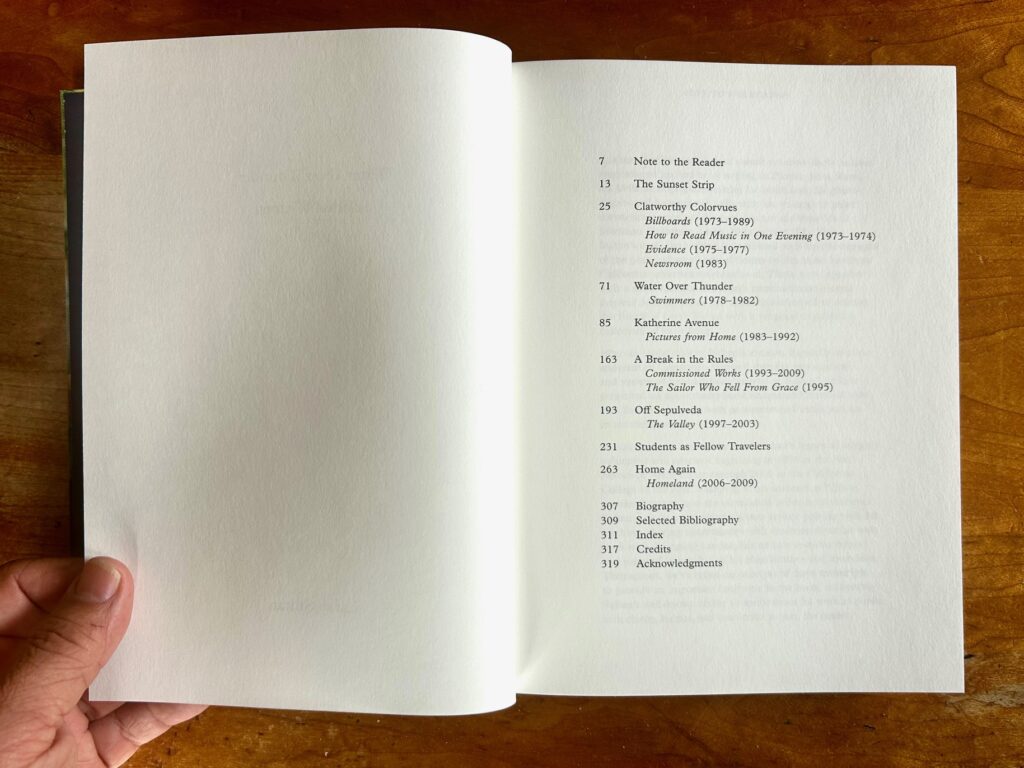
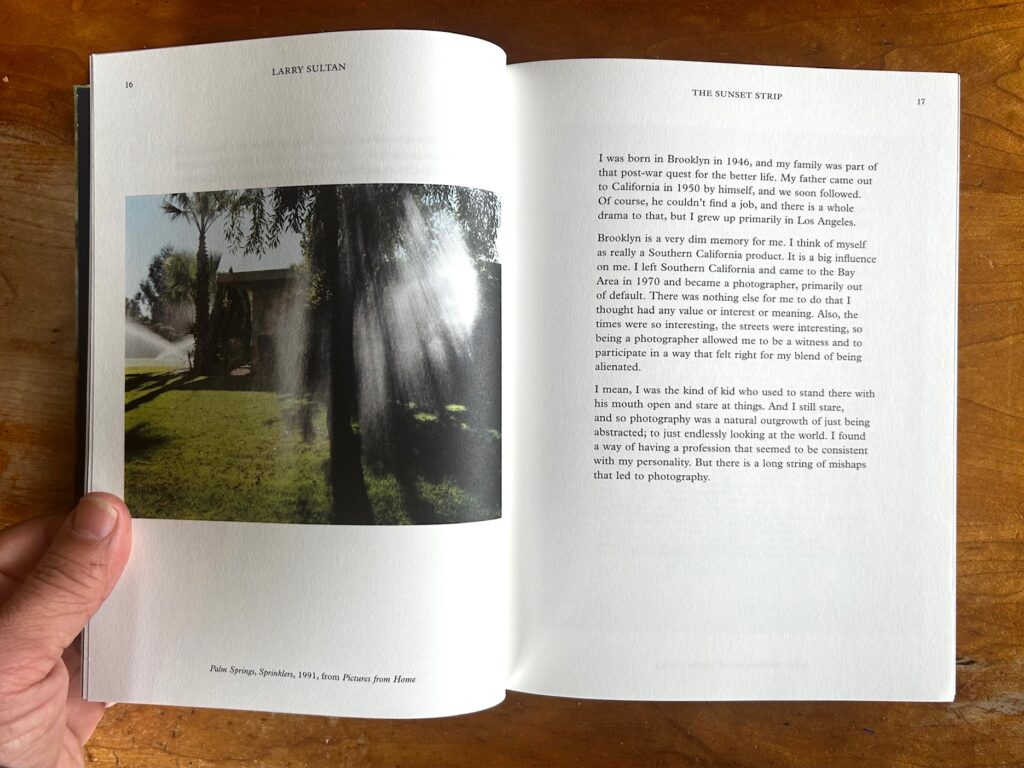
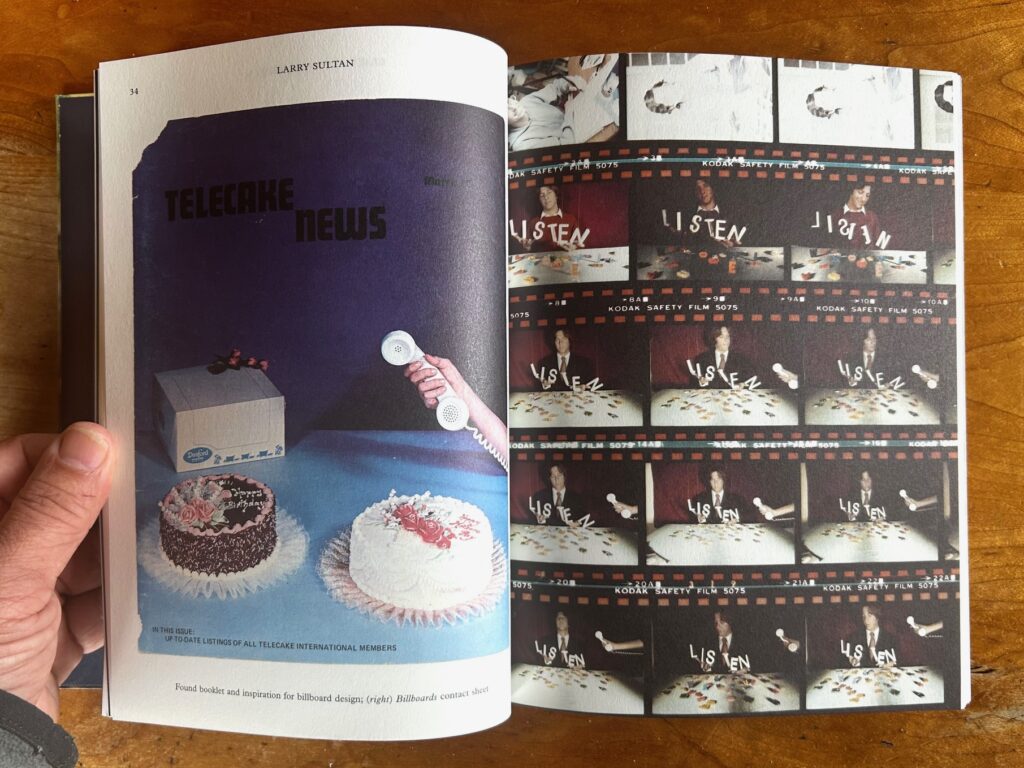
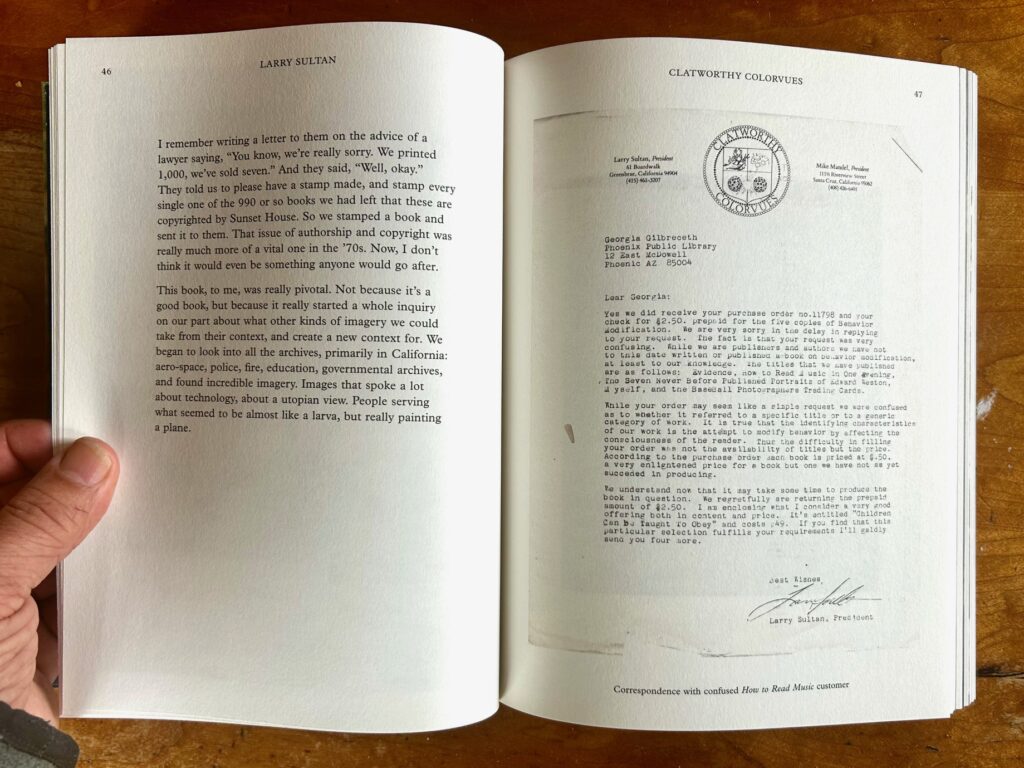
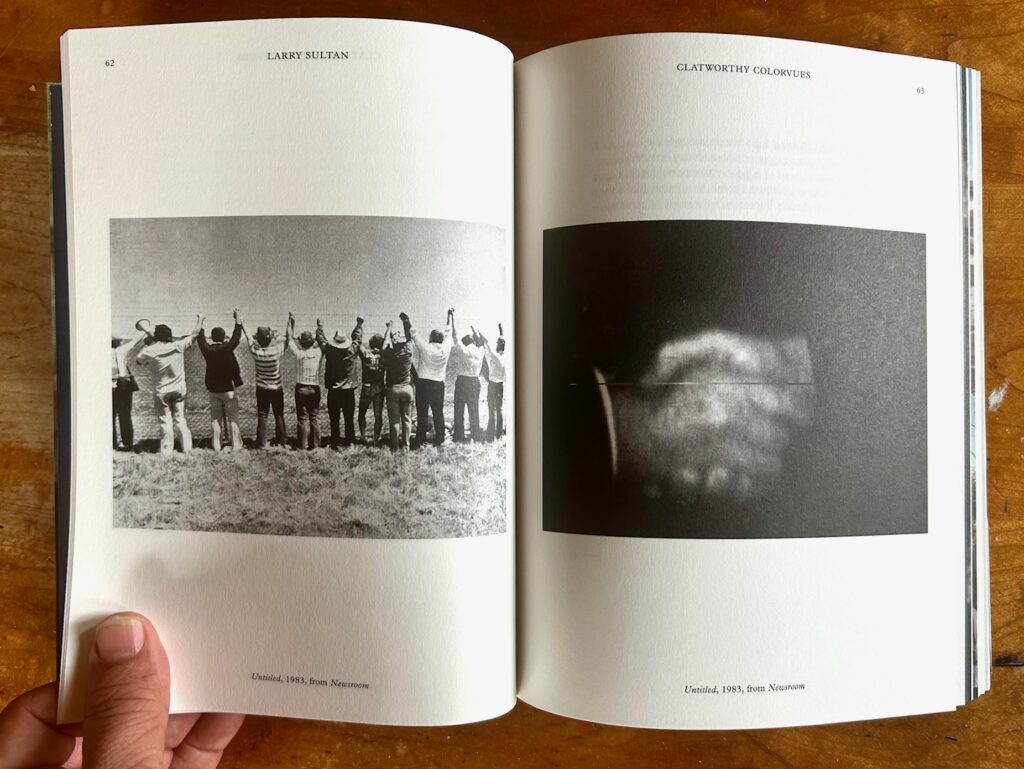
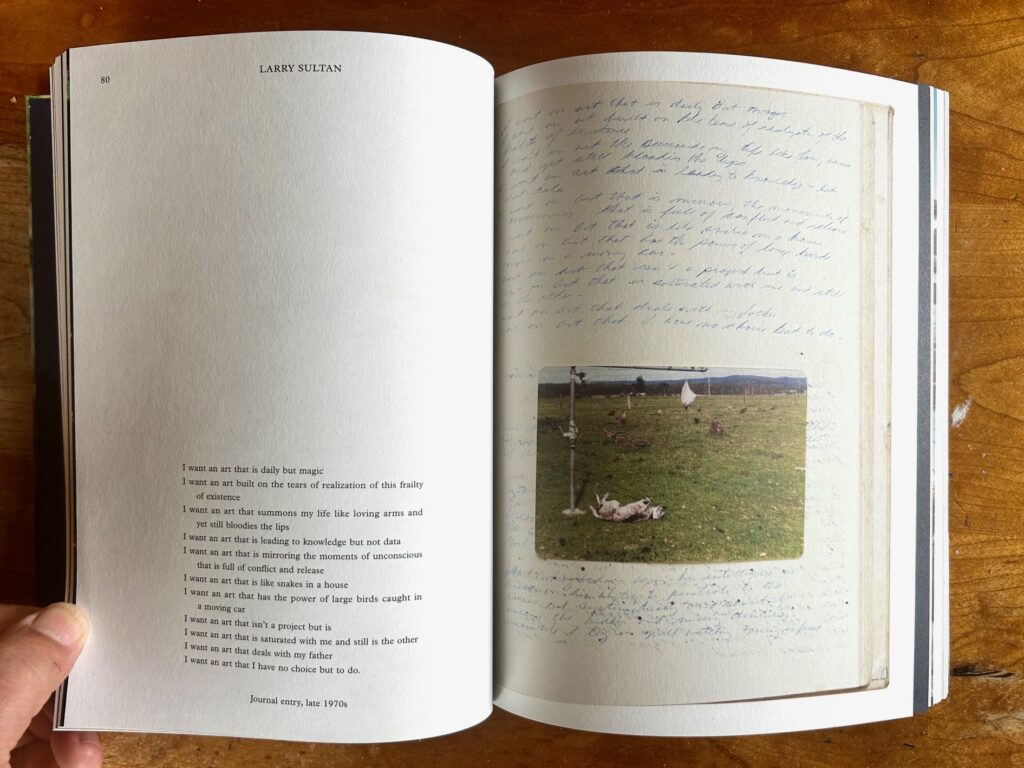
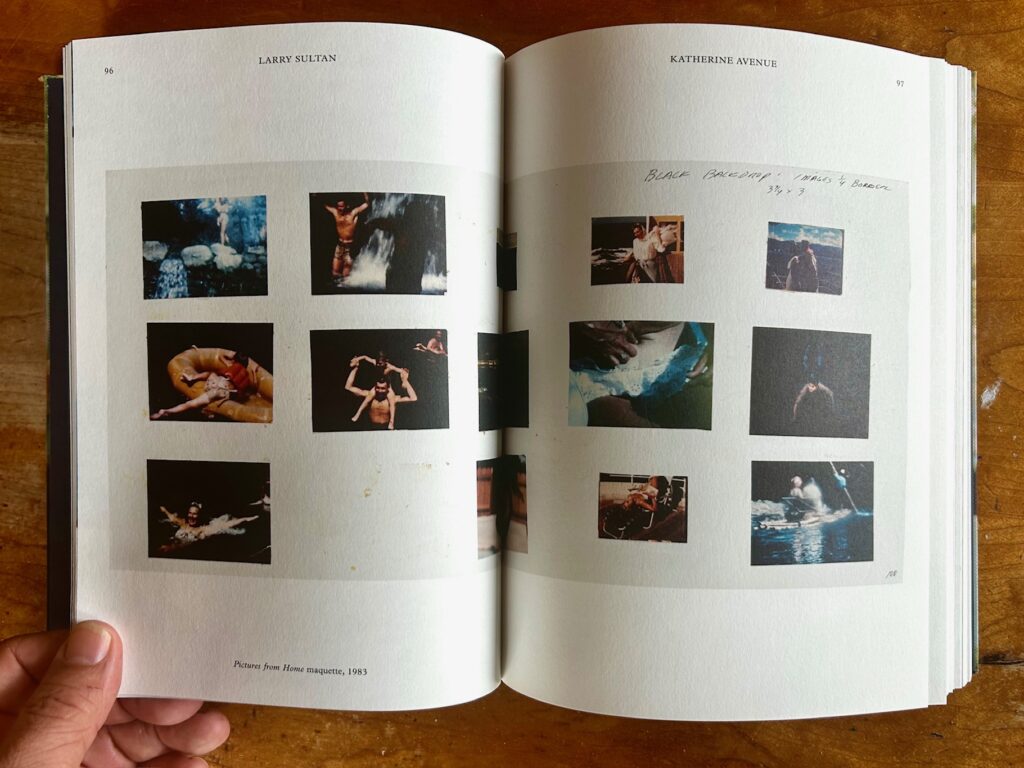
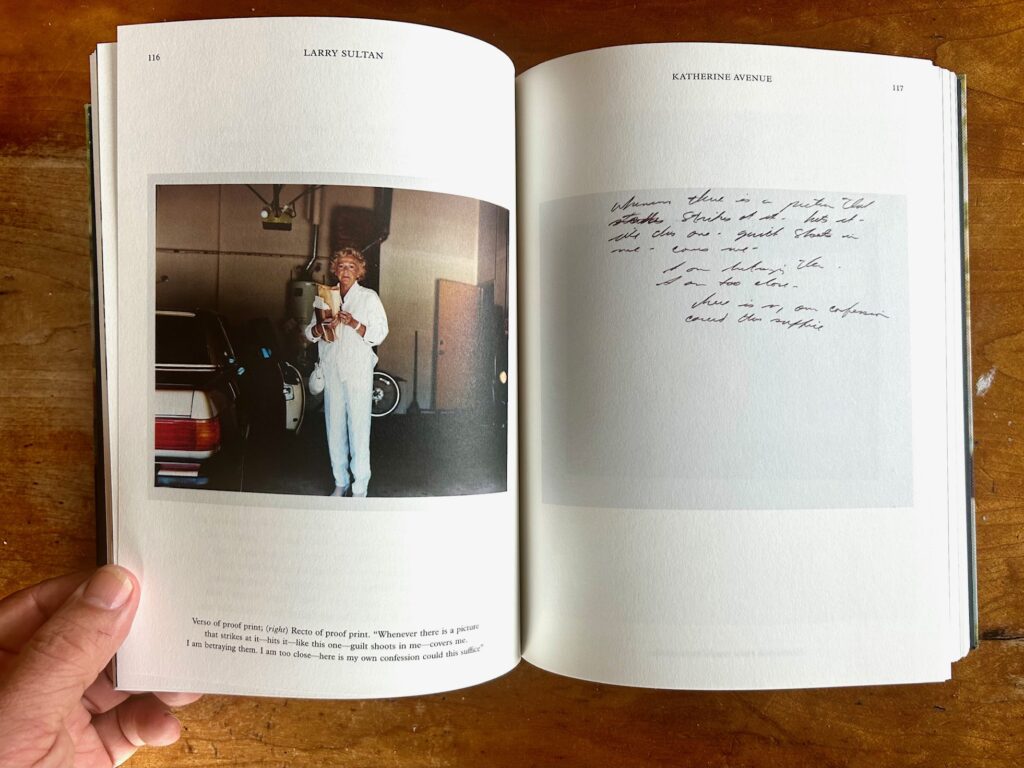
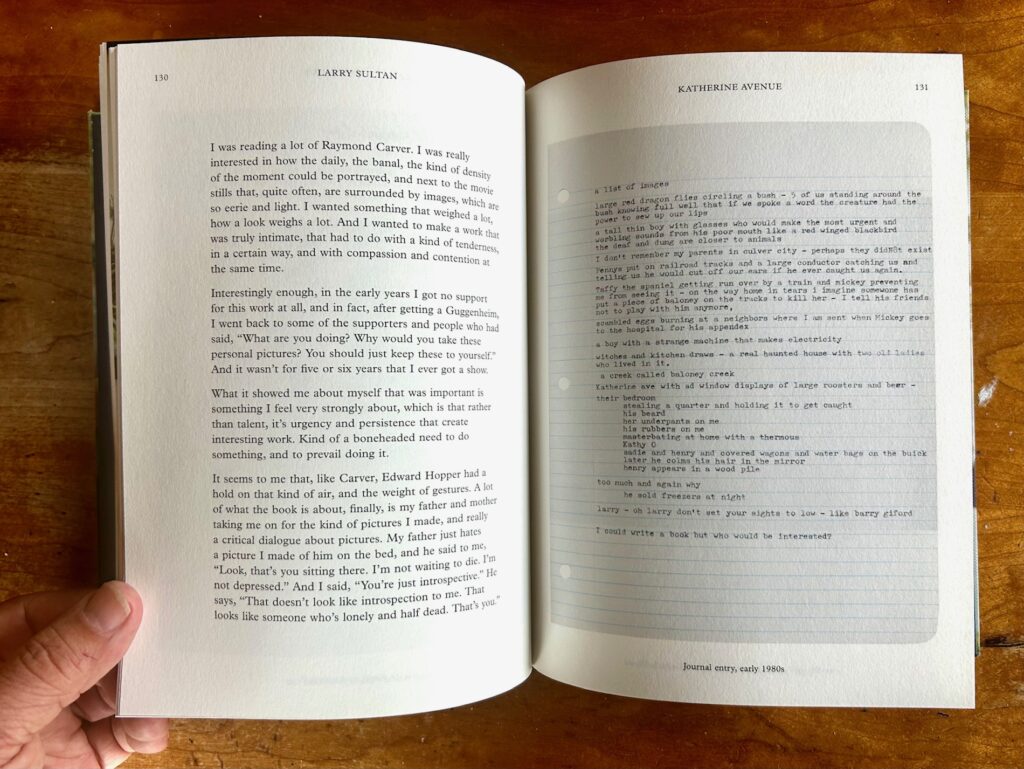
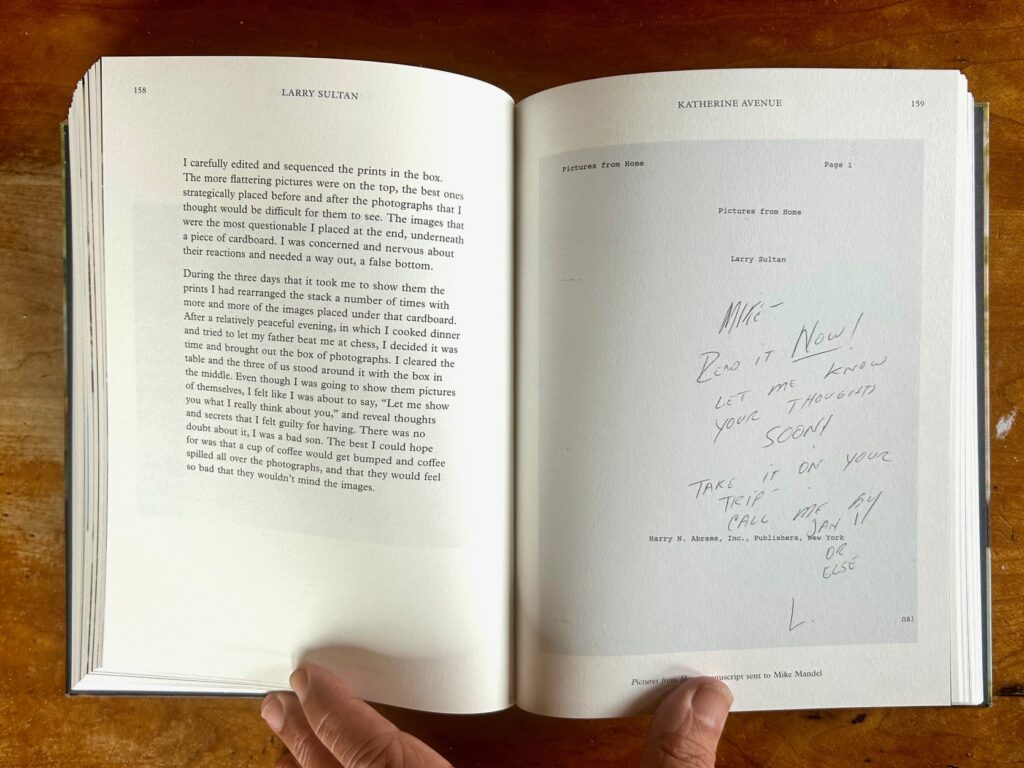
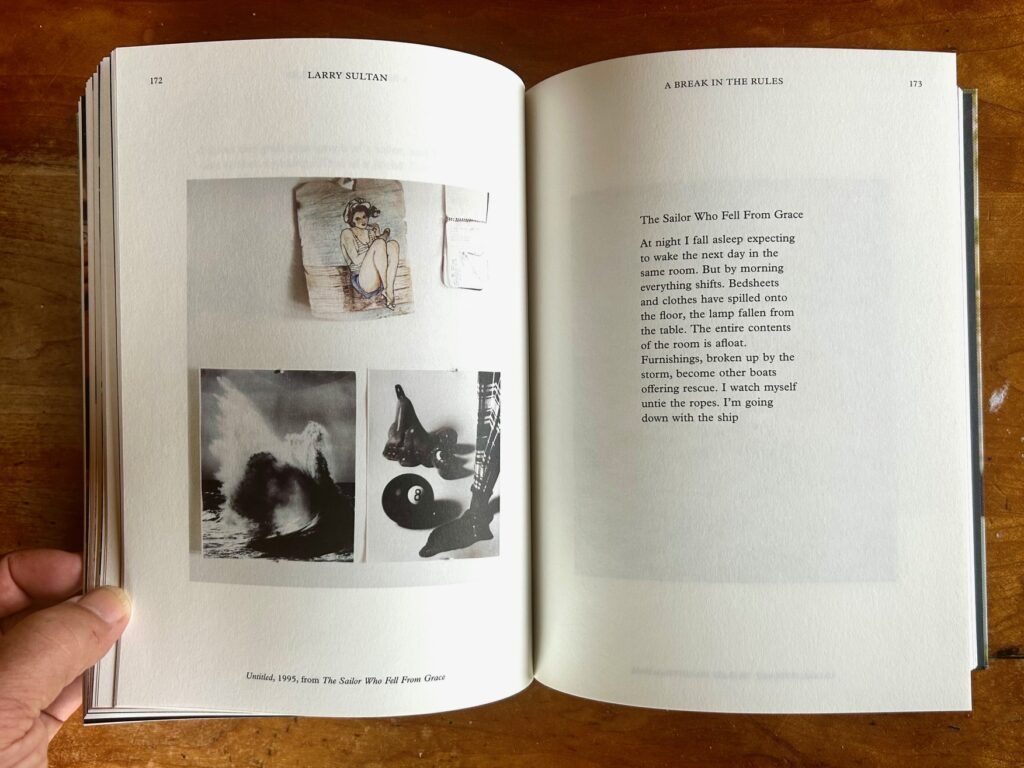
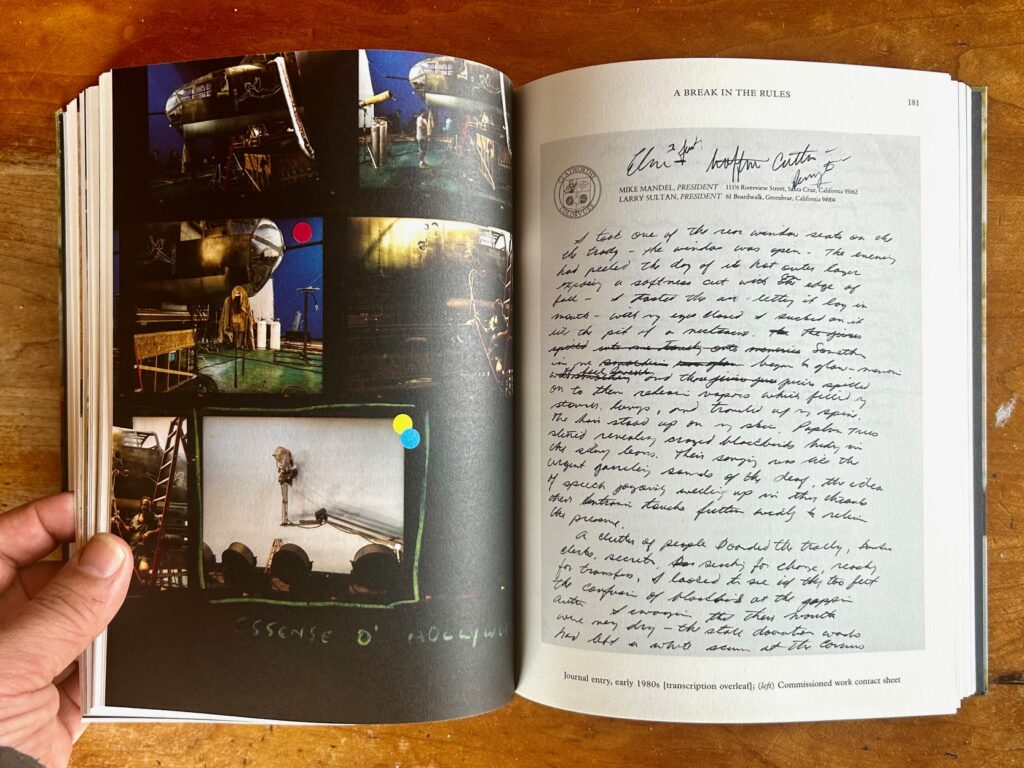
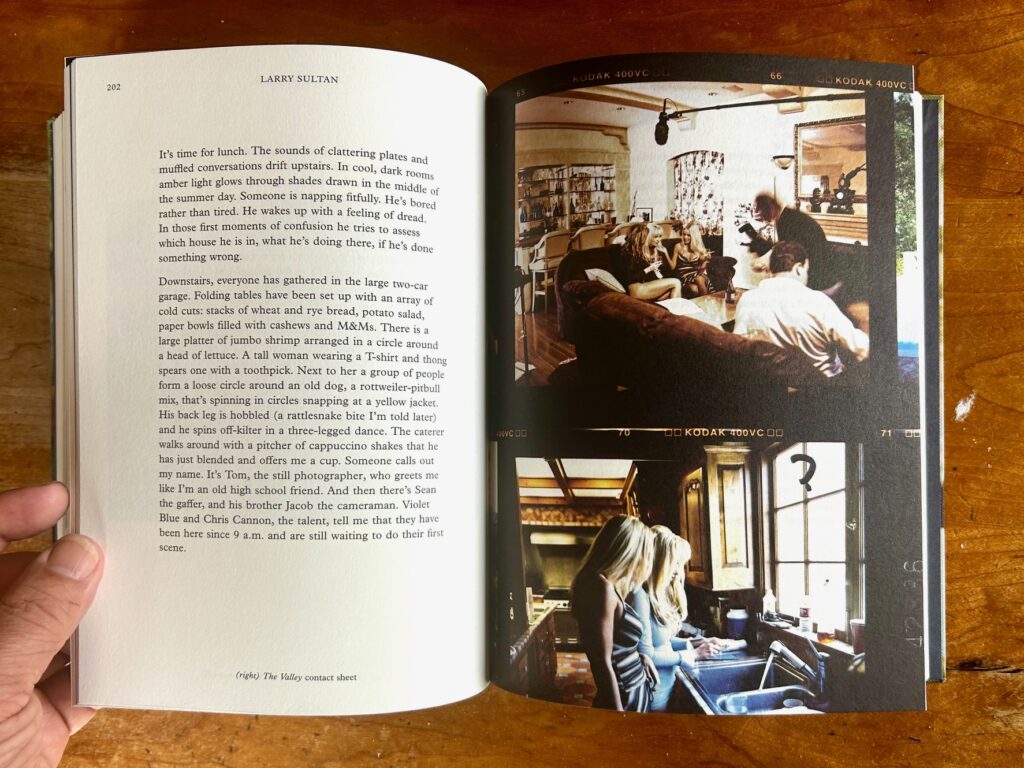
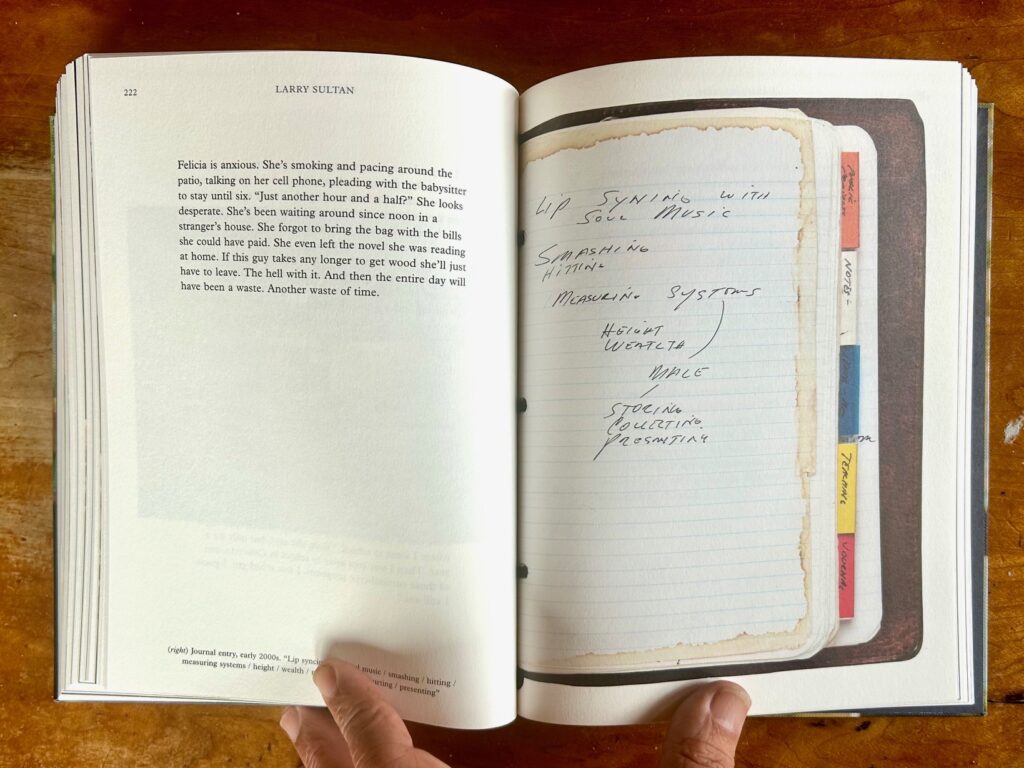
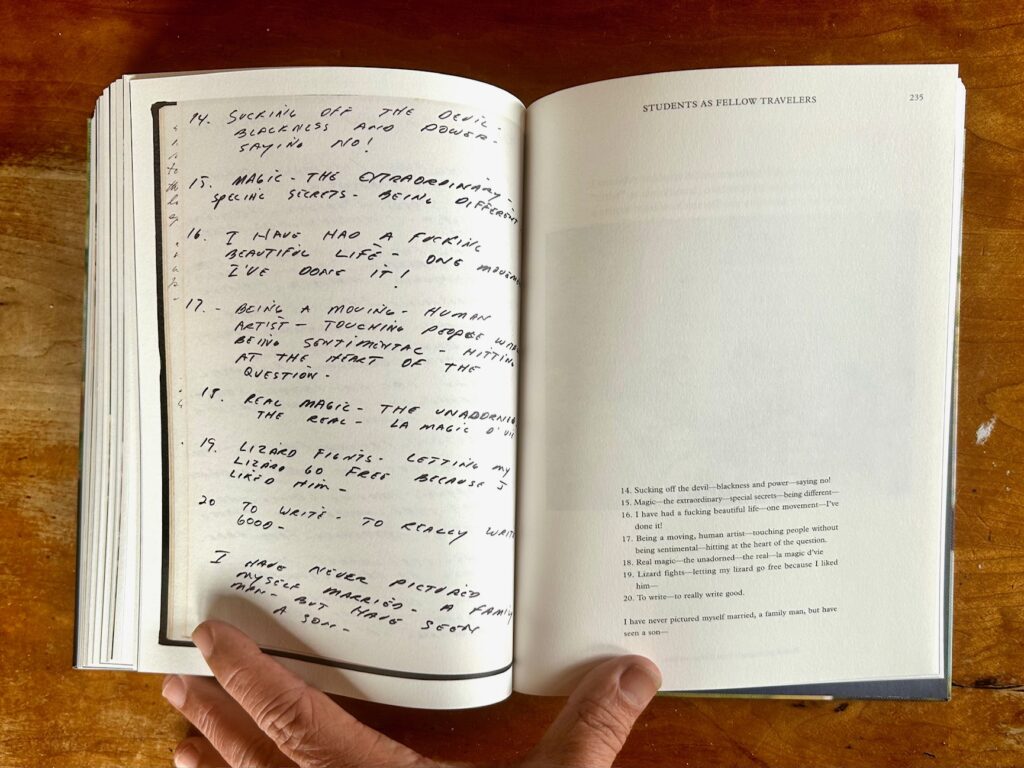
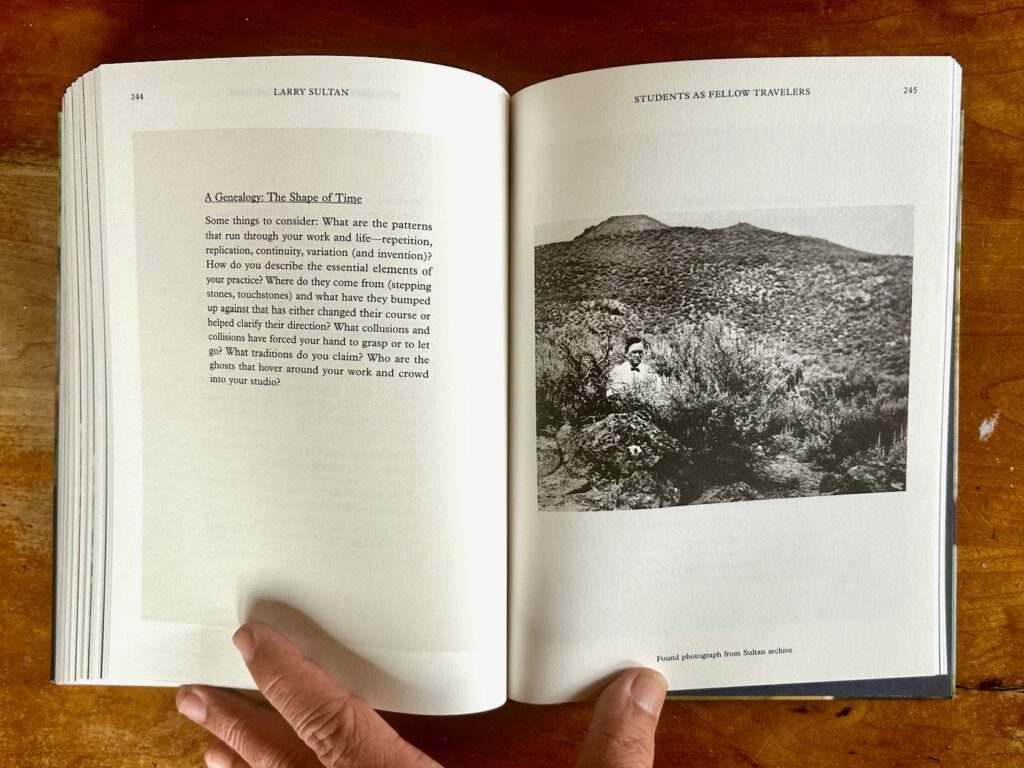
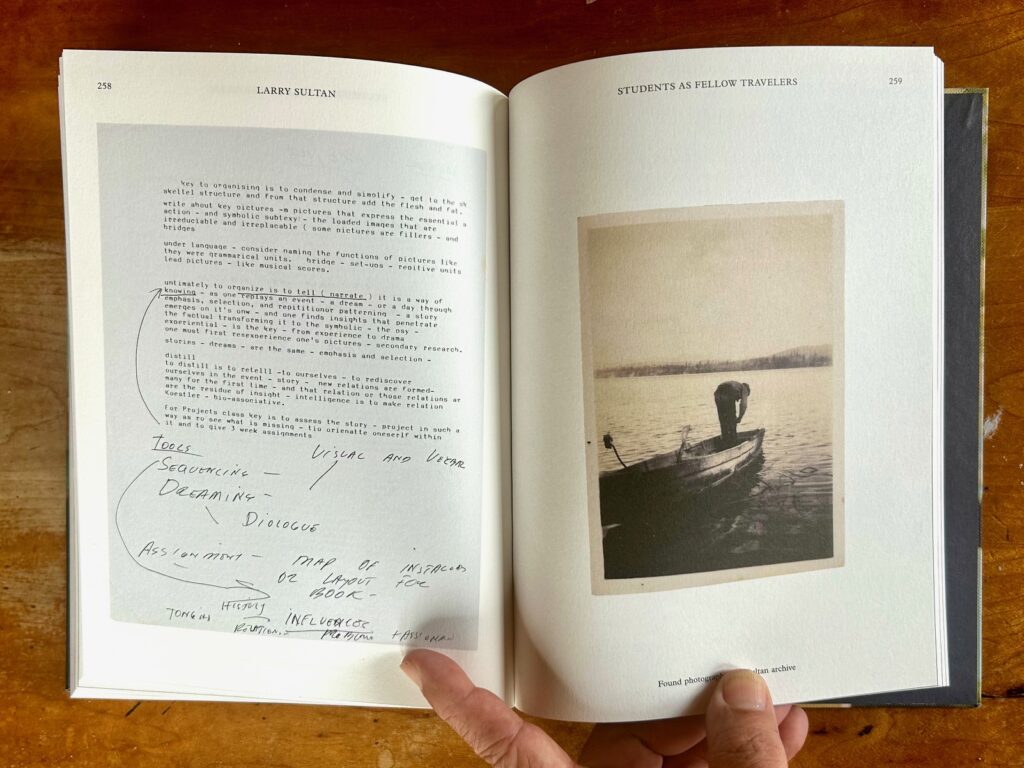
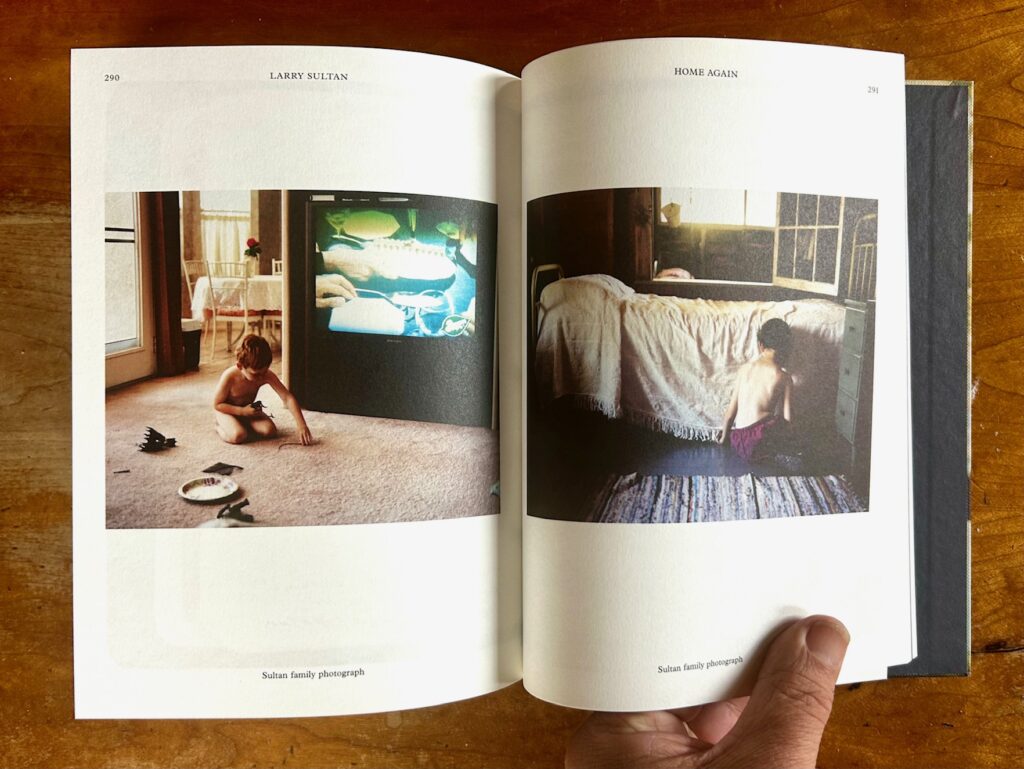
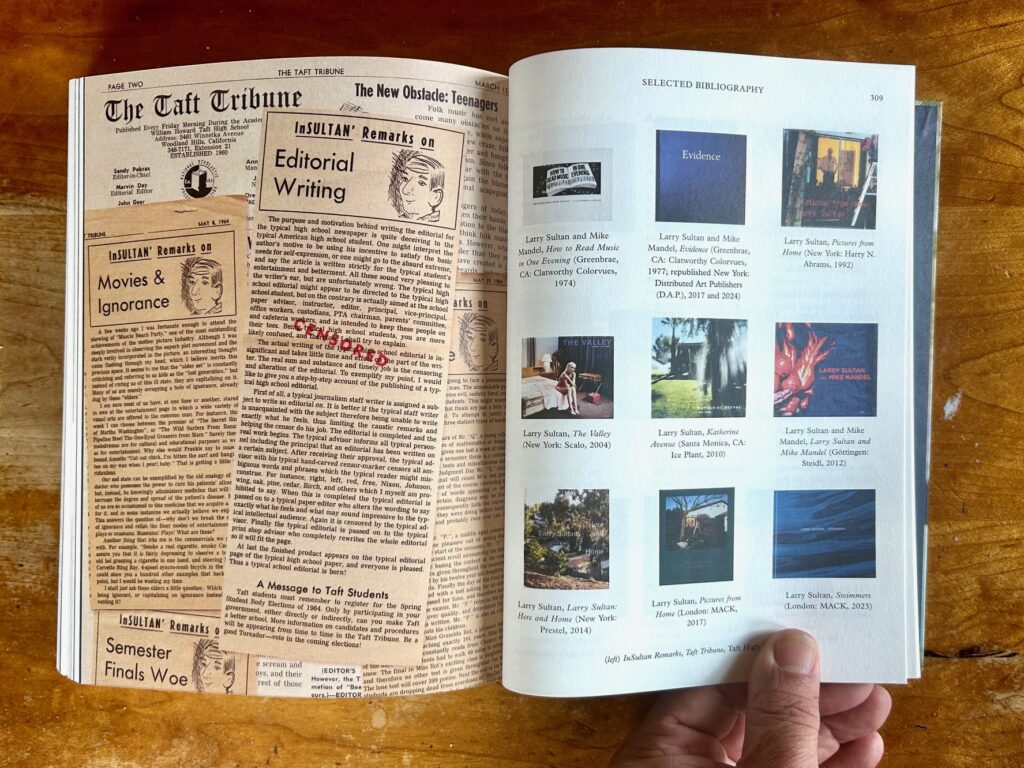
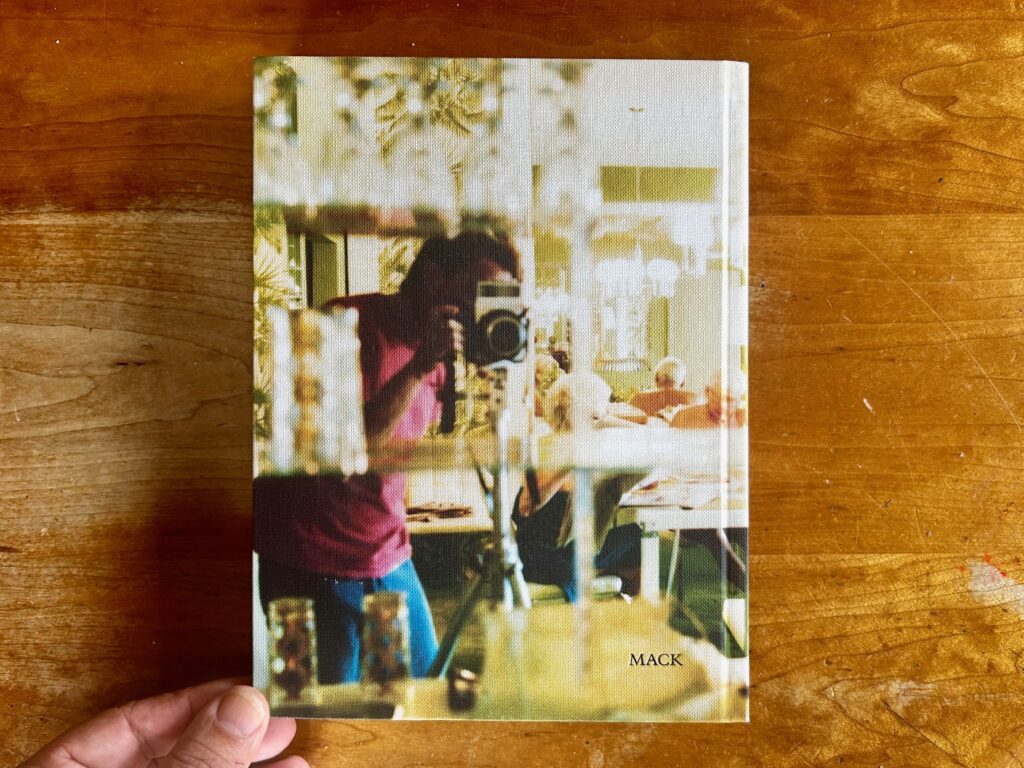
Comments/Context: Take a typical post-war baby boomer chasing the American Dream, insert him into the body of an artist, and you might wind up with someone like Larry Sultan. Born in 1946, the late photographer, writer, and teacher—he referred to his students as “fellow travelers”—lived a storybook career, checking off major achievements in perfunctory fashion. He authored or co-authored three landmark photobooks, taught at prestigious institutions (SFAI and CCA), earned a Guggenheim and three NEA Fellowships, and secured his work for posterity in many prominent collections. Last but not least, he created and curated numerous iconic photographs.
I was fortunate to attend a Sultan lecture in Eugene, in April 2009. He would die just a few months after, but of course I couldn’t know that at the time. When I saw him speak he was at the height of his powers, mixing pictures, ideas, and personal anecdotes with fluent command. I was spellbound. Seventeen years later, this photo talk still lingers in my memory as the best one I’ve ever attended. When Sultan succumbed to cancer later that year (memorialized here), he was at the top of his profession, universally respected.
Well, almost universally respected. Sultan’s photographic career never passed muster with his father. Irving Sultan had pursued the American Dream in more conventional fashion, moving west from Brooklyn to Los Angeles, then working his way up the corporate ladder from door-to-door salesman into the suit-and-tied executive suites of the Schick Razor company. He’d achieved the good life, with a wife and three boys ensconced comfortably in a suburban Los Angeles home, complete with swimming pool and clipped lawn to practice his golf swing. Why his son had veered off course was beyond Irving Sultan’s understanding. “He was pissed that I was an artist and he always gave me a hard time,” recalls Larry. “He called me a loser.”
This small shard of self-reflection is just the tip of the Sultan family iceberg. There are plenty more revelations to be found in Water Over Thunder: Selected Writings, a recent curation of his physical archives. As one might expect, Sultan produced a mountain of ideas, notes, outtakes, and outlines over the course of his career. He also engaged in numerous interviews, lectures, and conversations, some of which were recorded and/or transcribed. If the volume wasn’t quite as prodigious as the government archives used for Evidence, it was in the same ballpark.
Since his death these materials have been stored in assorted boxes at the estate of Larry Sultan, unseen and unpublished. It took MACK editor Liv Constable-Maxwell nearly three years to digest these contents, and cull the highlights into book form. A thumbnail grid of dog-eared journals in the appendix gives an inkling of what she had to work with. The result was worth the wait. Water Over Thunder provides countless behind-the-scenes insights into Sultan’s life and individual projects. Warning: heavy thinking ahead. But also: absurdities, light banter, and small joys. “Photography,” according to Sultan, “is a way of hanging out, thinking, looking at pictures, getting frustrated, and then clarifying.” The same might apply to life in general.
Water Over Thunder is titled after an excerpt from an early Pictures From Home maquette. Like that book, it is authored from first-person POV, narrated in Sultan’s voice. The materials are compiled in chronological order, gradually progressing through the course of 63 years. Some texts are adapted from notes and speeches, and compiled into brief expository notes. Others are reproduced directly as facsimiled ephemera. Sometimes the messages come in parallel, with originals and transcriptions side by side.
Sultan’s slanted cursive becomes a familiar presence for readers. But, somewhat surprisingly, many of his journals were actually typewritten, and they are the dominant format here. Perhaps he had an eye on posterity, and didn’t want to bother critics with poor penmanship? In any case he was a restless spirit, always revising, and the typewritten pages are inked up with corrections and additions. Regardless of format, his writings sit easily in the book alongside numerous photographs, book spreads, found photos, contact sheets, and artifacts. The mix is dynamic and entertaining, a breeze to read. In the sometimes stuffy context of photography treatises, it’s a real page turner.
In some ways Water Over Thunder resembles an autobiography, and it might be compared to recent illustrated memoirs by Dona Ann McAdams (reviewed here), Sally Mann, (reviewed here), and Martin Parr (reviewed here). Words and pictures blend easily inside 2D spreads, and so photographers are a natural subject for such books. The key difference with Water Over Thunder is that it’s a posthumous bio. Larry Sultan had no direct input. But one would like to think he’d be pleased.
Even if he never published a memoir, Sultan wrote plenty of biographical material during his lifetime. He had been a natural essayist since his days as a high school columnist, and he even contemplated giving up photography for writing. “Maybe that would get closer to the bone,” he wondered to himself at one point.
Thankfully that didn’t happen. But even though he stayed the photo course, his monographs were littered with words. Pictures From Home is annotated throughout with extemporaneous asides, second thoughts, and adolescent memories (reviewed here in gallery form). It’s nearly a family memoir in and of itself. The Valley also includes a lengthy essay, as does Evidence. Those were the only three major books published during his lifetime. But others were eager to pitch in. From the moment he died, the race was on to organize his words and pictures into new books beginning with Katherine Avenue in 2010, followed by Larry Sultan And Mike Mandel in 2012, and finally the sweeping retrospective Here and There in 2014. (Oddly bypassing his final project Homeland, but that’s another story.) Taken collectively they offer a mountain of writing, and a point of comparison for Water Over Thunder.
Rest assured, there is plenty of unpublished material for the current book. In contrast to its predecessors, Water For Thunder takes a lighter, more informal approach to Sultan. He comes and goes with each page turn, a whimsical apparition ruminating on this or that subject. On his youth: “I was the kind of kid who used to stand there with his mouth open and stare at things.” On the pleasure of shooting: “For me the sheer magic of photography is that I never know how it is going to translate the world exactly…No matter how much you work as an artist—a photographer—you are never in complete control.” On his abbreviated struggles at RISD (where he dropped out after three weeks): “How do you turn shit to gold? I think that’s the really important thing.” Who would guess that Larry Sultan was inspired by the kitsch paintings of Thomas Kinkade? That he dodged the draft due to an anxiety diagnosis? That he once worked his passage back from Europe on a freighter?
Surprises abound. At one point the tale gets well into the weeds with a tipsy late night journal entry—“instezd getting a little druck and getting pissed off (sic)”—written in the early throes of Pictures From Home. Second guessing himself against future reactions, he wonders “how do I make [pictures] for me and for my parents and not for a snide group of outsiders?” Attention artists, raise your hand if you’ve asked yourself similar questions over a nightcap.
If Sultan’s multifarious body of work had a single connective tissue, it’s the one referred to in the first paragraph: the American Dream. Almost from birth, Sultan was enmeshed in a culture of upward mobility and professional striving. His understandings of convention, education, work, and consumer culture were pressed at every life turn, as well as an open-ended sense of possibility. Not only did he personify these evolving forces—living as a salaried professional with his own wife and two sons in California— he was fascinated by them, constantly critiquing and questioning them through the vehicle of photography. “One thing that strikes me about the American Dream,” he writes, “is that it’s not about success. It’s about the image of success.”
These themes—“the myth of the West and the Garden” in Sultan’s words—cut across all of his chosen subjects, from mock billboards to razor salesmen to San Fernando porn sets to day laborers. It’s no accident he lived and worked in California, the geographic embodiment of making it. Viewed in this light, even an early outlier like Swimmers (reviewed here) becomes a play on the American Dream, exploring leisure time and recreational communities in the Golden State. In the flower power era of Sultan’s youth, that dream frayed a bit, as the generation gap between father and son became a lifelong conundrum for Larry Sultan. He weighed the ineffable pleasures of an artistic career against the bland security of a conventional path. In hindsight, Pictures From Home, or at least some project like it, seems inevitable.
But now I’m veering into conjecture. Why speculate what might have been when the facts are more reliable, and just as interesting? If you want the straight scoop on Larry Sultan, Water Over Thunder is chock full of tidbits. Even if it’s not edited by him, it carries his voice and his ideas, and it might be the next best thing to attending one of his lectures. Sultan fans will want this book in their reference library. Curious hobbyists, students, and colleagues will be entertained as well. With this posthumous compilation, Sultan’s legacy moves one step closer to realizing the dream.
Collector’s POV: The estate of Larry Sultan is represented by Yancey Richardson Gallery in New York (here), Casemore Gallery in San Francisco (here), and Galerie Thomas Zander in Cologne (here). Sultan’s work has become intermittently available in the secondary markets in recent years, with recent prices ranging between roughly $5000 and $70000.




Thanks for the review, Blake. Informative, conversational, and never tedious – as usual!