JTF (just the facts): A total of 53 black-and-white and color photographs by Wessel, on view in a gallery space and hallway area on the second floor.
The following works are included in the show:
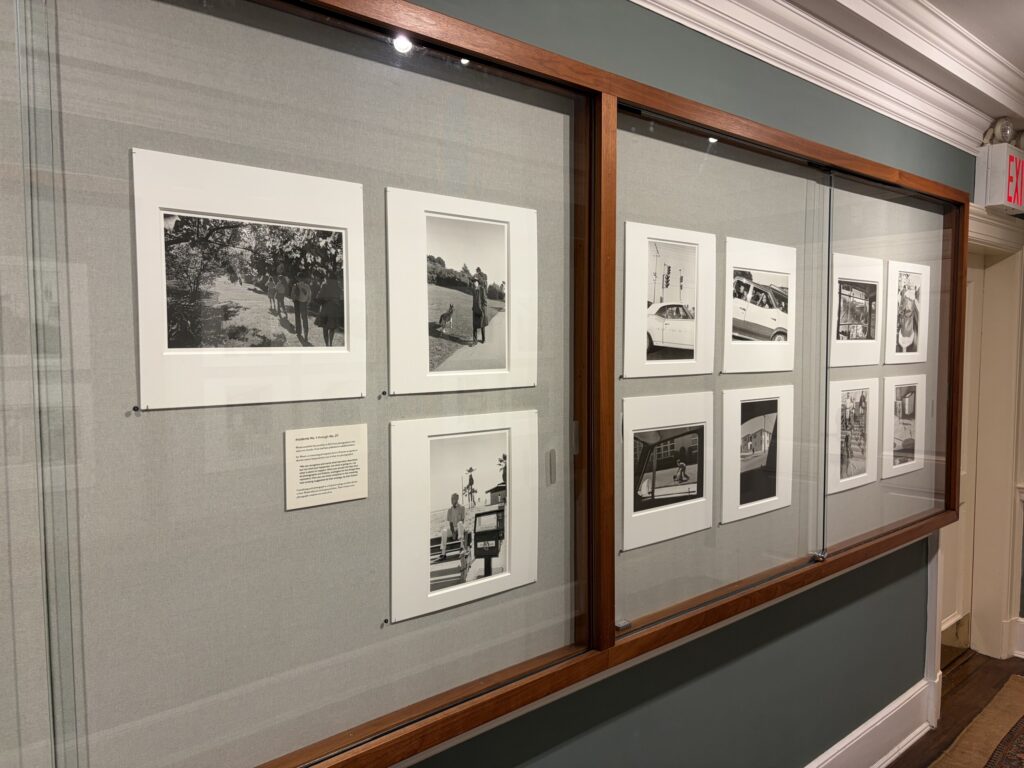
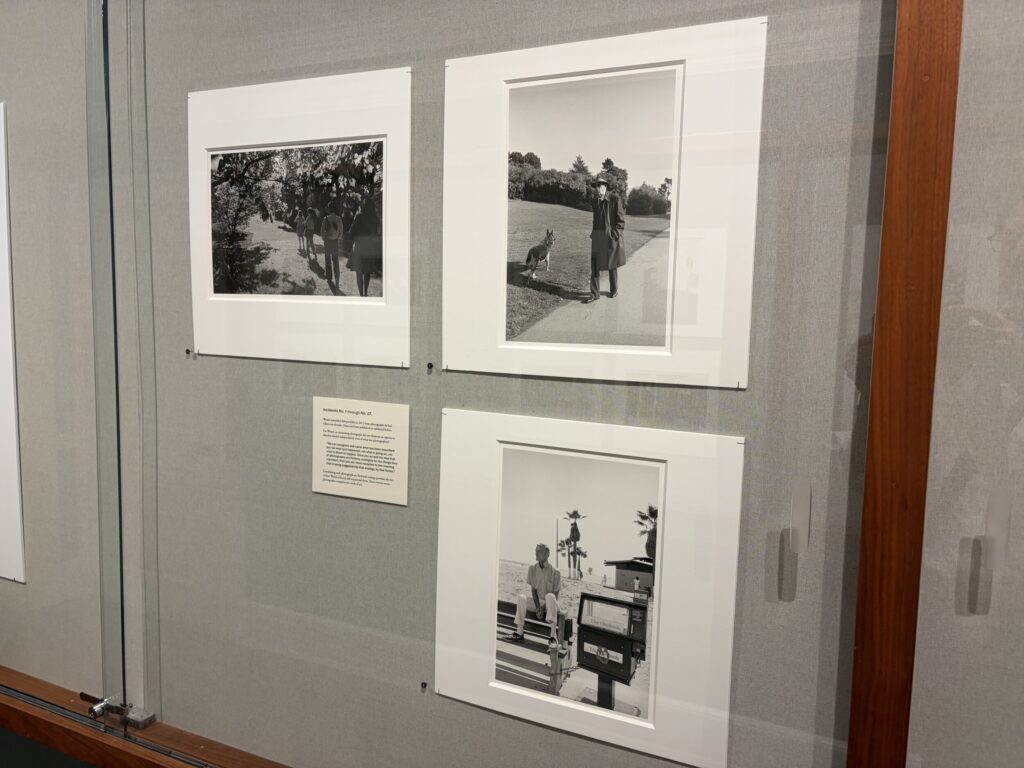
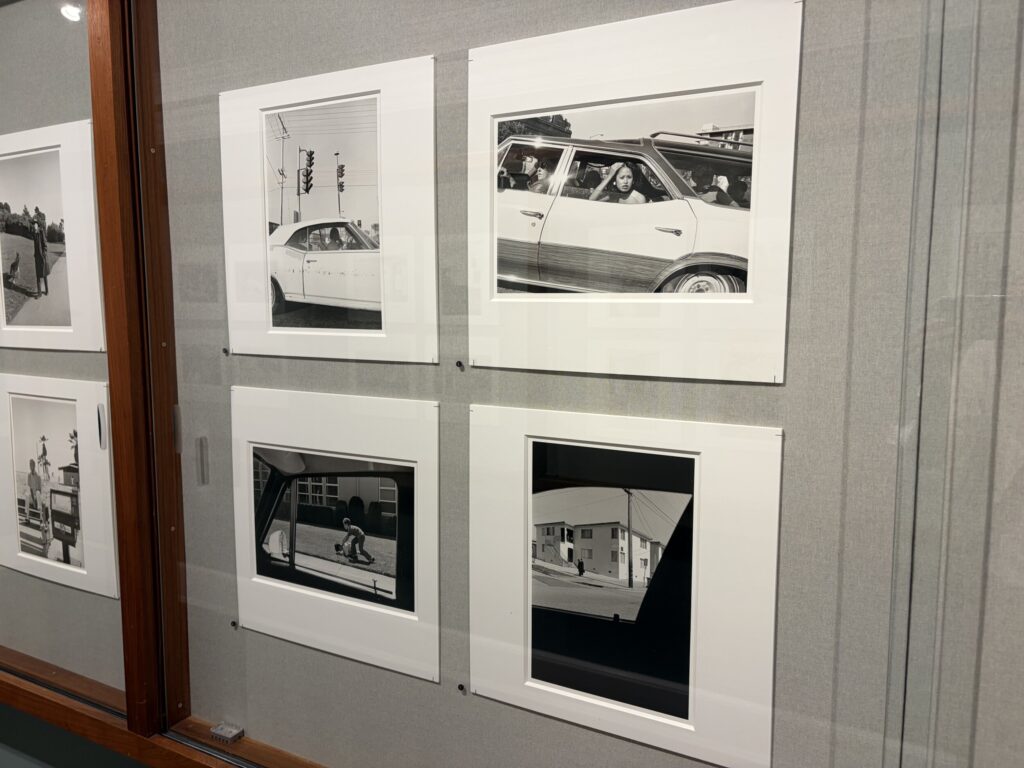
- (2 wall-mounted cases in hallway) 1 set of 27 gelatin silver prints (portfolio of earlier works, assembled in 2012)
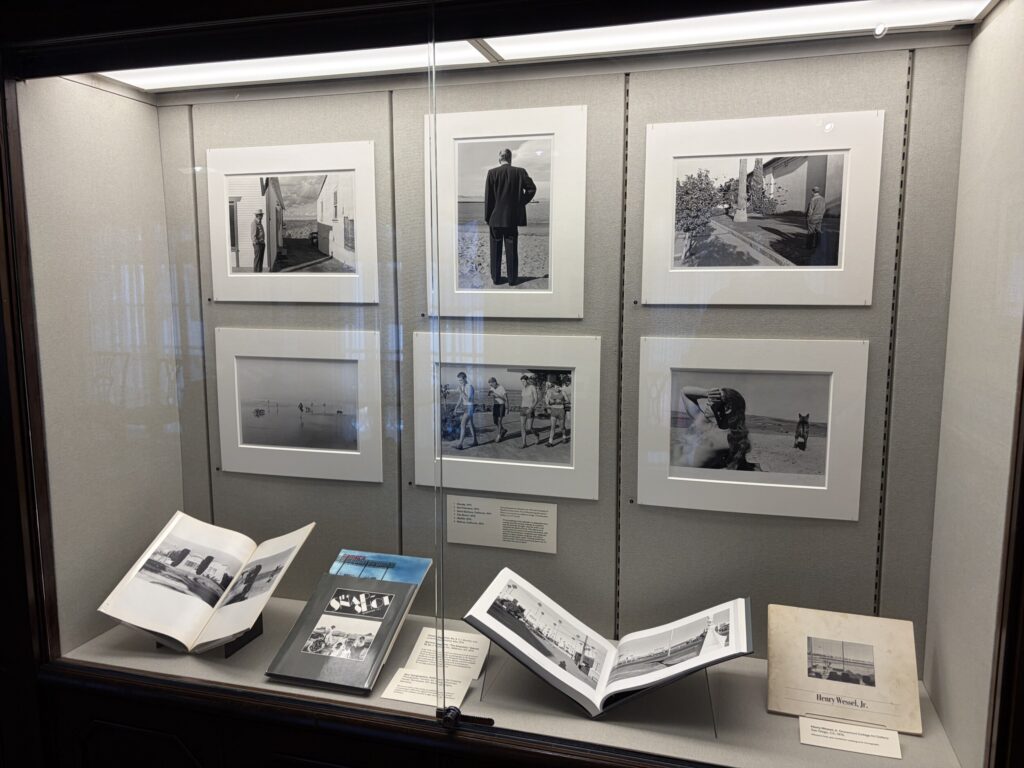
- (display case) 6 gelatin silver prints, 1973, 1975, 1976, 1977; 2 magazines, 1974; 1 book, 2009; 1 book, 1976
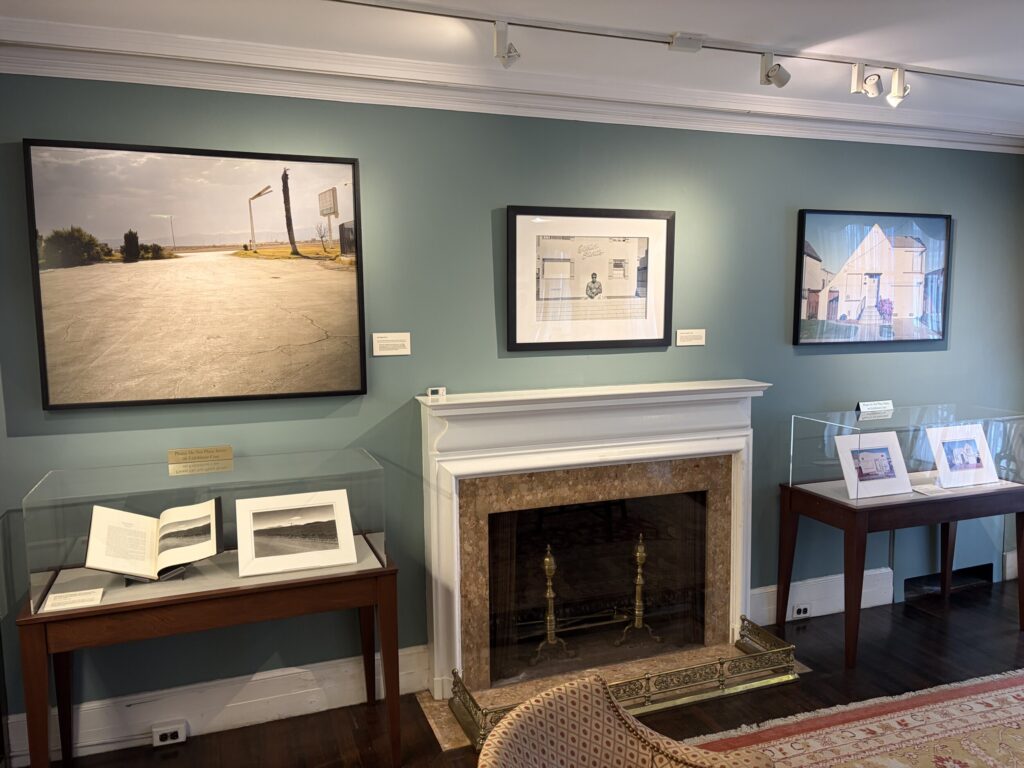
- 1 color photograph, early 2000s
- 1 gelatin silver print, 1977
- (display case) 1 gelatin silver print, 1968, 1 book, 1973
- 1 color photograph, 1991
- (display case) 2 color photographs, 1990
- (display case) 4 gelatin silver prints, 1995; 1 book, 2000
- (display case) 4 gelatin silver prints, 1971, 1973, 1986, 1993; 2 books, 1991, 2015
- (display case) 6 gelatin silver prints, 1980s; 2 book maquettes; 2 books, 2013, 2016
- Prints by other photographers: Timothy O’Sullivan (1871); Nicholas Blair (n.d.); Nicholas Nixon (1976); Lewis Baltz (n.d.); Bill Dane (6 prints, 1979-1983); Tod Papageorge (1978); Thomas Roma (n.d.); Garry Winogrand (1962); A.J. Russell (n.d.); Helen Levitt (c1942); Weegee (n.d.); Walker Evans (n.d.); Harold Edgerton (1959); Lee Friedlander (1975)
- Bookcases filled with monographs, cameras, announcement cards, and other ephemera
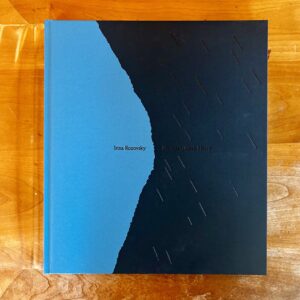
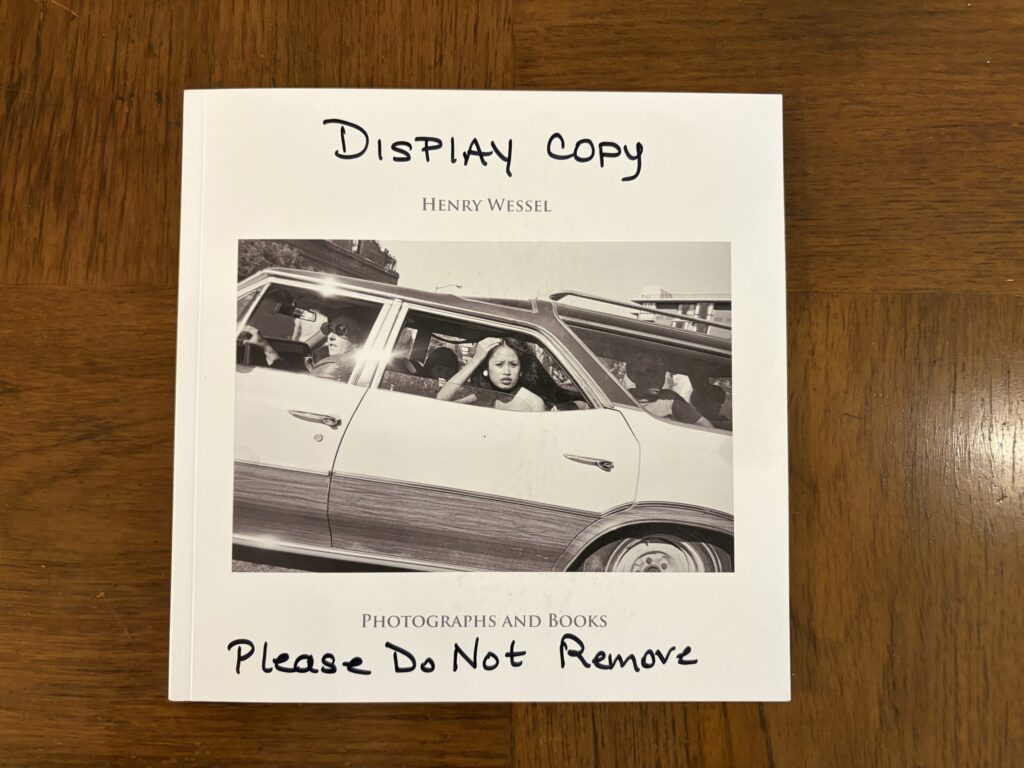
A catalog of the exhibition accompanies the show. Includes essays by Jack Gray, Sandra Phillips, and Tod Papageorge. (Cover shot below.)
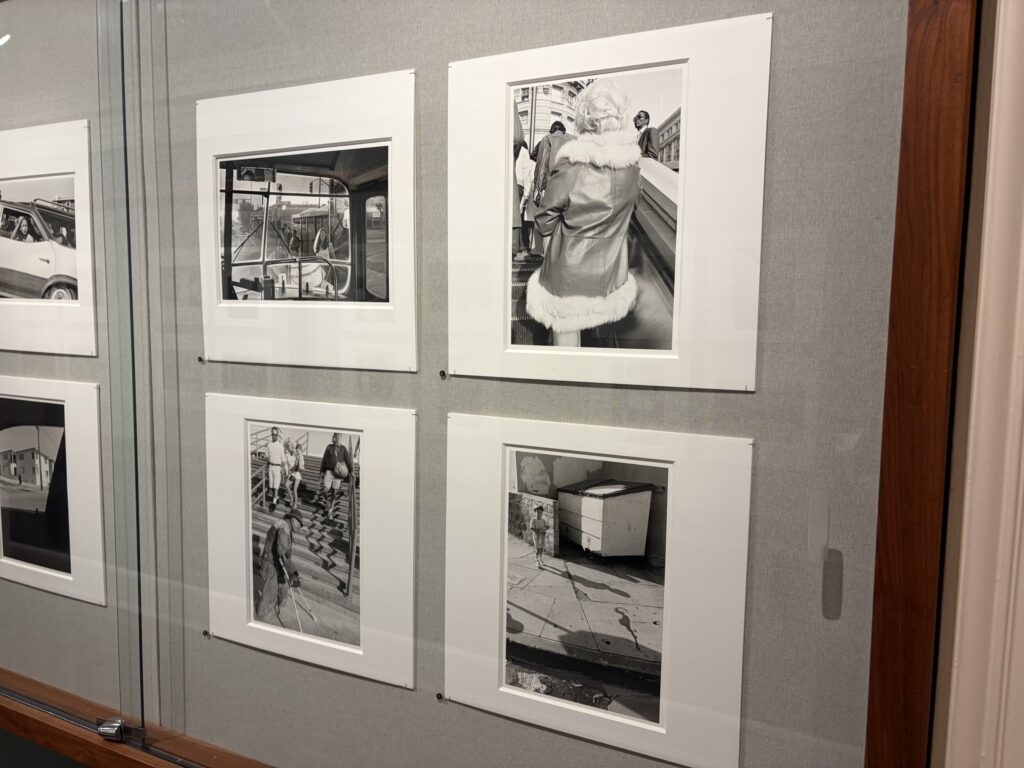
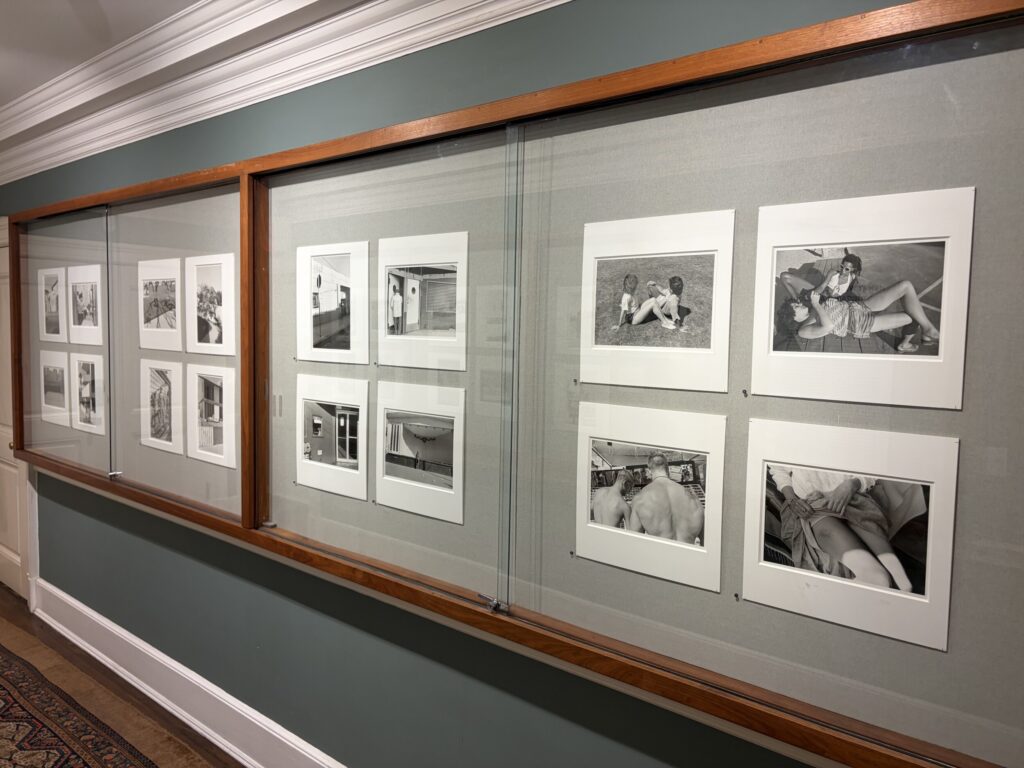
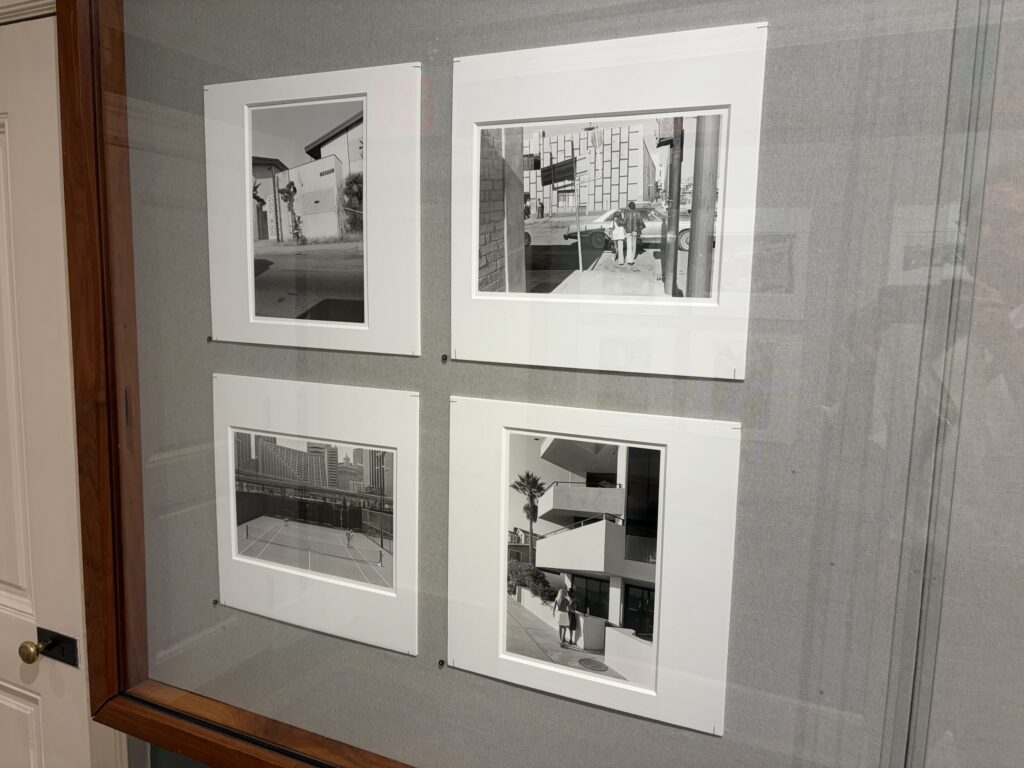
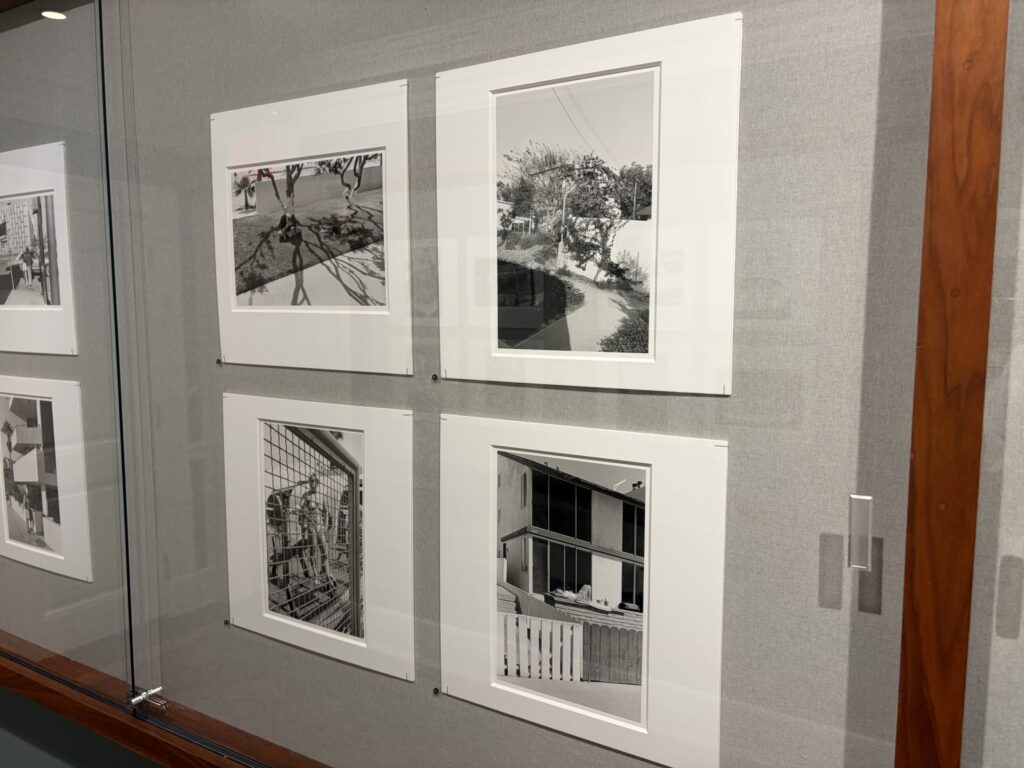
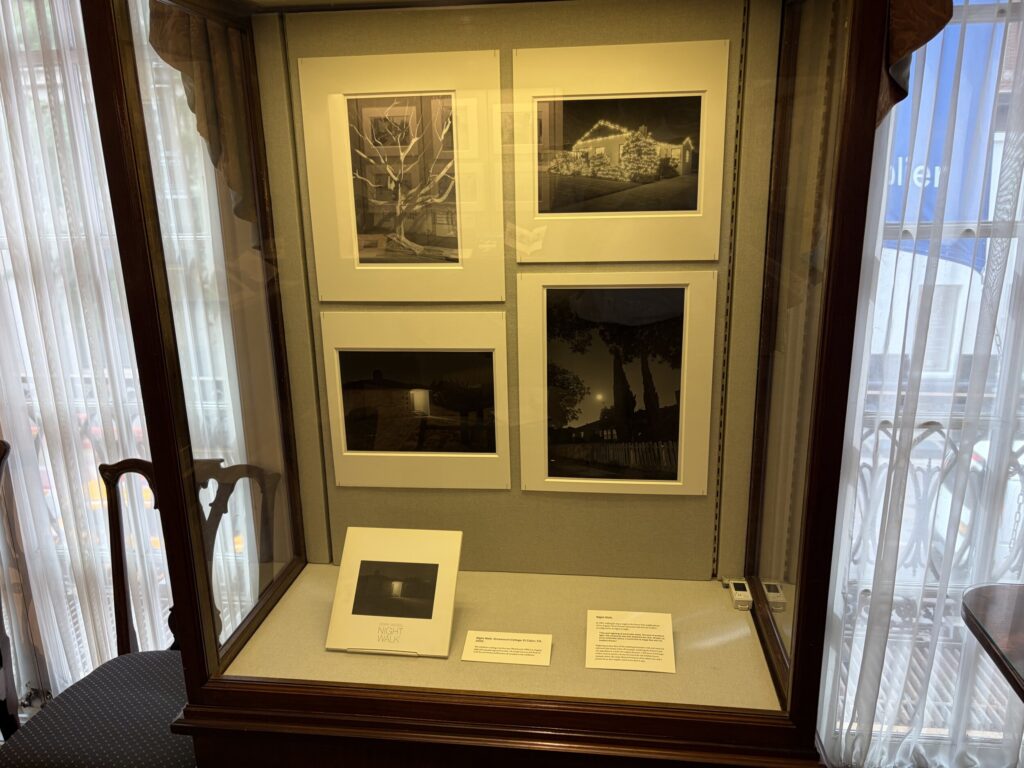
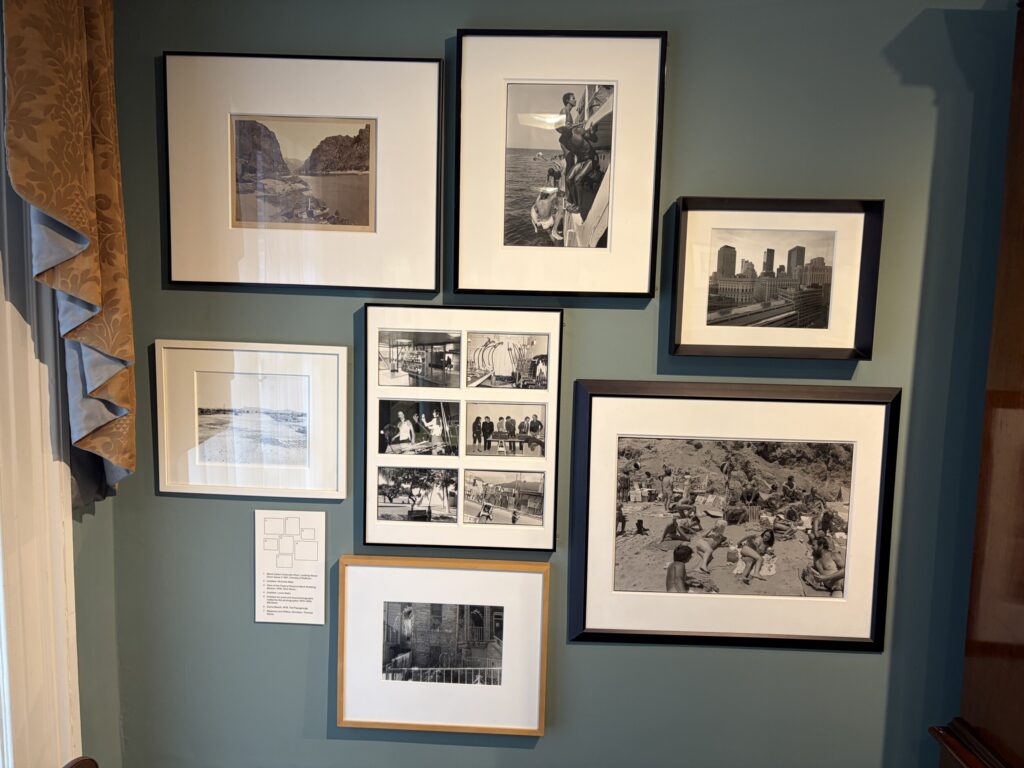
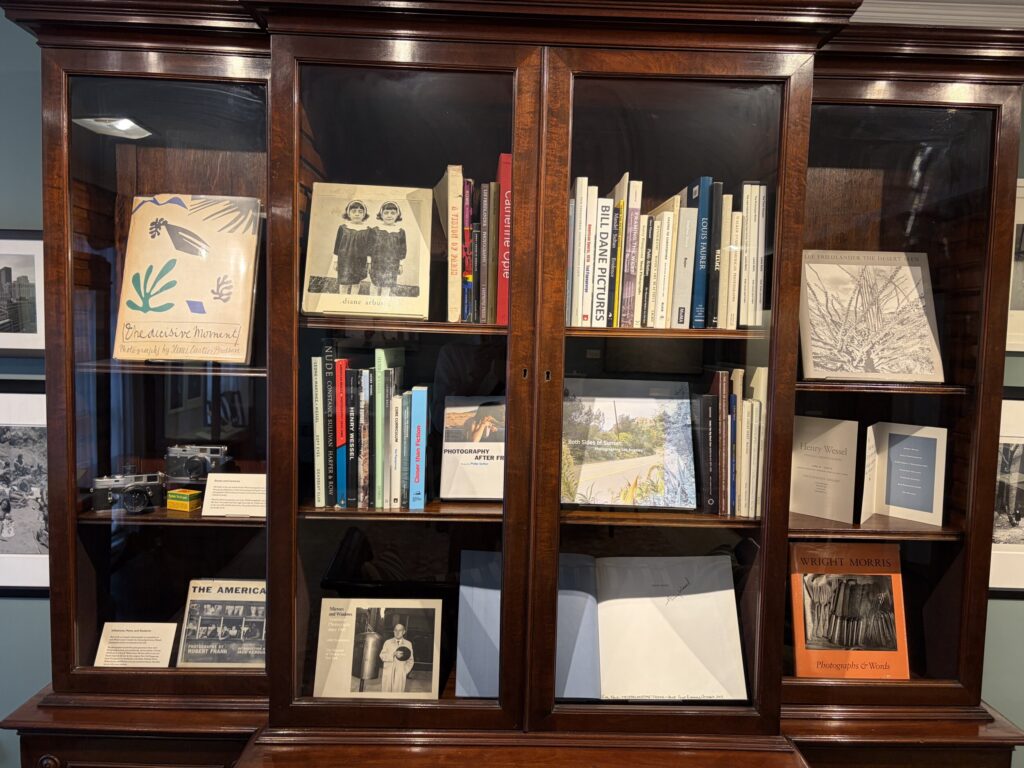
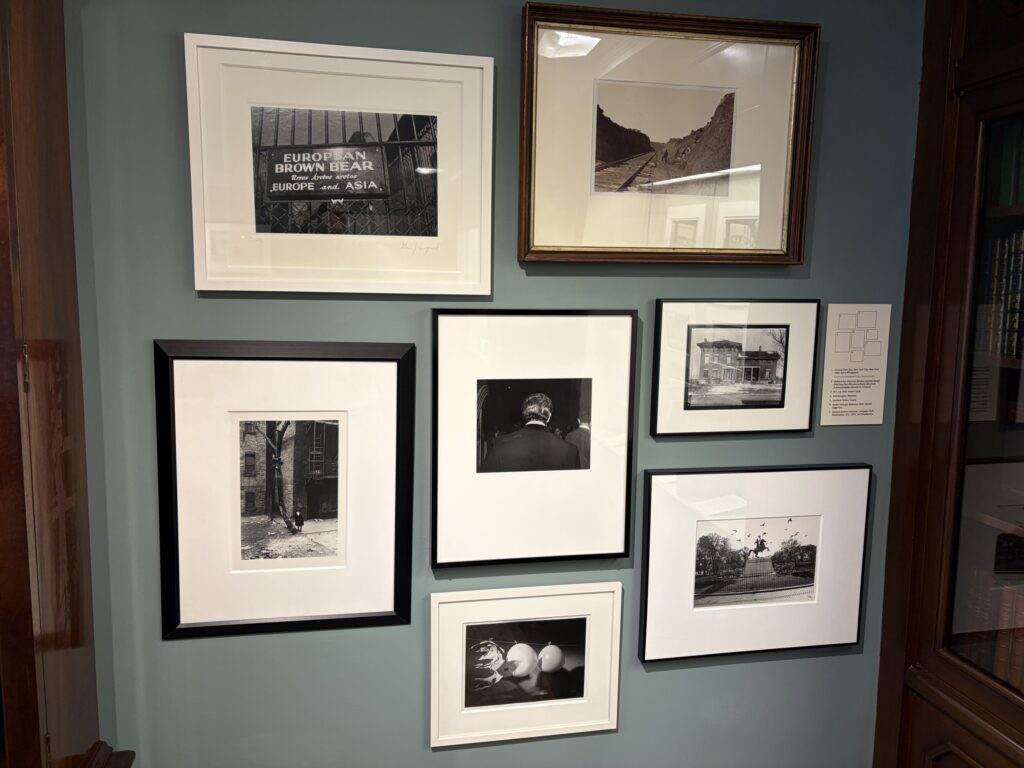
Comments/Context: There are as many ideas for what should be included in a photography collection as there are collectors, but the deep dive collection of a single photographer’s work is still a relatively rare choice. Collector (and Grolier Club member) Jack Gray first met Henry Wessel at the San Francisco Art Institute in 1976, where he was one of Wessel’s undergraduate students. His Wessel collection began then, slowly deepened over the years, and then was reinvigorated by a chance meeting in the 1990s that led to a deeper friendship between the artist and collector. This exhibition is drawn entirely from Gray’s collection, and provides a surprisingly thorough survey of Wessel’s career, building beyond the high points of his 2007 SFMOMA retrospective to include several later bodies of work, portfolios, and book maquettes. Wessel died in 2018, and absent a comprehensive institutional retrospective to flesh out the entire arc of his career, this show offers a succinct summary of Wessel’s aesthetics and durable importance.
The talking points surrounding the first decade or two of Wessel’s career are now relatively well understood: a start making black-and-white photographs while studying psychology at Penn State, an initial meeting with MoMA curator John Szarkowski, a MoMA solo show in 1972, an inclusion of one of Wessel’s photographs in Szarkowski’s influential Looking at Photographs, and an inclusion in the now-iconic “New Topographics” show at the George Eastman House in 1975. By the mid 1970s, Wessel had established a consistent place amongst a cohort of artists examining the intersection of landscape and documentary traditions, especially as expressed in the suburban American West. And what he did better than anyone else was capture the brightness of the sunlight in California in the tonalities of gelatin silver – to this day, his early photographs linger in that blasting wash of enveloping whiteness in a way that still stands out as unique.
But this thumbnail summary of Wessel’s achievements through the 1970s and 1980s (in the projects now generally titled “California and the West” and “Odd Photos”) unfairly traps his younger self in amber. As seen in this show, Wessel continued to actively examine the subject matter of the American West from a variety of photographic vantage points – in color, at night, and without people, and then remixing (and reconsidering) his own images once again in a range of books and portfolios, from the 1990s through to his death. What emerges from this wider perspective is less the Wessel of bright California light and more a Wessel of sophisticated photographic vision and quiet observational humor, who intuitively knew how to craft a frame that fit the storytelling needs of the available moment or subject matter.
This is a bookish presentation, installed in library style rooms, with glass-case displays that intermingle matted prints and books, catalogs, magazines, and other ephemera, all of which fits Wessel’s approach in his later years. His early work is represented by two cases of photographs and books, another smaller case (pairing one print and one book), and one framed print over the fireplace, with a gathering of his best known images (the shirtless man outside the Ocean Sands motel, the man watching the rising flock of birds, the man looking into the shadowed space between two buildings, and the dark suited man looking out at the beach) providing a tips of the waves sampler of what made Wessel famous, at least initially. Some of Wessel’s first visual one-liners also get a quick survey, from the now-classic ICE sign in the dry desert to the lone telephone pole in the scrubby flatlands, each image a kind of wryly eccentric game, where the San Francisco skyline is confused with a rough dirt overlook and the pointing finger of a statue turns out to be attached to the soaring form of a handstanding acrobat (as seen in a nearby shadow).
Through the 1990s and into the early 2000s, Wessel stepped back from his signature light, and this show dances across his subsequent projects quickly. In the early 1990s, he made frontal views of houses in Richmond, California, from his car window, turning straightforward geometries into singular house “portraits” in vibrant color. A few years later, he went walking at night in Los Angeles, testing himself with the many ways a single light source (a street light, an exterior light, a glowing house window, or the glow of the moon) could activate the drama of a suburban nocturnal view. And in the early 2000s, Wessel turned his attention to the spectacle of Las Vegas, making gaudily flash lit interior and puzzling exterior scenes of the architectural mayhem found there. Gray’s collection touches all of these projects, albeit with brevity.
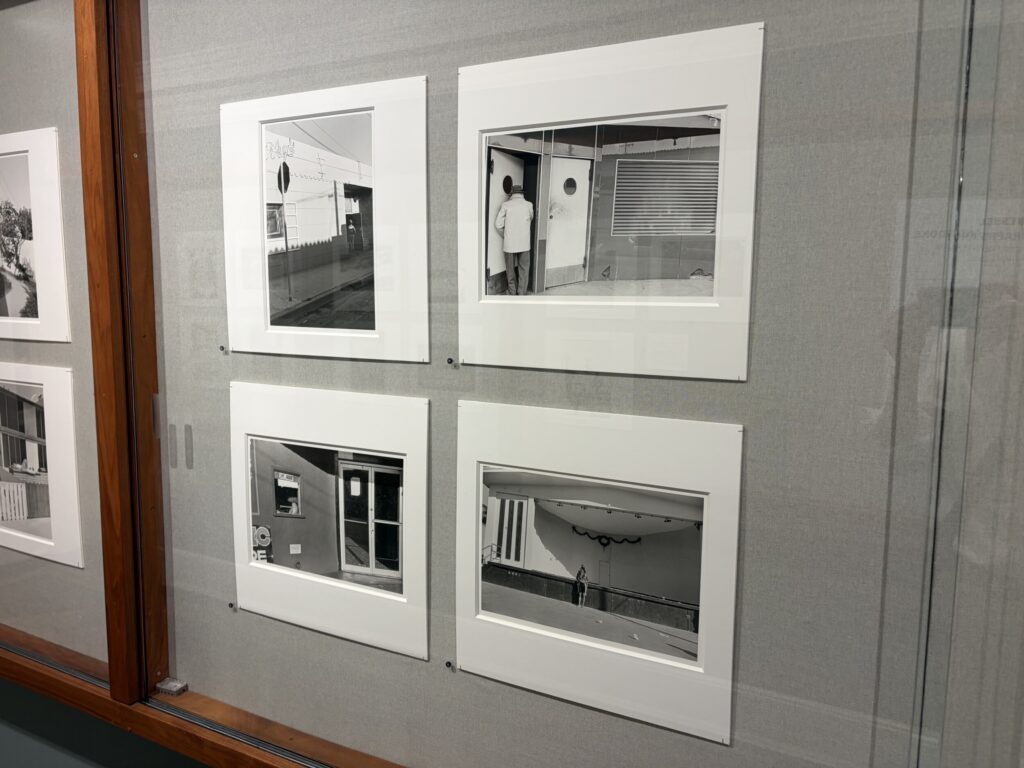
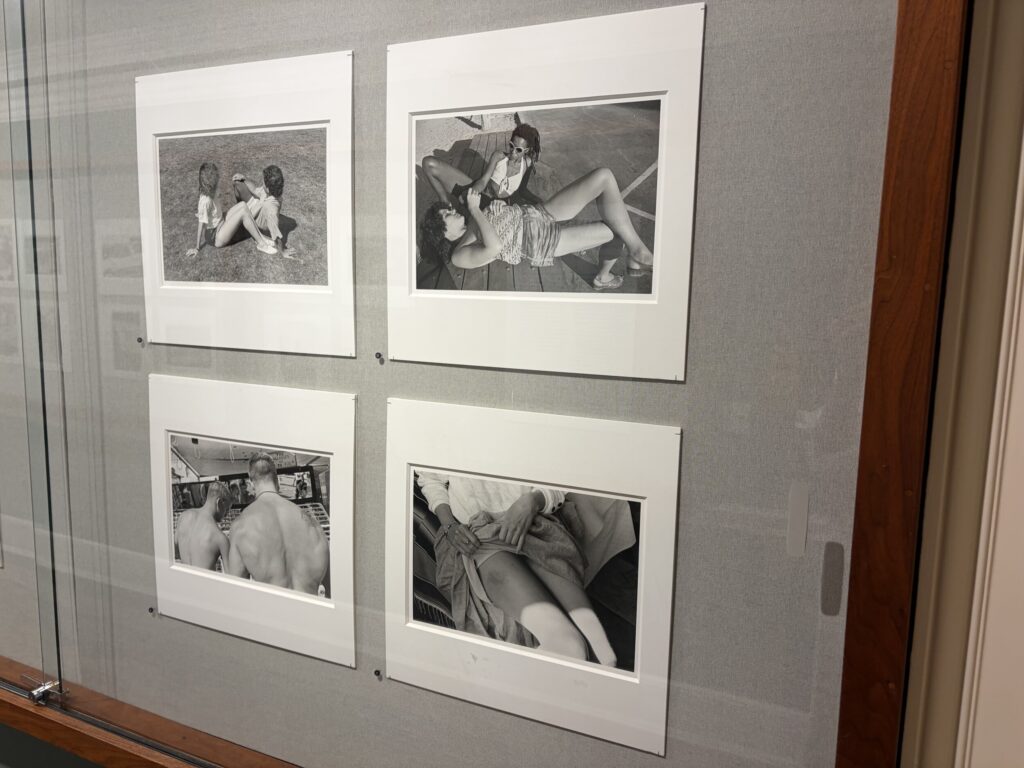
In his later life, Wessel turned back to his archives, unearthing earlier images that had previously gone unpublished and arranging them into projects, sequences, and portfolios. “Incidents” (from 2012) was the first of these efforts, and Gray’s collection includes the entire 27-image set, displayed here double hung in glass cases on two sides of a hallway (we reviewed a 2013 gallery show of this body of work here). Wessel called the incidents “fictional analogies”, where we can’t quite make out what’s going on, or what might have come just before or after, as in the case of a man sitting on a bus stop bench, a man and a woman talking outside a modern building with jutting balconies, or a man seen from behind entering through a portholed doorway. In this way, Wessel was leaning in to the inherent mystery and unknowability he found in his pictures, becoming comfortable with the idea that these photographs didn’t offer definitive narratives or observations – it was up to the viewer to make sense of the available possibilities or interpretations. Each frame settles into this ambiguity, never quite coalescing into clarity, but leaving the proverbial door open to uncertainty. While we can admire the craftsmanship of the photographs on formal terms alone, each picture also offers something like a conceptual game, where we can try to imagine one or more plausible explanations for what Wessel has shown us.
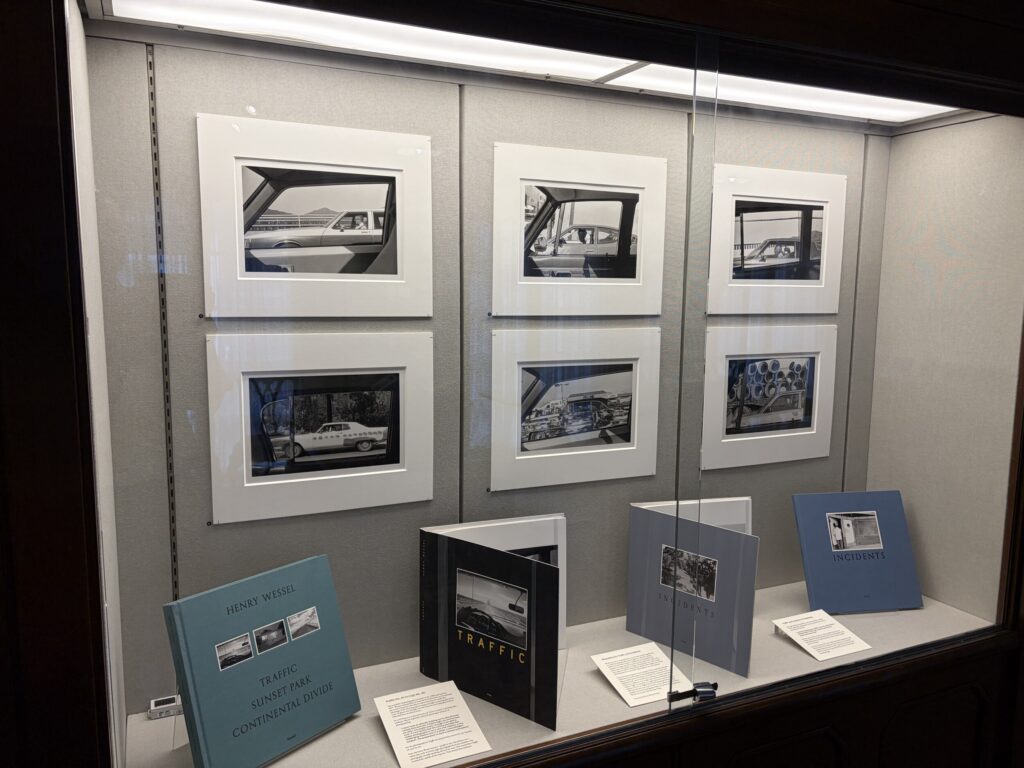
It took Wessel several more years to shape up his 1980s era commuting images made one-handed out his car window into “Traffic”, as seen here in a cluster of six prints (and in the 2017 photobook Traffic/Sunset Park/Continental Divide, reviewed here). He wasn’t the first photographer to use the car window as a framing device, but his images cleverly collapse three layers (his car interior and window frame, the car outside to his right and its driver or passengers, and the momentary landscape or backdrop behind that car) into tightly sandwiched compositions. Again, there is a sense of Wessel enjoying the serendipity of the process, and the impossibility of actually deriving clear meaning from what he captured. “Traffic” is an engaging parade of quirky cars, quirky drivers (like a woman in a scarf, or a man in a shiny helmet), and unexpectedly interesting backgrounds (like perfectly aligned rolling hills or a dense array of round sewer pipe tubes on a flatbed truck), turning passing glances into cleverly constructed photographs.
Gray’s installation also includes a selection of works by other photographers (both older photographers admired by Wessel and his contemporaries), as well as a case of photobooks and other collected ephemera, but these contextual additions aren’t necessary to the larger understanding of Wessel and his work being communicated here. Until we get an in-depth scholarly retrospective of Wessel’s entire career, this admirable collection show is likely our next best option. It thoughtfully expands beyond the high point boundaries of his early career, allowing us to explore and embrace the indefinite visual complexity that Wessel found so consistently compelling in his own work.
Collector’s POV: Since this is essentially a single collector museum exhibition, there are of course no posted prices. Henry Wessel is represented by Rena Bransten Gallery in San Francisco (here) and Zander Galerie in Cologne (here). Wessel’s prints and portfolios have been intermittently available in the secondary markets in recent years, with prices ranging from roughly $3000 to $33000.