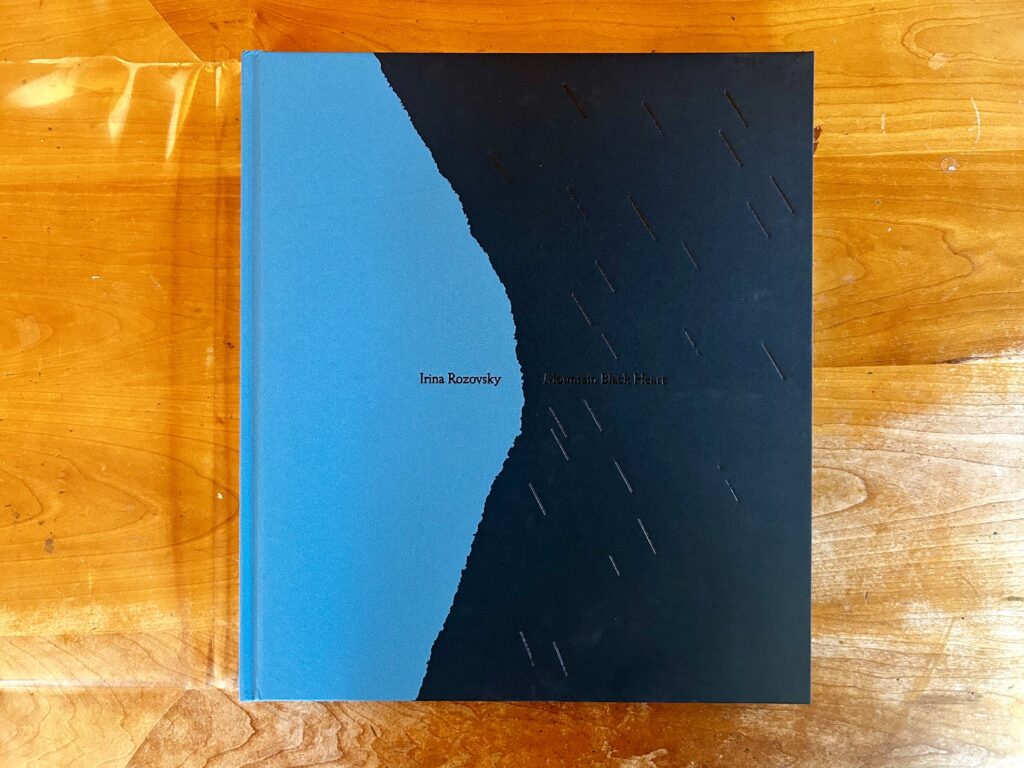
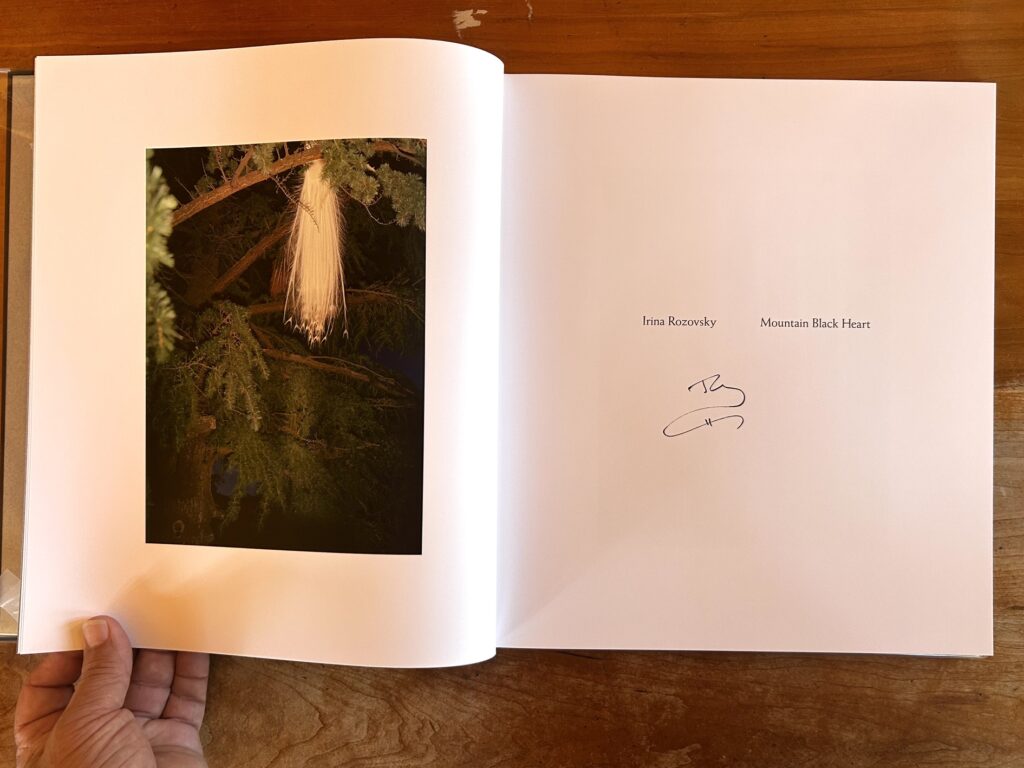
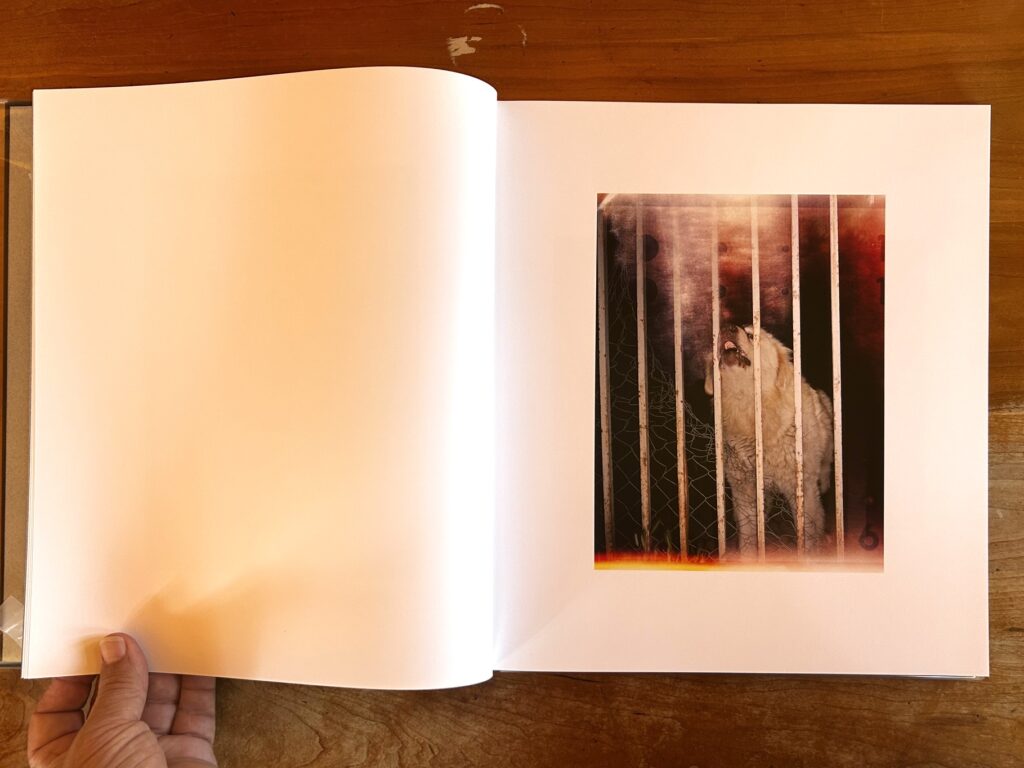
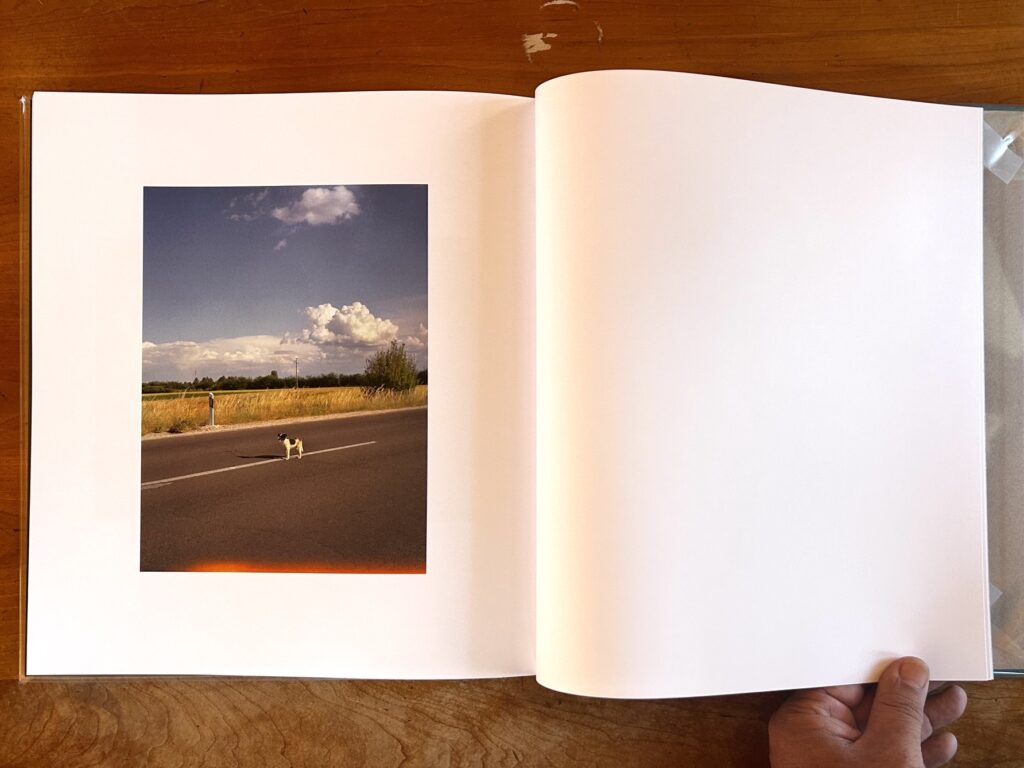
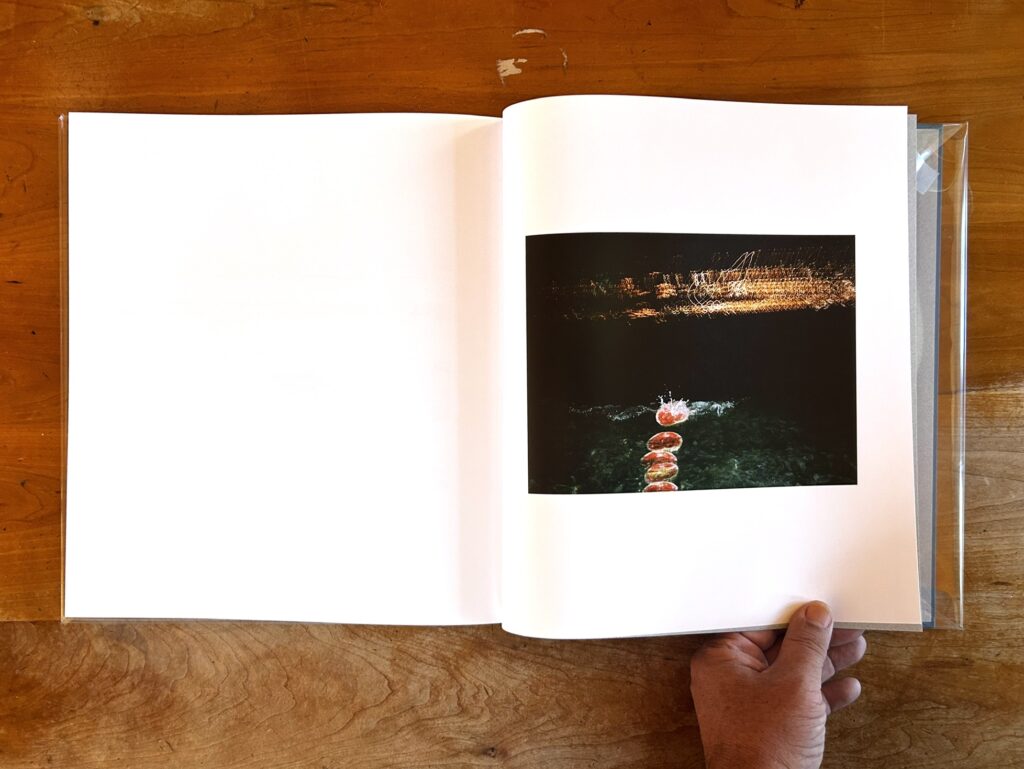
JTF (just the facts): Published in 2026 by MACK Books (here). Debossed and silkscreened linen hardcover, 28 x 32 cm, 132 pages, with 85 color photographs, 3 monochrome photographs, and a poem by the artist. Design by Morgan Crowcroft-Brown and the artist. (Cover and spread shots below.)
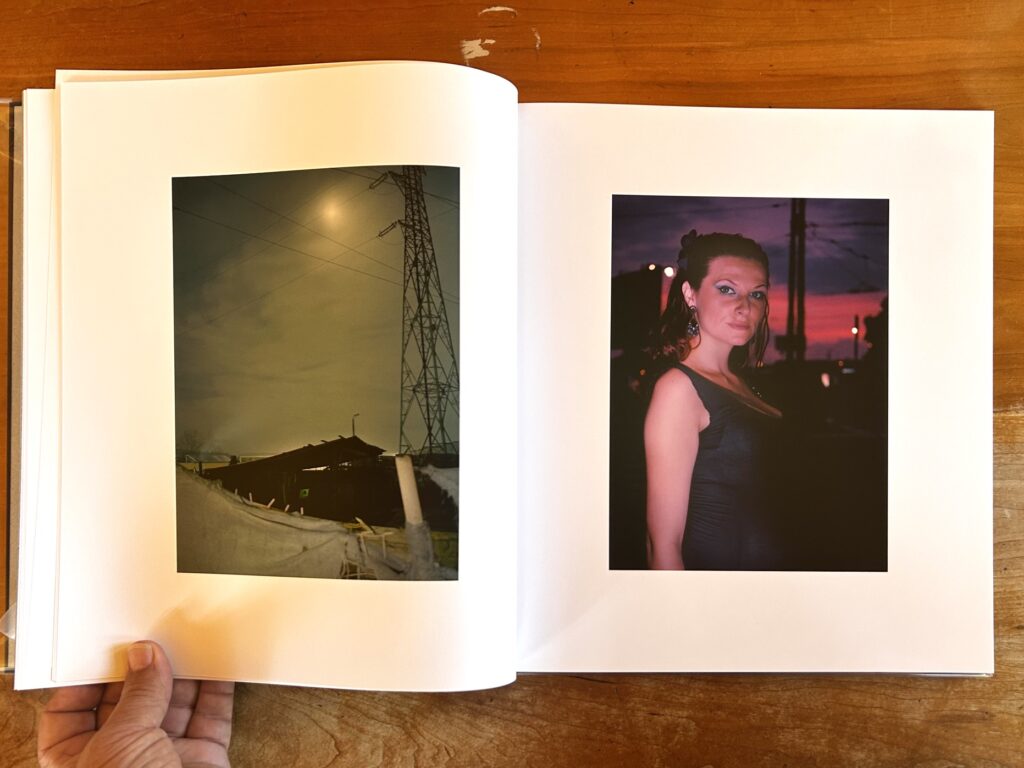
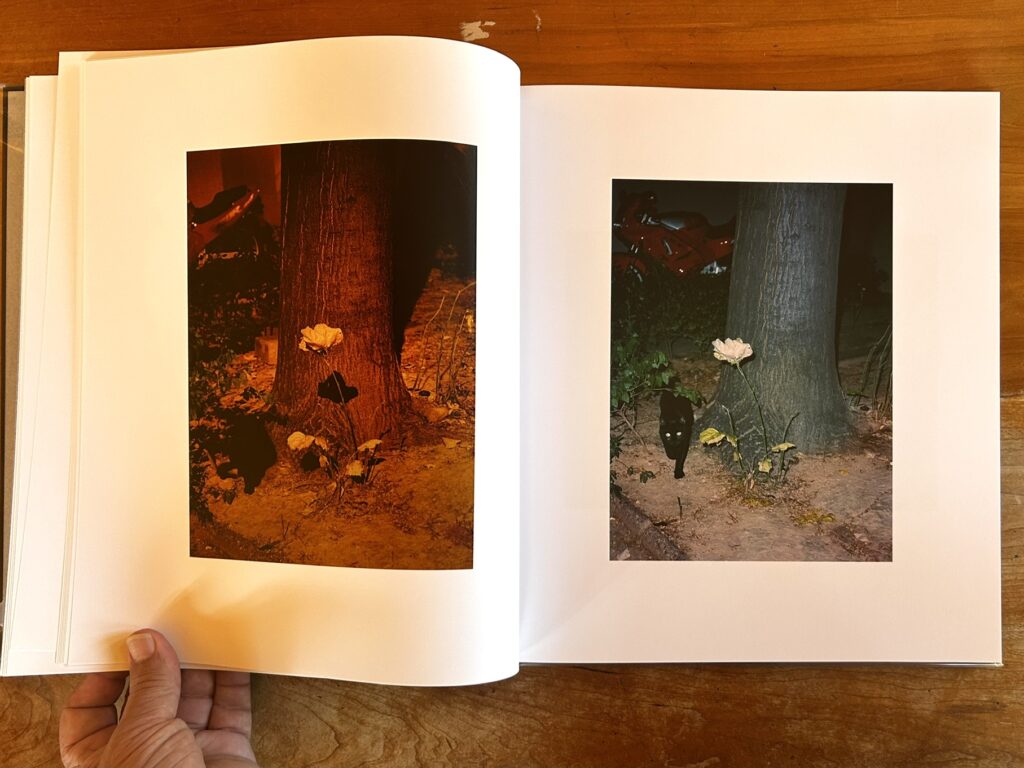
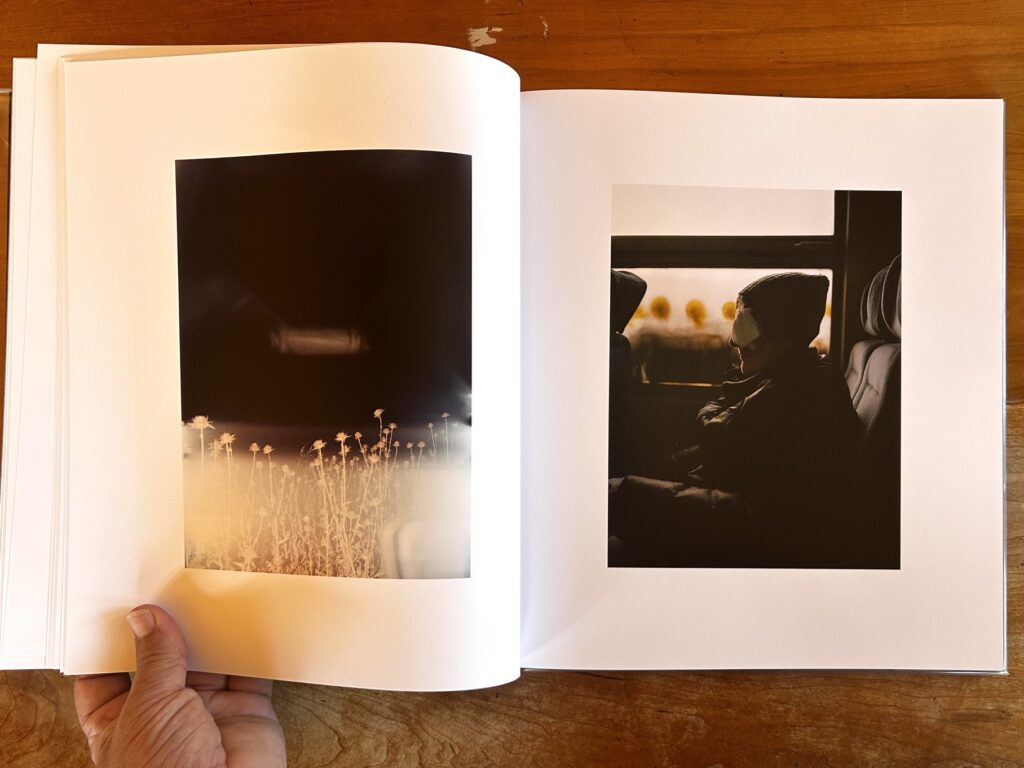
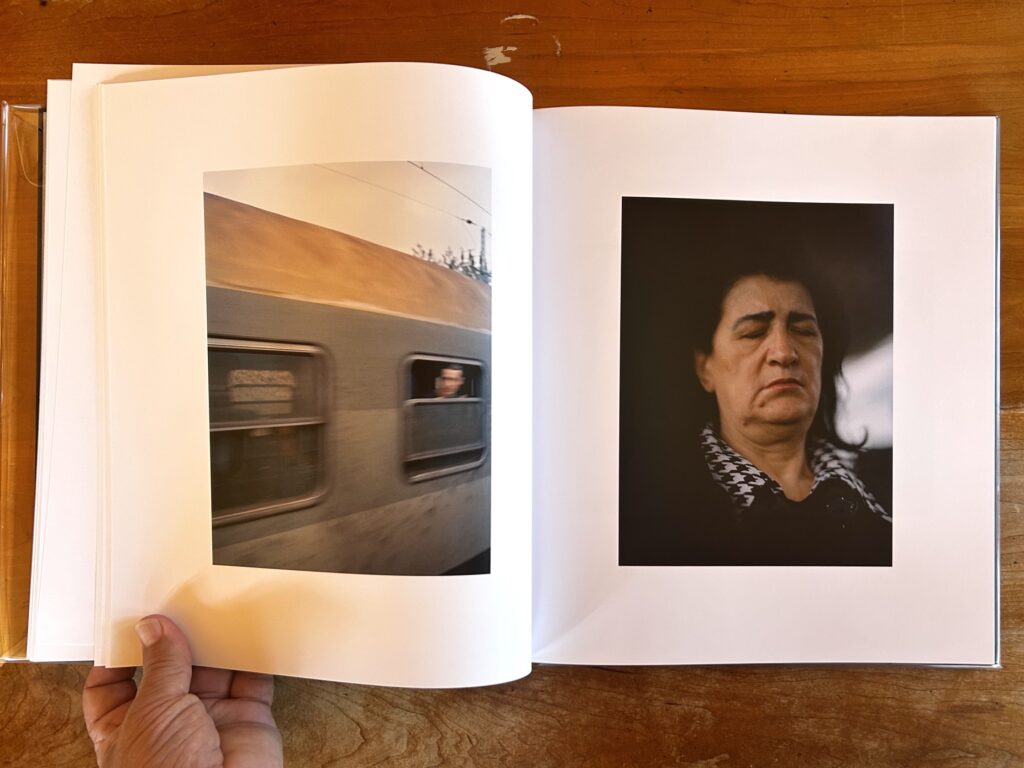
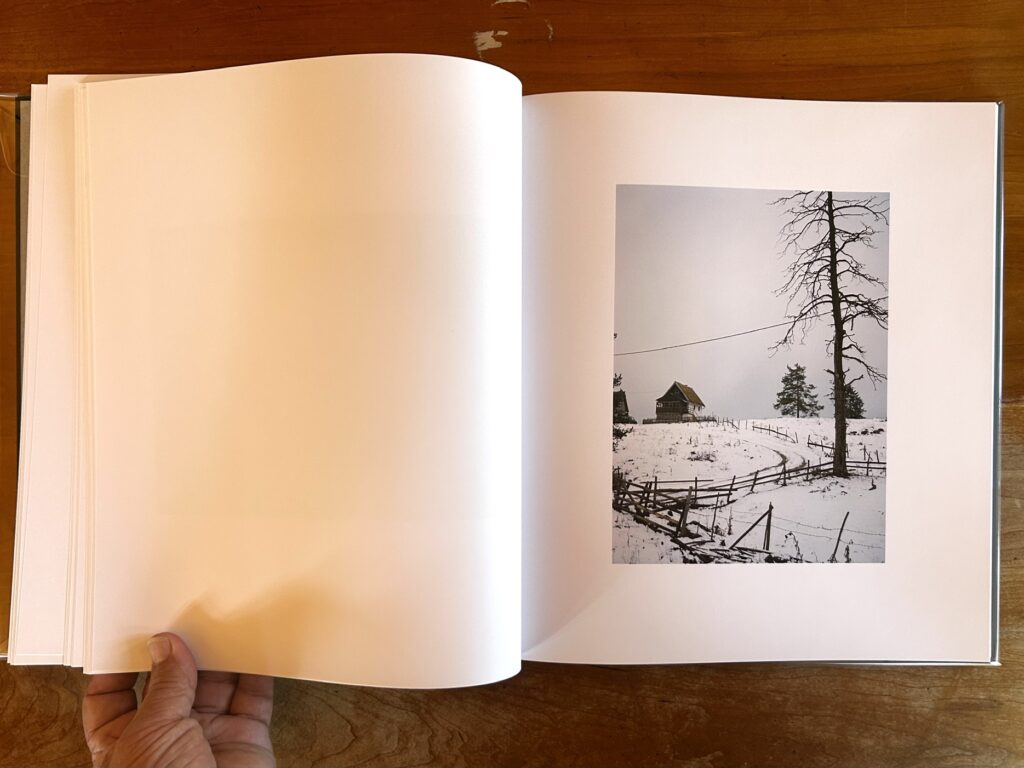
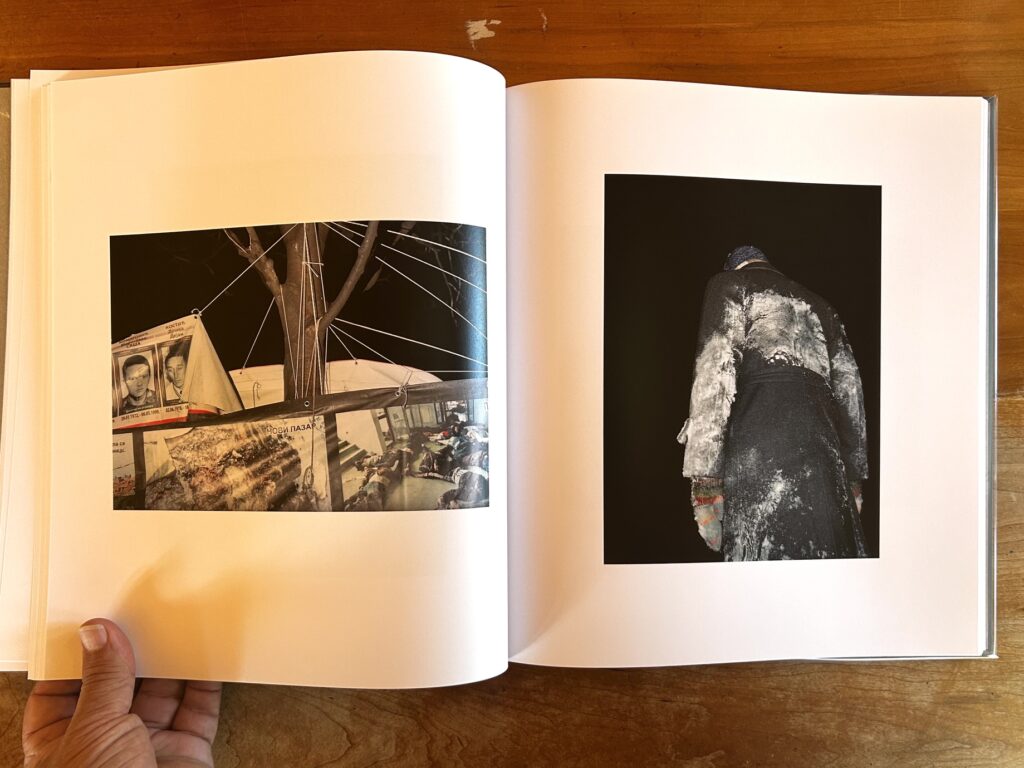
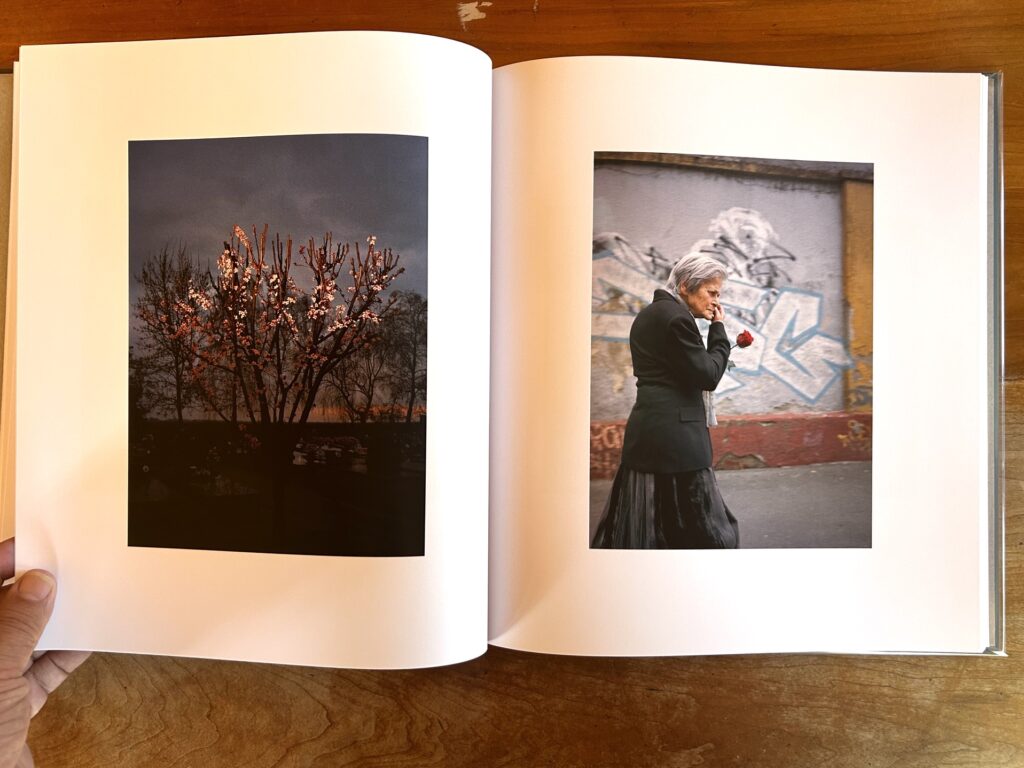
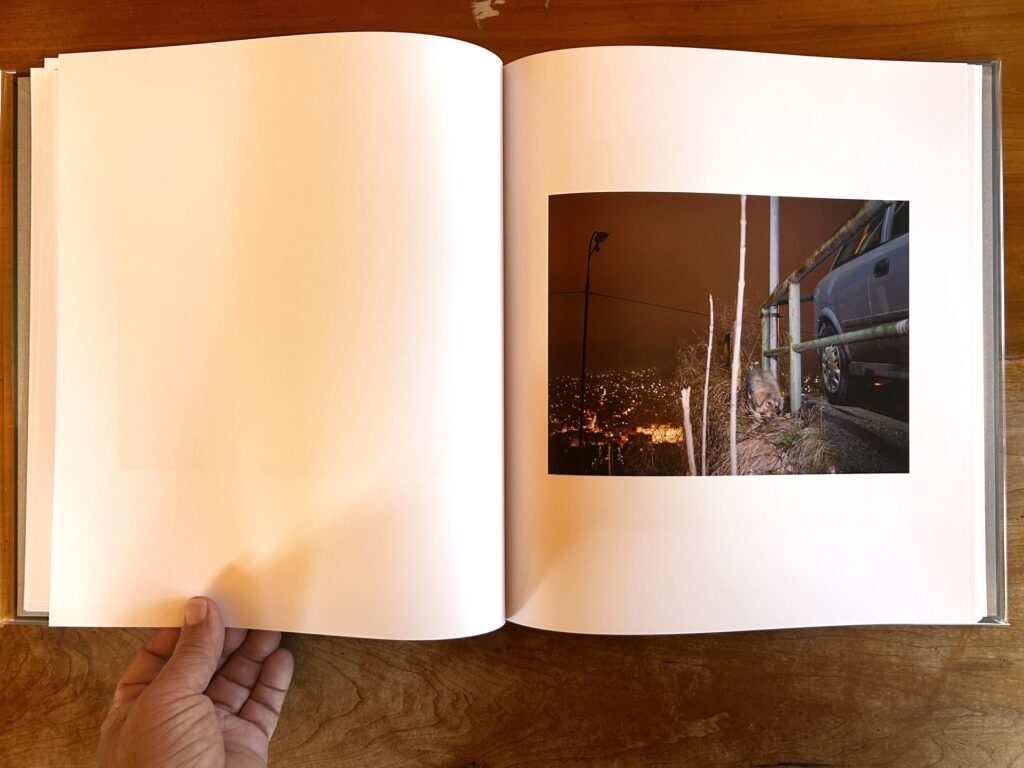
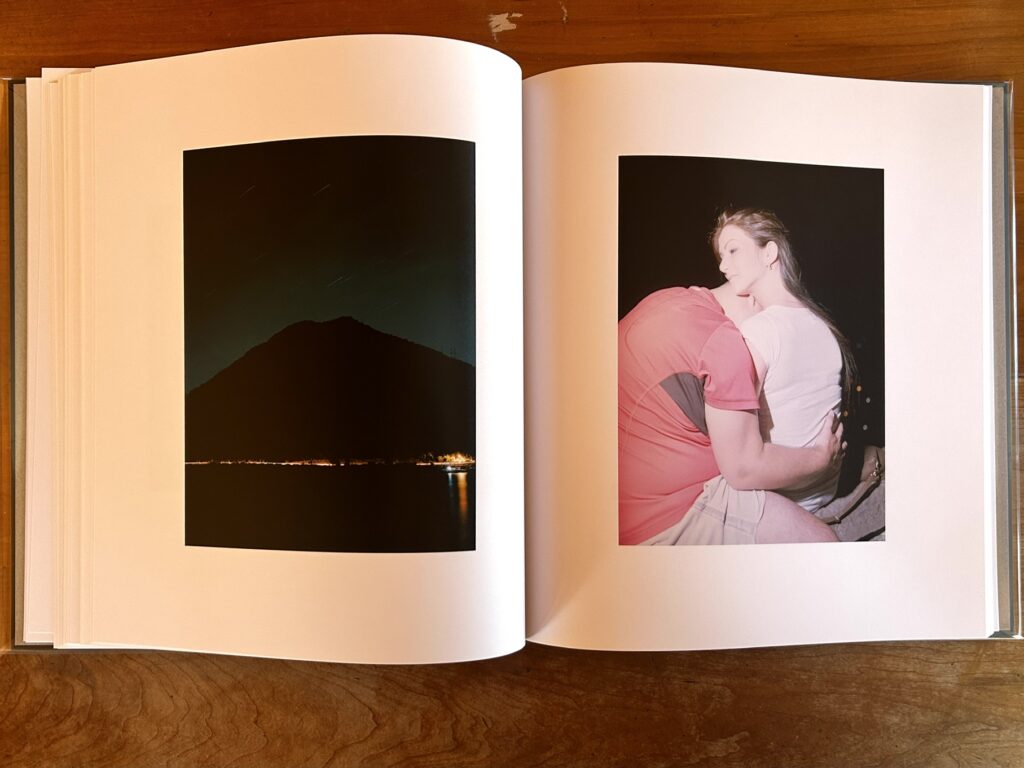
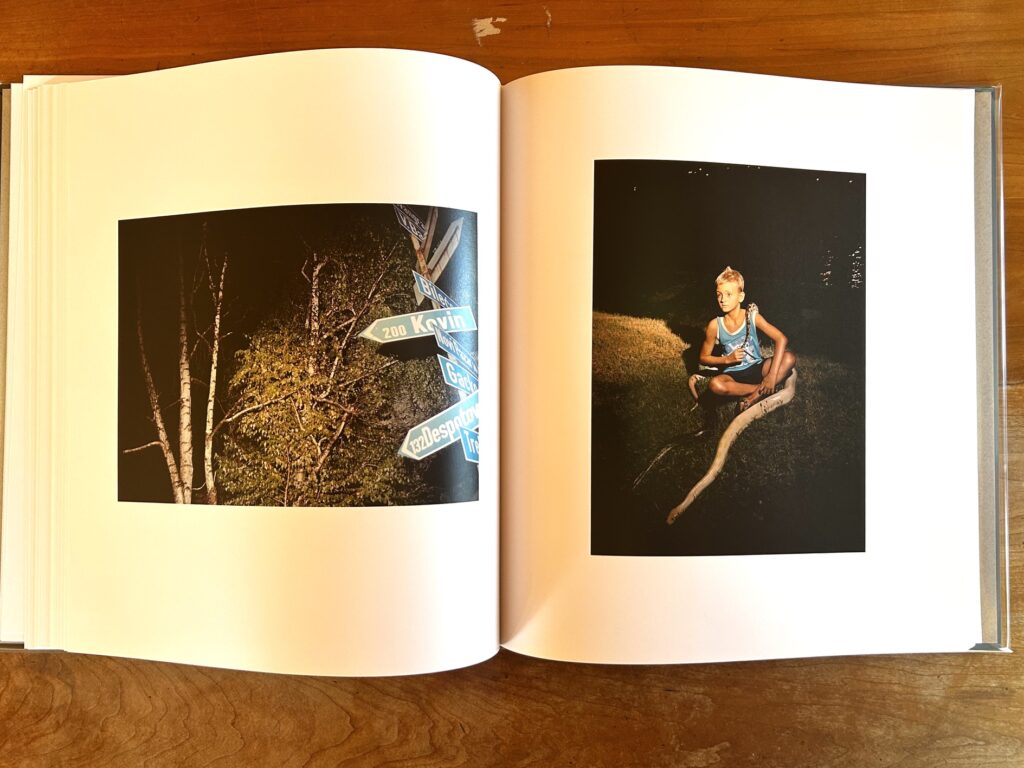
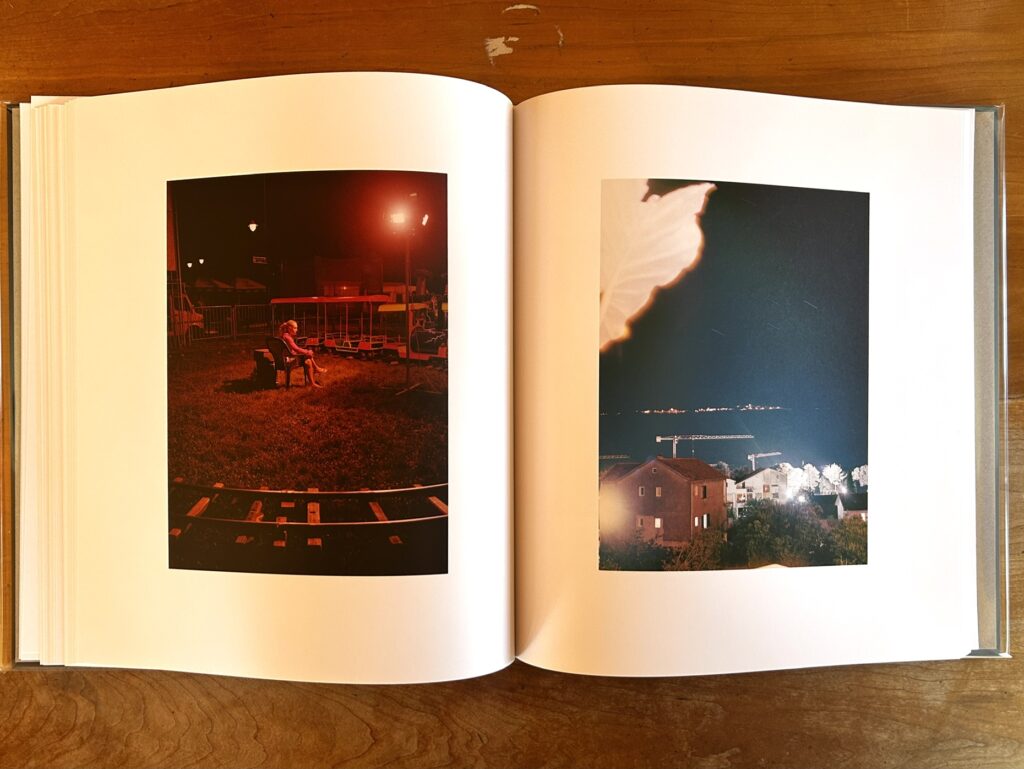
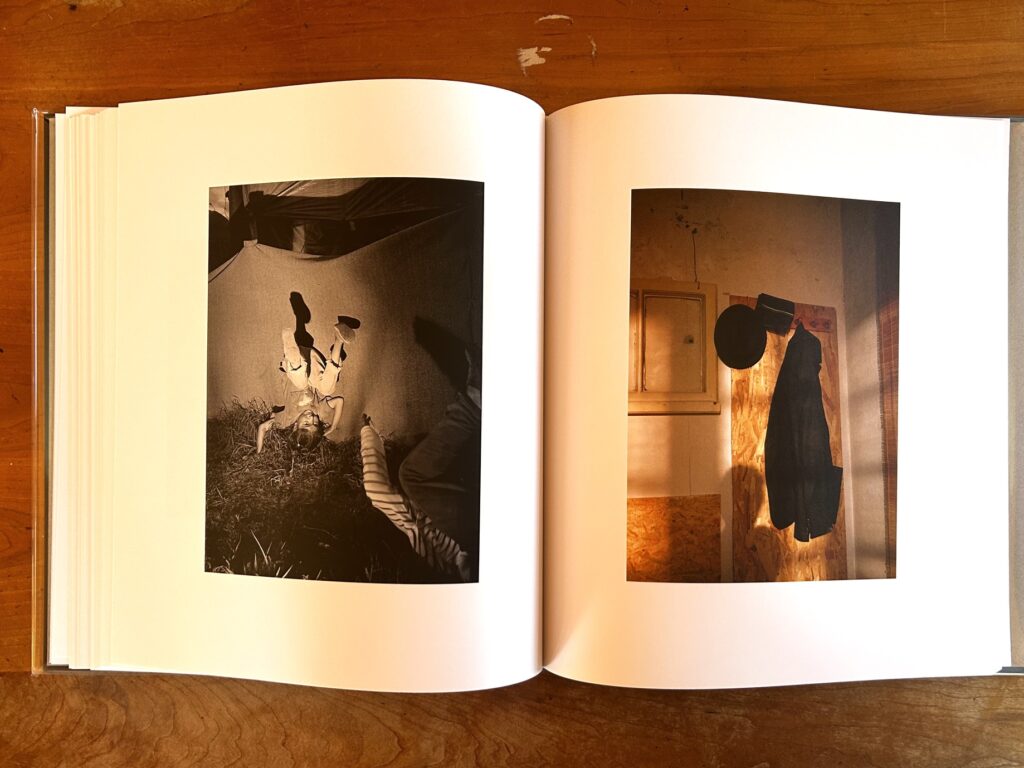
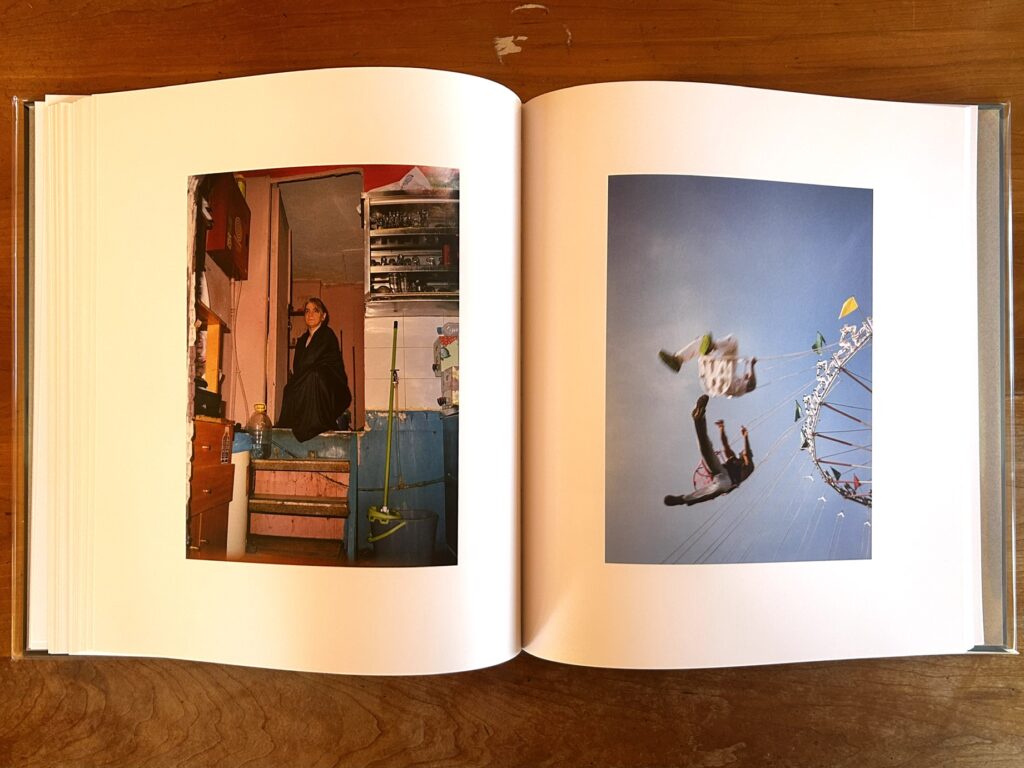
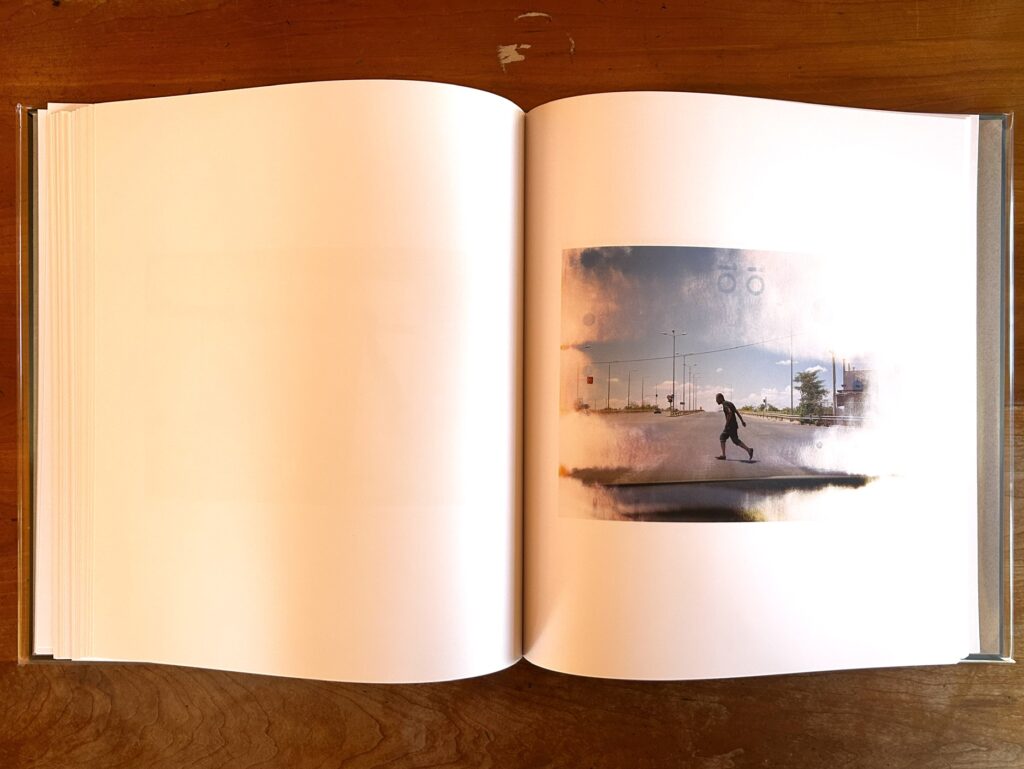
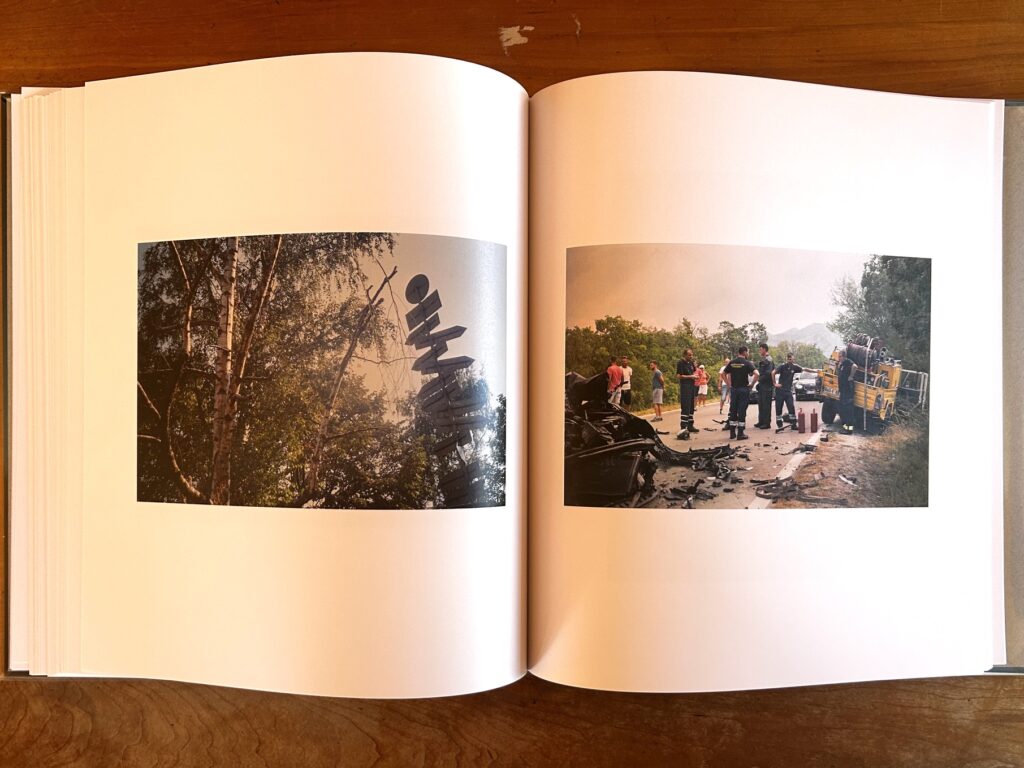
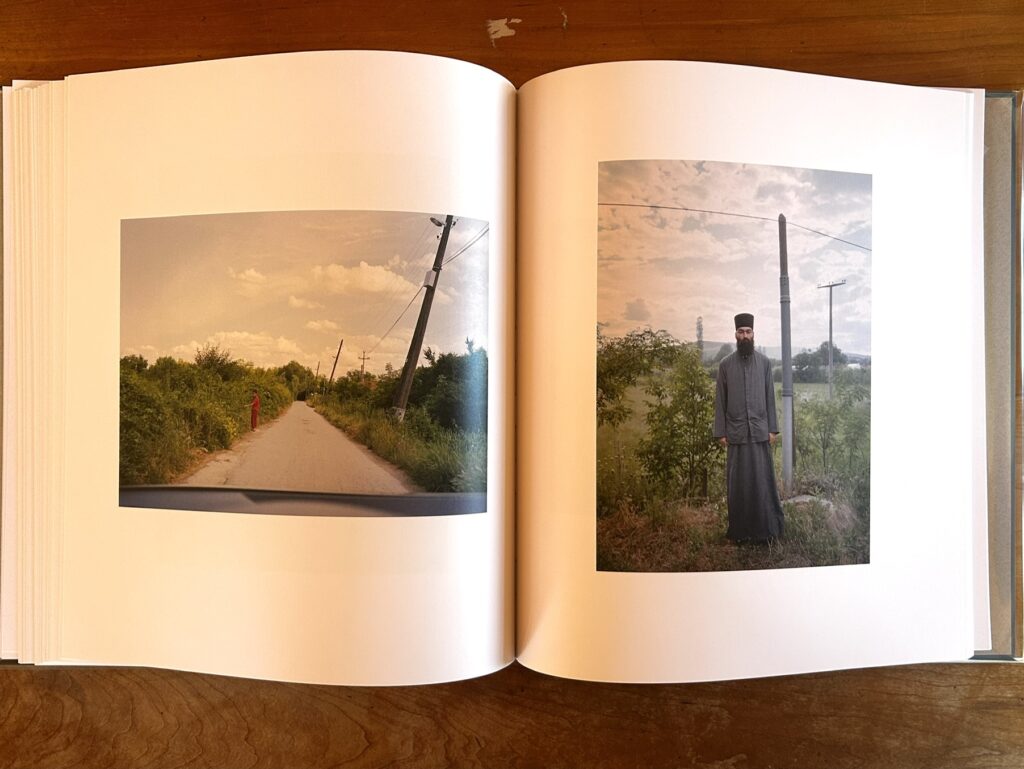
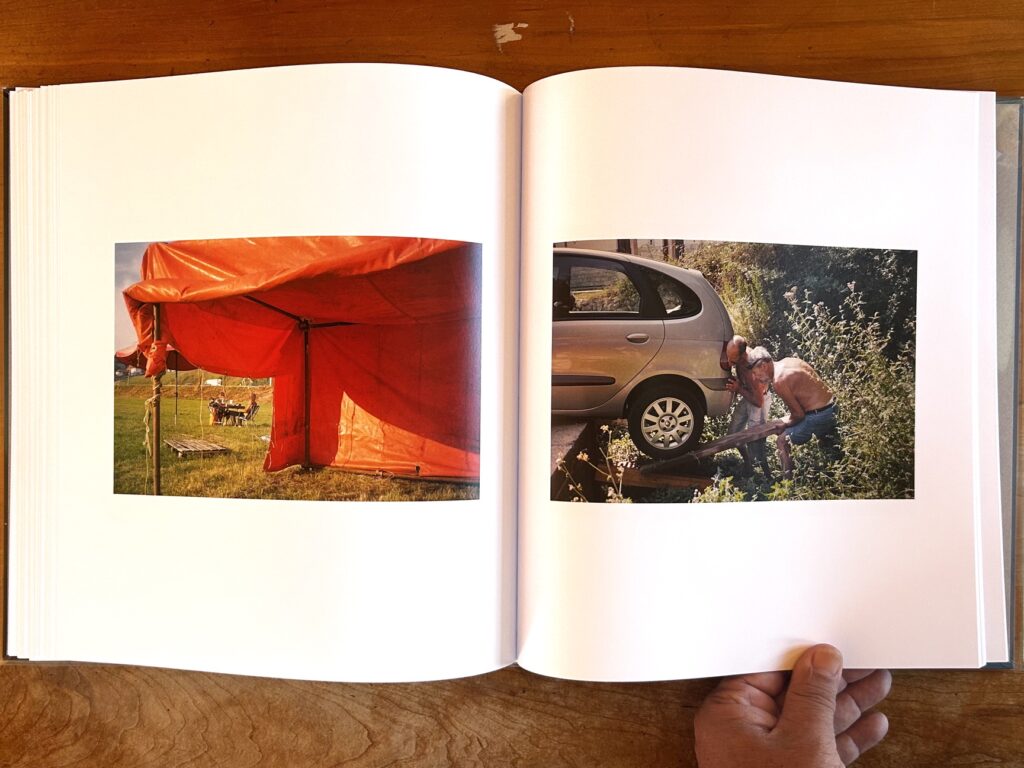
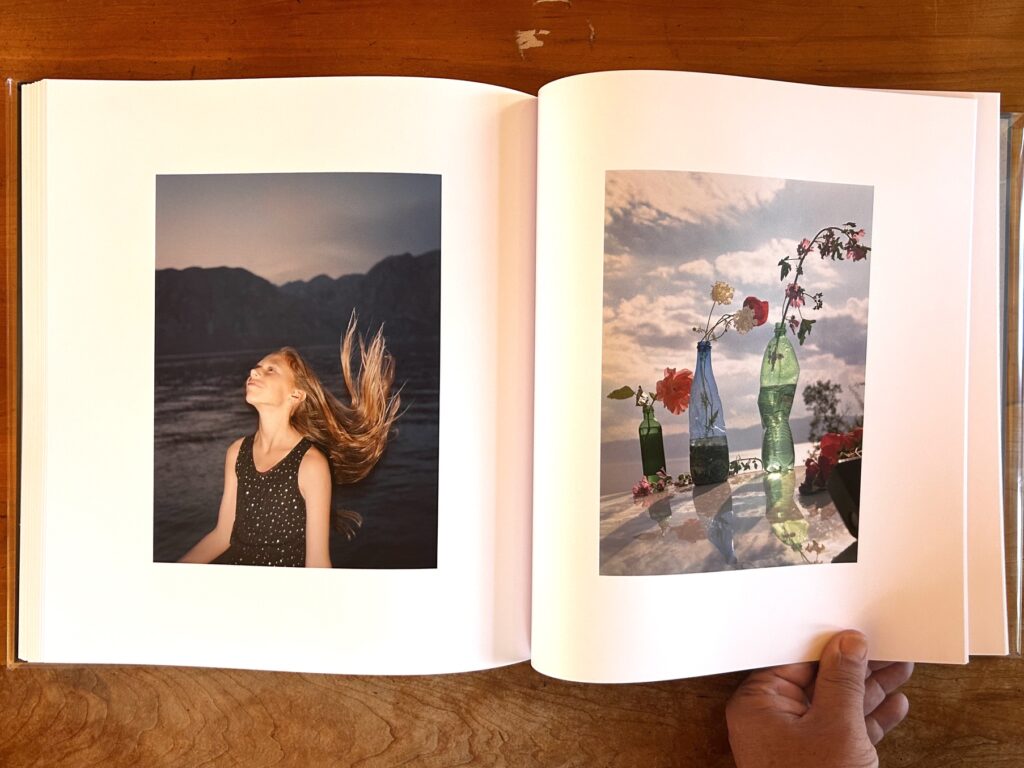
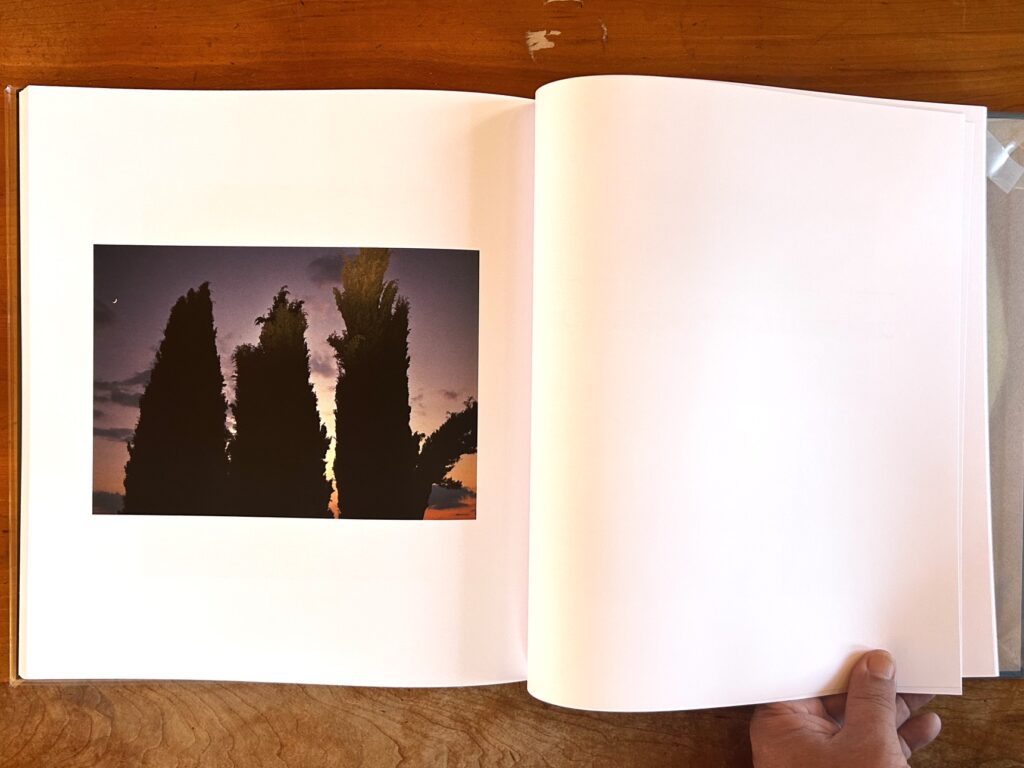
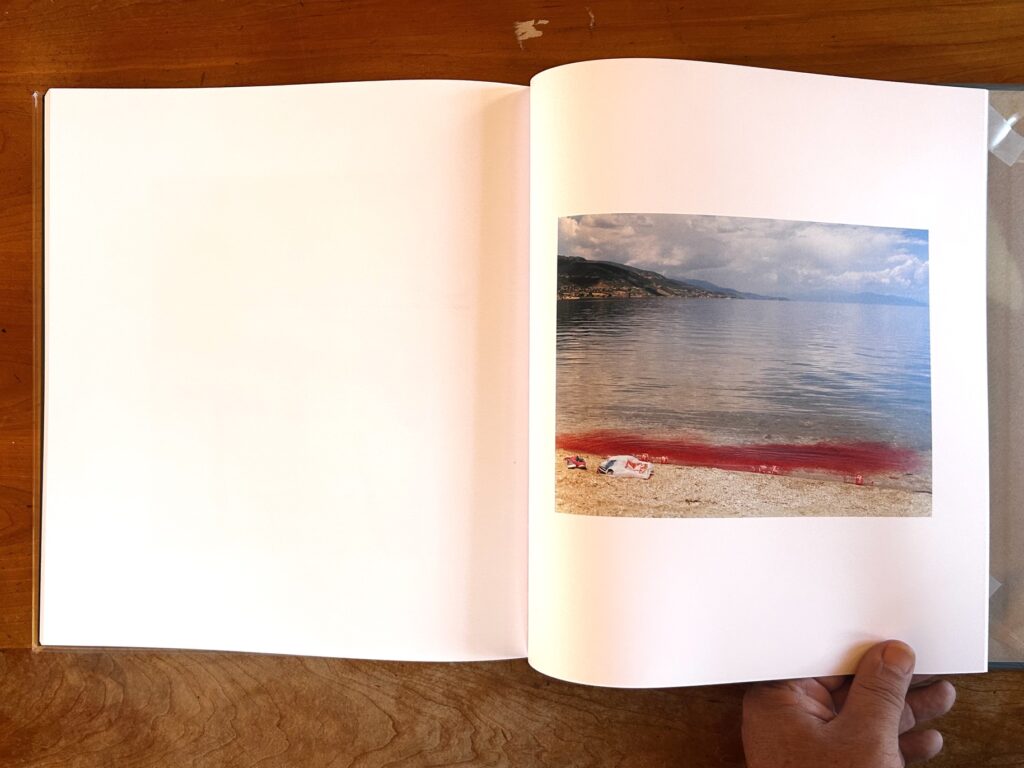
Comments/Context: Mountain Black Heart begins on a buoyant note. One of the first photographs in the book shows a boy rolling through a meadow at twilight, caught mid-cartwheel by Irina Rozovsky’s flash. His feet are askew and his head sideways as he spins away from the camera. We can’t see his grin but by all indications he’s having a ball. “Ain’t life grand,” the photo seems to suggest. Faced with such direct evidence, it’s tough to argue.
For Rozovsky (b. 1981) life has been a grand adventure indeed. A Russian émigré living in the U.S. since 1988, she’s built a family and project space with her husband Mark Steinmetz in Athens, Georgia. She has documented various corners of the world through four monographs to date, while ticking through a commendable bucket list of collections, commissions, and features. Through it all, one of her most sustaining and enjoyable activities has been exploring fresh territory with a camera, and extracting photographs from the real world. The less predictable the results, the better. Each of her books to date has celebrated the photographic act, beginning with Island In My Mind which collected her impressions of Cuba. One To Nothing conferred the same treatment to Israel, while In Plain Air cast its gaze toward Prospect Park in Brooklyn. Mountain Black Heart follows in their footsteps. The focus this time is on the Balkan region of southeastern Europe.
Change venue, rinse and repeat. By now Rozovsky is an old hand at this. Plop her down just about anywhere and she’ll sniff out intriguing material. Her eyes unearth subject matter as she goes, meeting locals, reacting, and improvising. The process is every bit as uncharted as a child cartwheeling down a hill. Photographs accumulate inexorably, from which her monographs curate the goods. Generally speaking, they are less concerned with illustrating preconceived notions than with the pure pleasure of looking. Of course, the challenge of translating the vernacular into compelling photographs is easier said than done. Rozovsky has been at it a while, and she”s become quite skilled. In her own words, she is “dedicated to the miracle.”
For a wandering photographer in the Balkans, a minor miracle might assume any number of guises. It might look like a woman in Montenegro captured against blue sky through a filter of trinkets and salted glass, or a suited man standing weightless on the edge of a flowered cliff, looking as if he’s just stepped out of In Plain Air. A long exposure of tall trees waving in the wind feels pitch perfect, while a jacket and tie hanging in a closet suggest shadowy possibilities. It’s hard to control pictures like these—which operate on an intuitive level—with full intention. But when the photo gods toss you a bone, you learn to say yes.
In other exposures, processing flukes add just the right element of serendipity. A poorly synched flash creates a split-frame chiaroscuro, while light leaks through 120 roll-film paper activate textures and color flares. One can find examples of such “mistakes” in Mountain Black Heart, along with a double exposure, color casts, poor lighting, blown out highlights, and several off balance croppings. In her earlier projects, Rozovsky might have tossed these misfits into the waste bin. By deliberately incorporating them into her current work, she signals a growing embrace of photographic kismet. Perhaps the Balkans—where flexibility is facet of daily existence—have rubbed on her?
Even before she embarked on the current work, Rozovsky’s shoot-first-ask-questions-later approach felt slightly out of step with the zeitgeist. Reviewing In Plain Air for Collector Daily in 2021 (here), Richard B. Woodward called her photo practice “self-consciously retardaire.” That book dispensed with an interpretive essay and captions, limiting its text to a brief memoirist afterword. The photographs were meant to stand on their own. Mountain Black Heart takes the impulse a step further. The book’s only words come at the end, in several lines of free verse poetry, written on a train to Hungary: In the shivering moonlight I see your bony cheeks, your sunken eyes… If (Woodward’s take) “intellectual stimulus is now prized in the art world over optical pleasure,” this book is a deliberate stab in the opposite direction.
Rozovsky can be plopped anywhere, so why did she choose southeastern Europe? The project began by happenstance in 2014. While attending a photo festival in Zagreb, Croatia, she had free time to explore and make pictures. Perhaps something in the stern Balkan mannerisms reminded her of her Soviet childhood. As she later described the trip to British Photography Journal, “Something clicked for me there…I was so struck. I felt that the place was really familiar, but also wild and unexplored.”
Once the hook had been sunk, subsequent trips brought her to Montenegro, Serbia, Macedonia, and Bosnia and Herzegovina (the bulk of the book’s photos are from post-Yugoslavia) and eventually Albania, Greece, Romania, Bulgaria, and the Adriatic coast. These excursions are sampled interchangeably in the book, and it’s virtually impossible to index any photo to a precise location. This proves an asset for Rozovsky. With the particulars of place stripped out, the splinters are free for reassembly. In a sense, a Balkanized region has been knit back together through photography.
This is where the fun begins. Rozovsky (with input from Morgan Crowcroft-Brown and Mark Steinmetz) has crafted a loose narrative progressing from somber darkness into open-hearted daylight. After the tumbling kid, the first half of the book muddles through dusky landscapes and flash interiors, with muted tones and dissonant hues. The outlook feels benighted and stifled. Is this an homage to life in the old Soviet bloc? Or have the book’s colors merely signed a pact of non-alignment? In any case, the thaw comes soon enough. A photo near the mid-point of adults cavorting on a spinning carousel signals brighter times ahead. On the next page, a man draws back a curtain to invite the morning sun into a train car.
From this point, the mood gradually opens up, with a general shift to photos made outdoors in warmer months. Tree leaves, bouquets, and grass begin to make regular appearances. A group of picnickers hoists a friend for the camera. A horse grazes quietly under an open sky. A diver launches into a large pool, leaving his troubles behind along with pesky gravity. A small child inhales the smell of flowers from his parent’s shoulders. “Ain’t life grand,” the photos shout. It’s hard not to read the gloom-to-upbeat sequencing as a verdict on the Balkans. Things are looking up there, at least according to these photos edited in this order. How closely that judgment corresponds to reality is beyond the scope of this—or perhaps any?—photobook.
This is Rozovsky’s longest photo project to date. The pictures span roughly 12 years—2014 to 2026— a period interspersed with spats of editing, sequencing, and contemplation, then finalized last year during an extended displacement in France. MACK’s design and production are up to the task. Mountain Black Heart is expansive, with broad white pages and a soft linen outer sheath. The pace is unhurried, one or two photos per spread. The cover design smartly builds on an interior photo, with a mountain silhouetted under evening star-steaks tipped sideways to echo the project’s dark>light theme. Altogether this is a notch up the production scale from In Plain Air and One To Nothing, bigger and bolder in every way. For Rozovsky’s career—which has implacably risen step by step—it’s a marker of her well-earned status in the photo scene. She’s made the big leagues and topped out the book scale. Where does she go from here? The starry sky is the limit.
Collector’s POV: Irina Rozovsky is represented by CPM in Baltimore (here) and Box Galerie in Brussels (here). Her work has little secondary market history at this point, so gallery retail likely remains the best option for those collectors interested in following up.