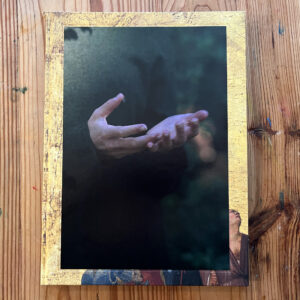
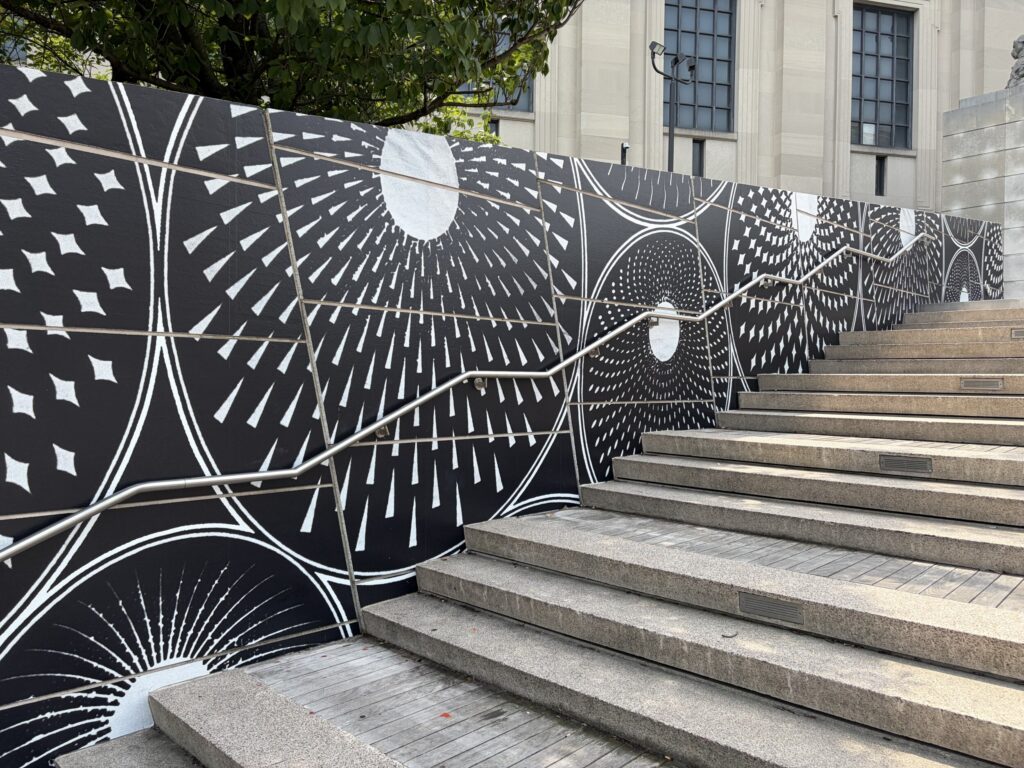
JTF (just the facts): A multi-image exterior installation on the walls and stairs of the Iris Cantor Plaza at the front of the museum. (Installation shots below.)
The following works are included in the installation:
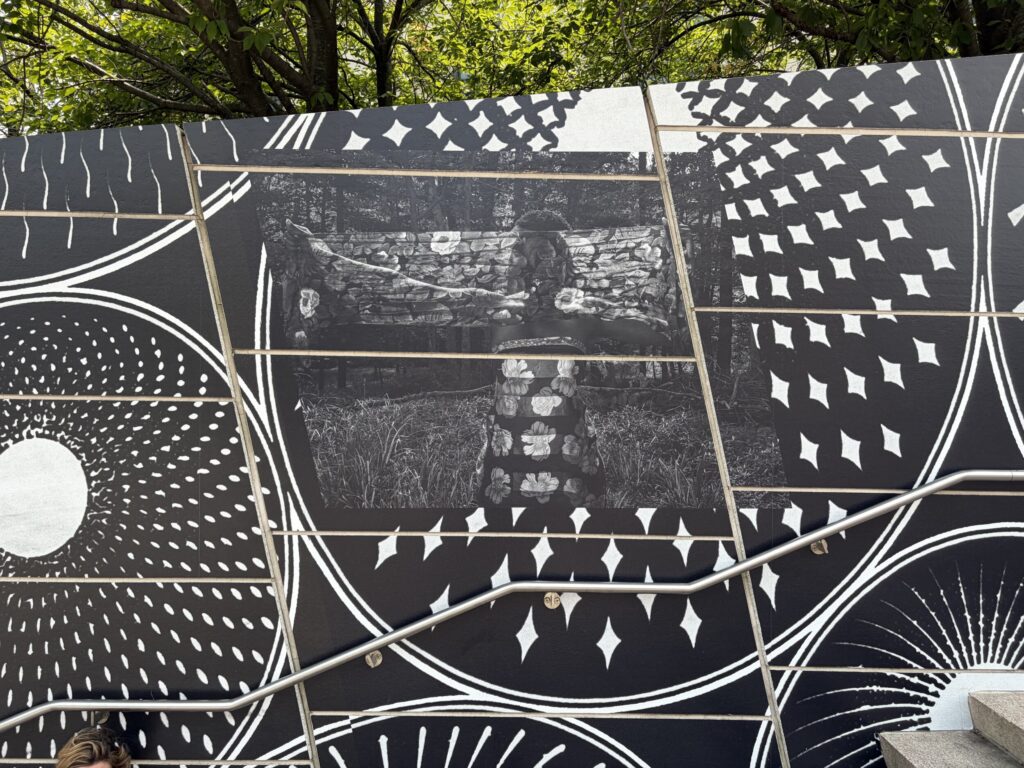
- 7 vinyl reproductions of archival inkjet prints (from the series “Mama’s Clothes”), 2015, 2016, 2017, 2018
- 5 vinyl reproductions of archival inkjet prints (from the series “Within/Between/Corpus”), 2020, 2021, 2022
- 3 vinyl reproductions of archival inkjet prints (from the series “Negotiating/Maneuver”), 2020, 2023, 2025
- 3 vinyl reproductions of archival inkjet prints, 2021, 2024
The installation was organized by Pauline Vermaire, with assistance from Imani Williford. Scarville is the recipient of 2026 UOVO Prize, which includes this presentation at the Brooklyn Museum, another on the facade of the UOVO Brooklyn facility, and a cash grant of $25000.
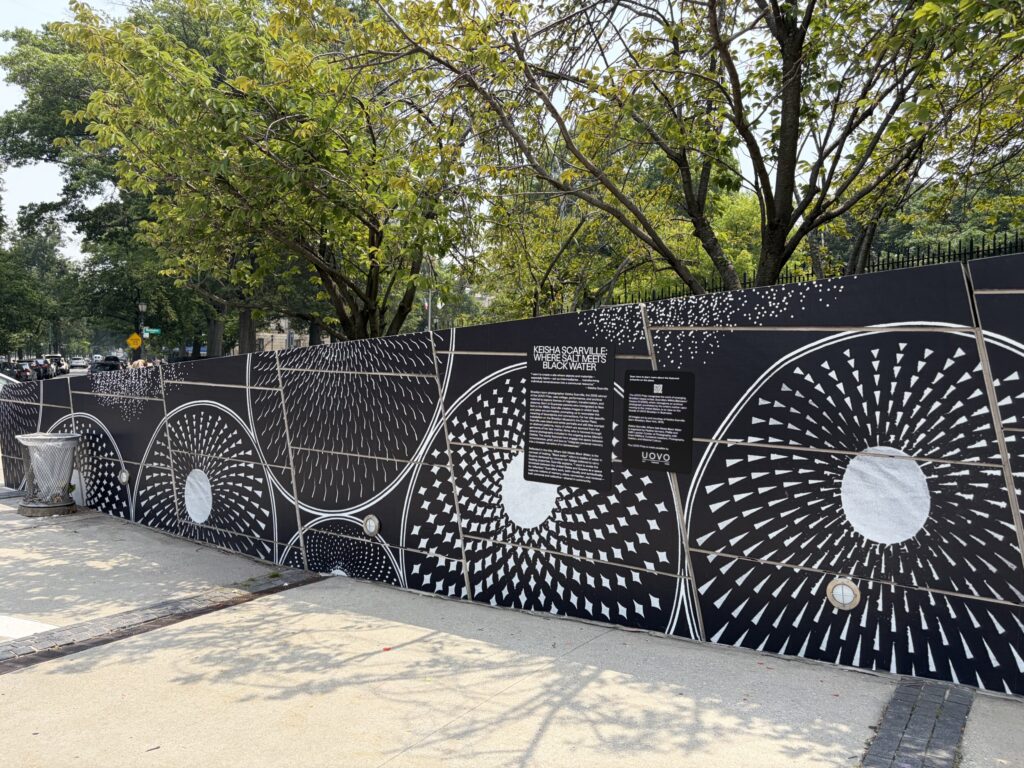
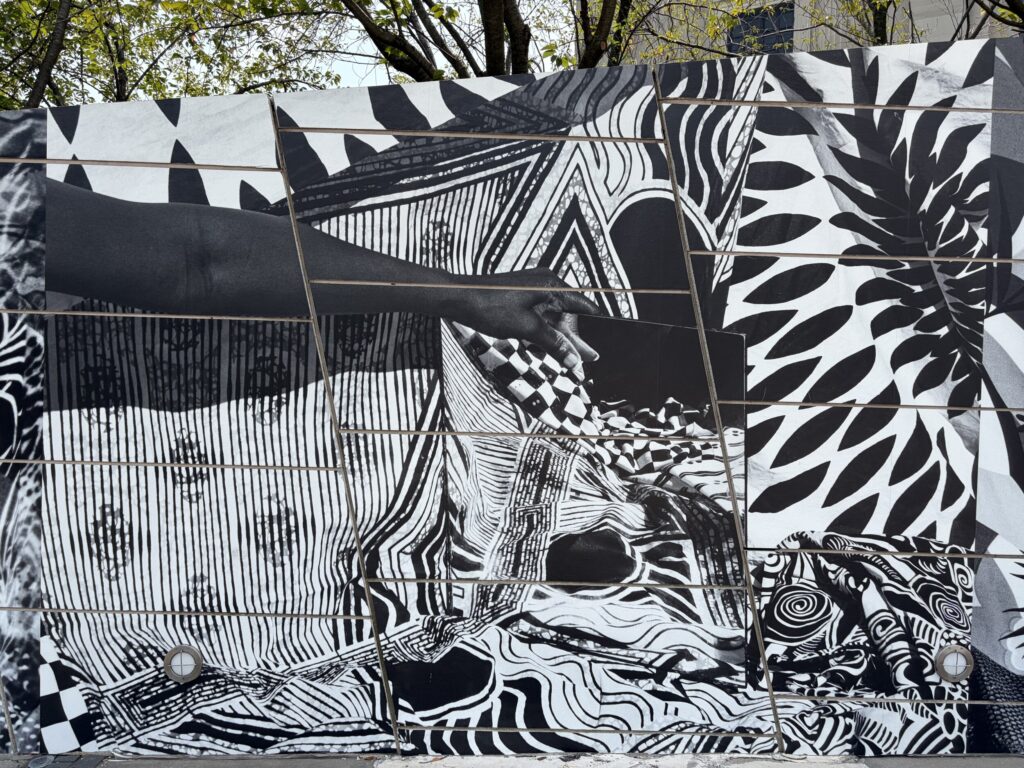
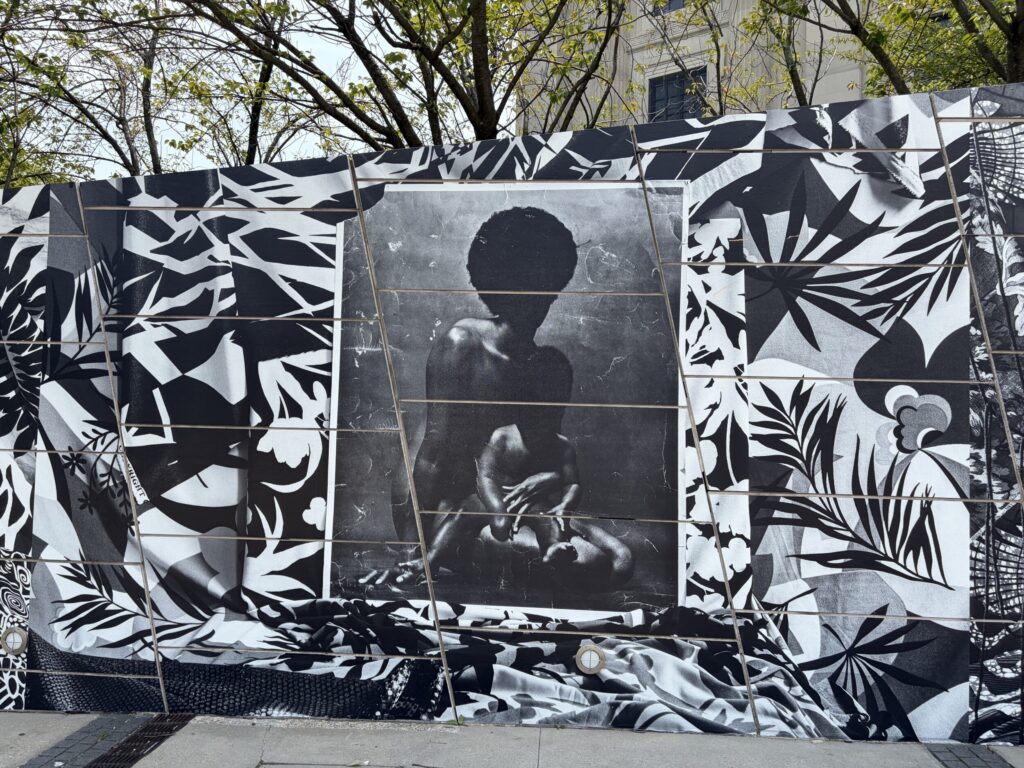
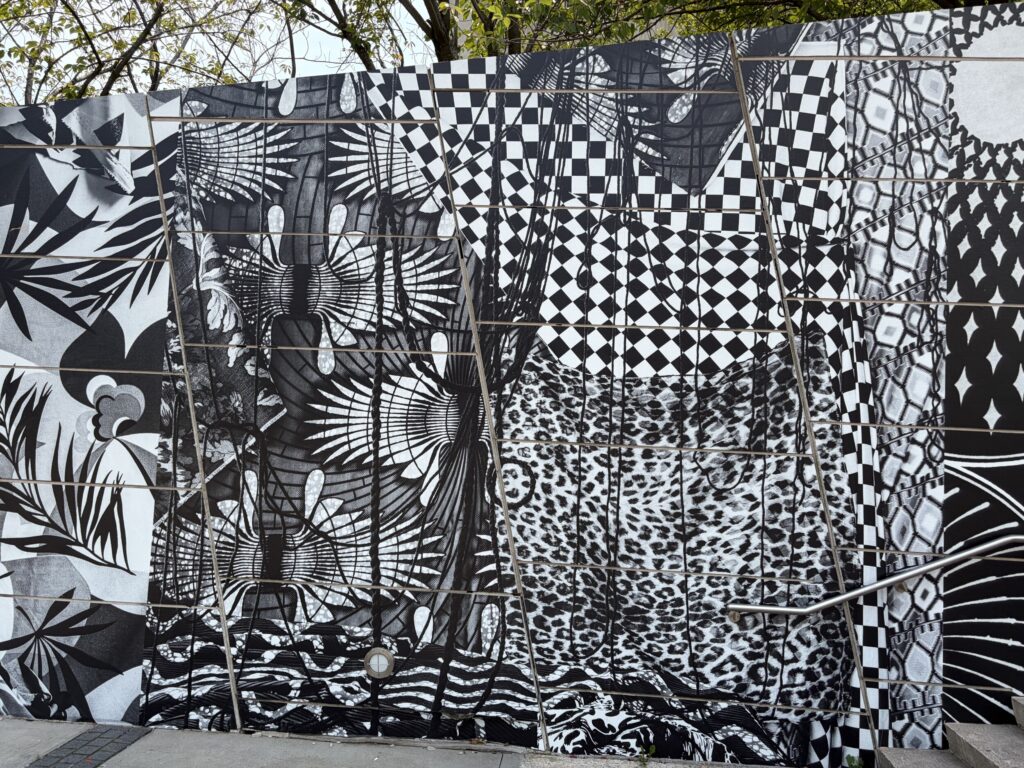
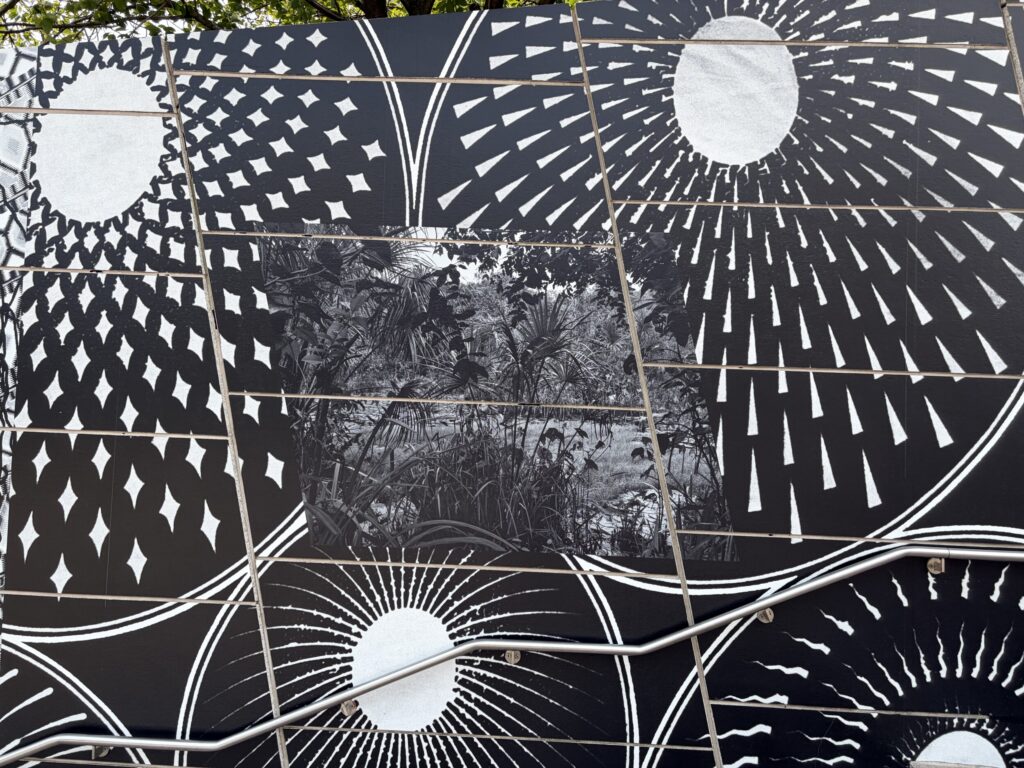
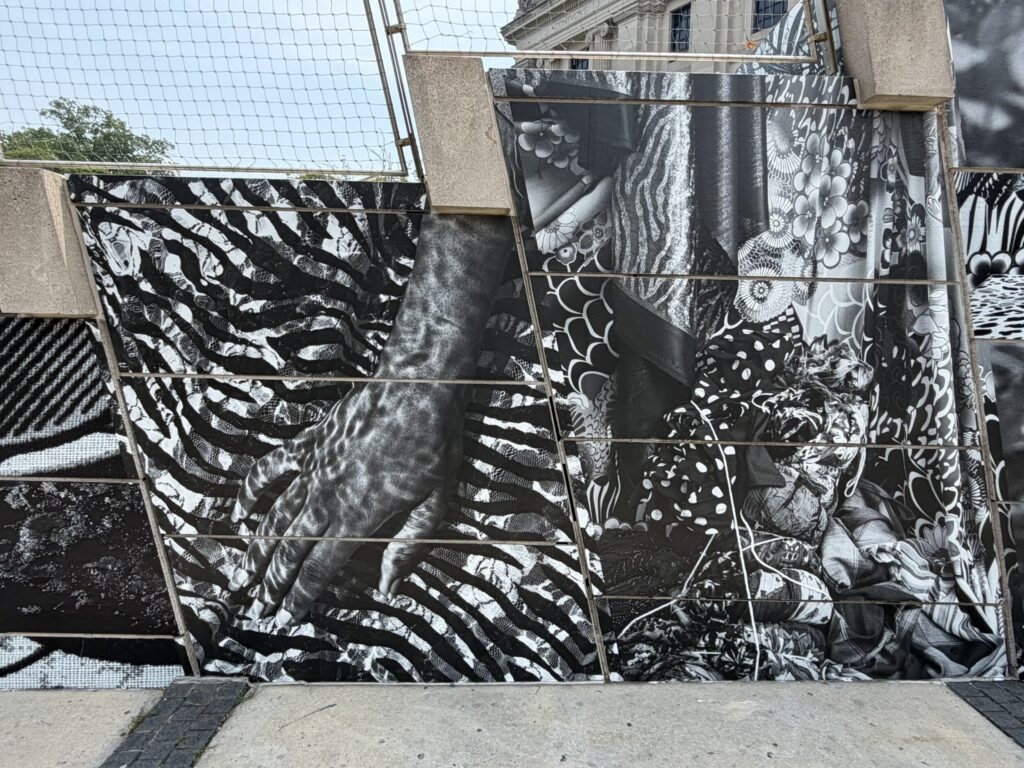
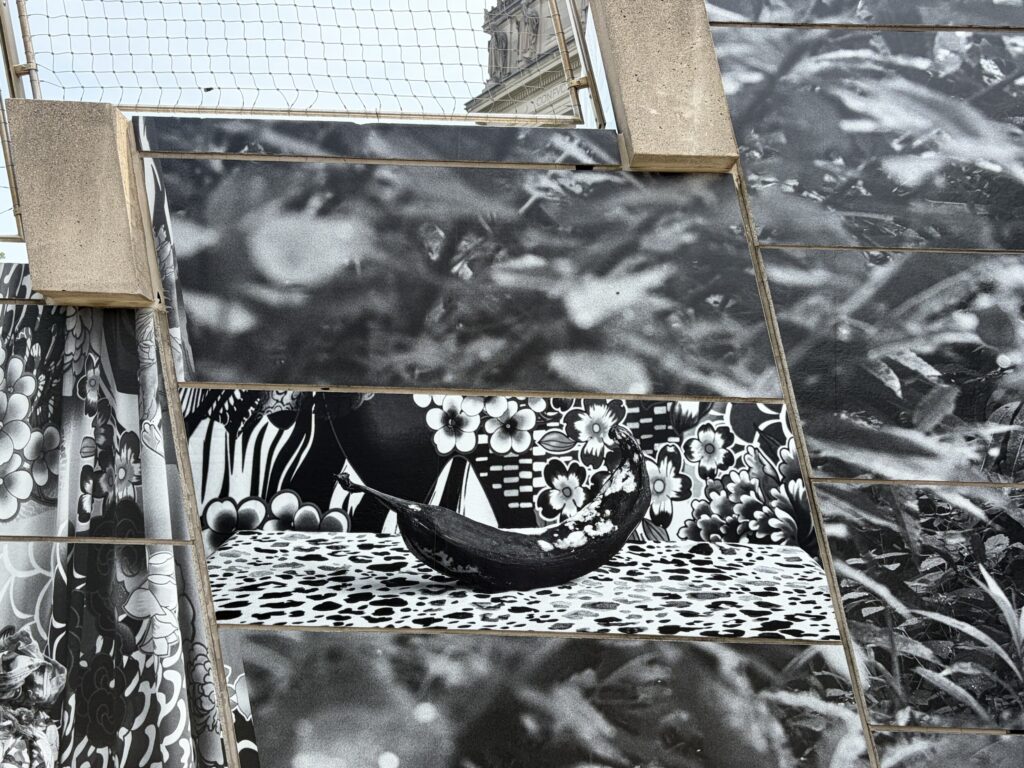
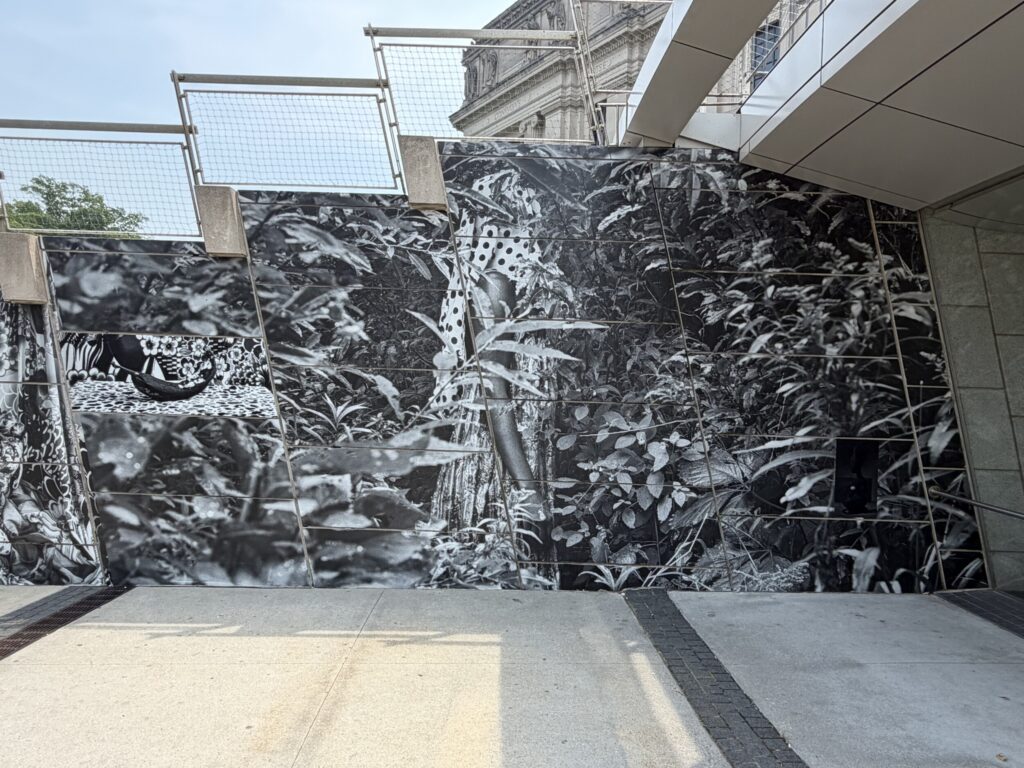
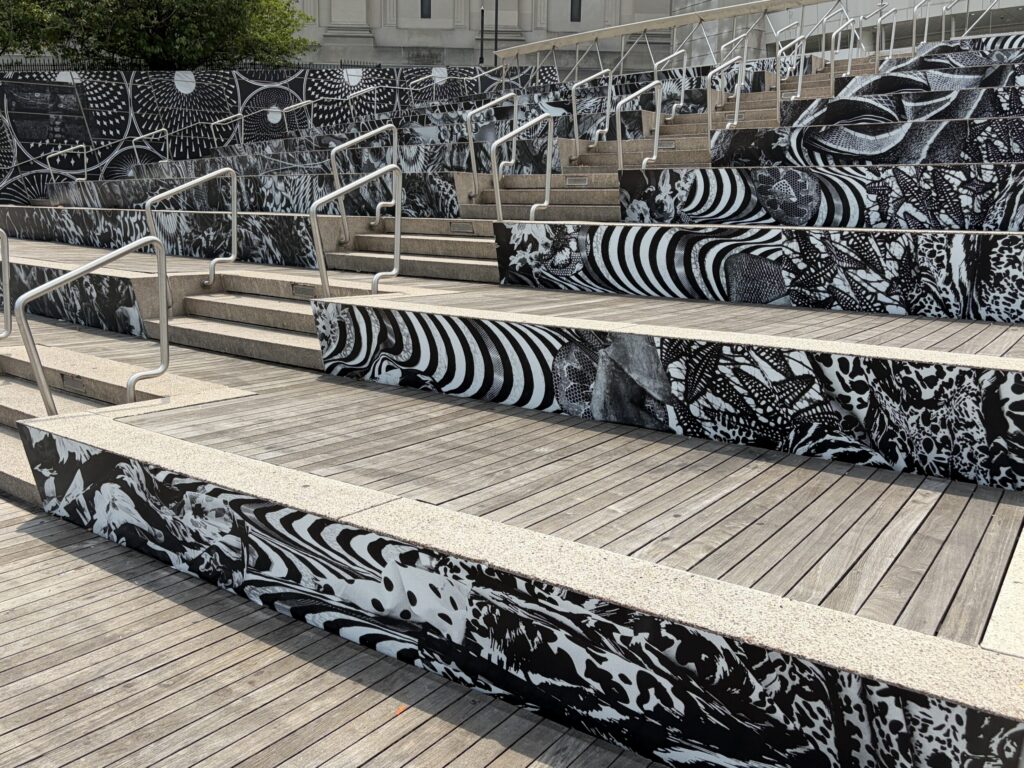
Comments/Context: The past few decades have seen the professionalization of the once scrappy artistic interventions we now often find in many public spaces. Most major museums long ago realized that they have exterior spaces that need a little sprucing up or excitement and could host such installations, and so rotating commissions, prizes, and other awards have been developed to help artists fund the adaptation of their work to these unconventional display conditions.
Photographically, this has generally led to exercises in the transformative possibilities of scale and texture, and to the printing of extra large photographs (particularly faces) on banners, flags, and other drapery, which can be easily hung between exterior columns and on facades, or printing on extra large vinyl, which is then affixed to temporary panels, hung on fence lines, or otherwise installed on available flat surfaces. One of the main challenges of such installations is context – in a controlled gallery space, with deliberately isolating white walls, images can be seen without distractions, on their own, and up close; out in exterior space, installations have to continually negotiate with the rest of the real world, including passing people (who may or may not be looking at the art), weather, changing light conditions, multiple distances and vantage points, and other visual elements like trees, buildings, and built structures that bluntly intrude on the design of the artistic moment. Especially for outdoor exhibits of realistic, documentary style photographs, this can be jarring, as one reality is layered upon another nearby, creating visual dissonances and competitions that reorient (and sometimes dilute) our engagement with the work. If I’m honest, many of these outdoor photography installations feel flimsy, forgettable, and decorative, perhaps well intentioned but almost always a less engaging and durably important way to see the artist’s work.
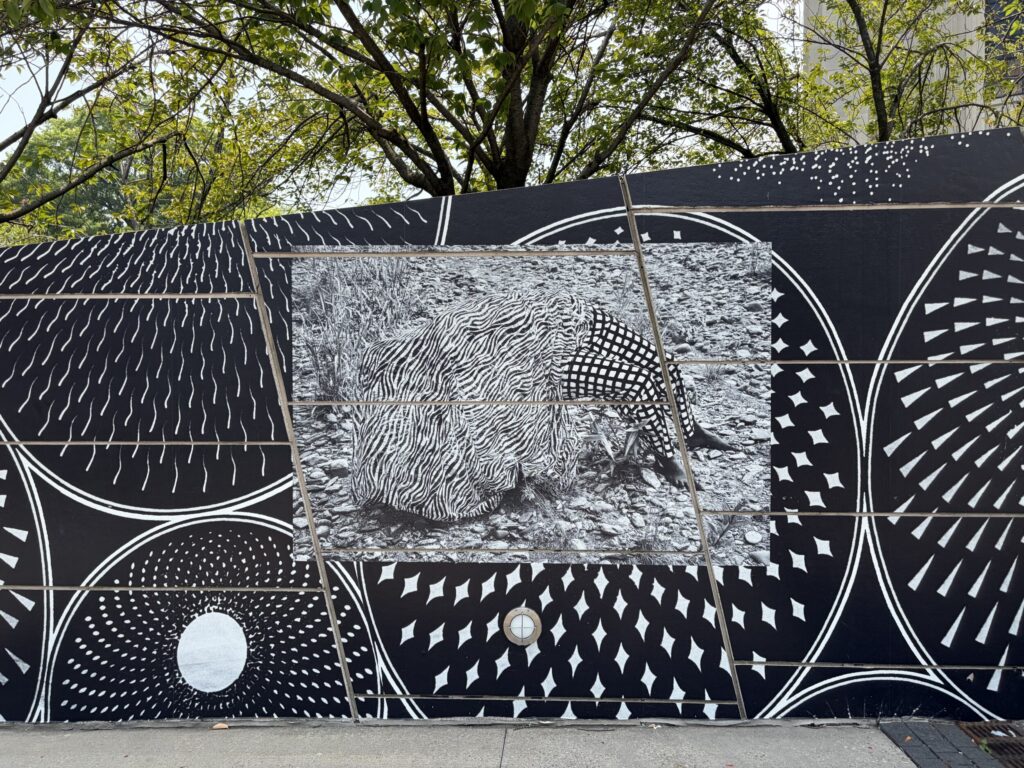
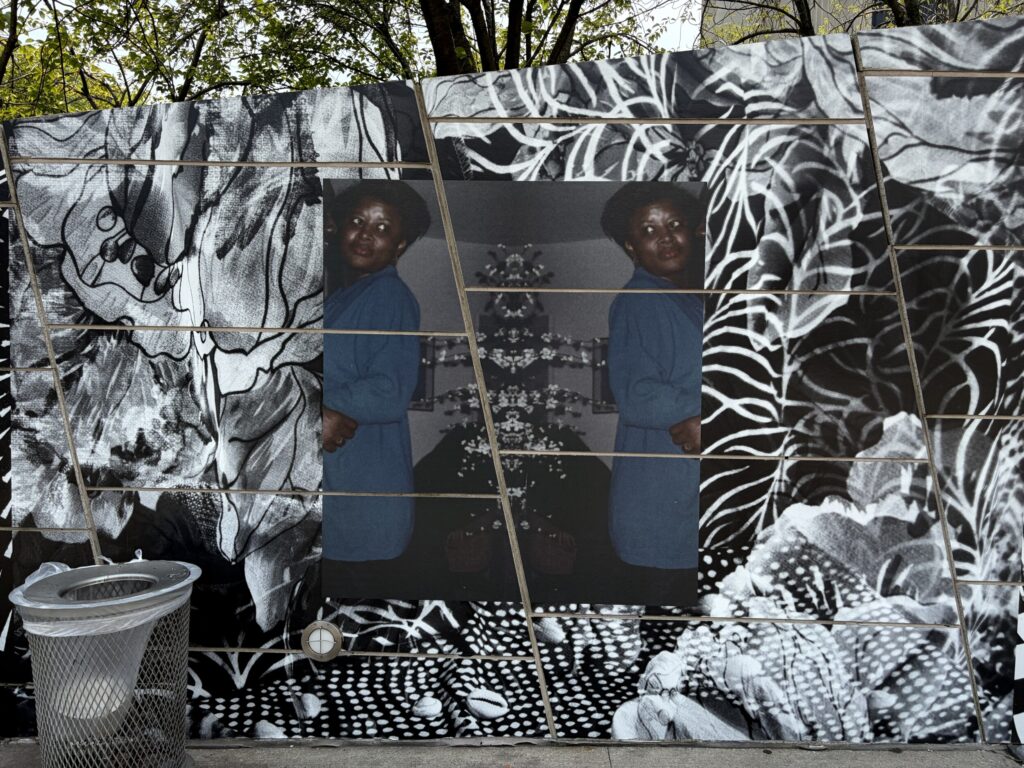
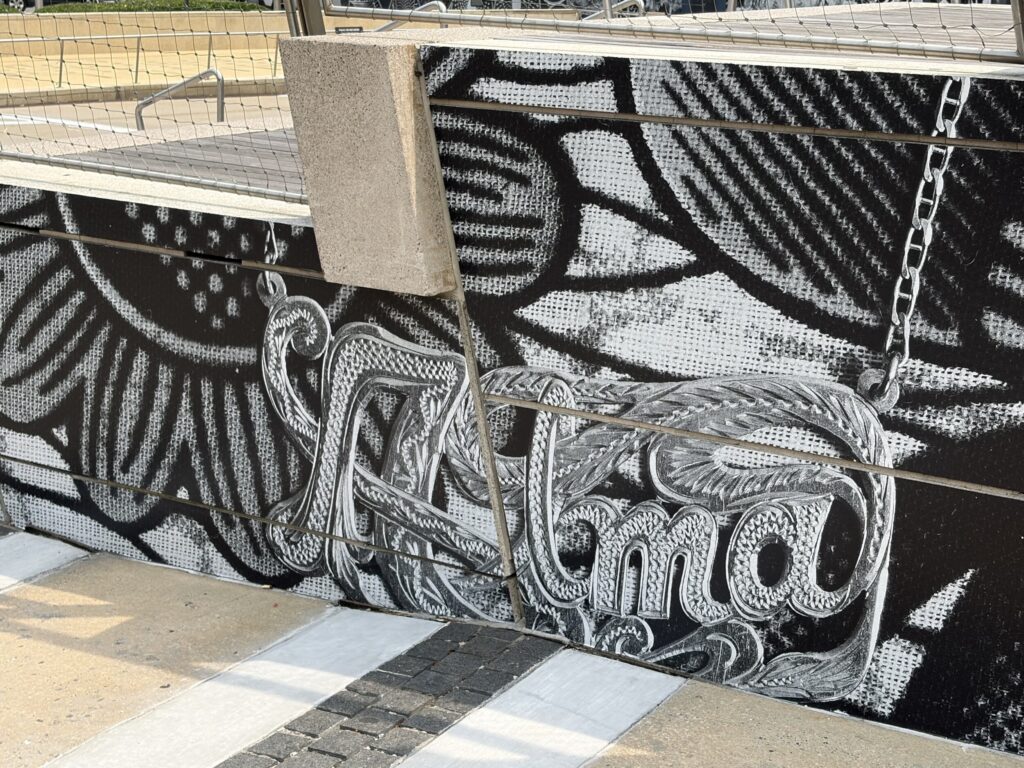
So it’s fair to say I was initially somewhat skeptical about Keisha Scarville’s outdoor installation at the Brooklyn Museum. We’ve had the opportunity to consider Scarville’s work several times in the past few years, and the photographs included in this installation feature some of the images that we saw in her 2022 gallery show (reviewed here), her 2023 photobook Lick of tongue, rub of finger, on soft wound (reviewed here), and in a 2025 ICP group show installation (printed on silk, in our Daybook here). These images come from several projects that smartly interrogate her layered diasporic Guyanese American identity, including her series “Mama’s Clothes”, which swirls patterned fabrics from her late mother’s closet into disorientingly reconfigured arrangements of conflicting motifs, hidden/tied figures, and resonant objects (like a plantain and a golden nameplate necklace). More recent pictures from her “Within/Between/Corpus” series, her Negotiating/Maneuver” series, and other new projects extend these initial compositional and conceptual ideas, moving back and forth geographically and emotionally in space and time, adding in ghostly multiple exposures, appropriated family snapshots, mirrors, cowrie shells, images of African statues and Guyanese landscapes, and fragmented bodies in differing combinations, continuing to reconsider abstracted layers of identity, presence, and memory.
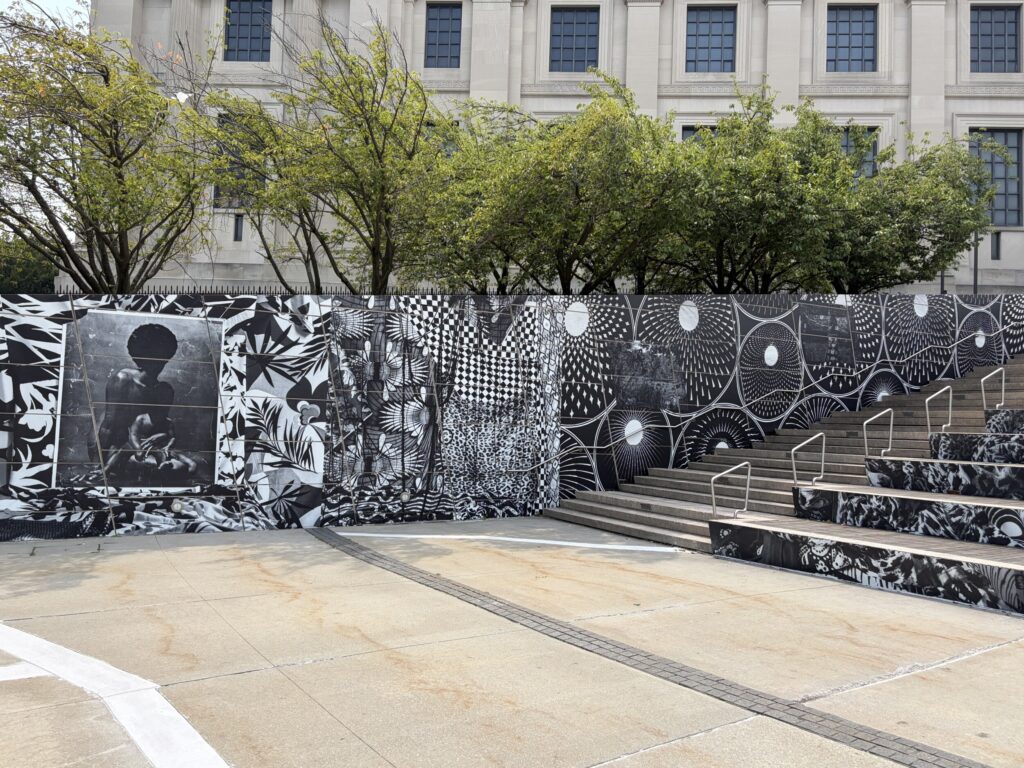
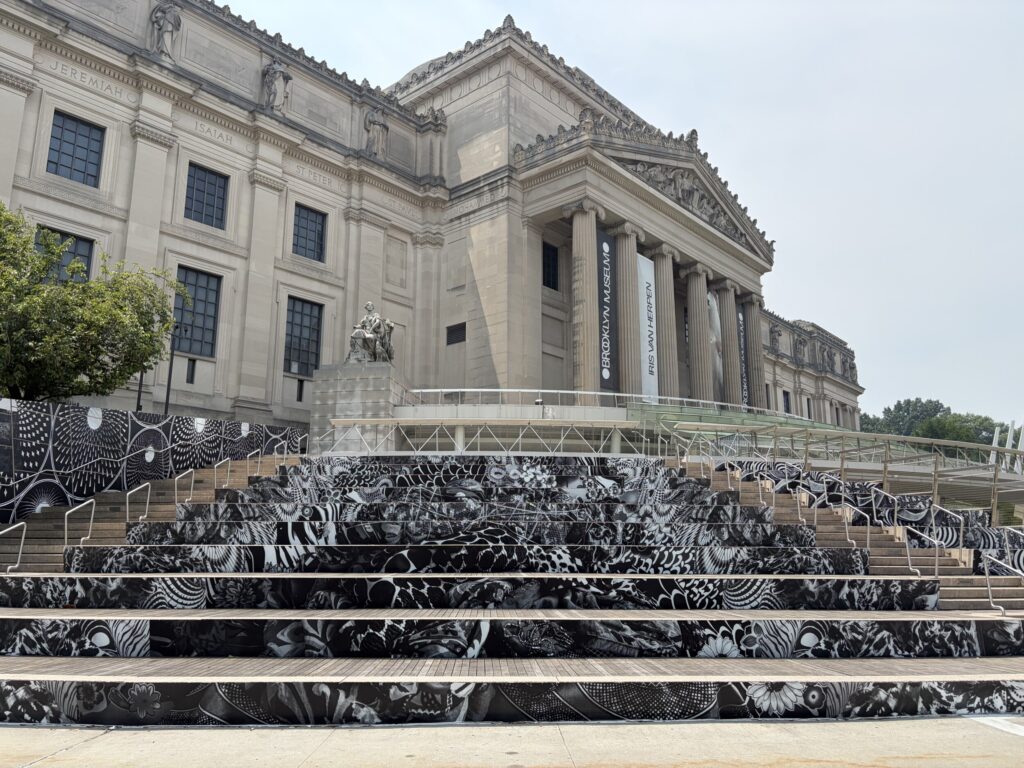
Scarville was given the area around the Iris Cantor Plaza to install her works. The plaza, which includes a tiered concrete and wood amphitheater (with an exposed wall underneath its right side), a seating area with various wildflowers and native plants, and a long separating wall along the far edge, sits generally to the left of the entrance to the museum if you are standing on the sidewalk. Recent art installations in this space (by Melissa Joseph and Nico Williams) have opted for welcomingly bold color and pattern, with images cleverly divided and installed on the step-wise tiers of the amphitheater.
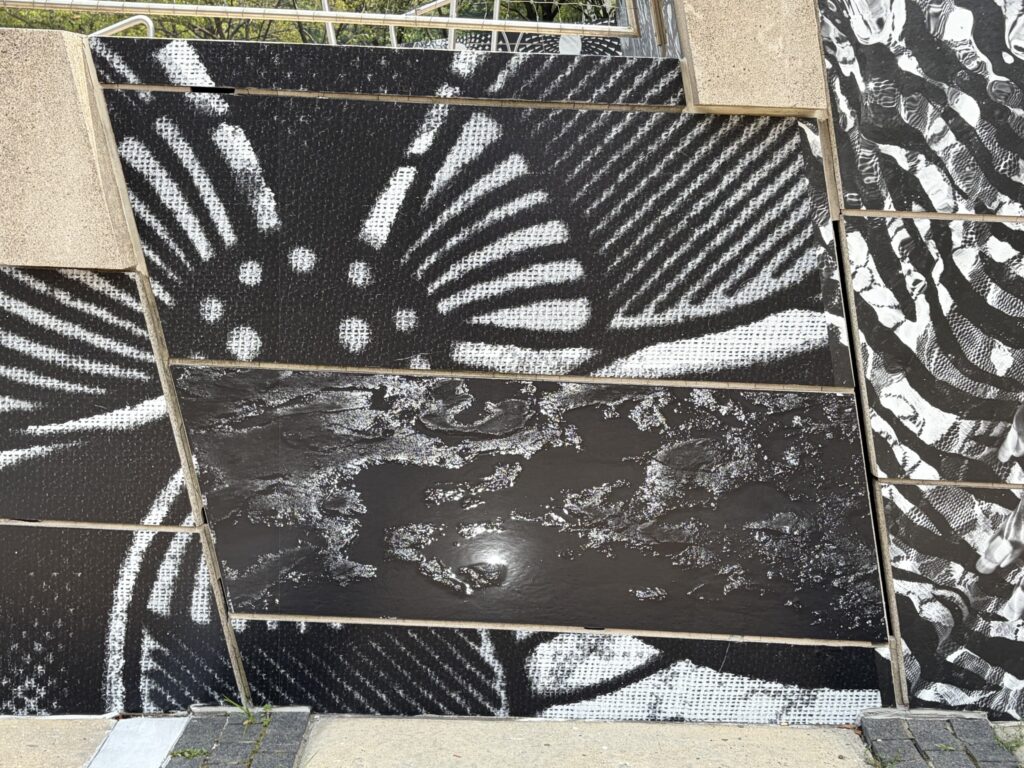
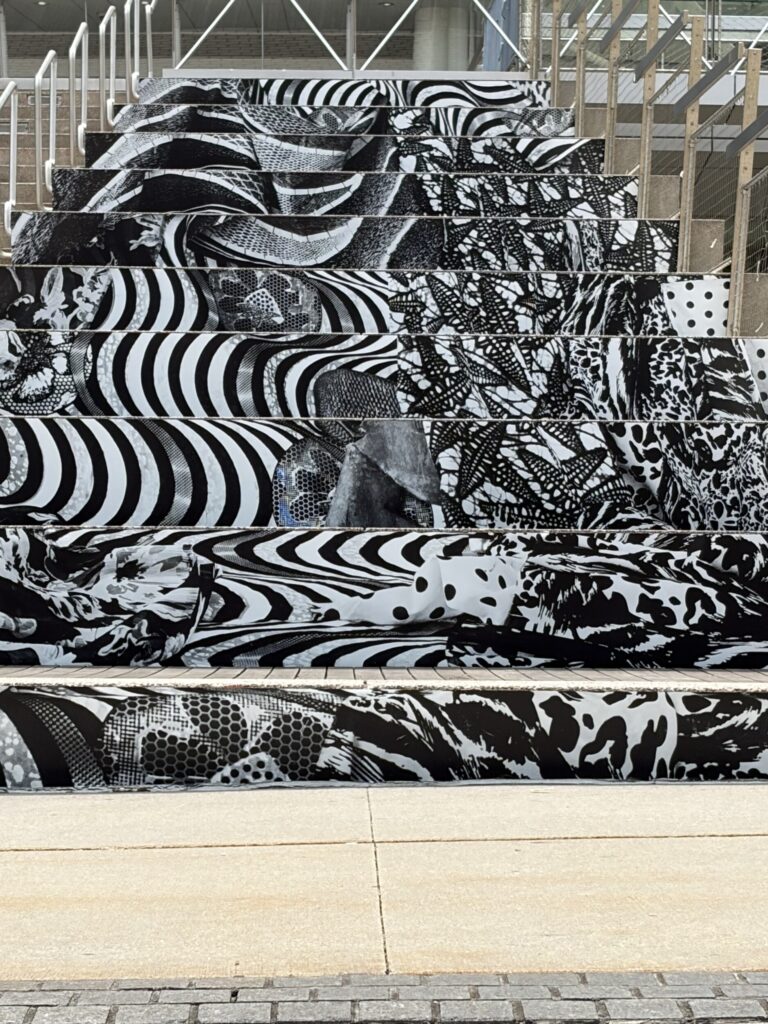
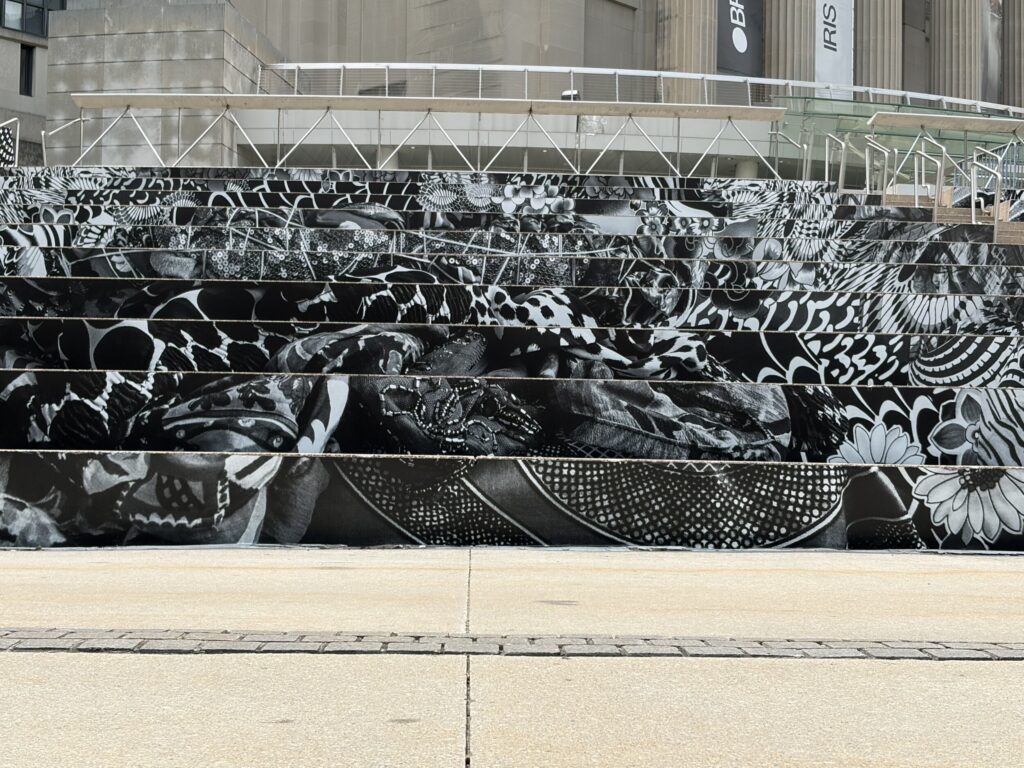
Scarville’s approach to the same exterior exhibition design problem is much more visually sophisticated, using multiple images collaged edge to edge to create a gloriously confusing visual spectacle. Her installation leverages the layering of patterned fabrics in her original photographs, amplifying their deliberate disorientations by using the physical aspects of the plaza to her advantage. The angled walls along the left side of the plaza and underneath the amphitheater on the right are made of concrete incised with angled parallelograms, and Scarville has affixed her vinyl images directly to this concrete. In some cases, her photographs have been set next to each other with vertical boundaries that cut through those underlying angles, and in others, she has printed her images to neatly fit inside the lines of the parallelograms or to float on top of her own images. The result is a complex set of collaging decisions that takes Scarville’s original photographs and reinterprets them in the context of the particular space, using those concrete lines to further break up, interrupt, and nest together her already layered compositions.
She’s taken a similar approach to covering the undersections of the amphitheater (not an easy architectural feature to deal with), spreading an array of several works across the width of the steps (which are further divided by handrails), and then slicing them into horizontal strips that fit underneath the seats. From a low angle a few steps back, the images resolve together, again snugly collaged edge to edge into an enveloping flow. The entire installation undulates through patterned variations of monochrome black-and-white, each individual work broken down and reused to function in harmony with its neighbors. As an integrated whole, Scarville’s installation is much more subtle than a simple wrapping of every available surface with a selection of her pictures; the images already have their own intermingled confusions and she has used the exterior space of the plaza to remix her own works at a second, meta-level, using them as component parts in a plaza-wide collage. For those who just want pleasingly elaborate patterns, her installation is easy to like, but a closer look reveals layers of aesthetic intricacy that are altogether worth puzzling over.
Almost by definition, a public plaza is a space designed for rest and repose, and in the context of an art museum, perhaps even reflection. My installation shots, while factually accurate, are a tiny bit misleading – during the summer, at the midday hour that I visited, it wasn’t perfectly empty as I’ve documented; there were plenty of people enjoying the plaza and I just got lucky when a few came and went for a split second here and there. Some were enjoying the relative shade of the left side wall stairs, while other more sun-seeking visitors settled in to enjoy their lunch right on the various amphitheater levels. In this way, Scarville’s photographic installation was activated and energized by the community, even if not all the visitors were looking at the images directly all the time – they were among them, amidst them, and surrounded by them, the many thresholds of existence and memory Scarville is trying to capture in her photographs made even more personal and individual by their presence.
So Scarville’s installation doesn’t fall into the lazy (and often dull) trap of an artist simply “responding to the architecture”. Instead, she’s massaged, elaborated, and re-imagined her own work to thoughtfully coexist with the plaza in a way that made them both more interesting and fulfilling. Her solution to the creative problem is iterative, turning the crank once again on ideas she’s been wrestling with for years, letting the constraints of the space force her to push the photographs in new directions. This plaza commission isn’t just a decorative afterthought; it’s actually a nuanced rethinking of her own artistic practice, where photography has to tangle with 3D spatial design in unexpected ways. So while the days are still warm, grab a sandwich, sit on the steps, and settle into a satisfyingly nuanced and enveloping visual conversation.
Collector’s POV: Since this is an exterior installation, the included prints on vinyl are not for sale. Scarville is represented by Higher Pictures in New York (here). Her work has little secondary market history at this point, so gallery retail likely remains the best option for those collectors interested in following up.