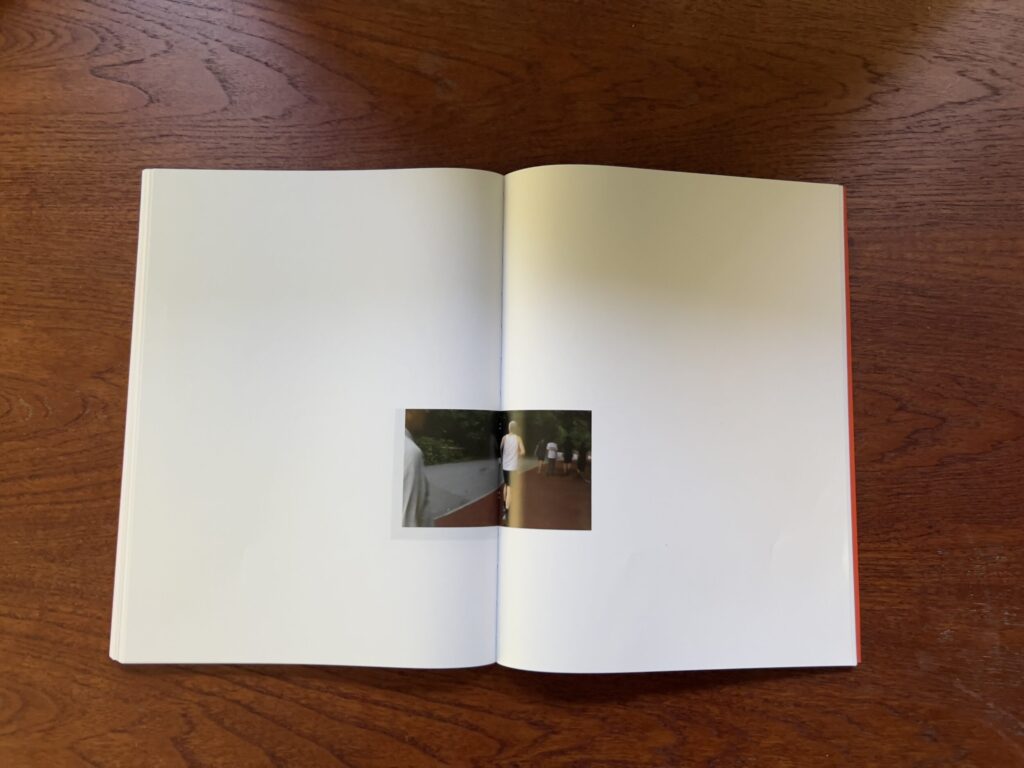
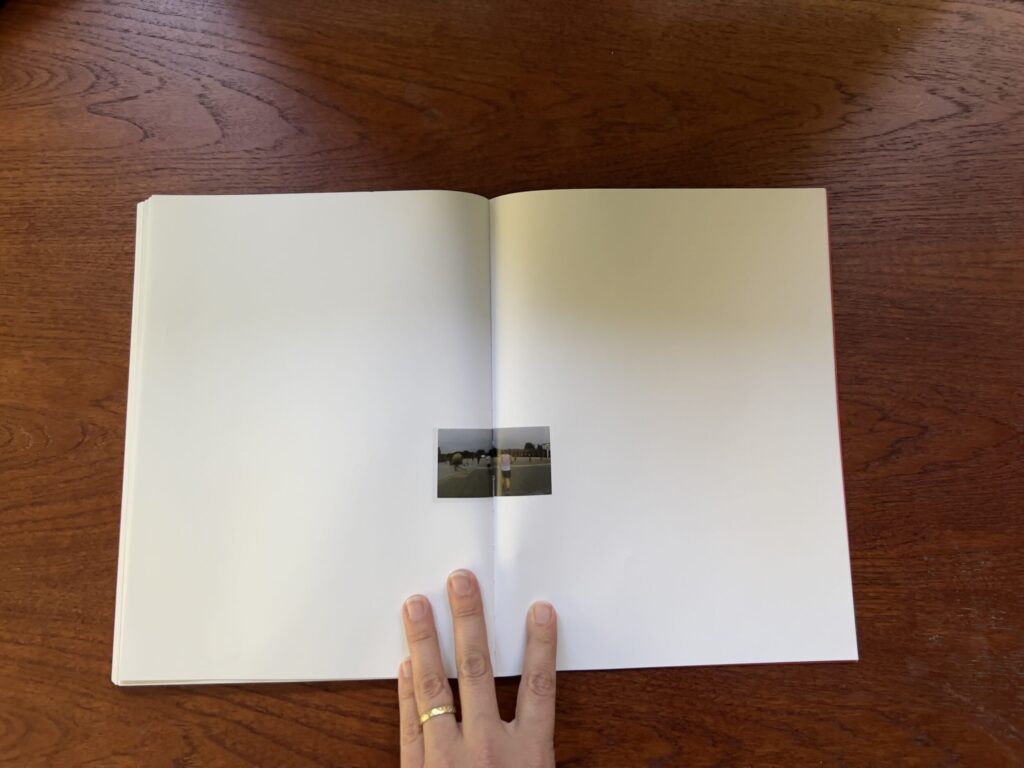
JTF (just the facts): Published in 2025 by te editions (here). Softcover (20.3 x 27 centimeters), offset printed with exposed binding, 176 pages, with 73 photographs. Includes texts (in Chinese/English) by Geng Yao and Kanthy Peng. In an edition of 500 copies. (Cover and spread shots below.)
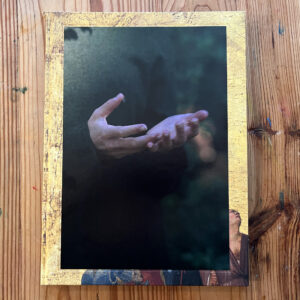
Ground Sea (Special Edition) 特别版 is available with a print; the collector can choose between three options, each in an edition of 10+2AP.
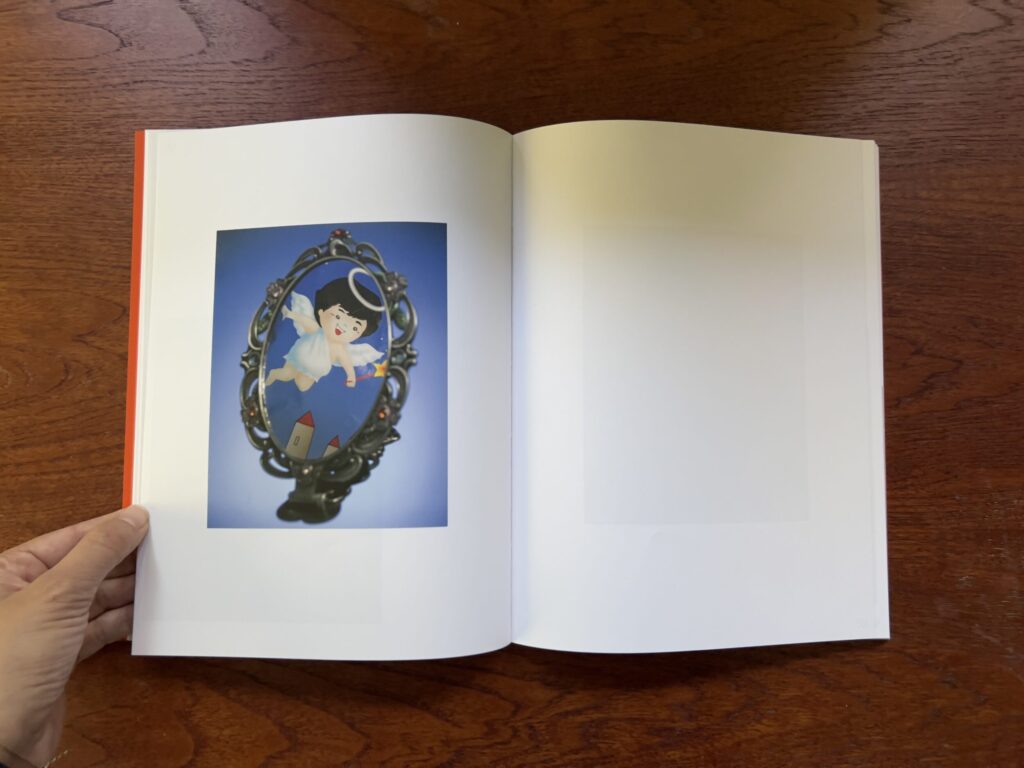
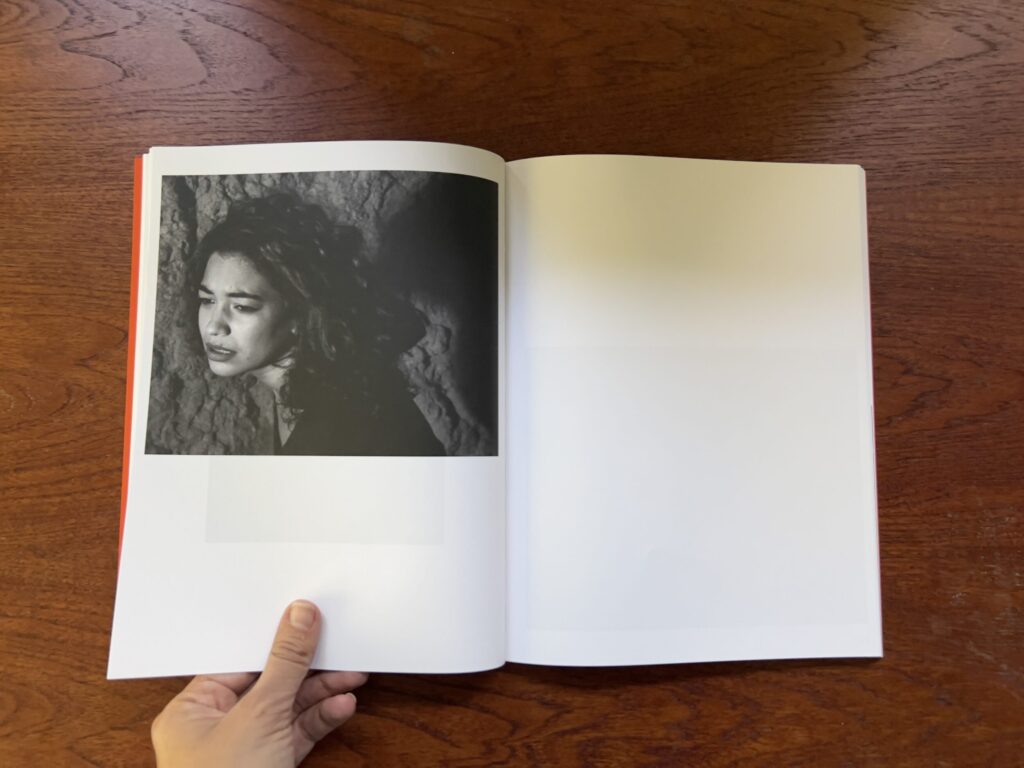
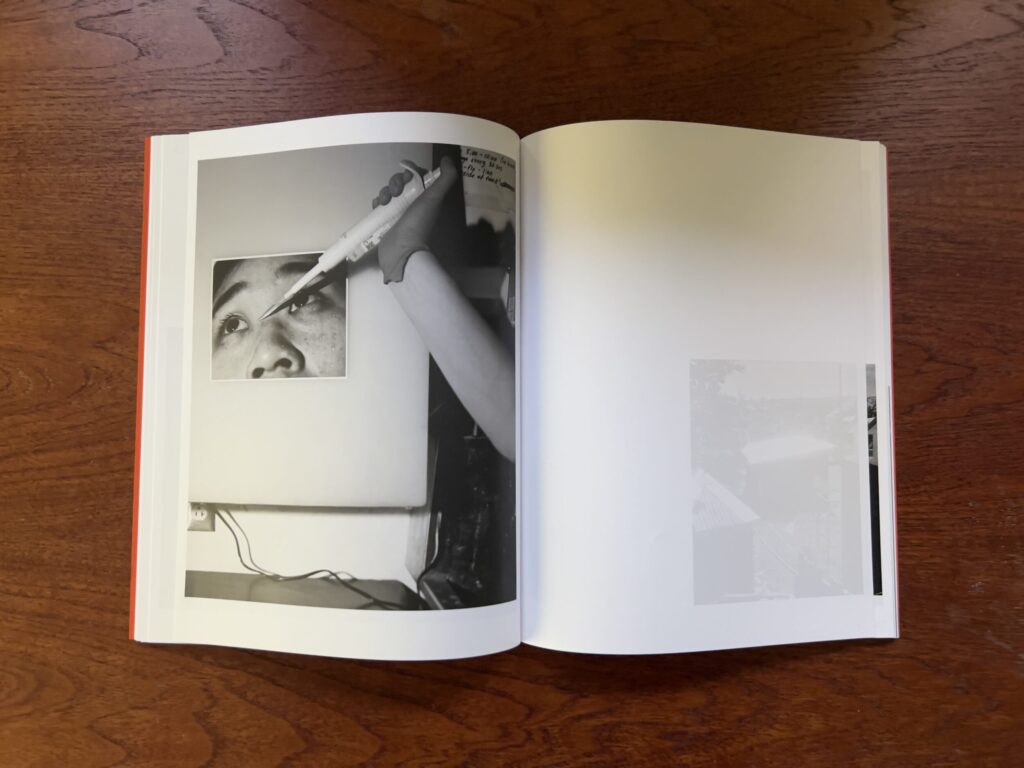
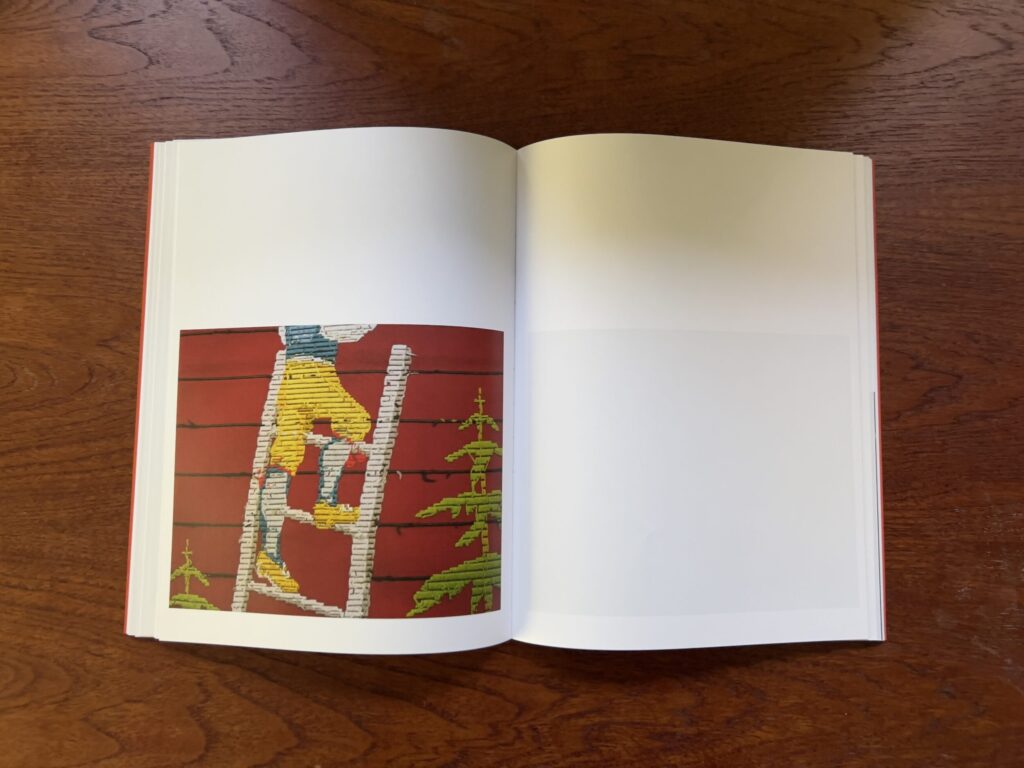
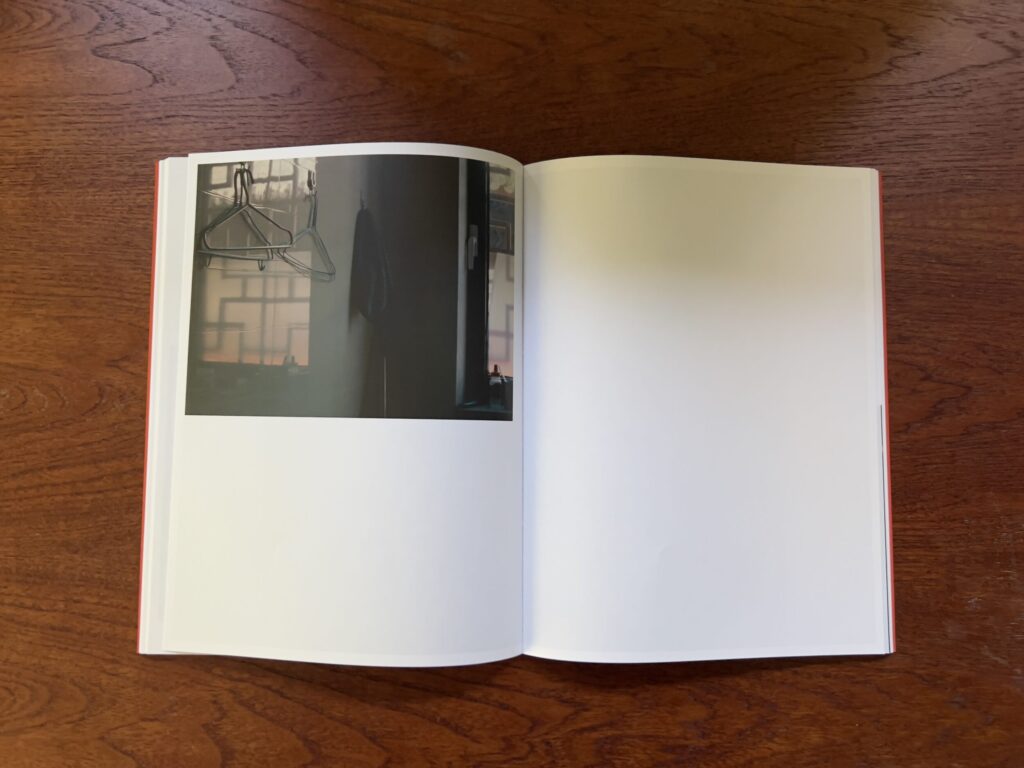
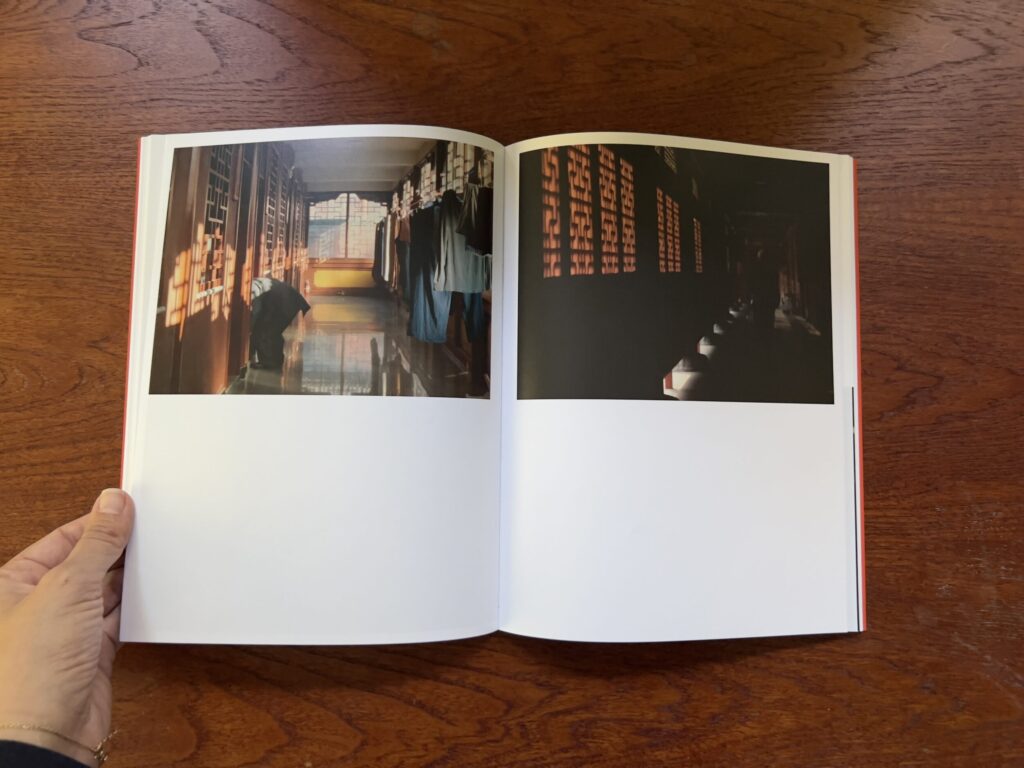
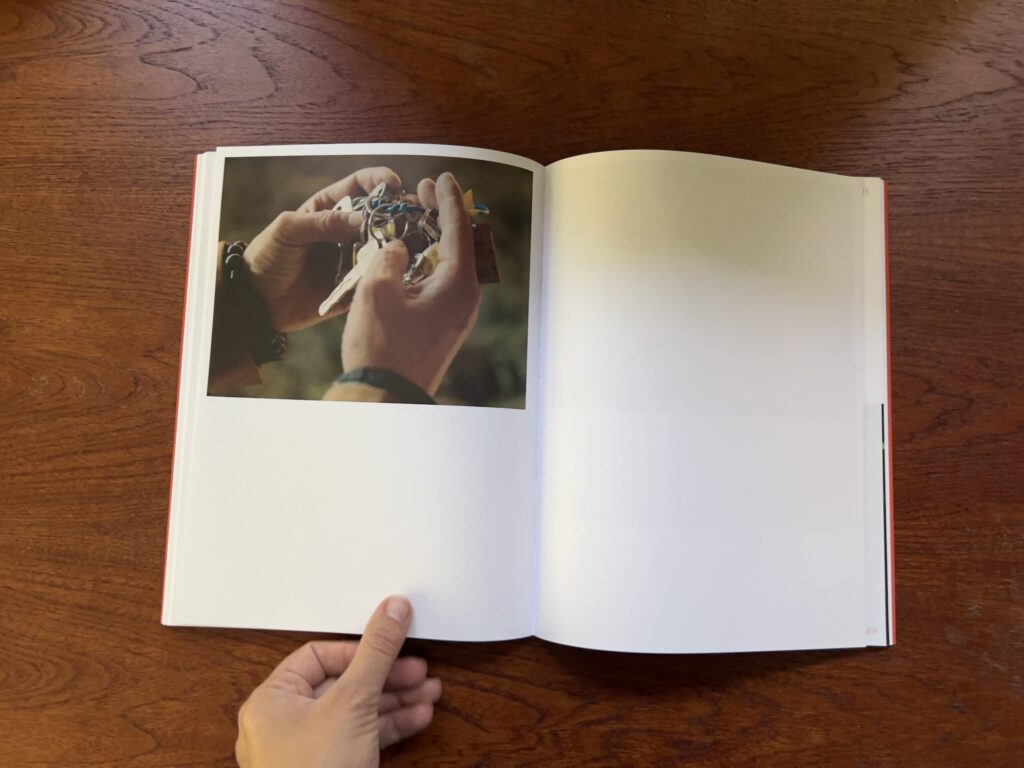
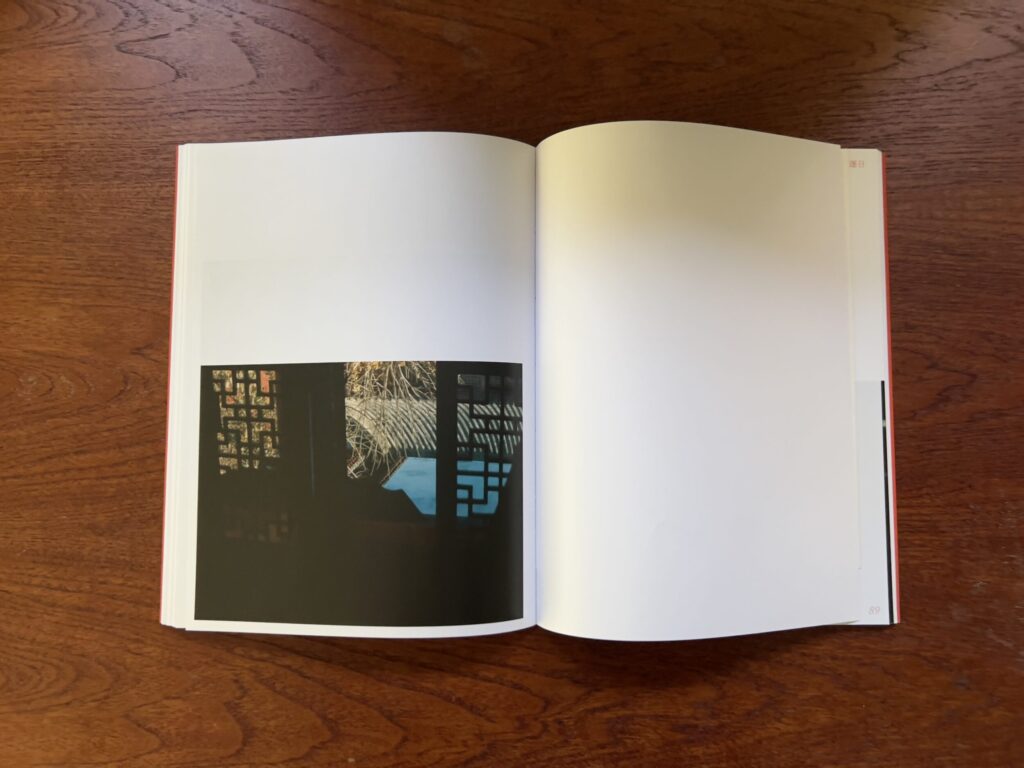

Comments/Context: Kanthy Peng (b. 1992) describes her practice as focused on the profound theme of “people’s uneven mobility embodied in colonialism and globalized tourism, and caused by illness and disaster.” These subjects are explored in poetic scores in Peng’s debut monograph, Ground Sea, recently published by te editions.
These weighty and delicate subjects find their expression through photographs Peng has made over the course of the last ten years, in some cases during their time as a student at The School of the Art Institute of Chicago and Yale University. The images are thoughtfully organized and sequenced into two parts – a photobook as diptych – with each part divided by poetry, written by Geng Yao and printed in both Chinese and English. The visual and textual sections of the book create a multi-sensory approach to the complexity of the themes, where language, rhythm, and structure intertwine to create an immersive experience for the reader.
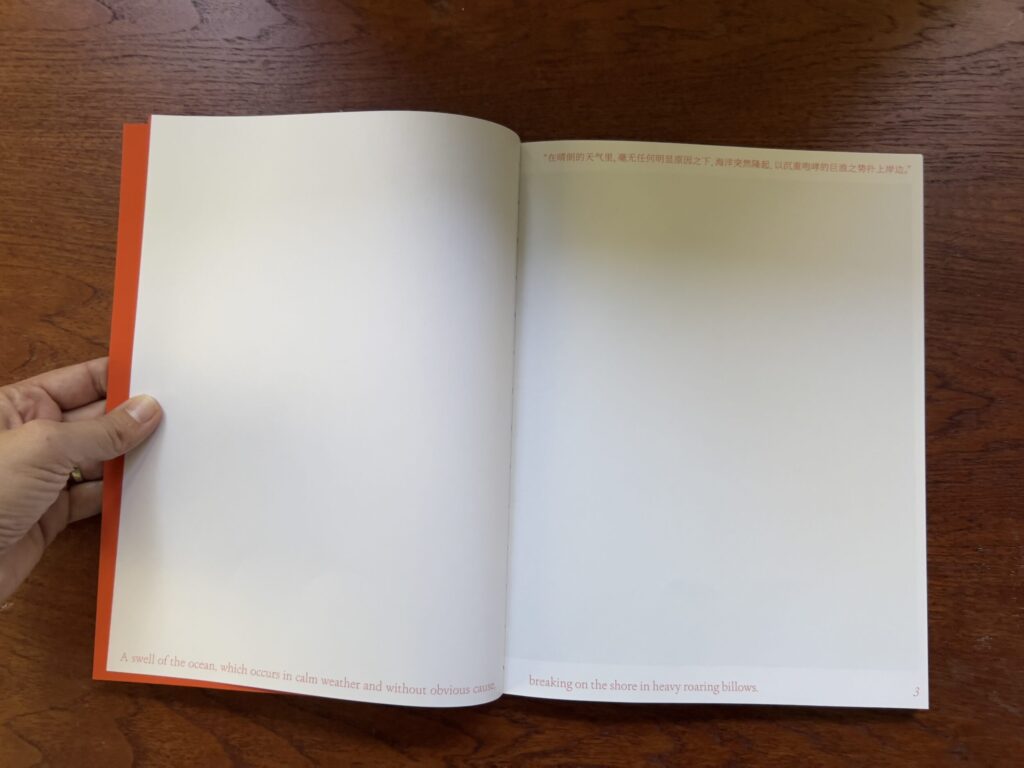
The evocative title, Ground Sea, holds significant symbolic weight, taken from a West Indian phrase that was thoughtfully adopted by anthropologist Emily Martin, who used it to articulate her own profound feelings and observations while attending affective disorder clinical rounds. In its original context, “ground sea” refers to the unexpected, violent ocean swells that can erupt in otherwise calm weather. This potent metaphor encapsulates the often-hidden, turbulent undercurrents that can disrupt apparent tranquility, echoing the unforeseen challenges and profound impacts of colonialism, tourism, illness, and disaster that Peng explores in their art. The book begins with a line that pays homage to the title, “A swell of the ocean, which occurs in calm weather and without obvious cause, breaking on the shore in heavy roaring billows.”
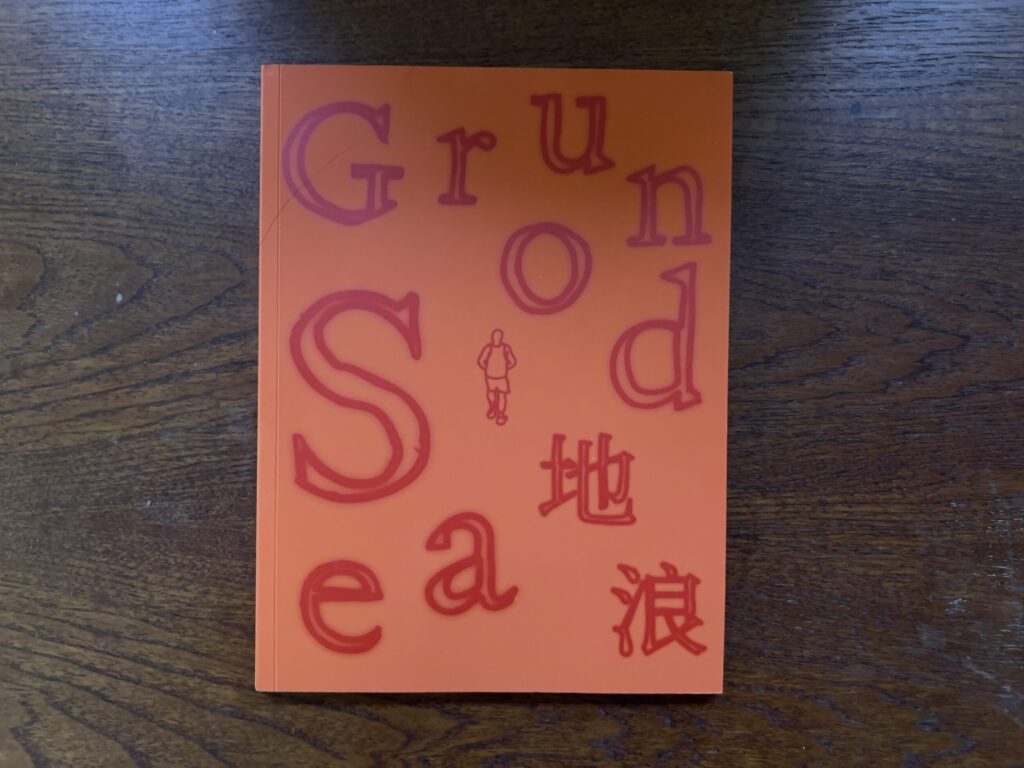
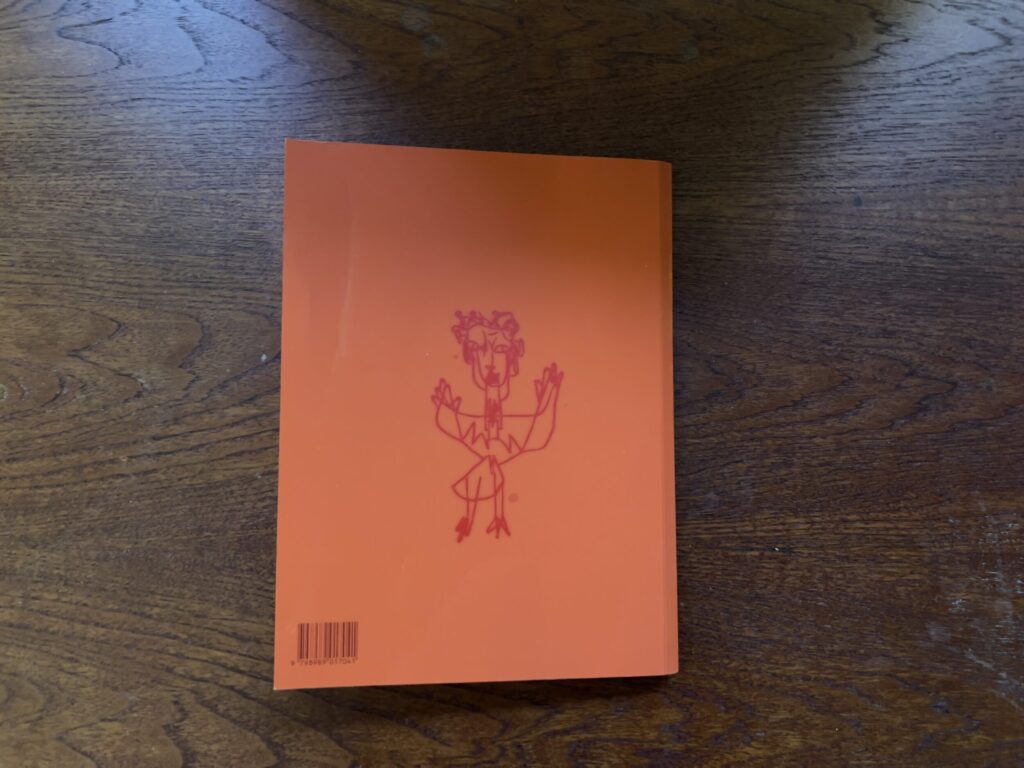
The photobook features a striking orange cover with the title written in red text. Centered on both the front and back are single-line drawn graphics: the front depicts the artist’s father, who is featured in the book’s second section, “Kuāfù Chases The Sun”, while the back displays a blind contour drawing of a ghostly figure. The cover’s vibrant colors, reminiscent of a yield sign, evoke a sense of caution, suggesting potential danger.
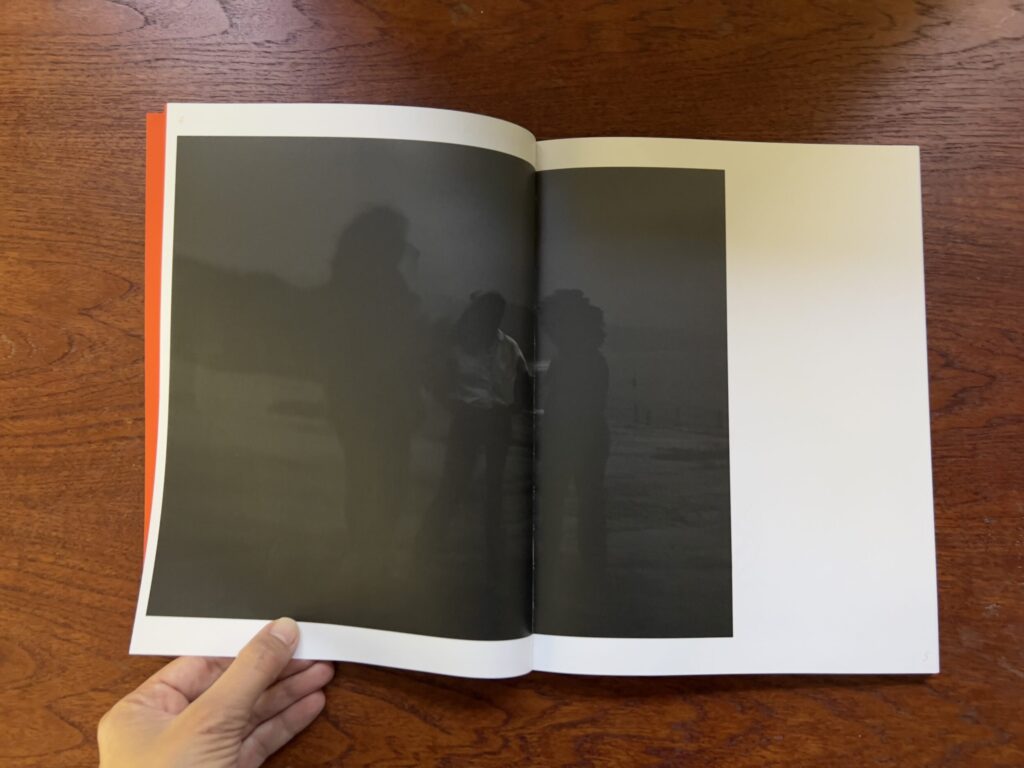
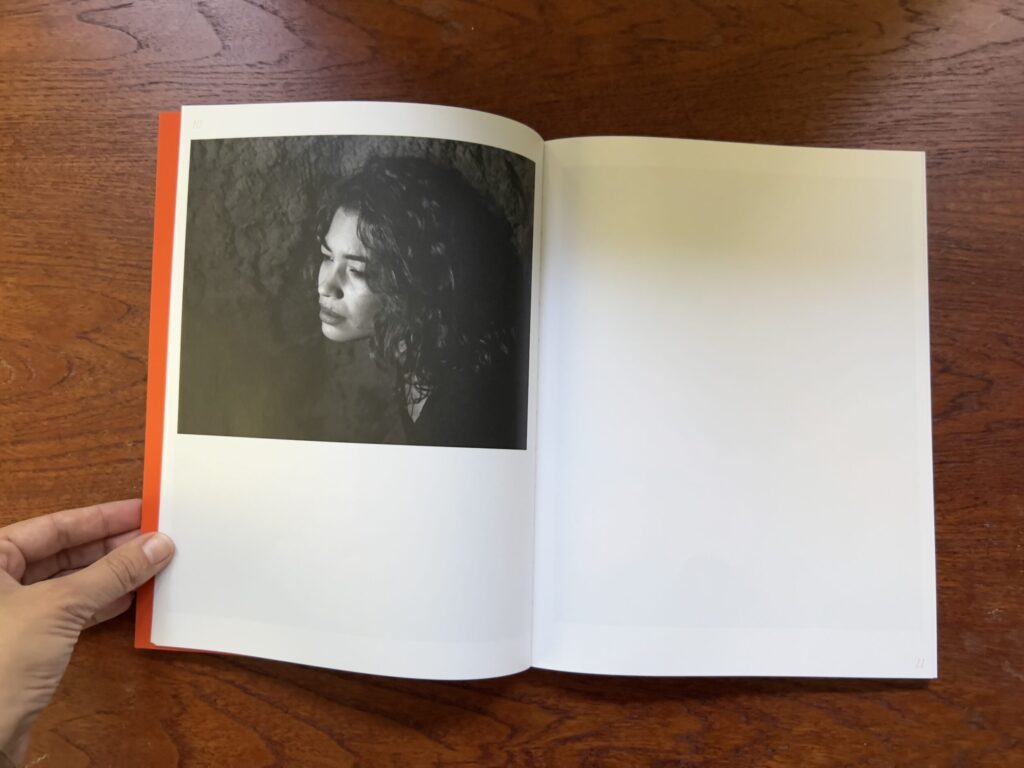
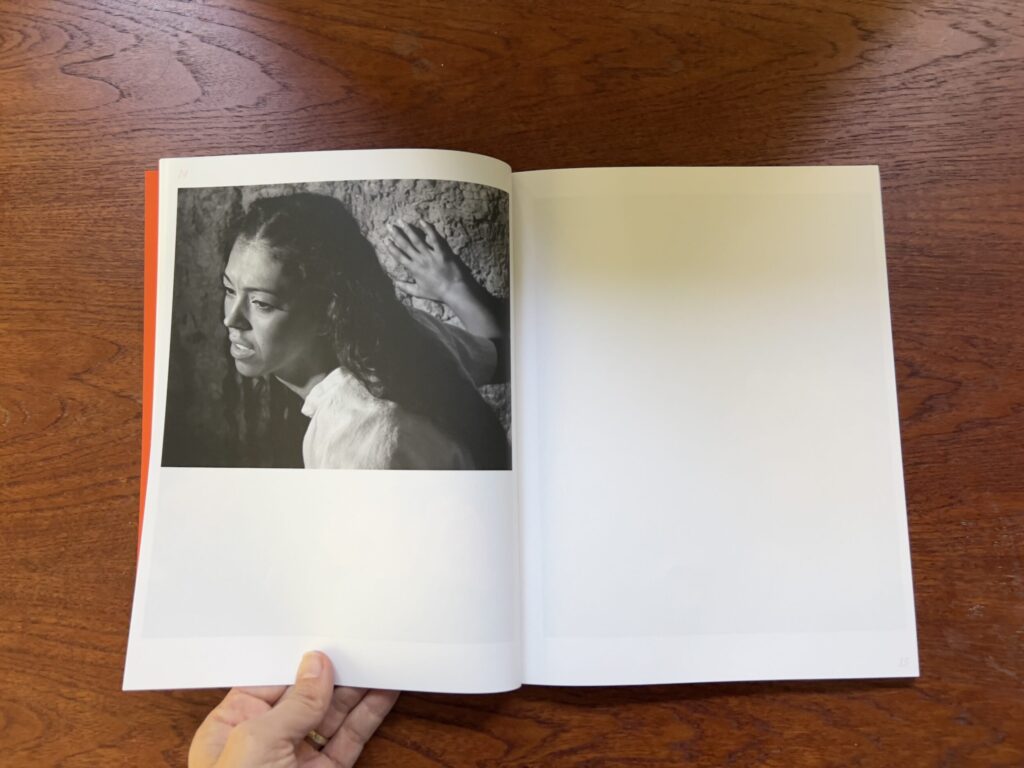
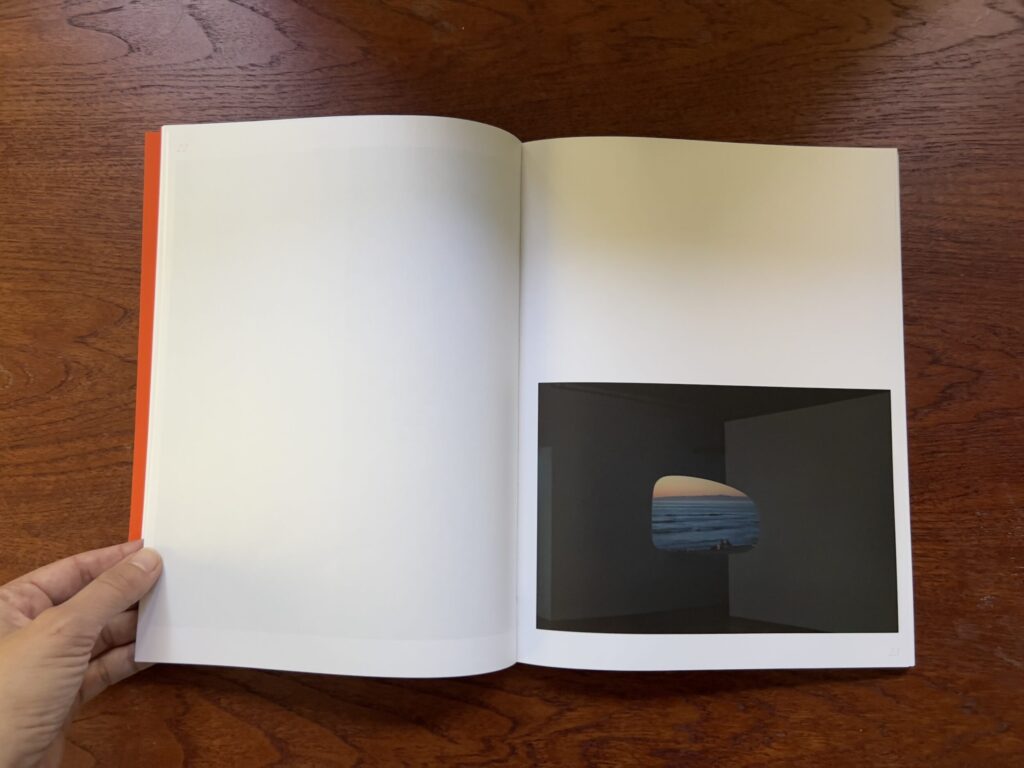
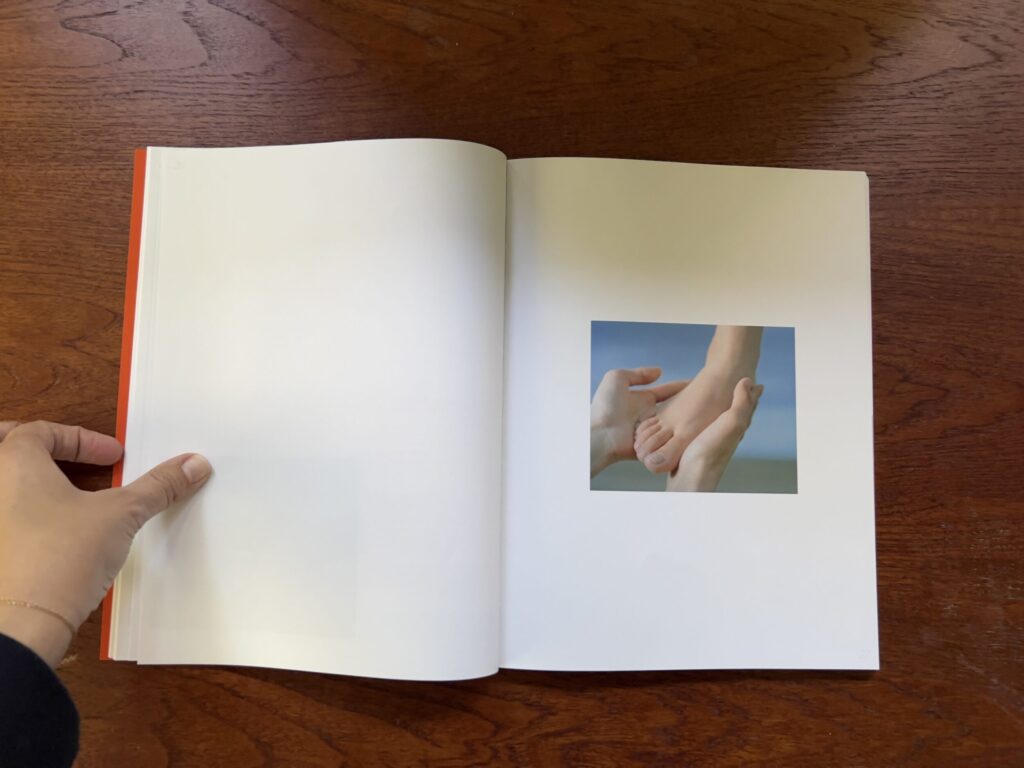
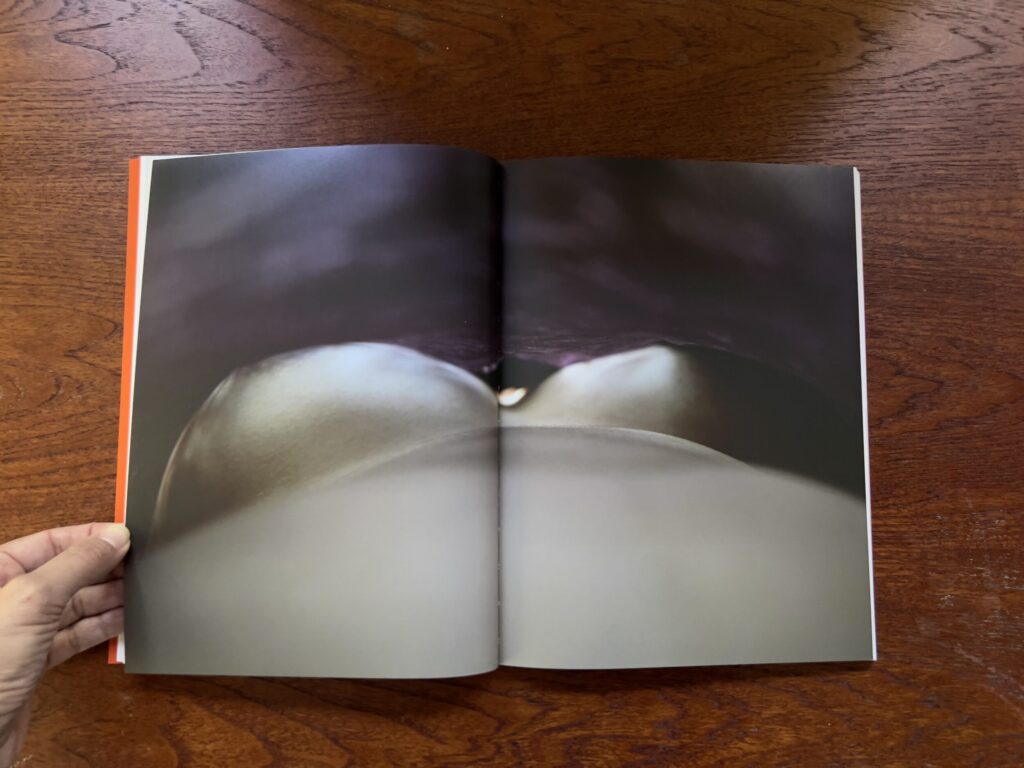
“Sunset Watchers”, the first section of images in the photobook, features black-and-white portraits of three women who are recreating a mythical folktale linked to the 1896 Japanese tsunami. The women are depicted in images together and alone atop the rocky overlook of an oceanfront. These photographs, dark in both tone and printing, are thoughtfully lit and beautifully printed. The photographer intends for these images to read as a metaphor for the apprehension experienced by individuals living with depression. Interspersed throughout the sequence of monochromatic images are color photographs that describe Peng’s physical memories of being confined to bed during illness. These photographs appear to have been made from the vantage point of laying in bed looking up at the wall or using the camera to explore one’s own body from angles inconceivable by human eyes without the camera’s unique access and intervention. Other images that are particularly poignant metaphors include a close up look at a tapestry that illustrates a masculine person climbing to the top of a ladder; the unusual view of a female abdomen and chest captured above the belly button, looking up toward bare breasts under a garment; the depiction of angels in mirror reflections; and hands tenderly holding another person’s foot.
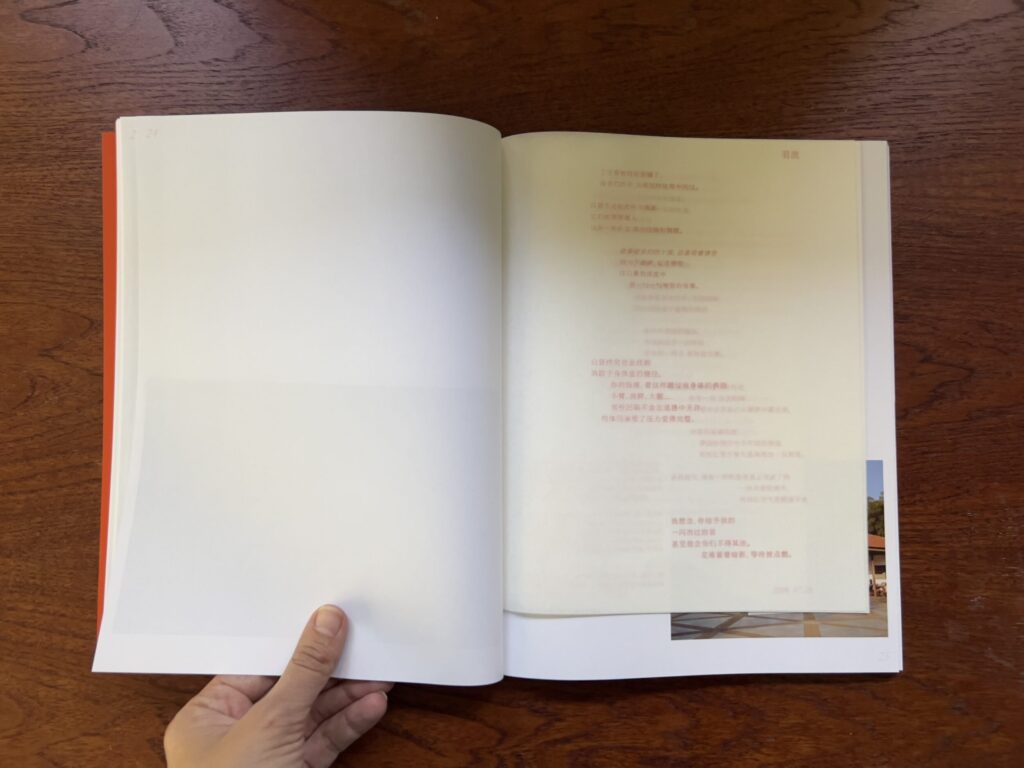
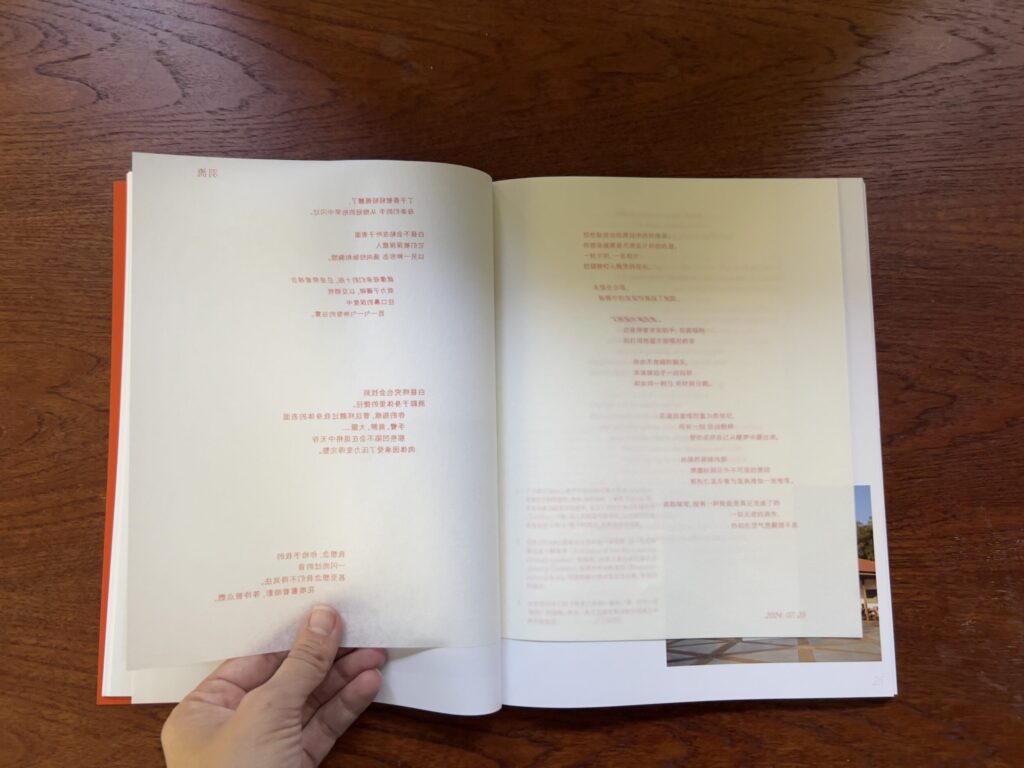
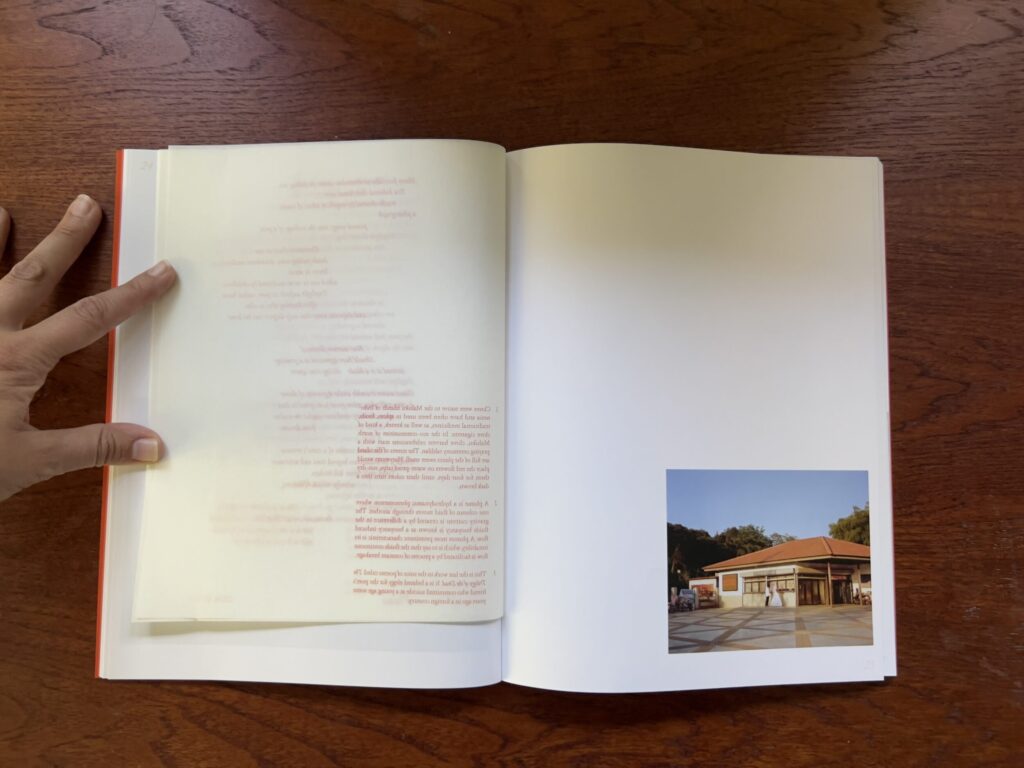
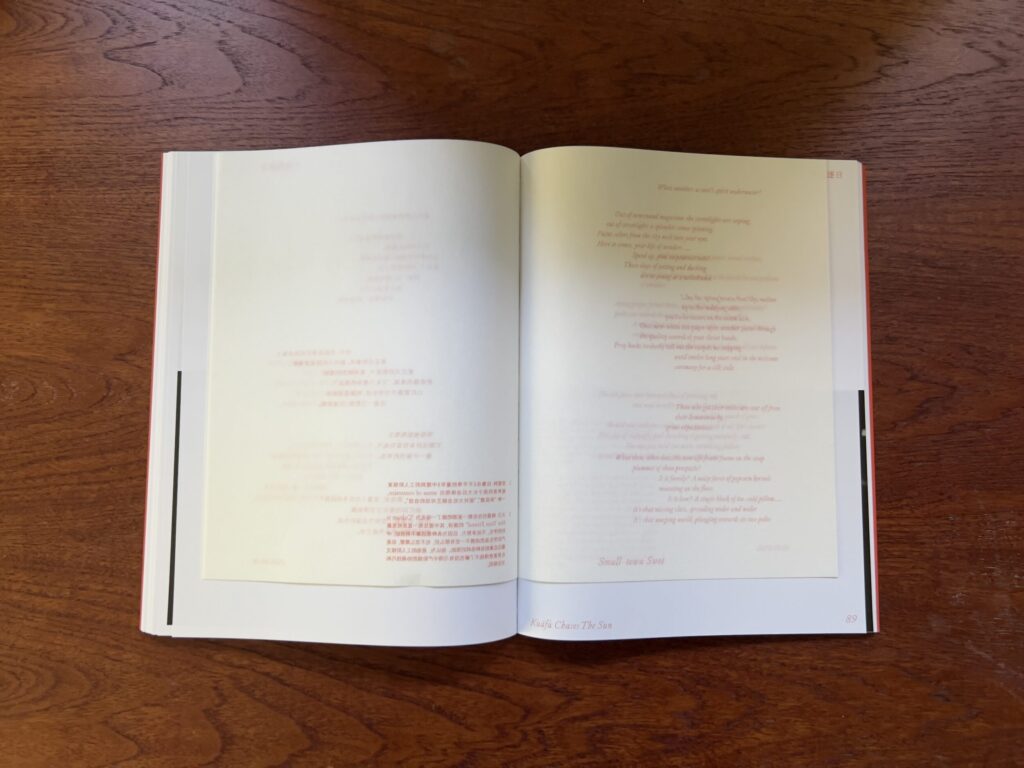
The end of “Sunset Watchers” is noted by the first section of poetry, printed on a different, lighter paper stock on a slightly smaller page footprint. This delicate paper is used in a very clever way. The designer has chosen to print the text backward on the left facing page so that when one views it on the right facing page, the red ink is not as heavily laid and not as easy to read. Occasionally the words appear to be printed beyond the curve of italic font, appearing more dramatically rounded, like the words are being distorted through a magnifying glass at an odd angle. The text layout is handled very thoughtfully, much like the images. This first section of writing is placed one-third through the book, with the second piece of writing located two-thirds into the the book’s pages. This syncopated spacing had led me to think the book was a triptych, but after closer reading of the title page, I found that wasn’t the case. The content of the writing, in both sections, is piercing and profound. It reflects on the tenderness of the loss of a friend to suicide as well as the struggle for social mobility in China. The text does what text often does in a photobook, it helps to clarify and connect the full breadth of intent of the image’s tone and meaning.
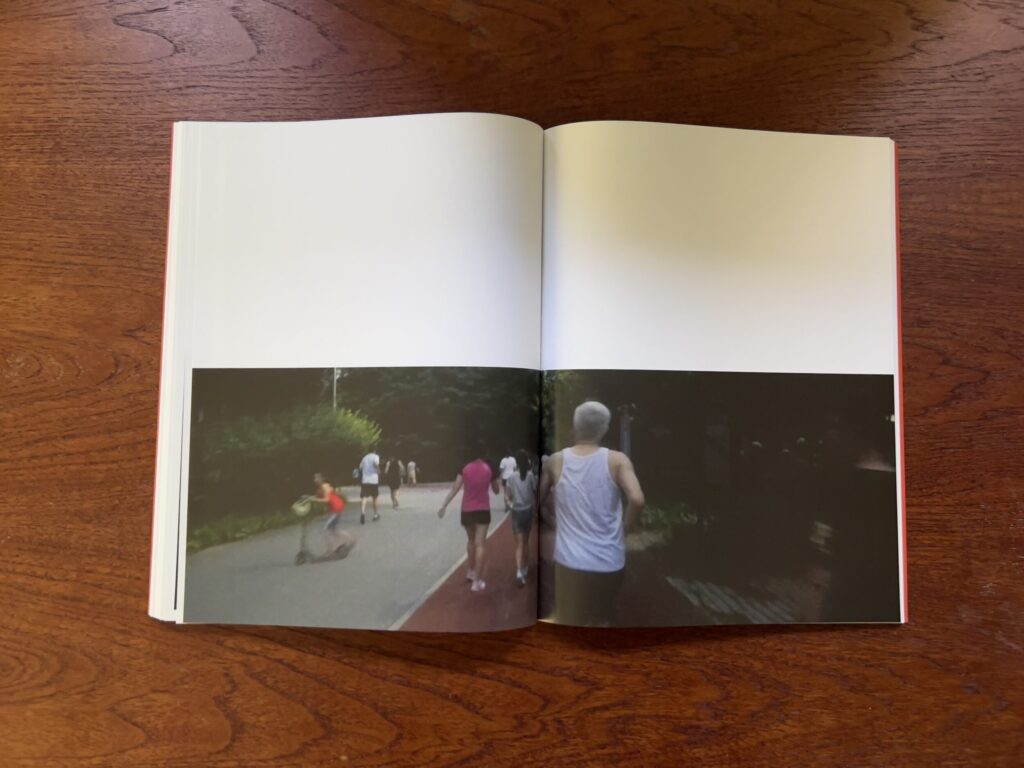
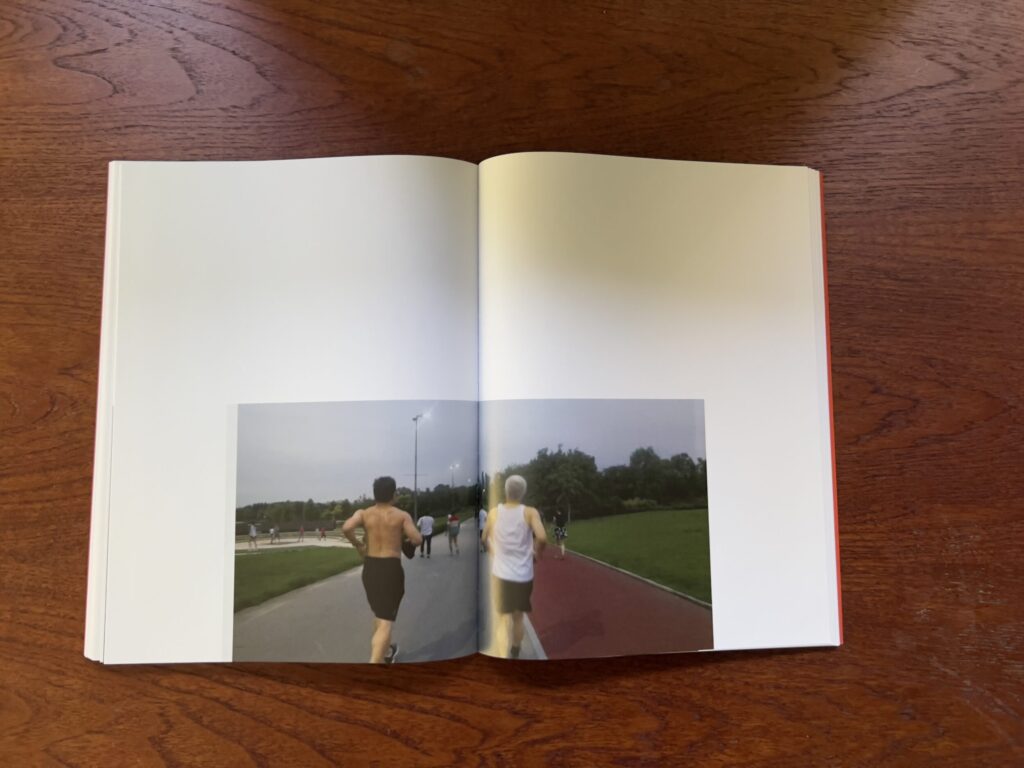
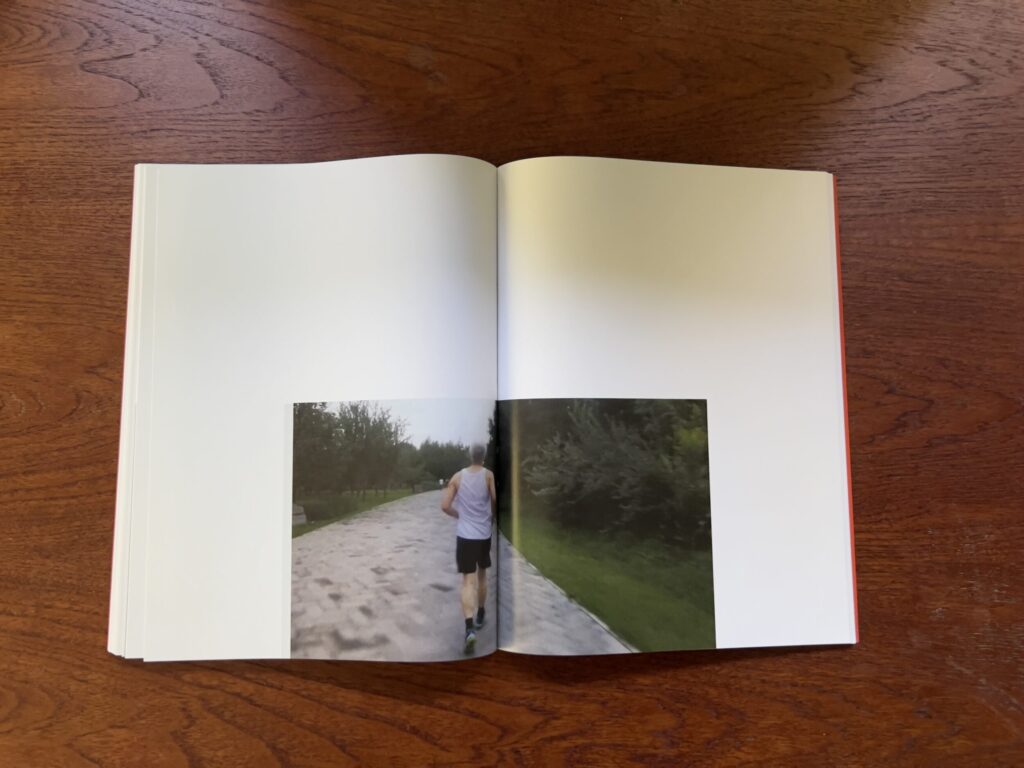
The second image sequence, “Kuāfù Chases The Sun”, presents still images excerpted from two video works by Peng that are centered on the artist’s father. Her father retired from the People’s Liberation Army a decade after Peng left home to pursue art education. In these visuals, he is depicted running away from the camera during what looks akin to a 5k race outside. The aesthetics of the images in this section read as film stills based on their orientation and aspect ratio. As the reader moves through this section, the images are gradually reduced, his body, presumably Peng’s father or a proxy, becoming smaller and smaller. Thus his body is described as being perpetually propelled forward by the mechanisms of a system, telescoping and breaking the stagnation established in the first part, only to ultimately dissipate, slowly, into nothingness.
As a chronically ill person dealing with bouts of debility, I am always curious about photobooks that explore and attempt to uncover what is not always obvious to observe on the surface. Photography is best at describing what appears on the surface of things, so using it as a tool to describe what is not initially observable, to make the invisible visible, is often an enjoyable cerebral exercise. Addressing depression in a photobook is what drew me to this title; I was curious to see how the artist would portray that condition vis-à-vis the language of the photobook. In a short piece of writing by Peng on the last pages of the photobook, the artist writes: “The book begins with waiting and concludes with a chase. The two legs that yearn to run are frozen in midair. But the feelings within the photographs – even the most despairing – will eventually grow, spread, and become powerful.”
This photobook is an intricately composed medley of image and text, thoughtfully designed and masterfully printed. Reading it requires revisiting and rethinking with each visit to its pages. It is not easy to decipher, however, it is worth the work of deciphering.
Collector’s POV: Kanthy Peng does not appear to have consistent gallery representation at this time. Collectors interested in following up should likely connect directly with the artist via his website (linked in the sidebar).