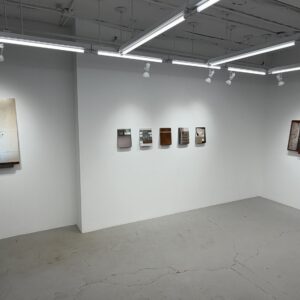
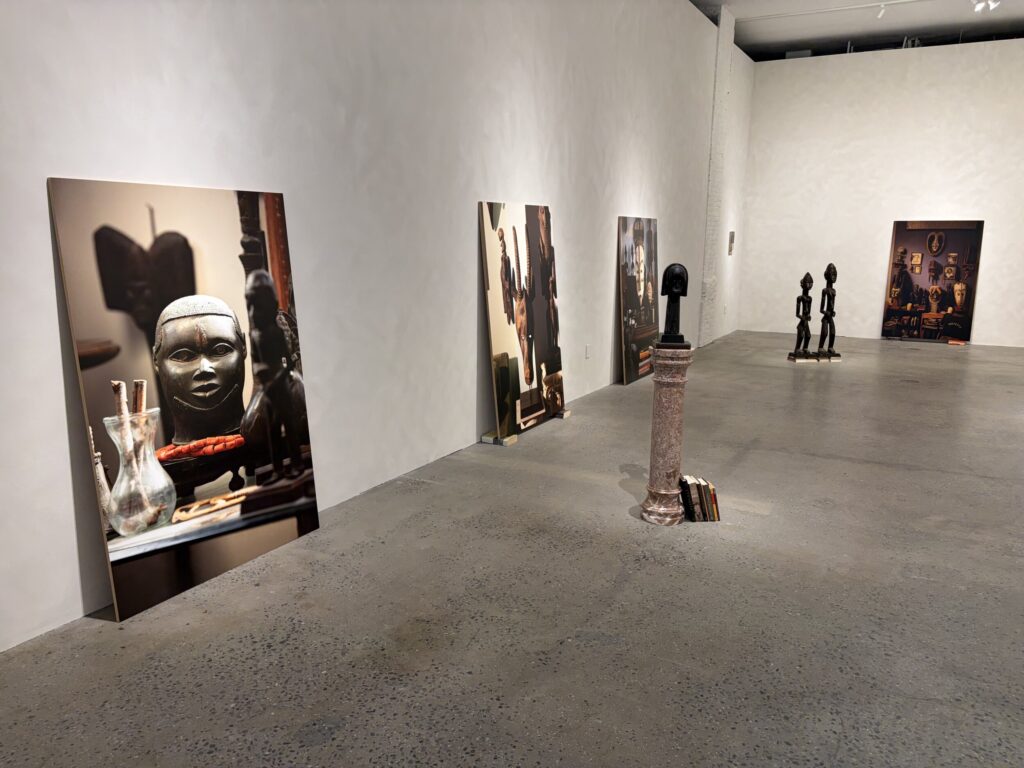
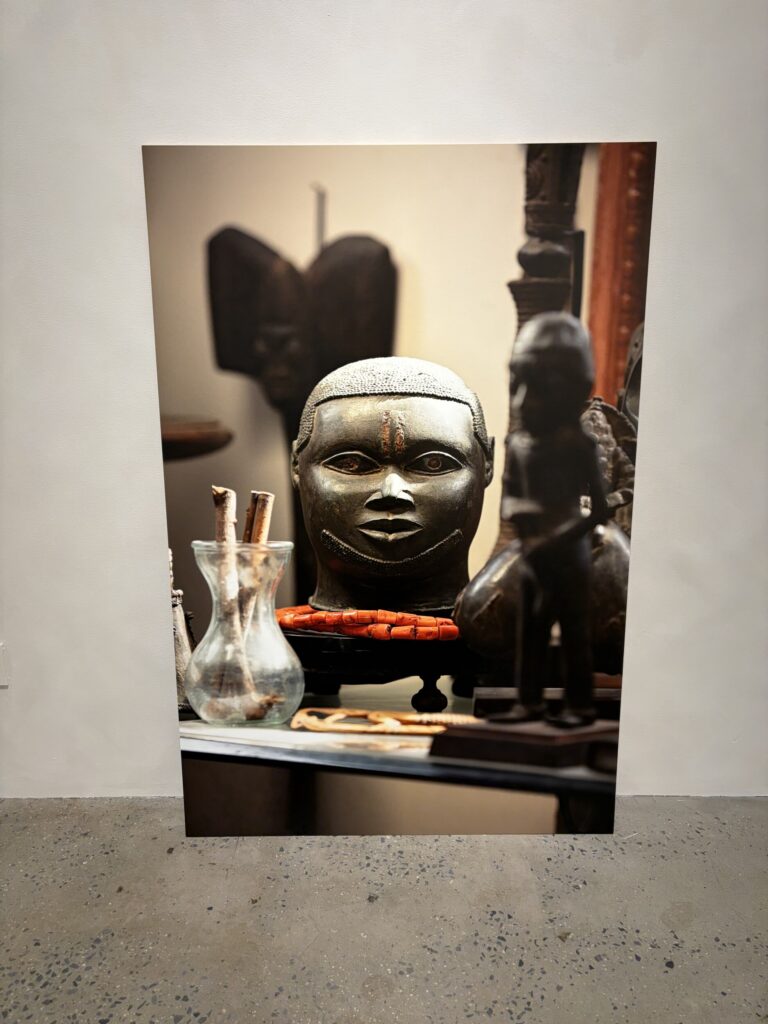
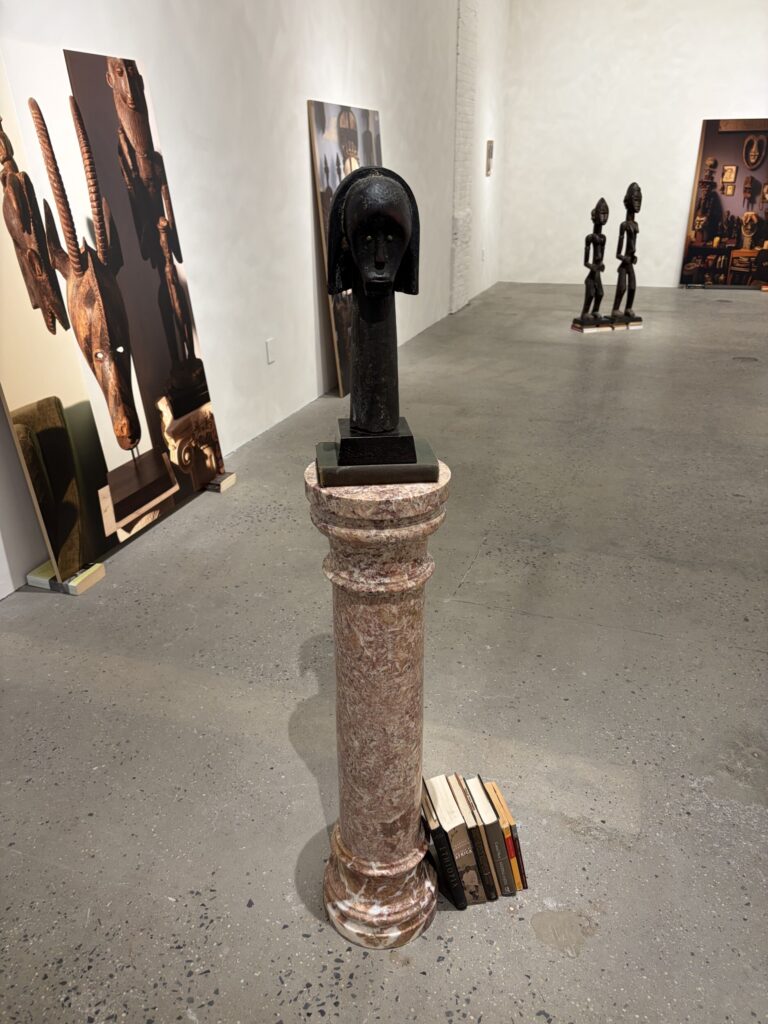
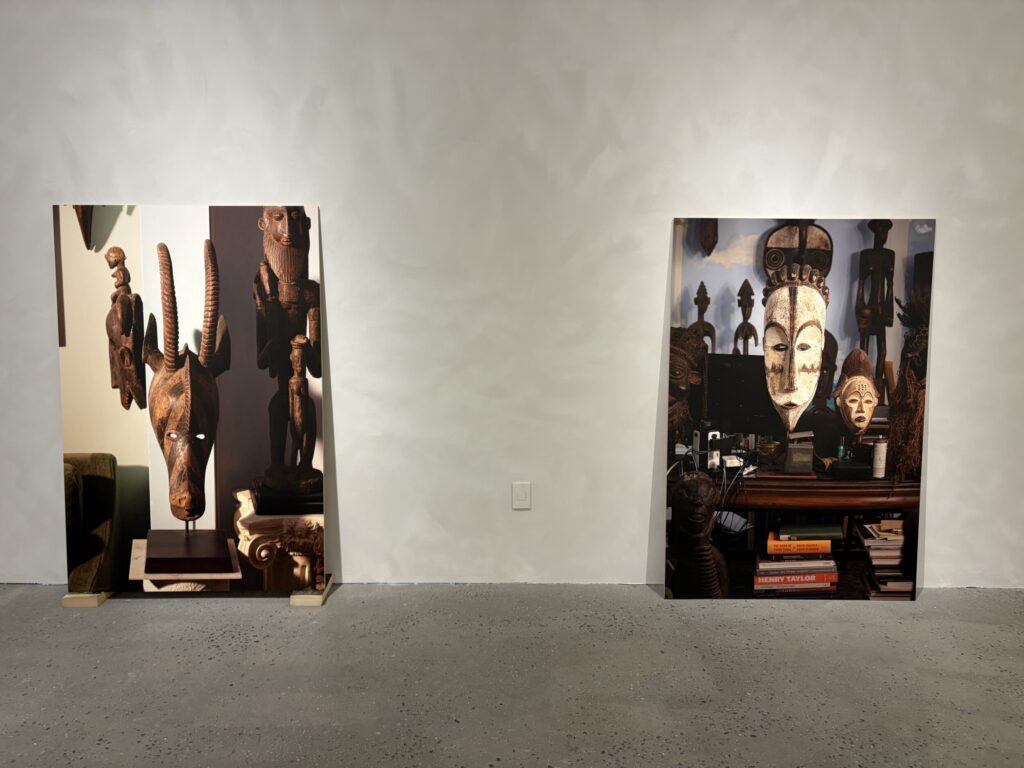
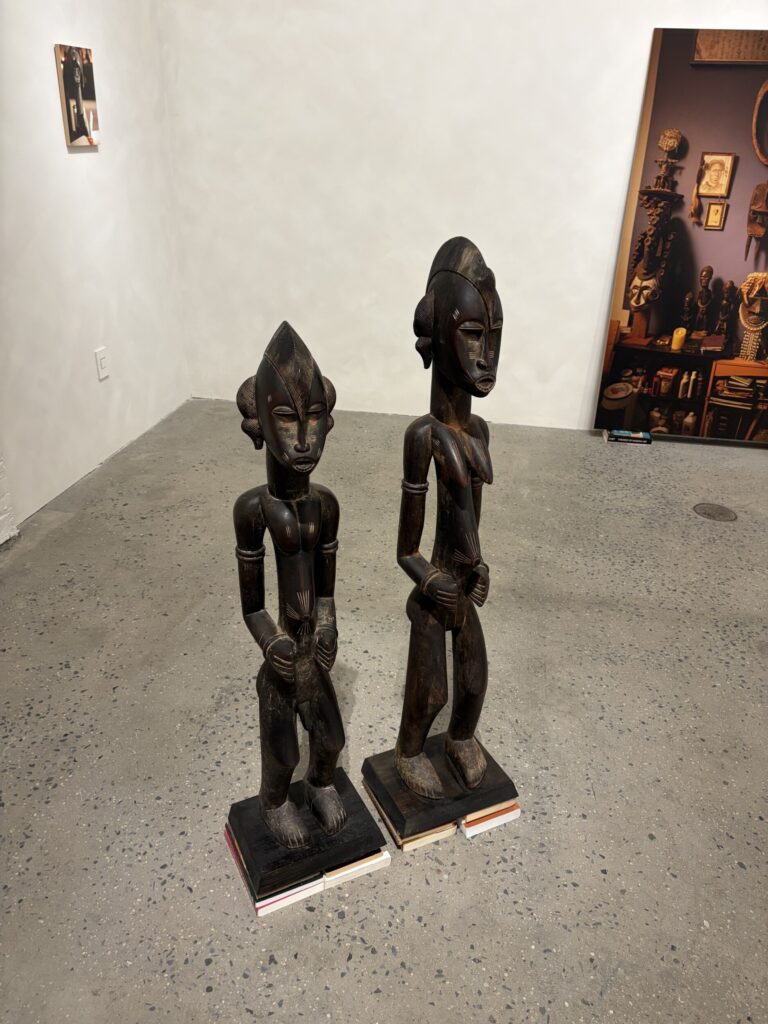
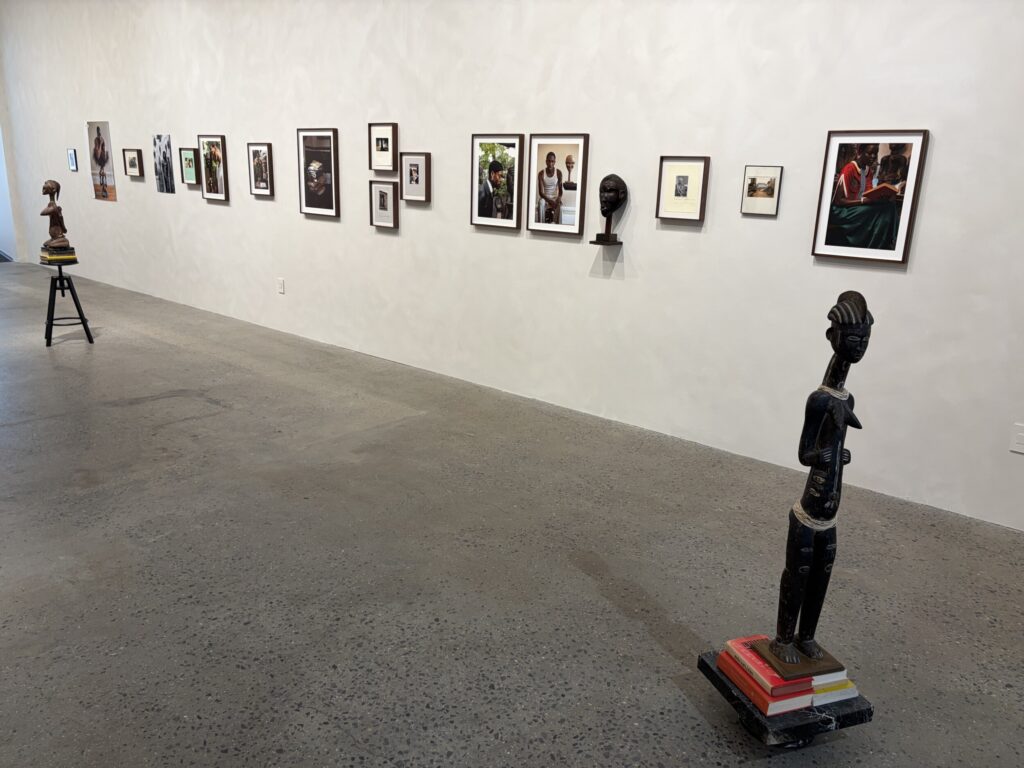
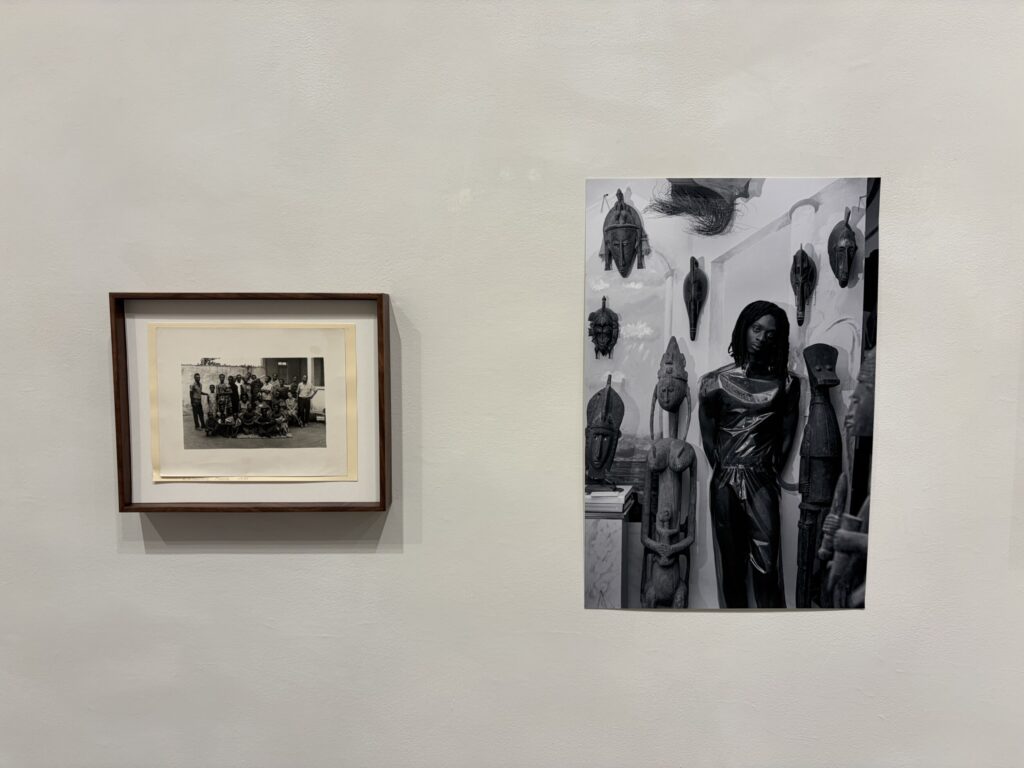
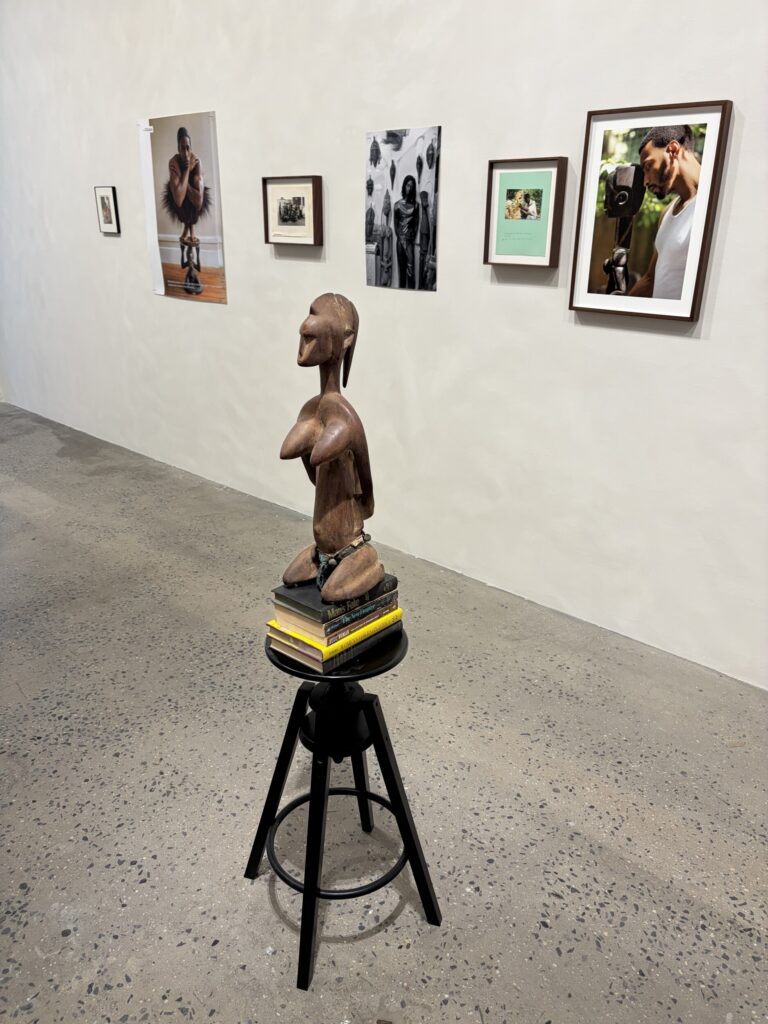
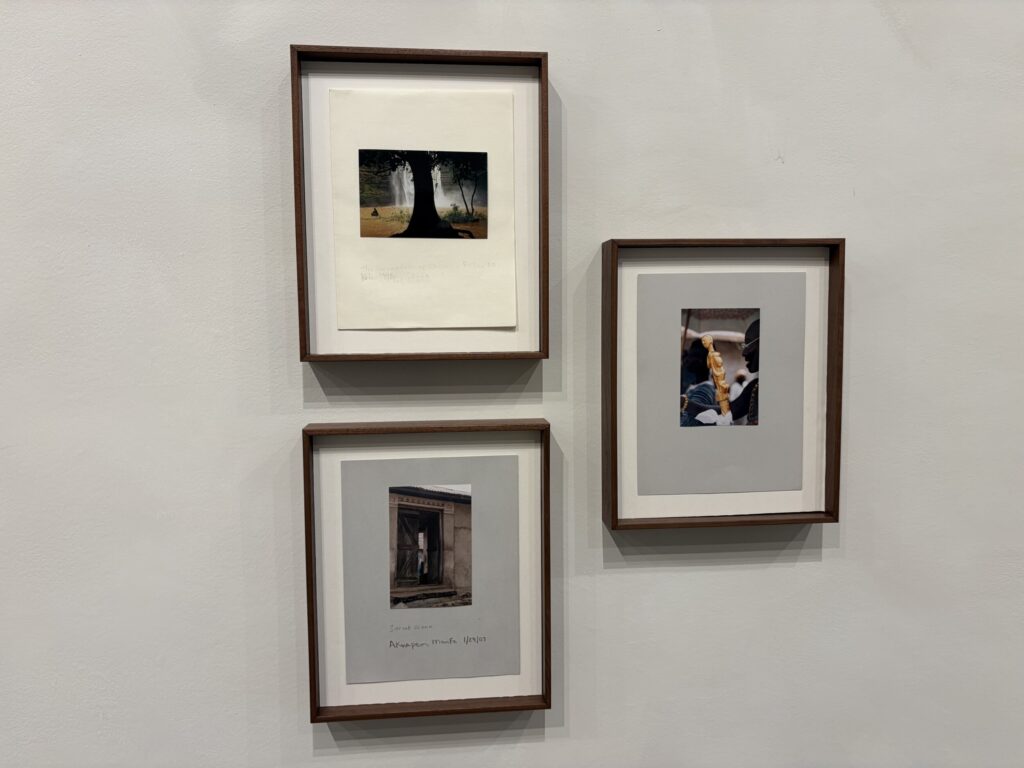
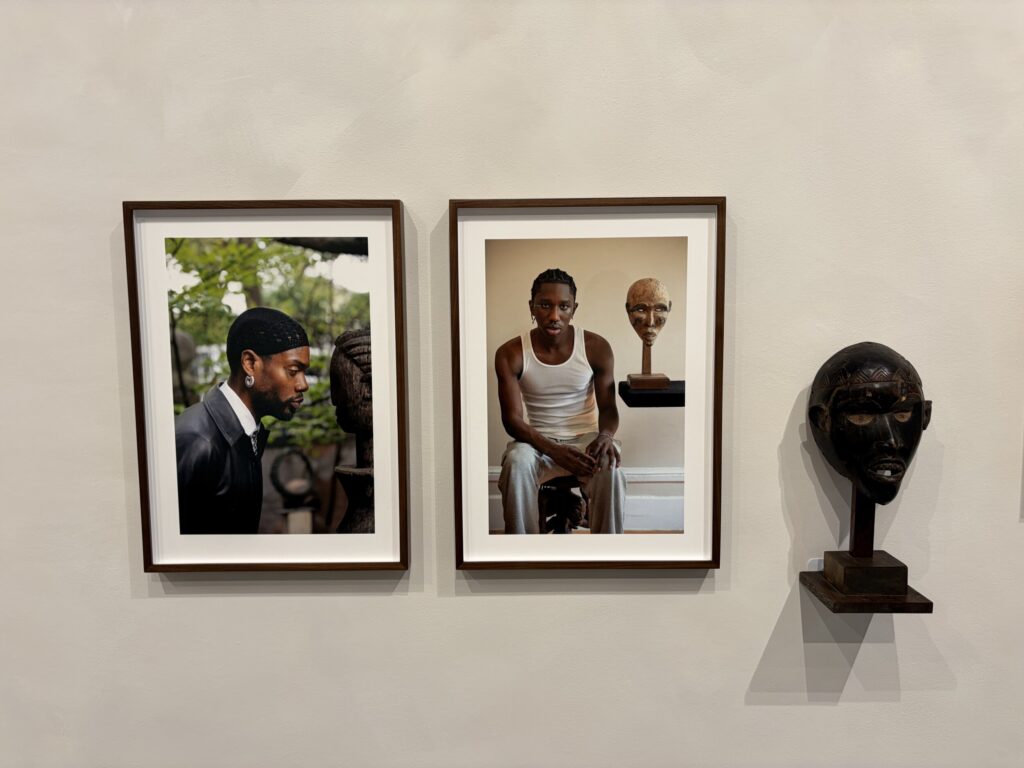
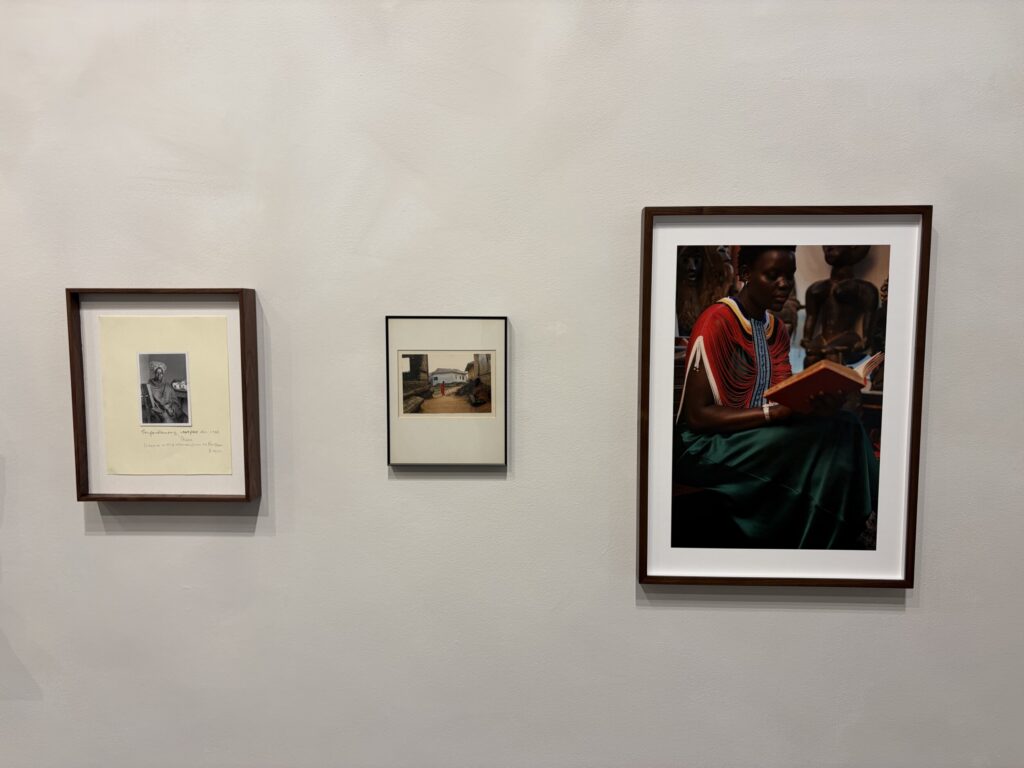
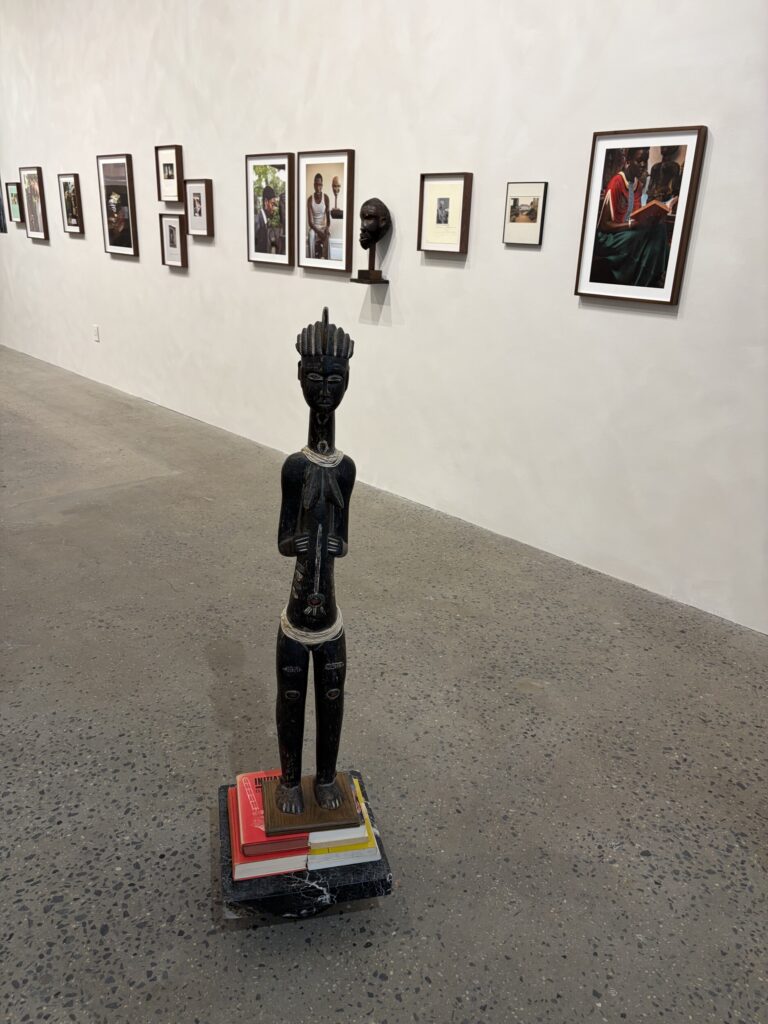
JTF (just the facts): A total of 14 photographs by Edmonds, hung against mottled/clouded white walls in the main gallery space and the entry area, intermingled with photographs and sculptures from the collection of George Nelson Preston. The sculptures are variously installed on pedestals, using books from the collection as supports; a few of the photographs mounted to board are similarly resting on books. (Installation shots below.)
The following works are included in the show:
John Edmonds
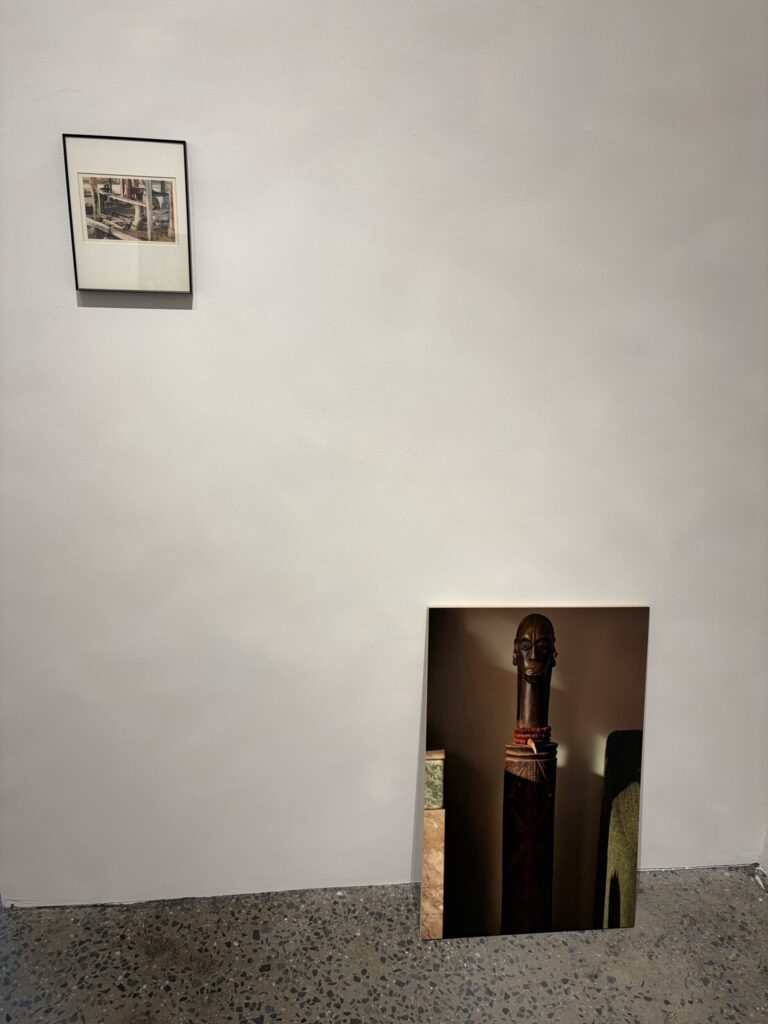
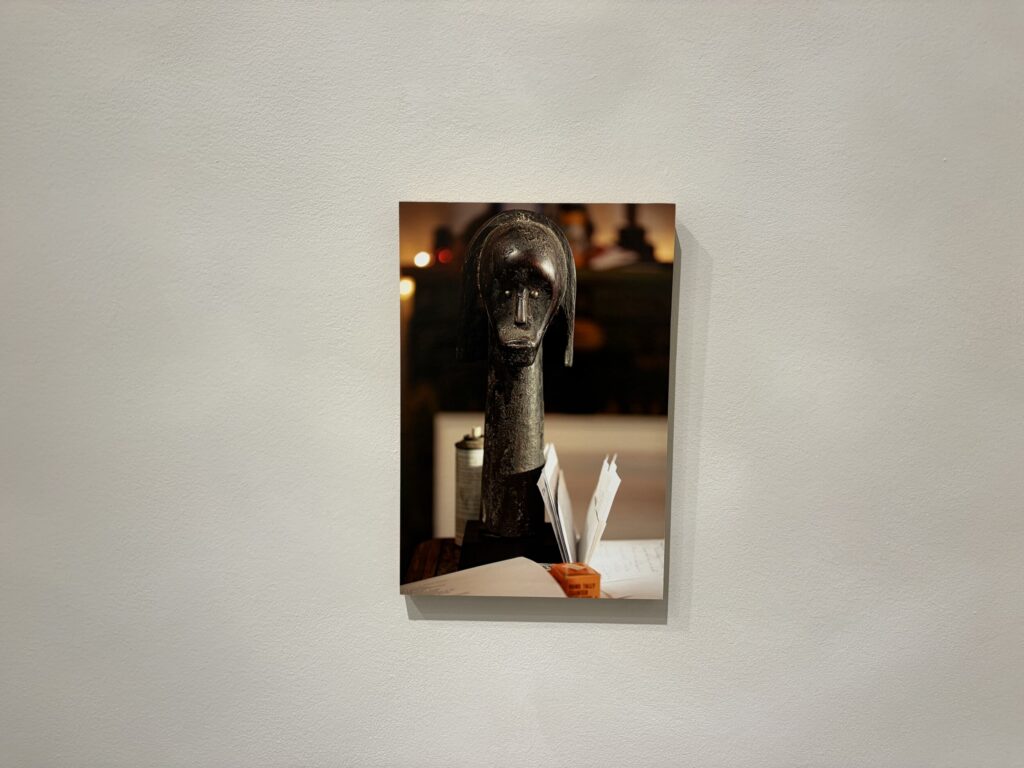
- 1 pigment print mounted to wood, 2026, sized roughly 14×10 inches, in an edition of 3+2AP (displayed unframed)
- 1 pigment print mounted to wood, 2026, sized 30×20 inches, in an edition of 3+2AP (displayed unframed)
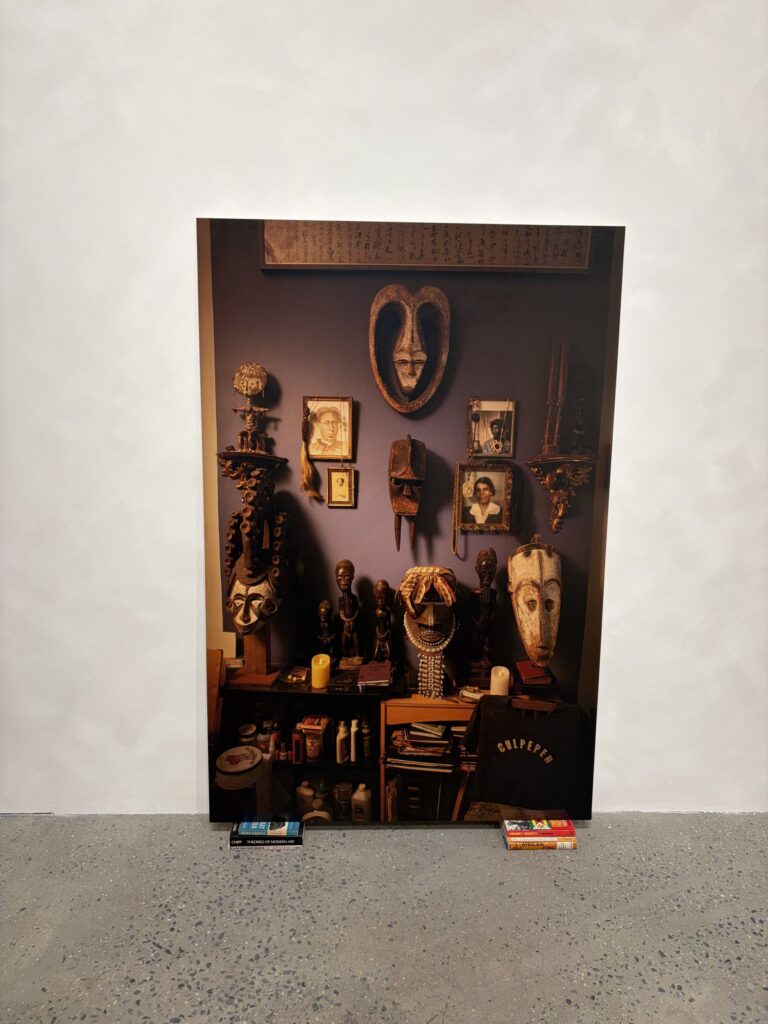
- 4 pigment prints mounted to wood, 2026, sized 72×48 inches, in editions of 3+2AP (displayed unframed)
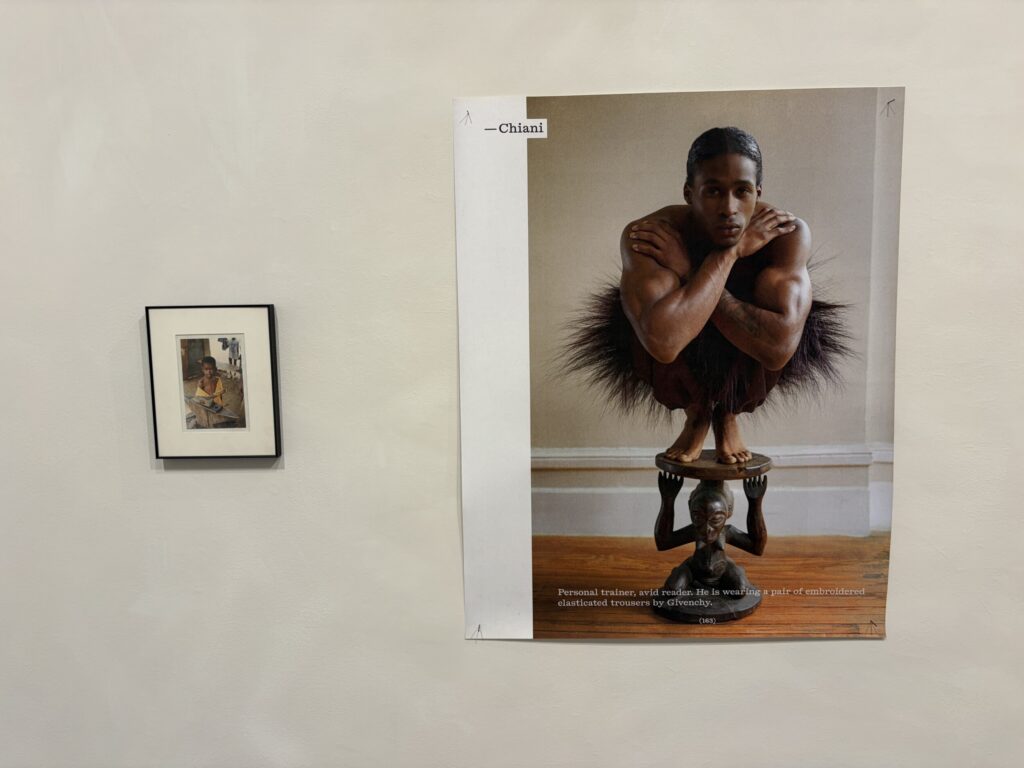
- 2 poster paper, 2024/2026, sized 24×16, 36×28 inches (displayed unframed)
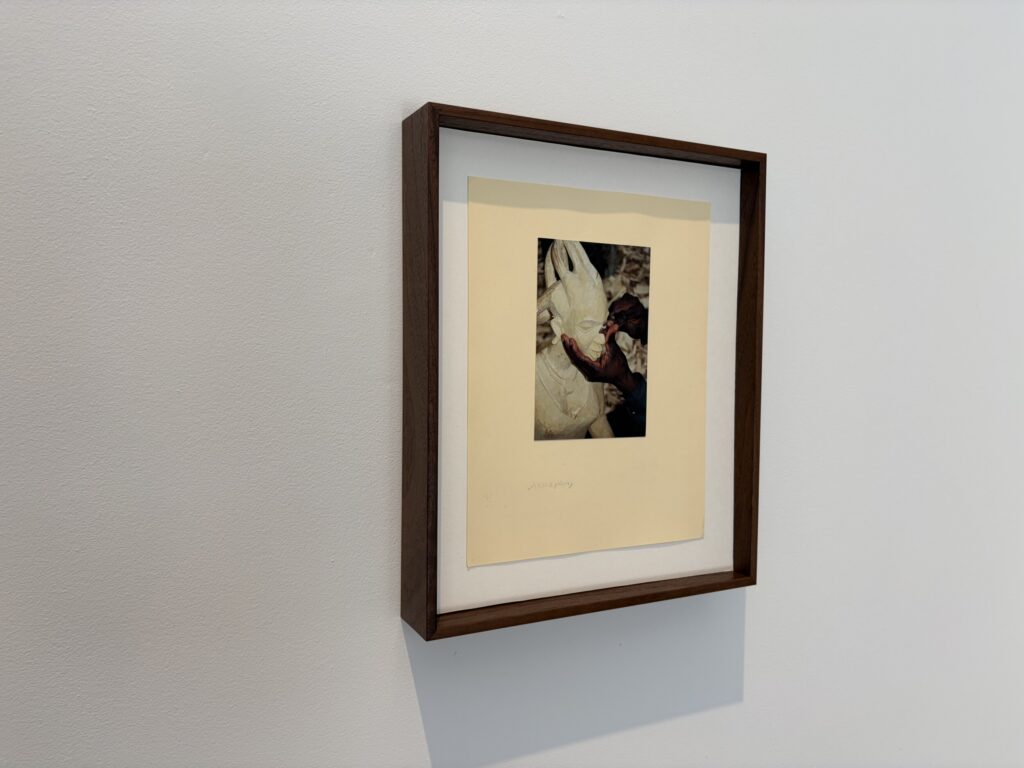
- 6 pigment prints, 2024, 2025, 2026, sized roughly 14×19, 20×13, 24×16 inches, in editions of 3+2AP (framed in brown wood and unmatted)
The Collection of George Nelson Preston
- 10 photographs, 1968, 1970, 1997, 2003, 2007, 2023, sized roughly 9×11, 10×8, 11×9 inches (framed in brown wood)
- 1 wood, black pigment, copper tacks, n.d., sized roughly 17x6x6 inches
- 1 wood, black pigment, traces of red and white pigments, n.d., sized 47x13x9 inches
- 1 wood, remnants of cloth, copper bells, n.d., sized 22x7x7 inches
- 1 wood, n.d., sized roughly 11x9x6 inches
- 1 wood, black and white pigments, traces of indigo and beads, n.d., sized roughly 42x6x6 inches
Comments/Context: It’s been roughly five years since we last checked in with the work of John Edmonds, a contemporary photographer who was at that time building noticeable artistic momentum. Back then, Edmonds had methodically strung together a solid set of photographic projects and exhibits, starting with his 2018 photobook Higher (reviewed here), followed by a 2019 gallery show (reviewed here), and then his first museum solo at the Brooklyn Museum in pandemic-era 2021 (reviewed here). From those various projects and bodies of work, a couple of things were already clear. Edmonds was quickly becoming a very talented portraitist, seeing black subjects with both sensitivity and complexity, and he was increasingly interested in exploring the ways black sitters could interact with the long heritage of African sculpture, rapidly moving from simple first poses and solitary physical interactions with masks to more nuanced engagements, exchanges, and visual conversations between bodies, identities, and arrangements of resonant African artworks.
Edmonds’s new photographs (generally made in the past year or two) find him picking up right where he left off, in both style and subject matter. Fresh ideas and inspiration have arrived in the form of a burgeoning friendship with George Nelson Preston, whose extensive collection of classical African art is housed in a historic brownstone in Washington Heights, under the name of the Museum of Art and Origins (here). Edmonds first met Preston in 2019, and over time, their connection has seemingly evolved into a mentor-like relationship (despite more than fifty years in age difference), and Edmonds’s recent photographs use Preston’s collection (and its eclectic installation in Preston’s home/museum) as a starting point for his own artistic interpretations.
One of the things we understand intuitively here at Collector Daily is that the installation of a collector’s painstakingly assembled collection can often be seen as something like a self portrait. Choices, pairings, juxtapositions, and layerings in space are hardly ever accidental, and a close look at these decisions can tell us quite a bit about how a collector thinks and what he or she values. Edmonds’s photographs of the interior of Preston’s museum tap into these ideas with warmth and respect, and many of the resulting photographs can be thought of as indirect portraits of Preston himself.
Taking a faint aesthetic cue from the conceptual work of Louise Lawler, Edmonds has carefully composed his frames to consider the spatial dynamics of how the various African artworks and sculptures have been installed in the rooms of the museum. His images take into account the edges of couches, desks, pedestals, bookshelves, and tabletops, incorporate the whimsical cloud painted walls, and include everything from computer monitors to stacks of books and piles of mail. Light and shadow play across the various setups, with sharpness and blur carefully controlled to mange the layering of near and far, foreground and background. Many of the images place a singular art object at their center, and then patiently explore the nearby surroundings which crowd in from all sides, leading to contextually rich visual studies, both formally and chronologically.
“Maternal Altar of the Chief” (from 2026) is perhaps the strongest example of this approach, in an image of an eclectic gathering of statues, figures, and masks installed with various portraits of women (presumably Preston’s ancestors), the entire setup staged above shelves crowded with books, objects, candles, and other random junk. The resulting composition feels reverently chaotic but intuitively ordered, with visual connections made across generations and time periods, linking it all into one powerful continuum.
As installed in the gallery, Edmonds’s photographs of the museum have been presented as physical objects – mounted to wood, leaning against the wall, and resting on stacks of books drawn from the museum’s collection (in a manner similar to some works by Leslie Hewitt); nearby, a handful of superlative sculptures from Preston’s collection fill the center of the space, creating yet another set of interactions, echoes, and resonances with the scenes captured in Edmonds’s photographs, almost like we visitors have stepped into a facsimile of Preston’s museum.
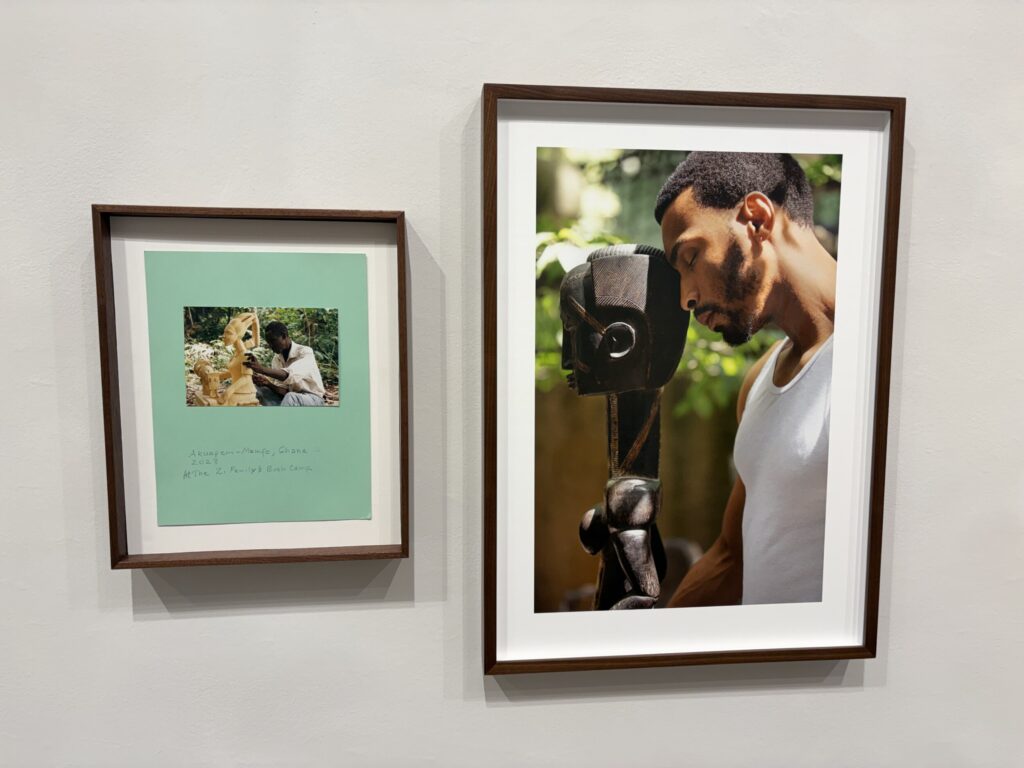
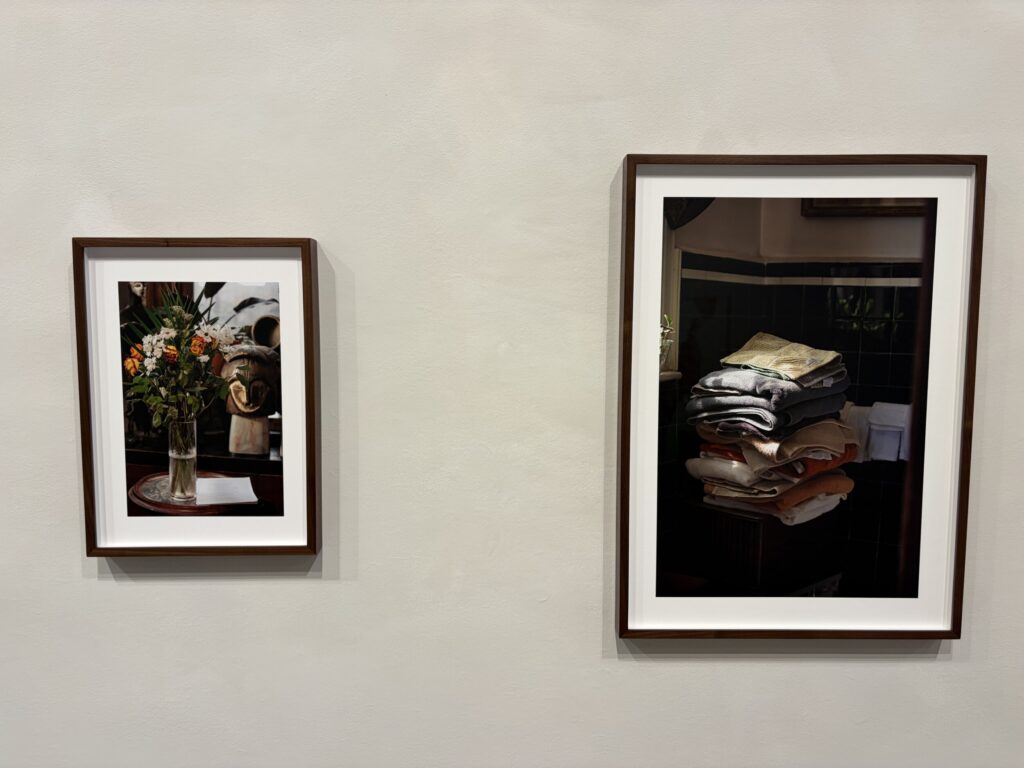
Along the right hand wall, Edmonds returns to more direct portraiture, with a series of knockout compositions connecting black sitters with sculpture from Preston’s collection. “Elijah in the garden” captures a gently calm and connected touch of heads, “serpentwithfeet in the garden” creates a searching, sizing-up, eye-to-eye link, and “Mouhamed & BaKongo Mask” finds an unexpected parallel of expression across time, each one a standout of sensitively seen and choreographed interaction. Other Edmonds photographs made in the museum notice the textural still life details of a stack of colorful towels in the dappled light and a fading bouquet of flowers and a poem arranged on a table, with the face of a mask in the background as though peering through the foliage. More fashion-ready looks (shown as unframed tearsheets) place a man in a hairy tutu squatting atop an African stool (that appears to hold him up), and another in a shimmery jumpsuit surrounded by African statues and masks, again creating a sense of an extending stretch of community. And a handful of photographs Preston made on various trips to Africa have also been included in this salon-style hanging, in one pairing creating an echo of red between a woman seen reading in an Edmonds portrait and the splash of a dress in a street scene from 1990s era Ghana.
While to my eye the three smaller male portraits with masks are the most durably memorable works in this show, and provide ample evidence of Edmonds further coming into his power zone as a mature photographic portraitist, the larger theme of collapsing past and present successfully knits the entirety of this installation together. In many cases, there is a sense of wonder, rediscovery, and coming home to a place of support and comfort to be found in Edmonds’s interpretations of Preston’s collections. The visual story is often busy, cluttered, and multi-layered, but it is this very same feeling of embracing all-over complexity that feels altogether relevant to black Americans searching to piece together identities built on multiple pasts, histories, and legacies. Edmonds accepts and understands the messiness of this process, which is why his photographs are feeling increasingly open and aware.
Collector’s POV: The photographic works by John Edmonds in this show are priced between $6000 and $25000, based on size. The works from the collection of George Nelson Preston are NFS. Edmonds’s work has little secondary market history at this point, so gallery retail likely remains the best option for those collectors interested in following up.