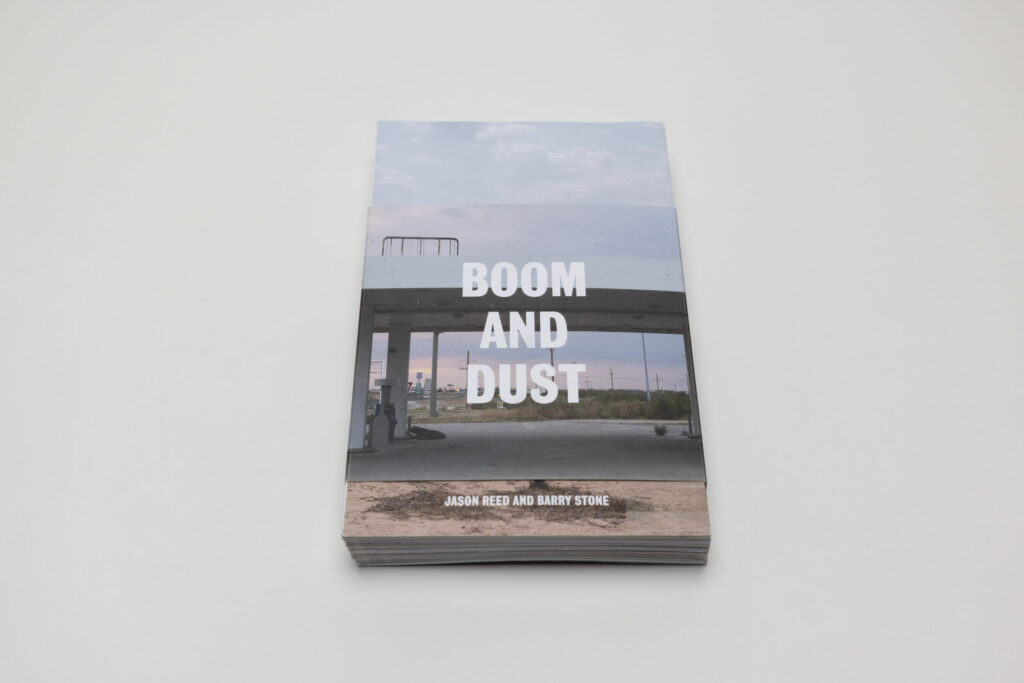
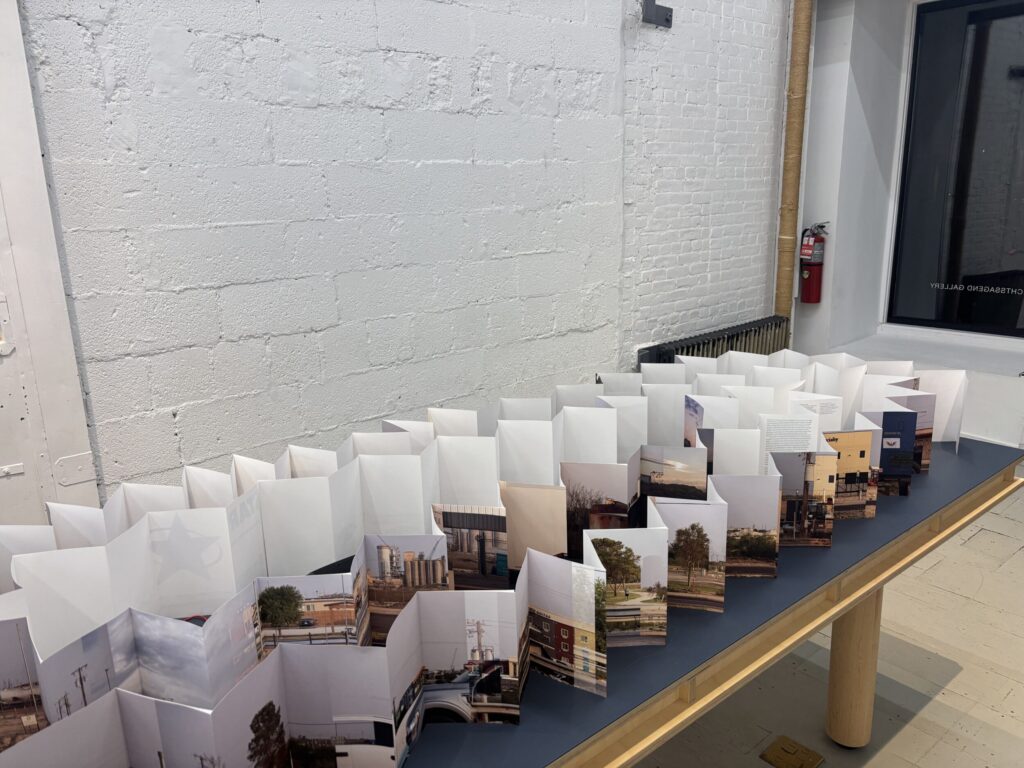
JTF (just the facts): Self-published in 2025 (here). Softcover, 5.5 x 8.5 inches, 128-panel accordion-fold book (58 feet in length when fully unfurled) with magnetic belly band. Includes essays by Marcia Bjornerud and Rebecca Bengal, and a soundscape by Porch Swing Orchestra. In an edition of 175 copies. (Cover and spread shots below.)
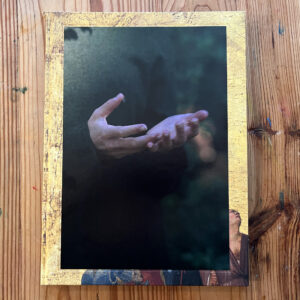
Boom and Dust is also available in a special edition (link). This version includes a signed book with inkjet print on Red River 60# Polar Matte (4.75 x 7 inches), a cassette tape, and a full color j-card printed with 9 extra panels. In an edition of 14 copies.
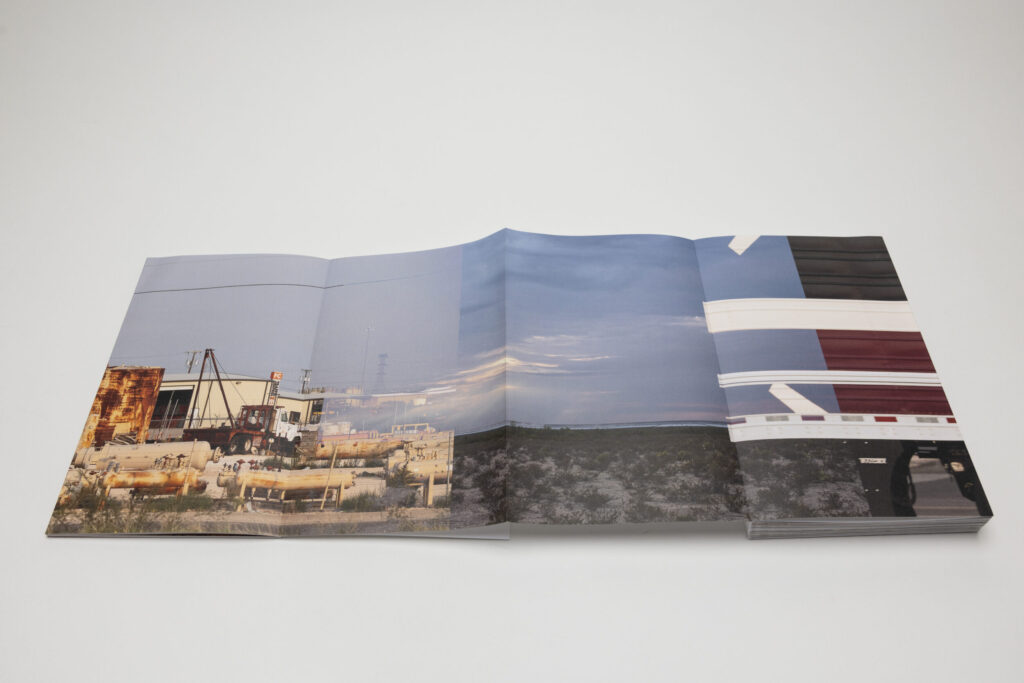
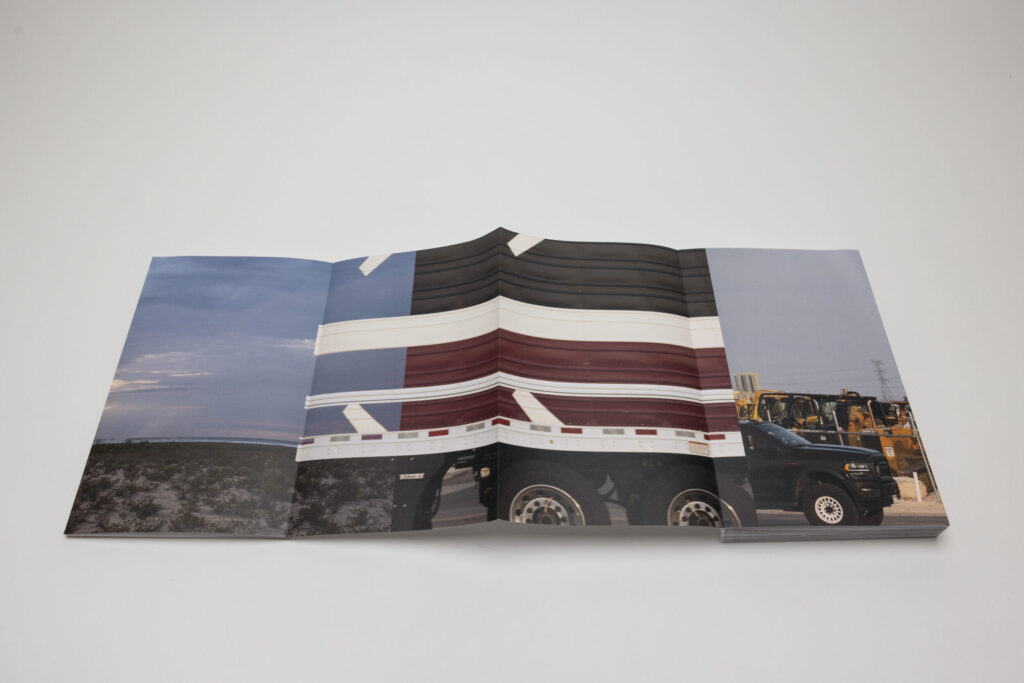
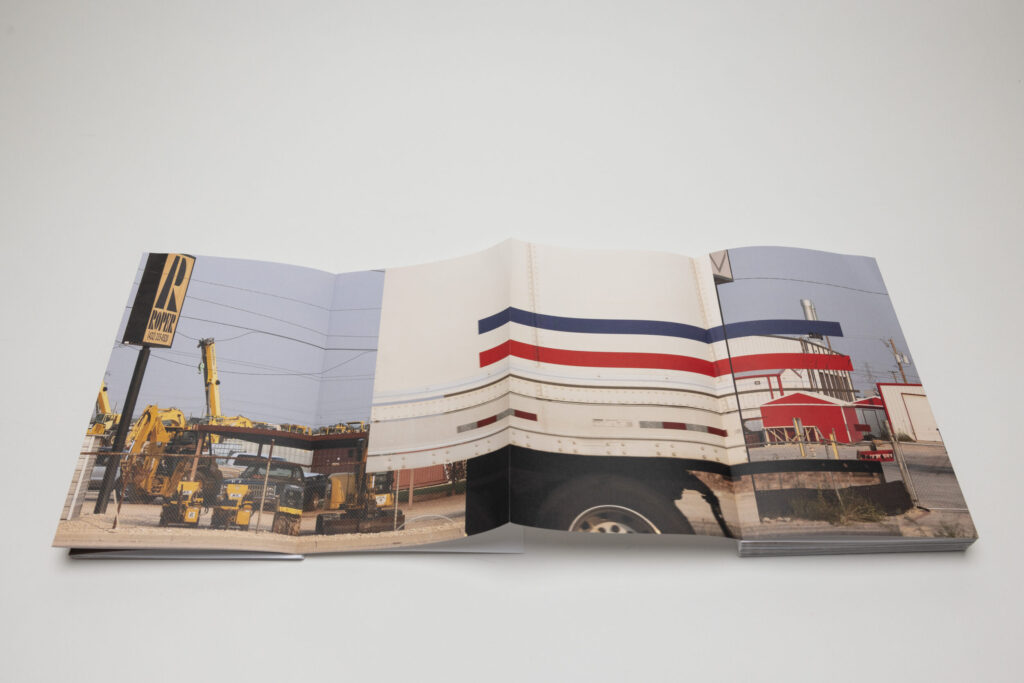
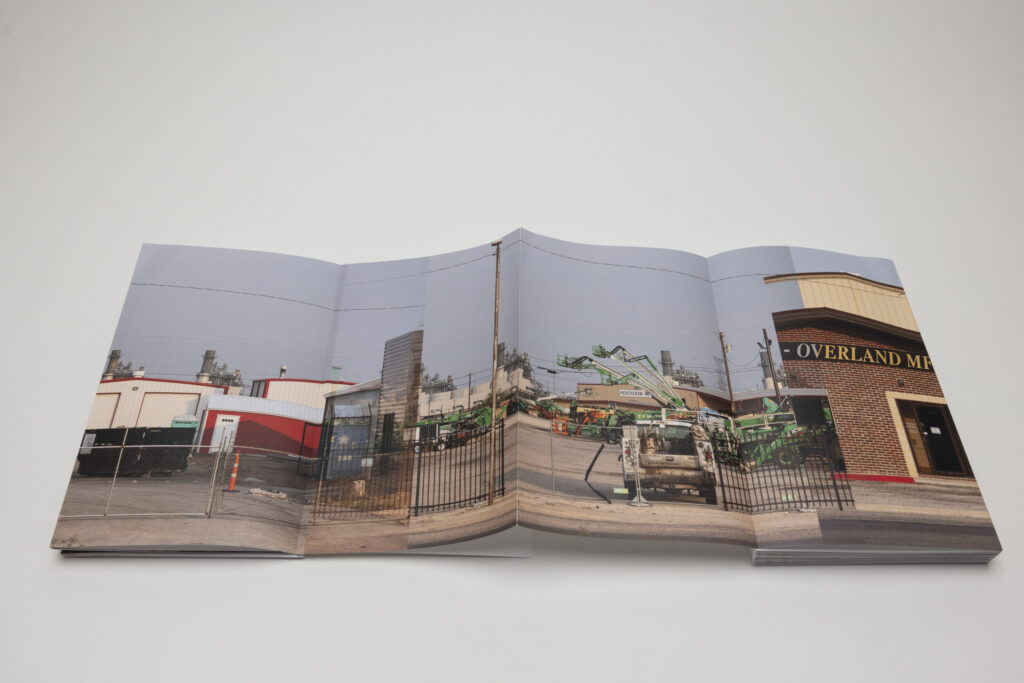
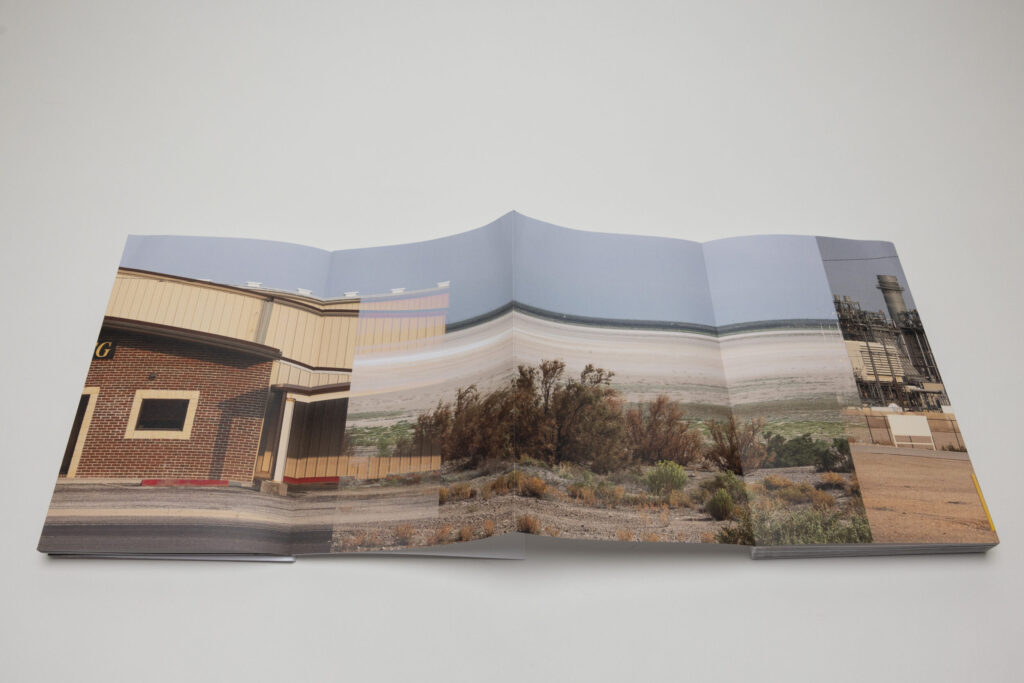
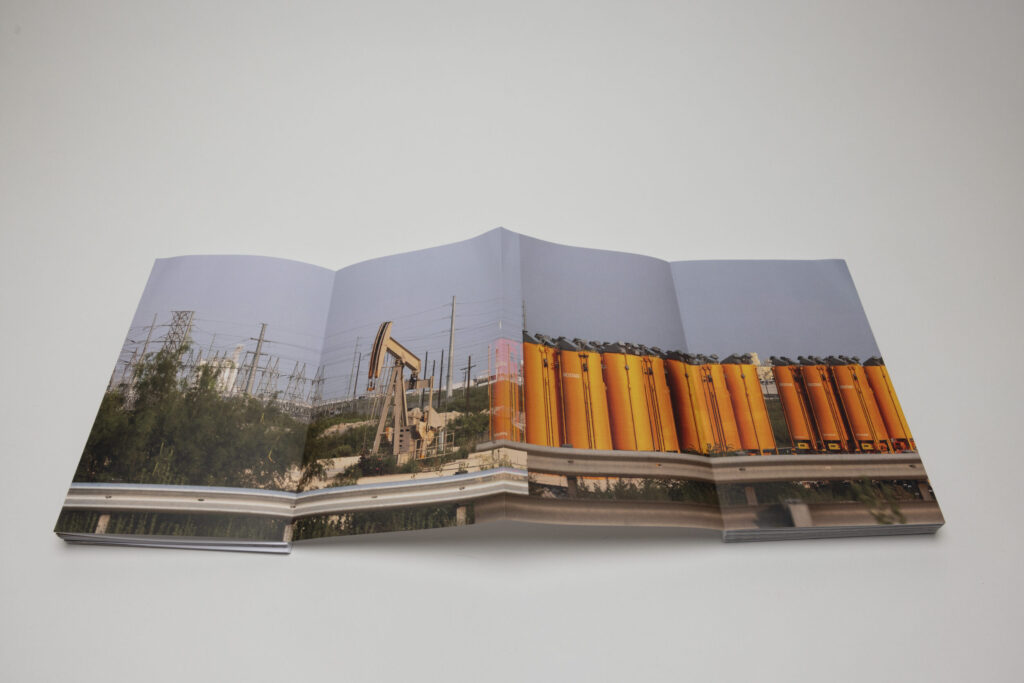
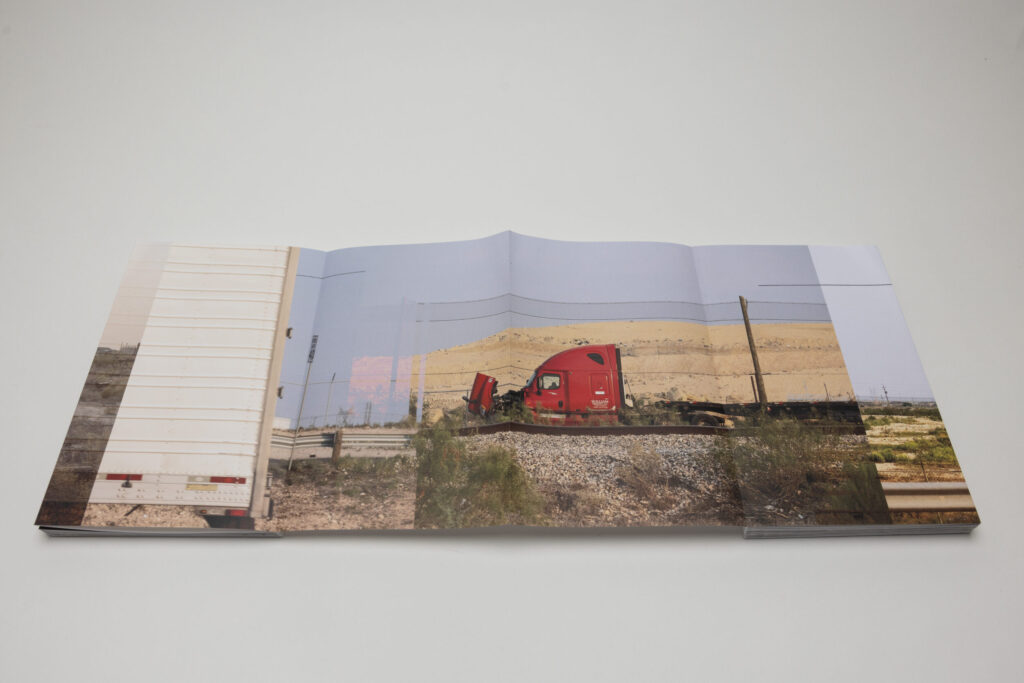
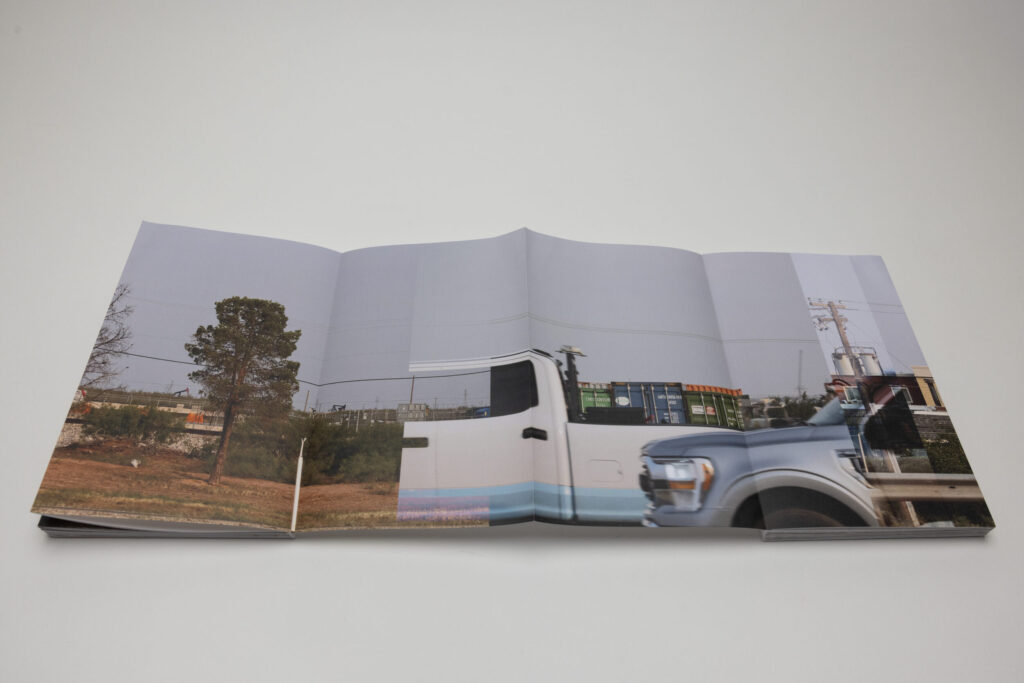
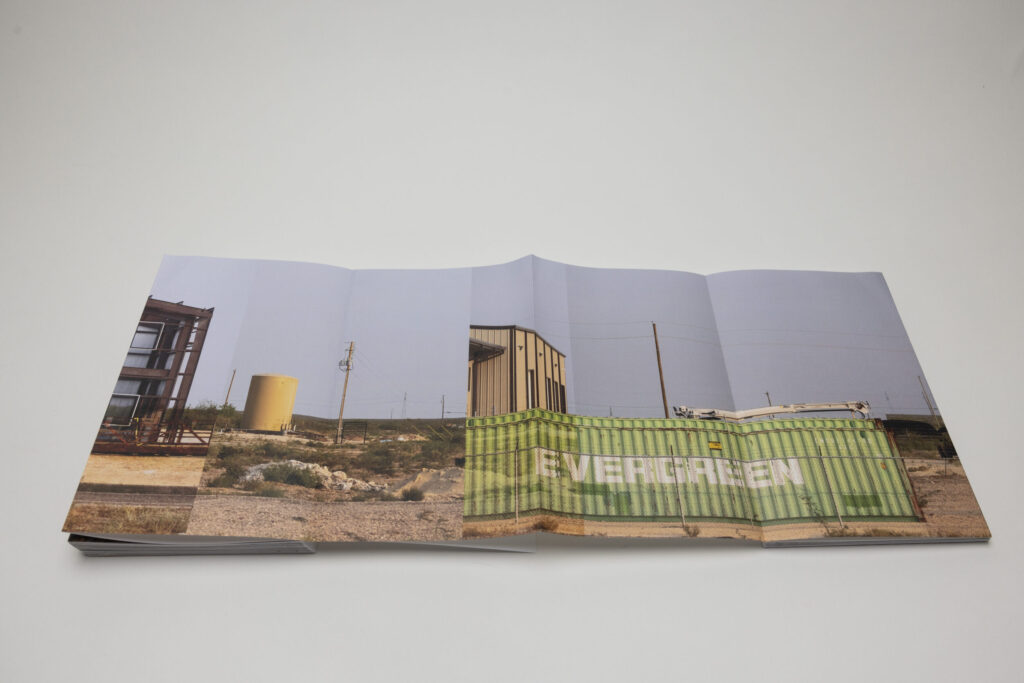
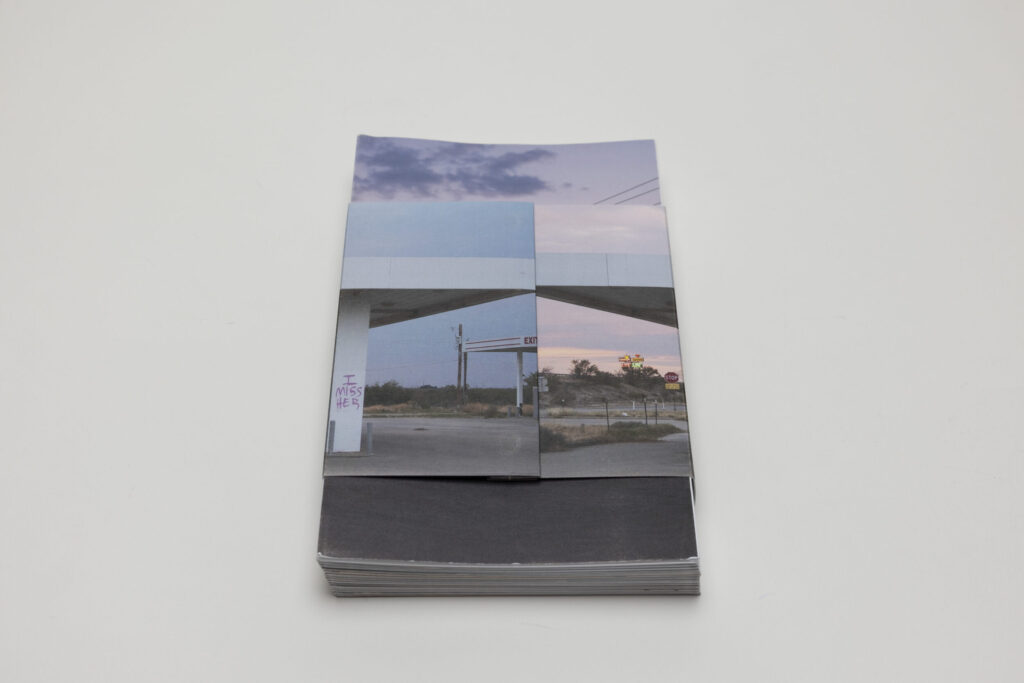
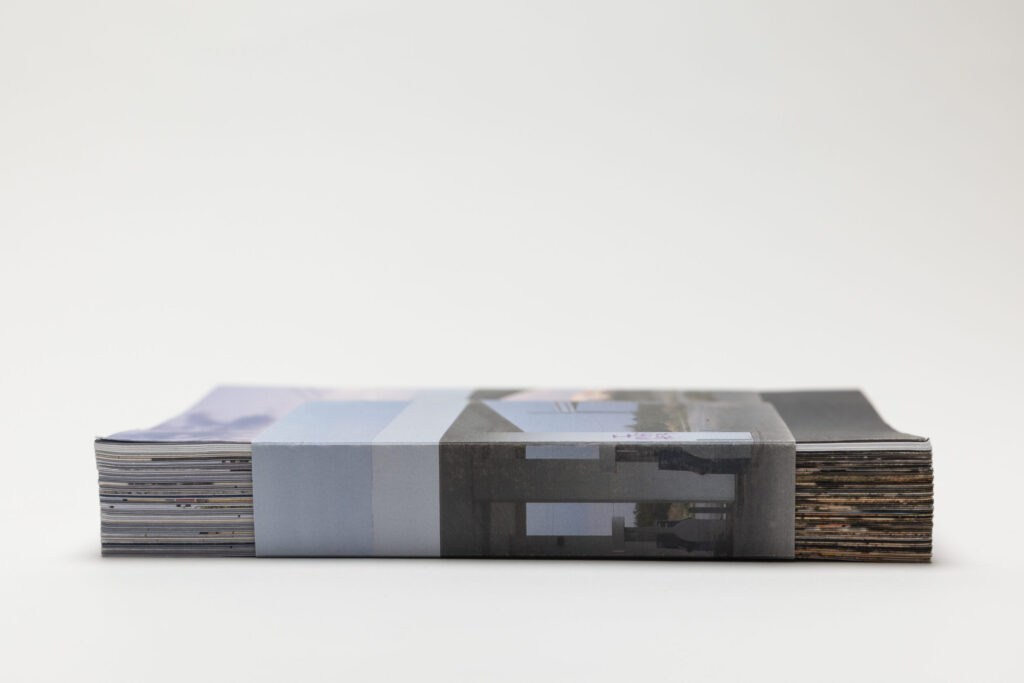
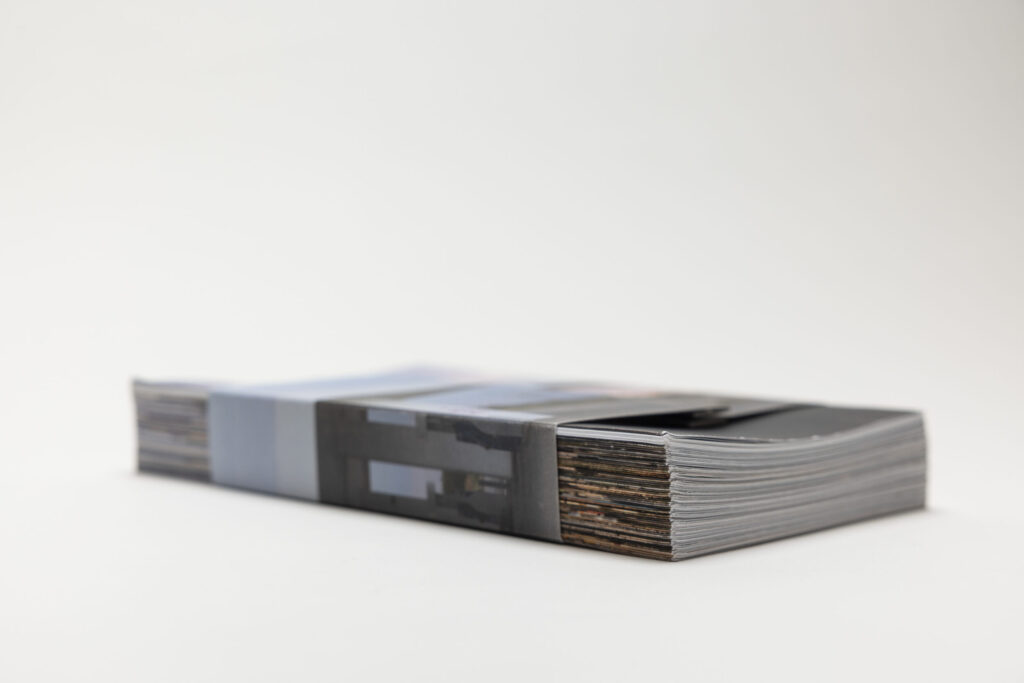
Comments/Context: The Austin-based artist and educator Barry Stone often plays with the limits of the photobook format, finding exciting and unusual ways to showcase his work. His first book, In A Nimble Sea (reviewed here), used digital glitching, raw code symbols, and layering to construct its visual narrative. Another project, Drift (reviewed here), was presented as an innovative mail art photobook, intermingling family, landscape, and chance.
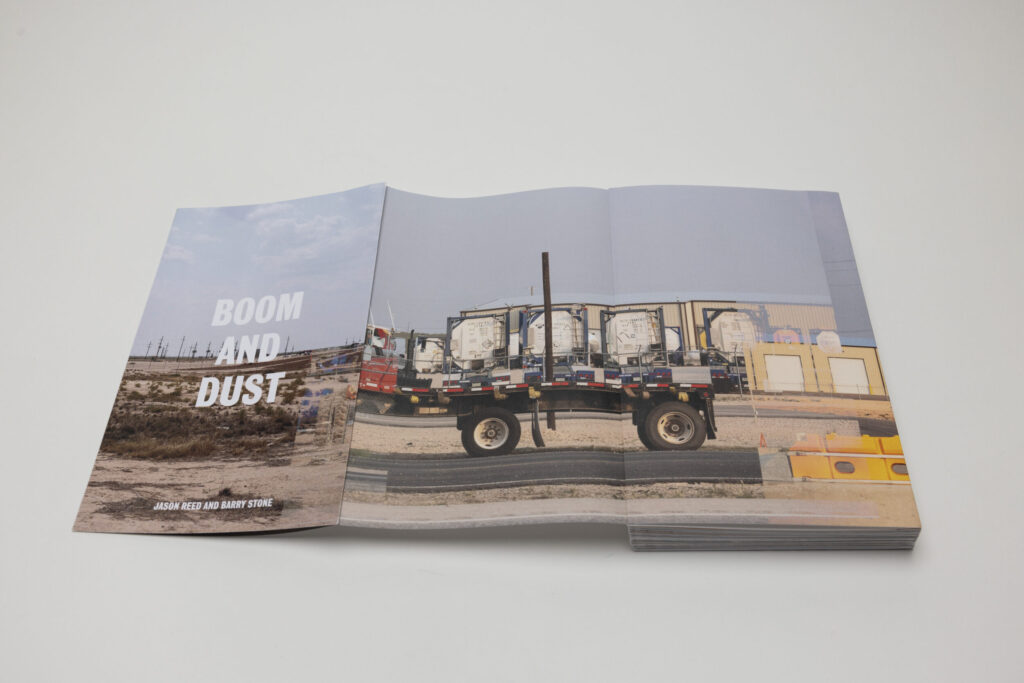
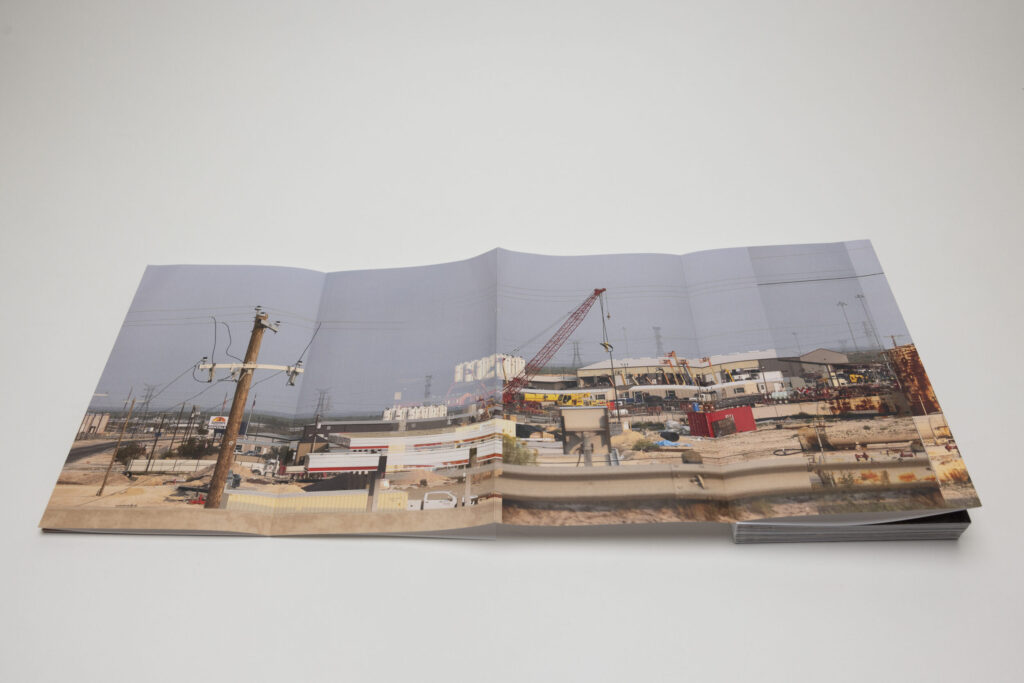
His new photobook project has been produced in collaboration with another Austin-based artist and educator, Jason Reed. Titled Boom and Dust, it is an accordion-folded book that visually documents a forty mile stretch of highway between Midland and Odessa, Texas, a corridor that serves as the spine of the Permian Basin’s oil economy. This is not a romanticized view of the American West; it is a petroplex, a terrain dominated by pumpjacks, mancamps, toxic reserve ponds, and the machinery of relentless resource extraction. Inspired by Ed Ruscha’s panoramic style, the photographers shot hundreds of images from the back of a pickup truck and compiled them in sequence to evoke an unending visual scroll. While this approach recalls the artistic past, their vision is distinctly contemporary, steeped in ecological urgency and cultural critique. Boom and Dust feels less like a book and more like an experience, a sprawling meditation on industry, landscape, and the uneasy beauty of extraction.
As a photobook object, Boom and Dust is quite striking and clever. The book unfolds as a leporello or concertina, where the pages are connected and folded back and forth, stretching to an astonishing fifty-eight feet when fully extended. This format transforms the act of viewing into a spatial performance, echoing the endlessness of the highway itself. Closed, the book is modest, but its expansion mirrors the scale of the industrial operations it documents. Typography choices reinforce the book’s austere modernism, while a black magnetic belly-band secures the folded panels like a minimalist sculpture. These design decisions elevate Boom and Dust beyond documentation into the realm of an art object, a well crafted artifact that demands space and attention.
A soundtrack by Porch Swing Orchestra (accessible via QR code and available in a limited cassette edition) adds another dimension. Composed of field recordings and lap steel guitar riffs, the audio component evokes the sonic textures of the Permian Basin, like truck engines, wind gusts, and machinery hum, layered with plaintive melodies that suggest both nostalgia and disquiet. This multi-sensory approach positions Boom and Dust at the intersection of photobook and installation, expanding the possibilities of the medium.
The collaboration between Reed and Stone is central to the book’s character. Reed brings a documentary sensibility honed through years of photographing the Great Plains, while Stone introduces a conceptual edge, informed by his experiments with digital manipulation and “data bending”. Their joint forces yield a work that oscillates between empirical observation and philosophical inquiry. The images are not manipulated in overt ways, but Stone’s influence is palpable in the sequencing and tonal shifts, which invite viewers to question not only what they see but how they see it.
The photographs are deceptively simple. Shot from the back of a pickup truck, they form a continuous sequence of roadside scenes, seen from roughly the same vantage point: pumpjacks bowing in mechanical rhythm, dirt roads slicing through scrubland, tanker trucks rumbling past, and ponds shimmering with chemical residue. At first glance, the repetition might seem monotonous, but this seriality is deliberate. It mimics the ceaseless cycle of extraction, and the industrial pulse that reshapes land and life.
Boom and Dust is a layered and complex project. It interrogates the commodification of land, the environmental toll of energy production, and the cultural narratives that sustain extractive capitalism. Underneath, there is a tension between homage and critique: the book nods to mid-century Americana through its panoramic sweep, yet its tone is far from celebratory. Instead, it conveys a sense of isolation and unease, a recognition that beauty and devastation often coexist. Dust storms blur horizons, polluted ponds glint like toxic jewels, and machinery becomes a kind of industrial fauna – ubiquitous, invasive, and strangely mesmerizing.
The absence of human figures is notable. Occasionally, a mancamp appears (a cluster of temporary housing for oil workers) but people remain spectral presences, implied rather than seen. This omission underscores a paradox: landscapes that are profoundly altered by human labor yet eerily devoid of human visibility. The result is a portrait of an economy that operates at a scale beyond individual comprehension, a system whose rhythms are mechanical, not personal.
Ultimately, Boom and Dust is more than a record of place; it is a statement about the landscapes we inhabit and exploit, the systems we sustain, and the art we create in response. It compels us to reckon with the costs of progress, to confront the beauty and brutality of extraction, and to consider what remains when the dust settles. In its ambition, craftsmanship, and conceptual force, Boom and Dust stands as one of the most compelling photobooks published in the past year. It is a work that unfolds not only across fifty-eight feet of paper but across the contested terrain of culture, ecology, and imagination.
Collector’s POV: Jason Reed does not appear to have consistent gallery representation at this time. As a result, interested collectors should likely follow up directly with the artist via his website (linked in the sidebar.) Barry Stone is represented by Klaus von Nichtssagend Gallery in New York (here). His work has not yet found its way to the secondary markets, so gallery retail remains the best option for those collectors interested in following up.