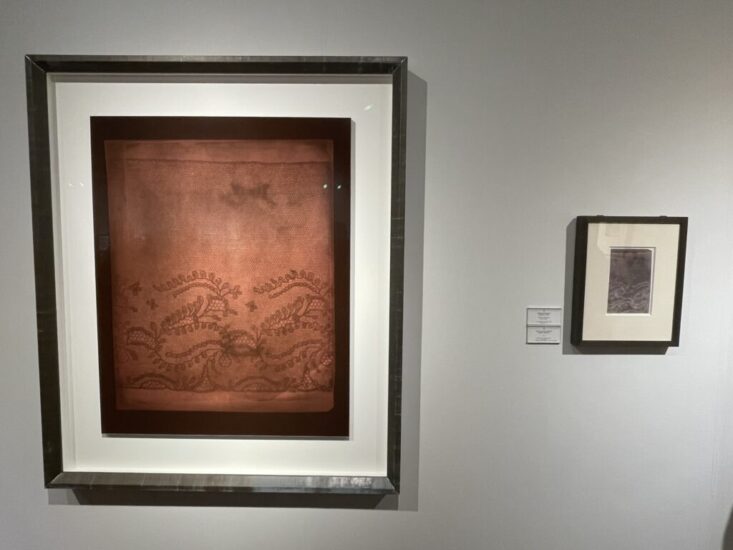
Hans P. Kraus Jr. Fine Photographs (here): This old/new pairing was about as perfect as it gets, matching a diminutive still life of lace by William Henry Fox Talbot (c1839) with a massive Hiroshi Sugimoto toned enlargement (from 2008) of a variant image of that same piece of lace by Talbot. Placing the two works side by side allows for minute back-and-forth comparisons, neatly bookending nearly the entire history of the medium. Priced at $95000 for the original Talbot print and $60000 for the Sugimoto print.
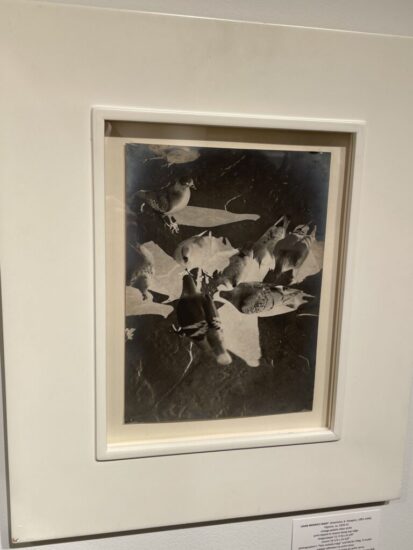
Deborah Bell Photographs (here): The tonal reversals in this image of a cluster of pigeons by László Moholy-Nagy (from 1929-1931) are surprisingly unsettled and eerie. The cast shadows (in white) are the most confusing, doubling the swirling density of the pecking crowd. Priced at $85000.
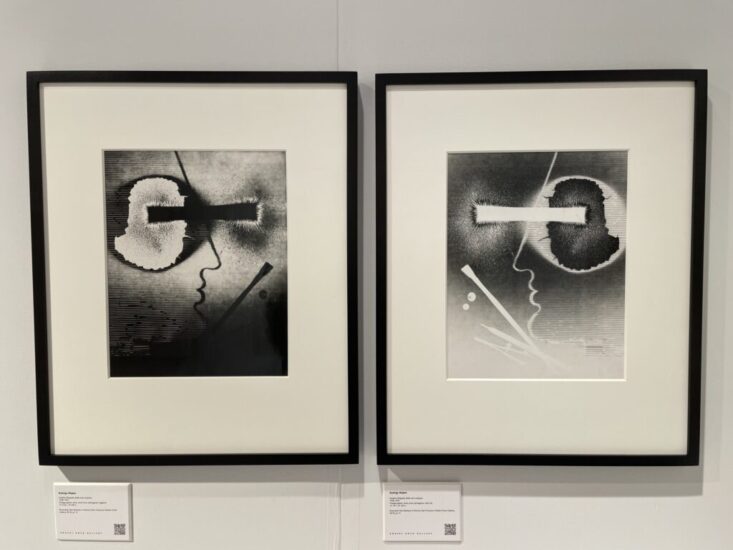
Robert Koch Gallery (here): This late 1930s positive/negative pairing by György Kepes has a classic man/machine Bauhaus aesthetic. The photogram (on the right) combines magnets, iron filings, tools, and the hint of a face in outline, with the silver print (on the left) cleverly reversing the lights and darks. Priced at $18000 each and already sold.
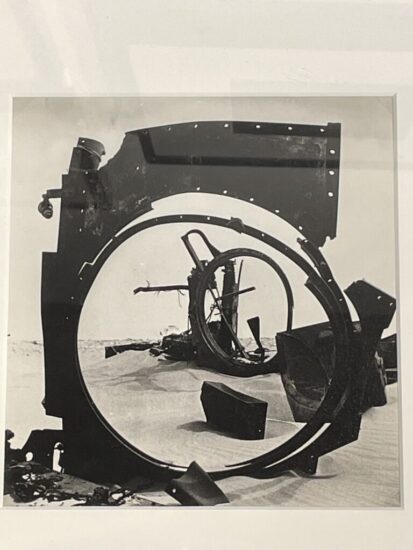
Keith de Lellis Gallery (here): While Cecil Beaton is best known for his work in fashion and society photography, during World War II, he was active as a military photographer for the British Army. This image from 1942 comes from Sidi Rezegh in Libya, in the aftermath of a tank battle. It’s a brash composition full of strong contrasts of light and dark and a tunneled effect of nested circles. Priced at $3000.
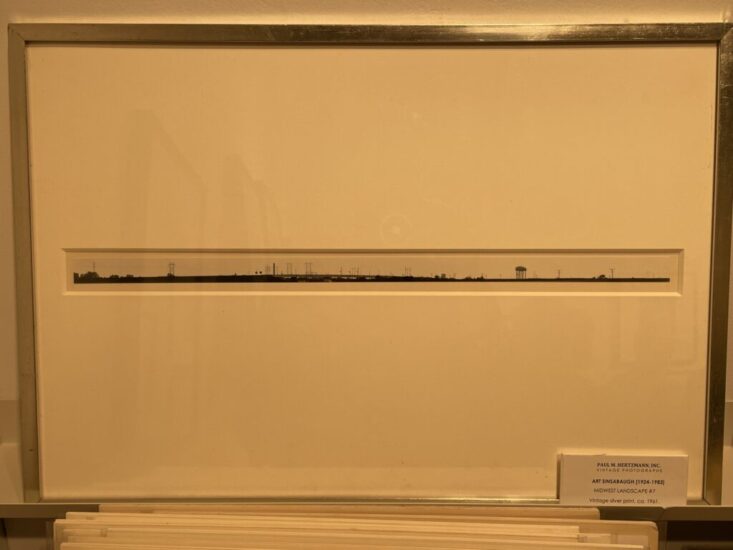
Paul M. Hertzmann Inc. (here): Art Sinsabaugh’s “Midwest Landscapes” capture the elongated flatness of the land like no other American photographs. Electric towers, telephone poles, farmhouses, and water towers poke upward from the extended treeless horizon line, creating a low sweep of delicately silhouetted forms. From c1961, and priced at $12000. (Apologies for the overly yellowed light.)
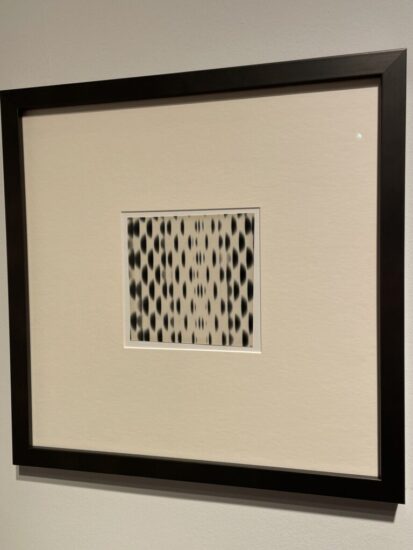
Galería Vasari (here): This 1962 dotted optical experiment by the Argentinian photographer Julio Le Parc seems to shift and turn, the ordered perforations folding back on themselves in space, like spots on a curtain. Priced at $10000.
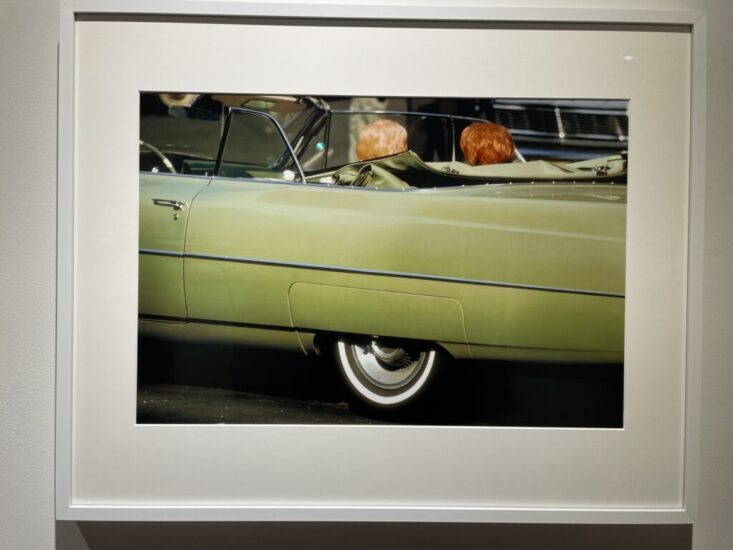
Howard Greenberg Gallery (here): This booth was a solo presentation of the early street photography of Joel Meyerowitz, in both black-and-white and color. This image of two women in the back of a green Cadillac was one I hadn’t seen before, the lushness of its colors and textures and the mystery of its narrative making it a standout. From 1966/later, priced at $12000.
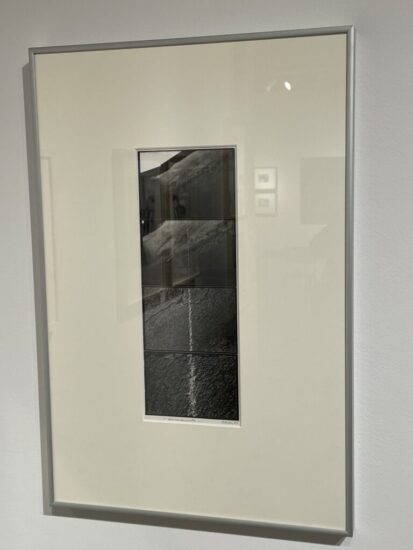
Large Glass (here): This multi-image arrangement by Mario Cresci (from 1973) starts with a straight line intervention on a dark wall. The photographs of that gesture iteratively telescope in from top to bottom, staying in strict vertical alignment as the textures become more magnified. It’s a simple idea, but executed with unexpected elegance and conceptual intelligence. Priced at $21000.
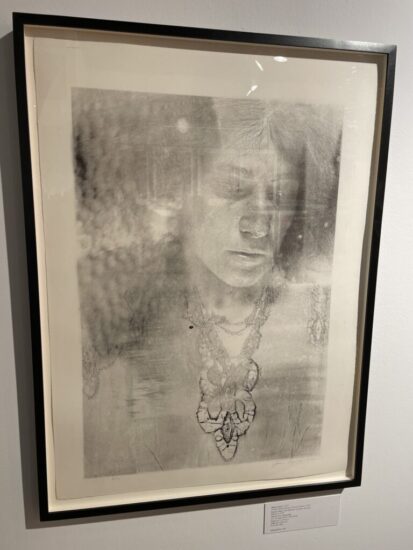
Stephen Bulger Gallery (here): This booth was a solo presentation of the work of Joan Lyons. This ethereal self portrait was made in 1974 (as part of a larger portfolio of women’s portraits) using a Xerox process, the artist’s face and necklace drifting into misty tactile flares and soft indistinct blur. Priced at $10000.
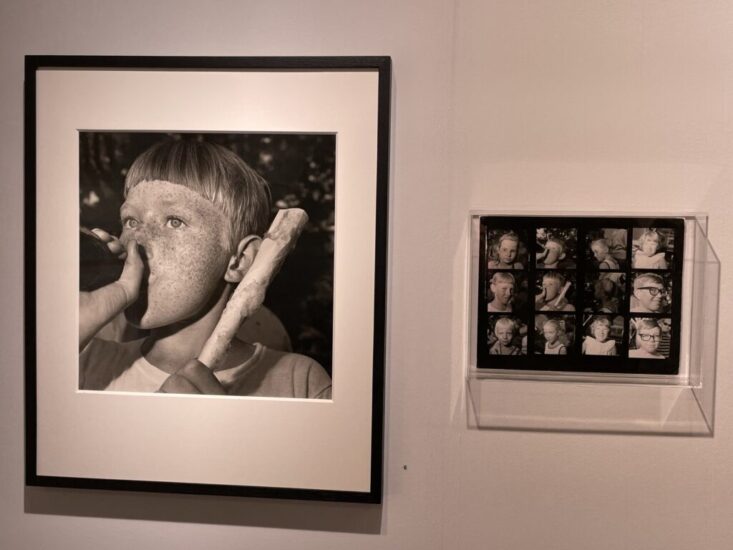
MUUS Collection (here): The MUUS Collection is the holder of the estate of Rosalind Fox Solomon (among others), and this booth was a smartly edited sampler of her portraits, using original contact sheets as an organizing theme. Each large print was paired with its contact sheet, offering the context of other images she made at the same time. Here a freckled boy drinking a soda pop and holding a sticky cotton candy tube is the winner, the line of the boy’s hair and his magnetic eyes filling out the composition. From 1976, and NFS.
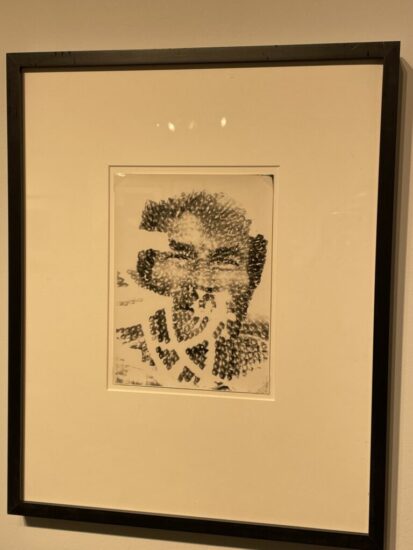
Paul M. Hertzmann Inc. (here): Sunflower seeds form the underlying texture of this 1978 self-portrait by the Romanian photographer Stefan Bertalan. The multiple exposure image roots the artist in the intricate natural patterns, with gestural lines of erasure adding further elements of mystery. Priced at $8500.
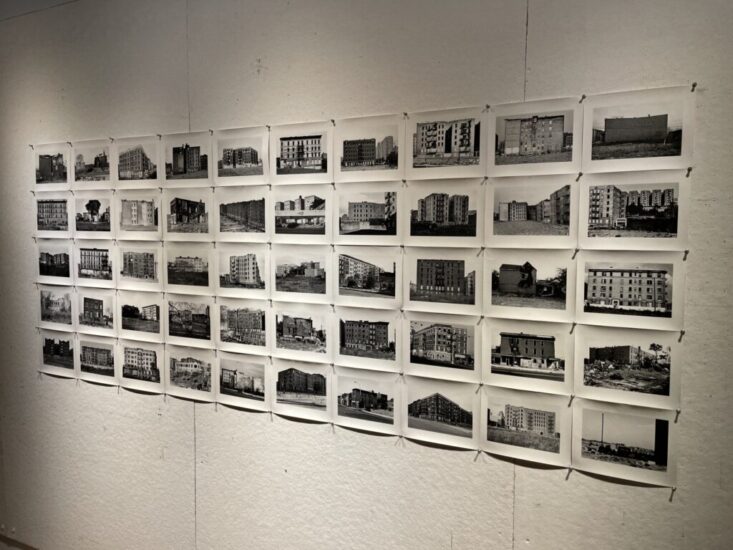
L. Parker Stephenson Photographs (here): Ray Mortenson’s early 1980s images from the South Bronx capture the moods of an urban neighborhood in decline. As seen in this solo presentation, his intensely seen images of building exteriors left to decay are filled with details of empty windows, charred edges, and overgrown lots, every texture and architectural remnant telling its own story of neglect. An overdue monograph of the project is on the way from GOST Books. The installation on view includes the 50 work prints and the studio backing boards, POR.
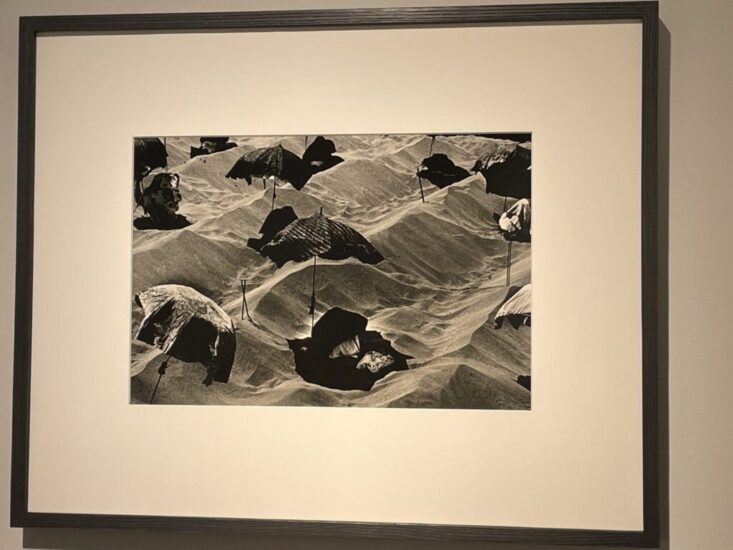
Gana Art (here): This 1984 image by the Korean photographer Yook Myong-Shim turns the tradition of black sand bathing at Jeju Island into an undulating study of light and dark, with each umbrella-shaded personal space nestled in among the dunes. Priced at $3500.
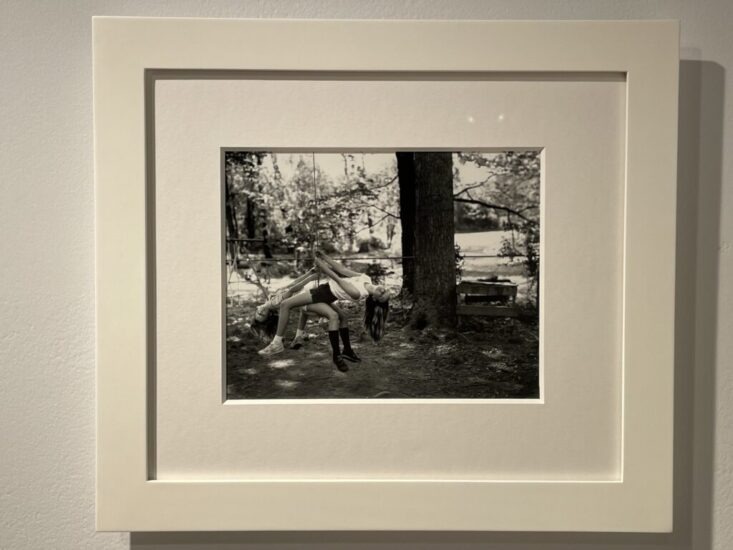
Jackson Fine Art (here): As part of working on a reissue of her 1980s era monograph At Twelve, Sally Mann recently went back into her archives to take a second look at other images she made during that time. Beyond the 36 photographs in the original book, she discovered a second group of 36 that have aged better than she had remembered, and a selection of these images were on display in this booth. Compositionally, this one is a subtle knockout, with the interlocked laid back bodies ordered by the thin and thick verticals of the rope and the tree trunks. A recent print from a 1983-1985 negative, priced at $7000.
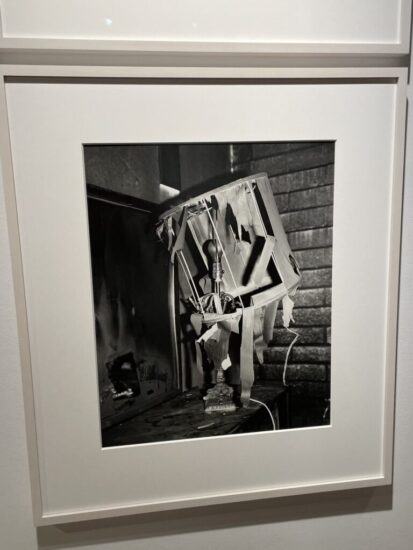
Robert Koch Gallery (here): This anxious flash lit image of a tattered lamp from 1984 comes from Mimi Plumb’s first monograph Landfall (published in 2018.) It was this body of work that introduced Plumb’s vintage work to a wider photographic audience, with ominously eerie moments like this one offering no easy answers. Priced at $5800.
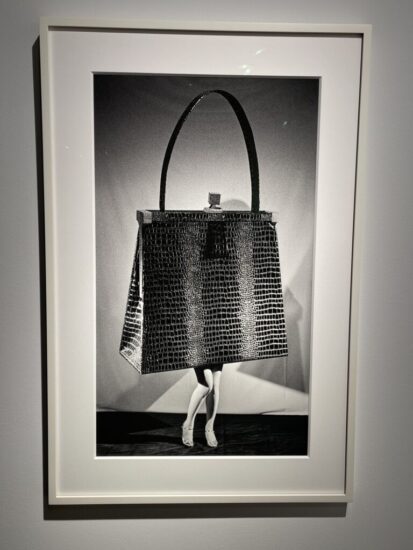
Edwynn Houk Gallery (here): Laurie Simmons’s “Walking Objects” were originally printed (back in the late 1980s) quite large, so that the legs were almost life sized, pushing their gender politics to the front. In a new iteration of the works, Simmons has printed them smaller, where the objects are now close to life sized. The results make this handbag image much more intimate, and somehow more obviously connected to the history of photographic Surrealism. Priced at $24000.
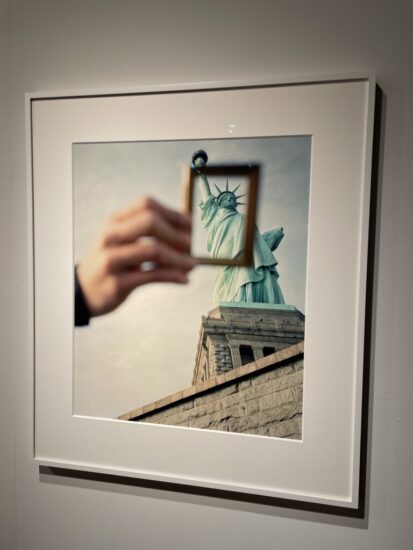
Edwynn Houk Gallery (here): Photography hasn’t always been at the center of Hank Willis Thomas’s artistic practice, which leads to many of his standout photographic projects being under known. This early series (from 1997) called “A Thousand Words” uses frames to isolate particular gestures or objects within larger photographs, making more explicit what gets centered or noticed. It’s an idea that Lorraine O’Grady pioneered in the 1980s, but that Thomas has made his own, as in this tight framing of the Statue of Liberty (and all it represents). Priced at $12000.
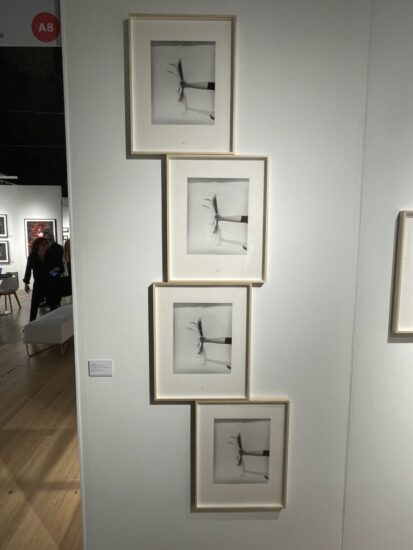
Large Glass (here): John Gossage is likely best known for his innovative photographic bookmaking over many decades, so it’s always great to see his prints get some well deserved attention. Here he’s turned a single image of an isolated hand holding a gathering of grasses into a sculptural installation that drifts down the wall in page-like repetitions. The back-and-forth of the movement feels controlled and ordered, a rethinking in deliberate steps. Priced at $13000 for the set of 4 prints.
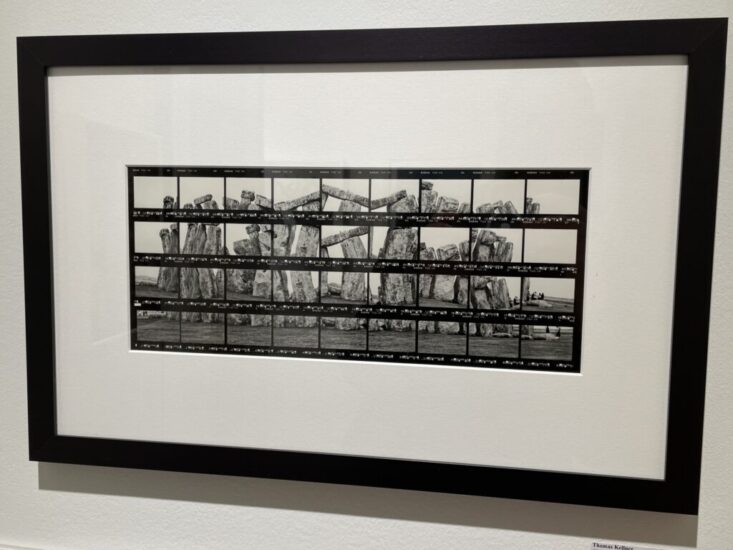
jdc Fine Art (here): The German photographer Thomas Kellner has made a career out of thinking within the confines of the contact sheet, arranging individual images into the structured grid of film strips arranged in order. His images of architecture are meticulously conceived but entirely wiggly, as in this composite image of Stonehenge (from 2007), its enduring rocks made altogether shifting and unstable. Tucked in the back corner, and priced at $5000.
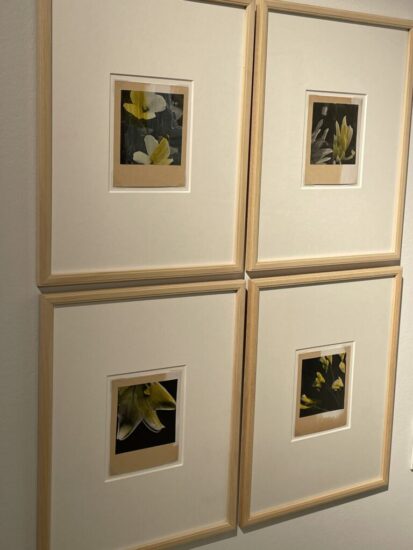
Curatorial Gallery (here): Katrien De Blauwer’s book page interventions and collages have always struck me as quietly elegant and sophisticated, even when they are pared down to small interventions or juxtapositions. Here black-and-white images of flowers have been interrupted by sweeps of white and yellow, subtly activating and re-interpreting the original compositions. Priced at $1600 each.
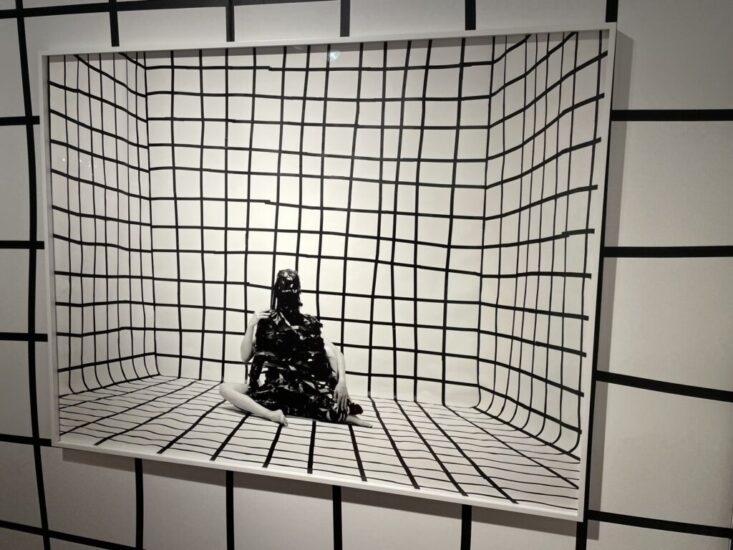
Higher Pictures (here): This booth was a solo presentation of the work of Gina Osterloh, set against a taped grid similar to the one found in some of her photographic setups. In this work from 2020, the artist emerges from behind a taped version of herself, playing with completing ideas of identity being concealed and seen. Priced at $5000.
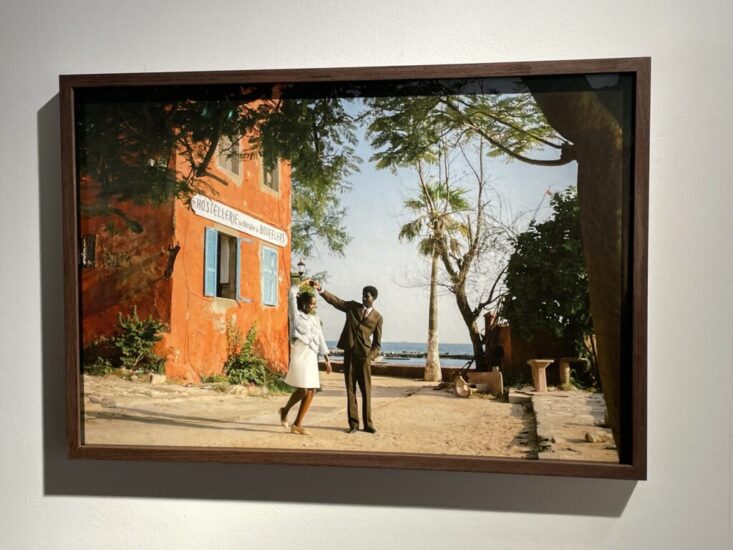
Alta (here): Images from this 2024 series “Memories Between Earth and Sky” by Carlos Idun-Tawiah recreate moments from the lives of the artist’s parents in Senegal, following on from other recent projects recreating nostalgic memories (or wholly imagined moments) of fathers, friends, and Sunday gatherings of family (in Ghana). Here the young couple has a lovely moment of intimate closeness, turning a willowy dance step or two in the afternoon sun. Priced at $13000 with frame.
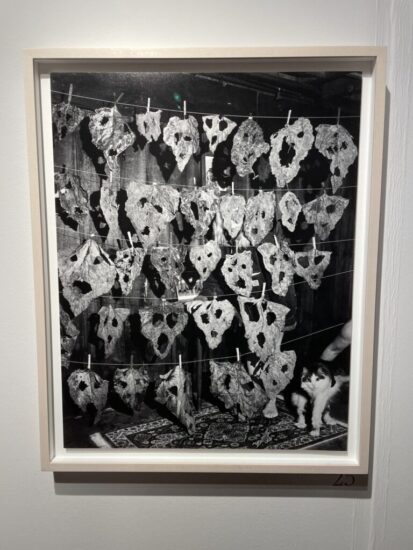
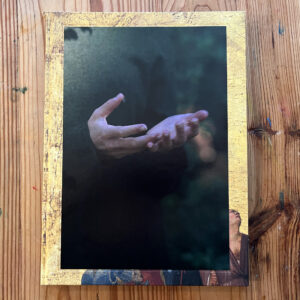
CLAMP (here): This spooky image of almost-faces in hanging leaves by Pia Paulina Guilmoth comes from the recent project “Flowers Drink the River” but wasn’t included in the artist’s 2025 gallery show of that work (reviewed here). The hole-covered leaves are unsettling enough on their own, but with the addition of the staring cat and the photo of the girl in the background, the mood becomes even more pleasingly creepy. Priced at $2500.
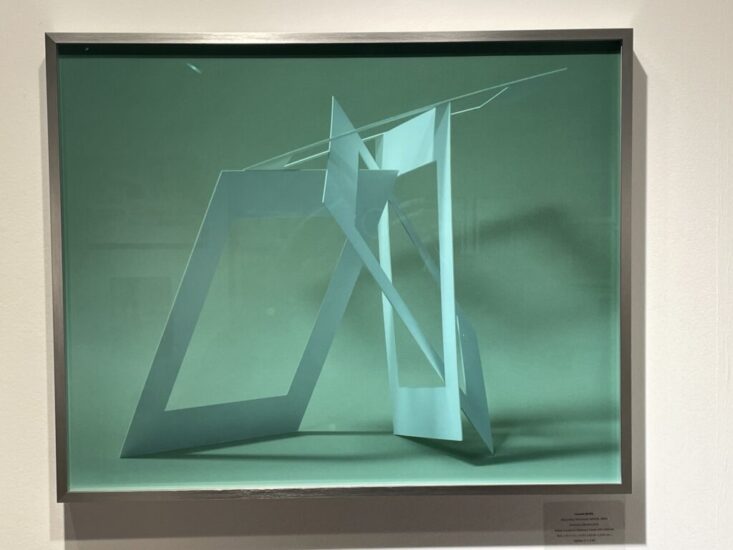
Central Server Works (here): Lenard Smith’s tabletop constructions start with ordinary white mat boards, which he then arranges in intricate geometries and lights with directional gels. His results have an active sense of structural energy, turning remnants into interlocked planes and nested color studies. Priced at $9500 framed.
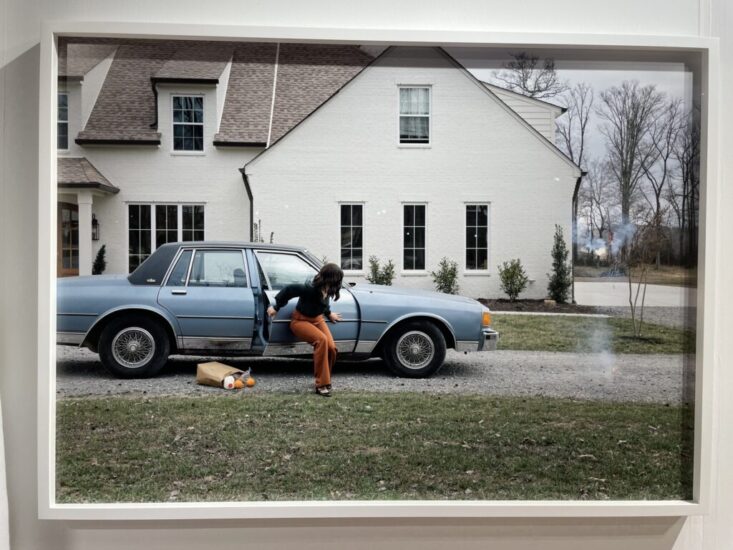
LAS Contemporary (here): This 2025 image by Chrissy Lush (titled “Arrival”) has a Jeff Wall-like staginess that mixes control with intuition. Catching the flying firecracker in mid air, the image of dropped groceries (with the artist as model) has a hint of instinctual reaction within the framework of mannered scene setting. Priced at $6400.
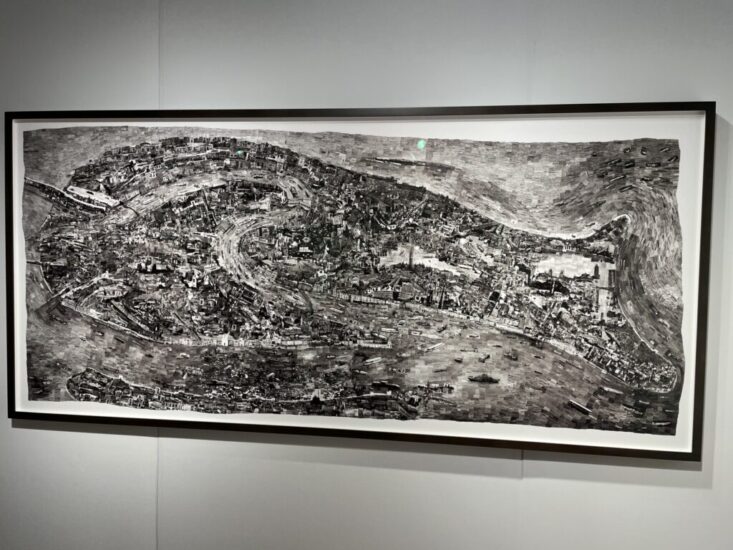
Michael Hoppen Gallery (here): Sohei Nishino has been making intricate wall-filling “diorama maps” for more than two decades now, with this composite image of Venice his latest work in the ongoing series. Up close, the detail is engrossing, as the shift from overhead to frontal perspectives twists and turns to tell hundreds of tiny stories of the city, with famous buildings, streets, and other landmarks to be discovered in their approximately actual topographical locations. Priced at $35000.
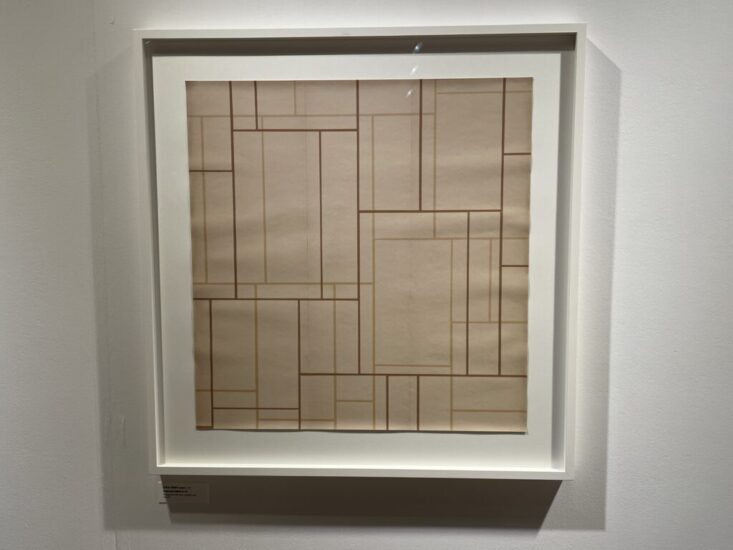
Toluca Fine Art (here): This 2026 work by Andrea Ostera uses careful masking to make an intricate camera-less composition. As in the works of Alison Rossiter, Ostera is re-imagining old photographic papers in new ways, in this case, adding layers of meticulously controlled light to create a scaffolding of Mondrian-like lines. Priced at $9800.