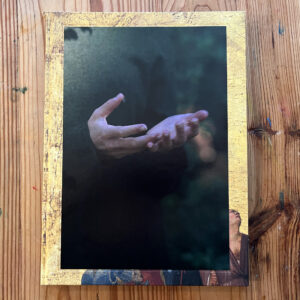
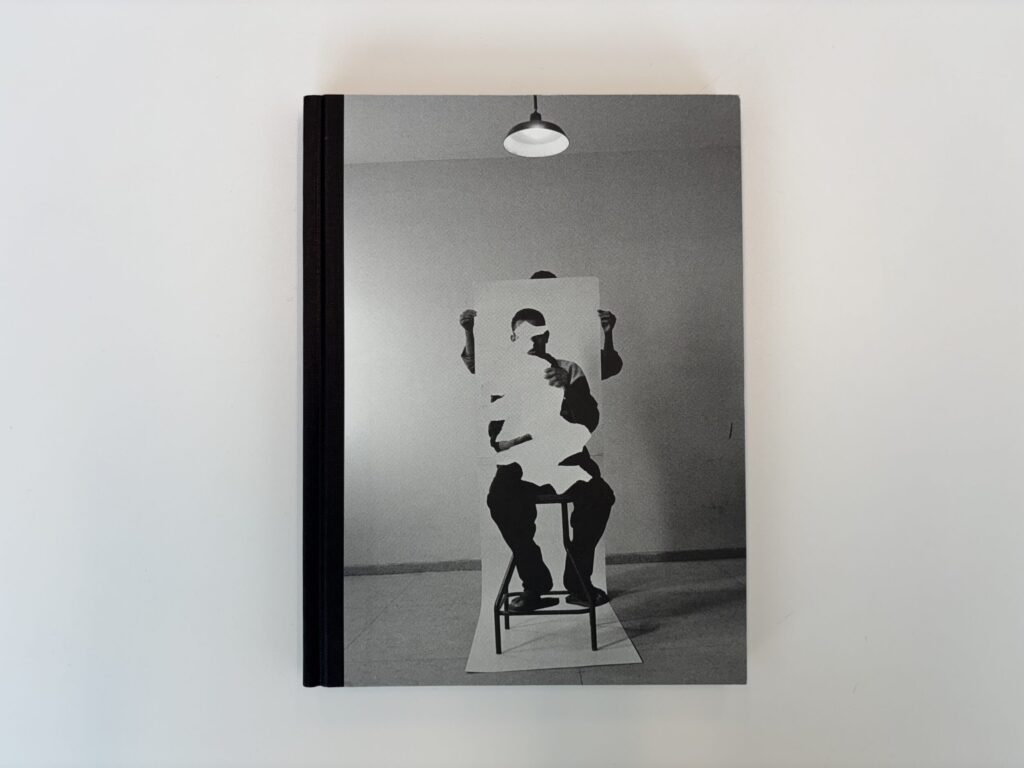
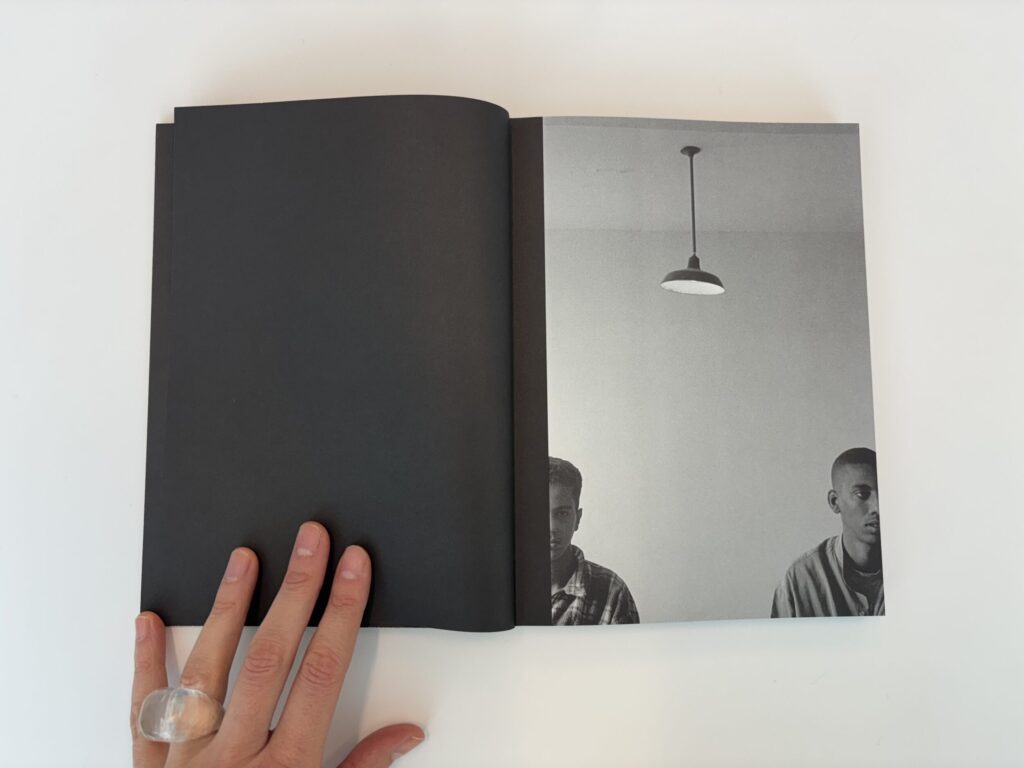
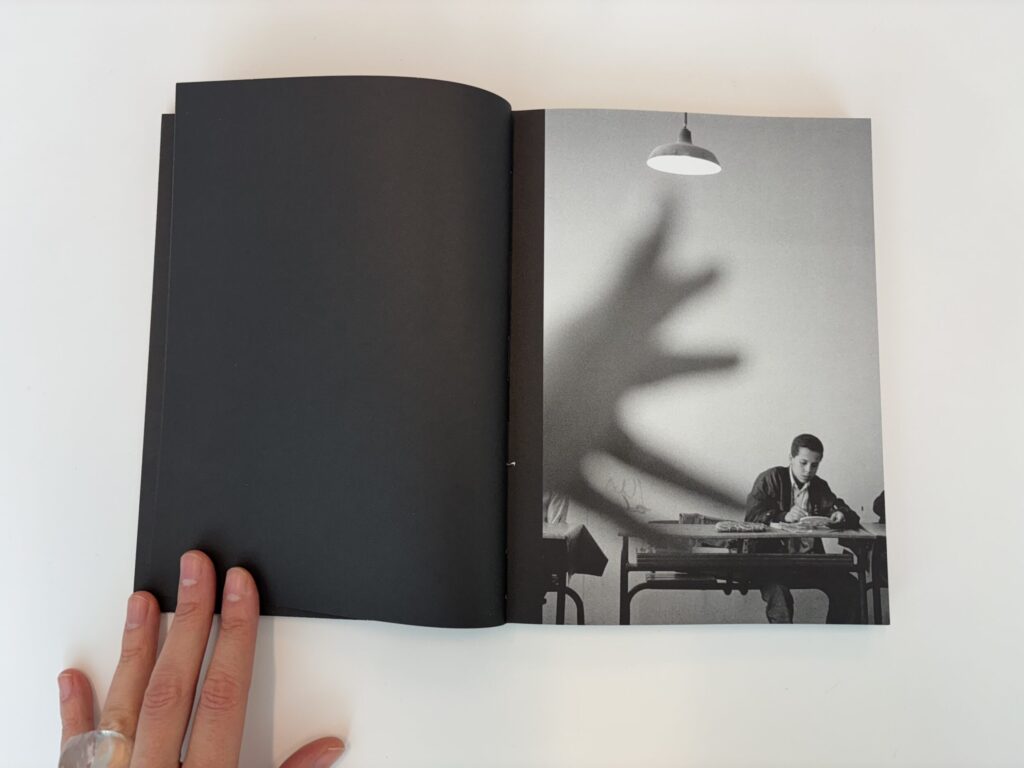
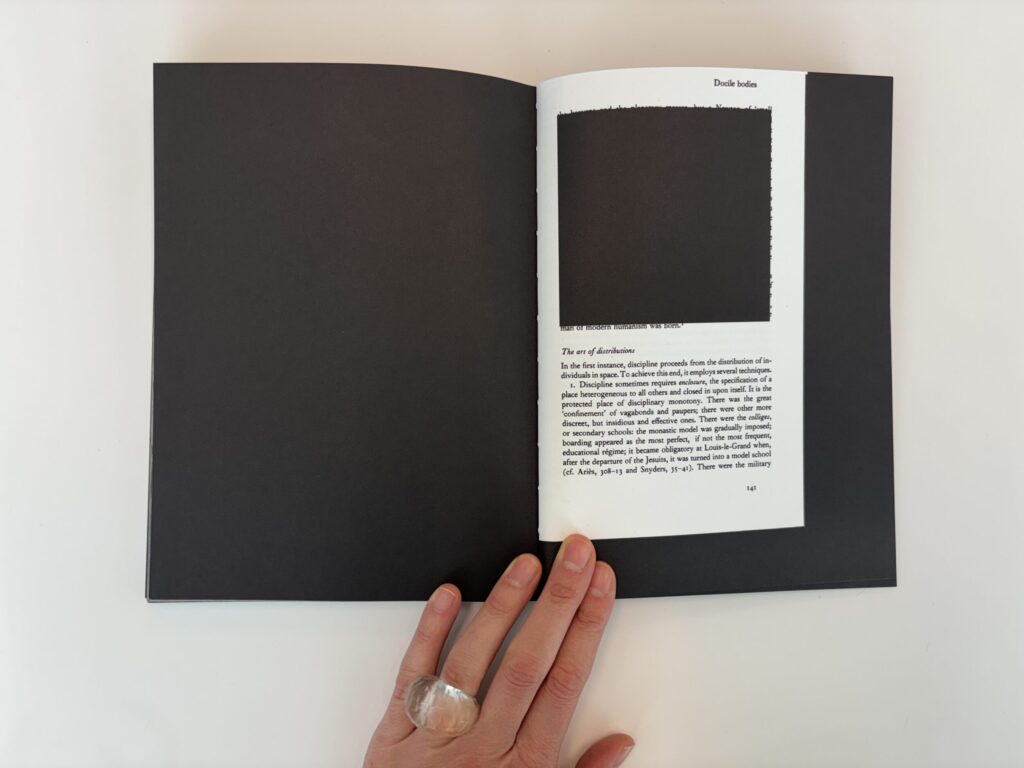
JTF (just the facts): Published in 2025 by Loose Joints (here). Section-sewn quarterbound hardcover with buckram debossed spine and trimmed edges (17 x 23 cm), 144 pages, with 76 monotone plates. Includes an excerpt from Michel Foucault’s “Discipline and Punish”. Design by Loose Joints Studio. (Cover and spread shots below.)
Comments/Context: In The Classroom, the Moroccan artist Hicham Benohoud revisits a body of work that is both deeply personal and politically resonant. Originally created between 1994 and 2002 during his tenure as an art teacher in Marrakesh, the series has now been reissued in a comprehensive photobook, offering a fresh lens on a project that has long stood as a quiet yet subversive critique of institutional power, identity, and the pedagogical space. The book is a testament to Benohoud’s enduring ability to transform the mundane into the surreal, and the rigid into the expressive.
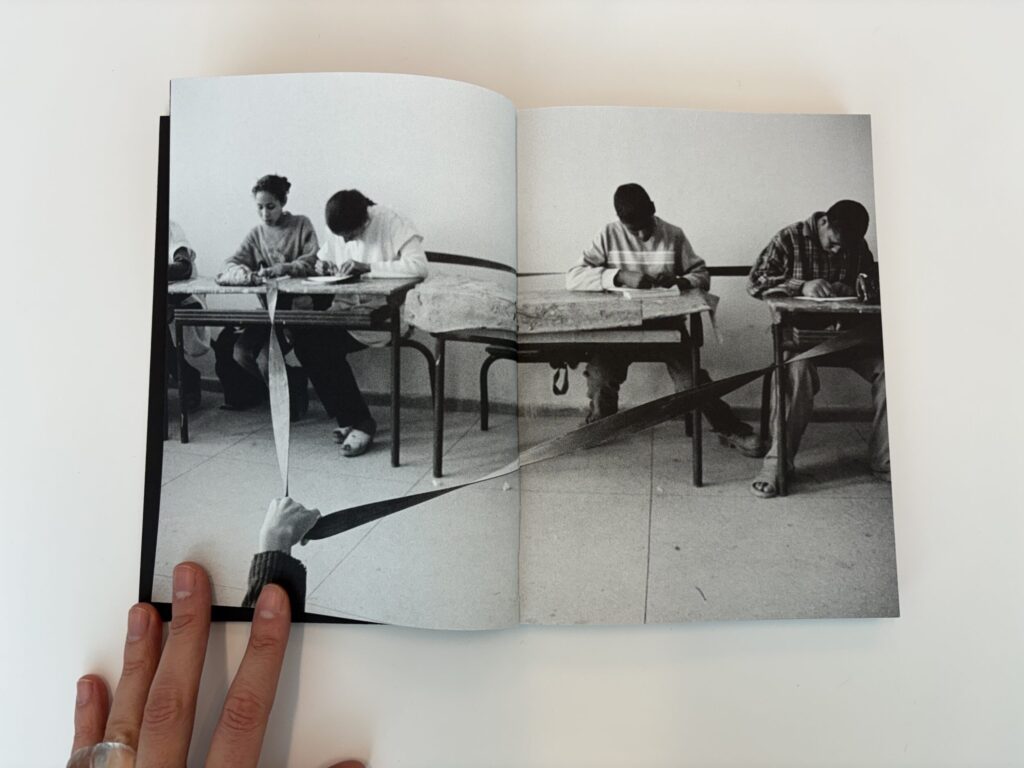
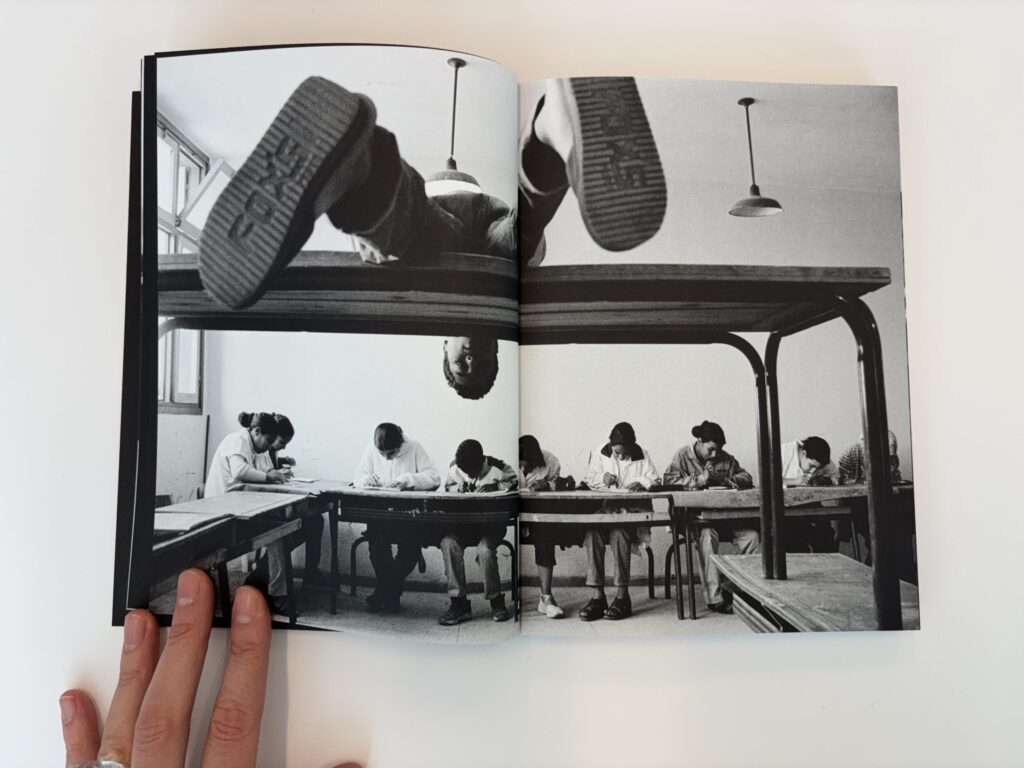
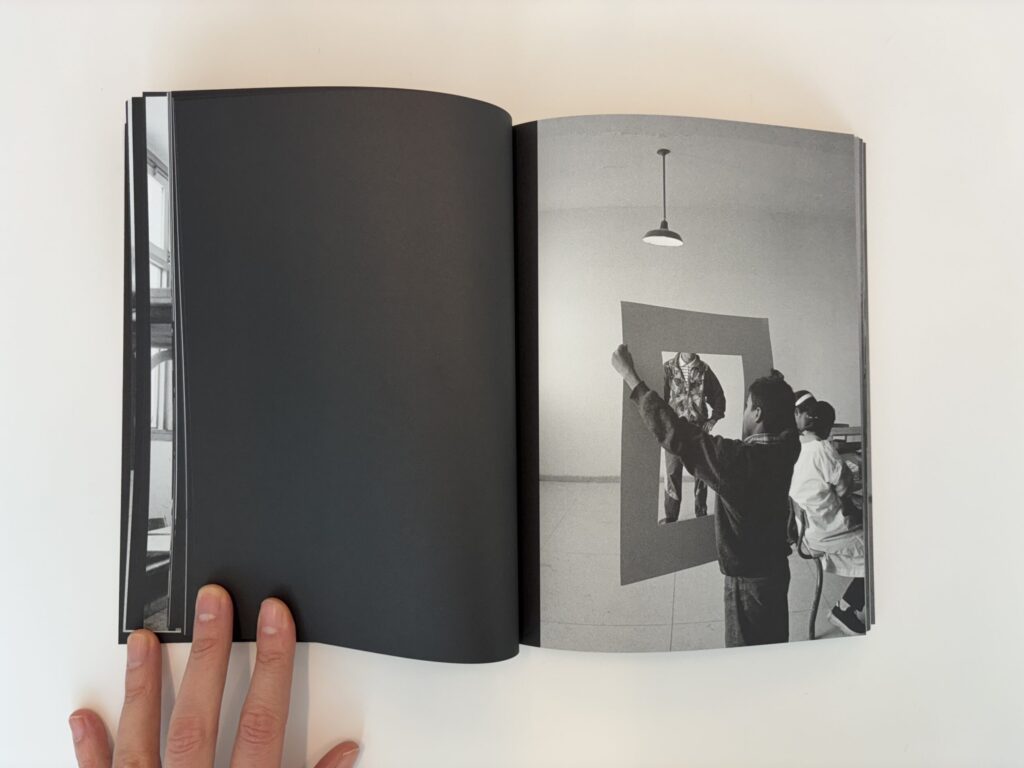
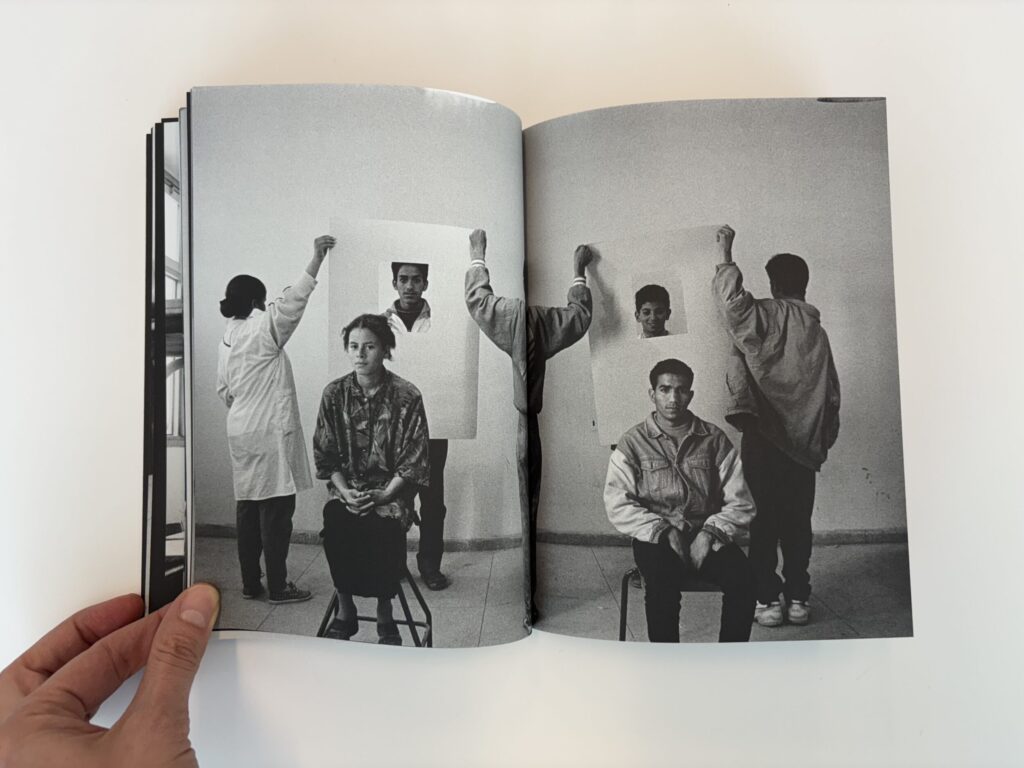
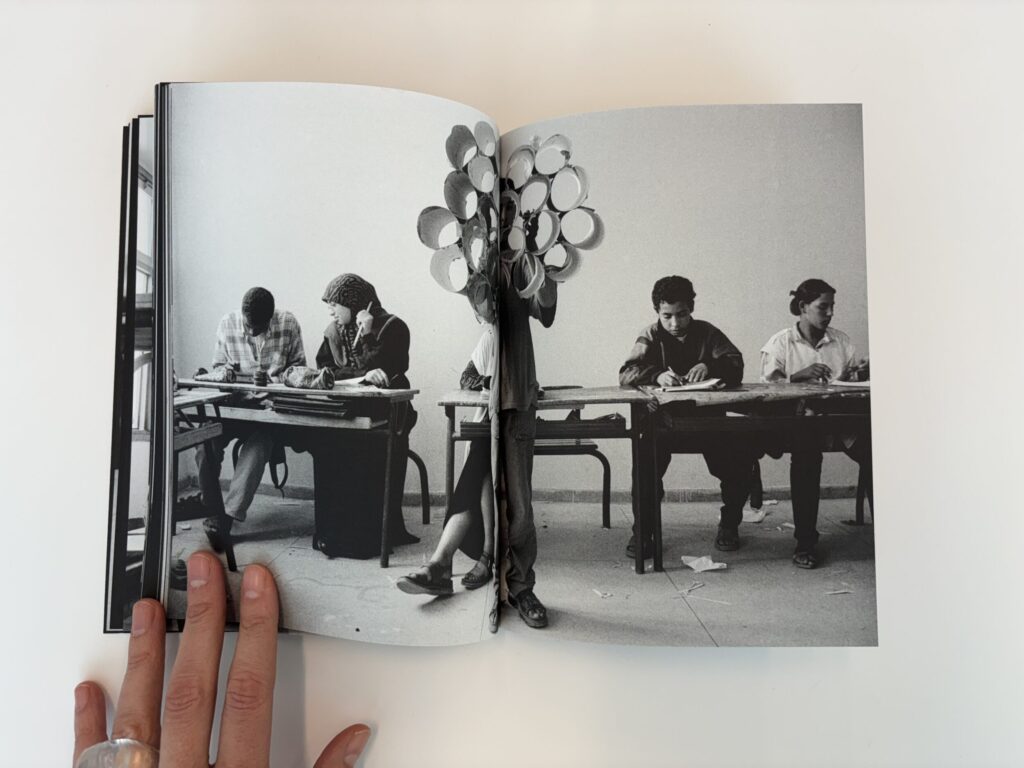
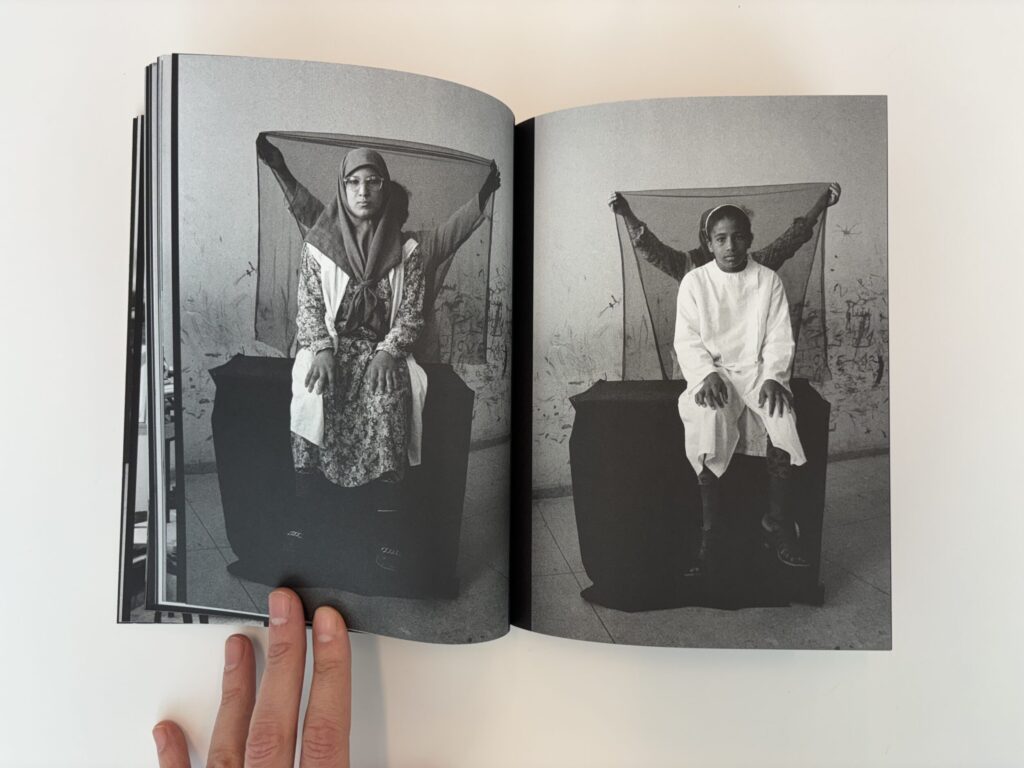
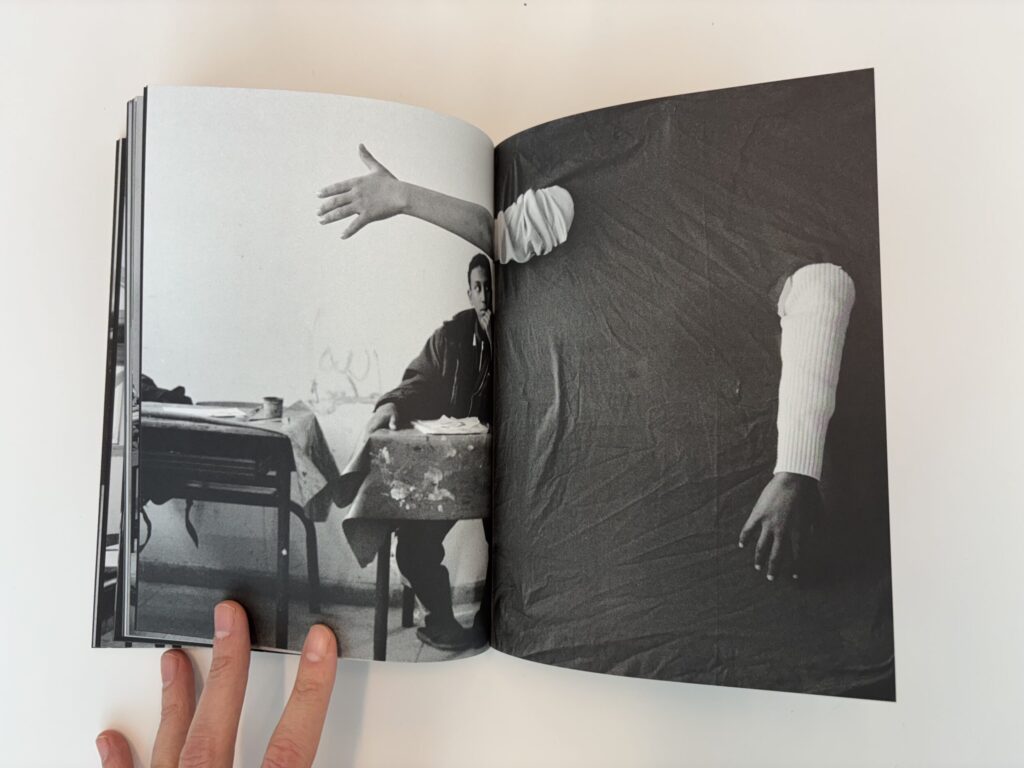
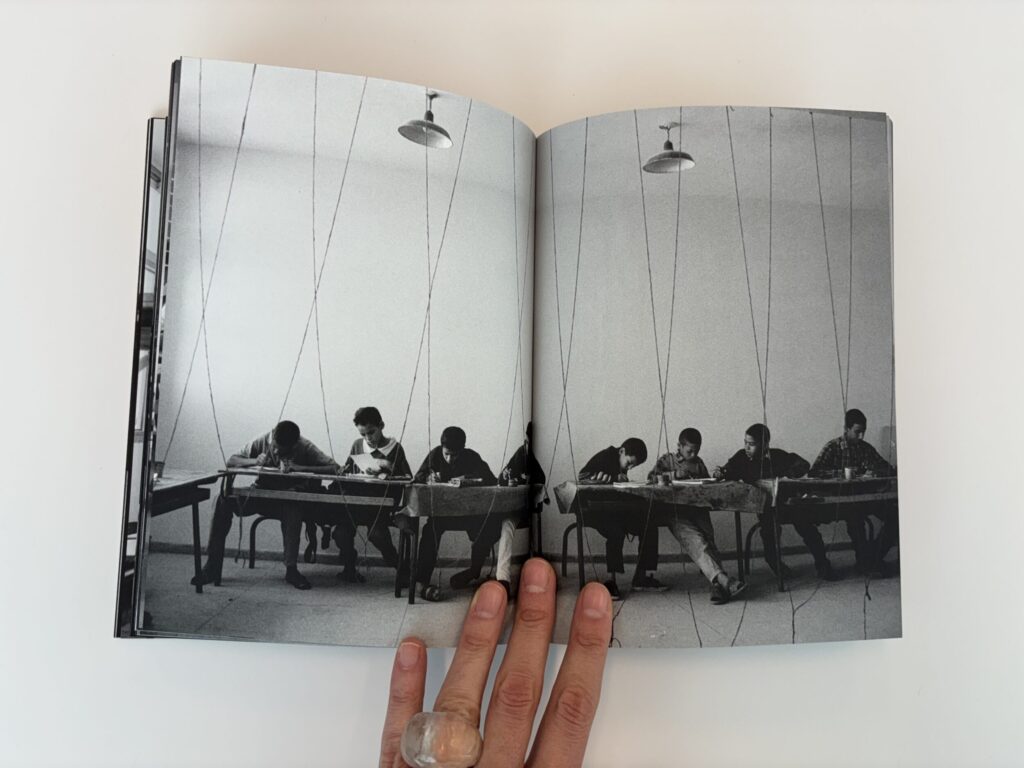
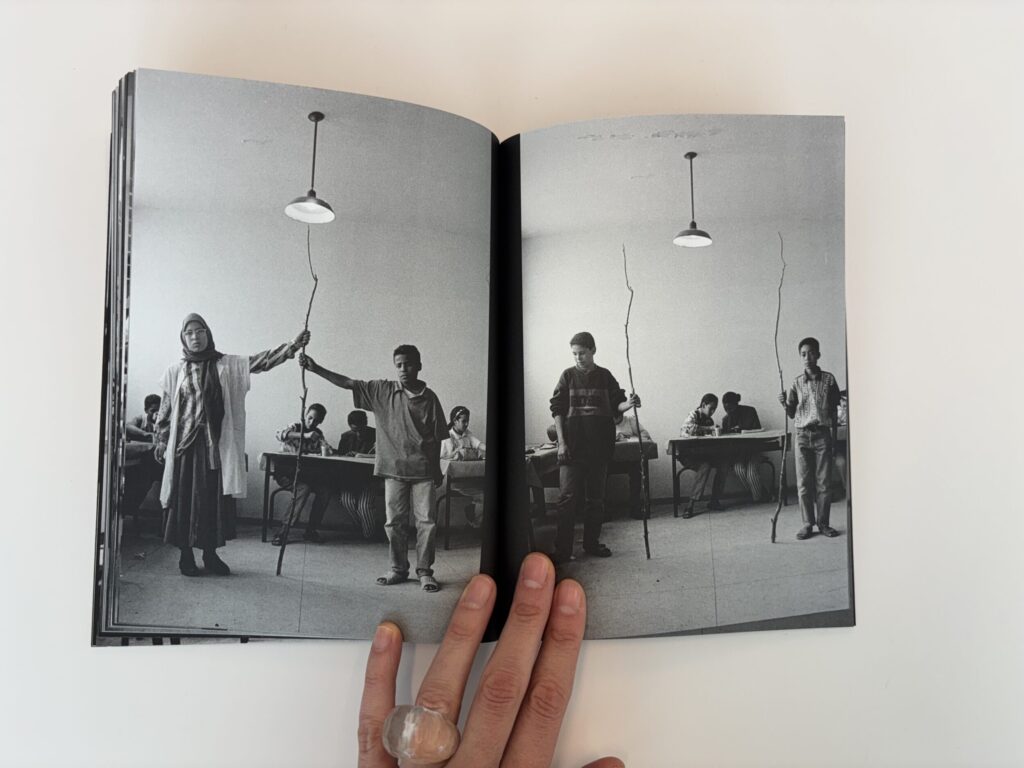
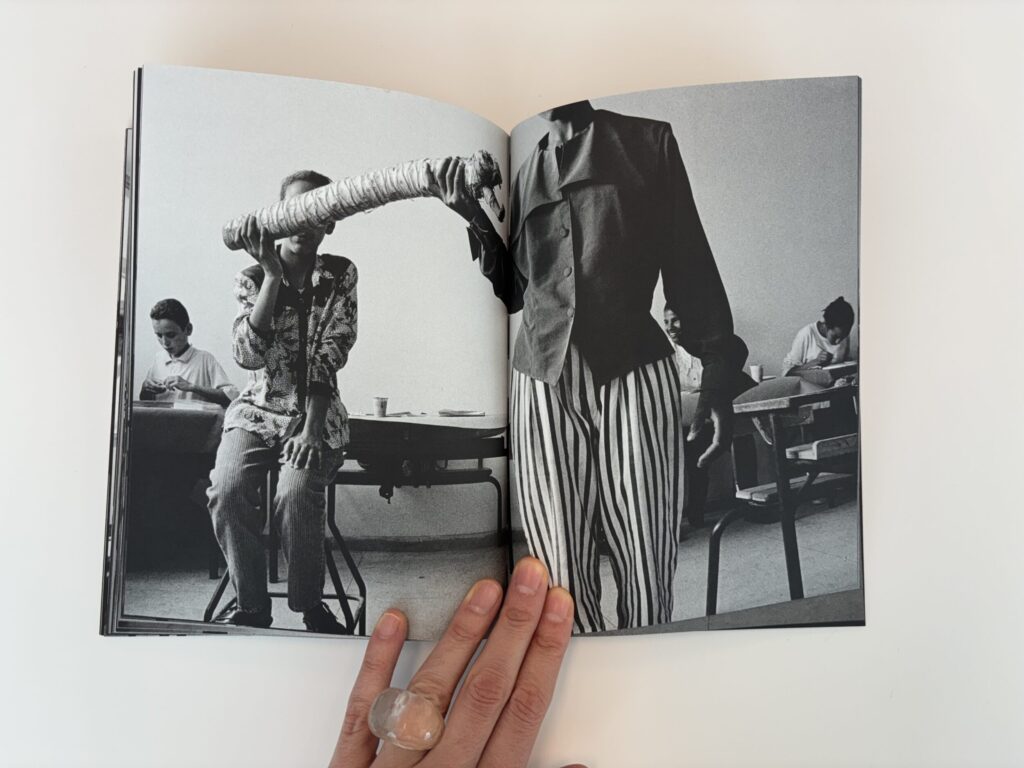
One of the images in the opening sequence is a stark black-and-white shot of a student suspended mid-air, seemingly levitating above a desk. It’s a visual metaphor that sets the tone for the rest of the book: a classroom unmoored from its traditional function, reimagined as a stage for performance, resistance, and introspection. The images, all meticulously staged, are infused with a sense of absurdity and unease. Students wear paper masks, hold frames that obscure their faces, or pose in configurations that defy logic. These are not candid moments; they are deliberate constructions, each one a small rebellion against the conformity of the educational system.
The design of the book complements its conceptual rigor. The pages are hosted between two boards and a thin black strip of cloth running around the spine. A black-and-white photograph takes up the entire cover: in it a person is seated on a stool holding a cut-out silhouette while another person stands behind holding a white sheet of paper that serves as a background. The title and the artist’s name are placed on the spine in a white font. The images are printed in rich monochrome, emphasizing the starkness of the classroom setting and the surreal quality of the compositions. The book ends with an excerpt from Michel Foucault’s “Discipline and Punish”, reproduced as book pages. The book has a comfortable size and is pleasant to hold, and flipping through the pages and smelling the scent of the ink adds physicality to the photobook experience.
Benohoud’s approach is rooted in collaboration. As an art teacher, he invited his students to participate in his photographic experiments, often during class time. He built a makeshift darkroom in the school, turning the classroom into a site of creative production. The students, while not co-authors in the conceptual sense, are active participants. Their gestures, postures, and interactions with props reflect a shared desire to break free from the constraints of their environment. The resulting images are playful, unsettling, and deeply evocative. There is a rhythm to the book, moments of tension followed by moments of levity, scenes of confinement juxtaposed with gestures of escape.
What makes The Classroom particularly compelling is its layered engagement with postcolonial identity. Morocco’s educational system in the 1990s was a relic of French colonial influence. It was rigid, hierarchical, and deeply conservative. Benohoud’s photographs challenge this structure by introducing elements of chaos and imagination. In one image, a student emerges from a mountain of crumpled paper, his head nearly touching the ceiling light. In another, two boys are joined by a double-ended woolen hat, a symbol of enforced sameness. These visual interventions critique the homogenizing forces of the state, the suppression of individuality, and the erasure of personal expression.
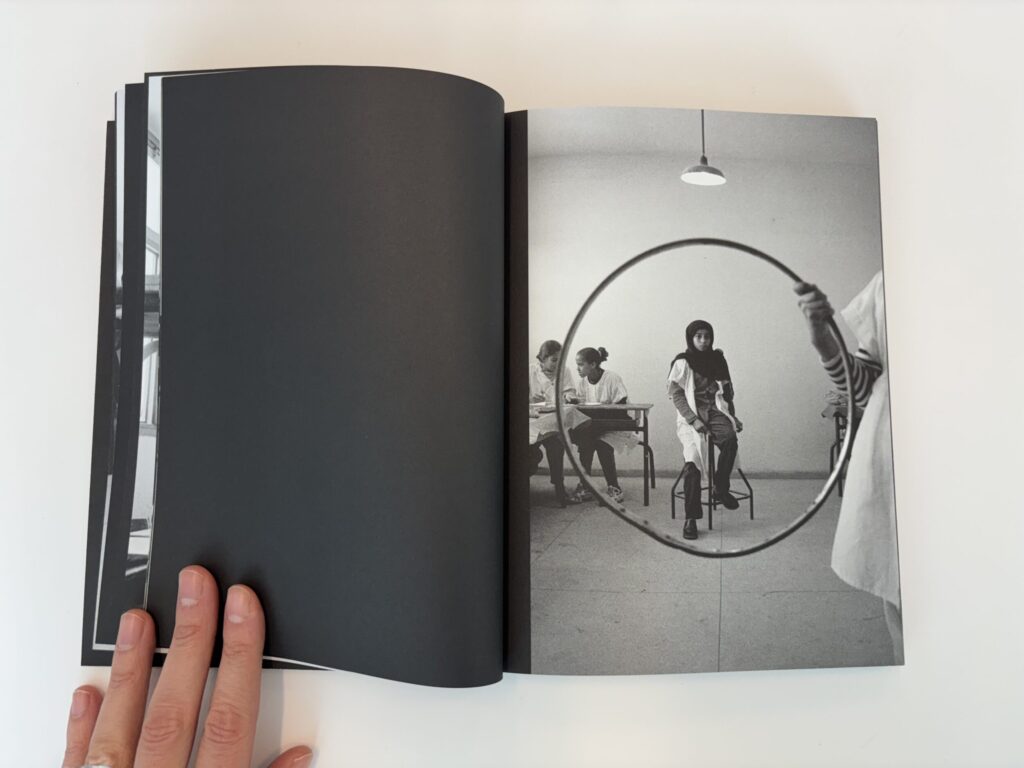
Benohoud’s practice sits at the intersection of photography, performance, and installation. His use of props (string, paper, discarded objects from the schoolyard, etc) adds a tactile dimension to the work. These materials become tools of transformation: a bicycle rim becomes a halo; a roll of tape becomes a boundary. The classroom, once a site of rote learning, turns into a laboratory for visual experimentation. And this transformation is not merely aesthetic, above all it is political. By reconfiguring the space, Benohoud challenges the authority it represents. In a society where dissent is often suppressed, the images become quiet acts of defiance. And the playfulness in Benohoud’s work, brings to mind Jack Davison’s recent book A is for Ant (reviewed here), a joyfully surreal take on the classic children’s alphabet book.
The Classroom is a meditation on space, power, and possibility. It invites us to reconsider the classroom not as a neutral site of learning, but as a contested terrain where identities are formed, challenged, and reimagined. Benohoud’s images blur the boundaries between student and teacher, discipline and play, conformity and creativity. In doing so, they offer a powerful critique of the systems that shape our lives, as well as a vision of what it means to resist them. The Classroom also speaks to the enduring power of photography to interrogate social structures and to illuminate the complexities of human experience. Its message is clear: creativity is a form of resistance, and the classroom, however confined, can be a space of liberation.
Collector’s POV: Hicham Benohoud does not appear to have consistent gallery representation at this time. Collectors interested in following up should likely connect directly with the artist via his website (linked in the sidebar).