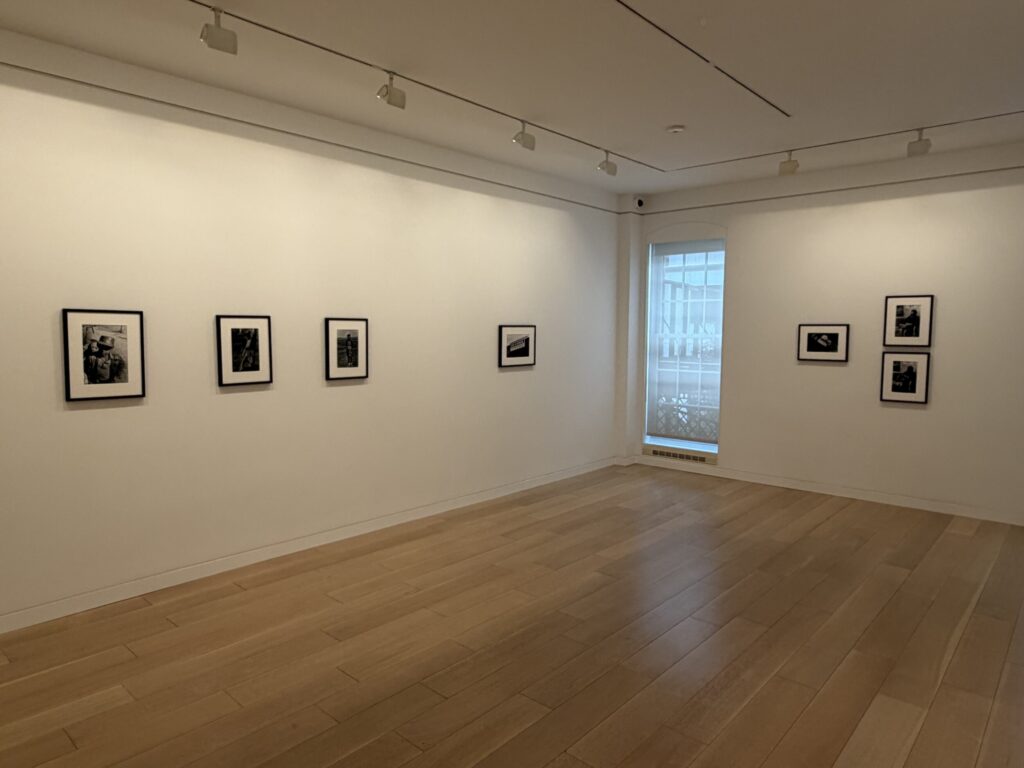
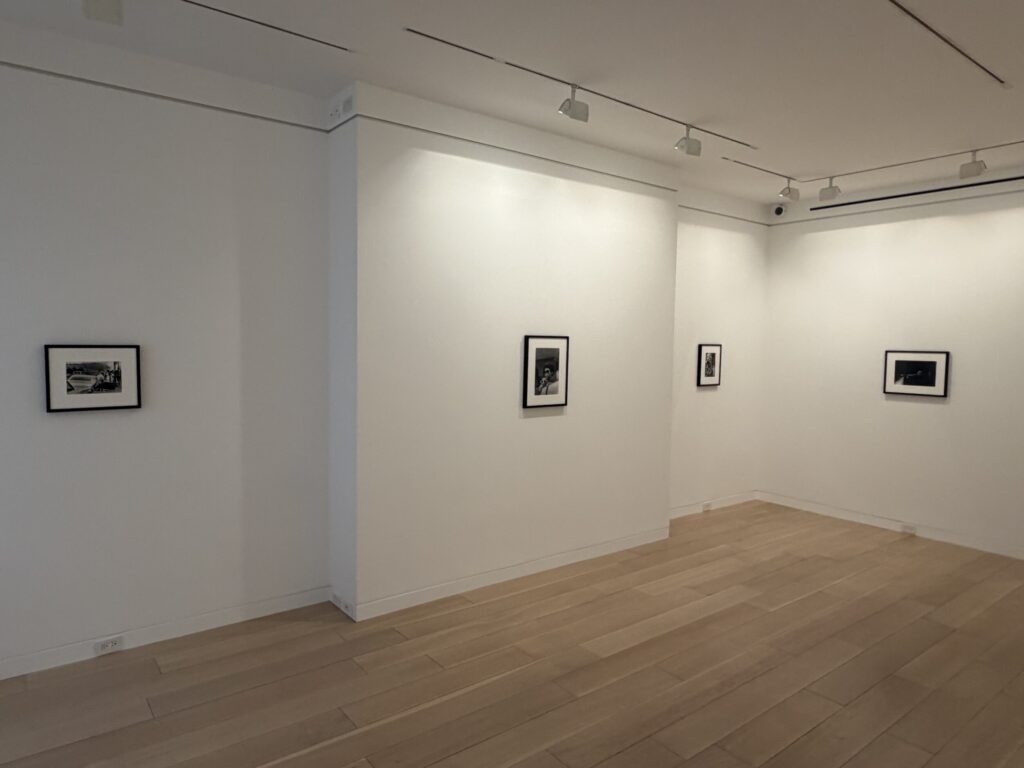
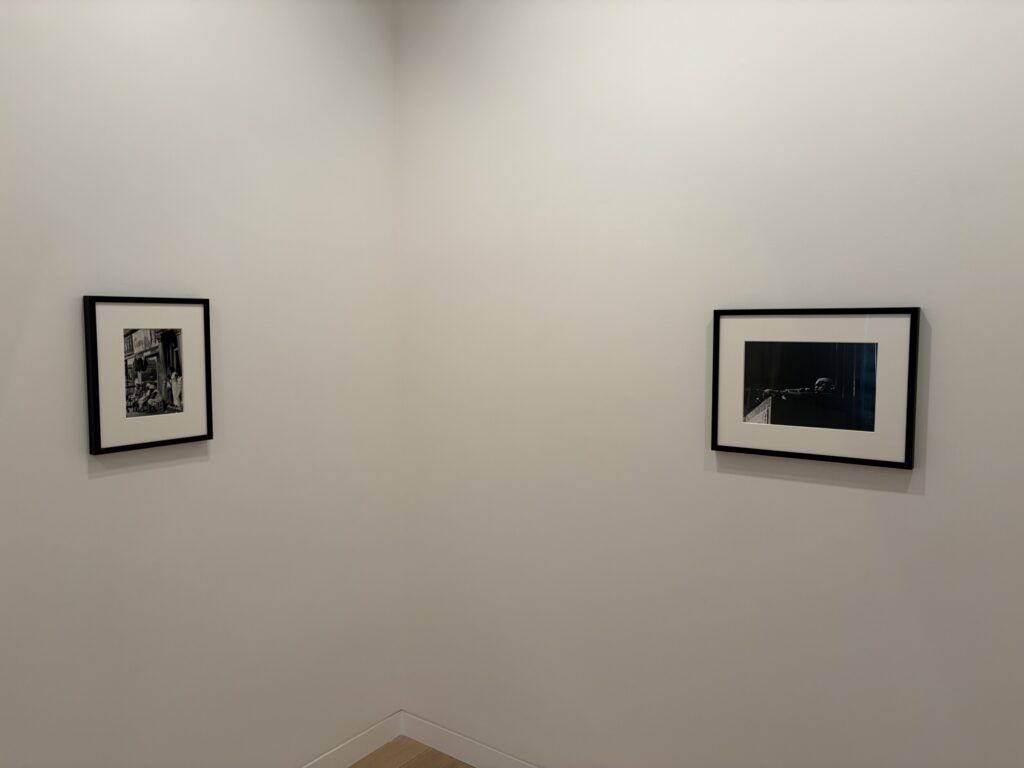
JTF (just the facts): A total of 14 black-and-white photographs, framed in black and matted, and hung against white walls in the main gallery space and the entry area. All of the works are vintage gelatin silver prints, made in 1967-1972, 1968, 1970-1971, or c1973. The prints are variously sized 8×10, 8×12, 10×8, 11×14, or 14×11 inches, and all of the prints are unique. (Installation shots below.)
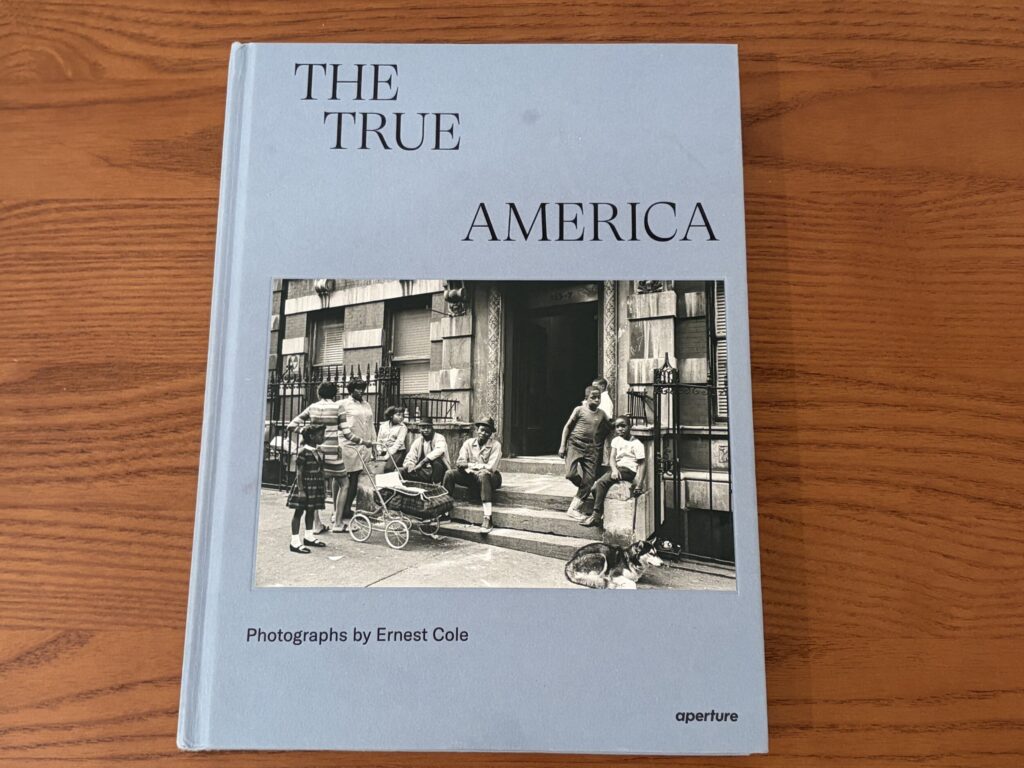
A monograph of Cole’s work in America was published in 2024 by Aperture (here). Hardcover (8.4 x 11.5 inches), 312 pages, with 275 image reproductions. (Cover shot below.)
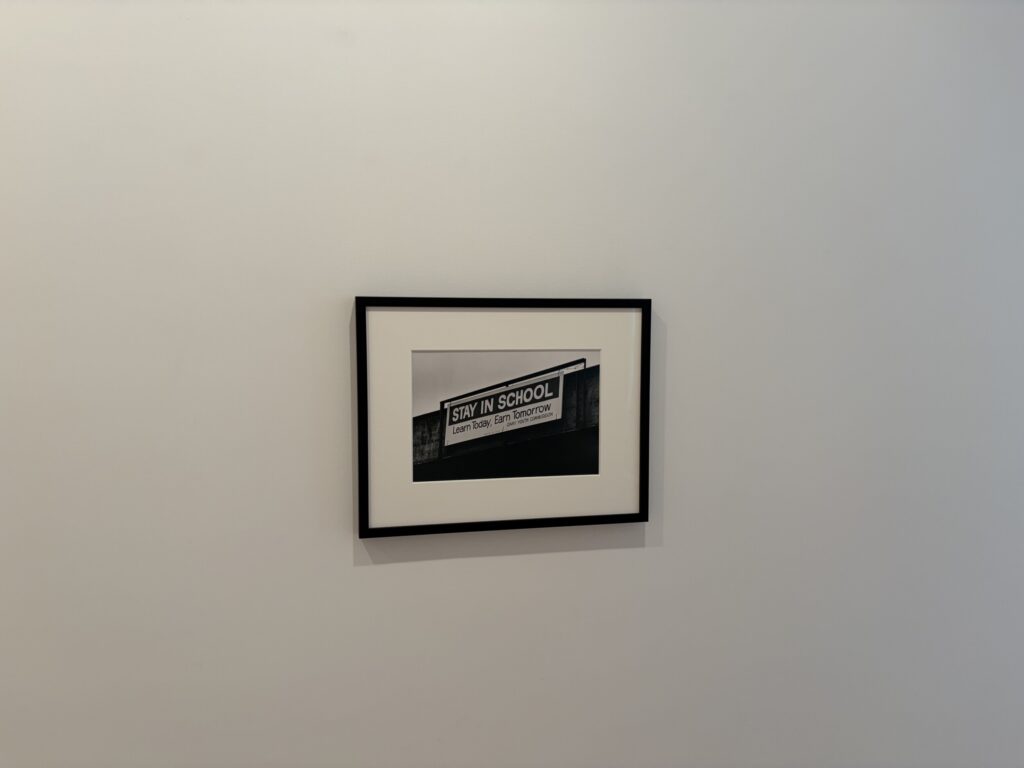
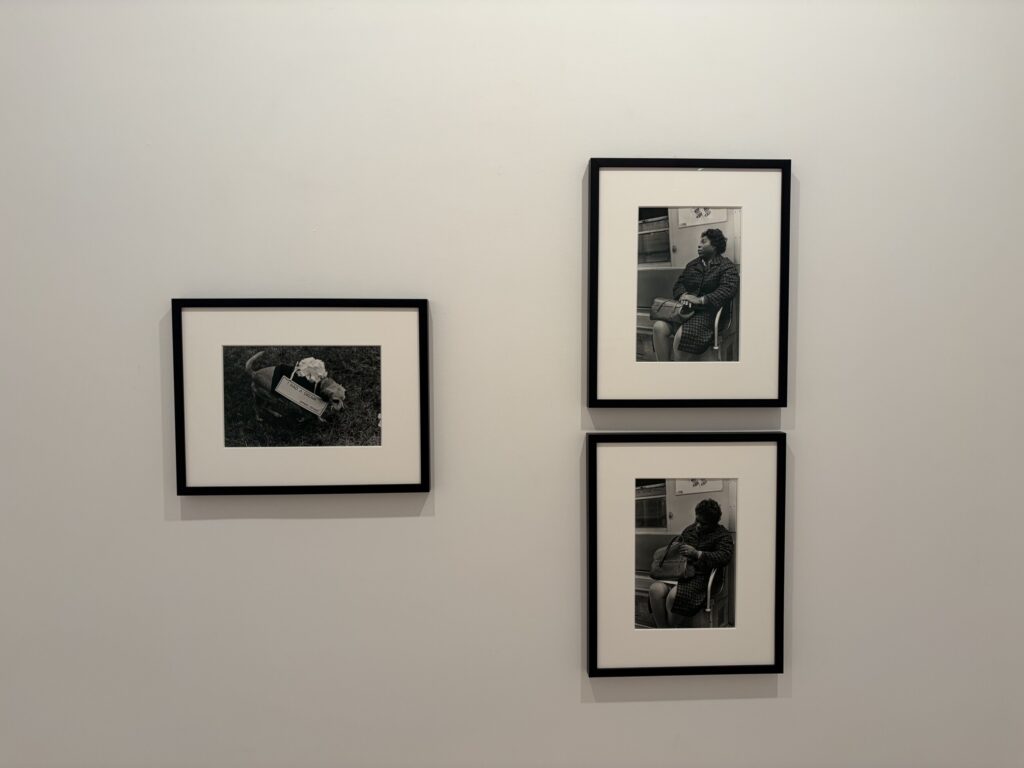
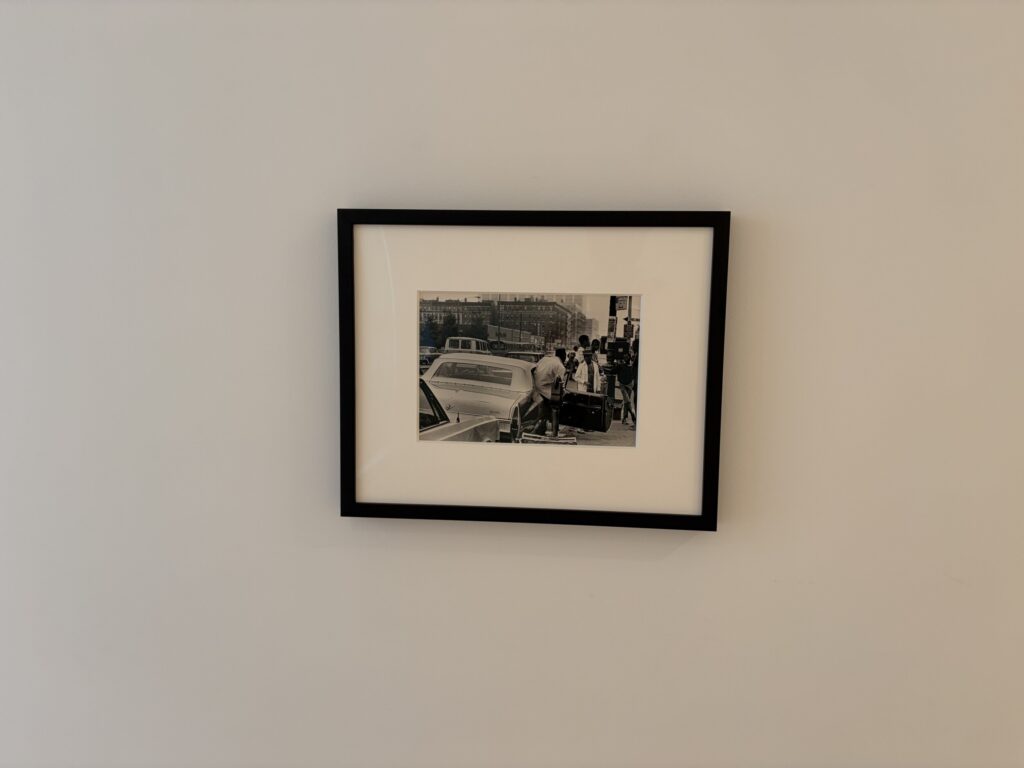
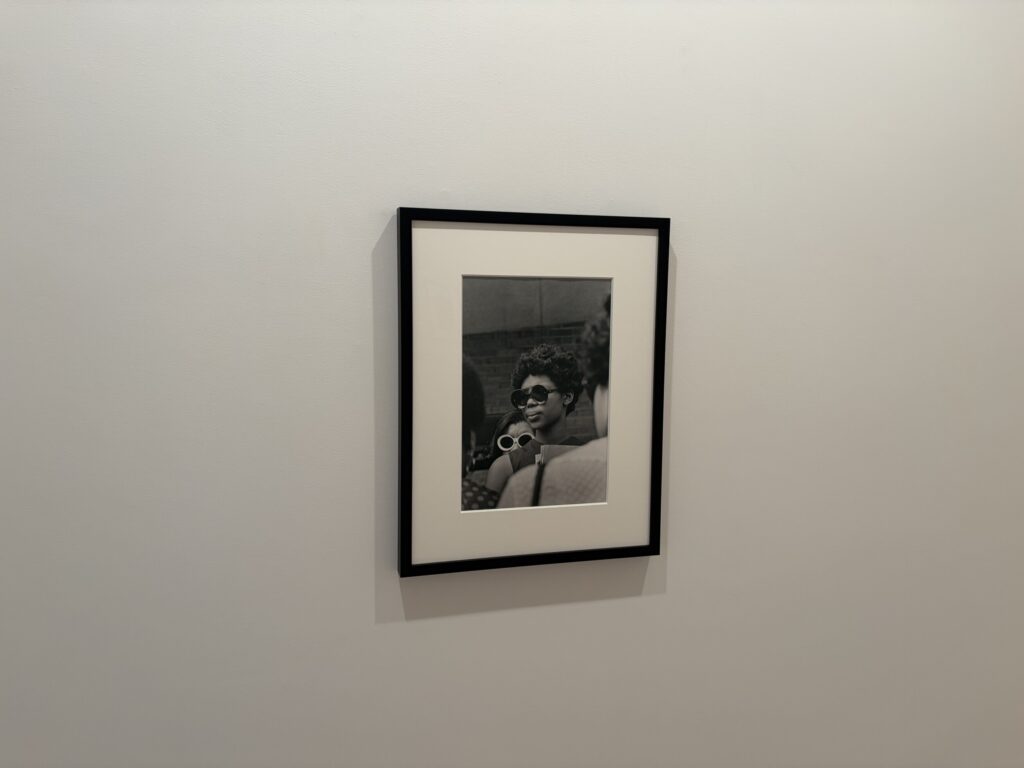
Comments/Context: Stories about rediscovered caches of vintage photographic prints are the stuff of dreams for collectors and curators alike – just when we thought there were no more surprises in the chronicle of a given artist, there’s a twist in the plot and a new chapter to investigate.
For the South African photographer Ernest Cole, several such discoveries have marked the period after his death in 1990. Cole is best known as a critical documentary photographer working during the apartheid period in South Africa, his images made as a freelancer for various local magazines and newspapers (primarily during the early to mid 1960s) powerfully and incisively capturing a society divided by racial inequality (as seen in a 2014 survey at NYU’s Grey Art Gallery, reviewed here, and in the 2012 Rise and Fall of Apartheid exhibit at the ICP, reviewed here). Cole ultimately fled South Africa just after the publication of his landmark photobook House of Bondage in 1967 (as seen in a presentation inside MoMA’s permanent collection in 2024, reviewed here), becoming an exile in New York, Sweden, and elsewhere. In his later years, Cole faded from view, battling financial troubles and mental illness, among other demons, his artistic archive from his days as a pioneering photojournalist largely disappearing, or so it was thought.
The first twist in Cole’s posthumous history came in 2017, when three safe deposit boxes were unearthed at SEB (Skandinaviska Enskilda Banken) and returned to the Ernest Cole Family Trust. Inside were some 60000 negatives and press clippings, which gave the trust the opportunity to effectively restart scholarship around Cole’s photographic career. From that spark emerged a number of more comprehensive museum exhibitions, a reprint of House of Bondage, and a study of Cole’s images made in America after his exile from South Africa (taking shape as the photobook A True America, with its own associated traveling exhibition). The second twist came more recently, with the discovery of a group of Cole’s vintage prints from his time in America that were housed at the Hasselblad Foundation (also located in Sweden); these were also returned to the Cole trust, a group of nearly forty previously unseen prints then making their way to Goodman Gallery. A selection of fourteen of those resurfaced American prints makes up this small show, only a few of which overlap with the images included in A True America.
There is a certain sense of frustrated irony that hangs over Cole’s diasporic move to America. Here’s a talented photojournalist who has actively left his home country, fleeing the horrors and racial hierarchies that shaped his life in South Africa and hoping perhaps for some kind of brighter future, only to arrive and resettle in America during the thick of 1960s Civil Rights movement, where the persistent inequalities of black life were playing out in scenes of unrest and violence all across the country. In a 1968 letter, he understands his role as a recorder of truth, but bemoans having to “live a life of being the chronicler of misery and injustice and callousness”. In commissioned work for the Ford Foundation and on assignments for The New York Times, over a period of several years (reaching into the early 1970s), Cole documented black communities in both urban and rural settings across America, ranging from the cotton fields of the deep South to the city streets of Harlem.
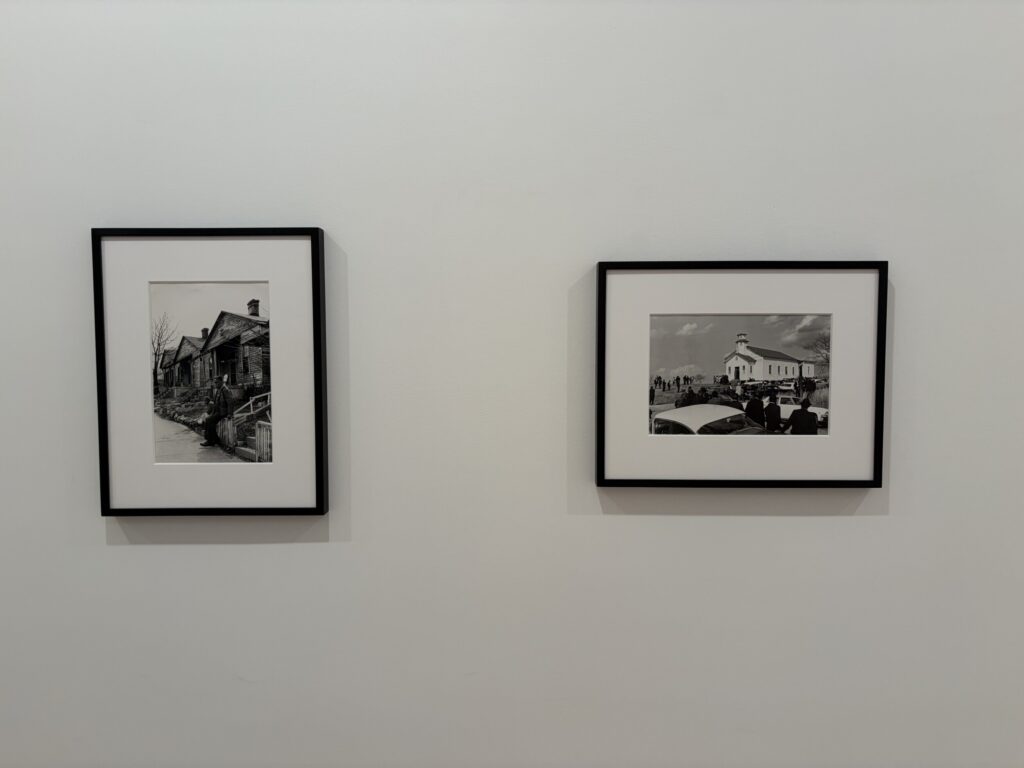
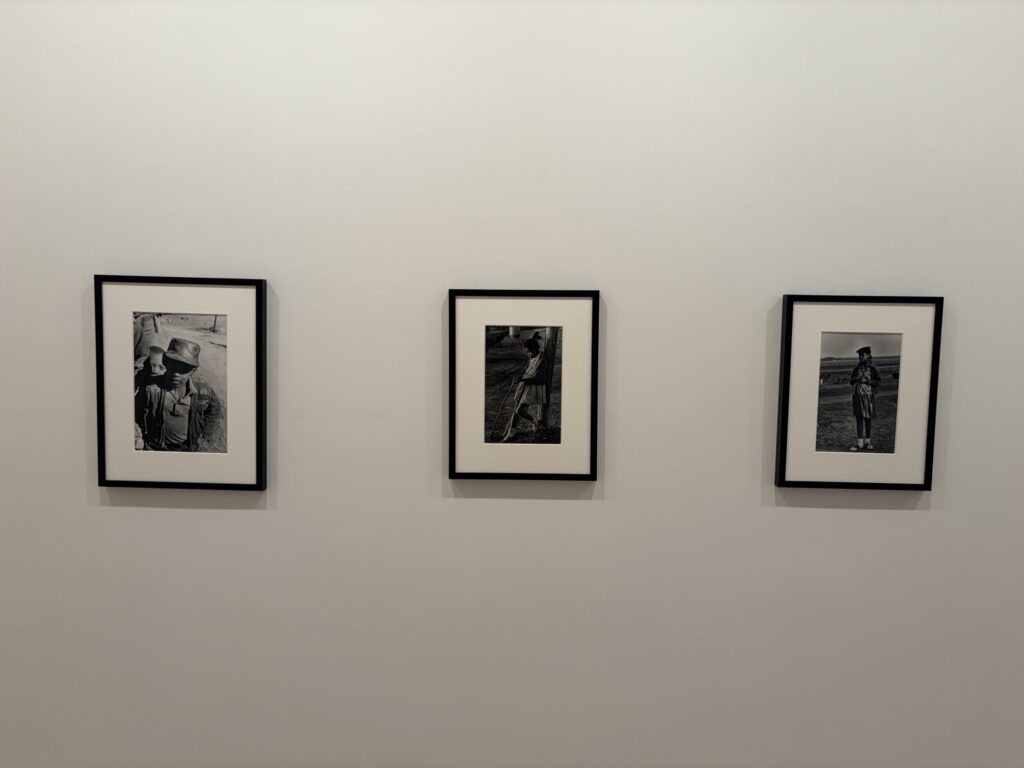
Within this small trove of rediscovered prints, Cole’s images from the South are among the most complex and poignant. Two portraits of young girls in dresses are set against the dry flatness of farm fields, finding moods that quietly mix youthful hope, blank resignation, and everyday boredom. The strongest photograph in the show captures two older folks sitting in front of a block of textural wooden houses in Nashville, TN, watching the world go by with a sense of world-weary acceptance. And Cole makes the most of compositional contrasts of light and dark available in two other scenes, in an image of a funeral service in Alabama (with a jumbled blend of dark suits and white cars), and in another of a memorial service for Martin Luther King Jr. in Atlanta, GA, where stylishly round sunglasses in black and white echo across the faces of two female mourners.
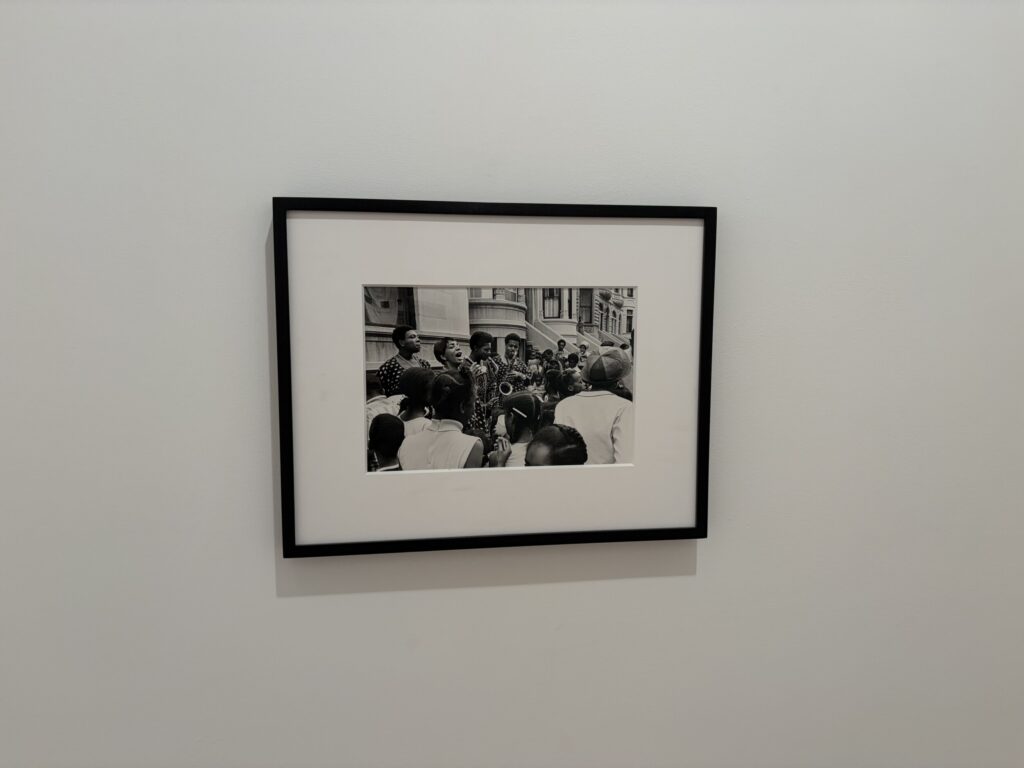
Back in New York, Cole notices both the layered bustle of the streets and the solitary moments of individuals within that urban flow. A man getting out of a parked Cadillac is drawn into a street corner conversation, while two trios (mothers sitting on boxes, younger people standing in a nearby doorway) repeat across a storefront scene, Cole’s consistent ability to pull compositional coherence out of movement readily on display. In the subway, Cole’s sensitive attention shows through again, in two understatedly compassionate images of a black woman rummaging through her purse and then riding patiently, making her way with quiet grace. Still other images continue this back and forth of group and individual, diving into the dense crowd around a block party band and stepping back to capture the engaged political energy of a Black Panther speaker in dark sunglasses.
Coming from a previous life strictly controlled by systemic racism in South Africa, Cole’s time in America must have felt surprisingly disorienting, with overtly visible freedoms and inequalities constantly brushing up against each other. This sprinkling of vintage images hints at what Cole was seeing and feeling, and offers a flavor of how he was applying his own history to his new circumstances. These rare vintage prints will almost certainly disappear into private and institutional collections soon, so don’t miss this opportunity to wrestle with Cole’s thoughtfully conflicted vantage point.
Collector’s POV: The prints in this show are priced at $14500 or $20500 each, based on size, with some already sold/reserved. Cole’s work has little secondary market history, so gallery retail remains the best option for those collectors interested in following up.