JTF (just the facts): Published in 2026 by Overlapse (here). Hardcover (21.5 x 16.5 cm), 126 pages, with 69 photographs and illustrations. Includes texts by the artist. In an edition of 300 copies. Design by Manos Tzavolakis and Tiffany Jones. (Cover and spread shots below.)
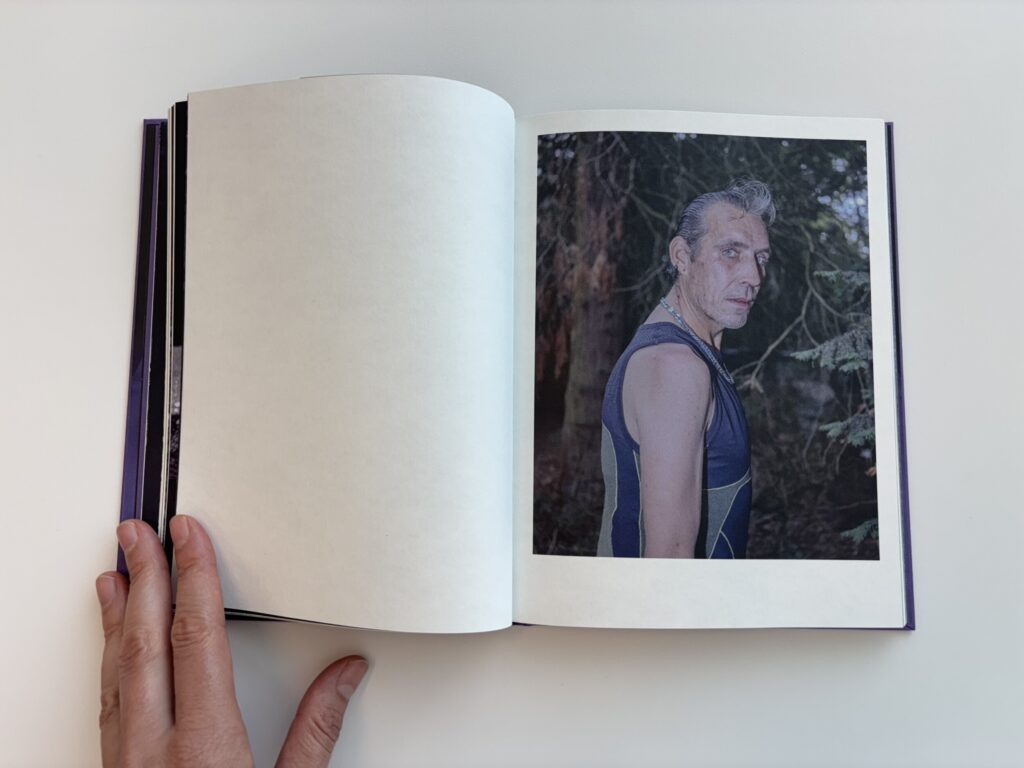
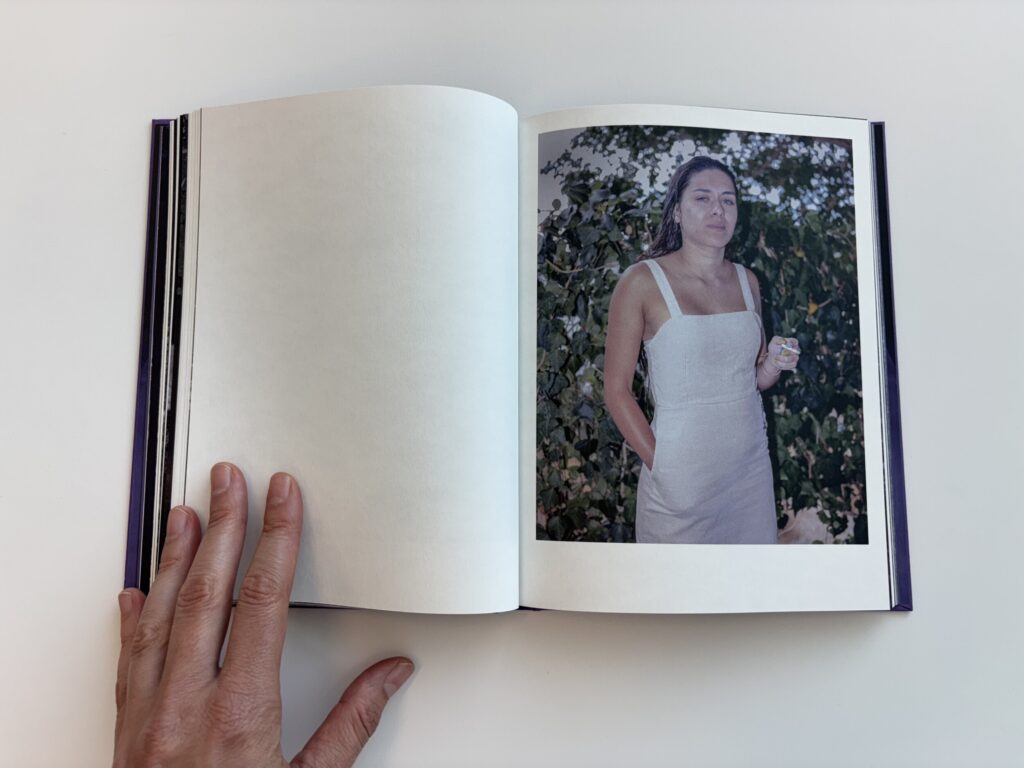
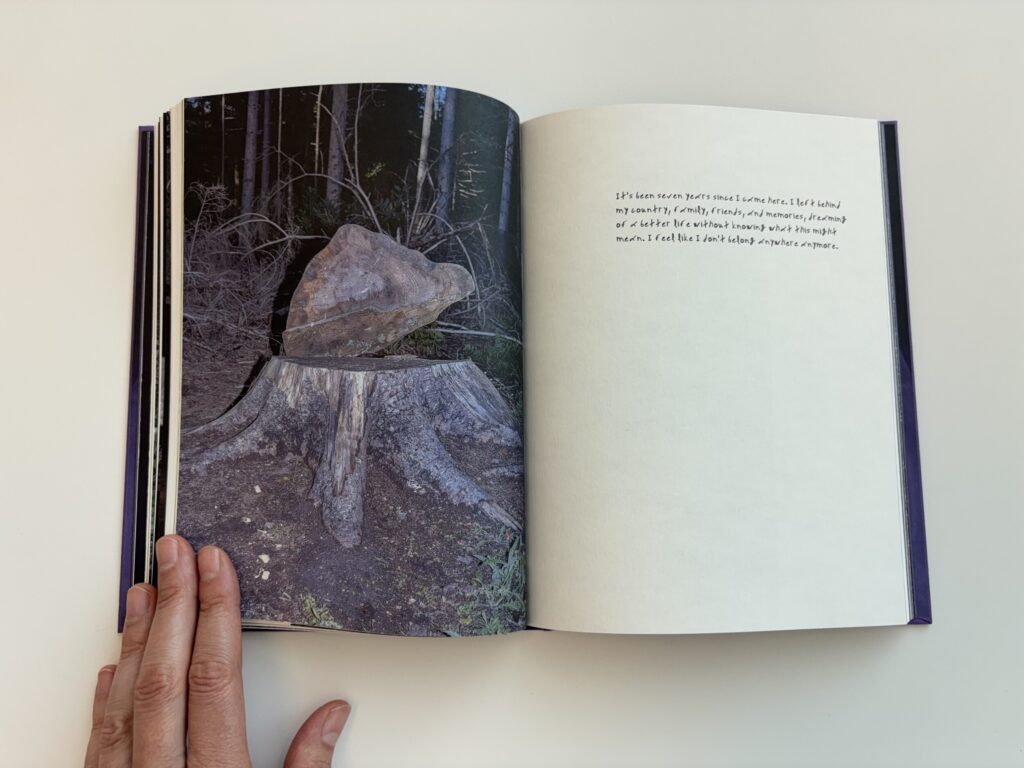
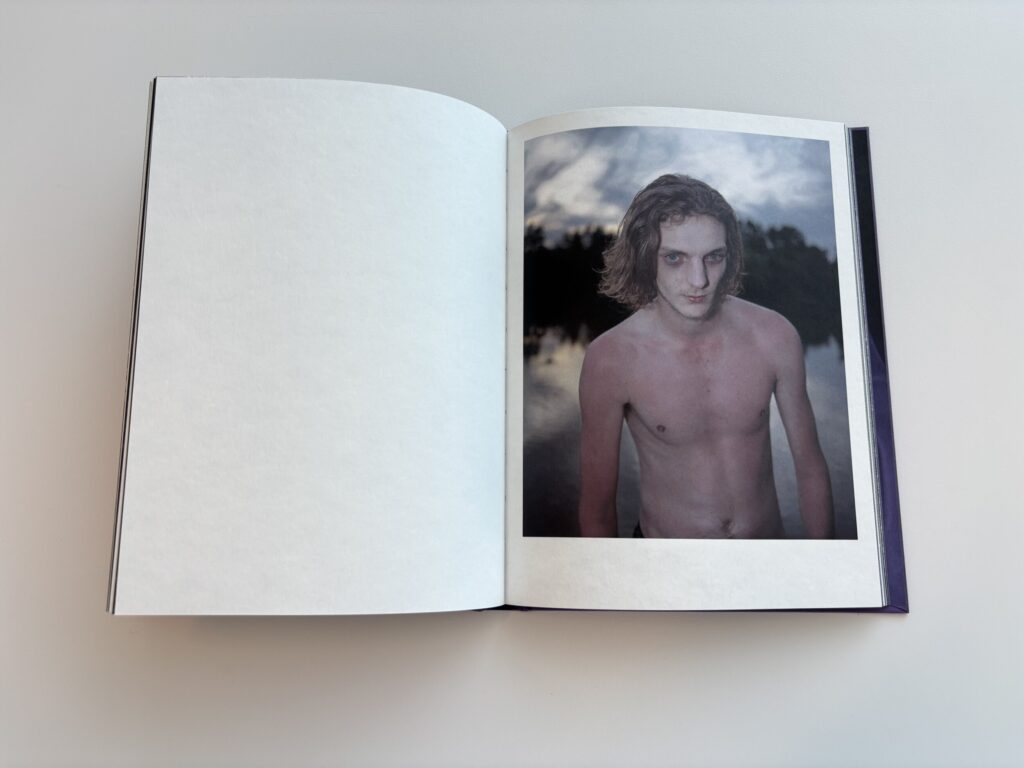
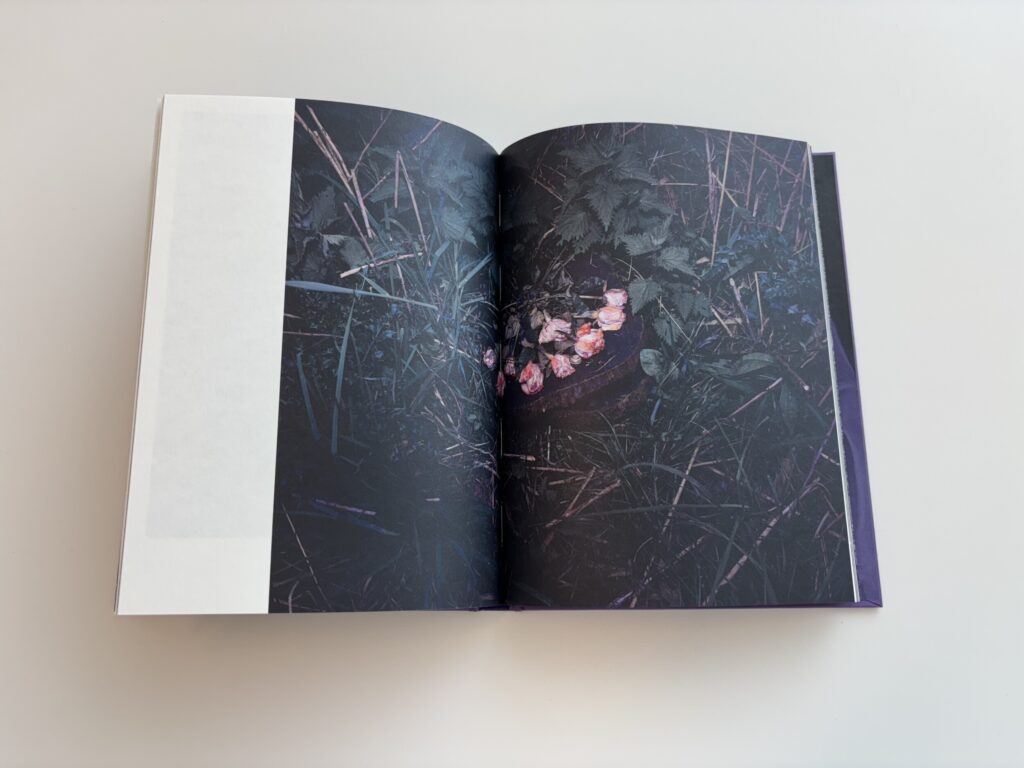
Comments/Context: Strawberry Blue by the Greek artist Marinos Tsagkarakis is a small, carefully made object that holds a quiet tension, both sensuous and somewhat distant, playful yet subtly unsettling. Shortly after Tsagkarakis moved from the sun-drenched landscape of Crete to the colder, structured environment of the Netherlands, he got into a bad road accident. The resulting physical confinement and emotional disorientation triggered an internal crisis of identity, and his response was to wander. For seven years, he routinely returned to a specific public park south of his new home, using his camera not just to document, but to rebuild a shattered sense of self. Strawberry Blue represents a departure from Tsagkarakis’s earlier photobook Paradise Inn (reviewed here), which explored the visual and social effects of tourism in Greece. In that project, he focused on leisure landscapes and the ways tourism can shape both place and identity. By contrast, Strawberry Blue takes a more personal approach, shifting attention from the broader social landscape to questions of belonging, adaptation and self-reflection.
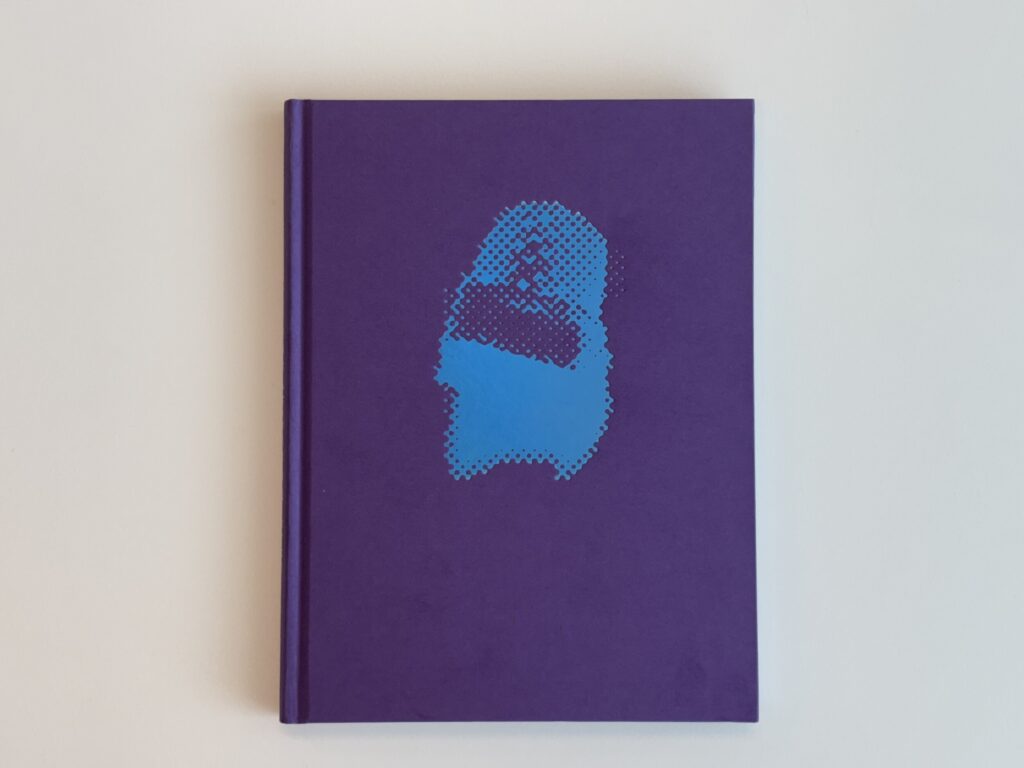
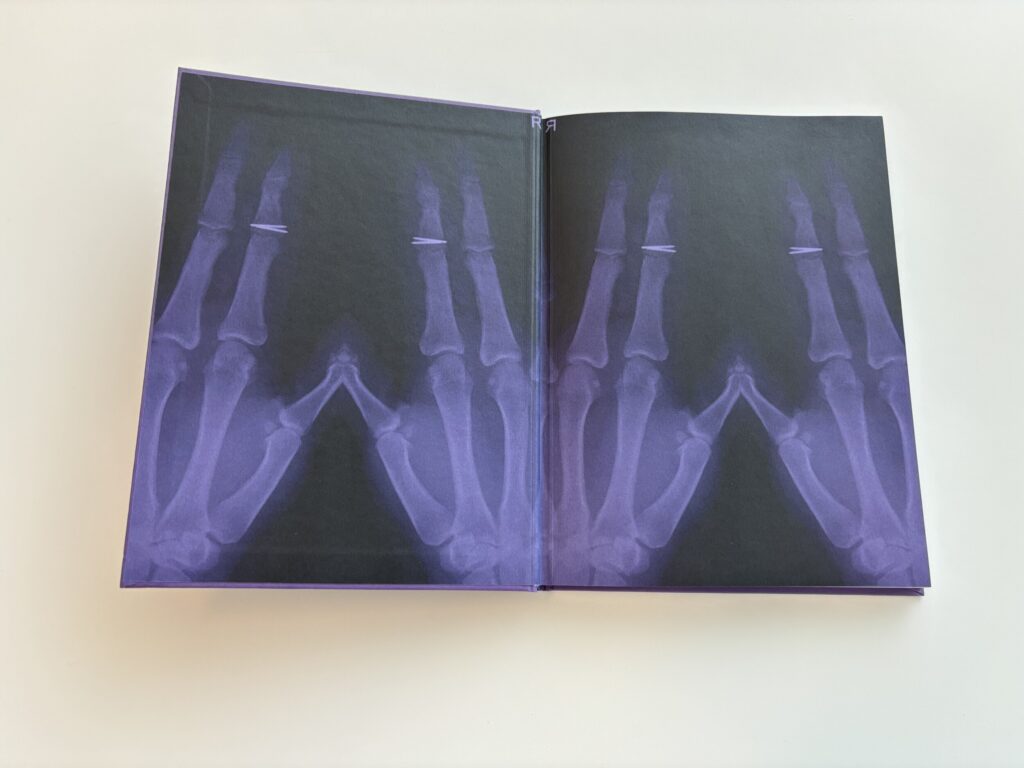
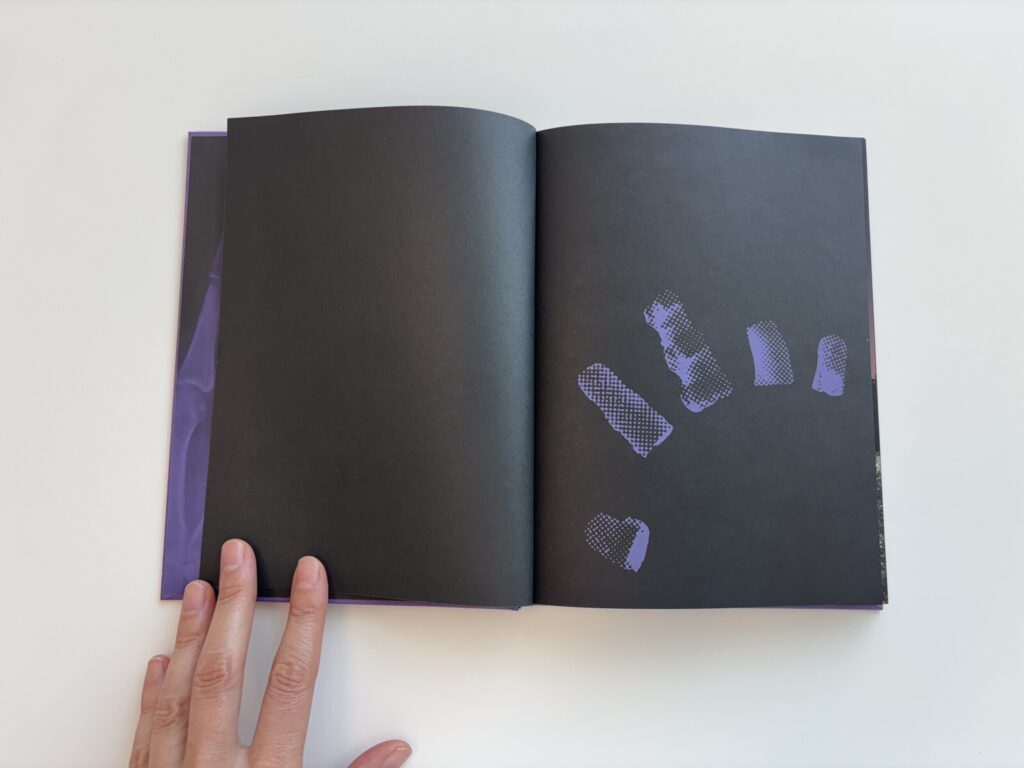
The title seems to suggest a gentle mismatch; two things that don’t quite belong together. It also takes on additional resonance when considered through the book’s recurring use of color. Red (strawberry) and blue combine to create purple (a hue often associated with bruising), a visual reminder of injury and healing. As a photobook object, Strawberry Blue immediately stands out with its striking purple cover. An abstract bluish silkscreen form is foil-stamped on the front, while the title and artist’s name appear only on the spine, revealing little about what lies within. The book is comfortably sized and pleasant to hold. It opens to endpapers featuring purple X-rays of hands stabilized with surgical pins, a reference to the photographer’s physical injury. It is followed by an enigmatic spread showing a cluster of purple forms, suggesting either a handprint or the traces of fingertips pressing into the page, echoing the graphic motif on the cover. Inside, a dynamic visual rhythm unfolds through varied photograph sizes and placements, while brief writings by the artist are interspersed throughout, adding another layer of interaction.
At first glance, Strawberry Blue appears deceptively light. The palette is saturated, almost confectionary: glowing reds, electric blues, and a persistent artificial brightness. Yet this brightness is not celebratory. Tsagkarakis mobilizes color as both surface and rupture. The titular contradiction (strawberry versus blue) signals the book’s central tension: sweetness undone by displacement, familiarity turned improbable. That sense of being slightly out of place mirrors many of the photographs in the book. Objects and bodies are often rendered in hyperreal clarity, but they rarely resolve into stable meaning. In a way, the park becomes a surreal, theatrical stage where the boundaries between the internal psyche and the external landscape completely dissolve.
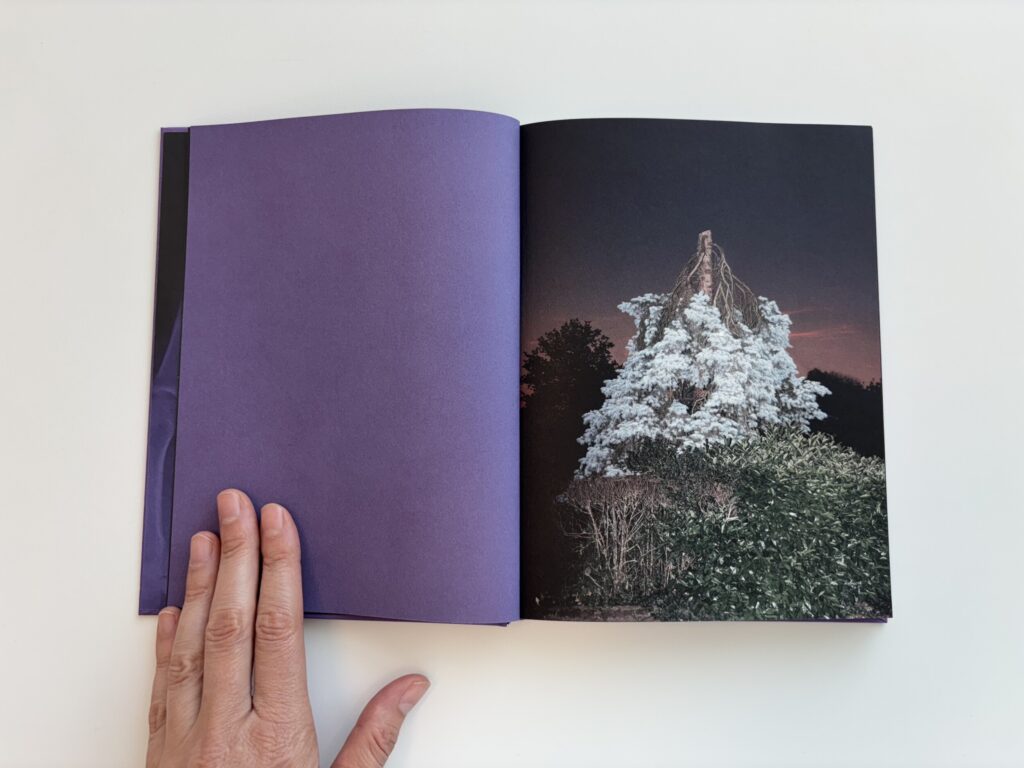
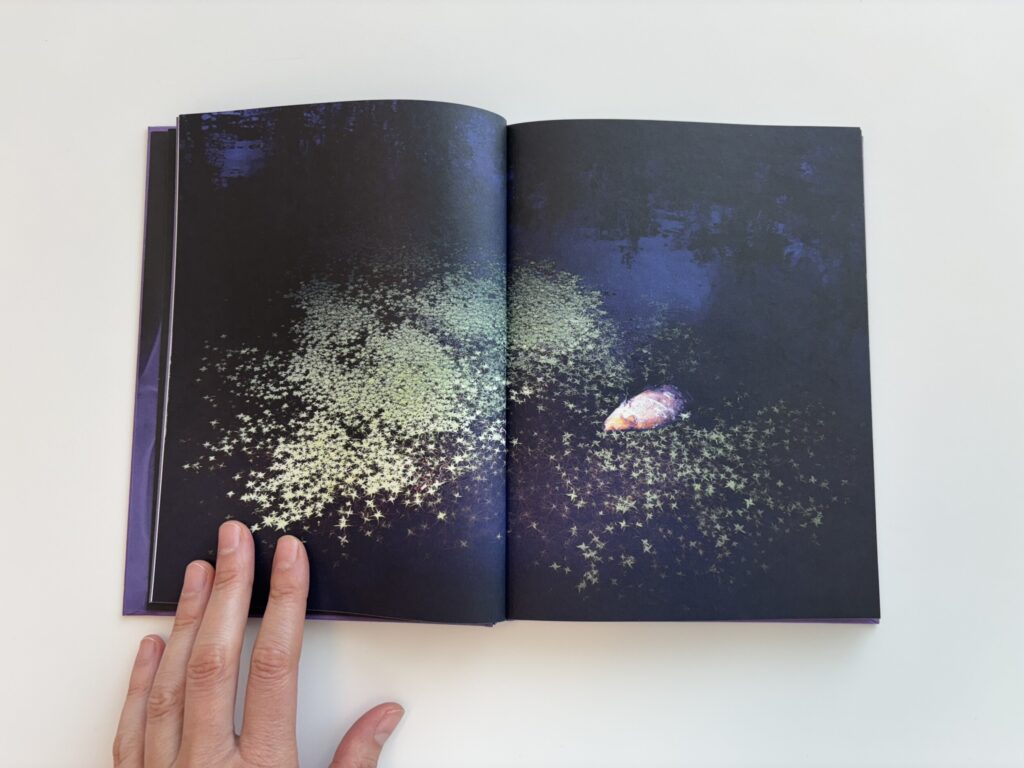
The opening photograph shows a flash-lit tree at the center of the frame, its pale foliage glowing against a fading twilight sky. Topped by a tangle of exposed branches, the form appears at once botanical and sculptural, and the stark artificial lighting isolates the vegetation from its surroundings, transforming an ordinary garden scene into something more enigmatic and surreal. A few pages later, a photograph of water densely covered with green aquatic plants fills an entire spread; a dead fish floats on the surface, adding a subtle note of unease to an otherwise serene scene.
The book’s sequencing suggests a loose, open-ended narrative rather than a clear storyline. Figures reappear without full explanation and the setups and gestures hint at relationships that remain indistinct. A young body half-turned in a dim room finds a quiet echo a few pages later in a similar pose outdoors, linking the images more through mood than through plot. Tsagkarakis uses repetition throughout the book, allowing certain themes and visual connections to emerge gradually rather than spelling them out. As images echo one another across the sequencing, the book develops a calm, reflective rhythm that feels closer to the way memories surface and reconnect over time.
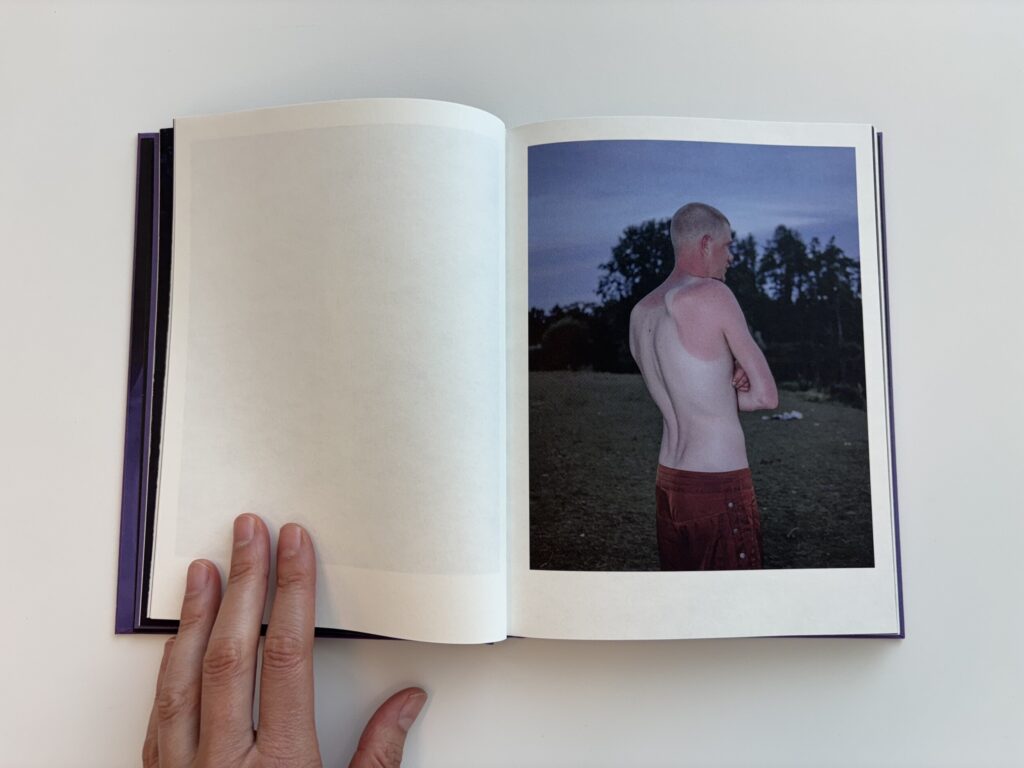
One photograph depicts a young man standing by the water at dusk. A pronounced sunburn stretches across his shoulders and upper back, forming an almost abstract shape against his pale skin. Illuminated by flash, his body appears both vulnerable and sculptural, and the image balances tenderness and discomfort. Tsagkarakis masterfully pairs raw, tightly framed portraits with tangled, almost claustrophobic landscape views. These portraits serve as human mirrors for his own fractured identity, capturing people suspended between their own vulnerabilities and an innate resilience. These individuals, just like Tsagkarakis, carry their histories on their skin through sunburns, scars, tattoos, and a palpable sense of alienation. Captured in moments of quiet suspension, their eyes hold a striking mixture of wariness and confidence.
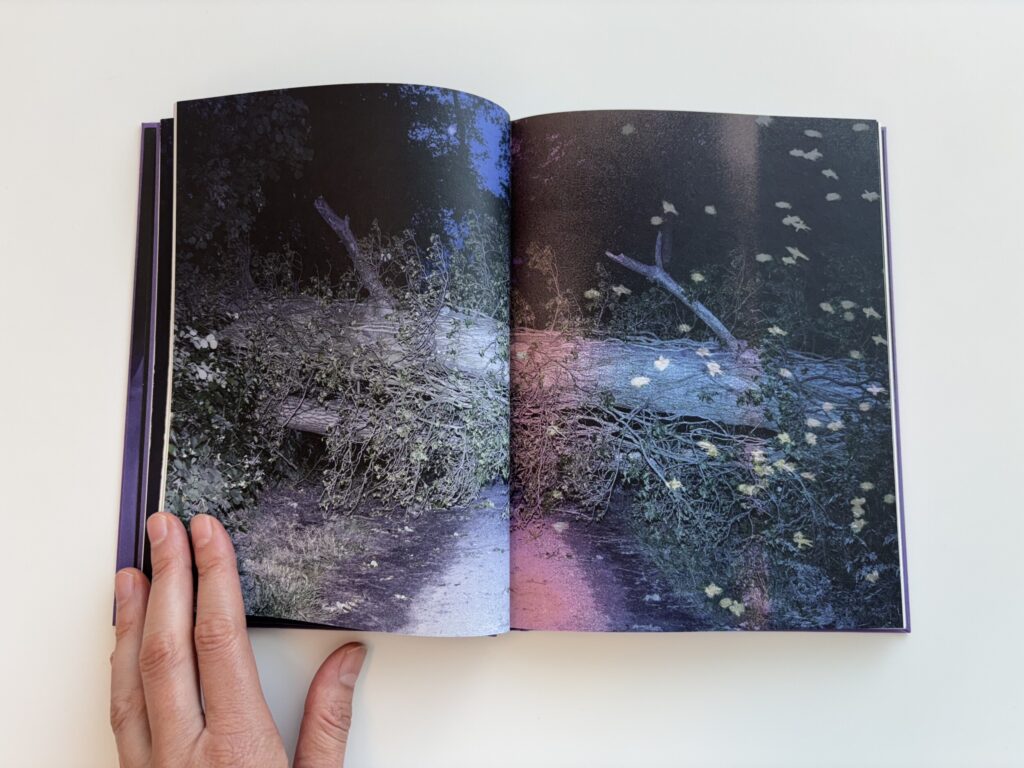
Images of cut, fallen and damaged trees recur throughout Strawberry Blue, quietly reinforcing its themes of injury, recovery and adaptation. Marked by broken branches, exposed trunks, and signs of human intervention, these trees carry visible evidence of disruption while remaining rooted within the landscape. In the context of Tsagkarakis’s experience of physical trauma and relocation, they serve as visual counterparts to the body itself – wounded, altered, yet continuing to heal and grow. Their repeated appearance also deepens reflections on belonging: like a transplanted tree, the artist navigates the challenge of finding stability in unfamiliar surroundings.
The book closes with a photograph of a swan gliding across dark water at dusk. After the recurring motifs of injury, broken trees and bodily vulnerability, the image feels unexpectedly calm. Yet it avoids offering a neat resolution. Surrounded by deep shadows and mirrored in the water below, the swan suggests a tentative sense of belonging and balance – a fitting conclusion to a work shaped by themes of recovery, adaptation, and the search for new roots.
As a photobook, Strawberry Blue balances moments of beauty with an underlying sense of uncertainty. Drawing on experiences of migration, injury, and adaptation, Tsagkarakis creates a work that is as much about recovery as it is about belonging. It is less concerned with telling a clear story than with creating a particular mood through color, texture, and sequencing. The book encourages slow looking and repeated visits, allowing meanings and connections to emerge gradually rather than presenting a single, fixed interpretation. In doing so, Tsagkarakis demonstrates how photography can communicate complex emotional states through atmosphere, rhythm, and association as much as through description.
Collector’s POV: Marinos Tsagkarakis is represented by OPR Gallery in Milan (here). Tsagkarakis’s work has not yet reached the secondary markets with any consistency, so gallery retail remains the best option for those collectors interested in following up.