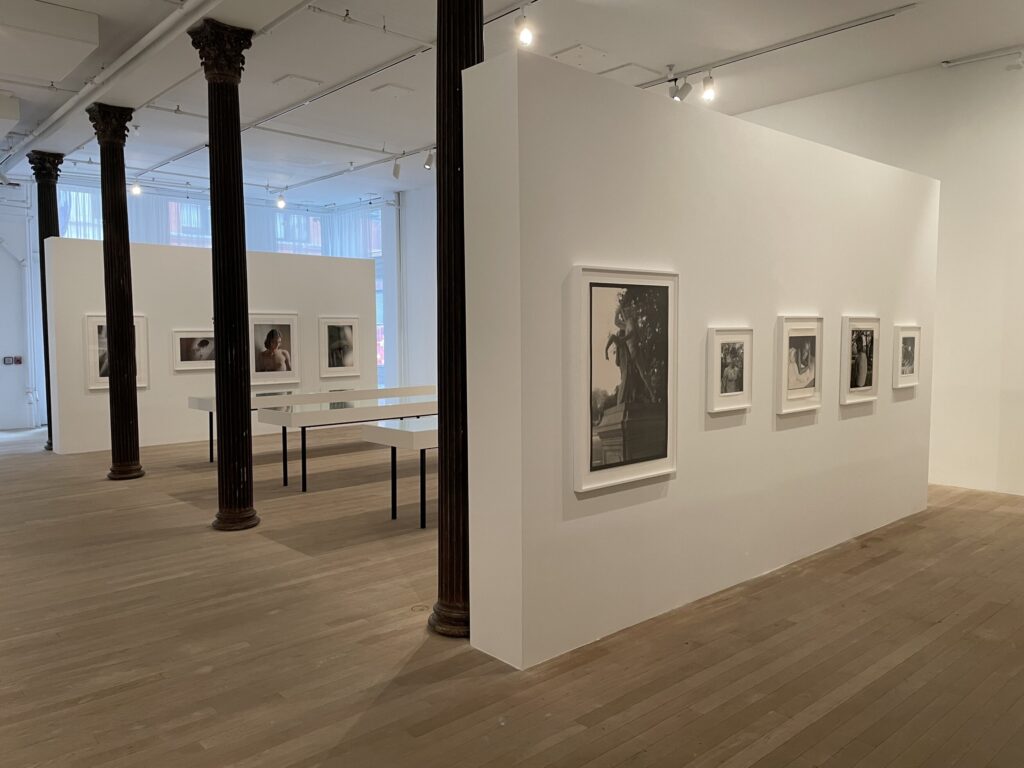
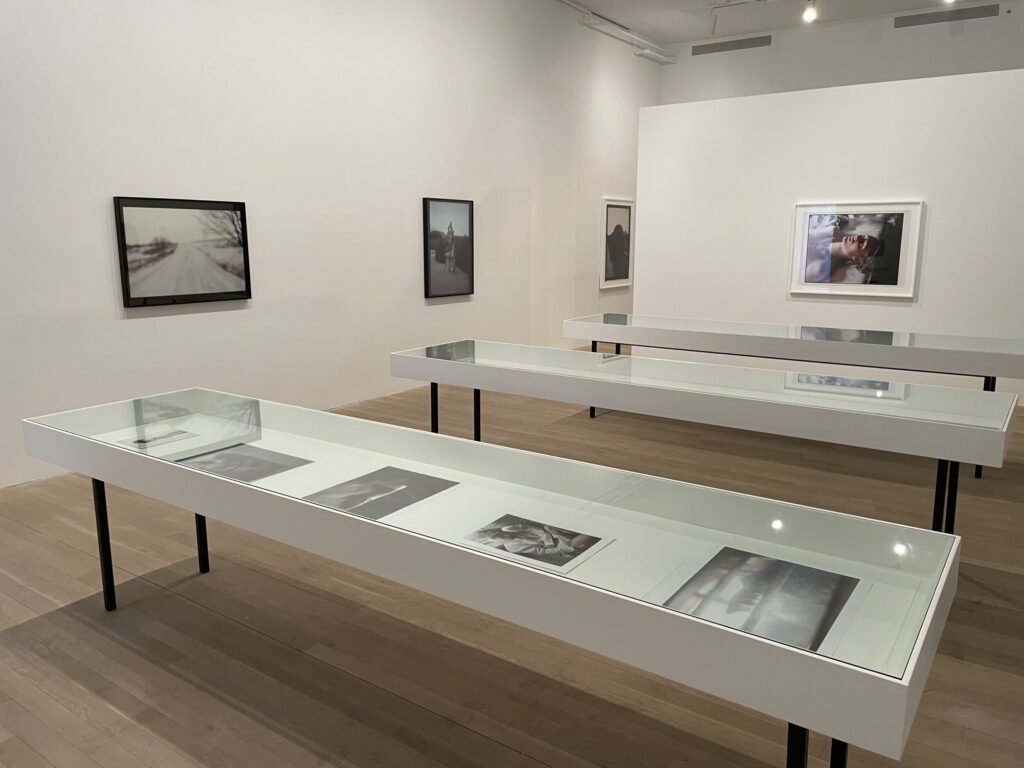
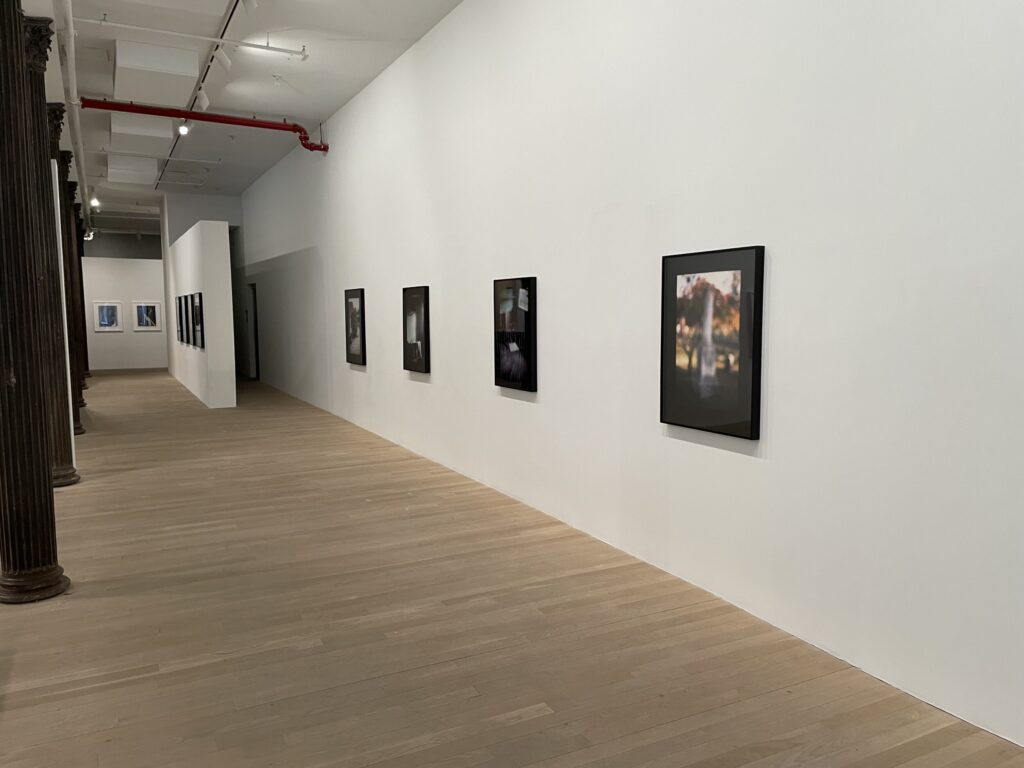
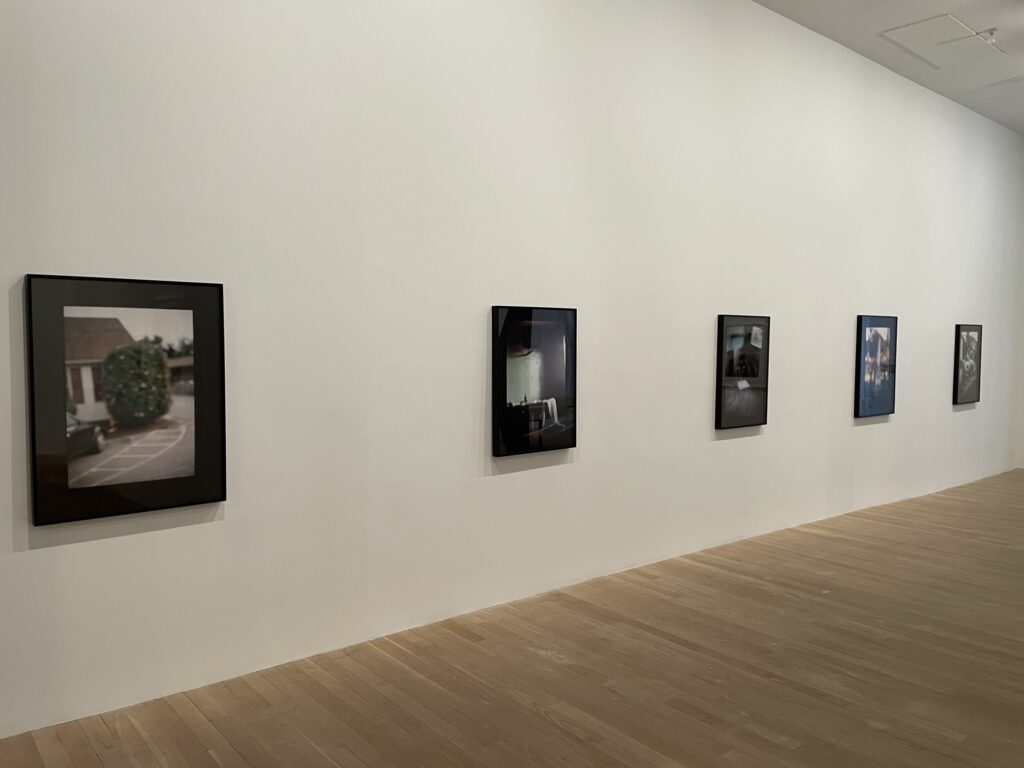
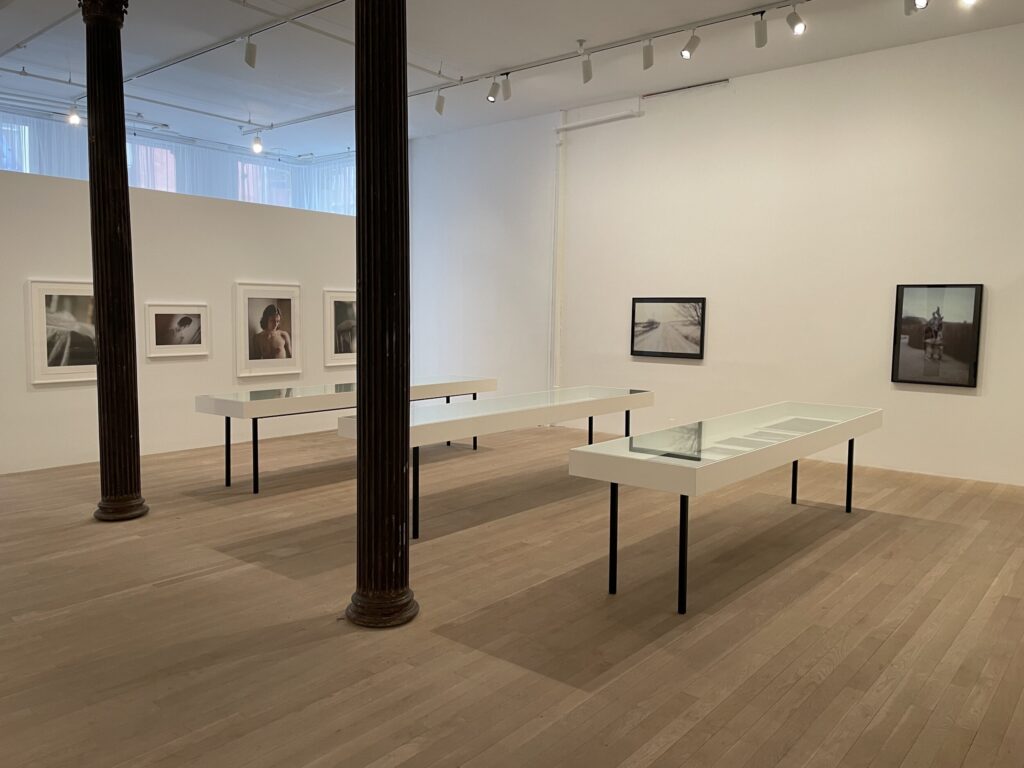
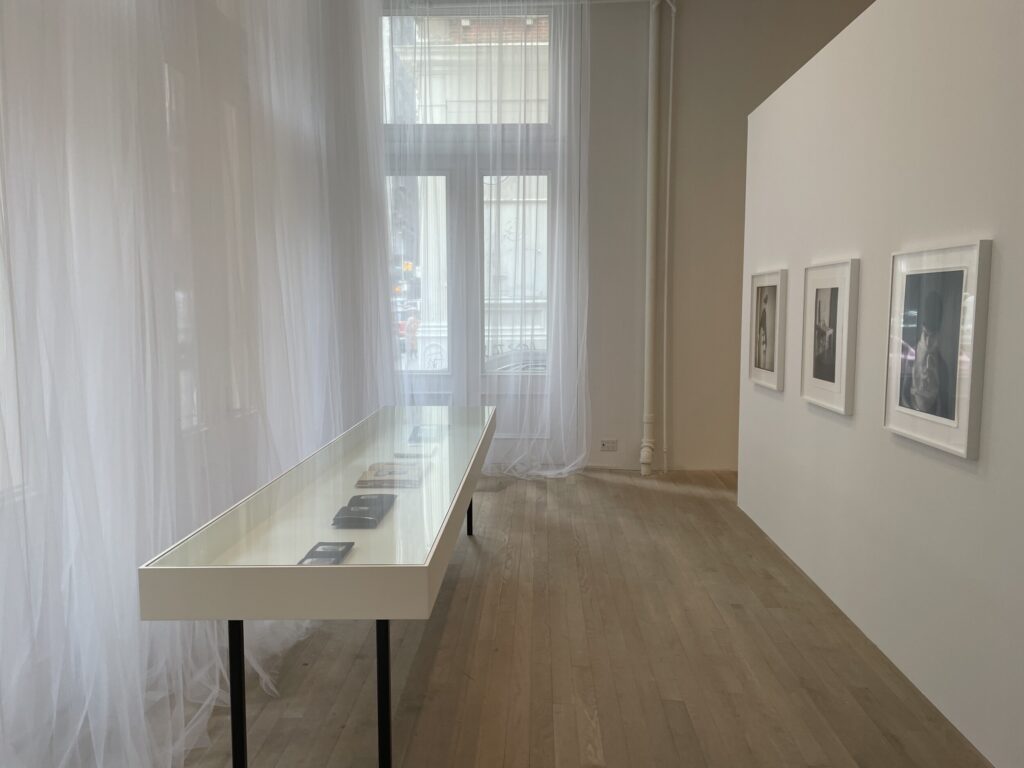
JTF (just the facts): A multi-decade survey exhibition consisting of over 90 photographs, variously framed and matted, and hung against white and light grey walls in the North and South galleries. (Installation shots below.)
The following works are included in the show:
- 11 cibachrome prints, 1997, 1998, 2000, 2001, n.d., sized 30×40, 36×26, 37×27, 40×30 inches
- 14 gelatin silver prints, 1992, 1994, 1995, 2001, 2003, 2004, 2005, 2006, sized 14×11, 20×16, 24×20, 40×27, 44×31 inches
- 2 c-prints, 2003, 2004, sized 31×40, 38×32 inches
- 4 pigment prints, c late 200s, n.d., sized roughly 17×22, 24×20, 35×24 inches
- 1 installation of 39 photographs, from the exhibition “Your Picture on My Wall”, 1977-2003, variable dimensions
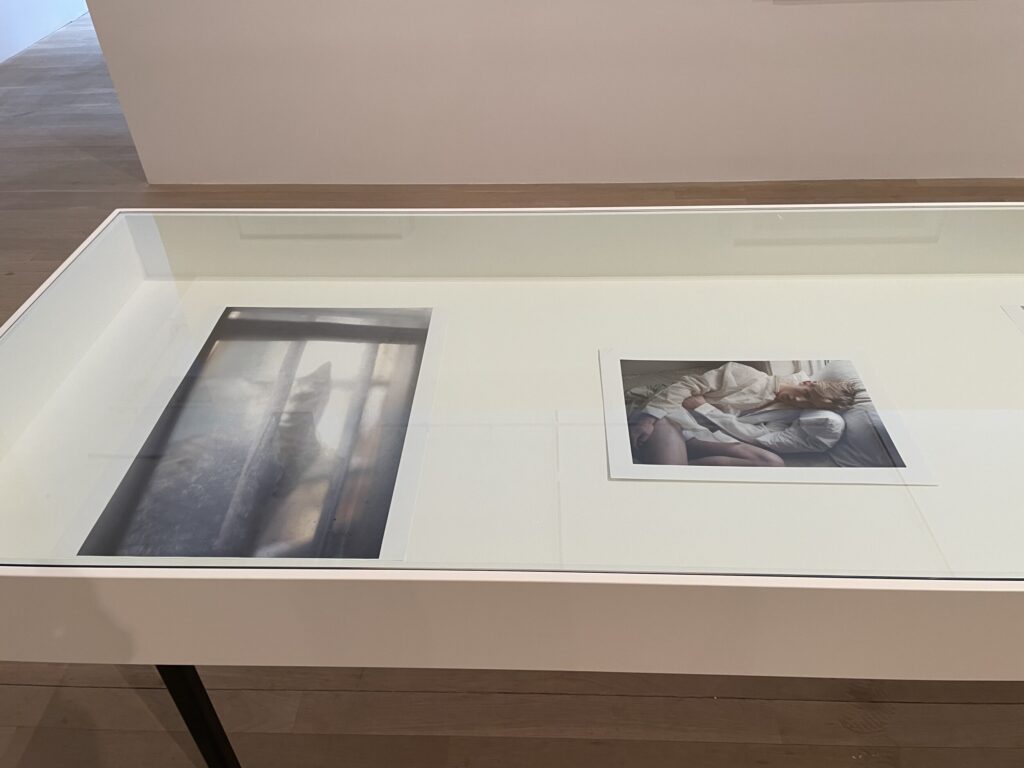
- (vitrine): 4 pigment prints, 2001, c late 2000s, sized 16×13, 19×13, 24×35 inches; 1 Epson print, 2009, sized 16×12 inches
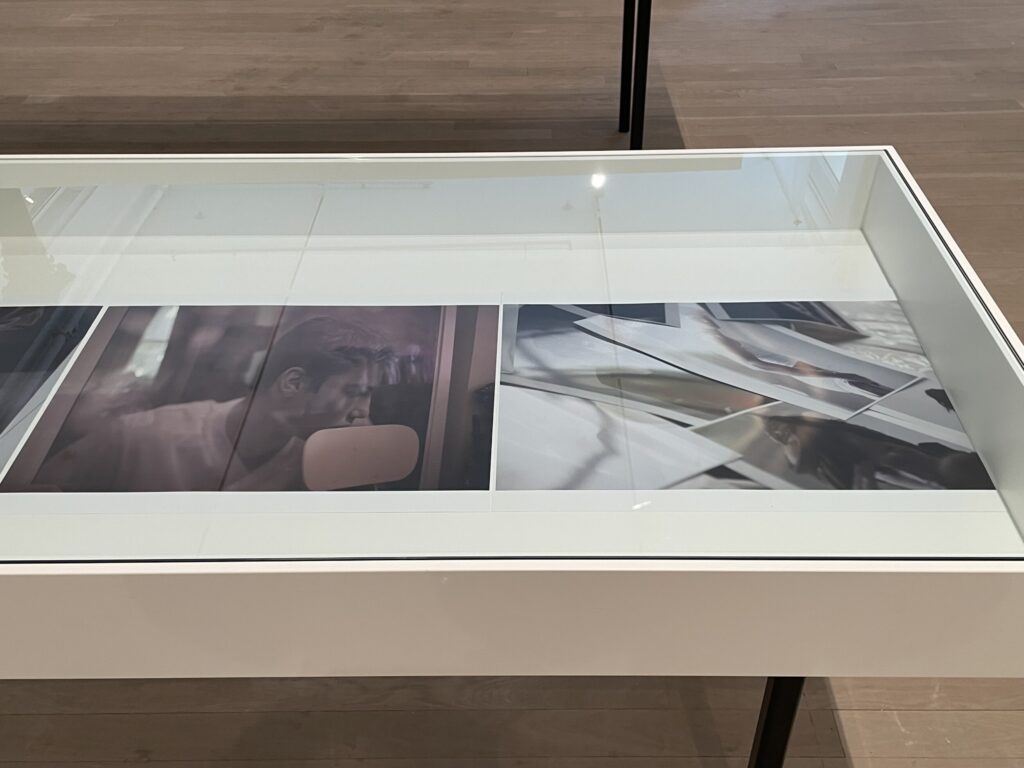
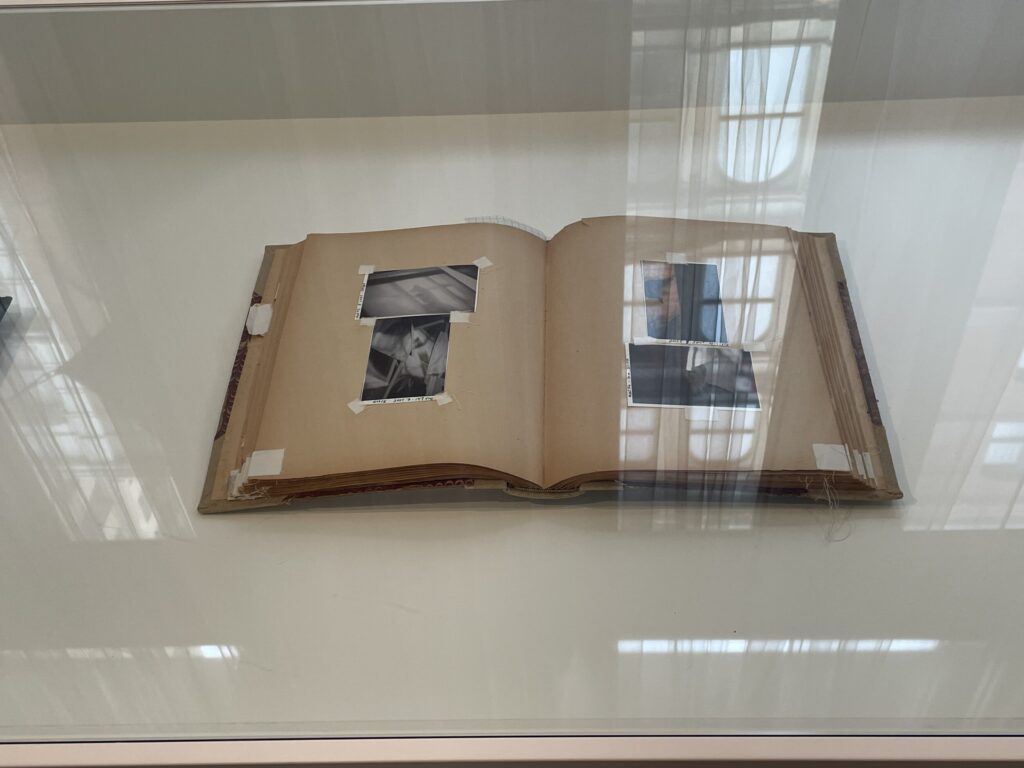
- (vitrine): 6 images from the exhibition “The Indecisive Moment”, 2009
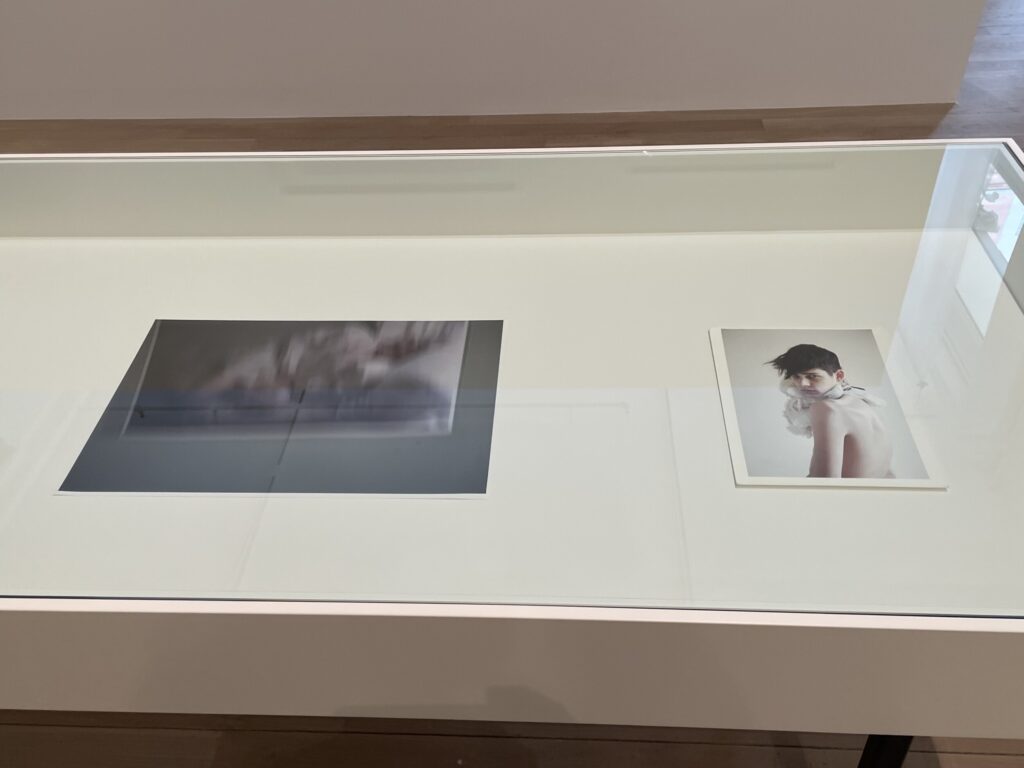
- (vitrine): 5 pigment prints, 2009, c late 2000s, sized roughly 11×9, 12×16, 13×19, 22×17 inches
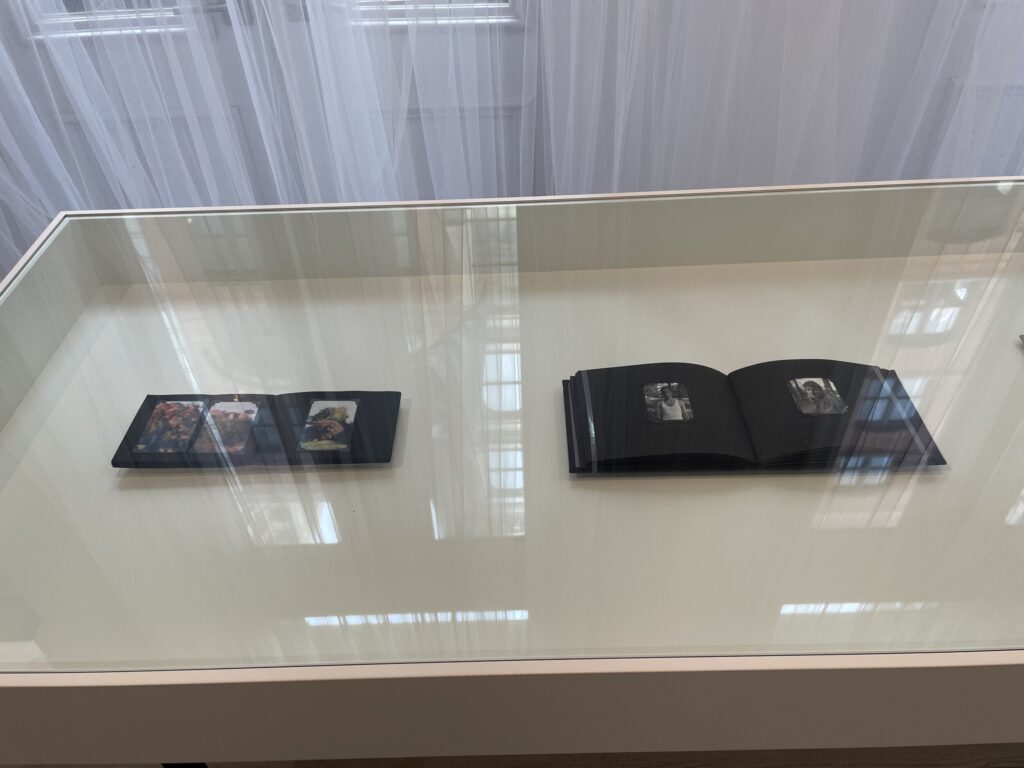
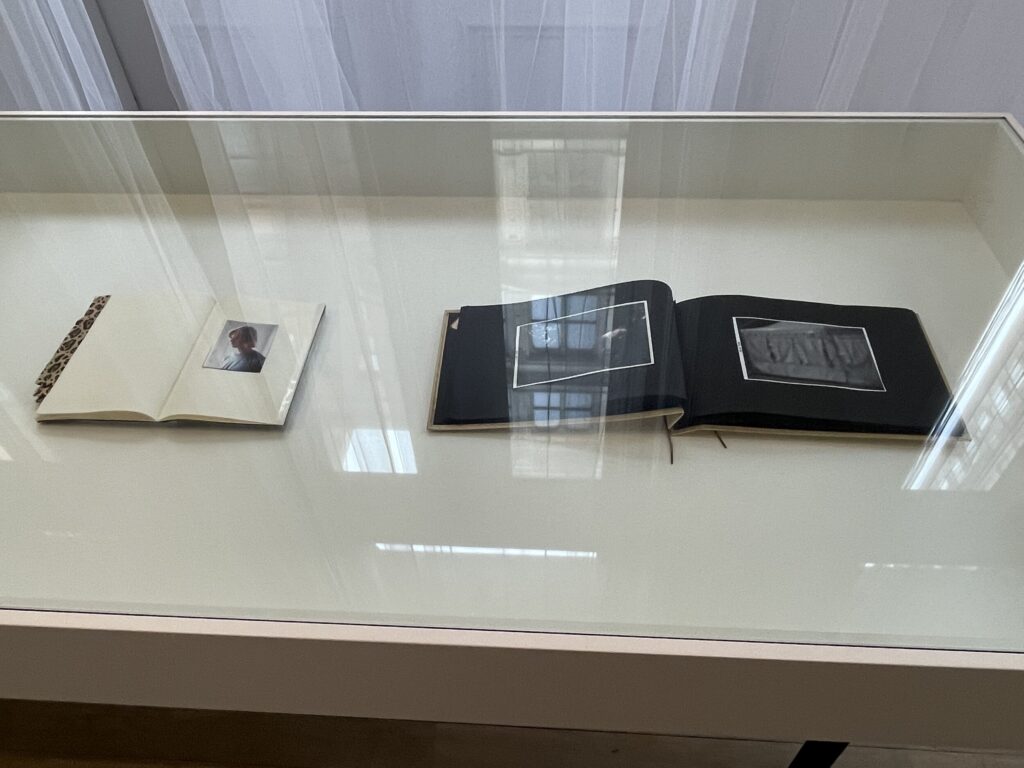
- (vitrine): 5 mixed media workbooks/albums, 1998, 1998, 2009, 2012, n.d.
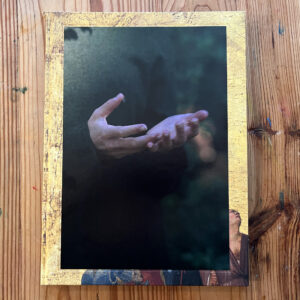
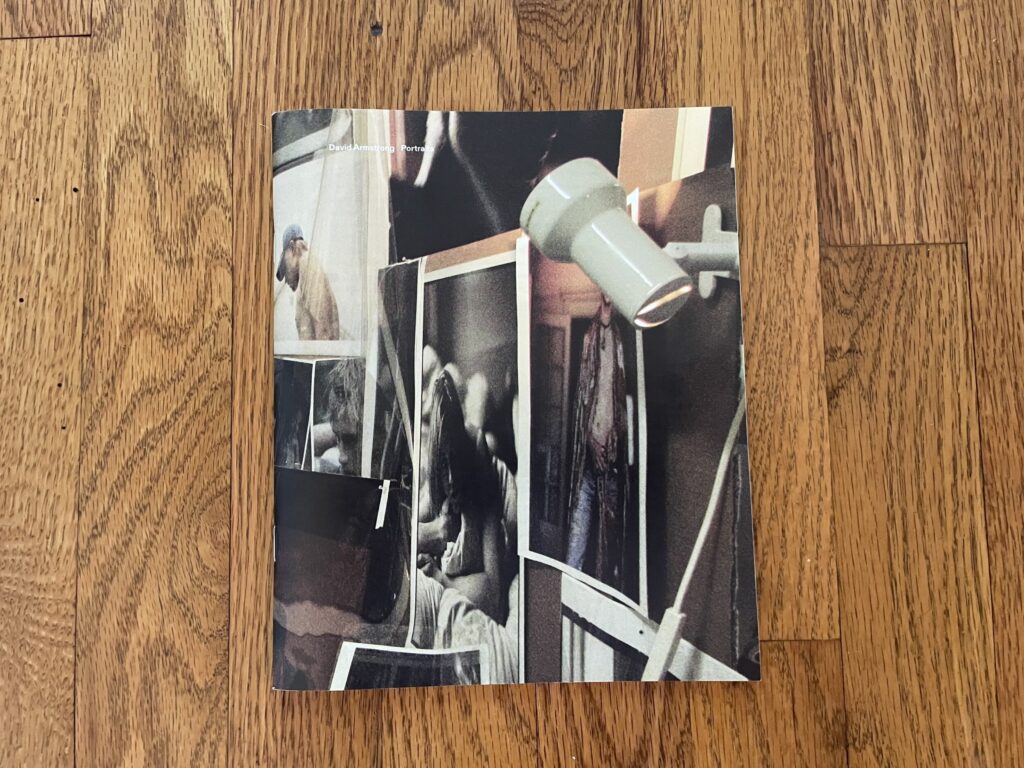
An accompanying catalog, with essays by Kelly Taxter & Jay Sanders, Manuel Segade, and Elisabeth Sussman has been published by Artists Space. (Cover shot below.)
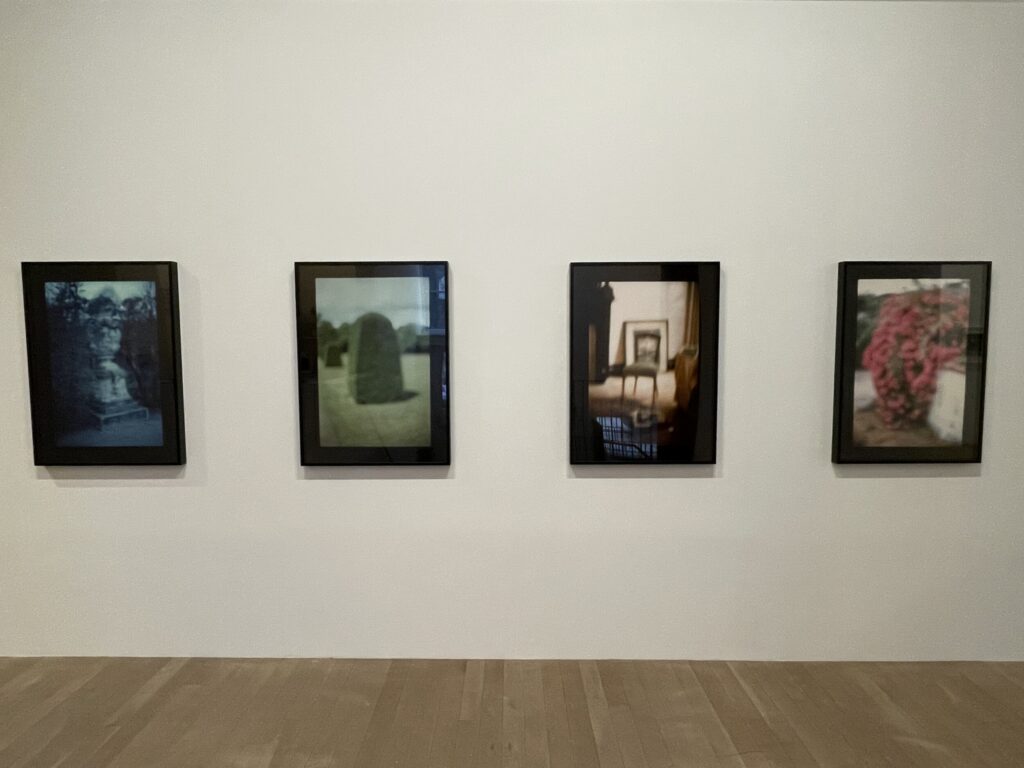
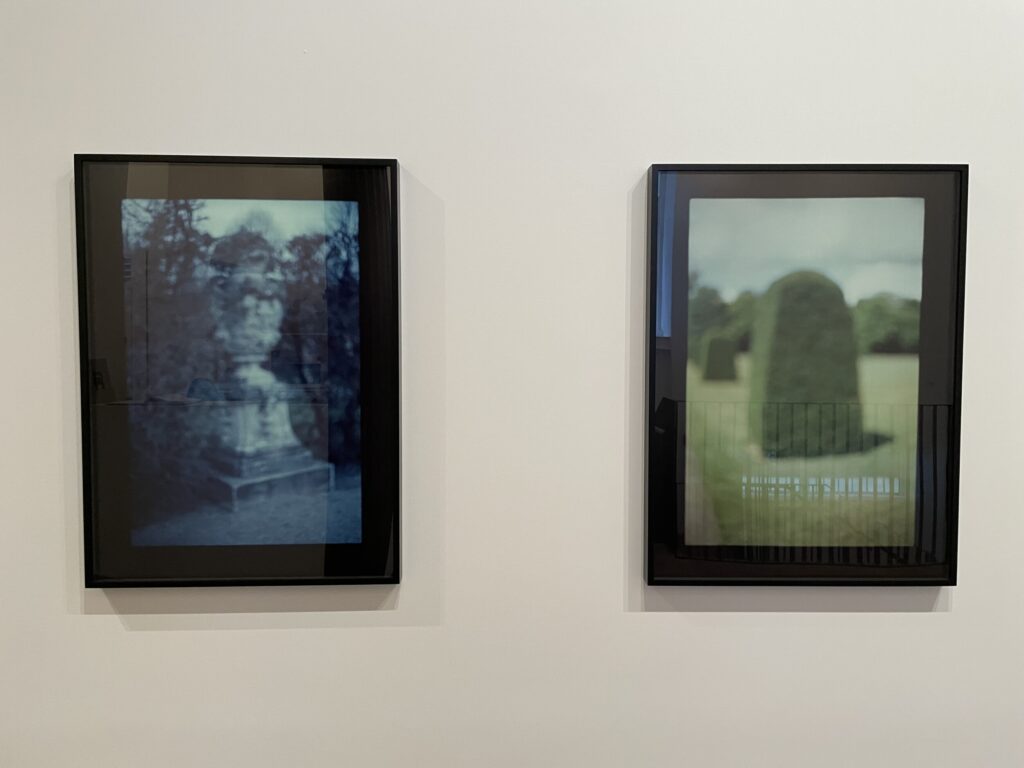
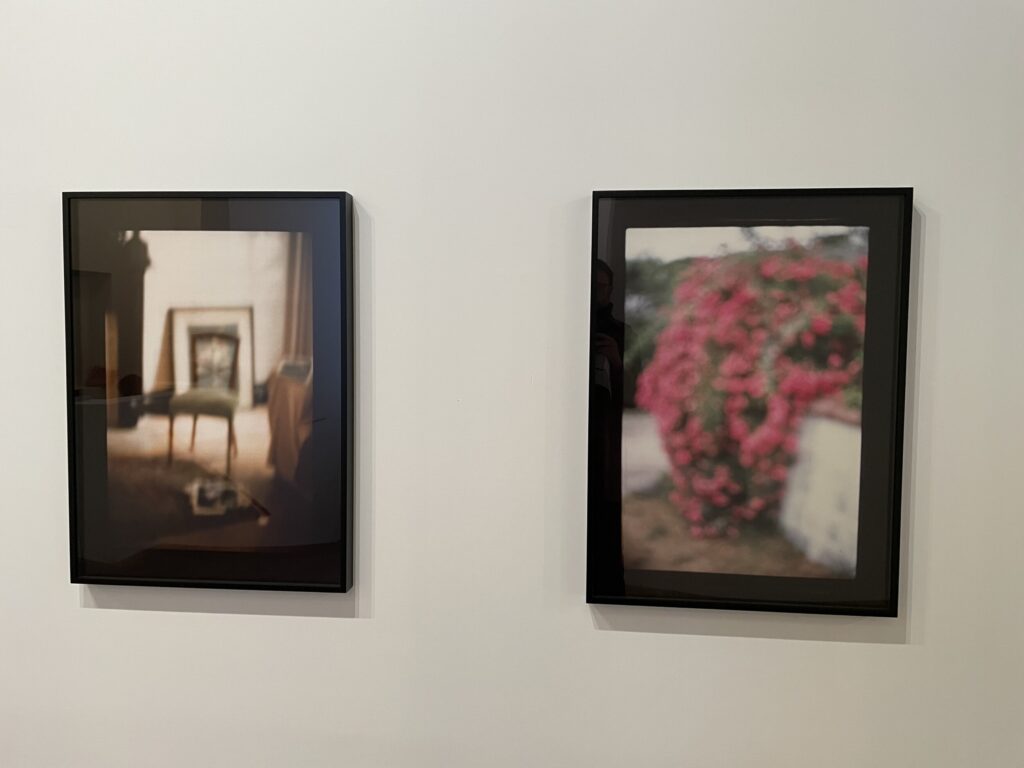
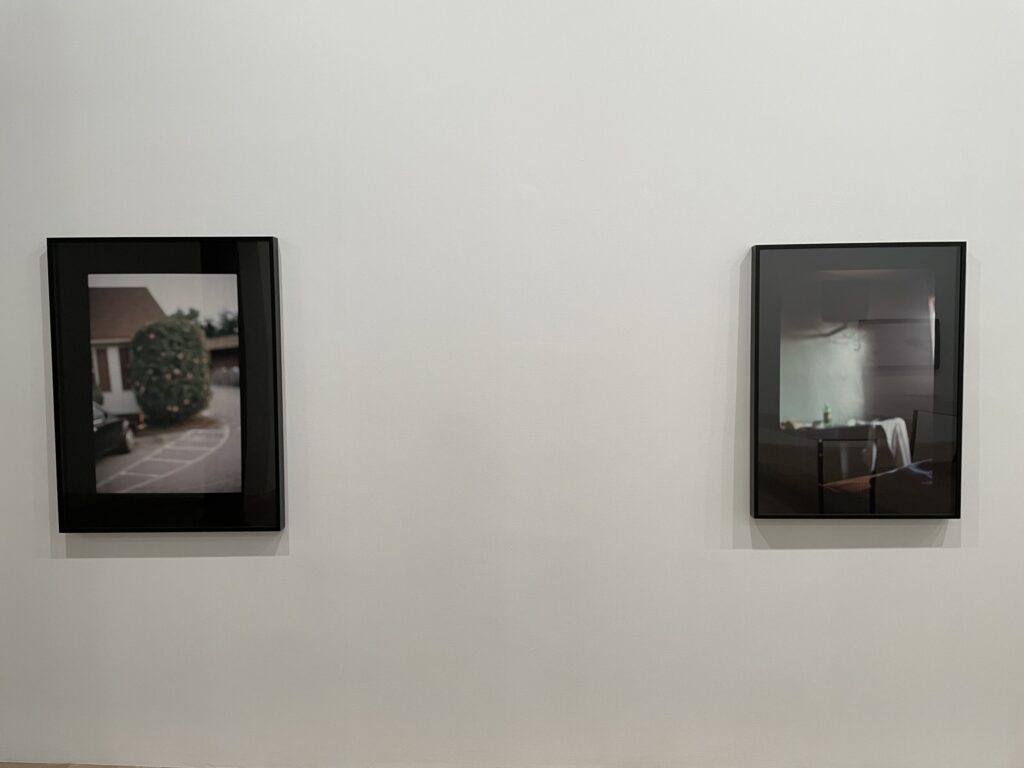
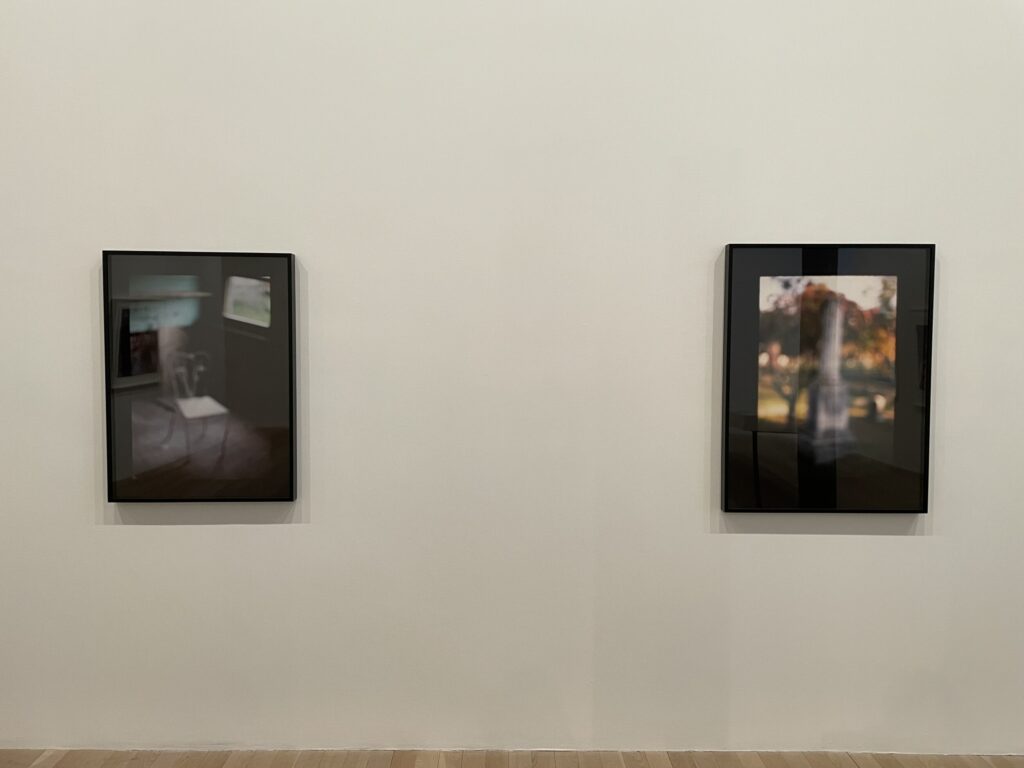
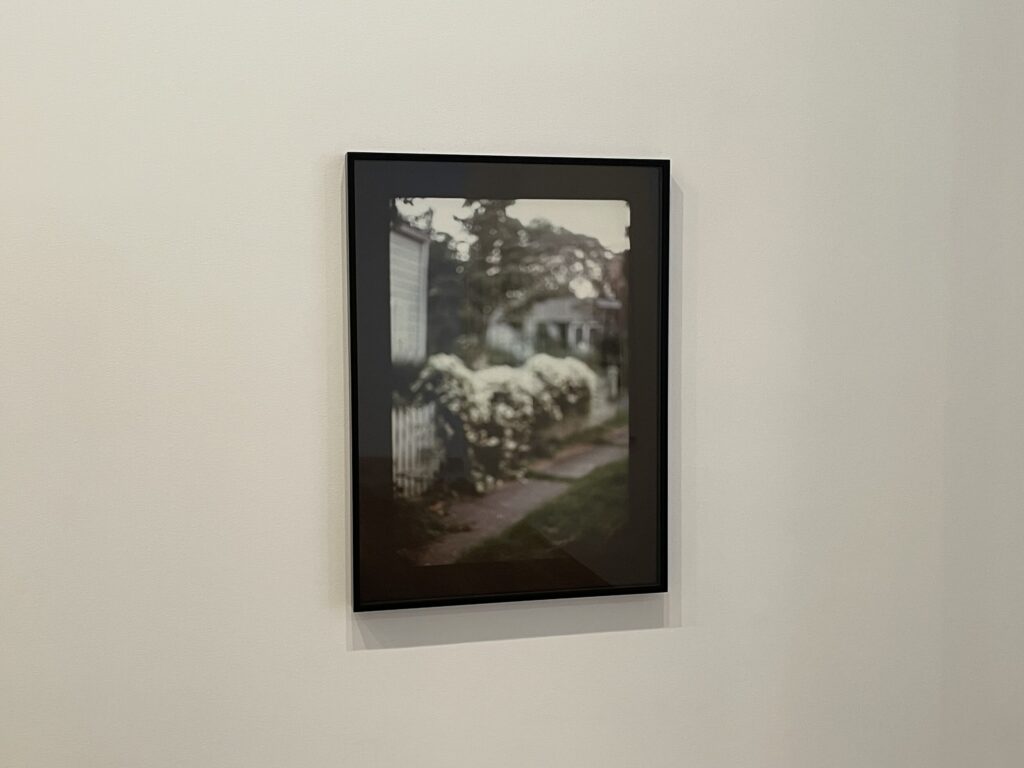
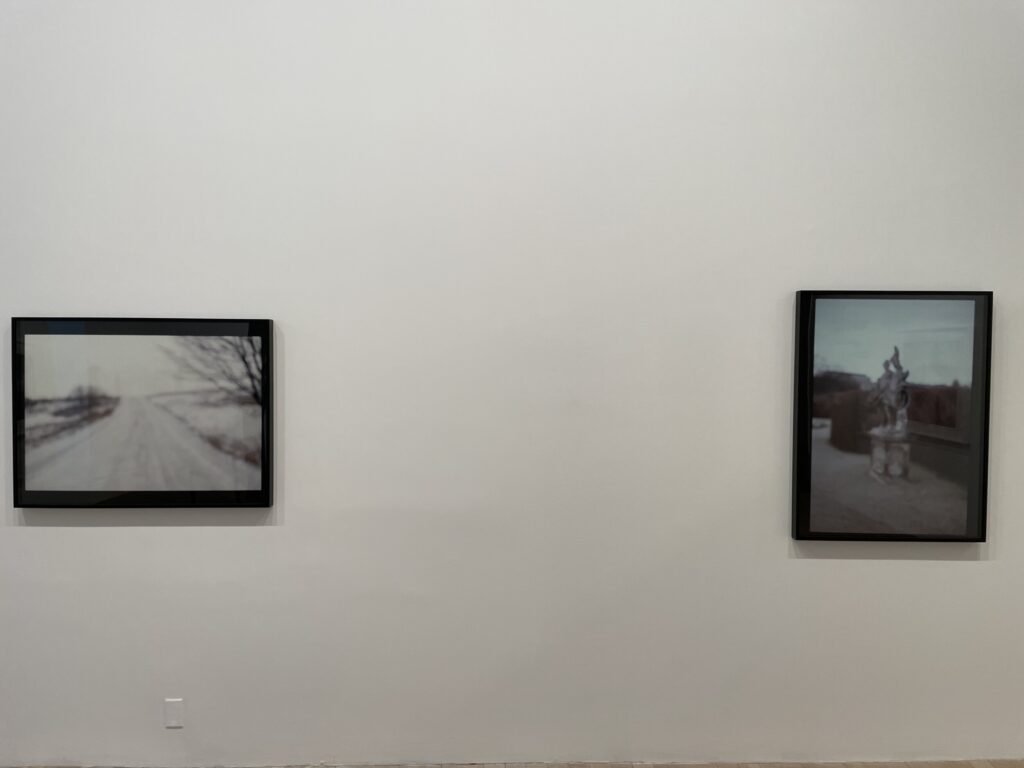
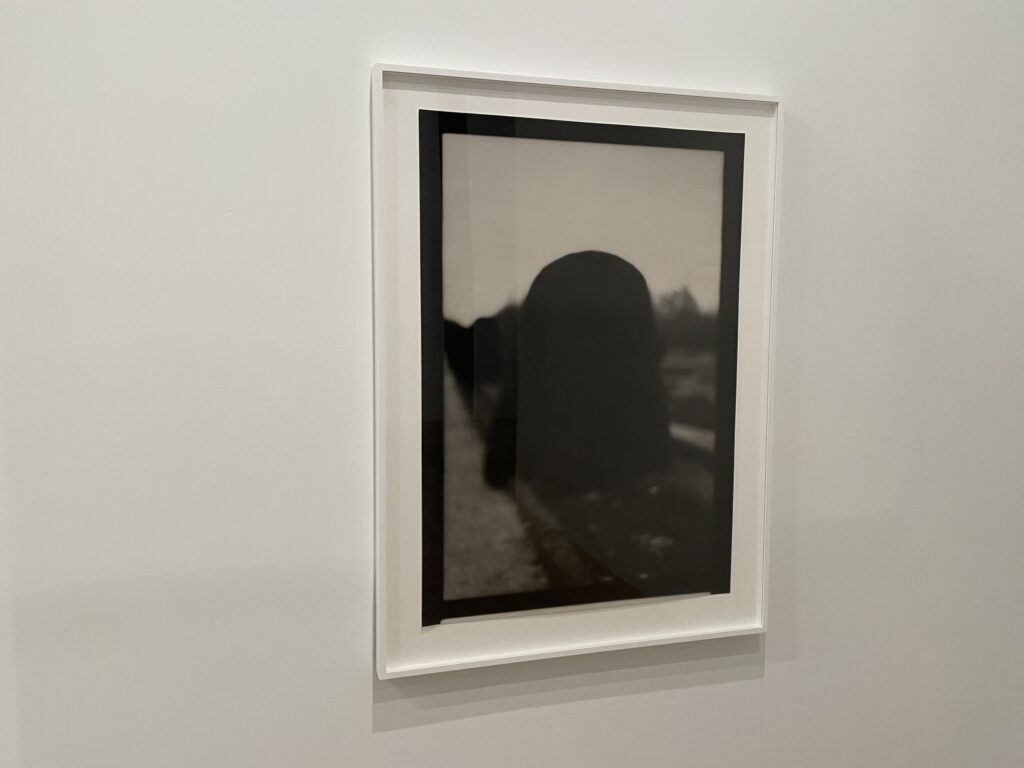
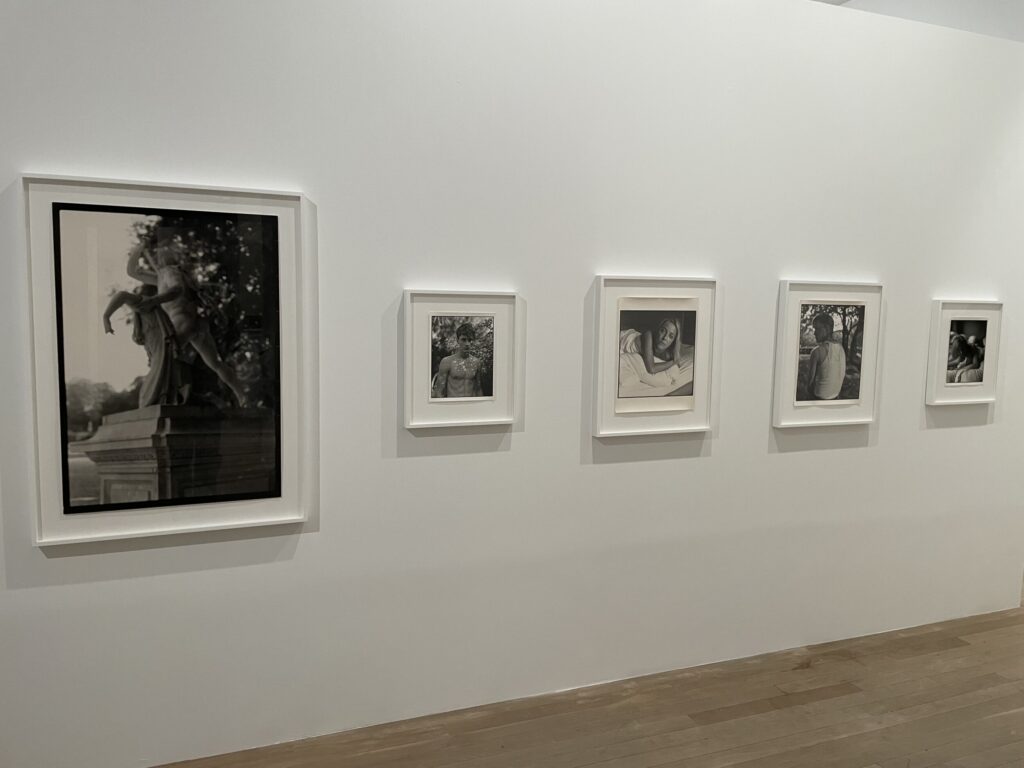
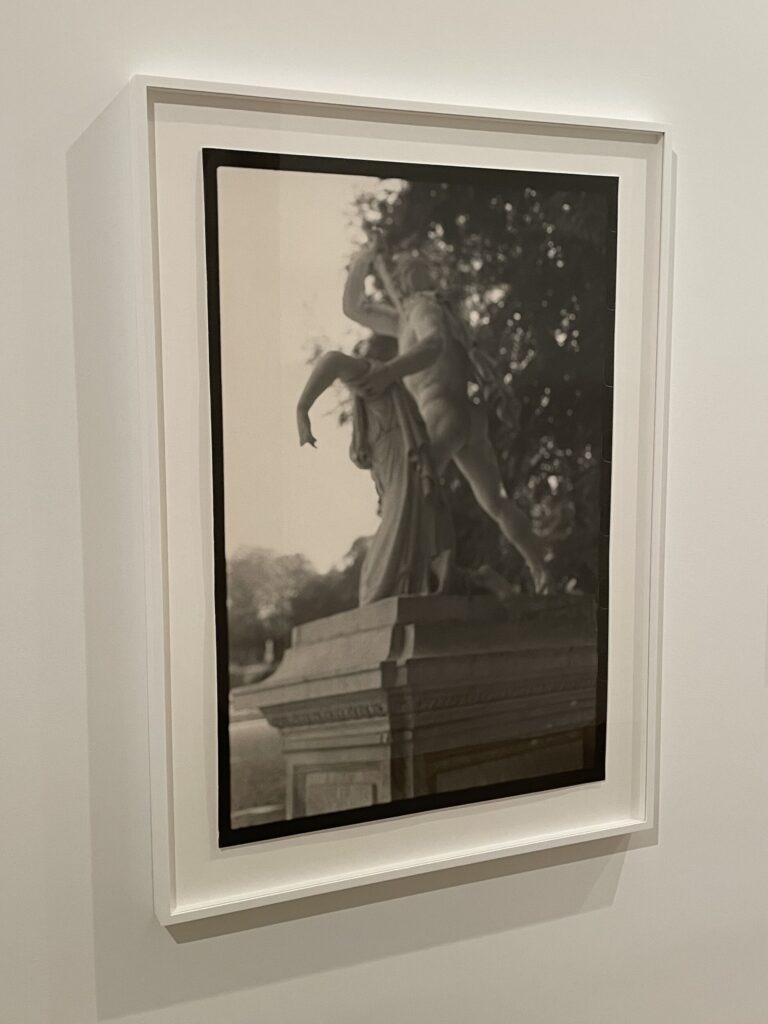
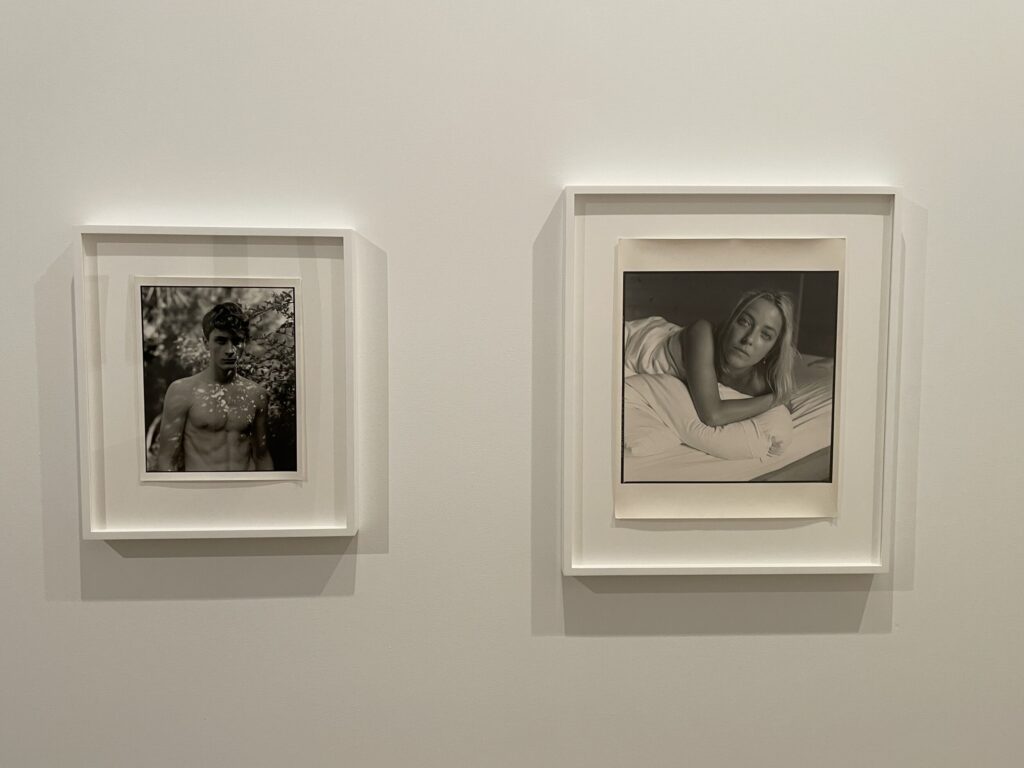
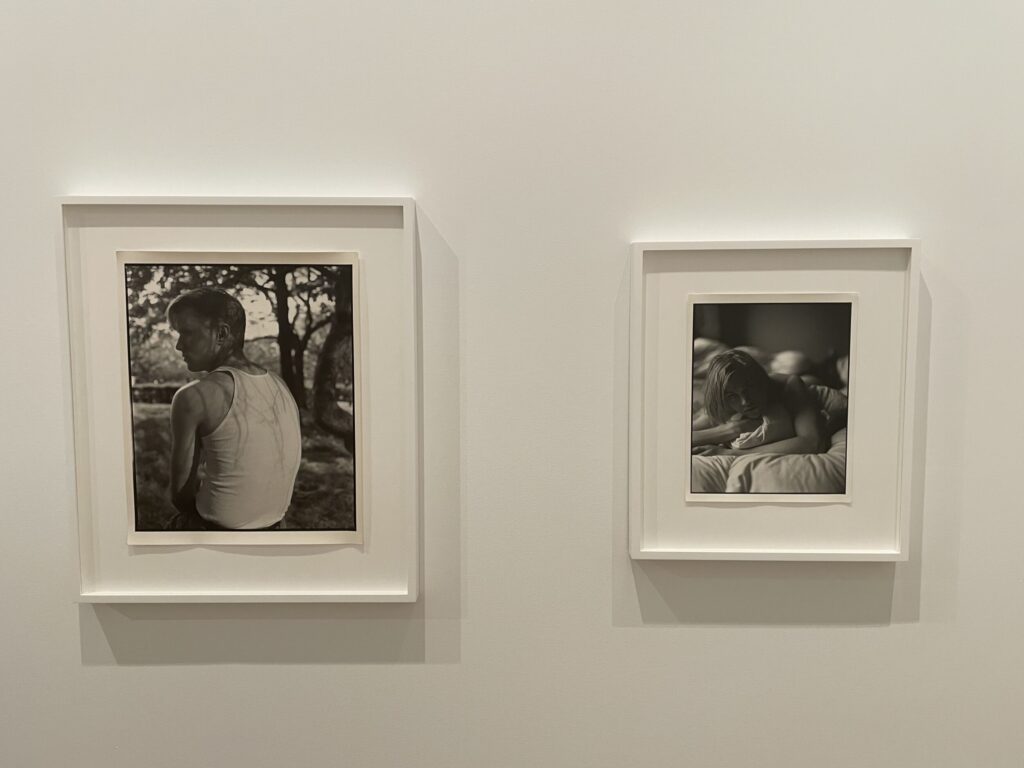
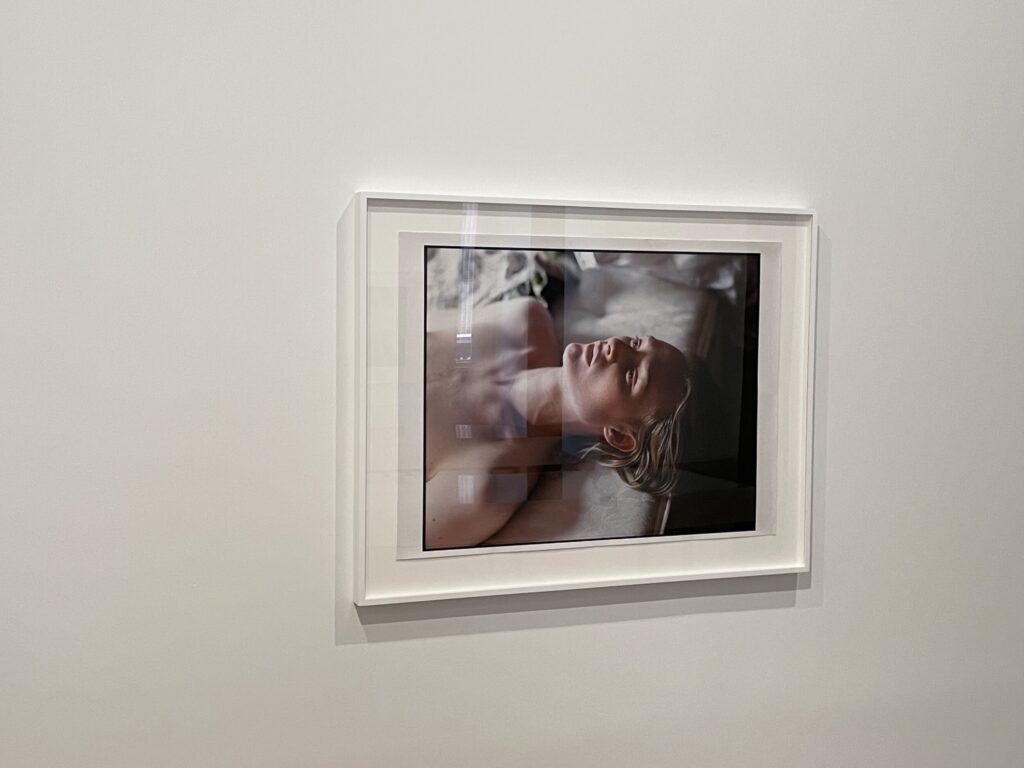
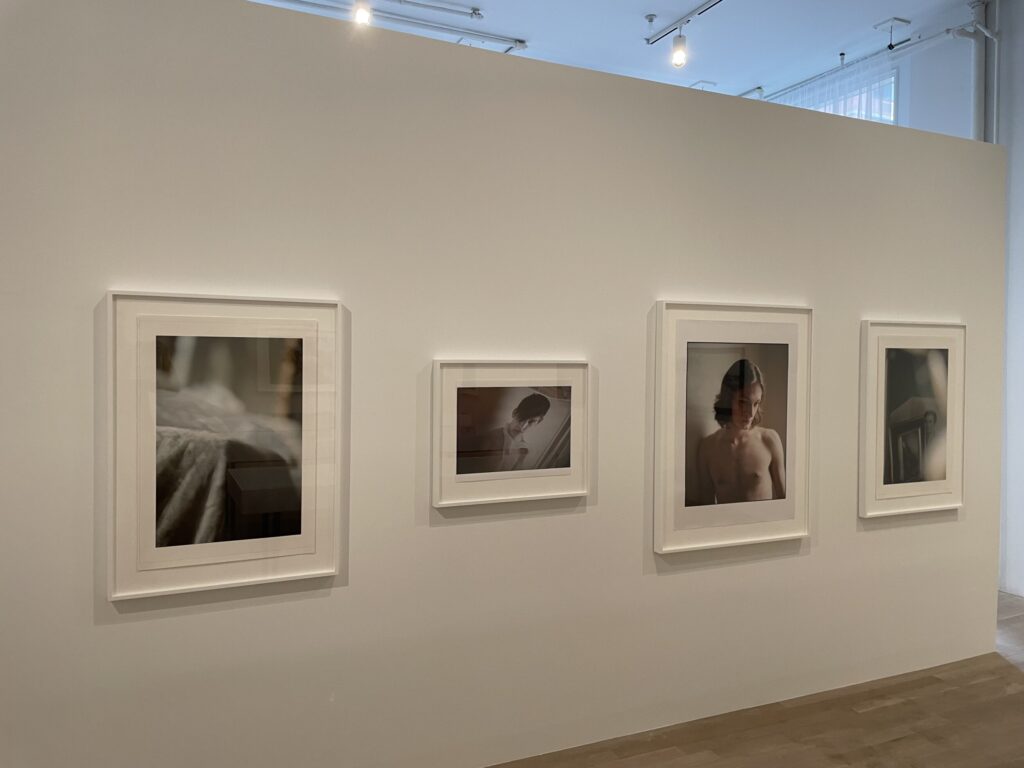
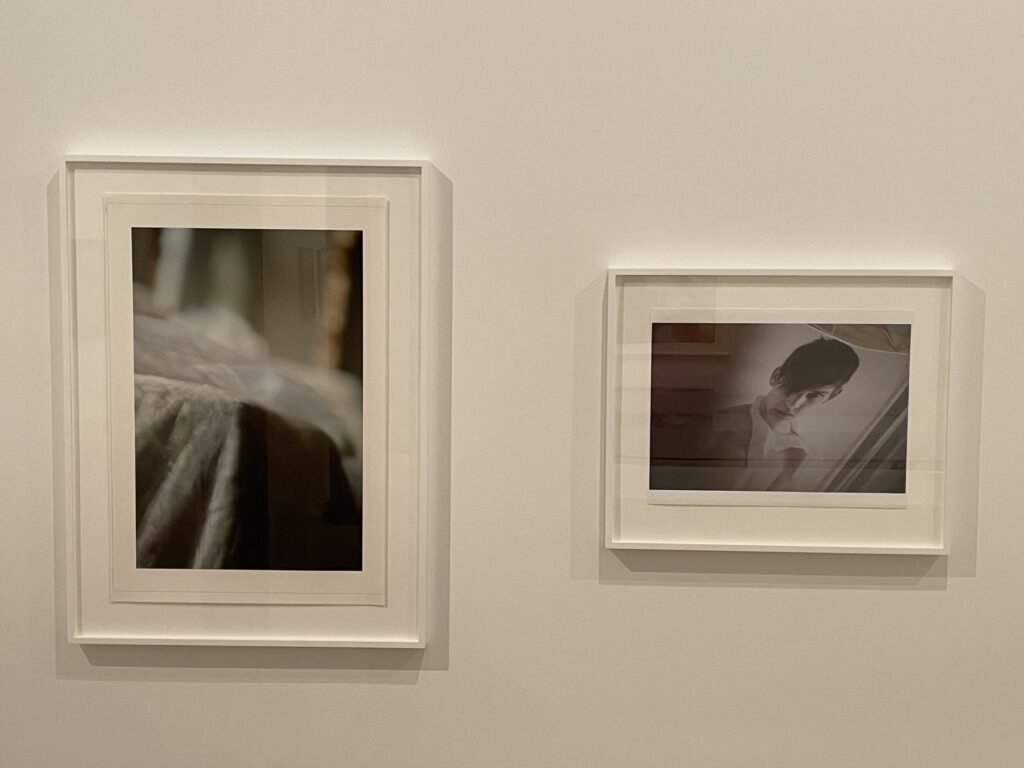
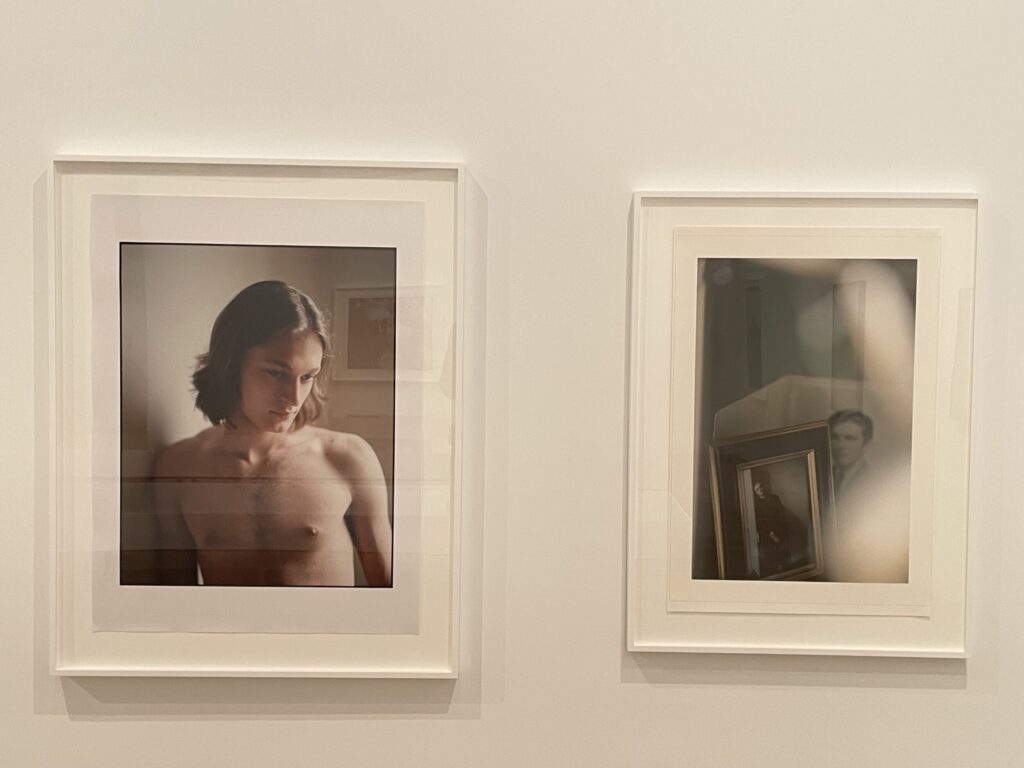
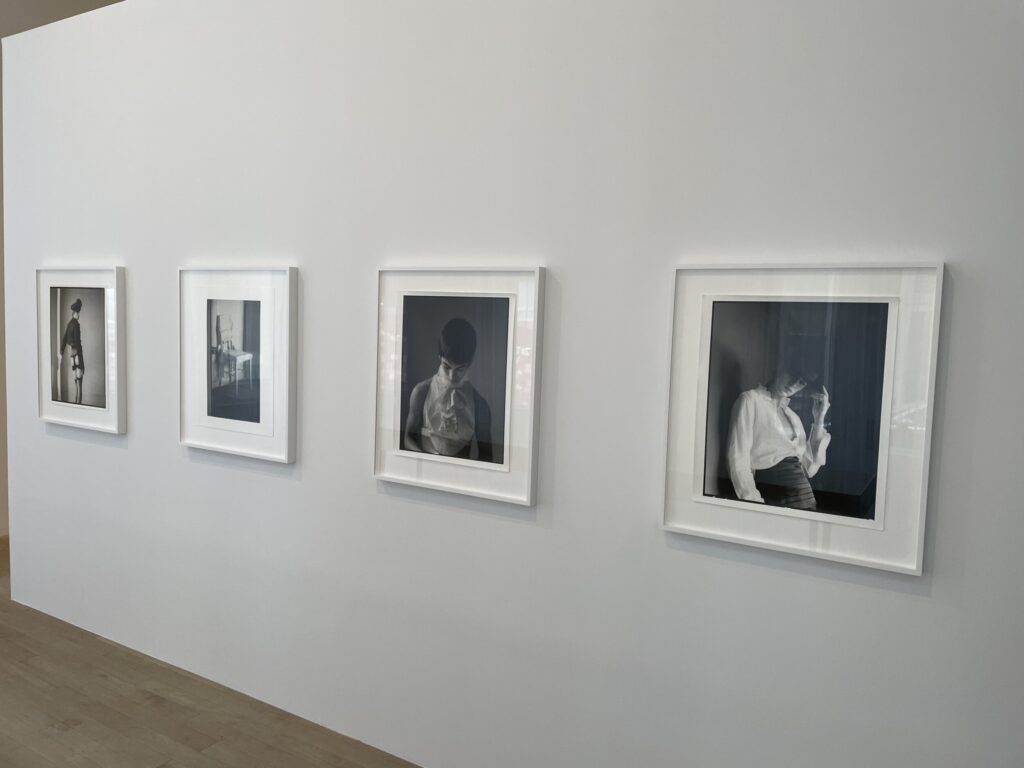
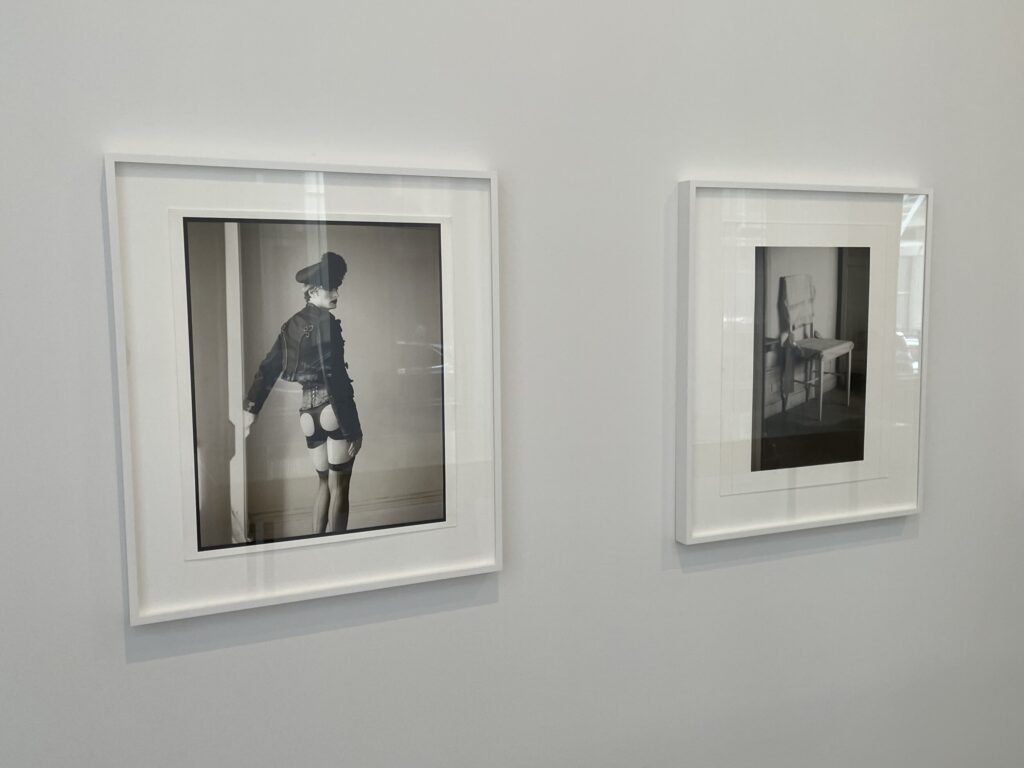
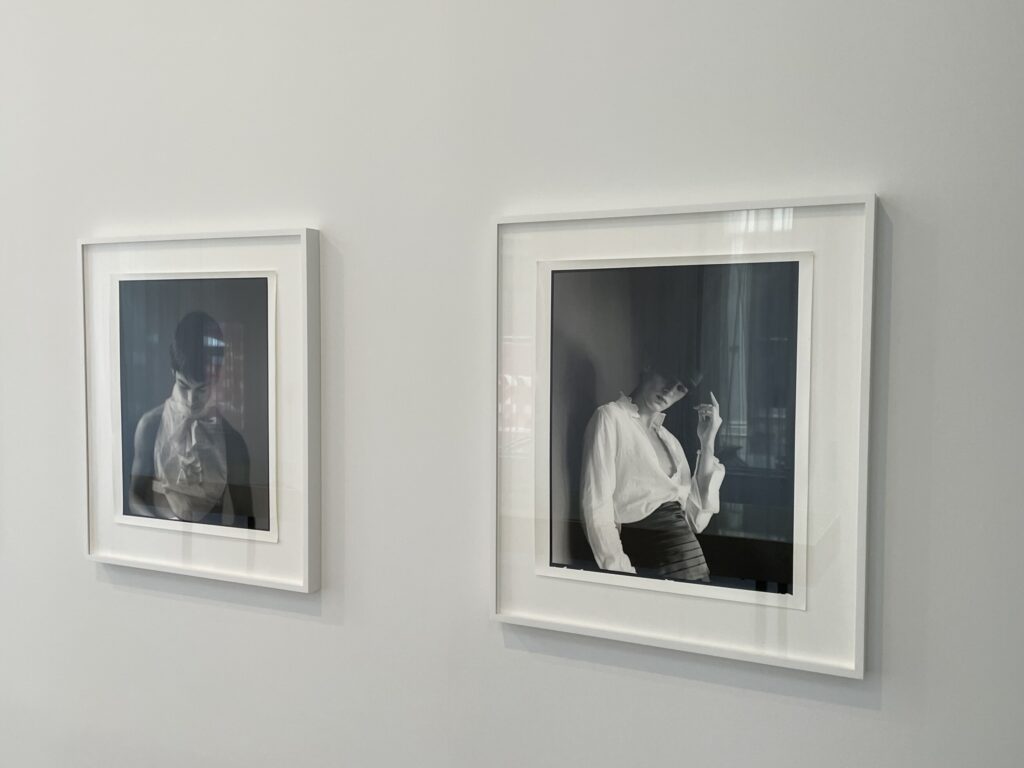
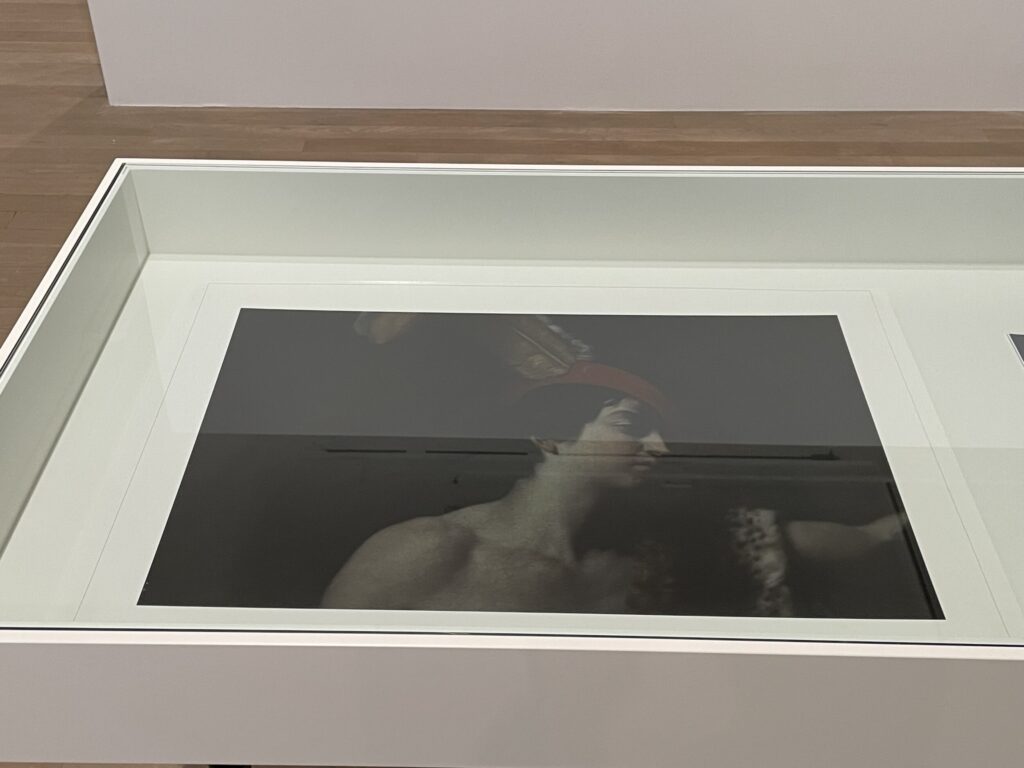
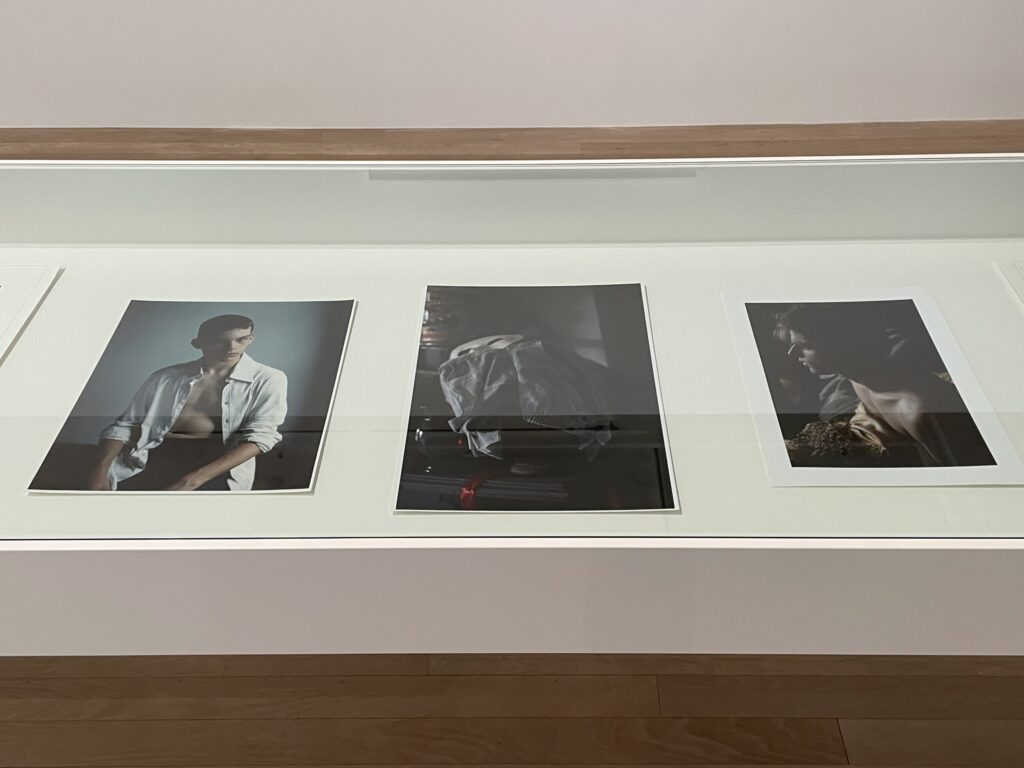
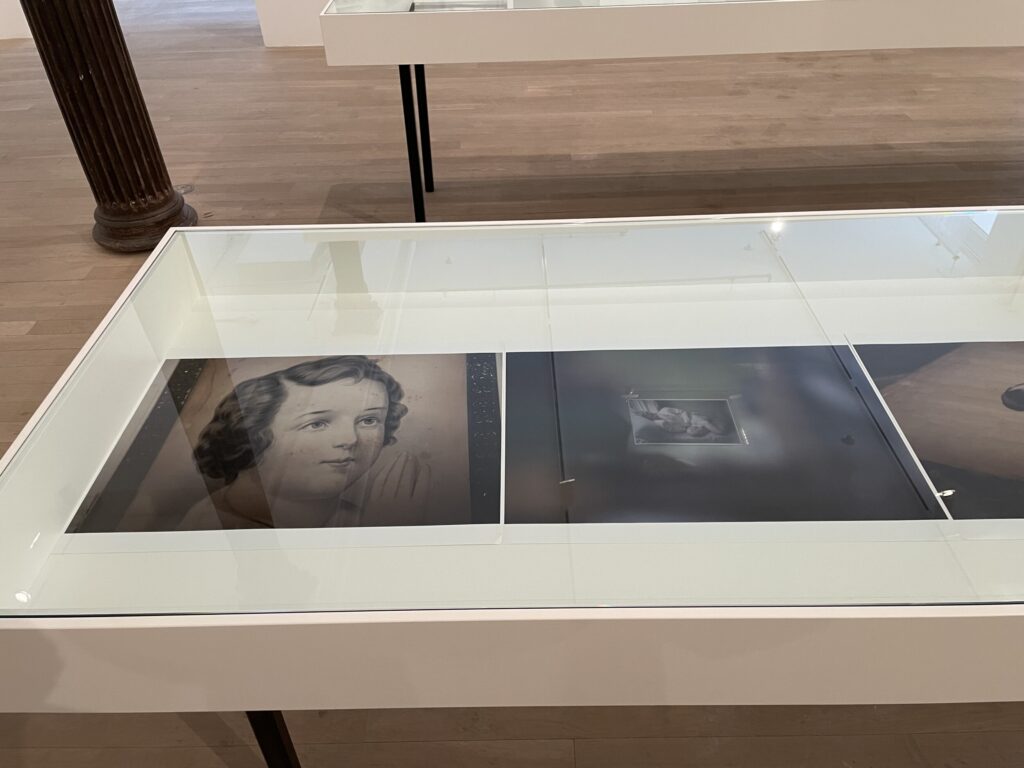
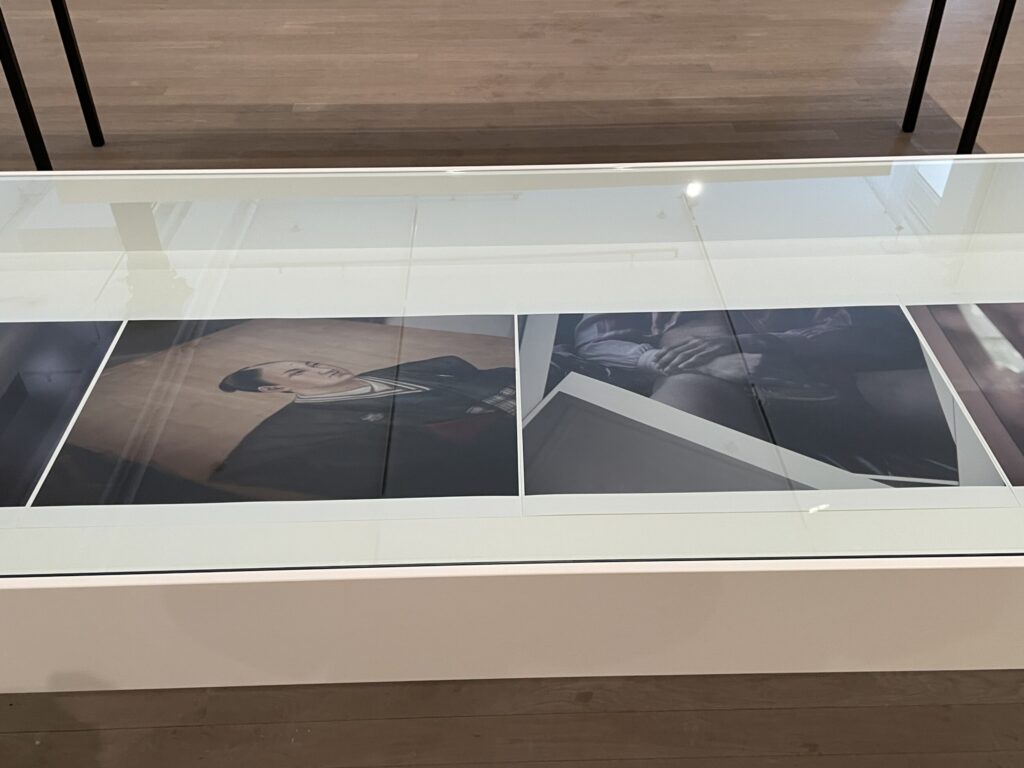
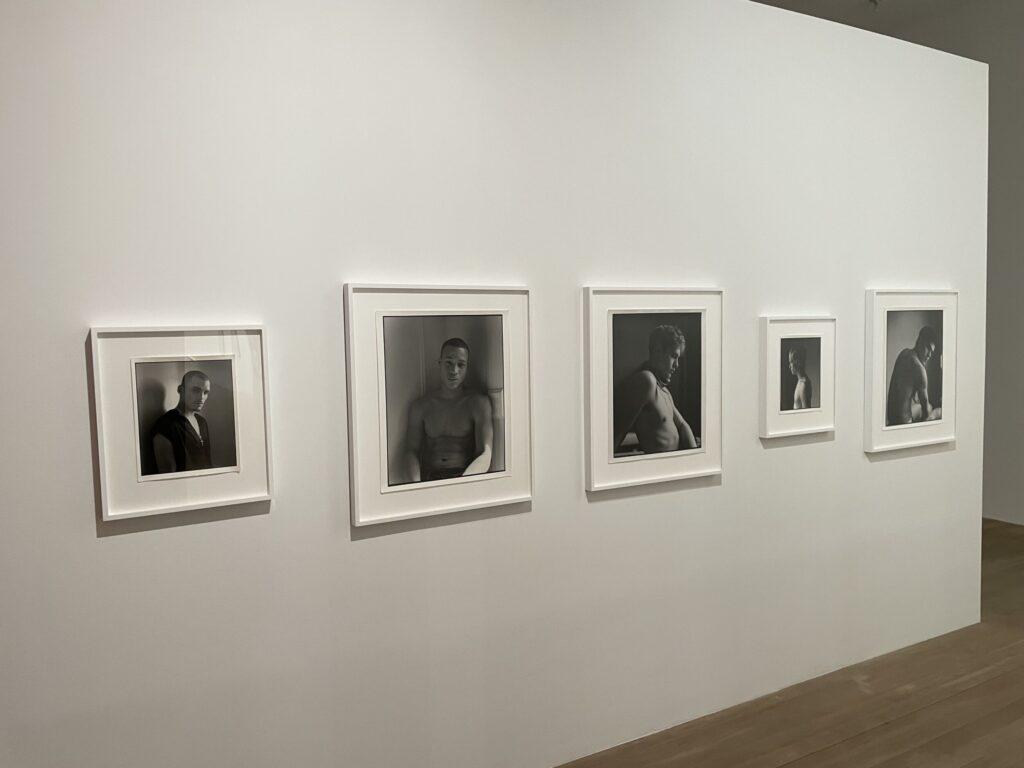
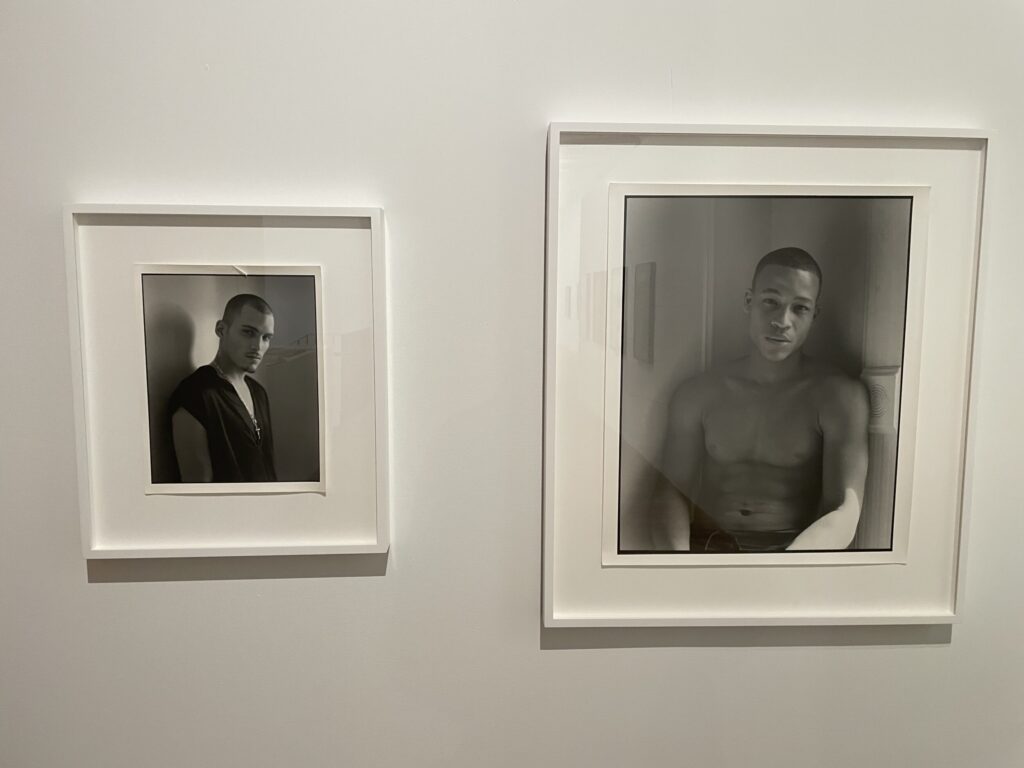
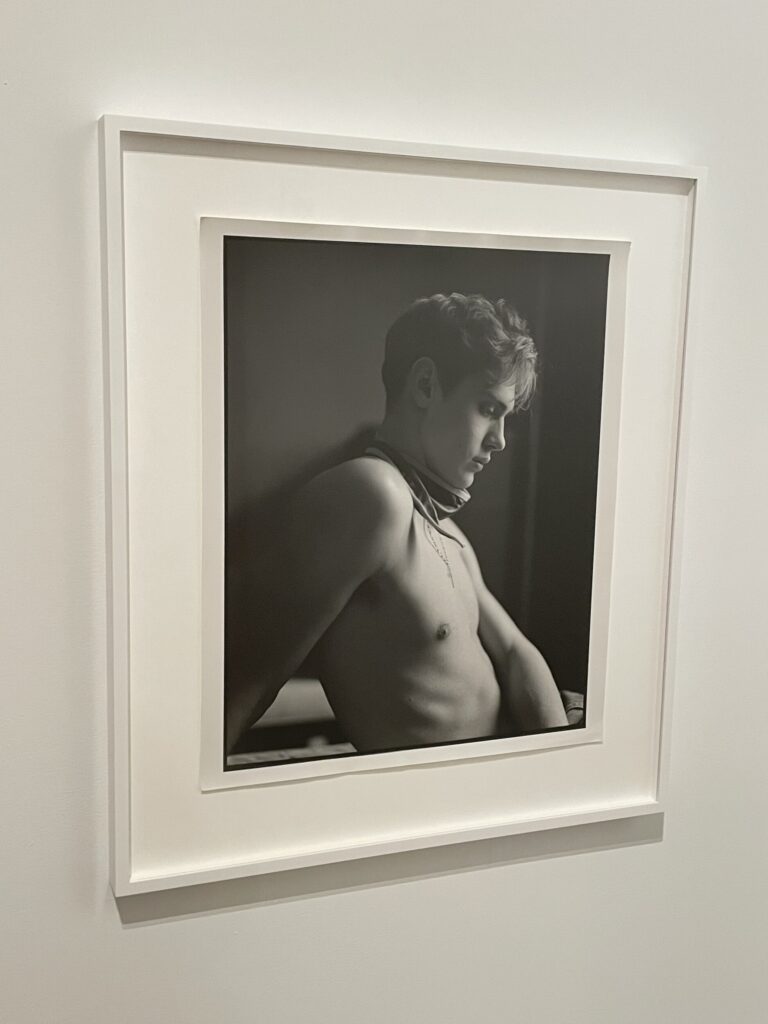
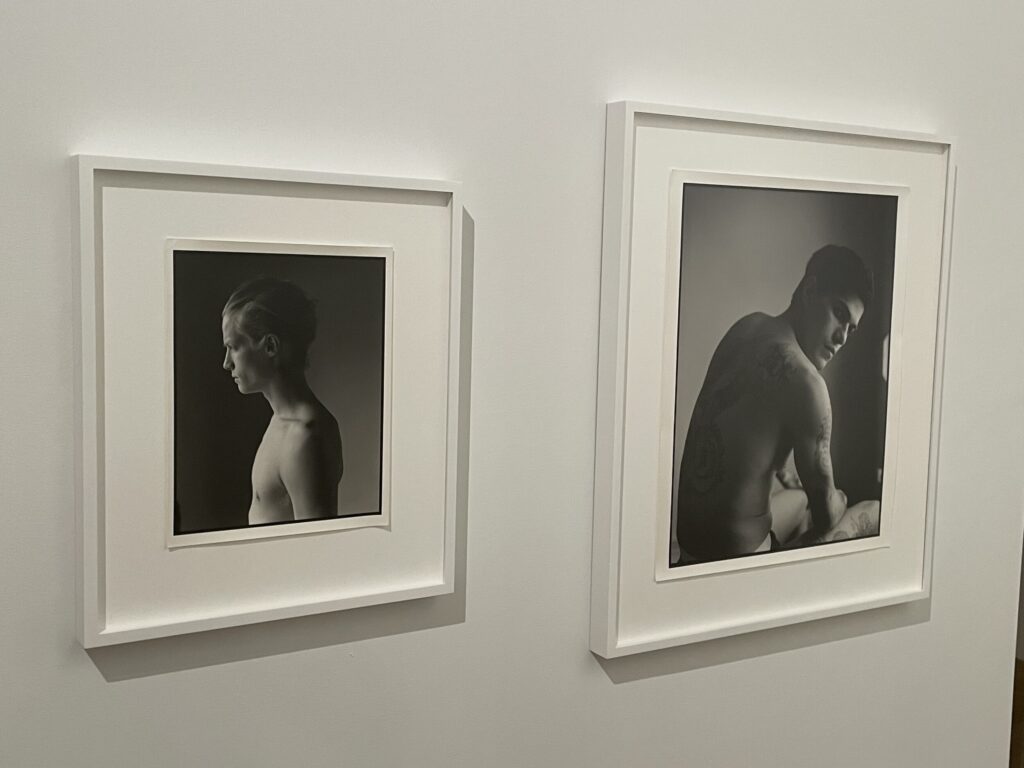
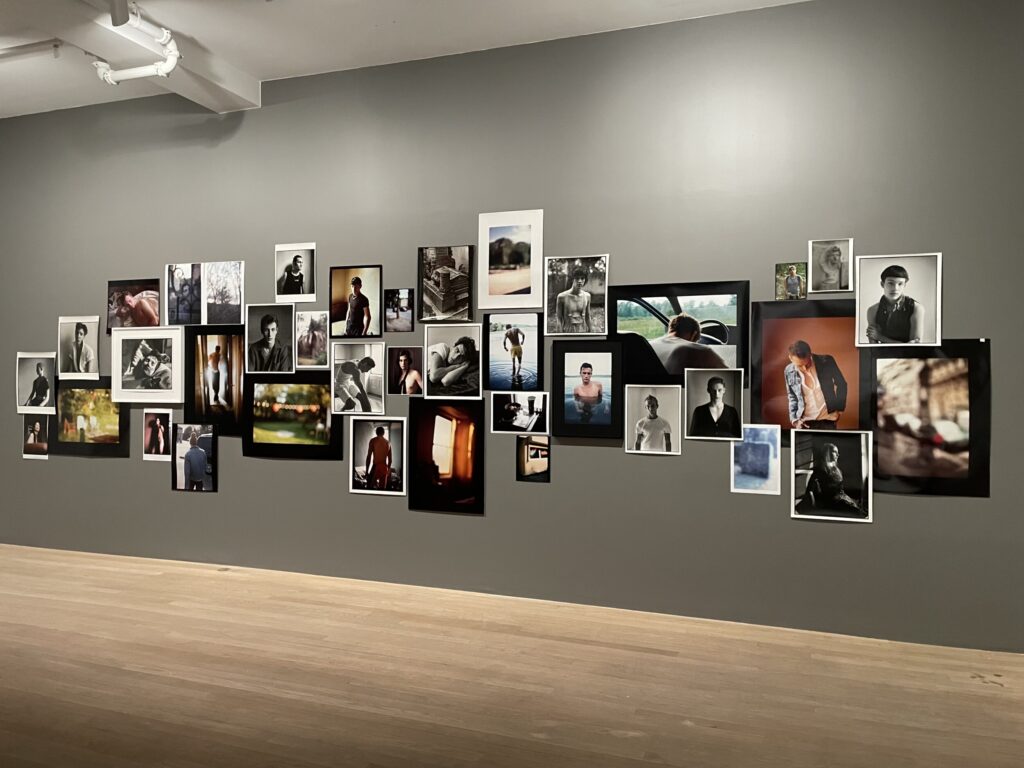
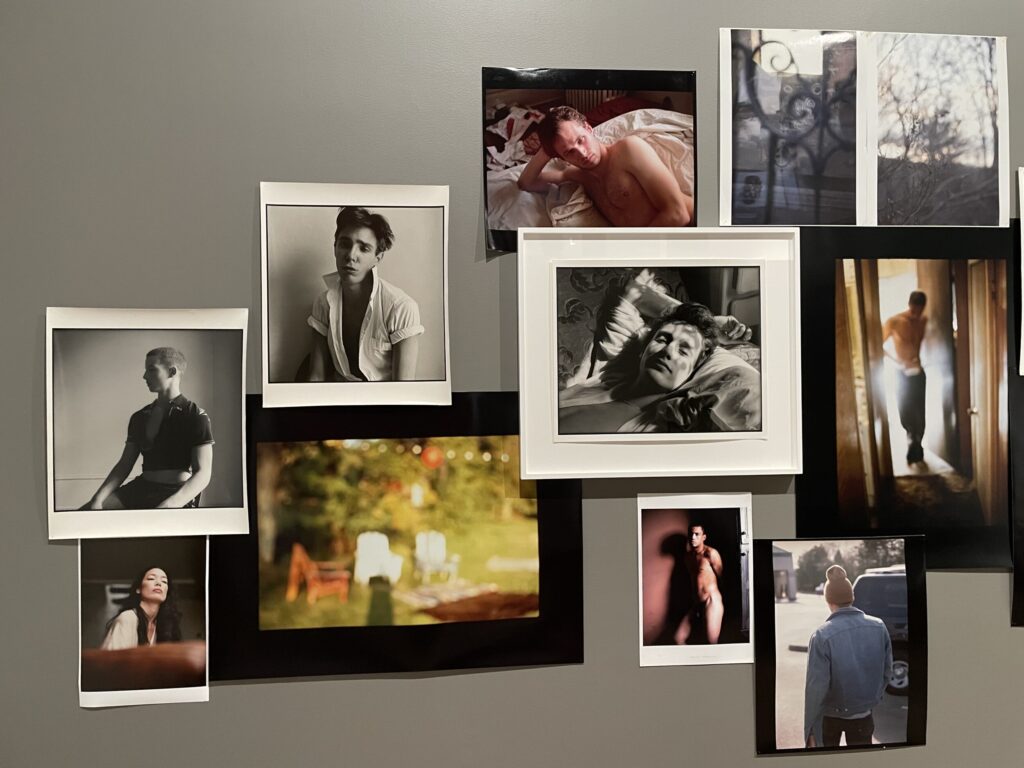
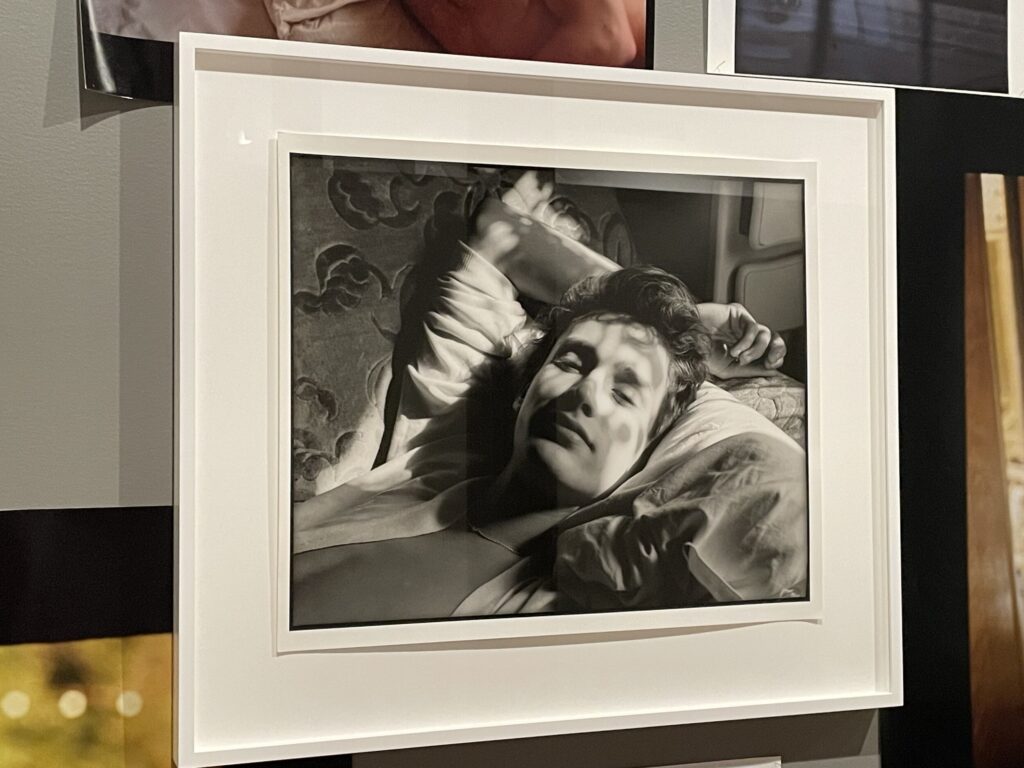
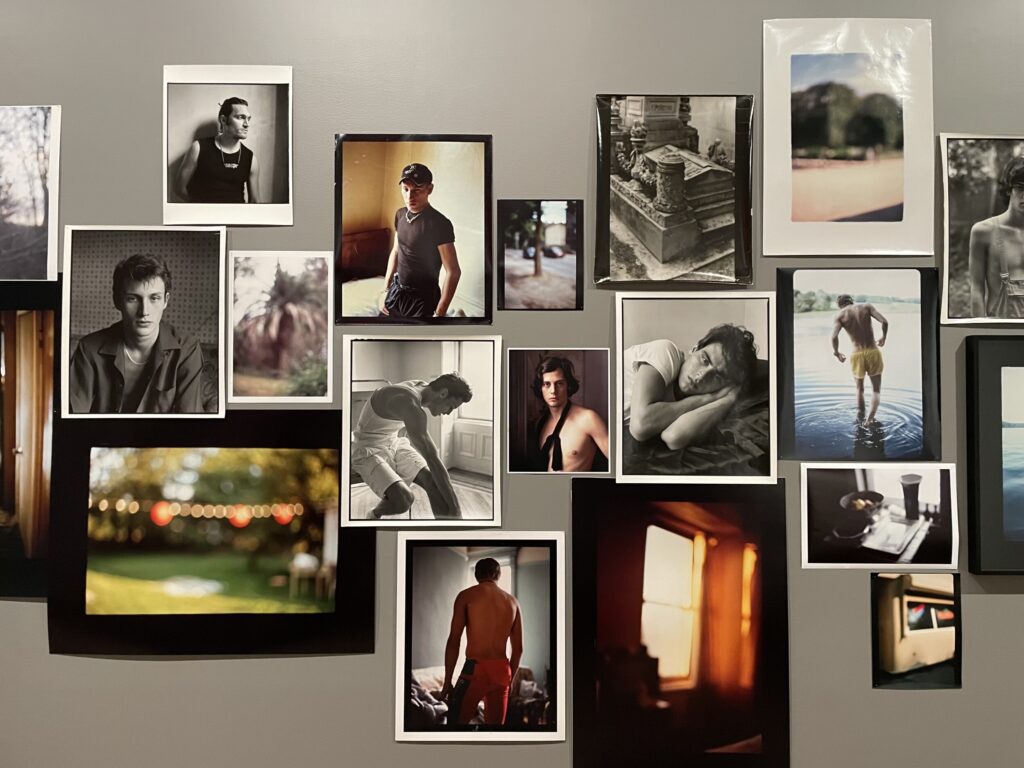
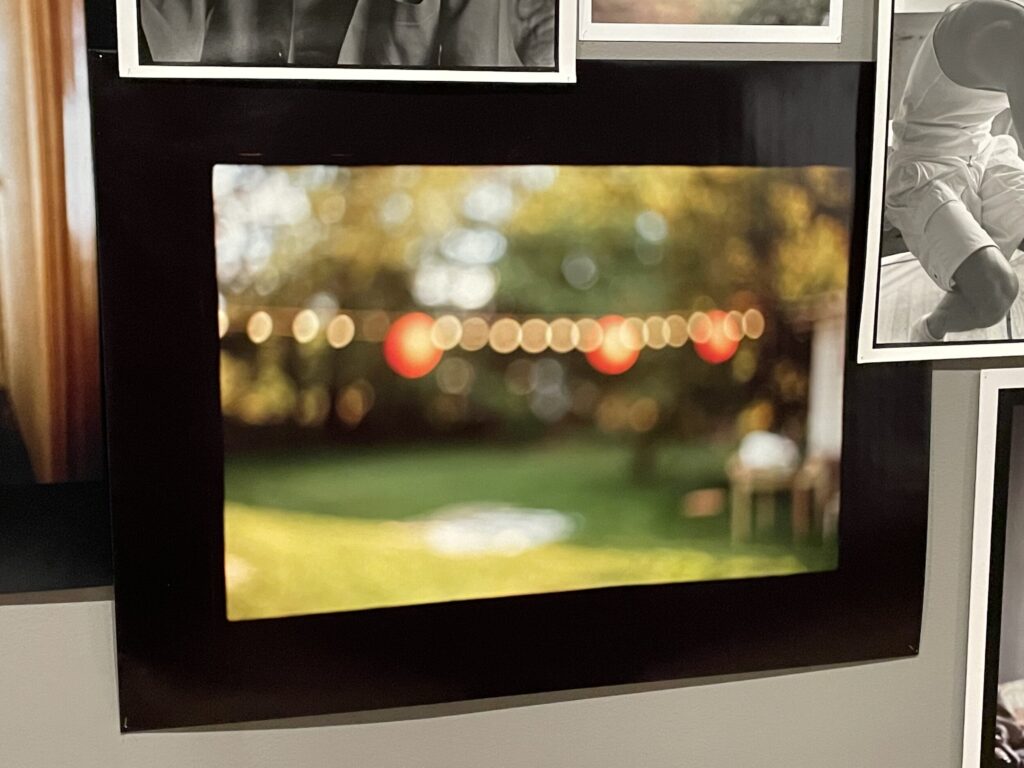
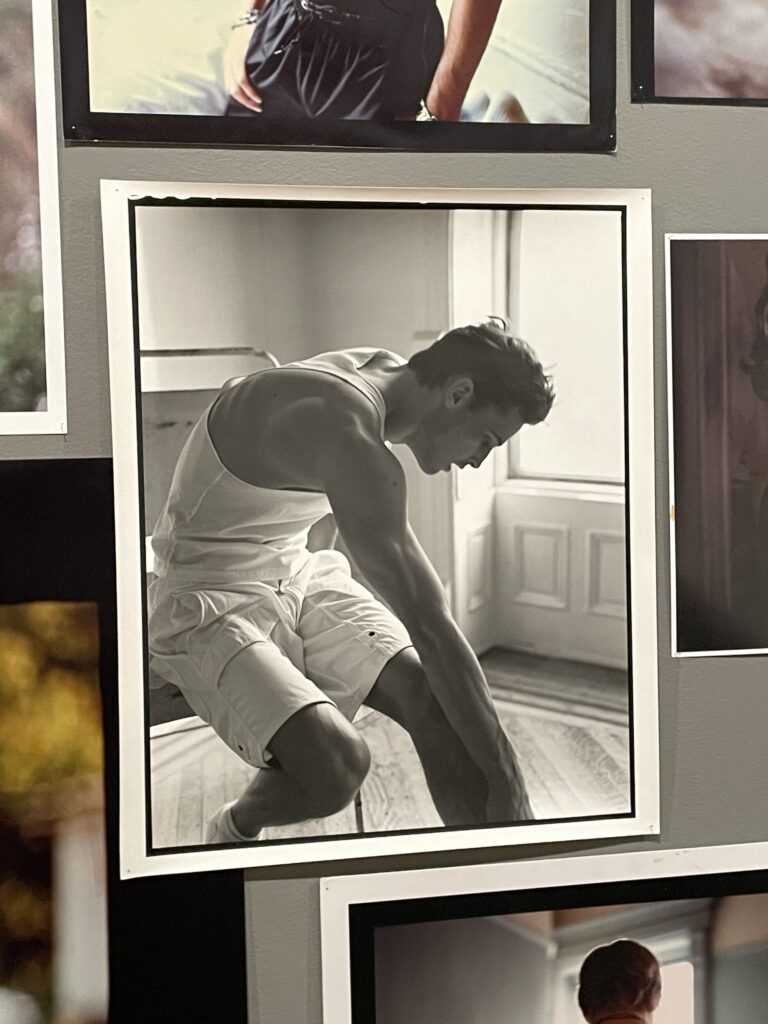
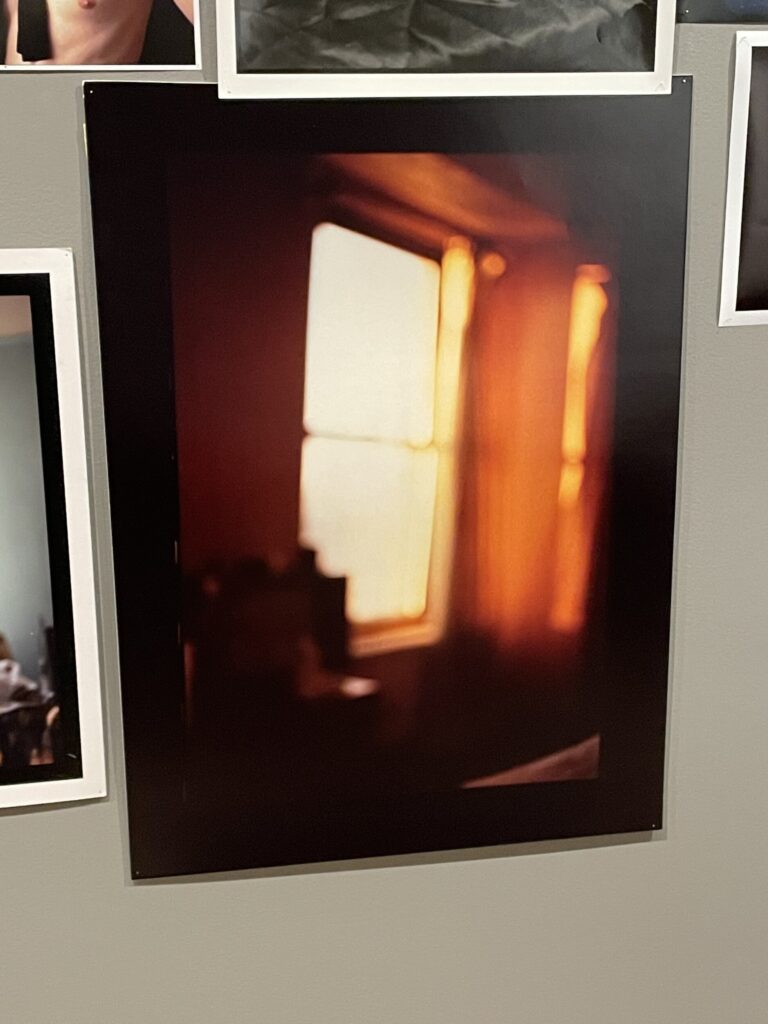
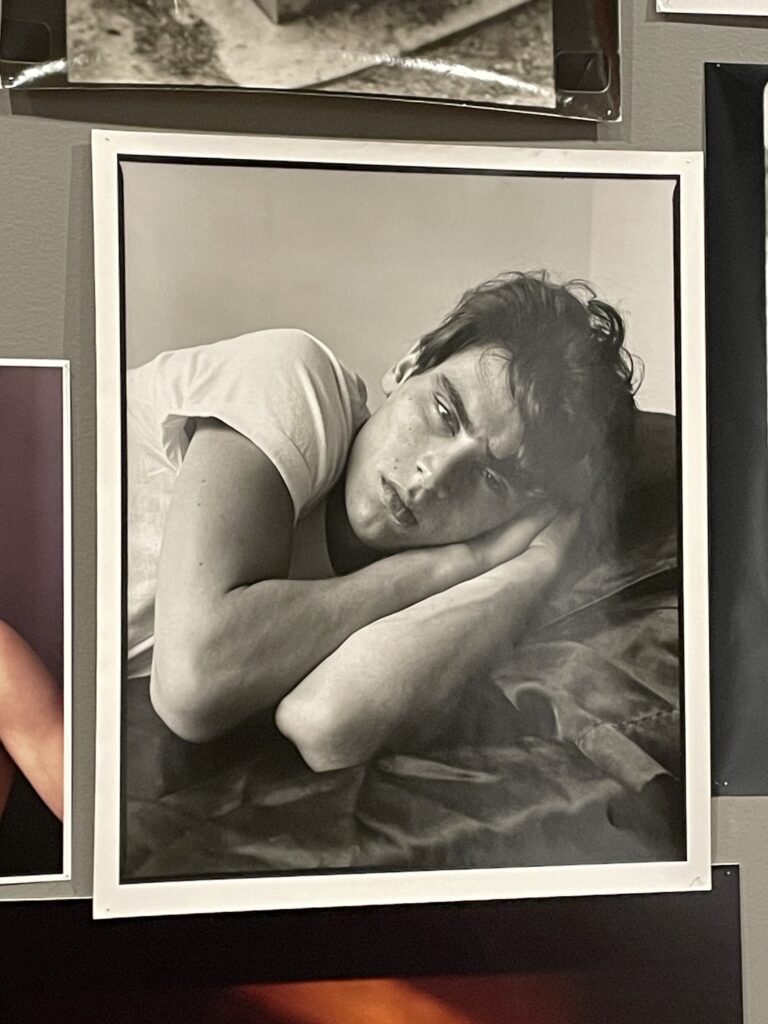
Comments/Context: David Armstrong is one of those photographers that has a consistent air of elusiveness, the kind of artist that we think we should know more about but who somehow still slips through our fingers like a whisper when we try to grab ahold. An accomplished portraitist who got his start in the 1970s, with a photographic career that crisscrossed into atmospheric fashion and still life for four decades before his death in 2014, Armstrong is often associated with his close friend Nan Goldin, and with the other photographers who attended the School of the MFA Boston in the 1970s, including Philip-Lorca diCorcia, Jack Pierson, and Mark Morrisroe (among others), who later came to be grouped together under the loose moniker of the “Boston School”. And while Armstrong can indeed be aesthetically located in the midst of this shifting network of ideas and approaches, he remains if not mysterious than at least somewhat detached, a voice that stayed more in the shadows, where moods and desires could be examined with more patience and presence.
The fact that this show at Artists Space is Armstrong’s first US survey is further evidence for his enduring slipperiness. And while this exhibit is explicitly not a full or comprehensive retrospective of his work, as in particular it leaves out much of the first two decades of his output to focus on the images made in the last two decades of his life, there is plenty here to quietly swoon over, his eye for understated empathy, tension, and desire filling the galleries with an accumulation of magnetic engagement. Aside from a few early portraits sprinkled throughout a large wall-filling installation, the survey largely picks up the thread of Armstrong’s artistic life in the mid 1990s, long after his intimate black-and-white portraits of men and other New York friends, artists, musicians, and downtown figures from the 1970s and 1980s first put him on the photographic map.
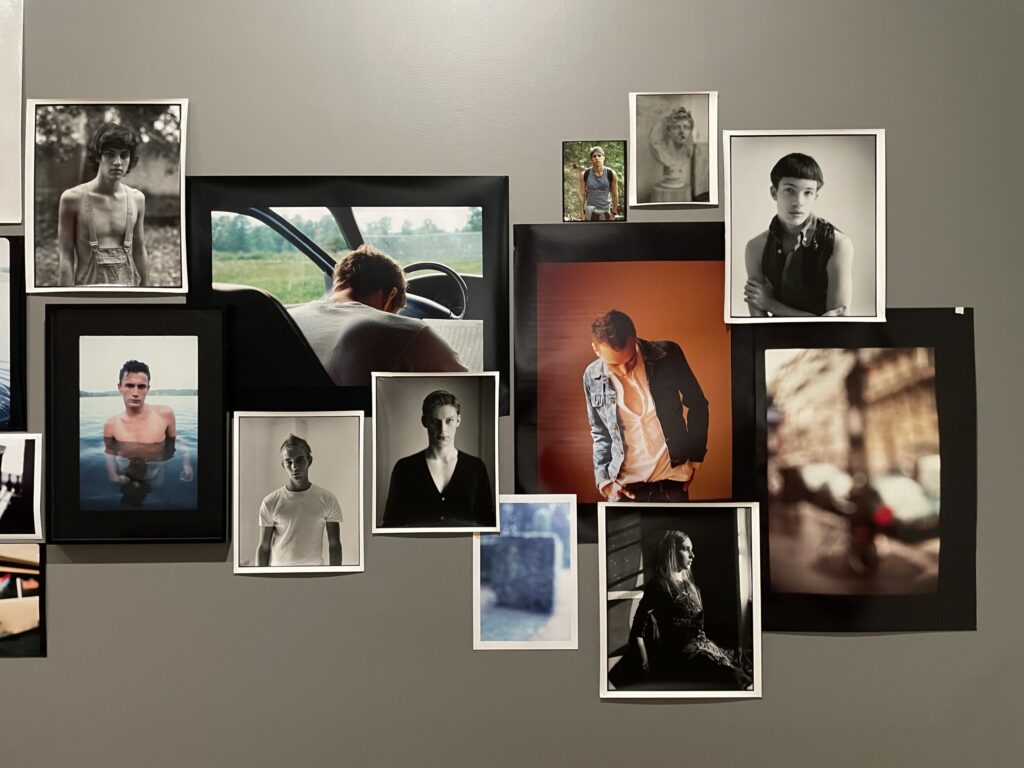
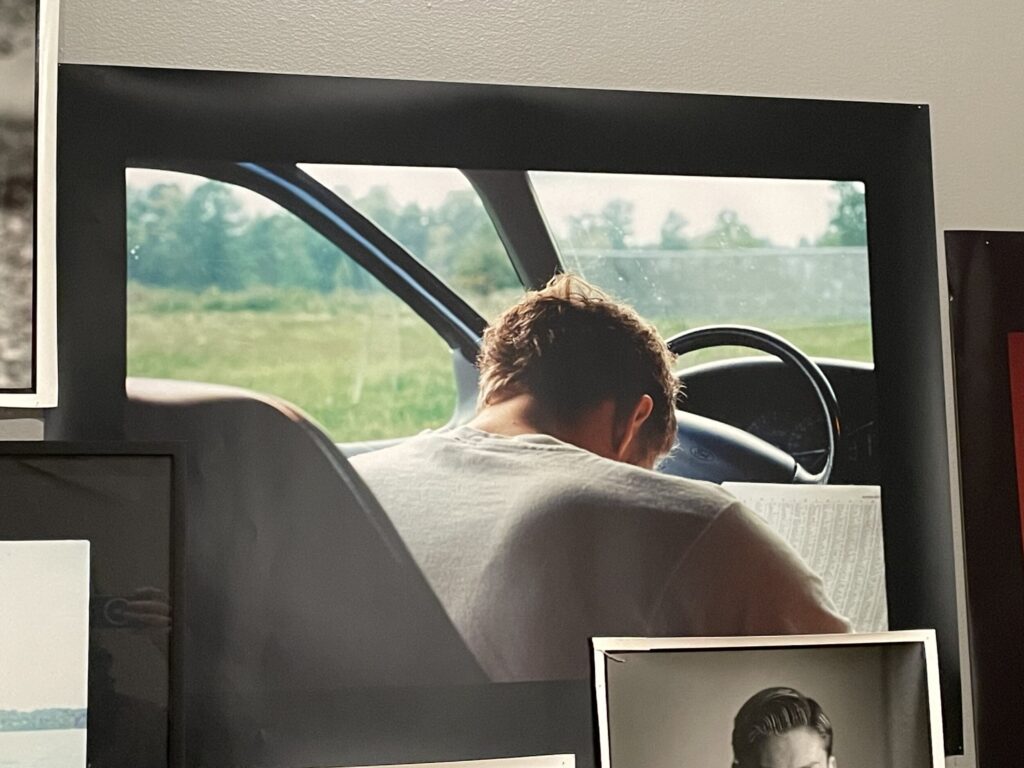
A handful of Armstrong’s black-and white portraits from the 1990s and 2000s offer a connection point with his more formal aesthetic past. Young men and women are seen with an eye for not only their youthful classical beauty, but for their simmering sense of individuality and attitude. Natural light is Armstrong’s ally in these pictures, both clear and dappled through leaves and branches, capturing moments of tender introspection and vulnerability in bedrooms, parks, and in blank corners of empty spaces, where the stillness of bodies has a chance to unfurl. Often Armstrong chooses an indirect approach, where glances are aimed down, sideways, out of the frame, or somewhat less than confrontationally direct, leading to the immediacy of revealed face to face openness rather than swagger. More overt playacting arrives in a different set of pictures, where props and costumes, like hats, jackets, tights, and frilly shirts lead to more evocative androgynous personas and languidly charged encounters.
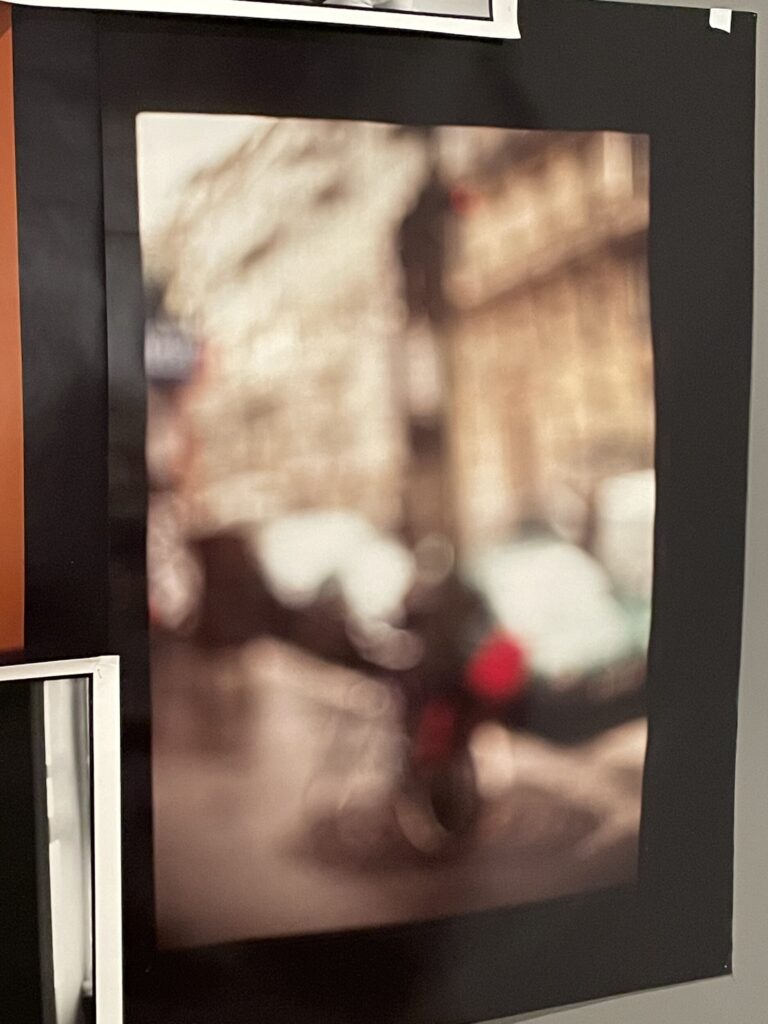
It’s at this point that Armstrong takes an unexpected turn in his photographic output, putting portraiture on the back burner and turning his attention to evocatively mundane landscapes and interiors. What’s fascinating about this change is that not only are the people gone from his frames, so is the sharp focus – these images dissolve into near compete blur, the formal gardens, exuberant flowers, and silent rooms becoming atmospheric studies of approximate color and mood. What stands out most about these pictures is a consistent feeling of almost elegiac absence, and when we step back to understand that these images were made in the late 1990s, after the AIDS crisis had decimated so much of Armstrong’s queer community, the logic becomes clearer. In many cases, the images look like blurred backdrops, where the portrait sitter that we expect to find in Armstrong’s photographs has vanished, the shallow depth of field that had placed that face in focus forcing the background to drift to blur. So it’s like these intimate landscapes and snatched sidewalk florals are anti-portraits, or what remains when you remove the people from your memories. Seen in this context, they hit hard, their muted loveliness all the more empty and tragic.
In 2004, Armstrong created a two-sided salon-style installation for an exhibition titled “Your Picture on My Wall”, and one side of that wall has been recreated here. It’s a rambling mix of color and black-and-white imagery in different sizes made over the preceding decades, gathered into a loose cloud of overlapping prints, mostly pinned directly to the wall. In many ways, this installation was a bridge moment for Armstrong, in that on one hand, it chronologically sums up what had come before and boils it down into one coherent experience, and on the other, it opens up a pathway for where he would go next. The installation is nostalgic in the best sense of the word, in that it takes us back to faces, bodies, and moments that were important to the artist, and then intermingles them with the blurred landscapes, capturing a subtly conflicted sense of presence and absence. It also required from Armstrong an effort to actively remix his photographic history, to put pictures from different periods in dialogue with others, to layer them on top of each other, and to create juxtapositions that evoked certain aggregate moods or memories.
Armstrong then took this framework and expanded it in a 2009 exhibit at Les Rencontres de la Photographie d’Arles cheekily titled “The Indecisive Moment” – a few images from that installation are on view here in a vitrine and find Armstrong fully embracing rephotographed collage-style arrangements of images and paper prints. Armstrong’s unresolved feelings of longing and even romance find a home in these clusters and shufflings, with natural light and shadow then adding further layers of interpretation to the original photographs. The curators of this show have called what Armstrong was looking for “visibility without spectacle”, and that’s a poignant way to characterize what he was doing. And as the years pass, he’s stacking, filling, leaning, and piling, in effect re-seeing his own extended archive in new ways, making it visible once again, while still returning to common themes and motifs.
The last images that Armstrong made, in the late 2000s, are firmly situated in his Brooklyn home on Jefferson Avenue in Bed-Stuy, a darkly eclectic space filled with a kind of rumpled old-fashioned charm. He comes full circle back to portraits and empty interiors in these shadowy spaces, lingering in the corners where the colors soften and thin even further. From there, he liberally re-imagines – cropping, veiling, and rephotographing, sometimes leaving us only a hint or edge of a picture that we can no longer entirely identify. But those moments of recognition, or texture, or flare of light seem to activate the originals, giving them another layer of heightened interpretation. In his last years, he seemed to be paring it all down to nuanced evocations of mood, continually pushing toward the suspended emotions of ambiguity and atmosphere.
As satisfying as this exhibition is, it left me wanting more, wanting the thorough institutional retrospective that will put all this into better order, and then contextualize it with key examples from his contemporaries and friends. Only then will we be able to make the connections that need to be made and to judge where Armstrong’s evolving aesthetics actually fit. Armstrong the formalist, Armstrong the seducer, Armstrong in mourning, and Armstrong remixing himself with durable sophistication all have deeper stories to tell which are only really hinted at here. In the end, presence and absence feel like the compass points for Armstrong’s art, his photographs constantly (and perhaps even restlessly) wrestling with this unresolvable duality.
Collector’s POV: Since this is essentially a museum exhibition, there are of course no posted prices. David Armstrong is represented by Matthew Marks Gallery in New York (here). His work has been available at auction only intermittently in the past decade, with prices ranging from roughly $2000 to $20000.