JTF (just the facts): Co-published in 2026 by np: Press (here) and Counterpath Press (here). Spiral bound paperback, 8.5 x 11 inches, 170 pages, with 68 black-and-white image reproductions. Includes text by the artist in English with Chinese translation by Marie Chen. In an edition of 200 copies. Design by Neeta Patel. (Cover and spread shots below.)
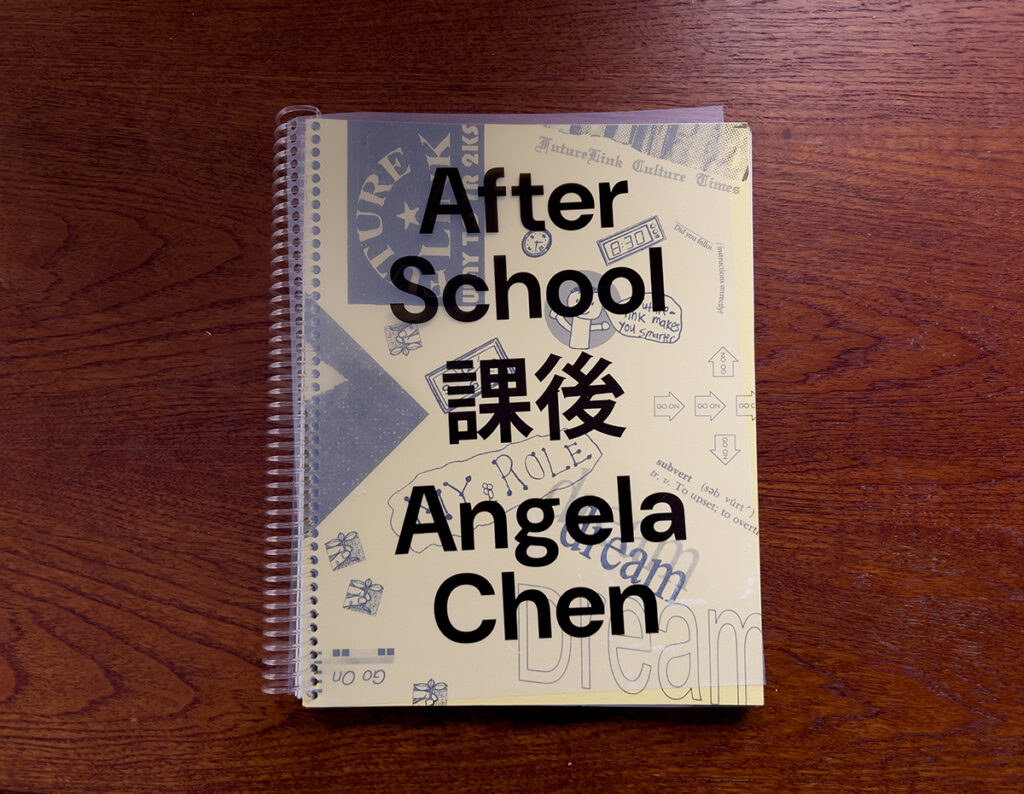
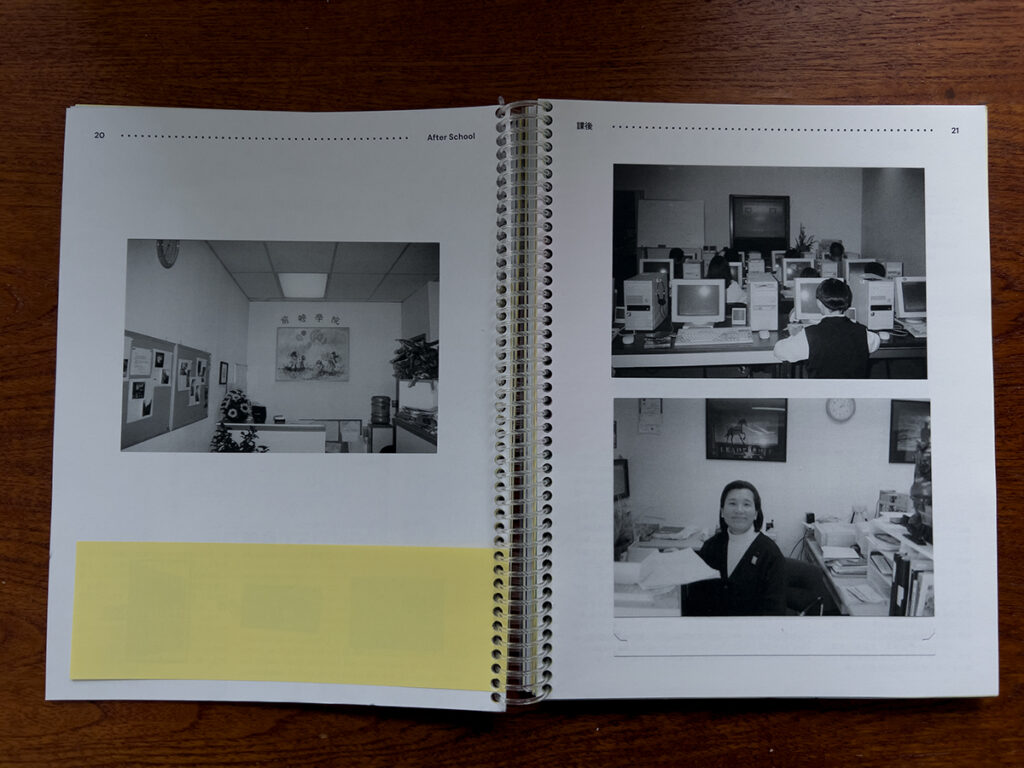
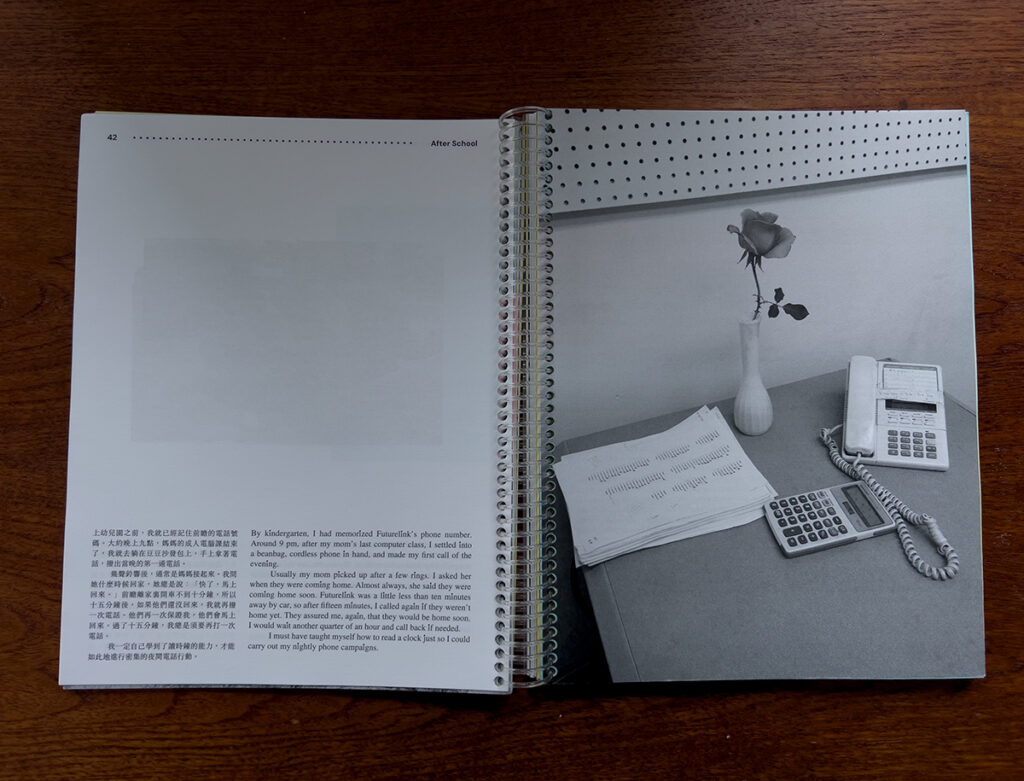
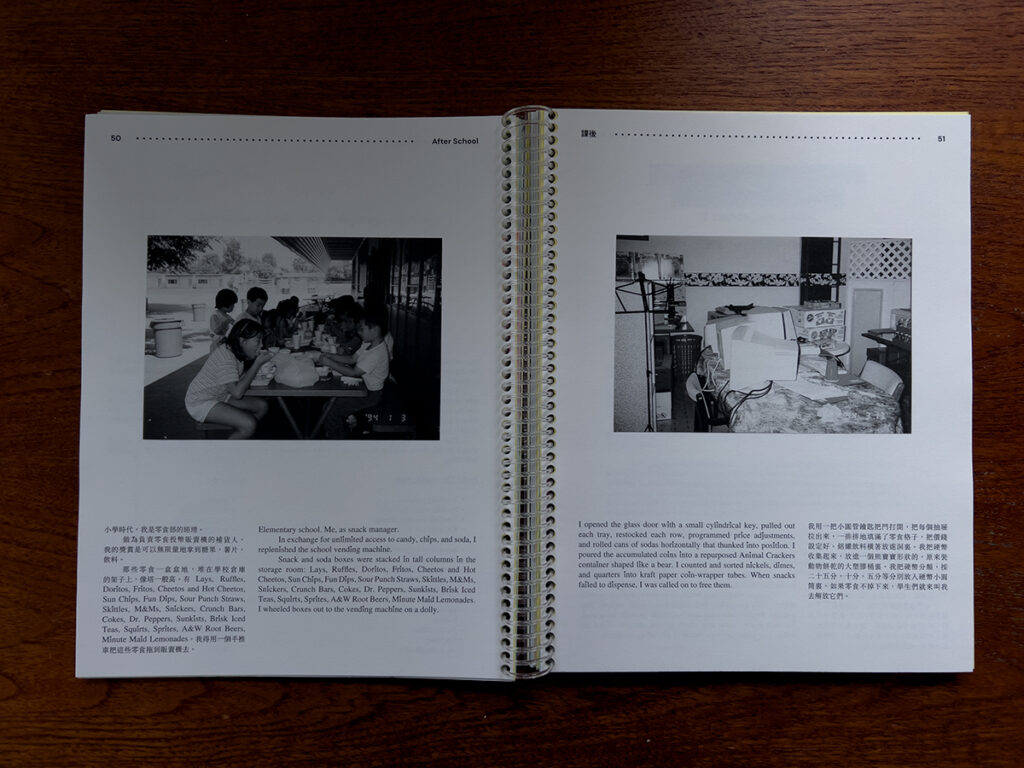
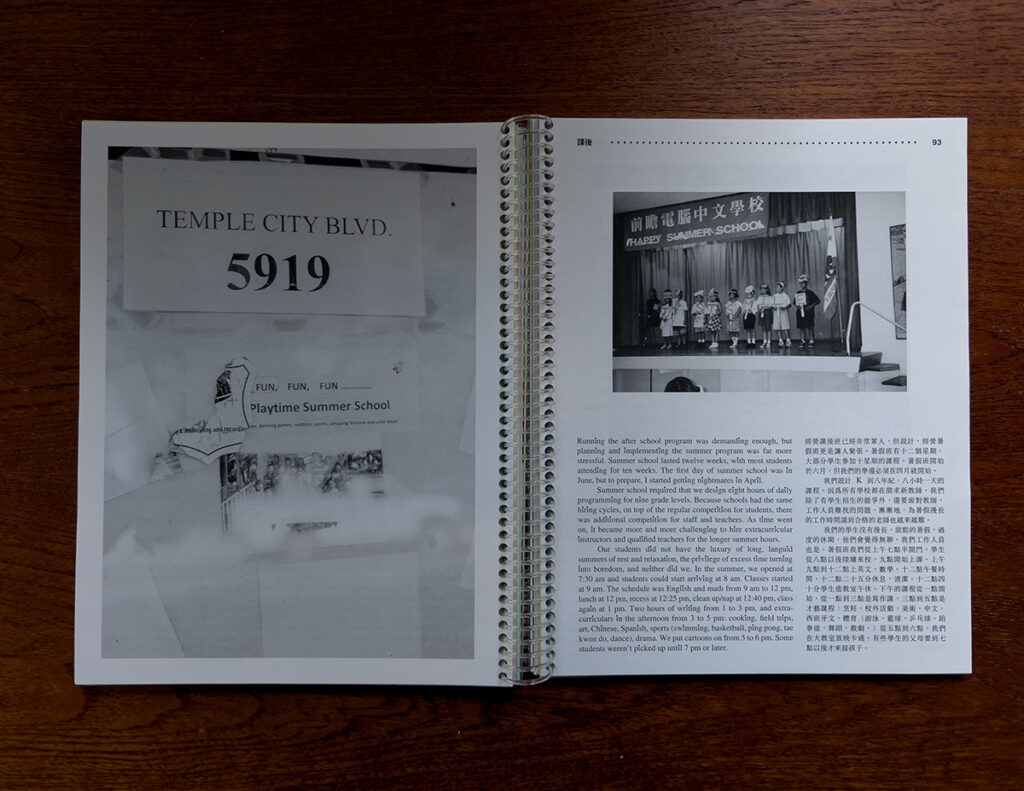
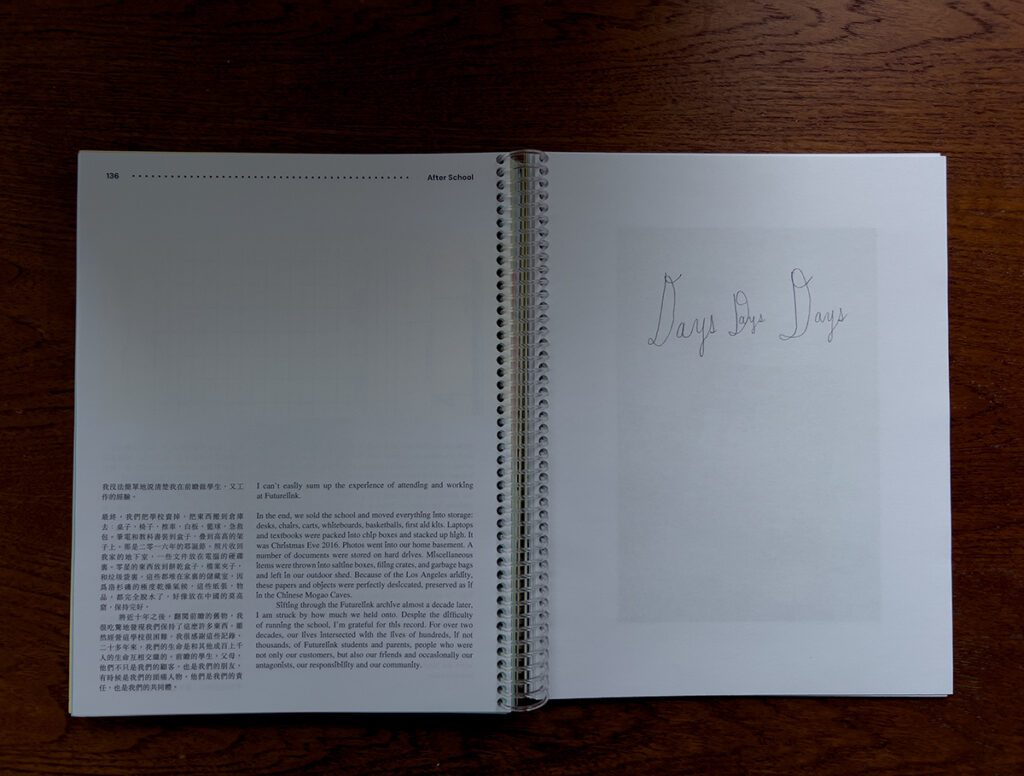
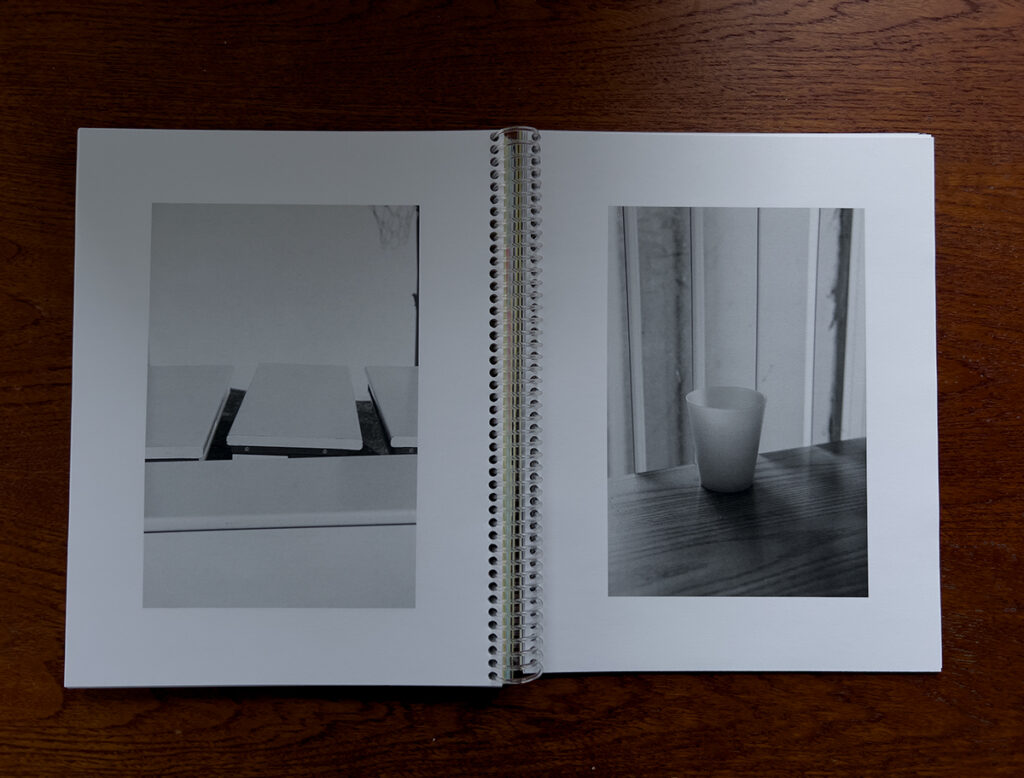
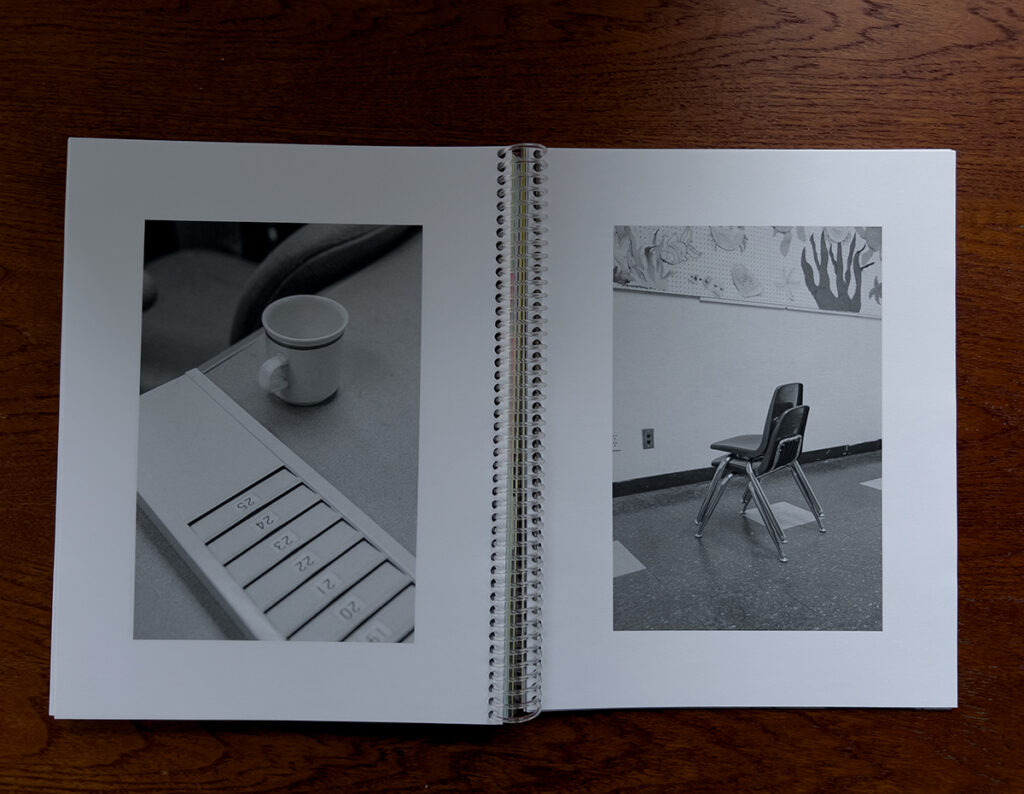
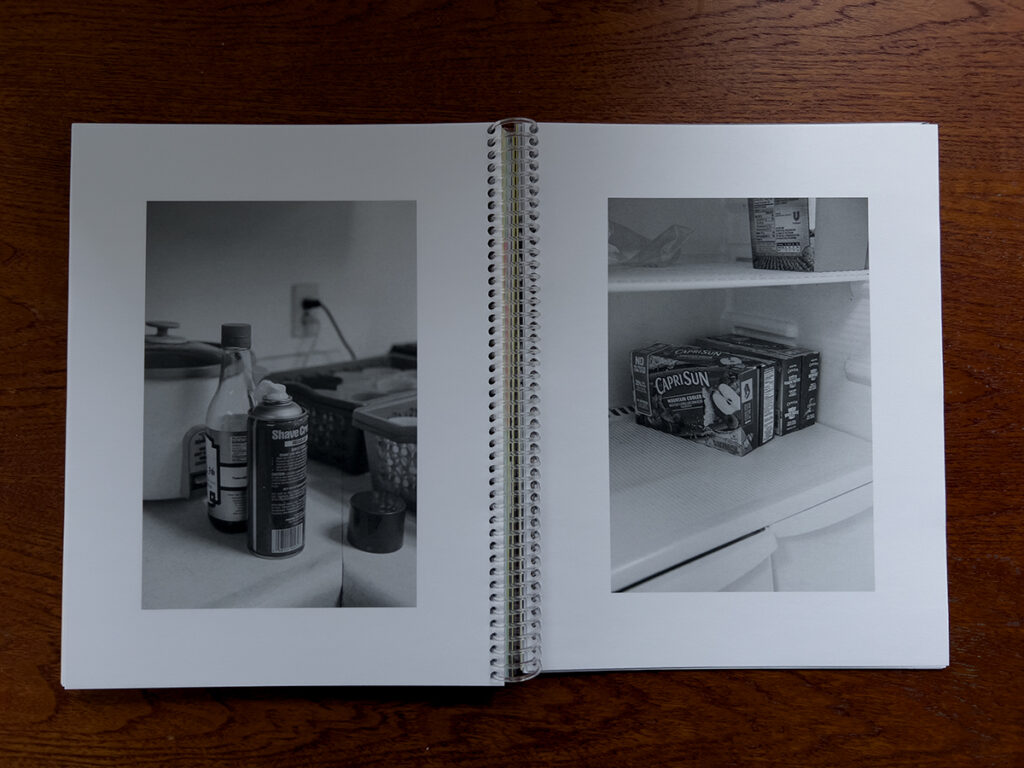

Comments/Context: After School, the debut monograph by Angela Chen, is a complex photobook that examines the life of the artist’s family and their all hands on deck operation of Futurelink, a buxiban private after-school tutoring and test preparation center in the San Gabriel Valley of California between the 1990s and the 2010s. The book interweaves Chen’s autobiographical writings with a variety of materials: photographs, collage, and archival printed matter, including her childhood journal entries, family documents, comic strips, and other ephemera.
Against a backdrop of both the dynamics of a family run business and historical anti-Asian stereotypes (if not outright bigotry), Chen frames Futurelink, an after-school program that promised academic excellence, as a paradoxical setting. While Futurelink was the source of the Chen family’s livelihood, the business simultaneously functioned as a nexus for cultural preservation, community care, assimilation, discipline, competition, and success—all ultimately in pursuit of the American dream.
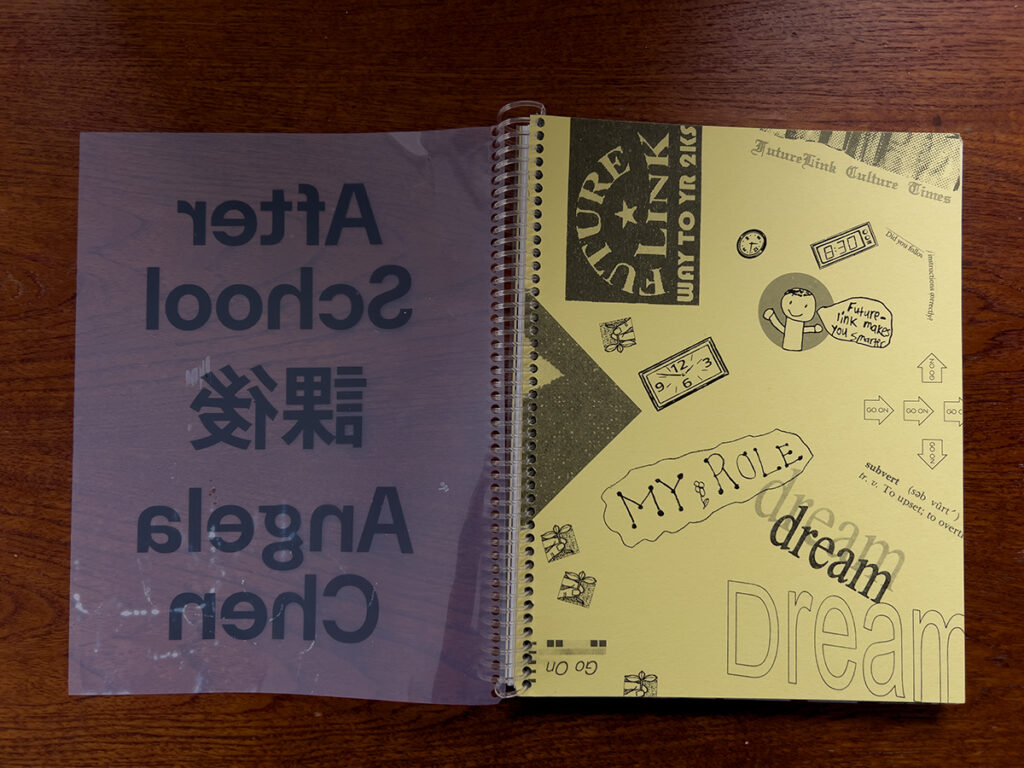
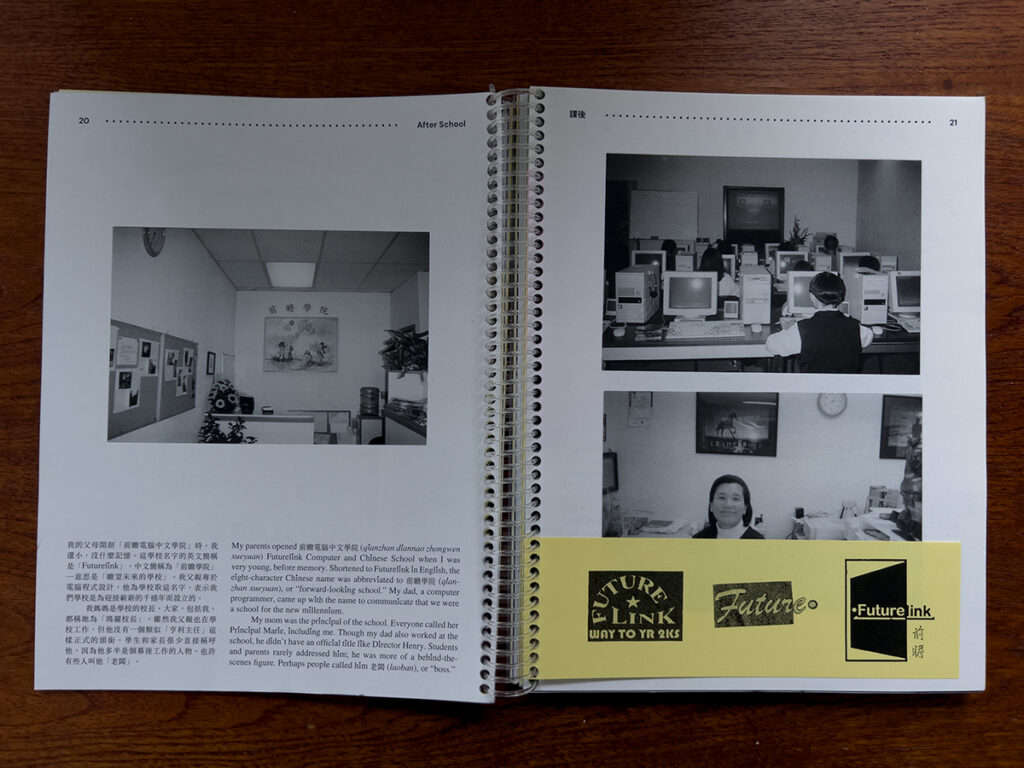
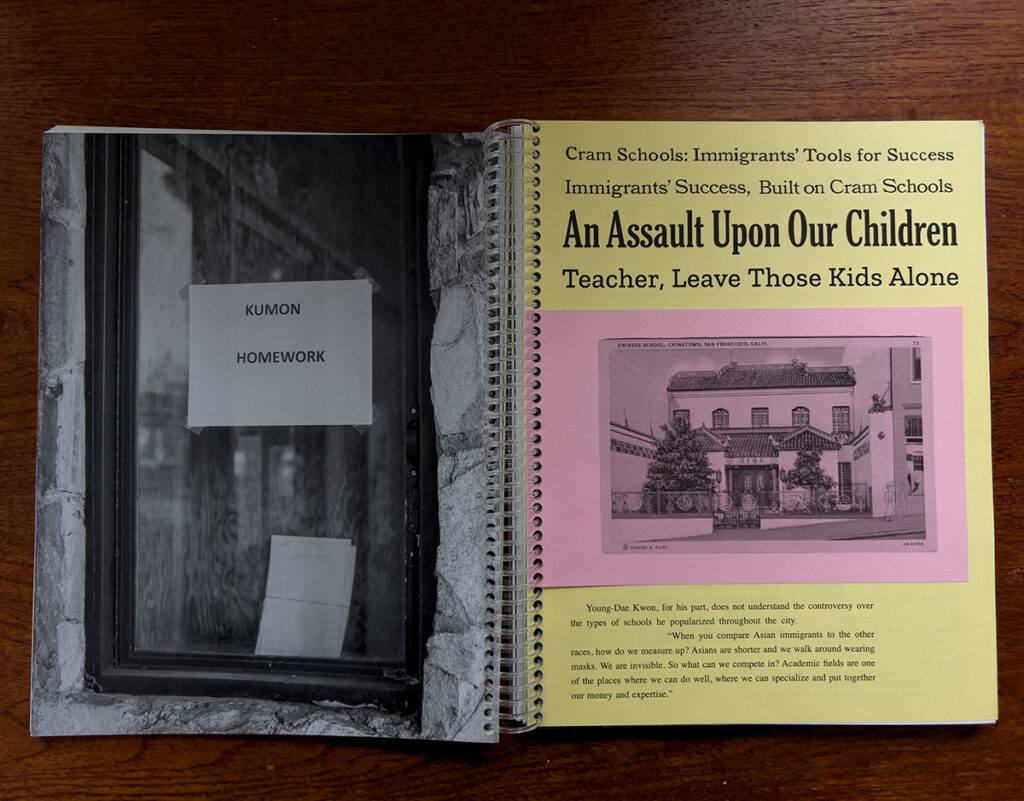
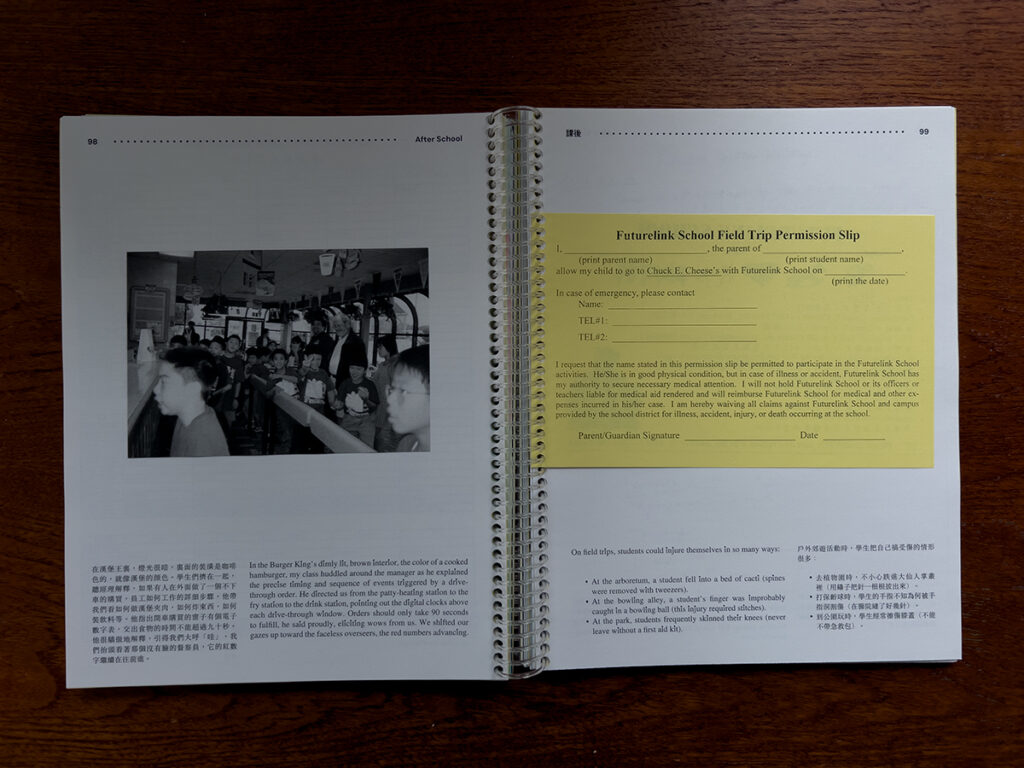
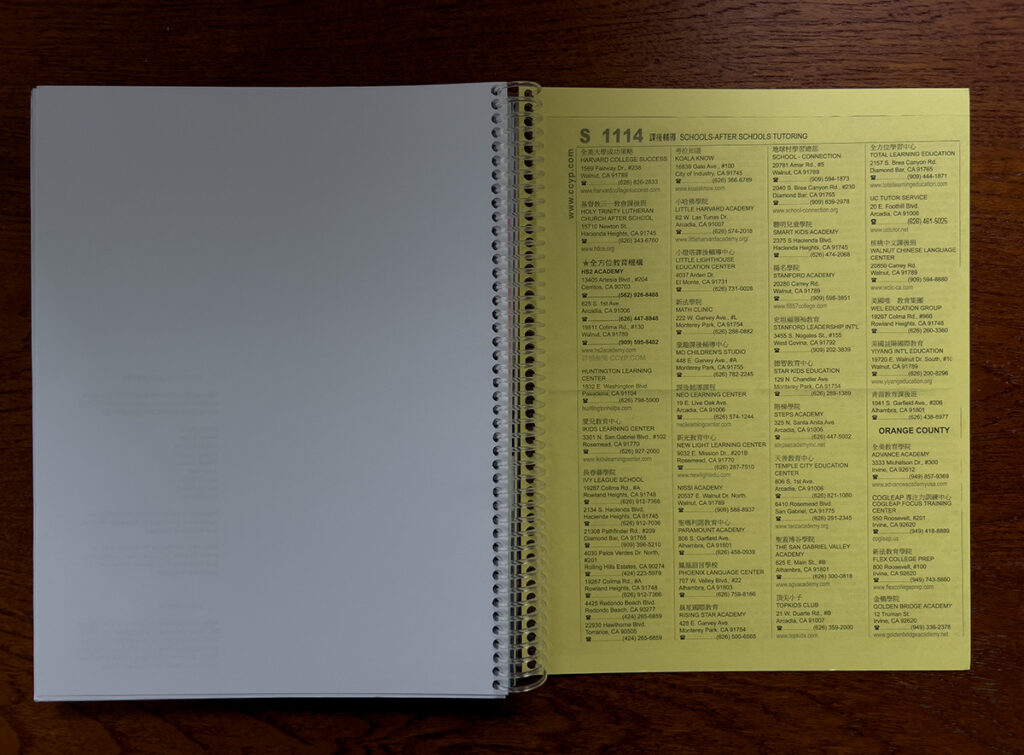
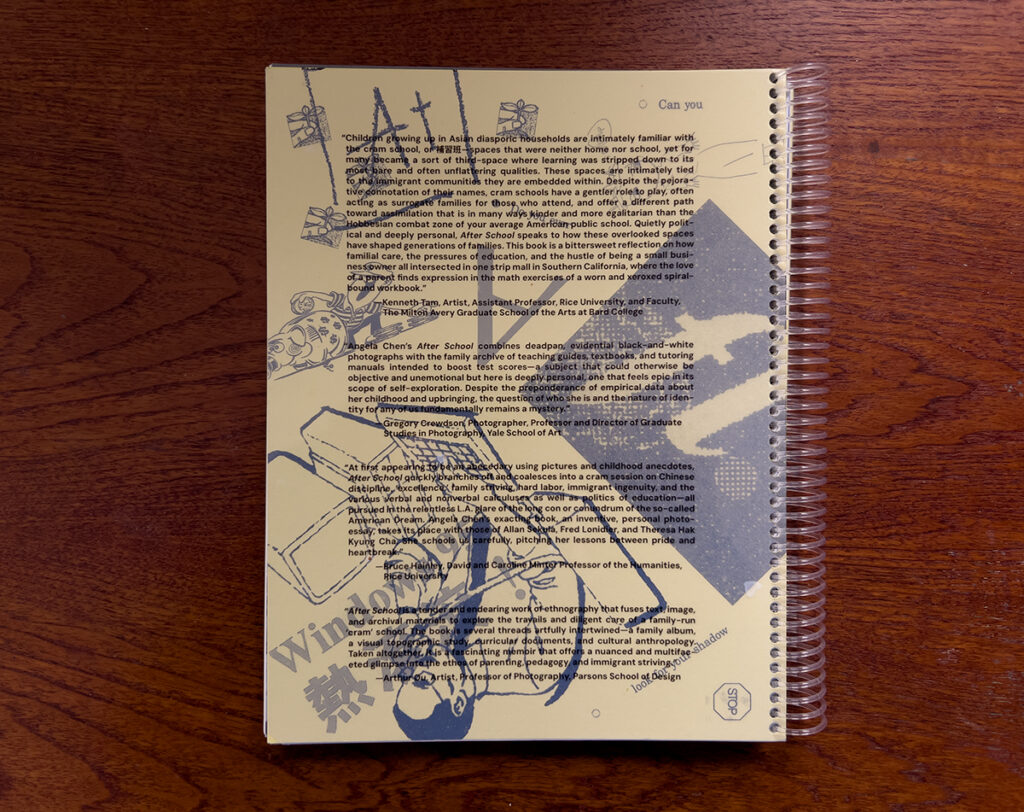
The photobook object is conceived as a Xeroxed, spiral-bound workbook, aptly pairing content to form. It is not a precious object, but rather one that is functional. It is distinguished by transparent film covers bearing typography, with the title and author’s name on the front and four testimonials written by widely celebrated artists, educators, and scholars on the back cover. Any parent would be immensely proud of their child being accepted to institutions represented by these contributors. Internally, the photobook employs four distinct colors of paper stock, each one for specific content: yellow pages present facsimiles from the Futurelink business archive–advertisements, student field trip permission forms, class schedules, blank worksheets–and a variety of printed ephemera that ground her personal story within a broader historical and cultural context, illustrating the long arc of immigrant striving and community building. The white pages incorporate Chen’s original images and prose, while pink papers exhibit material of anti-Asian bias. The yellow endpapers feature a collage of Futurelink graphics on the exterior side and the Yellow Pages bearing the business names and contact information for buxiban competitors in the San Gabriel Valley region.
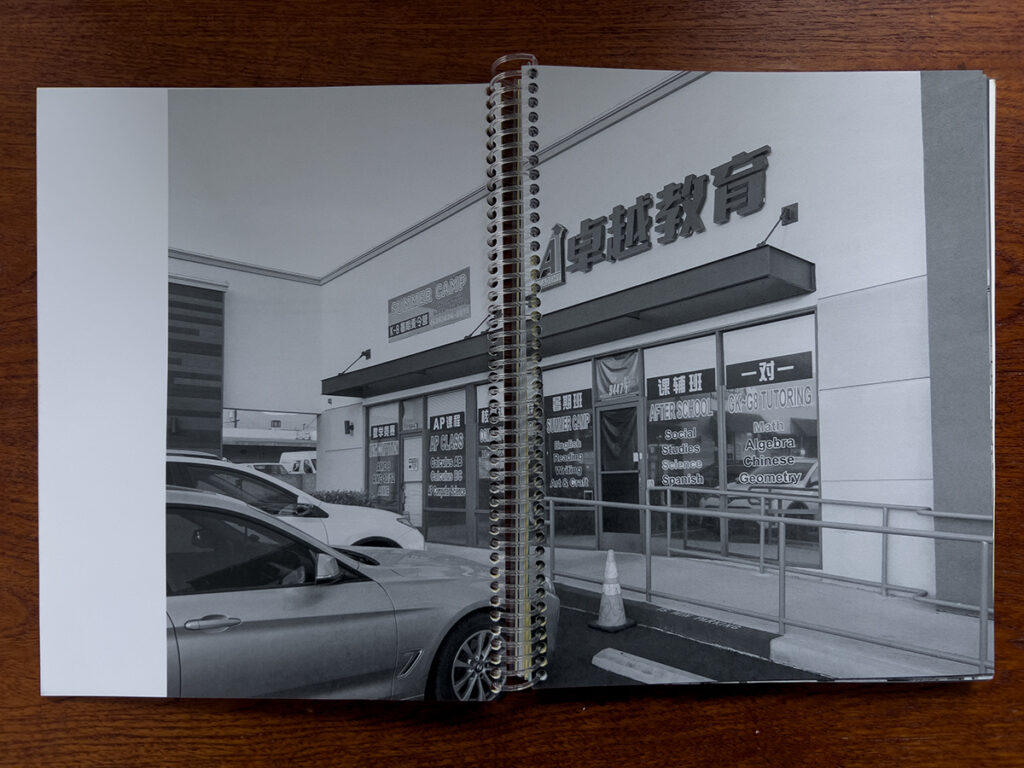
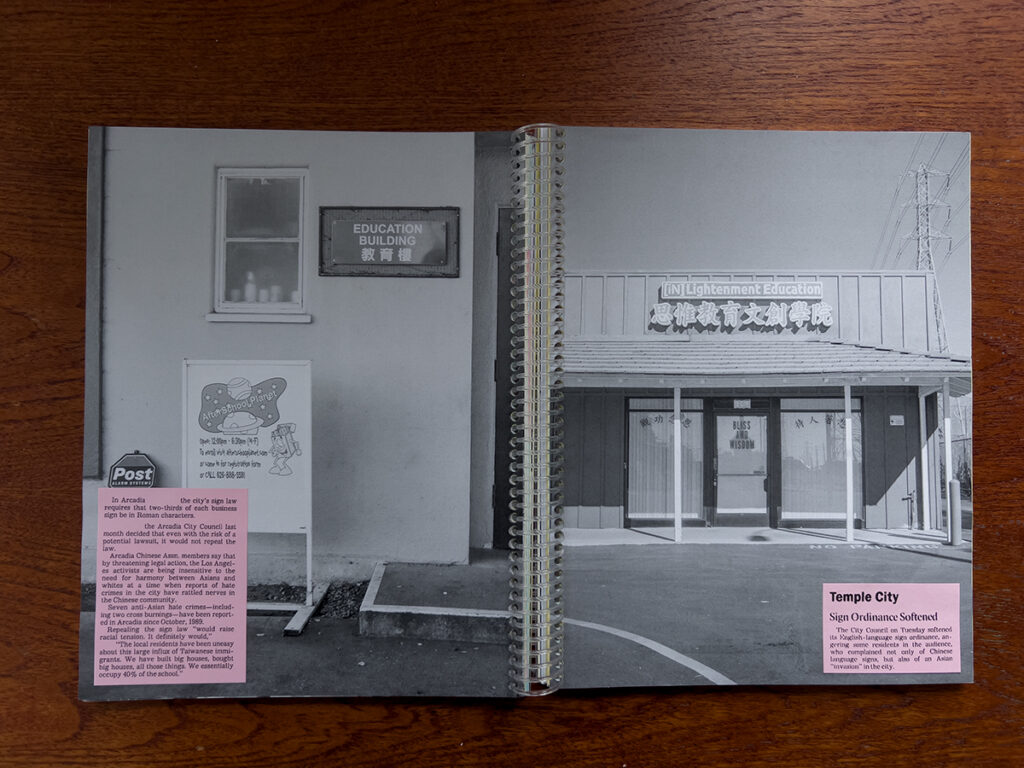
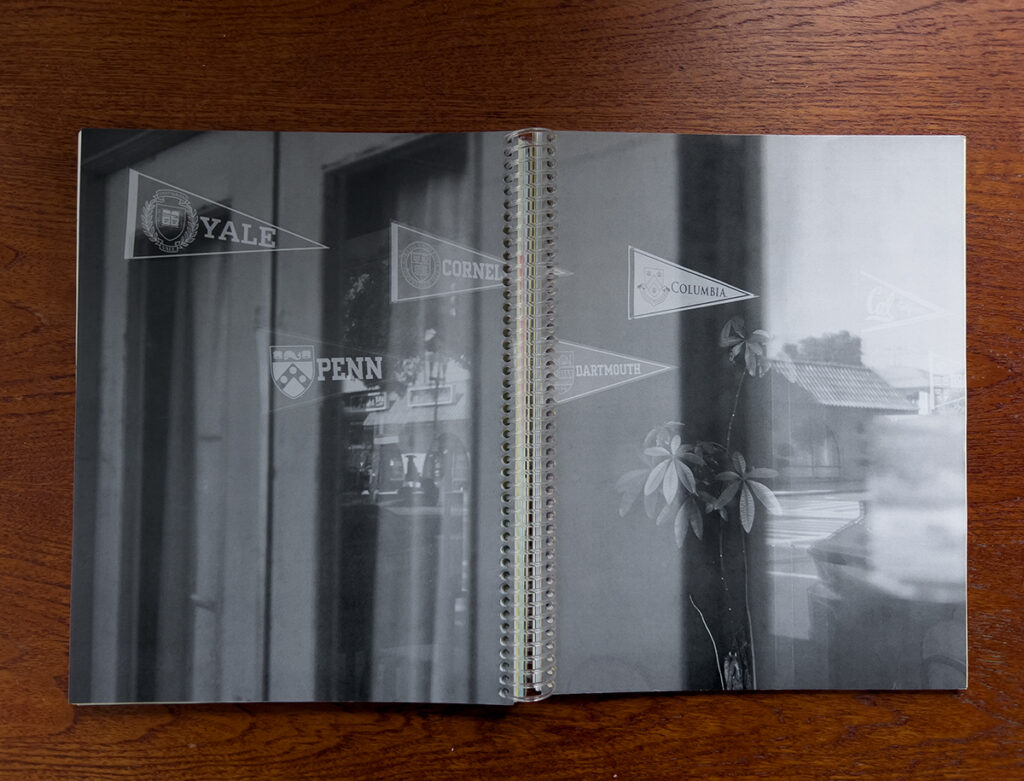
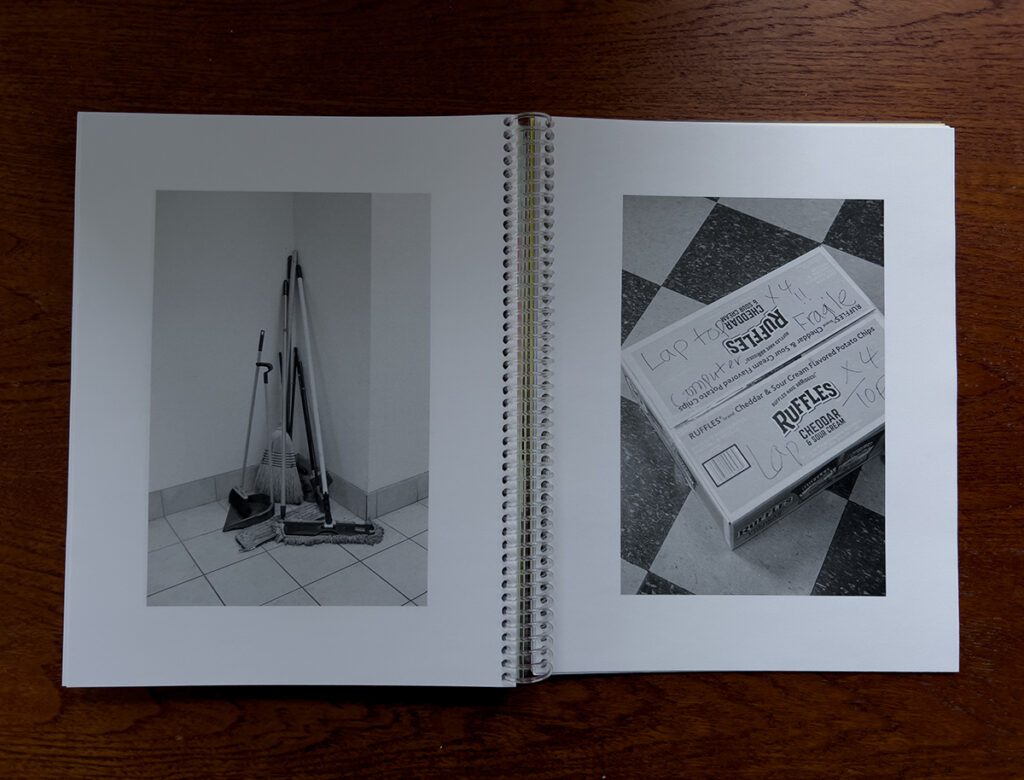
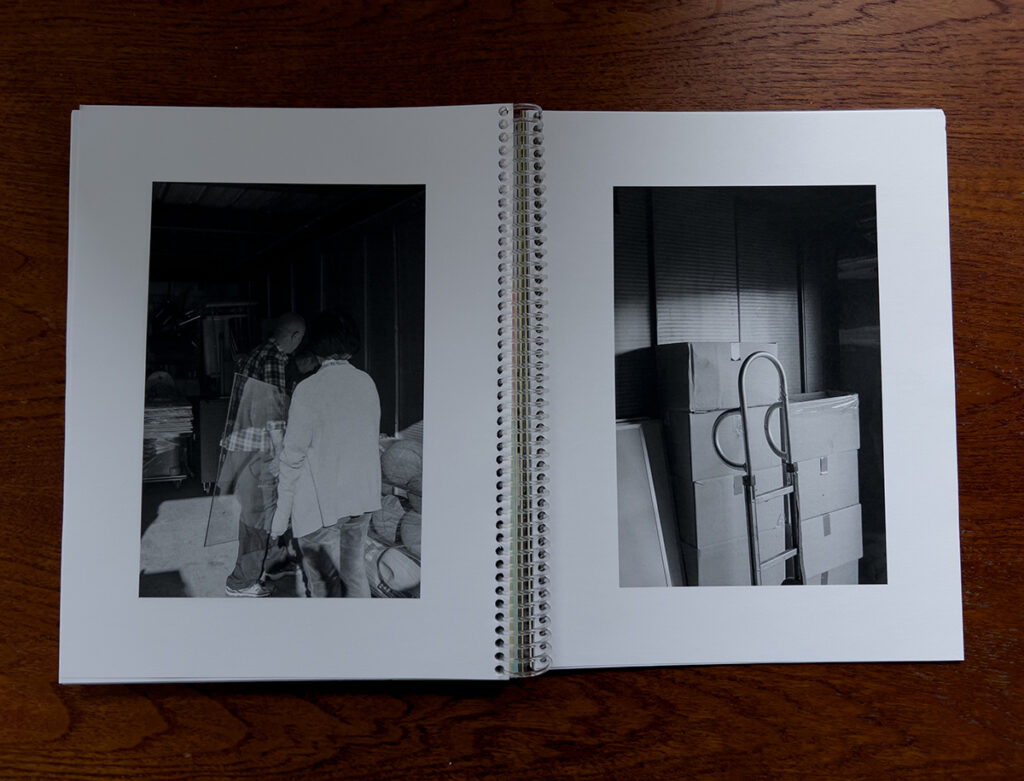
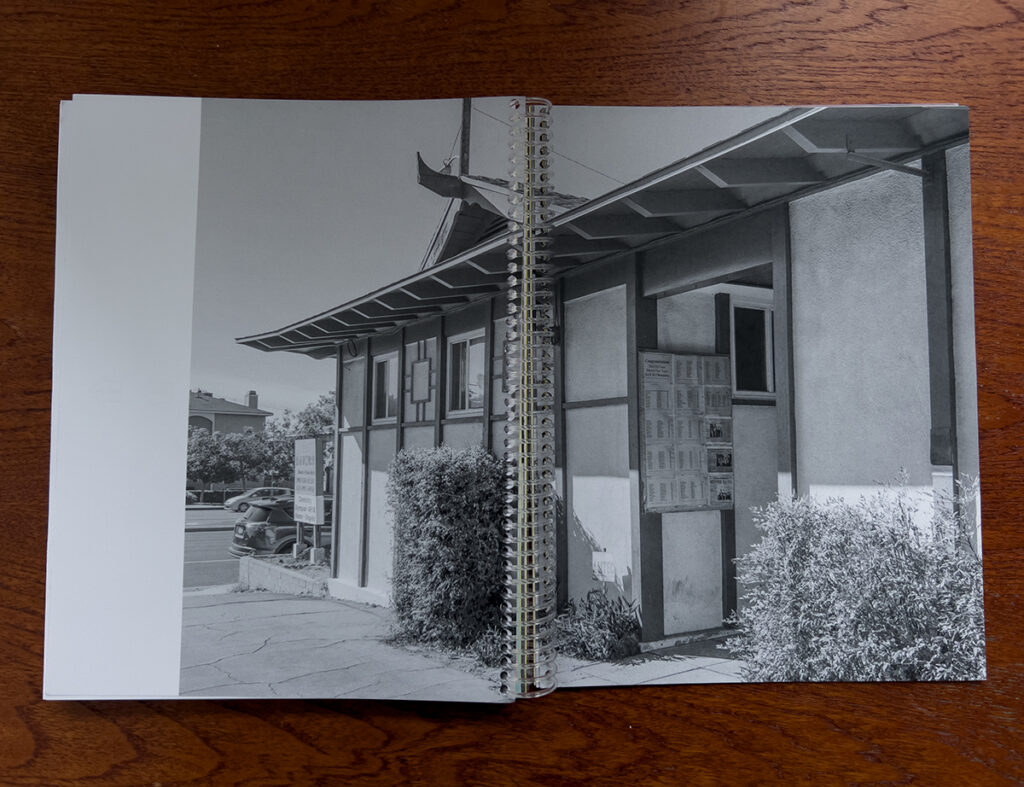
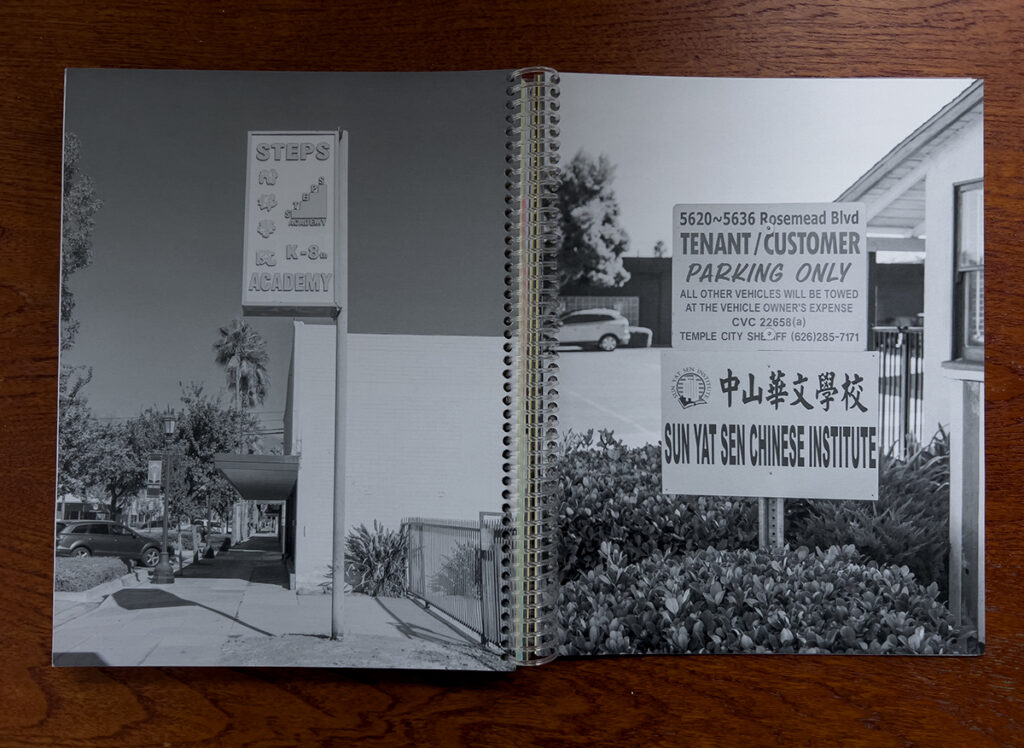
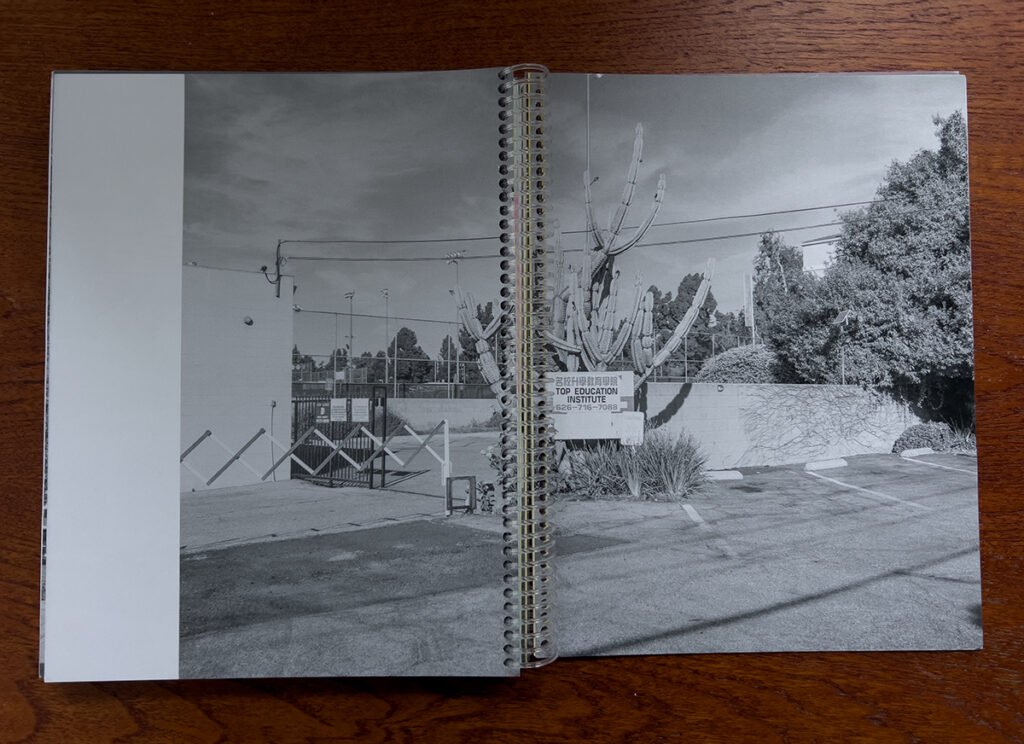
After School is deliberately structured and decisively designed. The book features full bleed black-and-white images, some appearing on a single page (left or right) and others spanning the gutter, where the spiral binding bisects the image. These full bleed images often depict concrete strip mall landscapes and the bilingual English and Chinese signage that announces various academic prep businesses. In contrast, archival black and white photographs related to Futurelink’s operation and the Chen family business are reproduced at their original 4×6 inch size, typical of one-hour photo prints, and accompanied by printed captions beneath, in both English and Chinese. The final section of the book contains two text-free image sequences, uninterrupted by colored pages. The first, introduced by the handwritten cursive phrase “Days, Days Days,” consists of deadpan vertical interior still lifes, with the exception of a single snapshot of Chen’s mother, movers, and the new owner of the school in a storage unit. The second sequence, marked by a graphic of three arrows with the words “GO ON GO ON GO ON” returns to the full-bleed exterior shots of the strip malls and their bilingual signage.
The photobook’s masterful pacing seamlessly blends the various visual components—including layers, colors, and diverse image types—by employing pages of differing heights and integrating them at distinct points within the spiral binding’s coil. One notably innovative spread features a left-hand page printed full-bleed with a vertical black-and-white photograph of a window, on which a paper sign reading “Kumon Homework” is taped. The opposing right-hand page is less than half the height of the book, printed on pink stock, and reproduces a postcard titled “Chinese School, Chinatown, San Francisco, Calif.” This pink page overlays a full-length yellow page containing text that discusses the racial bias directed toward Asian immigrants and their after-school programs. Later in the book, another powerful example features a sequence of spreads with two distinct, full-bleed vertical photographs of strip mall signage. Accompanying this section are small, tightly cropped, pink thumbnail text blocks, pasted onto the lower exterior corners of both pages. The text details the adoption of legislation in San Gabriel Valley cities that restrict the use of Chinese language and characters on business signs within the region.
After School is a groundbreaking photobook that offers a deeply resonant and revealing exploration of the immigrant experience, with a specific focus on the complex dynamics of labor, care-work, and the economic realities of maintaining a business predicated on serving the needs of a diasporic community. The photobook’s design is excellent and the photographs are subtle and quietly observant, effectively echoing and animating the prosaic writing by Chen that is woven throughout the book. The narrative structure and emotional depth are enriched by the variety of archival material–both personal to Futurelink and the artist and more broadly historic to the Asian American immigrant experience–that provide layers of texture, moving the narrative beyond individual memory into a collective history.
Collector’s POV: Angela Chen does not have consistent gallery representation at this time. As a result, interested collectors should likely follow up directly with the artist via her website (linked in the sidebar).