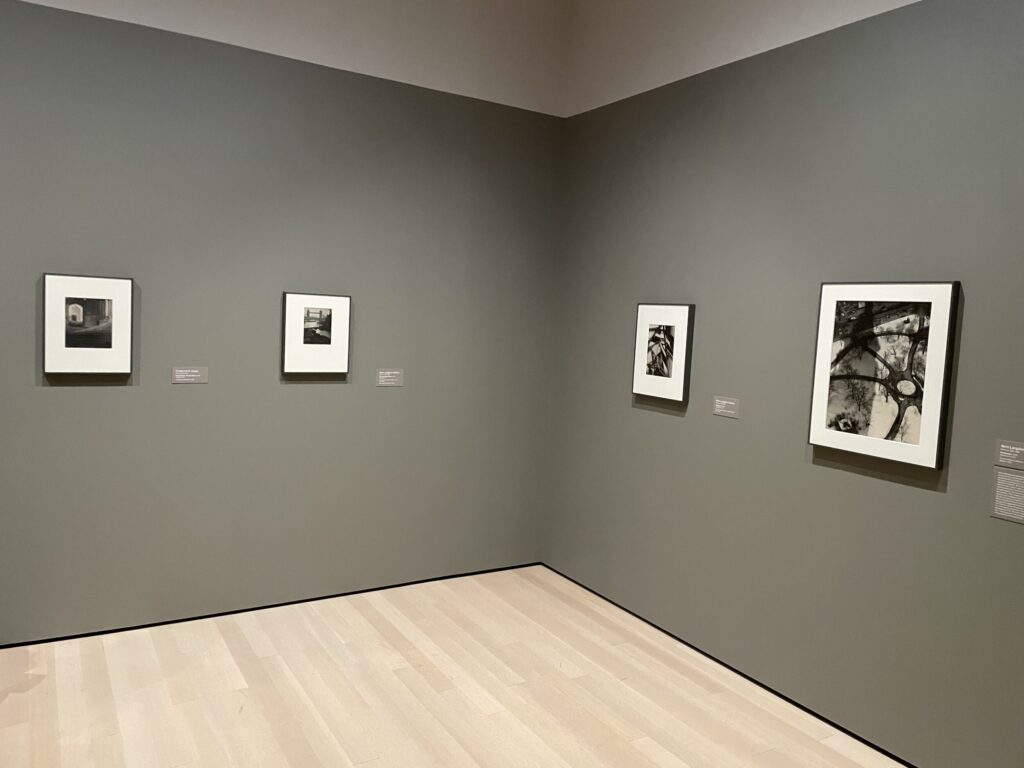
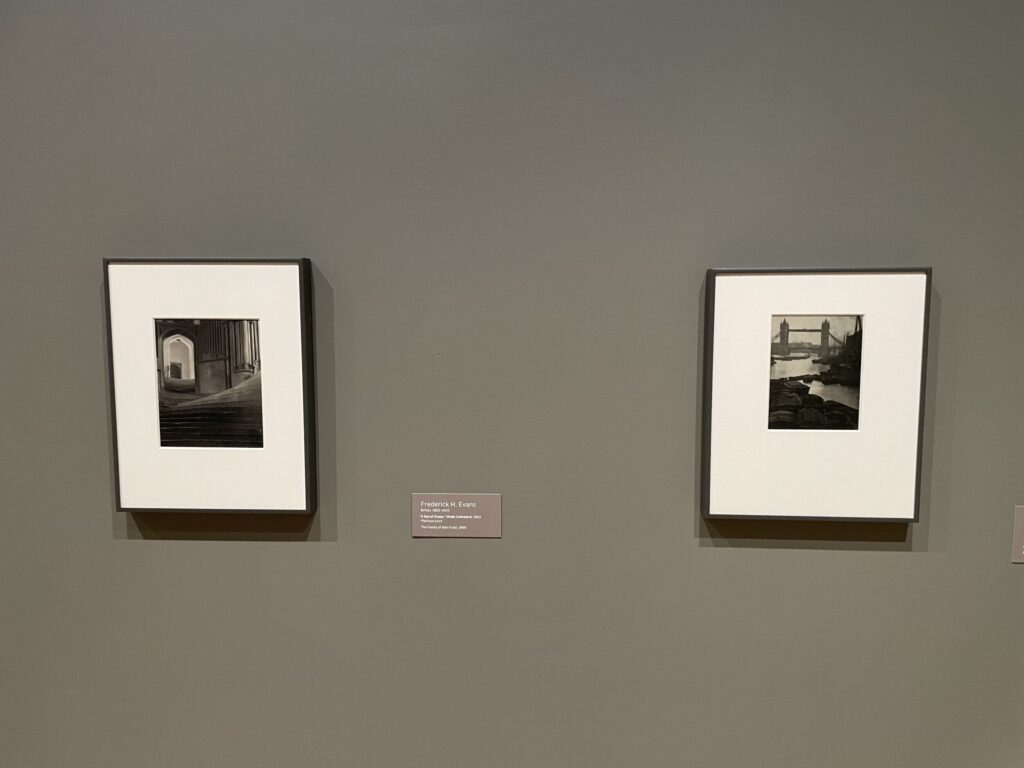
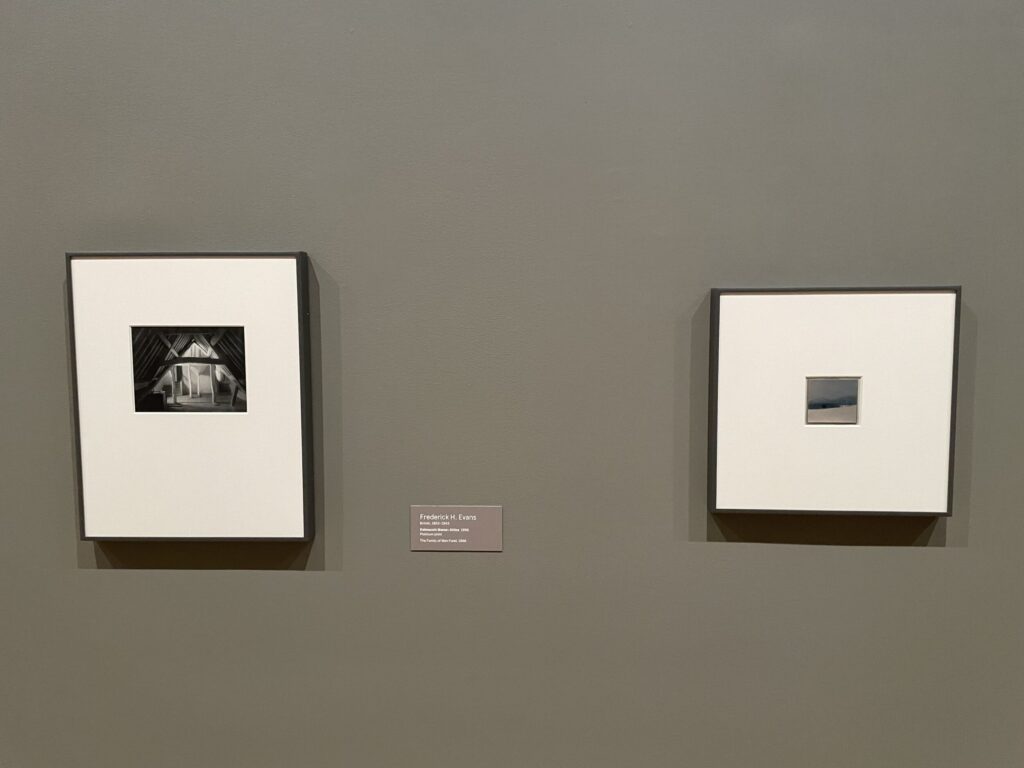
JTF (just the facts): A permanent collection group show consisting of works by 9 photographers, variously framed and matted, and hung against grey walls in room 504 on the fifth floor of the museum. The show was organized by Oluremi Onabanjo and Lee Ann Daffner, with assistance from Chiara Mannarino and Rachel Remick. (Installation shots below.)
The following works are included in the show:
- Alvin Langdon Coburn: 2 gelatin silver prints, 1909, 1916-1917; 2 photogravures, 1904
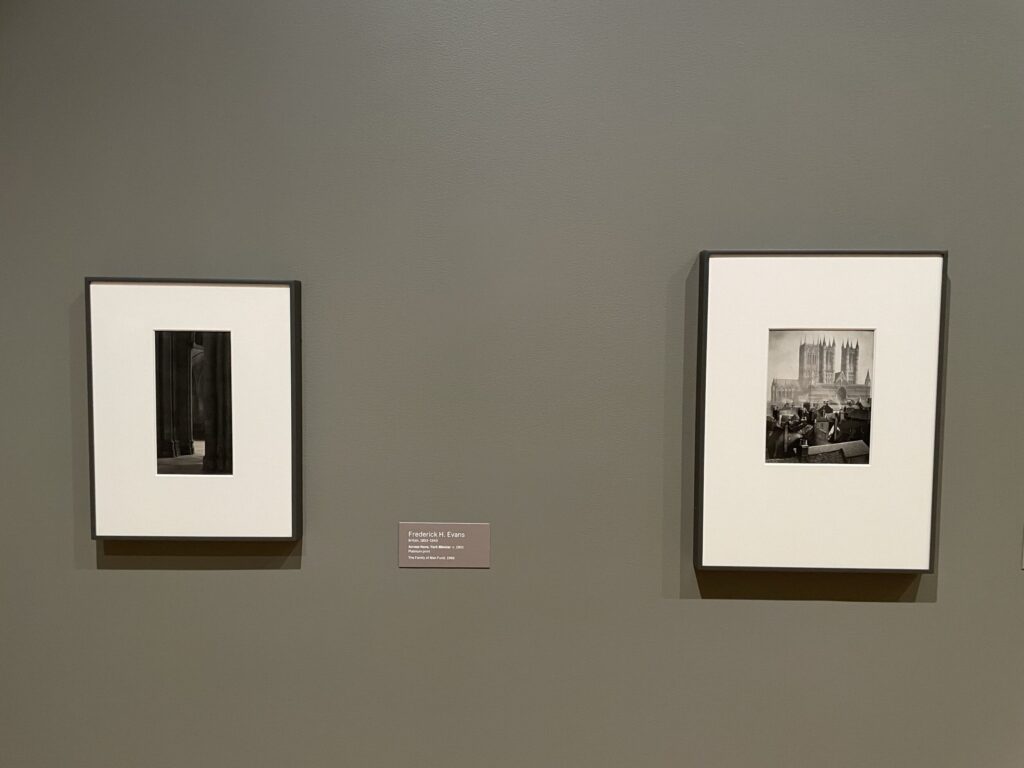
- Frederick Evans: 5 platinum prints, 1894, 1896, 1898, c1901, 1903
- Gertrude Käsebier: 1 gum bichromate print, 1903; 1 gum bichromate over platinum print, 1902
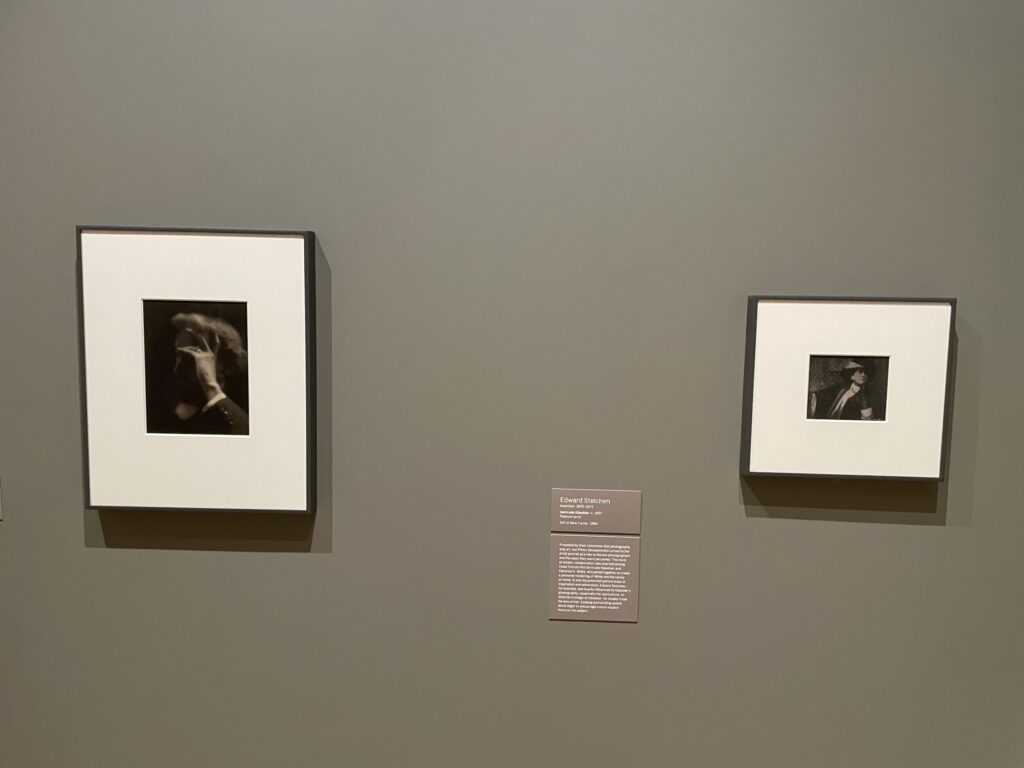
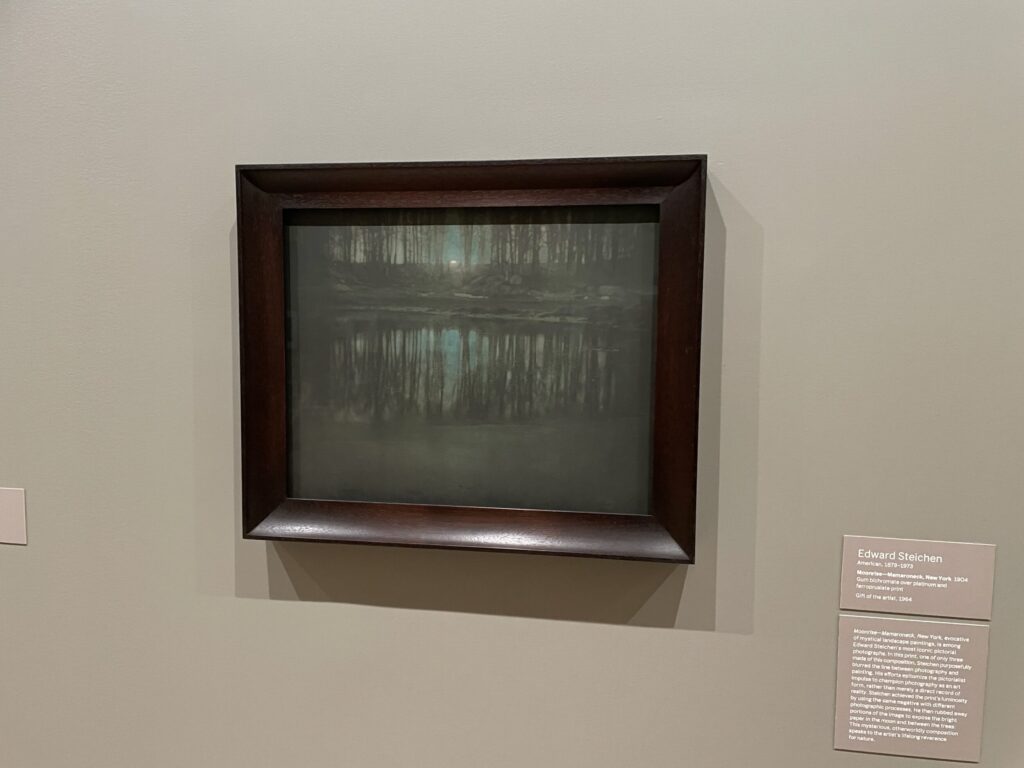
- Edward Steichen: 1 gum bichromate print, 1904-1905; 1 gum bichromate over platinum print, 1904; 1 gelatin silver print, 1901
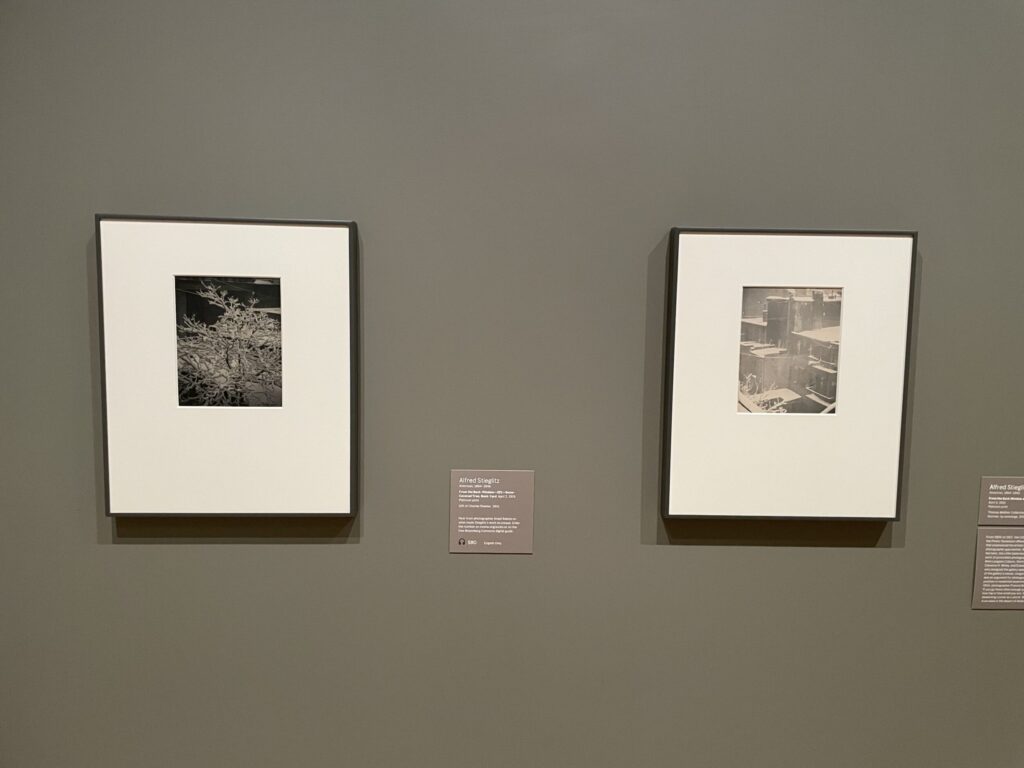
- Alfred Stieglitz: 3 platinum prints, c1907, 1915; 3 photogravures, 1902, 1903, 1907
- Paul Strand: 1 gelatin silver print, 1916/1976; 1 photogravure, 1916
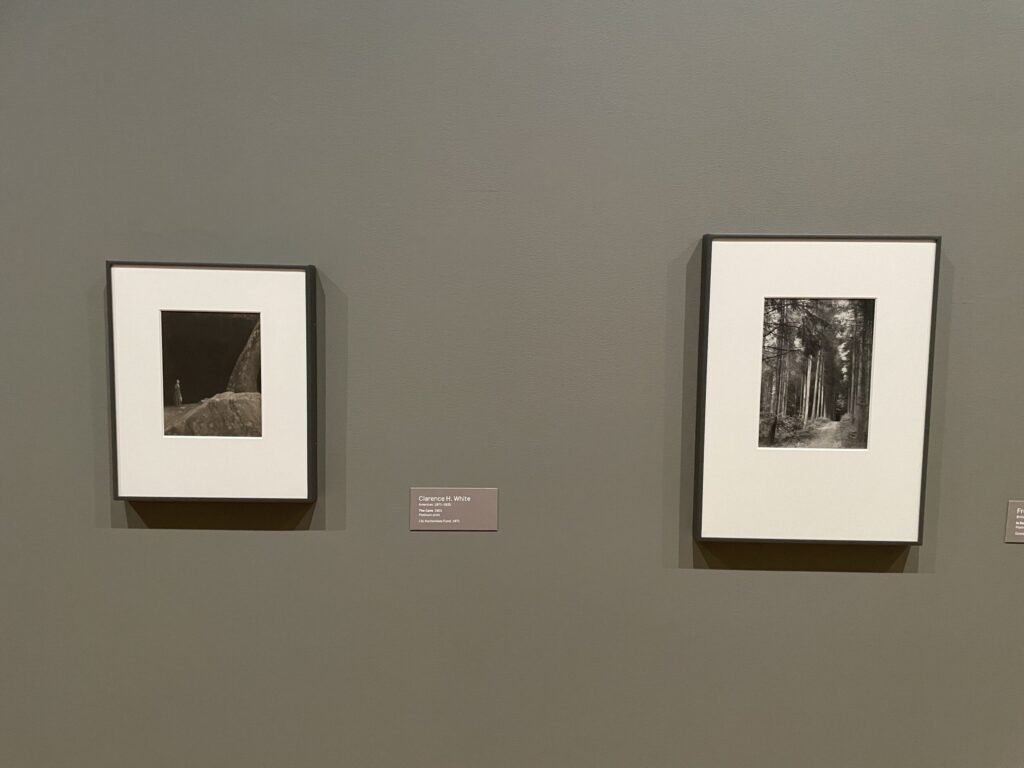
- Clarence White: 2 platinum prints, 1901, c1902
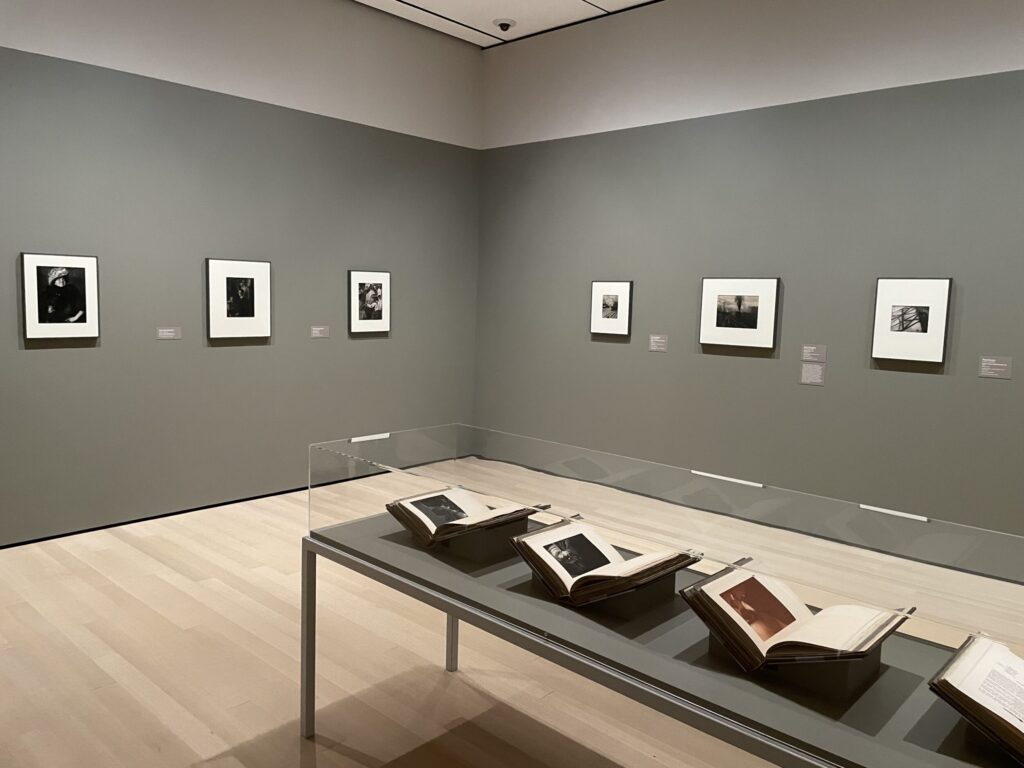
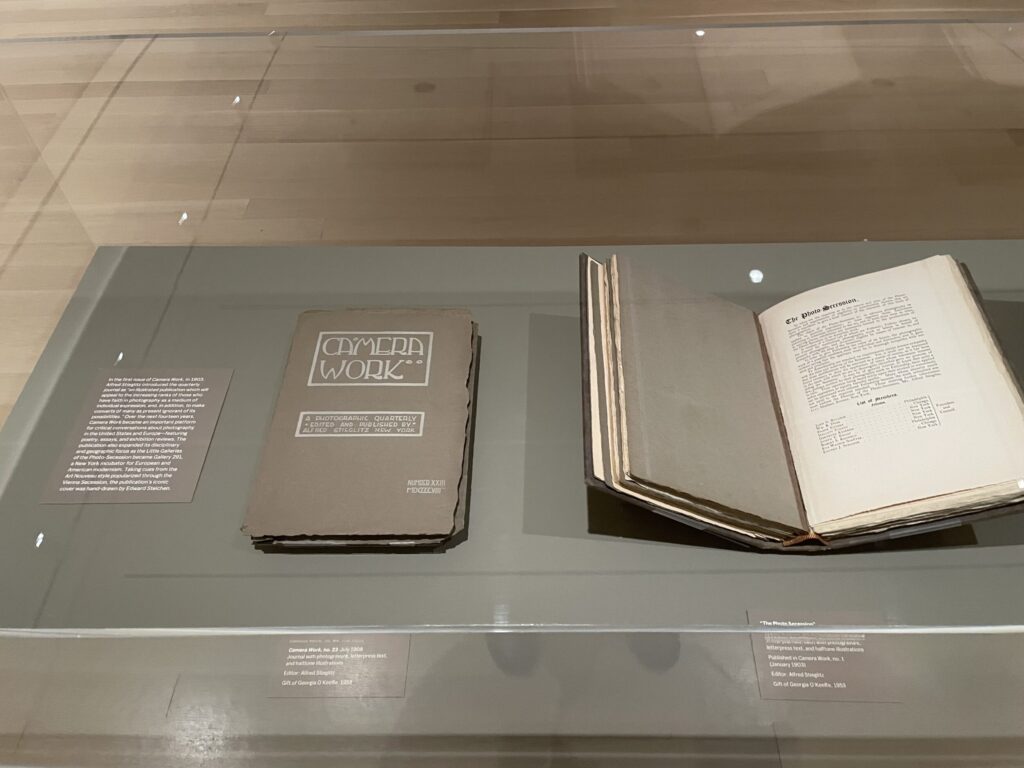
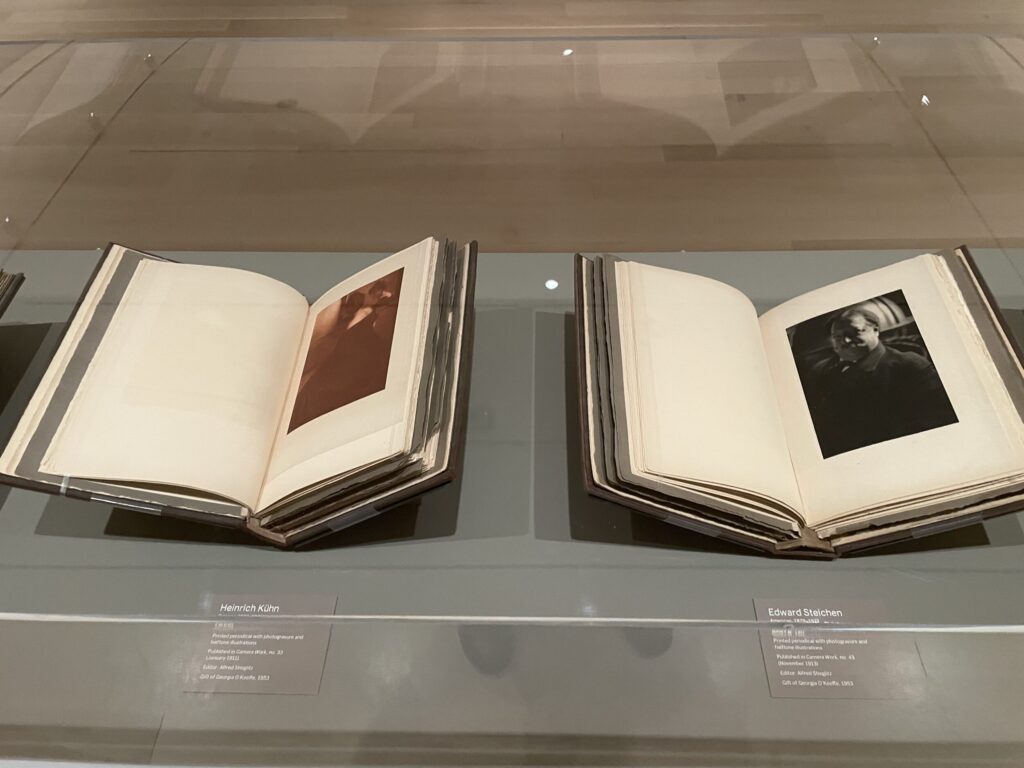
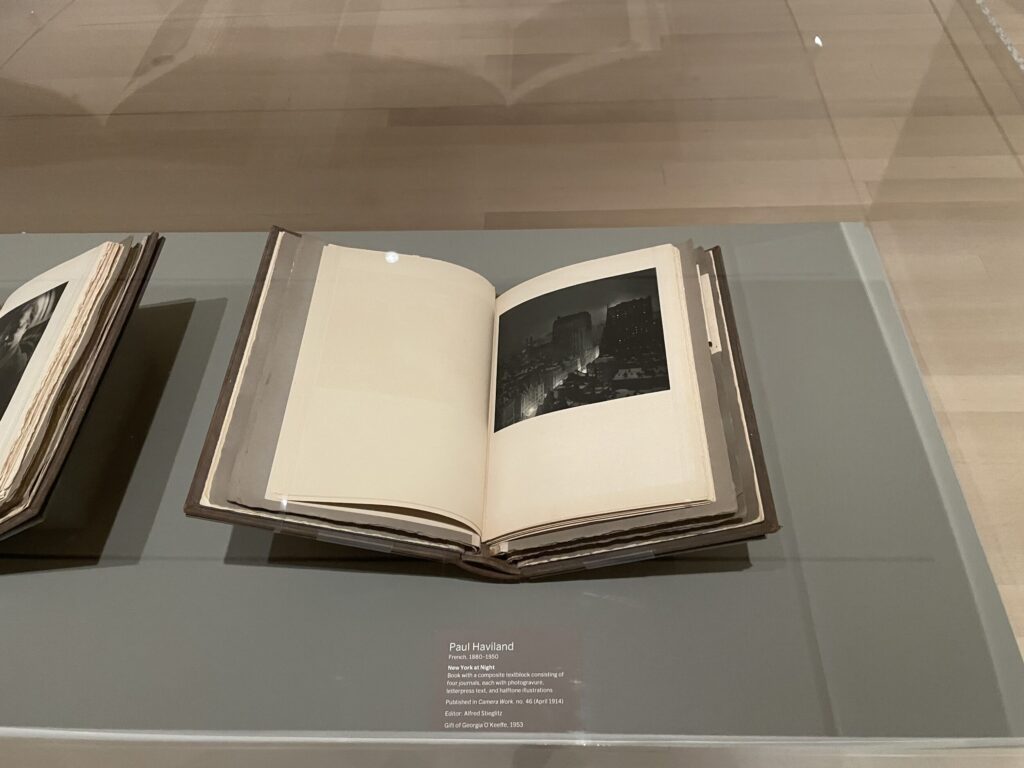
- (vitrine): Camera Work volumes, 1908, 1903, featuring images by Heinrich Kühn 1911, Edward Steichen 1913, Paul Haviland 1914
The show will run through roughly the fall of 2028, with rotating installations every six months, so the end date for the show in its current form will come at the end of March 2026.
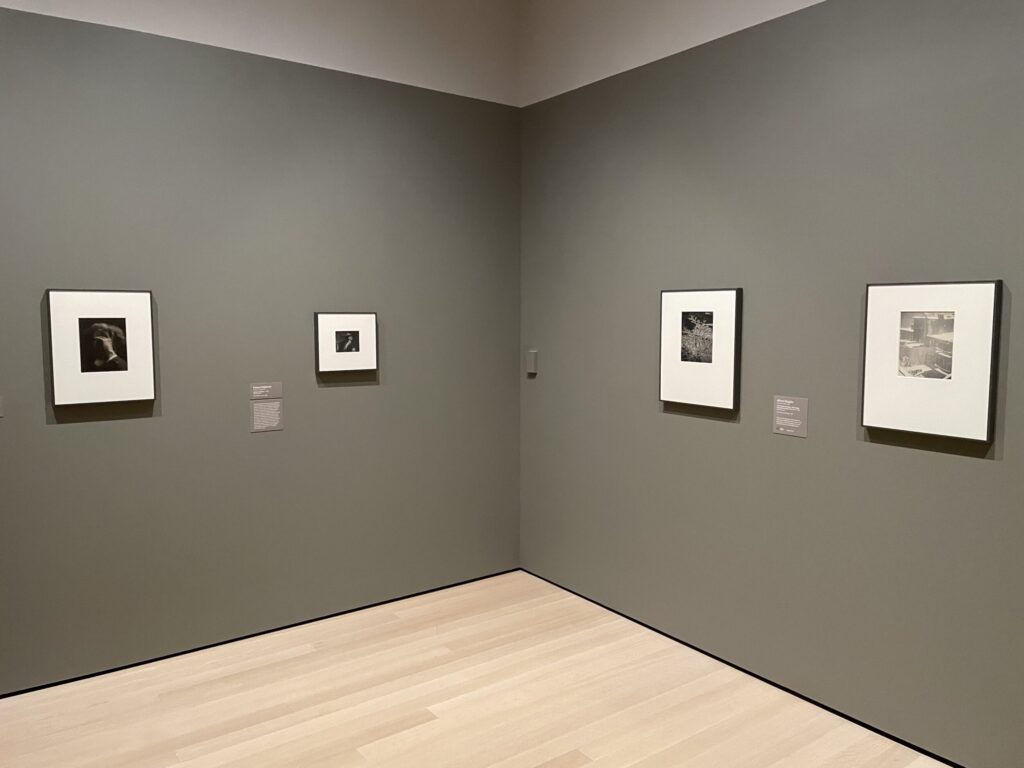
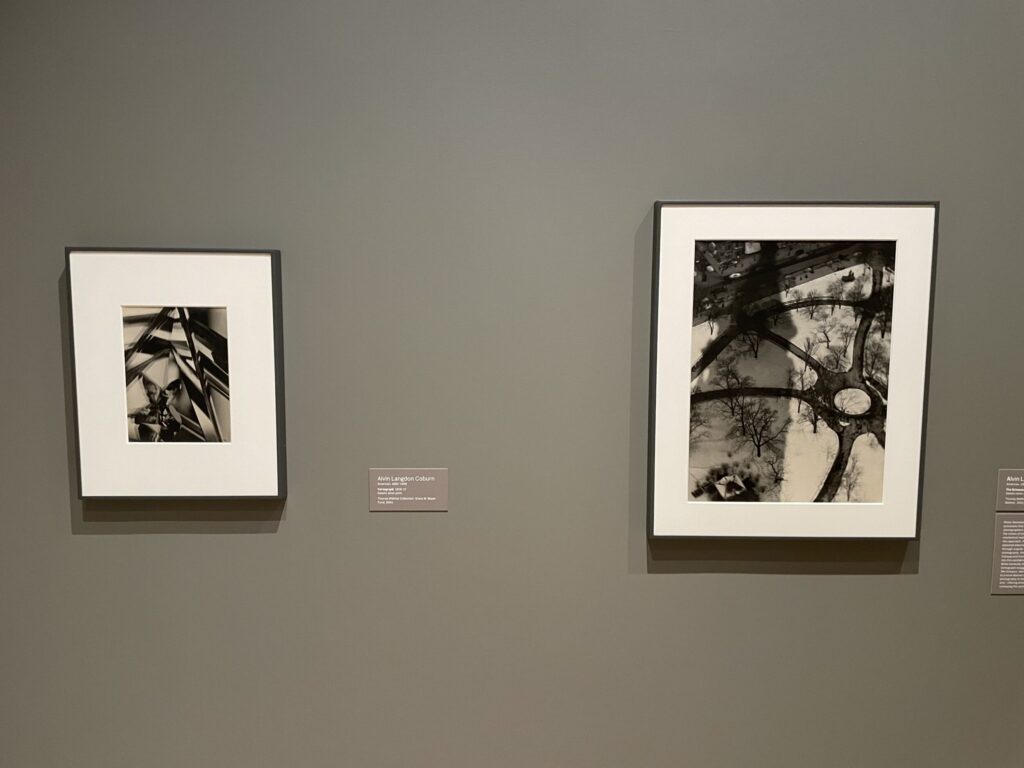
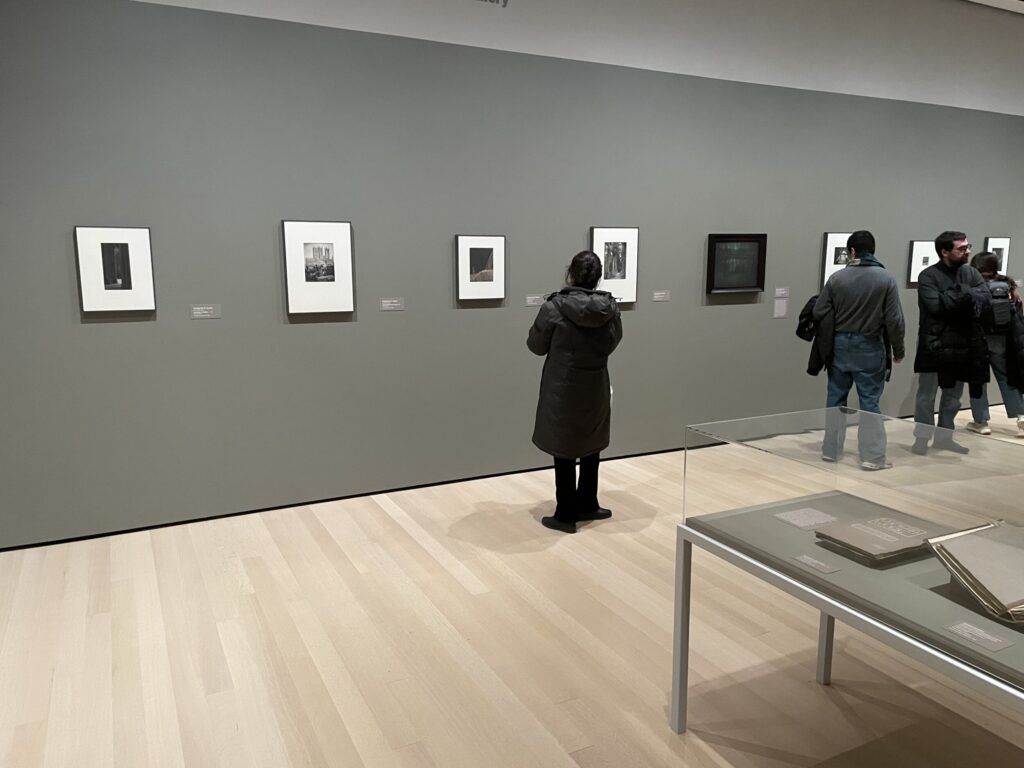
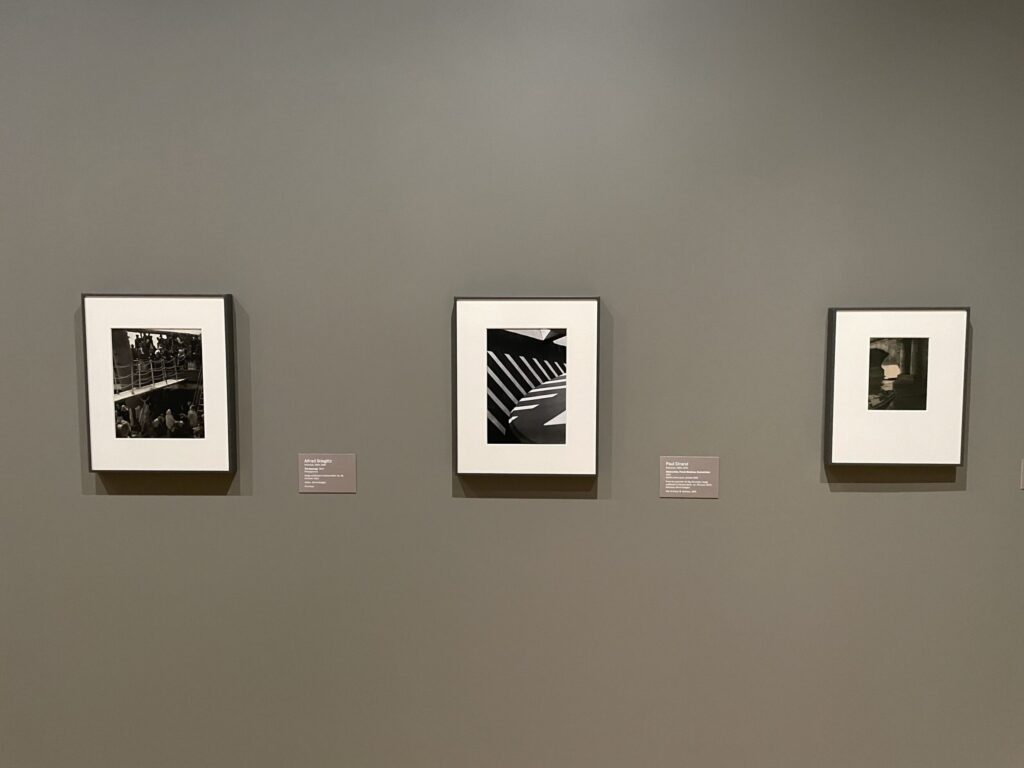
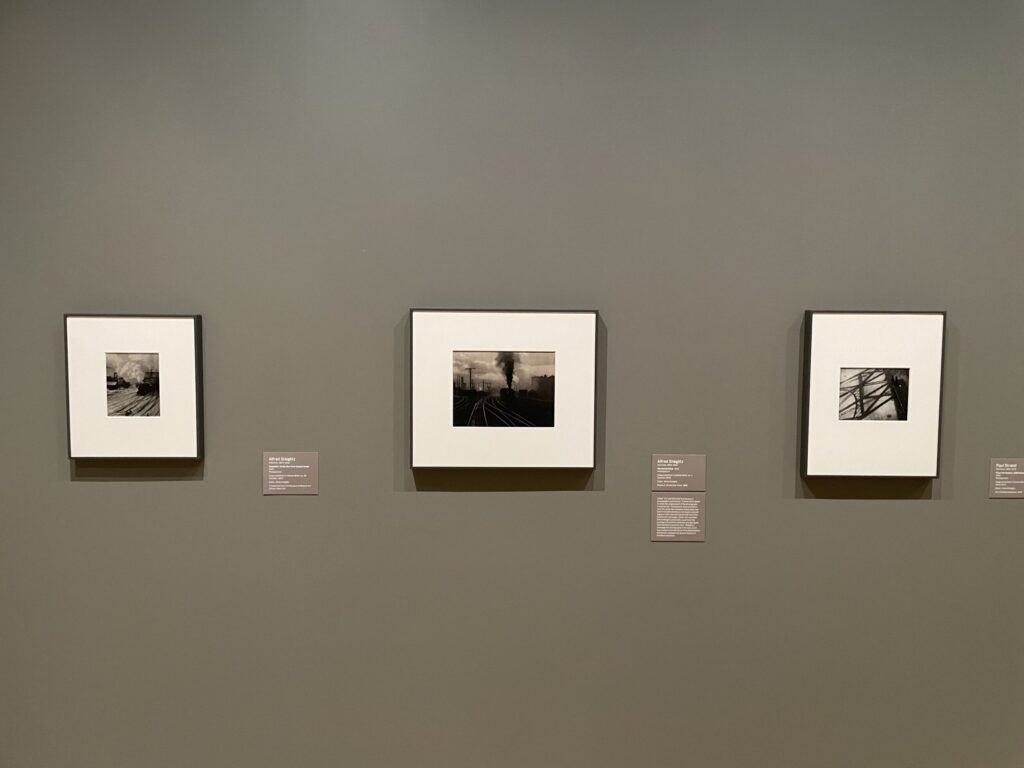
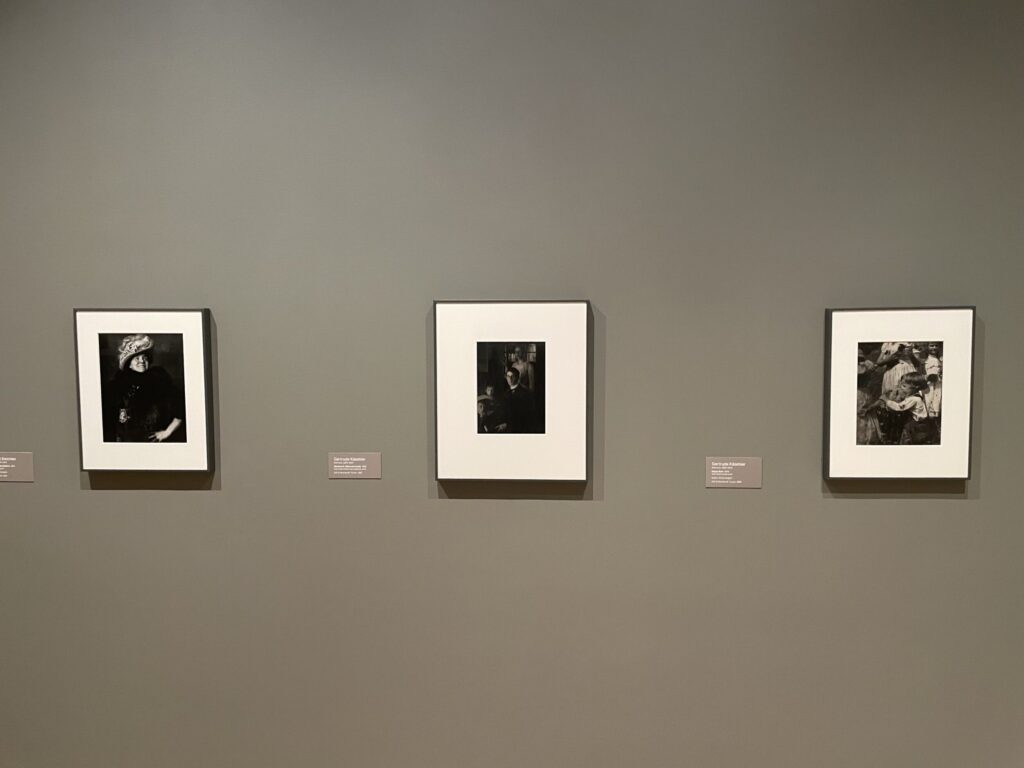
Comments/Context: In the years since MoMA removed its dedicated rooms devoted to photography and fully integrated the medium into the flow of its larger permanent collections galleries, it’s always been intriguing to see where and how the curators decide to blend the story of photography into the wider arc of art history. Most often, a handful of photographs are mixed in with contemporaneous artworks from other mediums, creating a moment-in-time dialogue between different modes of expression. But in some cases, an entire room is needed to explore a medium-specific movement, a thematic construct, a historical time period, or even the work of a single artist, creating the possibility of a short deep dive amid the wider survey being offered.
The permanent collections galleries at MoMA are essentially in a constant state of quiet flux and refresh, generally cycling in new artworks on a quarterly or semiannual basis (for both curatorial and conservation reasons), with some rooms staying relatively consistent over time and others turning over entirely, in an effort to keep the ever changing story of modern and contemporary art fresh. Last fall, one of the rooms on the fifth floor, which more broadly covers the period between roughly 1880 and 1940, was rehung as a succinct survey of the Photo-Secession, and while it isn’t billed as a separate show of its own, “A Little Gallery of the Photo-Secession” does an admirable job of introducing visitors to this pivotal point in the trajectory of photography.
To get at the durable importance of the Photo-Secession, it’s worth trying to remember the position of photography in the late 19th century. In the years since its invention decades earlier, the power of photography to duplicate reality had created a crisis of sorts in some areas of painting, its crisp fidelity making it obvious that realism in painting was going to be increasingly challenged by an extremely adept technological upstart. Part of that blowback came in the form of highlighting the mechanized nature of photography, and discounting its potential as an art making process. This kind of critique took shape more clearly when a number of photographic works made by Edward Steichen were first accepted by the Salon du Champs de Mars of the Société Nationale des Beaux-Arts in Paris, only to be rejected later when it became obvious that they were photographs.
So in 1902, a group of frustrated but ambitious photographers got together to try to fight the conventional wisdom that had developed around photography and that was continuing to limit its art historical acceptance. Calling themselves the Photo-Secessionists, they were tired of being marginalized and strove to highlight and expand the expressive possibilities of the medium. Alfred Stieglitz was in many ways the de-facto leader of this rebel band, and he championed these and other artists in a gallery space he opened at 291 Fifth Avenue in New York City named the Little Galleries of the Photo-Secession. This all took place at an early 20th century moment when Modernism was just starting to take hold in America, and Stieglitz charted a course that both celebrated new developments in photography and put them in conversation with new works coming from Europe, from the likes of Pablo Picasso, Francis Picabia, Paul Cézanne, and Constantin Brâncuși, among others. His approach was inherently interdisciplinary, putting forward thinking photography on equal footing with the most exciting and risk-taking works in more established artistic mediums.
One of the most fascinating contradictions of the whole Photo-Secession movement is the fact that to achieve expressive photographic visuals that were softer, more textured, more pictorial, and perhaps even more “painterly”, the photographers (who included Stieglitz himself, Steichen, Clarence White, Gertrude Käsebier, Frederick Evans, and Anne Brigman, among others) had to extended the technical possibilities of the medium far beyond the straightforward simplicity of the gelatin silver print. Most gravitated toward platinum, which offered a richer and more luxurious surface, that some then further extended with meticulous layers of gum bichromate and other chemistries (sometimes further rubbing or erasing the surface afterward), deliberately pushing photography toward the tactile aesthetics and approximations of drawing. In the search for artistic acceptance, the Photo-Secessionists were intentionally making photography look less crisp and clear, a trend which would abruptly reverse itself in the coming decades when the Modernists stripped photography back down to its essentials.
Among the most iconic works of the Photo-Secession is Edward Steichen’s moody 1904 landscape “Moonrise-Mamaroneck, New York”, which forms the centerpiece of this small show. It’s an evocative masterpiece, with the brightness of the moon peeking through the ghostly trees as their refections shimmer and extend across the surface of the pond at night. Compositionally, it mixes photography with an almost Tonalist palette and aesthetic, in this case, giving the sky an eerie blue-green tint. (It turns out that Steichen made three versions of this work, each with a subtly different coloring – a yellowish tint is found in the print from the Greenhill collection (recently on view at MoMA, here), while a greener/greyer hue lingers in the sky in the print at the Met, which came from Stieglitz’s own collection (here) – so there’s a fantasy exhibit to be had where all three are hung together to better assess their similarities and differences.)
The show surrounds this unexpectedly-large-for-its-times Steichen icon with a range of intimately elegant works in platinum, including snowy city scenes by Stieglitz himself (some taken out the back window of the gallery), shadowy ethereal portraits by Steichen, White, and Käsebier, various interior cathedral views by Evans (including his famously tactile wave of stone stairs), and a snowy landscape by Steichen with a luxuriously subtle blue tint. In a few cases, the subjects and photographers neatly interlock, reminding us of the support and community these artists were providing for each other, with Käsebier photographing White’s family, Steichen photographing Käsebier, and White photographing F. Holland Day.
Stieglitz knew better than most that the effort to promote and legitimize photography as an artistic medium was, at its core, an argument, and one that needed to be stated and defended with persuasive evidence as provided by both images and words. At that moment in history, a high quality publication was still the best way to reach a wide audience with this argument, and so he created Camera Work, a quarterly magazine that he filled with articles, essays, and proclamations, along with the best photographic reproductions available at that time (photogravures) of images made by the Photo-Secessionists. Across its fifteen year run (1902-1917), Camera Work would become a landmark in the history of the medium, and to this day, its exquisite photogravures are valued by collectors and institutions alike.
A handful of those impeccable photogravures are on view in this show, as are several elegantly bound volumes from the series, with Steichen’s Art Nouveau-inspired lettering on the cover (as seen in a vitrine). The gravures run from well known early examples by Stieglitz, like the smoky train yard of “The Hand of Man” and the divided levels of “The Steerage” to more Modernist works a decade later by Paul Strand, which featured crisper shadows and sharper contrasts of light and dark, and signaled the beginning of the end of the pictorialist impulse in American photography.
Of course, there is a deeper story to Stieglitz and the Photo-Secession than can easily be told in one modest room of pictures, but this show does a handsome job of delivering the high points, and we can expect that MoMA will over the next few months and years dig into its early photography holdings to continue to refresh the examples that support the original line of thinking. For those that wander into this gallery after spending time with Picasso’s Les Demoiselles d’Avignon (from 1907) or with Cubist works by Picasso, Georges Braque, Kazimir Malevich, and others (from roughly 1911-1915), the Photo-Secession works will feel a little like a disorienting throwback, which is exactly what they were – at the same moment that others were pushing forward to break down long standing painterly conventions of seeing, Stieglitz and his friends were trying to soften the blow of photography’s disruption and settle it back into a dreamily expressive vocabulary viewers were more comfortable with. That deliberate friction remains zealously thought-provoking, which is exactly why this small but smartly edited presentation has been inserted in the larger art historical story MoMA is telling.
Collector’s POV: Since this is a museum exhibition (drawn from the permanent collection), there are of course no posted prices, and given the number of artists in this group show, we will forego our usual discussion of individual gallery representation relationships and secondary market prices.