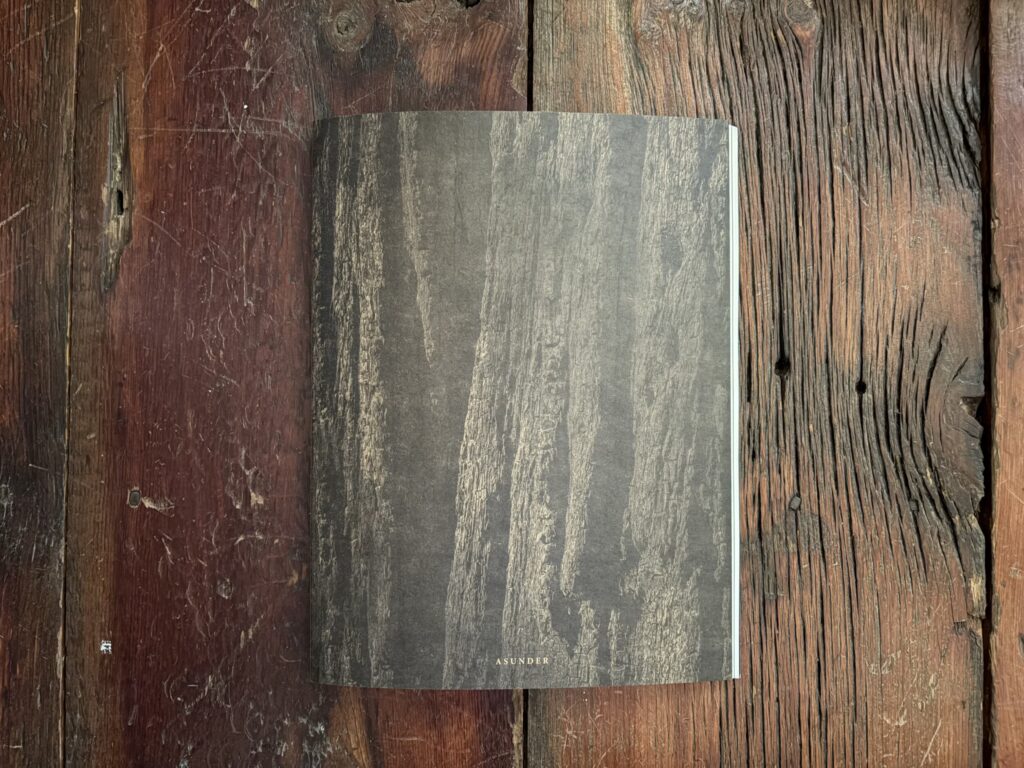
JTF (just the facts): Published in late 2025 by TBW Books (here). Saddle stitched softcover with cardstock jacket, 10 x 13.25 inches, 80 pages, with 54 color reproductions. Includes a quote from Dante Aligheri and a short text by the artist. Design by Paul Schiek. (Cover and spread shots below.)
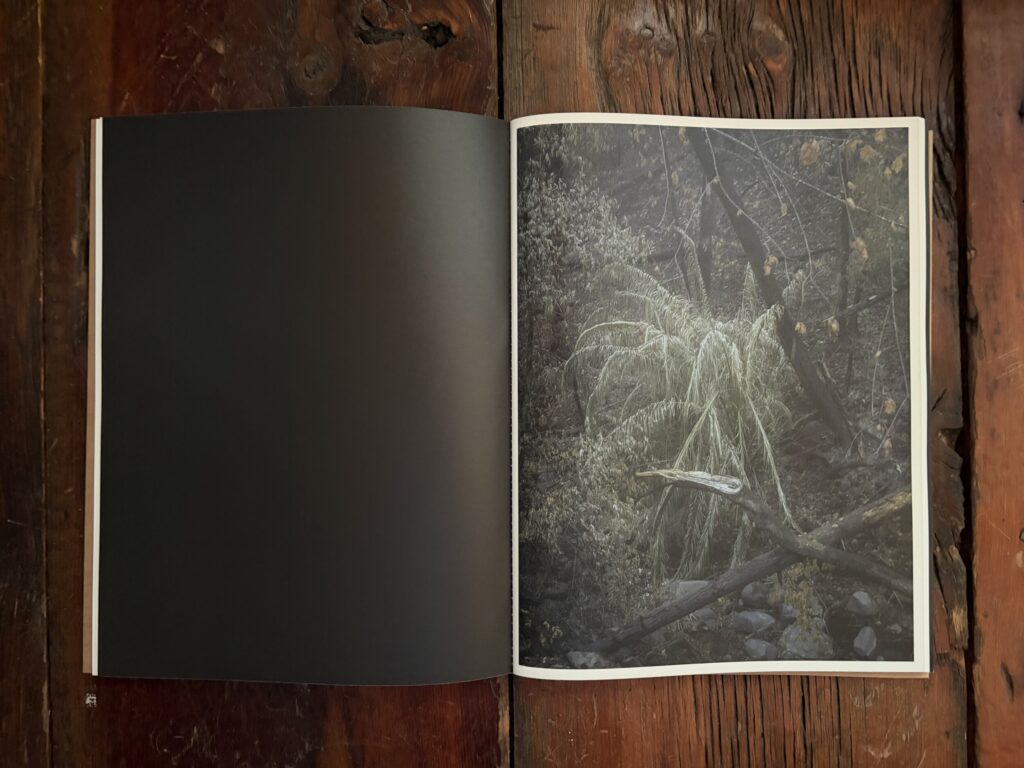
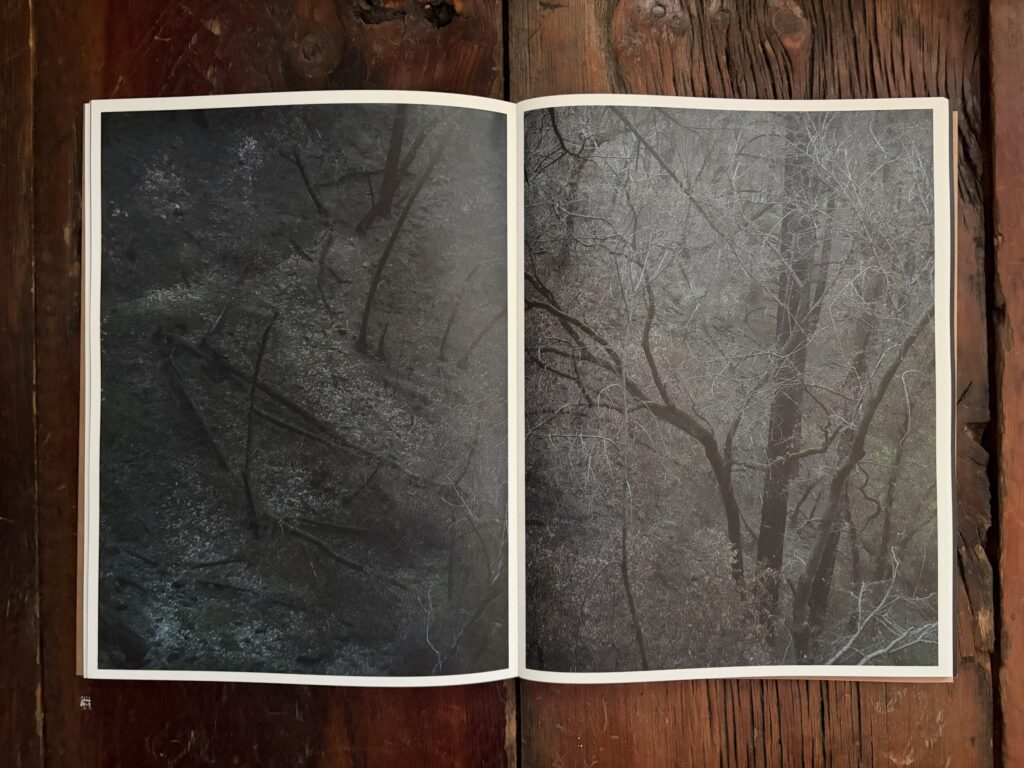
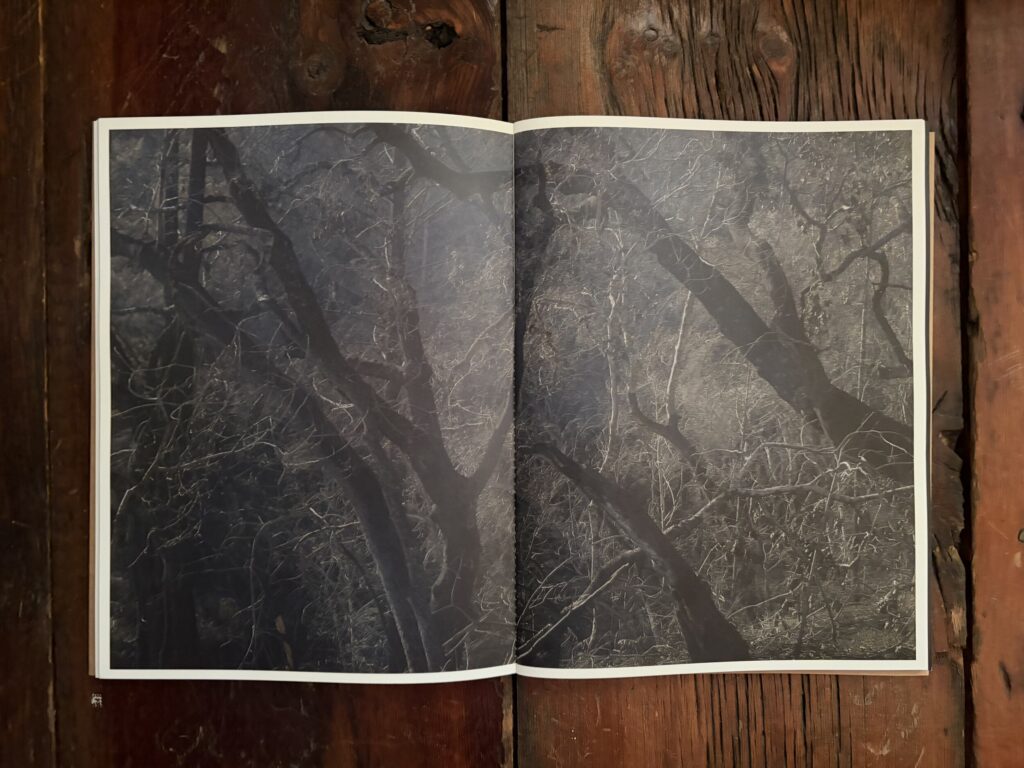
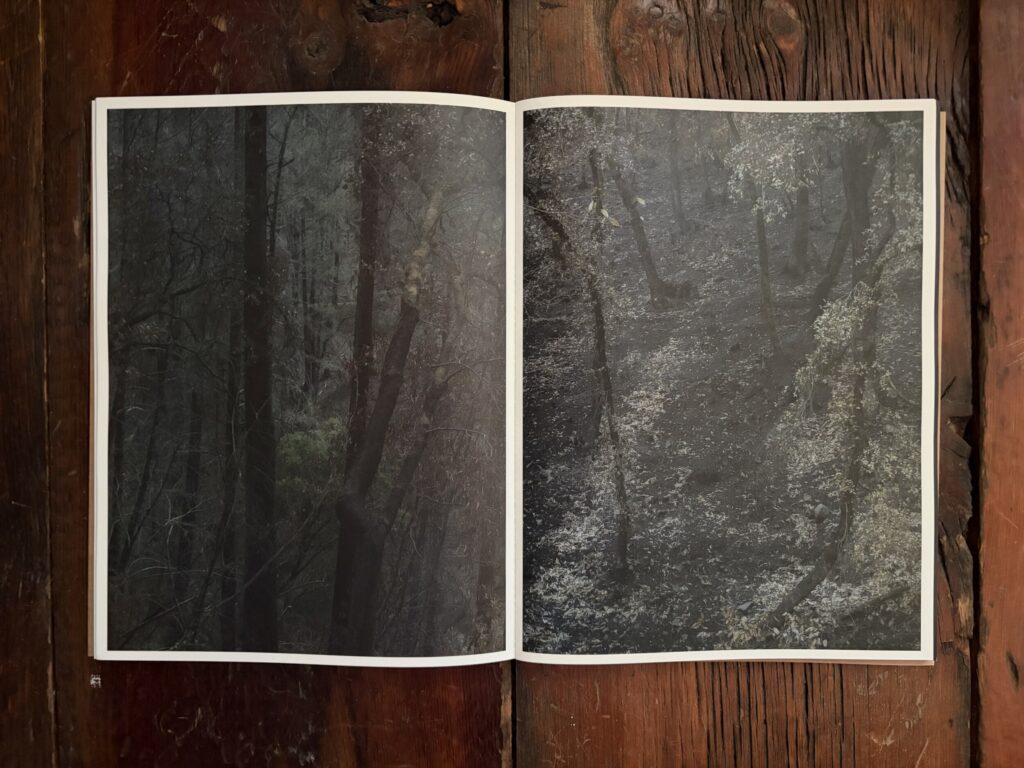
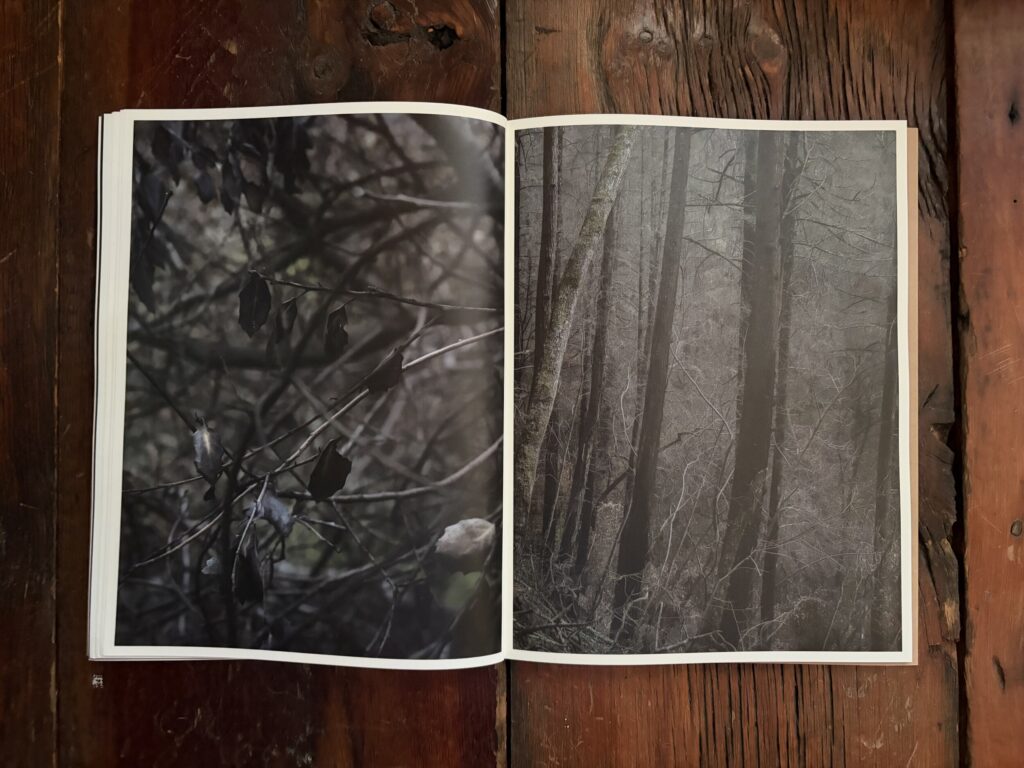
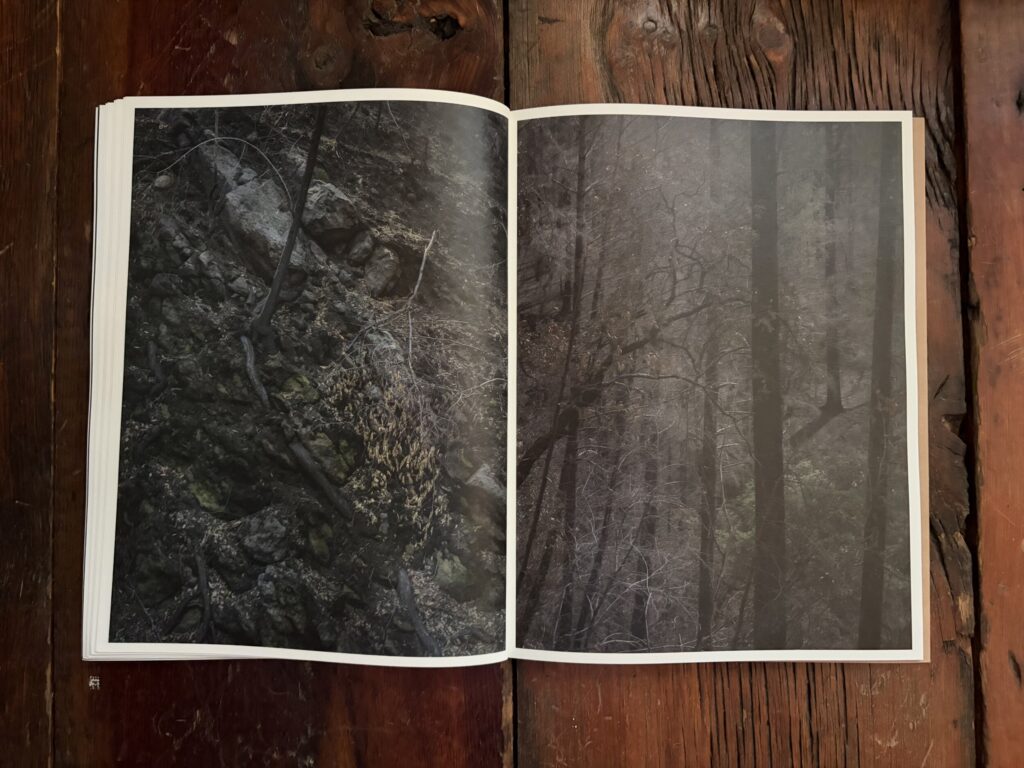
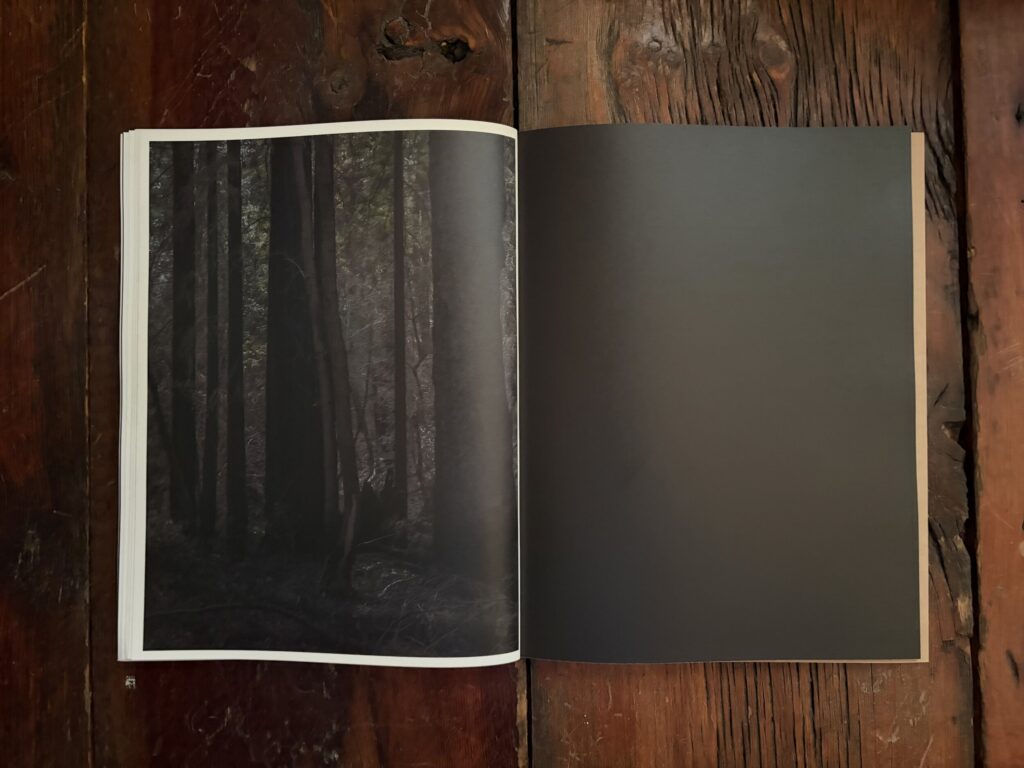
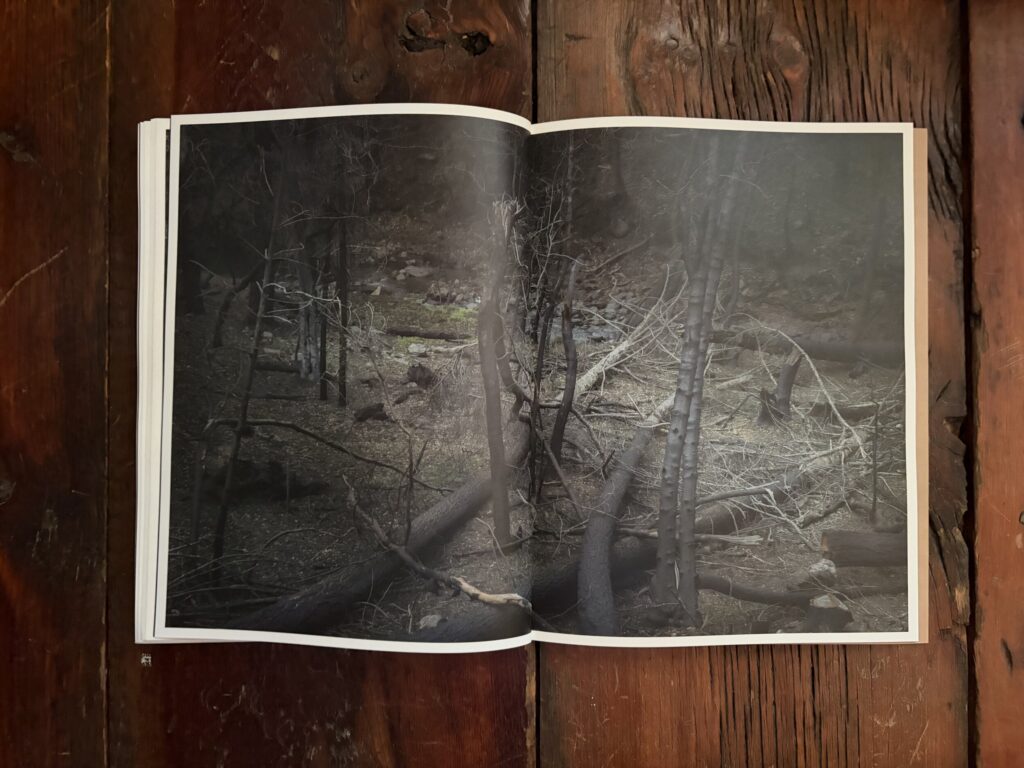
Comments/Context: With punishing heatwaves and droughts already blanketing whole continents as the summer of 2026 just gets started, previous summers in our warming climate have already taught us what comes next – wildfires. In just the past decade, we’ve seen nearly every measure of wildfire intensity increase, all over the globe. The fires are larger in number, bigger in size, hotter, smokier, faster moving, longer lasting, more destructive, and more deadly than ever, seemingly regardless of thoughtful attempts to control the situation or mitigate the damage, burning forests and cities alike with indiscriminate ferocity.
Not surprisingly, many contemporary photographers have been affected by wildfires, directly where they live and more indirectly, and so have pointed their cameras at the aftermath, the first efforts typically hitting the now familiar visual clichés of charred lone tree trunks, surreally melted cars, and smoking rubble where houses once stood. But as the years have passed and the fires have become more prevalent, the artistic approaches to documenting wildfire activity have broadened and deepened meaningfully, mixing personal experiences and remembrances with more in-depth visual reporting. In just the past few years, the list of photographic names making the fires their subject (in one manner or another) has continued to grow, with Aaron Rothman, Ian Bates, Jessica Hayes, Barry Stone, Jack Whitefield, and Cole Barash, among others, stepping into the smoky char to try to make sense of it all.
For S. Billie Mandle, who is an associate professor in the photography program at MassArt, her personal wildfire connection came in the form of her aunt, who lives near the hills and forests devastated by the Glass Fire that burned for nearly a month in the fall of 2020. The wildfire ultimately torched more than 60000 acres in Napa and Sonoma in northern California, and while her aunt’s home survived the blaze, the surrounding area was badly damaged. Over a period of three years following the fire, Mandle hiked through those blackened remains, making landscape images of what she found there. Asunder is the photoboook manifestation of that project.
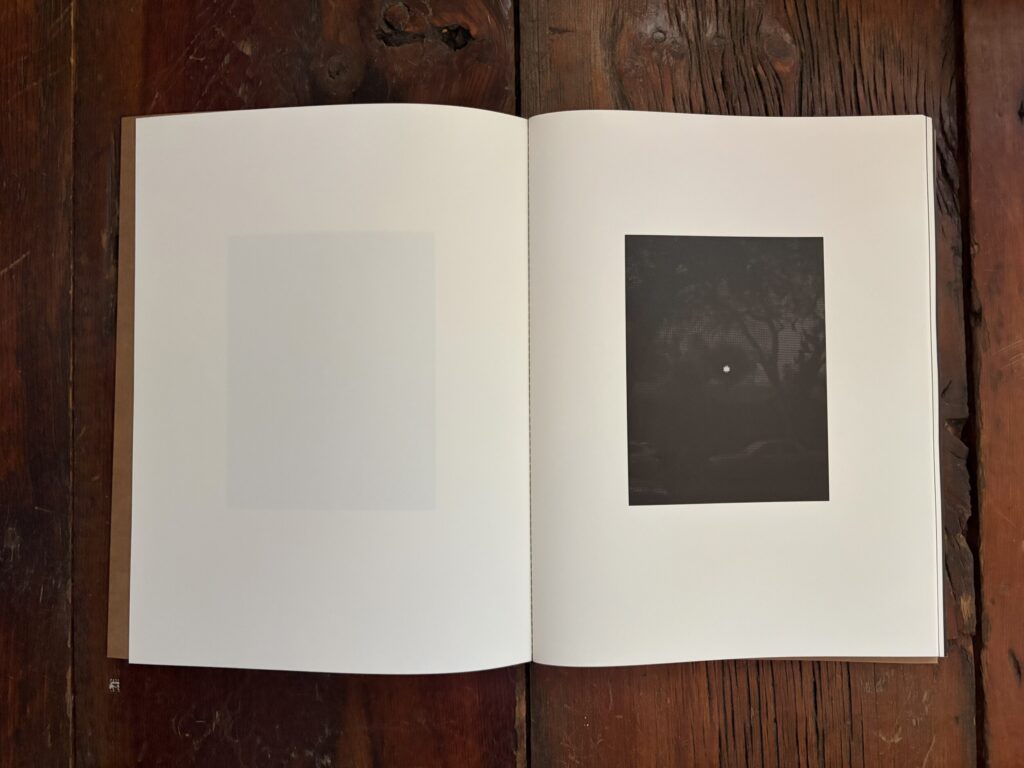
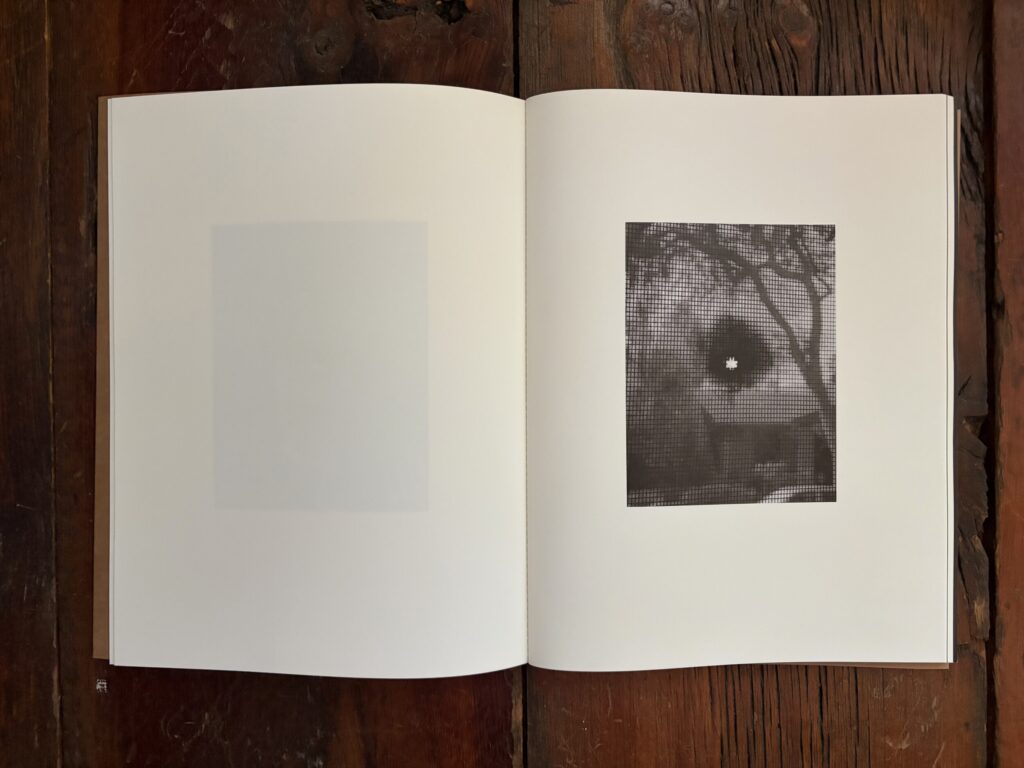
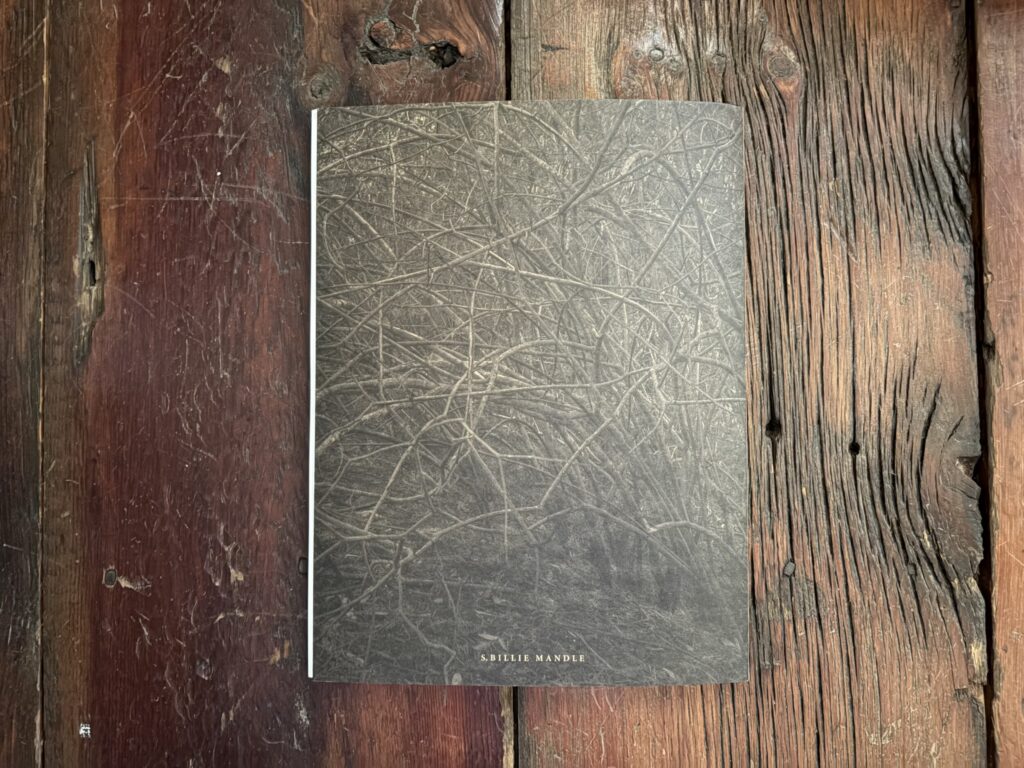
The cover of Asunder, or perhaps more specifically its cardstock jacket, sets an ominous initial tone. Tightly cropped views of darkly charred tree bark (on the front) and charred viney undergrowth (on the back) are printed in monochrome tones on mottled tan cardstock, creating a richly tactile, almost sooty, scratchy experience; the title and the artist’s name are placed in small letters at the bottom, with seemingly intentional modesty. After envelopingly black endpapers, Asunder begins with a kind of visual prelude. In a series of ten images that slowly telescope in, we move from blackness to a pinprick of light, which turns out to be a small hole in a window screen, with a suburban view in the backdrop (perhaps Mandle’s aunt’s home or somewhere nearby.) As the pages turn, we keep moving inward, the charred hole becoming closer and closer, bigger and bigger, until it fills the frame, leading to a black page featuring short quote from Dante, which adds a layer of descent-through-hell context to the mysterious image progression. A dozen pages into Asunder, and Mandle has brought us to the doorway of literal fire and brimstone.
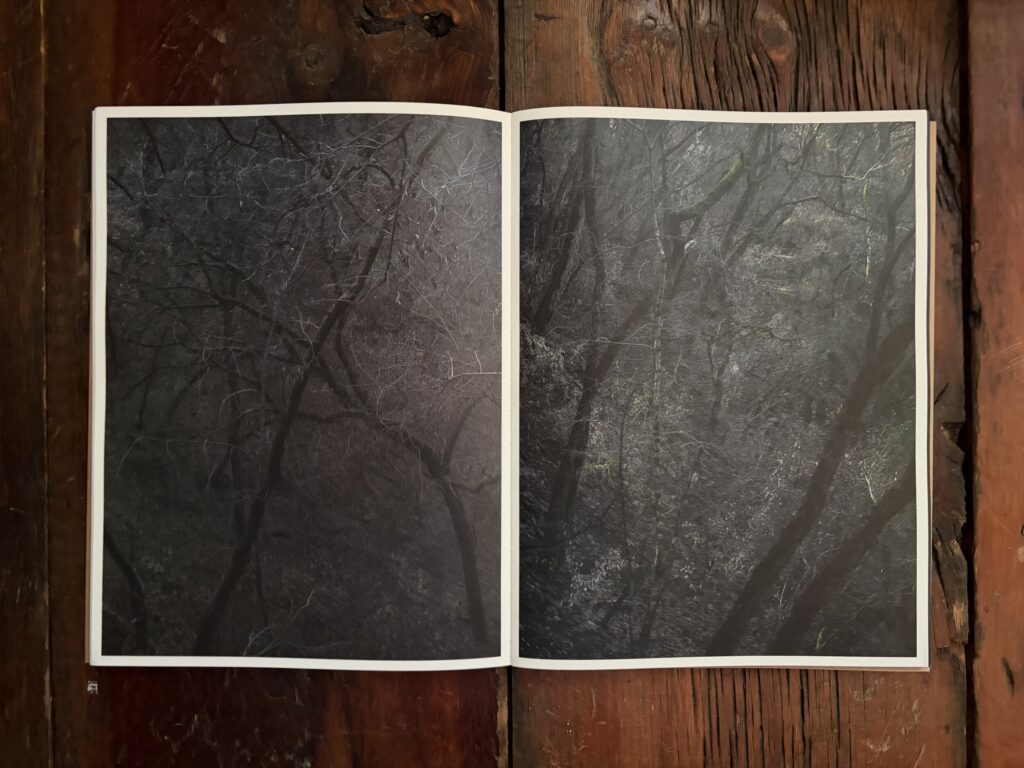
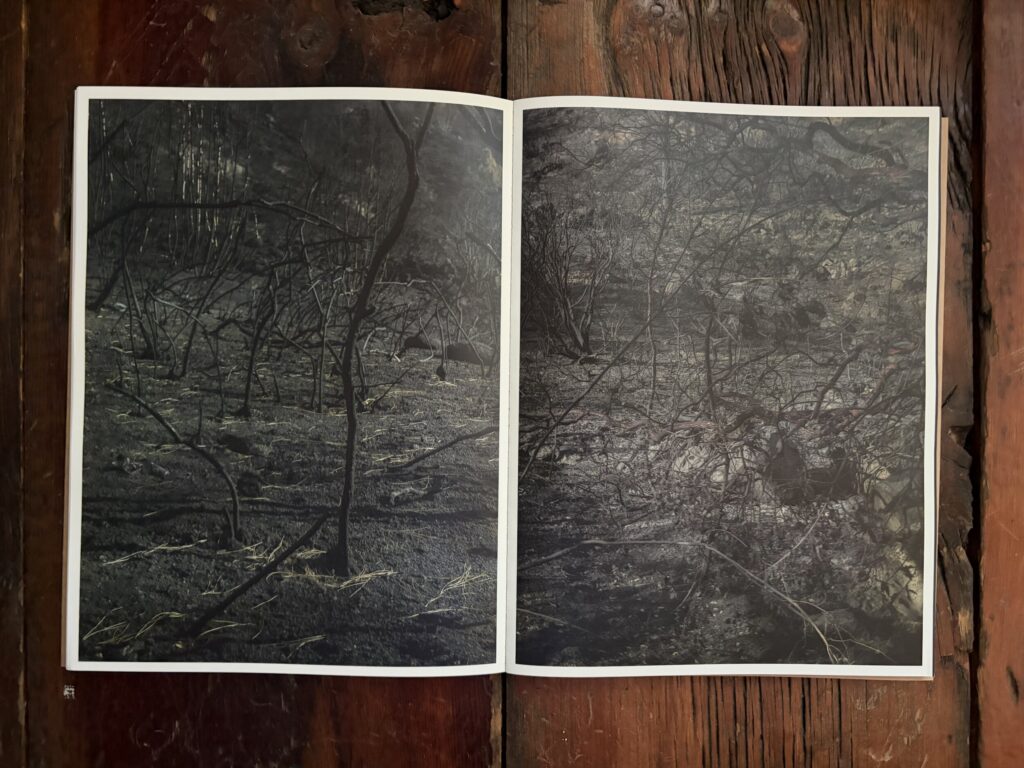
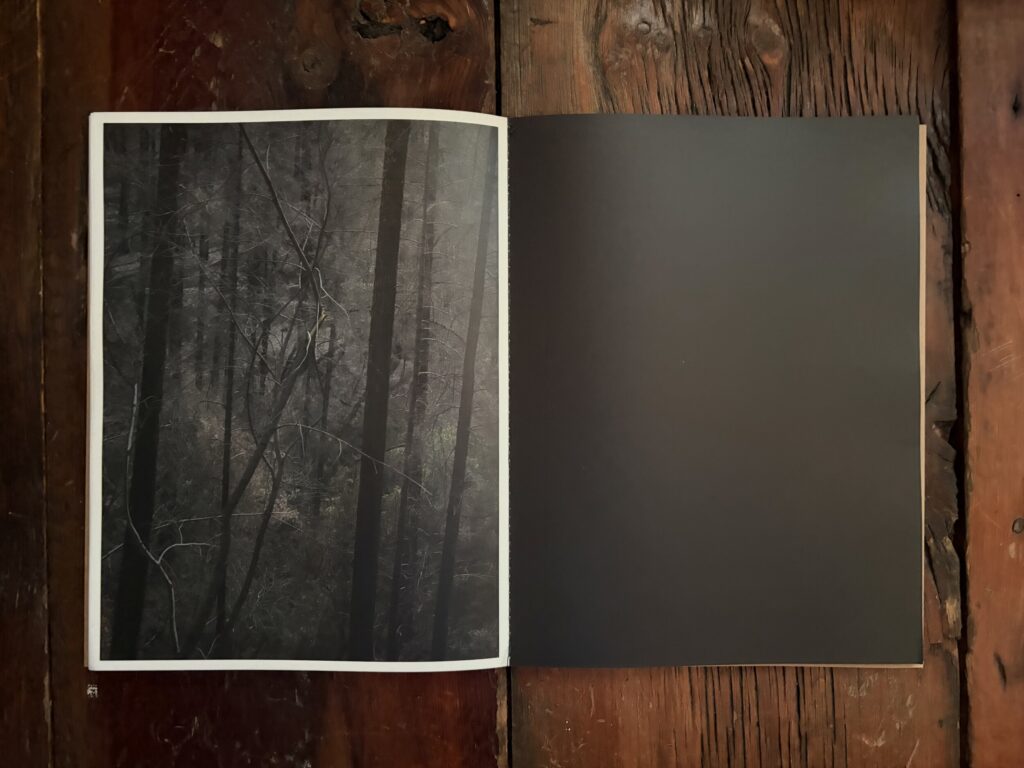
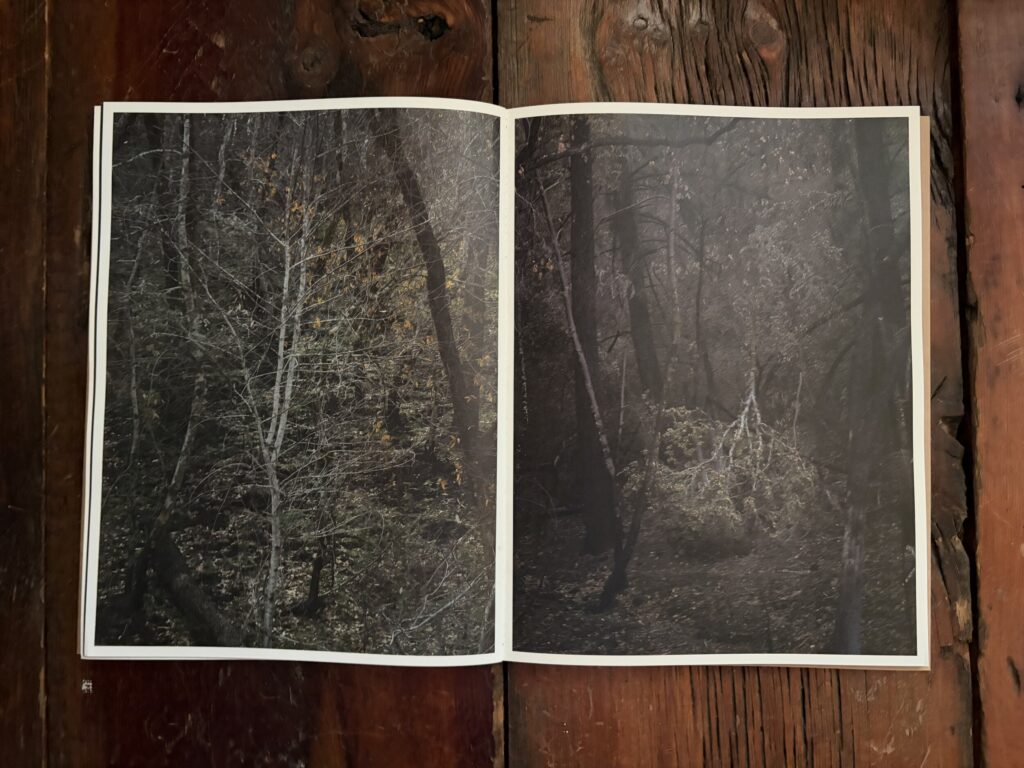
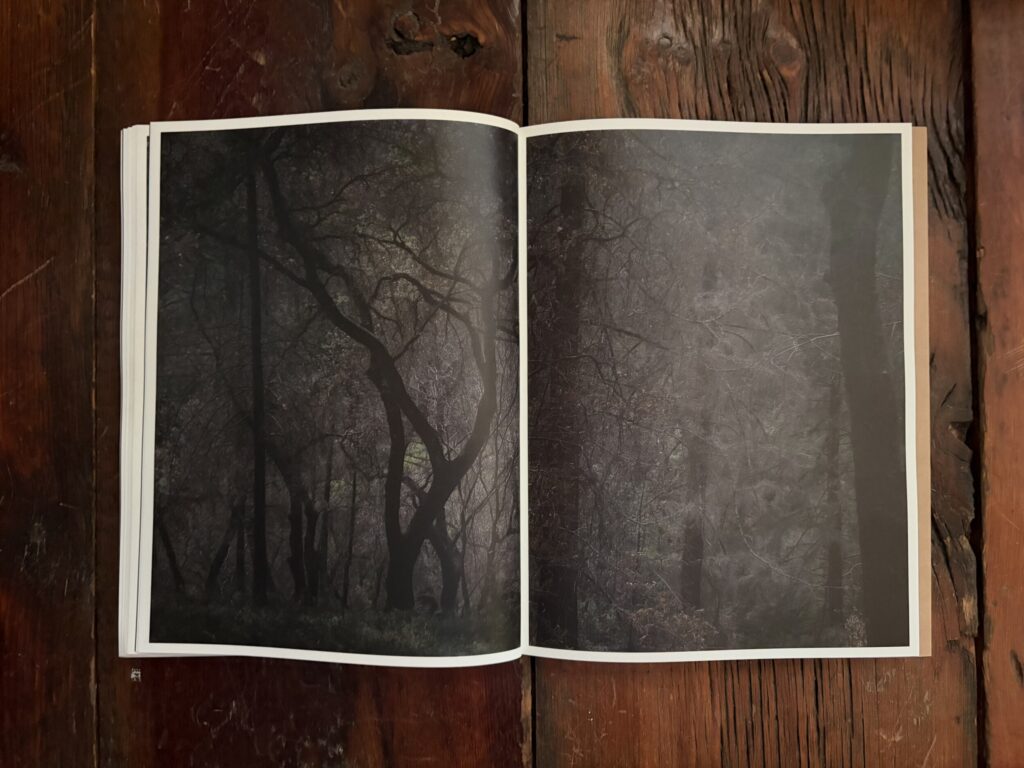
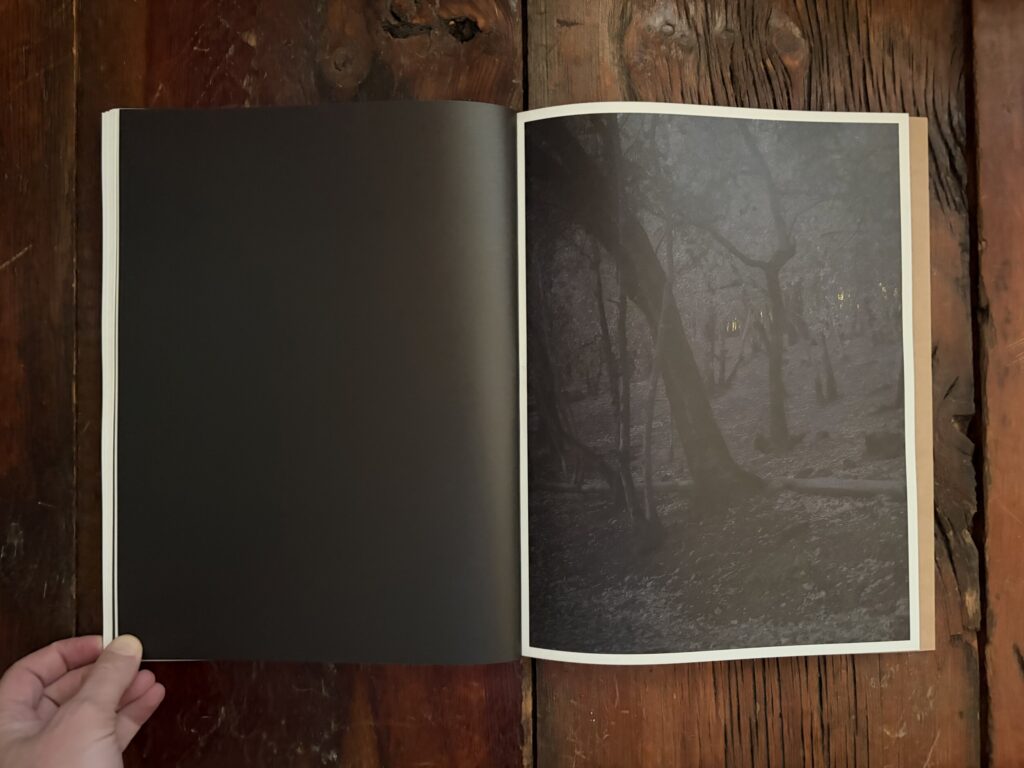
The first thing pretty much anyone is going to notice about Mandle’s fire-ravaged landscapes is how really dark they are. These images are Roy DeCarava or Awoiska van der Molen dark, richly tactile in the deepest zones of blackness, and printed on uncoated paper stock to further enhance their rough texture. But they’re not monochrome – in fact they’re in color, and that color is extremely subtle, so much so that it might require taking a moment to let your eyes adjust to the darkness. After flipping through a few pages of these photographs, the best analogy I can come up with is to imagine Eliot Porter taking you on a hike through a post-apocalyptic hellscape. What I expect he might somehow see is the precise nuance of unexpected natural color, but in this case, in a zone of near complete blackness.
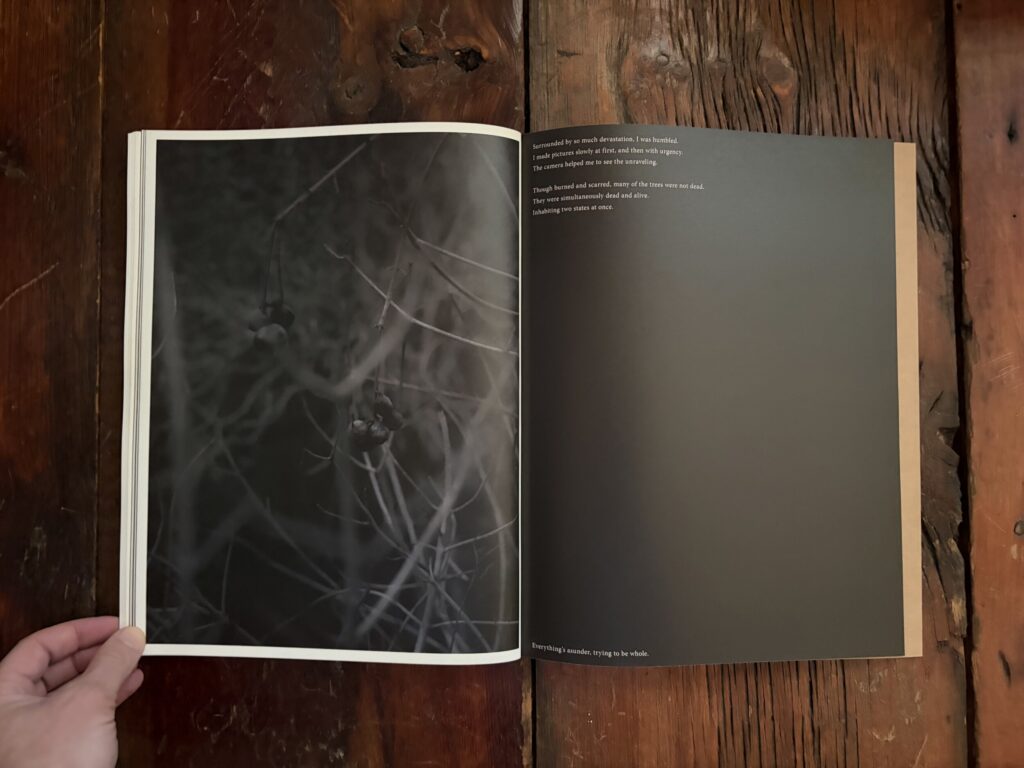
That’s what Mandle has discovered in the aftermath of this wildfire – blackness, of course, everywhere, but also tiny, almost imperceptible flashes of color and life amid that crushing and dispiriting death. Many of her compositions feature the insistent lines of blackened trunks, fallen branches, shorn hillsides, and charred undergrowth, the trees stripped of their leaves and roasted to a rich tone of murky charcoal. There is a bleakness to these meditatively shadowy almost ghostly views, but then amid that extended gloom, there is just a hint of regeneration, of charred trees and plants still alive underneath that crusty damage, just starting to slowly emerge from the wreckage and start again. And it is these fuzzed greens and chocolatey browns that seem to be trying to poke through the black, one tiny first step on the extended path of a long term natural cycle.
There is a quiet elegance, and even near optimism, to be found in the strongest of Mandle’s charred landscapes, where the violence of the fire is still entirely apparent, but the patient resiliency of the land is similarly visible. Once we start looking, her thoroughly blackened lands are actually populated by a surprising range of browns, rusts, olives, greens, greys, and yellows. Black trees scrabbled and slashed like Cy Twombly improvisations cover a number of her frames from edge to edge, only to be daintily softened by a fleetingly tentative hint of color seen through the veiling. In other cases, black tree trunks provide insistent verticals or linear silhouettes that draw our eyes up and down, only to discover some new leaves, a sprinkle of green moss, a little grass, a stubborn fruit, a hearty mushroom, or just the glow of the evening fighting to peek through.
As claustrophobic and psychologically traumatizing as some of the images in Asunder are, Mandle silently pulls us through to the other side, where destruction is balanced by glimmers of beauty, and where death is reimagined by life. Soot and charcoal blanket her views to the point of muteness, but she ultimately asks us to focus on the new rooting in the shattered remnants of the old. In this way, her photographic record of the savagery of climate change is at once humbling, and somehow, against all the odds, regenerative. Asunder is clear and compelling evidence of a contemporary world unraveling amid the destructive power of wildfires, delivered with a graceful sparkle of hope that Mother Nature is even more irrepressible than we have imagined.
Collector’s POV: S. Billie Mandle is represented by jdc Fine Art in San Diego (here). Mandle’s work has little secondary market history at this point, do gallery retail likely remains the best option for those collectors interested in following up.