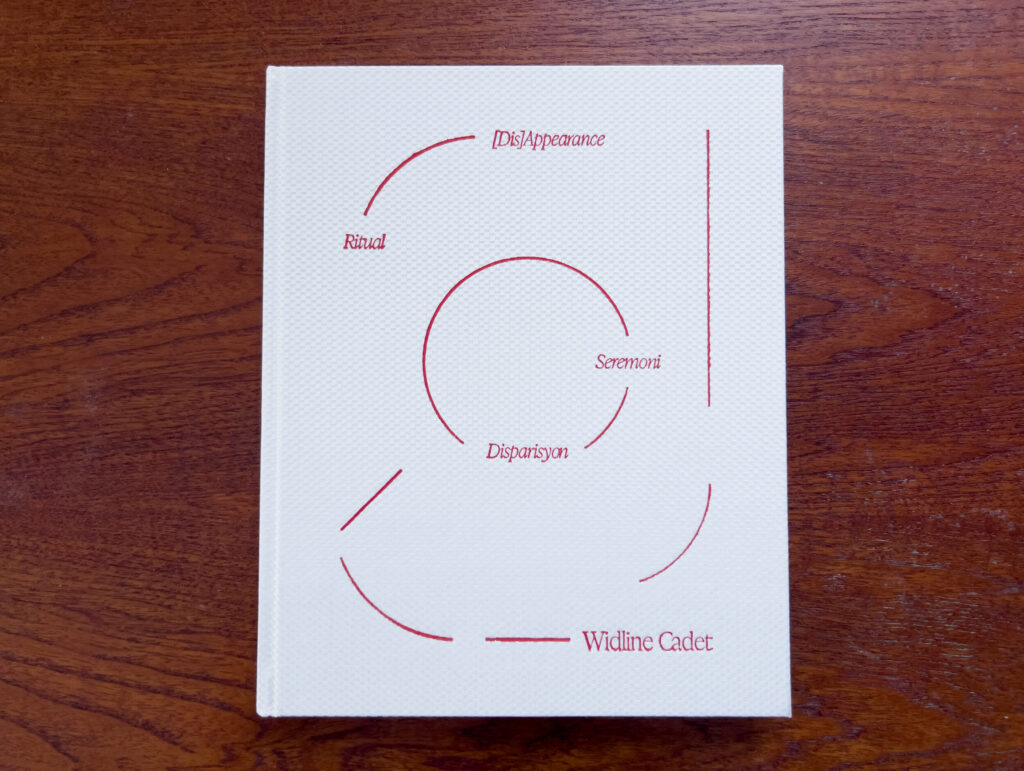
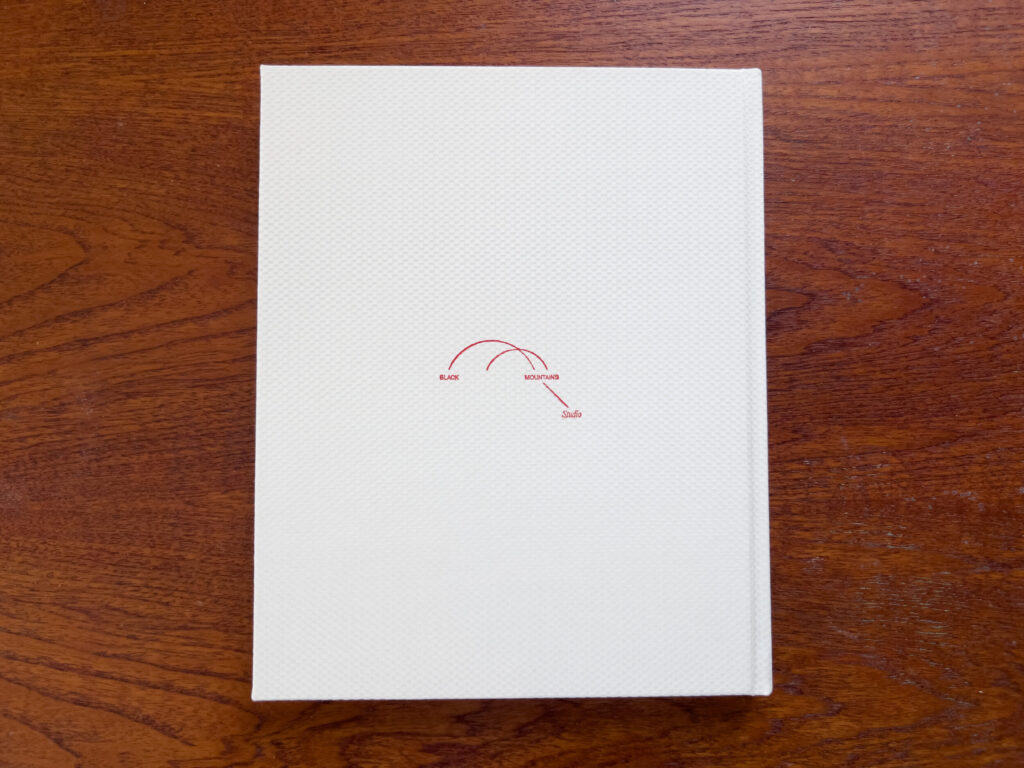
JTF (just the facts): Published in 2025 by Black Mountains Studio, an imprint created by the artist. Fabric wrapped hardcover, 8.5 × 10.5 inches, 128 pages, with 55 image reproductions. Includes an essay by Shanna Jean-Baptist, along with interviews and conversations between the artist and her great aunt, mother, and sister. In an edition of 750 copies. Design by the artist and Matthew Austin. (Cover and spread shots below.)
A collector’s edition set (in an edition of 20 +5AP) includes one signed and numbered archival pigment print (Untitled Outtake, 2023, 8.5 x 11 inches), a unique signed Fuji Instax print selected from the artist’s archive (4.25 x 3.39 inches), and two handmade clamshell boxes/hardcover portfolio featuring blind deboss details on Japanese Asahi silk book cloth.
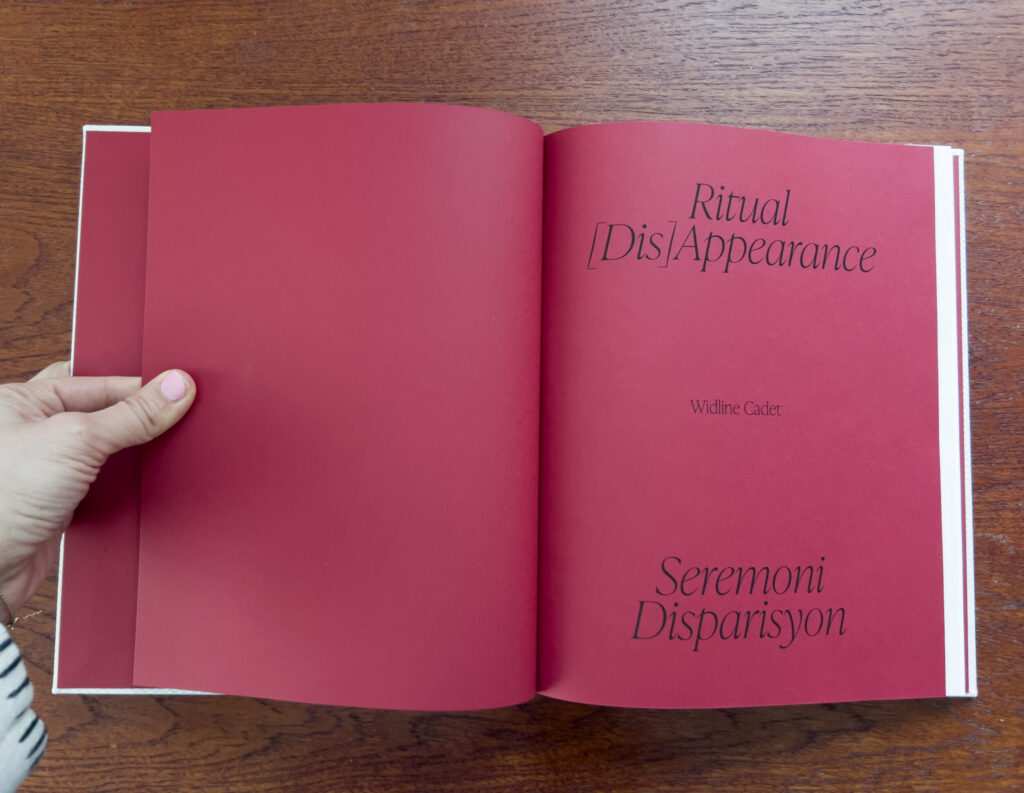
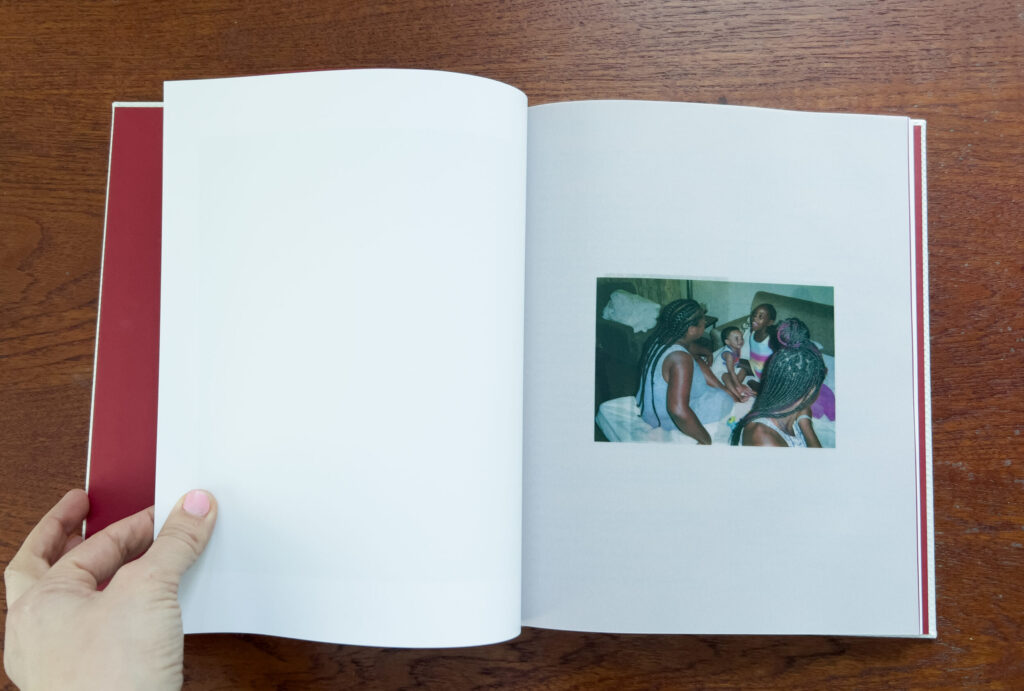
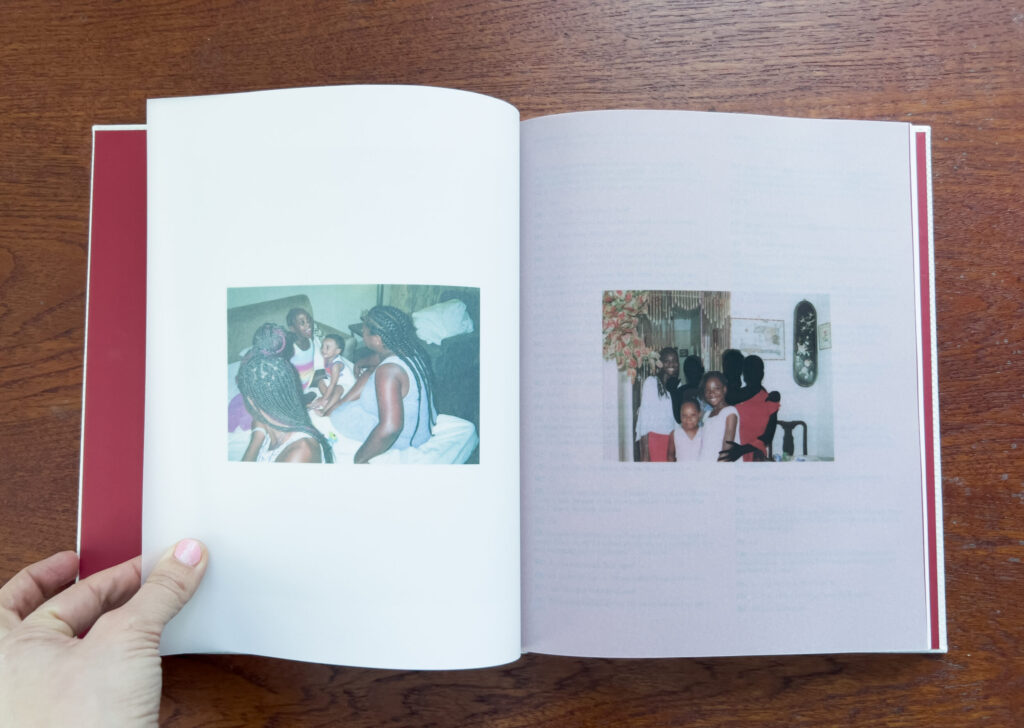
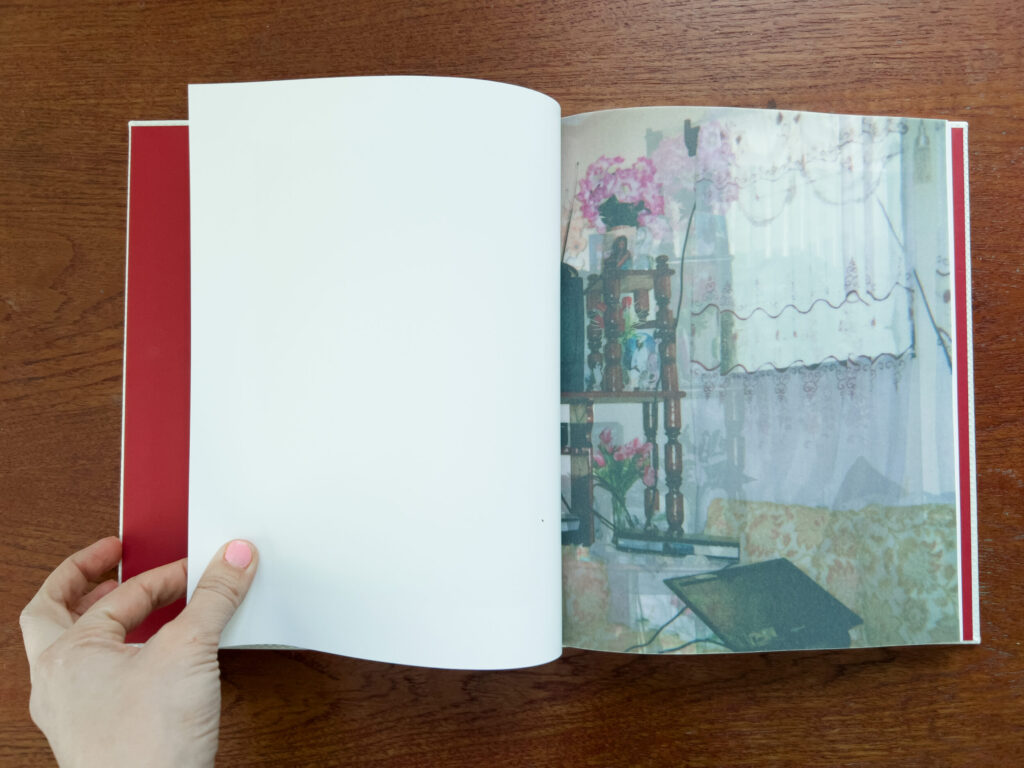
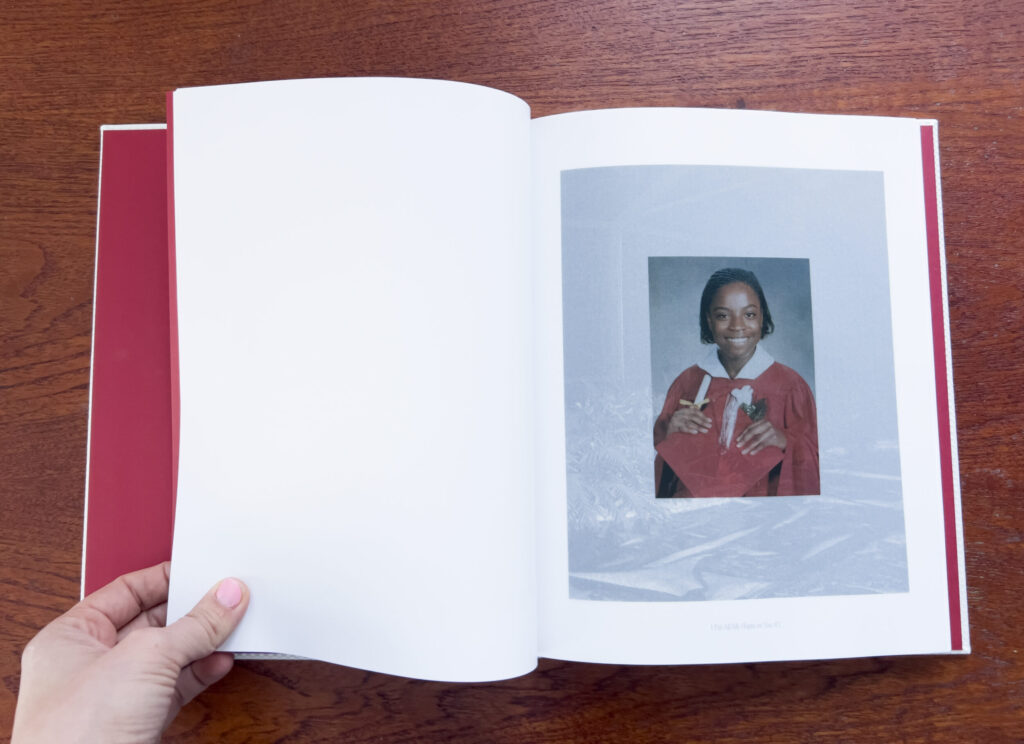
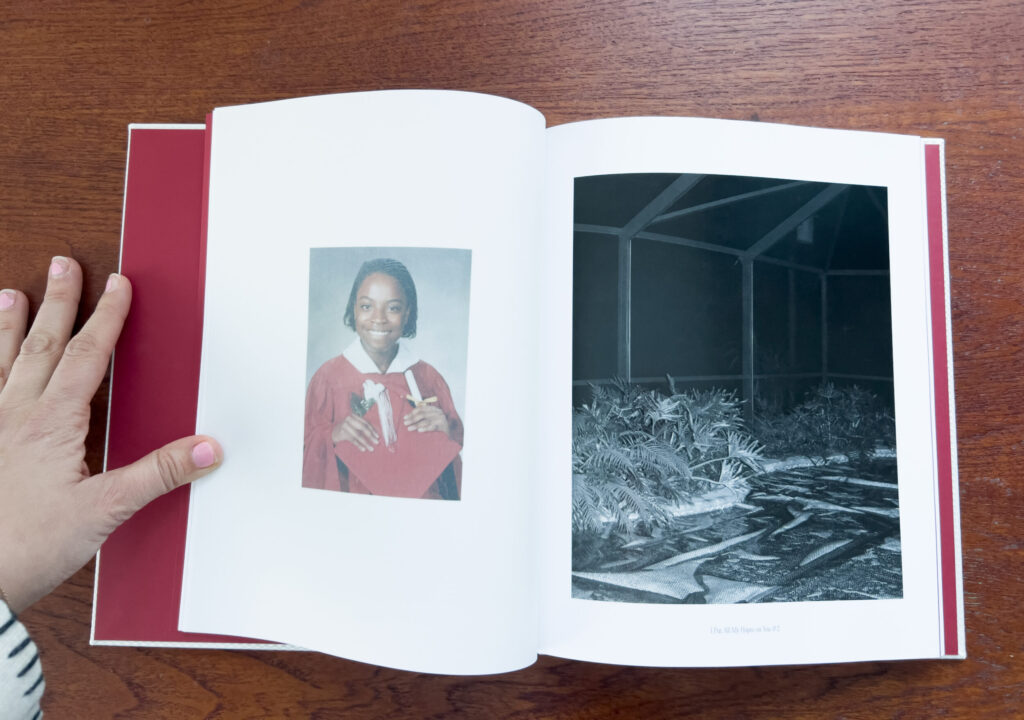
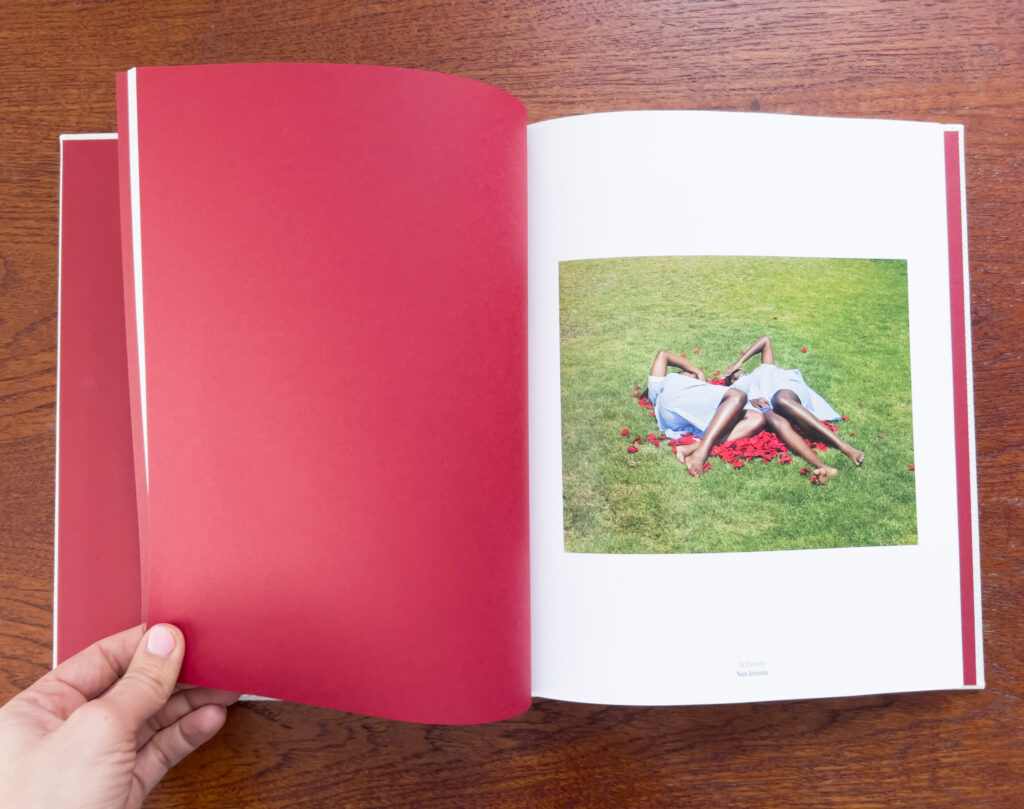
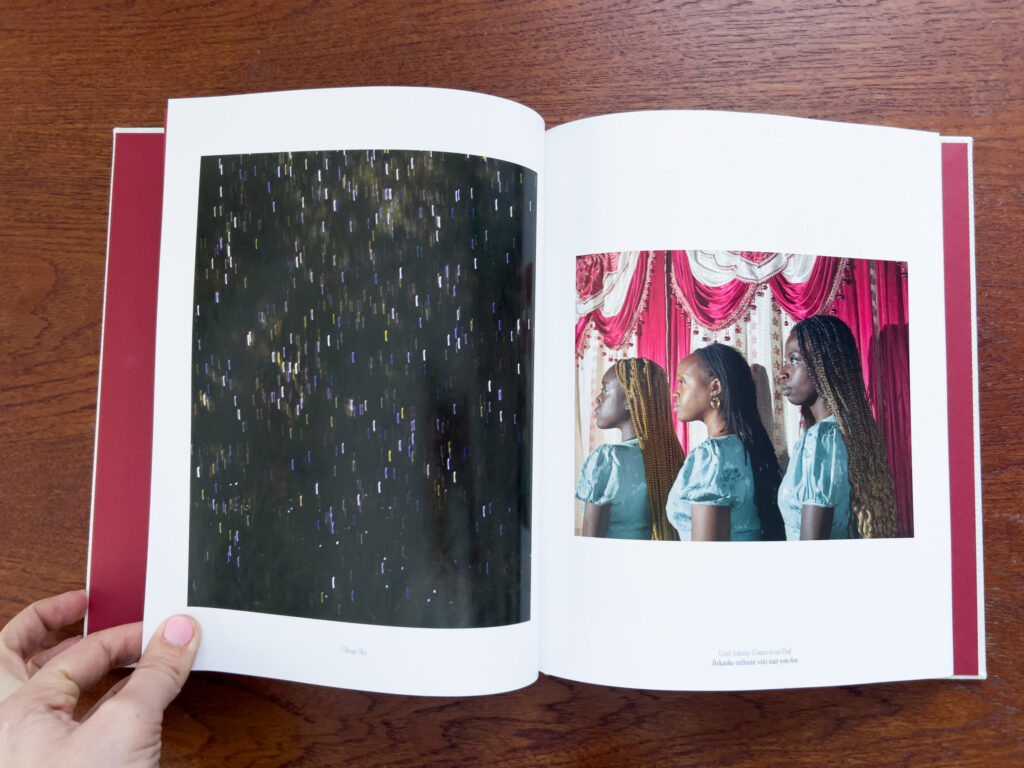
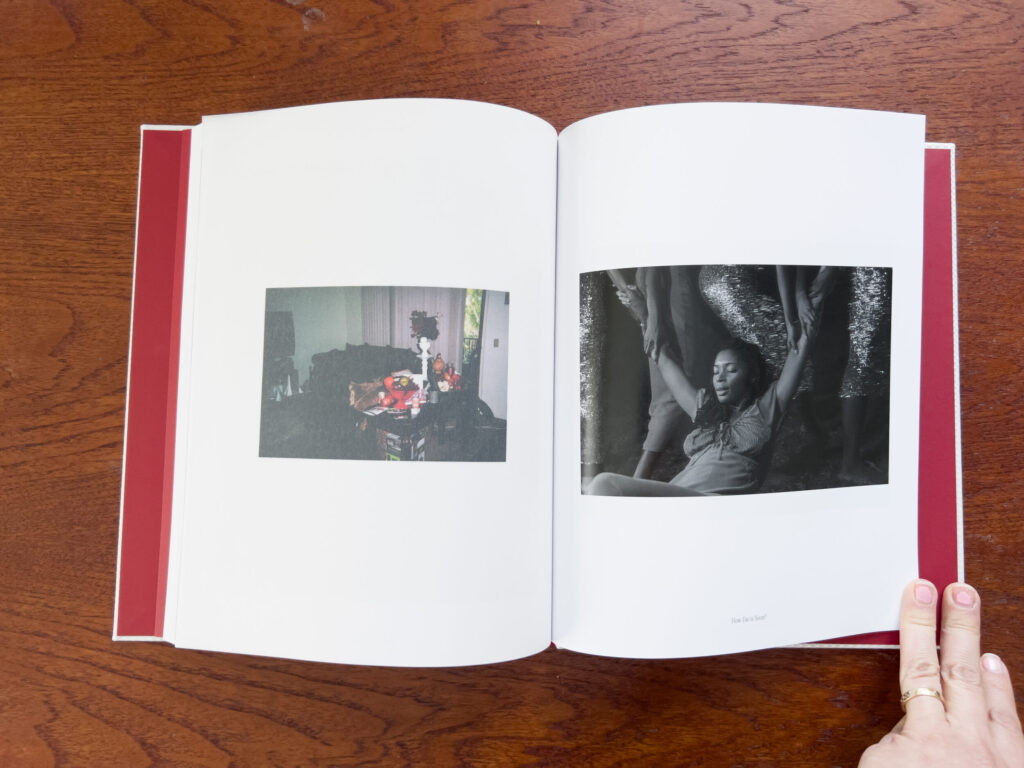
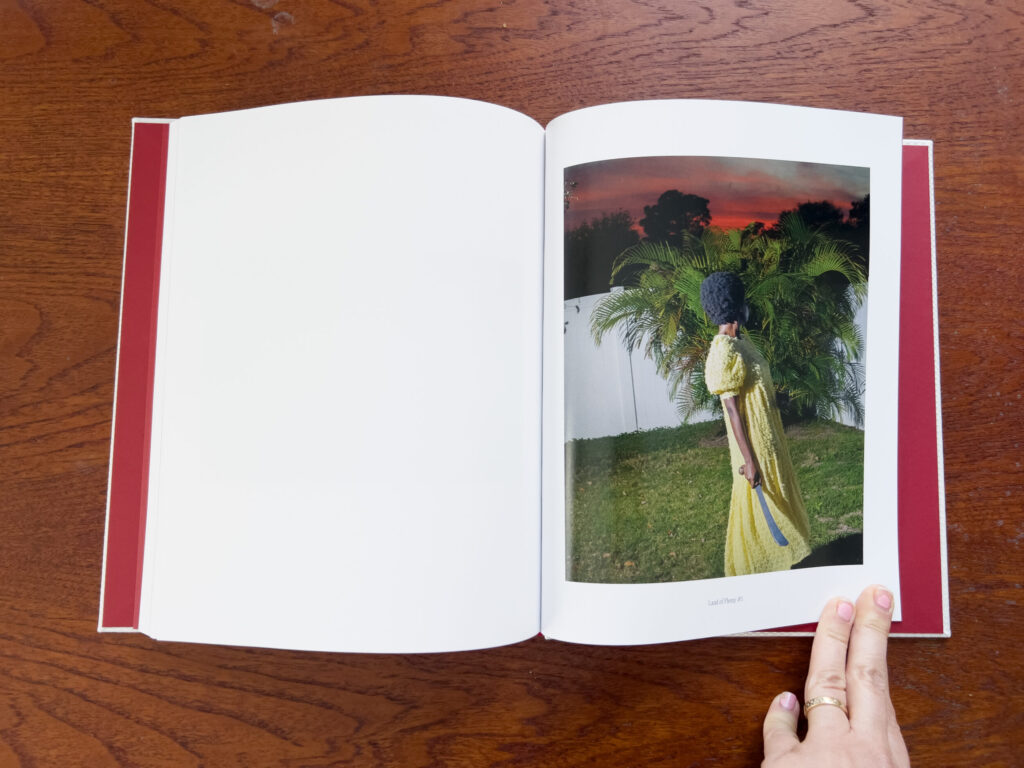
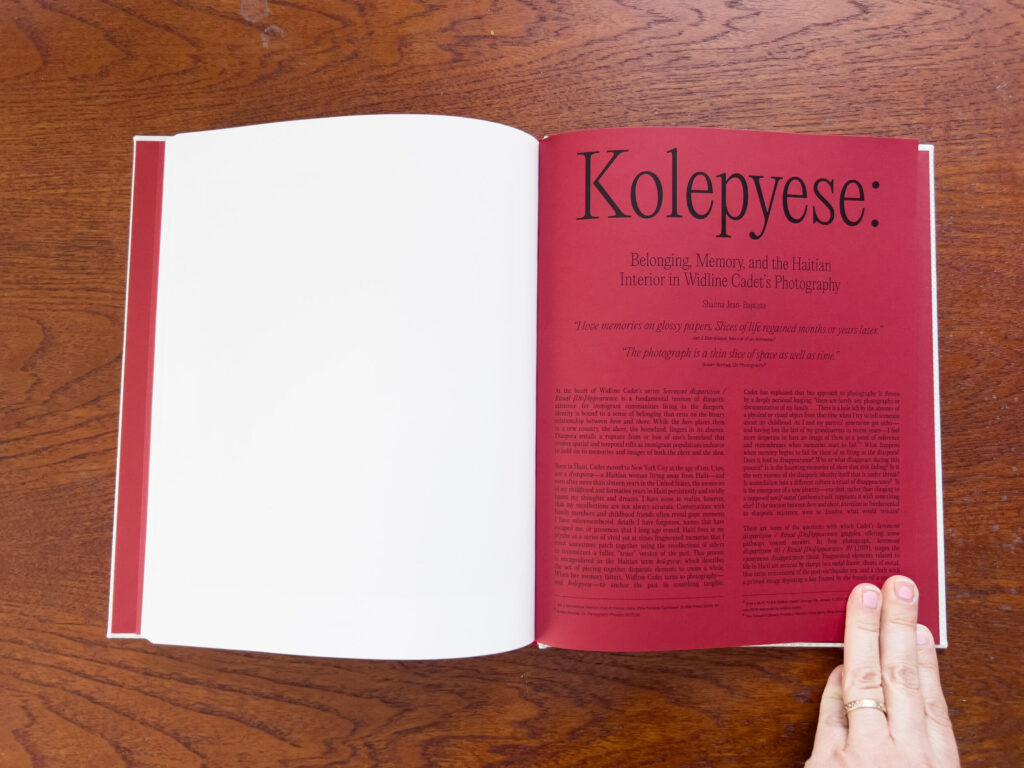
Comments/Context: Ritual [Dis]Appearance/Seremoni Disparisyon is the highly anticipated debut photobook from Widline Cadet, a Los Angeles-based Haitian artist. The book’s bilingual title, presented in both English and Haitian Creole, is an intentional pairing that immediately signals the work’s core conceptual and thematic concerns: the navigation of the physical and psychological space of the Haitian diaspora, and the artist’s ritual relationship between memory and its ephemeral referents that often accompany the immigrant experience.
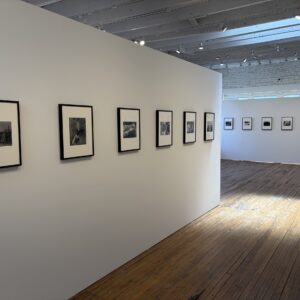
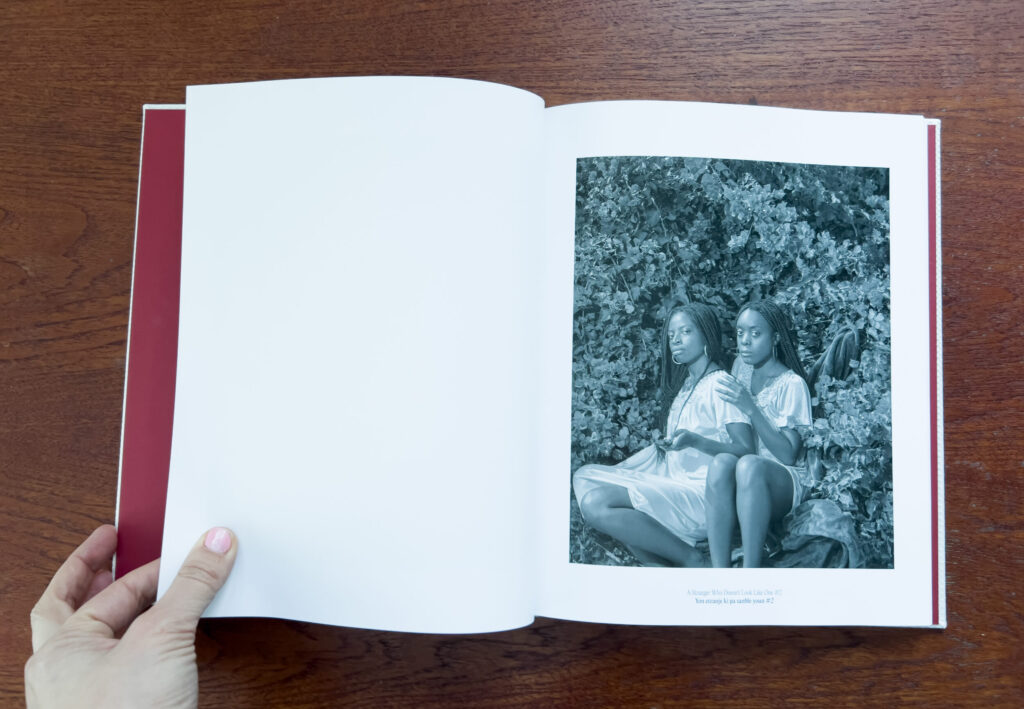
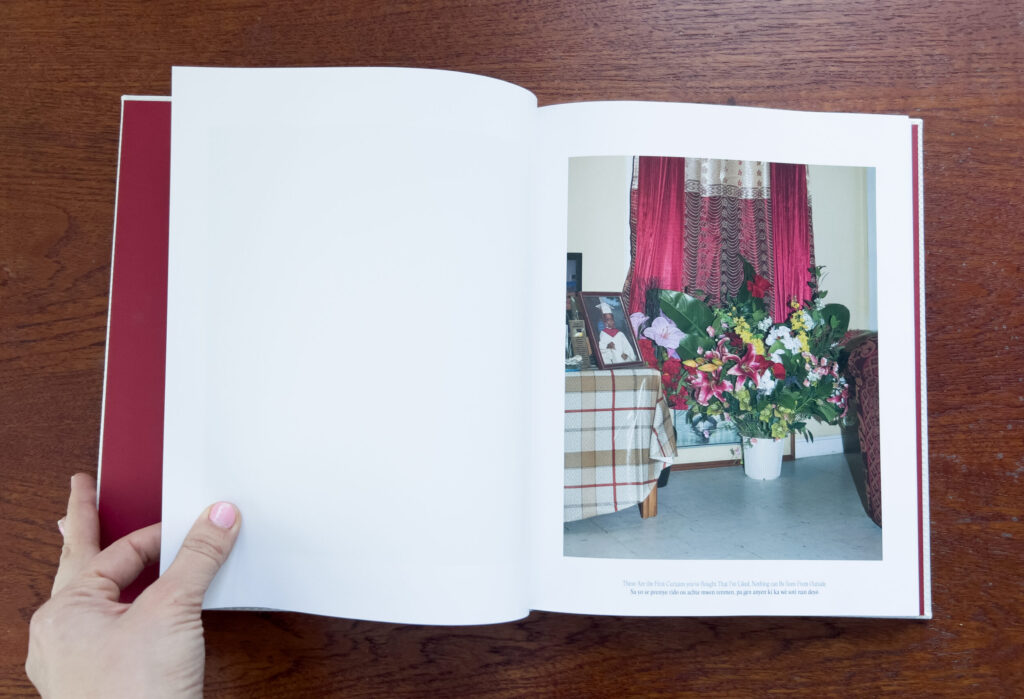
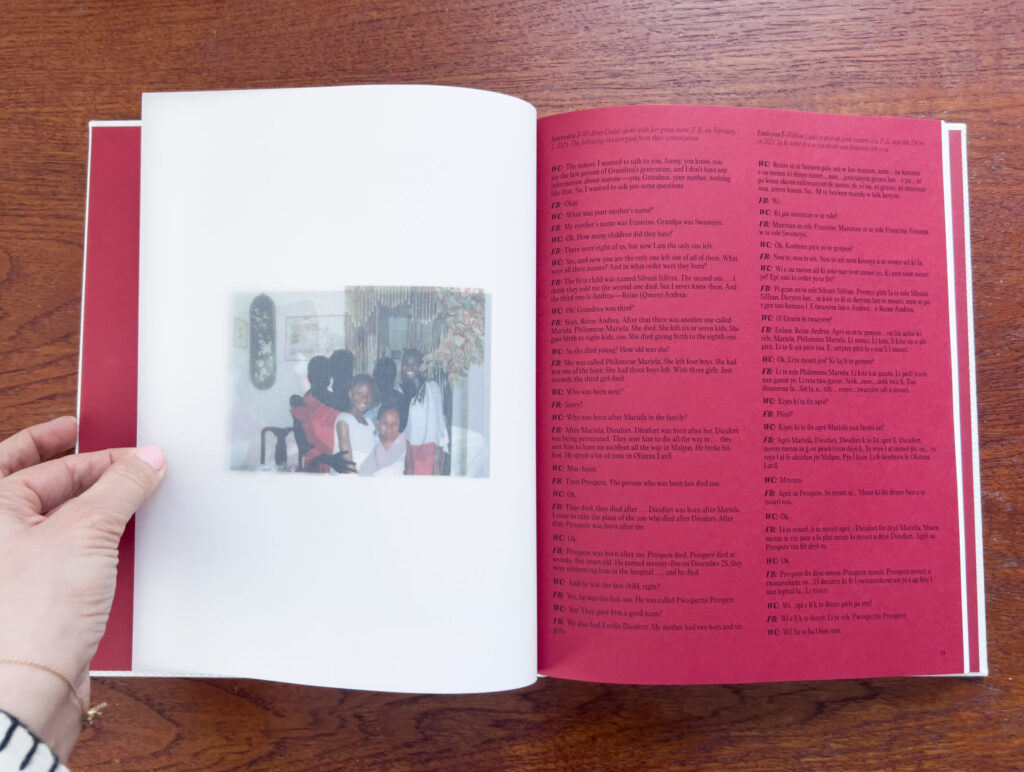
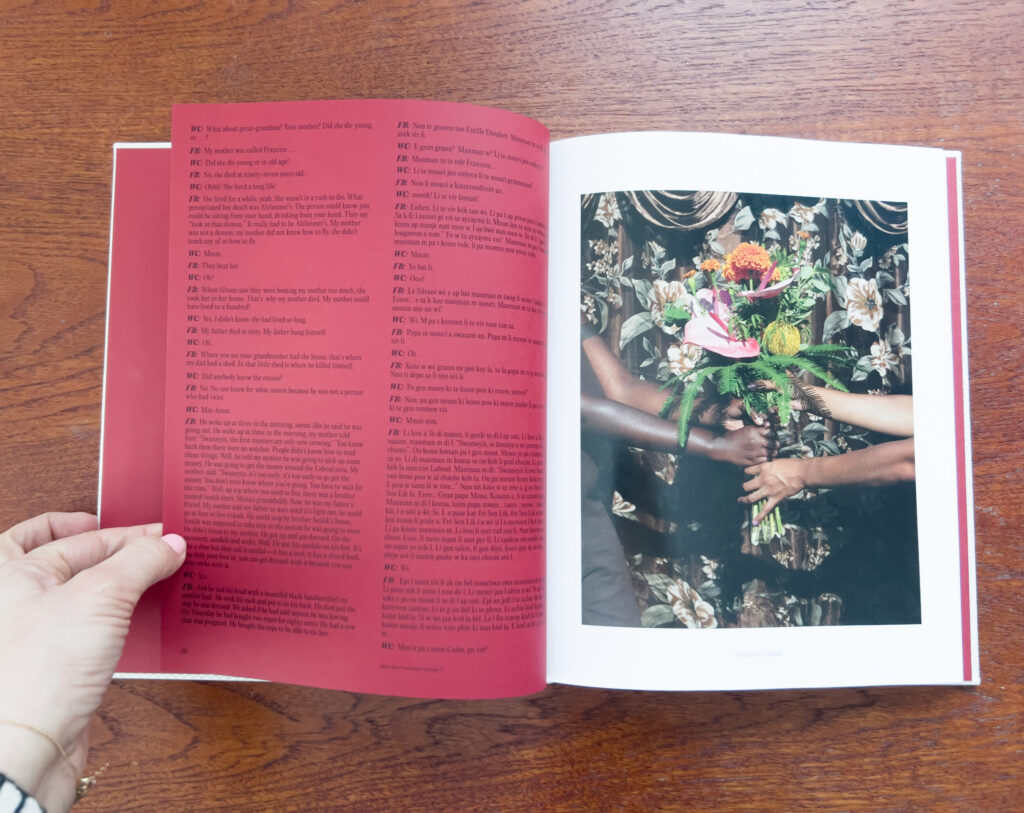
Ritual [Dis]Appearance/Seremoni Disparisyon includes a striking mix of two distinct types of photographs. Many of the images have been staged by the artist and are vibrant, often otherworldly and dreamlike scenes that suggest alternate selves recalled through memory. These staged photographs serve as both a kind of documentation as well as an interrogation of her memories, as she reaches beyond documentary truth to imbue the photographs with feeling and experience, especially as it pertains to her connection back to family. These formally made, staged images are interspersed with a selection of vernacular snapshots from Cadet’s personal family archive. The photobook includes all of the photographs that were part of Cadet’s debut solo exhibition in New York in 2021, “Se Sou Ou Mwen Mete Espwa m (I Put All My Hopes On You)” at Deli Gallery (reviewed here). Also included in the photobook are a series of context-rich interviews between Cadet and her great aunt; Cadet and her mother; and Cadet and her sister. These excerpted conversations are candid and intimate. We get to share in the artist’s untangling and concretizing of aspects of her genealogy and family lore. The photobook concludes with a crisply illuminating essay by scholar Shanna Jean-Baptist.
Cadet began to create her powerful photographic series, Ritual [Dis]Appearance/Seremoni Disparisyon, in 2017. The project serves as a deeply personal and critical re-examination of her family’s experience of the Haitian diaspora in the United States, a creative process that compelled her to wrestle with the universal dualities of loss and gain inherent in migration. The work moves beyond simple documentation to explore the cultural and spiritual preservation that occurs alongside physical movement and displacement.
Born in Pétion-Ville, Ayiti, and subsequently raised in the culturally rich Washington Heights neighborhood of New York City, Cadet’s artistic practice is intrinsically tied to her heritage. She deliberately invokes the power of her homeland and her family’s stories throughout her work. This invocation is manifested not only within the photographs themselves but it is also structurally and linguistically embedded in the text accompanying the images. Throughout the photobook, the titles of each work are prominently printed underneath the corresponding images, a choice that grounds the visual experience in narrative and language, and significantly, these titles are generally presented in both English and Haitian Creole, ensuring that the work is accessible not only to English readers but also to her own community. Cadet unapologetically centers the language of her community and ancestors, reinforcing the theme of cultural survival and the enduring link to Haiti. The dual-language titling further transforms the book into a dialogue, bridging the two worlds Cadet inhabits.
Black Mountains Studio is an imprint created by Cadet, serving as an “extension of her artistic practice.” The studio’s mission is to explore and highlight “diverse modes of thinking and making” through various projects, including book publishing, design, handmade objects, and collaborations. As essentially a self-published book, the sequence, design, and material decisions are all the result of the artist’s own vision. The book was printed in Milwaukee, Wisconsin, and its production – casing, binding, and crafting – were done by hand at For the Birds Trapped in Airports studio in Los Angeles, California.
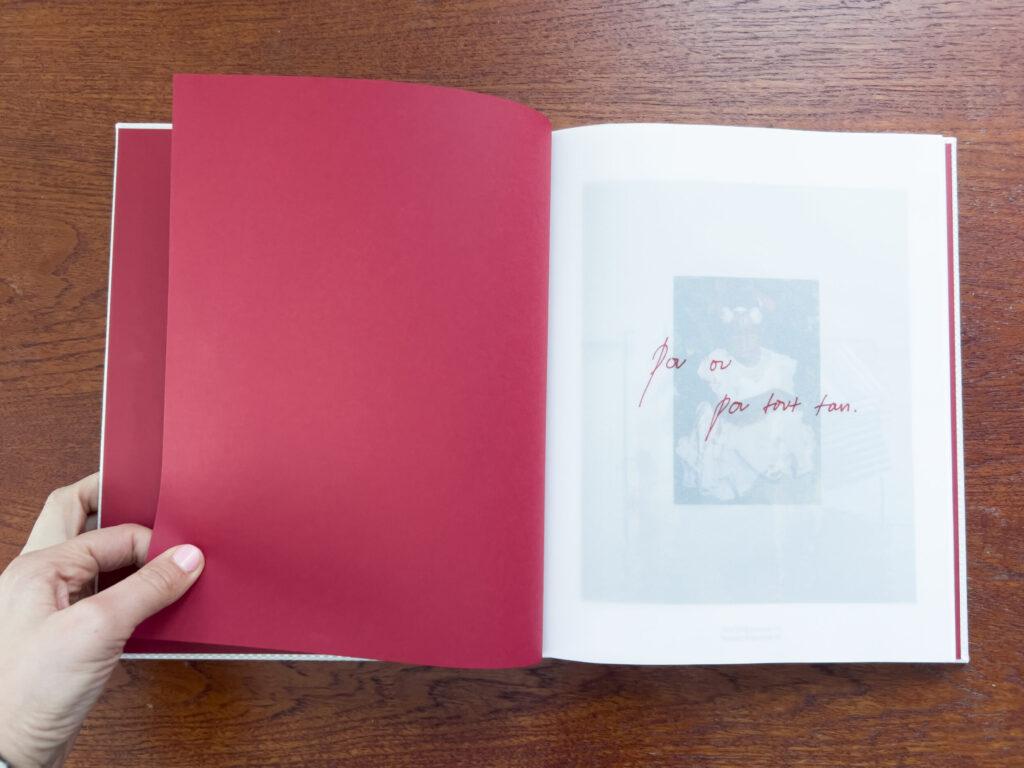
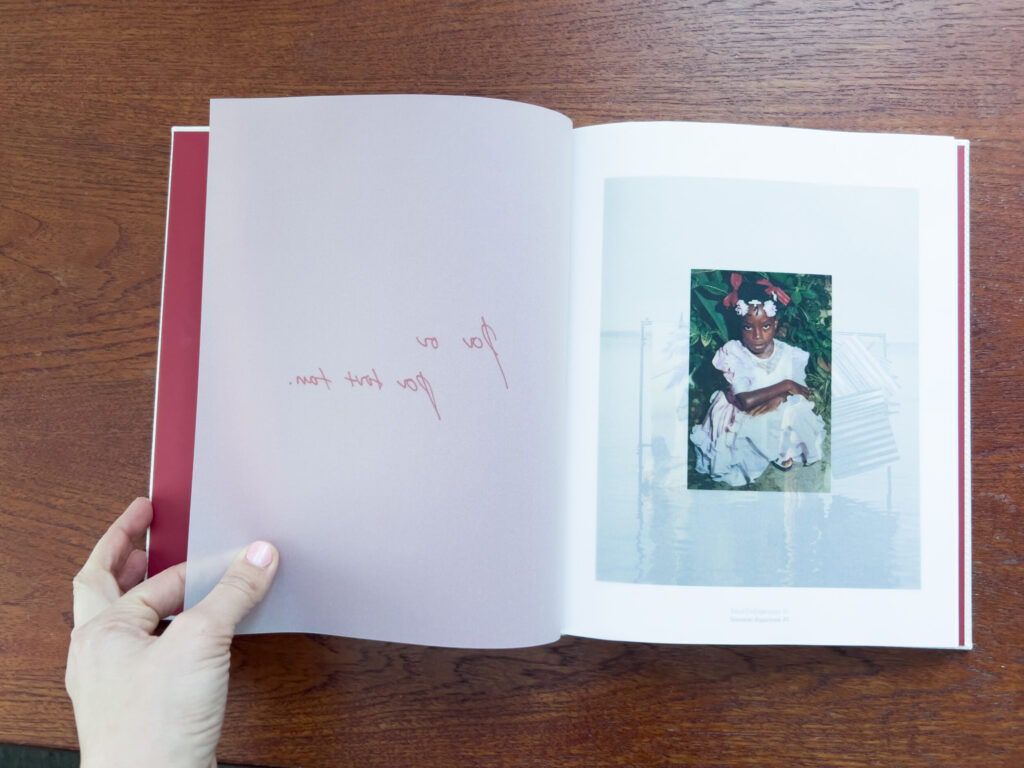
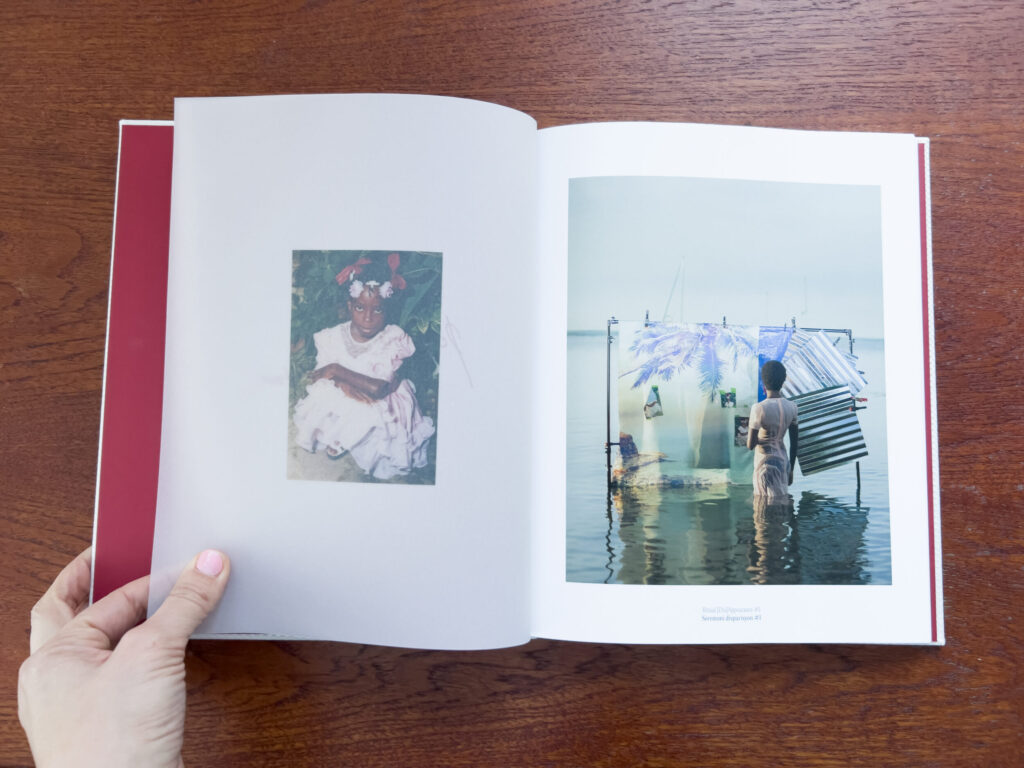
The photobook’s material design serves as a masterclass in discerning production choices, utilizing three distinct paper stocks that provide both tactile and visual contrasts. Cadet’s formal photographs are rendered on a smooth, bright white paper. Varnish is applied only to the surface where the images are printed on the page, intensifying the richness of the colors and the depth of the black-and-white values, thereby achieving exceptional vividness. Image reproductions from the artist’s family albums are printed on a lighter weight translucent stock, akin to vellum, which imparts a milky blurring quality to the images printed on the pages behind the translucent sheets. Each of these pages is deliberately positioned to interact with the page behind it, whether it be another family snapshot, reproduced at about 4×6 inches, or a more formal professionally produced photograph made by Cadet. Each time these translucent pages overlap, the result is a highly considered juxtaposition that generates a dynamic third image, formed by the hybrid interaction of the opaque page and the image on the next page that can be seen through the transparency. All of the pages of text (interviews between the artist and her family, as well as the essay at the end of the book) are produced on a heavier stock the color of an over-ripe heirloom tomato. This distinctive color also appears on the book’s cover, recto and verso, as the color of the foil stamping of both the lettering and design embellishments. Finally, on the cover, the book cloth is a quiet checkered-weave of silver that is a subtle yet clear echo of the gingham dresses worn by subjects in some of Cadet’s images, and an additional reference to the school uniform worn by the artist when she was a schoolgirl in Haiti.
The question of who is being photographed comes up frequently. The portraits seem to be unidentified family members, some are obviously the photographer herself, while others depict siblings, relatives, or friends, and with bodies often mysteriously doubled, multiplied, and ghosted. The question of whether the artist might have used some digital manipulation comes to mind. The photographs are consistently stunning, presenting scenes that depict what feels both real and purely imagined. One of the most compelling image sequences opens the book. The photobook starts with a transparent page with a line of handwritten text, and the next page is another transparent sheet, depicting a school portrait of the artist as a child. The following page delivers “Ritual [Dis]Appearance #1/Seremoni Disparisyon #1,” a self portrait of the artist as an adult , printed on a bright white, smooth paper; in it, Cadet stands in a body of water, facing away from the camera and looking towards a photographic backdrop of patterned sheets, including one that has a palm frond and several reproductions of the same school portrait of the artist seen on the preceding page. This photograph is powerfully resonant, and this sequence of three pages creates the dazzling stacked effect described earlier, where it is almost possible to experience what the artist is looking at and pondering, the space between the here and now and the there and then.
Cadet’s visual narrative offers a profound reassertion of Black immigrant identity, memory, and sense of place. The book functions as a complex bridge, connecting the artist’s current life in the United States with the enduring memories, familial bonds, and cultural and psychological landscape of her childhood home of Haiti and exploring how that personal history shapes the way she now moves through the world. The family snapshots included in the photobook convey distinct, personal memories from Cadet’s family marking multi-generational family moments, while the images made by Cadet – portraits, still lifes, and landscapes – show an ongoing record of the life the artist has led as part of the first generation of her family’s life outside of Haiti. The resulting mix is complex and beguiling, as the reader is invited into the private world of the artist piecing together her history.
This integrated way of working is something of a new genre in contemporary photography. More and more artists are investigating personal diasporic histories, and crucially, publishers are giving these artists and their works a platform. More and more these projects are being celebrated and receiving institutional support. Ritual [Dis]Appearance/Seremoni Disparisyon was one of the 20 titles shortlisted for the 2025 Paris Photo–Aperture First PhotoBook Award. Other photobooks shortlisted this year that examine that author’s experience of immigration include Small Death by Martha Naranjo Sandoval, published by MACK in 2025 (reviewed here), and Blue Sun by Genesis Báez, published by Capricious in 2025 (reviewed here).
With its clever use of materials, elegant design and striking photographs, Ritual [Dis]Appearance/Seremoni Disparisyon is intimate, analytical, and delightful. The photobook reveals the multifaceted nature of belonging, depicting the continuous process of reconciling one’s past with the present in service to finding wholeness in spite of the divisions created by distance, memory, and time. The photobook is an emblem of alternative ways of learning and thinking about the self and the context of one’s existence, both as an individual as well as a part of an ever growing diaspora.
Collector’s POV: Widline Cadet is represented by Nazarian/Curcio in Los Angeles (here). Her work has not yet reached the secondary markets with any consistency, so gallery retail likely remains the best option for those collectors interested in following up.