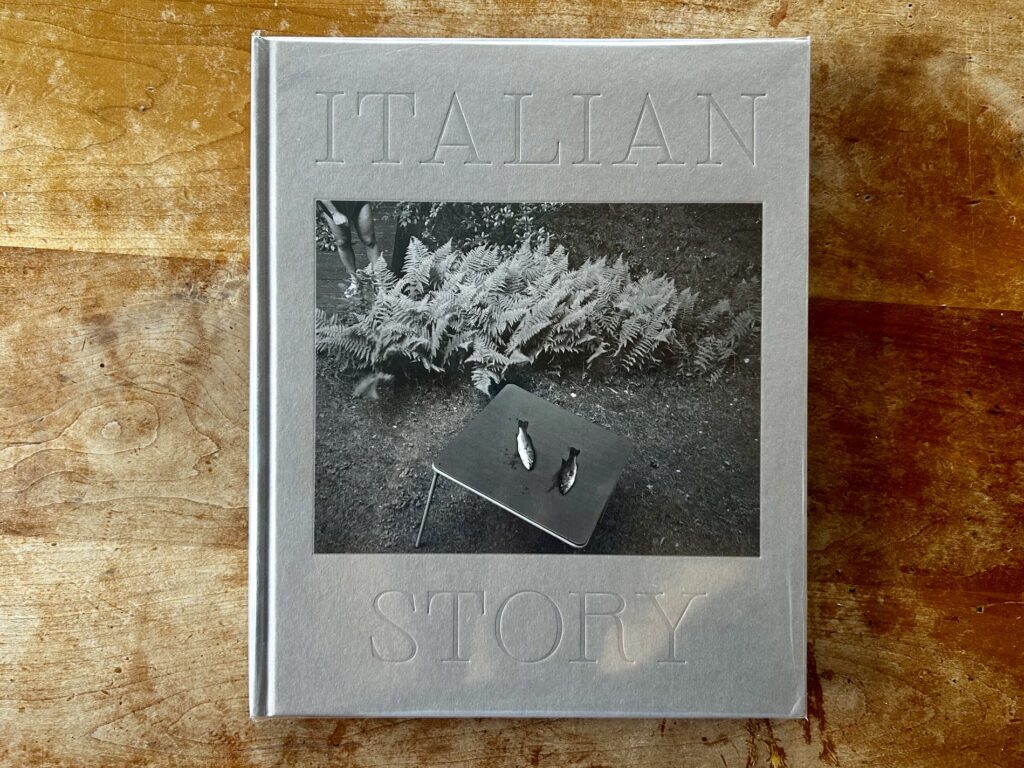
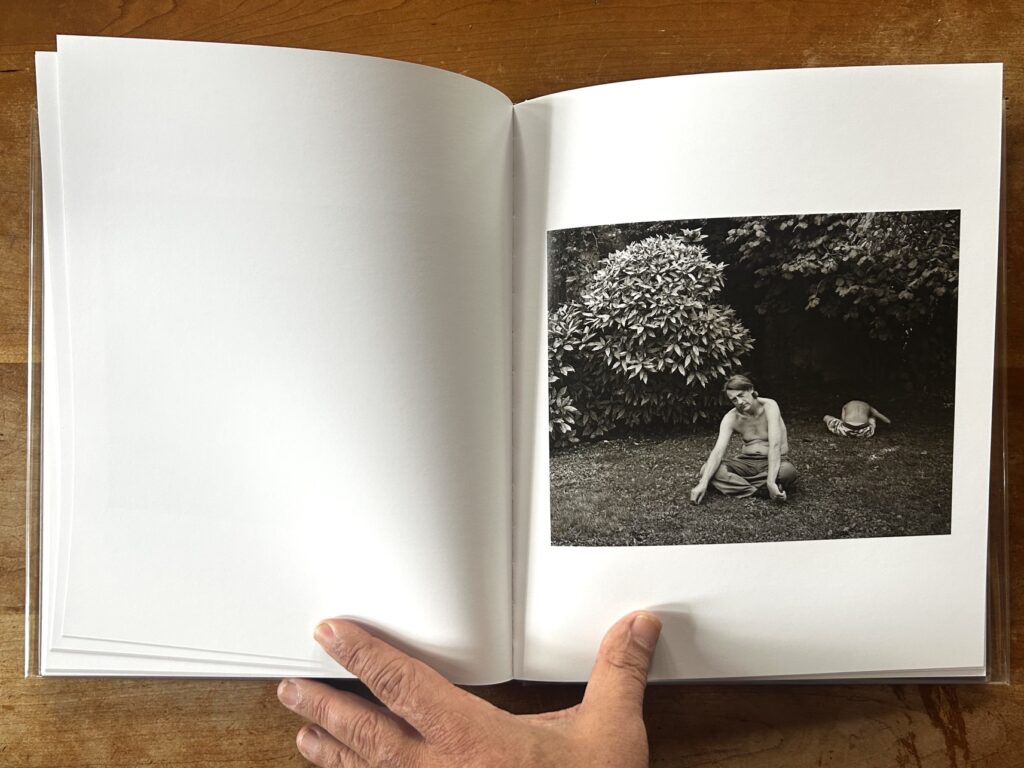
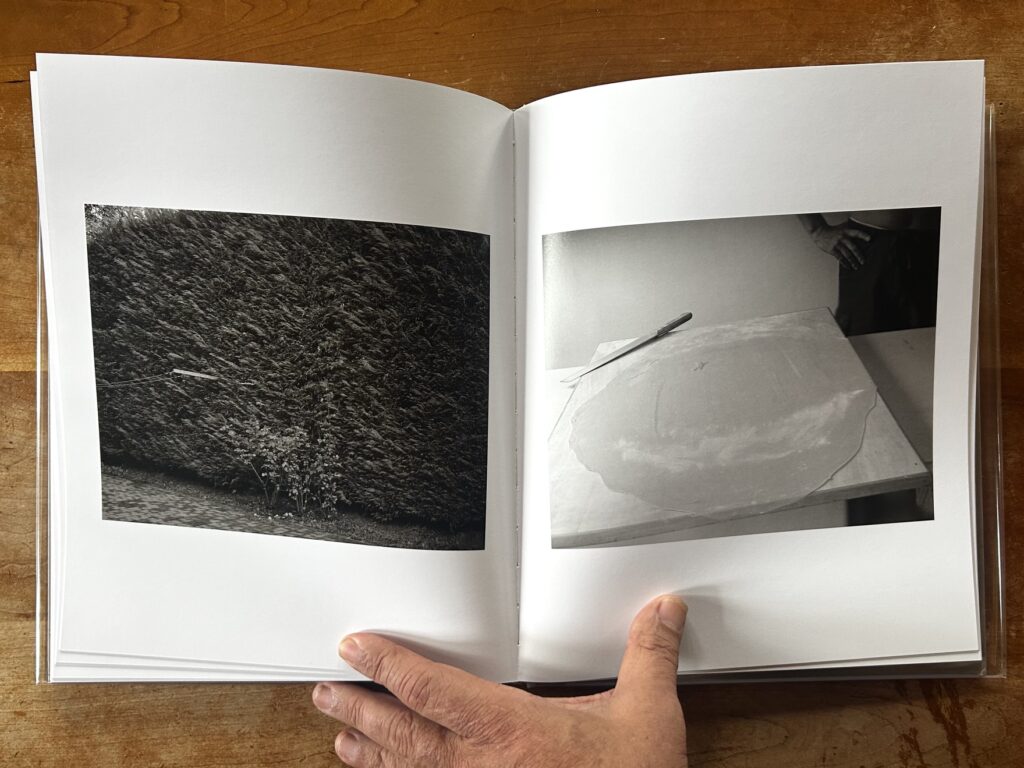
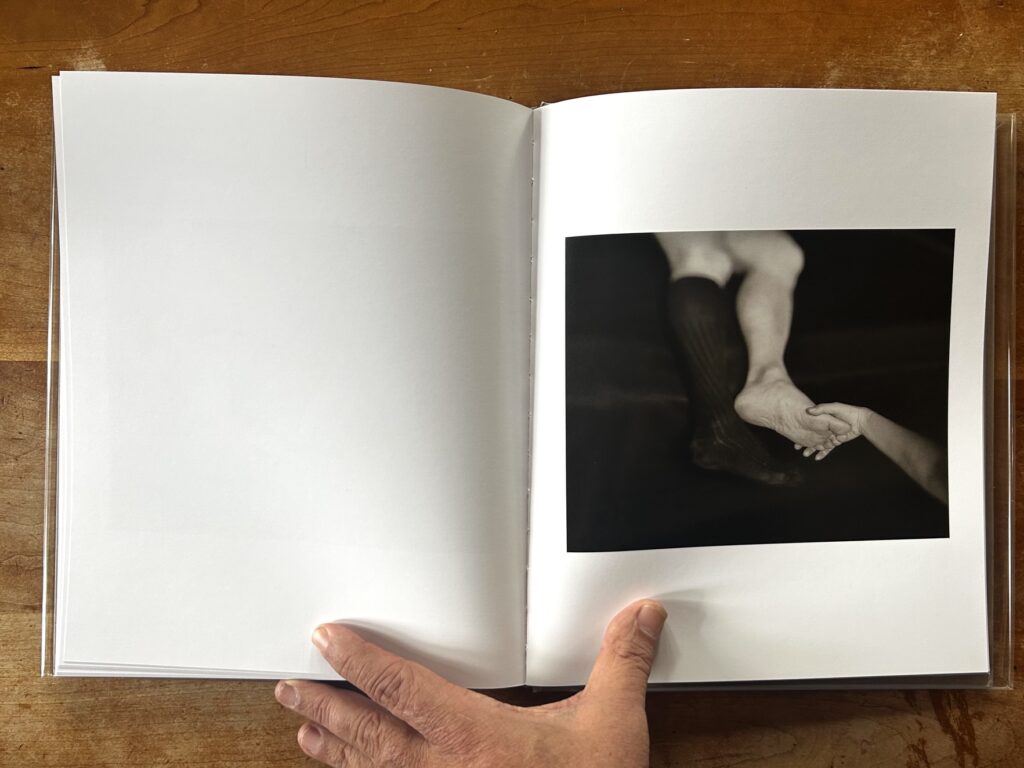
JTF (just the facts): Published in 2026 by L’Artiere Edizioni (here). Hardback with tipped in cover photograph, 23 × 28 cm, 96 pages, with 67 tritone photographs. Includes a brief text by the artist. Design by Teresa Piardi – Maxwell Studio. In an edition of 2000 copies. (Cover and spread shots below.)
Comments/Context: In a fine art photography scene which has changed immeasurably over the past forty years, Andrea Modica has been a beacon of consistency. After toying with welding and sculpture as a young student at SUNY Purchase, she was initially drawn to photography near the end of her undergraduate years. This was in the early 1980s, and small hand-held cameras were in vogue. But Modica gravitated toward large format. If her cumbersome tool made her an outlier, that didn’t slow her down. She soon fell down the view camera rabbit hole—perhaps its deliberation, craft, and syrupy alchemies reminded her of metalwork?—and it became her primary tool. “In some ways it’s the stupidest camera on earth to use,” she said in a recent podcast, “but it’s also the perfect camera.”
Moving forward through Yale and then her professional career, she exposed images onto black-and-white 8 x 10 sheet film, which she then converted into platinum contact prints (she learned the process from Jed Devine and Richard Benson, among others). The resulting photographs boasted several perks: they were a uniform size, with matte surface, lush tonality, and archival stability. These features have helped to shape Modica’s distinctive voice.
Fast forward four decades, and her basic methodology hasn’t changed much. Modica’s practice still involves large format cameras, Tri-X sheet film, and platinum printing. She speaks fluently in 8 x 10 contact prints, a language applicable to any subject. Aim it at a girl and her family in upstate New York and you might get Treadwell and Barbara. Direct it at young baseball players and you get Minor League. Translate human skeletons into her voice and you wind up with Human Being. Aim it at Mummers and you get January 1. Aim it at Modica’s familial homeland and you get her most recent monograph, Italian Story.
Italian Story collects sixty-seven black-and-white photographs from the titular nation, shot in piecemeal fashion over a forty year period, beginning in 1987. That was the year Modica made her first visit to the old country. She arrived in Rome as an ambitious photographer just out of grad school. She wanted to explore her heritage, but she had scant language skills, connections, or firm agenda. “I arrived in Italy curious and confused,” she said in a recent interview, “two motivating factors that keep me reaching for the camera to this day.”
The photo gods were looking out for Modica, and she wound up befriending and photographing a Sicilian family on a train (some photos and anecdotes from that first trip can be found in Lentini, reviewed here). One thing led to another, and she made some lasting bonds. Several return visits followed over subsequent decades, expanding into new relationships, adventures, and locations. Modica came home to America from each outing with another batch of photographs, as her Italian archive gradually expanded.
Some of these images have appeared in previous monographs. You can find a handful in the aforementioned Lentini, as well as Theatrum Equorum and L’Amico del’Cuore. But most were previously unpublished until now. Even if Italian Story curates them into a finished package, the long term project is ongoing. “I suspect I will continue making this work for as long as I am making pictures,” Modica explains in the brief afterword.
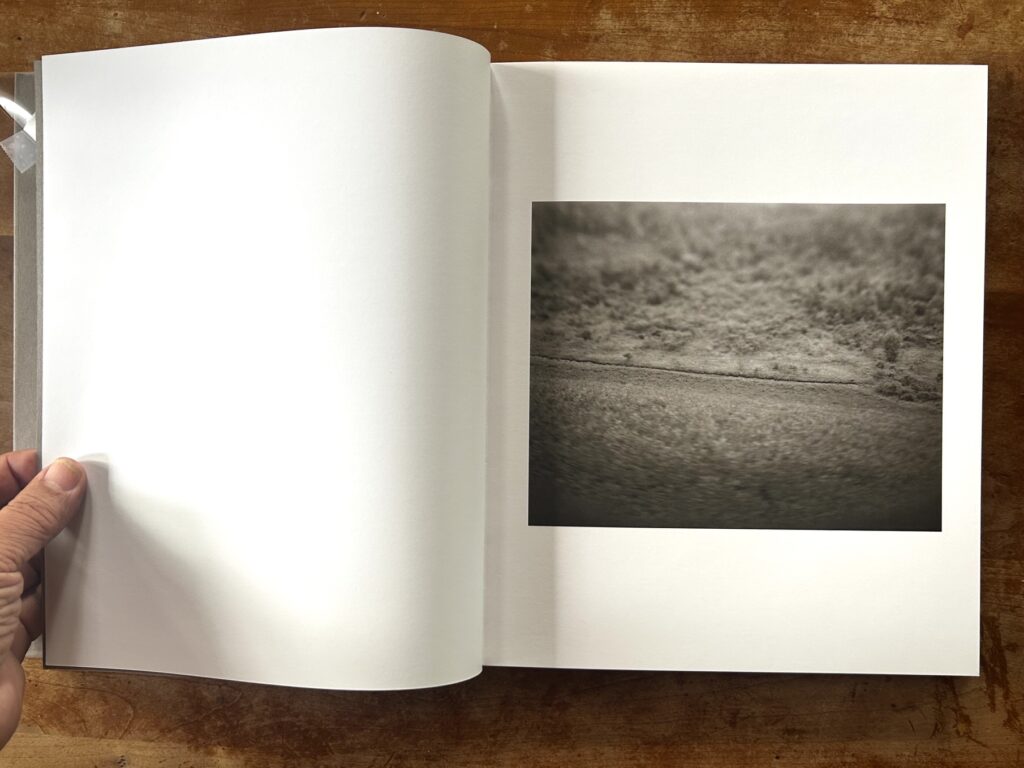
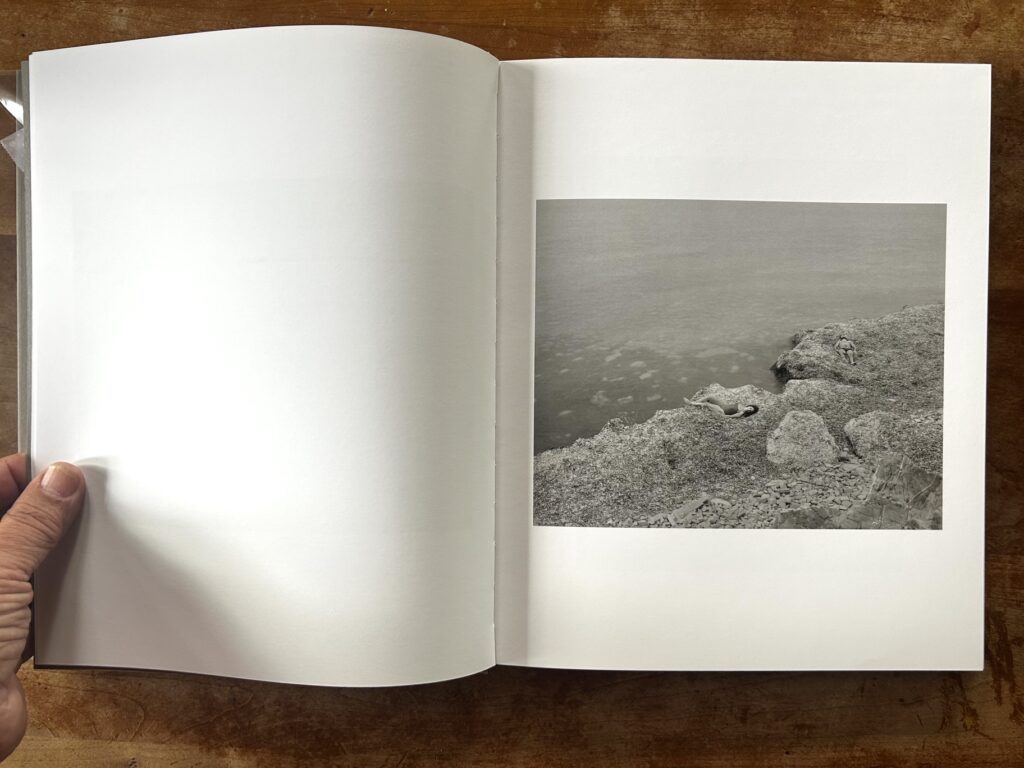
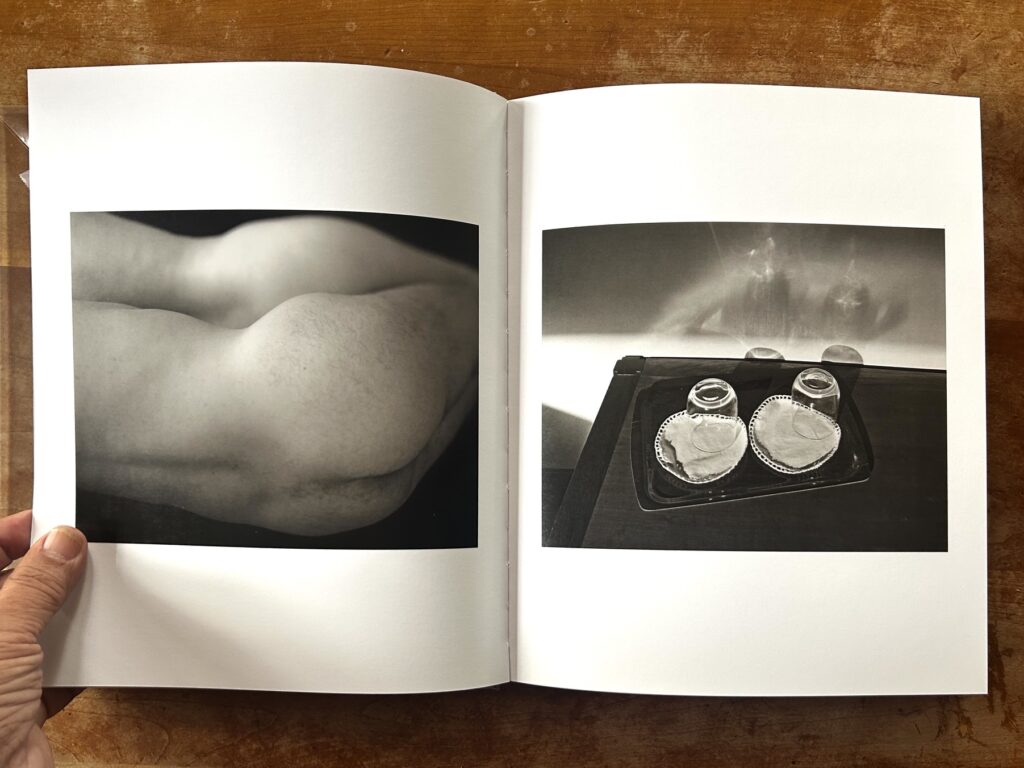
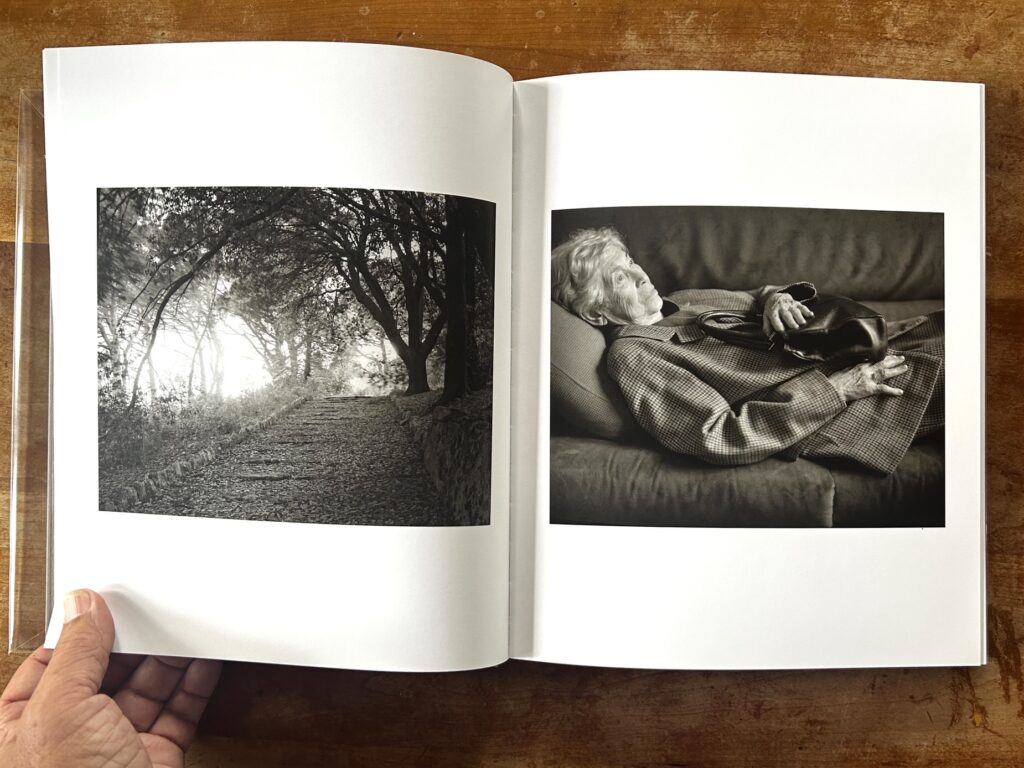
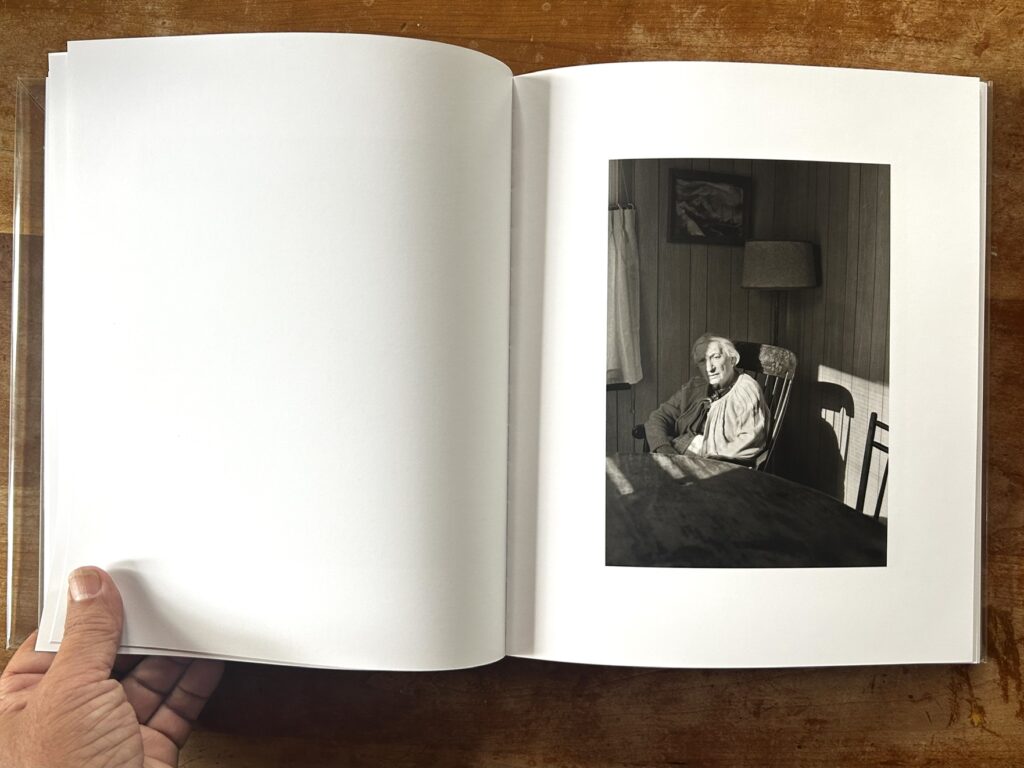
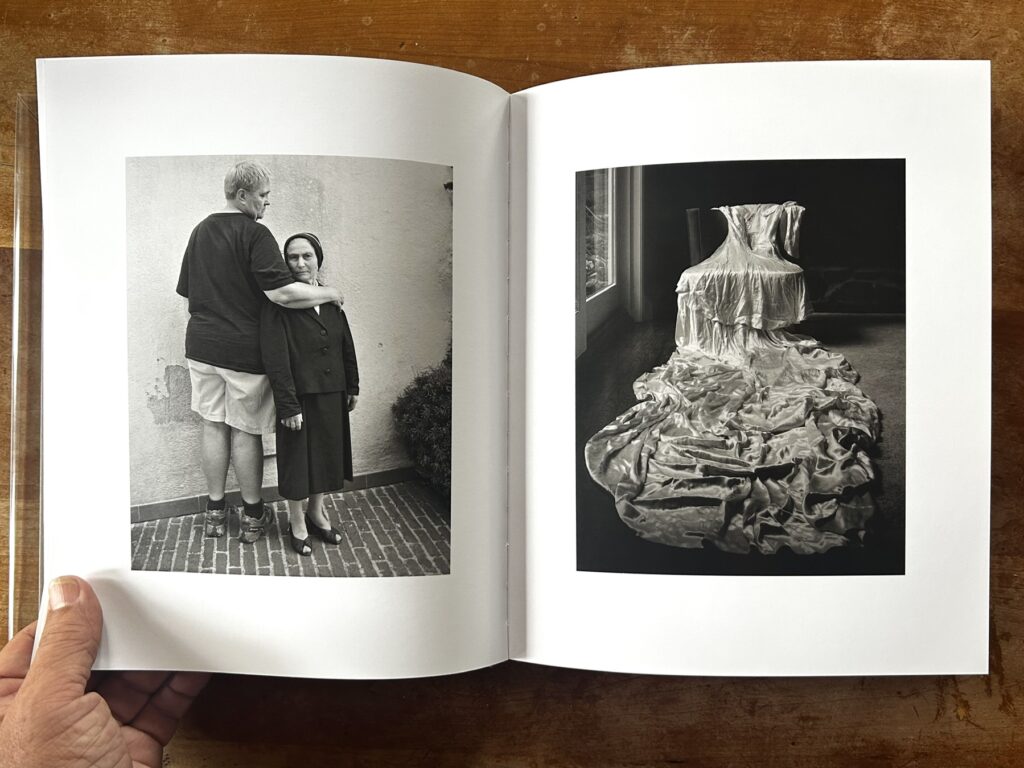
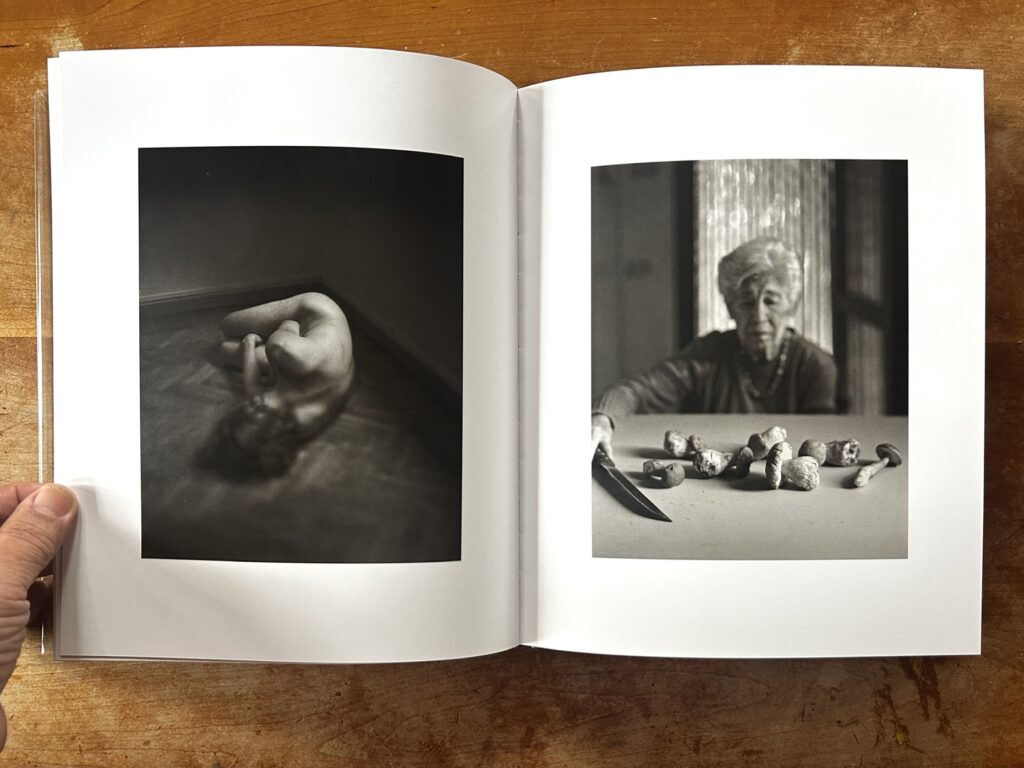
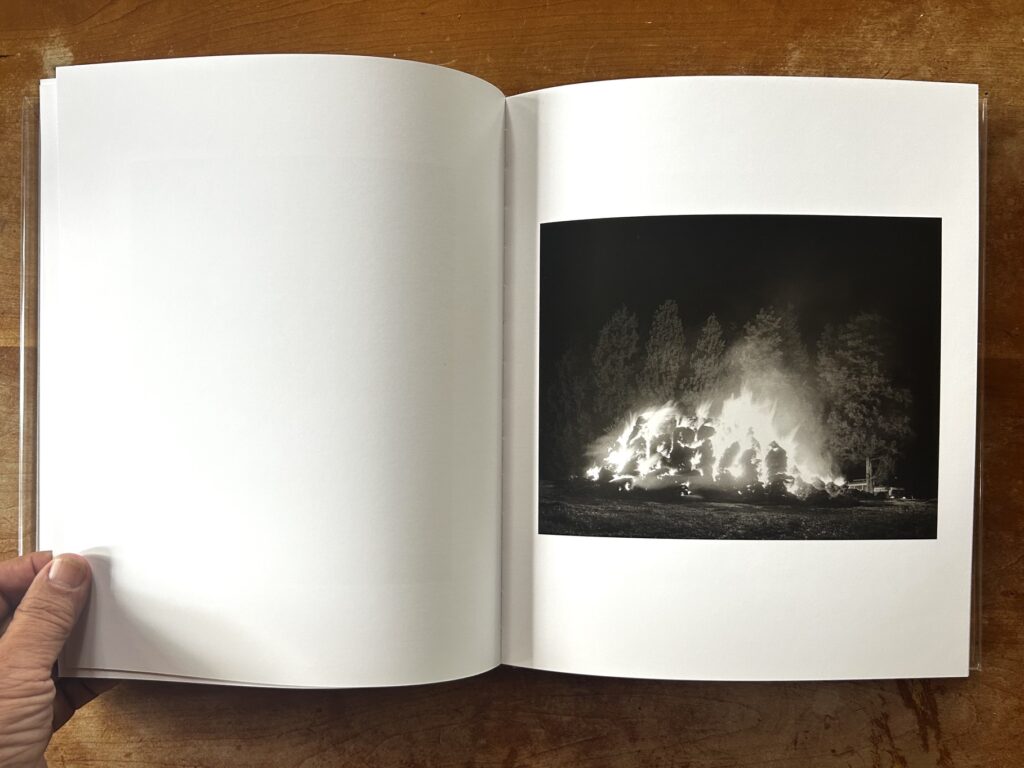
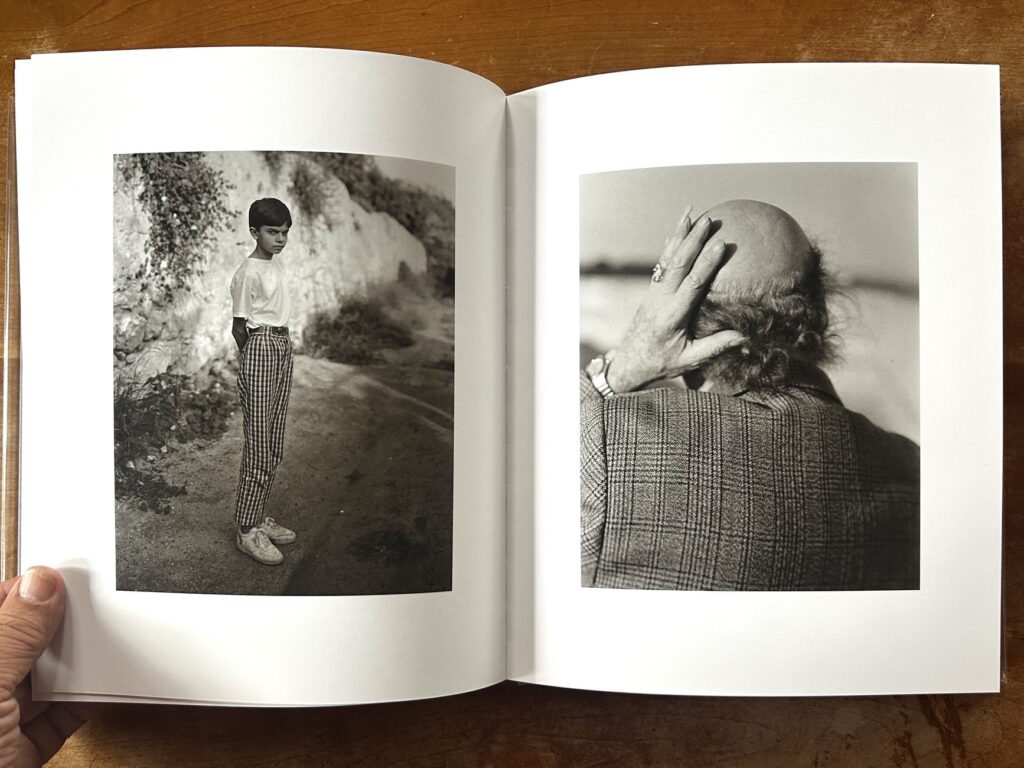
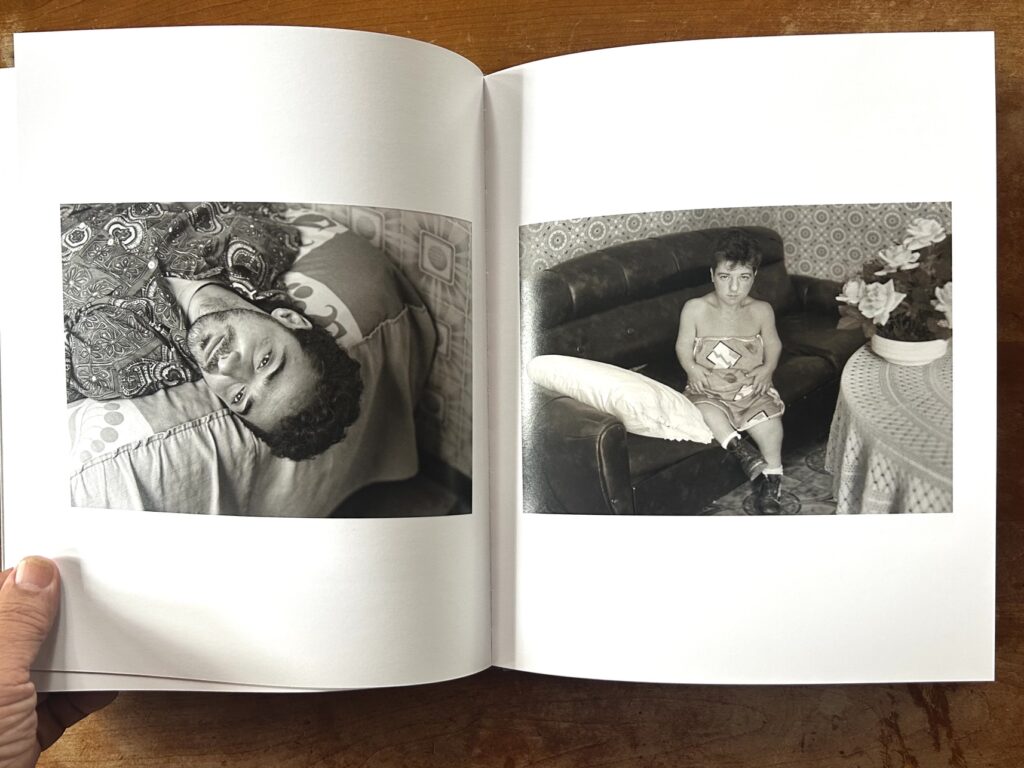
So Italian Story may develop further. We shall see. But for now, let’s take the current book as a progress report. It’s a simple grey hardback, couching plain white pages inside a classical design. Each spread contains one or two centered photographs, a mix of vertical and horizontal aspects reproduced at the actual size of the original contacts. As in most of Modica’s photobooks, there are no captions or texts to mediate the experience, not even page numbers. The pictures operate directly on the reader’s eyes, much as she first encountered the scenes.
Modica is primarily a portrait photographer, and the majority of Italian Story falls broadly into that category. She arranges all sorts of people for disquieting effect, each one staged, cropped, and focused in its own way. Although none of the individuals are identified, we can make some educated guesses. An older woman who appears in multiple portraits might be the matriarch she met on her first Italian journey? A bearded man with a surgical scar is also photographed repeatedly over several years. Might he be Francesco, with whom Modica enjoyed a romantic relationship? These are only guesses from afar. As for the cluster of figures which fills out a long sequence midway through the book, readers are given no clues. The passage includes naked men, small children, a dwarf, women in bed, a beautifully unfocused nude, and other prone bodies. It’s a rainbow of Italian humanity. If Modica knows their names, she’s not telling.
These anonymous souls—who animate the core of the book—are filled out with a scattering of still lifes, pastoral exteriors, and vernacular structures. Furniture, fixtures, and moldings have a ring of antiquity, while mushrooms, ivy, and ferns signal fresh growth. Taken collectively, they convey the general flavor and relaxed pace of Italian culture. But there’s no mistaking Modica’s pictures for objective vérité. Instead, she’s created her own private saga, with idiosyncrasies, interventions, and detours. “Italian Story is a broad narration,” she explains. “A record of events, a historical fiction.” This description roughly jibes with an earlier retort. Asked in her first photobook Minor League, “Do you think of these as documentary photographs?”, Modica replied, “Absolutely not. I really think of them as fantasies, fables, or fairy tales.”
That was in 1993, and the outlook still applies. The current title Italian Story, according to Modica, “reflects the complexity of the Italian word storia, which holds meanings as diverse as history, story, situation, issue, fuss, hassle, tale, or lie.” If you’re wondering what exactly “fuss” or “hassle” look like as pictures, consider some of her dreamier frames, in which Modica tilts and/or narrows the focal plane to manipulate visual information. In contrast to early monographs like Treadwell and Minor League, she has come to relish the surreal alchemies of her instrument.
A photo of a man leaning out an open window, for example, is imbued with delightfully confusing textures. Some distant tree leaves are sharp, some fuzzy. Don’t look to the surrounding room for help. It can’t decide what to focus on either. Another photo of the same man leaning against a bedspread—maybe Francesco?—spins into hyperspace a la M.C. Escher or James Turrell. The nearby face is sharp, as is the oversized lamp in the far corner. But the in-between regions are mushy and mis-scaled. In the only selfie in the book, Modica throws her own face out of focus, highlighting instead a detailed diagonal of skin, hair, and bandage. Perhaps her blurring is boosted by long exposure? In any case, she seems reluctant to affirm her presence.
Call these odd facets “issues” or “lies” if you want. It’s merely Modica working intuitively, and twisting “truth” in the process. Tilt the lens board, move the camera, wait for expressions to settle or elements to align, try this, try that. She’s always been open to serendipities. But Italian Story seems more adventurous than its predecessors. The storia veers this way and that, affirming that “there’s no possibility of photographing anything that looks like a document.” It might seem counterintuitive to mention experiments when discussing a precision instrument. But for Modica, her view camera is an invitation to terra incognita, a chance to carve out new visual territory.
Italian Story finds Modica applying various techniques to an array of subjects, spread across a lifetime of work. So if the photos feel heterogeneous, that’s to be expected. This is an improvisational take, a rough sketch of Italy by a visitor rather than a definitive statement by a native. In fact it’s not hard to imagine a future sequel or revision with completely different pictures. But there will be no mistaking such a book for another author. Perhaps this is the surest sign of a photographer at the top of her game. Modica is able to work with various countries, techniques, subjects, and periods, and put her unique stamp on all of it, a beacon of consistency.
Collector’s POV: Andrea Modica does not appear to have consistent gallery representation at this time. As a result, interested collectors should follow up directly with the artist via her website (linked in the sidebar).