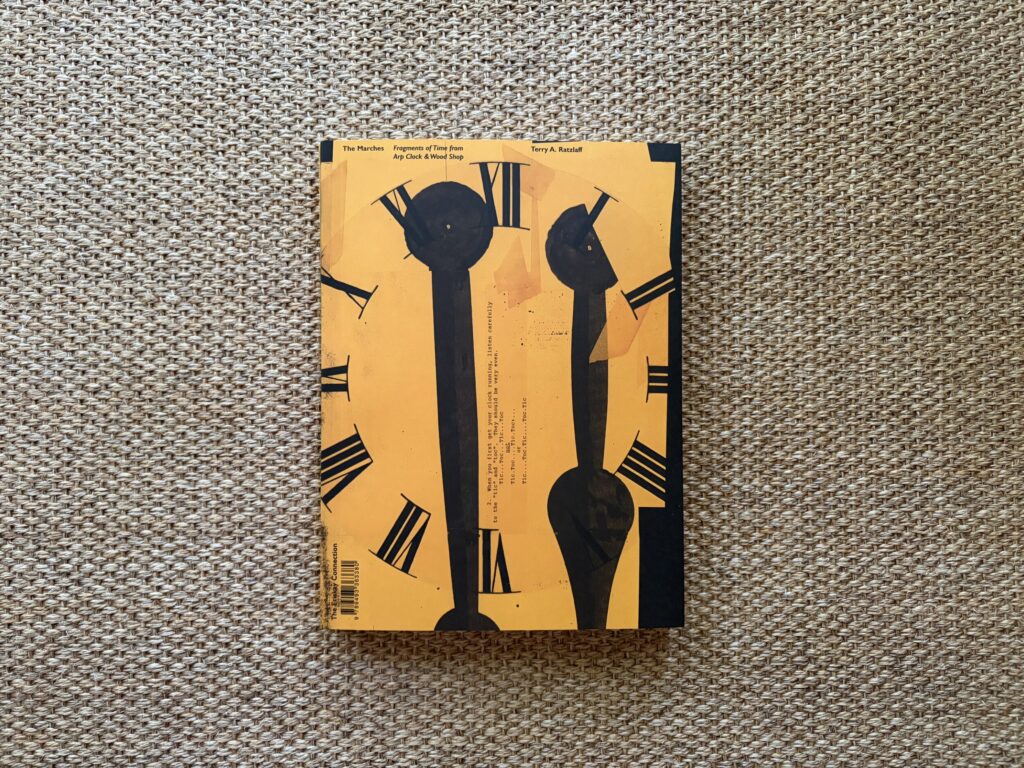
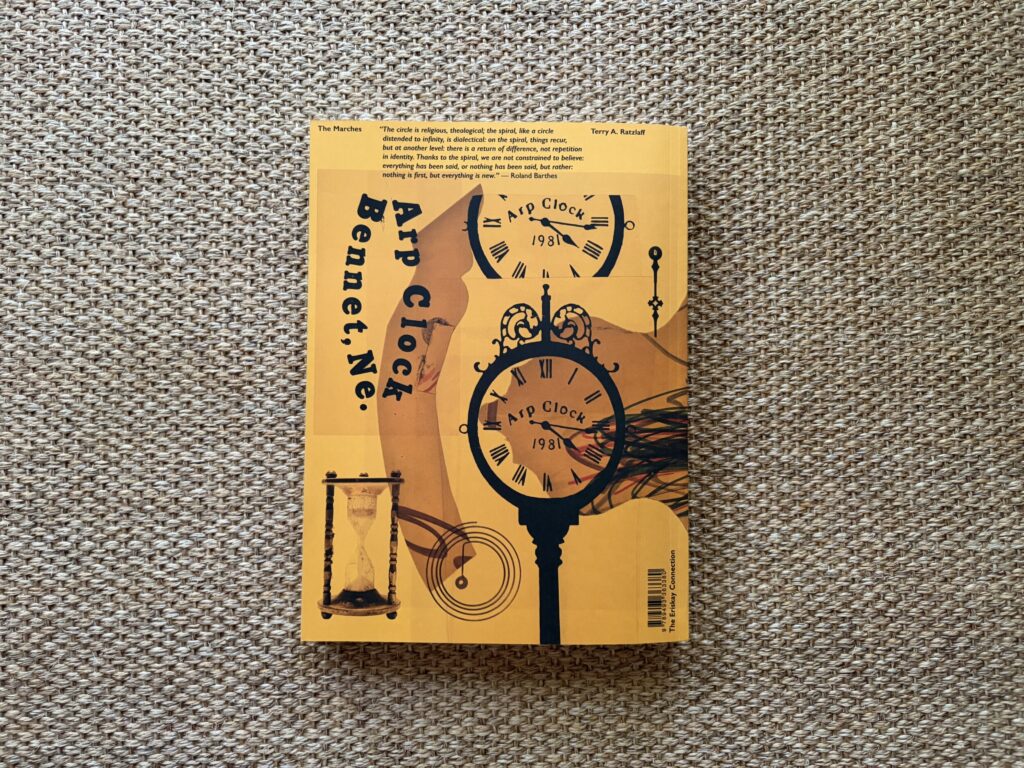
JTF (just the facts): Published in 2026 by The Eriskay Connection (here). Softcover (215 x 290 mm), 288 pages. Includes a quote from Roland Barthes, short interviews with Greg Arp, and an epilogue by Julia Conrad. Design by Rob van Hoesel. In an edition of 2000 copies. (Cover and spread shots below.)
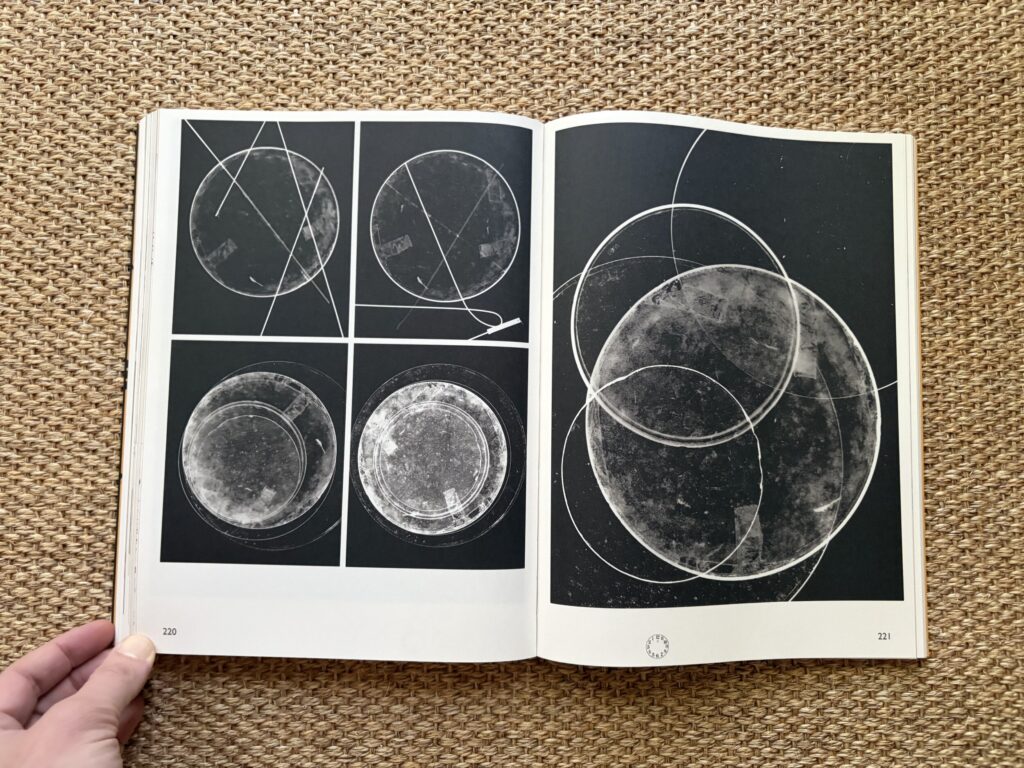
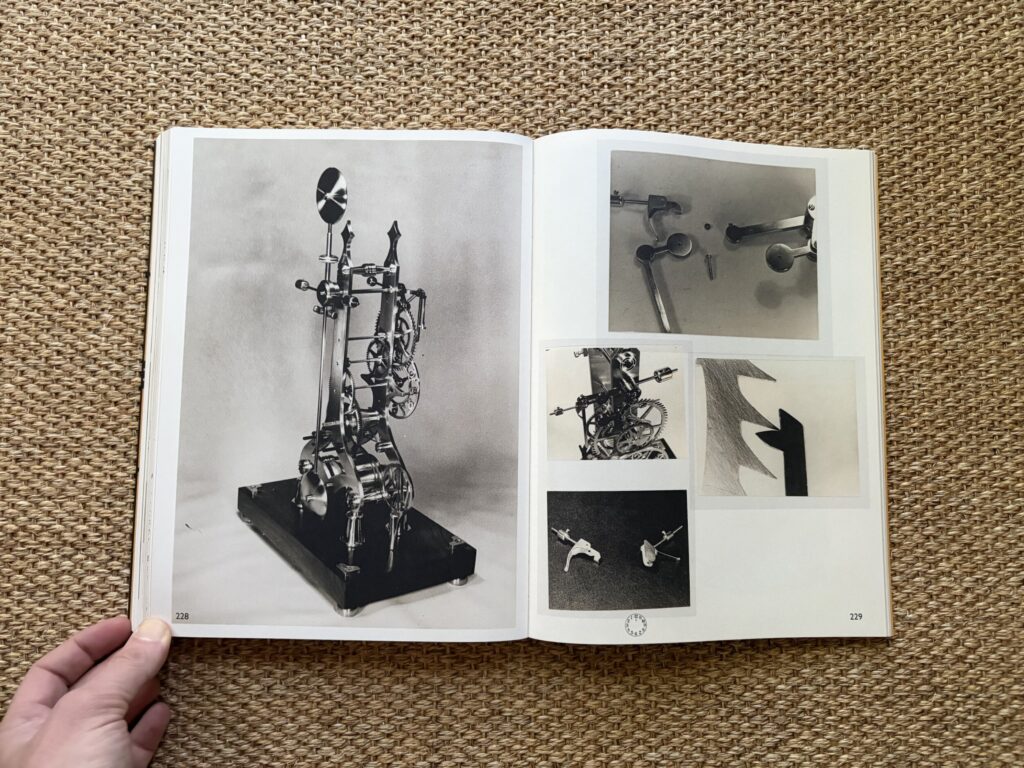
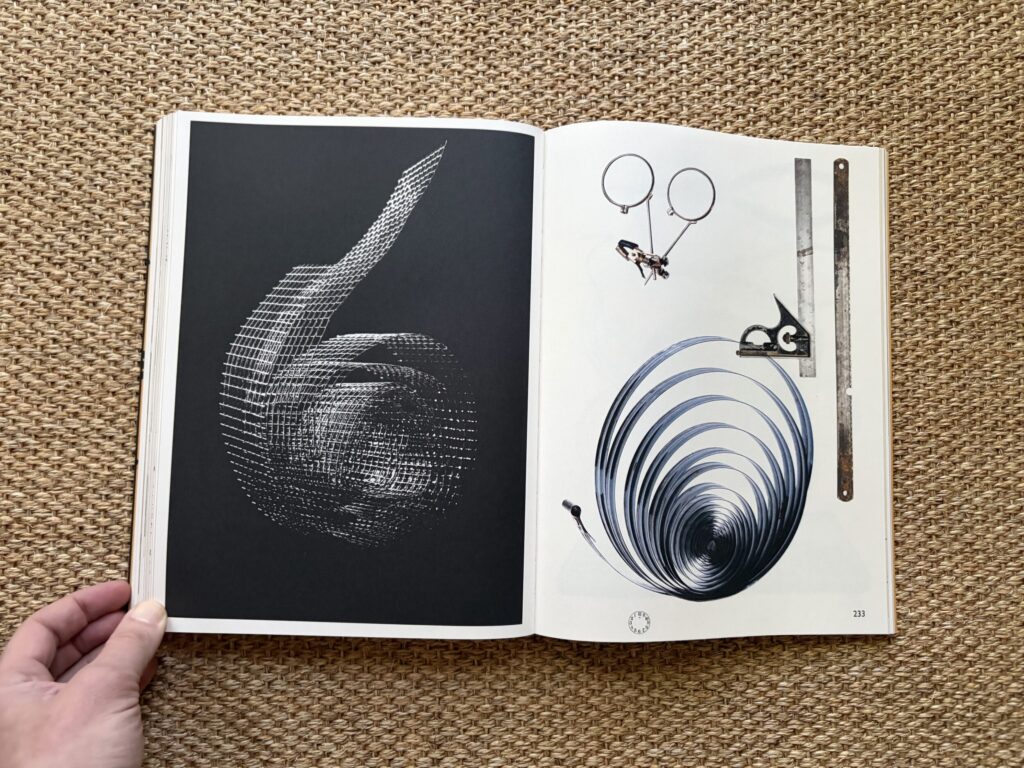
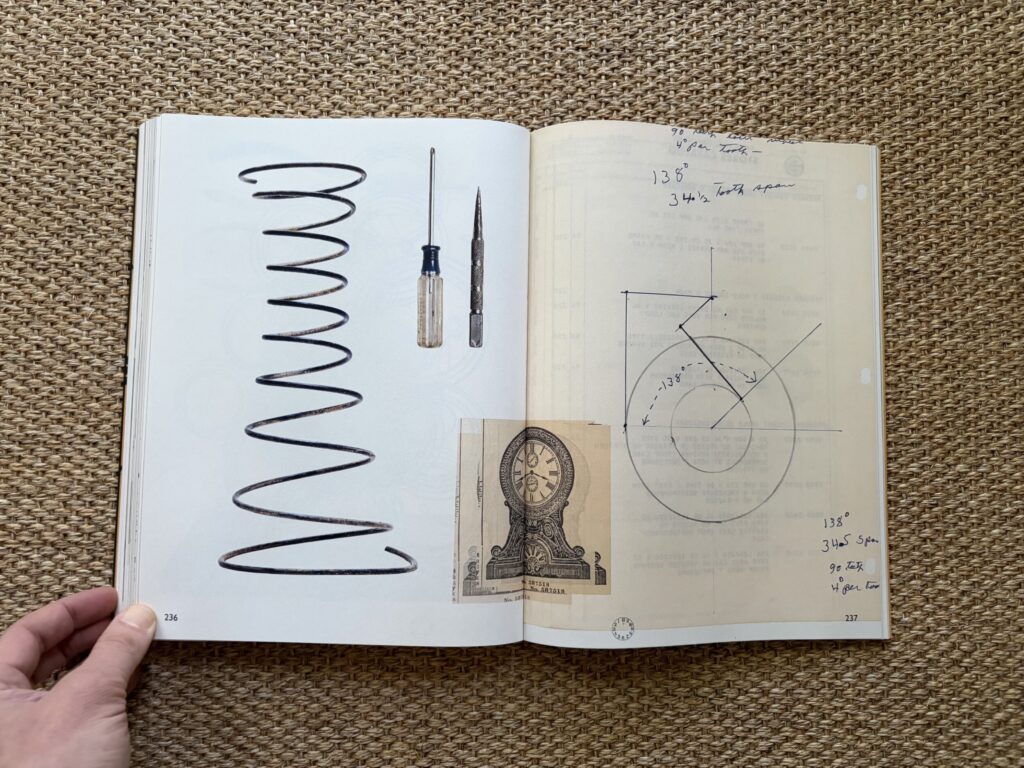
Comments/Context: Given its ability to pause the world for a split second, photography has always had an inherently complicated relationship with time. A photographic image offers us a record of what was happening in front of the camera at a singularly specific moment, but to understand (or document) a larger sweep of time, we need to elongate the exposure duration or compare individual instances via series, sequences, or noting the differences in time between one image and another. In this way photographic time is strangely malleable – it can be short or long, linear or nonlinear, exact or approximate, all depending on the photographer’s intention, technique, and point of view.
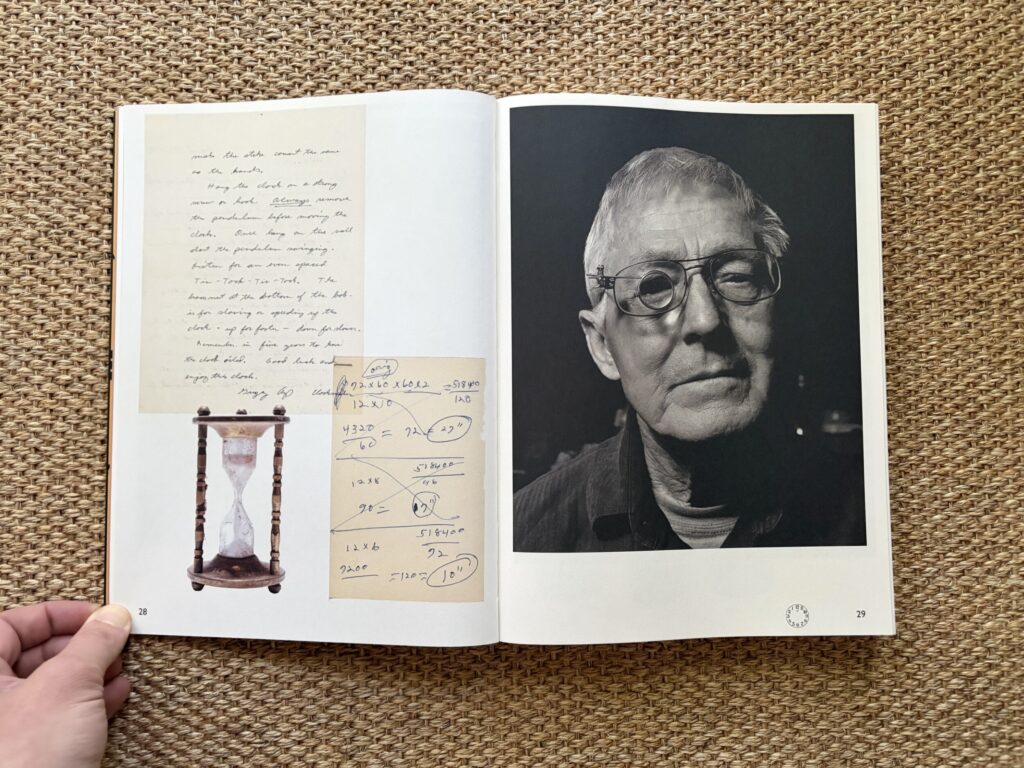
Terry A. Ratzlaff’s innovative photobook The Marches turns the conceptual crank on this shifting idea of photographic time several twists further. His central subject is Greg Arp, a horologist (AKA a person who makes, designs, and repairs clocks, watches, and other timepieces), and his family-owned and run business, the Arp Clock & Wood Shop, located in Bennett, Nebraska. So not only is The Marches a photographic study of the everyday routines, tasks, tools, and materials of an expert clock technician and restorer, it is also a visual time capsule and in-depth archival catalog, gathering together images and ephemera drawn from the multi-decade history of the shop and its owners going back to the late 1970s.
Ratzlaff first stumbled upon Arp and his shop in 2021, while searching for a derailed train that was part of another artistic project, and quickly became interested in the clock repairer and his business. Sadly, Arp passed away eighteen months into their friendly collaboration, but Ratzlaff continued on in his absence, systematically inventorying and photographing essentially the entire contents of the dusty store and workshop before Arp’s wife Jean eventually closed the business.
So time (in many forms and definitions) hangs heavily in The Marches, a life’s work of its precise measurement captured in a carefully layered photobook object that liberally blends old and new. Ratzlaff introduces us to a dedicated man who spends a lifetime studying, constructing, measuring, and literally trying to control time, who then himself becomes yet another memory in the long arc of its passing. Ratzlaff elegantly pulls all these threads together in the design and construction of The Marches, organizing the sprawling material into twelve chapters placed in reverse chronological order, of course, ordered by the hands of a clock.
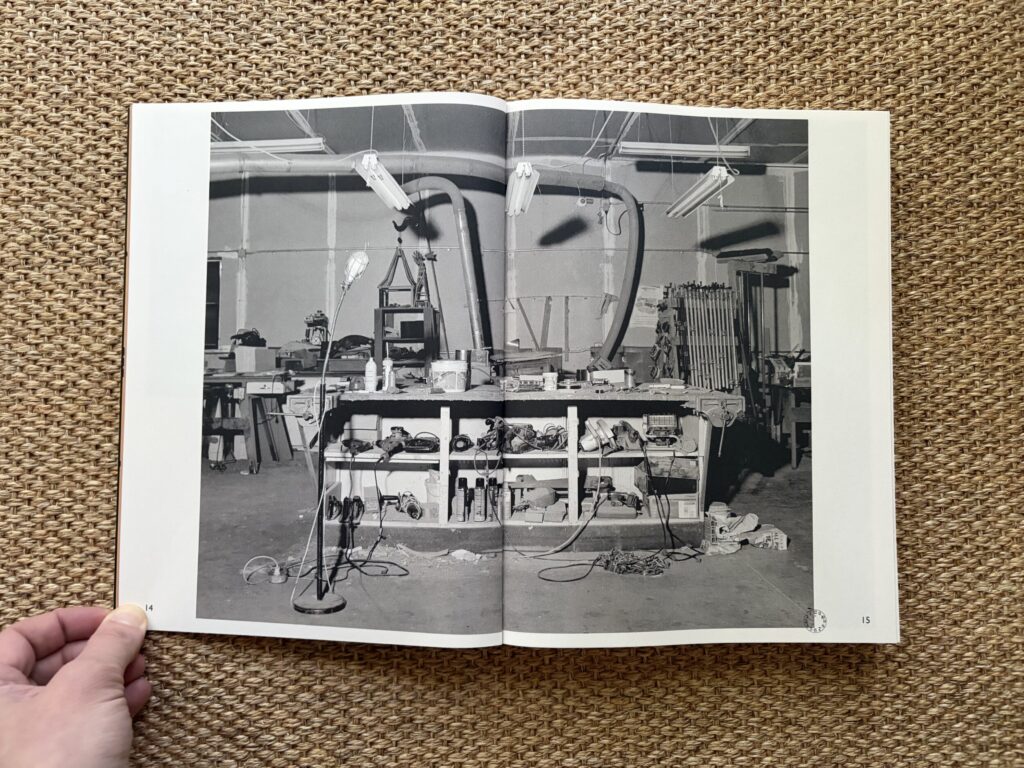
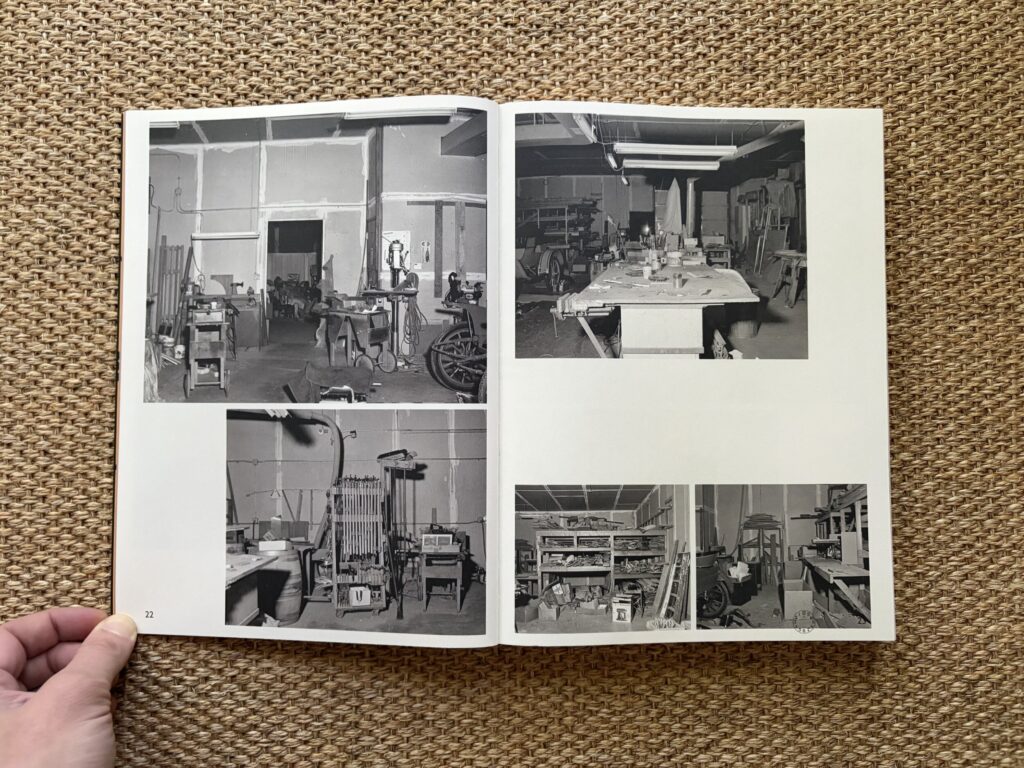
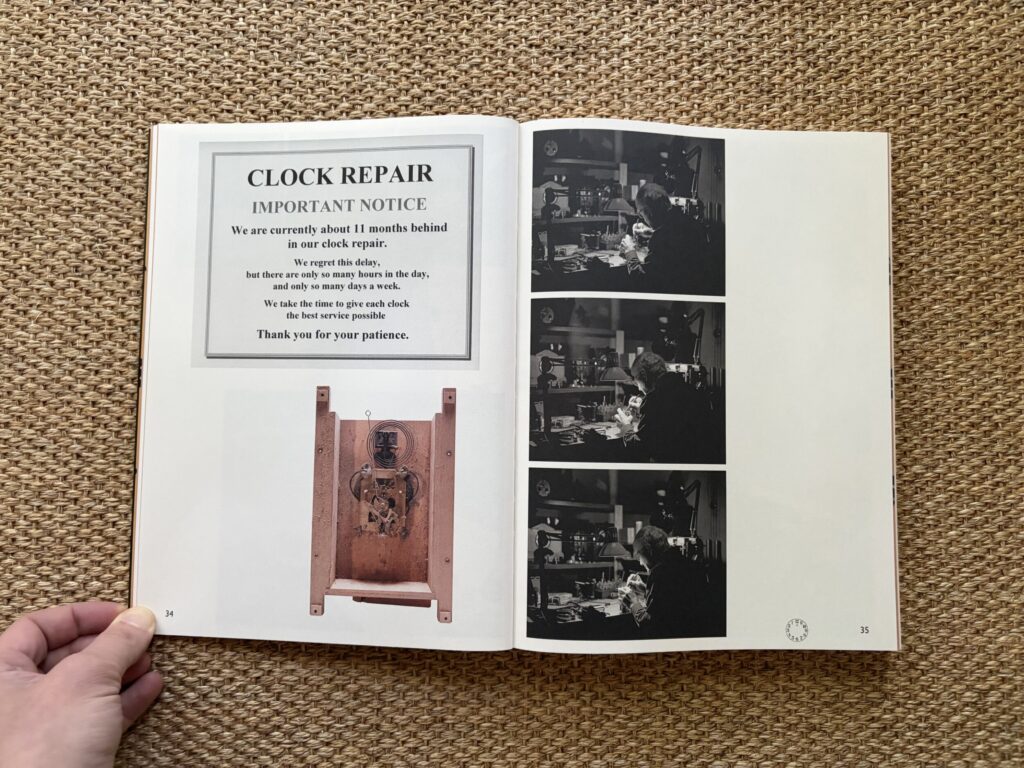
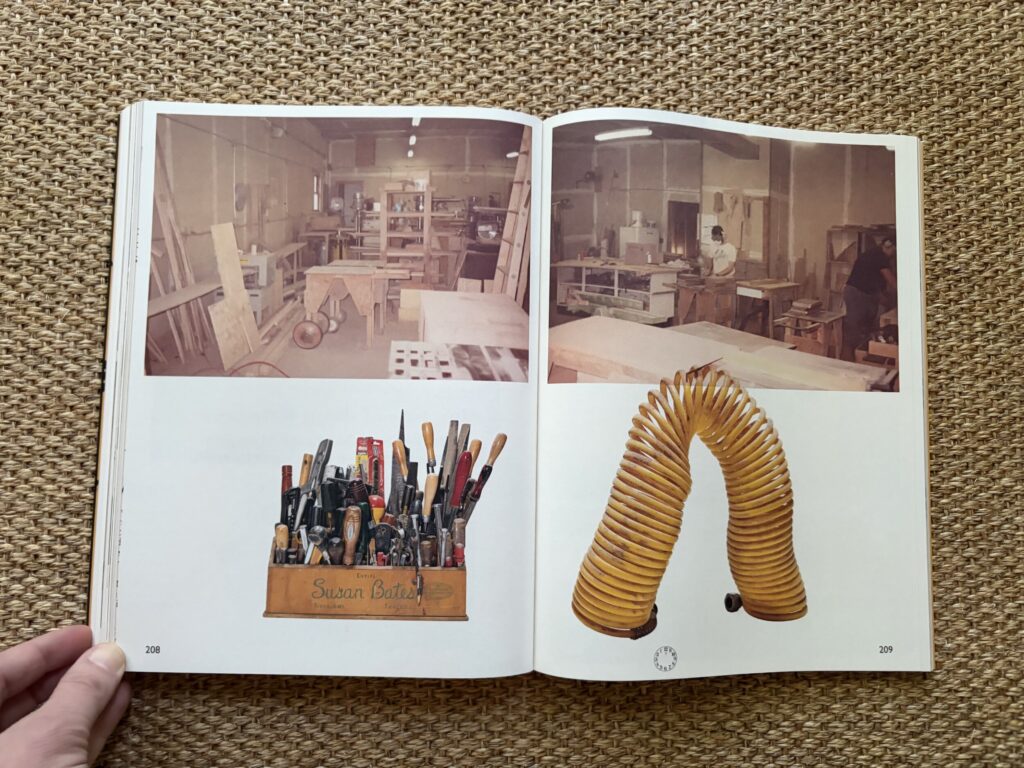
Like Mitch Epstein’s Family Business, or more recently Christian Patterson’s Gong Co. (reviewed here), The Marches is a multi-faceted single subject study, where a range of photographic and archival approaches are applied to the bounded (but surprisingly expansive) world of Arp and his clock business. The first few chapters set the stage, with Ratzlaff patiently documenting the rooms, spaces, workbenches, storage areas, and offices of the shop, and then moving on to portraits of Arp at work (when he was still alive), his magnification glasses giving him doubled stare. A humble sign reminds customers that the wait time for a fixed clock was currently at eleven months, the methodical artisan-style single-person slowness of the clock repair business made quietly explicit.
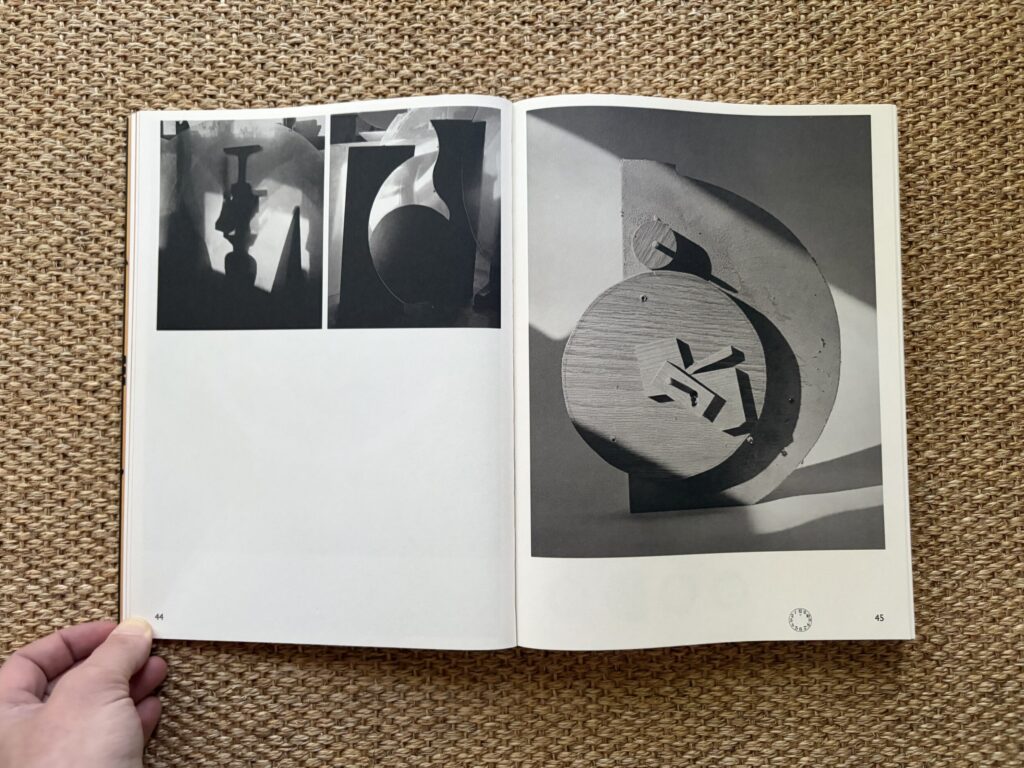
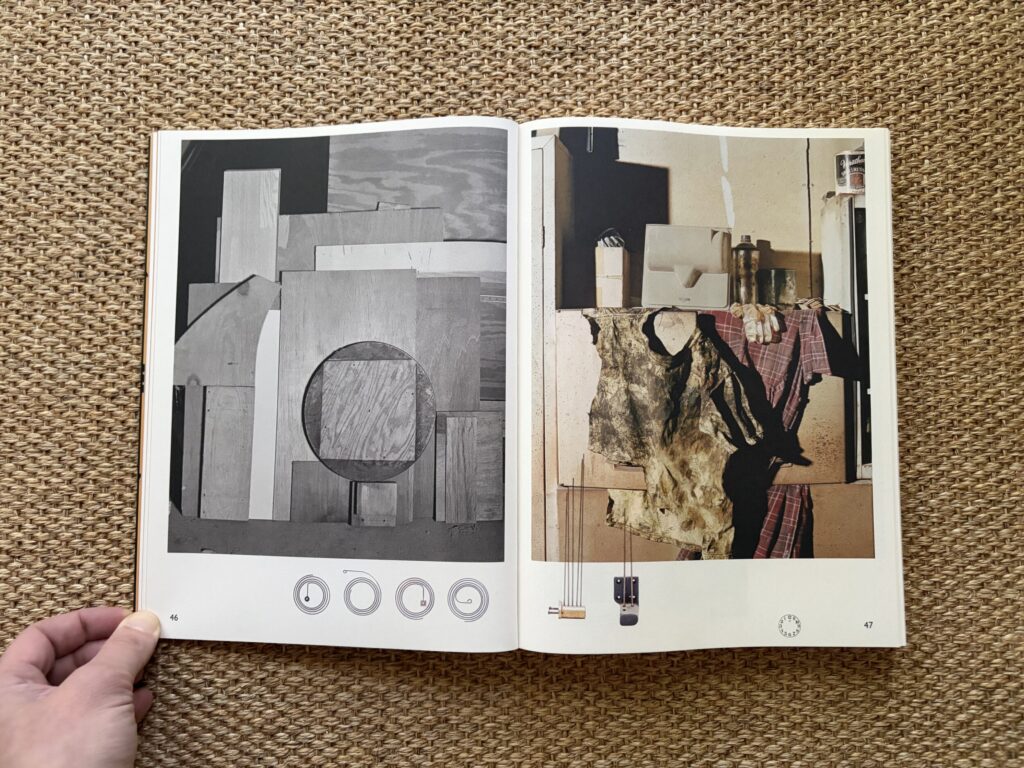
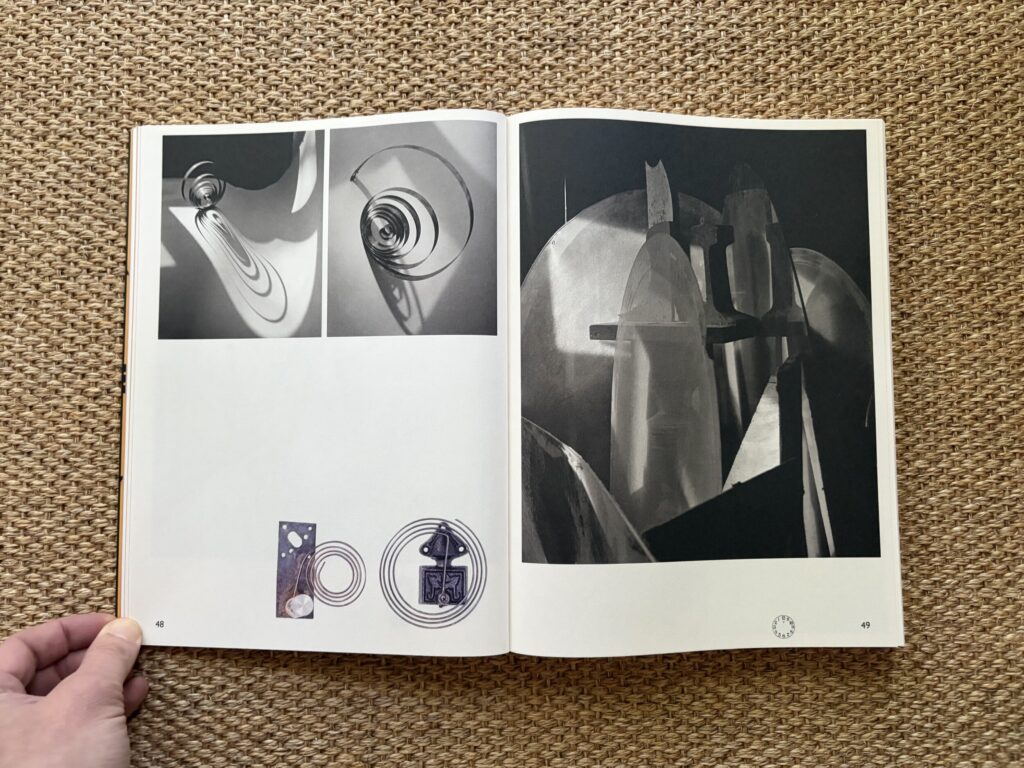
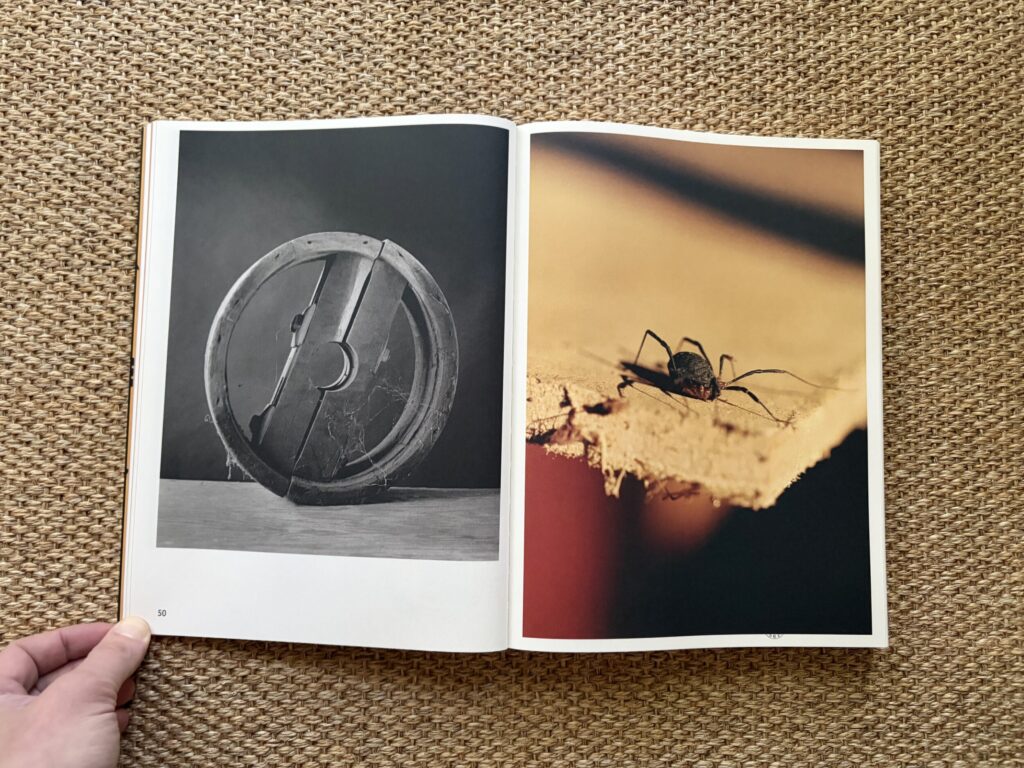
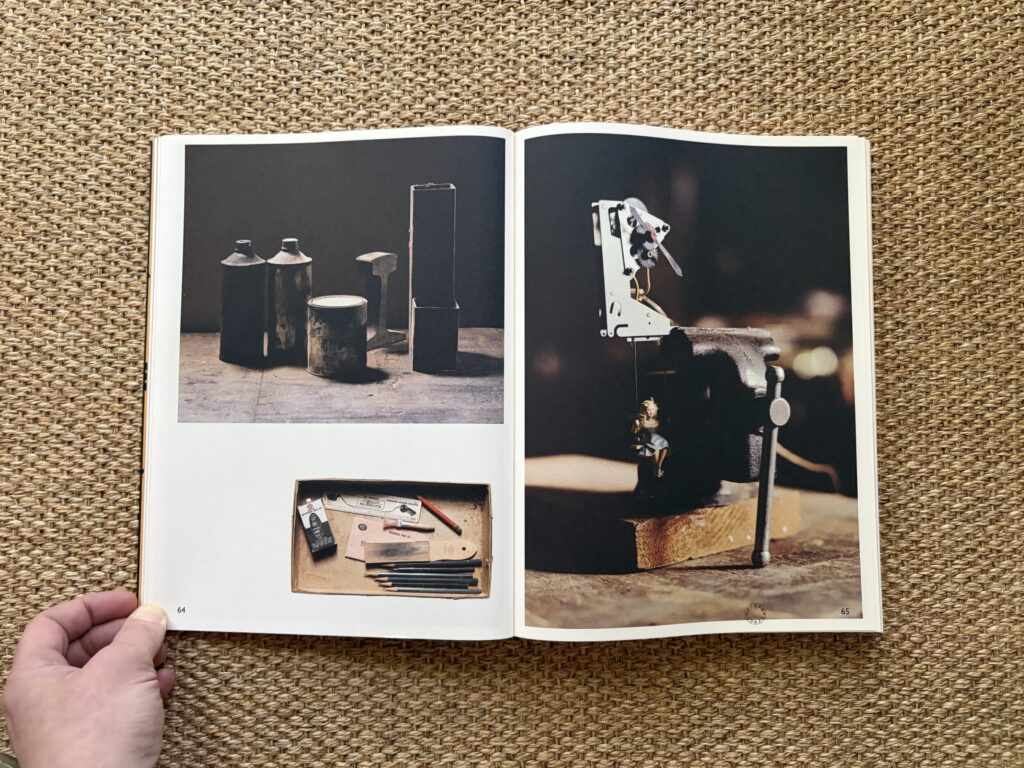
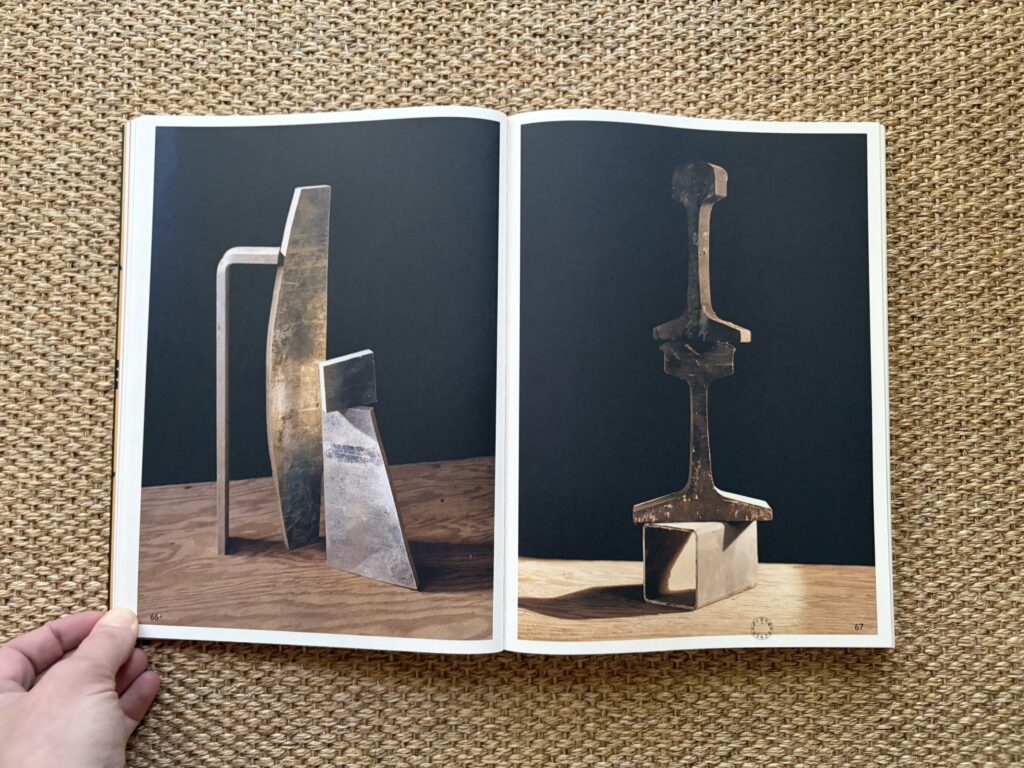
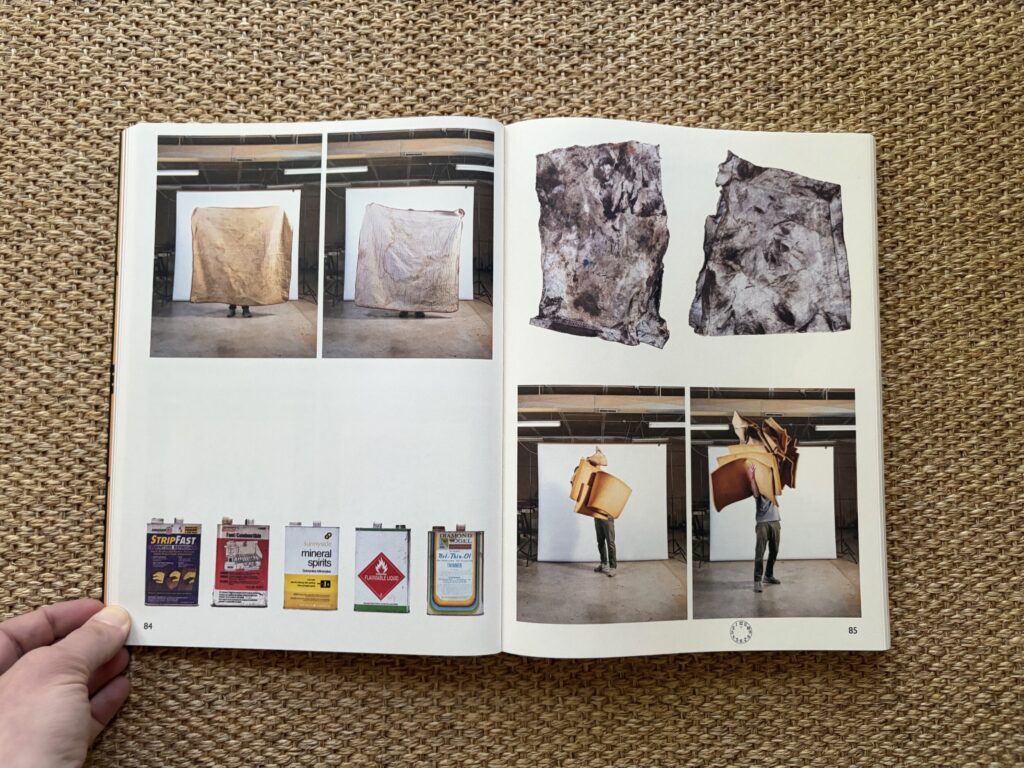
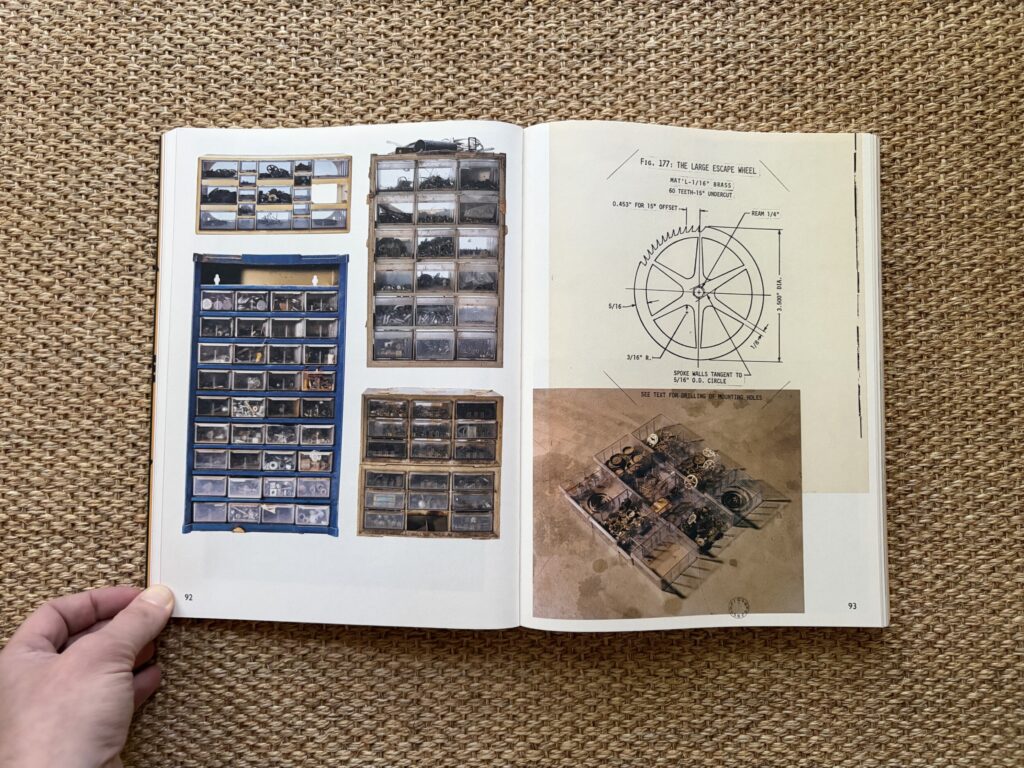
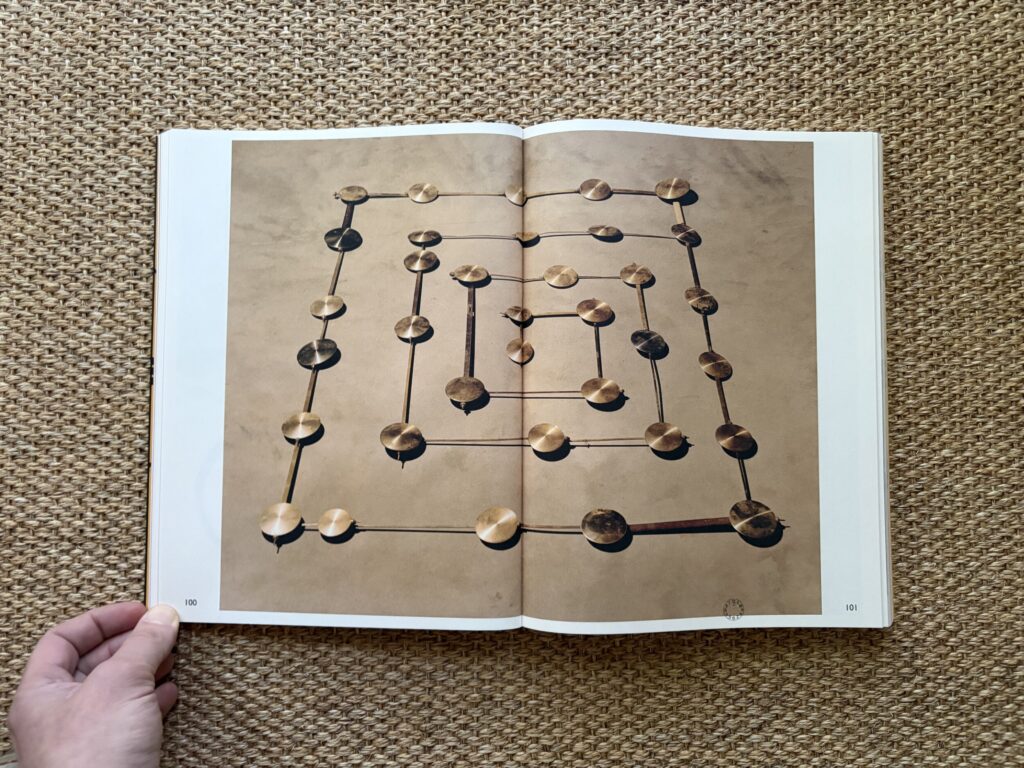
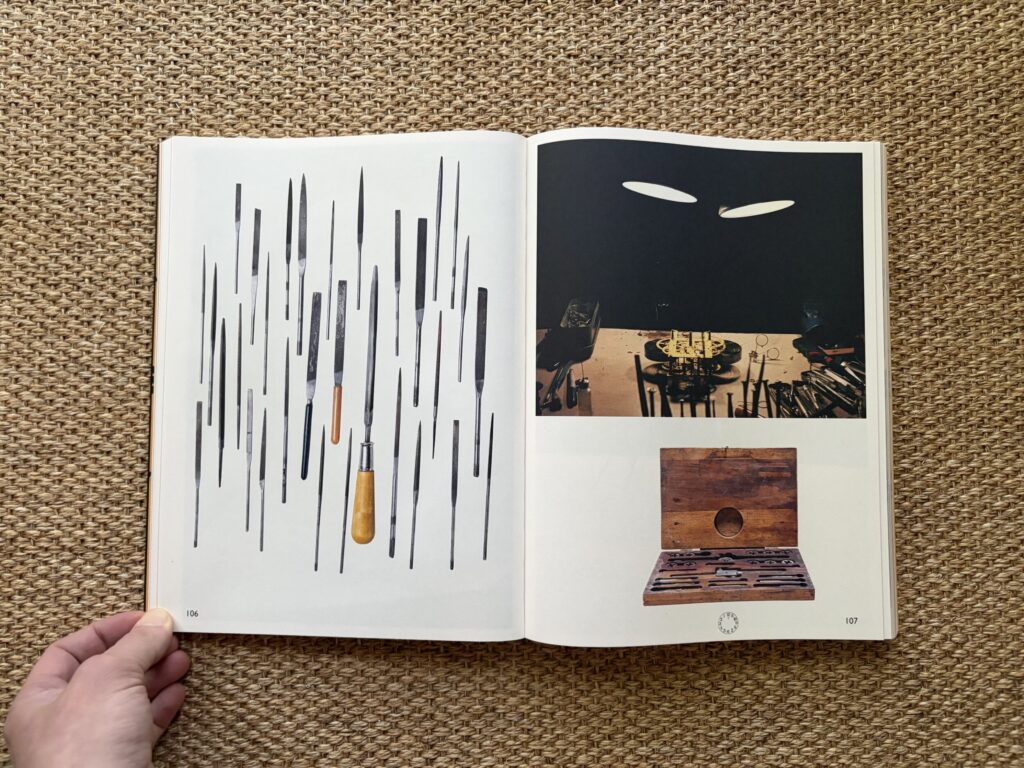
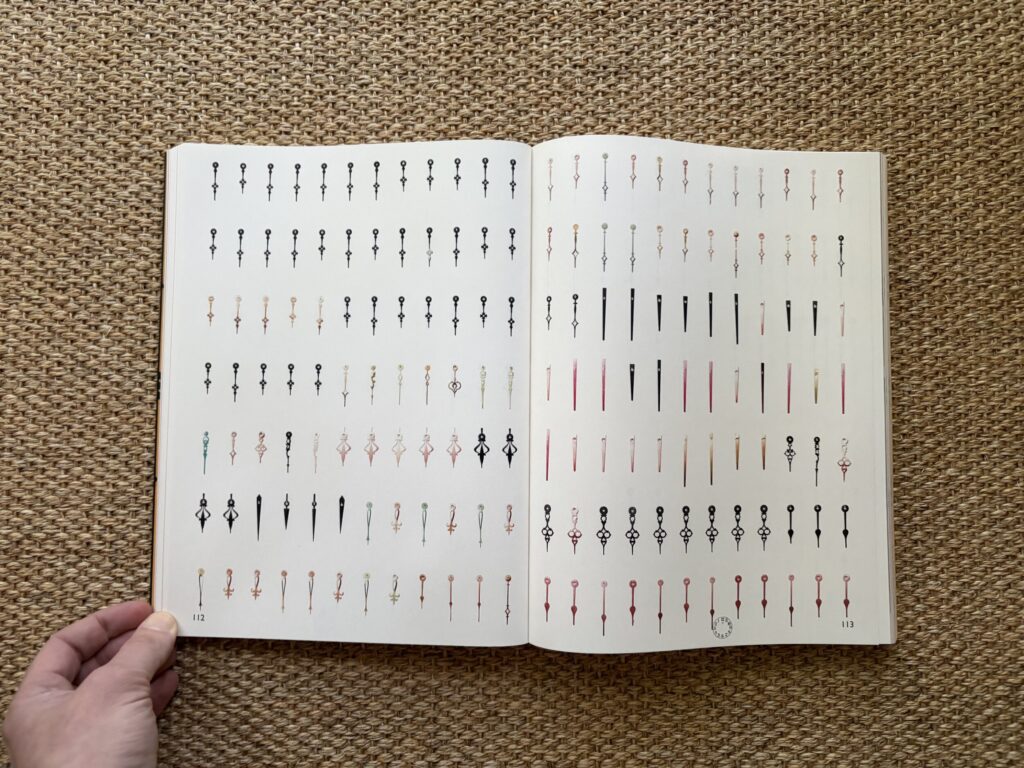
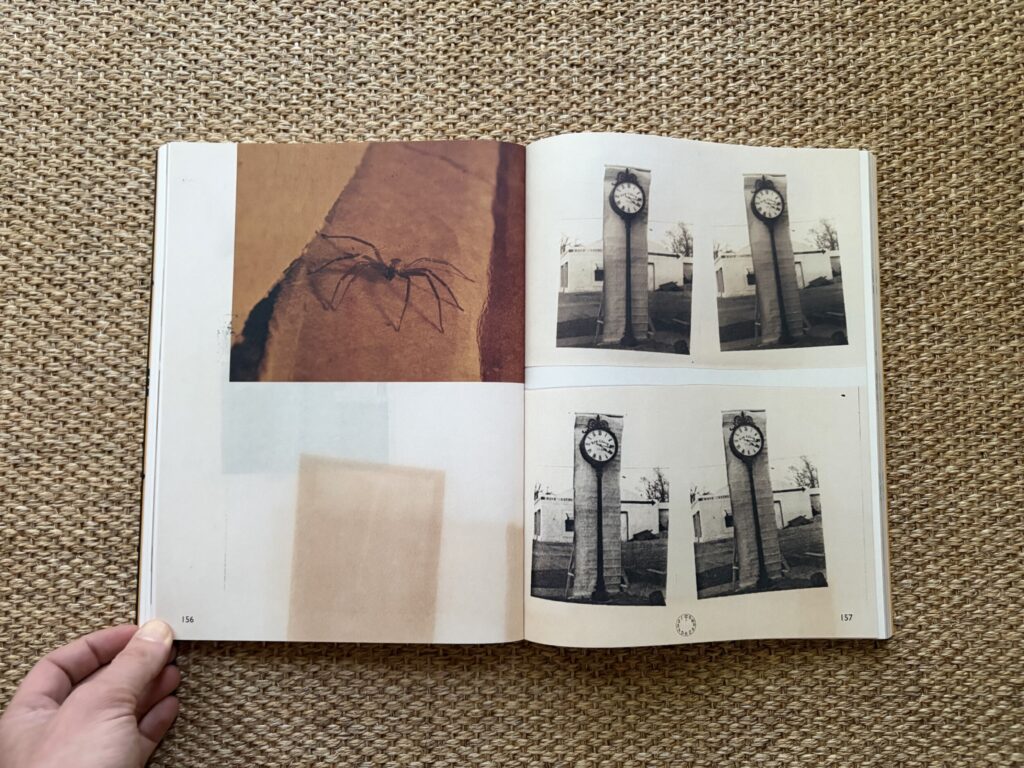
As time slips backward (from chapter to chapter), we start to see Ratzlaff adding more of his own artistic vision to the documentation process. For the next several “hours”, he sets up still life arrangements of wooden models and scraps, spiral coils, cans of oil and turpentine, metal mechanisms and fragments, and other less identifiable workshop stuff, artfully isolating the formal qualities of these objects and gathering them into resonantly composed tabletop groups. Larger tarps, cardboard sheets, wood carvings, dirty rags, and dense drawer sets filled with screws, nails, sprockets, and other metal parts grab his attention next, before he gets even more creative with arrangements of loose pendulums, brass gears, and tools (particularly hand files), culminating in several successive pages of meticulously typological arrangements of clock hands. Throughout these images, we see Ratzlaff imposing his own sense of artistic order on the found materials of the clock shop, transforming the chaos of the contents into systematically and thoughtfully considered categories and hierarchies. Along the way, he even offers us a few close up specimens of the dead bugs and spiders who made their own lives in the dusty shop, seemingly uninterrupted by Arp and his clock fixing.
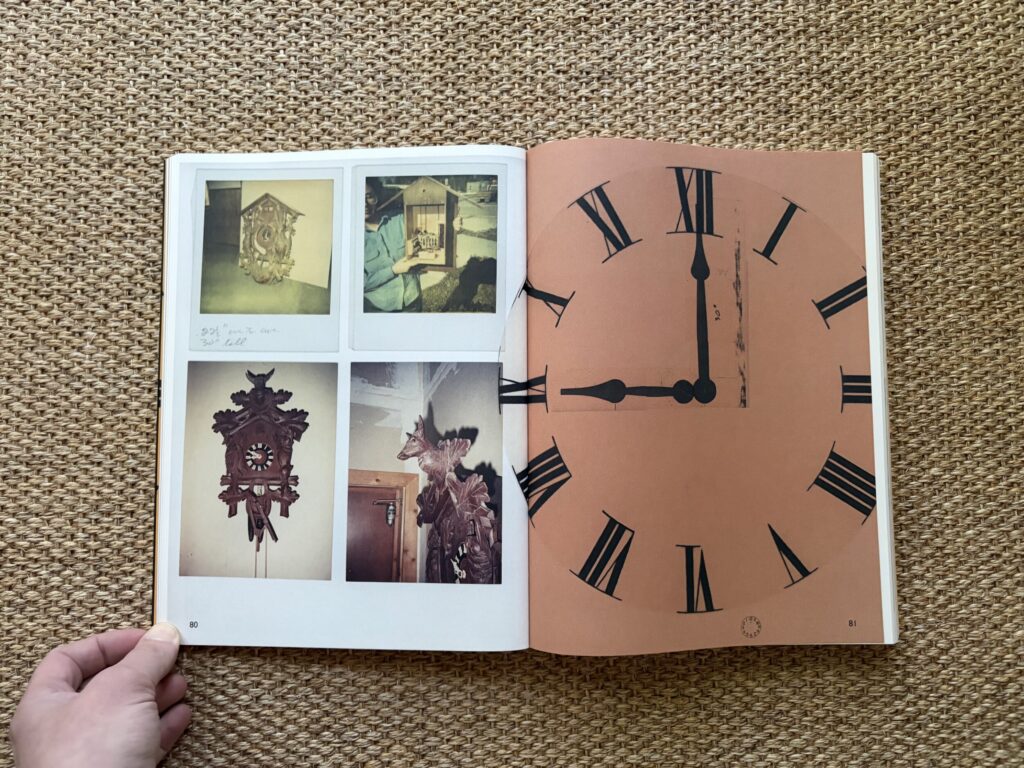
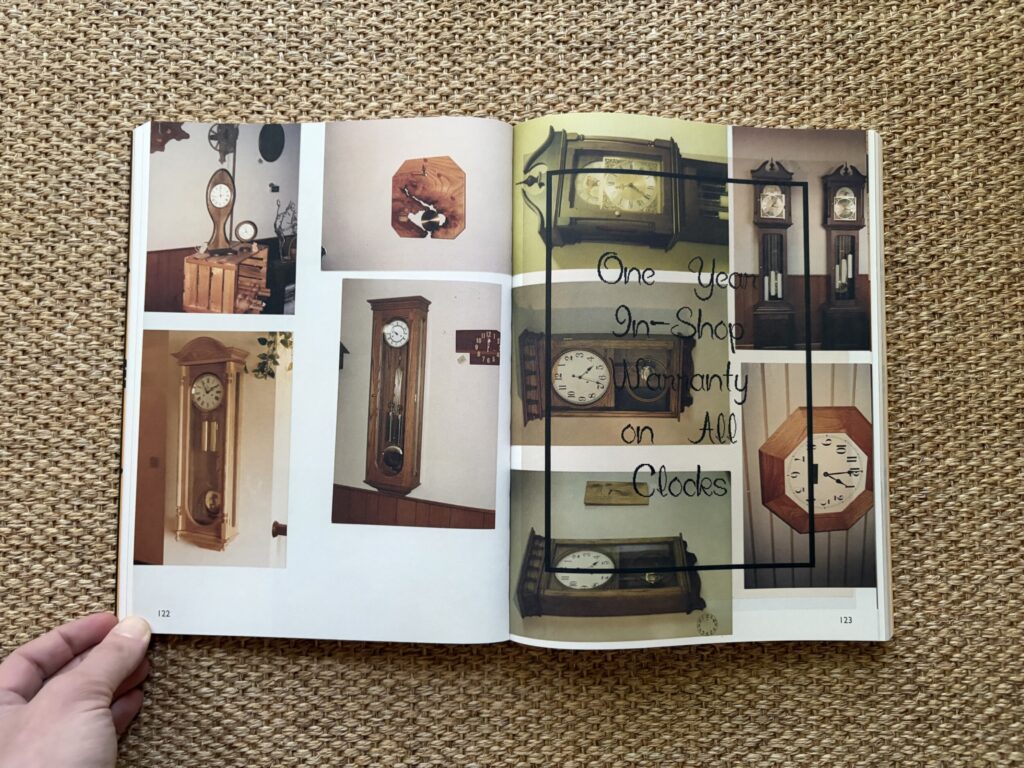
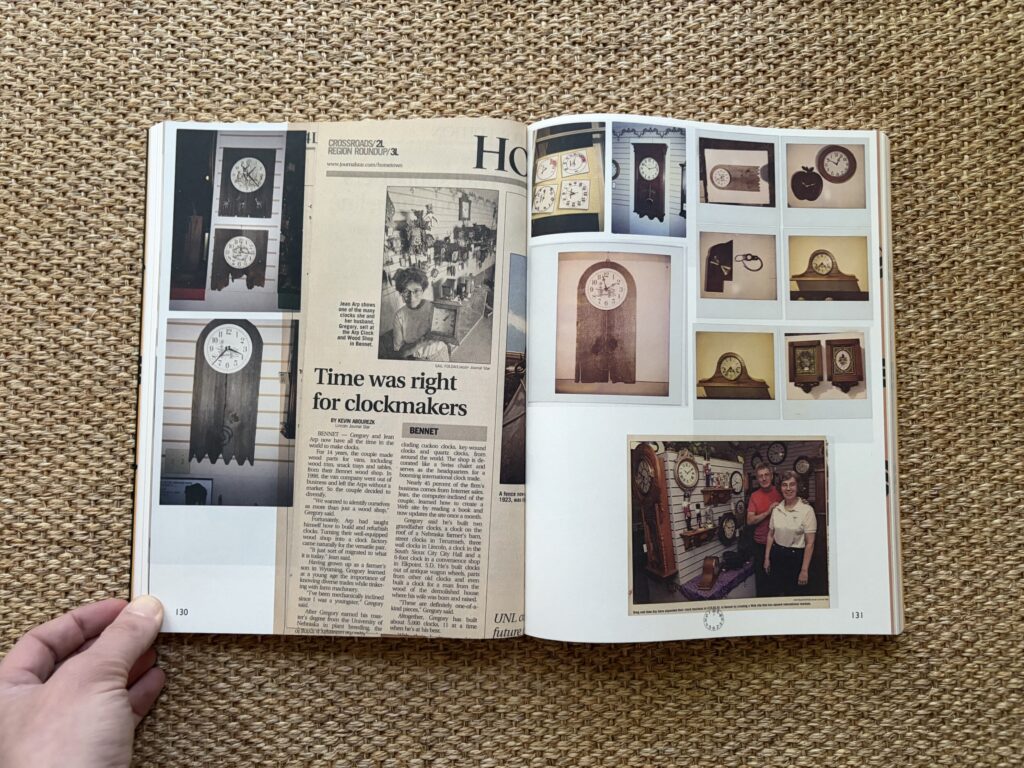
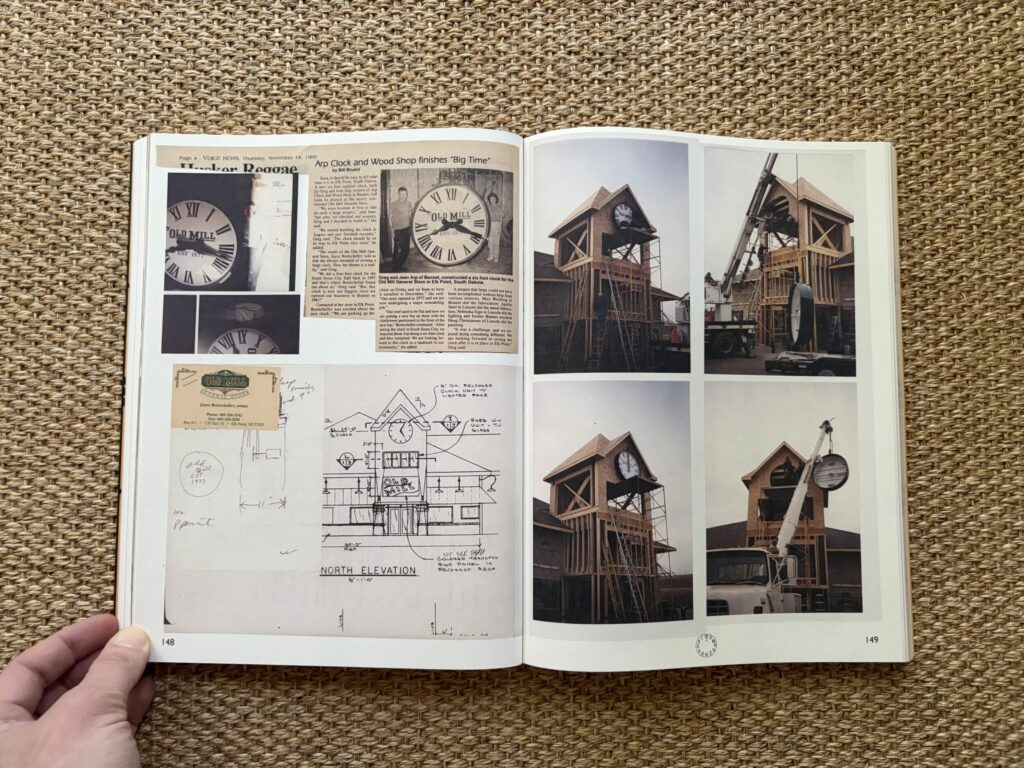
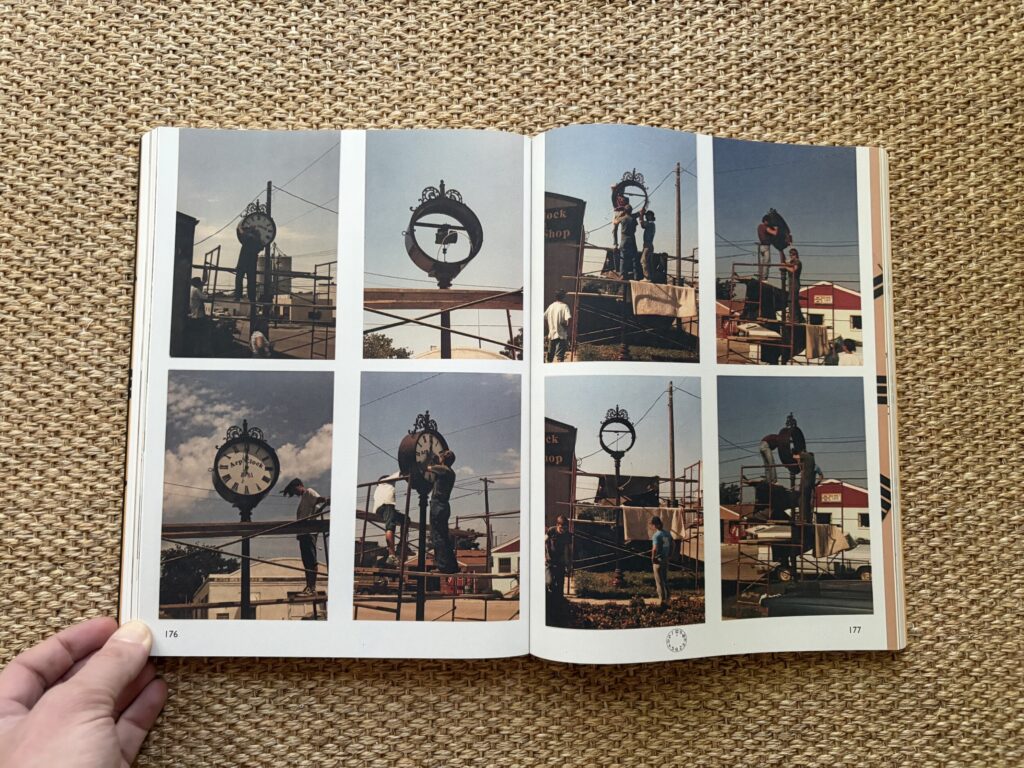
At eight o’clock on our trip backward in time, Ratzlaff makes a switch to archival imagery and ephemera, and begins to tell more of a historical story about the Arps, their shop, and its larger place in the local community. Snapshots of clocks on the wall are tossed into dense jumbles, with dated clip art sale graphics overlaid on top. Soon Polaroids and newspaper clippings enter the mix, and a 20th anniversary celebration winds back to the installation of the clock on a “new” general store in Oklahoma in 1999, and then back further to the old style standing clock put up outside the shop in 1989. Along the way, the seasons come and go, and everyone gets incrementally younger.
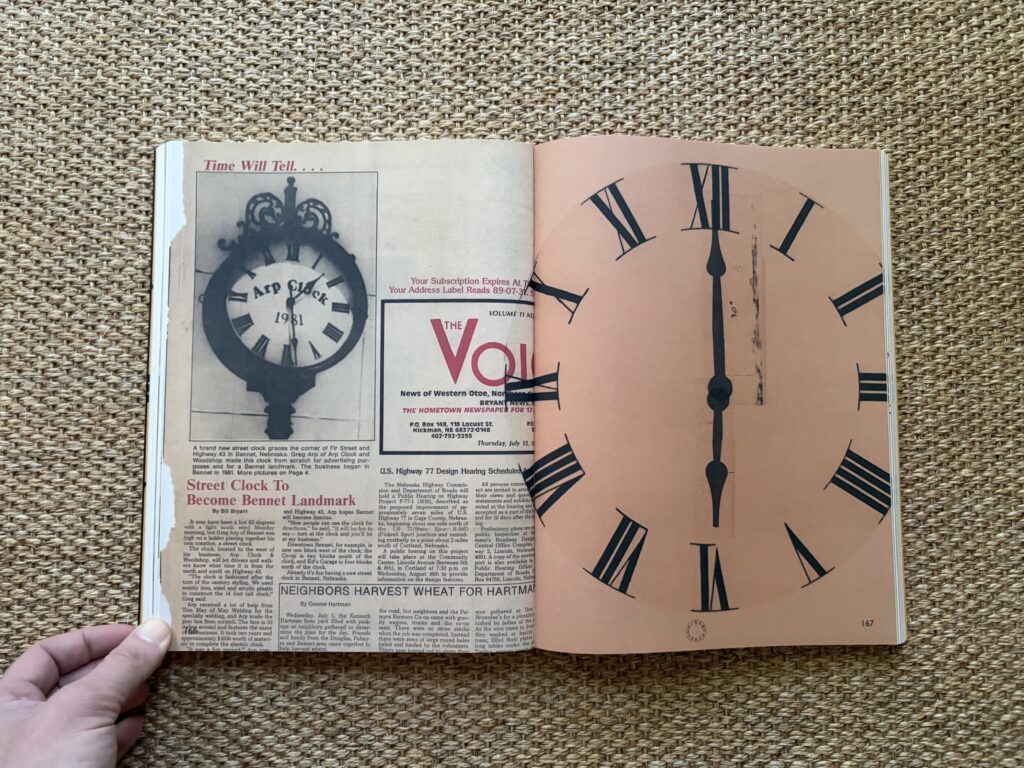
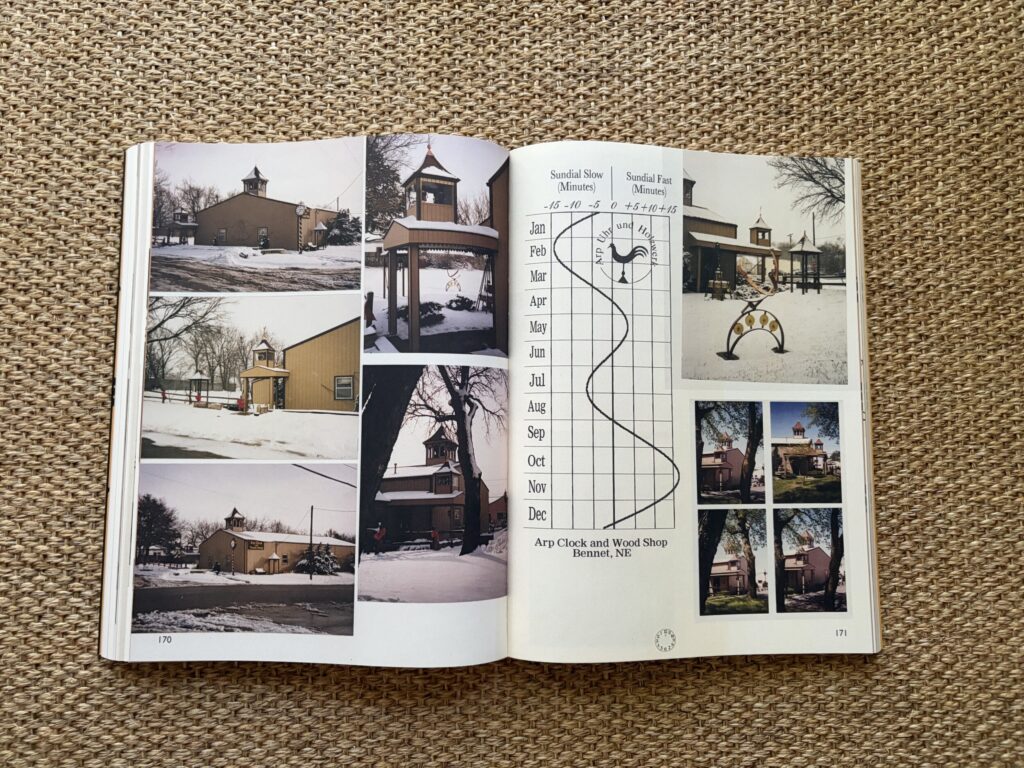
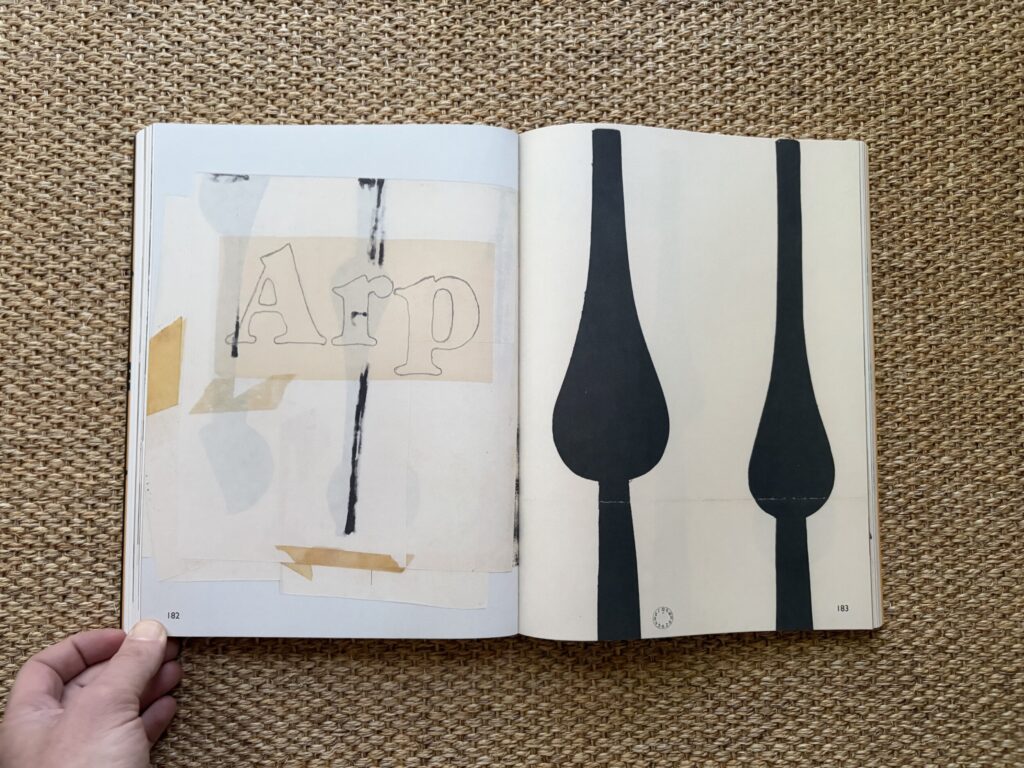
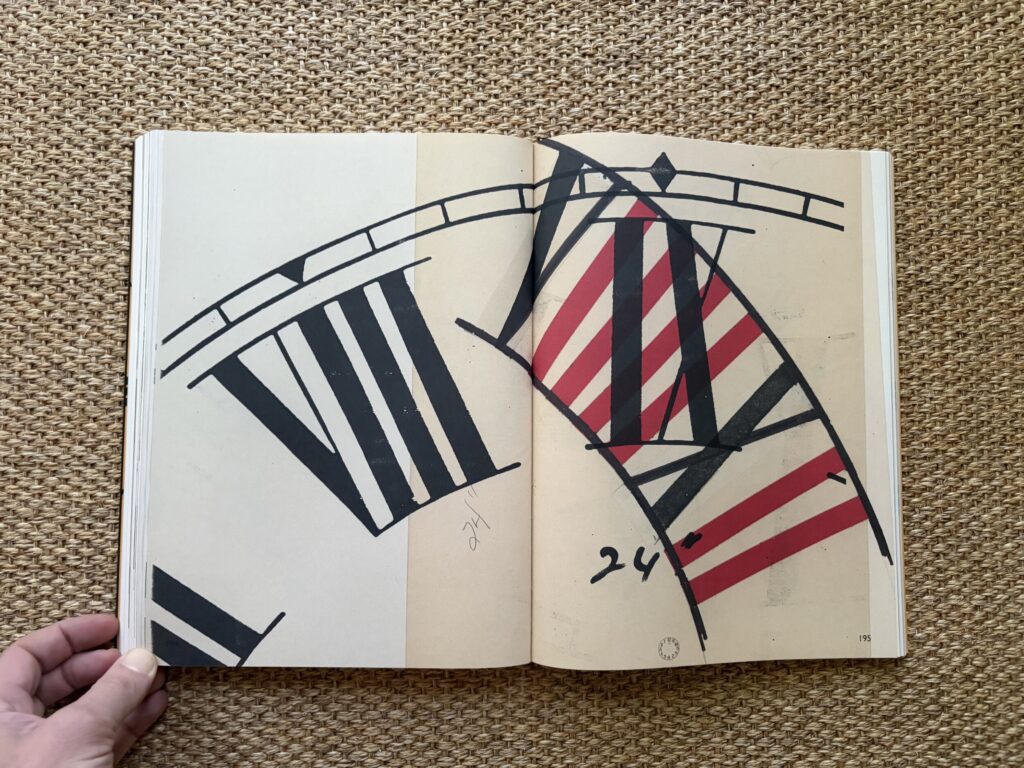
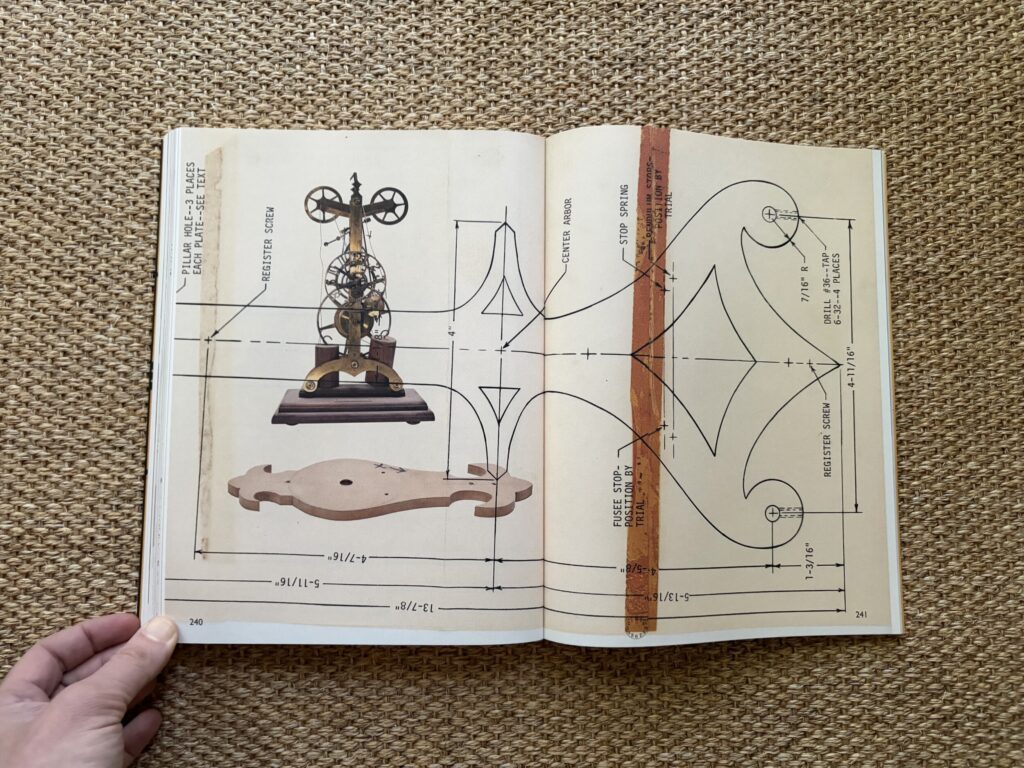
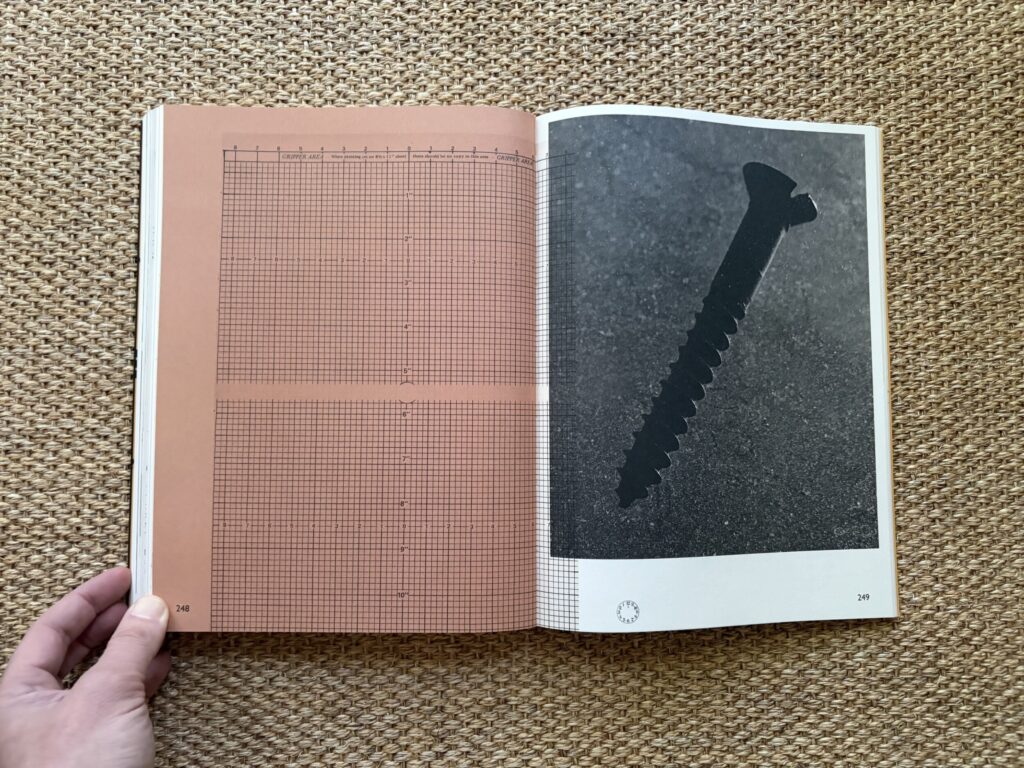
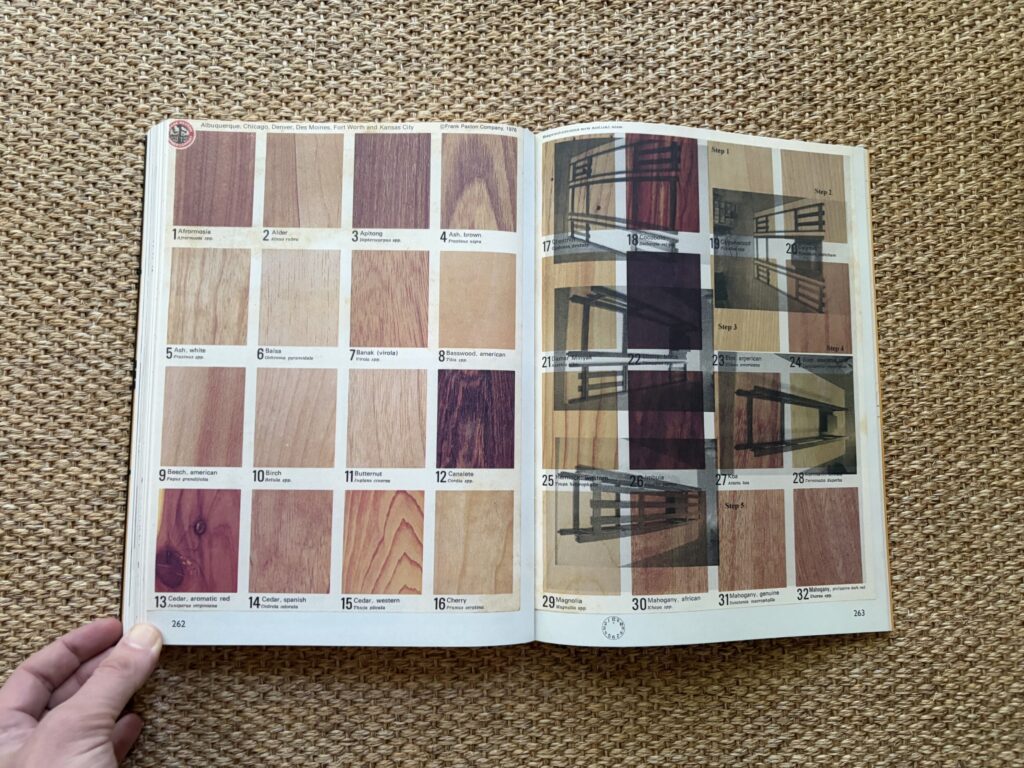
At five o’clock, Ratzlaff dives deeply into the graphic elements of clock faces, exploring tracings of distinctive fonts, hand styles, and arced Roman numeral arrangements. The design of a rooster shaped weather vane also gets attention, before what appears to be the groundbreaking on the “new” shop building. The hours continue to click away, with abstract photograms of dusty glass discs and then more studies of gears, mechanisms, and tools, with diagrams, stencils, and instruction manual pages filling out the working modes. By the time we reach all the way back to the very beginnings of the shop’s history, woodworking has taken over as the primary activity, with drawings for a rocking chair and a toy train, grids of wood veneer types, and other images of woodworking tools, braces, and saw blades telling a story of Arp’s carpentry roots.
From a first look at the cover of The Marches, with its bold graphic elements and overlapped image arrangements, it’s clear that design of this photobook is something special. Inside, each spread offers its own design challenges, with images arranged in different sizes, removed from backdrops, intermingled with reproduced ephemera, and overlaid and overprinted with fonts, schematics, rubber stamps, clippings, and other notations, mixing full bleed imagery with white bordered arrangements. Honestly, it’s a masterful display of graphic design sophistication, easily among the boldest and most elegant of the year, the constant stream of layering and juxtaposition smartly knitting Ratzlaff’s narrative together. There’s even an easter egg image of Arp hidden inside the binding of the spine, one more homage to the man at the center of it all.
The Marches is a shining example of how the design of a photobook can powerfully enhance the overall impact of its imagery and its message. Given that many of Ratzlaff’s images are straightforwardly documentary, and that the reproduction of archival images and papers can often be similarly blunt and unadorned, it’s amazing how throughly fresh and dynamic the resulting photobook actually feels. Everything feels preserved, condensed, repurposed, and then deconstructed, which is likely just how Arp would have wanted it, given his own tendencies toward saving and reuse. In some moments, The Marches feels like a mystifying puzzle to be deciphered; at others it seems like a swirling and circling time warp, where our sense of present and past are intentionally jumbled and entangled; and then it always returns to being respectfully rooted in the experience and intricate work of clock repair, with every gear and spring needing to be reconfigured and ordered with precision and grace. The whole photobook fits together astonishingly neatly, amplifying the impact of Ratzlaff’s varied imagery.
Almost by definition, studies of vanishing arts like clock repair must have somewhat of an air of melancholy, the silent loss of the knowledge, expertise, and care for such dying arts inevitably weighing on the stories being told. The Marches certainly has elements of this kind of warm nostalgia, but mostly, it crackles with a surprising shimmer of vibrant energy, the dusty old workrooms and incomprehensible mechanical parts somehow given a breath of brash new life by the eyes that have seen them with such aesthetic creativity. All in, Ratzlaff’s photobook is a transformational knockout, a durably memorable visual celebration of the layered complexities of a man, a profession, and a physical place, and their nuanced relationships with the passing of time.
Collector’s POV: Terry A. Ratzlaff does not appear to have consistent gallery representation at this time. As a result, interested collectors should likely follow up directly with the artist via his website (linked in the sidebar).