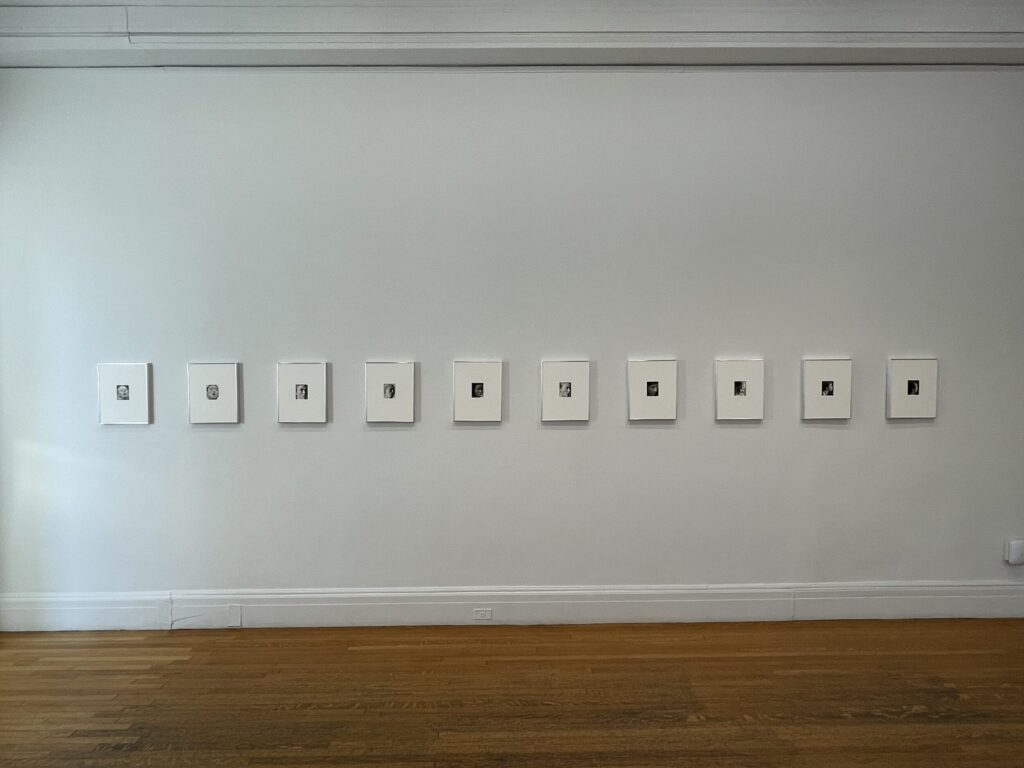
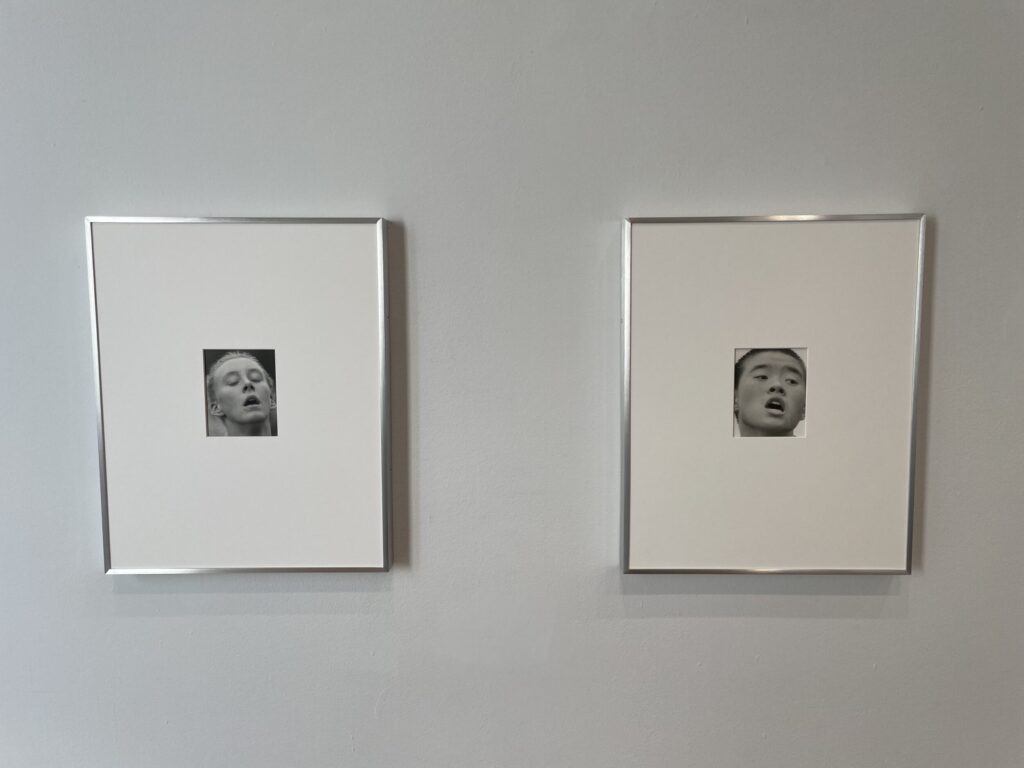
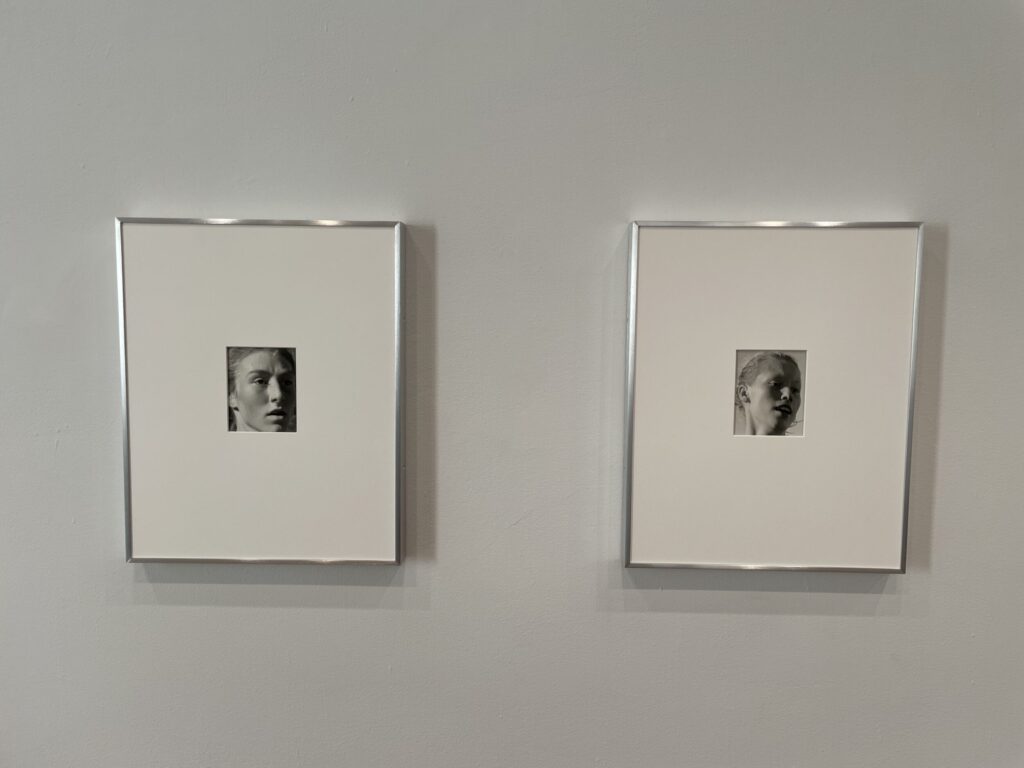
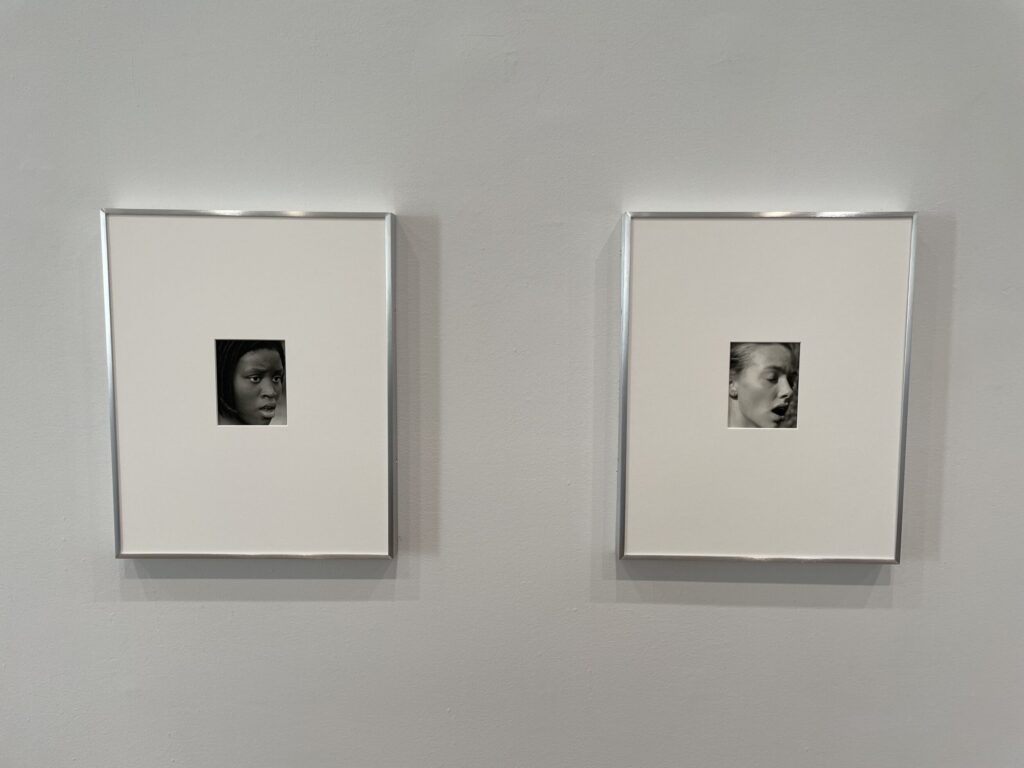
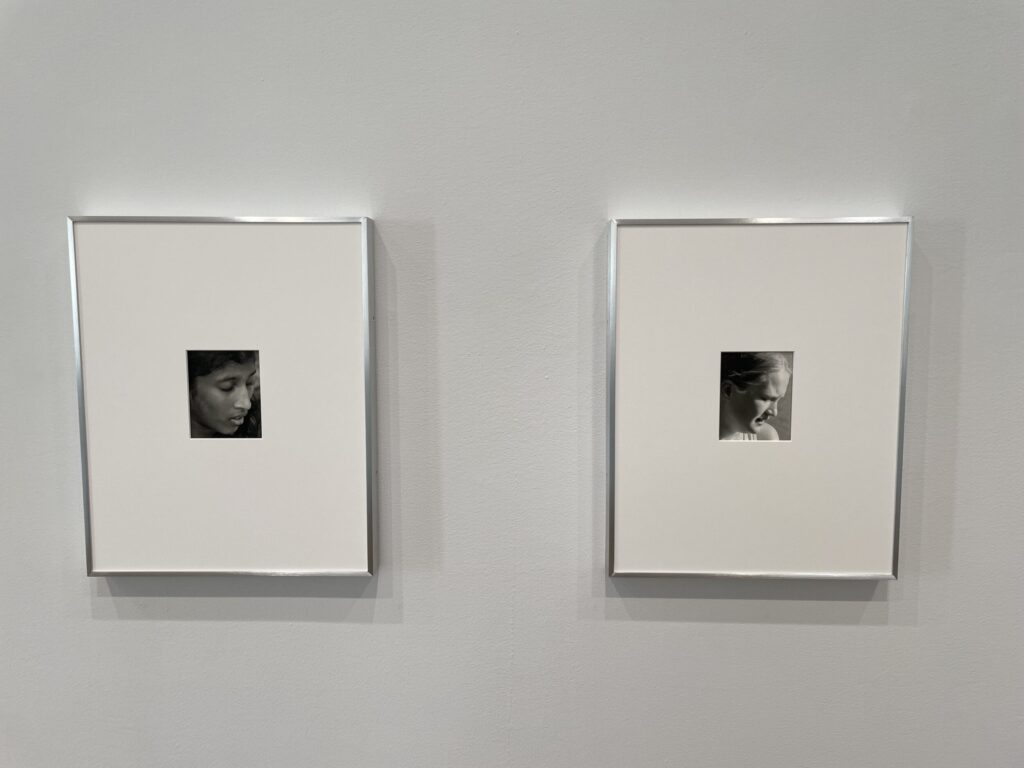
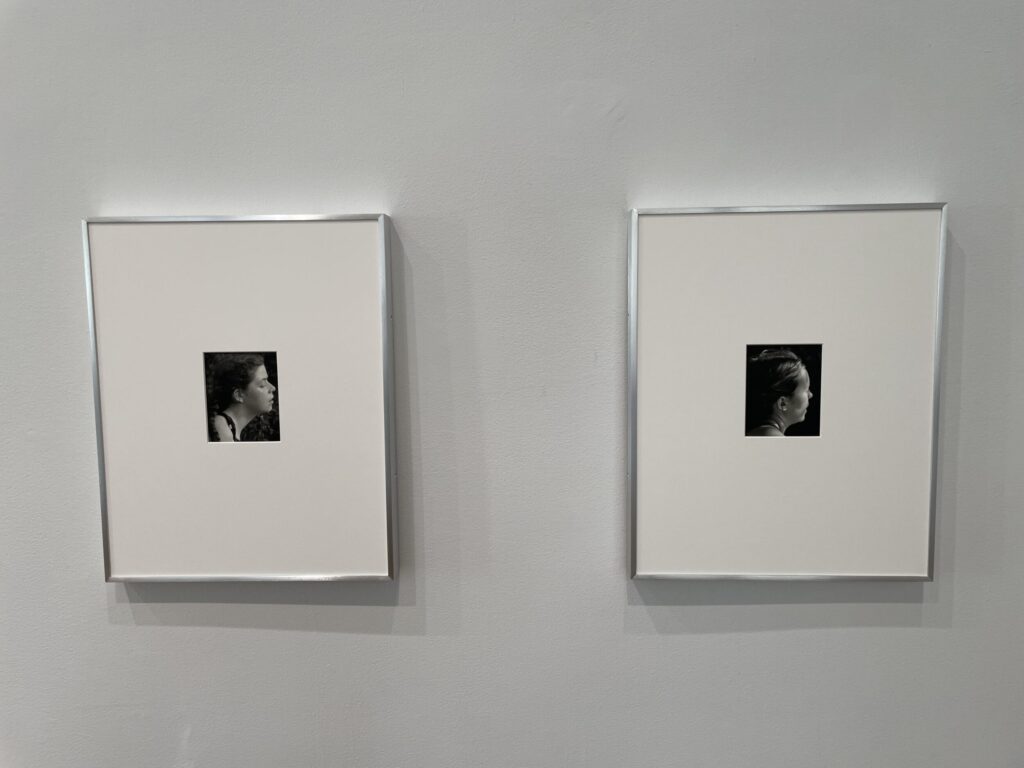
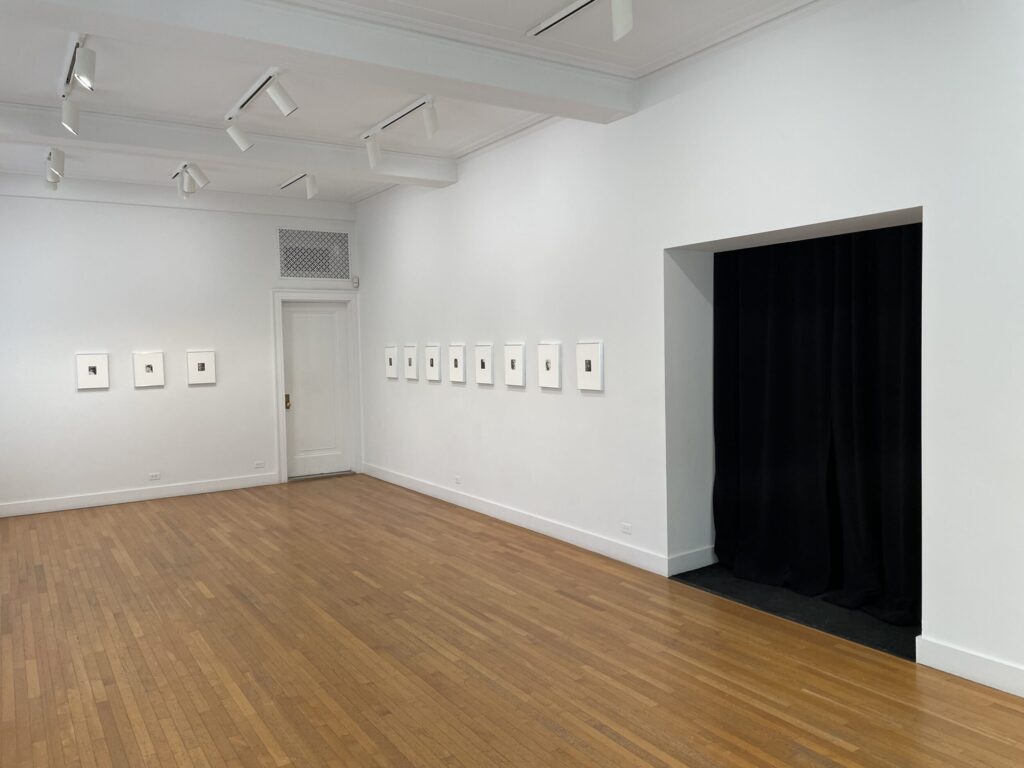
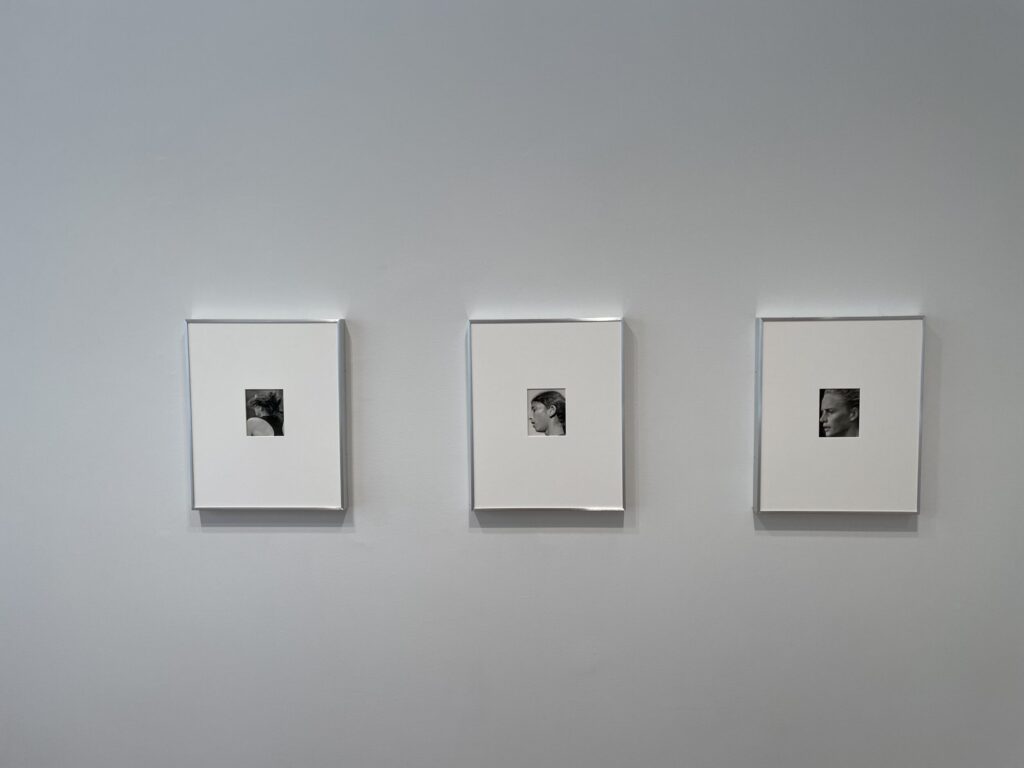
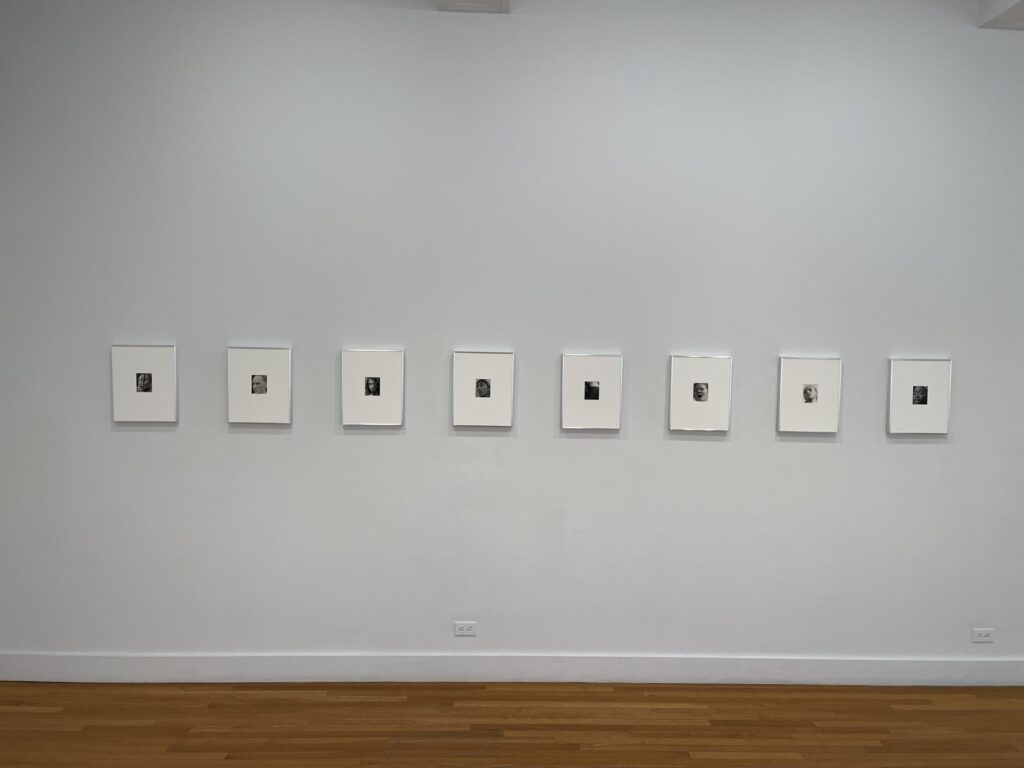
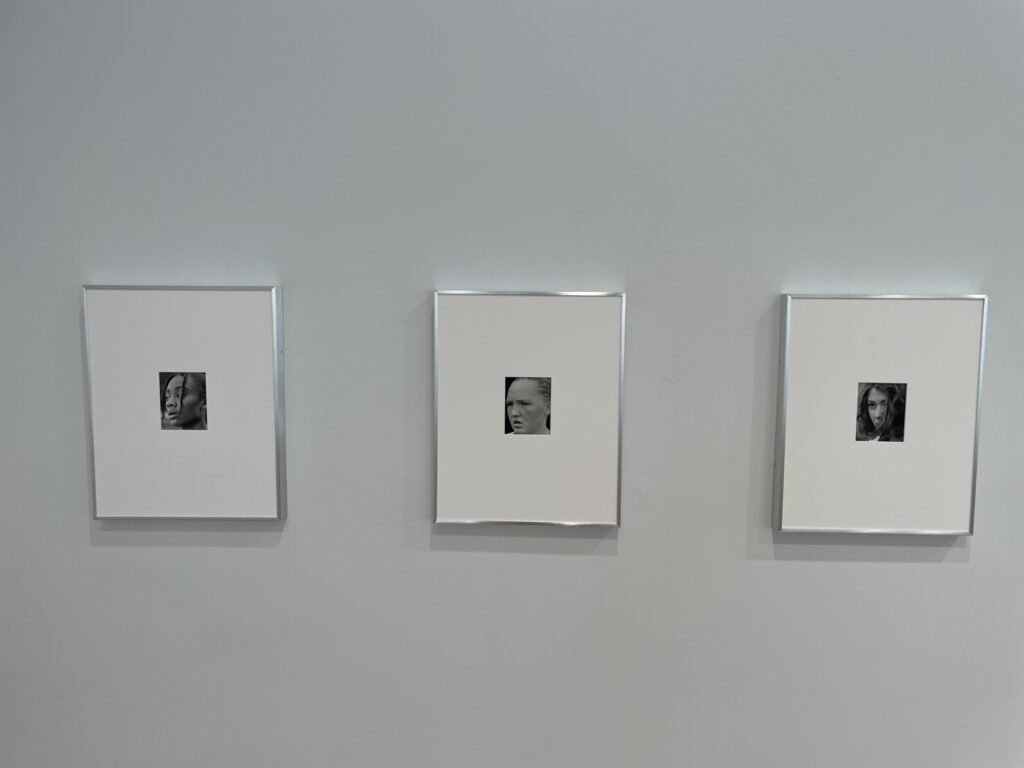
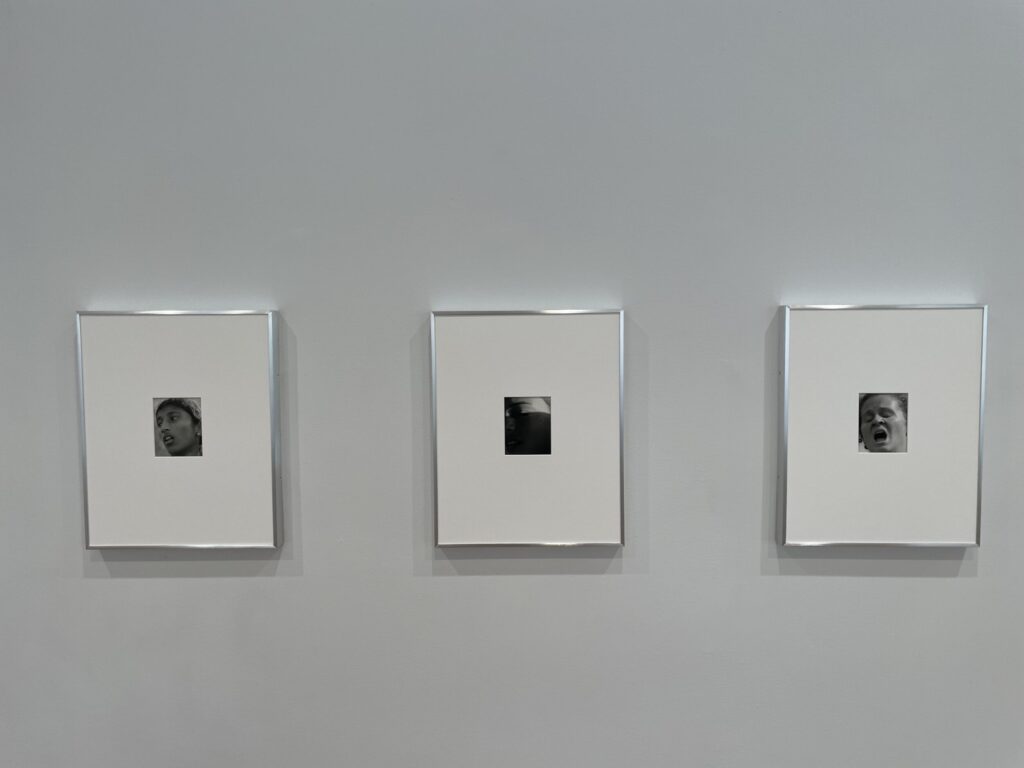
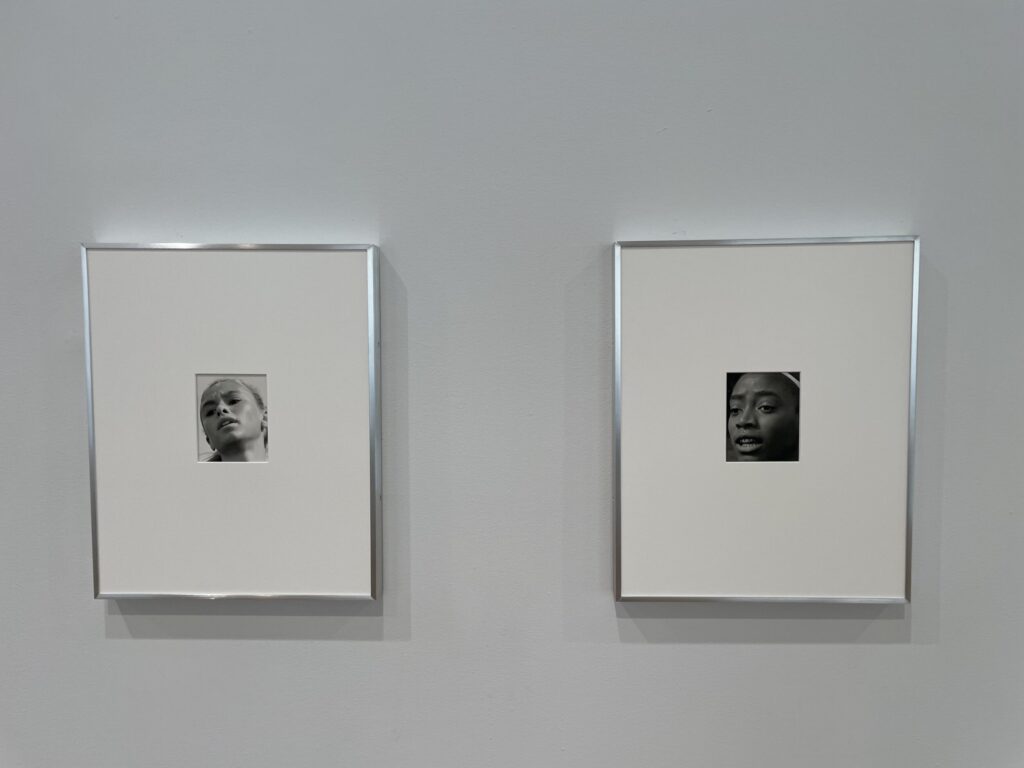
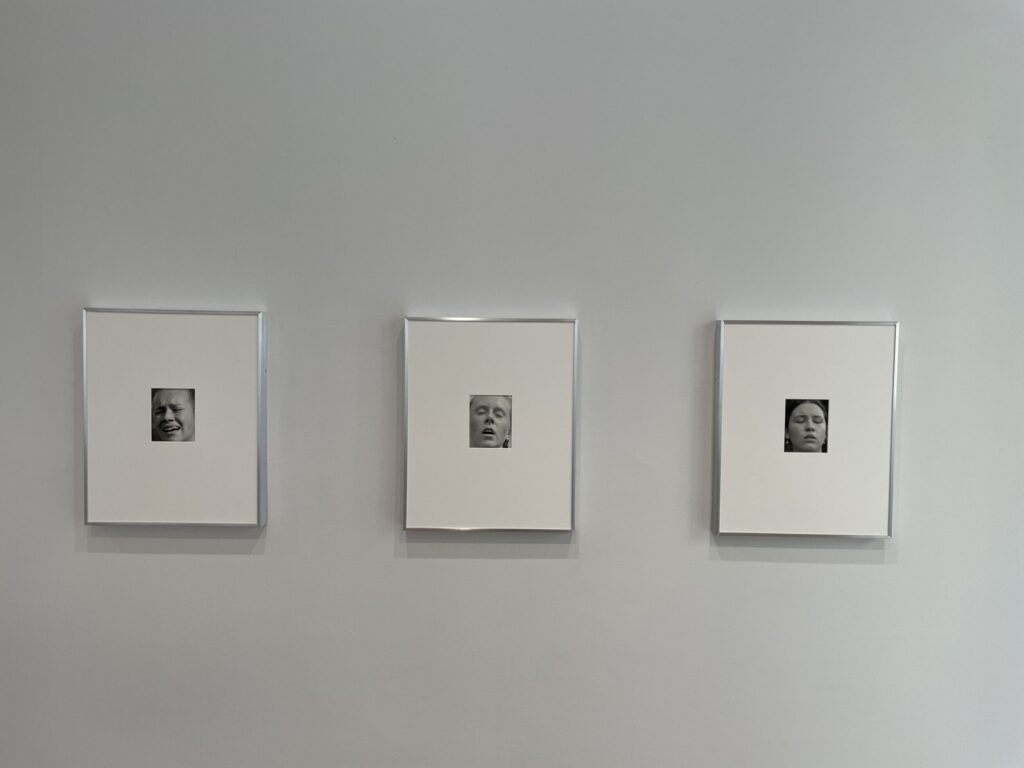
JTF (just the facts): A total of 24 black-and-white photographs, framed in silver and matted, and hung against white walls in two connected rooms on the museum’s main floor. All of the works are gelatin silver prints from 2025. (Installation shots below.)
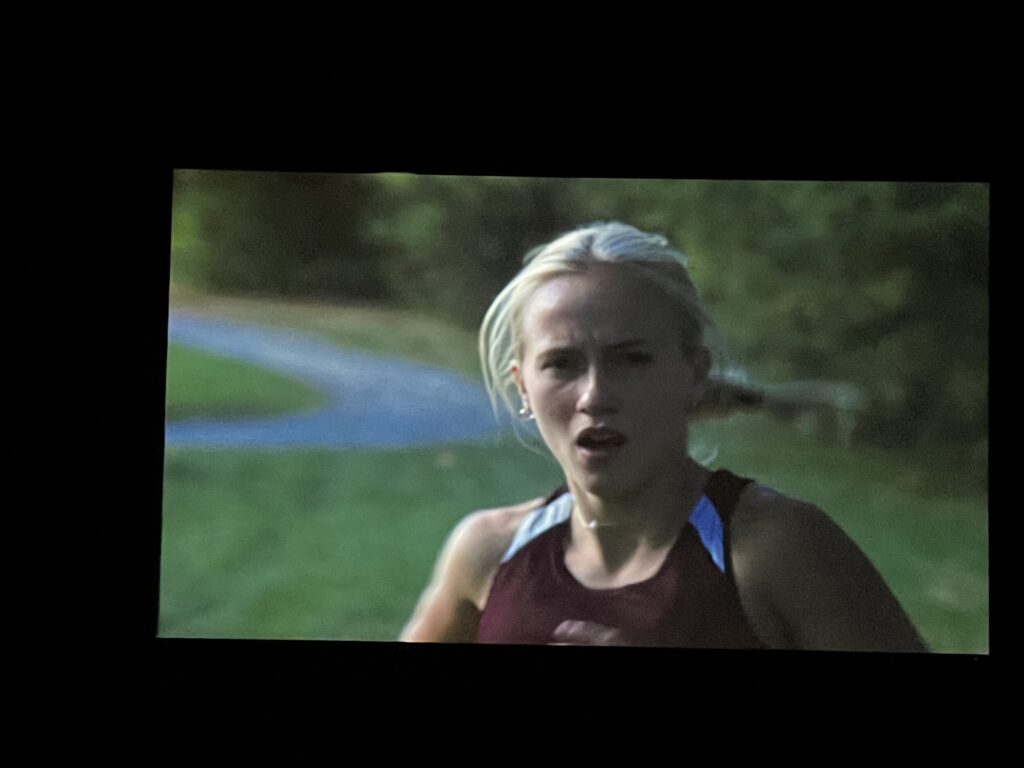
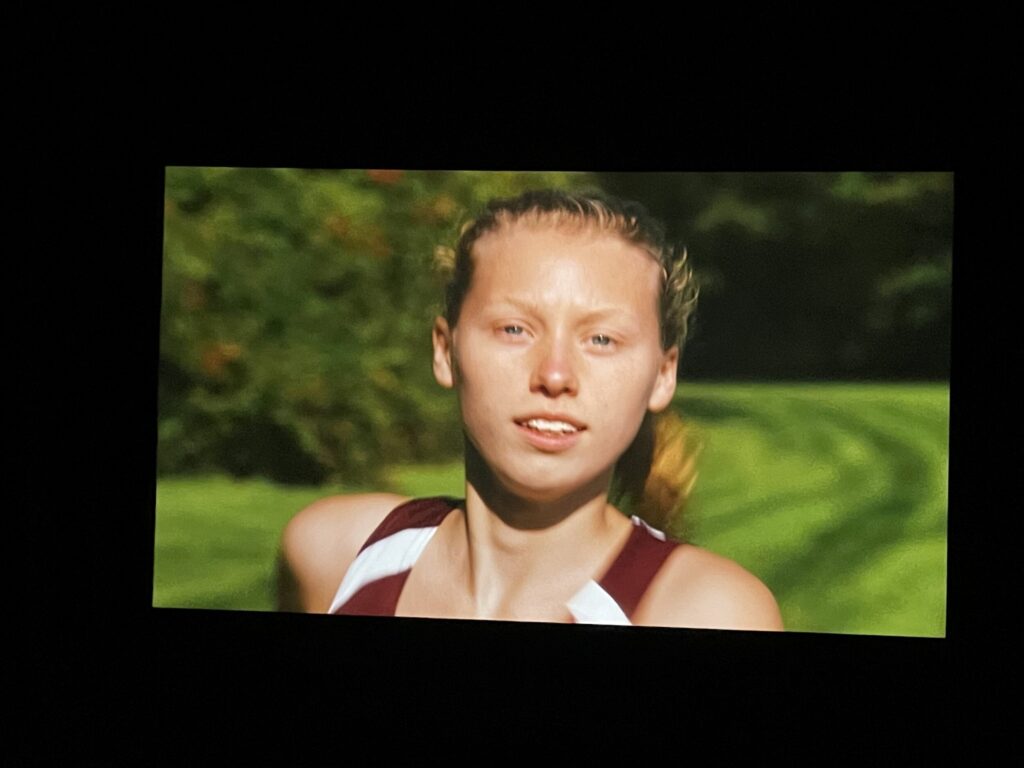
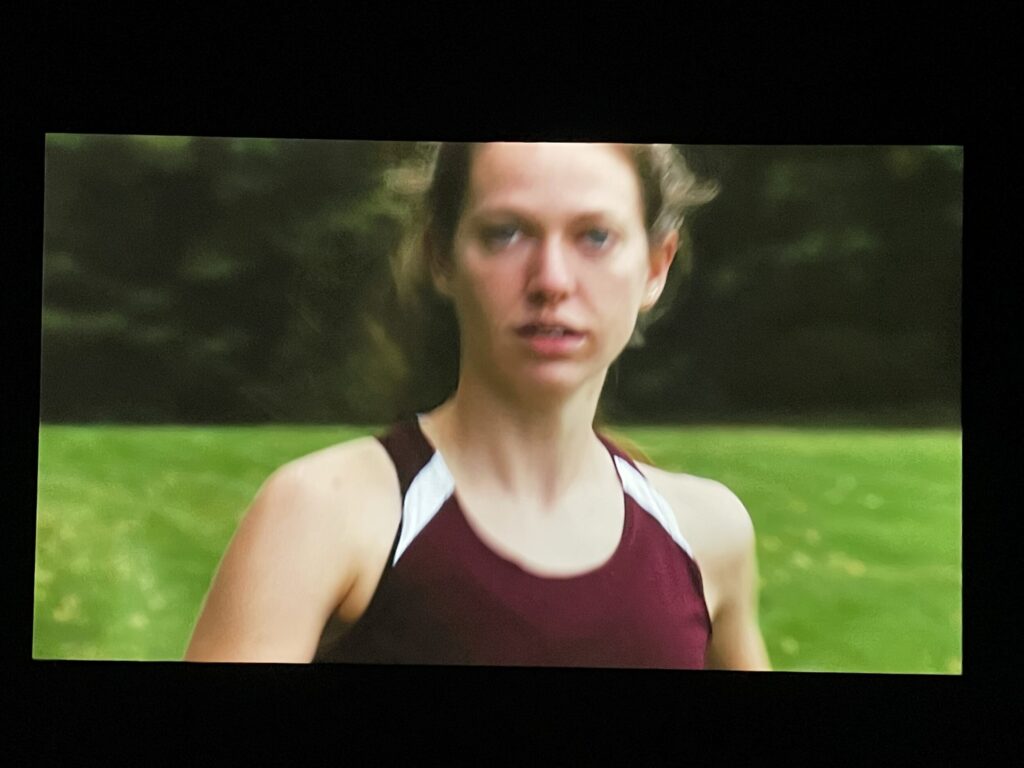
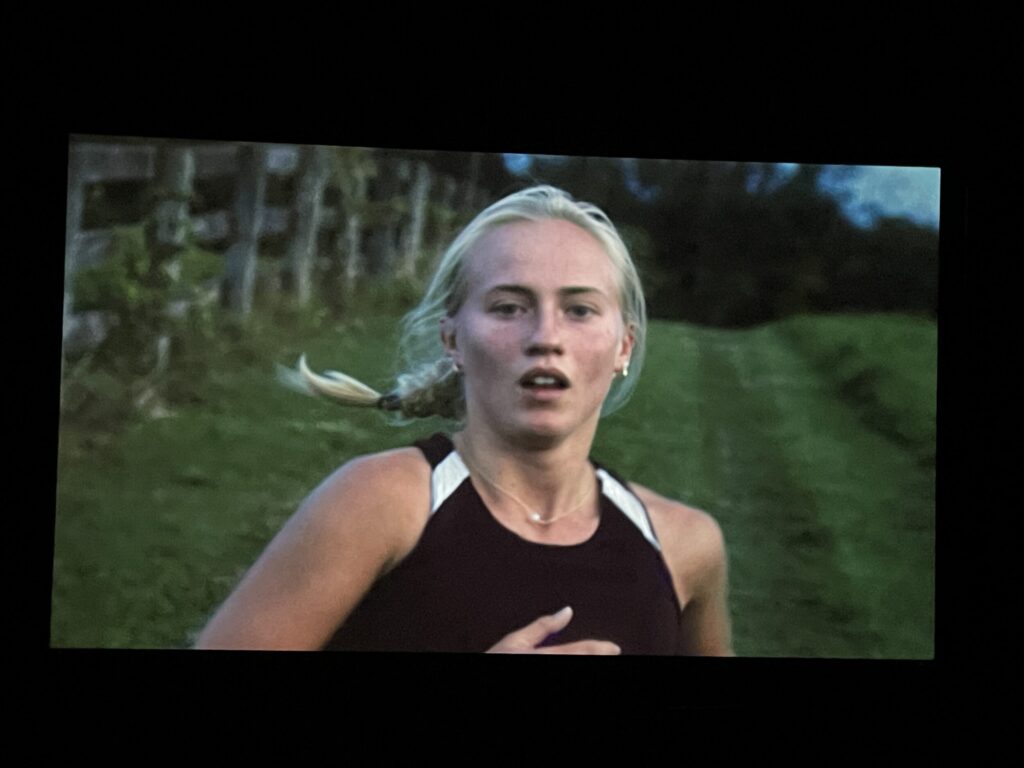
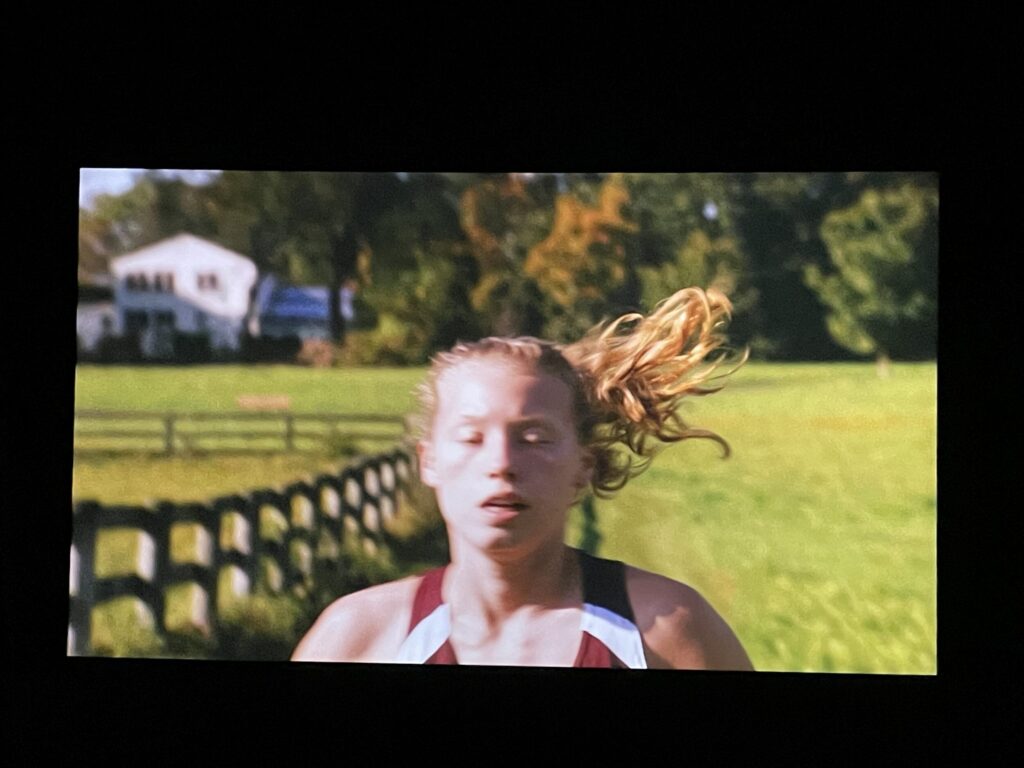
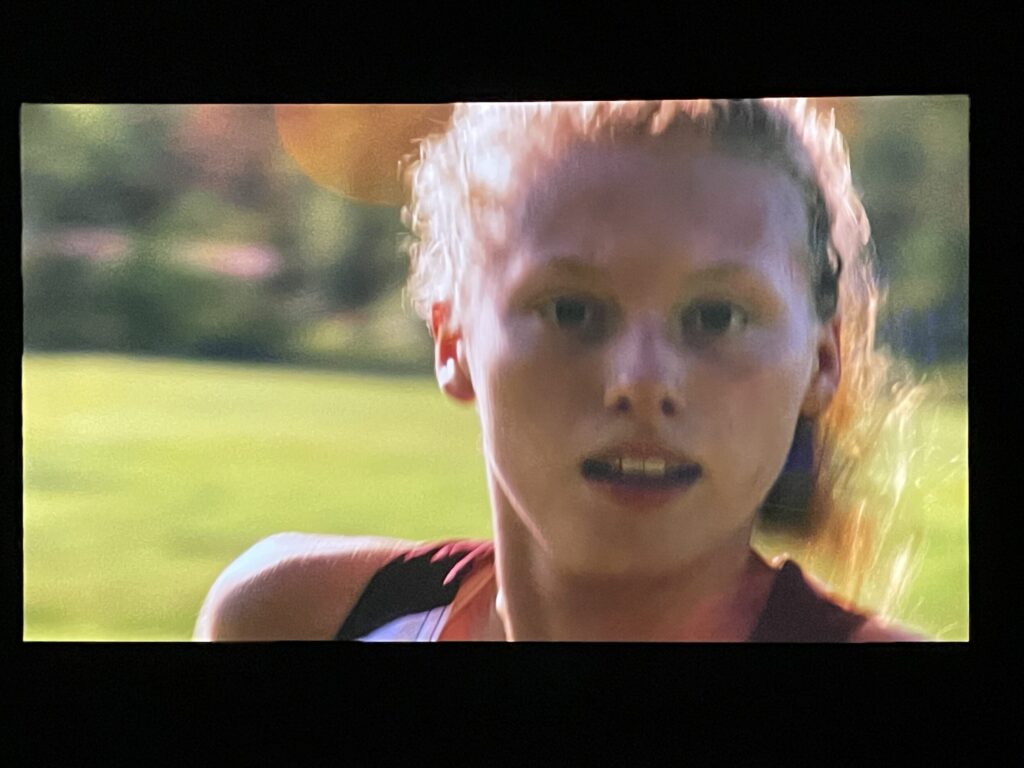
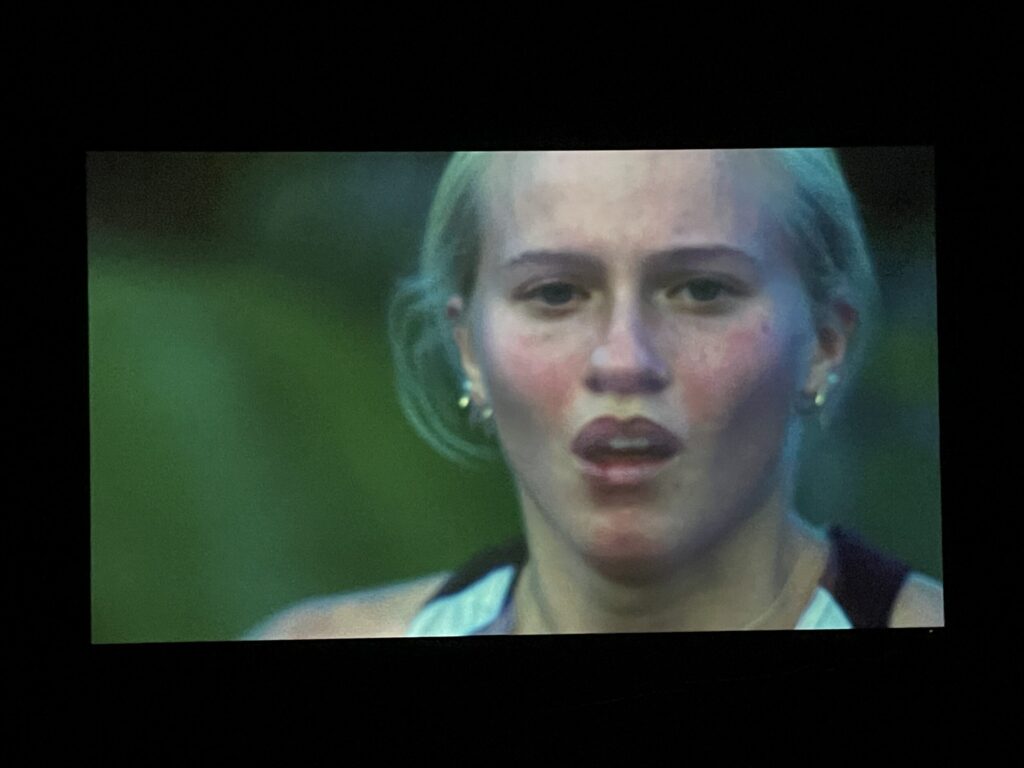
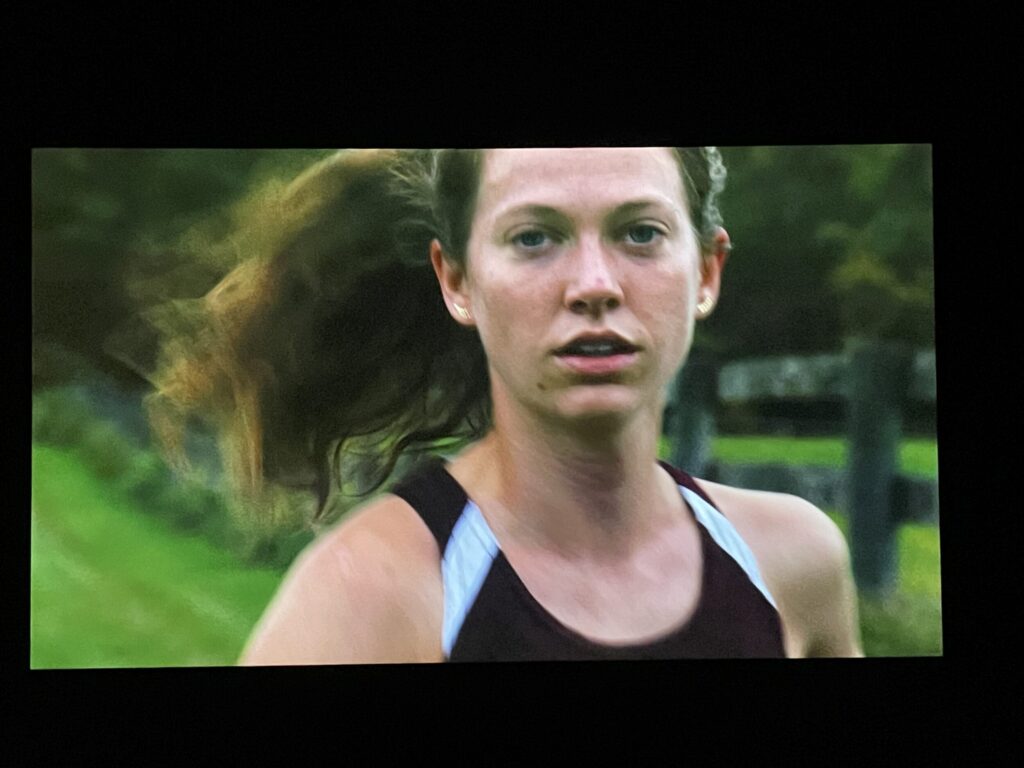
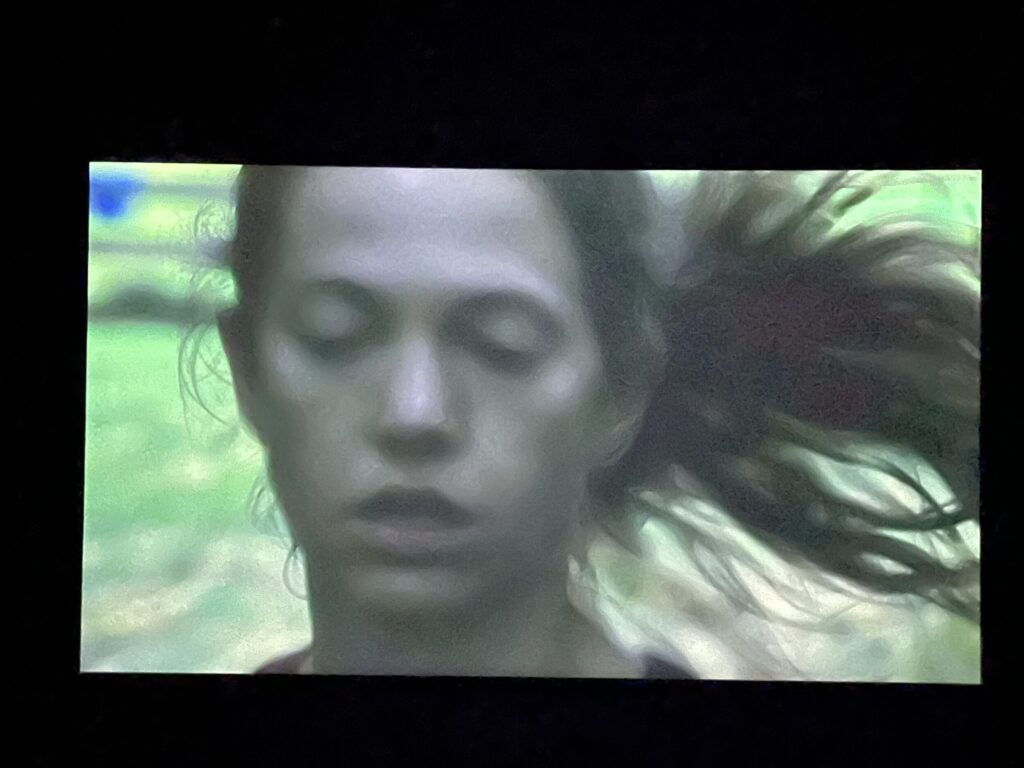
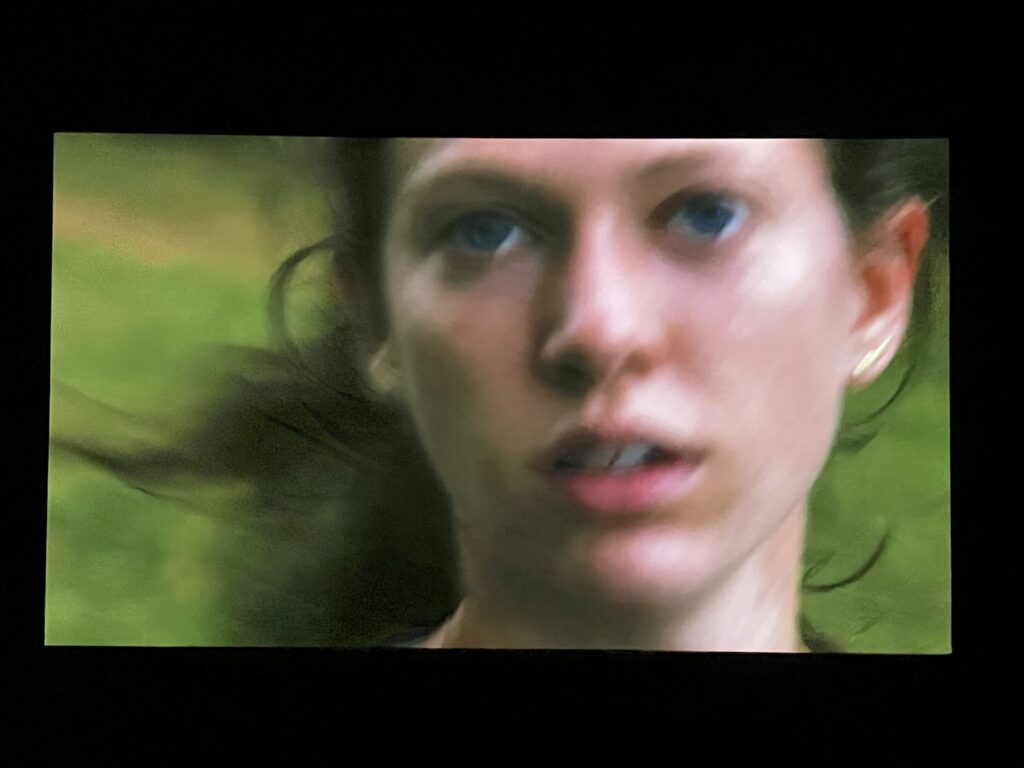
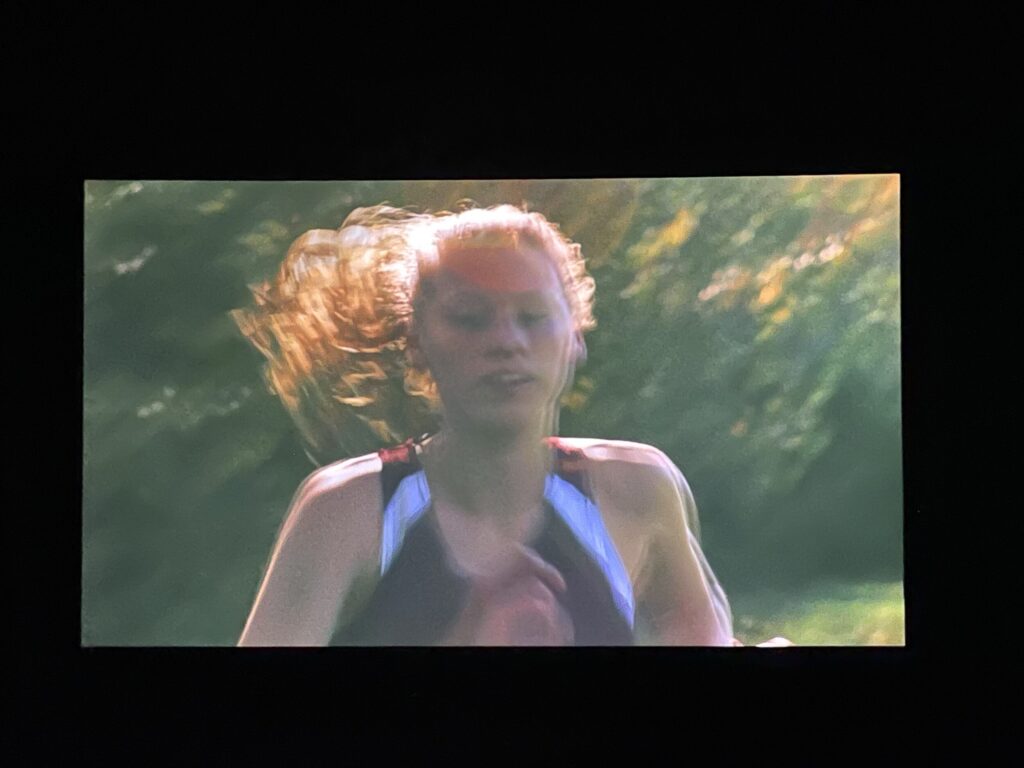
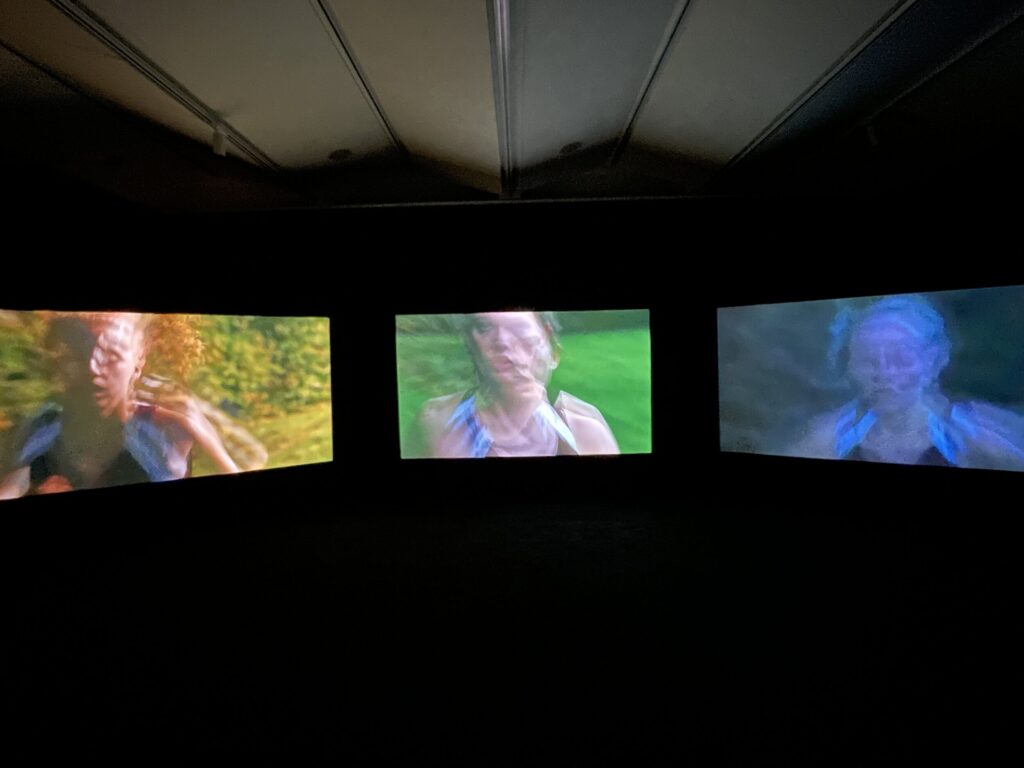
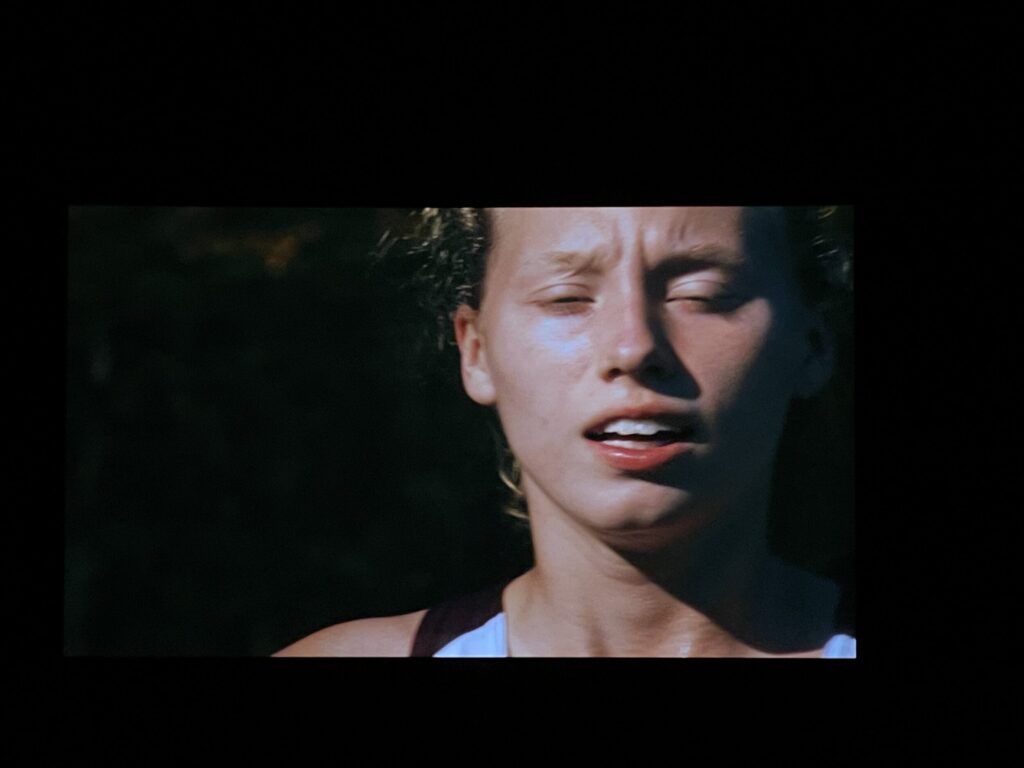
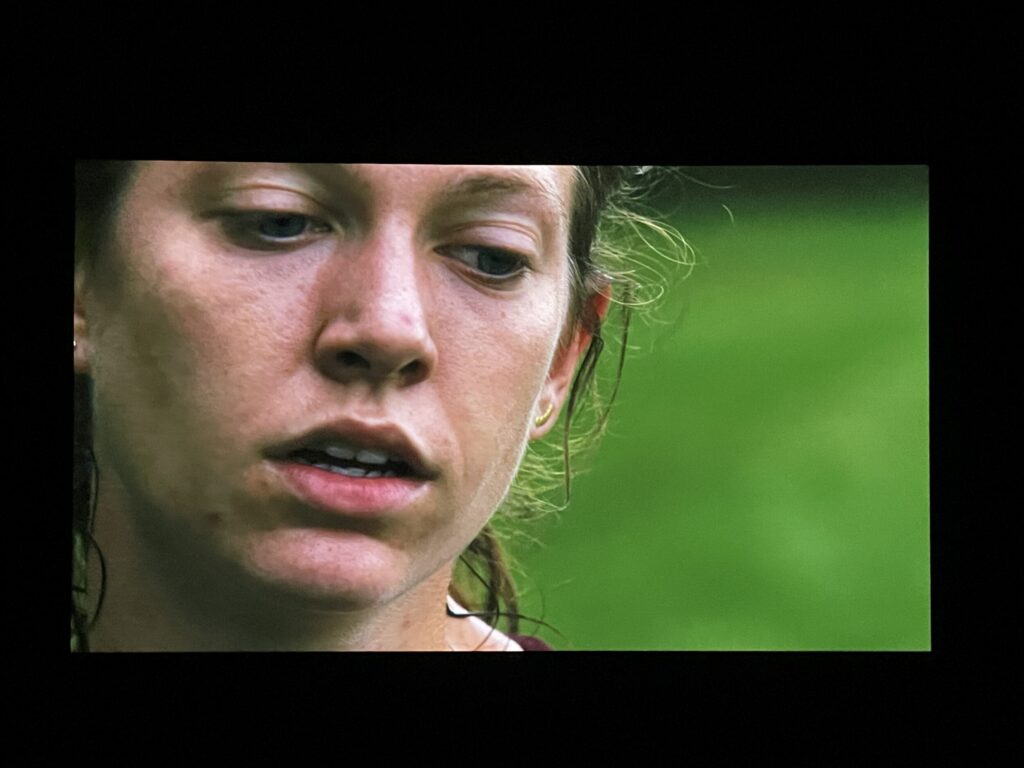
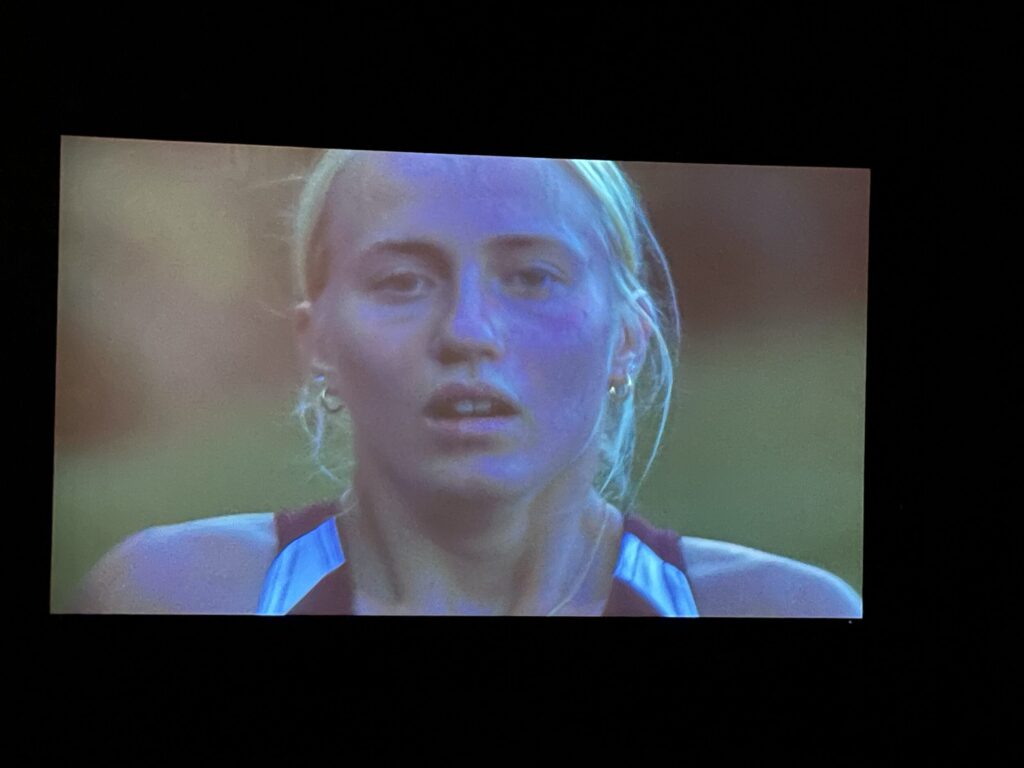
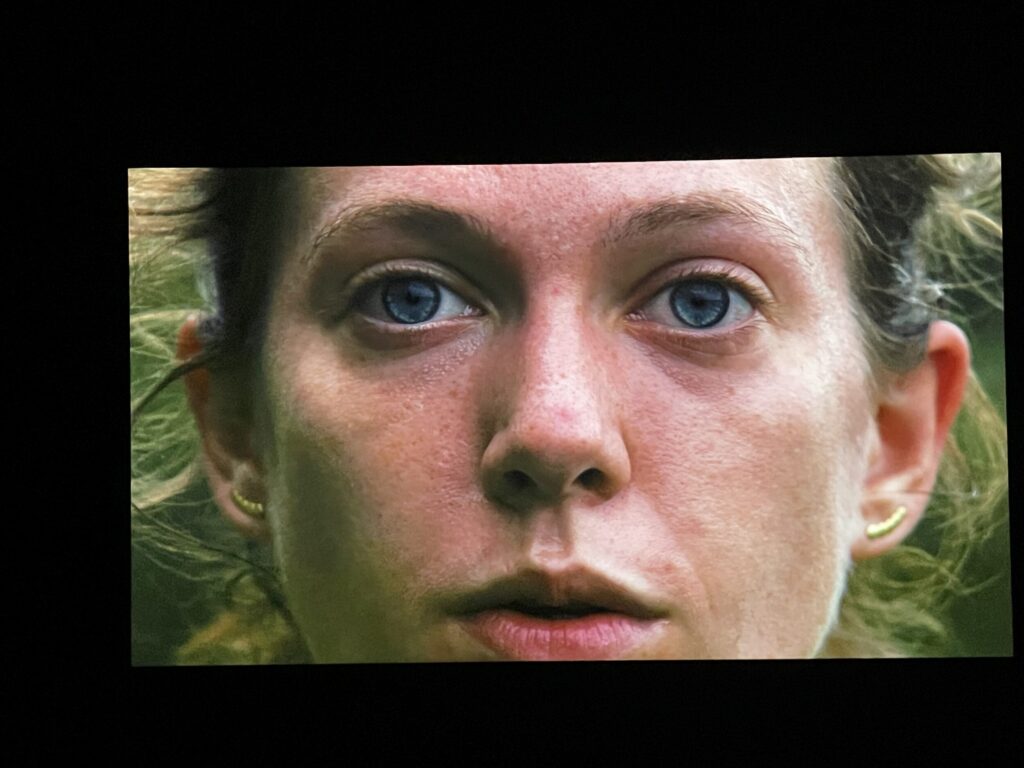
The show also includes a three-channel video installation, on view in a darkened side room. The video is in color, includes sound, and is 26 minutes in duration. (Video stills below.)
Comments/Context: The idea that truthful photographic portraiture is inherently difficult or even impossible due to the awareness and unconscious posing of the subject is a Heisenbergian conceptual knot that many photographers have valiantly tried to untie. Some have employed hidden cameras or quick draw invasion to attempt to capture pedestrians with their guard down, while others have deliberately orchestrated situations (like Philippe Halsman’s famous jumping portraits from the 1950s) where sitters were distracted or otherwise occupied, making it harder for them to put on or maintain a fake persona. More recently, Rineke Dijkstra has been one of the contemporary photographers most consistently interested in unpacking this problem, making images of exhausted mothers after giving brith, bloodied bullfighters just out of the ring, dripping wet kids in their swimsuits on the beach, uniformed school kids explaining paintings at museums, and young nightclub goers just off the dance floor, in each case, trying to unobtrusively and thoughtfully observe without triggering the natural human defenses of her subjects.
In her recent project “Phases”, Sam Contis has investigated another fleeting moment when a face is left photographically unguarded – crossing the finish line after completing a cross-country running race. Her intimate black-and-white photographs capture the faces of high school girls at this split-second moment of release, when the race is finally done, the heated athletic exertion is over, and the cool down and recovery are about to begin. Many things are happening all at once in this instant, and Contis’s photographs methodically observe a surprisingly diverse range of physical reactions and emotions that are taking place.
Of course, the most obvious features common to these pictures are the visible remnants of exercise – sweaty skin, wispy flowing hair, loose limbs, and activated faces still breathing hard, often with their mouths open to catch more air. But within this context of exhaustion, Contis has uncovered many other more subtle reactions and responses. There are faces still filled with intense concentration and inward focus, as though locked in a kind of meditative zone. There are others distracted by tight tension, struggle, and distraught frustration. There are invisible personal limits that seem to have been tested and surpassed, regardless of the time on the stopwatch. There are moments of transcendence taking place, a few runners almost saintly in their ecstasies and triumphs, and there is more than a little anguish and agony also on view, likely both physical and mental. And it’s all happening in those first few staggering steps after the running actually stops.
When seen as an installation, it’s clear that Contis’s photographs have been composed, printed, and installed in a manner that adds further layers of conceptual weight to her project. Her faces have been tightly cropped, each filling the available space nearly to the edge, pulling us into the details of their expressions. The images have been printed decently small, apparently at the size of a quarter plate daguerreotype, encouraging close looking and making a connection back across photographic time. The twenty-four works have then been installed essentially in a line (across two galleries), with the faces subtly rotating from facing in one direction to facing in the other, like a time and motion study by Eadweard Muybridge or a scientific examination of the shifting phases of the moon. The result is a body of work that feels unexpectedly ordered and structured, with the emotions of the particular moment aggregated, systematized, and broken down into a cinematic strip passing by at 24 frames per second.
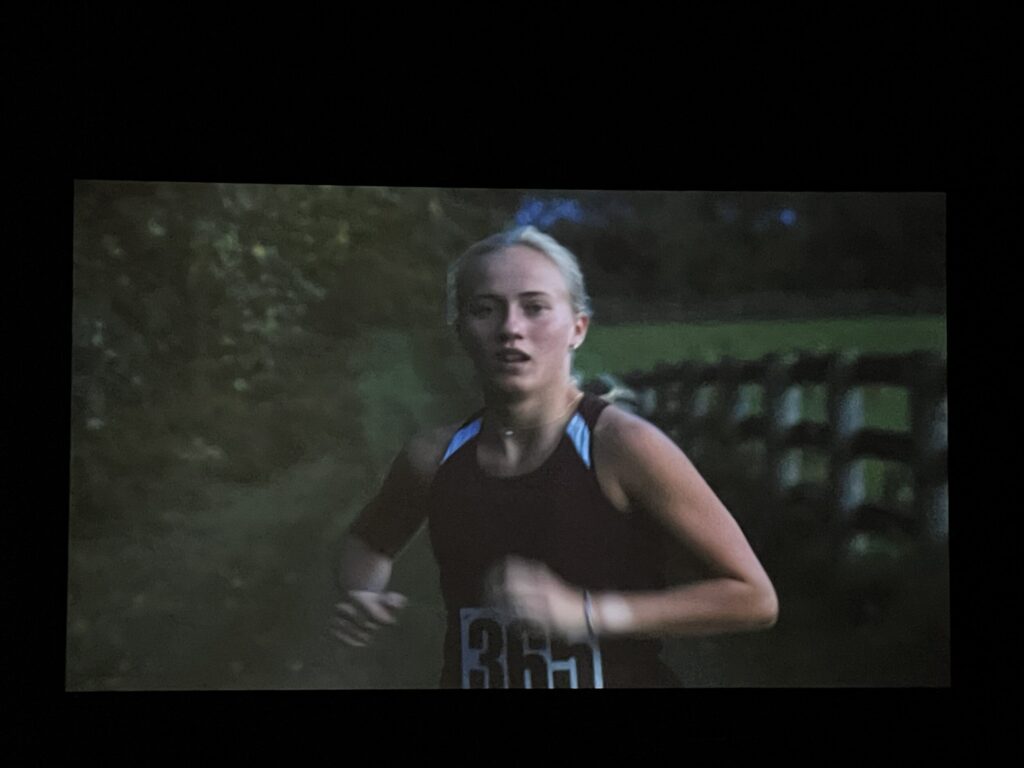
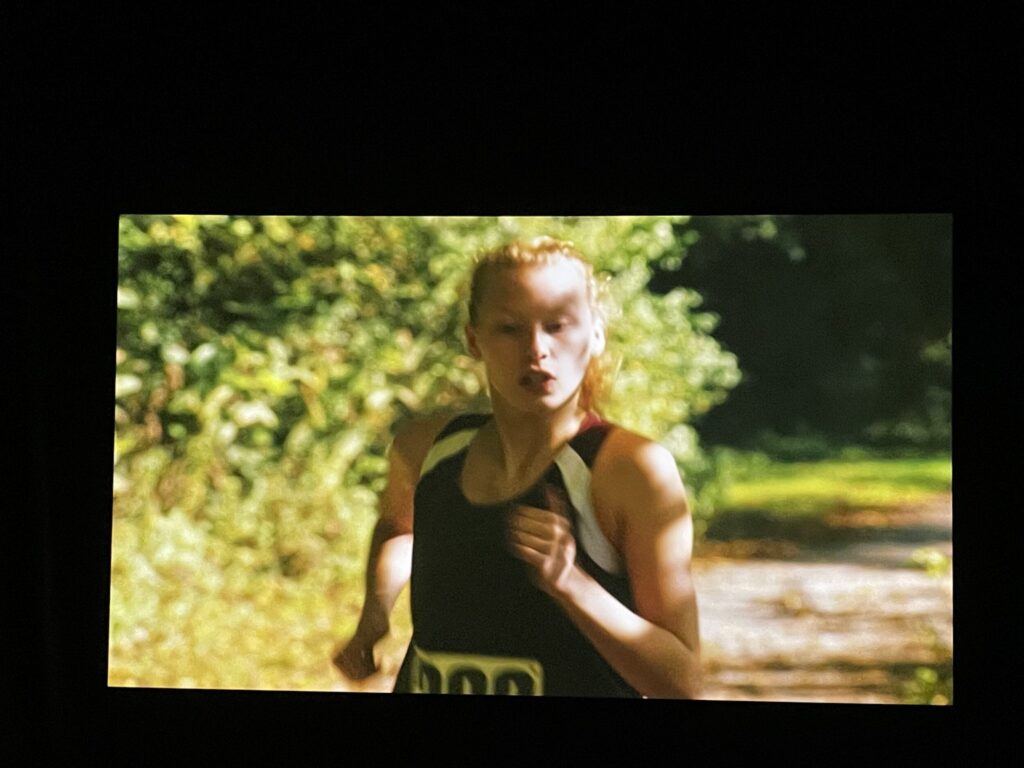
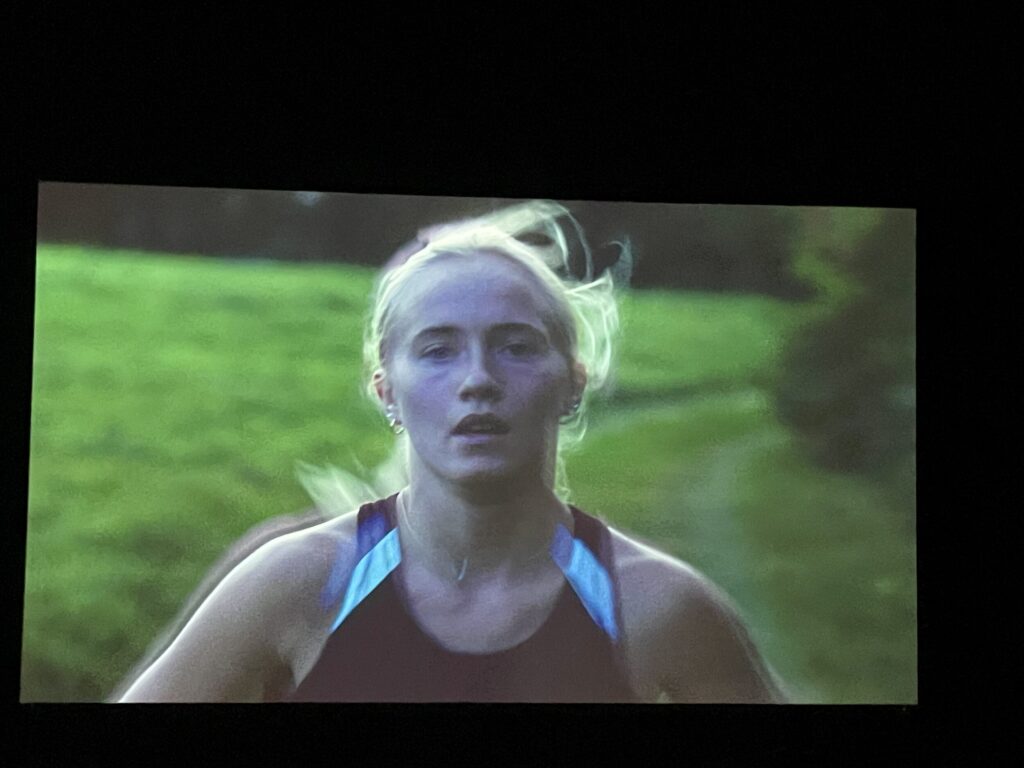
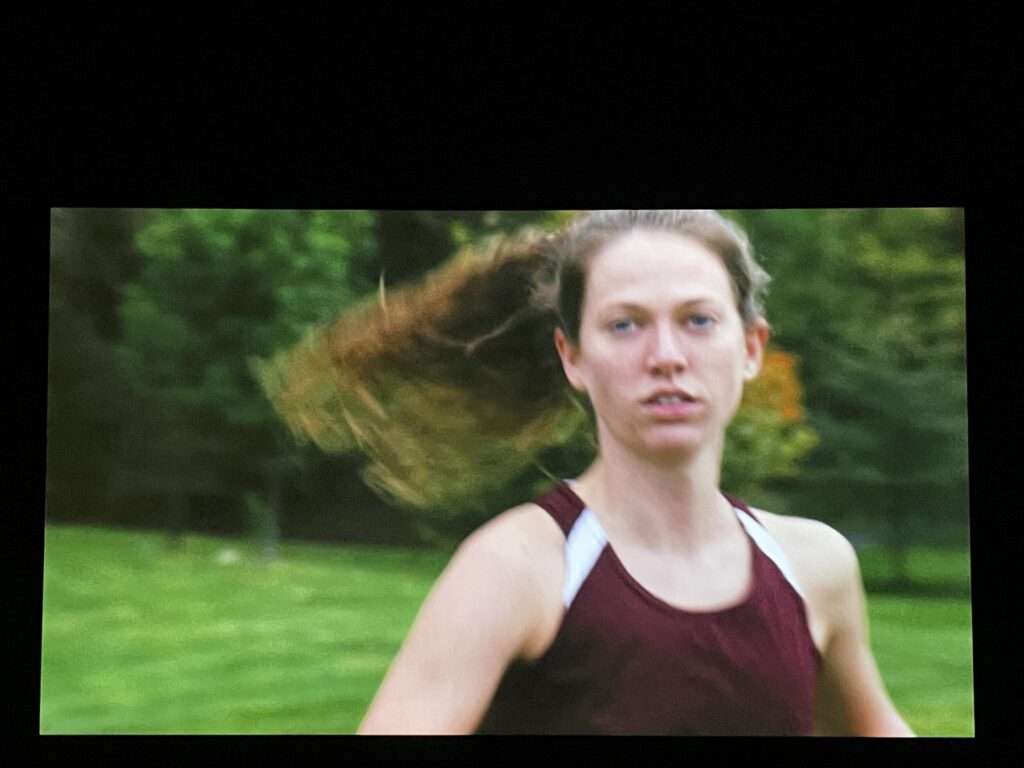
Contis crosses over into a version of extended video portraiture in her three-channel work “Five Kilometers”. The video takes its name from the typical race distance of 5K, and the camera watches as three young women individually run the distance, capturing each in real time (the run takes approximately 25 minutes). But Contis isn’t your normal sideline spectator or parental cheerleader turning and watching as the girls sweep by; instead, she seems to have mounted her camera on a vehicle of some kind and stayed just a tiny bit ahead of the running girls, so that we can continually see their faces up close. From starting gun to finish line, we watch as the girls run, their young faces periodically surrounded by the blurred background landscape of rolling green fields, Appalachian fall foliage, wooden fences, and dirt roads. The three runners are filmed at different times of the day (morning, midday, and later afternoon), creating light conditions that wander from shadowy early hours to warm sparkling sun.
Methodically watching someone run a 5K might not seem like an entirely exciting idea, but “Five Kilometers” is altogether engrossing. As the young women run, we fall under the spell of the details of their changing expressions, their breathing, the rhythms of their footfalls, and even the movement of their hair (in ponytails and braids, alternately in blonde, red, and brown). We watch them coast, drive, settle, and labor, and as the miles pass, they fight on, over hills, around curves, and through one short slip onto the ground, their breathing becoming increasingly insistent, especially as it is layered into an overlapped droning harmony of three. Near the end, they push even harder, and the pounding sounds of effort rise to a crescendo, until Contis pulls back to watch in compete silence; the runners ultimately cross the line, and we linger as they slowly settle themselves and recover before wandering off.
As with Dijkstra’s many video works, Contis’s durational video is compelling because it elongates the time frame used to make the portrait, allowing more complexity and nuance to become visible. Glimpses of personalities and emotions are discernible for each runner, and as the pressure of exertion increases, we can watch how they each respond to the challenge. It is these tiny changes along the way that are the real subject of this work, the nearly imperceptible shifts from one version of self to another under stress. Each is contained and graceful in her own way, and when presented as three runners together, our experience of their efforts is markedly rhythmic, pulsing along as the distance is traveled. In some sense, the video sets a context for the array of still photographs, as it provides a rich time-elapsed backstory to the kinds of singular moments we later see framed and ordered.
From such a seemingly modest subject – high school girls running cross-country races – Contis has explored a satisfyingly complex set of photographic ideas, about portraiture, about time, about female identity, and about personal struggle and achievement; it’s her best work since “Deep Springs”, which first put her on the photographic map back in 2017. In fact, the more time I spent with the video and the associated photographs, the more intimate and intricate they seemed to get. As the first institutional solo of her artistic career, it’s an impressive step forward.
Collector’s POV: Sam Contis does not appear to have consistent gallery representation at this time. As a result, interested collectors should likely follow up directly with the artist via her webpage (linked in the sidebar).




“The twenty-four works have then been installed essentially in a line (across two galleries), with the faces subtly rotating from facing in one direction to facing in the other, like a time and motion study by Eadweard Muybridge ”
Or more pertinently: like Paul Graham’s ‘End of an Age’ book, where his portraits of young people are sequenced in a single rotating pirouette. He also was a teacher of Contis’ at Yale, so…?
This is Paul Graham – someone alerted me to this comment, and have to say that I saw the show, and liked it a lot. Sam Contis was there, and mentioned the influence of my EoA works on the rotation sequence. It’s fine. No worries. I have plenty of influences of my own!
Nobody creates art completely free of what other artists made before.
Go see the show – its terrific, as is the museum itself!