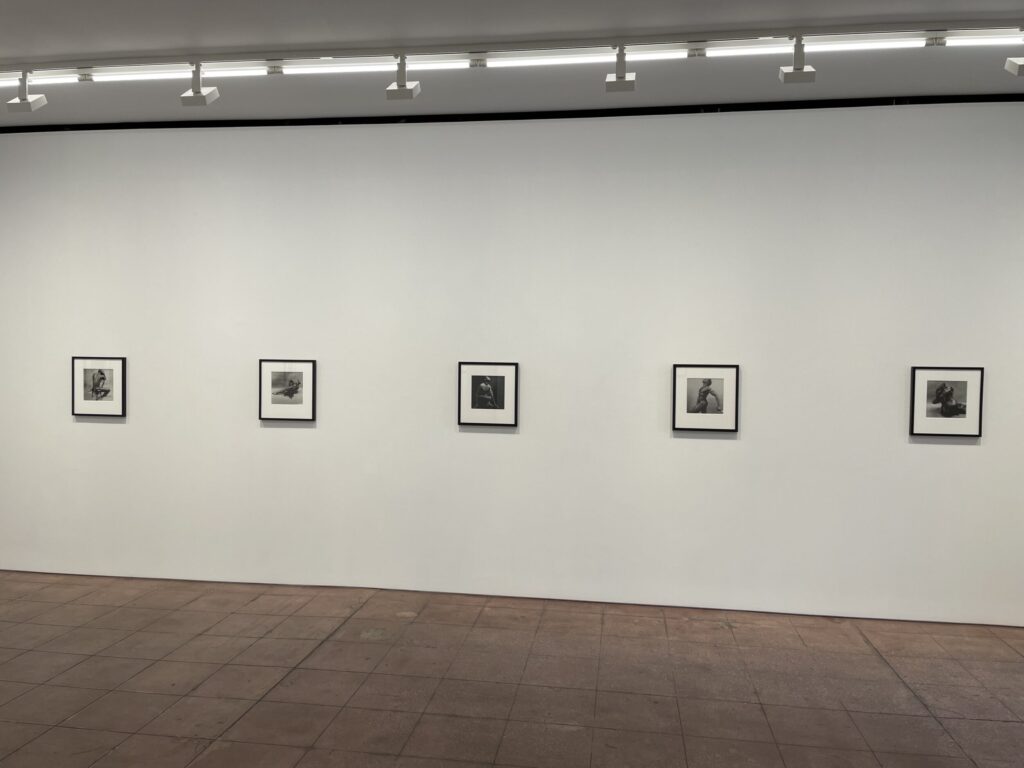
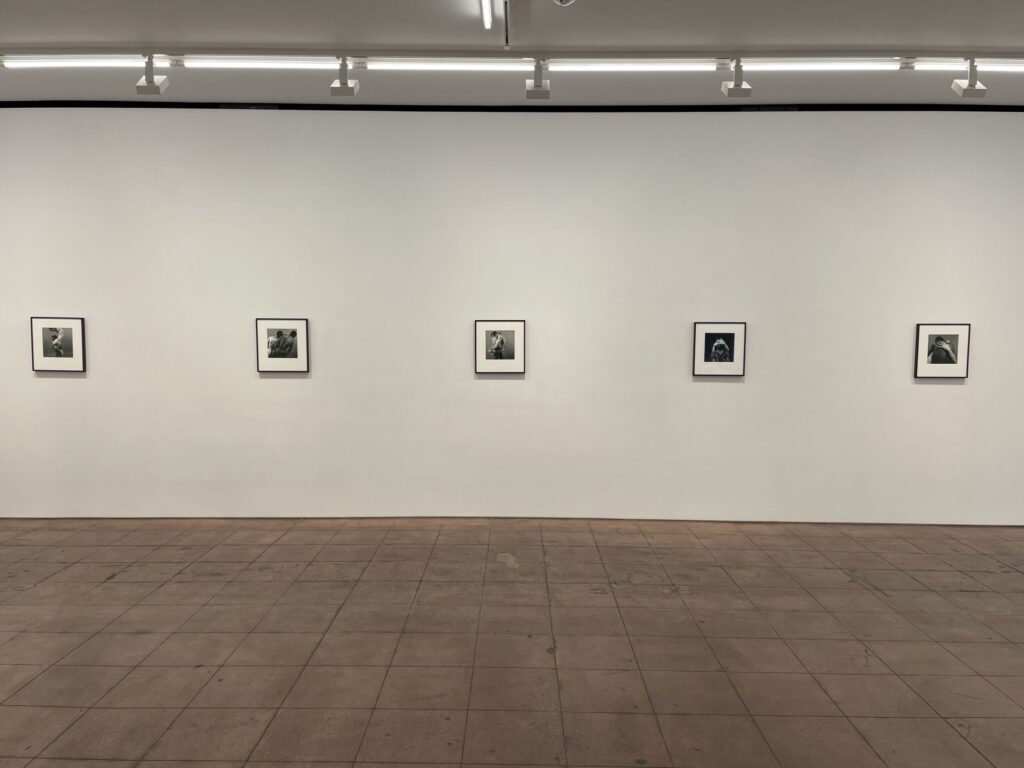
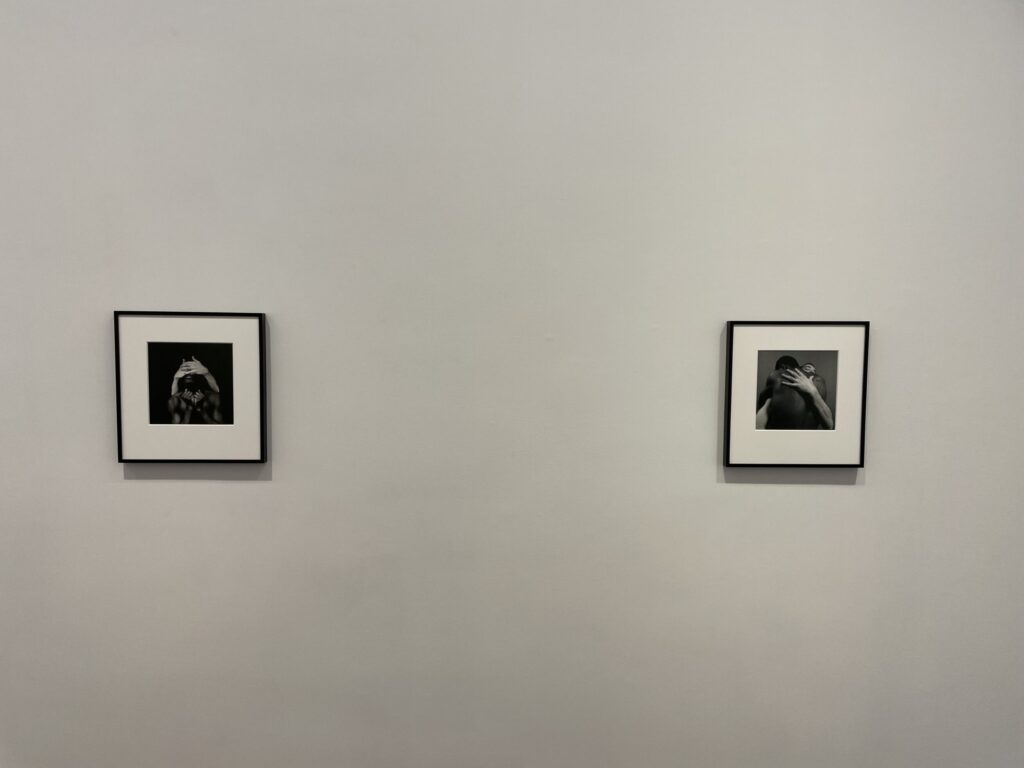
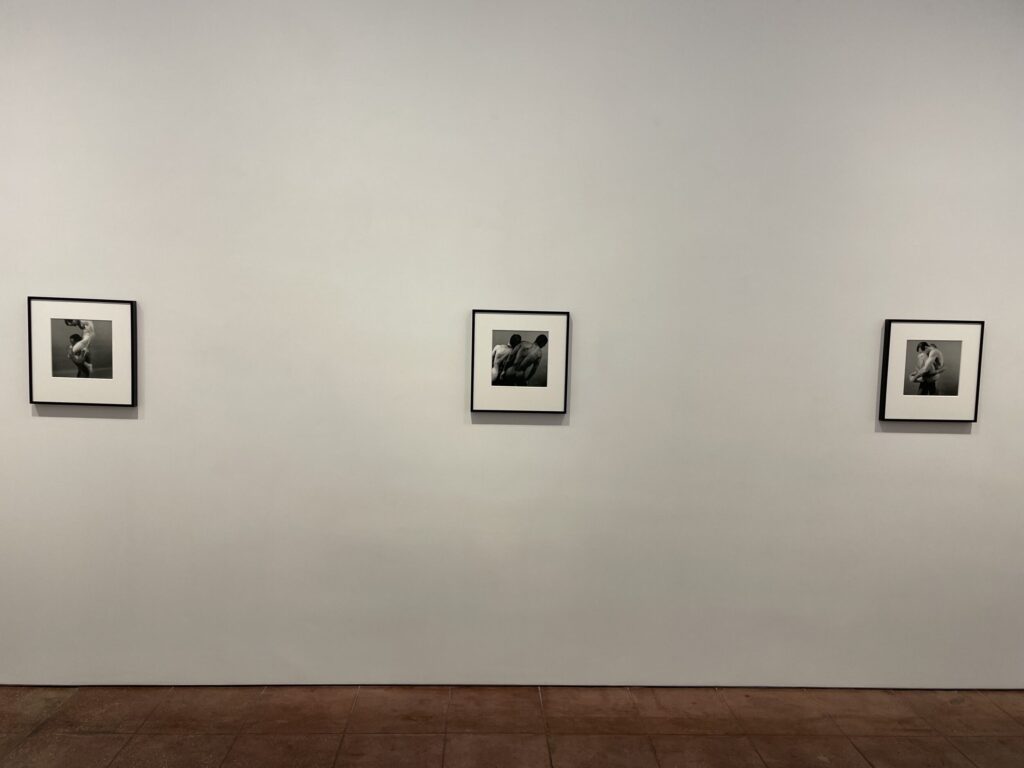
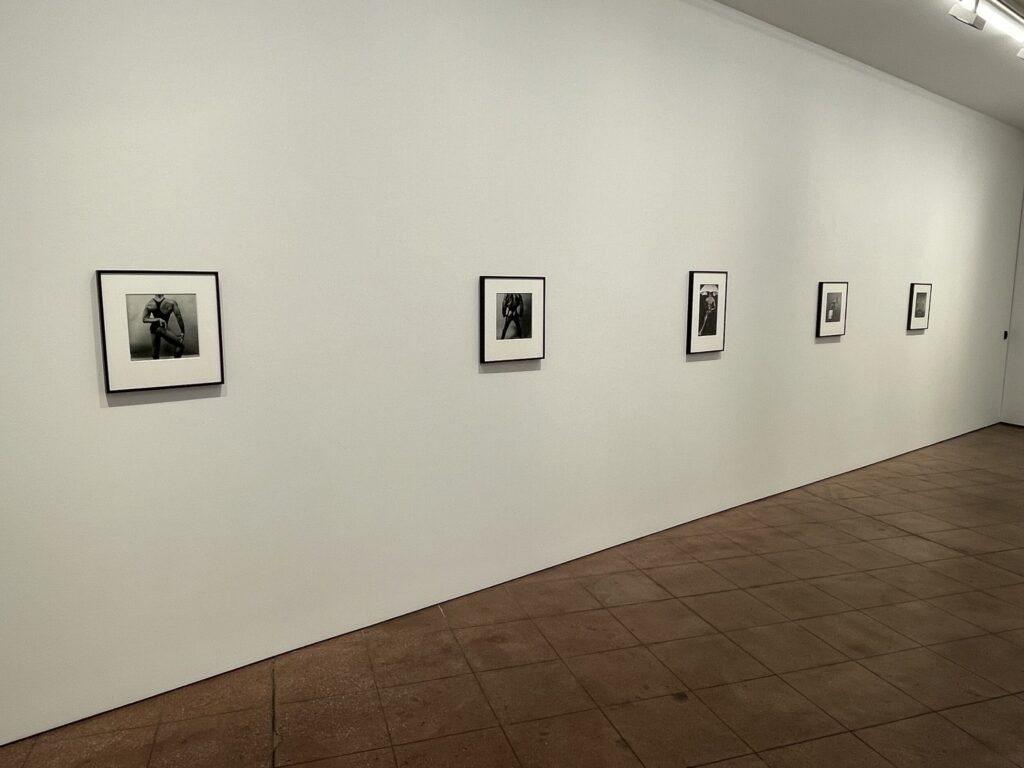
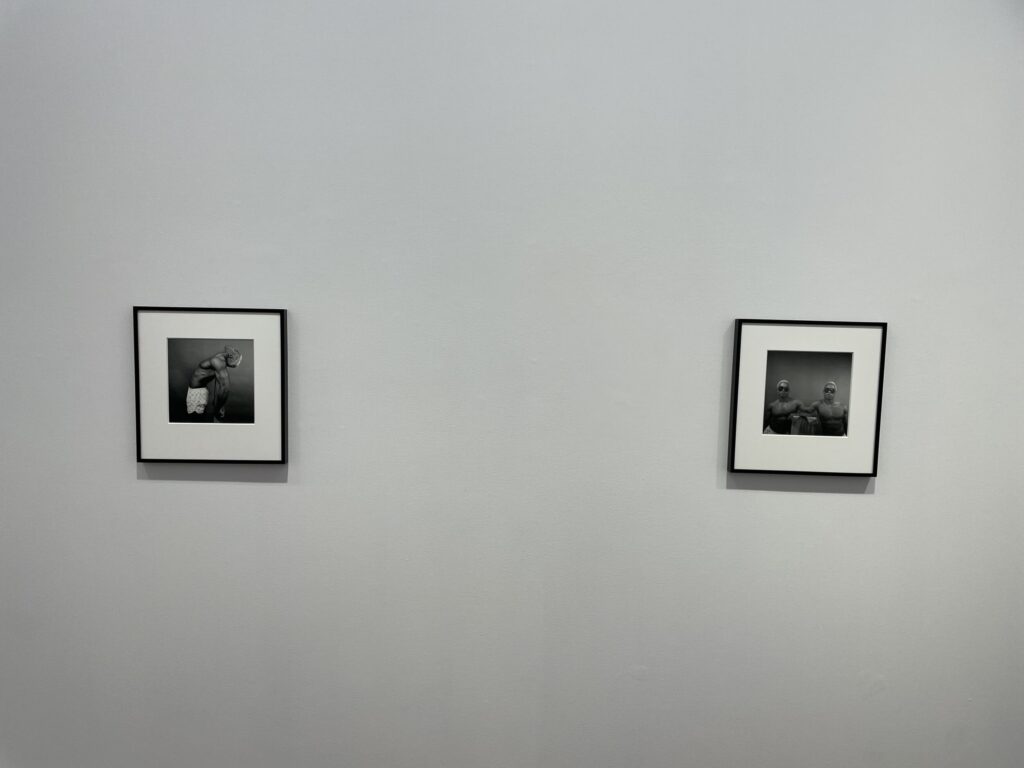
JTF (just the facts): A total of 16 black-and-white photographs, framed in black and matted, and hung against white walls in the single room gallery space. All of the works are posthumous gelatin silver prints, originally made in c1980s, 1985, 1986-1987, 1987, 1988, and 1988-1989, and printed in 2018-2026. The prints are each sized roughy 10×10, 12×10, or 14×8 inches, and are available in editions of 5+1AP. (Installation shots below.)
Comments/Context: Photographic projects centered on black diasporic identity have become common today, and contemporary viewers are comfortable digging deeply into these previously marginalized stories. But back in the late 1980s, photographically probing the complexities and contradictions of such lives was a more radical artistic proposition, and Rotimi Fani-Kayode is now understood to be one of the important pioneers of this kind of engaged identity investigation.
Fani-Kayode (1955-1989) was a Nigerian-born British immigrant, and his short life was punctuated by a series of physical movements and uprootings, starting with the Nigerian civil war (which brought him to England as a child in 1966), followed by university studies in the US in the late 1970s and early 1980s, and ultimately a return to London in 1983. Add to this unsettled diasporic itinerary a traditional Yoruba religious upbringing, a queer sexual orientation, and an artistic mindset, and Fani-Kayode became a charged vessel for a range of self-explorations.
When an artist dies young, as Fani-Kayode did (of AIDS, at the age of 34), as the decades pass, it’s easy to lose track of where he or she fits in the larger sweep of art historical time. In the past decade, gallery shows (in 2021, reviewed here, and 2018, reviewed here) have kept Kani-Fayode in the artistic conversation, but it’s worth remembering that in terms of chronology, he’s a only few years younger than Alvin Baltrop, Carrie Mae Weems, and Dawoud Bey, and just a bit older than Lorna Simpson, Samuel Fosso, and Lyle Ashton Harris, thereby slotting his work from the 1980s into a rich vein of black artists wrestling with related issues.
This show focuses on Fani-Kayode’s studio work in black-and-white, reprising a few of the images seen in his 2018 gallery show. For many who are familiar with Robert Mapplethorpe’s images of black men from the early 1980s, the formal and stylistic links to Fani-Kayode’s nudes might seem obvious, and indeed, the two photographers did know each other when Fani-Kayode lived here in New York. But what is going on here is not derivative repetition but engaged reaction, with Fani-Kayode reclaiming the themes of blackness, maleness, and sexuality on his own terms, and boldly infusing them with the potential for imagination, connection, and heat.
The center wall in this installation features a series of five images, each a gestural variation of black and white bodies interacting. Fani-Kayode has made the faces anonymous or partially covered, focusing attention on the intertwined choreography of the bodies and the contrasts of skin color. An angled side-by-side lean offers the simplest formal setup, while an embrace (with a white hand placed on a black back) adds a deeper layer of touch and tenderness. This hand motif is then amplified into a cover-the-eyes pose, with a doubled effect of stacked thumbs and fingers and a symbolic overtone of white preventing black from seeing. Black then carries white in the final two images, literally shouldering the burden via a wrapped arms cradle and an on-the-shoulders lift, the formal interplay of angled limbs adding compositional vitality to both pictures.
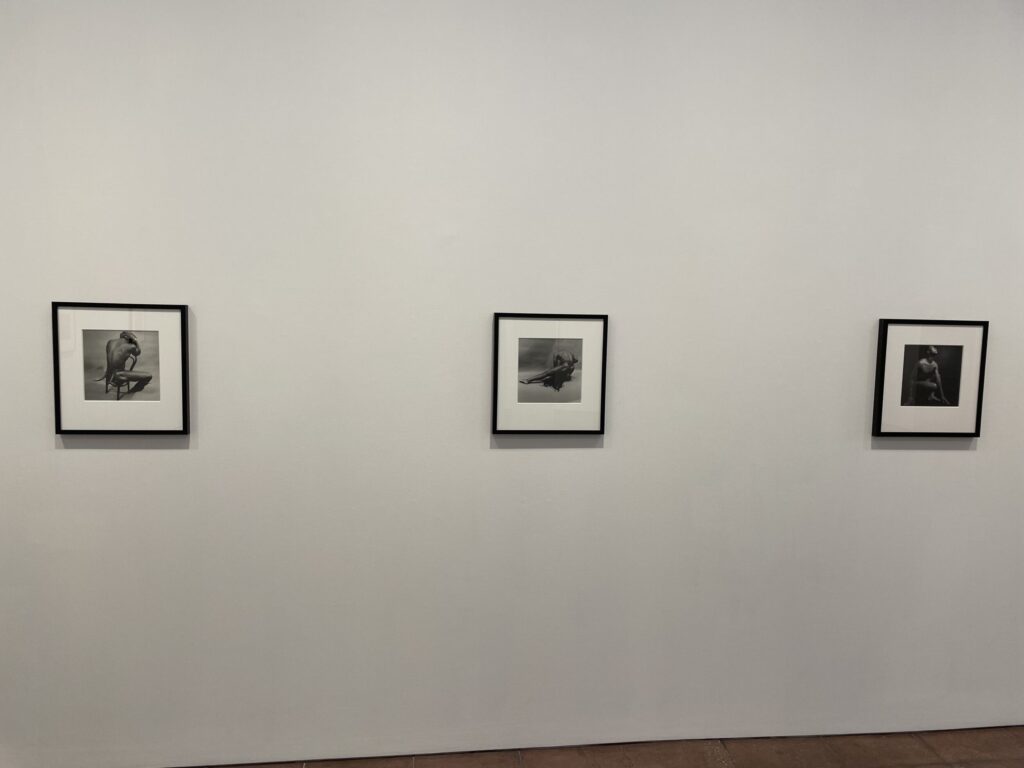
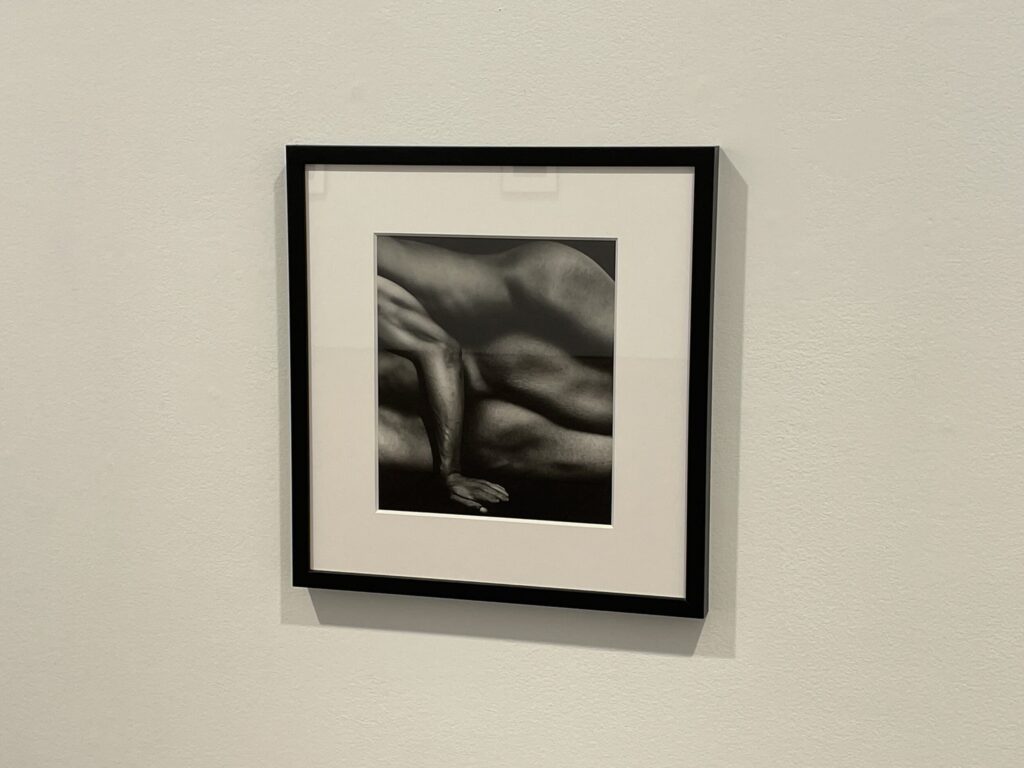
These kinds of intimate arrangements of male bodies have more recently been taken up by Paul Mpagi Sepuya, elegantly extending Fani-Kayode’s pared down aesthetics with additional laters of mirroring and misdirection. Across the gallery, a cropped arrangement of three stacked bodies by Fani-Kayode similarly recalls Eikoh Hosoe’s early 1970s “Embrace” series, but with a personal reorientation toward elements of black male desire.
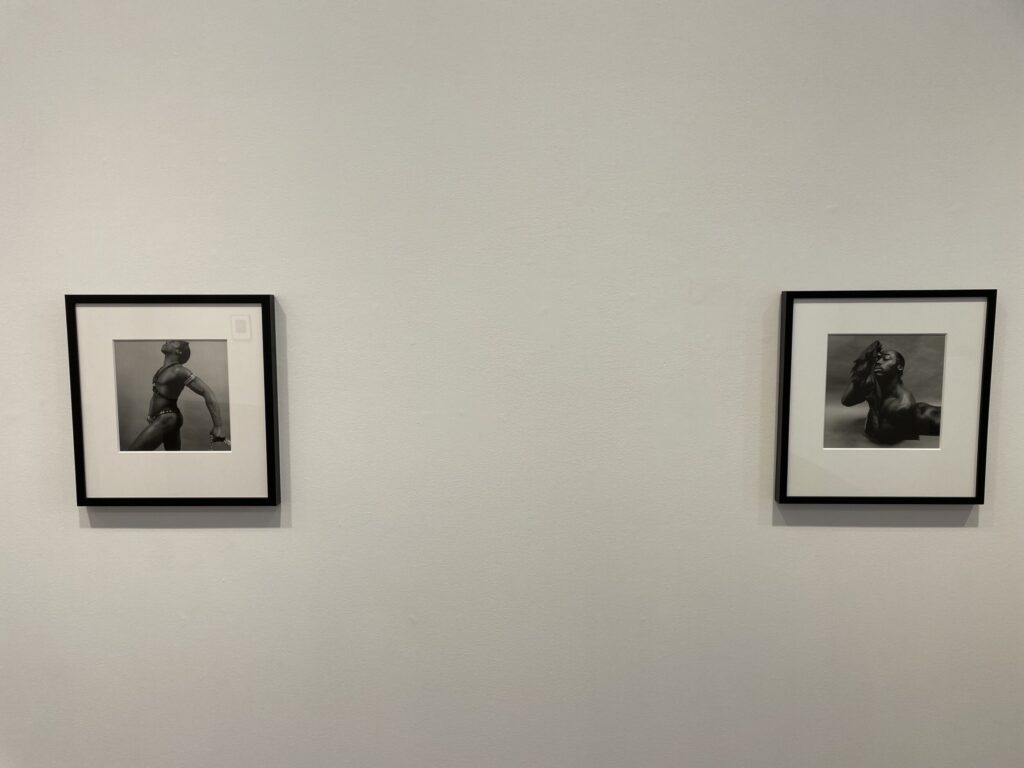
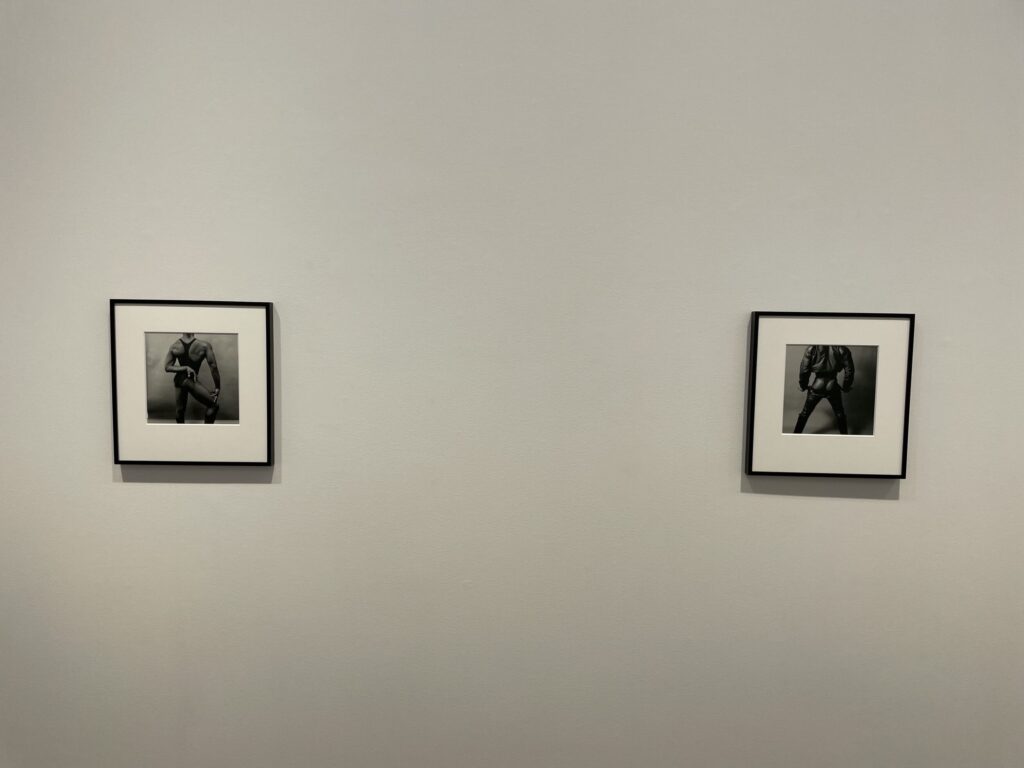
Most of the rest of the photographs on view settle into a conceptual space between spirituality and fetish, where Fani-Kayode is taking back various motifs and recombining them in new ways. In a few images, this means starting with objectified fetish desire, in the form of harnesses, chains, leather, and tight fitting body suits, and reversing the power dynamics, with the black man now puling the chain, performing for his own pleasure, or controlling the seeing. These rituals then drift further toward Yoruba spirituality, as performed with a belt of animal horns or a gathering of long black hair, finding release in communion with sacred objects or simply the bared truth of a face looking upward toward the light.
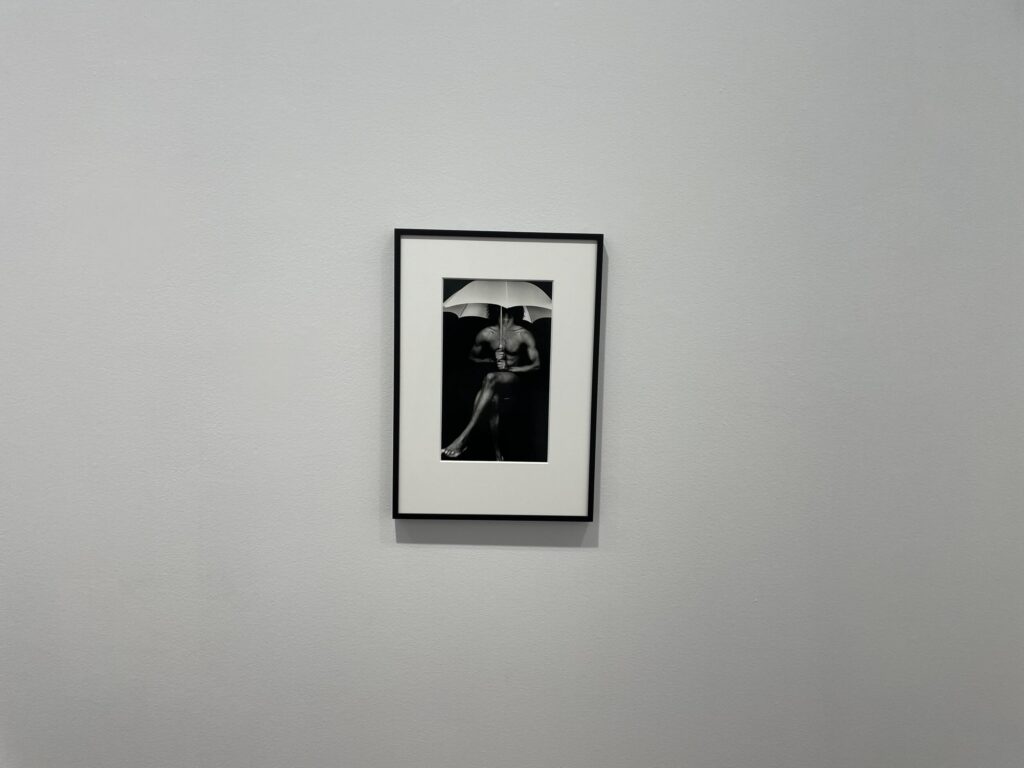
Fani-Kayode’s self-portrait with an umbrella is his most overtly diasporic image. In it, he sits nude under the umbrella, its canopy covering his face; the symbol of British weather both obscures and protects the Nigerian man, offering a literal layering of one personal identity atop another.
For those still catching up on Fani-Kayode, this succinct gallery show provides a handsome sampler of the ideas and aesthetics that make his works durably relevant (and influential). The strongest of his photographs reject a cool distanced perspective toward black objectification and instead resonate with authentic desire, ecstasy, and personal search. As seen here, Fani-Kayode wore his many competing identities right under the surface of his skin, leading to images that celebrate those emotions and conflicts with surprisingly consistent vulnerability.
Collector’s POV: The works in this show are priced between $9500 and $12500, based on the place in the edition. Fani-Kayode’s work has little secondary market history, so gallery retail likely remains the best option for those collectors interested in following up.