Portraiture at Paris Photo 2026 (Part 1 of 3)

With two centuries of photographic history set as the backdrop to a bicentennial version of this year’s Paris Photo, even with such a monumental milestone to celebrate, the sweeping context honestly felt vaguely out of step with the recent political and social realities in both France and the United States. In Paris and around France, well-organized marches, protests, and pockets of ancillary violence had filled the streets for weeks preceding the fair, with students, trade unions, retirees, and other interest groups voicing their increasing frustration with the government. At almost the same moment, in the United States, the midterm election cycle delivered a stunning rebuke to the policies of the current administration, sweeping incumbents out by the dozens across all levels of government and shifting the balance of power. In both cases, masses of everyday citizens sincerely felt like they were not being seen (or listened to) by their governments, and that their very real concerns, worries, and hardships (from dilapidated schools and reduced pension benefits to inflationary prices and unpopular wars) were being blithely ignored. And so, on both sides of the Atlantic, the people were rising up and making themselves more visible, in surprisingly large numbers.

As I made my way to this year’s fair, with the off chance that it too would be shortened or canceled due to the ongoing protests in Paris, I wondered about whether I would find any actual evidence of the fair itself, and the underlying galleries that were exhibitors this year, responding to these larger forces of disregard swirling out in the world. This somewhat urgent question sent me down a conceptual rabbit hole, asking me to think more broadly about how photography (from across the entire history of the medium) has indeed been used for “radical seeing” of people and their lives, not just in a documentary or witnessing sense, but in the many forms of photographic portraiture. Most of the great photographic portraits we return to again and again incisively and compassionately show us the humanity of their sitters, and often the lives being depicted were (or are) meaningfully different than our own. In recent years, this kind of thinking has been powerfully expanded, bringing portraiture of those who have been marginalized and otherwise overlooked back to the forefront, with a much more inclusive photographic embrace of differences of race, gender, nationality, sexuality, indigeneity, and other identifiers of identity.

With a nearly infinite number of ways to sift the work on view at a massive fair like Paris Photo into groups, categories, or simply favorites, I wondered about what would happen if I spent my time this year looking at portraiture, perhaps searching for elusive signals that the photography world was engaging with the underseen contemporary forces in the news headlines. As I walked into the fair on the first morning, I was still churning over how I might actually build a plausible survey category of portraiture from the makings of the fair, when I immediately came face to face with one of Thomas Ruff’s monumental much-larger-than-life-sized headshot portraits from the late 1990s, prominently on view in the booth facing the main entry doors (see below). It stopped me in my tracks before I really even got started, required me to slow down and really “see” the young woman, and gave me the confidence that maybe this whole portraiture framework I was toying with was a viable, and maybe even quite interesting path to pursue. And while I can’t say I came across any curated booths or thematic constructs that seemed to precisely address the frustrations of “not being seen” (particularly in a contemporary political context), a focus on the portraiture available at this year’s fair did indeed keep me thinking about how photographers and sitters across the decades have created the potential for trust, openness, and unexpected two-way engagement.

In the slideshow below and in the subsequent posts in this three-part series (totaling more than fifty portraits, from the 19th to the 21st centuries), the supporting details of each photograph (or set of photographs), including the gallery name (linked), the artist’s name, the date/print date, and the price, are woven together with a short discussion and analysis of the work. In many ways, what I was drawn to was a sense of unvarnished authenticity, however it was presented, even when an aspect of obvious self-seeing, performance, or choreography was in the photographic mix – I wanted evidence that photographers were paying attention, even when the stories their sitters wanted to tell weren’t entirely easy or comfortable.

In conjunction with this in-depth investigation of portraiture available at Paris Photo, I’ve also put together a second three-part series of reports (titled “Eye to Eye at Paris Photo 2026”) that come at this portraiture theme from a looser, more improvisational angle. Further details, and the first post in that series, can be found here.
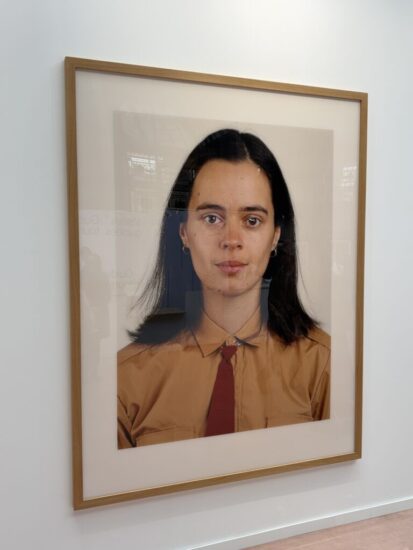
David Zwirner (here), Konrad Fischer (here), Lia Rumma (here), Mai 36 (here), and Sprüth Magers (here): As mentioned above, this large scale Thomas Ruff portrait was the leftmost image in a succinct career survey presentation that covered the central entry wall booth at the fair. Ruff made these headshot portraits first against colored backgrounds and later against more blank ones, mostly squarely frontal but a few from the side, the original prints made small in open editions; a few years later, he enlarged them to monumental scale, transforming their presence and impact. In this image, the off-kilter alignment of the pinned pre-tied necktie is what makes it feel so personal; it’s a tiny sign of individuality in the formal context of a school or political group uniform. That one detail then leads us to look more closely at her eyes, her earrings, her hair, her skin, the fold of the shirt collar, and the other details that give her unique complexity. Priced at €85000.

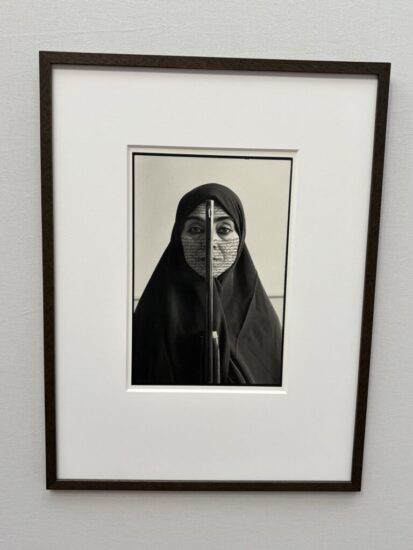
Richard Saltoun (here): Shirin Neshat’s 1994 portrait “Rebellious Silence” from her series “Women of Allah” is as potent and provocative today as it was three decades ago. With its bisecting gun barrel and filigree of delicate Farsi calligraphy, it mixes feminism and violence, layering in the intermingled emotions of fear and courage. These competing forces never quite settle in this picture, and it’s that uncertainty of mood and persona that feels so durably electric. Priced at €20000.

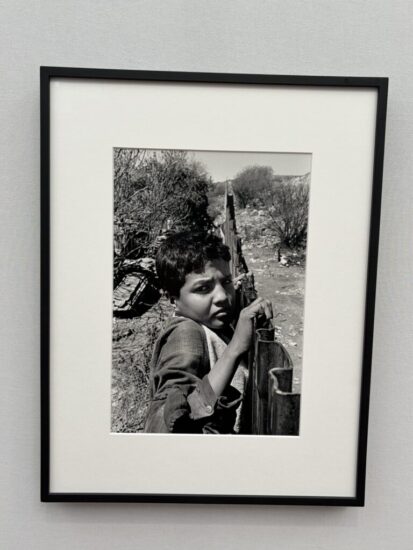
Bene Taschen (here): There have been many powerful photographic projects documenting the US/Mexico border and the migrants that cross between the two countries in the past several decades, and this white-knuckled climbing boy by Joseph Rodriguez (from a larger project made between 1995-2006) deserves attention in that broader visual conversation. It points less to border crossing as a once-and-done perilous flight and more to an everyday occurrence, chasing work or even just a good meal. The boy’s face attests to the hardship of the effort, and to the wariness necessary to move back and forth without being caught. Priced at €6000.

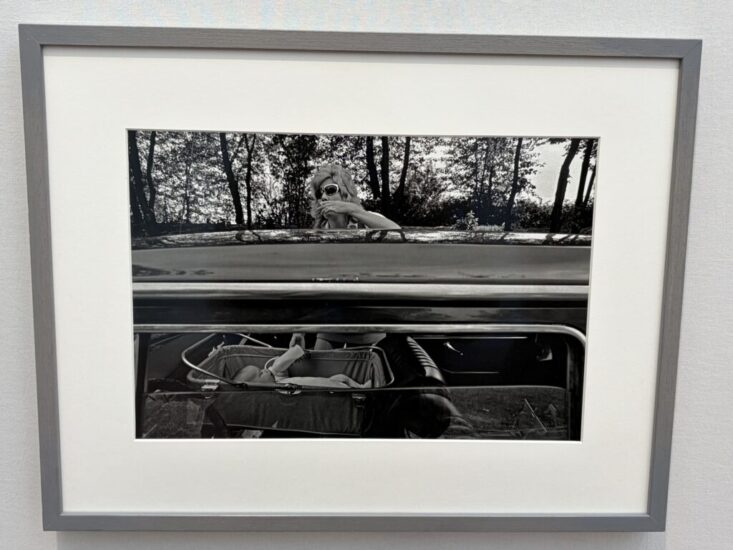
Bene Taschen (here): The serendipity of street photography also has a role to play in the larger discussion of portraiture and seeing people. This 1971 photograph taken at an autobahn rest stop by the German photographer Rudi Meisel captures the layered realities of life with impeccable compositional style. Look at the way the shiny car roof is used to divide the frame, with the cool sunglassed mother taking a minute for a smoke actually also feeding the baby at the same time with her other hand, as seen through the open car window. It’s a picture about the complexities of life, and doing two things at once when the situation requires it. Priced at €4000.

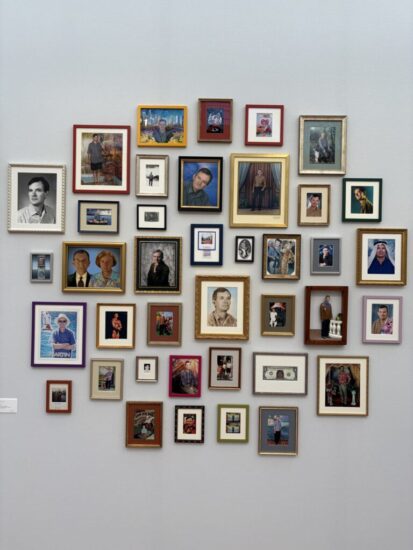
Clémentine de la Féronnière (here): During his lifetime, the British photographer Martin Parr was famous for having his portrait made wherever he went. He visited portrait studios and posed at tourist sites, always encouraging the local photographers to control the process. The result was a lifetime of gloriously eccentric portraits of Parr, as seen in a dense salon-style hanging in this booth. There is a clever self-reflexiveness about this long term project, allowing others to see (and create) versions of himself. While the images weren’t made by Parr, together they reflect an insightful vantage point about how portraiture functions and how the sitter actively (or passively) participates in the creation of the final results. A total of 44 works, priced as a group at €200000.

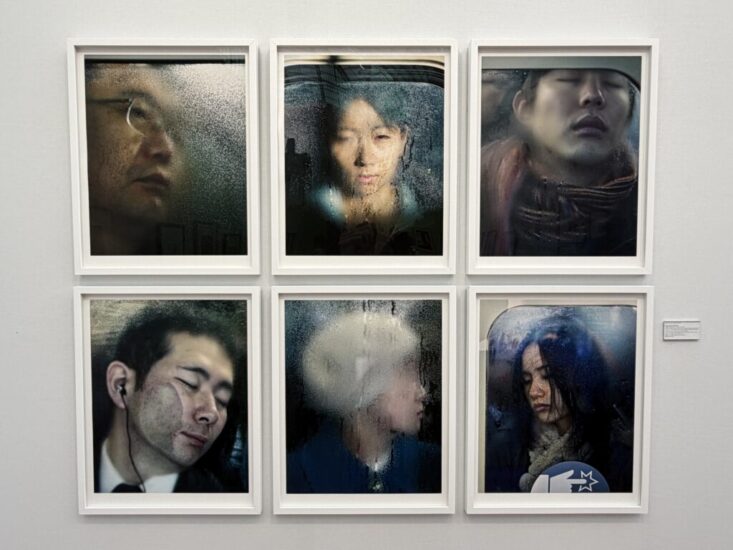
Bruce Silverstein (here): Michael Wolf’s “Tokyo Compression” images made on the Tokyo subway (in 2012) are another insightful example of seeing people where they actually are. Isolated faces are smashed up against the windows and doors, the glass fogged or dripping with rainwater and condensation. The series captures the numbing exhaustion of the everyday commute with understated compassion and grace, the kind of thing we might miss in the bustle of our own passing movements. Priced at $55000 for the portfolio of 13 prints.

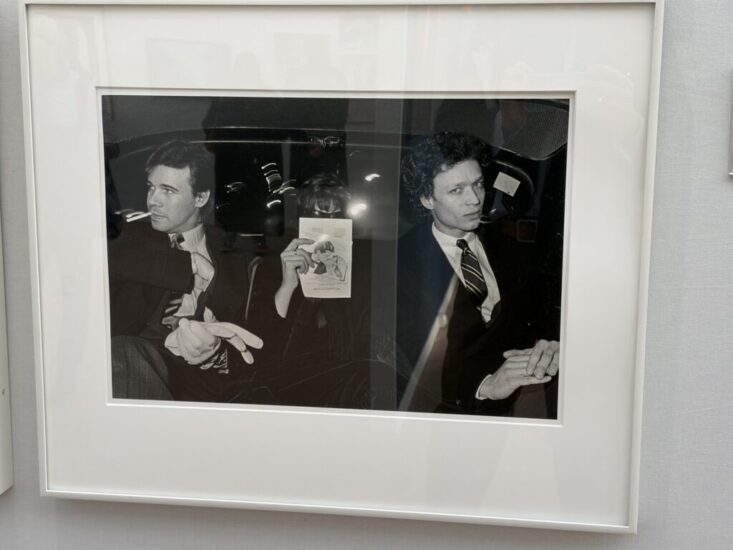
Bruce Silverstein (here): There’s a lot going on in this back-of-the-taxi portrait from 1983 by Ryan Weideman. The opposed turning of the men’s bodies, the hands, the woman blocking our view with a program and an image of kissing, it all comes together in a shimmery instant, offering a view into a slice of 1980s era New York society. And then there’s the knowing look of the man on the right, and his seeming awareness of the nuance of the situation. An altogether sophisticated and complex outcome for an over-the-shoulder shot by a cab driver. Priced at $4000.

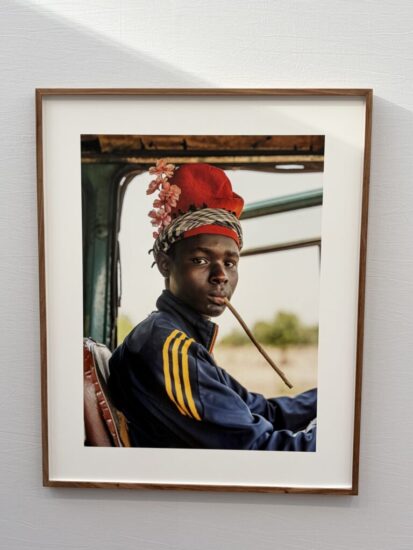
Stevenson (here): This 2023 portrait by Pieter Hugo features a truck driver discovered during a Travis Scott video shoot. The young man’s style is a wonderful juxtaposition of colors, fabrics, and textures, with the stick dangling from his mouth used by Hugo to create an interplay of lines with the door frame of the vehicle. The sitter’s direct stare further amplifies the moment, pulling the man out of his job and into a quiet declaration of personal identity. Priced at $10000.

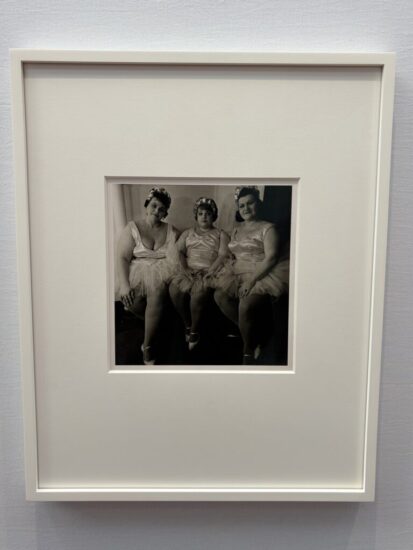
Fraenkel (here): Most surveys of photographic portraiture would eventually find their way to Diane Arbus, so this lesser known image from 1964 felt like an appropriate way to engage with what Arbus did differently than most. Here a trio of circus ballerinas poses with openness and candor, the knowing acceptance of their divergence from ballerina norms giving the portrait its intimately quirky outsider resonance. A lifetime print, priced at $55000.

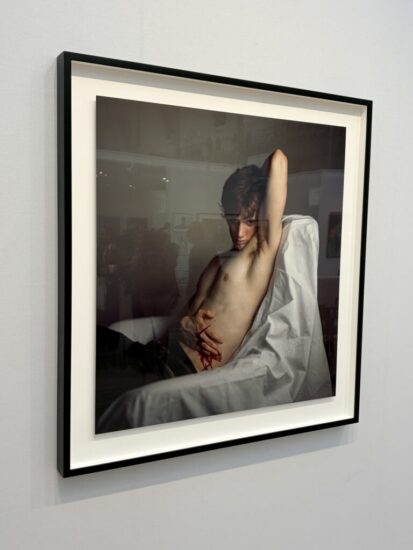
Fraenkel (here): This new portrait by Richard Learoyd finds the British photographer connecting to more allegorical themes. With a bloody thorn in his side and a raised arm, perhaps there is an echo of Saint Sebastian here, with Learoyd’s slow looking amplifying every seductive twist of the young man’s body. In this way, Learoyd is merging his usual intense naturalism with a bit of intentional performance, adding a dimension of possible persona. Priced at $65000.

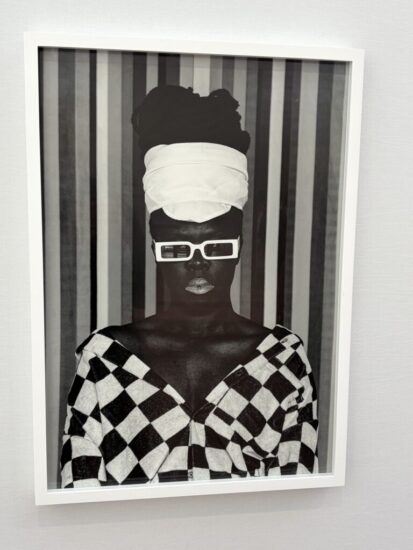
Yancey Richardson (here): In the past decade, Zanele Muholi’s innovative self portraits have boldly multiplied out her sense of personal identity. Here her choice of high contrast geometric patterns and stylish sunglasses feels like a knowing nod to the history of African studio portraiture, signaling her connection to that arc of art history. Priced at $25000.

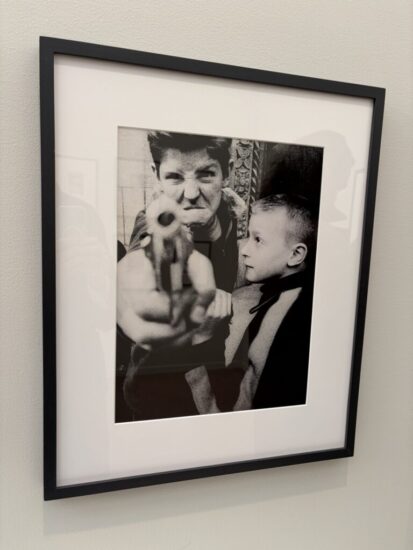
Howard Greenberg (here): This angry gun-to-the-face street portrait by William Klein (from 1955) is a classic of urban decisive moment picture making. The boy’s grimace is an indelibly energetic expression, whether playacted or serious, the snout of the gun blurred by its ruthless push into the viewer’s own space. In the context of “not being seen”, this portrait actively rejects the idea that we might not pay attention, so much so that even his young friend is watching. An extremely rare vintage print, priced at $85000.

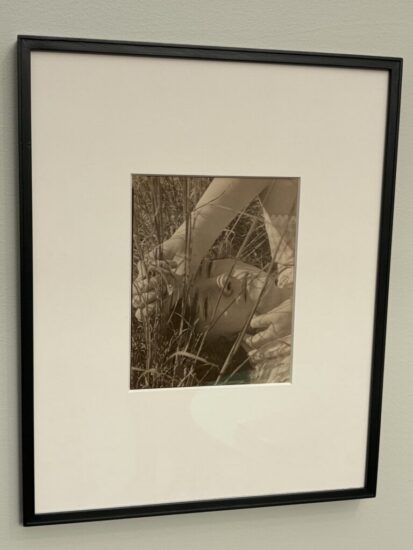
Howard Greenberg (here): This 1923 Edward Steichen portrait of his second wife Dana takes the emotional register in an entirely different direction than the previous Klein. Steichen’s grassy view is calm, gentle, even romantic, elegantly capturing an intimate moment of relaxation and contentment, with a tightly cropped splash of Modernist precision. Priced at $50000.

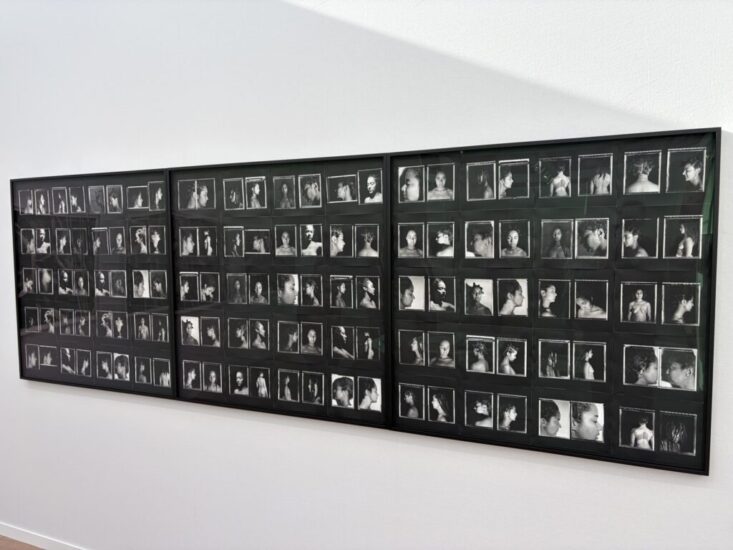
Higher Pictures (here): This 1990 installation of self-portraits by Carla Williams is an entirely self-contained study of portraiture and identity creation. Light and shadow, turned one way and another, direct and in profile, Williams is taking stock of herself, exploring the many ways she can express her moods and emotions. The aggregation of pictures feels searching and even inconclusive, a human being expressed as an ever changing set of subtle variants and possibilities. A set of 120 prints, priced at $61000.

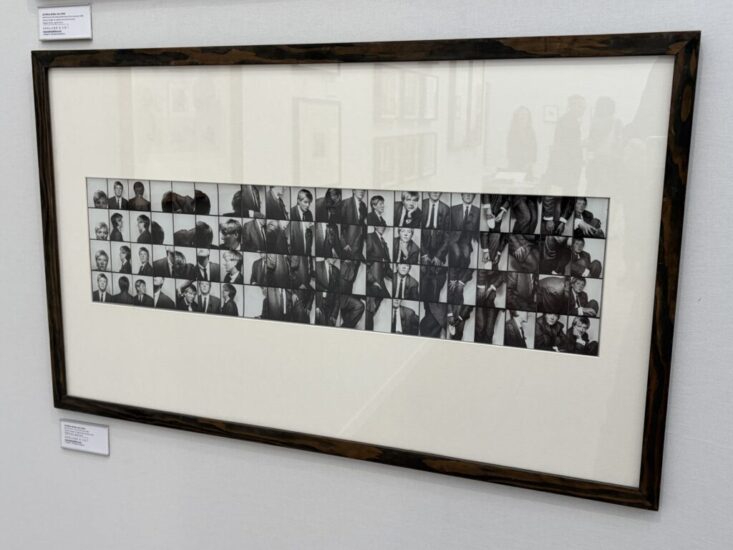
England & Co. (here): This 1985 work by the British artist Liz Rideal finds her repeatedly posing in a photobooth in a Paul Stuart suit. Photobooth portraiture is inherently an aggregation of fragments, of multiple instants or alternate perspectives that come together to tell a broader story. Here female/male identity is performatively reconfigured, with poses and expressions iteratively tested. While one frame might offer a particular version of Rideal’s persona, the gridded collection turns single moments into a much rounder and more three dimensional expression of identity. Priced at £4000.

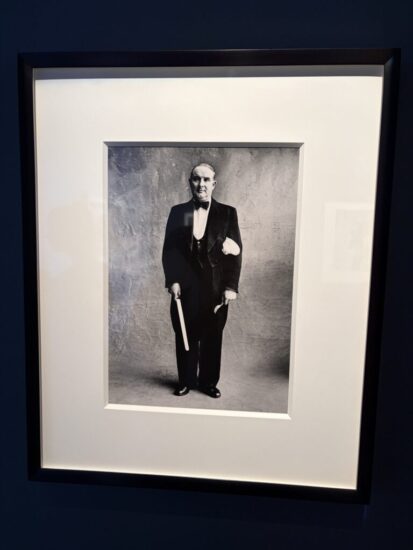
Hamiltons (here): Few photographic portraiture samplers would be complete without the inclusion of Irving Penn, and while Penn prints were available in several booths at this year’s fair, Hamiltons had a well chosen selection of vintage prints from Penn’s “Small Trades” series that felt like the most relevant examples of portraits that were rooted in seeing overlooked or underseen subjects. Penn started the series in Paris and continued the concept in both London and New York through 1950 and 1951. This image captures the formal chef de personnel at the once famous Larue restaurant, armed with a bread knife. Isolated against a mottled studio backdrop that Penn used for fashion shoots, his precise studies of workers paid attention to the details of what made each profession unique. Priced at $51500.

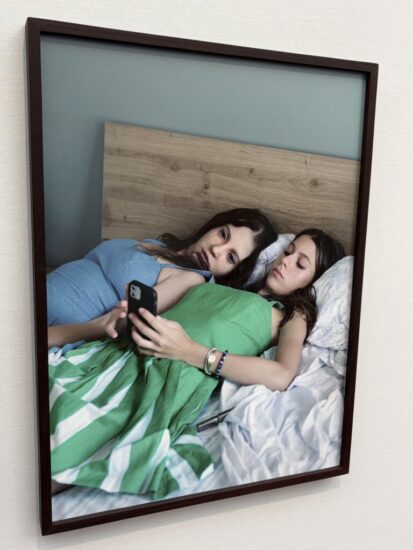
Raster (here): Across her artistic career, the Polish photographer Aneta Grzeszykowska has consistently used lifelike latex masks to deliberately confuse and undermine notions of identity and self. Here a mask of the artist’s face at the age of 14 is paired with the artist’s own teenage daughter, creating eerie performative setups that wrestle with issues of female relationships, collapsed time, and aging. Priced at €7000.

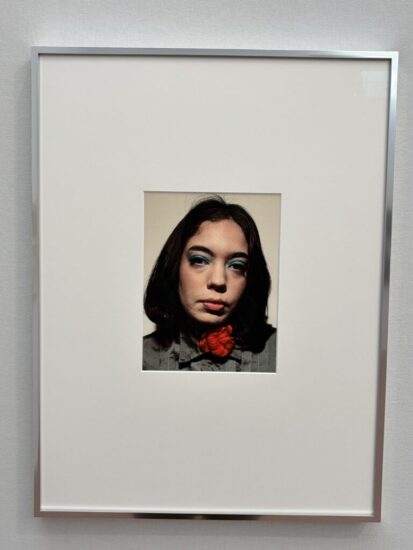
Keteleer (here): This headshot portrait was made just this year by the Dutch photographer Paul Kooiker, as part of a commission by Louis Vuitton to photograph the city of Bucharest. As straightforward as this tightly cropped image is, the pops of red and blue color help us find a connection to this woman, by implication giving us a sense of the style and culture of the city. Priced at €2600.

Parts 2 and 3 of this survey are forthcoming.
Send this article to a friend

Read more about: Aneta Grzeszykowska, Carla Williams, Diane Arbus, Edward Steichen, Irving Penn, Joseph Rodriguez, Liz Rideal, Martin Parr, Michael Wolf, Paul Kooiker, Pieter Hugo, Richard Learoyd, Rudi Meisel, Ryan Weideman, Shirin Neshat, Thomas Ruff, William Klein, Zanele Muholi, Bruce Silverstein Gallery, David Zwirner, England & Co. Gallery, Fraenkel Gallery, Galerie Bene Taschen, Galleria Lia Rumma, Hamiltons Gallery, Higher Pictures, Howard Greenberg Gallery, Keteleer Gallery, Konrad Fischer Galerie, La Galerie Clémentine de la Féronnière, Mai 36 Galerie, Raster Gallery, Richard Saltoun Gallery, Sprüth Magers, Stevenson Gallery, Yancey Richardson Gallery, Paris Photo

One comment

  1. Nicolas Kojey-Strauss /

    Loring, what a fantastic survey! I just came back from Paris Photo myself, and noticed many of the same works, but it took your insights – and hard work! – to tease out the significance. In some cases, like Aneta Grzeszykowska, you uncovered the one crucial detail that would not be evident to someone just passing by among so many booths. I don’t know if I should be grateful to you to make my collecting list longer, but I am always grateful for your insights and thoughtful analysis. I very much look forward to parts 2 and 3.

Leave a comment

Your email address will not be published.

Recent Articles

Eye to Eye at Paris Photo 2026 (Part 1 of 3)

Eye to Eye at Paris Photo 2026 (Part 1 of 3)

When we want someone to engage with us openly, honestly, and truthfully, we often ask that person to look us in the eye. The assumption is that when we can ... Read on.

Sign up for our weekly email newsletter

This field is required.