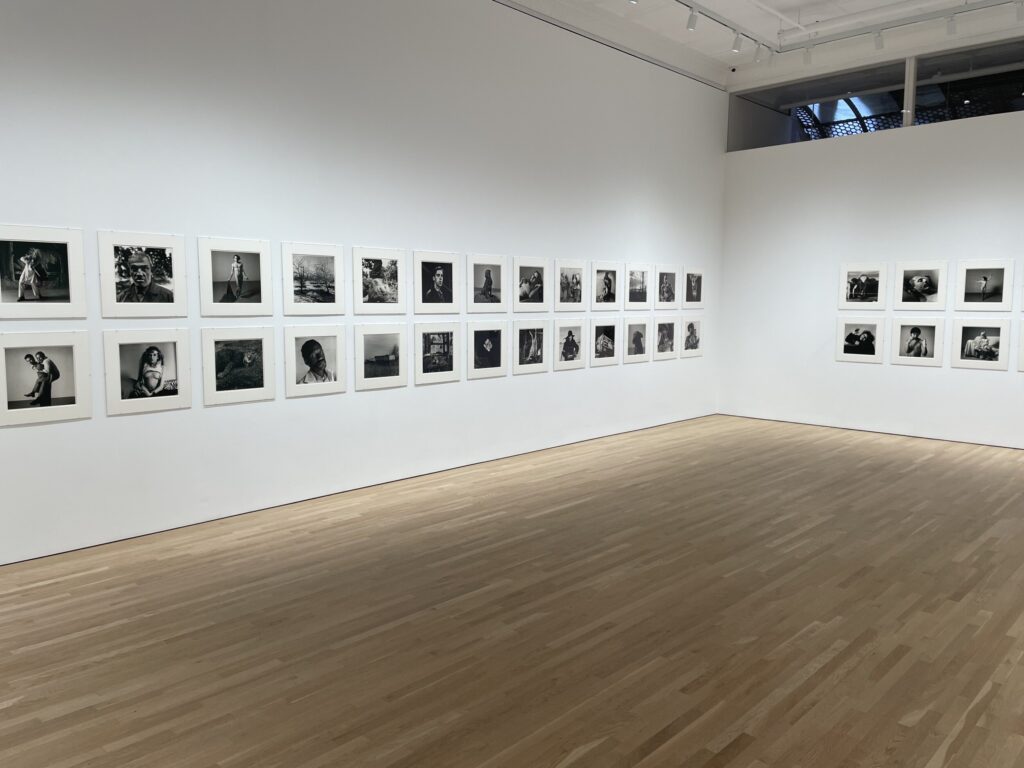
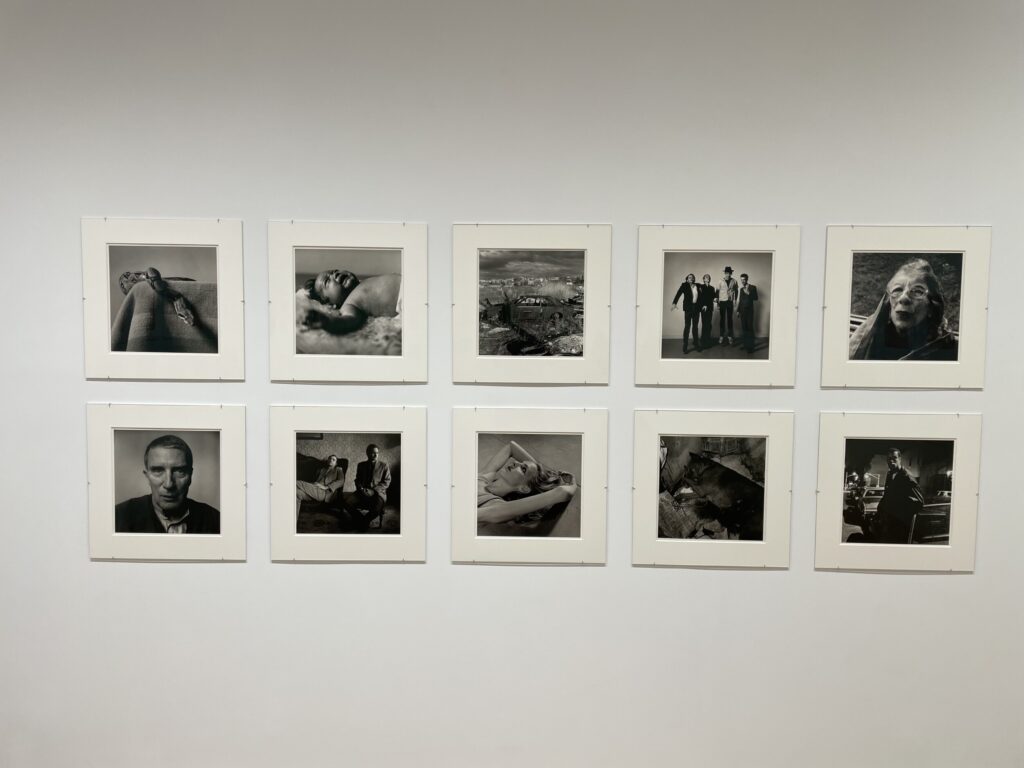
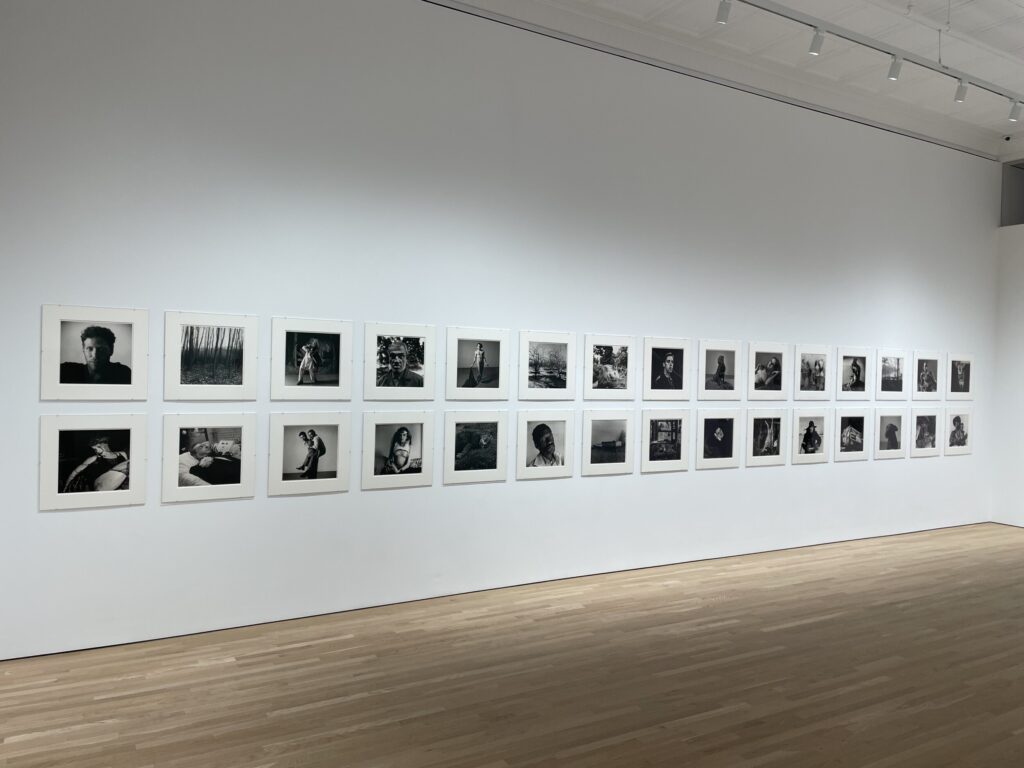
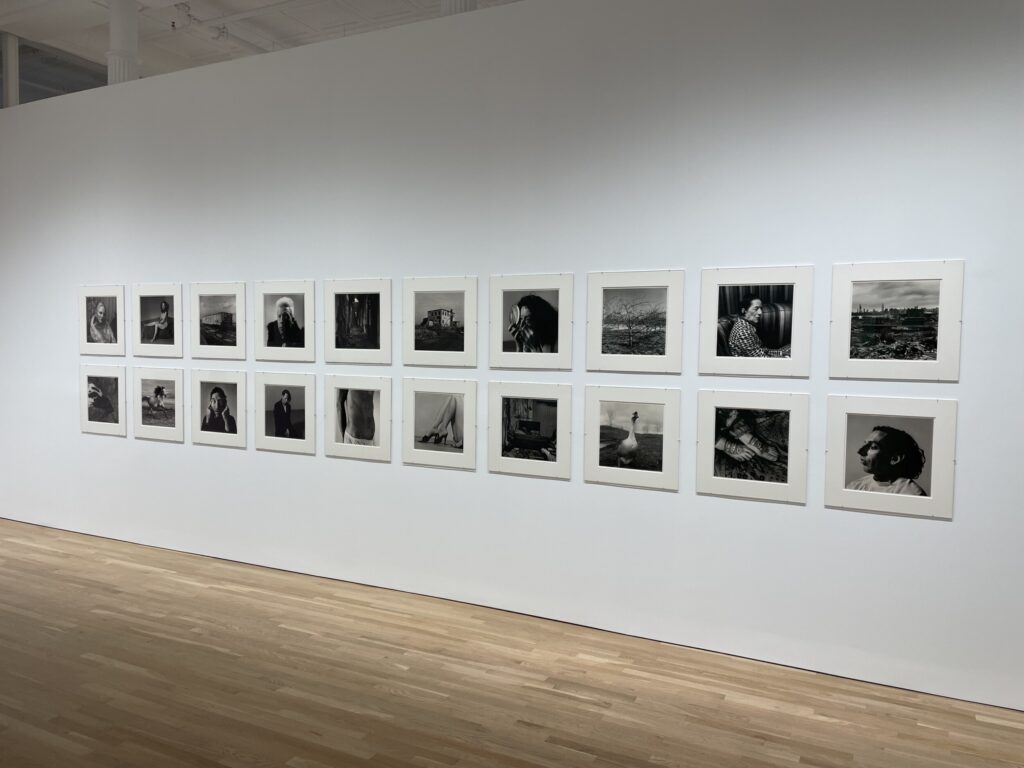
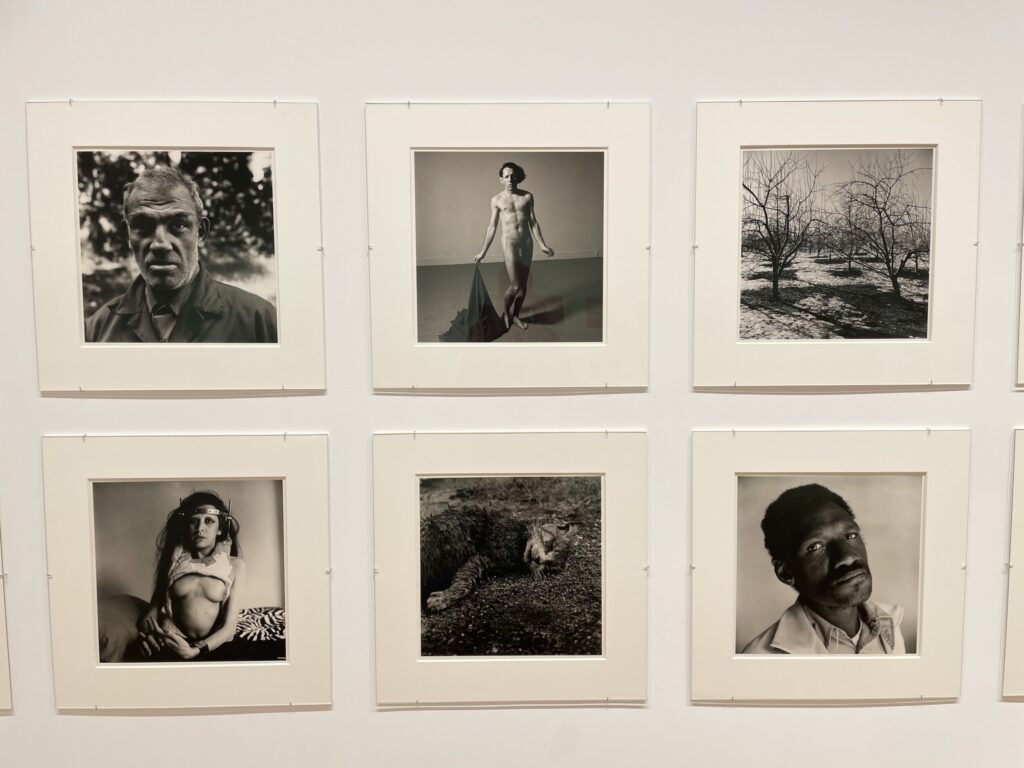
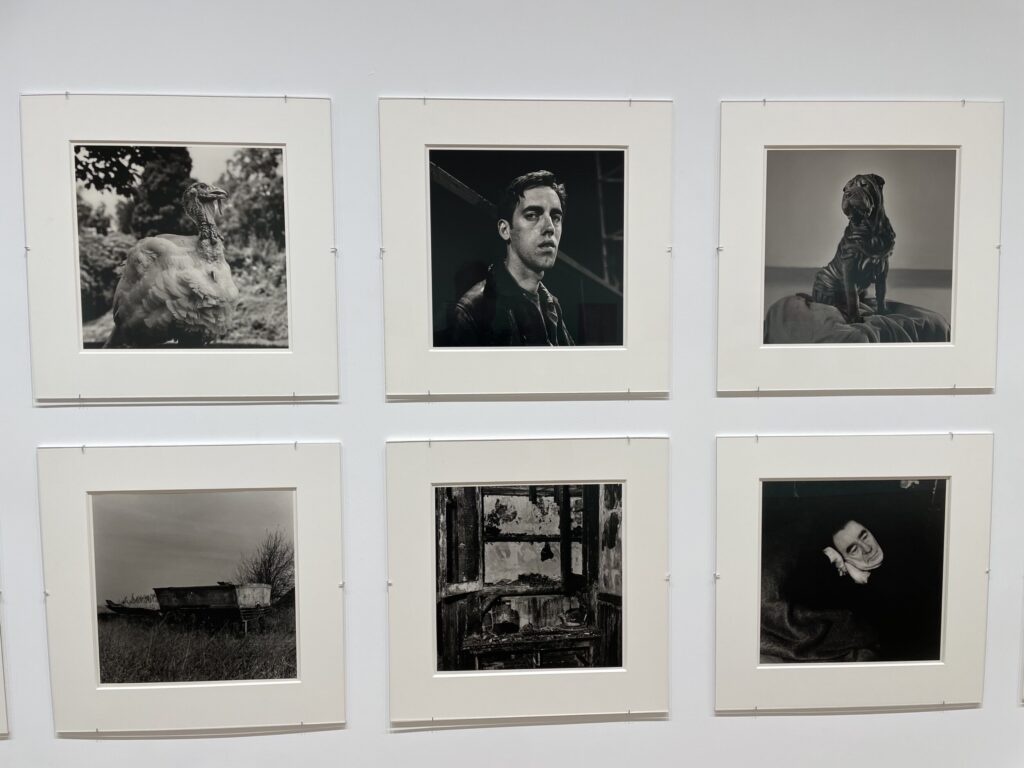
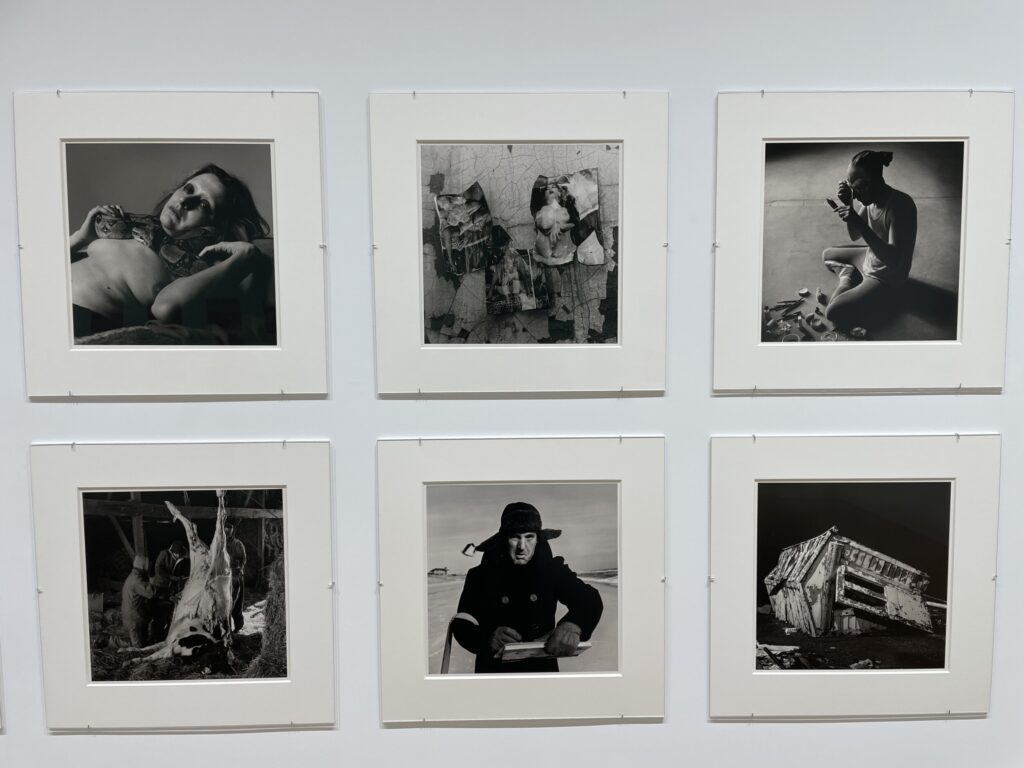
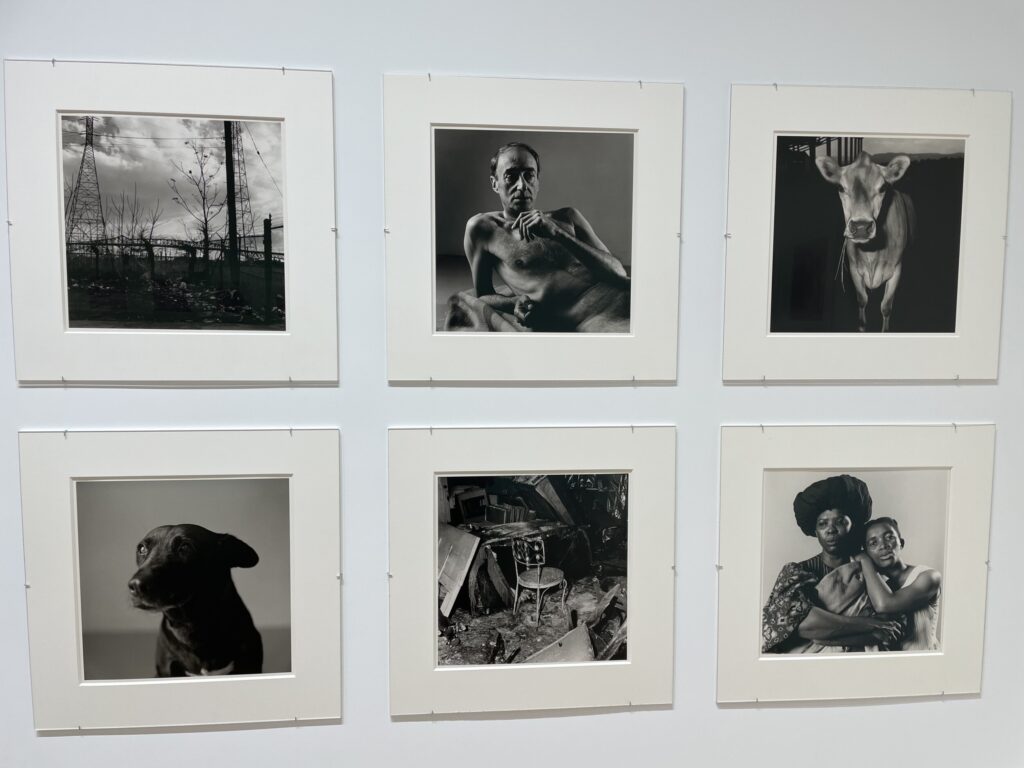
JTF (just the facts): A total of 70 black-and-white photographs, matted behind glass (unframed), and hung against white walls in the single room gallery space. 39 of the prints are lifetime gelatin silver prints, while the other 31 prints are posthumous pigment prints (made by Gary Schneider); the lifetime prints are uneditioned, while the posthumous prints are available in editions of 10. The images were originally made between 1974 and 1985, and displayed at the Gracie Mansion Gallery in 1986. (Installation shots below.)
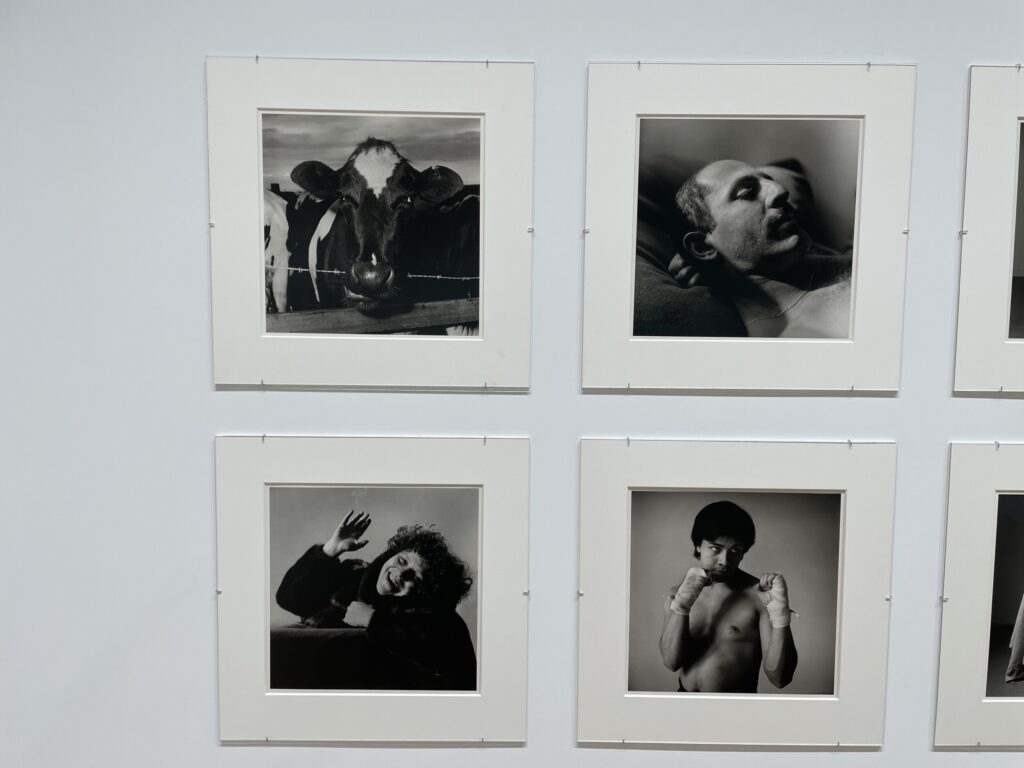
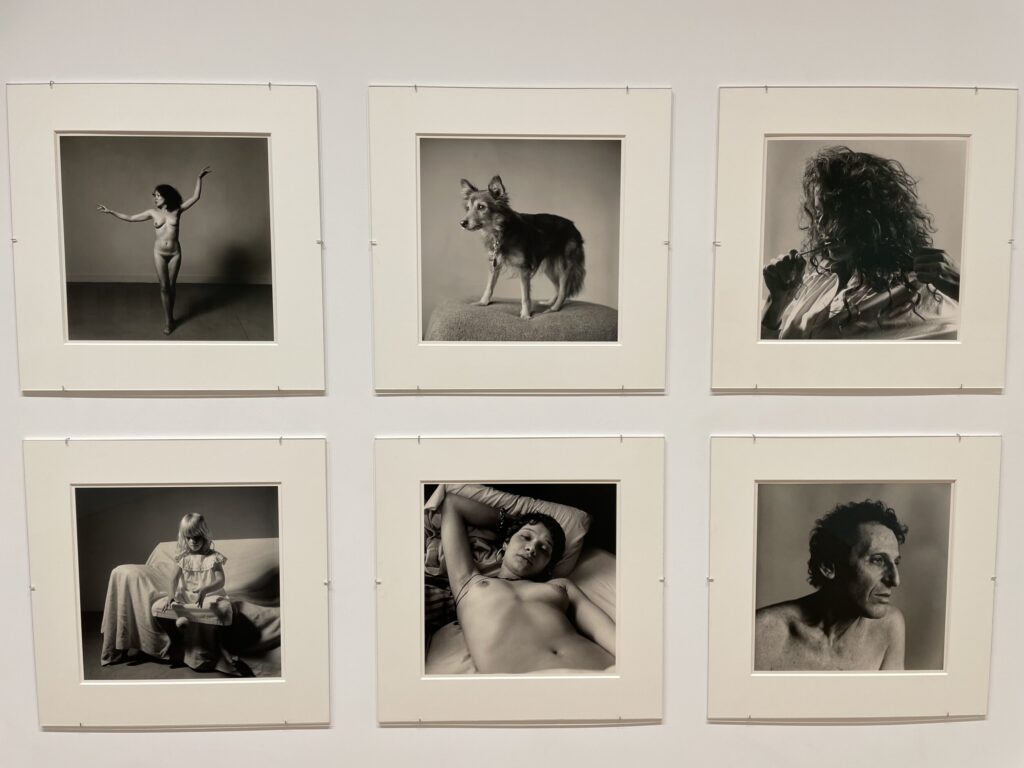
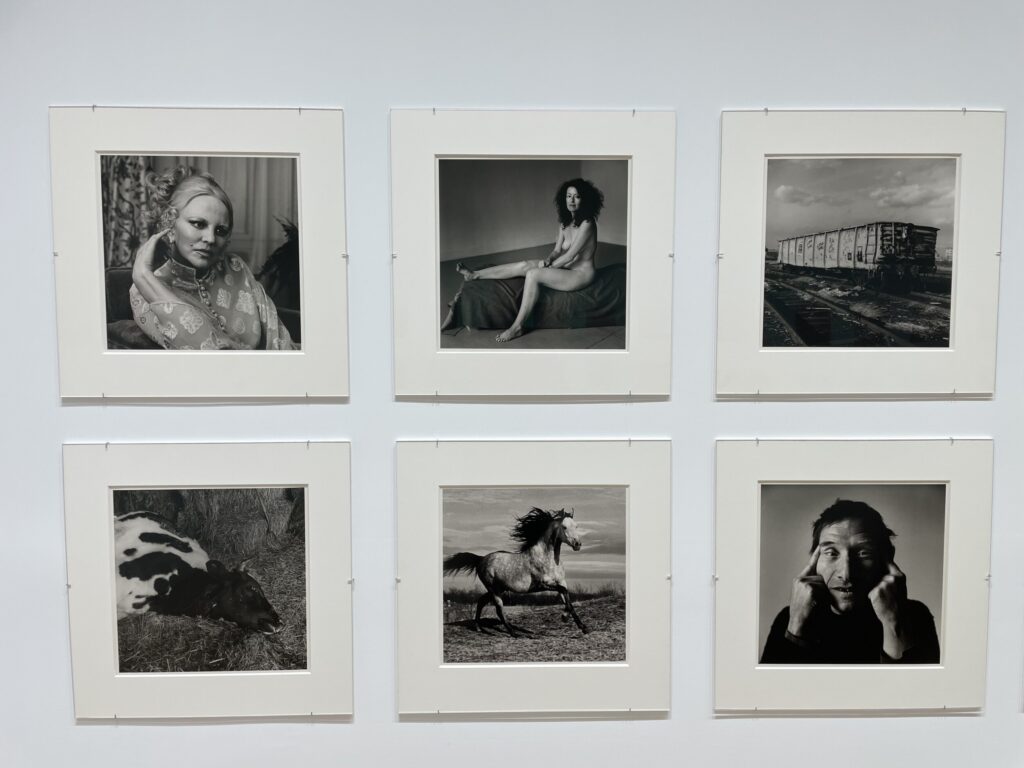
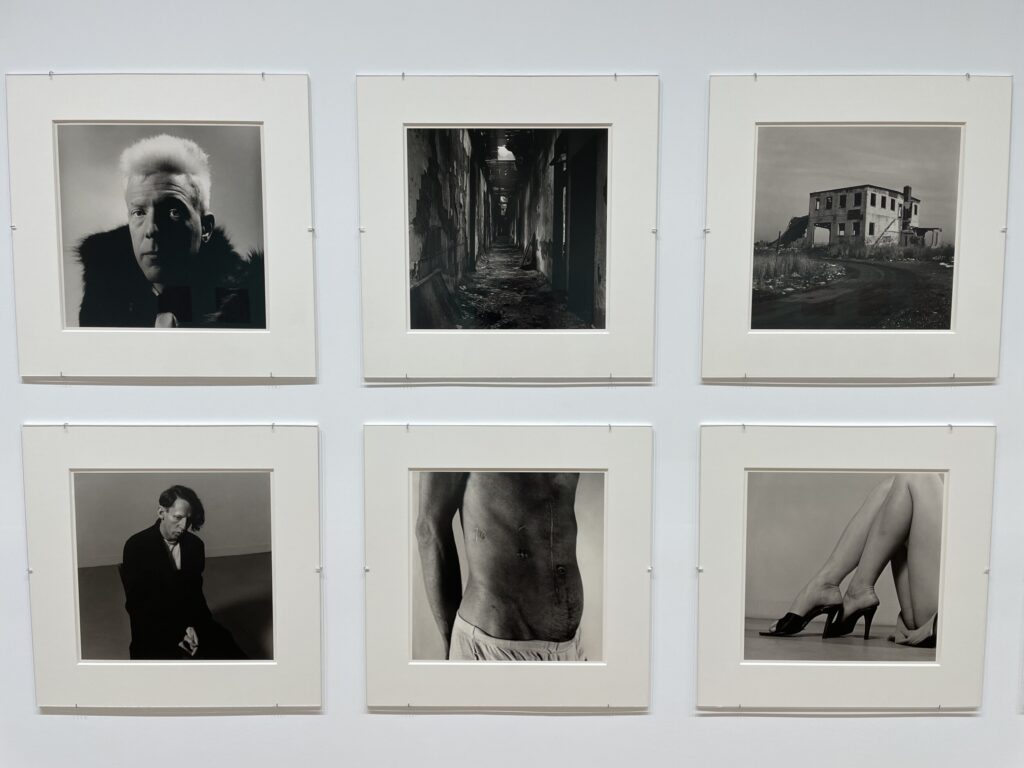
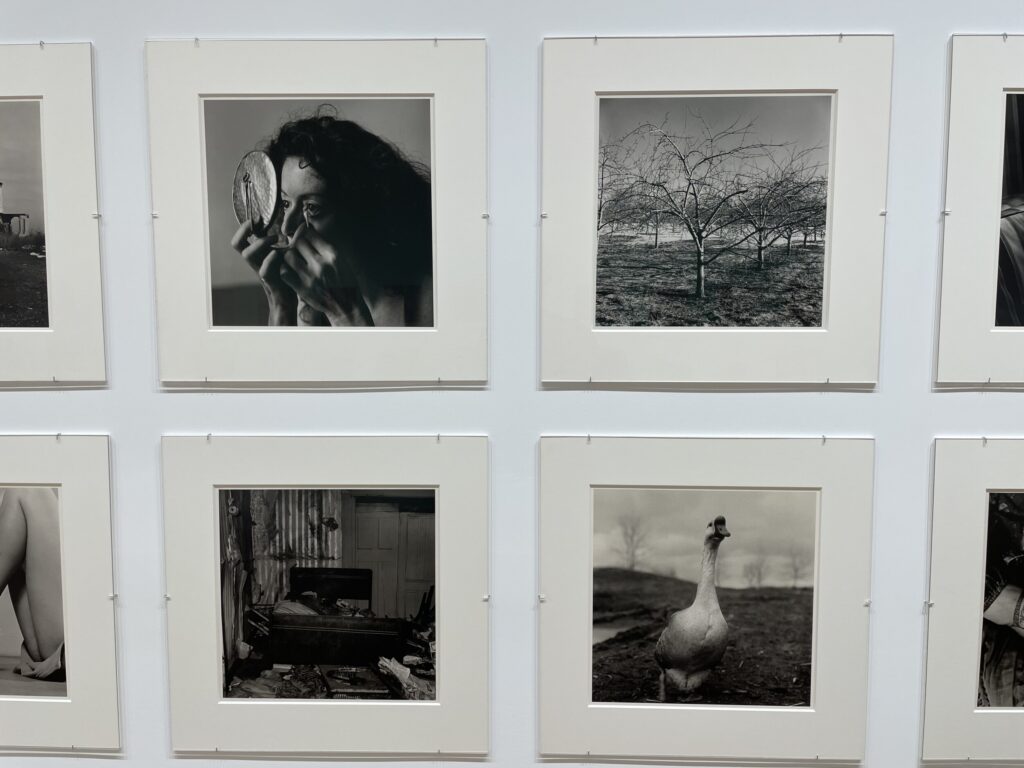
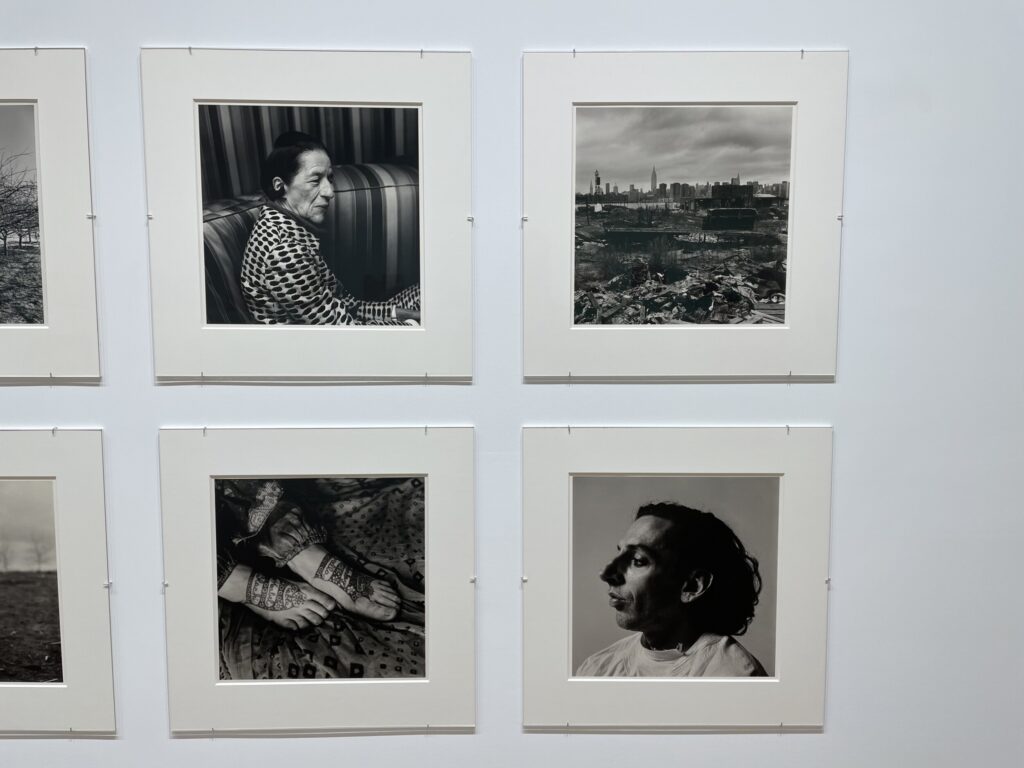
Comments/Context: Art history is filled with stories of scrappy gallery shows that were initially overlooked, under appreciated, or even outright ignored or disliked, only to be rehabilitated years later (with the benefit of hindsight) and rightfully recognized as the groundbreaking gatherings of important works that they actually were. At the time, it was often the case that these shows were “commercially unsuccessful” (which was coded language for little or no sales), with our present day vantage points altogether confused by how so many now acknowledged masterpieces could somehow go unwanted.
The 1986 exhibit “Peter Hujar: Recent Photographs” held at the Gracie Mansion Gallery in the East Village fits this model surprisingly well. The original show included 70 black-and-white photographs, arranged unframed in a long double-hung grid, with the various subjects (nudes, portraits, animals, landscapes, decaying buildings, etc.) liberally intermingled. The show was Hujar’s first solo show since 1981, and while the opening apparently drew “an enthusiastic crowd” of “New York luminaries”, very few photographs actually sold. Hujar died in the fall of the next year, and only in the past decade or two has his artistic reputation been fully resuscitated, his durable photographic significance finally becoming more fully valued and understood.
For those interested in a bit of artistic time traveling, this show faithfully restages the original Gracie Mansion show from forty years ago, using a mix of lifetime and posthumous prints provided by a new representation relationship between Ortuzar and the Peter Hujar Archive and Foundation. A similar recreation took place at Fraenkel Gallery in San Francisco in 2025 (here).
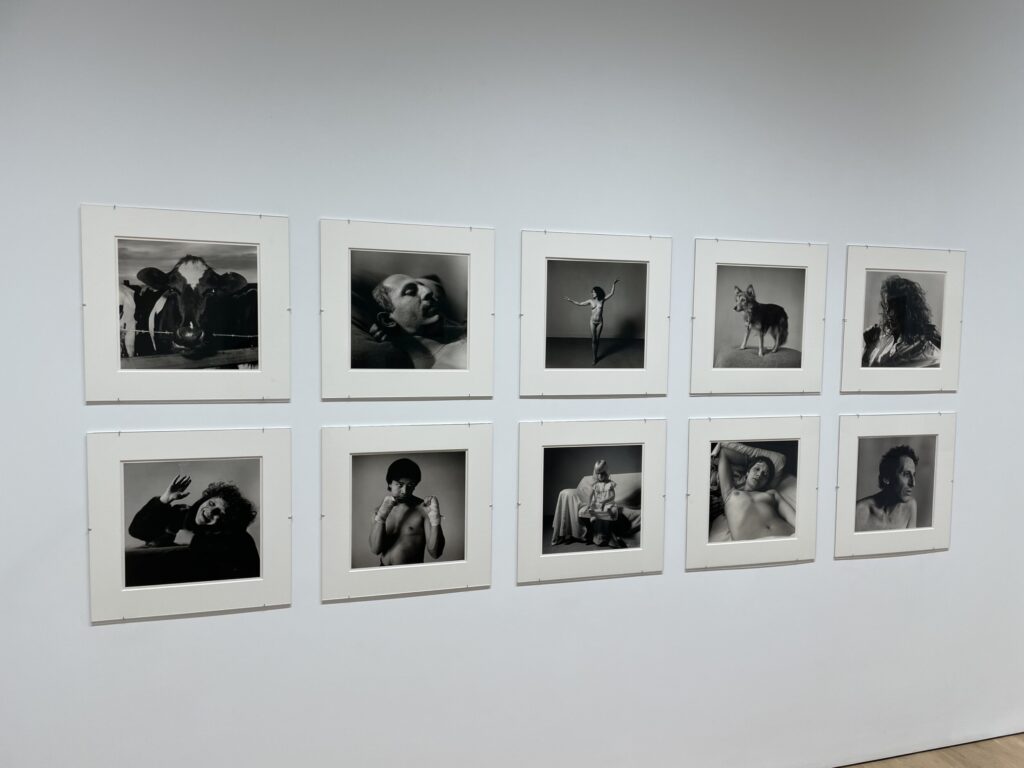
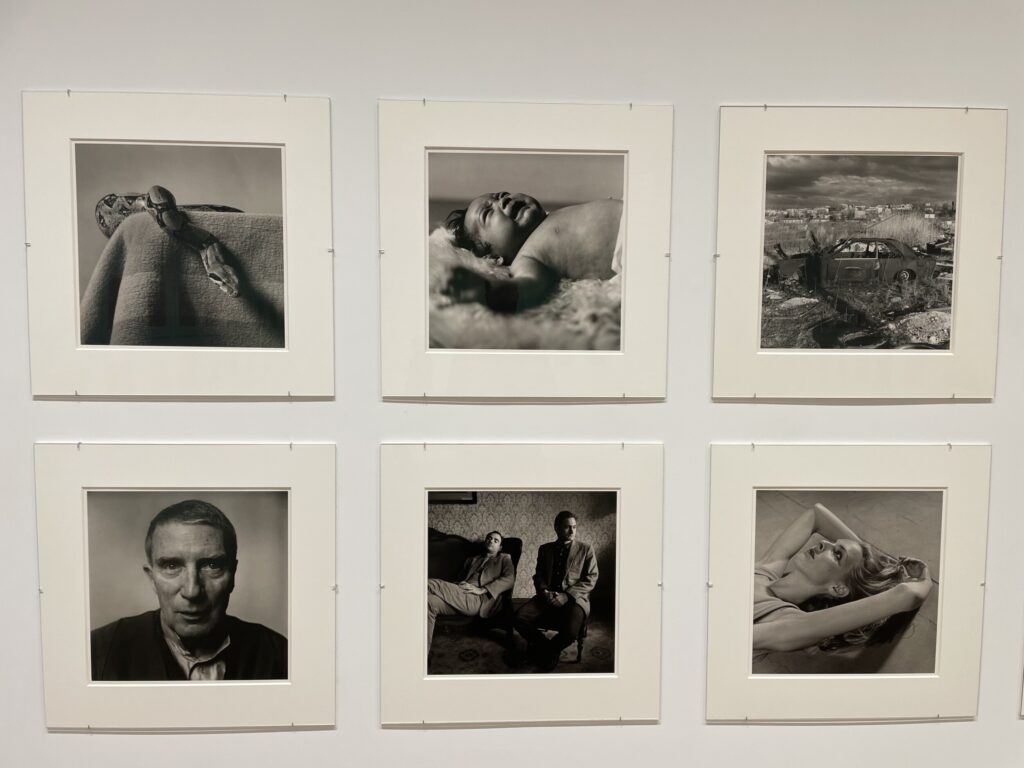
What this installation does better than any other Hujar show I have seen before is to flatten his work out into one consistent flow that doesn’t privilege the best known portraits and nudes. Of course, many of his well known portraits and nudes are included here, but they are placed on equal footing with the animals, the landscapes, and the abandoned buildings, making the themes that run through all of Hujar’s work – individuality, vulnerability, the duality of fragility and strength, scars, death, and decay, among others – all the more visible. For the first time, I saw much more clearly and persuasively how all these other images fit into what Hujar was more broadly trying to communicate, and I noticed the surprising parallels in form and style that he applied to all of his subjects. The show makes a strong case for the totality of his work and for the power of his eye.
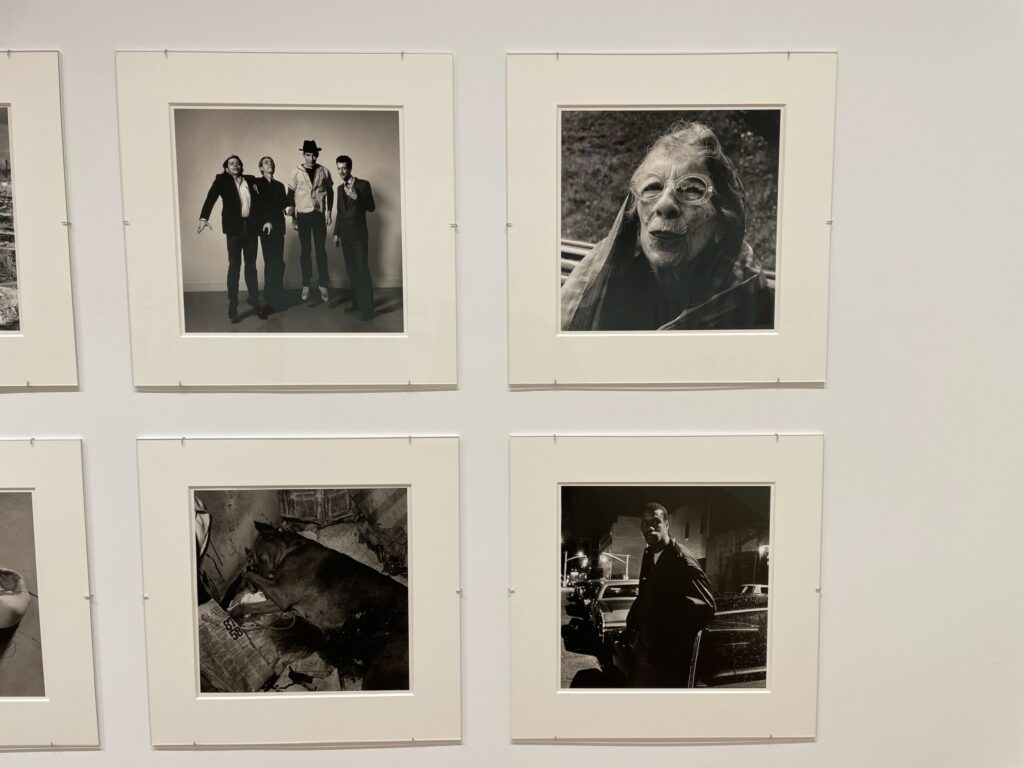
Having previously seen an isolated cow, horse, or dog portrait by Hujar out somewhere in the world, I’ve often wondered about why he would choose those subjects, or what he was trying to say in those seemingly random pictures. But as seen here, it all suddenly makes sense, with each animal seen perceptively or as a resonantly engaging embodiment of a particular mood or feeling. Often with these animal images, vulnerability is a common motif, with the wary look of a dog or the out-in-the-open exposure of a goose or a turkey then given a violent or traumatic edge when applied to cows in the slaughterhouse or the poignant scruffiness of a dead cat. These darker psychologies are then balanced by the freedom of a running horse, the proudly wrinkled individuality of a shar-pei, or the calm indifference of a cow chewing on a strand of barbed wire. Even Skippy the snake, who begins the show, seems eager to get out of the spotlight, the snake’s insecurity perhaps an apt representation of Hujar’s own mood at the time of this exhibit.
The same kind of analysis can be applied to Hujar’s landscapes and images of buildings, with the subjects themselves once again less important than the evocative sentiments he sees in them. Several images of winter trees feel quietly lonely or forlorn, the spindly trunks surviving in the snow, while other images document the scarred and weathered forms of empty boats and abandoned railcars, on solitary journeys to nowhere. This scarring takes a darker turn in images of a burned cupboard, a ruined bed, a lone chair set amid scattered rubble, and a look down a dark hallway at one of the piers, each observation lingering in the the chaos of the decay. From there, the landscapes turn toward exhaustion and understated pessimism, from a toppled over white-painted building and a rusted out car to an industrial bridge fronted by silhouetted weeds and a windowless building along a trash strewn road. The show ends on a similarly conflicted note, with a view of the grand New York City skyline behind the grim clutter of Queens in the foreground.
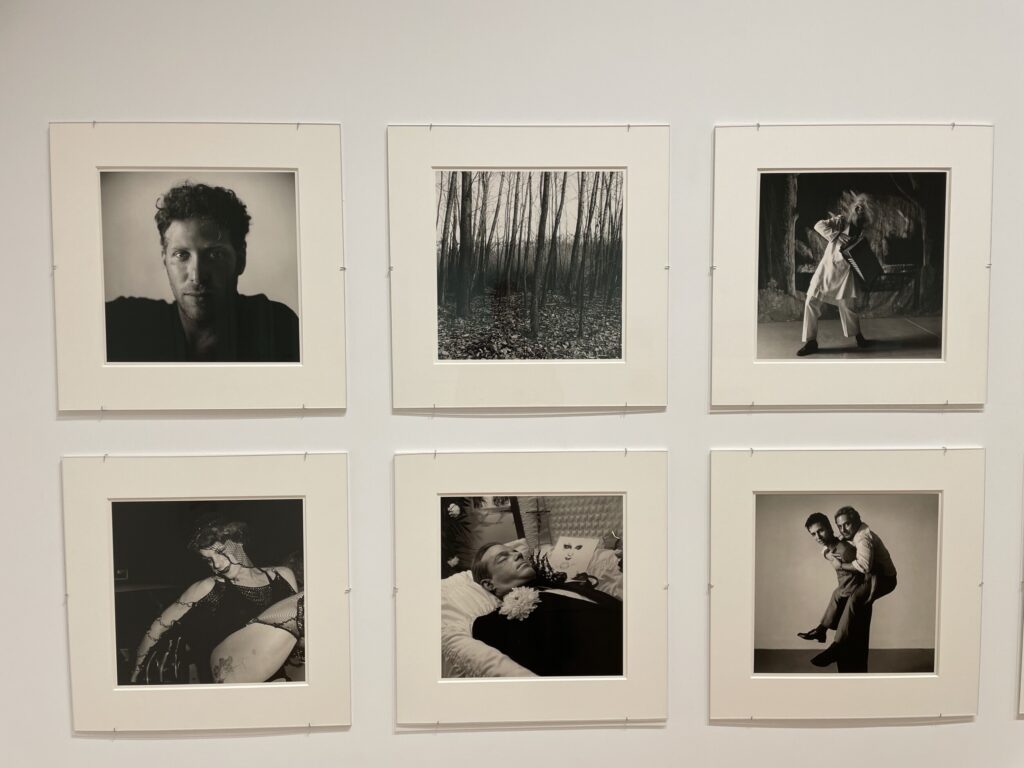
When we then return to Hujar’s better known portraits and nudes, we can watch as he applies a similar formula, identifying the nuances of personas and choosing setups that amplify certain moods or identities. Many of Hujar’s portraits settle into an engaged and attentive zone, where individuality and eccentricity are observed and accepted without judgment; this is true in images of a range of friends and personalities, including Lotte Eisner, John Heys, Sarah Jenkins, Ethyl Eichelberger, Malcolm Morley, Wendy Wasserstein, Peggy Lee, and Diana Vreeland, among others. But tension, vulnerability, and wariness are never very far from view in Hujar’s portraits, and these emotions and states of mind present themselves in everything from the desperate frustration of a crying infant and the distrust of mental outpatients to the hair pulling of Lynn Davis and the scarred torso of Pascal Imbert. In a few cases, what Hujar seems to discern is an elusive sense of distance and reserve, as seen in the charged space between John Erdman and Gary Schenider seated together or in the graceful vulnerability of David Wojnarowicz looking directly at us. And death too makes its presence felt, in the casket view of Jackie Curtis.
When installed as one continuous flow of immersive imagery, the connections and relationships between nearby pictures and intermingled sequences create a kind of scaffolding or framework that ties Hujar’s aesthetics into a coherent whole. My read of the overall mood in Hujar’s work is perhaps somewhat more traumatized than others might see it, but the frictions of spirit and outlook that hover over so many images, regardless of subject matter, are hard to ignore. That he offered such openness and vulnerability to the art world and received so little support and encouragement in return must have been deeply discouraging. Looking back know, we can readily see and appreciate the consistent genius he was applying to his photographs. But from where he was standing, the view was decidedly fraught and unsettled.
Collector’s POV: The prints in this show are priced as follows. The lifetime prints are priced at $25000, $35000, or $45000 each, depending on remaining availability, while the posthumous prints are $14000 each. Hujar’s work has become much more consistently available in the secondary markets in the past decade; recent prices have ranged between roughly $3000 and $228000.