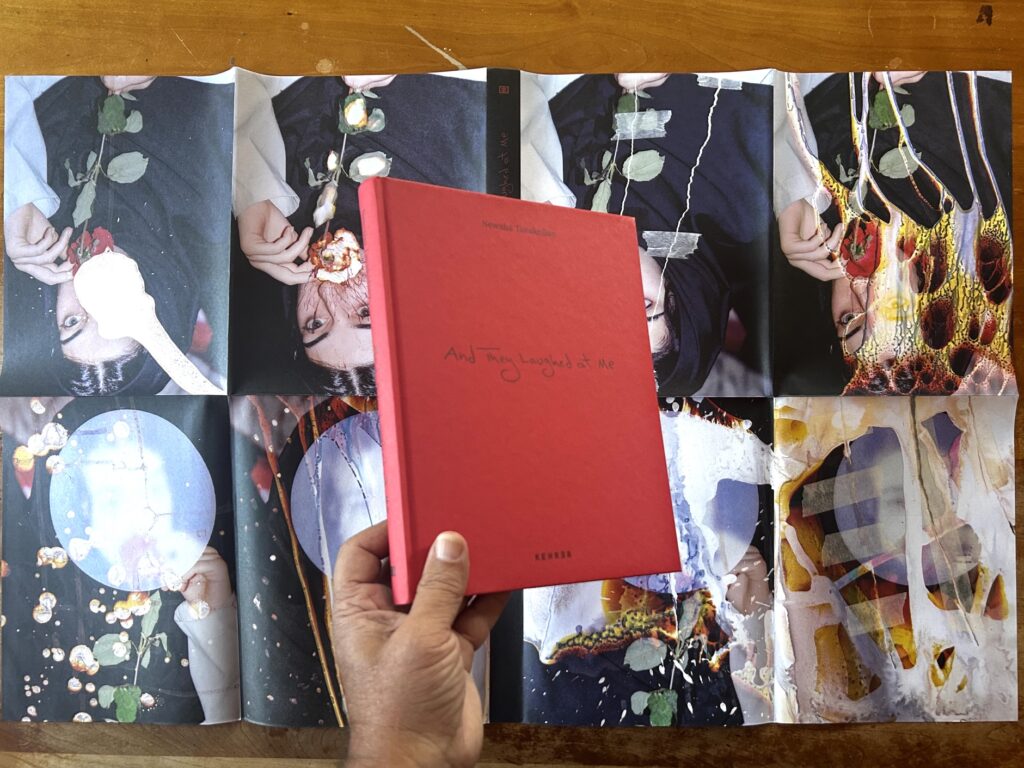
JTF (just the facts): Published in 2026 by Kehrer Verlag (here). Hardcover with eight-panel poster as dust jacket, 19 x 24.5 cm, 240 pages, with 144 color illustrations. Includes numerous short texts and two essays by the artist. Design by Laura Pecoroni. (Cover and spread shots below.)
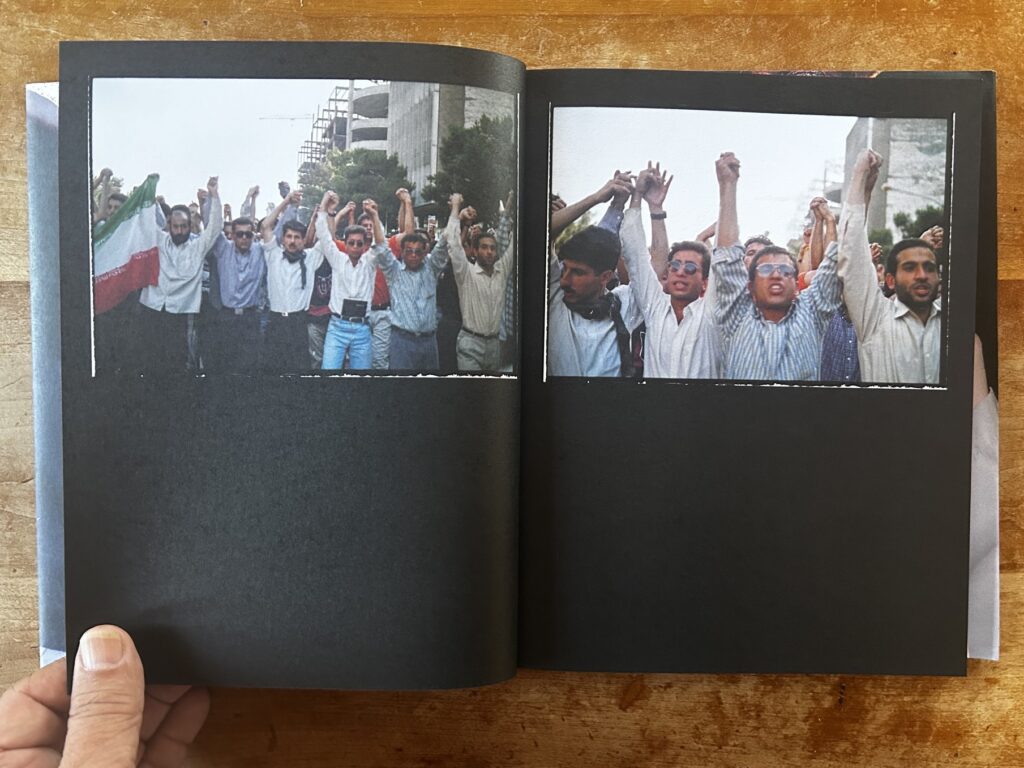
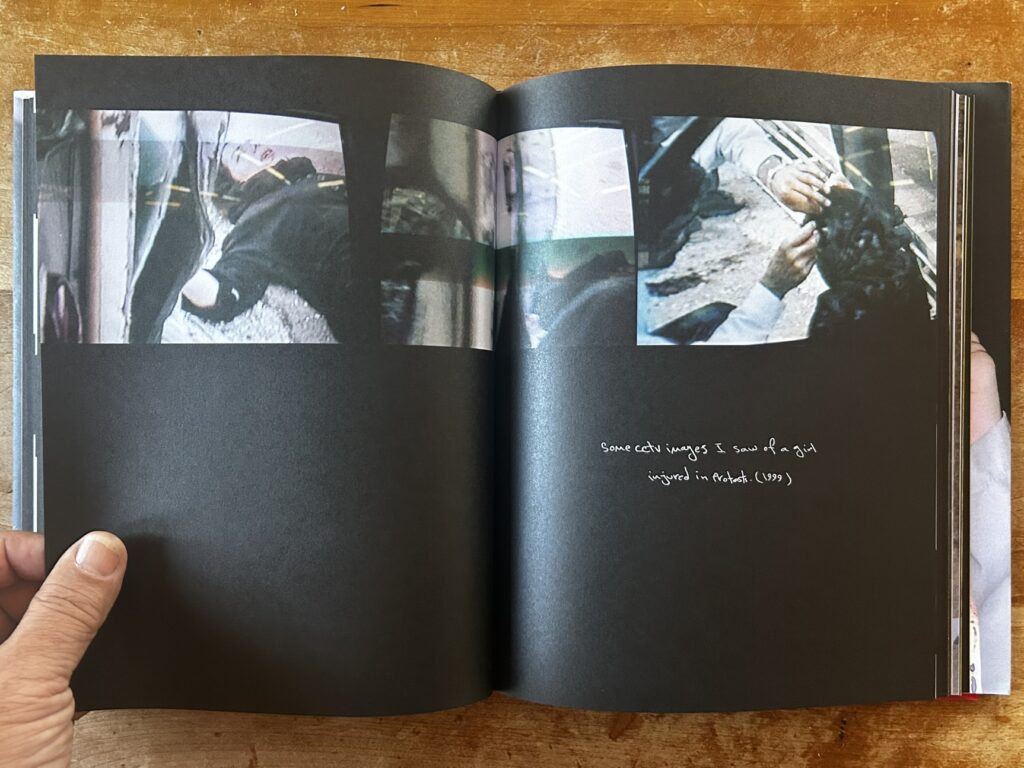
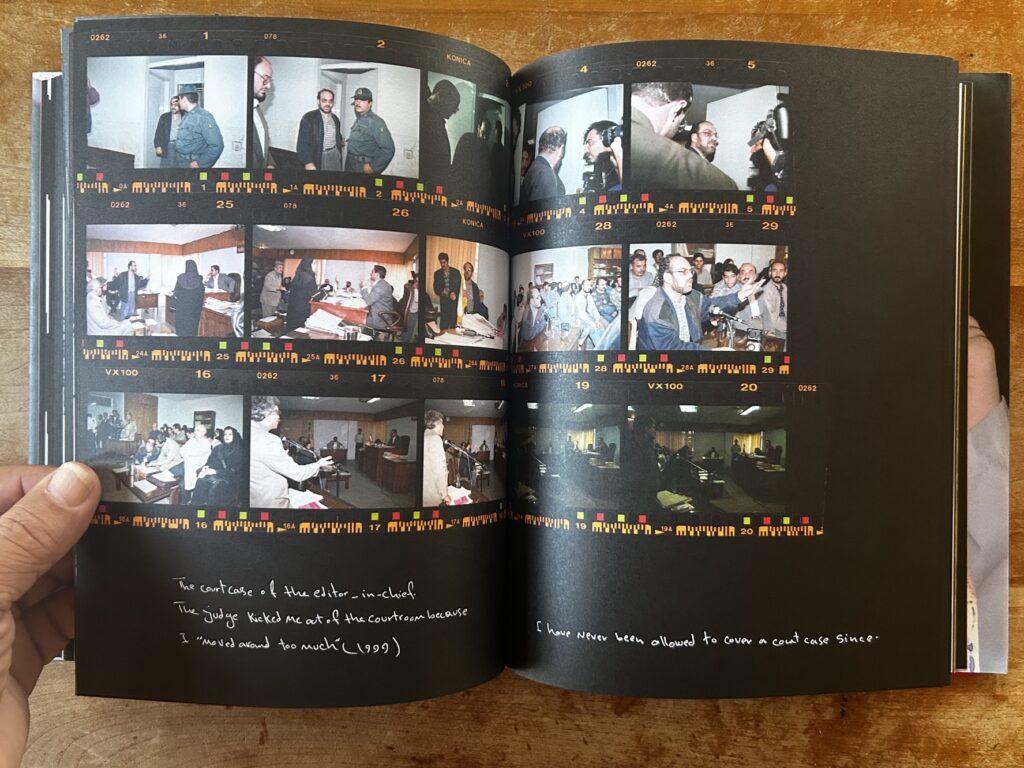
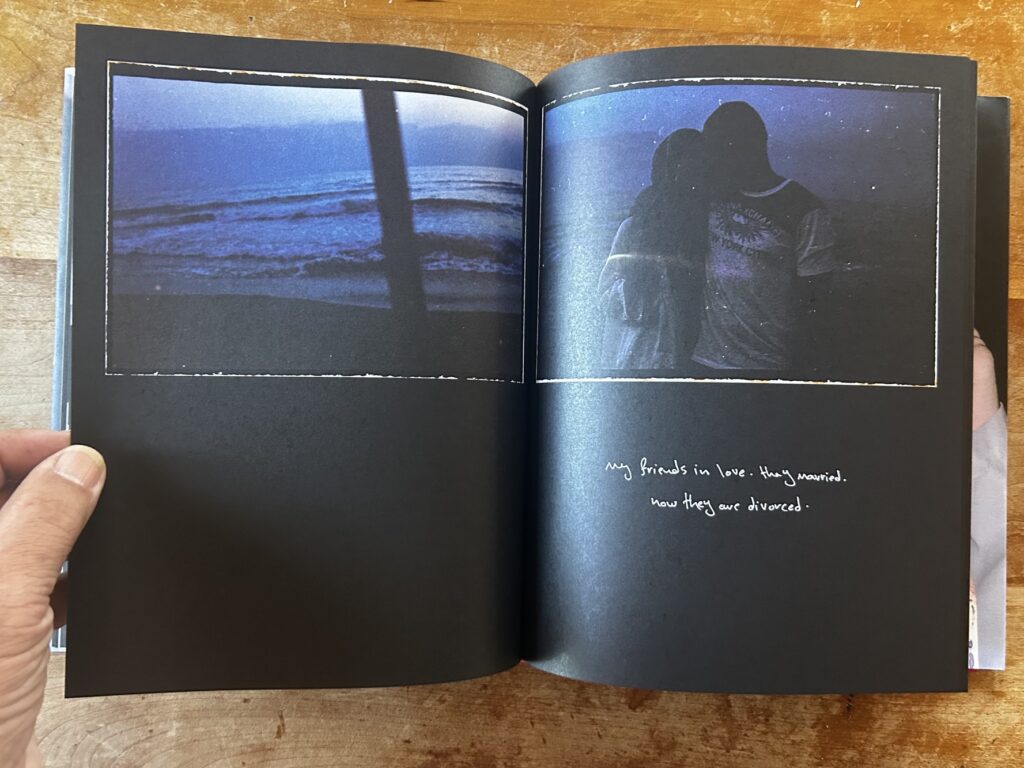
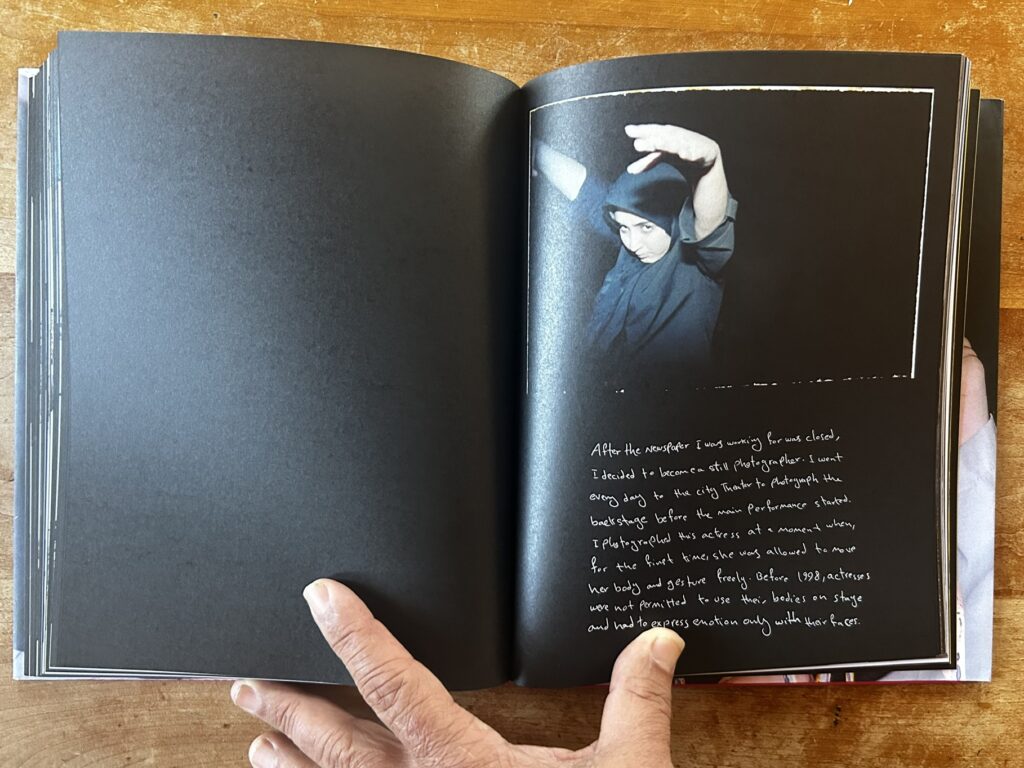
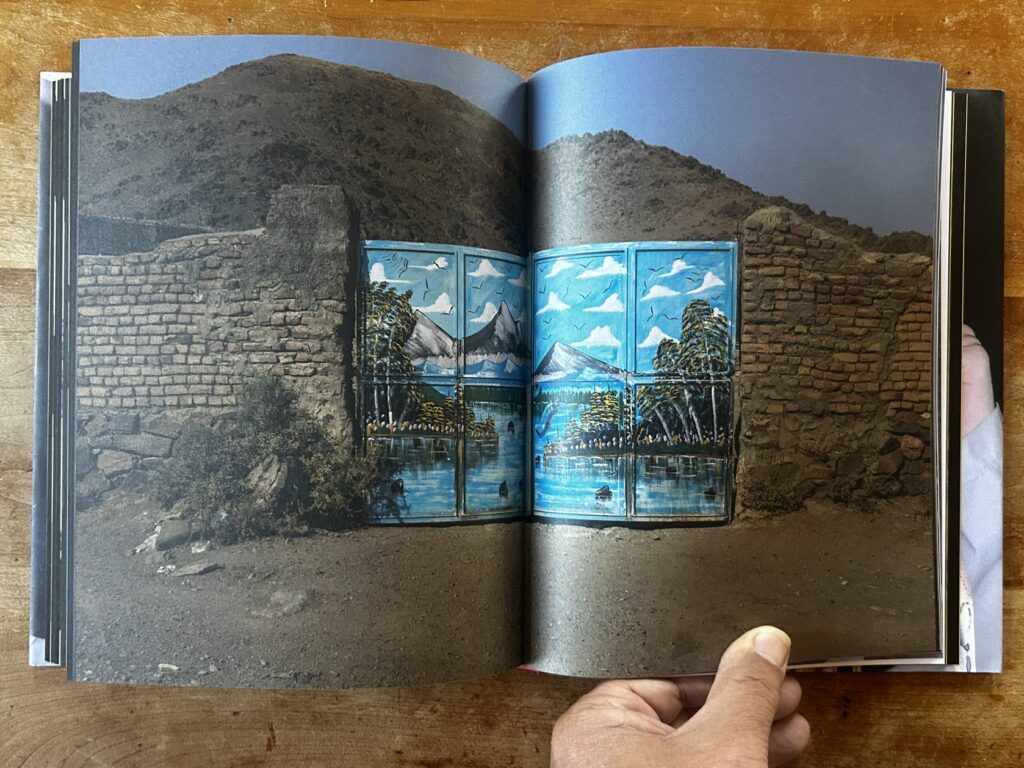
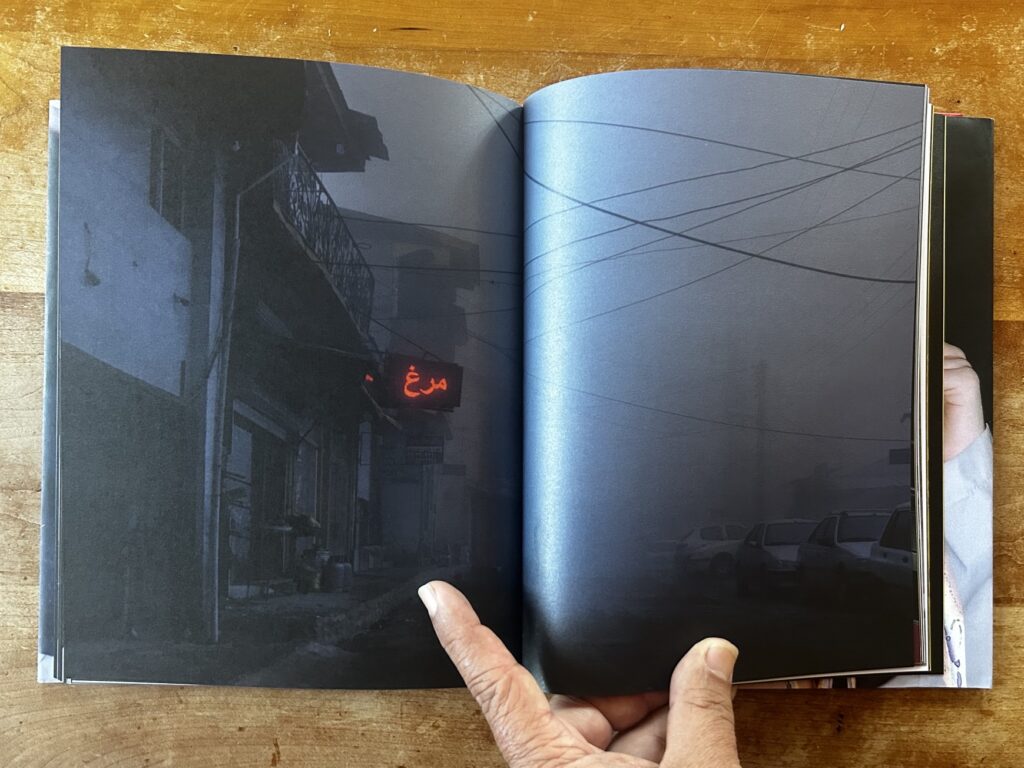
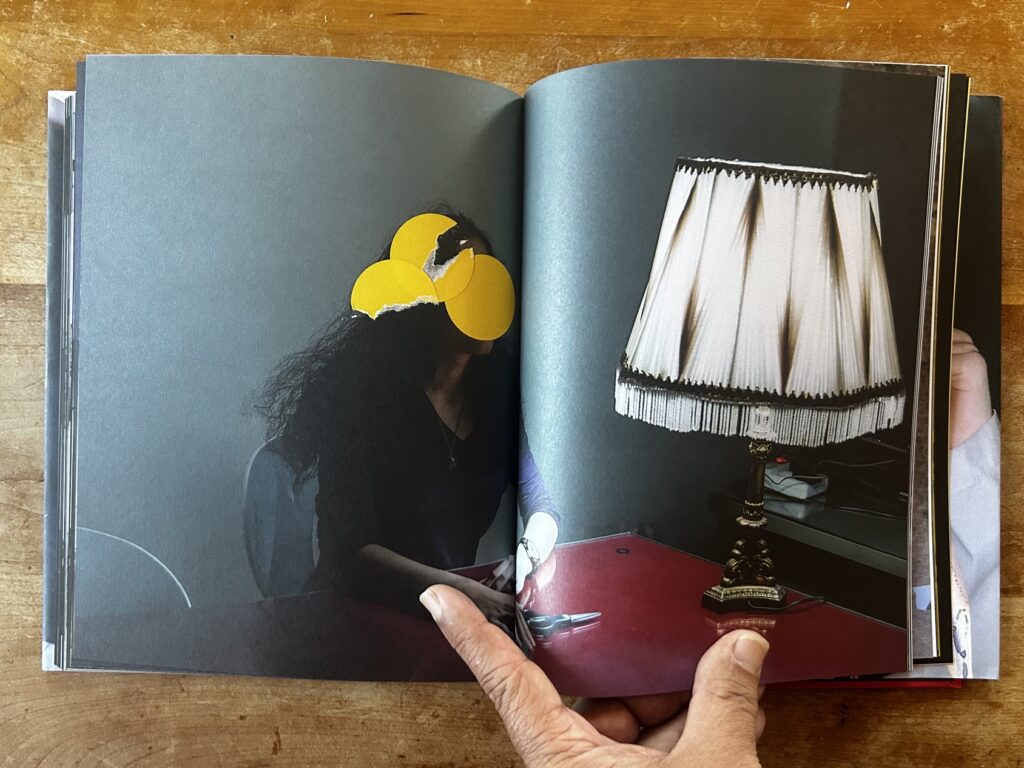
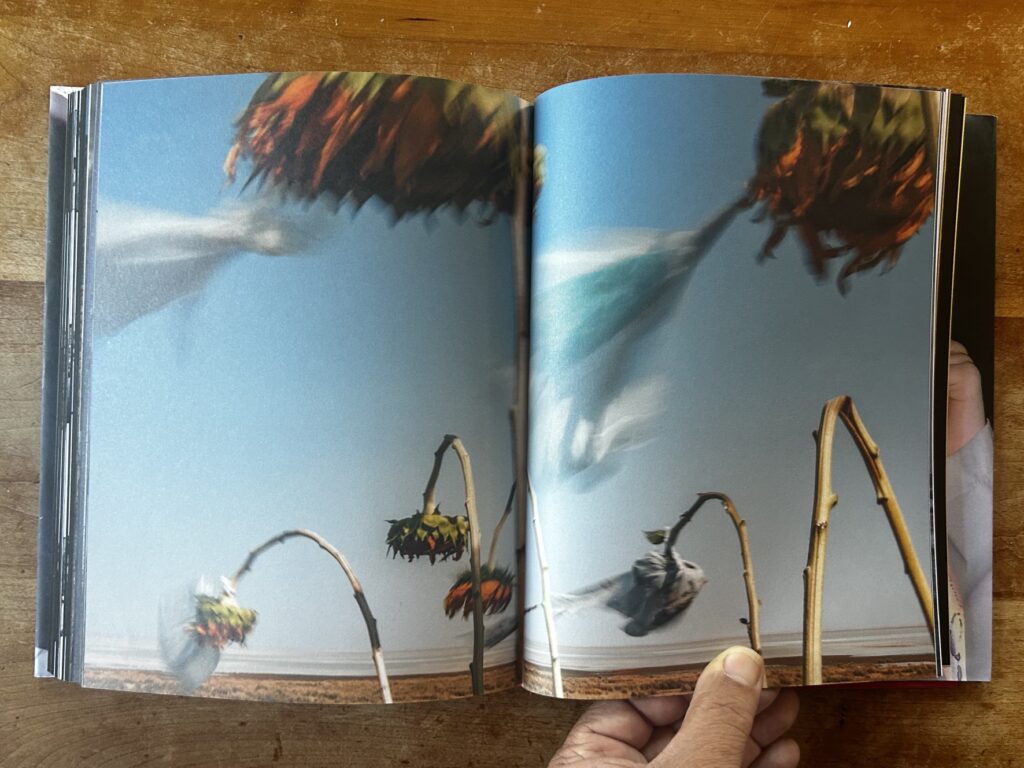
Comments/Context: As photographers know better than most, timing can be everything. Take for example Newsha Tavakolian’s recent monograph And They Laughed At Me. As she prepared its materials for publication last winter, Iran was caught in the throes of a popular resistance movement. Demonstrators marched in the streets throughout the country, day after day, demanding institutional and economic reforms. Authorities cracked down with brutal violence. As Tavakolian describes the turmoil in her afterword, “A wave followed another, when in January 2026, thousands of people, young and old, were killed during protests seeking change. What started like drops hollowing out a stone, went from waves into a tsunami.”
And They Laughed At Me seemed primed for the moment. The book collected Tavakolian’s photographs of Iranian protestors from an earlier generation, when she had documented the reformist movement of the late 1990s. If her old photos could find a new audience, perhaps they might spark a wider conflagration?
We’ll never know. By the time the photobook was published in March, the uprising had been snuffed. Iranians scarcely had time to mourn its victims before they faced an even greater existential threat, an all out assault by the U.S. and Israel. After the nation’s leadership was decapitated in the war’s initial days, conservative hardliners emerged with a stronger grip than ever. Major reforms now feel like a pipe dream.
Meanwhile, the photobook world keeps turning. And They Laughed At Me may not inspire a revolution, but it can still tell us a lot about Iran. The book offers an insider’s view of the country—in sharp contrast to the Western press’s bogeyman trope—as witnessed and captured by a woman intimately familiar with its culture and politics. For the past 45 years, Newsha Tavakolian’s life has run its course roughly concurrent with the Islamic Republic. She was was born in 1981, shortly after the Iranian Revolution of 1979, and her adolescent growing pains have coincided with those of her country.
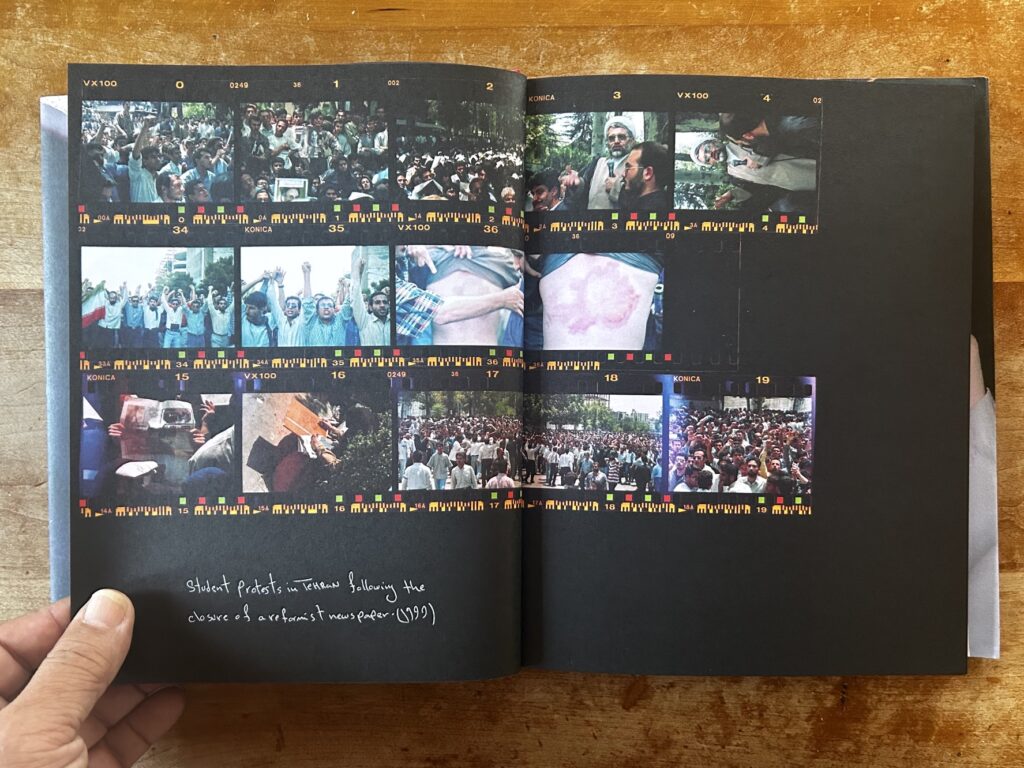
These parallel strands converged in the mid 1990s, when Tavakolian dropped out of high school at the age of sixteen to become a photojournalist. It is here that the book begins with a double page spread of her very first contact sheet on black and white film. A budding national rebellion was in its nascency—reminder: timing can be everything—led by student protestors, and inspired by the reformist government of President Mohammad Khatami.
Tavakolian leapt into the fray, shooting demonstrations on her own and then on assignment. Soon her pictures were appearing on the front pages of Iranian newspapers. Her photo career was off and running. She would go on to shoot for major media outlets, earn prestigious awards, and become a full member of Magnum Photos in 2019.
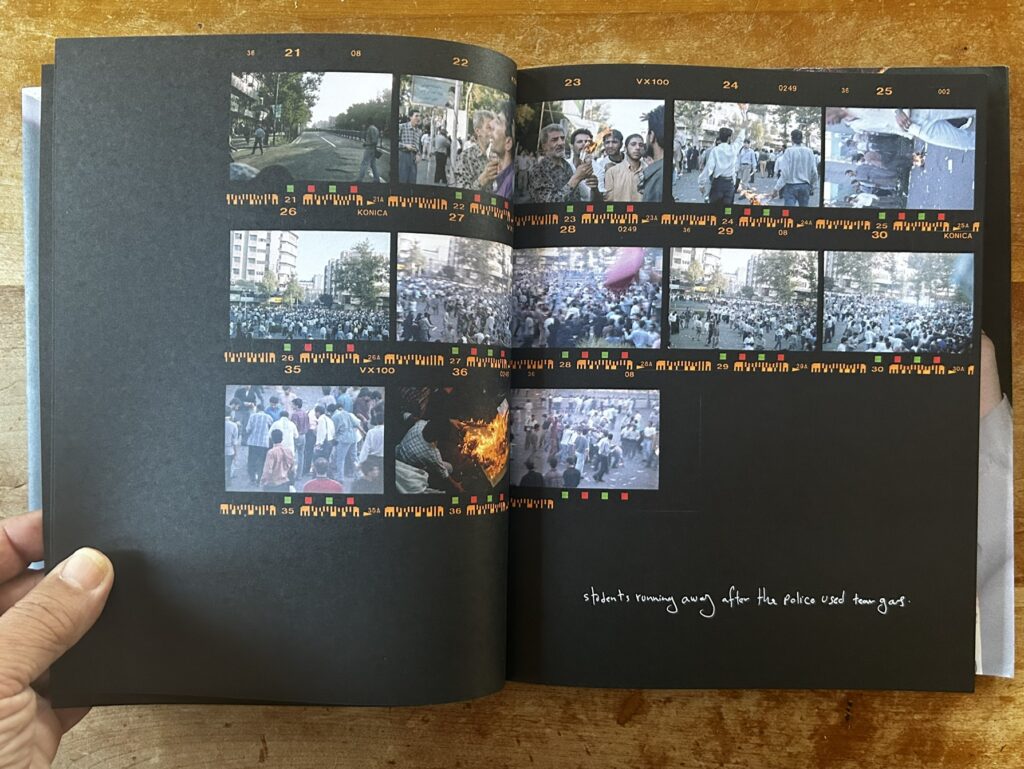
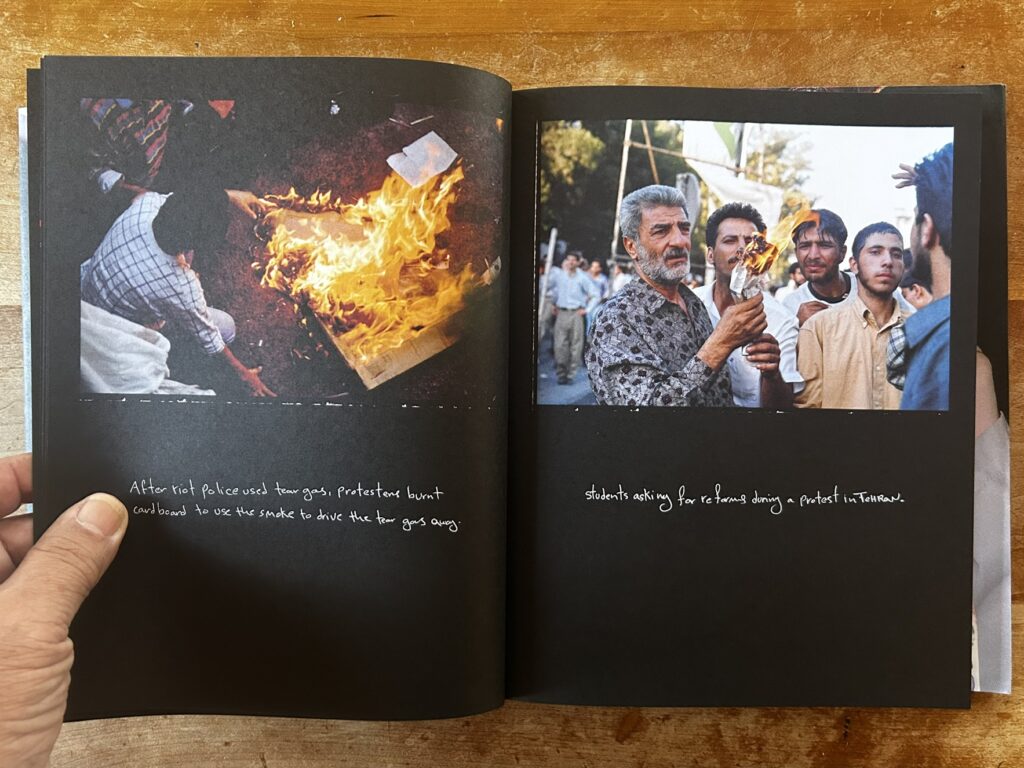
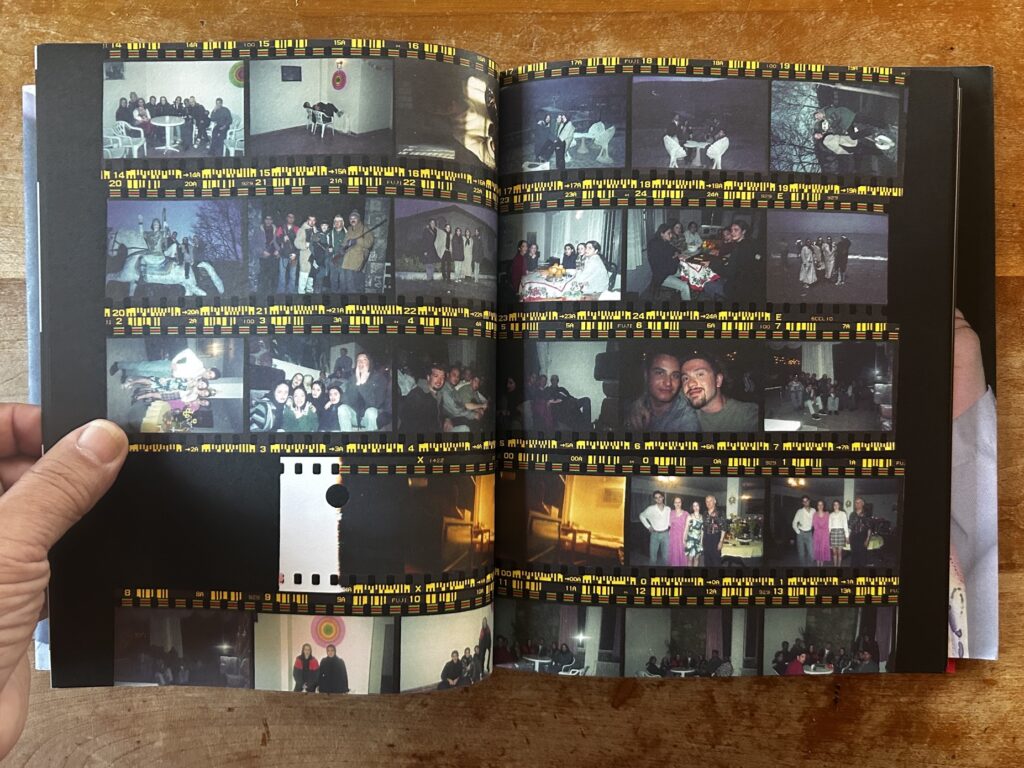
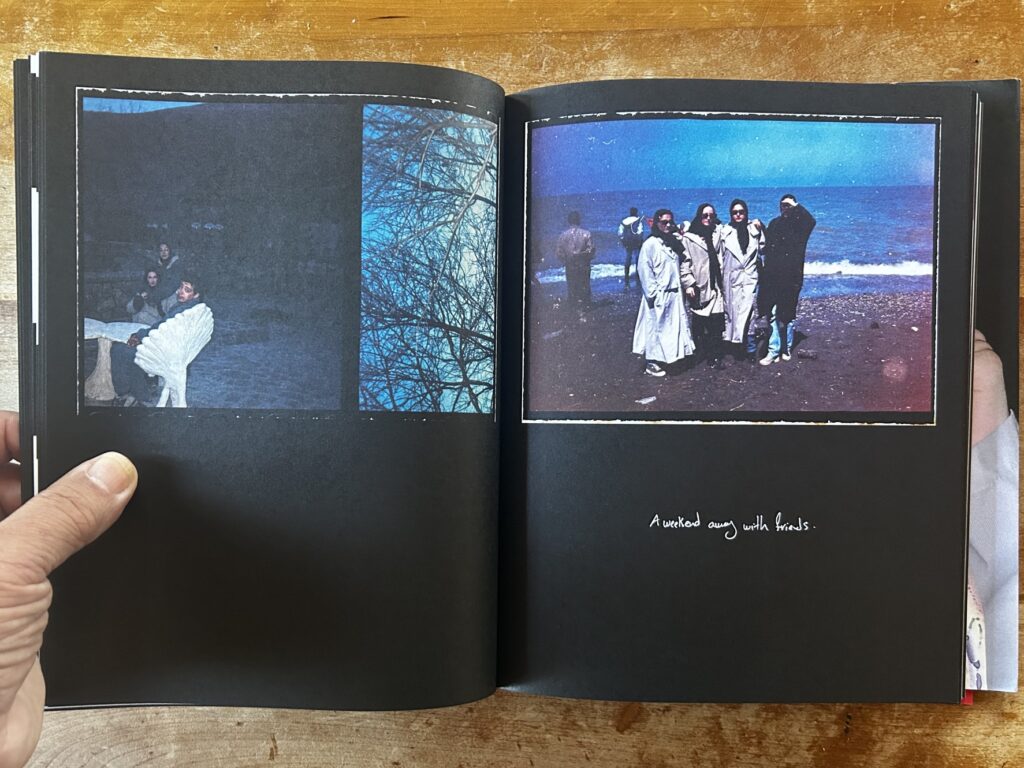
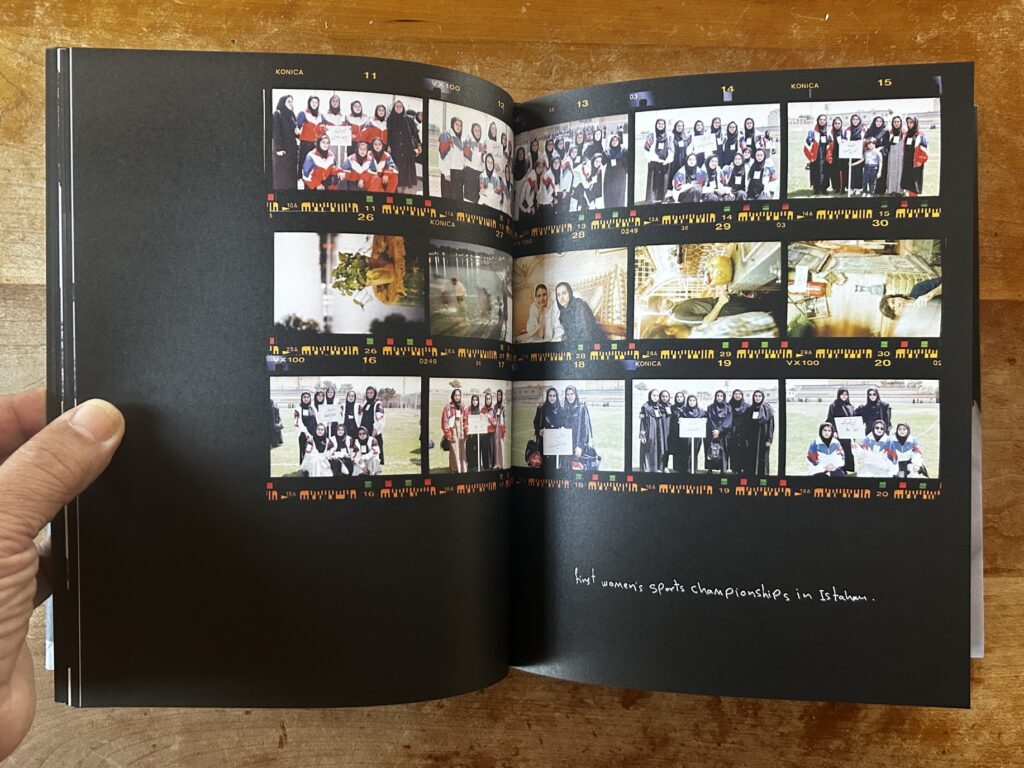
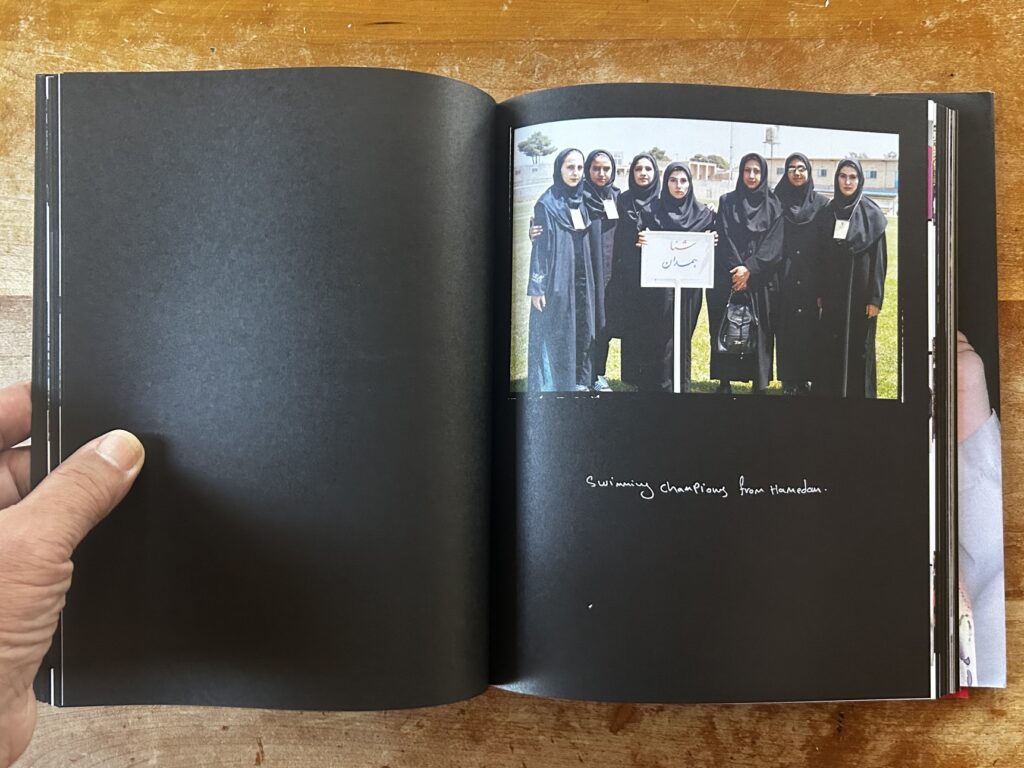
But that’s getting ahead of the story. And They Laughed At Me is primarily concerned with Tavakolian’s early career in the years 1995 to 2001. After the black-and-white contact sheet, the book switches to color and settles into a rhythm. Contact sheets are interspersed with selected frames enlarged on alternate spreads, sometimes annotated with handwritten notes. She photographed newsrooms, friendly gatherings, family, retreats, and others in her immediate world. The mood was upbeat and even joyous, but she always kept one eye on the state. “Mountains were the freest place for us,” she captions one photograph. “Fewer eyes could check on us.”
Shown in roughly chronological order, these contact sheets serve as something like a daily journal. They’re also an invitation to join the familiar photo critic’s exercise. You get to peek behind the curtain, see Tavakolian’s negatives in raw form, and then wonder to yourself how you would edit. Would you choose the same rejects and winners? Did she miss any obvious bangers? Why did she choose this one instead of that? Over-the-shoulder second guessing is always a fun game, as demonstrated in various exhibitions (reviewed here, here, and here, for example), or in recent books of contact sheets by David Armstrong, Peter Hujar, and Robert Adams.
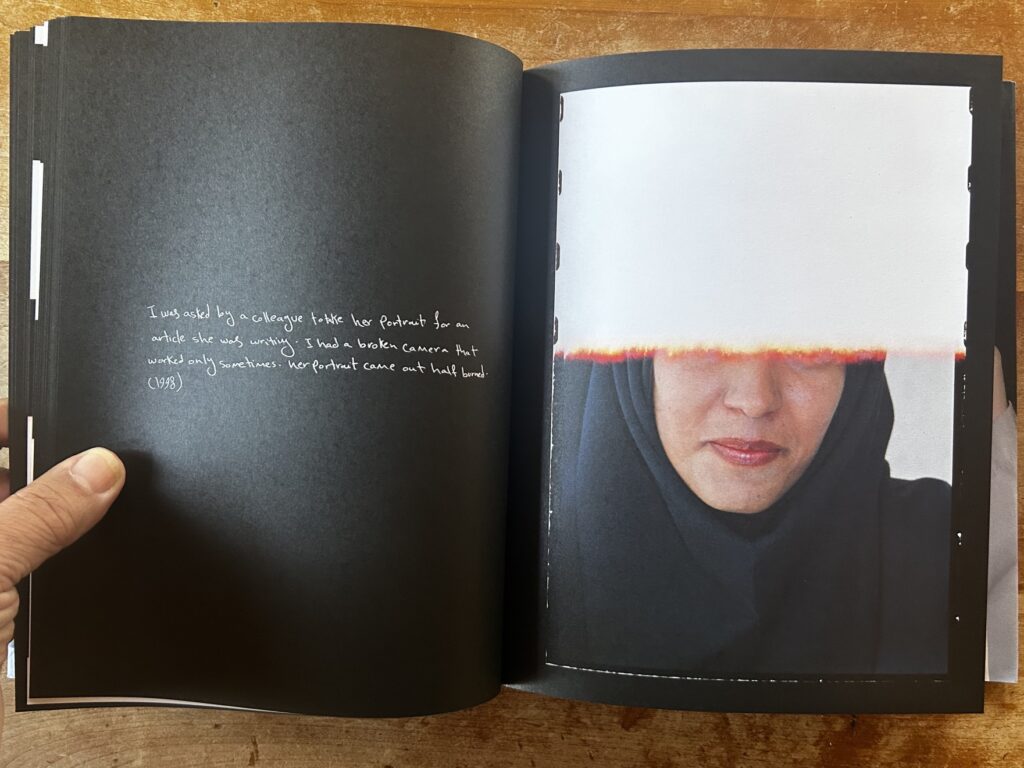
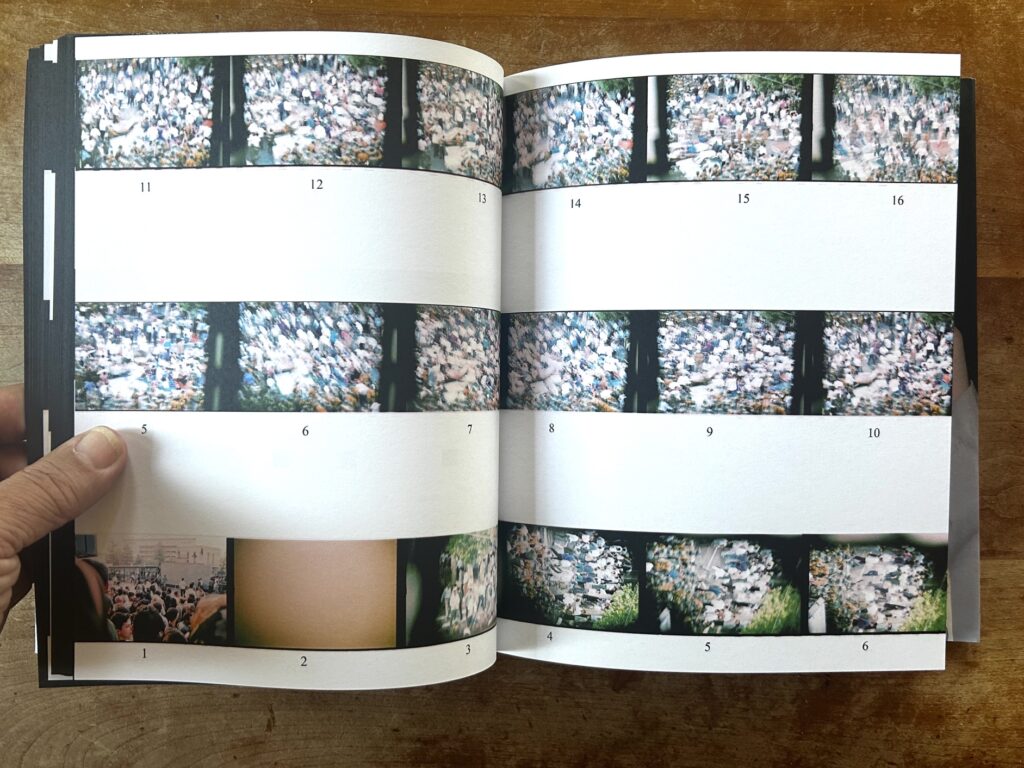
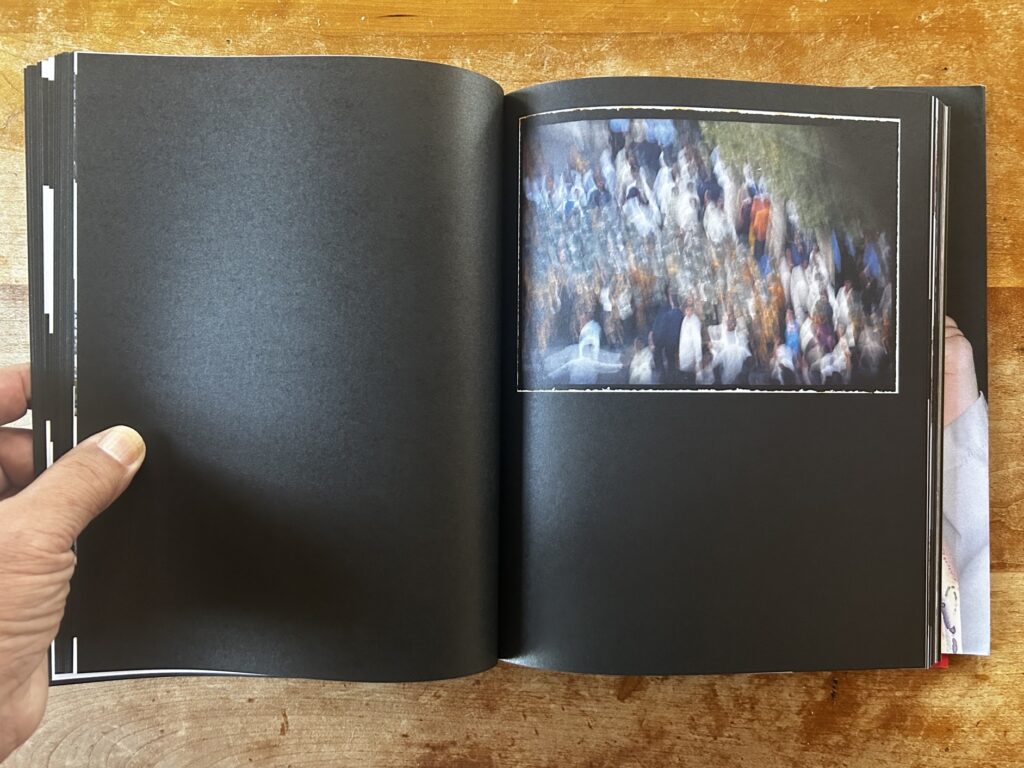
Readers can play the same game with And They Laughed At Me. But this book comes with an added twist. For this recent pass through old negatives, Tavakolian deliberately selected imperfect frames. “I looked for my failed work,” she explains. “Crooked, out of focus snapshots that I had long mentally thrown away.” A 1998 portrait of a woman is a prime example. It reveals only half a face, the eyes and forehead blown out by a broken camera. An overview of a crowded street is rendered into sloppy splotches by motion blur, while a double spread of friends relaxing conveys their essence through an off color light leak. The book hops from one happy accident to another. As documentary photojournalism, these pictures would never reach the front pages. But as interesting images, they do just fine.
Why was Tavakolian drawn to her flawed work? As she explains in the book, it was a response to totalitarianism and its absolute version of reality. “I had come to understand that truths are always made up of perceptions,” she writes, “and we tend to pick the most extreme ones.” If the oppressive state cast events in black and white, she was more than happy to supply greyscale (or color, in her case).
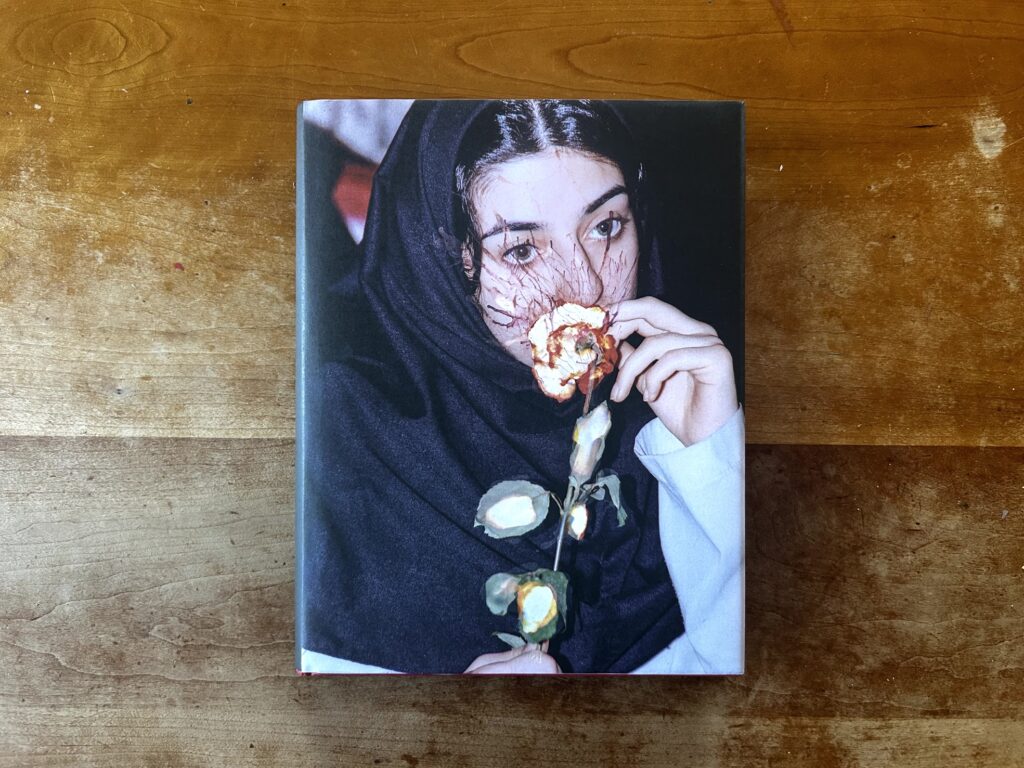
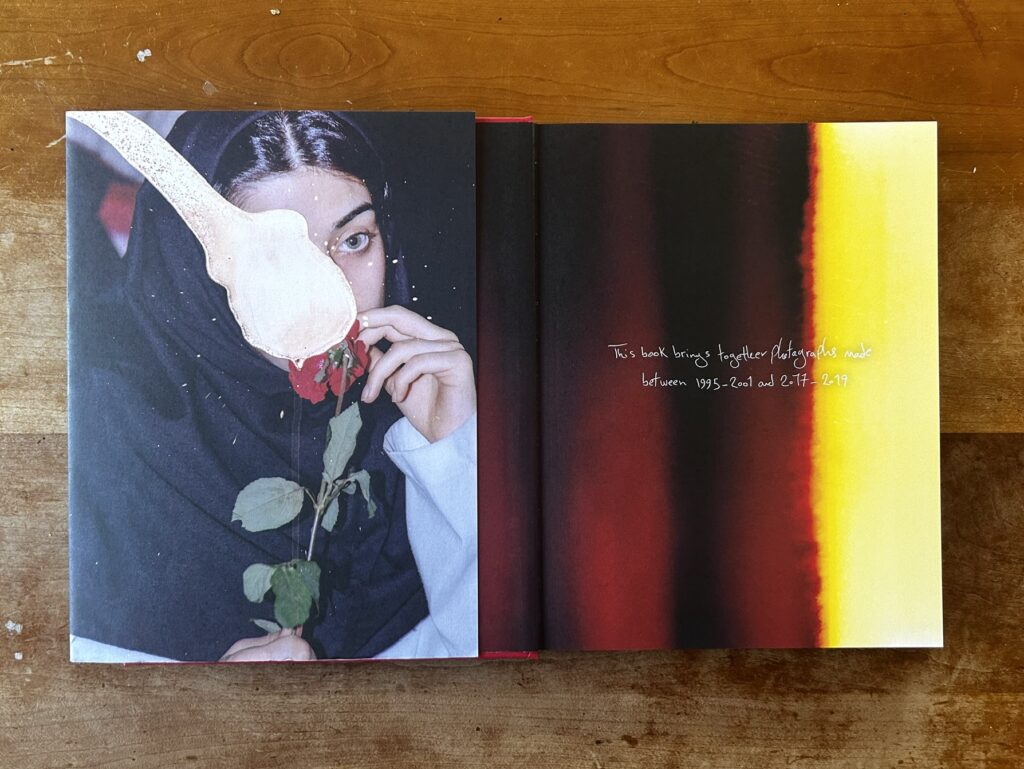
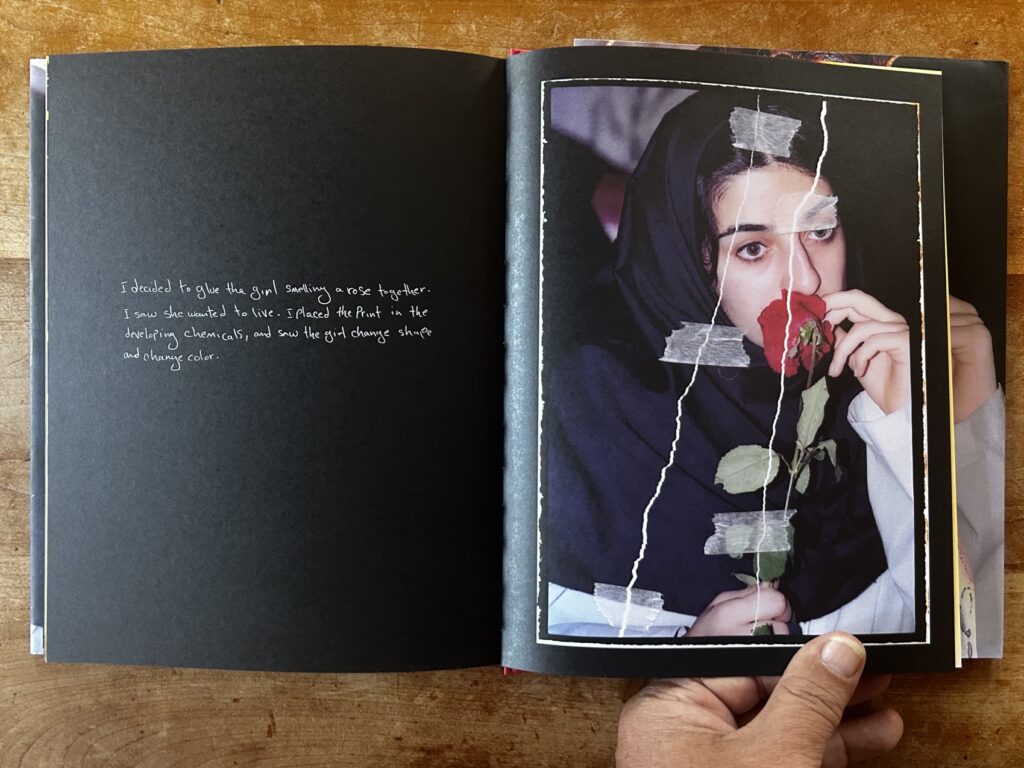
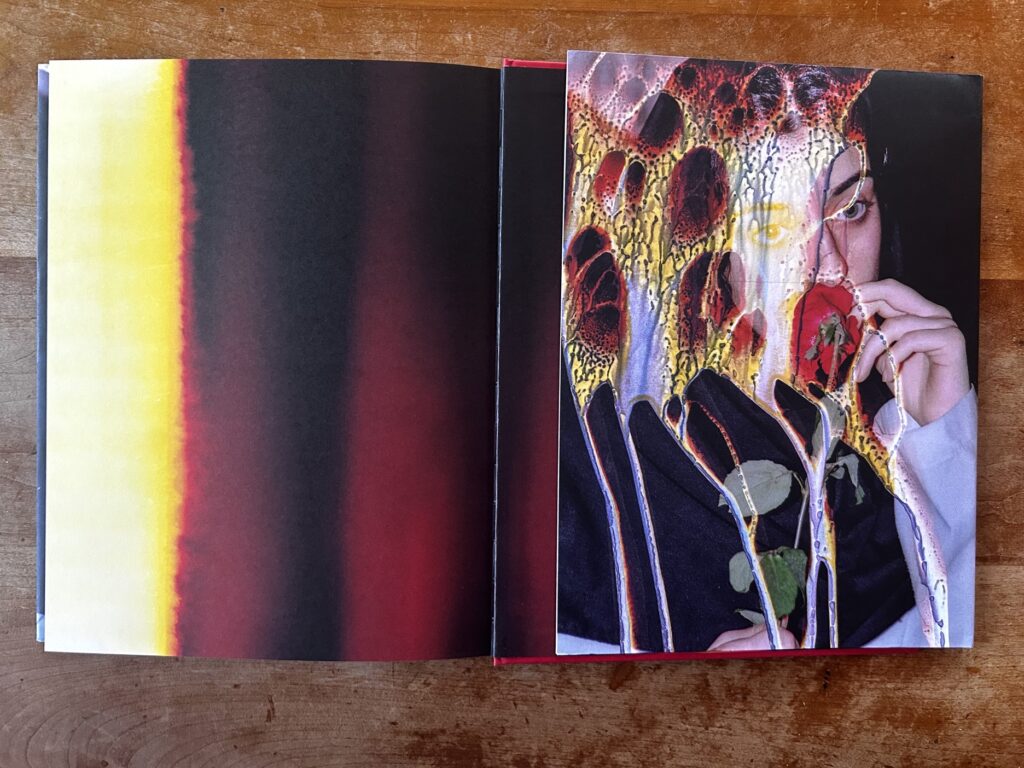
Her search for imperfection reaches a crescendo with the cover shot, an early photograph of an Iranian woman smelling a rose during a protest. On one hand, the image is perfectly benign. What could be more innocent than a nose sniffing a flower? But viewed from a more cynical perspective, the photo’s purity obscures darker undercurrents. Demonstrations were gaining steam, and there was no time to stop and smell the roses. “I wanted to kill that image” writes Tavakolian. “…because we had been lied to in such a blatant manner, and I was upset over how naive my generation had been.”
Naivety safely shed, Tavakolian mangled her rose photo in all sorts of ways. She ripped it apart, taped in back together, soaked the print in developing chemicals, streaked it with bleaches and stains, and masked the face behind a translucent disc. Some of these results are reproduced on the dust jacket. Removed from the book, it expands into an eight-panel poster of tweaked experiments. Poor photograph. As a proxy for state power, it has been abused and debased in all sorts of ways. It’s not difficult to make the connection to the oppressed Iranian populace. How long must they put up with an inept theocracy and hyperinflation?
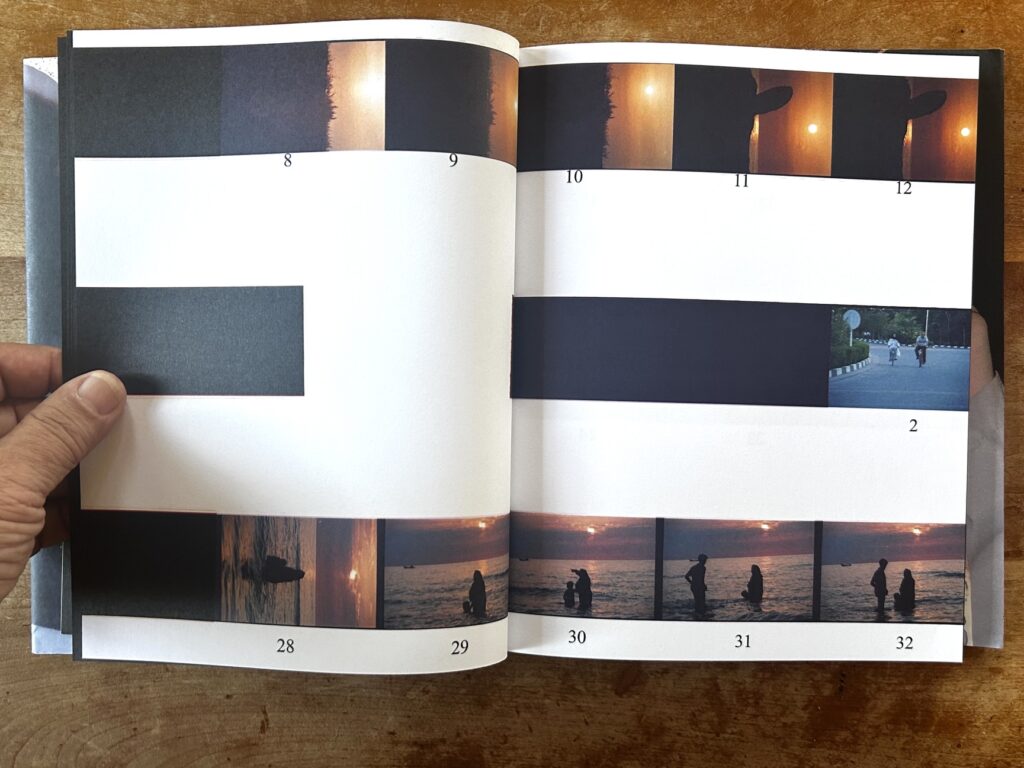
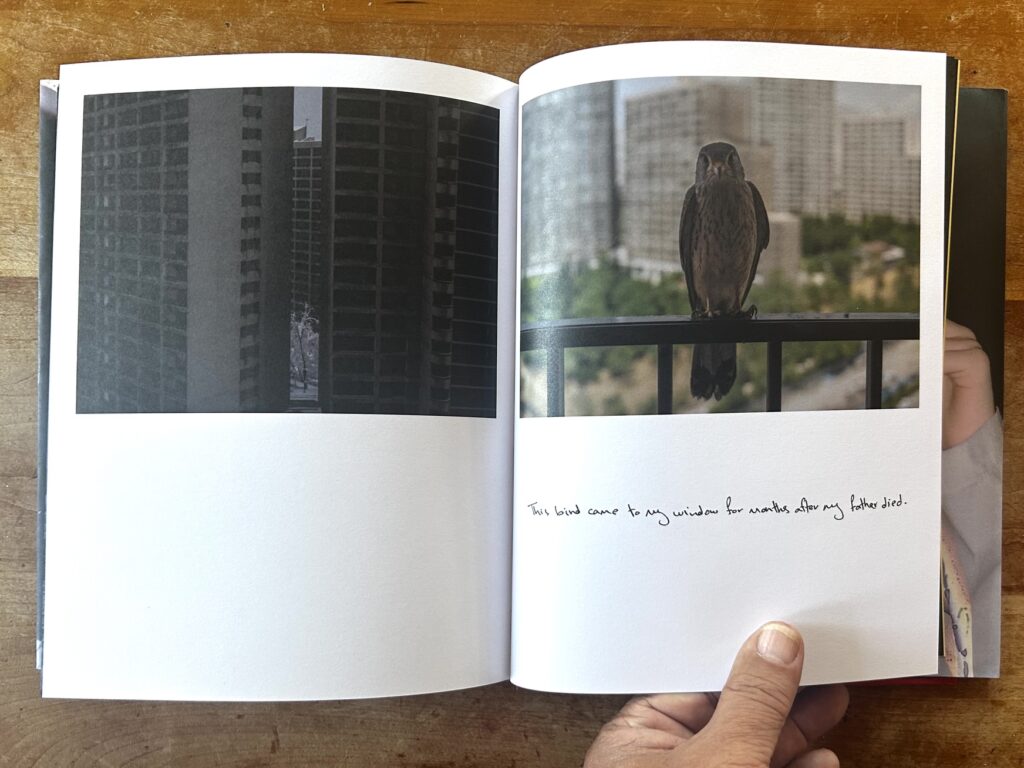
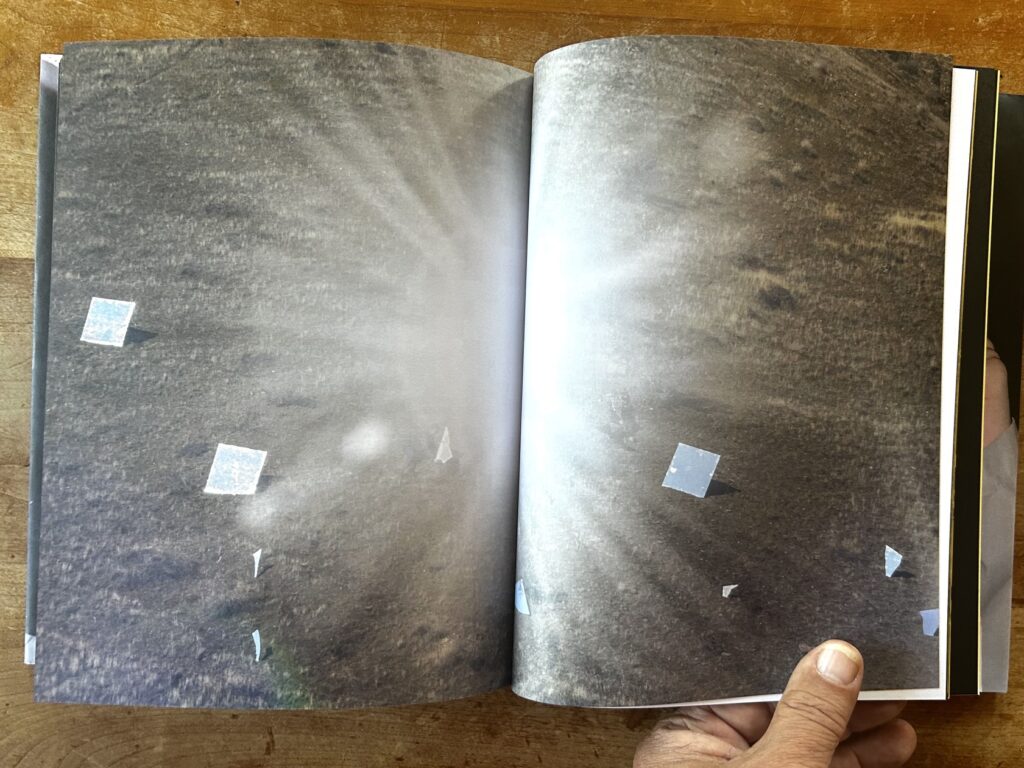
Tavakolian doesn’t know the answer—we may not find out for a while—but the last chapter of her book takes a step toward resolution anyway. The photos in this final section are from 2017-2019. Tavakolian and the Islamic Republic were both entering middle age at this point, and her photographs of Iran are somber, moody, and reflective. She has dispensed with contact sheets (perhaps done with film too?). Instead the sequence is just pictures, one or two per spread. Tavakolian captures twilight landmarks, a field of bent sunflowers, passing gulls, and vague lighting sources. A short sequence documenting her father’s death seems like a deliberate confirmation of time’s arrow. Everything and everyone passes. The protests of her youth might appear as ancient history on old negatives, but they present an opportunity for renewal.
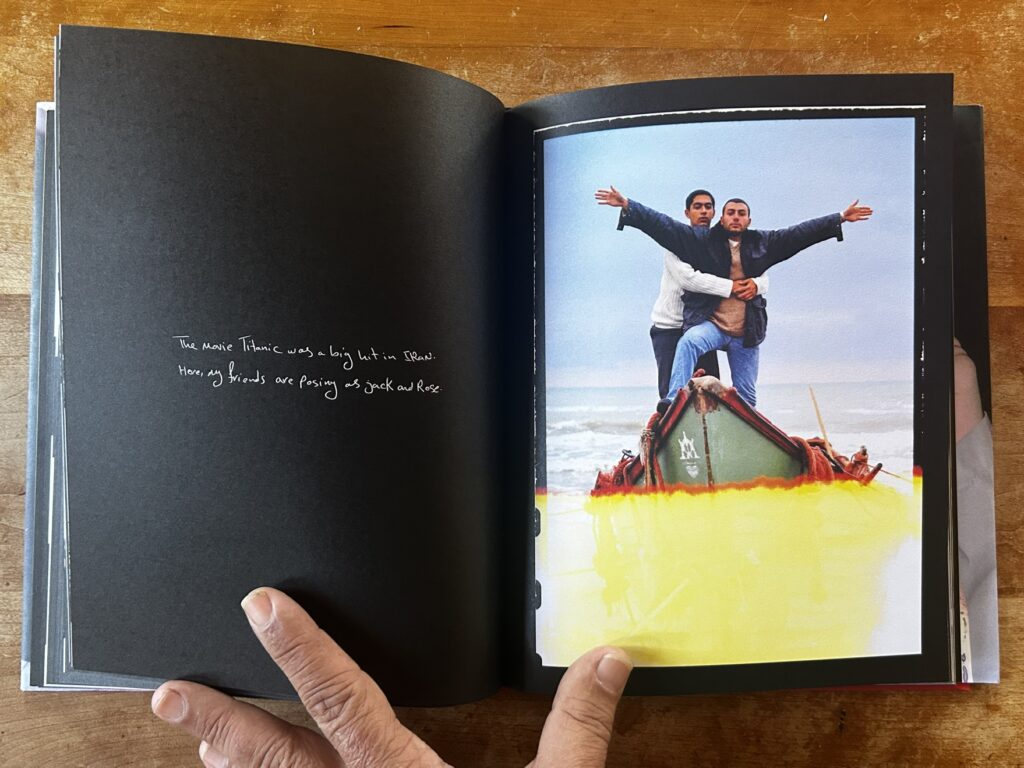
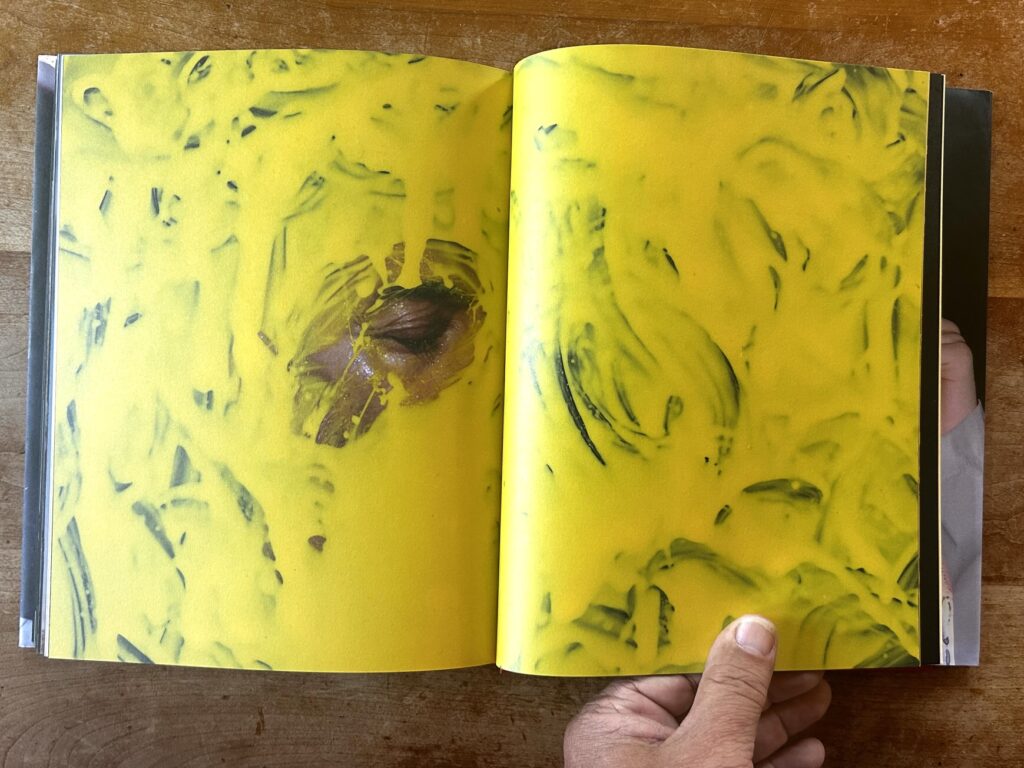
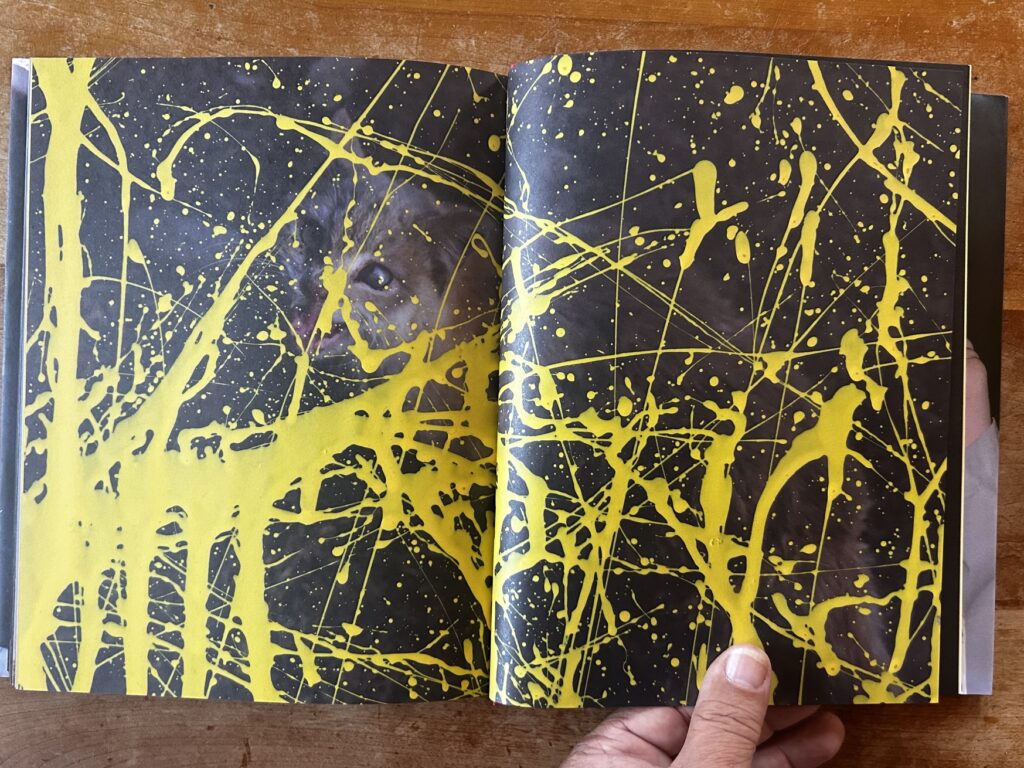
In the very last pages of the book, Tavakolian imposes her imperfections deliberately, marring her photos with yellow paint and decals. Government functionaries might seem inaccessible. But prints in a studio have to sit there and take their punishment. It was around the time of these interventions, circa 2019, that she was prohibited from working in Iran.
Fast forward to the present. Tavakolian and her nation are both in their mid-forties now. The photographer has just published a new book. Meanwhile the state is under fire and exhausted. Photographs of roses are as likely to be shredded by missiles as by their creators.
Of course, this is only an outsider’s distant impression. I’m an American observer catching glimpses of Iran through mass media. I cannot fathom daily life there during wartime. Tavakolian may have a good ground level view, but she is restricted from photographing. The current conflict has no end in sight, but everything passes eventually. And They Laughed At Me is a reminder that better times may return.
Collector’s POV: As a member of Magnum Photos, Newsha Tavakolian’s work is available directly from the agency (here), although she does not appear to have other gallery representation relationships. Her work has little secondary market history at this point, so gallery retail likely remains the best option for those collectors interested in following up.